جاري التحميل...


جاري التحميل...
Create a square 1:1 museum-catalog frame with a strong first read and a slower second read at exactly 2880x2880 pixels. Location: a portable drop-test...
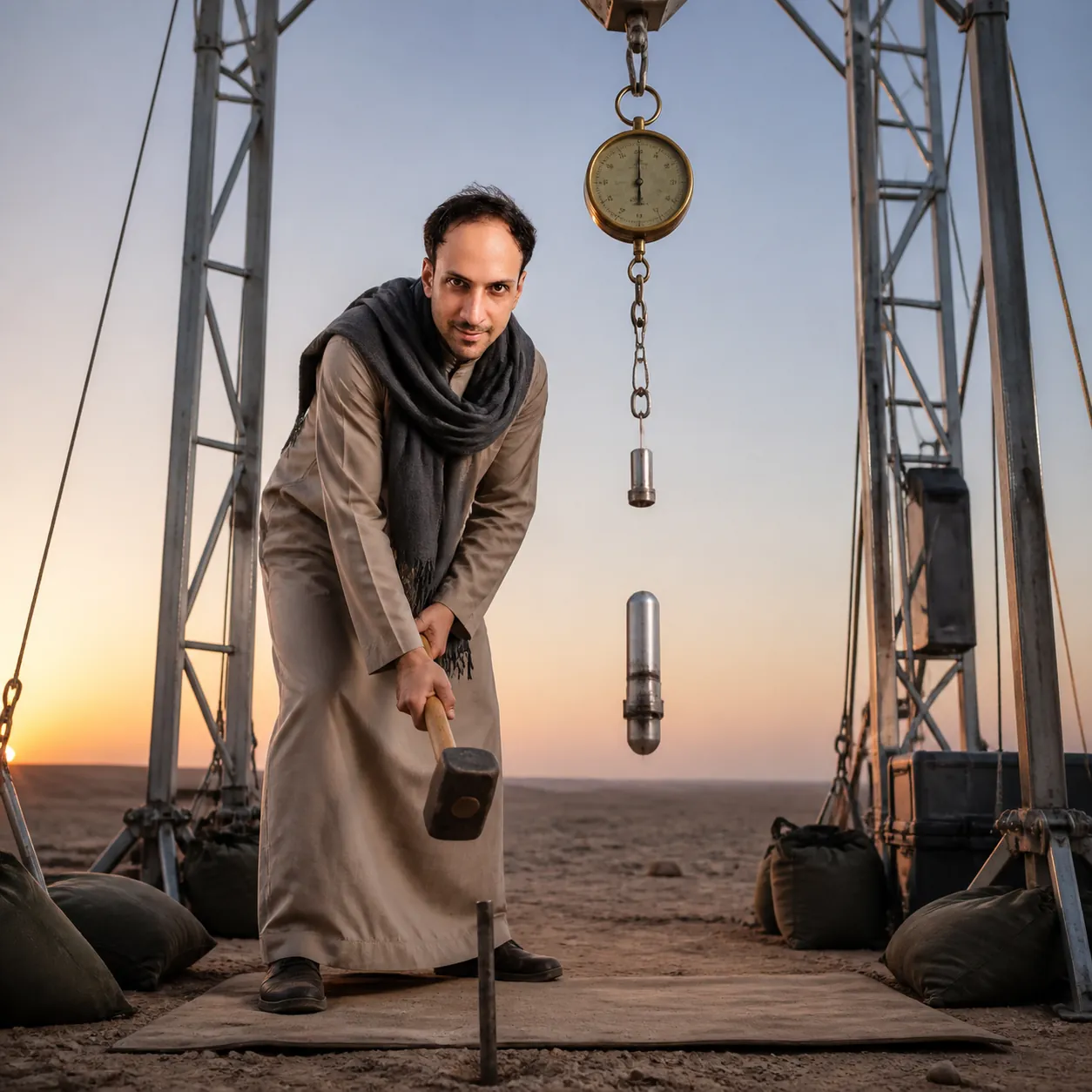
Use the attached reference photo as the identity reference: keep the same face, skin tone, hair and features as the person in that photo, without beautifying, aging or altering them. Create a square 1:1 museum-catalog frame with a strong first read and a slower second read at exactly 2880x2880 pixels. Location: a portable drop-test gantry staked at the desert edge before sunrise. Show the subject in a plain beige traditional Gulf outfit under a charcoal shawl folded once, driving a stake flush with two mallet taps. Make one rigorous physical condition the conceptual engine: a brass spring scale carrying a full kilogram whose needle sinks to zero as the capsule drops away turns one honestly borrowed second into proof that weight is circumstance, not essence. Explore why buying one honest second can require a tower ten stories tall; direct expression and posture toward disciplined awe, never melodrama or ad-like confidence. Use an eye-level 55mm viewpoint with natural perspective, their planted stance sharing the frame with the floating demonstration. Make the composition stack one floating object directly above their planted feet. Render it as conceptual physics portraiture pairing genuine microgravity evidence, a falling-camera perspective, restrained contemporary art direction, and grounded human dignity, using low bounced tungsten off padded surfaces, holding gentle contrast on their face and a palette of desert dawn sand, steel grey, and muted teal. Photorealistic: this must read as a real photograph from a physical camera, never an illustration, painting, or 3D render. Resolve real surface detail: fine lint on dark fabric, water spotting on steel, and the soft rounding of edges that have been used for years. Keep one identity-locked person, credible hands and fingers, natural fabric, and coherent scale, contact, reflections, shadows, airflow, deformation, and materials. Background people only when essential, always secondary and clearly different. Avoid floating-hair astronaut poses, levitating people, swirling CGI water tentacles, and sci-fi antigravity glow. No text, labels, logos, signatures, watermarks, random symbols, plastic skin, excessive bloom, or glossy AI finish.
Treat that reference as the character anchor and change only the scene. Create a square 1:1 museum-catalog frame with a strong first read and a slower...
Treat that reference as the character anchor and change only the scene. Create a square 1:1 museum-catalog frame with a strong first read and a slower...
Treat that reference as the character anchor and change only the scene. Create a square 1:1 museum-catalog frame with a strong first read and a slower...
Treat that reference as the character anchor and change only the scene. Create a square 1:1 museum-catalog frame with a strong first read and a slower...
Treat that reference as the character anchor and change only the scene. Create a square 1:1 museum-catalog frame with a strong first read and a slower...
Treat that reference as the character anchor and change only the scene. Create a square 1:1 museum-catalog frame with a strong first read and a slower...
Treat that reference as the character anchor and change only the scene. Create a square 1:1 museum-catalog frame with a strong first read and a slower...
Treat that reference as the character anchor and change only the scene. Create a square 1:1 museum-catalog frame with a strong first read and a slower...
Treat that reference as the character anchor and change only the scene. Create a square 1:1 museum-catalog frame with a strong first read and a slower...
Treat that reference as the character anchor and change only the scene. Create a square 1:1 museum-catalog frame with a strong first read and a slower...
Treat that reference as the character anchor and change only the scene. Create a square 1:1 museum-catalog frame with a strong first read and a slower...
Treat that reference as the character anchor and change only the scene. Create a square 1:1 museum-catalog frame with a strong first read and a slower...