جاري التحميل...


جاري التحميل...
Create a square 1:1 museum-catalog frame with a strong first read and a slower second read. Location: a quiet rehearsal room after a public conversation....
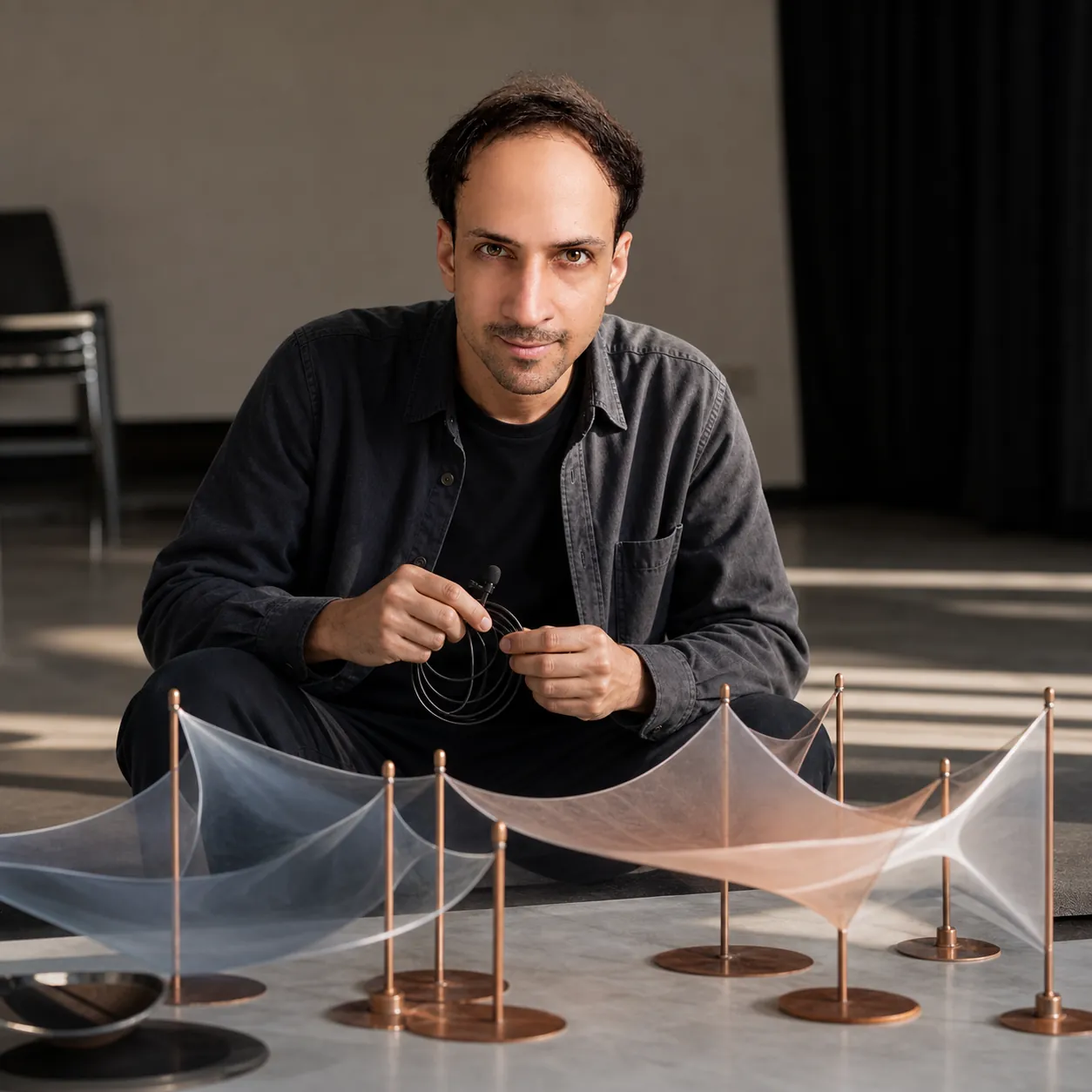
Use the attached reference photo as the identity reference: keep the same face, skin tone, hair and features as the person in that photo, without beautifying, aging or altering them. Create a square 1:1 museum-catalog frame with a strong first read and a slower second read. Location: a quiet rehearsal room after a public conversation. Show the subject in a charcoal overshirt over a plain crew-neck shirt and dark trousers, removing a lapel microphone and winding its cable without haste. Make one rigorous physical condition the conceptual engine: a translucent field whose density reflects confidence without displaying numbers presents one recommendation while keeping the rejected possibilities materially present. Explore the ethical value of keeping multiple possible outcomes visible; direct expression and posture toward open deliberation, never melodrama or ad-like confidence. Use a 100mm macro-to-portrait hybrid: one material detail near the lens and the subject's face readable beyond it, both physically plausible. Make the composition do not let one option dominate by scale or brightness. Render it as conceptual technology portraiture combining tactile data physicalization, restrained contemporary art direction, believable mechanisms, and human-centered editorial realism, using high, diffused desert daylight moderated by real shade and bounced warm ground light and a palette of clean off-white, deep navy, and one oxidized-copper accent. Keep one identity-locked person, credible hands and fingers, natural fabric, and coherent scale, contact, reflections, shadows, airflow, deformation, and materials. Background people only when essential, always secondary and clearly different. Avoid robot brains, binary rain, chat windows, floating dashboards, branded devices, and fake code. No text, labels, logos, signatures, watermarks, random symbols, plastic skin, excessive bloom, or glossy AI finish.
Treat that reference as the character anchor and change only the scene. Create a square 1:1 museum-catalog frame with a strong first read and a slower...
Treat that reference as the character anchor and change only the scene. Create a square 1:1 museum-catalog frame with a strong first read and a slower...
Treat that reference as the character anchor and change only the scene. Create a square 1:1 museum-catalog frame with a strong first read and a slower...
Treat that reference as the character anchor and change only the scene. Create a square 1:1 museum-catalog frame with a strong first read and a slower...
Treat that reference as the character anchor and change only the scene. Create a square 1:1 museum-catalog frame with a strong first read and a slower...
Treat that reference as the character anchor and change only the scene. Create a square 1:1 museum-catalog frame with a strong first read and a slower...
Treat that reference as the character anchor and change only the scene. Create a square 1:1 museum-catalog frame with a strong first read and a slower...
Treat that reference as the character anchor and change only the scene. Create a square 1:1 museum-catalog frame with a strong first read and a slower...
Treat that reference as the character anchor and change only the scene. Create a square 1:1 museum-catalog frame with a strong first read and a slower...
Treat that reference as the character anchor and change only the scene. Create a square 1:1 museum-catalog frame with a strong first read and a slower...
Treat that reference as the character anchor and change only the scene. Create a square 1:1 museum-catalog frame with a strong first read and a slower...
Treat that reference as the character anchor and change only the scene. Create a square 1:1 museum-catalog frame with a strong first read and a slower...