جاري التحميل...


جاري التحميل...
Create a square 1:1 museum-catalog frame with a strong first read and a slower second read. Location: a stone bench beside a mirrored column seam in a quiet...
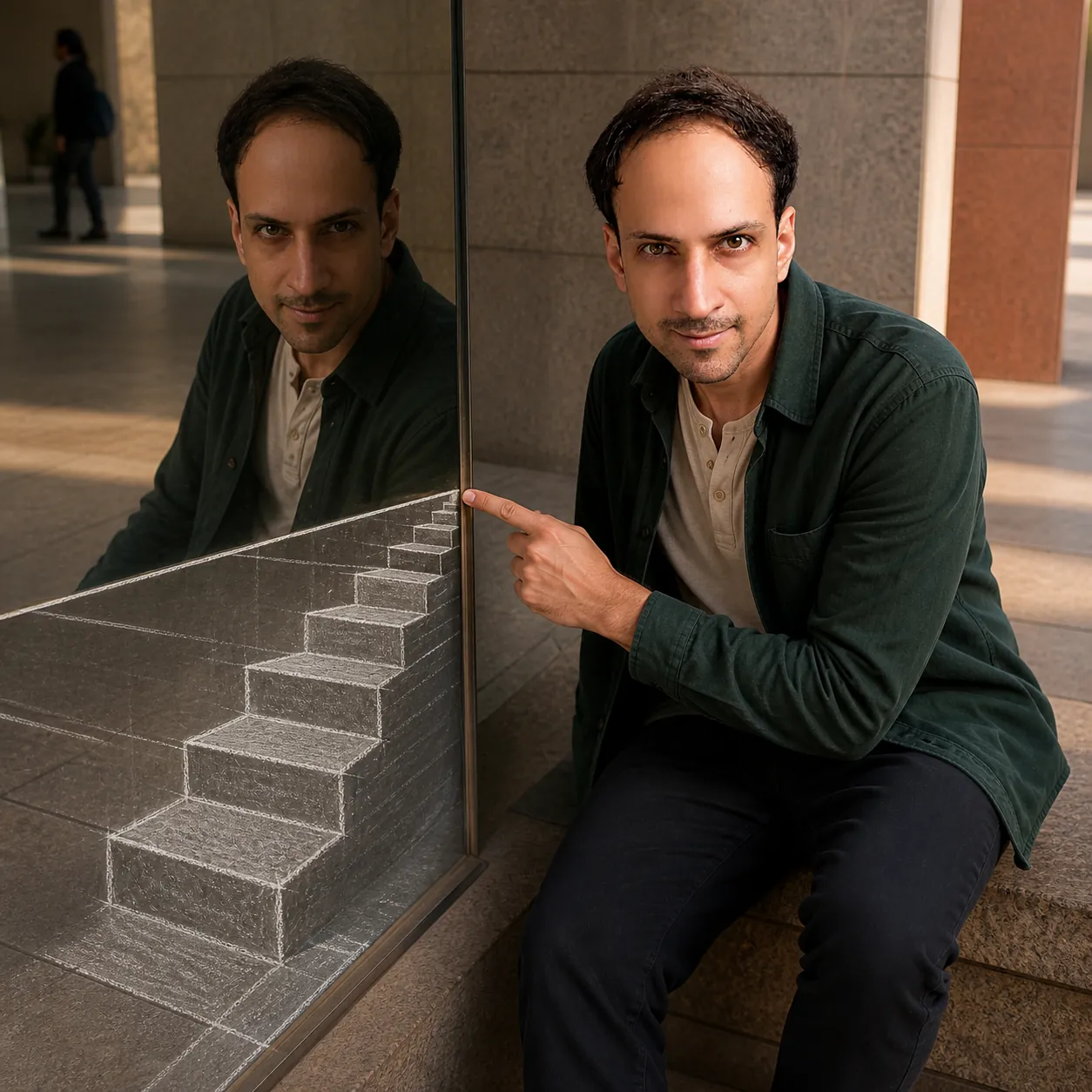
Use the attached reference photo as the identity reference: keep the same face, skin tone, hair and features as the person in that photo, without beautifying, aging or altering them. Create a square 1:1 museum-catalog frame with a strong first read and a slower second read. Location: a stone bench beside a mirrored column seam in a quiet lobby. Show the subject in a deep green overshirt over an ecru henley, running one finger down the mirror's visible seam. Treat this mechanism as the frame’s governing rule: a chalk staircase drawn on a plaza that appears climbable from the camera's single surveyed station lets true scale arrive gently and retire the illusion without breaking it. Explore whether an illusion that borrows real geometry is lying at all; direct expression and posture toward sober amusement, never melodrama or ad-like confidence. Frame from one step off the true station so the illusion is caught mid-collapse, still half convincing. Make the composition keep the illusion perfect and one clue to its making equally sharp. Render it as conceptual trompe-l'oeil portraiture combining honest painted surfaces, restrained contemporary art direction, believable construction, and human-centered editorial realism, using high, diffused desert daylight moderated by real shade and bounced warm ground light and a palette of chalk white, warm grey, and one architectural terracotta. Keep one identity-locked subject, credible hands and fingers, natural fabric, and coherent scale, contact, reflections, shadows, airflow, deformation, and materials. Background people only when essential, always secondary and clearly different. Avoid theme-park 3D chalk-art gimmicks, fisheye warping, kaleidoscope filters, dream-sequence blur, and gravity-defying poses. No text, labels, logos, signatures, watermarks, random symbols, plastic skin, excessive bloom, or glossy AI finish.
Treat that reference as the character anchor and change only the scene. Create a square 1:1 museum-catalog frame with a strong first read and a slower...
Treat that reference as the character anchor and change only the scene. Create a square 1:1 museum-catalog frame with a strong first read and a slower...
Treat that reference as the character anchor and change only the scene. Create a square 1:1 museum-catalog frame with a strong first read and a slower...
Treat that reference as the character anchor and change only the scene. Create a square 1:1 museum-catalog frame with a strong first read and a slower...
Treat that reference as the character anchor and change only the scene. Create a square 1:1 museum-catalog frame with a strong first read and a slower...
Treat that reference as the character anchor and change only the scene. Create a square 1:1 museum-catalog frame with a strong first read and a slower...
Treat that reference as the character anchor and change only the scene. Create a square 1:1 museum-catalog frame with a strong first read and a slower...
Treat that reference as the character anchor and change only the scene. Create a square 1:1 museum-catalog frame with a strong first read and a slower...
Treat that reference as the character anchor and change only the scene. Create a square 1:1 museum-catalog frame with a strong first read and a slower...
Treat that reference as the character anchor and change only the scene. Create a square 1:1 museum-catalog frame with a strong first read and a slower...
Treat that reference as the character anchor and change only the scene. Create a square 1:1 museum-catalog frame with a strong first read and a slower...
Treat that reference as the character anchor and change only the scene. Create a square 1:1 museum-catalog frame with a strong first read and a slower...