تخطَّ إلى المحتوى

برومبتات الصور

برومبتات لمولدات الصور: بورتريهات وفن وتصوير.

تم العثور على 4209
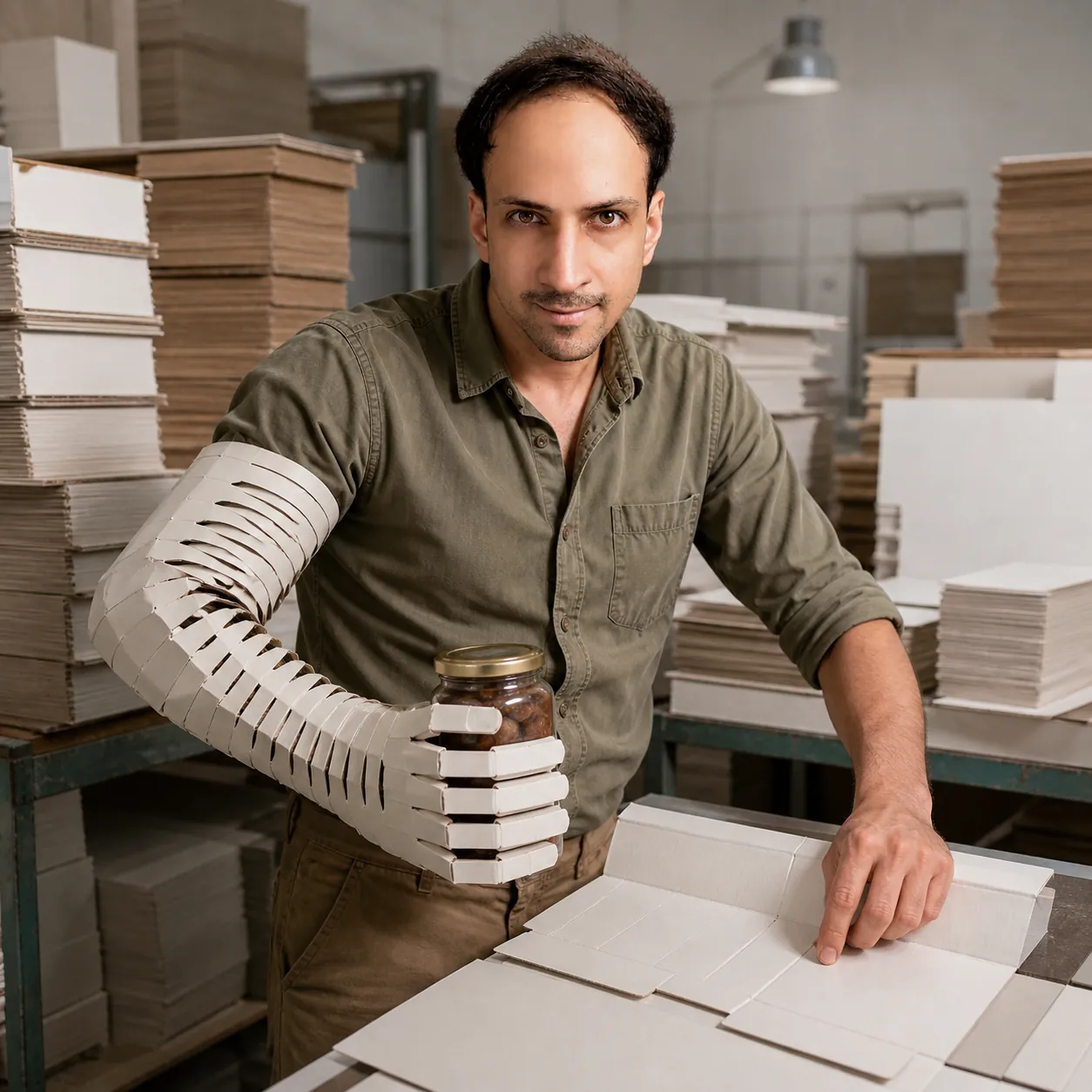
Paper Fingers Grip the Jar — AI Portrait Prompt
صورةAI Portraits

Turn your own photo into a portrait in a date-packing shed stacked chest-high with flattened new cartons. Keeps your face unchanged.

من نص البرومبت

Use the attached reference photo as the identity reference: keep the same face, skin tone, hair and features as the person in that photo, without beautifying, aging or altering them. Create a square 1:1 museum-catalog frame with a strong first read and a slower second read at exactly 2880x2880 pixels. Location: a date-packing shed stacked chest-high with flattened new cartons. Show them in a washed olive utility shirt tucked into canvas work trousers, folding one carton up from flat with four practiced creases. Make one rigorous physical condition the conceptual engine: a kirigami sleeve whose parallel slits buckle into dozens of angled paper fingers that grip a filled glass jar puts work the eye reserves for steel onto material sold by the ream. Explore where the line runs between craft patience and structural engineering; direct expression and posture toward measured astonishment, never melodrama or ad-like confidence. Use an eye-level 58mm medium-format viewpoint with natural perspective and honest paper texture. Make the composition let white paper carry the frame's brightest and quietest values. Render it as high-concept paper-engineering portraiture built from working cut-and-fold structures, documentary realism, gallery-grade craft styling, and physically truthful load behavior, using even overhead workroom light shaped so white surfaces hold visible tone steps and a palette of oat paper, cool slate, and one restrained saffron thread. Photorealistic: this must read as a real photograph from a physical camera, never an illustration, painting, or 3D render. Resolve real surface detail: the difference between a wiped surface and a clean one, faint tide marks on ceramic, and metal dulled unevenly by touch. Keep one identity-locked person, credible hands and fingers, natural fabric, and coherent scale, contact, reflections, shadows, airflow, deformation, and materials. Background people only when essential, always secondary and clearly different. Avoid origami cranes, glowing magical paper, floating confetti, printed lettering on sheets, and weightless CGI folds. No text, labels, logos, signatures, watermarks, random symbols, plastic skin, excessive bloom, or glossy AI finish.
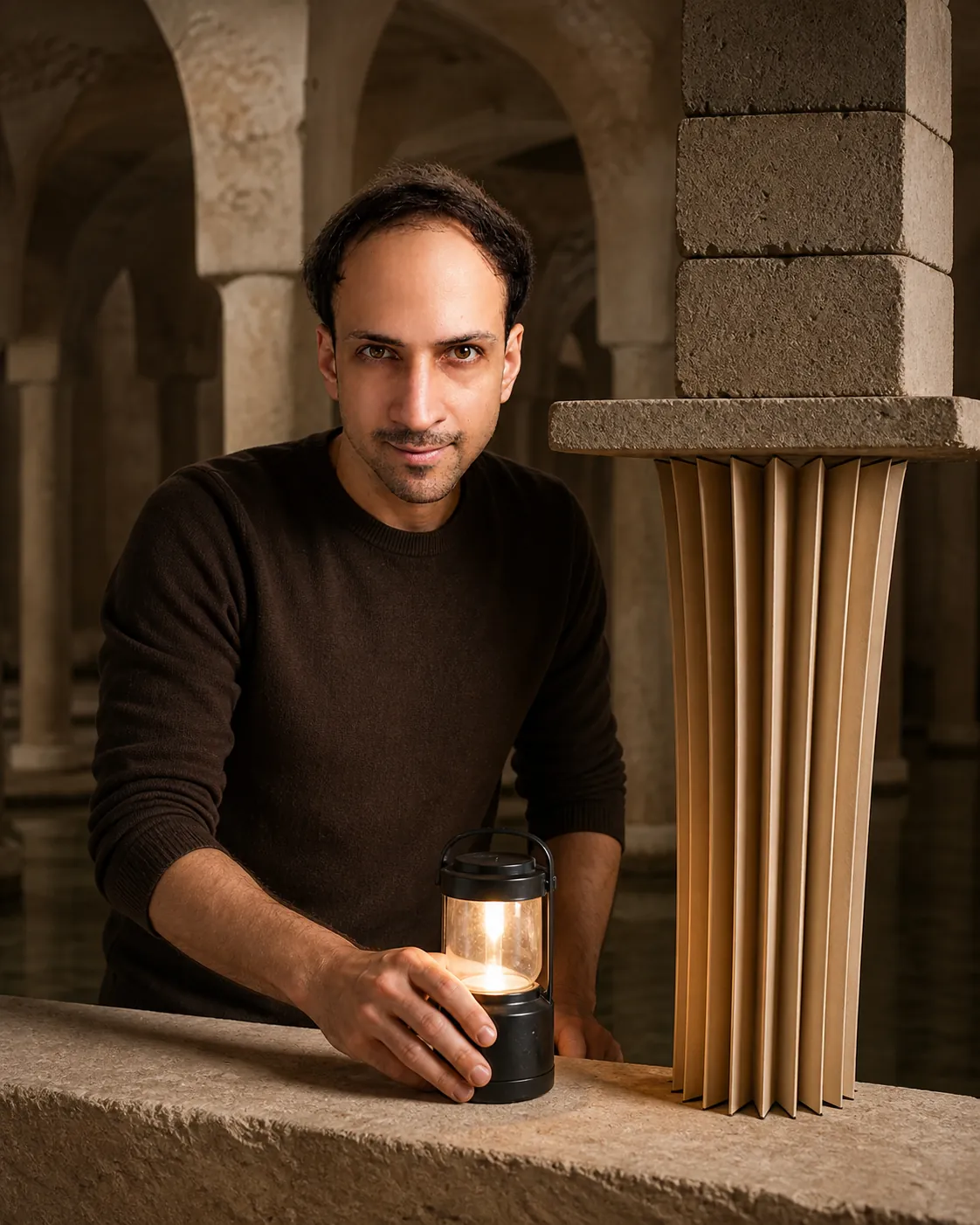
Lantern in the Old Cistern — AI Portrait Prompt
صورةAI Portraits

Turn your own photo into a portrait in a dry historic cistern beneath old Riyadh, cool and windless. Keeps your face unchanged.

من نص البرومبت

Use the attached reference photo as the identity reference: keep the same face, skin tone, hair and features as the person in that photo, without beautifying, aging or altering them. Build a portrait 4:5 editorial artwork with protected negative space and a fully readable face at exactly 2560x3200 pixels. Location: a dry historic cistern beneath old Riyadh, cool and windless. Show the subject in a dark brown crew-neck sweater with sleeves pushed to mid-forearm, setting a battery lantern onto a stone ledge. Make one rigorous physical condition the conceptual engine: a slender kraft column pleated into crisp vertical flutes that carries a knee-high stack of concrete blocks without flexing forces the eye to re-check a material it thought it knew. Explore how a fold multiplies strength without adding a single gram of material; direct expression and posture toward gentle rigor, never melodrama or ad-like confidence. Frame across the tabletop at the structure's own height so the span and their eyes share one focal plane. Make the composition let white paper carry the frame's brightest and quietest values. Render it as gallery-grade structural still-life portraiture built from real folded spans, matte paper materiality, unexaggerated shadow logic, and patient architectural composition, using even overhead workroom light shaped so white surfaces hold visible tone steps and a palette of warm white, shadowed cream, and one edge of teal. Photorealistic: this must read as a real photograph from a physical camera, never an illustration, painting, or 3D render. Resolve real surface detail: fine grit in the texture of concrete, efflorescence at damp edges, and hairline cracks that follow stress. Keep one identity-locked person, credible hands and fingers, natural fabric, and coherent scale, contact, reflections, shadows, airflow, deformation, and materials. Background people only when essential, always secondary and clearly different. Avoid origami cranes, glowing magical paper, floating confetti, printed lettering on sheets, and weightless CGI folds. No text, labels, logos, signatures, watermarks, random symbols, plastic skin, excessive bloom, or glossy AI finish.
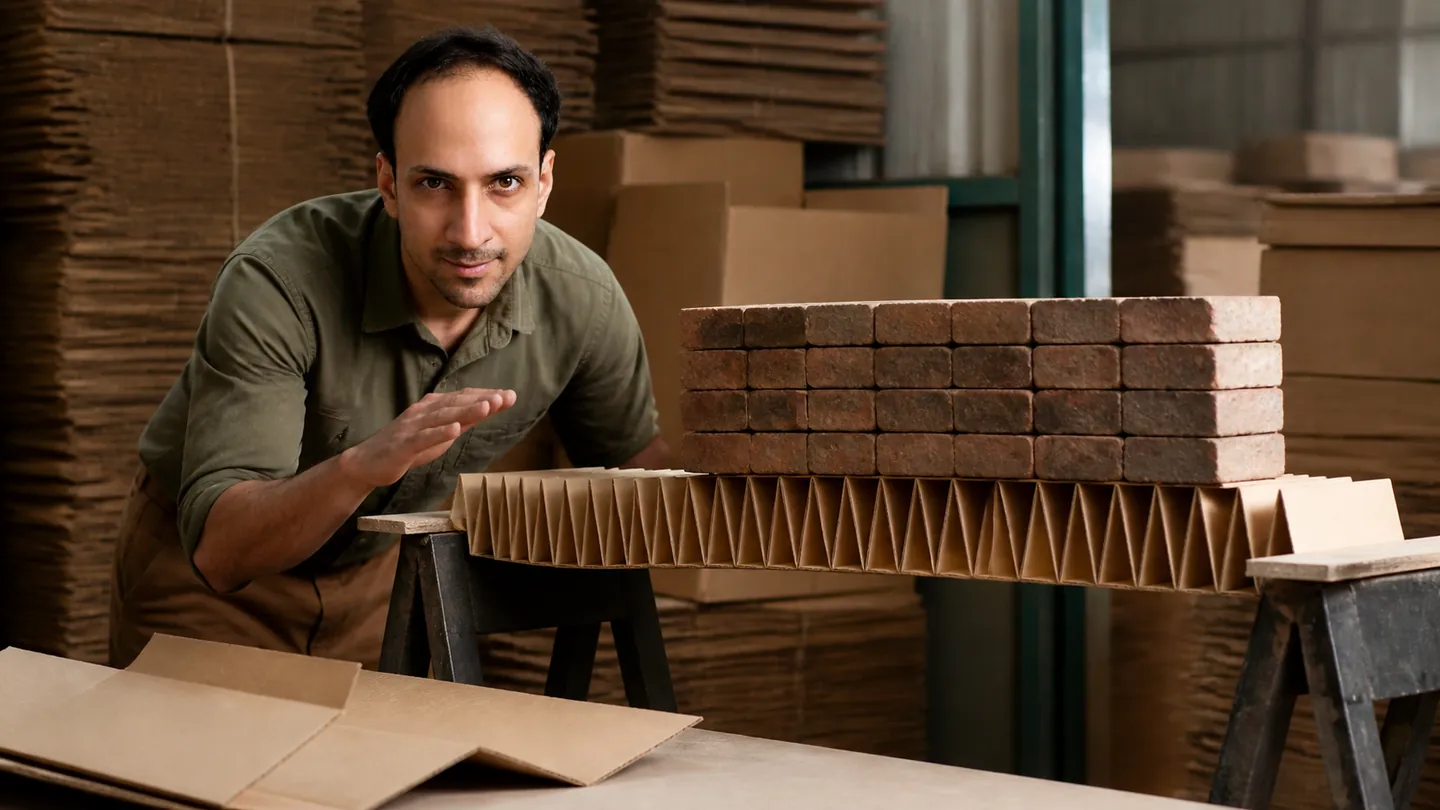
Cartons in the Date Shed — AI Portrait Prompt
صورةAI Portraits

Turn your own photo into a portrait in a date-packing shed stacked chest-high with flattened new cartons. Keeps your face unchanged.

من نص البرومبت

Use the attached reference photo as the identity reference: keep the same face, skin tone, hair and features as the person in that photo, without beautifying, aging or altering them. Compose a wide 16:9 narrative image where environment and subject carry equal meaning at exactly 3808x2144 pixels. Location: a date-packing shed stacked chest-high with flattened new cartons. Show the subject in a washed olive utility shirt tucked into canvas work trousers, folding one carton up from flat with four practiced creases. Use this advanced image-making device as the core logic: a bridge pleated from one kraft sheet whose deep accordion corrugations span two trestles beneath a single fired brick stands up to demands that look plainly unfair to paper. Explore why a material that tears between two fingers can be trusted with real weight; direct expression and posture toward quiet conviction, never melodrama or ad-like confidence. Use a 90mm close-portrait hybrid: one crease edge razor sharp near the lens, their face readable beyond it. Make the composition place their hand near the structure without ever touching the load. Render it as high-concept paper-engineering portraiture built from working cut-and-fold structures, documentary realism, gallery-grade craft styling, and physically truthful load behavior, using even overhead workroom light shaped so white surfaces hold visible tone steps and a palette of warm white, shadowed cream, and one edge of teal. Photorealistic: this must read as a real photograph from a physical camera, never an illustration, painting, or 3D render. Give the space honest scale: real distance between foreground, subject, and far wall. Resolve real surface detail: the difference between a wiped surface and a clean one, faint tide marks on ceramic, and metal dulled unevenly by touch. Keep one identity-locked person, credible hands and fingers, natural fabric, and coherent scale, contact, reflections, shadows, airflow, deformation, and materials. Background people only when essential, always secondary and clearly different. Avoid origami cranes, glowing magical paper, floating confetti, printed lettering on sheets, and weightless CGI folds. No text, labels, logos, signatures, watermarks, random symbols, plastic skin, excessive bloom, or glossy AI finish.
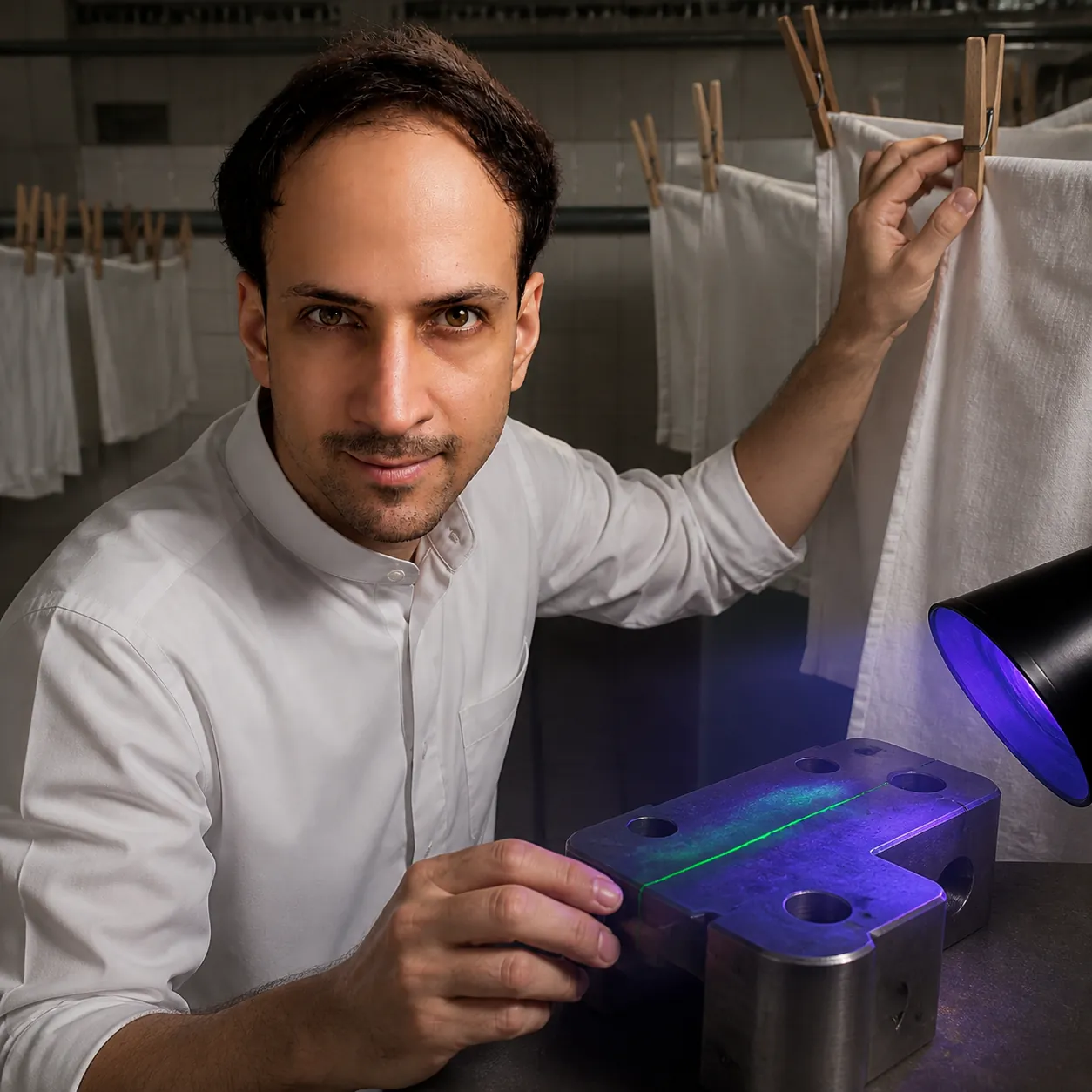
The Crack That Draws Itself — AI Portrait Prompt
صورةAI Portraits

Turn your own photo into a museum demonstration portrait in a tiled drying room with line-dried whites hanging stiff on racks. Keeps your face unchanged.

من نص البرومبت

Use the attached reference photo as the identity reference: keep the same face, skin tone, hair and features as the person in that photo, without beautifying, aging or altering them. Create a square 1:1 museum-catalog frame with a strong first read and a slower second read at exactly 2880x2880 pixels. Location: a tiled drying room with line-dried whites hanging stiff on racks. Show them in a plain white summer traditional Gulf outfit with the sleeves folded once, unclipping one dried sheet from its wooden pegs. The impossible-looking event must obey this clear system: a machined aluminum bracket whose hairline crack draws itself as a bright green thread under ultraviolet once fluorescent penetrant has seeped in takes its second color from light nobody in the room can see. Explore whether a hidden property is real before anyone builds the lamp for it; direct expression and posture toward patient verification, never melodrama or ad-like confidence. Use a 90mm close-focus portrait lens so the emitting detail and their eyes both stay believable. Make the composition leave one edge of the object still unexplored by the light. Render it as museum demonstration realism combining honest low-light photography, spectrally plausible glow, plain material texture, and unhurried human presence in frame, using a single low lamp holding the room while unseen ultraviolet does the rest and a palette of charcoal, bone grey, and one band of mineral orange. Photorealistic: this must read as a real photograph from a physical camera, never an illustration, painting, or 3D render. Resolve real surface detail: condensation beading at true size, liquid meniscus curving against glass, and wet surfaces darker than dry ones. Keep one identity-locked person, credible hands and fingers, natural fabric, and coherent scale, contact, reflections, shadows, airflow, deformation, and materials. Background people only when essential, always secondary and clearly different. Avoid rave lighting rigs, uniform purple haze, CGI bioluminescent forests, and glowing eyes. No text, labels, logos, signatures, watermarks, random symbols, plastic skin, excessive bloom, or glossy AI finish.
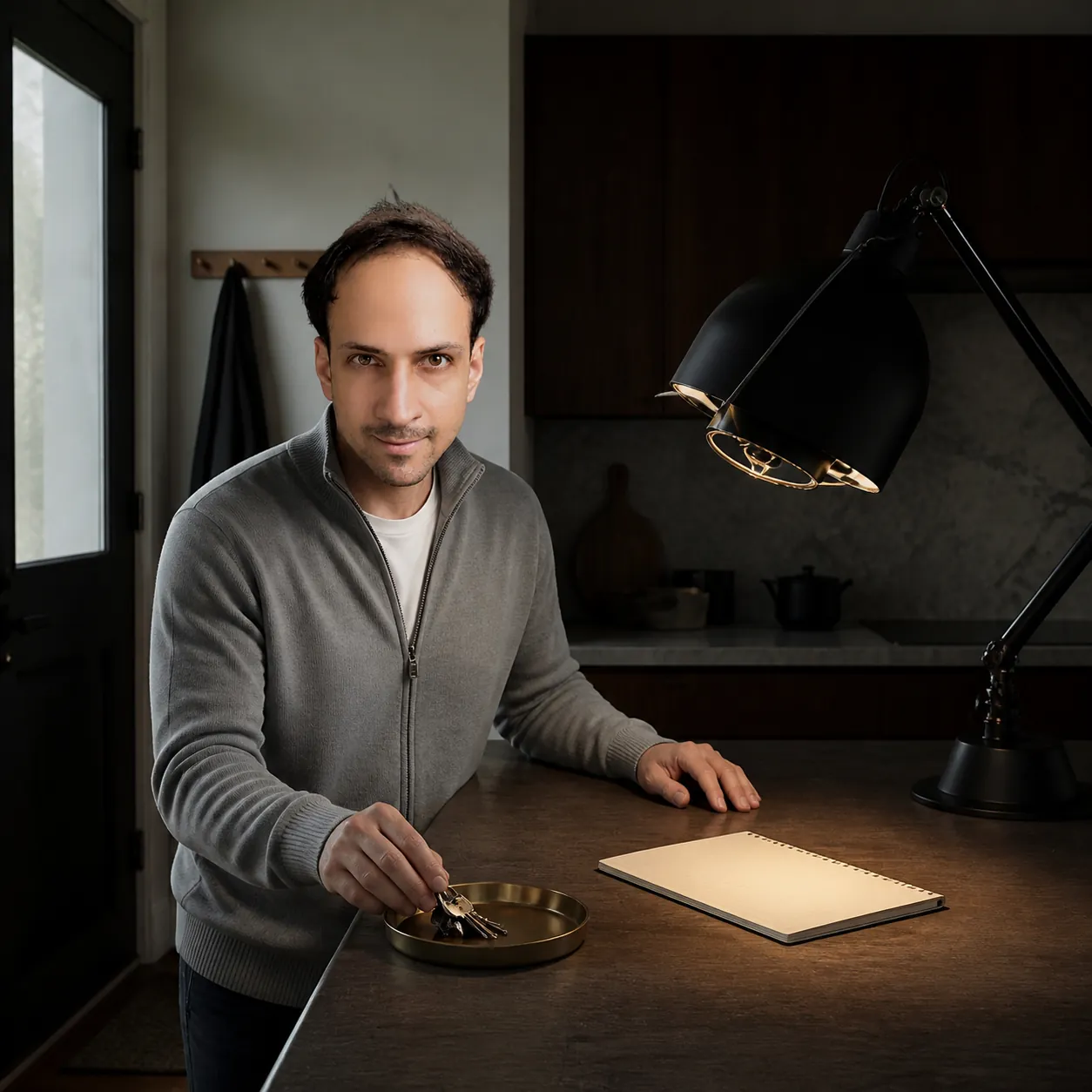
Attention's Architecture: Kitchen Counter Arranged — AI Portrait Prompt
صورةAI Portraits

Turn your own photo into a conceptual attention portrait in a kitchen counter arranged as tomorrow's launchpad by the door. Keeps your face unchanged.

من نص البرومبت

Use the attached reference photo as the identity reference: keep the same face, skin tone, hair and features as the person in that photo, without beautifying, aging or altering them. Create a square 1:1 museum-catalog frame with a strong first read and a slower second read. Location: a kitchen counter arranged as tomorrow's launchpad by the door. Show the subject in a soft grey zip cardigan over a white crew-neck, placing keys into a shallow brass tray. Build the artwork around this material rule: a desk lamp fitted with a physical iris diaphragm narrowed until light falls on one page and nothing else grants every ending a small, physical arrival instead of silence. Explore how much world one page needs when the rest goes unlit; direct expression and posture toward steady self-possession, never melodrama or ad-like confidence. Use a measured wide 28mm view with the subject near one-third of the frame and no stretched limbs. Make the composition hold generous empty space where the clutter used to live. Render it as conceptual attention portraiture combining tactile time-keeping architecture, restrained contemporary art direction, believable devices, and human-centered editorial realism, using soft north-facing daylight with restrained contrast and visible skin texture and a palette of walnut, slate, and one small field of lamp amber. Keep one identity-locked person, credible hands and fingers, natural fabric, and coherent scale, contact, reflections, shadows, airflow, deformation, and materials. Background people only when essential, always secondary and clearly different. Avoid productivity-app screens, pomodoro-branded props, motivational posters, bullet-journal styling spreads, and pill-bottle imagery. No text, labels, logos, signatures, watermarks, random symbols, plastic skin, excessive bloom, or glossy AI finish.
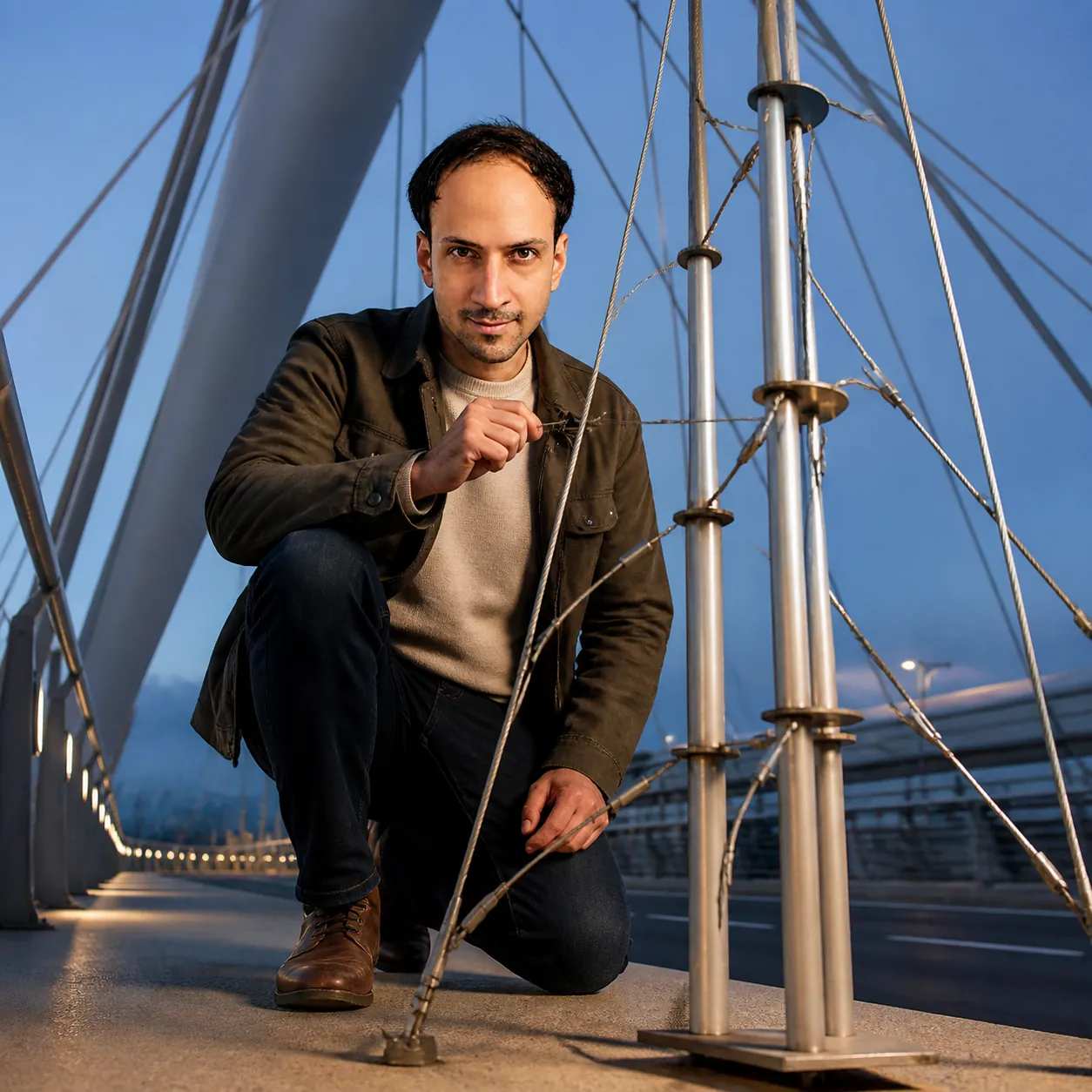
Tuning the Tower on the Footbridge — AI Portrait Prompt
صورةAI Portraits

Turn your own photo into a quiet museum-demonstration portrait in the walkway of a cable-stayed footbridge over an empty boulevard. Keeps your face unchanged.

من نص البرومبت

Use the attached reference photo as the identity reference: keep the same face, skin tone, hair and features as the person in that photo, without beautifying, aging or altering them. Create a square 1:1 museum-catalog frame with a strong first read and a slower second read at exactly 2880x2880 pixels. Location: the walkway of a cable-stayed footbridge over an empty boulevard. Show them in a dark olive field jacket over a cream crew-neck sweater, tapping a knuckle twice against a stay cable. Treat this mechanism as the frame’s governing rule: a chest-high tower of six aluminum struts, none touching another, held vertical by a lattice of tensioned steel cables they tune reads as impossible from across the room and inevitable from a handspan. Explore how pulling, the humbler force, ends up doing the noble work of holding; direct expression and posture toward earned ease, never melodrama or ad-like confidence. Frame from knee height looking gently upward so the load path and their face stack in one vertical. Make the composition keep the background plain wherever a thin cable must read. Render it as quiet museum-demonstration photography combining engineering-model exactness, visible fastener detail, true-to-load cable sag and straightness, and restrained human-scale staging, using first blue daylight with one warm tungsten pool held on the work and a palette of chalk white, desert tan, and one deep indigo strap. Photorealistic: this must read as a real photograph from a physical camera, never an illustration, painting, or 3D render. Resolve real surface detail: leather creased along the lines of use, stitching slightly irregular, and edges burnished from contact. Keep one identity-locked person, credible hands and fingers, natural fabric, and coherent scale, contact, reflections, shadows, airflow, deformation, and materials. Background people only when essential, always secondary and clearly different. Avoid magician's-levitation staging, slack lines pretending to carry load, melted wood joints, and hovering furniture ads. No text, labels, logos, signatures, watermarks, random symbols, plastic skin, excessive bloom, or glossy AI finish.
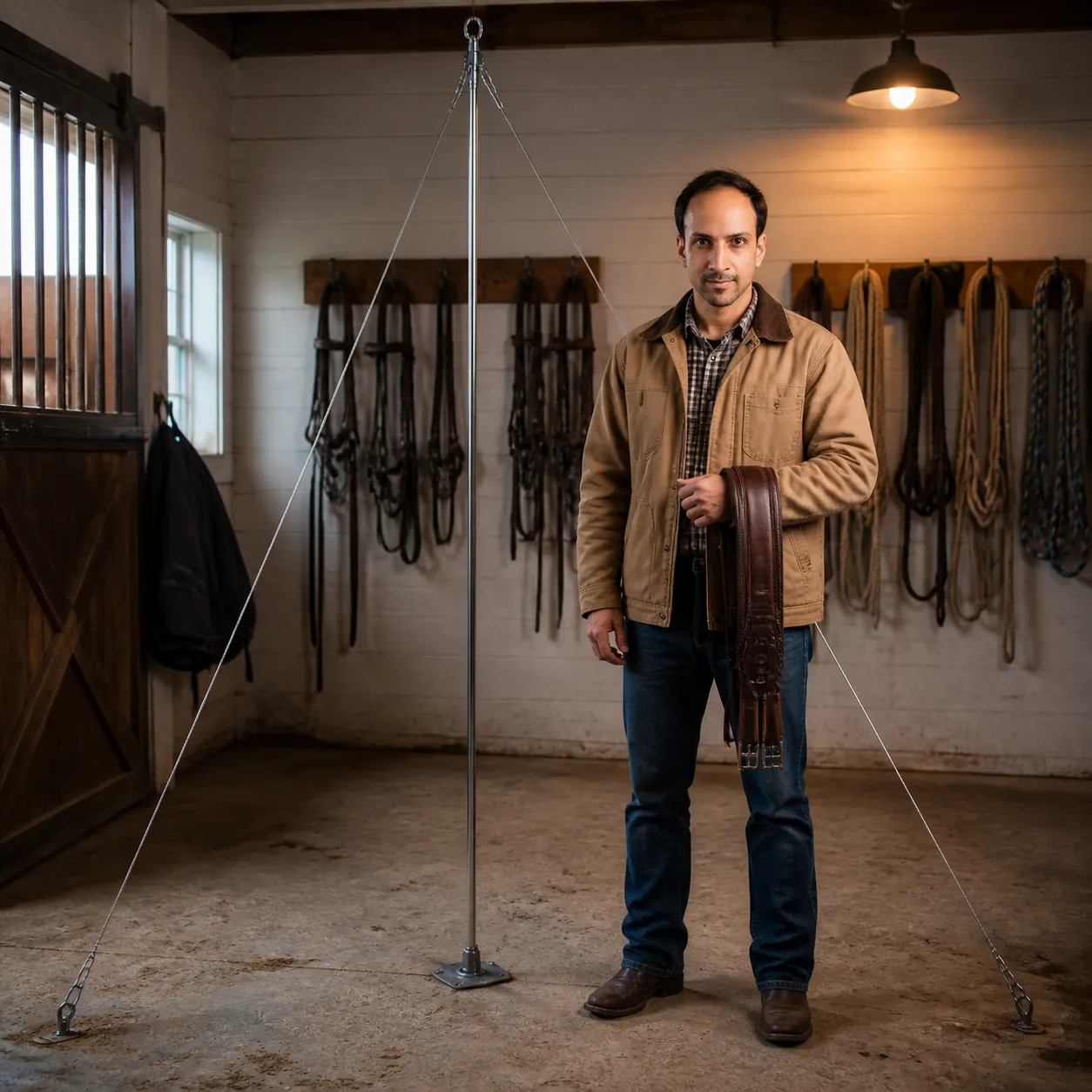
A Guyed Mast in the Tack Room — AI Portrait Prompt
صورةAI Portraits

Turn your own photo into a documentary workshop portrait in a stable tack room hung with bridles and neat rope halters. Keeps your face unchanged.

من نص البرومبت

Use the attached reference photo as the identity reference: keep the same face, skin tone, hair and features as the person in that photo, without beautifying, aging or altering them. Create a square 1:1 museum-catalog frame with a strong first read and a slower second read at exactly 2880x2880 pixels. Location: a stable tack room hung with bridles and neat rope halters. Show them in a tan barn jacket over a small-checked flannel shirt, draping a leather girth strap over one forearm. Use this advanced image-making device as the core logic: a mast of slender aluminum rod that would buckle under its own height alone, standing dead straight inside three taut guy lines reads as impossible from across the room and inevitable from a handspan. Explore what changes in a person who learns that gaps can bear weight; direct expression and posture toward settled certainty, never melodrama or ad-like confidence. Use a 35mm environmental view that keeps the entire structure, its anchors, and the person inside one undistorted frame. Make the composition keep the background plain wherever a thin cable must read. Render it as documentary workshop realism built from believable joinery, taut-line specularity, accurate gravity in every hanging element, and unhurried craftsman-portrait framing, using first blue daylight with one warm tungsten pool held on the work and a palette of chalk white, desert tan, and one deep indigo strap. Photorealistic: this must read as a real photograph from a physical camera, never an illustration, painting, or 3D render. Resolve real surface detail: rubber gone chalky with age, painted metal chipped to primer, and plastic yellowed only where light reaches it. Keep one identity-locked person, credible hands and fingers, natural fabric, and coherent scale, contact, reflections, shadows, airflow, deformation, and materials. Background people only when essential, always secondary and clearly different. Avoid magician's-levitation staging, slack lines pretending to carry load, melted wood joints, and hovering furniture ads. No text, labels, logos, signatures, watermarks, random symbols, plastic skin, excessive bloom, or glossy AI finish.
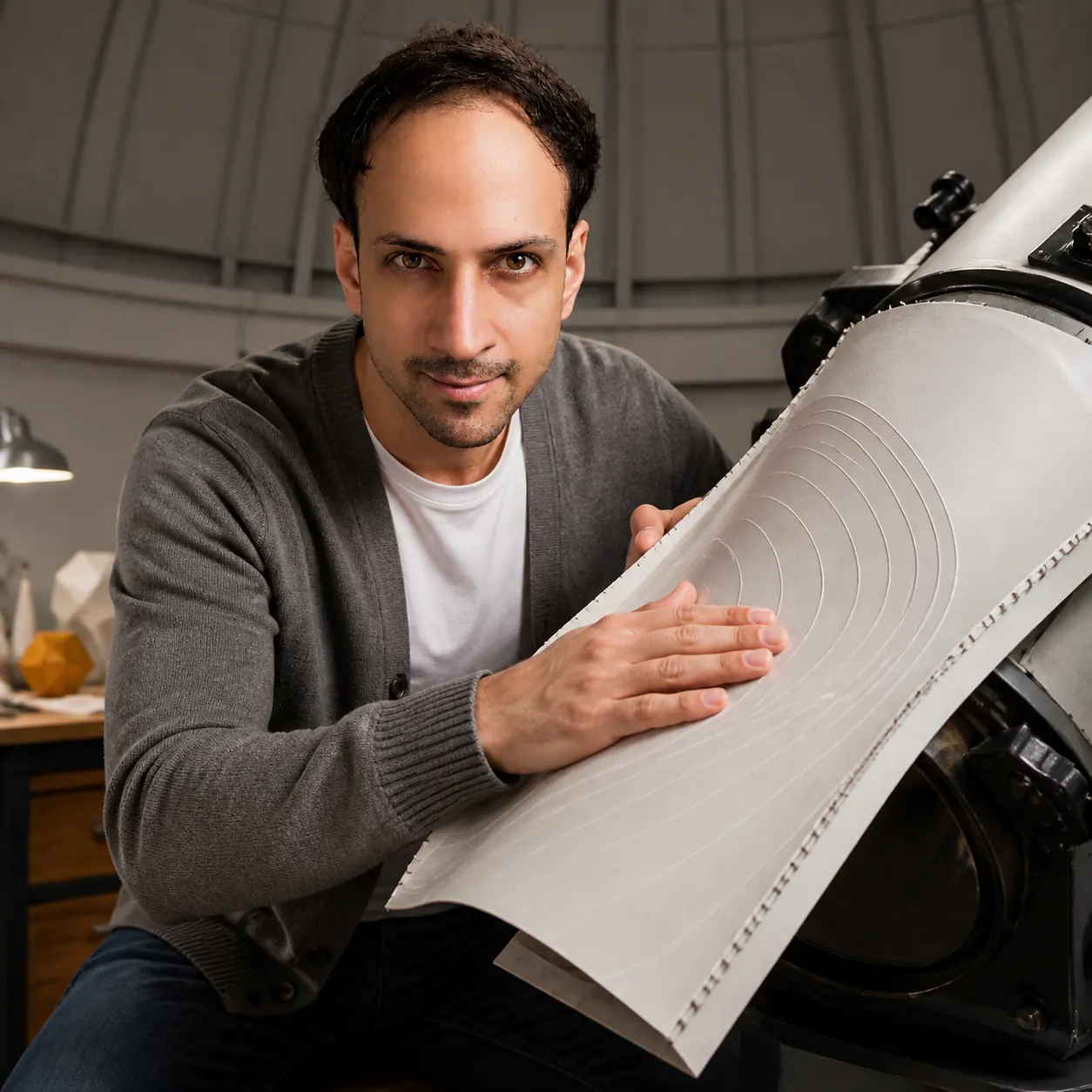
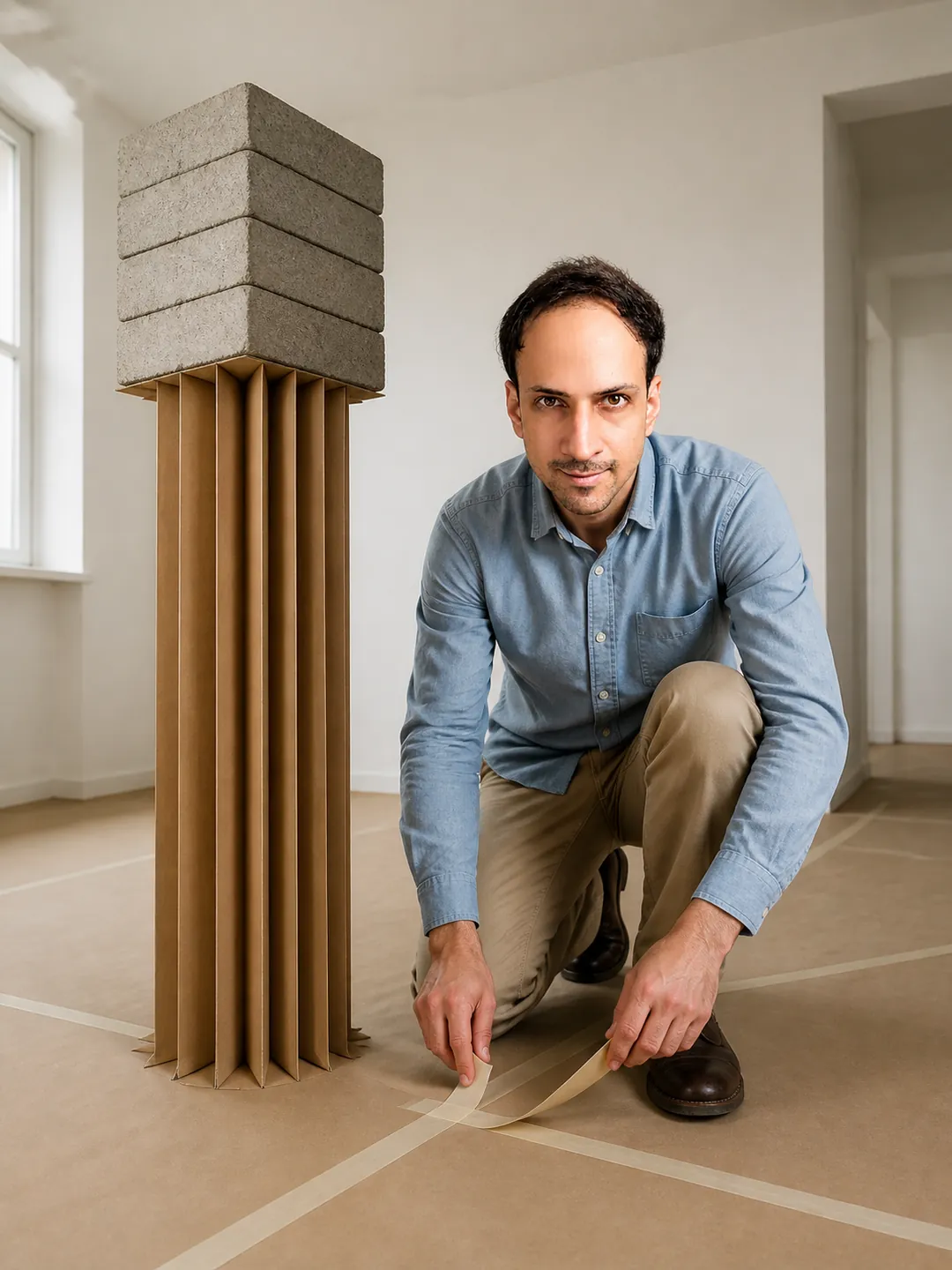
Paper Column in an Empty Flat — AI Portrait Prompt
صورةAI Portraits

Turn your own photo into a portrait in an unfurnished apartment with floors papered over for the painters. Keeps your face unchanged.

من نص البرومبت

Use the attached reference photo as the identity reference: keep the same face, skin tone, hair and features as the person in that photo, without beautifying, aging or altering them. Use a formal 3:4 environmental portrait with complete hands and meaningful objects inside frame at exactly 2480x3312 pixels. Location: an unfurnished apartment with floors papered over for the painters. Show the subject in a light chambray shirt buttoned to the collar over khaki chinos, taping down a lifted seam of floor paper. The impossible-looking event must obey this clear system: a slender kraft column pleated into crisp vertical flutes that carries a knee-high stack of concrete blocks without flexing shows plain stock obeying rules that read as magic and audit as mathematics. Explore how a fold multiplies strength without adding a single gram of material; direct expression and posture toward unhurried focus, never melodrama or ad-like confidence. Use a composed wide 32mm view that gives the structure headroom without stretching their hands or face. Make the composition show the flat stock and the risen form in one frame. Render it as high-concept paper-engineering portraiture built from working cut-and-fold structures, documentary realism, gallery-grade craft styling, and physically truthful load behavior, using flat north window light that keeps every crease edge legible and a palette of unbleached kraft, bone white, and one line of vermilion. Photorealistic: this must read as a real photograph from a physical camera, never an illustration, painting, or 3D render. Resolve real surface detail: hair with individual strands catching light, fine hairs of uneven length, and skin oil giving a low uneven sheen. Keep one identity-locked person, credible hands and fingers, natural fabric, and coherent scale, contact, reflections, shadows, airflow, deformation, and materials. Background people only when essential, always secondary and clearly different. Avoid greeting-card kitsch, torn-edge scrapbook collage, cartoon pop-up books, and burning paper drama. No text, labels, logos, signatures, watermarks, random symbols, plastic skin, excessive bloom, or glossy AI finish.
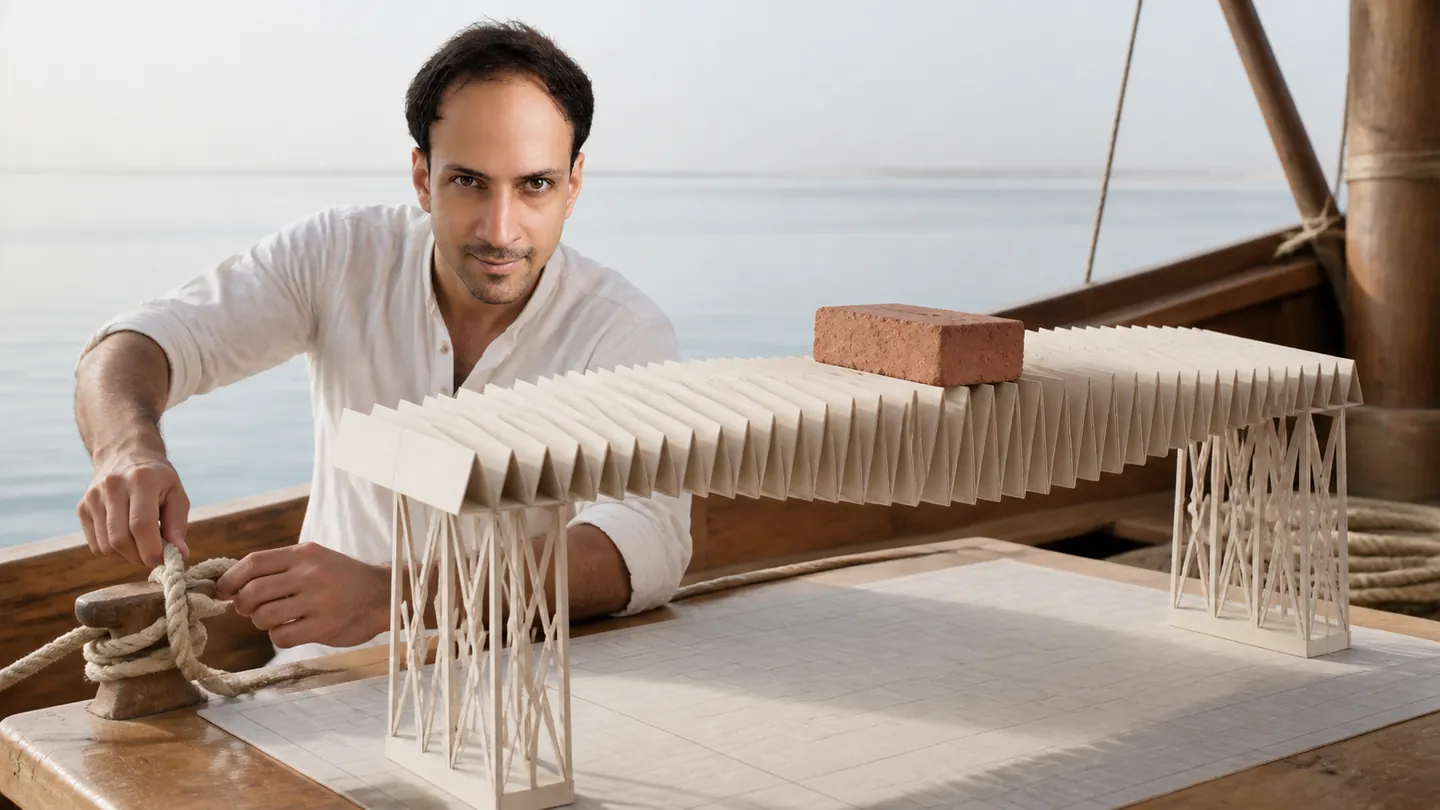
A Saddle Shell in the Observatory — AI Portrait Prompt
صورةAI Portraits

Turn your own photo into a conceptual maker-bench portrait in a small university observatory with its dome slit closed for daylight. Keeps your face unchanged.

من نص البرومبت

Use the attached reference photo as the identity reference: keep the same face, skin tone, hair and features as the person in that photo, without beautifying, aging or altering them. Create a square 1:1 museum-catalog frame with a strong first read and a slower second read at exactly 2880x2880 pixels. Location: a small university observatory with its dome slit closed for daylight. Show them in a heather-grey cardigan over a white crew-neck and dark denim, fitting the felt-lined cover over the telescope tube. The impossible-looking event must obey this clear system: a sheet scored along nested curved creases that springs into a rigid saddle shell resisting the press of their palm reads as an engineering proof while remaining an object of quiet beauty. Explore whether an honest machine can be made entirely of folded card; direct expression and posture toward sober delight, never melodrama or ad-like confidence. Use a 90mm close-portrait hybrid: one crease edge razor sharp near the lens, their face readable beyond it. Make the composition keep every cut edge sharp while the room softens behind. Render it as conceptual maker-bench photography uniting tactile card mechanisms, precise score-line detail, quiet contemporary art direction, and human-centered observational framing, using even overhead workroom light shaped so white surfaces hold visible tone steps and a palette of museum-board grey, soft ivory, and a single ochre accent. Photorealistic: this must read as a real photograph from a physical camera, never an illustration, painting, or 3D render. Resolve real surface detail: skin that reddens slightly under pressure, nail beds with honest colour, and knuckle creases that fold rather than blur. Keep one identity-locked person, credible hands and fingers, natural fabric, and coherent scale, contact, reflections, shadows, airflow, deformation, and materials. Background people only when essential, always secondary and clearly different. Avoid greeting-card kitsch, torn-edge scrapbook collage, cartoon pop-up books, and burning paper drama. No text, labels, logos, signatures, watermarks, random symbols, plastic skin, excessive bloom, or glossy AI finish.
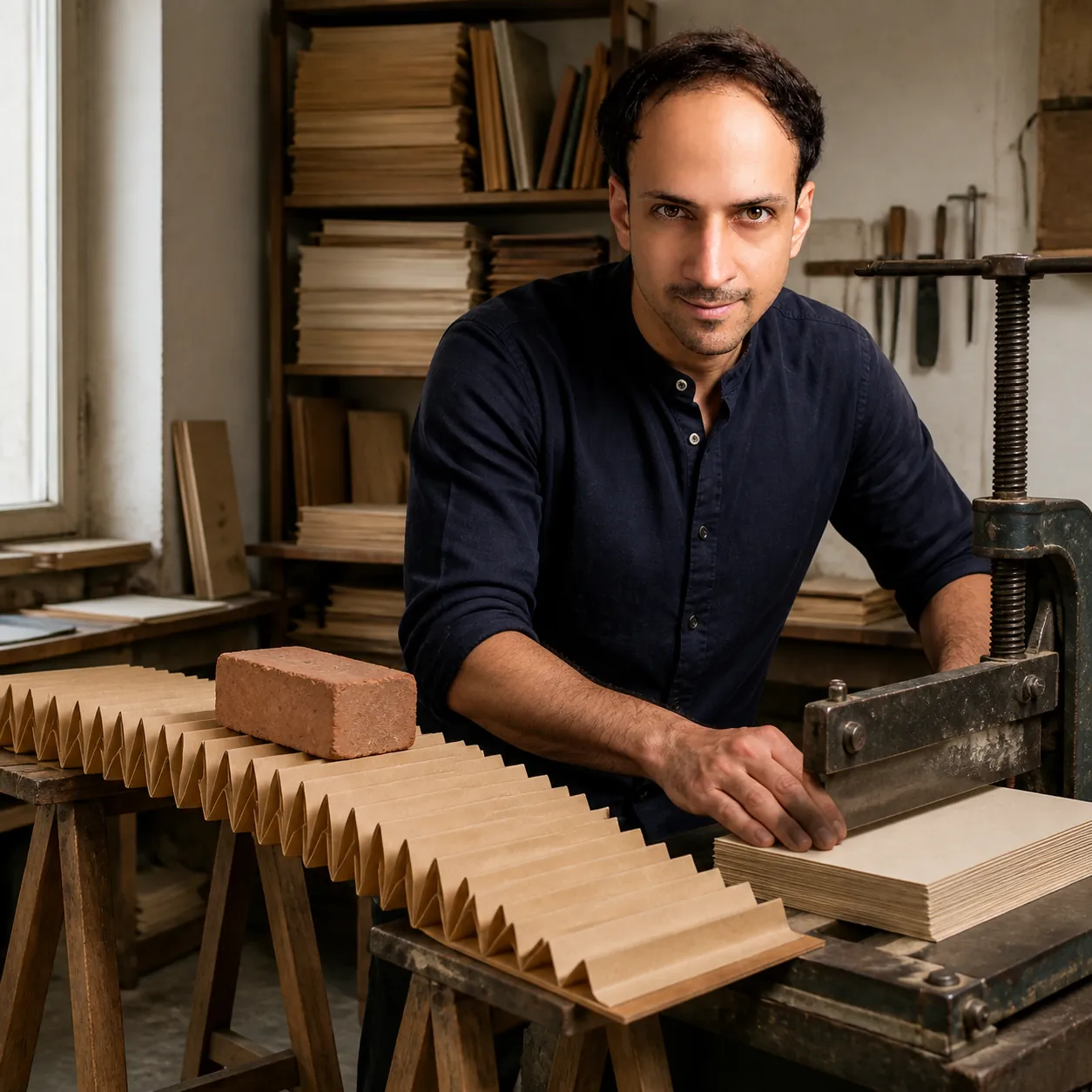
Mooring Line on a Calm Dhow — AI Portrait Prompt
صورةAI Portraits

Turn your own photo into a conceptual maker-bench portrait in the aft deck of a moored dhow on a dead-calm morning. Keeps your face unchanged.

من نص البرومبت

Use the attached reference photo as the identity reference: keep the same face, skin tone, hair and features as the person in that photo, without beautifying, aging or altering them. Compose a wide 16:9 narrative image where environment and subject carry equal meaning at exactly 3808x2144 pixels. Location: the aft deck of a moored dhow on a dead-calm morning. Show the subject in a breathable stone-white shirt with sleeves rolled to the elbow, cleating the mooring line with two unhurried figure-eights. The impossible-looking event must obey this clear system: a bridge pleated from one kraft sheet whose deep accordion corrugations span two trestles beneath a single fired brick makes its whole working structure legible, every member thin enough to read. Explore why a material that tears between two fingers can be trusted with real weight; direct expression and posture toward unhurried focus, never melodrama or ad-like confidence. Frame across the tabletop at the structure's own height so the span and their eyes share one focal plane. Make the composition let white paper carry the frame's brightest and quietest values. Render it as conceptual maker-bench photography uniting tactile card mechanisms, precise score-line detail, quiet contemporary art direction, and human-centered observational framing, using flat north window light that keeps every crease edge legible and a palette of pale card, graphite, and a narrow band of brick. Photorealistic: this must read as a real photograph from a physical camera, never an illustration, painting, or 3D render. Give the frame volume: faint density deepest in the room, contrast easing at the edges. Resolve real surface detail: floor finish worn along the walked line, skirting marked at shoe height, and corners darker than the open floor. Keep one identity-locked person, credible hands and fingers, natural fabric, and coherent scale, contact, reflections, shadows, airflow, deformation, and materials. Background people only when essential, always secondary and clearly different. Avoid greeting-card kitsch, torn-edge scrapbook collage, cartoon pop-up books, and burning paper drama. No text, labels, logos, signatures, watermarks, random symbols, plastic skin, excessive bloom, or glossy AI finish.
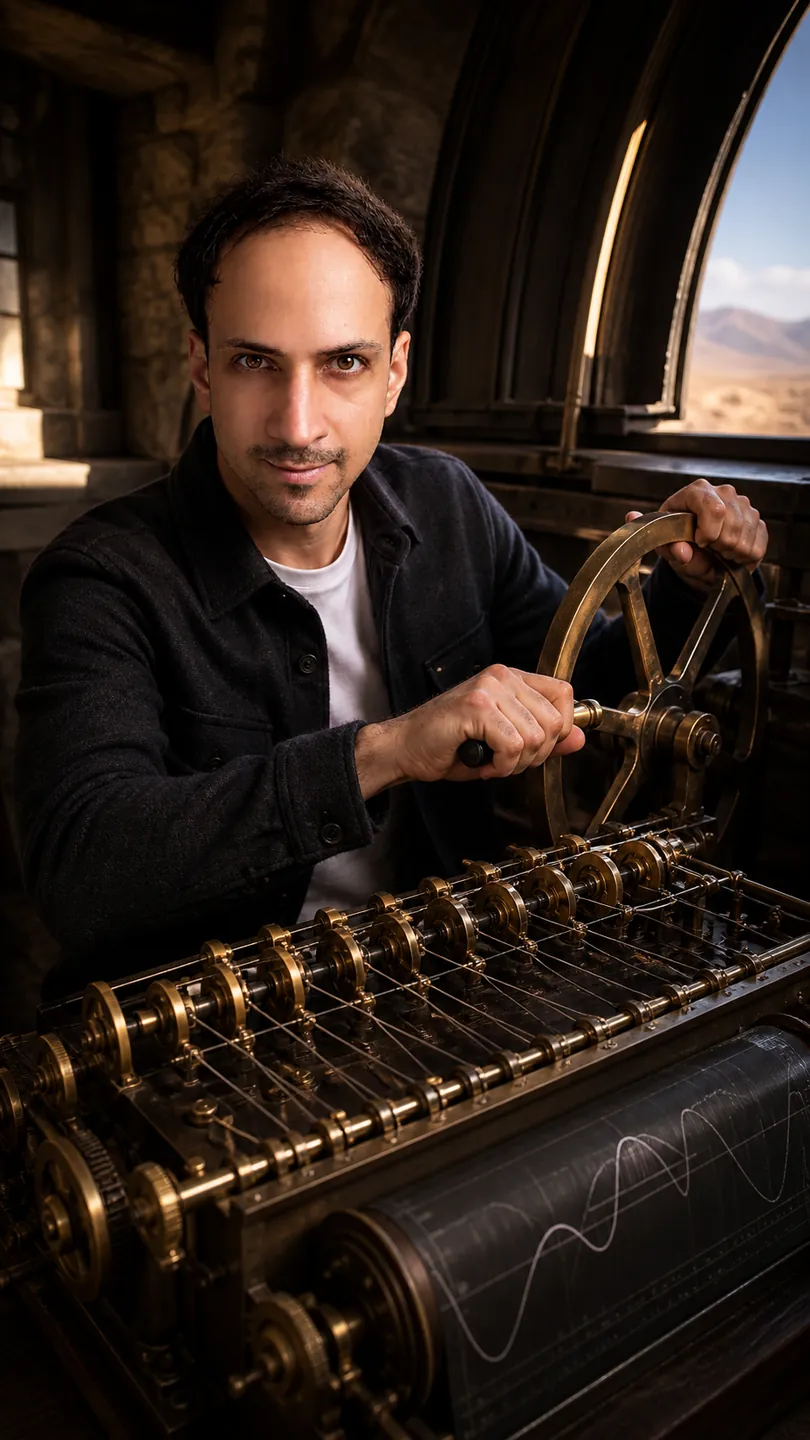
A Paper Bridge Under a Brick — AI Portrait Prompt
صورةAI Portraits

Turn your own photo into a portrait in a bookbinder's atelier with a hand guillotine and racked blank card. Keeps your face unchanged.

من نص البرومبت

Use the attached reference photo as the identity reference: keep the same face, skin tone, hair and features as the person in that photo, without beautifying, aging or altering them. Create a square 1:1 museum-catalog frame with a strong first read and a slower second read at exactly 2880x2880 pixels. Location: a bookbinder's atelier with a hand guillotine and racked blank card. Show them in a collarless indigo work shirt with sleeves rolled past the elbow, settling the guillotine clamp onto a fresh stack of card. Make one rigorous physical condition the conceptual engine: a bridge pleated from one kraft sheet whose deep accordion corrugations span two trestles beneath a single fired brick puts work the eye reserves for steel onto material sold by the ream. Explore why a material that tears between two fingers can be trusted with real weight; direct expression and posture toward patient exactness, never melodrama or ad-like confidence. Use an eye-level 58mm medium-format viewpoint with natural perspective and honest paper texture. Make the composition give the load path one clean diagonal from burden to bearing. Render it as high-concept paper-engineering portraiture built from working cut-and-fold structures, documentary realism, gallery-grade craft styling, and physically truthful load behavior, using flat north window light that keeps every crease edge legible and a palette of unbleached kraft, bone white, and one line of vermilion. Photorealistic: this must read as a real photograph from a physical camera, never an illustration, painting, or 3D render. Resolve real surface detail: true skin texture with pores and fine hair at the hairline, and fabric that creases where it is actually stressed. Keep one identity-locked person, credible hands and fingers, natural fabric, and coherent scale, contact, reflections, shadows, airflow, deformation, and materials. Background people only when essential, always secondary and clearly different. Avoid origami cranes, glowing magical paper, floating confetti, printed lettering on sheets, and weightless CGI folds. No text, labels, logos, signatures, watermarks, random symbols, plastic skin, excessive bloom, or glossy AI finish.
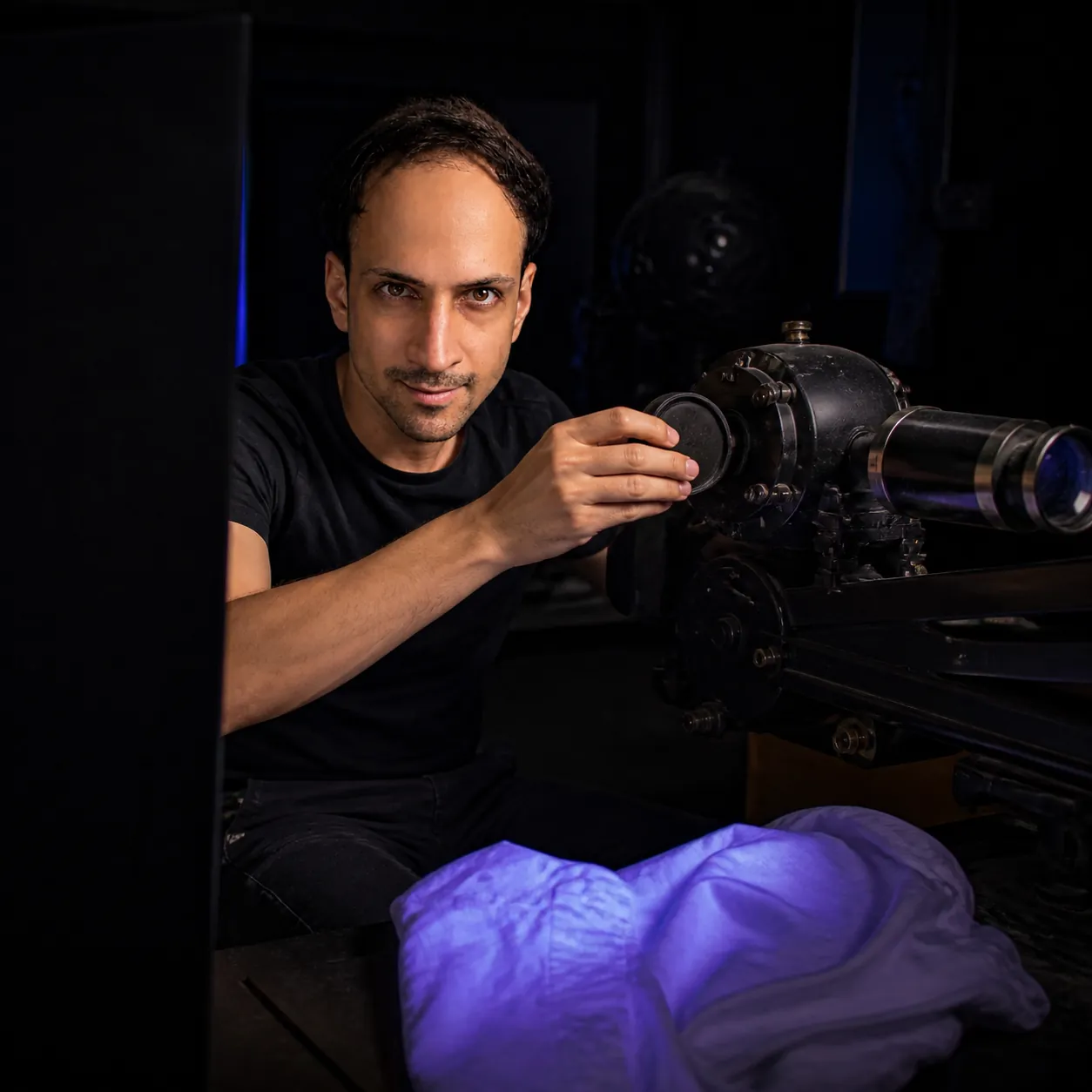
Tide Predictor in the Desert Observatory — AI Portrait Prompt
صورةAI Portraits

Turn your own photo into a gallery-grade technical portrait in the stone anteroom of a small desert observatory before opening. Keeps your face unchanged.

من نص البرومبت

Use the attached reference photo as the identity reference: keep the same face, skin tone, hair and features as the person in that photo, without beautifying, aging or altering them. Design a full-height 9:16 cinematic artwork that reads on a phone and rewards gallery-scale inspection at exactly 2144x3808 pixels. Location: the stone anteroom of a small desert observatory before opening. Show them in a dark wool overshirt buttoned over a plain white tee, cranking closed the dome's hand-geared shutter wheel. Make one rigorous physical condition the conceptual engine: a tide-predicting machine whose fine wire, wrapped over a dozen geared pulleys, sums ocean harmonics into one drawn curve keeps every step of its reasoning open to a patient observer's eye. Explore how motion becomes arithmetic the moment its parts are shaped with intent; direct expression and posture toward earned confidence, never melodrama or ad-like confidence. Frame from a seated observer's eye height, close enough that machined texture stays tangibly present. Make the composition keep the answer's dial or mark small, sharp, and off-center. Render it as gallery-grade technical realism built on lawful mechanism kinematics, precise engraved detail, tactile wood-and-metal textures, and emotionally intelligent portrait lighting, using low raking window sun that carves each machined edge into readable shadow and a palette of dark slate, oiled bronze, and one chalk-white line. Photorealistic: this must read as a real photograph from a physical camera, never an illustration, painting, or 3D render. Give the space honest scale: real distance between foreground, subject, and far wall. Resolve real surface detail: condensation beading at true size, liquid meniscus curving against glass, and wet surfaces darker than dry ones. Keep one identity-locked person, credible hands and fingers, natural fabric, and coherent scale, contact, reflections, shadows, airflow, deformation, and materials. Background people only when essential, always secondary and clearly different. Avoid floating weightless gears, sepia steampunk grading, cog-filled head silhouettes, Roman-numeral dials, and oversized watch-movement props. No text, labels, logos, signatures, watermarks, random symbols, plastic skin, excessive bloom, or glossy AI finish.
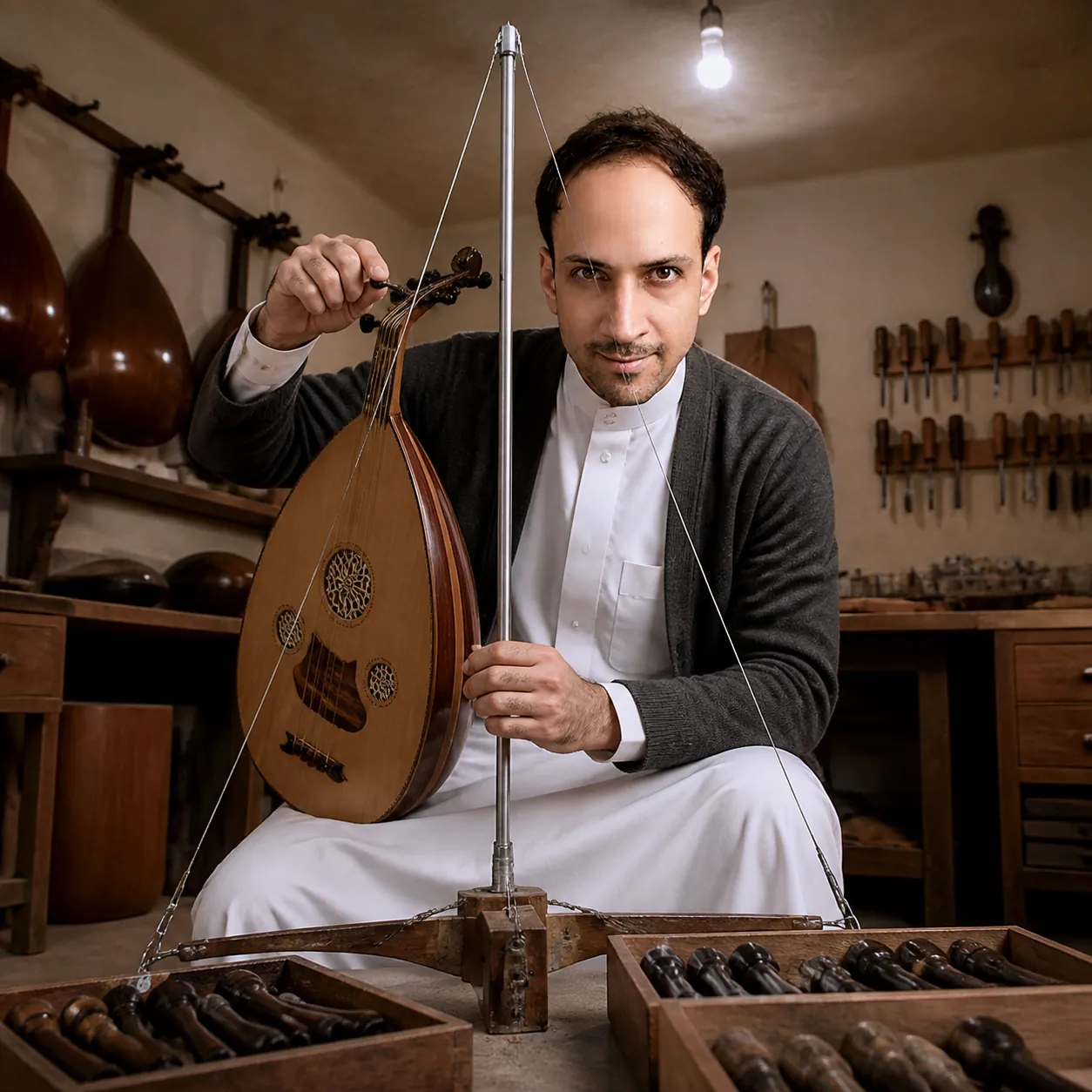
A Shirt That Glows Violet — AI Portrait Prompt
صورةAI Portraits

Turn your own photo into a museum demonstration portrait in the back workshop of a small planetarium with the dome lights doused. Keeps your face unchanged.

من نص البرومبت

Use the attached reference photo as the identity reference: keep the same face, skin tone, hair and features as the person in that photo, without beautifying, aging or altering them. Create a square 1:1 museum-catalog frame with a strong first read and a slower second read at exactly 2880x2880 pixels. Location: the back workshop of a small planetarium with the dome lights doused. Show them in a black cotton crew-neck and dark straight-leg work trousers, seating a lens cap onto a parked projector arm. Use this advanced image-making device as the core logic: a folded white shirt whose fibers flare cold violet under ultraviolet, since the dye that makes cotton read as white also glows takes its second color from light nobody in the room can see. Explore what honesty requires when one object has two equally true appearances; direct expression and posture toward cool fascination, never melodrama or ad-like confidence. Frame past a matte black card at the frame's edge, physical but never crossing their face. Make the composition keep the emitting detail sharpest while the room stays quietly dim. Render it as museum demonstration realism combining honest low-light photography, spectrally plausible glow, plain material texture, and unhurried human presence in frame, using cool ultraviolet from above the frame with enough bounce to keep faces readable and a palette of unbleached linen, umber, and one stripe of quinine blue. Photorealistic: this must read as a real photograph from a physical camera, never an illustration, painting, or 3D render. Resolve real surface detail: thread ends and slight pilling on worn cloth, hairline chips at every hard corner, and stone that is porous rather than smooth. Keep one identity-locked person, credible hands and fingers, natural fabric, and coherent scale, contact, reflections, shadows, airflow, deformation, and materials. Background people only when essential, always secondary and clearly different. Avoid rave lighting rigs, uniform purple haze, CGI bioluminescent forests, and glowing eyes. No text, labels, logos, signatures, watermarks, random symbols, plastic skin, excessive bloom, or glossy AI finish.
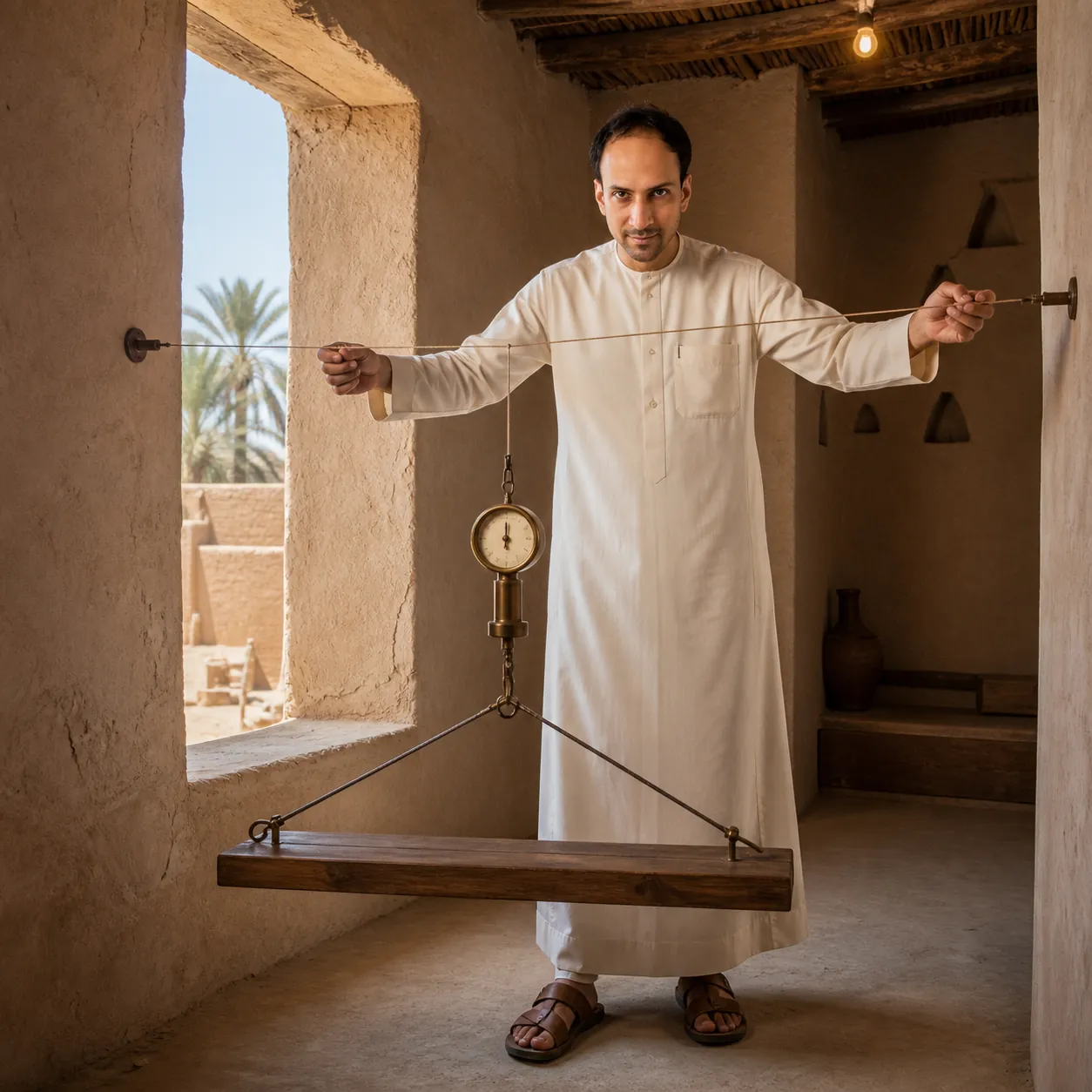
The Mast Beside the Oud Bench — AI Portrait Prompt
صورةAI Portraits

Turn your own photo into a structural-portrait portrait in an oud maker's bench with tuning pegs sorted in shallow trays. Keeps your face unchanged.

من نص البرومبت

Use the attached reference photo as the identity reference: keep the same face, skin tone, hair and features as the person in that photo, without beautifying, aging or altering them. Create a square 1:1 museum-catalog frame with a strong first read and a slower second read at exactly 2880x2880 pixels. Location: an oud maker's bench with tuning pegs sorted in shallow trays. Show them in a crisp white traditional Gulf outfit under a slate wool cardigan, bringing one course of strings up to pitch. Treat this mechanism as the frame’s governing rule: a mast of slender aluminum rod that would buckle under its own height alone, standing dead straight inside three taut guy lines replaces the eye's first guess about what holds it with a stranger truth. Explore what changes in a person who learns that gaps can bear weight; direct expression and posture toward grounded astonishment, never melodrama or ad-like confidence. Frame from knee height looking gently upward so the load path and their face stack in one vertical. Make the composition give every load-bearing line one unbroken run between its anchors. Render it as structural-portrait realism built from buildable tensegrity geometry, honest off-the-shelf cable hardware, warm wood-and-steel materiality, and calm long-take editorial observation, using one bare overhead bulb tempered by white walls into soft, even evidence light and a palette of warm concrete, dark walnut, and thin steel-cable silver. Photorealistic: this must read as a real photograph from a physical camera, never an illustration, painting, or 3D render. Resolve real surface detail: grout darker than tile, sealant slightly yellowed, and every joint showing a real tolerance gap. Keep one identity-locked person, credible hands and fingers, natural fabric, and coherent scale, contact, reflections, shadows, airflow, deformation, and materials. Background people only when essential, always secondary and clearly different. Avoid floating objects with no visible cables, glowing wires, rubber-looking bent bars, and impossible knots. No text, labels, logos, signatures, watermarks, random symbols, plastic skin, excessive bloom, or glossy AI finish.
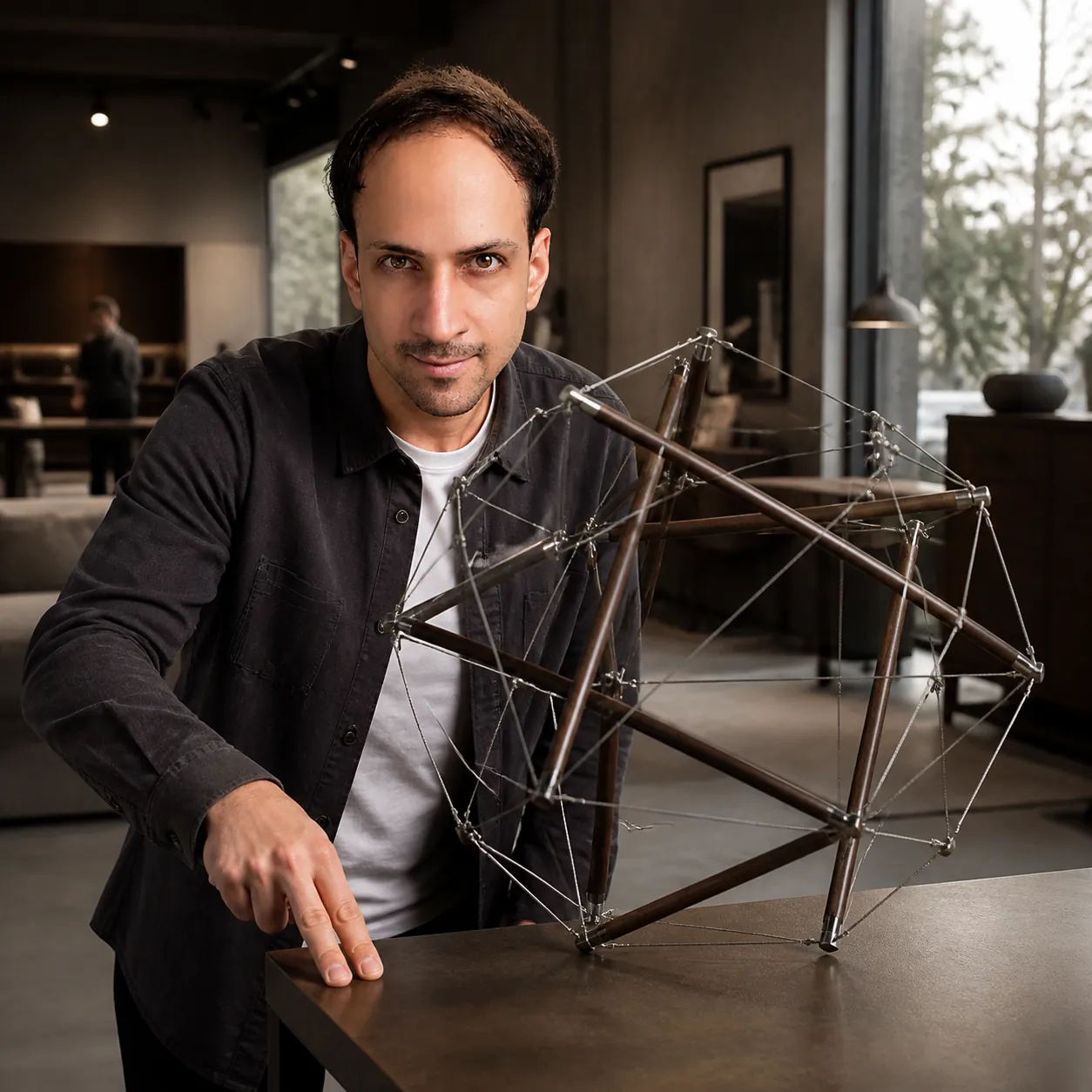
A Spring Scale in Diriyah — AI Portrait Prompt
صورةAI Portraits

Turn your own photo into a documentary workshop portrait in a restored mud-brick room in Diriyah with a palm-beam ceiling. Keeps your face unchanged.

من نص البرومبت

Use the attached reference photo as the identity reference: keep the same face, skin tone, hair and features as the person in that photo, without beautifying, aging or altering them. Create a square 1:1 museum-catalog frame with a strong first read and a slower second read at exactly 2880x2880 pixels. Location: a restored mud-brick room in Diriyah with a palm-beam ceiling. Show them in an ecru cotton traditional Gulf outfit and dusty leather work sandals, stretching a builder's line taut between two wall pegs. Build the artwork around this material rule: a knee-high floating stand whose one load cable passes through a brass spring scale, the needle confessing exact kilograms reads as impossible from across the room and inevitable from a handspan. Explore how disagreement, tuned precisely enough, becomes the most reliable form of holding still; direct expression and posture toward attentive trust, never melodrama or ad-like confidence. Frame level with the widest gap in the structure so clear daylight through it sits beside their face. Make the composition weight the frame so stillness reads as tension, not rest. Render it as documentary workshop realism built from believable joinery, taut-line specularity, accurate gravity in every hanging element, and unhurried craftsman-portrait framing, using one bare overhead bulb tempered by white walls into soft, even evidence light and a palette of iron black, oiled cedar, and a muted terracotta accent. Photorealistic: this must read as a real photograph from a physical camera, never an illustration, painting, or 3D render. Resolve real surface detail: hair with individual strands catching light, any facial hair at its true uneven length, and skin oil giving a low uneven sheen. Keep one identity-locked person, credible hands and fingers, natural fabric, and coherent scale, contact, reflections, shadows, airflow, deformation, and materials. Background people only when essential, always secondary and clearly different. Avoid magician's-levitation staging, slack lines pretending to carry load, melted wood joints, and hovering furniture ads. No text, labels, logos, signatures, watermarks, random symbols, plastic skin, excessive bloom, or glossy AI finish.
The Sphere That Springs Back — AI Portrait Prompt
صورةAI Portraits

Turn your own photo into a quiet museum-demonstration portrait in a closed furniture showroom lit only by its window displays. Keeps your face unchanged.

من نص البرومبت

Use the attached reference photo as the identity reference: keep the same face, skin tone, hair and features as the person in that photo, without beautifying, aging or altering them. Create a square 1:1 museum-catalog frame with a strong first read and a slower second read at exactly 2880x2880 pixels. Location: a closed furniture showroom lit only by its window displays. Show them in a pressed charcoal overshirt buttoned over a plain white tee, pressing two fingertips down on a tabletop corner. Build the artwork around this material rule: a six-strut tensegrity sphere that springs back to perfect shape after they squeeze it flat between both palms reads as impossible from across the room and inevitable from a handspan. Explore where strength actually lives when rigid parts refuse to lean on each other; direct expression and posture toward attentive trust, never melodrama or ad-like confidence. Frame level with the widest gap in the structure so clear daylight through it sits beside their face. Make the composition let one taut line lead the eye to their hands. Render it as quiet museum-demonstration photography combining engineering-model exactness, visible fastener detail, true-to-load cable sag and straightness, and restrained human-scale staging, using diffused skylight from above that leaves thin cables bright against deeper shadow and a palette of warm concrete, dark walnut, and thin steel-cable silver. Photorealistic: this must read as a real photograph from a physical camera, never an illustration, painting, or 3D render. Resolve real surface detail: dust settled where nobody wipes, fingerprint haze on glass, and edges rubbed pale by handling. Keep one identity-locked person, credible hands and fingers, natural fabric, and coherent scale, contact, reflections, shadows, airflow, deformation, and materials. Background people only when essential, always secondary and clearly different. Avoid magician's-levitation staging, slack lines pretending to carry load, melted wood joints, and hovering furniture ads. No text, labels, logos, signatures, watermarks, random symbols, plastic skin, excessive bloom, or glossy AI finish.
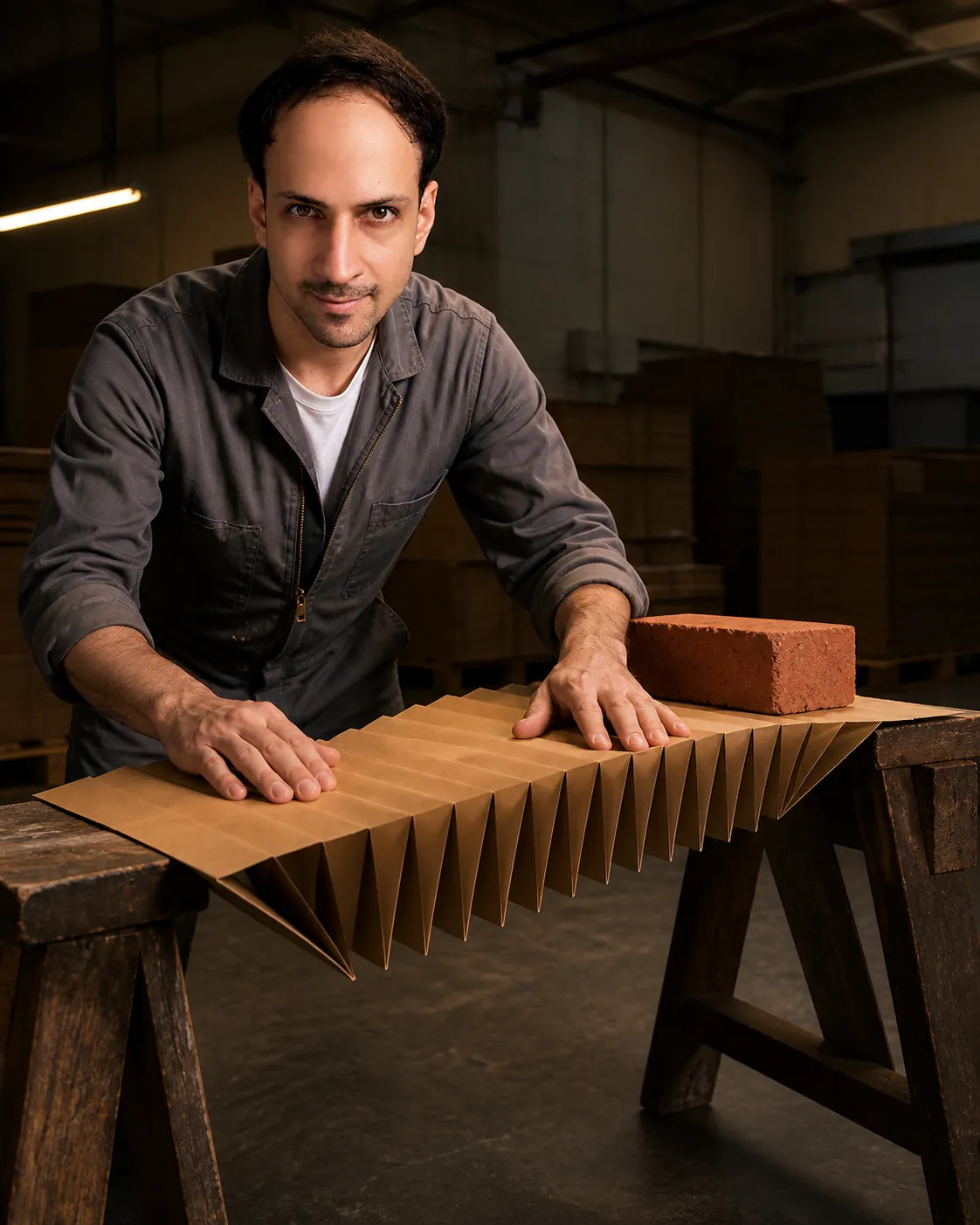
Paper Bridge, Fired Brick — AI Portrait Prompt
صورةAI Portraits

Turn your own photo into a museum-workshop portrait in the quiet end of a carton factory floor between shifts. Keeps your face unchanged.

من نص البرومبت

Use the attached reference photo as the identity reference: keep the same face, skin tone, hair and features as the person in that photo, without beautifying, aging or altering them. Build a portrait 4:5 editorial artwork with protected negative space and a fully readable face at exactly 2560x3200 pixels. Location: the quiet end of a carton factory floor between shifts. Show the subject in a plain grey coverall half-zipped over a clean white tee, flattening one carton blank with a slow two-handed press. The impossible-looking event must obey this clear system: a bridge pleated from one kraft sheet whose deep accordion corrugations span two trestles beneath a single fired brick shows shape doing quietly what the eye expects heavy material to do. Explore why a material that tears between two fingers can be trusted with real weight; direct expression and posture toward sober delight, never melodrama or ad-like confidence. Frame from a low three-quarter angle so the paper structure gains quiet monumentality while their posture stays true. Make the composition keep every cut edge sharp while the room softens behind. Render it as museum-workshop realism combining honest fiber texture, accurate crease shadows, believable deflection under real weight, and restrained editorial lighting, using one low raking lamp that turns each fold into a drawn line and a palette of pale card, graphite, and a narrow band of brick. Photorealistic: this must read as a real photograph from a physical camera, never an illustration, painting, or 3D render. Resolve real surface detail: dust settled where nobody wipes, fingerprint haze on glass, and edges rubbed pale by handling. Keep one identity-locked person, credible hands and fingers, natural fabric, and coherent scale, contact, reflections, shadows, airflow, deformation, and materials. Background people only when essential, always secondary and clearly different. Avoid greeting-card kitsch, torn-edge scrapbook collage, cartoon pop-up books, and burning paper drama. No text, labels, logos, signatures, watermarks, random symbols, plastic skin, excessive bloom, or glossy AI finish.
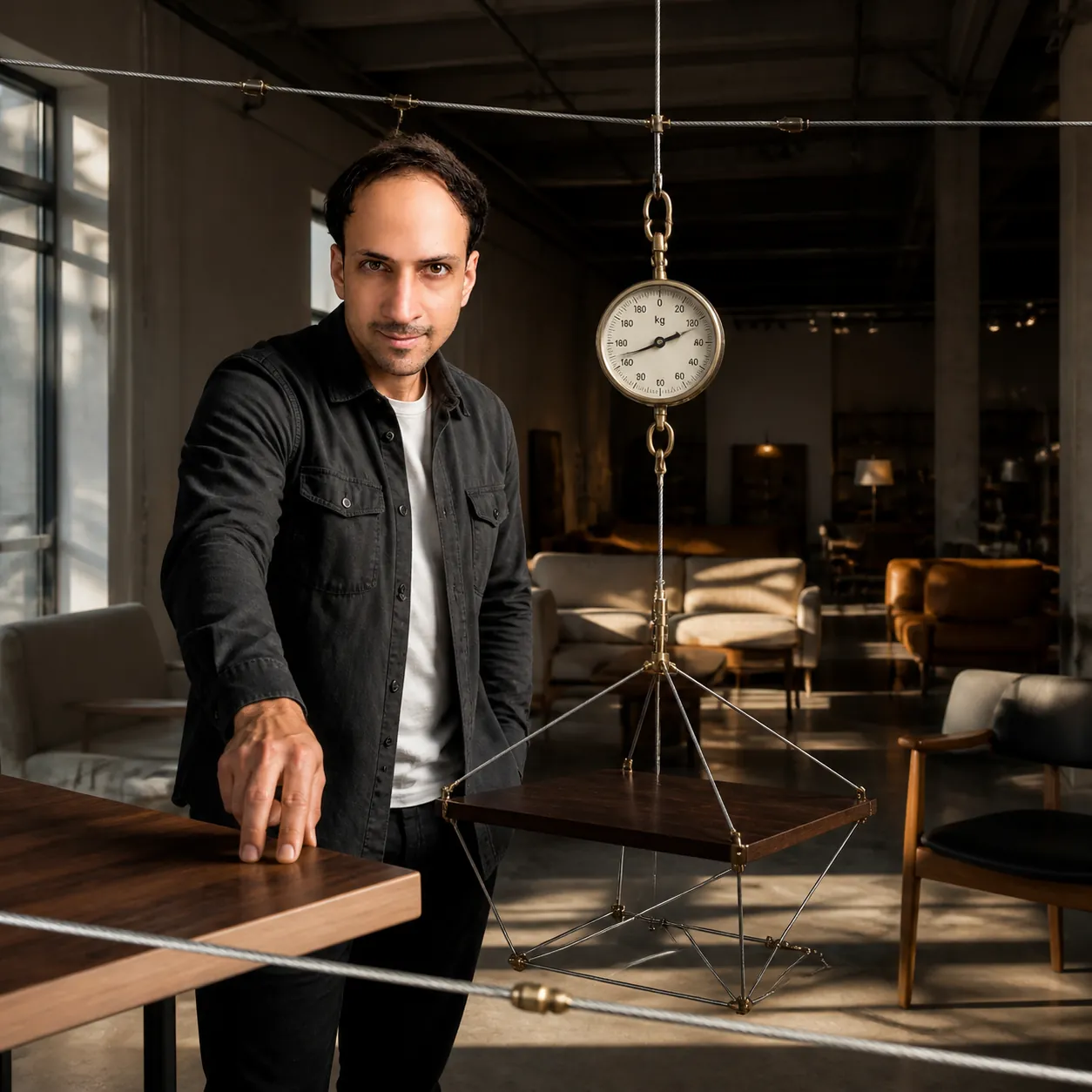
The Scale That Confesses the Load — AI Portrait Prompt
صورةAI Portraits

Turn your own photo into a structural-portrait portrait in a closed furniture showroom lit only by its window displays. Keeps your face unchanged.

من نص البرومبت

Use the attached reference photo as the identity reference: keep the same face, skin tone, hair and features as the person in that photo, without beautifying, aging or altering them. Create a square 1:1 museum-catalog frame with a strong first read and a slower second read at exactly 2880x2880 pixels. Location: a closed furniture showroom lit only by its window displays. Show them in a pressed charcoal overshirt buttoned over a plain white tee, pressing two fingertips down on a tabletop corner. The impossible-looking event must obey this clear system: a knee-high floating stand whose one load cable passes through a brass spring scale, the needle confessing exact kilograms replaces the eye's first guess about what holds it with a stranger truth. Explore how disagreement, tuned precisely enough, becomes the most reliable form of holding still; direct expression and posture toward watchful respect, never melodrama or ad-like confidence. Use an 85mm portrait length that keeps their face sharp while a taut line crosses the near field, softly defocused. Make the composition set the widest impossible gap at the exact visual center. Render it as structural-portrait realism built from buildable tensegrity geometry, honest off-the-shelf cable hardware, warm wood-and-steel materiality, and calm long-take editorial observation, using late-afternoon window light crossing the frame low enough to pick out every cable and a palette of chalk white, desert tan, and one deep indigo strap. Photorealistic: this must read as a real photograph from a physical camera, never an illustration, painting, or 3D render. Resolve real surface detail: brass darkened in the recesses and bright where thumbs land, and lacquer crazed rather than perfect. Keep one identity-locked person, credible hands and fingers, natural fabric, and coherent scale, contact, reflections, shadows, airflow, deformation, and materials. Background people only when essential, always secondary and clearly different. Avoid floating objects with no visible cables, glowing wires, rubber-looking bent bars, and impossible knots. No text, labels, logos, signatures, watermarks, random symbols, plastic skin, excessive bloom, or glossy AI finish.
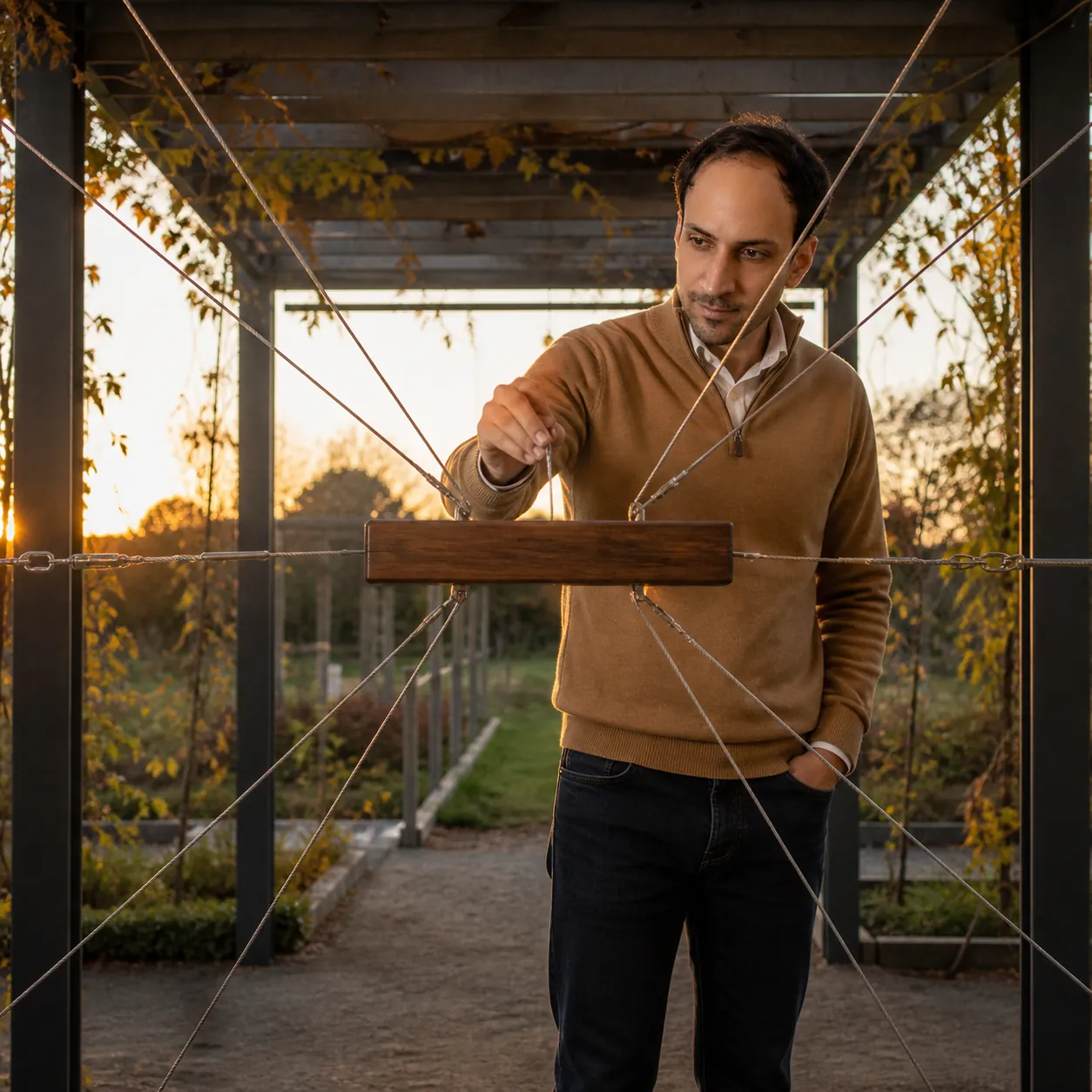
Oak Bar Held by Twelve Cables — AI Portrait Prompt
صورةAI Portraits

Turn your own photo into a documentary workshop portrait in a public garden pergola walk strung with training wires at dusk. Keeps your face unchanged.

من نص البرومبت

Use the attached reference photo as the identity reference: keep the same face, skin tone, hair and features as the person in that photo, without beautifying, aging or altering them. Create a square 1:1 museum-catalog frame with a strong first read and a slower second read at exactly 2880x2880 pixels. Location: a public garden pergola walk strung with training wires at dusk. Show them in a camel half-zip pullover with a white collar showing, plucking one training wire and feeling it settle. Treat this mechanism as the frame’s governing rule: a single oak bar that hangs motionless at the center of a steel frame, held by twelve cables pulling against one another reads as impossible from across the room and inevitable from a handspan. Explore how much of what anything carries is carried by preparation nobody sees; direct expression and posture toward earned ease, never melodrama or ad-like confidence. Frame from knee height looking gently upward so the load path and their face stack in one vertical. Make the composition give every load-bearing line one unbroken run between its anchors. Render it as documentary workshop realism built from believable joinery, taut-line specularity, accurate gravity in every hanging element, and unhurried craftsman-portrait framing, using late-afternoon window light crossing the frame low enough to pick out every cable and a palette of gallery white, ash wood, and one taut red cord. Photorealistic: this must read as a real photograph from a physical camera, never an illustration, painting, or 3D render. Resolve real surface detail: floor finish worn along the walked line, skirting marked at shoe height, and corners darker than the open floor. Keep one identity-locked person, credible hands and fingers, natural fabric, and coherent scale, contact, reflections, shadows, airflow, deformation, and materials. Background people only when essential, always secondary and clearly different. Avoid magician's-levitation staging, slack lines pretending to carry load, melted wood joints, and hovering furniture ads. No text, labels, logos, signatures, watermarks, random symbols, plastic skin, excessive bloom, or glossy AI finish.
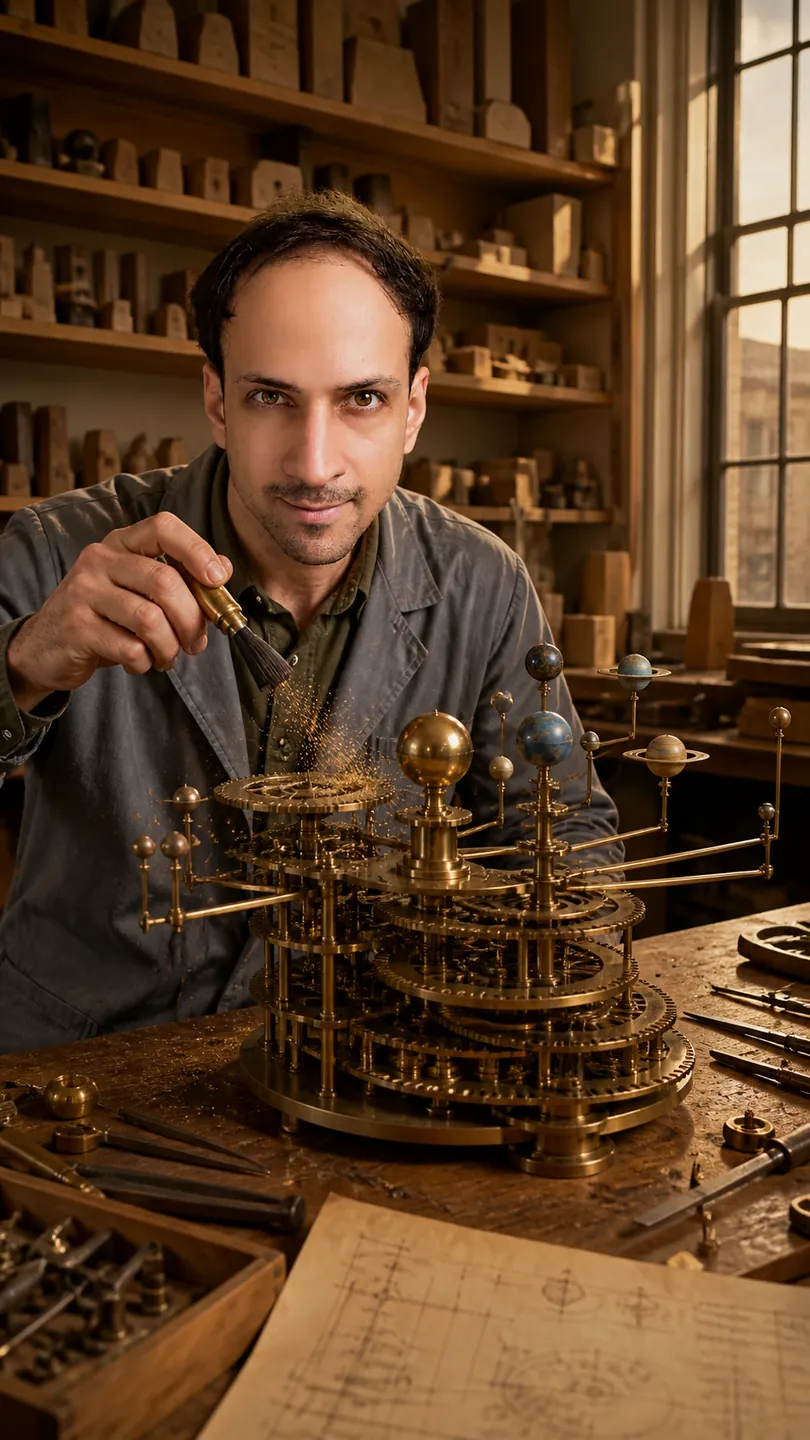
Orrery in the Pattern Shop — AI Portrait Prompt
صورةAI Portraits

Turn your own photo into a gallery-grade technical portrait in a university pattern shop lined with wooden casting molds on shelves. Keeps your face unchanged.

من نص البرومبت

Use the attached reference photo as the identity reference: keep the same face, skin tone, hair and features as the person in that photo, without beautifying, aging or altering them. Design a full-height 9:16 cinematic artwork that reads on a phone and rewards gallery-scale inspection at exactly 2144x3808 pixels. Location: a university pattern shop lined with wooden casting molds on shelves. Show the subject in a grey twill shop coat over an olive cotton shirt, blowing brass filings from a fresh-cut gear blank. Build the artwork around this material rule: a benchtop brass orrery whose stacked gear train holds every planet at tonight's true heliocentric position around a polished central sun keeps every step of its reasoning open to a patient observer's eye. Explore why a machine with no memory chips can still remember mathematics perfectly; direct expression and posture toward measured reverence, never melodrama or ad-like confidence. Use a composed 35mm environmental view placing the subject and the machine as equal patient subjects. Make the composition hold quiet empty space where the finished answer will arrive. Render it as gallery-grade technical realism built on lawful mechanism kinematics, precise engraved detail, tactile wood-and-metal textures, and emotionally intelligent portrait lighting, using late golden hour entering low and level, gilding brass without glare and a palette of warm umber, pale vellum, and one muted teal accent. Photorealistic: this must read as a real photograph from a physical camera, never an illustration, painting, or 3D render. Give the air depth: falloff with distance and no artificial clarity far back. Resolve real surface detail: thread ends and slight pilling on worn cloth, hairline chips at every hard corner, and stone that is porous rather than smooth. Keep one identity-locked person, credible hands and fingers, natural fabric, and coherent scale, contact, reflections, shadows, airflow, deformation, and materials. Background people only when essential, always secondary and clearly different. Avoid floating weightless gears, sepia steampunk grading, cog-filled head silhouettes, Roman-numeral dials, and oversized watch-movement props. No text, labels, logos, signatures, watermarks, random symbols, plastic skin, excessive bloom, or glossy AI finish.
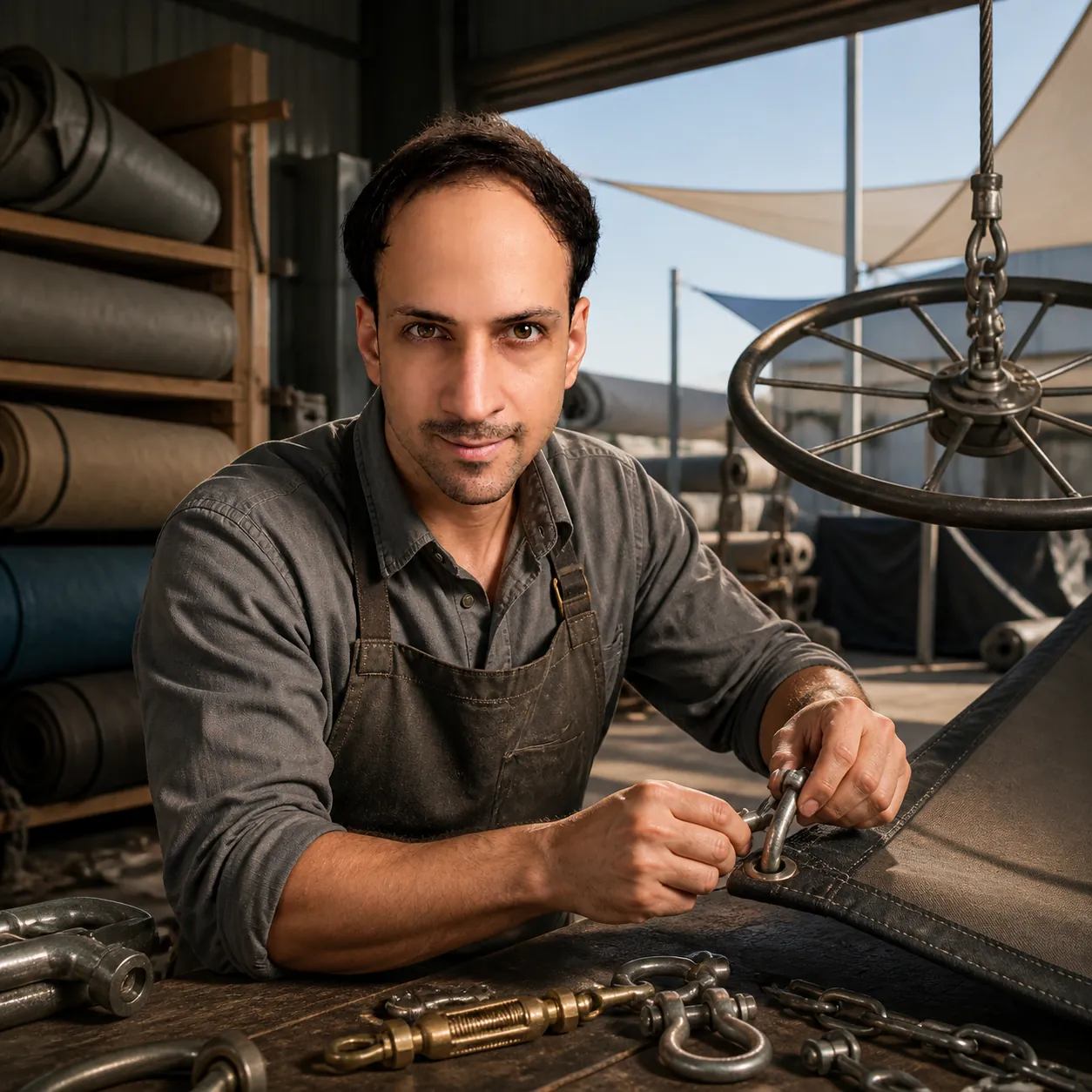
The Wheel That Hangs from Above — AI Portrait Prompt
صورةAI Portraits

Turn your own photo into a portrait in a shade-sail fabricator's floor stacked with rolled canopies and steel fittings. Keeps your face unchanged.

من نص البرومبت

Use the attached reference photo as the identity reference: keep the same face, skin tone, hair and features as the person in that photo, without beautifying, aging or altering them. Create a square 1:1 museum-catalog frame with a strong first read and a slower second read at exactly 2880x2880 pixels. Location: a shade-sail fabricator's floor stacked with rolled canopies and steel fittings. Show them in a dust-grey utility shirt and a canvas waist apron, threading a shackle pin through a canopy corner ring. Build the artwork around this material rule: a spoked wheel under a hung load whose hub hangs from its upper spokes instead of standing on the lower ones reads as impossible from across the room and inevitable from a handspan. Explore why a taut line feels more trustworthy than a solid post once understood; direct expression and posture toward patient conviction, never melodrama or ad-like confidence. Frame level with the widest gap in the structure so clear daylight through it sits beside their face. Make the composition weight the frame so stillness reads as tension, not rest. Render it as exhibition-grade statics portraiture combining precise rigging detail, physically consistent shadows through open gaps, matte natural materials, and disciplined contemporary art direction, using first blue daylight with one warm tungsten pool held on the work and a palette of graphite, raw pine, and one brass turnbuckle glint. Photorealistic: this must read as a real photograph from a physical camera, never an illustration, painting, or 3D render. Resolve real surface detail: cotton that hangs by its own weight, seams that pucker very slightly, and collars softened by washing. Keep one identity-locked person, credible hands and fingers, natural fabric, and coherent scale, contact, reflections, shadows, airflow, deformation, and materials. Background people only when essential, always secondary and clearly different. Avoid magician's-levitation staging, slack lines pretending to carry load, melted wood joints, and hovering furniture ads. No text, labels, logos, signatures, watermarks, random symbols, plastic skin, excessive bloom, or glossy AI finish.
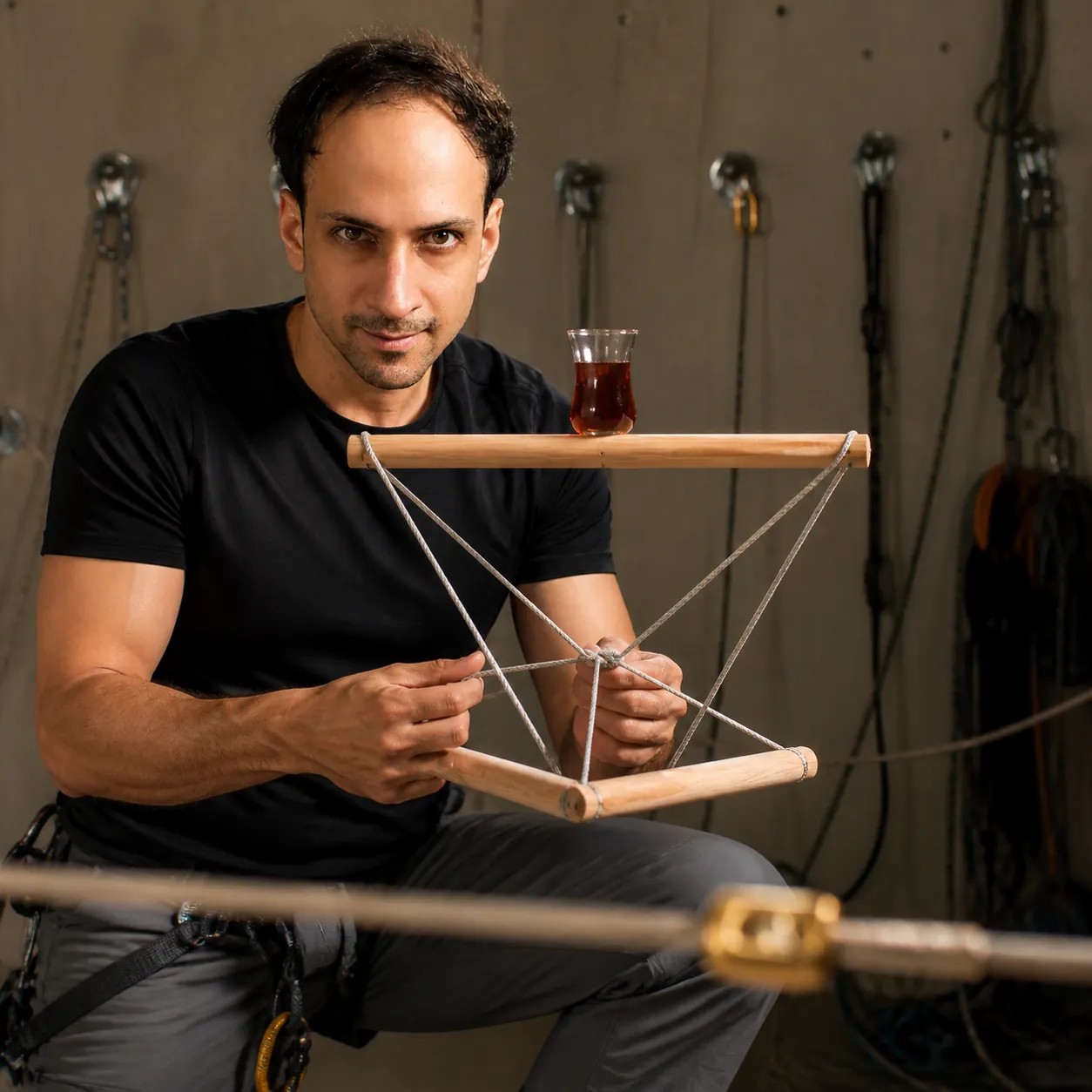
Tea Glass on a Floating Prism — AI Portrait Prompt
صورةAI Portraits

Turn your own photo into a documentary workshop portrait in a rope-access training bay with anchors bolted to a practice wall. Keeps your face unchanged.

من نص البرومبت

Use the attached reference photo as the identity reference: keep the same face, skin tone, hair and features as the person in that photo, without beautifying, aging or altering them. Create a square 1:1 museum-catalog frame with a strong first read and a slower second read at exactly 2880x2880 pixels. Location: a rope-access training bay with anchors bolted to a practice wall. Show them in a fitted black training shirt and grey climbing trousers, dressing a figure-eight knot flat with both thumbs. The impossible-looking event must obey this clear system: a three-strut prism of cedar and waxed cord that supports a full tea glass while no bar meets another reads as impossible from across the room and inevitable from a handspan. Explore whether the impossible is ever anything but a rule seen too rarely; direct expression and posture toward quiet verification, never melodrama or ad-like confidence. Use an 85mm portrait length that keeps their face sharp while a taut line crosses the near field, softly defocused. Make the composition set the widest impossible gap at the exact visual center. Render it as documentary workshop realism built from believable joinery, taut-line specularity, accurate gravity in every hanging element, and unhurried craftsman-portrait framing, using low golden cross-light giving each wire a bright edge and shadow twin and a palette of graphite, raw pine, and one brass turnbuckle glint. Photorealistic: this must read as a real photograph from a physical camera, never an illustration, painting, or 3D render. Resolve real surface detail: skin that reddens slightly under pressure, nail beds with honest colour, and knuckle creases that fold rather than blur. Keep one identity-locked person, credible hands and fingers, natural fabric, and coherent scale, contact, reflections, shadows, airflow, deformation, and materials. Background people only when essential, always secondary and clearly different. Avoid magician's-levitation staging, slack lines pretending to carry load, melted wood joints, and hovering furniture ads. No text, labels, logos, signatures, watermarks, random symbols, plastic skin, excessive bloom, or glossy AI finish.
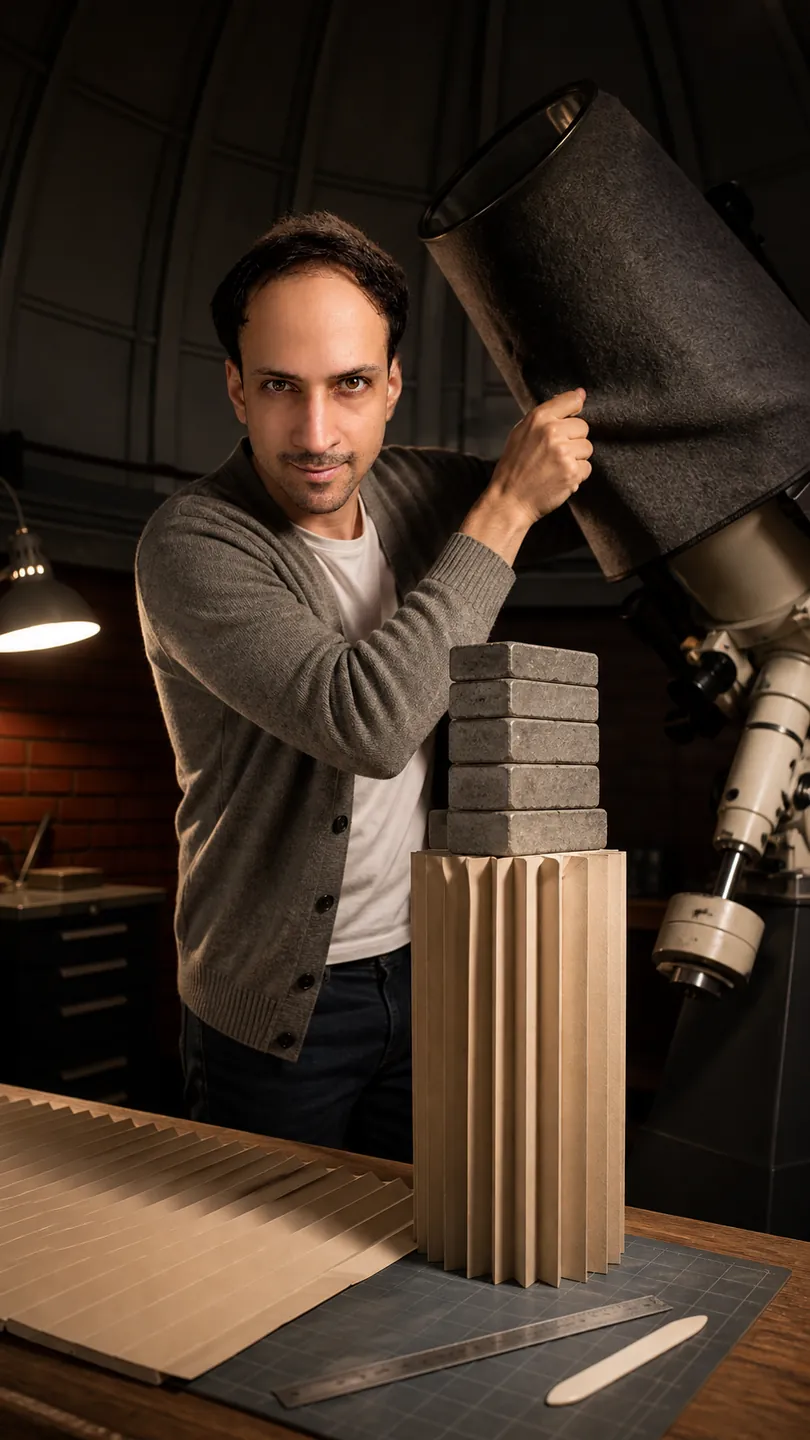
Paper Column Under the Dome — AI Portrait Prompt
صورةAI Portraits

Turn your own photo into a museum-workshop portrait in a small university observatory with its dome slit closed for daylight. Keeps your face unchanged.

من نص البرومبت

Use the attached reference photo as the identity reference: keep the same face, skin tone, hair and features as the person in that photo, without beautifying, aging or altering them. Design a full-height 9:16 cinematic artwork that reads on a phone and rewards gallery-scale inspection at exactly 2144x3808 pixels. Location: a small university observatory with its dome slit closed for daylight. Show the subject in a heather-grey cardigan over a white crew-neck and dark denim, fitting the felt-lined cover over the telescope tube. Treat this mechanism as the frame’s governing rule: a slender kraft column pleated into crisp vertical flutes that carries a knee-high stack of concrete blocks without flexing lets a straightedge and a bone folder stand in for a foundry. Explore how a fold multiplies strength without adding a single gram of material; direct expression and posture toward patient exactness, never melodrama or ad-like confidence. Use a 90mm close-portrait hybrid: one crease edge razor sharp near the lens, their face readable beyond it. Make the composition place their hand near the structure without ever touching the load. Render it as museum-workshop realism combining honest fiber texture, accurate crease shadows, believable deflection under real weight, and restrained editorial lighting, using one low raking lamp that turns each fold into a drawn line and a palette of pale card, graphite, and a narrow band of brick. Photorealistic: this must read as a real photograph from a physical camera, never an illustration, painting, or 3D render. Give the frame volume: faint density deepest in the room, contrast easing at the edges. Resolve real surface detail: label-free packaging showing carton fibre, cardboard bruised at the corners, and tape lifting slightly at one end. Keep one identity-locked person, credible hands and fingers, natural fabric, and coherent scale, contact, reflections, shadows, airflow, deformation, and materials. Background people only when essential, always secondary and clearly different. Avoid origami cranes, glowing magical paper, floating confetti, printed lettering on sheets, and weightless CGI folds. No text, labels, logos, signatures, watermarks, random symbols, plastic skin, excessive bloom, or glossy AI finish.

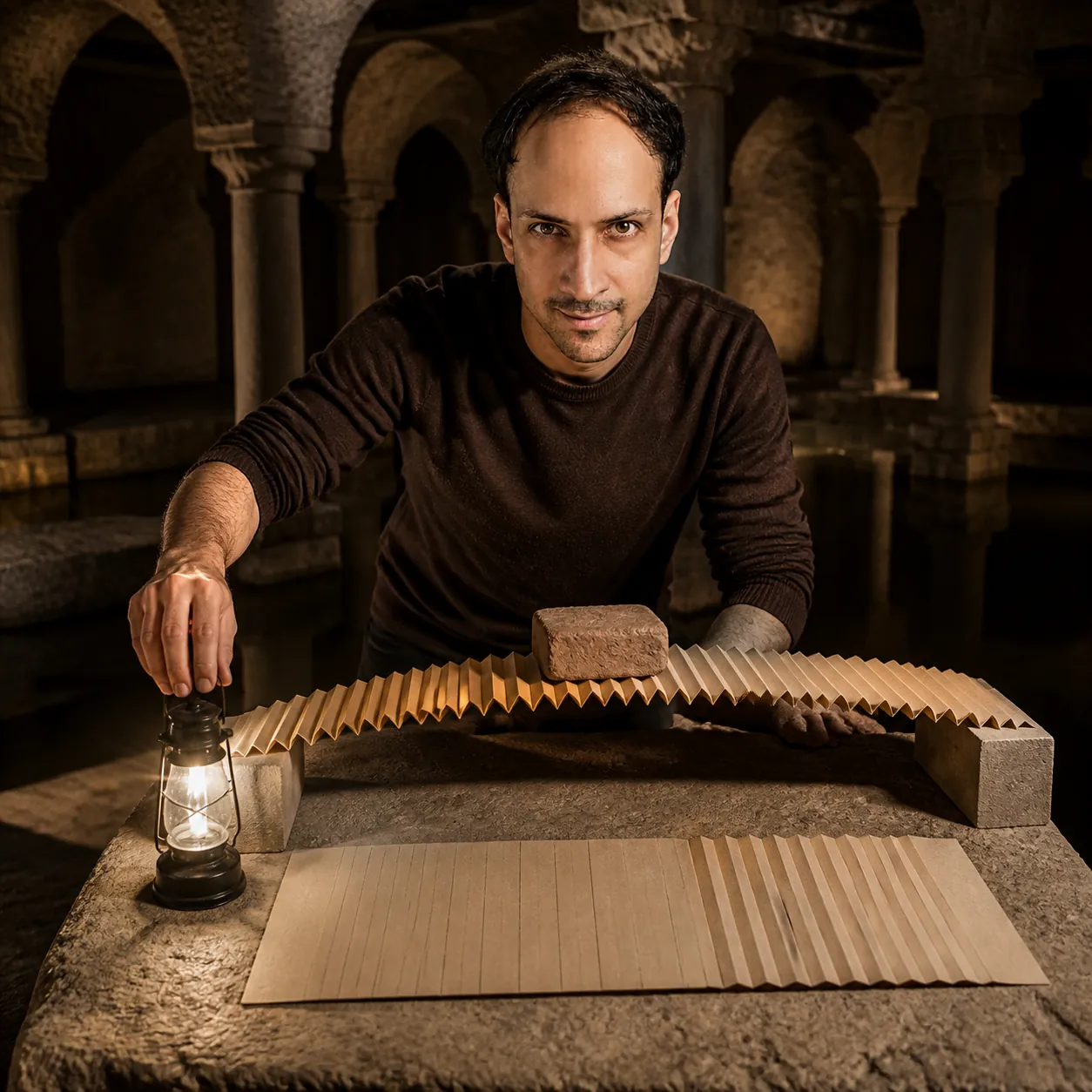
Paper Bridge in the Old Cistern — AI Portrait Prompt
صورةAI Portraits

Turn your own photo into a conceptual maker-bench portrait in a dry historic cistern beneath old Riyadh, cool and windless. Keeps your face unchanged.

من نص البرومبت

Use the attached reference photo as the identity reference: keep the same face, skin tone, hair and features as the person in that photo, without beautifying, aging or altering them. Create a square 1:1 museum-catalog frame with a strong first read and a slower second read at exactly 2880x2880 pixels. Location: a dry historic cistern beneath old Riyadh, cool and windless. Show them in a dark brown crew-neck sweater with sleeves pushed to mid-forearm, setting a battery lantern onto a stone ledge. Treat this mechanism as the frame’s governing rule: a bridge pleated from one kraft sheet whose deep accordion corrugations span two trestles beneath a single fired brick reads as an engineering proof while remaining an object of quiet beauty. Explore why a material that tears between two fingers can be trusted with real weight; direct expression and posture toward attentive humility, never melodrama or ad-like confidence. Use a composed wide 32mm view that gives the structure headroom without stretching their hands or face. Make the composition show the flat stock and the risen form in one frame. Render it as conceptual maker-bench photography uniting tactile card mechanisms, precise score-line detail, quiet contemporary art direction, and human-centered observational framing, using one low raking lamp that turns each fold into a drawn line and a palette of museum-board grey, soft ivory, and a single ochre accent. Photorealistic: this must read as a real photograph from a physical camera, never an illustration, painting, or 3D render. Resolve real surface detail: paper fibre visible at cut edges, plastic that shows mould lines, and paint thicker where a brush turned. Keep one identity-locked person, credible hands and fingers, natural fabric, and coherent scale, contact, reflections, shadows, airflow, deformation, and materials. Background people only when essential, always secondary and clearly different. Avoid greeting-card kitsch, torn-edge scrapbook collage, cartoon pop-up books, and burning paper drama. No text, labels, logos, signatures, watermarks, random symbols, plastic skin, excessive bloom, or glossy AI finish.
