تخطَّ إلى المحتوى

برومبتات الصور

برومبتات لمولدات الصور: بورتريهات وفن وتصوير.

تم العثور على 4209
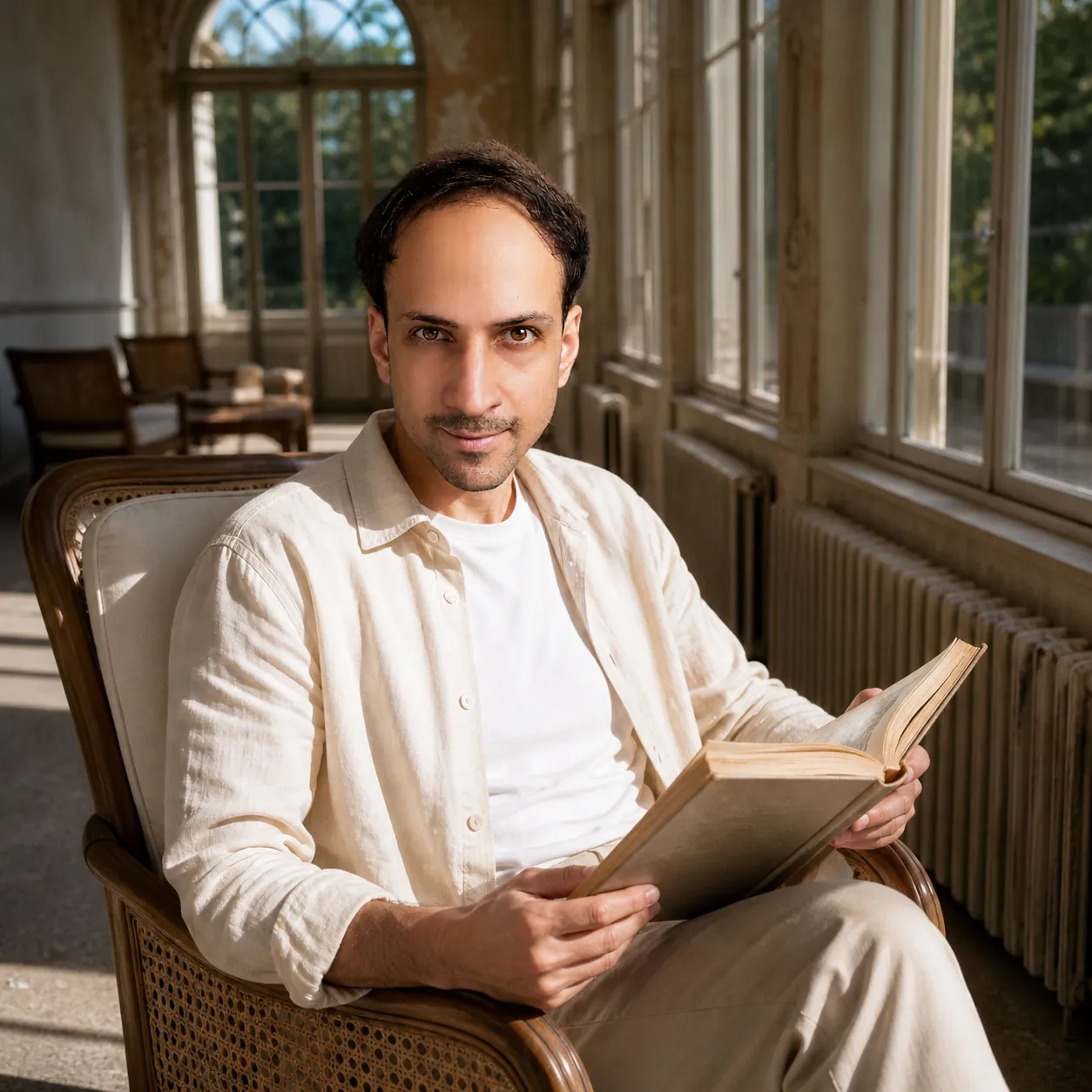
Prescribed Light: Restored 1930s Solarium Wing — AI Portrait Prompt
صورةAI Portraits

Turn your own photo into a solar-architecture portrait in a restored 1930s solarium wing with tall south glazing and cane chairs. Keeps your face unchanged.

من نص البرومبت

Use the attached reference photo as the identity reference: keep the same face, skin tone, hair and features as the person in that photo, without beautifying, aging or altering them. Create a square 1:1 museum-catalog frame with a strong first read and a slower second read at exactly 2880x2880 pixels. Location: a restored 1930s solarium wing with tall south glazing and cane chairs. Show the subject in a cream linen overshirt over a white crew-neck and pale trousers, angling a cane chair to face the glazing squarely. Make one rigorous physical condition the conceptual engine: a slow motorized mirror on the roofline that keeps one borrowed sunbeam parked on their reading chair while the sun itself moves treats morning light as a nutrient with a dose, not a mood. Explore why a fixed daily measure changes light from scenery into medicine; direct expression and posture toward settled gratitude, never melodrama or ad-like confidence. Use an eye-level 80mm medium-format viewpoint that renders beam edges and skin texture equally truthfully. Make the composition divide the frame honestly between lit dose and unlit room. Render it as solar-architecture portraiture built from real beam geometry, documentary daylight realism, hand-finished plaster materiality, and quietly clinical art direction, using one hard parallel beam of true sun with soft plaster-bounced fill and a palette of limewash white, raw plaster, and one honeyed bar. Photorealistic: this must read as a real photograph from a physical camera, never an illustration, painting, or 3D render. Resolve real surface detail: true skin texture with pores and fine hair at the hairline, and fabric that creases where it is actually stressed. Keep one identity-locked person, credible hands and fingers, natural fabric, and coherent scale, contact, reflections, shadows, airflow, deformation, and materials. Background people only when essential, always secondary and clearly different. Avoid god-ray haze shafts, lens-flare starbursts, glowing dust volumetrics, stained-glass rainbows, and any halo behind their head. No text, labels, logos, signatures, watermarks, random symbols, plastic skin, excessive bloom, or glossy AI finish.
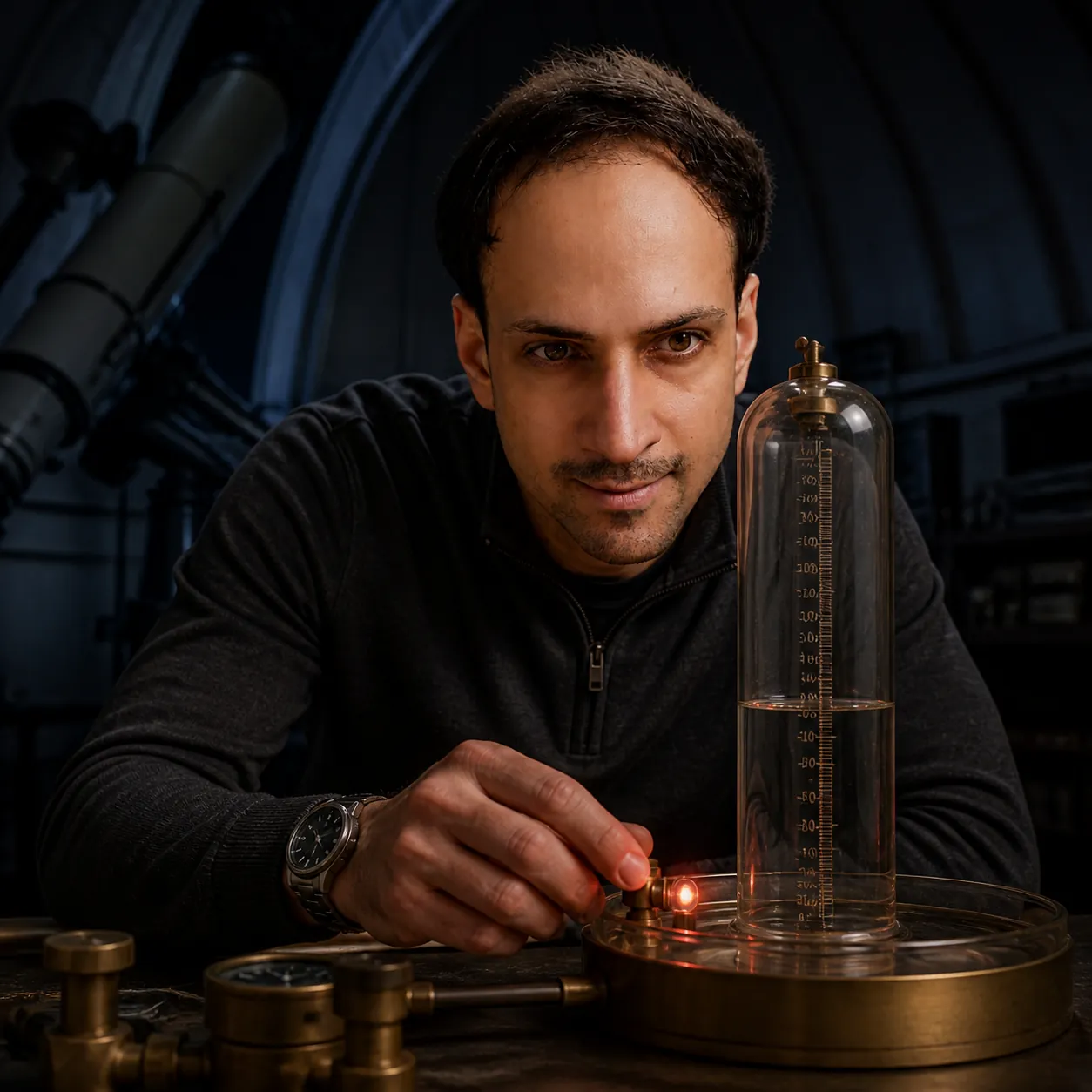
Practiced Quiet: Small University Observatory — AI Portrait Prompt
صورةAI Portraits

Turn your own photo into a photorealistic portrait in a small university observatory under its closed dome late at night. Keeps your face unchanged.

من نص البرومبت

Use the attached reference photo as the identity reference: keep the same face, skin tone, hair and features as the person in that photo, without beautifying, aging or altering them. Create a square 1:1 museum-catalog frame with a strong first read and a slower second read at exactly 2880x2880 pixels. Location: a small university observatory under its closed dome late at night. Show the subject in a charcoal quarter-zip pullover with a flat steel wristwatch, dimming the red work lamp to its lowest mark. The impossible-looking event must obey this clear system: a brass spirometer bell over a water seal that climbs its etched scale in true millimeters under one long breath turns the body's most invisible act into a mechanism the eye can audit. Explore whether calm is a temperament they were given or a mechanism they can build; direct expression and posture toward steadied wonder, never melodrama or ad-like confidence. Use a 50mm view from just above the work surface so instrument and face share one honest space. Make the composition weight the frame low and steady, horizonless, like held breath. Render it as gallery-grade mechanical still life extended to portraiture, lawful aerodynamic behavior, measured tonal restraint, and fine engraved-scale detail held sharp, using one warm practical low beside the instrument answered by cool side ambient and a palette of slate grey, clear glass, and a madder-red thread. Photorealistic: this must read as a real photograph from a physical camera, never an illustration, painting, or 3D render. Resolve real surface detail: glass with real thickness at its edge, reflections that carry the room's actual colour, and dust visible only at grazing angles. Keep one identity-locked person, credible hands and fingers, natural fabric, and coherent scale, contact, reflections, shadows, airflow, deformation, and materials. Background people only when essential, always secondary and clearly different. Avoid glowing breath vapor, swirling CGI air streaks, meditation-pose serenity, and dust motes in god rays. No text, labels, logos, signatures, watermarks, random symbols, plastic skin, excessive bloom, or glossy AI finish.
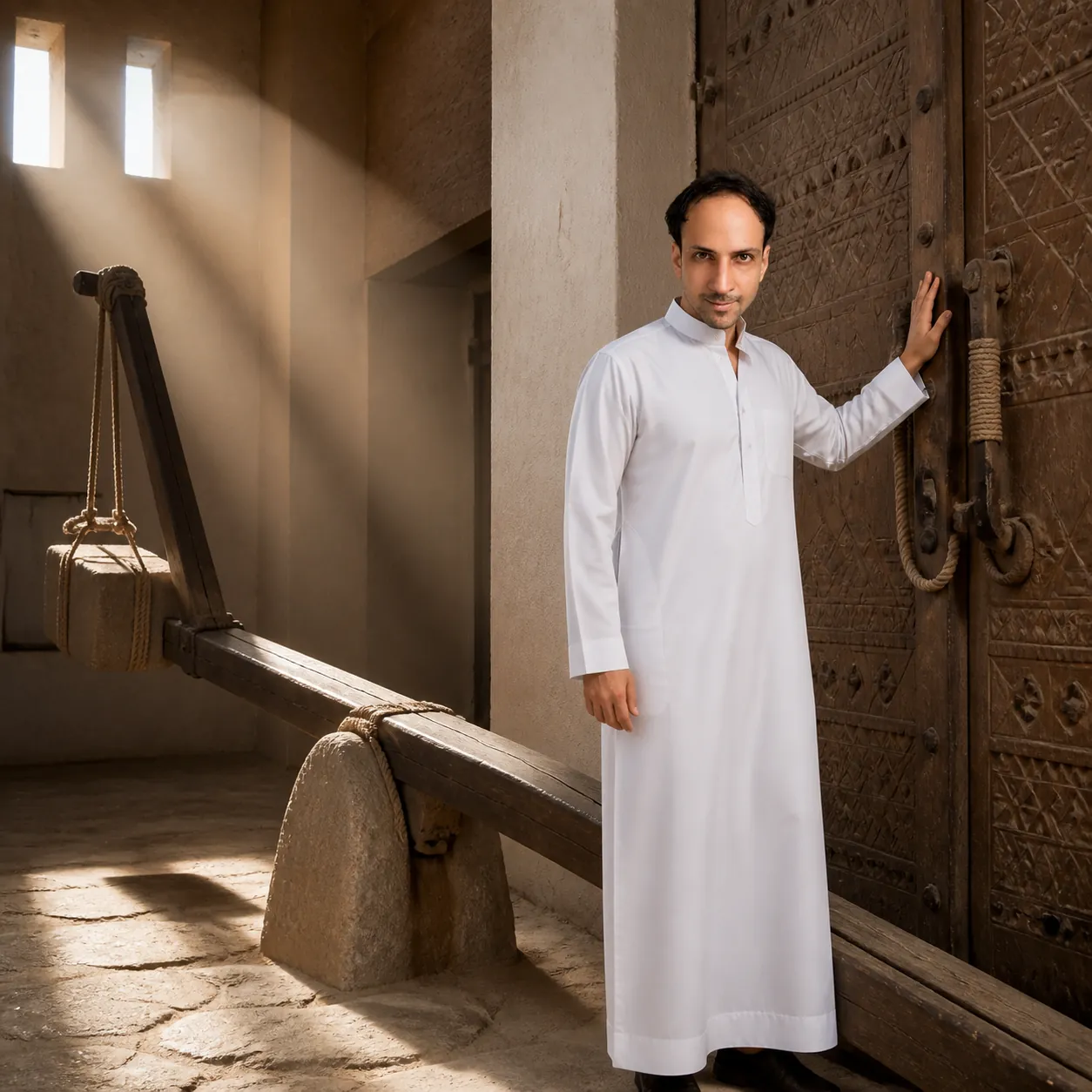
Deep Reserve: Najdi Gatehouse Passage — AI Portrait Prompt
صورةAI Portraits

Turn your own photo into a conceptual labor portrait in a Najdi gatehouse passage before tall carved timber doors. Keeps your face unchanged.

من نص البرومبت

Use the attached reference photo as the identity reference: keep the same face, skin tone, hair and features as the person in that photo, without beautifying, aging or altering them. Create a square 1:1 museum-catalog frame with a strong first read and a slower second read at exactly 2880x2880 pixels. Location: a Najdi gatehouse passage before tall carved timber doors. Show the subject in a crisp white everyday traditional Gulf outfit with an open collar, resting four fingertips against one door's carved edge. Use this advanced image-making device as the core logic: a long squared timber lever over a stone fulcrum, at whose far end one calm downward hand balances a dressed block turns a small, steady effort into the equal of crushing weight. Explore how strength stored in design differs from strength spent in strain; direct expression and posture toward quiet competence, never melodrama or ad-like confidence. Frame from a few steps back with the full rig visible, their figure honest against its scale. Make the composition keep every working line and bearing point sharp and traceable. Render it as conceptual labor portraiture uniting real counterweight physics, timber-and-rope craft authenticity, measured cinematic stillness, and quietly dignified working-portrait realism, using dusty shafts of high window light cut into slow diagonal beams and a palette of dust grey, dark rope tan, and muted olive. Photorealistic: this must read as a real photograph from a physical camera, never an illustration, painting, or 3D render. Resolve real surface detail: visible weave in cloth, fine scratches on metal, and the faint unevenness of painted walls. Keep one identity-locked person, credible hands and fingers, natural fabric, and coherent scale, contact, reflections, shadows, airflow, deformation, and materials. Background people only when essential, always secondary and clearly different. Avoid gym equipment, heroic strongman poses, bulging-vein close-ups, snapped-rope drama, and impossibly floating boulders. No text, labels, logos, signatures, watermarks, random symbols, plastic skin, excessive bloom, or glossy AI finish.
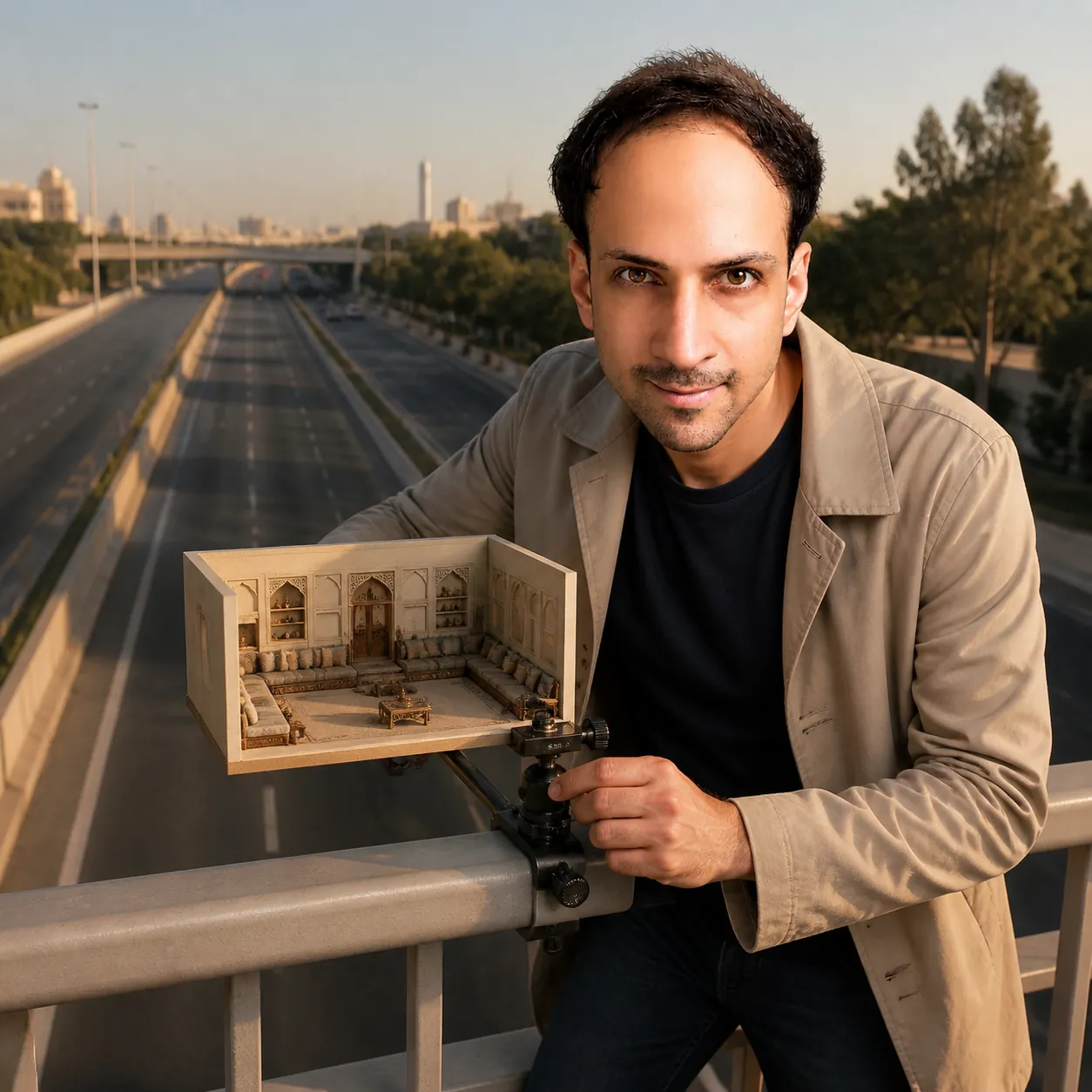
Borrowed Size: Pedestrian Footbridge — AI Portrait Prompt
صورةAI Portraits

Turn your own photo into a high-concept optical portrait in a pedestrian footbridge above six quiet lanes at Friday dawn. Keeps your face unchanged.

من نص البرومبت

Use the attached reference photo as the identity reference: keep the same face, skin tone, hair and features as the person in that photo, without beautifying, aging or altering them. Create a square 1:1 museum-catalog frame with a strong first read and a slower second read at exactly 2880x2880 pixels. Location: a pedestrian footbridge above six quiet lanes at Friday dawn. Show the subject in a putty-colored mac coat over a navy crew-neck and dark denim, clamping a small ball head onto the bridge railing. The impossible-looking event must obey this clear system: a miniature majlis built to museum exactness that reads as a full room until their hand arrives at its doorway defeats the eye's scale instinct with nothing but honest, lawful geometry. Explore how much of the visible world is measurement and how much is belief; direct expression and posture toward unhurried marvel, never melodrama or ad-like confidence. Use a slightly elevated 35mm viewpoint with honest verticals and no exaggerated perspective stretch. Make the composition seat the illusion dead center and let them stand off-axis. Render it as high-concept optical portraiture built from lawful lens geometry, documentary street realism, model-shop craft fidelity, and patient editorial composition, using late low sun raking the scene so every shadow states its distance and a palette of basswood blond, matte black, and a thin brass glint. Photorealistic: this must read as a real photograph from a physical camera, never an illustration, painting, or 3D render. Resolve real surface detail: brass darkened in the recesses and bright where thumbs land, and lacquer crazed rather than perfect. Keep one identity-locked person, credible hands and fingers, natural fabric, and coherent scale, contact, reflections, shadows, airflow, deformation, and materials. Background people only when essential, always secondary and clearly different. Avoid shrunken-person composites, giant-monster posing, fake miniature blur filters, candy-toy oversaturation, and warped fisheye streets. No text, labels, logos, signatures, watermarks, random symbols, plastic skin, excessive bloom, or glossy AI finish.
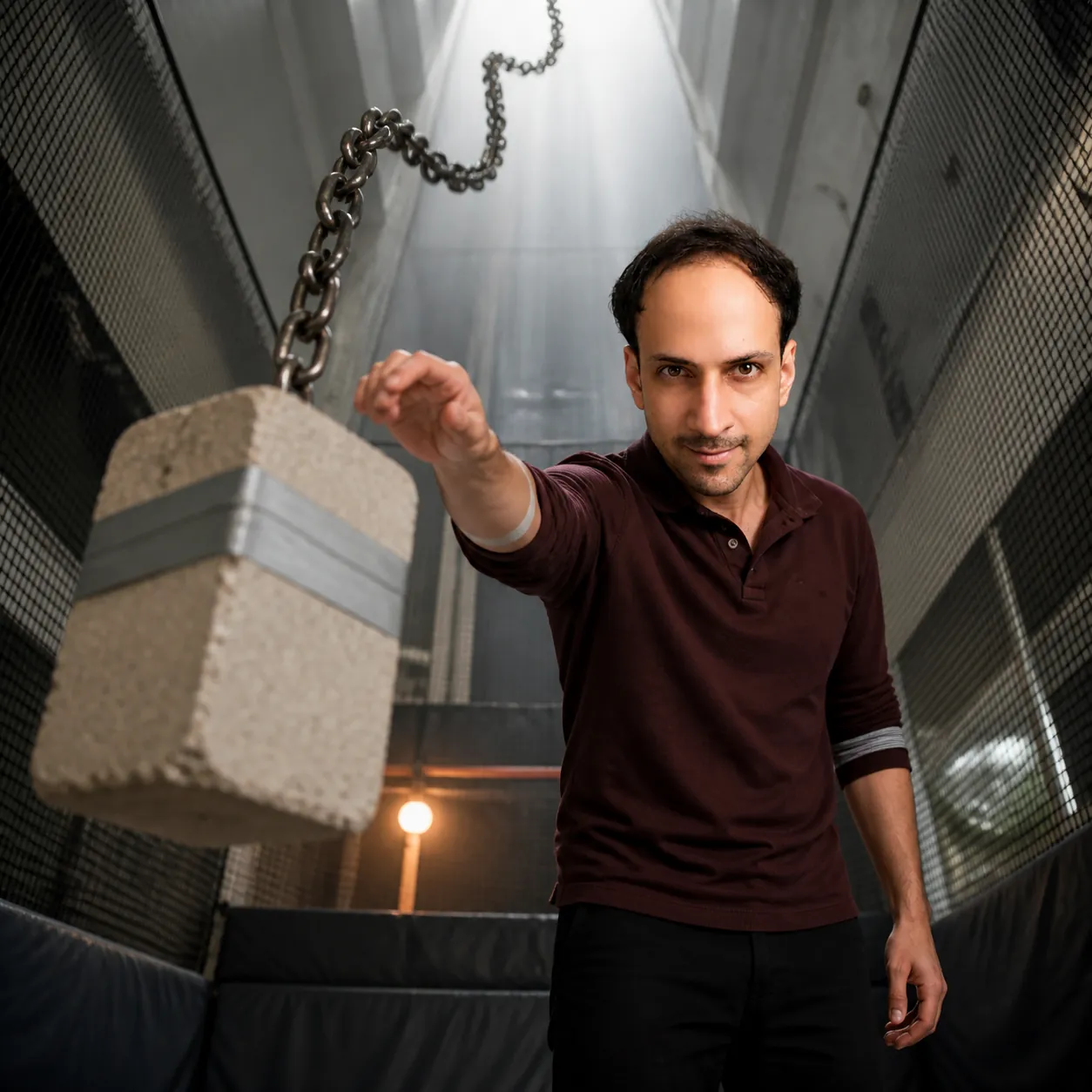
Gravity Paused: Campus Stairwell — AI Portrait Prompt
صورةAI Portraits

Turn your own photo into a photorealistic portrait in a campus stairwell converted to a padded two-storey mini drop lane. Keeps your face unchanged.

من نص البرومبت

Use the attached reference photo as the identity reference: keep the same face, skin tone, hair and features as the person in that photo, without beautifying, aging or altering them. Create a square 1:1 museum-catalog frame with a strong first read and a slower second read at exactly 2880x2880 pixels. Location: a campus stairwell converted to a padded two-storey mini drop lane. Show the subject in a maroon rugby-knit pullover with sleeves pushed back to the elbow, marking the release height with one strip of tape. The impossible-looking event must obey this clear system: a heavy hoist chain that goes suddenly slack the instant the tower lets go, its last taut curve floating turns one honestly borrowed second into proof that weight is circumstance, not essence. Explore what ordinary matter does when its oldest constant takes one second off; direct expression and posture toward reverent precision, never melodrama or ad-like confidence. Use a 90mm near-far pairing: one suspended detail sharp near the lens and the person in the reference photo's grounded face readable beyond it. Make the composition hold every floating edge sharper than any grounded surface. Render it as conceptual physics portraiture pairing genuine microgravity evidence, a falling-camera perspective, restrained contemporary art direction, and grounded human dignity, using cold shaft-light falling from far above, softened by dust in the air and a palette of bone grey, netting black, and a single amber lamp. Photorealistic: this must read as a real photograph from a physical camera, never an illustration, painting, or 3D render. Resolve real surface detail: glass with real thickness at its edge, reflections that carry the room's actual colour, and dust visible only at grazing angles. Keep one identity-locked person, credible hands and fingers, natural fabric, and coherent scale, contact, reflections, shadows, airflow, deformation, and materials. Background people only when essential, always secondary and clearly different. Avoid floating-hair astronaut poses, levitating people, swirling CGI water tentacles, and sci-fi antigravity glow. No text, labels, logos, signatures, watermarks, random symbols, plastic skin, excessive bloom, or glossy AI finish.
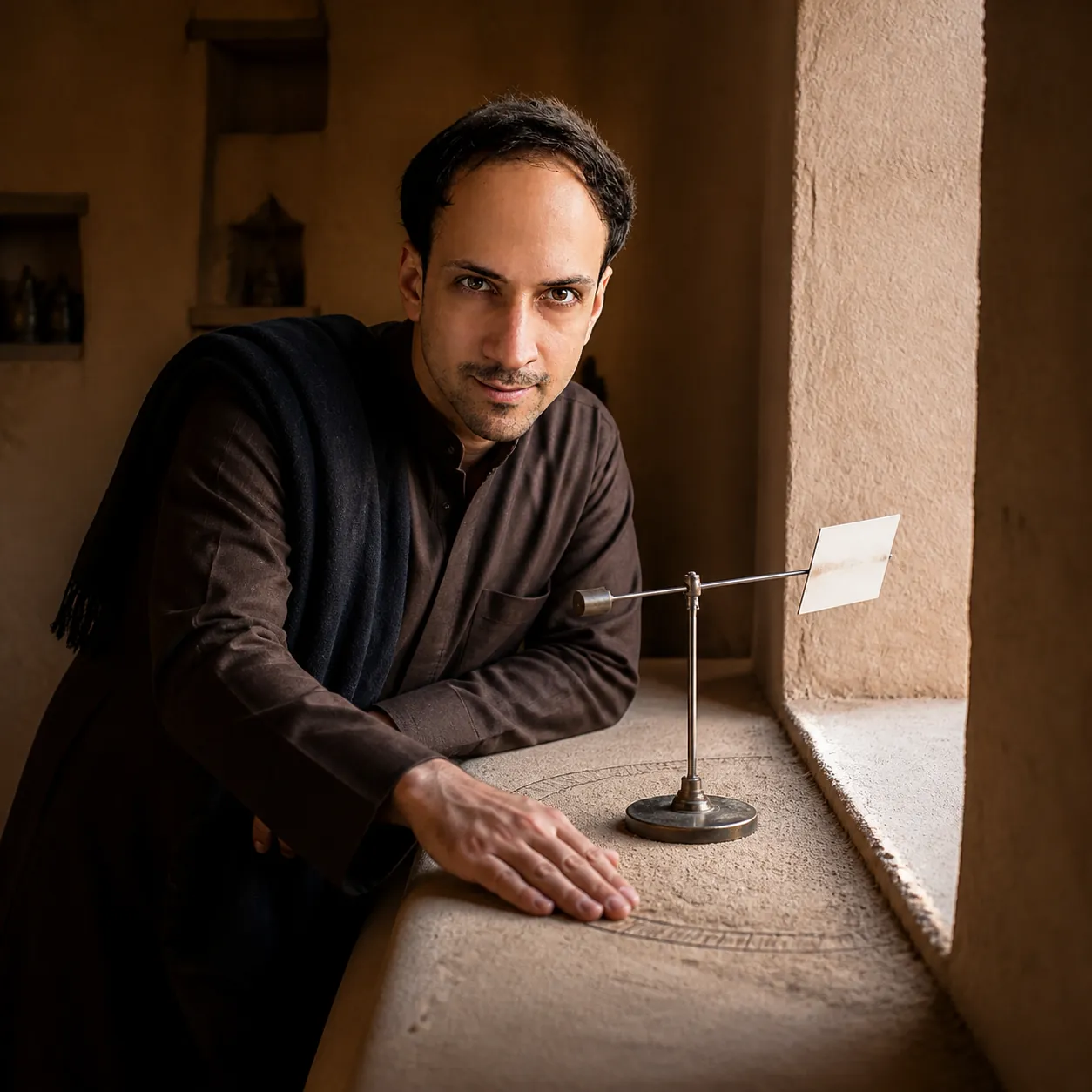
Slow Instrument: Restored Mud-Brick Room — AI Portrait Prompt
صورةAI Portraits

Turn your own photo into a photorealistic portrait in a restored mud-brick room in old Diriyah with one deep window. Keeps your face unchanged.

من نص البرومبت

Use the attached reference photo as the identity reference: keep the same face, skin tone, hair and features as the person in that photo, without beautifying, aging or altering them. Create a square 1:1 museum-catalog frame with a strong first read and a slower second read at exactly 2880x2880 pixels. Location: a restored mud-brick room in old Diriyah with one deep window. Show the subject in a winter-weight brown traditional Gulf outfit with a dark shawl folded on one shoulder, sweeping the deep windowsill clear with the side of one hand. Make one rigorous physical condition the conceptual engine: a counterweighted paper vane on a polished needle pivot that swings a marked arc and returns with every measured breath turns the body's most invisible act into a mechanism the eye can audit. Explore why a steady small force outworks a strong unsteady one; direct expression and posture toward attentive ease, never melodrama or ad-like confidence. Use a patient 85mm eye-level view with true perspective and a narrow, deliberate plane of focus. Make the composition center the instrument's stillest point and set them gently off-axis. Render it as gallery-grade mechanical still life extended to portraiture, lawful aerodynamic behavior, measured tonal restraint, and fine engraved-scale detail held sharp, using even indirect skylight softened further by high pale walls and a palette of warm oak, dull pewter, and muted bellows-leather tan. Photorealistic: this must read as a real photograph from a physical camera, never an illustration, painting, or 3D render. Resolve real surface detail: fine lint on dark fabric, water spotting on steel, and the soft rounding of edges that have been used for years. Keep one identity-locked person, credible hands and fingers, natural fabric, and coherent scale, contact, reflections, shadows, airflow, deformation, and materials. Background people only when essential, always secondary and clearly different. Avoid glowing breath vapor, swirling CGI air streaks, meditation-pose serenity, and dust motes in god rays. No text, labels, logos, signatures, watermarks, random symbols, plastic skin, excessive bloom, or glossy AI finish.
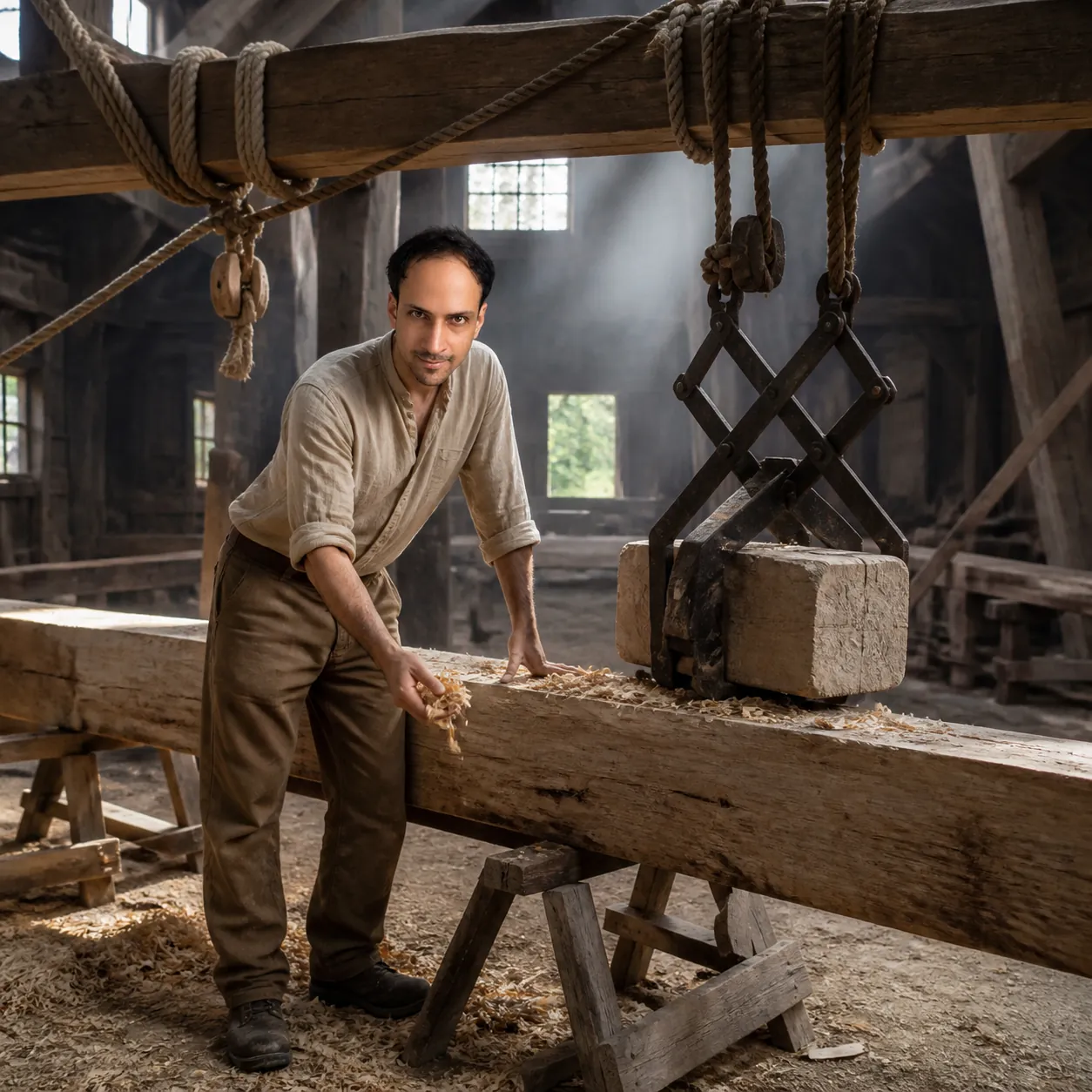
Force Deferred: Timber-Framing Hall — AI Portrait Prompt
صورةAI Portraits

Turn your own photo into a quiet working-rigging portrait in a timber-framing hall with fresh-sawn beams laid across paired trestles. Keeps your face unchanged.

من نص البرومبت

Use the attached reference photo as the identity reference: keep the same face, skin tone, hair and features as the person in that photo, without beautifying, aging or altering them. Create a square 1:1 museum-catalog frame with a strong first read and a slower second read at exactly 2880x2880 pixels. Location: a timber-framing hall with fresh-sawn beams laid across paired trestles. Show the subject in a wheat-colored linen shirt tucked into heavy cotton work trousers, clearing curled shavings off a beam with one cupped hand. Use this advanced image-making device as the core logic: a pair of scissor-jawed lifting tongs whose grip on a rough block tightens exactly as hard as its weight pulls down turns a small, steady effort into the equal of crushing weight. Explore why stored advantage is quietest at the exact moment it is greatest; direct expression and posture toward attentive ease, never melodrama or ad-like confidence. Frame from a few steps back with the full rig visible, their figure honest against its scale. Make the composition place the balance point exactly on a third line. Render it as quiet working-rigging portraiture built from lawful mechanical advantage, heavy documentary realism, hand-worn rope-and-timber materiality, and patient large-format editorial composition, using dusty shafts of high window light cut into slow diagonal beams and a palette of raw hemp, limestone grey, and one oxide-red band. Photorealistic: this must read as a real photograph from a physical camera, never an illustration, painting, or 3D render. Resolve real surface detail: wood grain read at honest scale, matte and gloss clearly separated, and no surface uniformly clean. Keep one identity-locked person, credible hands and fingers, natural fabric, and coherent scale, contact, reflections, shadows, airflow, deformation, and materials. Background people only when essential, always secondary and clearly different. Avoid gym equipment, heroic strongman poses, bulging-vein close-ups, snapped-rope drama, and impossibly floating boulders. No text, labels, logos, signatures, watermarks, random symbols, plastic skin, excessive bloom, or glossy AI finish.
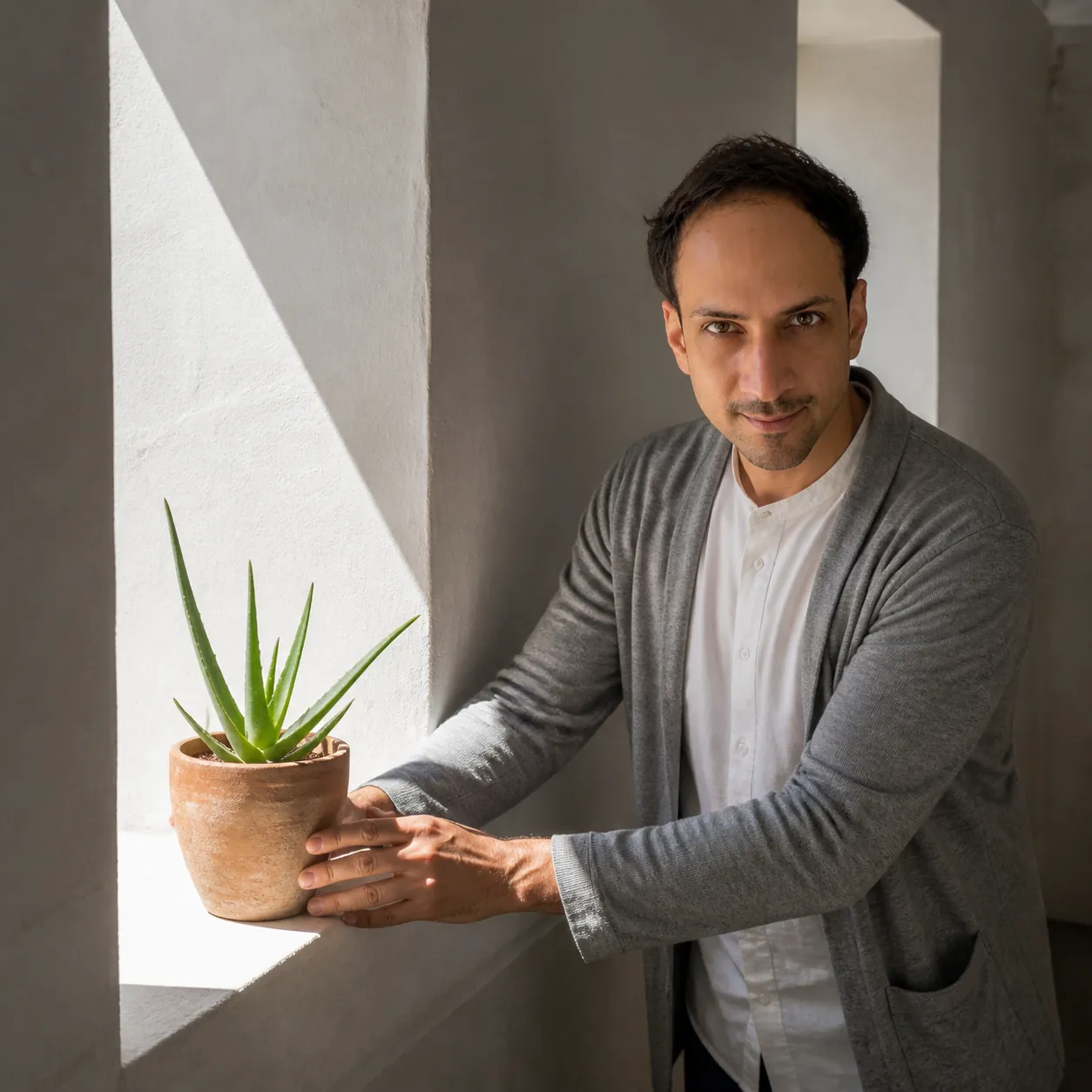
Morning Dose: Daylit Recovery Corridor Whose Deep — AI Portrait Prompt
صورةAI Portraits

Turn your own photo into a heliotherapy-room portrait in a daylit recovery corridor whose deep sills hold no equipment yet. Keeps your face unchanged.

من نص البرومبت

Use the attached reference photo as the identity reference: keep the same face, skin tone, hair and features as the person in that photo, without beautifying, aging or altering them. Create a square 1:1 museum-catalog frame with a strong first read and a slower second read at exactly 2880x2880 pixels. Location: a daylit recovery corridor whose deep sills hold no equipment yet. Show the subject in a soft grey cardigan over a white collarless shirt, lifting a potted aloe into the sill's bright band. Treat this mechanism as the frame’s governing rule: a pair of aligned rooftop mirrors that fold true morning sun down a whitewashed shaft into a windowless basement room makes the dose visible to the naked eye from across the room. Explore how a building can administer a star with millimeter manners; direct expression and posture toward attentive ease, never melodrama or ad-like confidence. Frame at chest height across the lit surface so the geometry of the beam and their eyes share focus. Make the composition align one architectural line with the sun's incoming angle. Render it as heliotherapy-room realism combining truthful sun angles, museum-grade architectural photography, tactile limewash surfaces, and unforced human presence at treatment scale, using a single crisp-edged patch of daylight surrounded by deep readable shadow and a palette of dove grey, bleached canvas, and one warm ochre accent. Photorealistic: this must read as a real photograph from a physical camera, never an illustration, painting, or 3D render. Resolve real surface detail: leather creased along the lines of use, stitching slightly irregular, and edges burnished from contact. Keep one identity-locked person, credible hands and fingers, natural fabric, and coherent scale, contact, reflections, shadows, airflow, deformation, and materials. Background people only when essential, always secondary and clearly different. Avoid tanning-salon imagery, golden-hour social-media grading, sunburst clock motifs, glowing skin retouching, and beams bending like spotlights. No text, labels, logos, signatures, watermarks, random symbols, plastic skin, excessive bloom, or glossy AI finish.
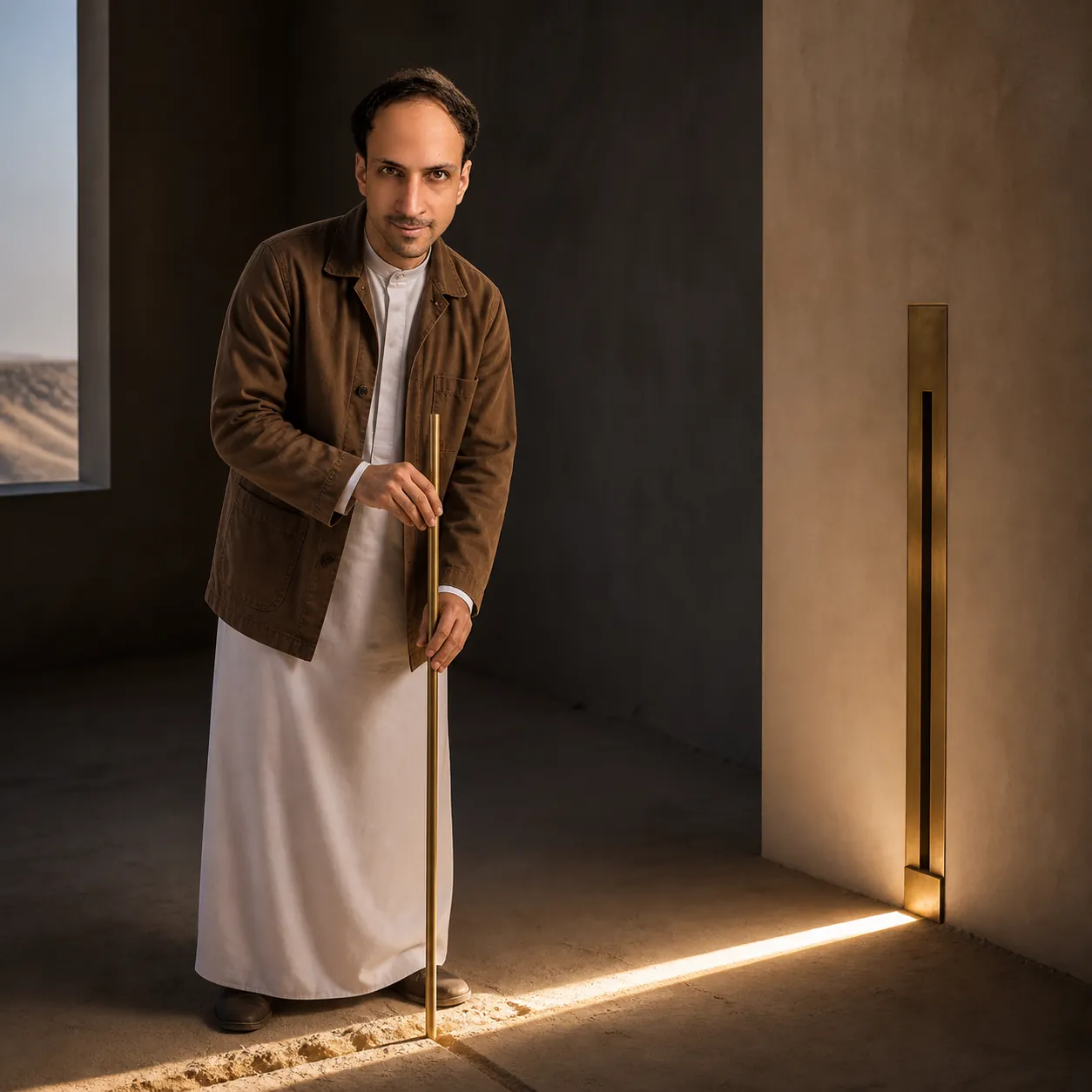
Photon Hour: Eastern Shoulder — AI Portrait Prompt
صورةAI Portraits

Turn your own photo into a gallery-grade sun-study portrait in the eastern shoulder of a low dune minutes after clean sunrise. Keeps your face unchanged.

من نص البرومبت

Use the attached reference photo as the identity reference: keep the same face, skin tone, hair and features as the person in that photo, without beautifying, aging or altering them. Create a square 1:1 museum-catalog frame with a strong first read and a slower second read at exactly 2880x2880 pixels. Location: the eastern shoulder of a low dune minutes after clean sunrise. Show the subject in a warm brown chore coat over a plain white traditional Gulf outfit, planting a slender survey stake upright in the sand. The impossible-looking event must obey this clear system: a milled brass wall slot whose admitted slab of morning light lands exactly between two lines incised in the floor treats morning light as a nutrient with a dose, not a mood. Explore whether light that arrives on purpose feels different on the skin; direct expression and posture toward measured trust, never melodrama or ad-like confidence. Use a 35mm view from the shadow side of the room, the subject standing where light meets dark. Make the composition let most of the room rest in calm shadow. Render it as gallery-grade sun-study photography built from lawful optics, physically exact beam edges, calm architectural framing, and patient observational realism, using one hard parallel beam of true sun with soft plaster-bounced fill and a palette of chalk, unpolished brass, and deep shadow blue. Photorealistic: this must read as a real photograph from a physical camera, never an illustration, painting, or 3D render. Resolve real surface detail: glass with real thickness at its edge, reflections that carry the room's actual colour, and dust visible only at grazing angles. Keep one identity-locked person, credible hands and fingers, natural fabric, and coherent scale, contact, reflections, shadows, airflow, deformation, and materials. Background people only when essential, always secondary and clearly different. Avoid god-ray haze shafts, lens-flare starbursts, glowing dust volumetrics, stained-glass rainbows, and any halo behind their head. No text, labels, logos, signatures, watermarks, random symbols, plastic skin, excessive bloom, or glossy AI finish.
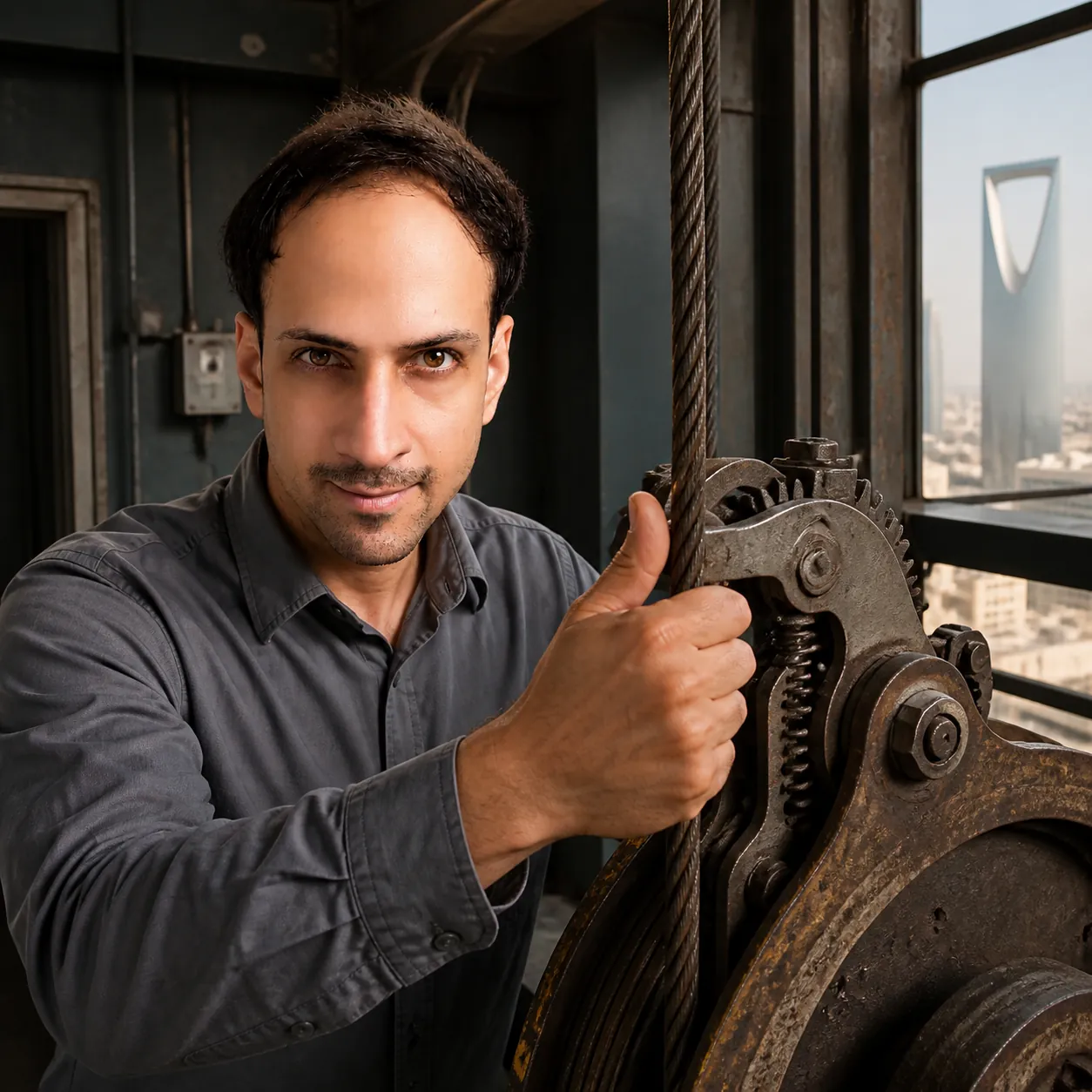
Forward Only: Freight Elevator Machine Room — AI Portrait Prompt
صورةAI Portraits

Turn your own photo into a museum-demonstration portrait in a freight elevator machine room at the top of a Riyadh tower. Keeps your face unchanged.

من نص البرومبت

Use the attached reference photo as the identity reference: keep the same face, skin tone, hair and features as the person in that photo, without beautifying, aging or altering them. Create a square 1:1 museum-catalog frame with a strong first read and a slower second read at exactly 2880x2880 pixels. Location: a freight elevator machine room at the top of a Riyadh tower. Show the subject in a steel-grey work shirt buttoned to the second button, testing a taut hoist rope with one careful thumb. Treat this mechanism as the frame’s governing rule: a workshop ratchet whose pawl drops into every fresh tooth with a bright click, holding its lifted iron weight against sliding back pays out only what was honestly deposited, yet the timing feels generous. Explore how a machine that cannot move backward changes what starting feels like; direct expression and posture toward grounded confidence, never melodrama or ad-like confidence. Frame from across the mechanism at hand height so the device and their face share one plane of focus. Make the composition leave visible headroom where the mechanism has yet to arrive. Render it as museum-demonstration realism combining truthful mechanical detail, high-fidelity portrait photography, audible-seeming moments of metal contact, and quietly restrained editorial art direction, using cool even skylight softened by dust in the air, contrast restrained and a palette of warm dust, deep umber, and one polished steel highlight. Photorealistic: this must read as a real photograph from a physical camera, never an illustration, painting, or 3D render. Resolve real surface detail: leather creased along the lines of use, stitching slightly irregular, and edges burnished from contact. Keep one identity-locked person, credible hands and fingers, natural fabric, and coherent scale, contact, reflections, shadows, airflow, deformation, and materials. Background people only when essential, always secondary and clearly different. Avoid Rube Goldberg clutter, floating holographic interfaces, trophy-shelf staging, neon motivational glow, and impossibly frictionless chrome machinery. No text, labels, logos, signatures, watermarks, random symbols, plastic skin, excessive bloom, or glossy AI finish.
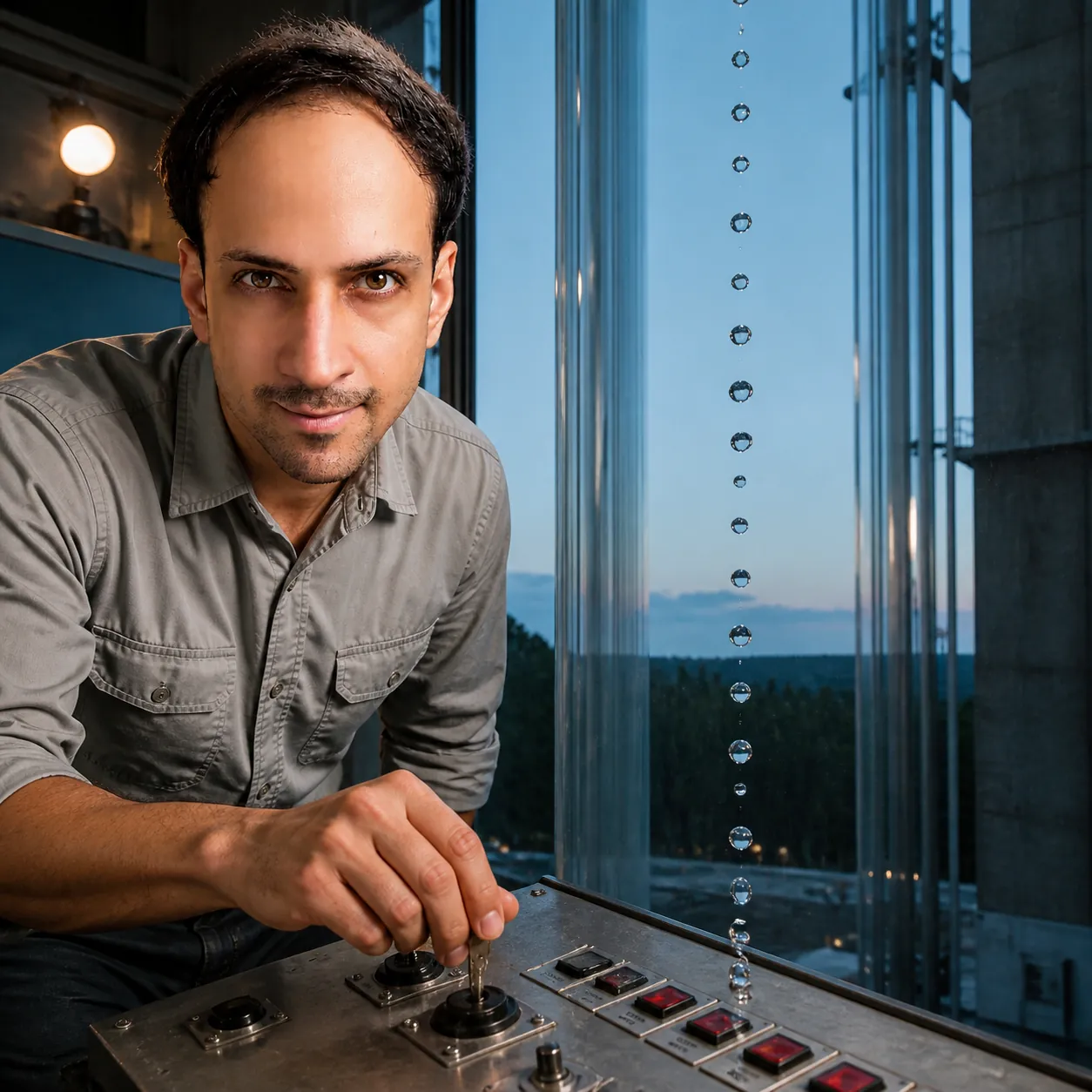
Still Descent: Control Desk — AI Portrait Prompt
صورةAI Portraits

Turn your own photo into a photorealistic portrait in the control desk of a research drop tower, countdown lamps unlit. Keeps your face unchanged.

من نص البرومبت

Use the attached reference photo as the identity reference: keep the same face, skin tone, hair and features as the person in that photo, without beautifying, aging or altering them. Create a square 1:1 museum-catalog frame with a strong first read and a slower second read at exactly 2880x2880 pixels. Location: the control desk of a research drop tower, countdown lamps unlit. Show the subject in a pressed sand-grey utility shirt over dark serviceable trousers, turning the release key one notch short of armed. Build the artwork around this material rule: a tall water column whose stream of rising air bubbles halts mid-climb and hangs like a string of glass beads holds steady in frame only because the witness is falling too. Explore how a camera must fall to tell the truth about falling; direct expression and posture toward collected wonder, never melodrama or ad-like confidence. Frame at the height of the floating objects so their stillness and their weight-bearing posture share one focal plane. Make the composition hold every floating edge sharper than any grounded surface. Render it as conceptual physics portraiture pairing genuine microgravity evidence, a falling-camera perspective, restrained contemporary art direction, and grounded human dignity, using flat pre-dawn sky light with a single battery work lamp for warmth and a palette of matte aluminum, shadowed concrete, and pale flame blue. Photorealistic: this must read as a real photograph from a physical camera, never an illustration, painting, or 3D render. Resolve real surface detail: cotton that hangs by its own weight, seams that pucker very slightly, and collars softened by washing. Keep one identity-locked person, credible hands and fingers, natural fabric, and coherent scale, contact, reflections, shadows, airflow, deformation, and materials. Background people only when essential, always secondary and clearly different. Avoid space-station porthole backdrops, cartoon up-arrows, magically hovering furniture, dramatic slow-motion glass shatters, and superhero mid-air heroics. No text, labels, logos, signatures, watermarks, random symbols, plastic skin, excessive bloom, or glossy AI finish.
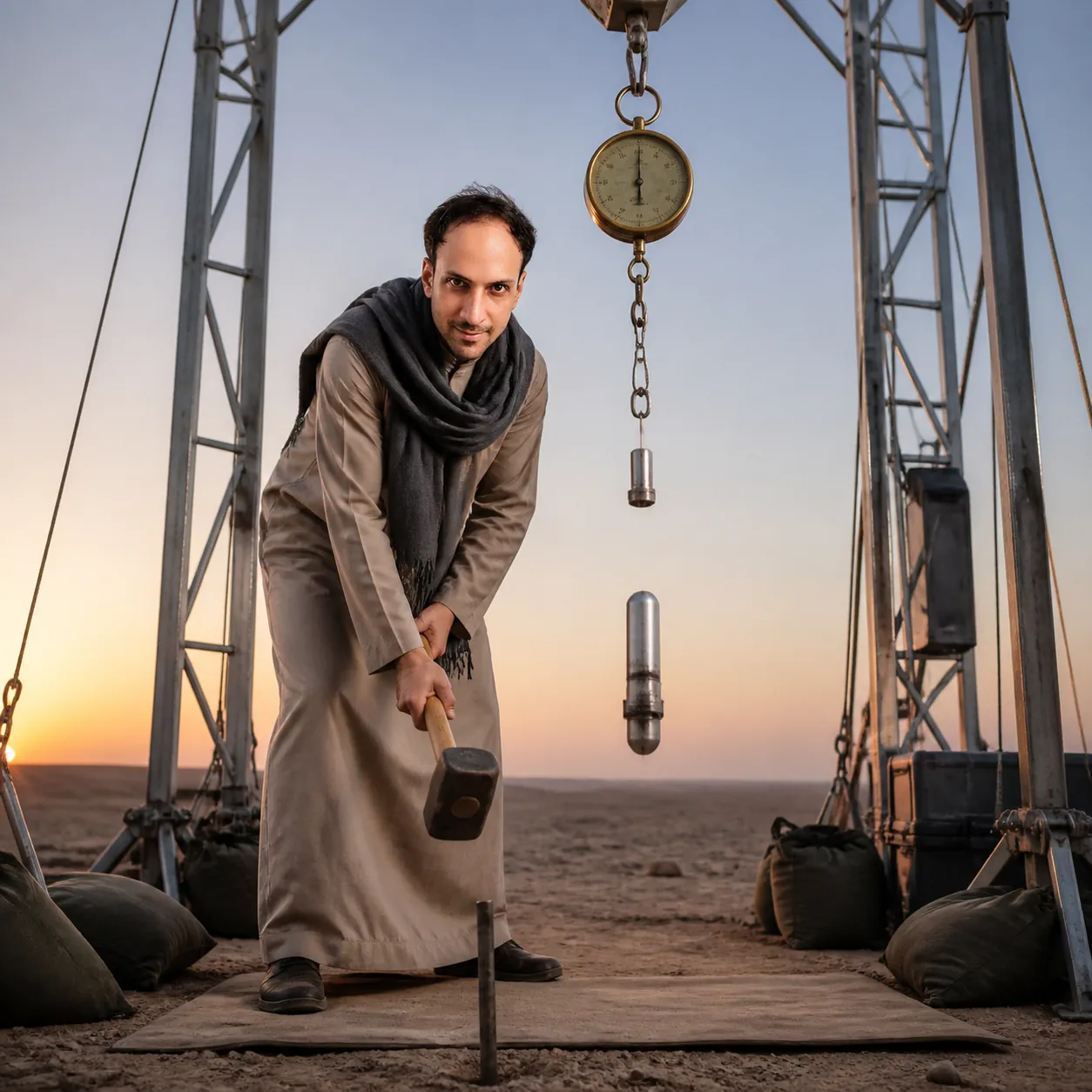
Weight Unwritten: Portable Drop-Test Gantry — AI Portrait Prompt
صورةAI Portraits

Turn your own photo into a photorealistic portrait in a portable drop-test gantry staked at the desert edge before sunrise. Keeps your face unchanged.

من نص البرومبت

Use the attached reference photo as the identity reference: keep the same face, skin tone, hair and features as the person in that photo, without beautifying, aging or altering them. Create a square 1:1 museum-catalog frame with a strong first read and a slower second read at exactly 2880x2880 pixels. Location: a portable drop-test gantry staked at the desert edge before sunrise. Show the subject in a plain beige traditional Gulf outfit under a charcoal shawl folded once, driving a stake flush with two mallet taps. Make one rigorous physical condition the conceptual engine: a brass spring scale carrying a full kilogram whose needle sinks to zero as the capsule drops away turns one honestly borrowed second into proof that weight is circumstance, not essence. Explore why buying one honest second can require a tower ten stories tall; direct expression and posture toward disciplined awe, never melodrama or ad-like confidence. Use an eye-level 55mm viewpoint with natural perspective, their planted stance sharing the frame with the floating demonstration. Make the composition stack one floating object directly above their planted feet. Render it as conceptual physics portraiture pairing genuine microgravity evidence, a falling-camera perspective, restrained contemporary art direction, and grounded human dignity, using low bounced tungsten off padded surfaces, holding gentle contrast on their face and a palette of desert dawn sand, steel grey, and muted teal. Photorealistic: this must read as a real photograph from a physical camera, never an illustration, painting, or 3D render. Resolve real surface detail: fine lint on dark fabric, water spotting on steel, and the soft rounding of edges that have been used for years. Keep one identity-locked person, credible hands and fingers, natural fabric, and coherent scale, contact, reflections, shadows, airflow, deformation, and materials. Background people only when essential, always secondary and clearly different. Avoid floating-hair astronaut poses, levitating people, swirling CGI water tentacles, and sci-fi antigravity glow. No text, labels, logos, signatures, watermarks, random symbols, plastic skin, excessive bloom, or glossy AI finish.
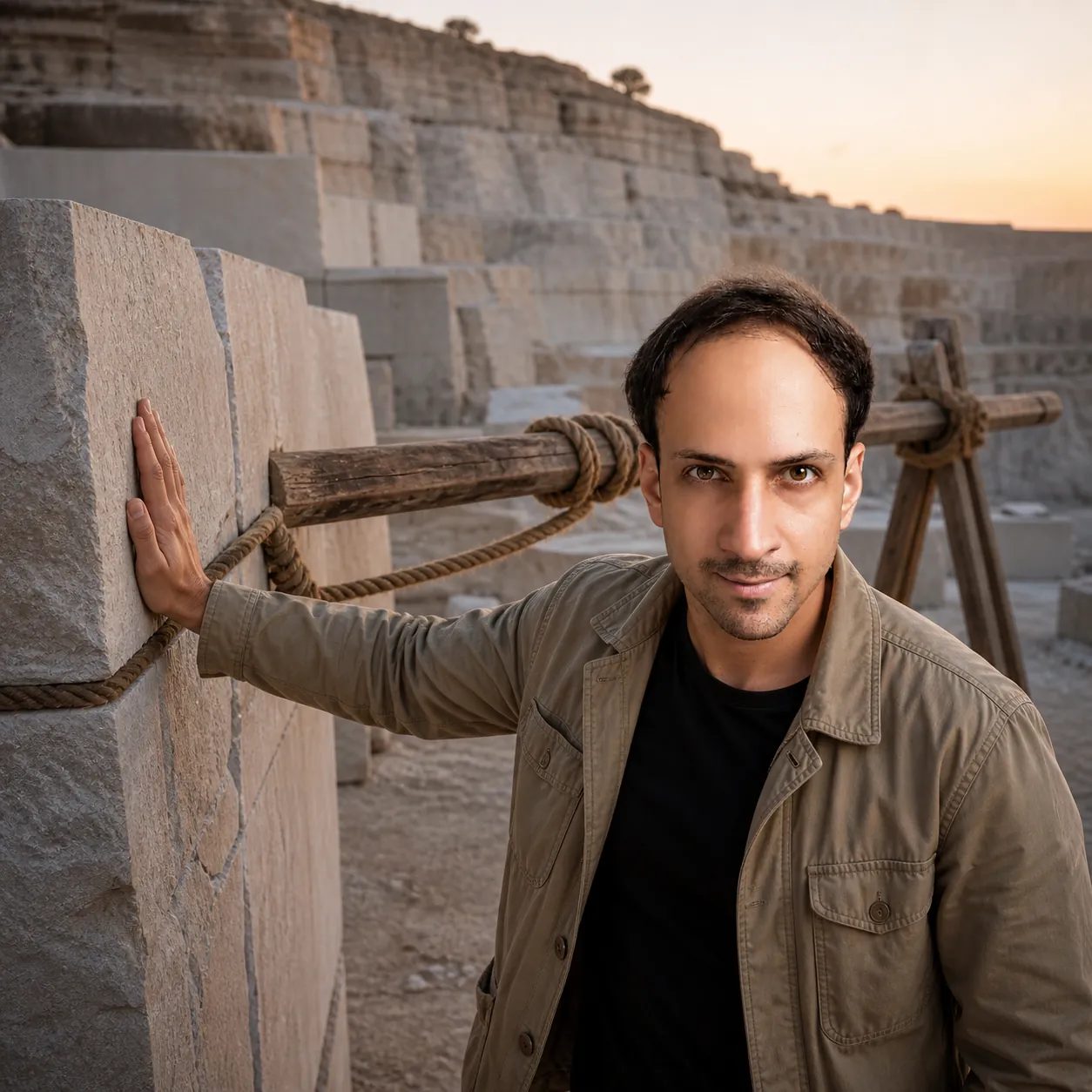
Held in Balance: Stepped Bench of a Limestone Quarry — AI Portrait Prompt
صورةAI Portraits

Turn your own photo into a heritage-engineering portrait in the stepped bench of a limestone quarry at dawn, cut faces pale. Keeps your face unchanged.

من نص البرومبت

Use the attached reference photo as the identity reference: keep the same face, skin tone, hair and features as the person in that photo, without beautifying, aging or altering them. Create a square 1:1 museum-catalog frame with a strong first read and a slower second read at exactly 2880x2880 pixels. Location: the stepped bench of a limestone quarry at dawn, cut faces pale. Show the subject in a stone-beige field jacket over a dark crew-neck shirt, laying one palm flat on a cool cut face. Build the artwork around this material rule: a Spanish windlass of one hardwood bar twisted into a doubled rope, drawing two foundation stones together with immense slow force makes mechanical advantage visible enough to be read at a glance. Explore what daily, repeatable ease reveals about decisions made long before today; direct expression and posture toward patient certainty, never melodrama or ad-like confidence. Frame across the apparatus at shoulder height so the working parts and their steady gaze hold equal sharpness. Make the composition run one unbroken structural line from hand to load. Render it as heritage-engineering realism built on accurate simple machines, tactile stone and hemp surfaces, deep architectural shadow, and slow considered framing, using one high work lamp shaded so the load sits in sculptural half-light and a palette of dust grey, dark rope tan, and muted olive. Photorealistic: this must read as a real photograph from a physical camera, never an illustration, painting, or 3D render. Resolve real surface detail: hair with individual strands catching light, fine hairs of uneven length, and skin oil giving a low uneven sheen. Keep one identity-locked person, credible hands and fingers, natural fabric, and coherent scale, contact, reflections, shadows, airflow, deformation, and materials. Background people only when essential, always secondary and clearly different. Avoid neon fitness styling, sweat-spray action shots, cartoon oversized pulleys, crumbling CGI stone, and triumphant summit gestures. No text, labels, logos, signatures, watermarks, random symbols, plastic skin, excessive bloom, or glossy AI finish.
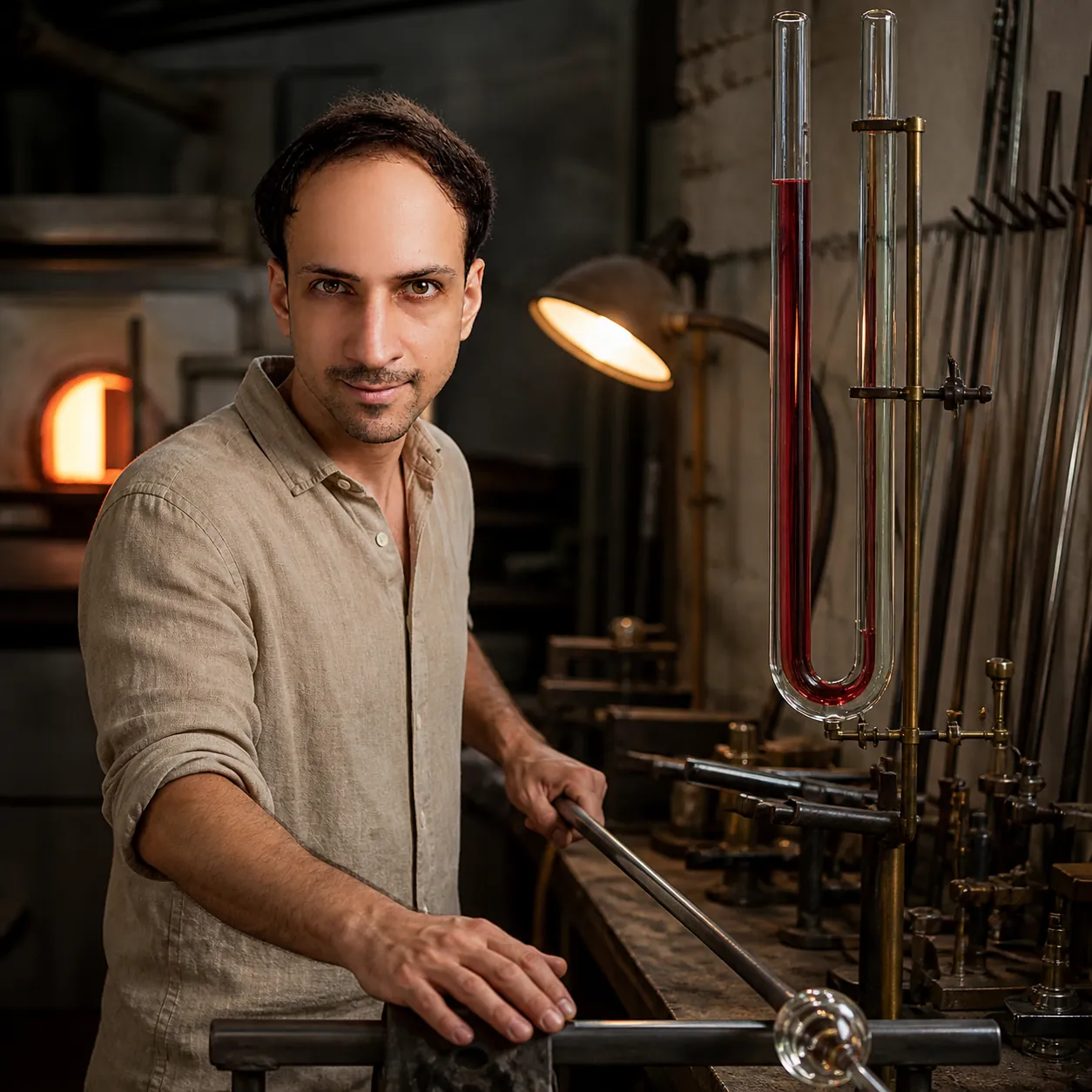
Breath Ledger: Glassblower's Bench — AI Portrait Prompt
صورةAI Portraits

Turn your own photo into a portrait in a glassblower's bench beside a resting furnace, blowpipes racked in order. Keeps your face unchanged.

من نص البرومبت

Use the attached reference photo as the identity reference: keep the same face, skin tone, hair and features as the person in that photo, without beautifying, aging or altering them. Create a square 1:1 museum-catalog frame with a strong first read and a slower second read at exactly 2880x2880 pixels. Location: a glassblower's bench beside a resting furnace, blowpipes racked in order. Show the subject in a khaki linen shirt with both sleeves rolled twice, top button open, rolling a cold blowpipe along the bench rail with one palm. Make one rigorous physical condition the conceptual engine: a tall glass U-tube whose column of tinted water stands pinned to one ruled line by their even pressure turns the body's most invisible act into a mechanism the eye can audit. Explore how a machine with no opinion becomes the most honest teacher they have; direct expression and posture toward settled attention, never melodrama or ad-like confidence. Use a patient 85mm eye-level view with true perspective and a narrow, deliberate plane of focus. Make the composition trace the air's path from source to reading in one line. Render it as museum-demonstration realism combining true fluid and pressure physics, brass-and-glass instrument finish, quiet editorial portrait light, and unexaggerated human presence, using quiet dusk ambience lifted by one warm tungsten practical near the work and a palette of slate grey, clear glass, and a madder-red thread. Photorealistic: this must read as a real photograph from a physical camera, never an illustration, painting, or 3D render. Resolve real surface detail: fine grit in the texture of concrete, efflorescence at damp edges, and hairline cracks that follow stress. Keep one identity-locked person, credible hands and fingers, natural fabric, and coherent scale, contact, reflections, shadows, airflow, deformation, and materials. Background people only when essential, always secondary and clearly different. Avoid glowing breath vapor, swirling CGI air streaks, meditation-pose serenity, and dust motes in god rays. No text, labels, logos, signatures, watermarks, random symbols, plastic skin, excessive bloom, or glossy AI finish.
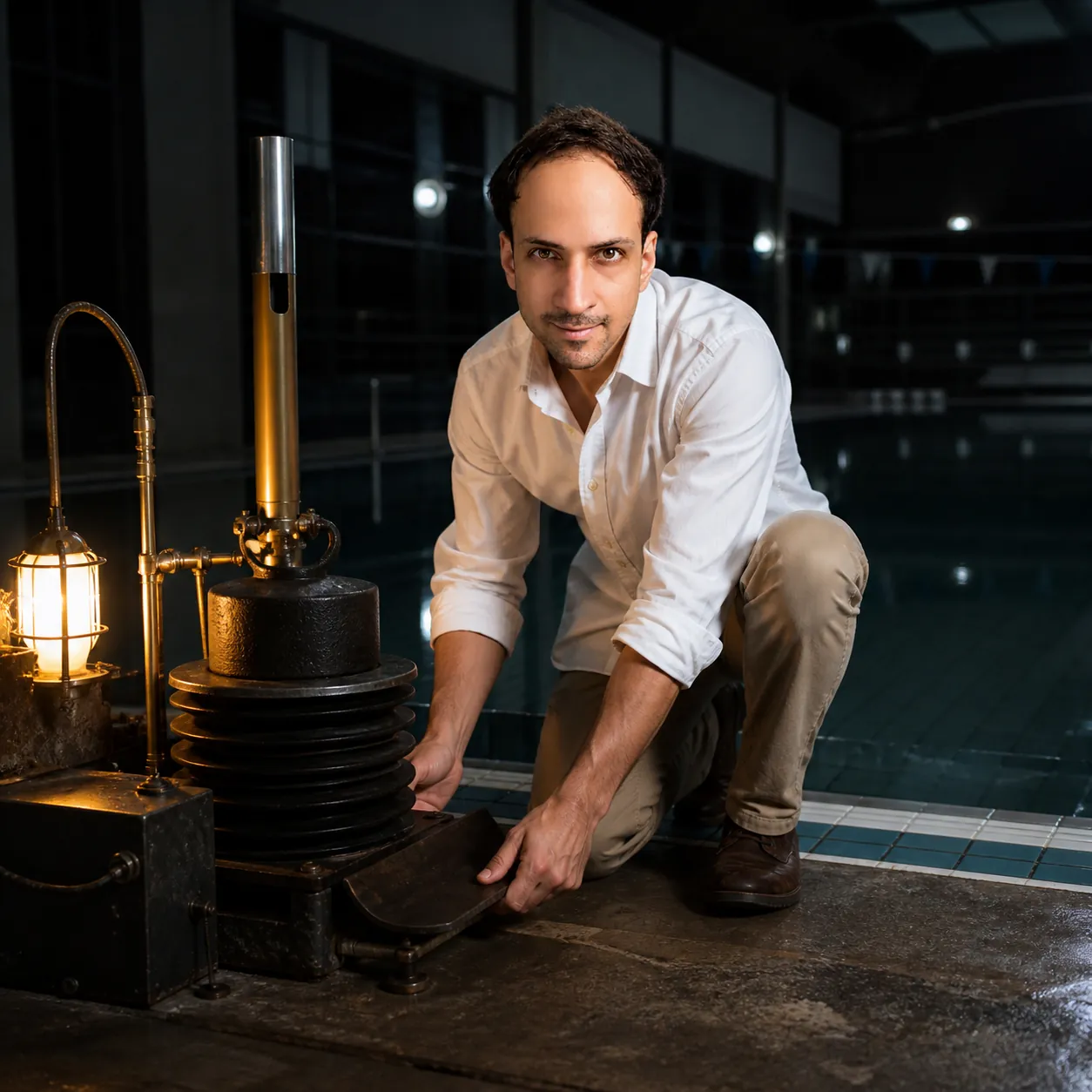
Tuned Patience: Empty Indoor Lap Pool — AI Portrait Prompt
صورةAI Portraits

Turn your own photo into a photorealistic portrait in an empty indoor lap pool at night, the water perfectly still. Keeps your face unchanged.

من نص البرومبت

Use the attached reference photo as the identity reference: keep the same face, skin tone, hair and features as the person in that photo, without beautifying, aging or altering them. Create a square 1:1 museum-catalog frame with a strong first read and a slower second read at exactly 2880x2880 pixels. Location: an empty indoor lap pool at night, the water perfectly still. Show the subject in a white oxford shirt untucked over slim sand-colored chinos, aligning a kickboard square to the pool's tiled edge. Treat this mechanism as the frame’s governing rule: a ribbed reservoir bellows under a cast-iron weight that keeps one organ pipe speaking evenly between their strokes trains the breather as surely as the breather drives the machine. Explore where the line runs between operating an instrument and being one; direct expression and posture toward gentle rigor, never melodrama or ad-like confidence. Frame at the instrument's working height so its smallest motion and their eyes read together. Make the composition center the instrument's stillest point and set them gently off-axis. Render it as slow craft cinematography in a single still frame, honest air-driven motion, tactile bench-worn surfaces, and restrained heritage-modern art direction, using one warm practical low beside the instrument answered by cool side ambient and a palette of soot black, worn brass, and one ember orange. Photorealistic: this must read as a real photograph from a physical camera, never an illustration, painting, or 3D render. Resolve real surface detail: floor finish worn along the walked line, skirting marked at shoe height, and corners darker than the open floor. Keep one identity-locked person, credible hands and fingers, natural fabric, and coherent scale, contact, reflections, shadows, airflow, deformation, and materials. Background people only when essential, always secondary and clearly different. Avoid spa-candle arrangements, incense smoke spirals, neon waveform overlays, and saxophone music-video haze. No text, labels, logos, signatures, watermarks, random symbols, plastic skin, excessive bloom, or glossy AI finish.
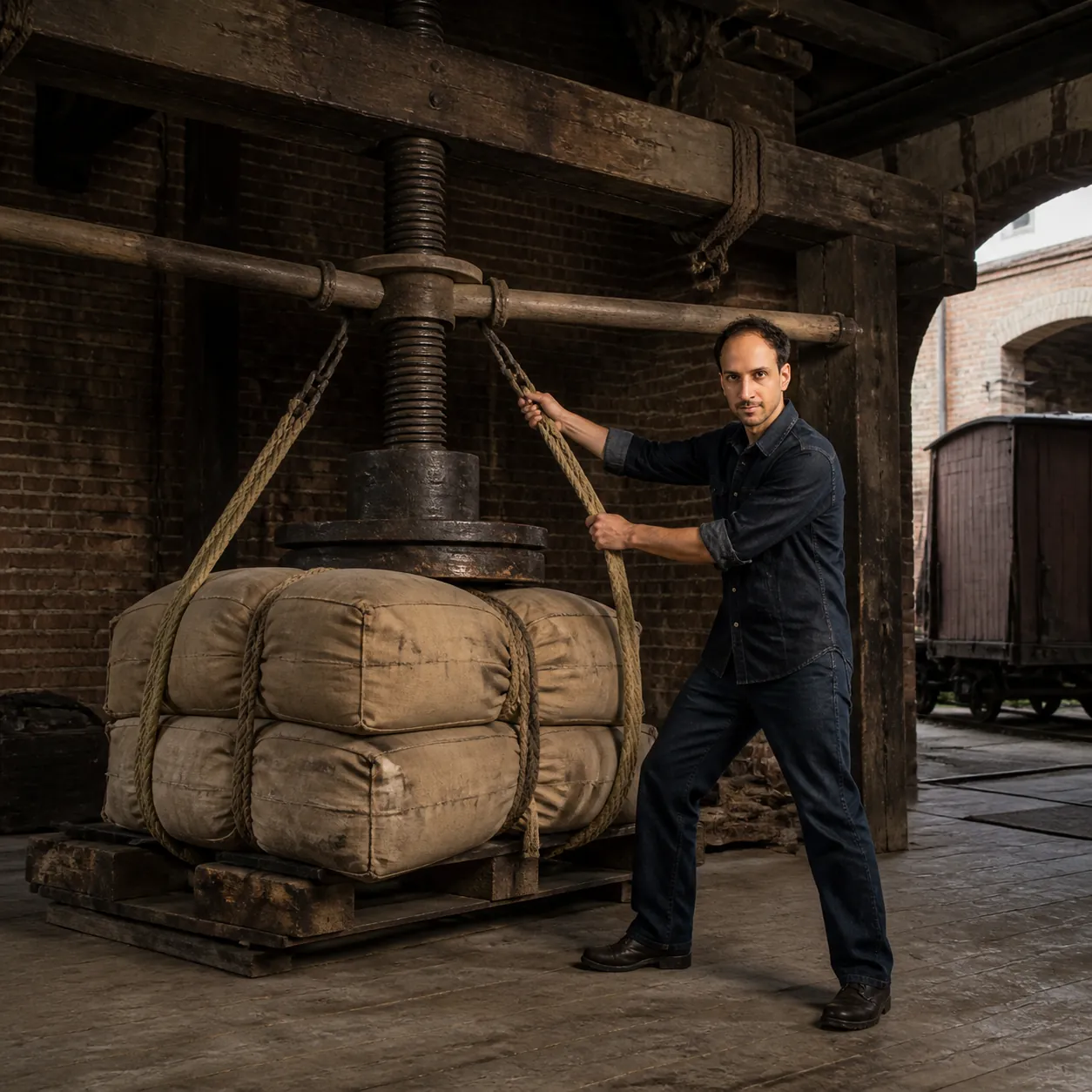
Slow Capital: Brick Freight Depot Bay — AI Portrait Prompt
صورةAI Portraits

Turn your own photo into a heritage-engineering portrait in a brick freight depot bay with a timber gantry beam overhead. Keeps your face unchanged.

من نص البرومبت

Use the attached reference photo as the identity reference: keep the same face, skin tone, hair and features as the person in that photo, without beautifying, aging or altering them. Create a square 1:1 museum-catalog frame with a strong first read and a slower second read at exactly 2880x2880 pixels. Location: a brick freight depot bay with a timber gantry beam overhead. Show the subject in a dark denim work shirt with both sleeves rolled twice, testing a cargo sling's bite with one firm tug. Use this advanced image-making device as the core logic: a great timber screw press whose long bar, walked slowly through half a turn, sinks the platen with irresistible pressure makes mechanical advantage visible enough to be read at a glance. Explore whether advantage borrowed from geometry must ever be paid back in strain; direct expression and posture toward steady reverence, never melodrama or ad-like confidence. Frame from a few steps back with the full rig visible, their figure honest against its scale. Make the composition place the balance point exactly on a third line. Render it as heritage-engineering realism built on accurate simple machines, tactile stone and hemp surfaces, deep architectural shadow, and slow considered framing, using cool open shade bounced off pale stone with soft readable contrast and a palette of unbleached canvas, shadowed umber, and one line of brass. Photorealistic: this must read as a real photograph from a physical camera, never an illustration, painting, or 3D render. Resolve real surface detail: rubber gone chalky with age, painted metal chipped to primer, and plastic yellowed only where light reaches it. Keep one identity-locked person, credible hands and fingers, natural fabric, and coherent scale, contact, reflections, shadows, airflow, deformation, and materials. Background people only when essential, always secondary and clearly different. Avoid neon fitness styling, sweat-spray action shots, cartoon oversized pulleys, crumbling CGI stone, and triumphant summit gestures. No text, labels, logos, signatures, watermarks, random symbols, plastic skin, excessive bloom, or glossy AI finish.
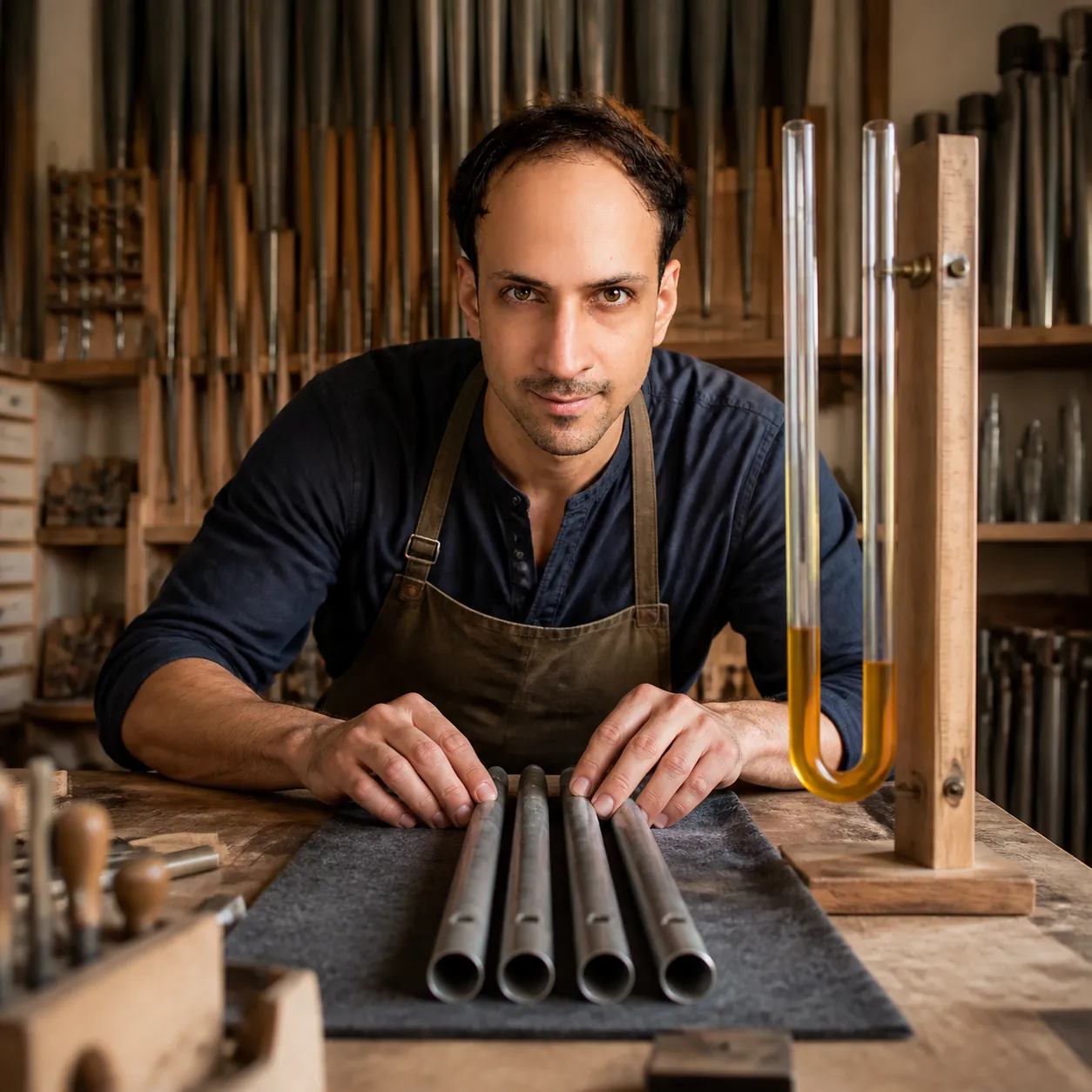
Breath Ledger: Instrument Maker's Voicing Room — AI Portrait Prompt
صورةAI Portraits

Turn your own photo into a photorealistic portrait in an instrument maker's voicing room with flue pipes racked by length. Keeps your face unchanged.

من نص البرومبت

Use the attached reference photo as the identity reference: keep the same face, skin tone, hair and features as the person in that photo, without beautifying, aging or altering them. Create a square 1:1 museum-catalog frame with a strong first read and a slower second read at exactly 2880x2880 pixels. Location: an instrument maker's voicing room with flue pipes racked by length. Show the subject in a collarless indigo work shirt under a waxed canvas apron, laying three flue pipes parallel on a felt runner. Build the artwork around this material rule: a tall glass U-tube whose column of tinted water stands pinned to one ruled line by their even pressure trains the breather as surely as the breather drives the machine. Explore how a machine with no opinion becomes the most honest teacher they have; direct expression and posture toward composed curiosity, never melodrama or ad-like confidence. Frame from a few steps back through soft foreground objects, keeping their face and the mechanism sharp. Make the composition weight the frame low and steady, horizonless, like held breath. Render it as gallery-grade mechanical still life extended to portraiture, lawful aerodynamic behavior, measured tonal restraint, and fine engraved-scale detail held sharp, using late low daylight combing the scene into long calm bands and a palette of unfinished pine, pale plaster, and a reed-gold accent. Photorealistic: this must read as a real photograph from a physical camera, never an illustration, painting, or 3D render. Resolve real surface detail: cotton that hangs by its own weight, seams that pucker very slightly, and collars softened by washing. Keep one identity-locked person, credible hands and fingers, natural fabric, and coherent scale, contact, reflections, shadows, airflow, deformation, and materials. Background people only when essential, always secondary and clearly different. Avoid spa-candle arrangements, incense smoke spirals, neon waveform overlays, and saxophone music-video haze. No text, labels, logos, signatures, watermarks, random symbols, plastic skin, excessive bloom, or glossy AI finish.
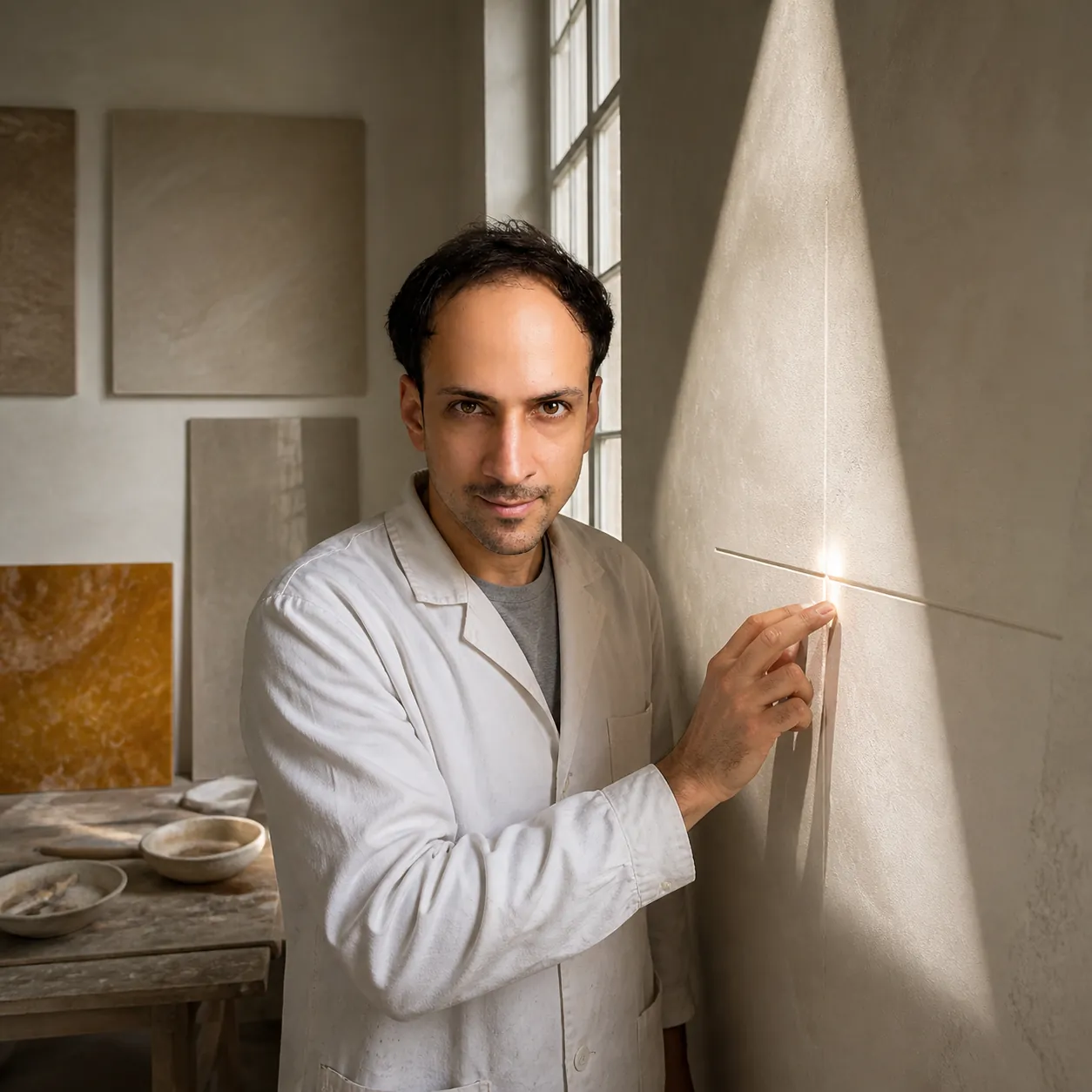
Light Pharmacy: Plasterer's Studio — AI Portrait Prompt
صورةAI Portraits

Turn your own photo into a conceptual daylight portrait in a plasterer's studio with sample walls raked by one tall window. Keeps your face unchanged.

من نص البرومبت

Use the attached reference photo as the identity reference: keep the same face, skin tone, hair and features as the person in that photo, without beautifying, aging or altering them. Create a square 1:1 museum-catalog frame with a strong first read and a slower second read at exactly 2880x2880 pixels. Location: a plasterer's studio with sample walls raked by one tall window. Show the subject in a white work smock over a grey tee, cuffs buttoned, brushing dust from an incised line with two fingers. The impossible-looking event must obey this clear system: a bundle of polished acrylic light-guides that carries roof-caught sun down to one small honest circle of daylight indoors makes the dose visible to the naked eye from across the room. Explore what the body knows about morning light that the mind keeps forgetting; direct expression and posture toward patient exactness, never melodrama or ad-like confidence. Use a 35mm view from the shadow side of the room, the subject standing where light meets dark. Make the composition give the beam one clean geometric edge that touches them. Render it as conceptual daylight portraiture combining measured light apertures, honest shadow depth, warm mineral textures, and restrained editorial composition without artificial glow, using true solar illumination metered by architecture, with no electric source anywhere visible and a palette of bone white, pale cedar, and a single amber slab. Photorealistic: this must read as a real photograph from a physical camera, never an illustration, painting, or 3D render. Resolve real surface detail: skin that reddens slightly under pressure, nail beds with honest colour, and knuckle creases that fold rather than blur. Keep one identity-locked person, credible hands and fingers, natural fabric, and coherent scale, contact, reflections, shadows, airflow, deformation, and materials. Background people only when essential, always secondary and clearly different. Avoid tanning-salon imagery, golden-hour social-media grading, sunburst clock motifs, glowing skin retouching, and beams bending like spotlights. No text, labels, logos, signatures, watermarks, random symbols, plastic skin, excessive bloom, or glossy AI finish.
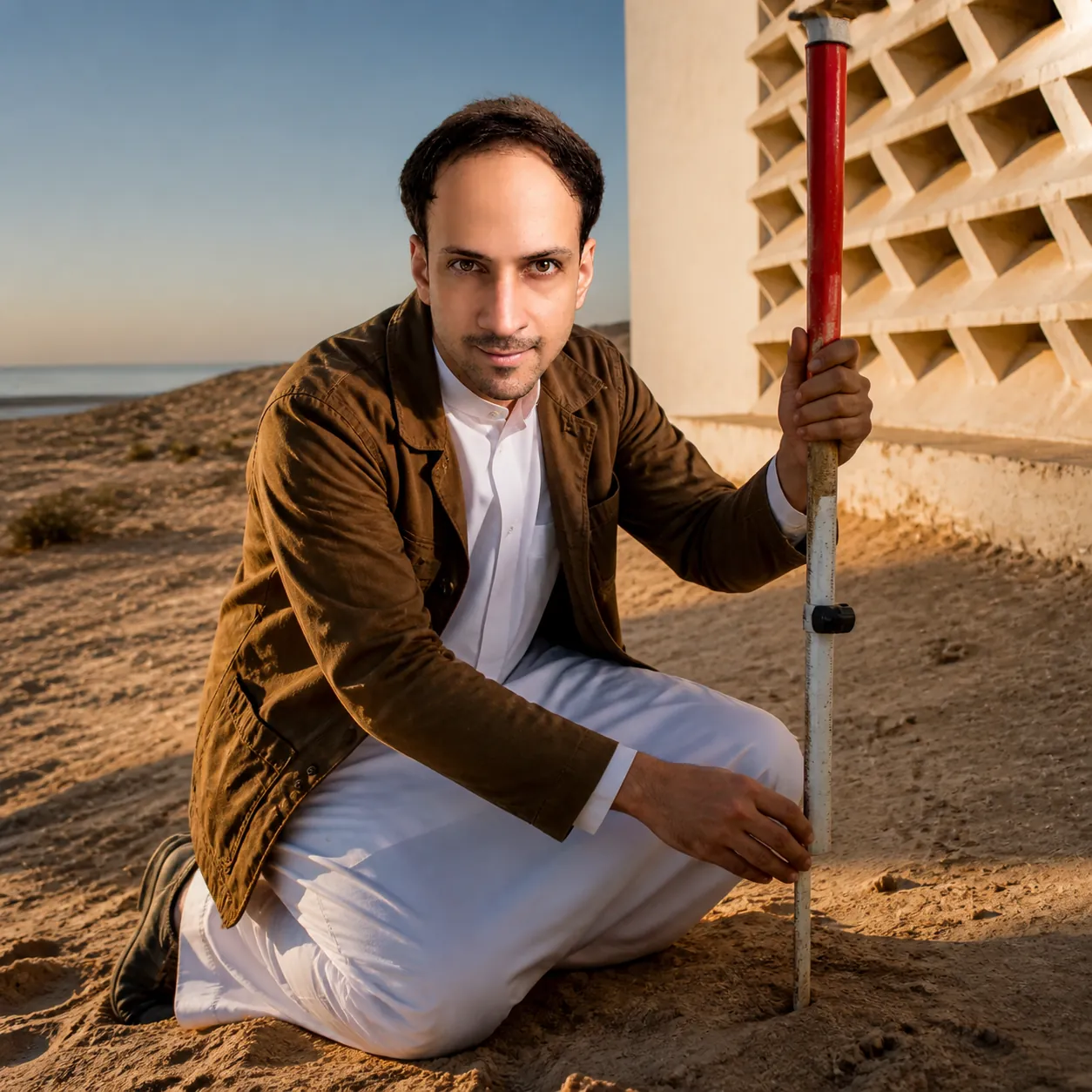
Lawful Brightness: Eastern Shoulder — AI Portrait Prompt
صورةAI Portraits

Turn your own photo into a conceptual daylight portrait in the eastern shoulder of a low dune minutes after clean sunrise. Keeps your face unchanged.

من نص البرومبت

Use the attached reference photo as the identity reference: keep the same face, skin tone, hair and features as the person in that photo, without beautifying, aging or altering them. Create a square 1:1 museum-catalog frame with a strong first read and a slower second read at exactly 2880x2880 pixels. Location: the eastern shoulder of a low dune minutes after clean sunrise. Show the subject in a warm brown chore coat over a plain white traditional Gulf outfit, planting a slender survey stake upright in the sand. Use this advanced image-making device as the core logic: a bank of degree-indexed louvres whose every notch admits a known geometric fraction of the full unfiltered beam makes the dose visible to the naked eye from across the room. Explore whether stone and plaster can hold a duty of care better than machinery; direct expression and posture toward modest certainty, never melodrama or ad-like confidence. Frame along the light's travel so its entry, its path, and its landing all stay legible in one view. Make the composition align one architectural line with the sun's incoming angle. Render it as conceptual daylight portraiture combining measured light apertures, honest shadow depth, warm mineral textures, and restrained editorial composition without artificial glow, using a single crisp-edged patch of daylight surrounded by deep readable shadow and a palette of dove grey, bleached canvas, and one warm ochre accent. Photorealistic: this must read as a real photograph from a physical camera, never an illustration, painting, or 3D render. Resolve real surface detail: rubber gone chalky with age, painted metal chipped to primer, and plastic yellowed only where light reaches it. Keep one identity-locked person, credible hands and fingers, natural fabric, and coherent scale, contact, reflections, shadows, airflow, deformation, and materials. Background people only when essential, always secondary and clearly different. Avoid tanning-salon imagery, golden-hour social-media grading, sunburst clock motifs, glowing skin retouching, and beams bending like spotlights. No text, labels, logos, signatures, watermarks, random symbols, plastic skin, excessive bloom, or glossy AI finish.
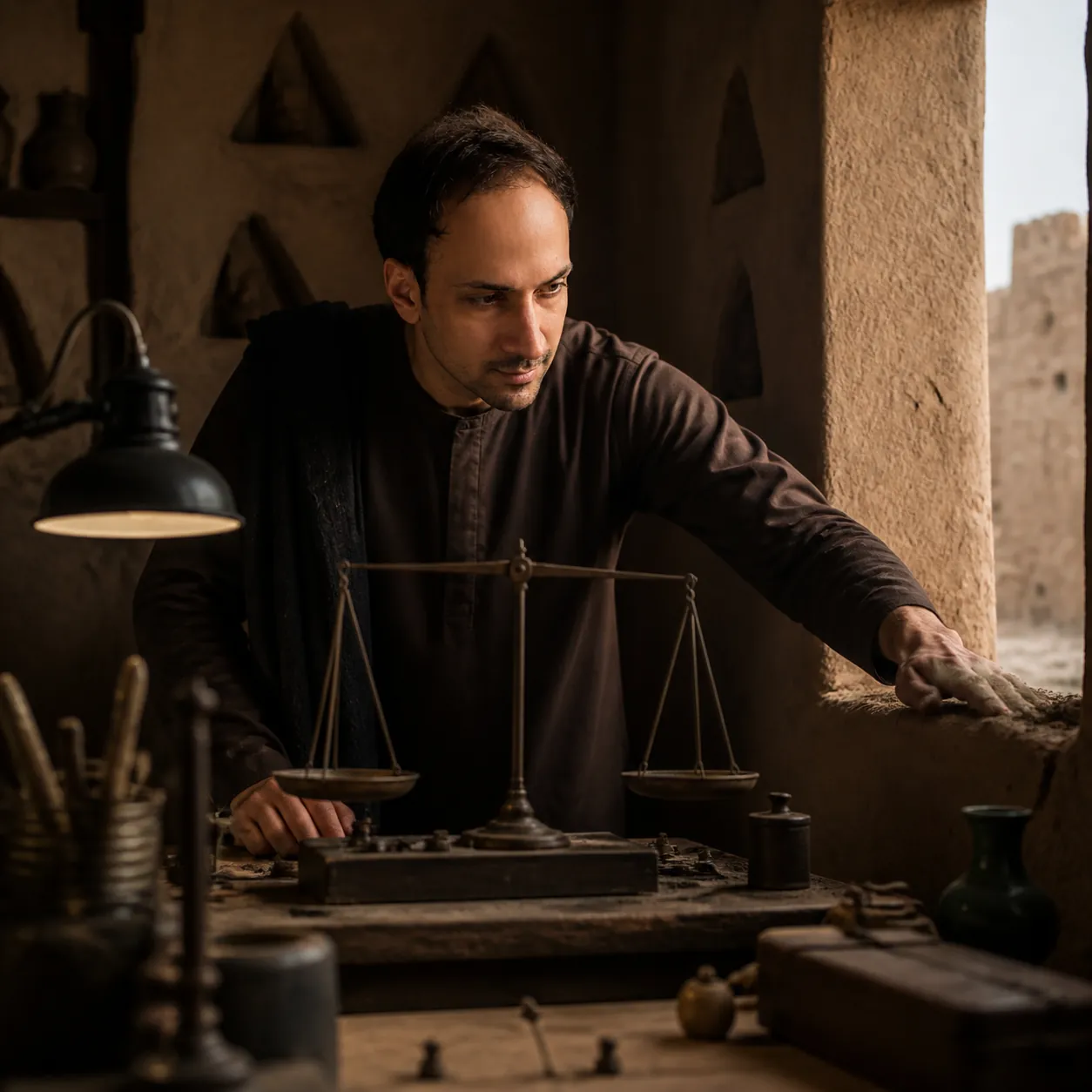
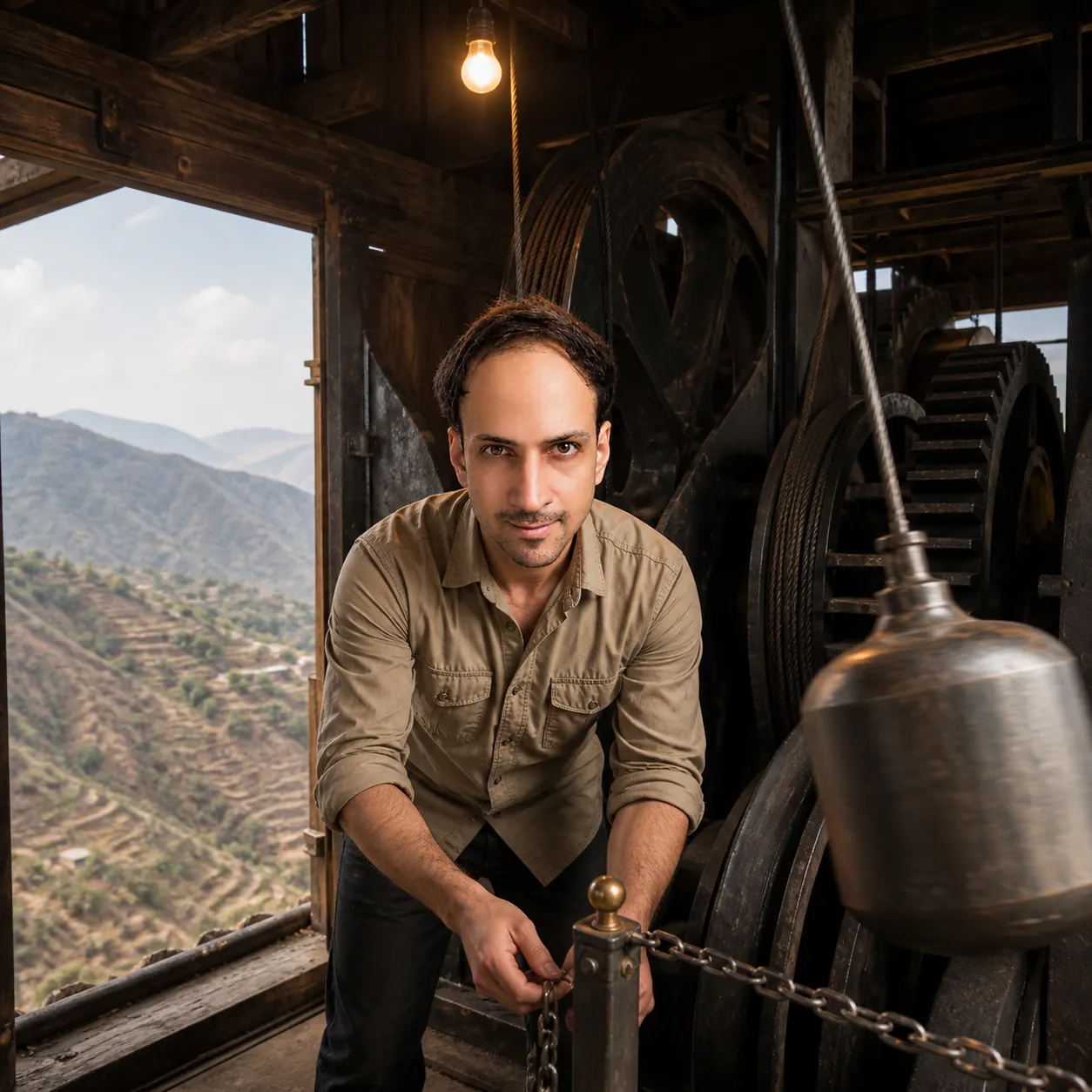
Small Beginnings: Cable-Car Winch House — AI Portrait Prompt
صورةAI Portraits

Turn your own photo into a kinetic-mechanism portrait in a cable-car winch house above terraced Asir slopes at midday. Keeps your face unchanged.

من نص البرومبت

Use the attached reference photo as the identity reference: keep the same face, skin tone, hair and features as the person in that photo, without beautifying, aging or altering them. Create a square 1:1 museum-catalog frame with a strong first read and a slower second read at exactly 2880x2880 pixels. Location: a cable-car winch house above terraced Asir slopes at midday. Show the subject in a field khaki overshirt with sleeves rolled past the forearm, clipping a safety chain back onto its post. Use this advanced image-making device as the core logic: a heavy pendulum on a long cable whose swing grows wide from fingertip pushes delivered only at its exact returning beat turns effort already spent into motion the body can plainly feel. Explore what the body learns when finishing arrives as sound instead of silence; direct expression and posture toward measured eagerness, never melodrama or ad-like confidence. Frame slightly below the action line so lifted weight and steady gaze read in one glance. Make the composition leave visible headroom where the mechanism has yet to arrive. Render it as kinetic-mechanism portraiture built from real working machines, documentary patience, warm workshop materiality, and composition that honors cause before effect, using a single practical bulb above the mechanism with gentle ambient spill and a palette of worn oak, gunmetal grey, and one brass accent. Photorealistic: this must read as a real photograph from a physical camera, never an illustration, painting, or 3D render. Resolve real surface detail: wood grain read at honest scale, matte and gloss clearly separated, and no surface uniformly clean. Keep one identity-locked person, credible hands and fingers, natural fabric, and coherent scale, contact, reflections, shadows, airflow, deformation, and materials. Background people only when essential, always secondary and clearly different. Avoid slot-machine iconography, glowing progress bars, cascading gold coins, cartoon gear mandalas, and confetti-burst celebration effects. No text, labels, logos, signatures, watermarks, random symbols, plastic skin, excessive bloom, or glossy AI finish.
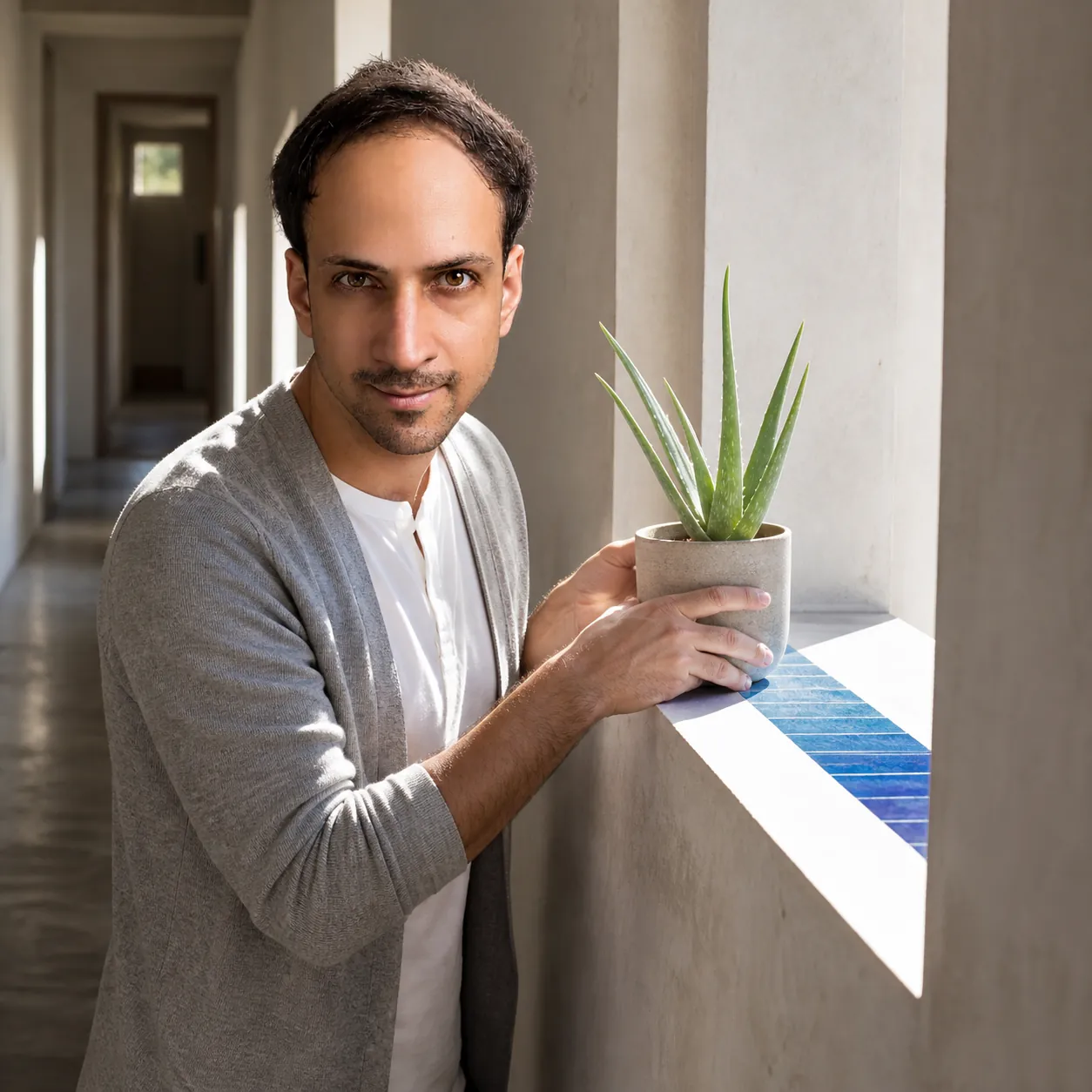
Kept Rhythm: Restored Mud-Brick Room — AI Portrait Prompt
صورةAI Portraits

Turn your own photo into a photorealistic portrait in a restored mud-brick room in old Diriyah with one deep window. Keeps your face unchanged.

من نص البرومبت

Use the attached reference photo as the identity reference: keep the same face, skin tone, hair and features as the person in that photo, without beautifying, aging or altering them. Create a square 1:1 museum-catalog frame with a strong first read and a slower second read at exactly 2880x2880 pixels. Location: a restored mud-brick room in old Diriyah with one deep window. Show the subject in a winter-weight brown traditional Gulf outfit with a dark shawl folded on one shoulder, sweeping the deep windowsill clear with the side of one hand. Build the artwork around this material rule: a knife-edge beam balance so delicate that a single directed breath presses one pan down a legible degree trains the breather as surely as the breather drives the machine. Explore how patience acquired at a bench travels home in the chest; direct expression and posture toward level patience, never melodrama or ad-like confidence. Frame from a few steps back through soft foreground objects, keeping their face and the mechanism sharp. Make the composition weight the frame low and steady, horizonless, like held breath. Render it as slow craft cinematography in a single still frame, honest air-driven motion, tactile bench-worn surfaces, and restrained heritage-modern art direction, using a single hooded bench lamp pooling light around hands and instrument and a palette of chalk white, deep umber, and one touch of verdigris. Photorealistic: this must read as a real photograph from a physical camera, never an illustration, painting, or 3D render. Resolve real surface detail: hair with individual strands catching light, short hairs of uneven length, and skin oil giving a low uneven sheen. Keep one identity-locked person, credible hands and fingers, natural fabric, and coherent scale, contact, reflections, shadows, airflow, deformation, and materials. Background people only when essential, always secondary and clearly different. Avoid spa-candle arrangements, incense smoke spirals, neon waveform overlays, and saxophone music-video haze. No text, labels, logos, signatures, watermarks, random symbols, plastic skin, excessive bloom, or glossy AI finish.
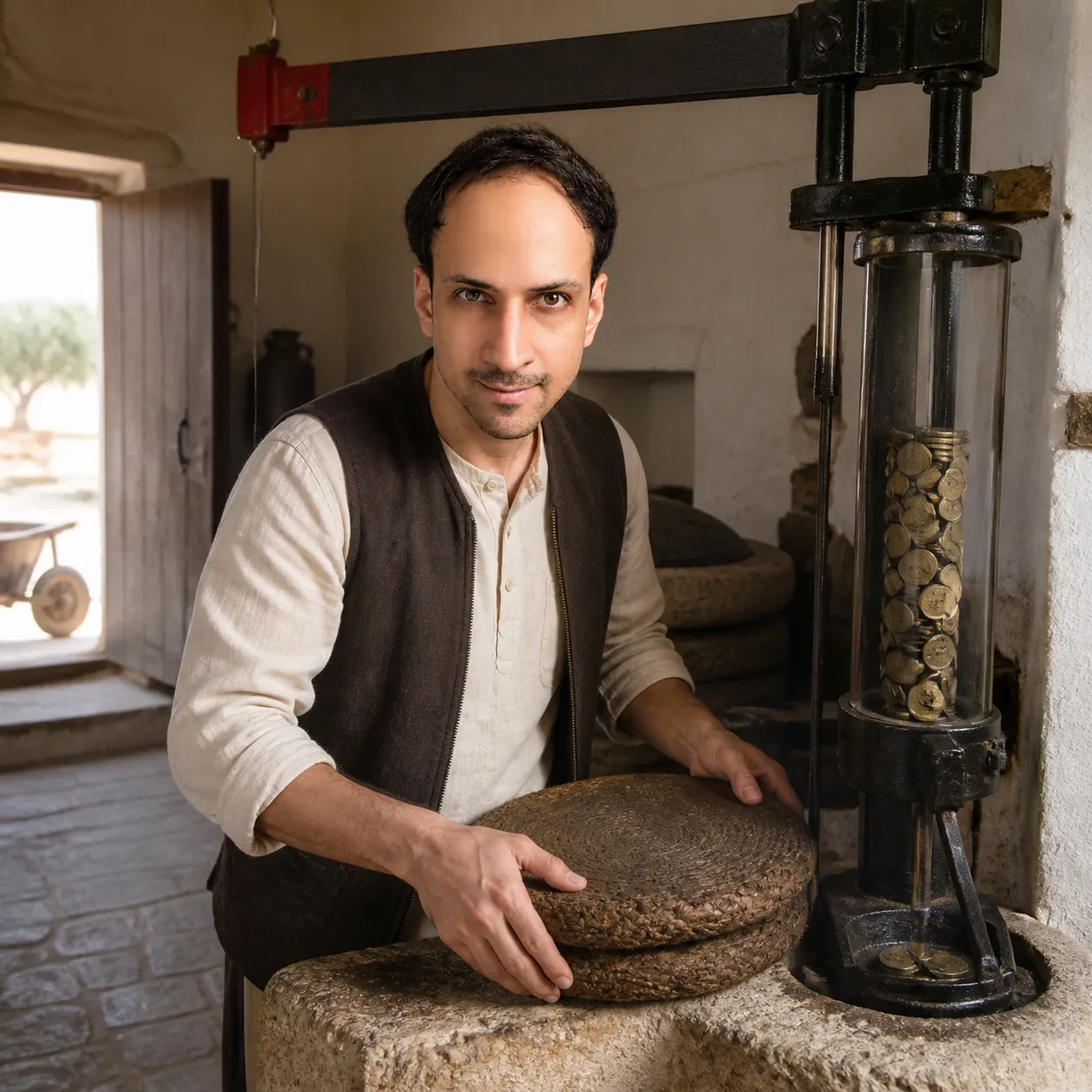
Borrowed Beam: Daylit Recovery Corridor Whose Deep — AI Portrait Prompt
صورةAI Portraits

Turn your own photo into a solar-architecture portrait in a daylit recovery corridor whose deep sills hold no equipment yet. Keeps your face unchanged.

من نص البرومبت

Use the attached reference photo as the identity reference: keep the same face, skin tone, hair and features as the person in that photo, without beautifying, aging or altering them. Create a square 1:1 museum-catalog frame with a strong first read and a slower second read at exactly 2880x2880 pixels. Location: a daylit recovery corridor whose deep sills hold no equipment yet. Show the subject in a soft grey cardigan over a white collarless shirt, lifting a potted aloe into the sill's bright band. Make one rigorous physical condition the conceptual engine: a graduated strip of blueprint paper that deepens toward Prussian blue one step for each measured interval of sun treats morning light as a nutrient with a dose, not a mood. Explore how much intention a beam must carry before it counts as care; direct expression and posture toward quiet receipt, never melodrama or ad-like confidence. Use an eye-level 80mm medium-format viewpoint that renders beam edges and skin texture equally truthfully. Make the composition keep the light's source small and its consequence large. Render it as solar-architecture portraiture built from real beam geometry, documentary daylight realism, hand-finished plaster materiality, and quietly clinical art direction, using true solar illumination metered by architecture, with no electric source anywhere visible and a palette of sand, whitewash, and a narrow Prussian-blue band. Photorealistic: this must read as a real photograph from a physical camera, never an illustration, painting, or 3D render. Resolve real surface detail: the difference between a wiped surface and a clean one, faint tide marks on ceramic, and metal dulled unevenly by touch. Keep one identity-locked person, credible hands and fingers, natural fabric, and coherent scale, contact, reflections, shadows, airflow, deformation, and materials. Background people only when essential, always secondary and clearly different. Avoid god-ray haze shafts, lens-flare starbursts, glowing dust volumetrics, stained-glass rainbows, and any halo behind their head. No text, labels, logos, signatures, watermarks, random symbols, plastic skin, excessive bloom, or glossy AI finish.
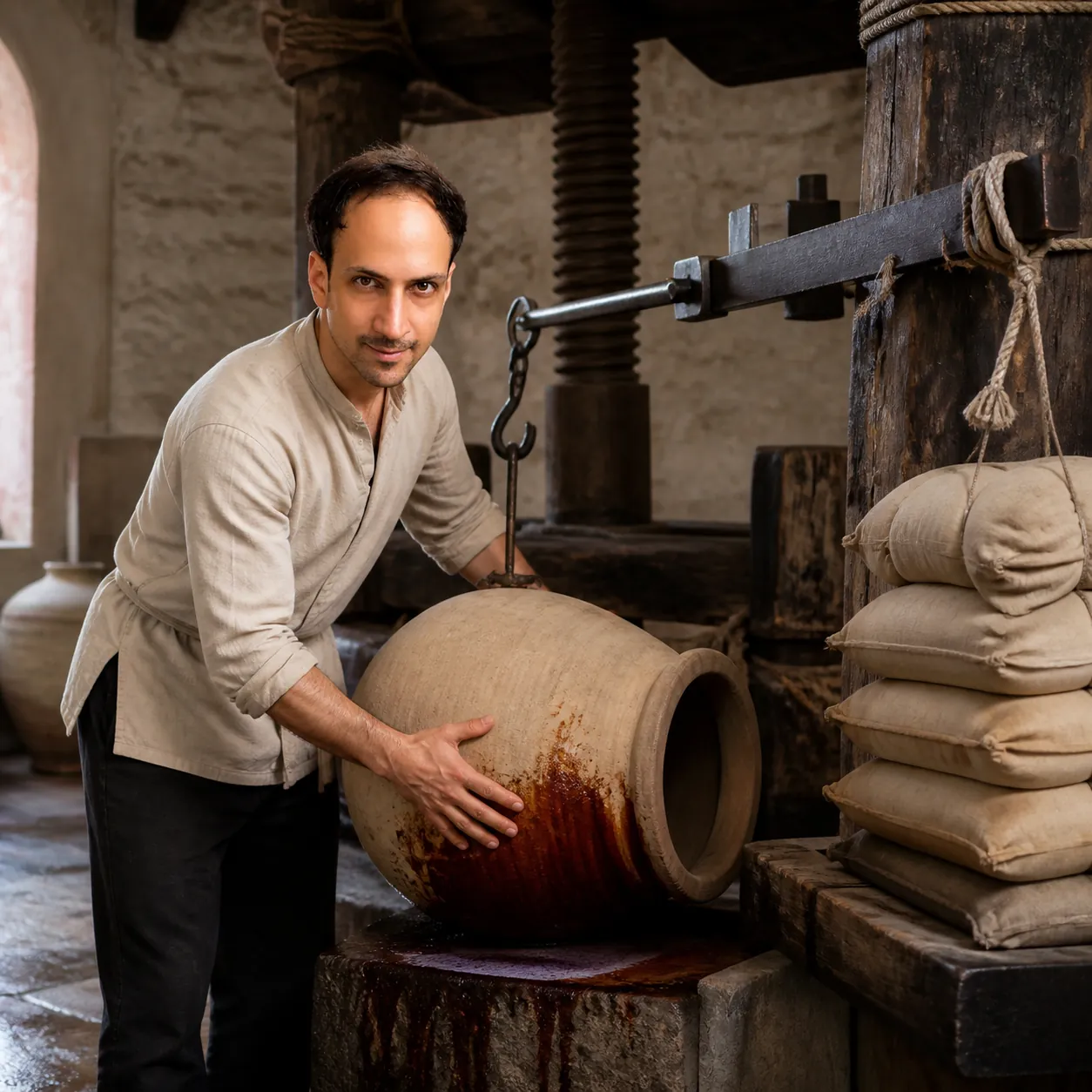
Stored Momentum: Olive Press Room — AI Portrait Prompt
صورةAI Portraits

Turn your own photo into a museum-demonstration portrait in an olive press room in Al-Jouf, stone floor swept clean. Keeps your face unchanged.

من نص البرومبت

Use the attached reference photo as the identity reference: keep the same face, skin tone, hair and features as the person in that photo, without beautifying, aging or altering them. Create a square 1:1 museum-catalog frame with a strong first read and a slower second read at exactly 2880x2880 pixels. Location: an olive press room in Al-Jouf, stone floor swept clean. Show the subject in a dark brown gilet over a cream long-sleeve henley, stacking two clean pressing mats on a stone shelf. Use this advanced image-making device as the core logic: a glass column filling with brass tokens, one per finished unit, mounted on a beam balanced to tip at a known count pays out only what was honestly deposited, yet the timing feels generous. Explore whether anticipation held in steel is a kinder teacher than anticipation held in nerves; direct expression and posture toward unhurried conviction, never melodrama or ad-like confidence. Frame slightly below the action line so lifted weight and steady gaze read in one glance. Make the composition keep the next unmoved element sharpest, the frame's quiet promise. Render it as museum-demonstration realism combining truthful mechanical detail, high-fidelity portrait photography, audible-seeming moments of metal contact, and quietly restrained editorial art direction, using clean directional daylight from one open door, falling off into readable shadow and a palette of chalk white, cast iron, and one lacquered red accent. Photorealistic: this must read as a real photograph from a physical camera, never an illustration, painting, or 3D render. Resolve real surface detail: thread ends and slight pilling on worn cloth, hairline chips at every hard corner, and stone that is porous rather than smooth. Keep one identity-locked person, credible hands and fingers, natural fabric, and coherent scale, contact, reflections, shadows, airflow, deformation, and materials. Background people only when essential, always secondary and clearly different. Avoid Rube Goldberg clutter, floating holographic interfaces, trophy-shelf staging, neon motivational glow, and impossibly frictionless chrome machinery. No text, labels, logos, signatures, watermarks, random symbols, plastic skin, excessive bloom, or glossy AI finish.

The Long Arm: Stone-Floored Date-Press Room — AI Portrait Prompt
صورةAI Portraits

Turn your own photo into a conceptual labor portrait in a stone-floored date-press room, timber posts dark with old syrup. Keeps your face unchanged.

من نص البرومبت

Use the attached reference photo as the identity reference: keep the same face, skin tone, hair and features as the person in that photo, without beautifying, aging or altering them. Create a square 1:1 museum-catalog frame with a strong first read and a slower second read at exactly 2880x2880 pixels. Location: a stone-floored date-press room, timber posts dark with old syrup. Show the subject in an unbleached cotton smock over plain dark trousers, rolling a clay jar on its rim into place. Build the artwork around this material rule: an iron steelyard whose small sliding poise, nudged a hand-width outward along the arm, levels a hook of heavy sandbags turns a small, steady effort into the equal of crushing weight. Explore whether ease that was engineered years ago still counts as their own strength; direct expression and posture toward attentive ease, never melodrama or ad-like confidence. Frame across the apparatus at shoulder height so the working parts and their steady gaze hold equal sharpness. Make the composition give the load more frame and give them the light. Render it as conceptual labor portraiture uniting real counterweight physics, timber-and-rope craft authenticity, measured cinematic stillness, and quietly dignified working-portrait realism, using cool open shade bounced off pale stone with soft readable contrast and a palette of raw hemp, limestone grey, and one oxide-red band. Photorealistic: this must read as a real photograph from a physical camera, never an illustration, painting, or 3D render. Resolve real surface detail: label-free packaging showing carton fibre, cardboard bruised at the corners, and tape lifting slightly at one end. Keep one identity-locked person, credible hands and fingers, natural fabric, and coherent scale, contact, reflections, shadows, airflow, deformation, and materials. Background people only when essential, always secondary and clearly different. Avoid gym equipment, heroic strongman poses, bulging-vein close-ups, snapped-rope drama, and impossibly floating boulders. No text, labels, logos, signatures, watermarks, random symbols, plastic skin, excessive bloom, or glossy AI finish.
