تخطَّ إلى المحتوى
جميع التصنيفات

AI Portraits

Portrait prompts you can use with your own photo.

3845 برومبتات•0 مشتركين
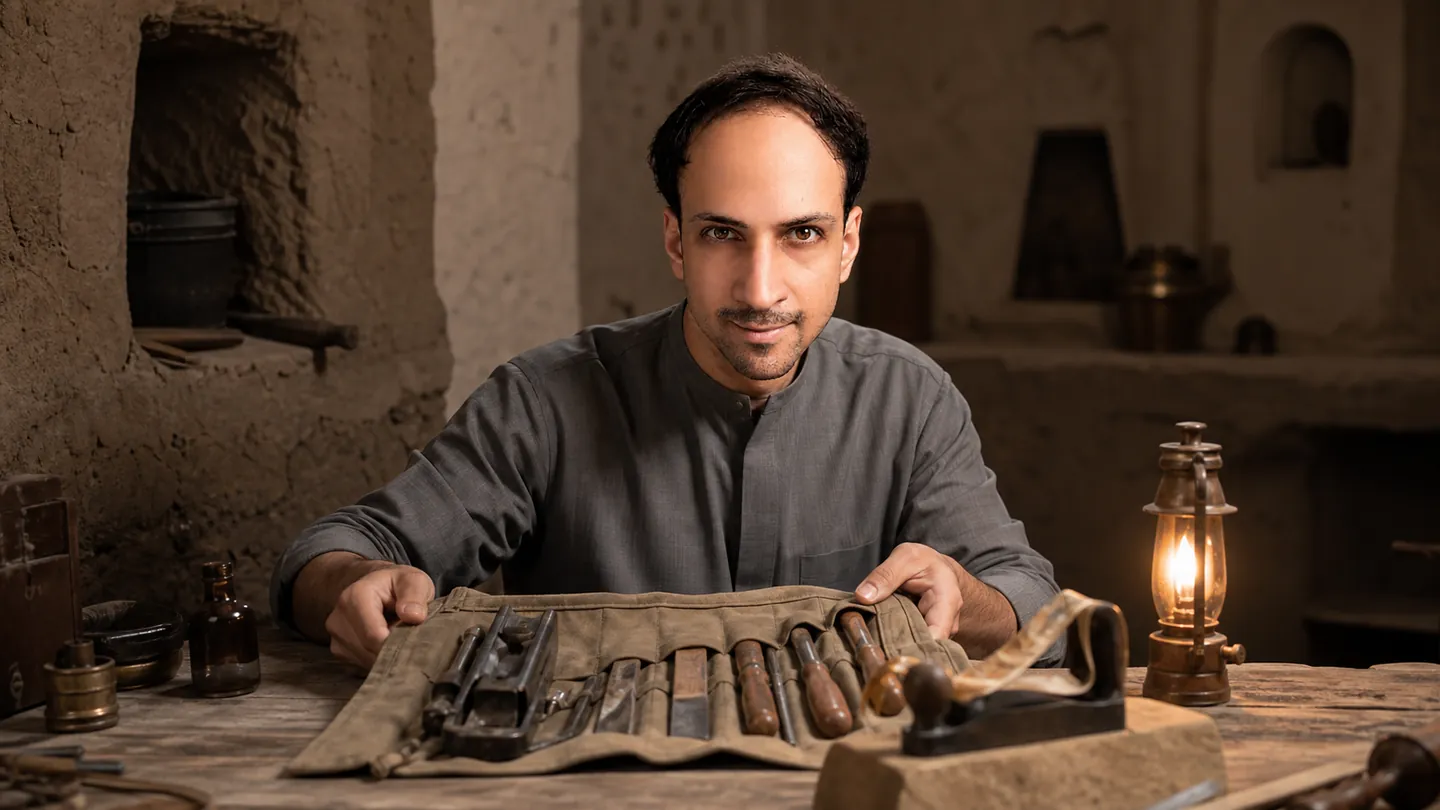
Kept Not Replaced: Restored Mud-Brick Workroom — AI Portrait Prompt
صورةAI Portraits

Turn your own photo into a portrait in a restored mud-brick workroom in old Diriyah, walls cool and windowless. Keeps your face unchanged.

من نص البرومبت

Use the attached reference photo as the identity reference: keep the same face, skin tone, hair and features as the person in that photo, without beautifying, aging or altering them. Treat that reference as the character anchor: change only the scene. Compose a wide 16:9 narrative image where environment and subject carry equal meaning at exactly 3808x2144 pixels. Location: a restored mud-brick workroom in old Diriyah, walls cool and windowless. Show the subject in a plain ash-grey traditional Gulf outfit with both sleeves folded back once, spreading a canvas tool roll open across a low table. Build the artwork around this material rule: a hundred-year-old smoothing plane that still lifts one unbroken shaving thin enough to read the window's light through its curl stands as quiet rebuttal to everything built to be discarded. Explore how minutes of ritual care can outweigh decades of neglect; direct expression and posture toward steward's calm, never melodrama or ad-like confidence. Use an eye-level 80mm portrait view with honest perspective and shallow, disciplined focus. Make the composition give the brightest polish the smallest area of the frame. Render it as material-culture documentary photography combining believable century-old tools, honest maintenance evidence, restrained contemporary art direction, and calm human-scale observational framing, using cool pre-dawn ambience lifted by one small tungsten practical near the hands and a palette of lampblack, waxed leather, and one glint of copper. Photorealistic: this must read as a real photograph from a physical camera, never an illustration, painting, or 3D render. Give truthful depth cues: overlapping planes and shadows softening as they travel. Resolve real surface detail: rubber gone chalky with age, painted metal chipped to primer, and plastic yellowed only where light reaches it. Keep one identity-locked person, credible hands and fingers, natural fabric, and coherent scale, contact, reflections, shadows, airflow, deformation, and materials. Background people only when essential, always secondary and clearly different. Avoid glowing forge montages, artificially weathered wood grain, hipster workshop styling, floating tool arrangements, and varnish-shiny fake patina. No text, labels, logos, signatures, watermarks, random symbols, plastic skin, excessive bloom, or glossy AI finish.
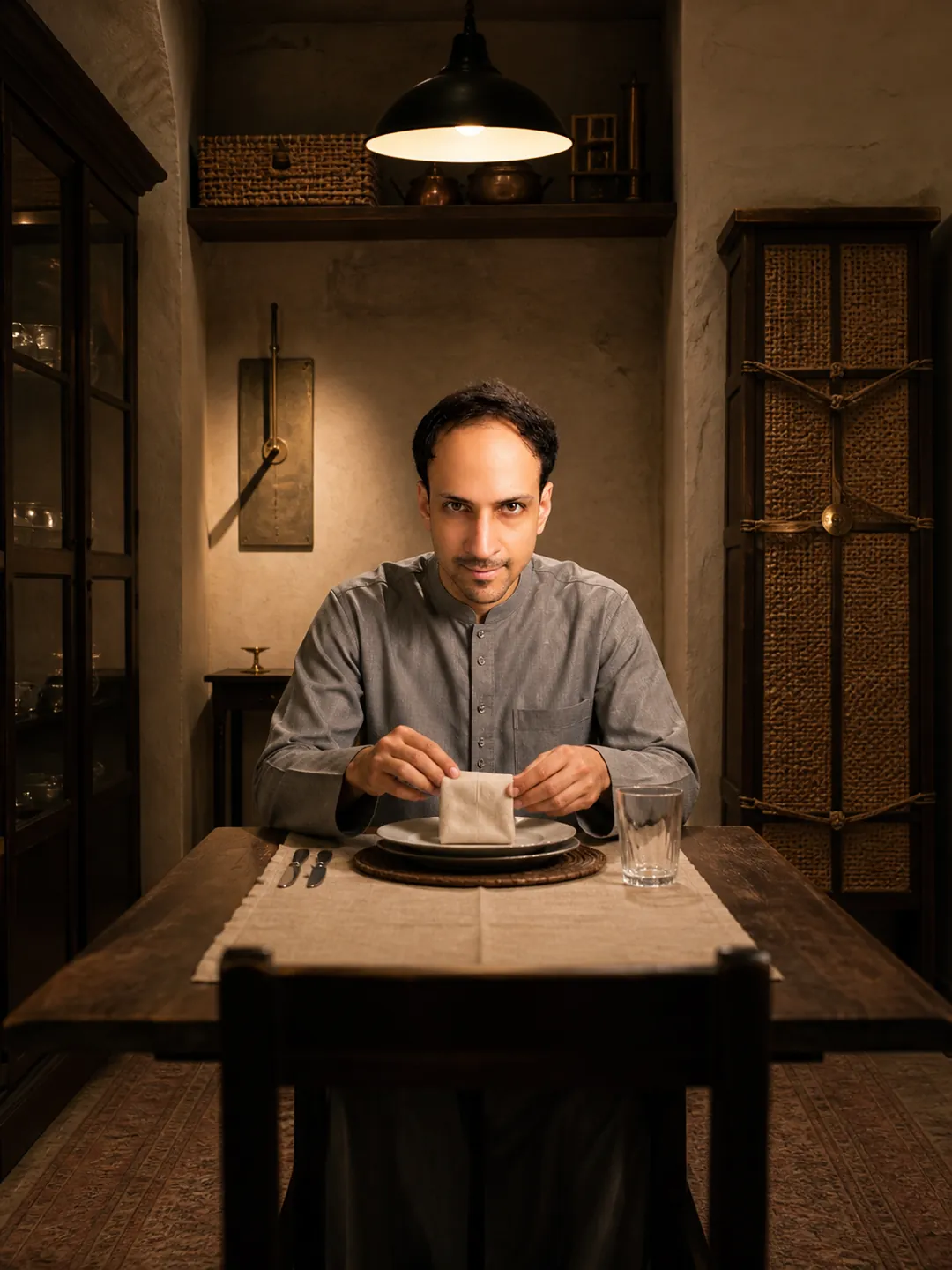
Scheduled Plenty: Long Dining Room — AI Portrait Prompt
صورةAI Portraits

Turn your own photo into a conceptual patience portrait in a long dining room at dusk, one place set and untouched. Keeps your face unchanged.

من نص البرومبت

Use the attached reference photo as the identity reference: keep the same face, skin tone, hair and features as the person in that photo, without beautifying, aging or altering them. Use a formal 3:4 environmental portrait with complete hands and meaningful objects inside frame at exactly 2480x3312 pixels. Location: a long dining room at dusk, one place set and untouched. Show the subject in a pressed ash-grey traditional Gulf outfit buttoned neatly to the collar, straightening a napkin's fold to one clean edge. The impossible-looking event must obey this clear system: a provisions shelf tied shut under a woven cover until a gnomon's shadow reaches the brass mark scribed beside it gives appetite a fixed appointment to keep instead of an argument to win. Explore whether waiting measured by instruments feels different from waiting endured alone; direct expression and posture toward collected stillness, never melodrama or ad-like confidence. Frame from directly opposite them at seated height so the untouched arrangement leads straight to their composed face. Make the composition rest on level horizontals so the stillness reads as chosen. Render it as conceptual patience portraiture combining believable household apparatus, precise horological detail, soft archival tonality, and emotionally intelligent observational framing, using one low-hung shaded lamp holding a tight warm circle around them and a palette of plaster white, smoked oak, and a measure of honey. Photorealistic: this must read as a real photograph from a physical camera, never an illustration, painting, or 3D render. Resolve real surface detail: true skin texture with pores and fine hair at the hairline, and fabric that creases where it is actually stressed. Keep one identity-locked person, credible hands and fingers, natural fabric, and coherent scale, contact, reflections, shadows, airflow, deformation, and materials. Background people only when essential, always secondary and clearly different. Avoid melting surrealist clocks, glowing countdown numerals, lavish feast spreads, anguished hungry expressions, and levitating food. No text, labels, logos, signatures, watermarks, random symbols, plastic skin, excessive bloom, or glossy AI finish.
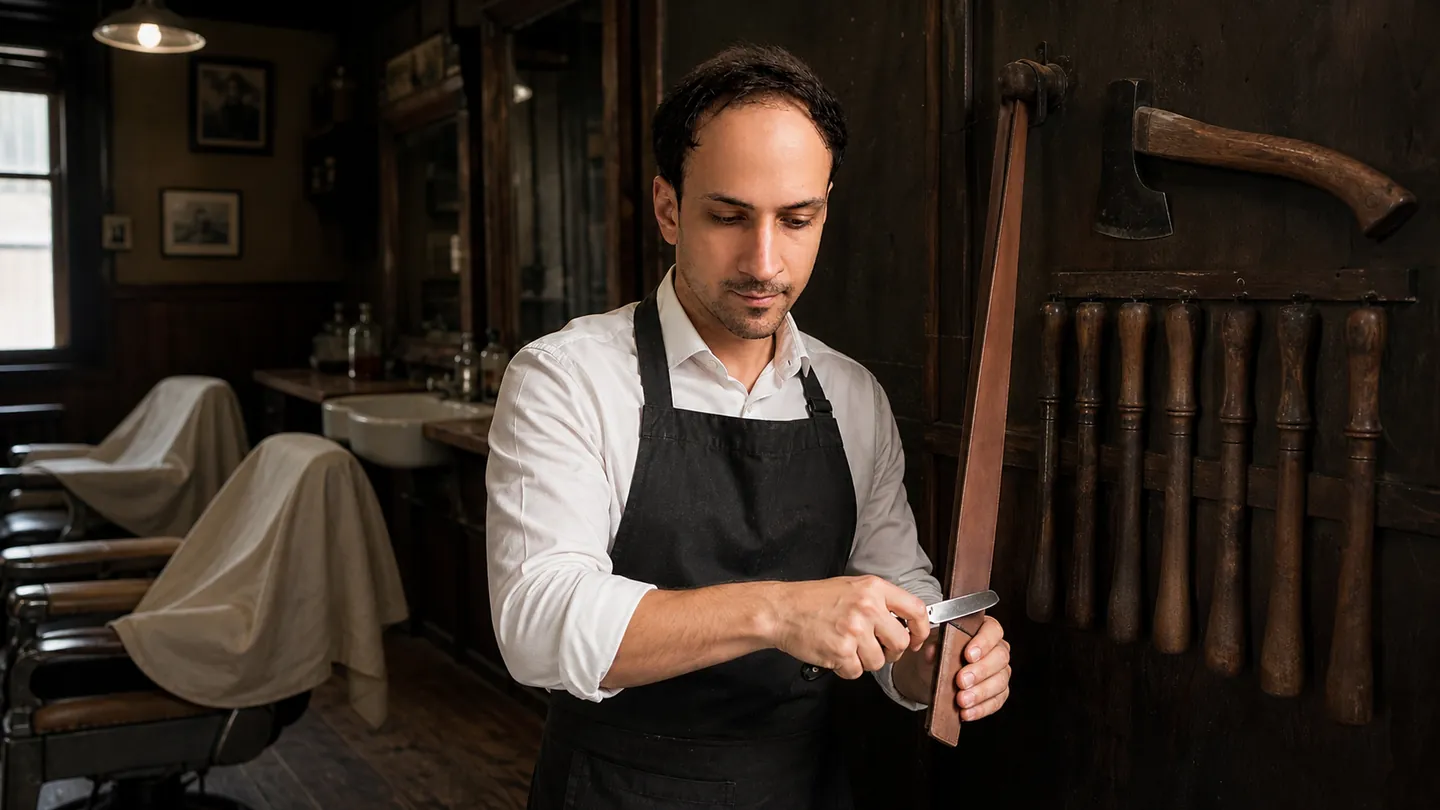
Time As Polish: Back Room of an Old Barbershop — AI Portrait Prompt
صورةAI Portraits

Turn your own photo into a material-culture documentary portrait in the back room of an old barbershop, chairs sheeted for the night. Keeps your face unchanged.

من نص البرومبت

Use the attached reference photo as the identity reference: keep the same face, skin tone, hair and features as the person in that photo, without beautifying, aging or altering them. Treat that reference as the character anchor: change only the scene. Compose a wide 16:9 narrative image where environment and subject carry equal meaning at exactly 3808x2144 pixels. Location: the back room of an old barbershop, chairs sheeted for the night. Show the subject in a black service apron over a pressed white shirt, cuffs turned back, drawing a blade flat along a hanging leather strop. The impossible-looking event must obey this clear system: an axe head on its seventh handle that outlasted the six retired handles racked beneath it, each darkened at the grip stands as quiet rebuttal to everything built to be discarded. Explore why a tool kept for a century looks finished rather than worn; direct expression and posture toward practical tenderness, never melodrama or ad-like confidence. Use a restrained 35mm environmental view, the subject at one-third and the workspace honest around them. Make the composition keep their hands nearer the light than their face. Render it as material-culture documentary photography combining believable century-old tools, honest maintenance evidence, restrained contemporary art direction, and calm human-scale observational framing, using one low window key raking across worn surfaces with soft paper-bounce fill and a palette of graphite, unbleached canvas, and one band of forge blue. Photorealistic: this must read as a real photograph from a physical camera, never an illustration, painting, or 3D render. Give the frame volume: faint density deepest in the room, contrast easing at the edges. Resolve real surface detail: floor finish worn along the walked line, skirting marked at shoe height, and corners darker than the open floor. Keep one identity-locked person, credible hands and fingers, natural fabric, and coherent scale, contact, reflections, shadows, airflow, deformation, and materials. Background people only when essential, always secondary and clearly different. Avoid glowing forge montages, artificially weathered wood grain, hipster workshop styling, floating tool arrangements, and varnish-shiny fake patina. No text, labels, logos, signatures, watermarks, random symbols, plastic skin, excessive bloom, or glossy AI finish.
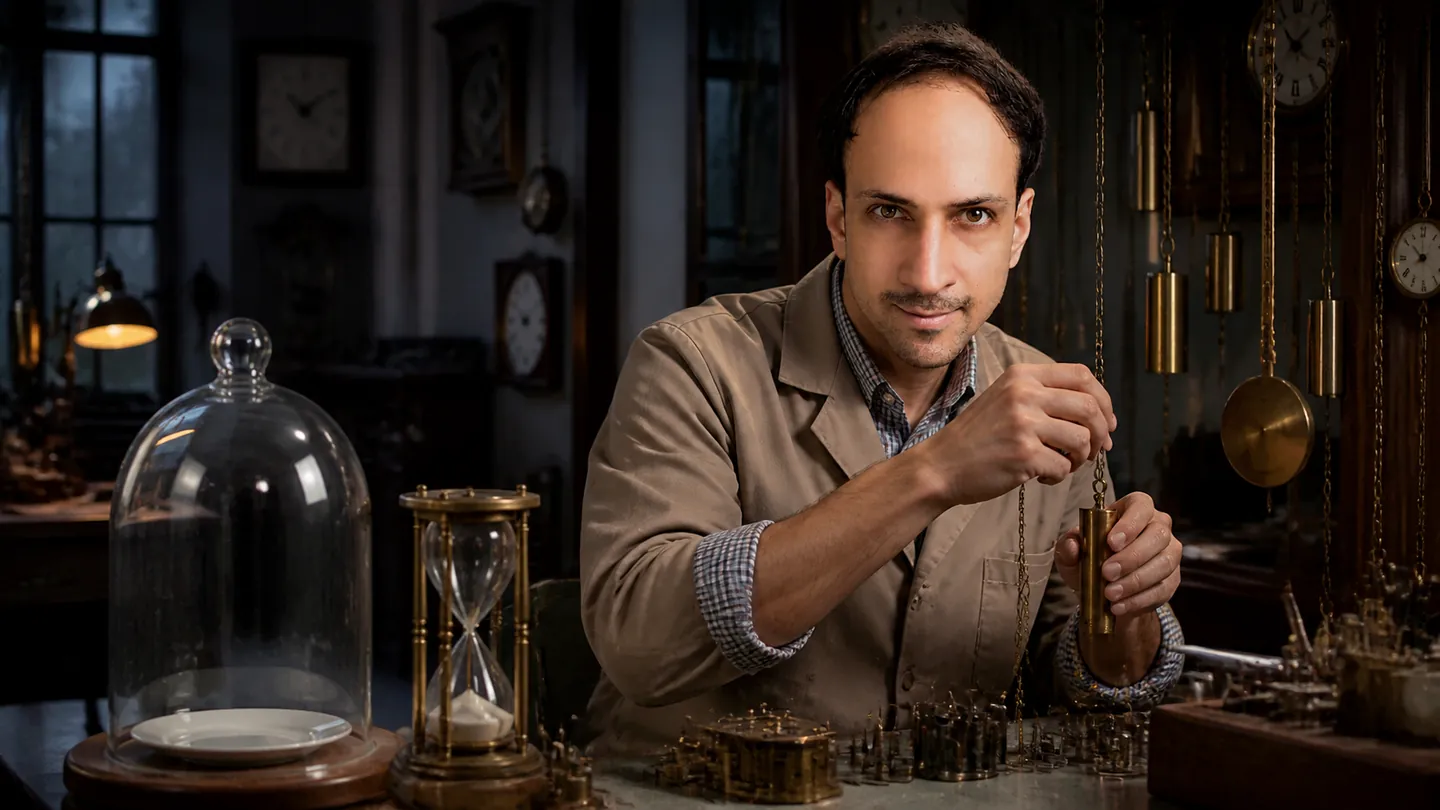
Not Yet: Clockmaker's Bench — AI Portrait Prompt
صورةAI Portraits

Turn your own photo into a calm still-life portrait in a clockmaker's bench hung with pendulums at rest. Keeps your face unchanged.

من نص البرومبت

Use the attached reference photo as the identity reference: keep the same face, skin tone, hair and features as the person in that photo, without beautifying, aging or altering them. Compose a wide 16:9 narrative image where environment and subject carry equal meaning at exactly 3808x2144 pixels. Location: a clockmaker's bench hung with pendulums at rest. Show them in a tan shop coat over a checked shirt with rolled cuffs, hooking a drive weight onto its hanging chain. Use this advanced image-making device as the core logic: an empty white plate under a glass cloche beside a brass sand timer whose upper bulb is still quietly emptying shows restraint as an engineered state rather than a private struggle. Explore why the untouched object can outrank everything that has already been used; direct expression and posture toward steady expectancy, never melodrama or ad-like confidence. Use an 85mm near-portrait distance, the nearest staged detail sharp low in frame while their expression carries the far plane. Make the composition leave deliberate distance between them and what waits. Render it as calm still-life portraiture built from genuinely working timekeeping mechanisms, quiet domestic realism, museum-grade material fidelity, and unhurried human-centered editorial composition, using cool dusk ambience with one warm bulb burning low nearby and a palette of plaster white, smoked oak, and a measure of honey. Photorealistic: this must read as a real photograph from a physical camera, never an illustration, painting, or 3D render. Give the space honest scale: real distance between foreground, subject, and far wall. Resolve real surface detail: the difference between a wiped surface and a clean one, faint tide marks on ceramic, and metal dulled unevenly by touch. Keep one identity-locked person, credible hands and fingers, natural fabric, and coherent scale, contact, reflections, shadows, airflow, deformation, and materials. Background people only when essential, always secondary and clearly different. Avoid melting surrealist clocks, glowing countdown numerals, lavish feast spreads, anguished hungry expressions, and levitating food. No text, labels, logos, signatures, watermarks, random symbols, plastic skin, excessive bloom, or glossy AI finish.
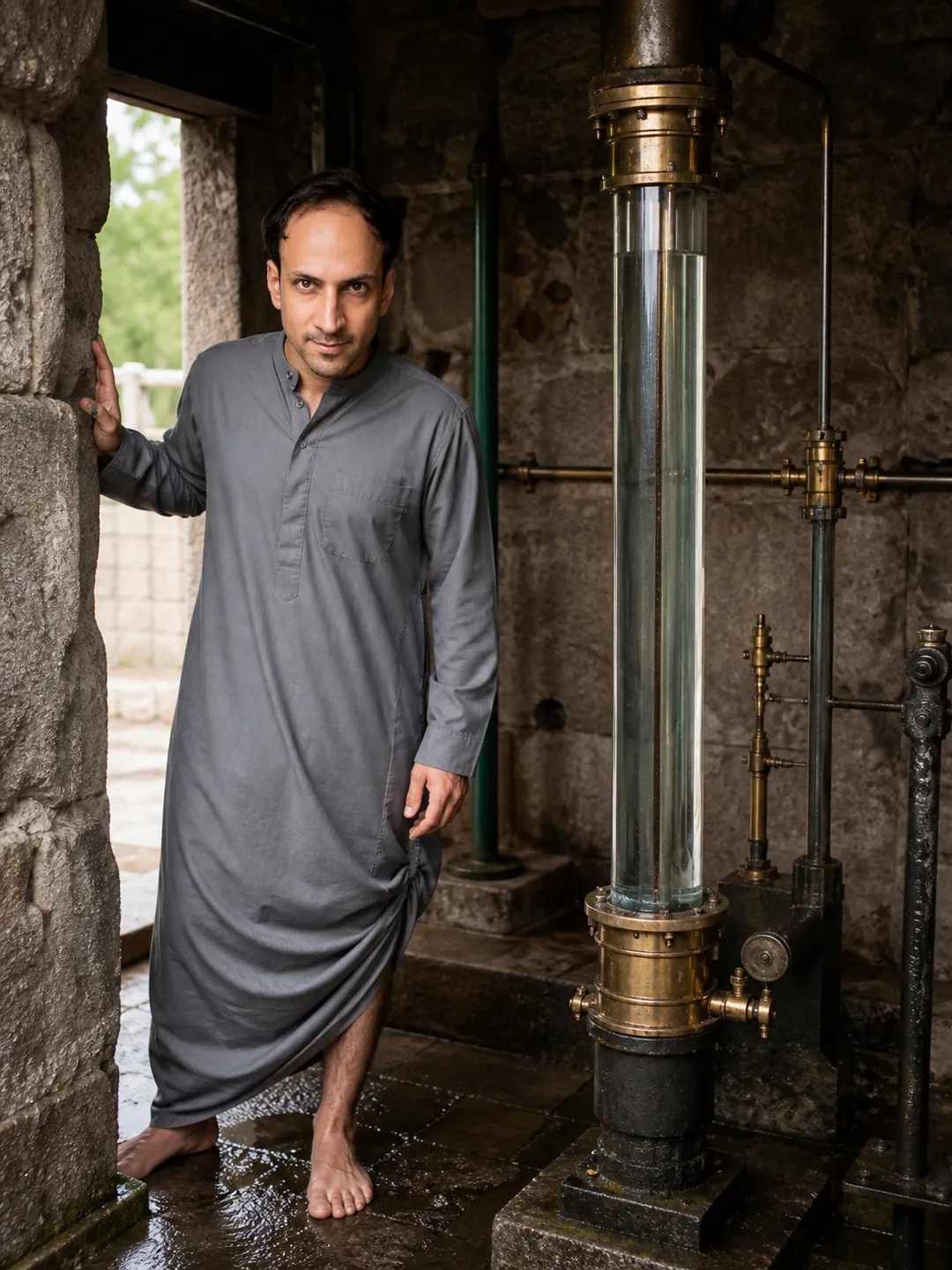
Second Signals: Farm Well House of Stone — AI Portrait Prompt
صورةAI Portraits

Turn your own photo into a portrait in a farm well house of stone where daylight stops inside the door. Keeps your face unchanged.

من نص البرومبت

Use the attached reference photo as the identity reference: keep the same face, skin tone, hair and features as the person in that photo, without beautifying, aging or altering them. Use a formal 3:4 environmental portrait with complete hands and meaningful objects inside frame at exactly 2480x3312 pixels. Location: a farm well house of stone where daylight stops inside the door. Show the subject in a plain grey traditional Gulf outfit with the hem gathered above wet stone, resting one hand on the cool stone jamb. Use this advanced image-making device as the core logic: a slender sealed water column, tall as two floors, that settles wherever the day's air pressure lets it stand proves information can be plumbed through a house as plainly as water. Explore why the quietest signal in a house is usually the one worth routing; direct expression and posture toward grave interest, never melodrama or ad-like confidence. Use an eye-level 50mm viewpoint with natural perspective and one plane of critical focus. Make the composition follow the signal's path from its source to their eyes. Render it as museum-grade signaling-instrument portraiture combining genuine pressure and gravity mechanisms, documentary photographic realism, honest machined brass materiality, and unhurried human framing, using flat overcast illumination that keeps every glass column readable without glare and a palette of lead grey, unpolished tin, and one stripe of verdigris. Photorealistic: this must read as a real photograph from a physical camera, never an illustration, painting, or 3D render. Resolve real surface detail: skin that reddens slightly under pressure, nail beds with honest colour, and knuckle creases that fold rather than blur. Keep one identity-locked person, credible hands and fingers, natural fabric, and coherent scale, contact, reflections, shadows, airflow, deformation, and materials. Background people only when essential, always secondary and clearly different. Avoid brass-gear collage backdrops, cartoon telegraph keys, neon signal beams, mercury spills, and floating typographic message overlays. No text, labels, logos, signatures, watermarks, random symbols, plastic skin, excessive bloom, or glossy AI finish.
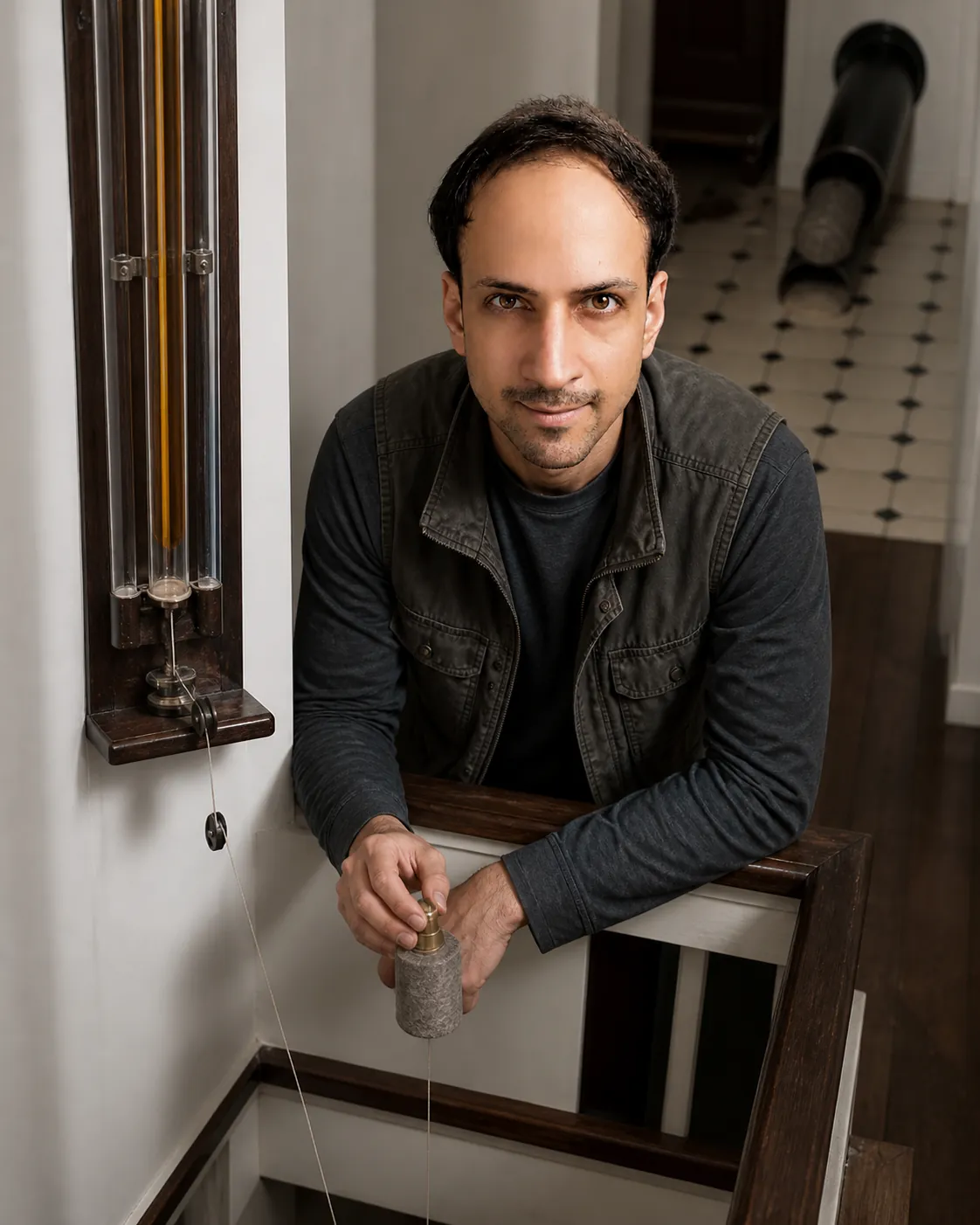
Interior Weather: Open Shaft of a Two-Storey Stairwell — AI Portrait Prompt
صورةAI Portraits

Turn your own photo into a conceptual house-systems portrait in the open shaft of a two-storey stairwell above a tiled floor. Keeps your face unchanged.

من نص البرومبت

Use the attached reference photo as the identity reference: keep the same face, skin tone, hair and features as the person in that photo, without beautifying, aging or altering them. Build a portrait 4:5 editorial artwork with protected negative space and a fully readable face at exactly 2560x3200 pixels. Location: the open shaft of a two-storey stairwell above a tiled floor. Show the subject in a graphite crewneck under a lightweight canvas work vest, paying a plumb line down through the open shaft. Build the artwork around this material rule: a felt-bodied carrier capsule that arrives with one soft thump after crossing the house inside a tube on pressure alone delivers what one room needs to know without anyone raising a voice. Explore how a message can be complete without containing a single readable word; direct expression and posture toward quiet stewardship, never melodrama or ad-like confidence. Use an 85mm portrait length so one instrument face and their eyes stay equally readable. Make the composition let one connecting line leave the frame without resolving. Render it as conceptual house-systems photography built from functioning telegraph hardware, accurate liquid-column behavior, restrained interior direction, and editorial portrait fidelity, using flat overcast illumination that keeps every glass column readable without glare and a palette of chalk white, dark walnut, and a single amber column. Photorealistic: this must read as a real photograph from a physical camera, never an illustration, painting, or 3D render. Resolve real surface detail: cotton that hangs by its own weight, seams that pucker very slightly, and collars softened by washing. Keep one identity-locked person, credible hands and fingers, natural fabric, and coherent scale, contact, reflections, shadows, airflow, deformation, and materials. Background people only when essential, always secondary and clearly different. Avoid brass-gear collage backdrops, cartoon telegraph keys, neon signal beams, mercury spills, and floating typographic message overlays. No text, labels, logos, signatures, watermarks, random symbols, plastic skin, excessive bloom, or glossy AI finish.
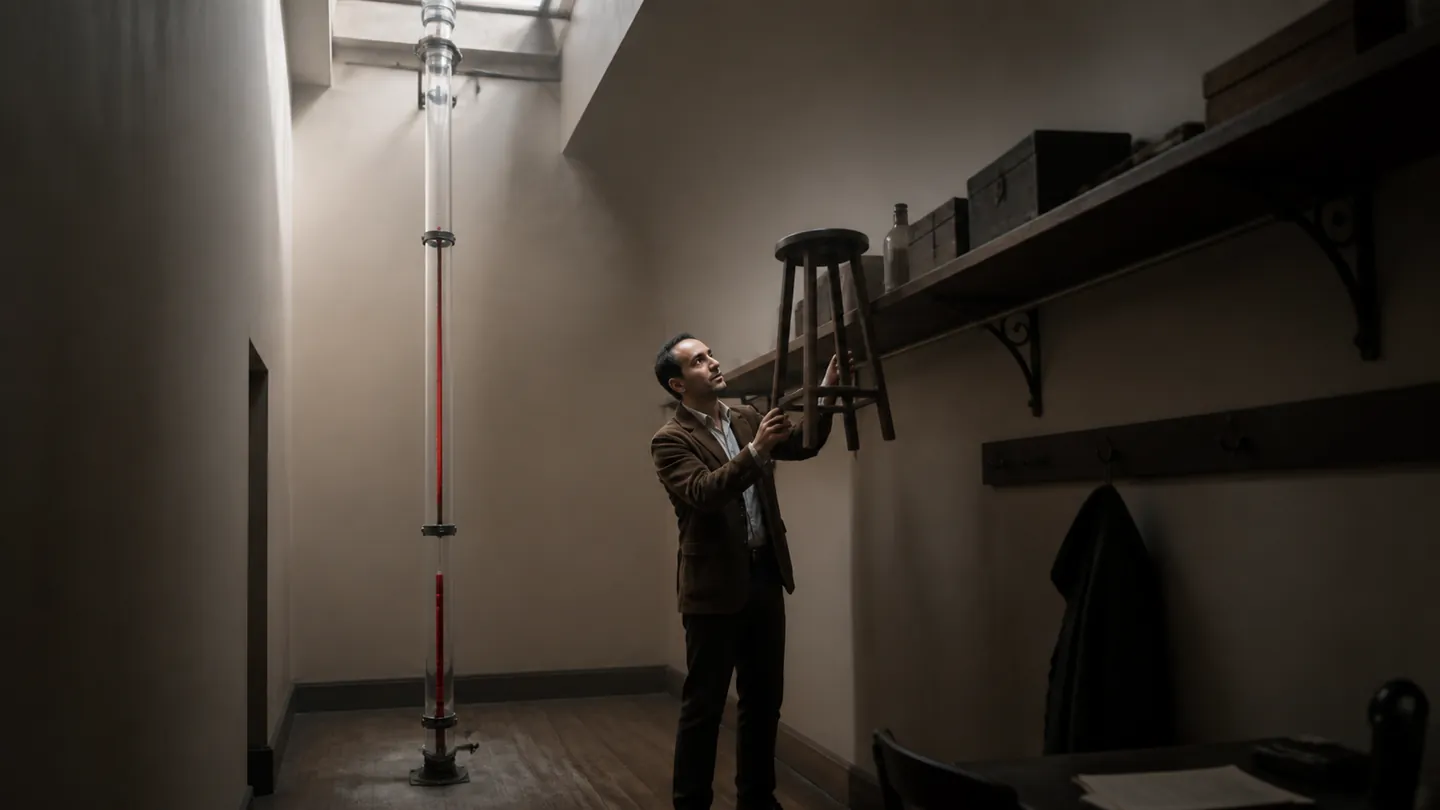
Second Signals: Hotel Back Office Alcove — AI Portrait Prompt
صورةAI Portraits

Turn your own photo into an exhibition-scale demonstration portrait in a hotel back office alcove with a high shelf and one stool. Keeps your face unchanged.

من نص البرومبت

Use the attached reference photo as the identity reference: keep the same face, skin tone, hair and features as the person in that photo, without beautifying, aging or altering them. Compose a wide 16:9 narrative image where environment and subject carry equal meaning at exactly 3808x2144 pixels. Location: a hotel back office alcove with a high shelf and one stool. Show the subject in a soft brown corduroy jacket over an open pale shirt, setting a stool square beneath the high shelf. The impossible-looking event must obey this clear system: a slender sealed water column, tall as two floors, that settles wherever the day's air pressure lets it stand enlarges a faint interior difference until it cannot be ignored. Explore why the quietest signal in a house is usually the one worth routing; direct expression and posture toward clear-eyed care, never melodrama or ad-like confidence. Frame from the far end of the room so the signal's whole route stays visible. Make the composition leave honest vertical distance between the sensing point and their hands. Render it as exhibition-scale demonstration realism combining precision workshop apparatus, physically correct fluid menisci, quiet period joinery, and calm observational portraiture, using high shaded daylight falling down a shaft, contrast kept low and honest and a palette of warm plaster, blackened iron, and a narrow signal red. Photorealistic: this must read as a real photograph from a physical camera, never an illustration, painting, or 3D render. Give the frame volume: faint density deepest in the room, contrast easing at the edges. Resolve real surface detail: floor finish worn along the walked line, skirting marked at shoe height, and corners darker than the open floor. Keep one identity-locked person, credible hands and fingers, natural fabric, and coherent scale, contact, reflections, shadows, airflow, deformation, and materials. Background people only when essential, always secondary and clearly different. Avoid brass-gear collage backdrops, cartoon telegraph keys, neon signal beams, mercury spills, and floating typographic message overlays. No text, labels, logos, signatures, watermarks, random symbols, plastic skin, excessive bloom, or glossy AI finish.
Interior Weather: Upstairs Writing Desk Set Square — AI Portrait Prompt
صورةAI Portraits

Turn your own photo into a portrait in an upstairs writing desk set square beneath a shuttered window. Keeps your face unchanged.

من نص البرومبت

Use the attached reference photo as the identity reference: keep the same face, skin tone, hair and features as the person in that photo, without beautifying, aging or altering them. Design a full-height 9:16 cinematic artwork that reads on a phone and rewards gallery-scale inspection at exactly 2144x3808 pixels. Location: an upstairs writing desk set square beneath a shuttered window. Show the subject in an unlined cream linen traditional Gulf outfit with cuffs turned back once, pulling a chair back from the desk without noise. Make one rigorous physical condition the conceptual engine: a felt-bodied carrier capsule that arrives with one soft thump after crossing the house inside a tube on pressure alone gives a quiet interior signal a route to the room where choices happen. Explore how a message can be complete without containing a single readable word; direct expression and posture toward unhurried candor, never melodrama or ad-like confidence. Frame just past a doorway edge, the near jamb dark and unfocused but never crossing their face. Make the composition keep the reading edge sharp while the corridor behind falls soft. Render it as gallery-grade documentary imagery built from real pneumatic linkages, believable wear on brass, low-drama interior lighting, and patient human presence, using high shaded daylight falling down a shaft, contrast kept low and honest and a palette of lead grey, unpolished tin, and one stripe of verdigris. Photorealistic: this must read as a real photograph from a physical camera, never an illustration, painting, or 3D render. Give the space honest scale: real distance between foreground, subject, and far wall. Resolve real surface detail: condensation beading at true size, liquid meniscus curving against glass, and wet surfaces darker than dry ones. Keep one identity-locked person, credible hands and fingers, natural fabric, and coherent scale, contact, reflections, shadows, airflow, deformation, and materials. Background people only when essential, always secondary and clearly different. Avoid brass-gear collage backdrops, cartoon telegraph keys, neon signal beams, mercury spills, and floating typographic message overlays. No text, labels, logos, signatures, watermarks, random symbols, plastic skin, excessive bloom, or glossy AI finish.
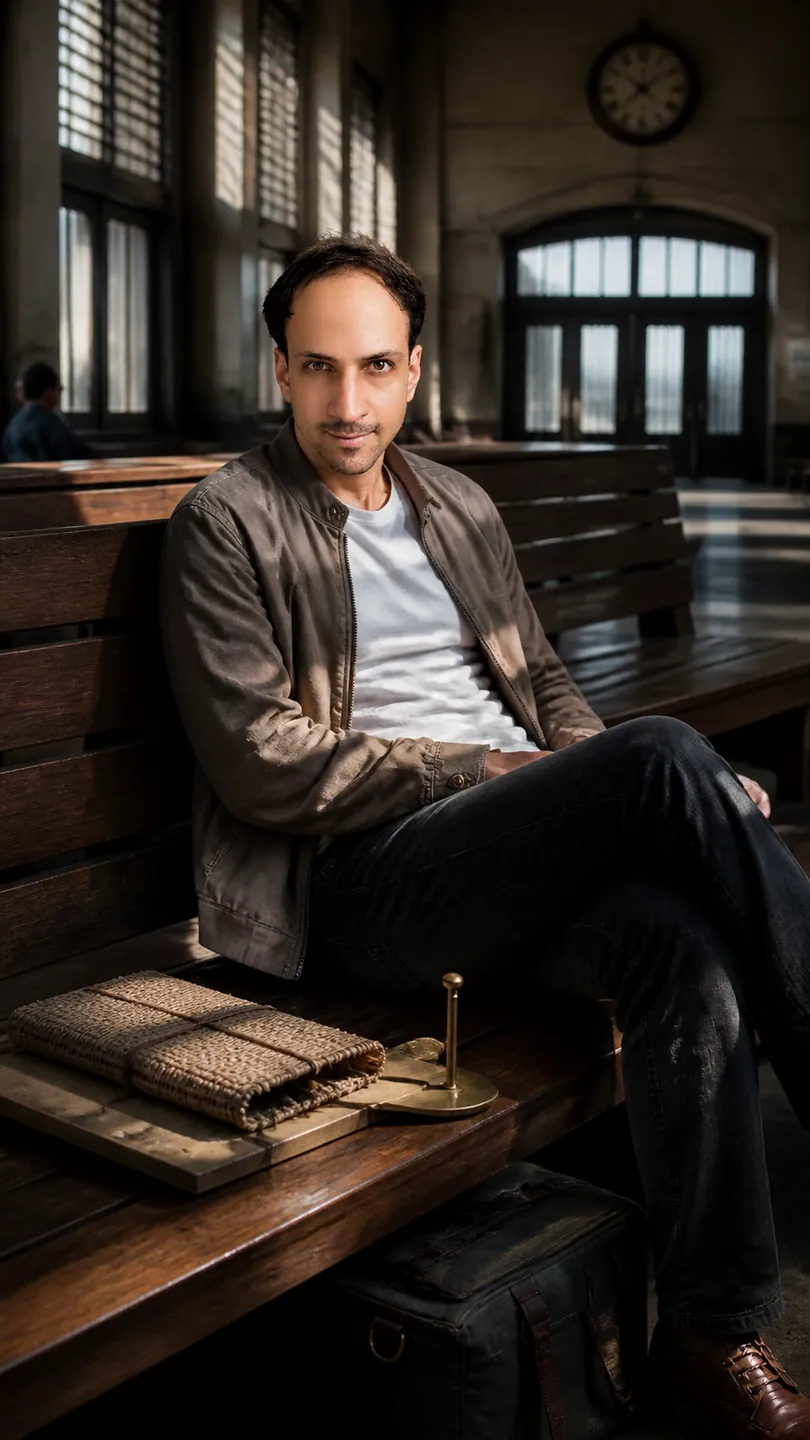
Scheduled Plenty: Empty Intercity Waiting Hall — AI Portrait Prompt
صورةAI Portraits

Turn your own photo into a gallery-grade tableau portrait in an empty intercity waiting hall with long wooden benches. Keeps your face unchanged.

من نص البرومبت

Use the attached reference photo as the identity reference: keep the same face, skin tone, hair and features as the person in that photo, without beautifying, aging or altering them. Design a full-height 9:16 cinematic artwork that reads on a phone and rewards gallery-scale inspection at exactly 2144x3808 pixels. Location: an empty intercity waiting hall with long wooden benches. Show the subject in a taupe harrington jacket over a plain white shirt, setting their small travel bag flat beneath the bench. Treat this mechanism as the frame’s governing rule: a provisions shelf tied shut under a woven cover until a gnomon's shadow reaches the brass mark scribed beside it holds the meal at a distance measured in time rather than willpower. Explore whether waiting measured by instruments feels different from waiting endured alone; direct expression and posture toward gentle firmness, never melodrama or ad-like confidence. Use an 85mm near-portrait distance, the nearest staged detail sharp low in frame while their expression carries the far plane. Make the composition leave deliberate distance between them and what waits. Render it as gallery-grade tableau realism built from lawful physical timers, warm restrained styling, accurate shadow behavior, and patient large-format photographic clarity, using thin daylight broken into patient stripes by nearby slatted shade and a palette of china white, walnut, and one line of brass. Photorealistic: this must read as a real photograph from a physical camera, never an illustration, painting, or 3D render. Give the frame volume: faint density deepest in the room, contrast easing at the edges. Resolve real surface detail: dust settled where nobody wipes, fingerprint haze on glass, and edges rubbed pale by handling. Keep one identity-locked person, credible hands and fingers, natural fabric, and coherent scale, contact, reflections, shadows, airflow, deformation, and materials. Background people only when essential, always secondary and clearly different. Avoid tape-measure diet props, empty-fridge gloom, ringing alarm clocks, glossy food-commercial styling, and gravity-defying hourglass sand. No text, labels, logos, signatures, watermarks, random symbols, plastic skin, excessive bloom, or glossy AI finish.
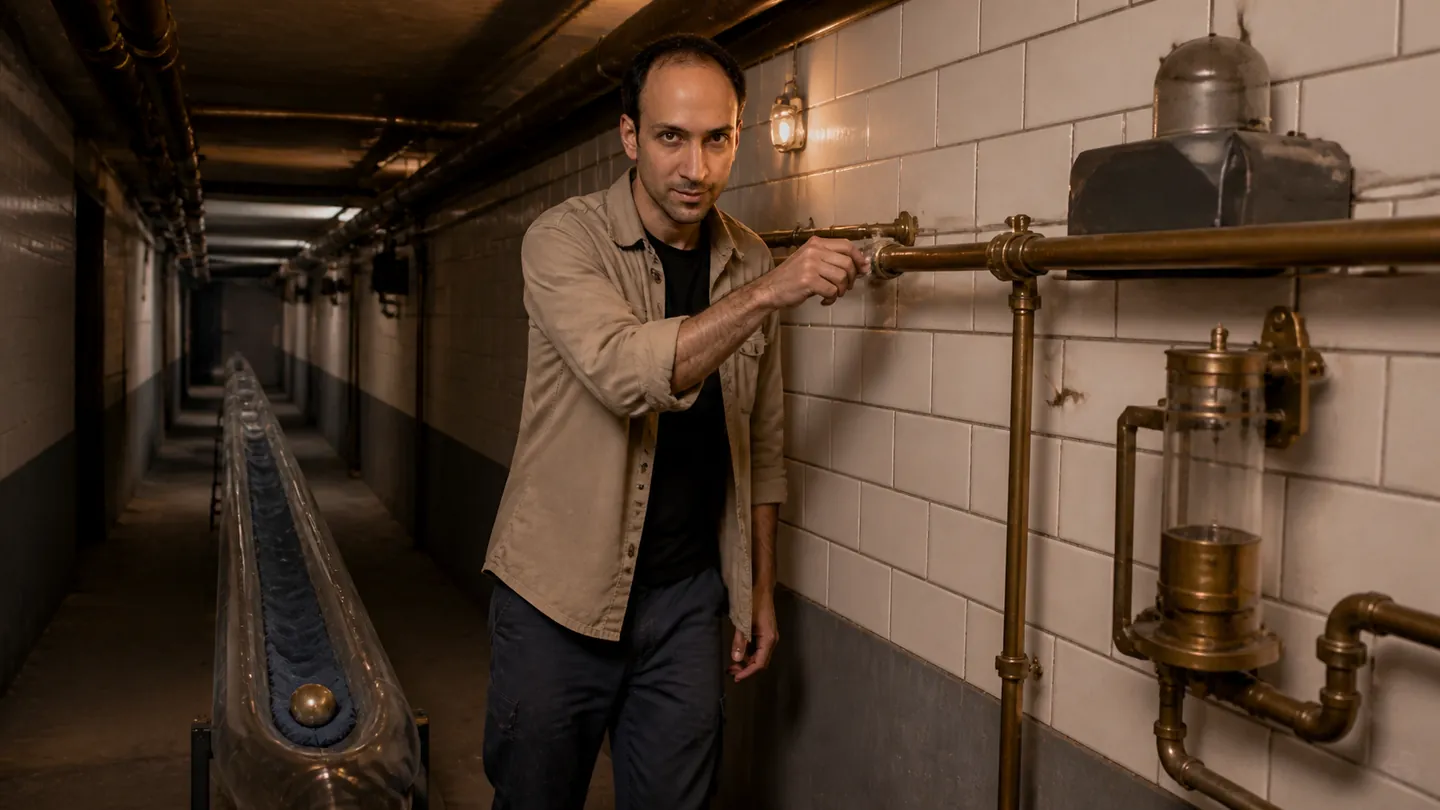
Interior Weather: Service Corridor — AI Portrait Prompt
صورةAI Portraits

Turn your own photo into a portrait in a service corridor where old conduit follows the ceiling line. Keeps your face unchanged.

من نص البرومبت

Use the attached reference photo as the identity reference: keep the same face, skin tone, hair and features as the person in that photo, without beautifying, aging or altering them. Compose a wide 16:9 narrative image where environment and subject carry equal meaning at exactly 3808x2144 pixels. Location: a service corridor where old conduit follows the ceiling line. Show the subject in a dust-colored cotton overshirt over a dark tee and work trousers, brushing dust from a conduit joint with one thumb. The impossible-looking event must obey this clear system: a felt-bodied carrier capsule that arrives with one soft thump after crossing the house inside a tube on pressure alone announces a change well before anyone in the house could name its cause. Explore how a message can be complete without containing a single readable word; direct expression and posture toward attentive calm, never melodrama or ad-like confidence. Frame from the far end of the room so the signal's whole route stays visible. Make the composition leave honest vertical distance between the sensing point and their hands. Render it as museum-grade signaling-instrument portraiture combining genuine pressure and gravity mechanisms, documentary photographic realism, honest machined brass materiality, and unhurried human framing, using one warm filament practical near the wall with cool ambient filling the rest and a palette of slate grey, aged brass, and one thread of indigo. Photorealistic: this must read as a real photograph from a physical camera, never an illustration, painting, or 3D render. Give the frame volume: faint density deepest in the room, contrast easing at the edges. Resolve real surface detail: grout darker than tile, sealant slightly yellowed, and every joint showing a real tolerance gap. Keep one identity-locked person, credible hands and fingers, natural fabric, and coherent scale, contact, reflections, shadows, airflow, deformation, and materials. Background people only when essential, always secondary and clearly different. Avoid steampunk goggles, glowing holograms, dripping food props, anatomical organ diagrams, and legible dial lettering anywhere. No text, labels, logos, signatures, watermarks, random symbols, plastic skin, excessive bloom, or glossy AI finish.
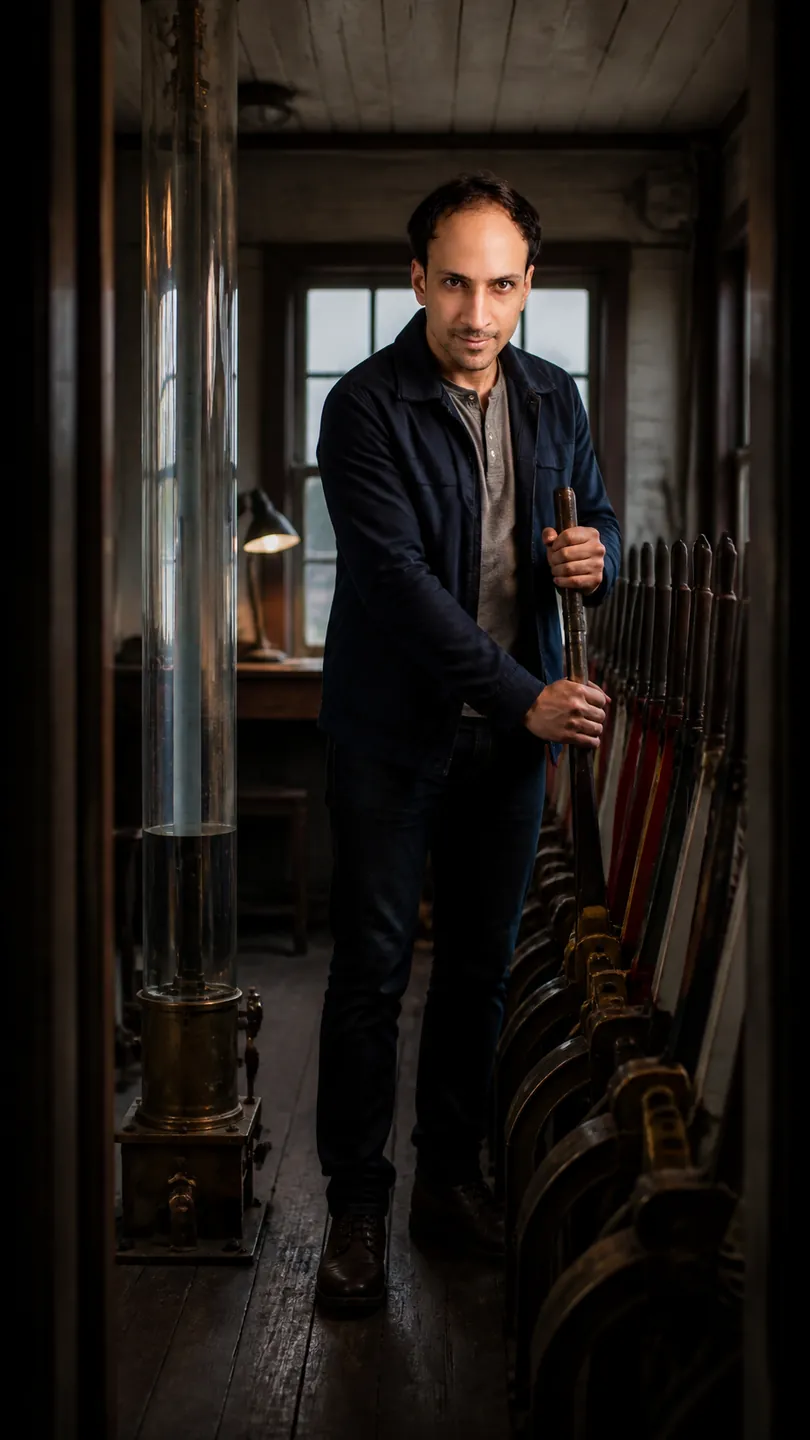
Second Signals: Disused Railway Signal Cabin — AI Portrait Prompt
صورةAI Portraits

Turn your own photo into a conceptual house-systems portrait in a disused railway signal cabin with levers standing in one row. Keeps your face unchanged.

من نص البرومبت

Use the attached reference photo as the identity reference: keep the same face, skin tone, hair and features as the person in that photo, without beautifying, aging or altering them. Design a full-height 9:16 cinematic artwork that reads on a phone and rewards gallery-scale inspection at exactly 2144x3808 pixels. Location: a disused railway signal cabin with levers standing in one row. Show the subject in a navy cotton jacket over a grey henley and dark denim, returning one lever upright with both hands. Make one rigorous physical condition the conceptual engine: a slender sealed water column, tall as two floors, that settles wherever the day's air pressure lets it stand separates sensing from deciding while keeping the two honestly connected. Explore why the quietest signal in a house is usually the one worth routing; direct expression and posture toward steady deliberation, never melodrama or ad-like confidence. Frame just past a doorway edge, the near jamb dark and unfocused but never crossing their face. Make the composition keep the reading edge sharp while the corridor behind falls soft. Render it as conceptual house-systems photography built from functioning telegraph hardware, accurate liquid-column behavior, restrained interior direction, and editorial portrait fidelity, using a low bench lamp grazing brass while the room behind stays dim and a palette of slate grey, aged brass, and one thread of indigo. Photorealistic: this must read as a real photograph from a physical camera, never an illustration, painting, or 3D render. Give the space honest scale: real distance between foreground, subject, and far wall. Resolve real surface detail: glass with real thickness at its edge, reflections that carry the room's actual colour, and dust visible only at grazing angles. Keep one identity-locked person, credible hands and fingers, natural fabric, and coherent scale, contact, reflections, shadows, airflow, deformation, and materials. Background people only when essential, always secondary and clearly different. Avoid steampunk goggles, glowing holograms, dripping food props, anatomical organ diagrams, and legible dial lettering anywhere. No text, labels, logos, signatures, watermarks, random symbols, plastic skin, excessive bloom, or glossy AI finish.
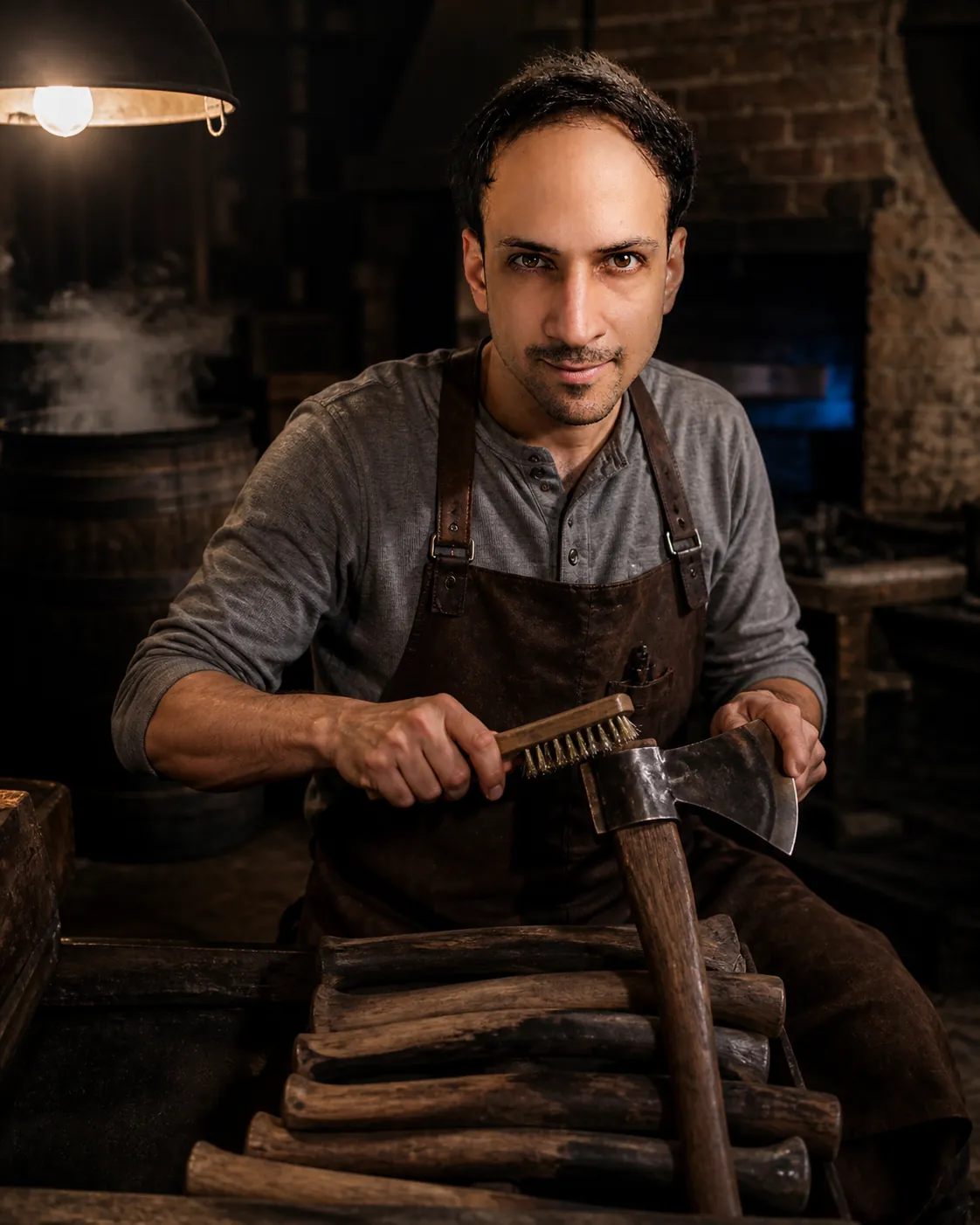
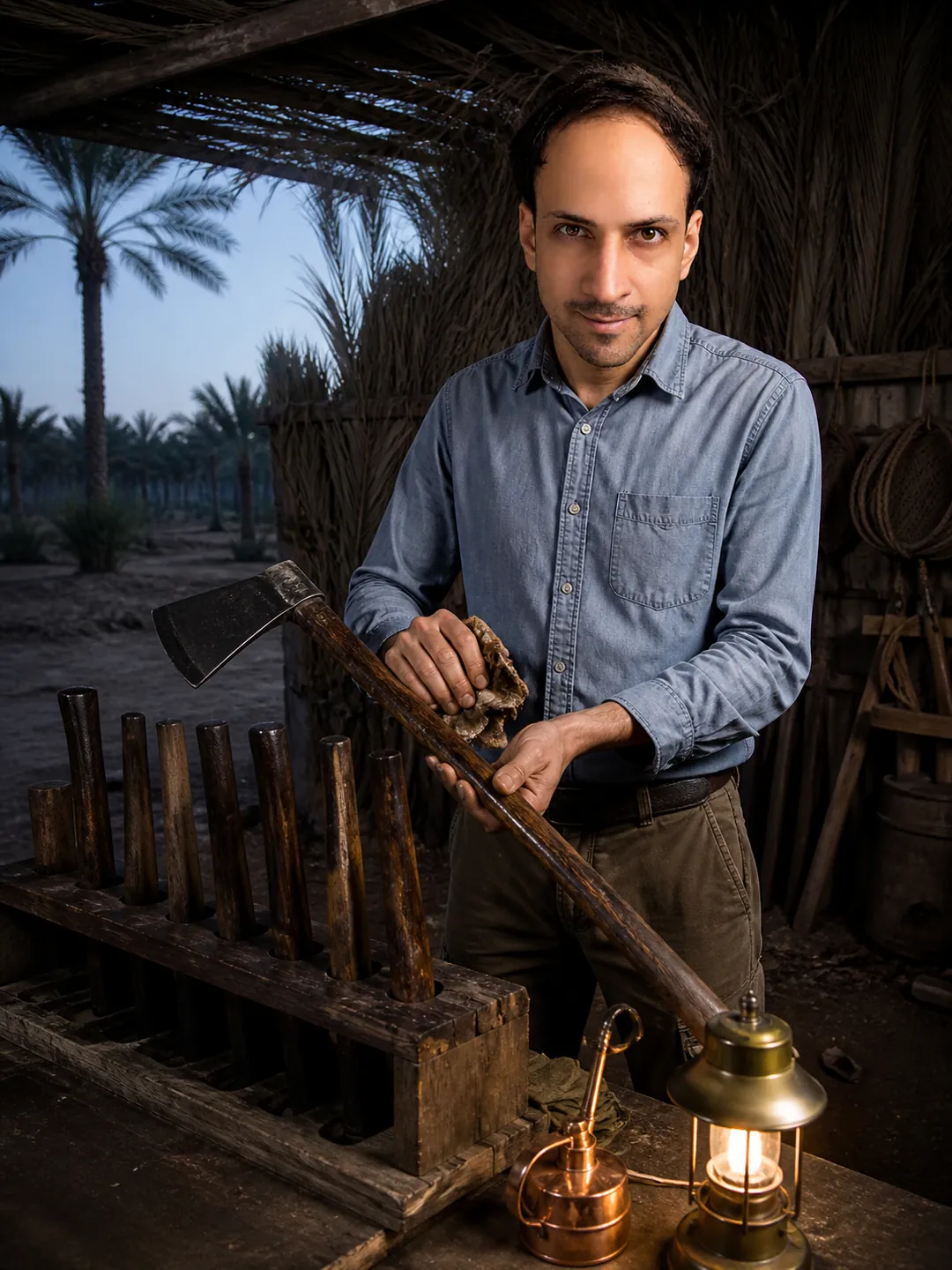
Time As Polish: Palm-Frond-Shaded Implement Shed — AI Portrait Prompt
صورةAI Portraits

Turn your own photo into a portrait in a palm-frond-shaded implement shed at the working edge of a date farm. Keeps your face unchanged.

من نص البرومبت

Use the attached reference photo as the identity reference: keep the same face, skin tone, hair and features as the person in that photo, without beautifying, aging or altering them. Use a formal 3:4 environmental portrait with complete hands and meaningful objects inside frame at exactly 2480x3312 pixels. Location: a palm-frond-shaded implement shed at the working edge of a date farm. Show the subject in a sun-faded chambray shirt buttoned to the wrist over cotton trousers, rubbing an oiled rag down a long wooden haft. Treat this mechanism as the frame’s governing rule: an axe head on its seventh handle that outlasted the six retired handles racked beneath it, each darkened at the grip keeps a legible record of every hand that ever kept it. Explore why a tool kept for a century looks finished rather than worn; direct expression and posture toward quiet pride, never melodrama or ad-like confidence. Use a restrained 35mm environmental view, the subject at one-third and the workspace honest around them. Make the composition keep their hands nearer the light than their face. Render it as material-culture documentary photography combining believable century-old tools, honest maintenance evidence, restrained contemporary art direction, and calm human-scale observational framing, using cool pre-dawn ambience lifted by one small tungsten practical near the hands and a palette of lampblack, waxed leather, and one glint of copper. Photorealistic: this must read as a real photograph from a physical camera, never an illustration, painting, or 3D render. Resolve real surface detail: wood grain read at honest scale, matte and gloss clearly separated, and no surface uniformly clean. Keep one identity-locked person, credible hands and fingers, natural fabric, and coherent scale, contact, reflections, shadows, airflow, deformation, and materials. Background people only when essential, always secondary and clearly different. Avoid rusty antique-shop clutter, sepia nostalgia filters, cobwebbed barn walls, staged distressed props, and heroic blacksmith sparks. No text, labels, logos, signatures, watermarks, random symbols, plastic skin, excessive bloom, or glossy AI finish.
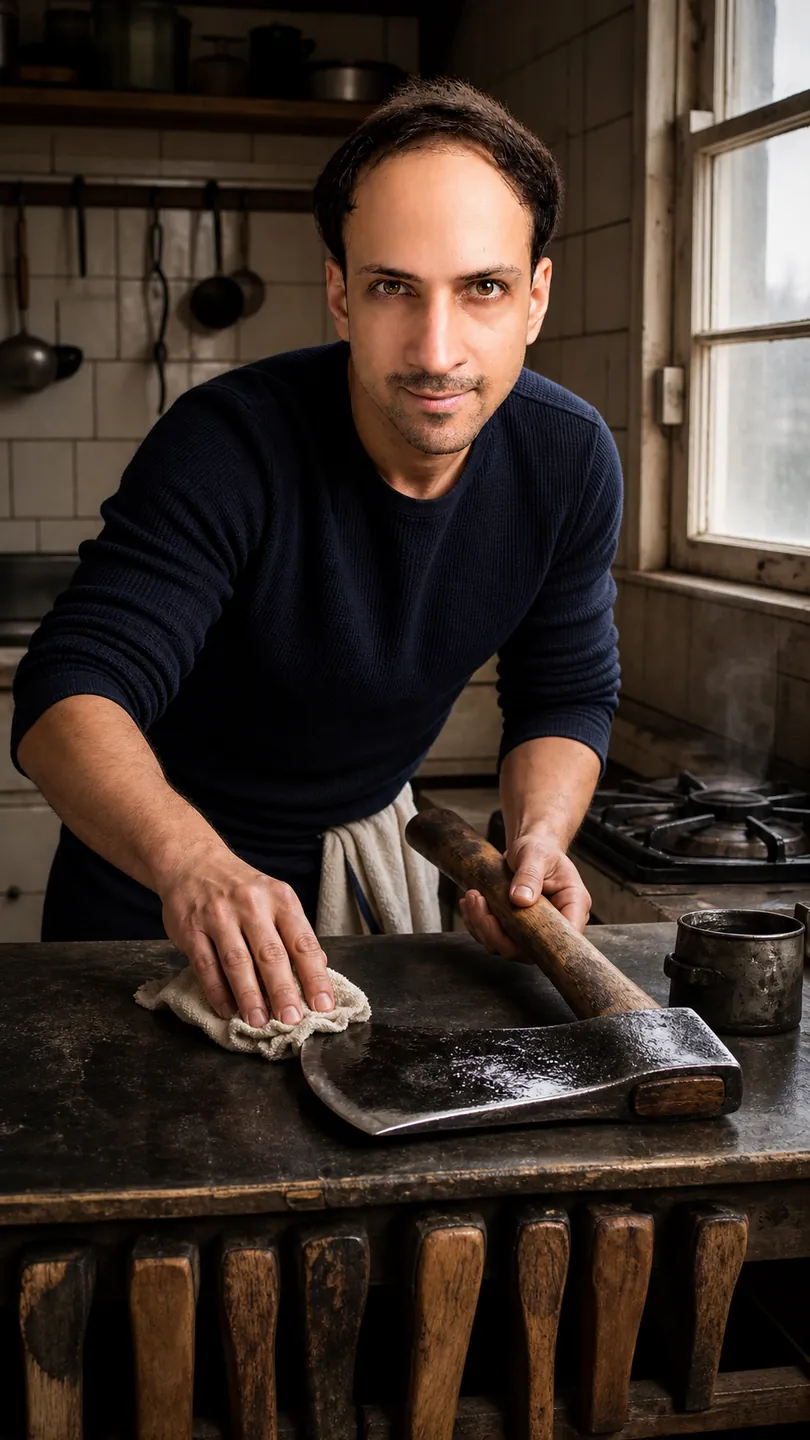
Time As Polish: Swept Brick Yard of a Small Forge — AI Portrait Prompt
صورةAI Portraits

Turn your own photo into a photorealistic portrait in the swept brick yard of a small forge, quench barrel steaming faintly. Keeps your face unchanged.

من نص البرومبت

Use the attached reference photo as the identity reference: keep the same face, skin tone, hair and features as the person in that photo, without beautifying, aging or altering them. Build a portrait 4:5 editorial artwork with protected negative space and a fully readable face at exactly 2560x3200 pixels. Location: the swept brick yard of a small forge, quench barrel steaming faintly. Show the subject in a leather smith's apron over a heather-grey henley and canvas trousers, carding scale off a blade's spine with a wire brush. The impossible-looking event must obey this clear system: an axe head on its seventh handle that outlasted the six retired handles racked beneath it, each darkened at the grip passes a plain working test any patient eye can score. Explore why a tool kept for a century looks finished rather than worn; direct expression and posture toward steward's calm, never melodrama or ad-like confidence. Frame past the object in the extreme foreground, letting its most worn surface stay tangible without covering their face. Make the composition pair one worn surface with one fresh mark of care. Render it as workshop still-life realism joining high-fidelity portrait photography, accurate patina and polish, shallow tactile depth, and quiet archival grading, using a single warm workbench lamp pooled tight, the room falling to umber and a palette of graphite, unbleached canvas, and one band of forge blue. Photorealistic: this must read as a real photograph from a physical camera, never an illustration, painting, or 3D render. Resolve real surface detail: dust settled where nobody wipes, fingerprint haze on glass, and edges rubbed pale by handling. Keep one identity-locked person, credible hands and fingers, natural fabric, and coherent scale, contact, reflections, shadows, airflow, deformation, and materials. Background people only when essential, always secondary and clearly different. Avoid glowing forge montages, artificially weathered wood grain, hipster workshop styling, floating tool arrangements, and varnish-shiny fake patina. No text, labels, logos, signatures, watermarks, random symbols, plastic skin, excessive bloom, or glossy AI finish.
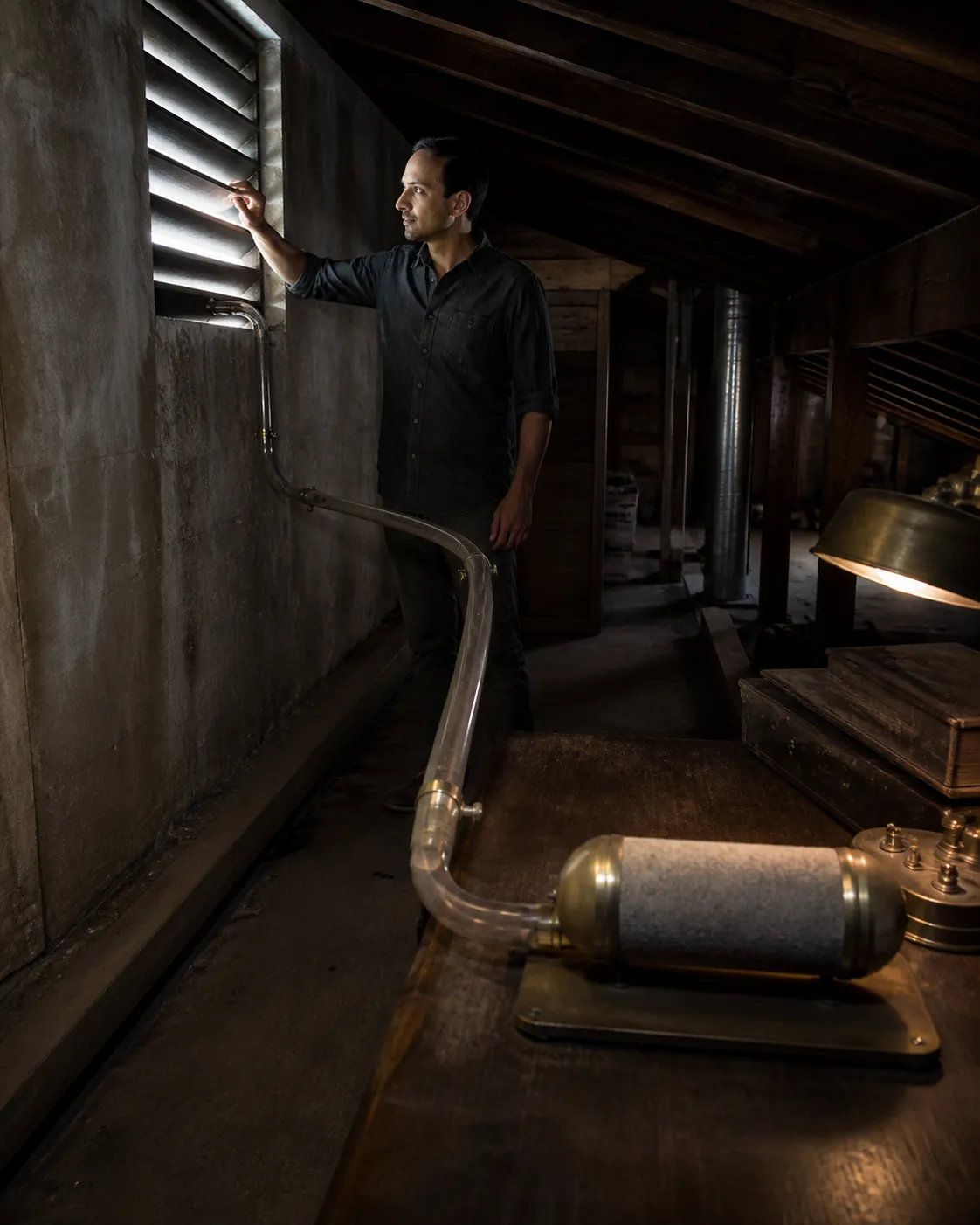
Time As Polish: Small Tiled Kitchen — AI Portrait Prompt
صورةAI Portraits

Turn your own photo into a conservation-grade craft portrait in a small tiled kitchen before dawn, one burner ring still cooling. Keeps your face unchanged.

من نص البرومبت

Use the attached reference photo as the identity reference: keep the same face, skin tone, hair and features as the person in that photo, without beautifying, aging or altering them. Design a full-height 9:16 cinematic artwork that reads on a phone and rewards gallery-scale inspection at exactly 2144x3808 pixels. Location: a small tiled kitchen before dawn, one burner ring still cooling. Show the subject in a navy waffle-knit shirt with a plain towel tucked at the waist, wiping a thin sheen of oil across black iron. Build the artwork around this material rule: an axe head on its seventh handle that outlasted the six retired handles racked beneath it, each darkened at the grip makes deep time readable at a glance without any caption. Explore why a tool kept for a century looks finished rather than worn; direct expression and posture toward sober gratitude, never melodrama or ad-like confidence. Frame level with the benchtop so the tool's brightest wear and their steady gaze share focus. Make the composition let repetition read as rhythm across the tool's wear. Render it as conservation-grade craft portraiture built from real working tools, truthful wear mapping, warm low-key lighting, and precise, respectful editorial realism, using north daylight through a dusty pane, contrast held gentle and true and a palette of seasoned black, beeswax cream, and a gleam of pewter. Photorealistic: this must read as a real photograph from a physical camera, never an illustration, painting, or 3D render. Give the air depth: falloff with distance and no artificial clarity far back. Resolve real surface detail: thread ends and slight pilling on worn cloth, hairline chips at every hard corner, and stone that is porous rather than smooth. Keep one identity-locked person, credible hands and fingers, natural fabric, and coherent scale, contact, reflections, shadows, airflow, deformation, and materials. Background people only when essential, always secondary and clearly different. Avoid glowing forge montages, artificially weathered wood grain, hipster workshop styling, floating tool arrangements, and varnish-shiny fake patina. No text, labels, logos, signatures, watermarks, random symbols, plastic skin, excessive bloom, or glossy AI finish.
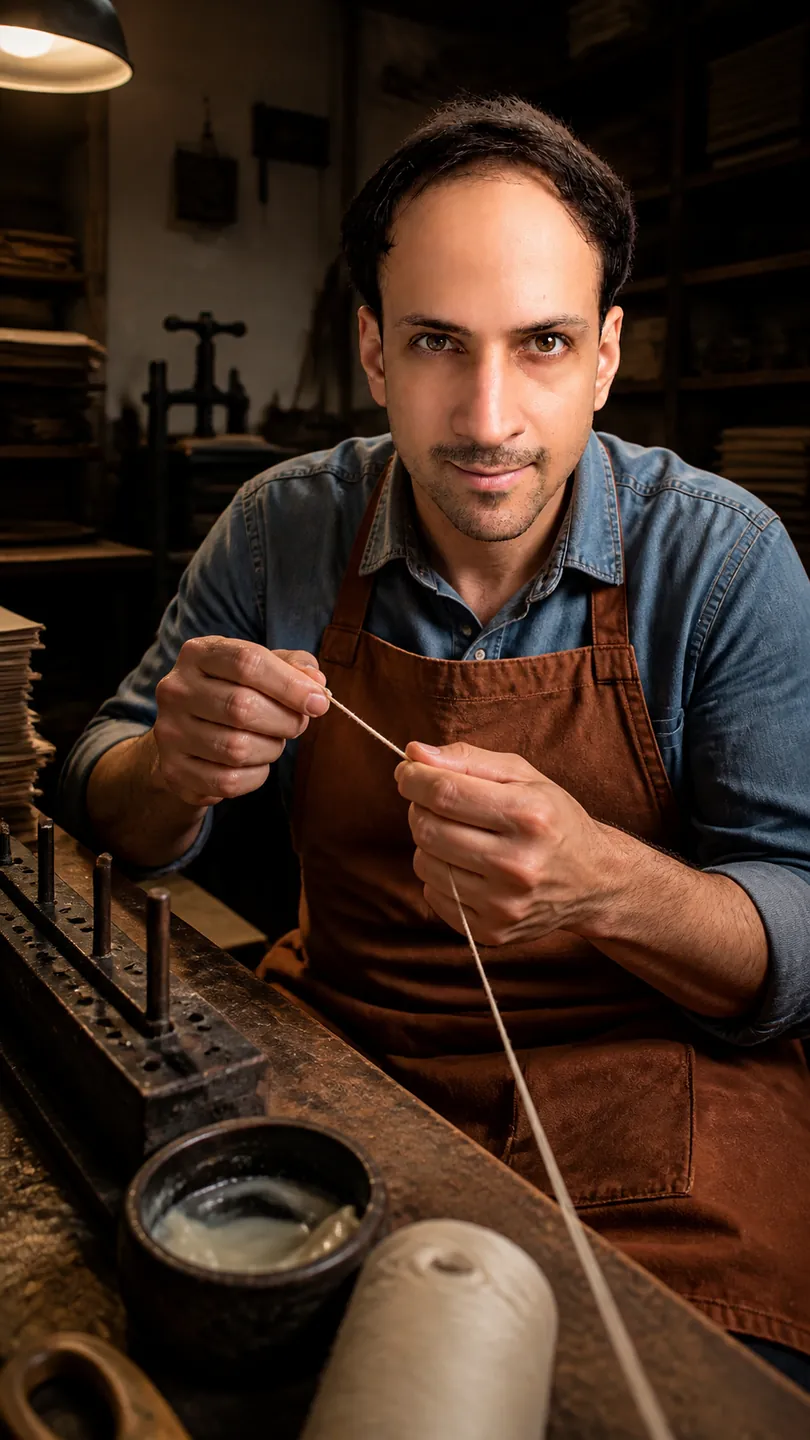
Interior Weather: Dry Roof Loft — AI Portrait Prompt
صورةAI Portraits

Turn your own photo into a gallery-grade documentary imagery portrait in a dry roof loft where cool air enters one louvered vent. Keeps your face unchanged.

من نص البرومبت

Use the attached reference photo as the identity reference: keep the same face, skin tone, hair and features as the person in that photo, without beautifying, aging or altering them. Build a portrait 4:5 editorial artwork with protected negative space and a fully readable face at exactly 2560x3200 pixels. Location: a dry roof loft where cool air enters one louvered vent. Show the subject in a faded slate work shirt buttoned to the second button, opening a louver a finger's width with one hand. Make one rigorous physical condition the conceptual engine: a felt-bodied carrier capsule that arrives with one soft thump after crossing the house inside a tube on pressure alone lets a distant condition arrive as a signal rather than an interruption. Explore how a message can be complete without containing a single readable word; direct expression and posture toward steady deliberation, never melodrama or ad-like confidence. Frame from the far end of the room so the signal's whole route stays visible. Make the composition leave honest vertical distance between the sensing point and their hands. Render it as gallery-grade documentary imagery built from real pneumatic linkages, believable wear on brass, low-drama interior lighting, and patient human presence, using a low bench lamp grazing brass while the room behind stays dim and a palette of lead grey, unpolished tin, and one stripe of verdigris. Photorealistic: this must read as a real photograph from a physical camera, never an illustration, painting, or 3D render. Resolve real surface detail: fine grit in the texture of concrete, efflorescence at damp edges, and hairline cracks that follow stress. Keep one identity-locked person, credible hands and fingers, natural fabric, and coherent scale, contact, reflections, shadows, airflow, deformation, and materials. Background people only when essential, always secondary and clearly different. Avoid steampunk goggles, glowing holograms, dripping food props, anatomical organ diagrams, and legible dial lettering anywhere. No text, labels, logos, signatures, watermarks, random symbols, plastic skin, excessive bloom, or glossy AI finish.
Practice Laid Down: Small Bookbindery — AI Portrait Prompt
صورةAI Portraits

Turn your own photo into a museum-grade process portrait in a small bookbindery with sewing frames and presses along one wall. Keeps your face unchanged.

من نص البرومبت

Use the attached reference photo as the identity reference: keep the same face, skin tone, hair and features as the person in that photo, without beautifying, aging or altering them. Design a full-height 9:16 cinematic artwork that reads on a phone and rewards gallery-scale inspection at exactly 2144x3808 pixels. Location: a small bookbindery with sewing frames and presses along one wall. Show the subject in a rust-brown canvas apron over a soft chambray shirt, waxing a length of linen thread between finger and thumb. Treat this mechanism as the frame’s governing rule: a salvaged manual switchboard on which one bright cloth-covered cord runs a fresh route across rows of age-dulled pairs converts hours of unwitnessed practice into structure a stranger could trust. Explore how a person keeps functioning while the way they function is rebuilt; direct expression and posture toward patient resolve, never melodrama or ad-like confidence. Use a 90mm close-portrait framing with one taut line entering the frame in sharp foreground focus. Make the composition run one continuous line from their hands to the frame edge. Render it as museum-grade process photography combining truthful rigging detail, visible thread-level texture, honest hand-work staging, and unhurried, deeply observational framing, using one warm work lamp pooled on the task with soft surrounding dusk and a palette of rope-tar black, pale dust grey, and warm ochre. Photorealistic: this must read as a real photograph from a physical camera, never an illustration, painting, or 3D render. Give the frame volume: faint density deepest in the room, contrast easing at the edges. Resolve real surface detail: label-free packaging showing carton fibre, cardboard bruised at the corners, and tape lifting slightly at one end. Keep one identity-locked person, credible hands and fingers, natural fabric, and coherent scale, contact, reflections, shadows, airflow, deformation, and materials. Background people only when essential, always secondary and clearly different. Avoid glowing neural filaments, brain-shaped tangles, circuit-board overlays, holographic wiring diagrams, and sparks jumping between cables. No text, labels, logos, signatures, watermarks, random symbols, plastic skin, excessive bloom, or glossy AI finish.
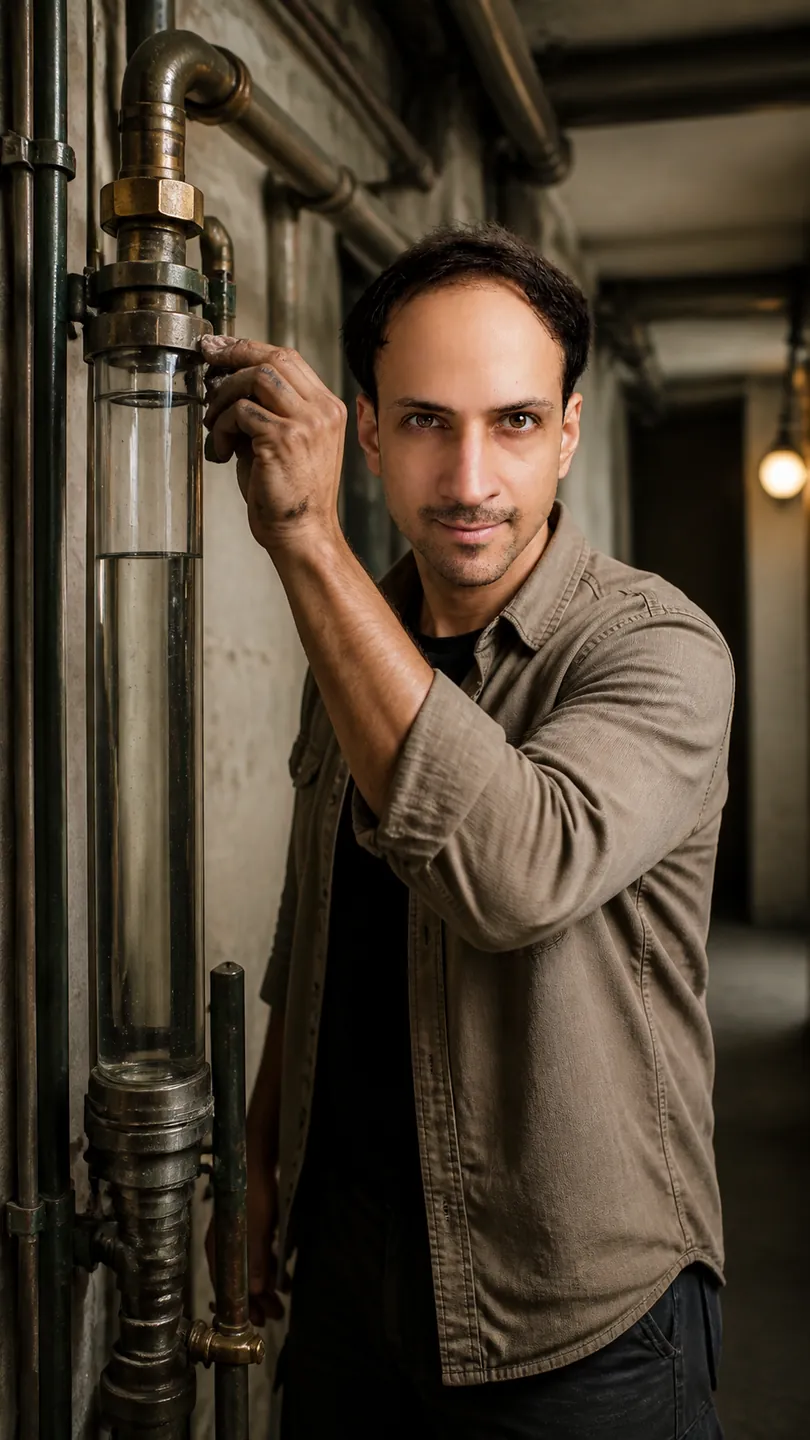
Second Signals: Service Corridor — AI Portrait Prompt
صورةAI Portraits

Turn your own photo into a portrait in a service corridor where old conduit follows the ceiling line. Keeps your face unchanged.

من نص البرومبت

Use the attached reference photo as the identity reference: keep the same face, skin tone, hair and features as the person in that photo, without beautifying, aging or altering them. Design a full-height 9:16 cinematic artwork that reads on a phone and rewards gallery-scale inspection at exactly 2144x3808 pixels. Location: a service corridor where old conduit follows the ceiling line. Show the subject in a dust-colored cotton overshirt over a dark tee and work trousers, brushing dust from a conduit joint with one thumb. Build the artwork around this material rule: a slender sealed water column, tall as two floors, that settles wherever the day's air pressure lets it stand gives a quiet interior signal a route to the room where choices happen. Explore why the quietest signal in a house is usually the one worth routing; direct expression and posture toward quiet stewardship, never melodrama or ad-like confidence. Use a patient 35mm interior view with vertical lines kept true and no wide-angle stretch. Make the composition give the smallest moving part more acuity than any lit surface. Render it as gallery-grade documentary imagery built from real pneumatic linkages, believable wear on brass, low-drama interior lighting, and patient human presence, using flat overcast illumination that keeps every glass column readable without glare and a palette of pale limestone, smoke grey, and one bottle-green band. Photorealistic: this must read as a real photograph from a physical camera, never an illustration, painting, or 3D render. Give the air depth: falloff with distance and no artificial clarity far back. Resolve real surface detail: thread ends and slight pilling on worn cloth, hairline chips at every hard corner, and stone that is porous rather than smooth. Keep one identity-locked person, credible hands and fingers, natural fabric, and coherent scale, contact, reflections, shadows, airflow, deformation, and materials. Background people only when essential, always secondary and clearly different. Avoid brass-gear collage backdrops, cartoon telegraph keys, neon signal beams, mercury spills, and floating typographic message overlays. No text, labels, logos, signatures, watermarks, random symbols, plastic skin, excessive bloom, or glossy AI finish.
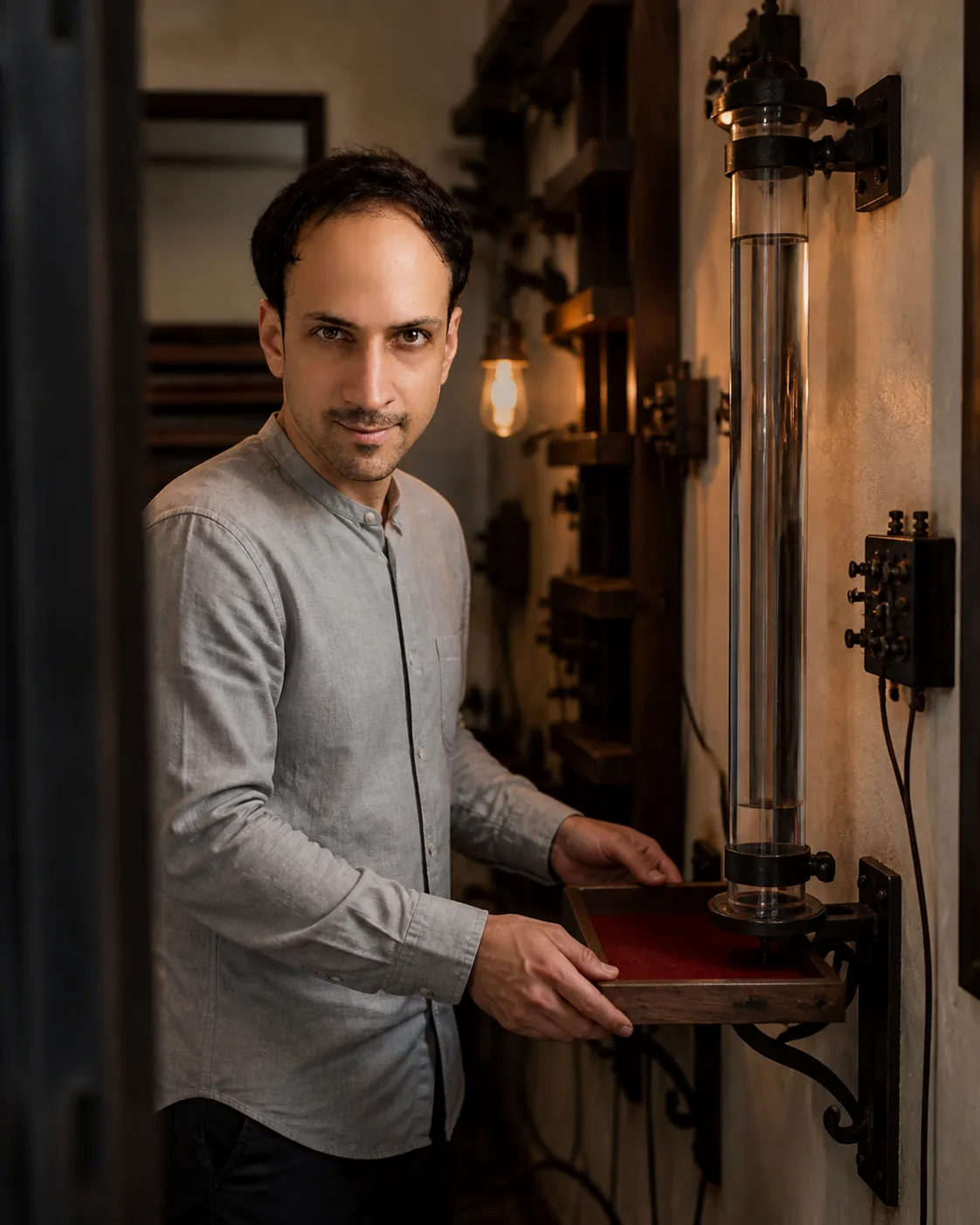
Second Signals: Small Dispatch Room — AI Portrait Prompt
صورةAI Portraits

Turn your own photo into a conceptual house-systems portrait in a small dispatch room lined with wall brackets and cleared shelves. Keeps your face unchanged.

من نص البرومبت

Use the attached reference photo as the identity reference: keep the same face, skin tone, hair and features as the person in that photo, without beautifying, aging or altering them. Build a portrait 4:5 editorial artwork with protected negative space and a fully readable face at exactly 2560x3200 pixels. Location: a small dispatch room lined with wall brackets and cleared shelves. Show the subject in a soft grey collarless shirt with sleeves buttoned at the wrist, lowering a felt-lined tray onto a wall bracket. The impossible-looking event must obey this clear system: a slender sealed water column, tall as two floors, that settles wherever the day's air pressure lets it stand delivers what one room needs to know without anyone raising a voice. Explore why the quietest signal in a house is usually the one worth routing; direct expression and posture toward patient regard, never melodrama or ad-like confidence. Frame just past a doorway edge, the near jamb dark and unfocused but never crossing their face. Make the composition keep the reading edge sharp while the corridor behind falls soft. Render it as conceptual house-systems photography built from functioning telegraph hardware, accurate liquid-column behavior, restrained interior direction, and editorial portrait fidelity, using one warm filament practical near the wall with cool ambient filling the rest and a palette of warm plaster, blackened iron, and a narrow signal red. Photorealistic: this must read as a real photograph from a physical camera, never an illustration, painting, or 3D render. Resolve real surface detail: dust settled where nobody wipes, fingerprint haze on glass, and edges rubbed pale by handling. Keep one identity-locked person, credible hands and fingers, natural fabric, and coherent scale, contact, reflections, shadows, airflow, deformation, and materials. Background people only when essential, always secondary and clearly different. Avoid brass-gear collage backdrops, cartoon telegraph keys, neon signal beams, mercury spills, and floating typographic message overlays. No text, labels, logos, signatures, watermarks, random symbols, plastic skin, excessive bloom, or glossy AI finish.
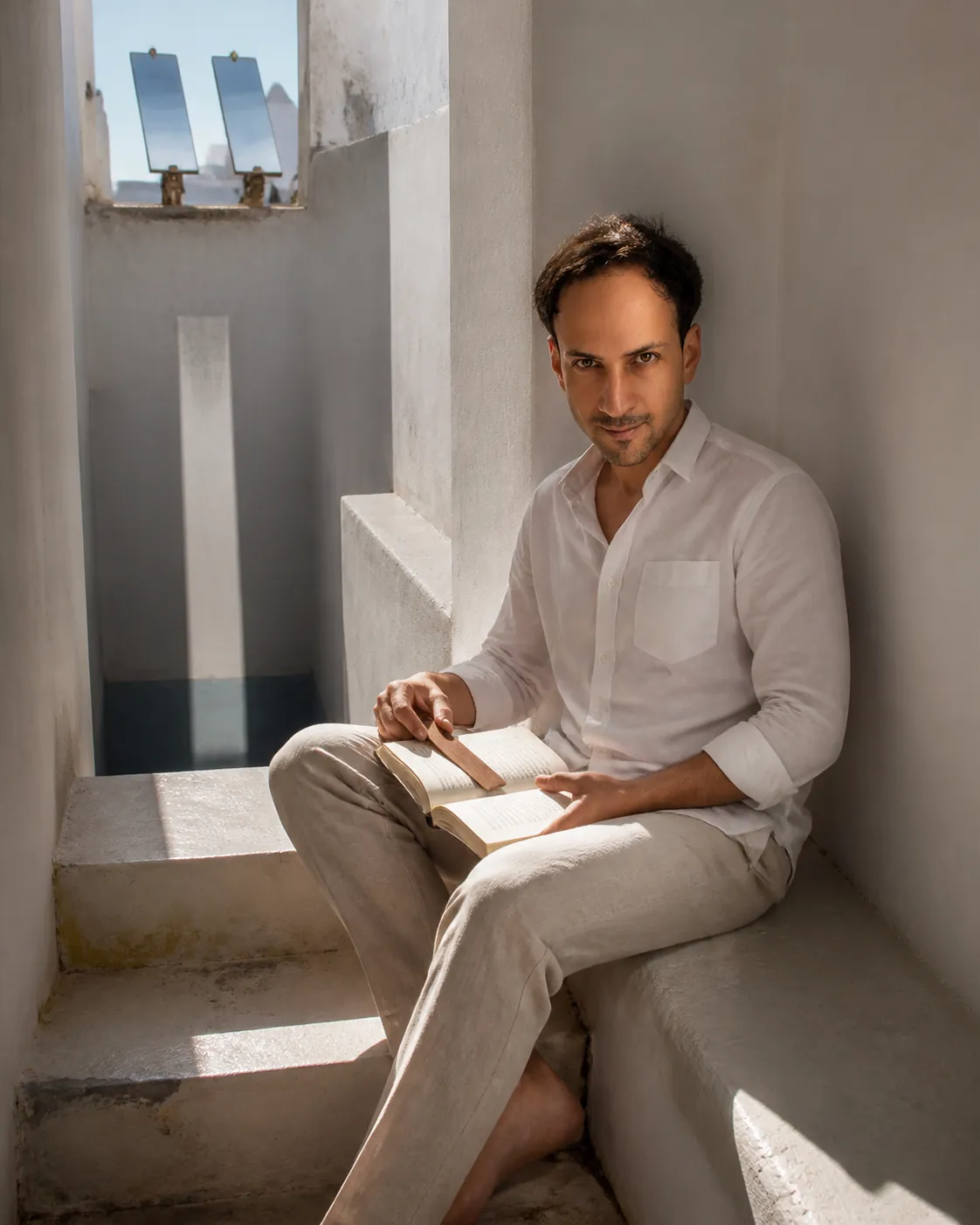
Morning Dose: Whitewashed Reading Alcove — AI Portrait Prompt
صورةAI Portraits

Turn your own photo into a gallery-grade sun-study portrait in a whitewashed reading alcove reached by two steps beside a lightwell. Keeps your face unchanged.

من نص البرومبت

Use the attached reference photo as the identity reference: keep the same face, skin tone, hair and features as the person in that photo, without beautifying, aging or altering them. Build a portrait 4:5 editorial artwork with protected negative space and a fully readable face at exactly 2560x3200 pixels. Location: a whitewashed reading alcove reached by two steps beside a lightwell. Show them in a relaxed white poplin shirt and stone linen trousers, marking their page with a flat cedar bookmark. Make one rigorous physical condition the conceptual engine: a pair of aligned rooftop mirrors that fold true morning sun down a whitewashed shaft into a windowless basement room turns an ordinary clear morning into a repeatable and checkable event. Explore how a building can administer a star with millimeter manners; direct expression and posture toward earned stillness, never melodrama or ad-like confidence. Use a 90mm portrait length with the beam's near edge crossing the foreground in believable sharpness. Make the composition keep the light's source small and its consequence large. Render it as gallery-grade sun-study photography built from lawful optics, physically exact beam edges, calm architectural framing, and patient observational realism, using true solar illumination metered by architecture, with no electric source anywhere visible and a palette of chalk, unpolished brass, and deep shadow blue. Photorealistic: this must read as a real photograph from a physical camera, never an illustration, painting, or 3D render. Resolve real surface detail: fine grit in the texture of concrete, efflorescence at damp edges, and hairline cracks that follow stress. Keep one identity-locked person, credible hands and fingers, natural fabric, and coherent scale, contact, reflections, shadows, airflow, deformation, and materials. Background people only when essential, always secondary and clearly different. Avoid god-ray haze shafts, lens-flare starbursts, glowing dust volumetrics, stained-glass rainbows, and any halo behind their head. No text, labels, logos, signatures, watermarks, random symbols, plastic skin, excessive bloom, or glossy AI finish.
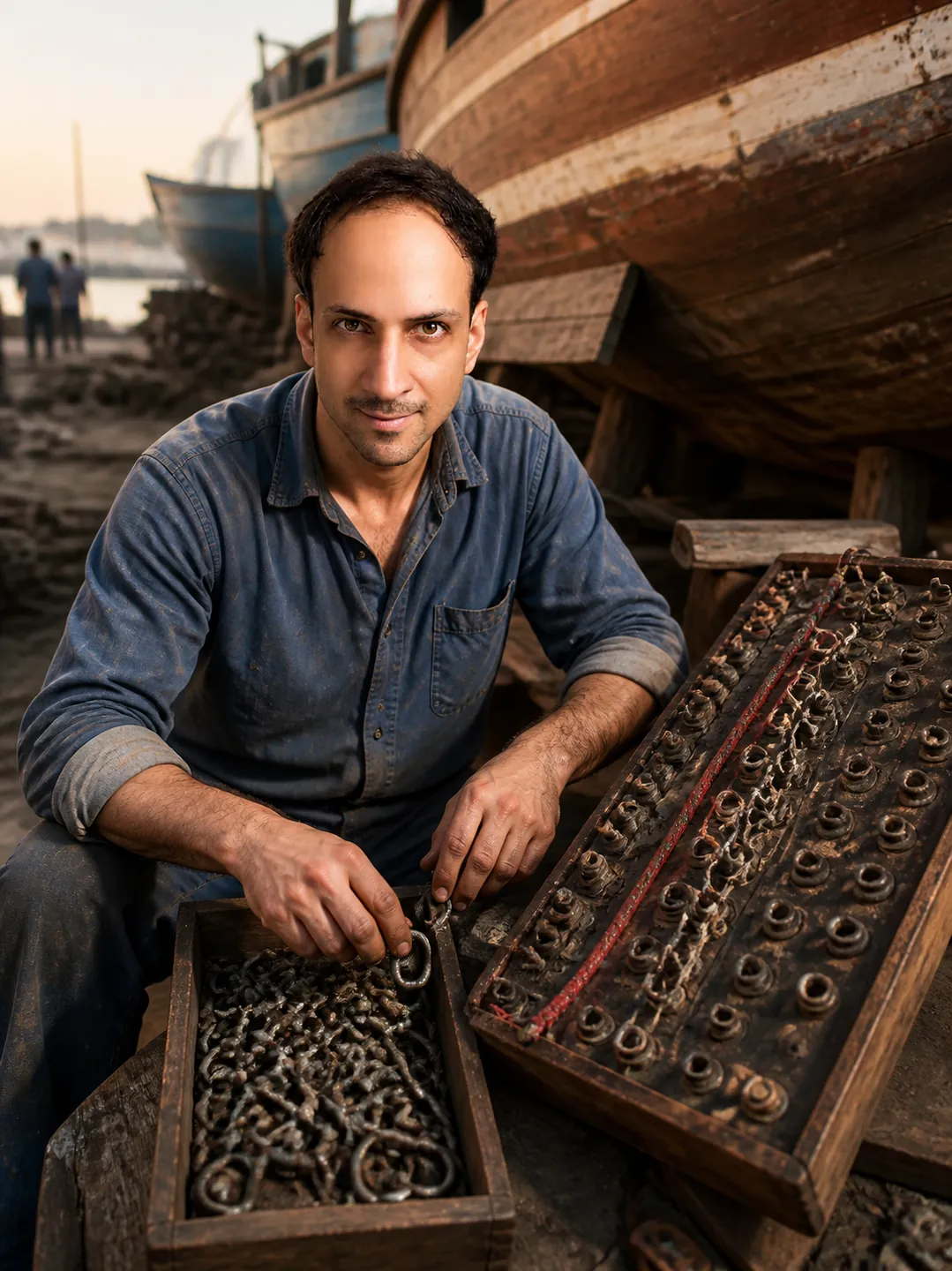
Practice Laid Down: Jeddah Fishing Slipway — AI Portrait Prompt
صورةAI Portraits

Turn your own photo into a craft-documentary portrait in a Jeddah fishing slipway at first light, hulls propped on timbers. Keeps your face unchanged.

من نص البرومبت

Use the attached reference photo as the identity reference: keep the same face, skin tone, hair and features as the person in that photo, without beautifying, aging or altering them. Use a formal 3:4 environmental portrait with complete hands and meaningful objects inside frame at exactly 2480x3312 pixels. Location: a Jeddah fishing slipway at first light, hulls propped on timbers. Show the subject in a faded blue work shirt with salt-stiff rolled cuffs, sorting worn shackles into a shallow wooden tray. The impossible-looking event must obey this clear system: a salvaged manual switchboard on which one bright cloth-covered cord runs a fresh route across rows of age-dulled pairs proves that discipline, not neatness, is what keeps complexity workable. Explore how a person keeps functioning while the way they function is rebuilt; direct expression and posture toward earned patience, never melodrama or ad-like confidence. Use a composed 35mm width that places them beside the work, never looming over it. Make the composition hold their hands and the tensioned work in one unbroken diagonal. Render it as craft-documentary portraiture built from real fiber mechanics, patient workshop realism, archival material fidelity, and emotionally restrained editorial composition, using long window light raking across fiber so every twist reads and a palette of undyed flax, worn oak, and one madder-red line. Photorealistic: this must read as a real photograph from a physical camera, never an illustration, painting, or 3D render. Resolve real surface detail: hair with individual strands catching light, strands of uneven length, and skin oil giving a low uneven sheen. Keep one identity-locked person, credible hands and fingers, natural fabric, and coherent scale, contact, reflections, shadows, airflow, deformation, and materials. Background people only when essential, always secondary and clearly different. Avoid server racks, blinking LED bundles, impossible floating threads, motivational-poster loom staging, and pristine hands untouched by work. No text, labels, logos, signatures, watermarks, random symbols, plastic skin, excessive bloom, or glossy AI finish.
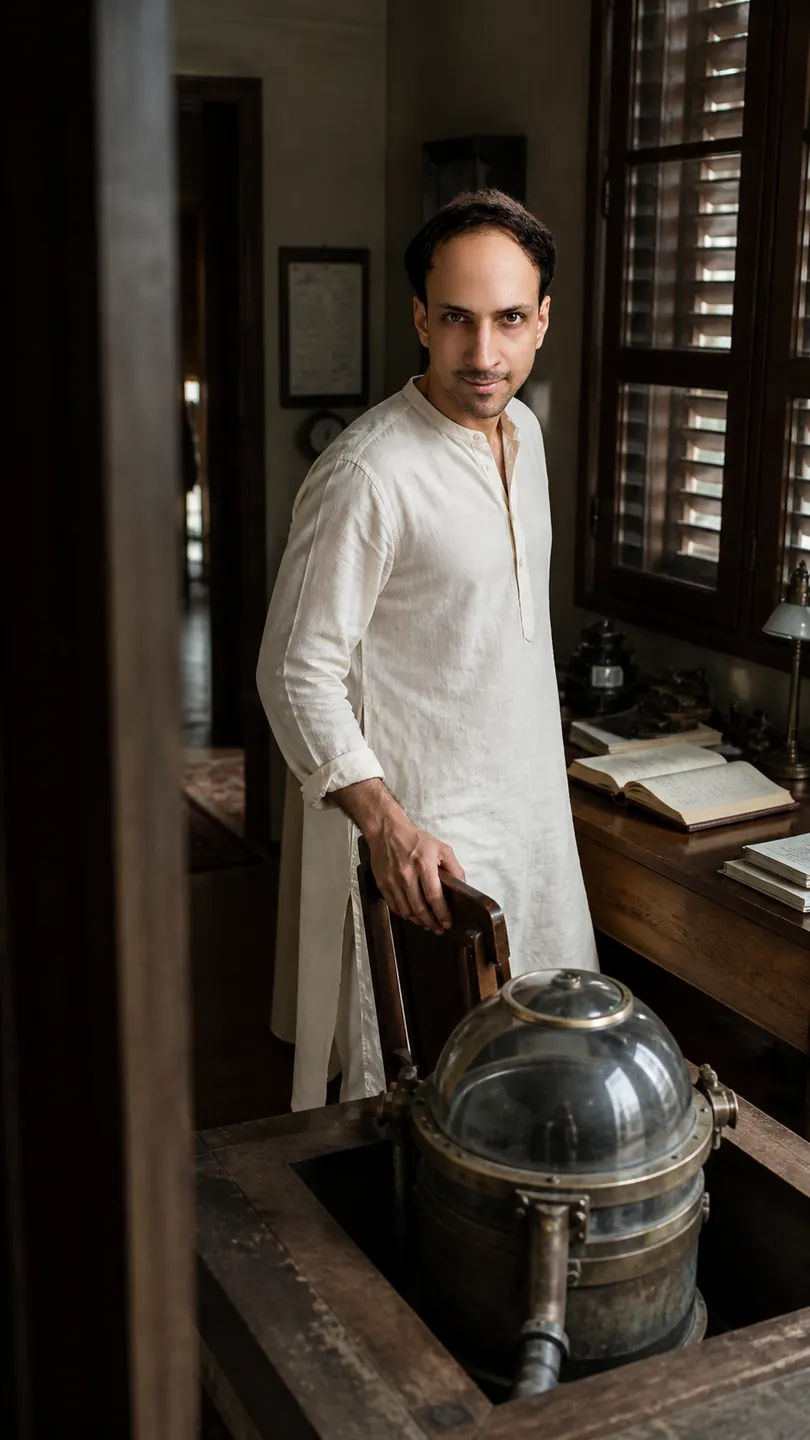
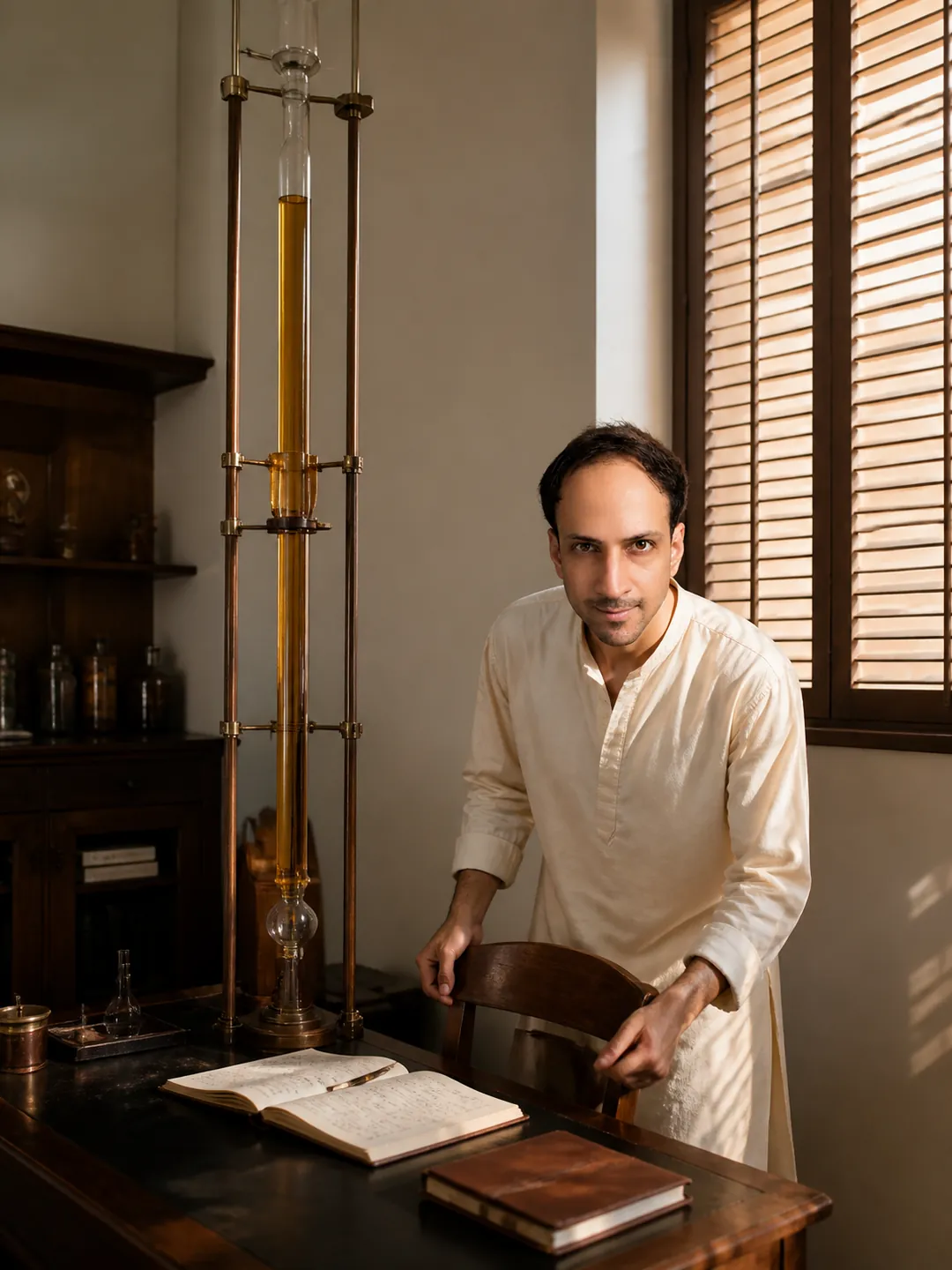
Second Signals: Upstairs Writing Desk Set Square — AI Portrait Prompt
صورةAI Portraits

Turn your own photo into a portrait in an upstairs writing desk set square beneath a shuttered window. Keeps your face unchanged.

من نص البرومبت

Use the attached reference photo as the identity reference: keep the same face, skin tone, hair and features as the person in that photo, without beautifying, aging or altering them. Use a formal 3:4 environmental portrait with complete hands and meaningful objects inside frame at exactly 2480x3312 pixels. Location: an upstairs writing desk set square beneath a shuttered window. Show the subject in an unlined cream linen traditional Gulf outfit with cuffs turned back once, pulling a chair back from the desk without noise. Treat this mechanism as the frame’s governing rule: a slender sealed water column, tall as two floors, that settles wherever the day's air pressure lets it stand keeps the message honest by letting physics, not preference, shape it. Explore why the quietest signal in a house is usually the one worth routing; direct expression and posture toward sober curiosity, never melodrama or ad-like confidence. Frame from the far end of the room so the signal's whole route stays visible. Make the composition leave honest vertical distance between the sensing point and their hands. Render it as exhibition-scale demonstration realism combining precision workshop apparatus, physically correct fluid menisci, quiet period joinery, and calm observational portraiture, using late-afternoon light entering through louvers as thin parallel bands and a palette of chalk white, dark walnut, and a single amber column. Photorealistic: this must read as a real photograph from a physical camera, never an illustration, painting, or 3D render. Resolve real surface detail: wood grain read at honest scale, matte and gloss clearly separated, and no surface uniformly clean. Keep one identity-locked person, credible hands and fingers, natural fabric, and coherent scale, contact, reflections, shadows, airflow, deformation, and materials. Background people only when essential, always secondary and clearly different. Avoid steampunk goggles, glowing holograms, dripping food props, anatomical organ diagrams, and legible dial lettering anywhere. No text, labels, logos, signatures, watermarks, random symbols, plastic skin, excessive bloom, or glossy AI finish.
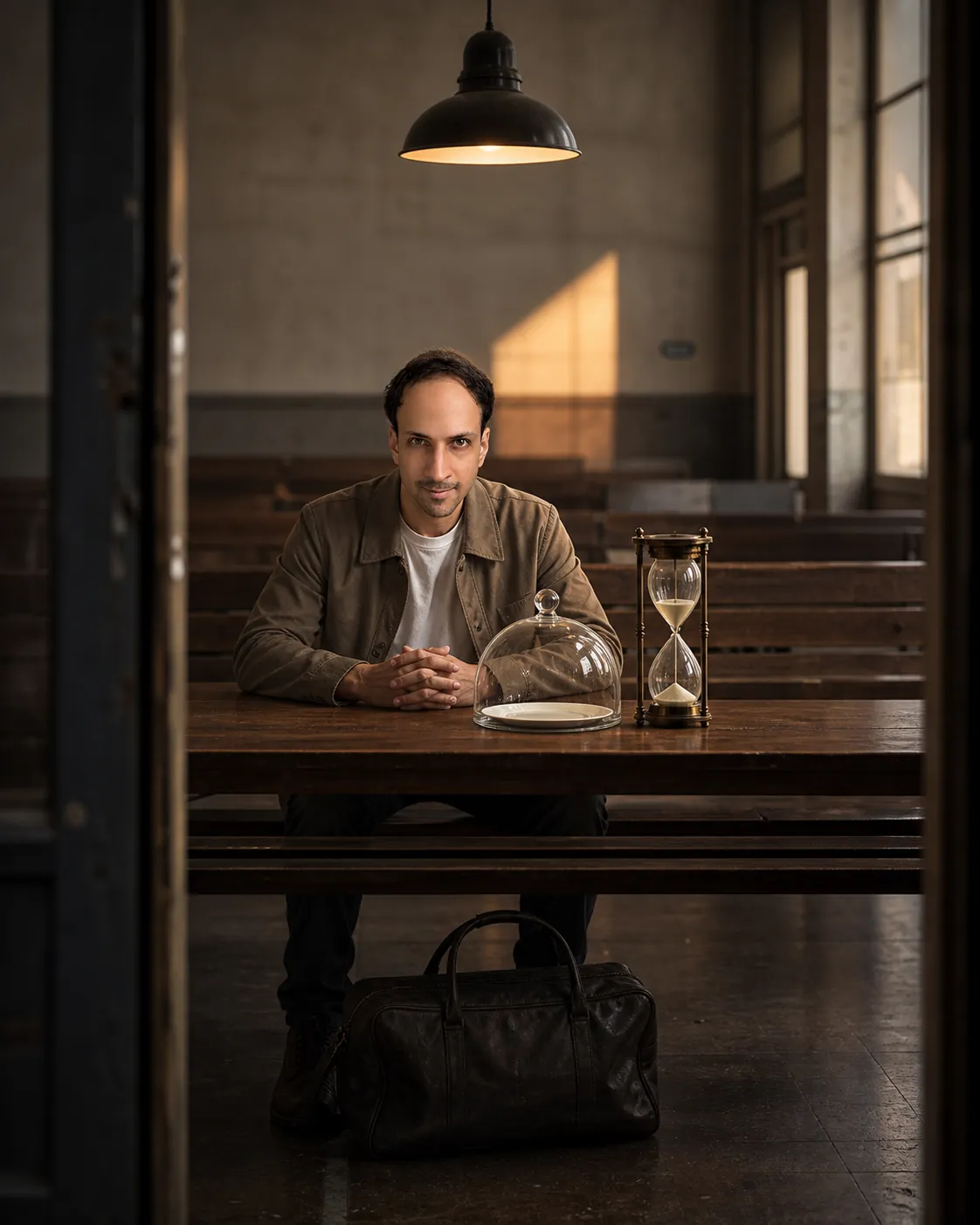
Not Yet: Empty Intercity Waiting Hall — AI Portrait Prompt
صورةAI Portraits

Turn your own photo into a restrained interior portrait in an empty intercity waiting hall with long wooden benches. Keeps your face unchanged.

من نص البرومبت

Use the attached reference photo as the identity reference: keep the same face, skin tone, hair and features as the person in that photo, without beautifying, aging or altering them. Build a portrait 4:5 editorial artwork with protected negative space and a fully readable face at exactly 2560x3200 pixels. Location: an empty intercity waiting hall with long wooden benches. Show them in a taupe harrington jacket over a plain white shirt, setting their small travel bag flat beneath the bench. The impossible-looking event must obey this clear system: an empty white plate under a glass cloche beside a brass sand timer whose upper bulb is still quietly emptying makes the untouched object the strongest presence in the frame. Explore why the untouched object can outrank everything that has already been used; direct expression and posture toward unhurried resolve, never melodrama or ad-like confidence. Frame through the nearest doorway at a respectful distance, foreground edges soft but never covering their face or hands. Make the composition hold clean empty space where the meal will later be. Render it as restrained interior photography combining honest mechanical staging, tactile everyday objects, disciplined negative space, and documentary-grade skin and fabric rendering, using one low-hung shaded lamp holding a tight warm circle around them and a palette of pewter, dry clay, and one band of late sun. Photorealistic: this must read as a real photograph from a physical camera, never an illustration, painting, or 3D render. Resolve real surface detail: dust settled where nobody wipes, fingerprint haze on glass, and edges rubbed pale by handling. Keep one identity-locked person, credible hands and fingers, natural fabric, and coherent scale, contact, reflections, shadows, airflow, deformation, and materials. Background people only when essential, always secondary and clearly different. Avoid tape-measure diet props, empty-fridge gloom, ringing alarm clocks, glossy food-commercial styling, and gravity-defying hourglass sand. No text, labels, logos, signatures, watermarks, random symbols, plastic skin, excessive bloom, or glossy AI finish.
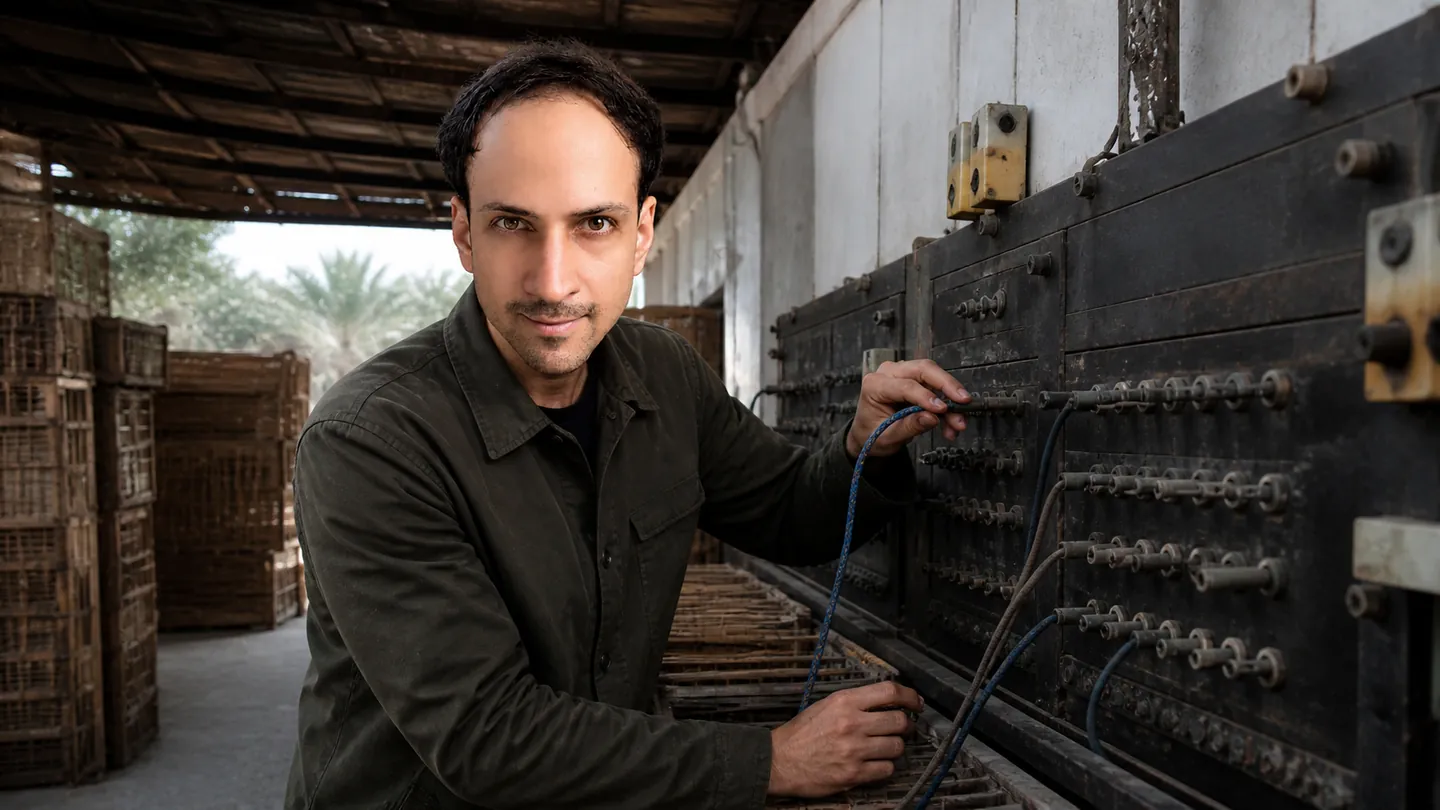
Practice Laid Down: Shaded Date-Packing Barn — AI Portrait Prompt
صورةAI Portraits

Turn your own photo into a conceptual craft portrait in a shaded date-packing barn between harvest seasons, crates stacked empty. Keeps your face unchanged.

من نص البرومبت

Use the attached reference photo as the identity reference: keep the same face, skin tone, hair and features as the person in that photo, without beautifying, aging or altering them. Compose a wide 16:9 narrative image where environment and subject carry equal meaning at exactly 3808x2144 pixels. Location: a shaded date-packing barn between harvest seasons, crates stacked empty. Show the subject in an olive field jacket buttoned over a plain undershirt, stacking two empty palm-frond crates squarely together. Build the artwork around this material rule: a salvaged manual switchboard on which one bright cloth-covered cord runs a fresh route across rows of age-dulled pairs reads as ordinary craft until the scale of the patience registers. Explore how a person keeps functioning while the way they function is rebuilt; direct expression and posture toward steady absorption, never melodrama or ad-like confidence. Use an eye-level 55mm perspective that keeps their hands and the work equally credible. Make the composition let one bright new line cross a field of dulled ones. Render it as conceptual craft portraiture uniting working textile apparatus, believable tension physics, quiet contemporary art direction, and human-centered documentary realism, using cool diffuse skylight evened by pale walls, shadows kept legible and a palette of hemp beige, gunmetal grey, and a single indigo thread. Photorealistic: this must read as a real photograph from a physical camera, never an illustration, painting, or 3D render. Give truthful depth cues: overlapping planes and shadows softening as they travel. Resolve real surface detail: rubber gone chalky with age, painted metal chipped to primer, and plastic yellowed only where light reaches it. Keep one identity-locked person, credible hands and fingers, natural fabric, and coherent scale, contact, reflections, shadows, airflow, deformation, and materials. Background people only when essential, always secondary and clearly different. Avoid server racks, blinking LED bundles, impossible floating threads, motivational-poster loom staging, and pristine hands untouched by work. No text, labels, logos, signatures, watermarks, random symbols, plastic skin, excessive bloom, or glossy AI finish.
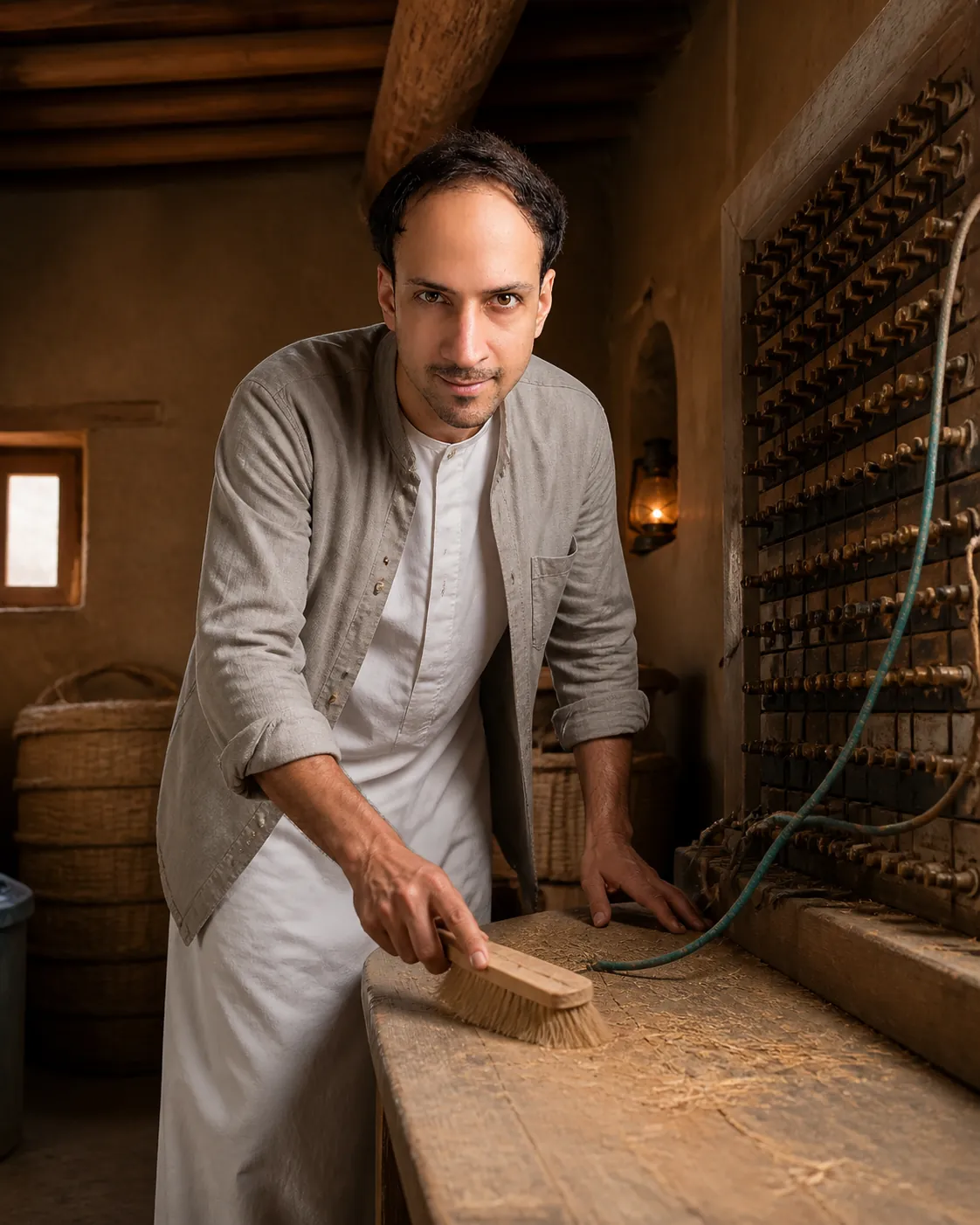
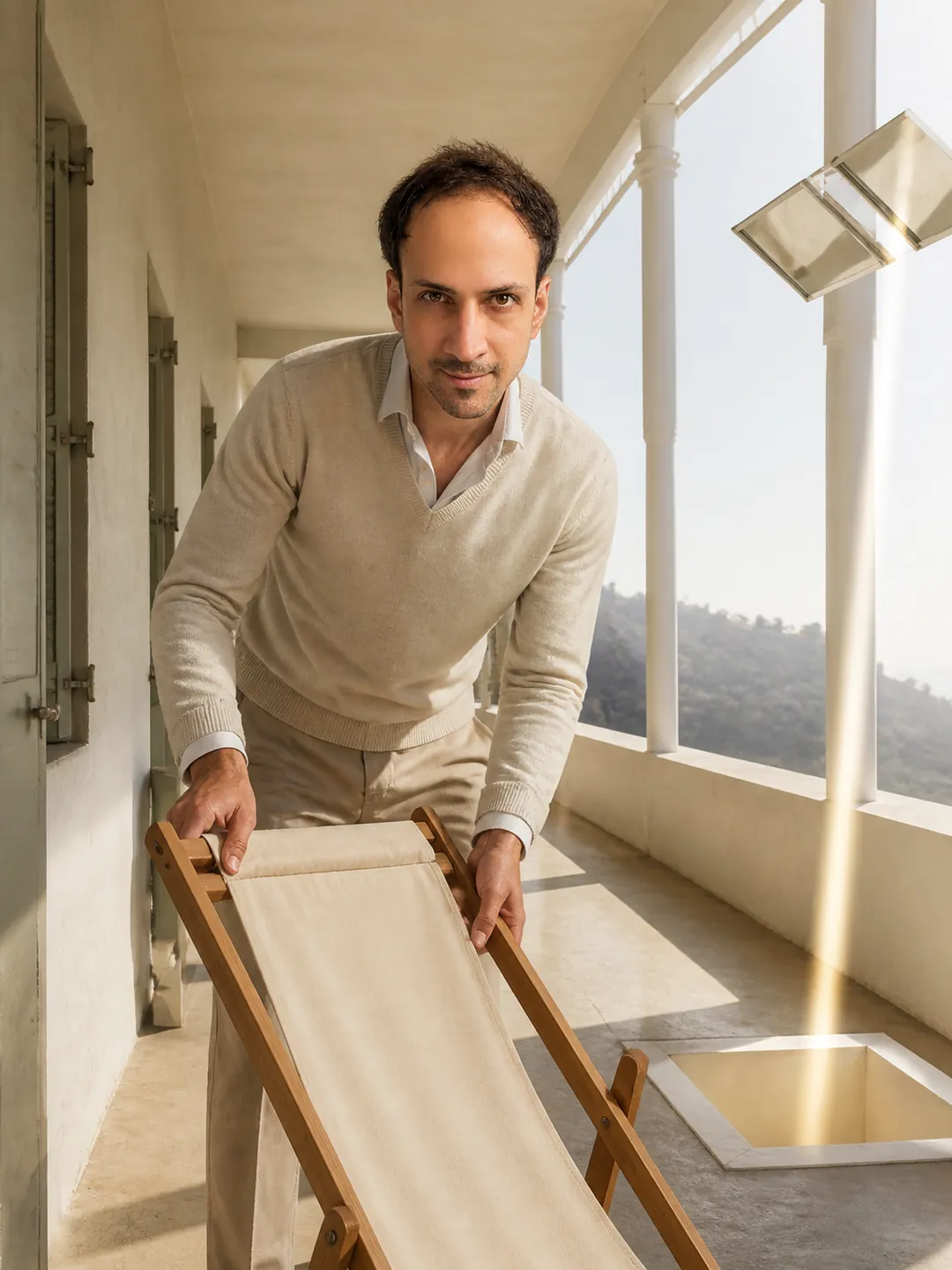
Morning Dose: Long East Porch — AI Portrait Prompt
صورةAI Portraits

Turn your own photo into a solar-architecture portrait in the long east porch of a hillside sanatorium above morning haze. Keeps your face unchanged.

من نص البرومبت

Use the attached reference photo as the identity reference: keep the same face, skin tone, hair and features as the person in that photo, without beautifying, aging or altering them. Use a formal 3:4 environmental portrait with complete hands and meaningful objects inside frame at exactly 2480x3312 pixels. Location: the long east porch of a hillside sanatorium above morning haze. Show them in a fine beige knit over an open-collar white shirt, unfolding a canvas deck chair to its first notch. The impossible-looking event must obey this clear system: a pair of aligned rooftop mirrors that fold true morning sun down a whitewashed shaft into a windowless basement room hands the sky a duty and holds it to the millimeter. Explore how a building can administer a star with millimeter manners; direct expression and posture toward modest certainty, never melodrama or ad-like confidence. Frame at chest height across the lit surface so the geometry of the beam and their eyes share focus. Make the composition align one architectural line with the sun's incoming angle. Render it as solar-architecture portraiture built from real beam geometry, documentary daylight realism, hand-finished plaster materiality, and quietly clinical art direction, using one hard parallel beam of true sun with soft plaster-bounced fill and a palette of limewash white, raw plaster, and one honeyed bar. Photorealistic: this must read as a real photograph from a physical camera, never an illustration, painting, or 3D render. Resolve real surface detail: hair with individual strands catching light, and skin oil giving a low uneven sheen. Keep one identity-locked person, credible hands and fingers, natural fabric, and coherent scale, contact, reflections, shadows, airflow, deformation, and materials. Background people only when essential, always secondary and clearly different. Avoid tanning-salon imagery, golden-hour social-media grading, sunburst clock motifs, glowing skin retouching, and beams bending like spotlights. No text, labels, logos, signatures, watermarks, random symbols, plastic skin, excessive bloom, or glossy AI finish.
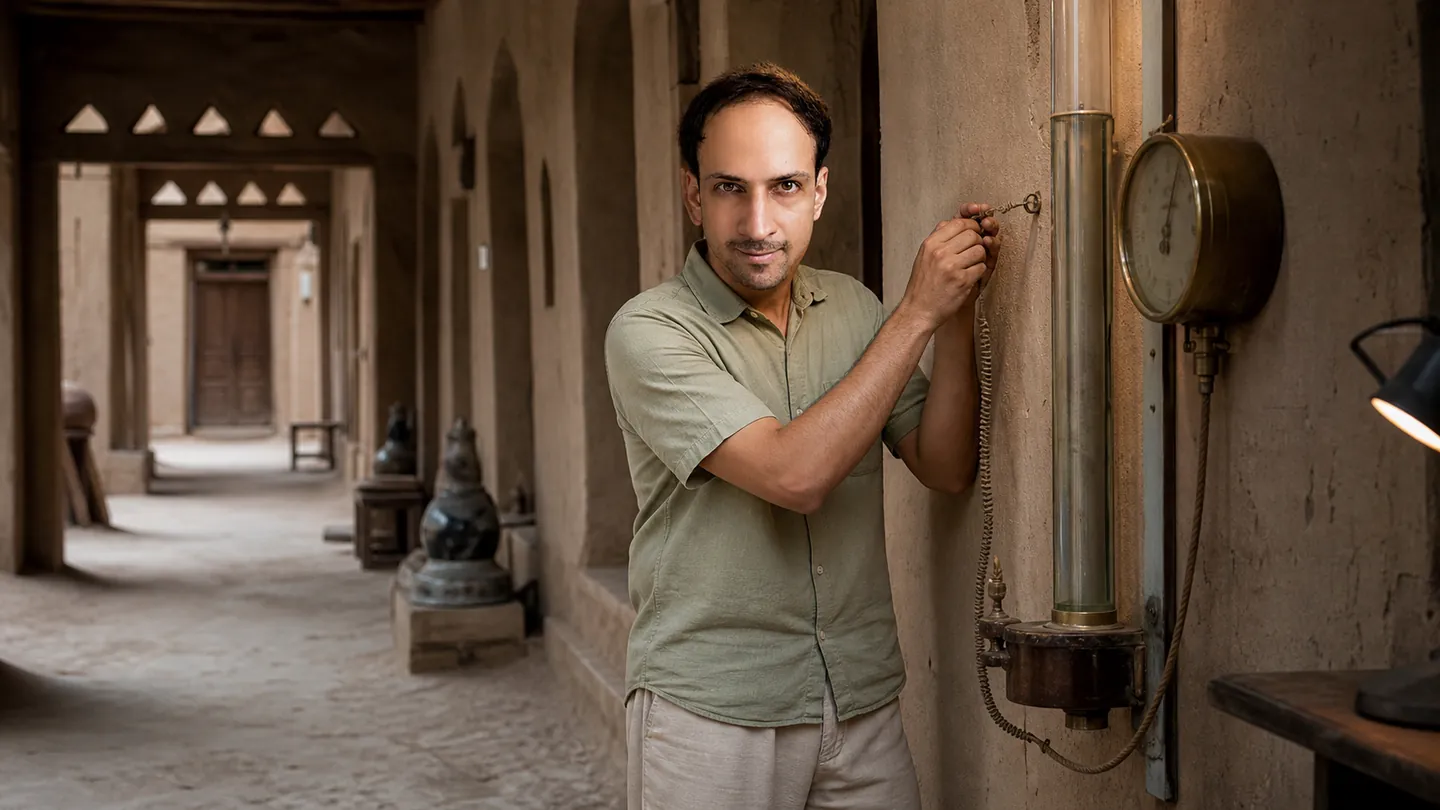
Practice Laid Down: Mudbrick Storeroom — AI Portrait Prompt
صورةAI Portraits

Turn your own photo into a gallery-grade workshop portrait in a mudbrick storeroom in Diriyah restored with palm-trunk ceiling beams. Keeps your face unchanged.

من نص البرومبت

Use the attached reference photo as the identity reference: keep the same face, skin tone, hair and features as the person in that photo, without beautifying, aging or altering them. Build a portrait 4:5 editorial artwork with protected negative space and a fully readable face at exactly 2560x3200 pixels. Location: a mudbrick storeroom in Diriyah restored with palm-trunk ceiling beams. Show the subject in a white summer traditional Gulf outfit under a light stone-grey overshirt, brushing straw dust from a low wooden bench. Make one rigorous physical condition the conceptual engine: a salvaged manual switchboard on which one bright cloth-covered cord runs a fresh route across rows of age-dulled pairs holds working tension while its own structure is being remade. Explore how a person keeps functioning while the way they function is rebuilt; direct expression and posture toward workmanlike reverence, never melodrama or ad-like confidence. Frame at the height of the work so effort and expression can be read in one glance. Make the composition rank focus by effort, the hardest-won inch rendered sharpest of all. Render it as gallery-grade workshop photography built from real load-bearing craft, natural fiber materiality, precise repair detail, and calm narrative staging, using two bounced practicals giving gentle modeling without a single hard specular and a palette of raw linen, aged brass, and one deep teal band. Photorealistic: this must read as a real photograph from a physical camera, never an illustration, painting, or 3D render. Resolve real surface detail: fine grit in the texture of concrete, efflorescence at damp edges, and hairline cracks that follow stress. Keep one identity-locked person, credible hands and fingers, natural fabric, and coherent scale, contact, reflections, shadows, airflow, deformation, and materials. Background people only when essential, always secondary and clearly different. Avoid glowing neural filaments, brain-shaped tangles, circuit-board overlays, holographic wiring diagrams, and sparks jumping between cables. No text, labels, logos, signatures, watermarks, random symbols, plastic skin, excessive bloom, or glossy AI finish.
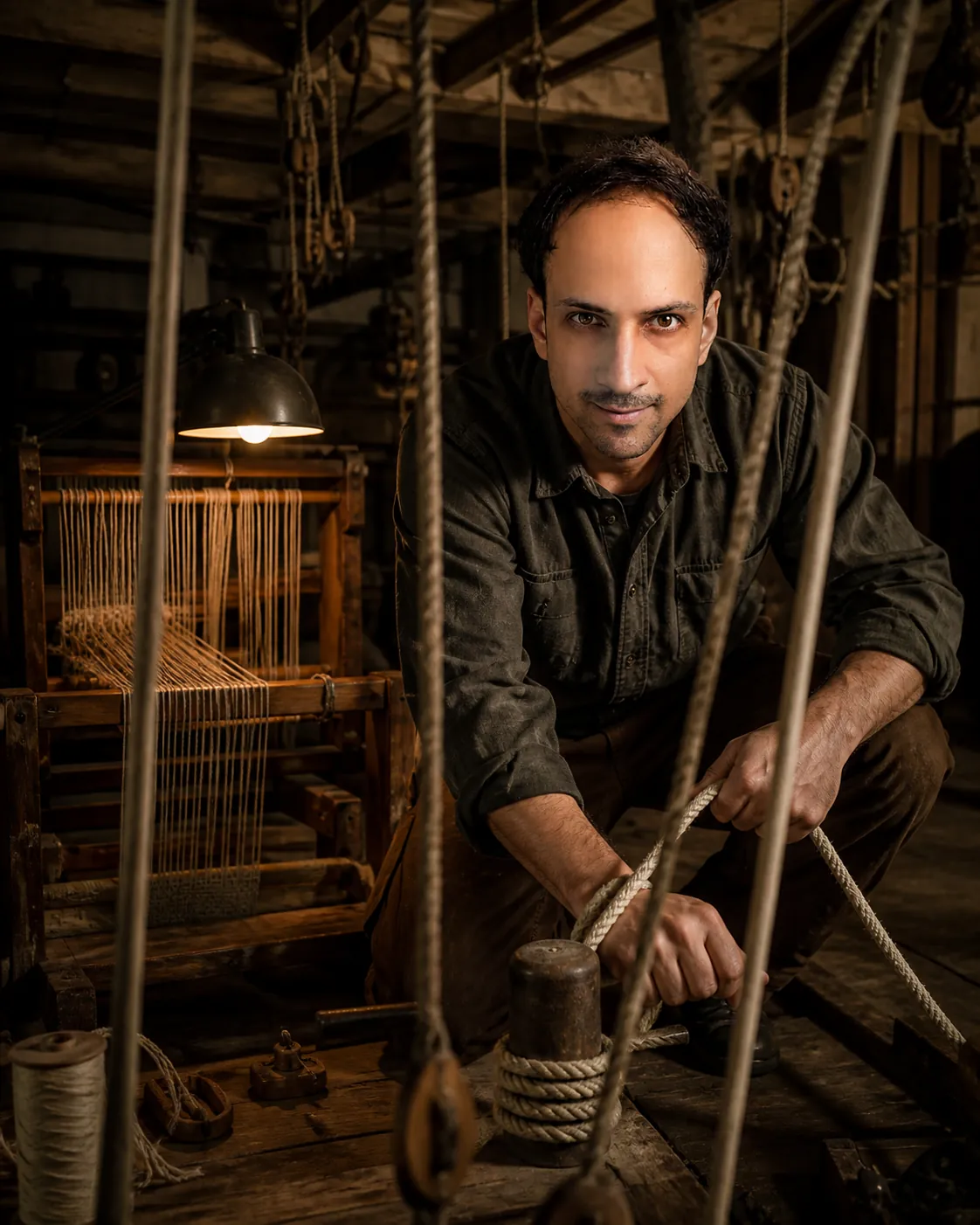
Second Signals: Shaded Arcade — AI Portrait Prompt
صورةAI Portraits

Turn your own photo into a museum-grade signaling-instrument portrait in a shaded arcade of an old Riyadh mud-brick house at midday. Keeps your face unchanged.

من نص البرومبت

Use the attached reference photo as the identity reference: keep the same face, skin tone, hair and features as the person in that photo, without beautifying, aging or altering them. Compose a wide 16:9 narrative image where environment and subject carry equal meaning at exactly 3808x2144 pixels. Location: a shaded arcade of an old Riyadh mud-brick house at midday. Show the subject in a pale olive short-sleeve shirt with unbleached cotton trousers, hooking a coiled cord onto an iron staple. Use this advanced image-making device as the core logic: a slender sealed water column, tall as two floors, that settles wherever the day's air pressure lets it stand announces a change well before anyone in the house could name its cause. Explore why the quietest signal in a house is usually the one worth routing; direct expression and posture toward measured trust, never melodrama or ad-like confidence. Use an 85mm portrait length so one instrument face and their eyes stay equally readable. Make the composition let one connecting line leave the frame without resolving. Render it as museum-grade signaling-instrument portraiture combining genuine pressure and gravity mechanisms, documentary photographic realism, honest machined brass materiality, and unhurried human framing, using a low bench lamp grazing brass while the room behind stays dim and a palette of lead grey, unpolished tin, and one stripe of verdigris. Photorealistic: this must read as a real photograph from a physical camera, never an illustration, painting, or 3D render. Give the space honest scale: real distance between foreground, subject, and far wall. Resolve real surface detail: the difference between a wiped surface and a clean one, faint tide marks on ceramic, and metal dulled unevenly by touch. Keep one identity-locked person, credible hands and fingers, natural fabric, and coherent scale, contact, reflections, shadows, airflow, deformation, and materials. Background people only when essential, always secondary and clearly different. Avoid steampunk goggles, glowing holograms, dripping food props, anatomical organ diagrams, and legible dial lettering anywhere. No text, labels, logos, signatures, watermarks, random symbols, plastic skin, excessive bloom, or glossy AI finish.
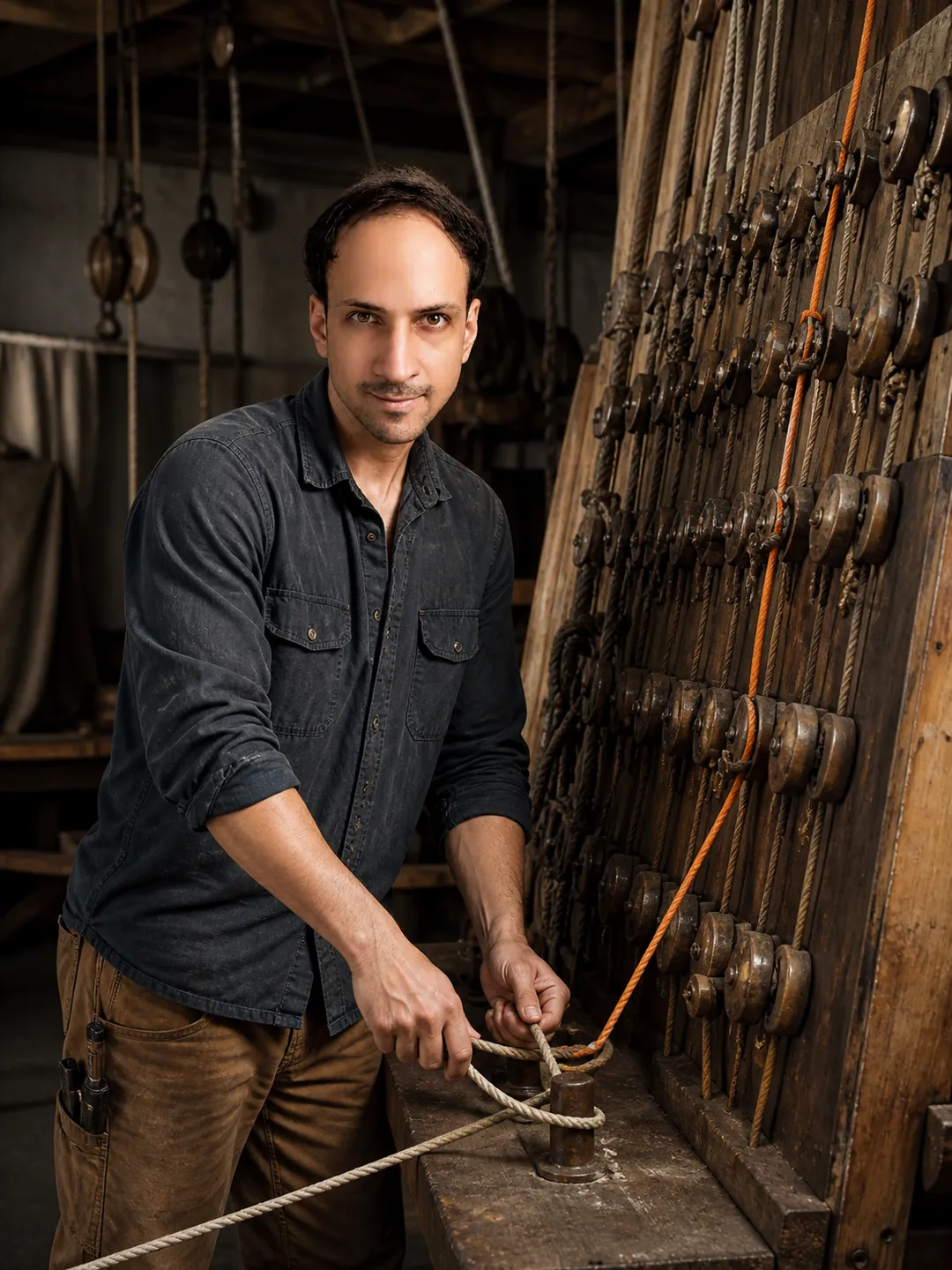
Rewired by Hand: Sail-Rigging Loft Strung — AI Portrait Prompt
صورةAI Portraits

Turn your own photo into a museum-grade process portrait in a sail-rigging loft strung with low beams and hanging tackle. Keeps your face unchanged.

من نص البرومبت

Use the attached reference photo as the identity reference: keep the same face, skin tone, hair and features as the person in that photo, without beautifying, aging or altering them. Build a portrait 4:5 editorial artwork with protected negative space and a fully readable face at exactly 2560x3200 pixels. Location: a sail-rigging loft strung with low beams and hanging tackle. Show the subject in a heavy canvas work shirt over broken-in carpenter trousers, easing a line's tension with one turn around a cleat. The impossible-looking event must obey this clear system: a small floor loom mid-rethread, every new warp thread knotted end-to-end onto the cut stub of the thread it replaces lets what was already learned carry the weight while new learning arrives. Explore why new ability must be physically routed before it can be casually used; direct expression and posture toward steady absorption, never melodrama or ad-like confidence. Frame them slightly off-axis through the standing lines, with every crossing physically accounted for. Make the composition show where the old path ends and the new begins. Render it as museum-grade process photography combining truthful rigging detail, visible thread-level texture, honest hand-work staging, and unhurried, deeply observational framing, using one warm work lamp pooled on the task with soft surrounding dusk and a palette of rope-tar black, pale dust grey, and warm ochre. Photorealistic: this must read as a real photograph from a physical camera, never an illustration, painting, or 3D render. Resolve real surface detail: dust settled where nobody wipes, fingerprint haze on glass, and edges rubbed pale by handling. Keep one identity-locked person, credible hands and fingers, natural fabric, and coherent scale, contact, reflections, shadows, airflow, deformation, and materials. Background people only when essential, always secondary and clearly different. Avoid server racks, blinking LED bundles, impossible floating threads, motivational-poster loom staging, and pristine hands untouched by work. No text, labels, logos, signatures, watermarks, random symbols, plastic skin, excessive bloom, or glossy AI finish.
Practice Laid Down: Sail-Rigging Loft Strung — AI Portrait Prompt
صورةAI Portraits

Turn your own photo into a conceptual craft portrait in a sail-rigging loft strung with low beams and hanging tackle. Keeps your face unchanged.

من نص البرومبت

Use the attached reference photo as the identity reference: keep the same face, skin tone, hair and features as the person in that photo, without beautifying, aging or altering them. Use a formal 3:4 environmental portrait with complete hands and meaningful objects inside frame at exactly 2480x3312 pixels. Location: a sail-rigging loft strung with low beams and hanging tackle. Show the subject in a heavy canvas work shirt over broken-in carpenter trousers, easing a line's tension with one turn around a cleat. Use this advanced image-making device as the core logic: a salvaged manual switchboard on which one bright cloth-covered cord runs a fresh route across rows of age-dulled pairs keeps the history of effort visible inside the working result. Explore how a person keeps functioning while the way they function is rebuilt; direct expression and posture toward attentive humility, never melodrama or ad-like confidence. Use an eye-level 55mm perspective that keeps their hands and the work equally credible. Make the composition let one bright new line cross a field of dulled ones. Render it as conceptual craft portraiture uniting working textile apparatus, believable tension physics, quiet contemporary art direction, and human-centered documentary realism, using two bounced practicals giving gentle modeling without a single hard specular and a palette of bleached cotton, iron shadow, and a restrained saffron accent. Photorealistic: this must read as a real photograph from a physical camera, never an illustration, painting, or 3D render. Resolve real surface detail: brass darkened in the recesses and bright where thumbs land, and lacquer crazed rather than perfect. Keep one identity-locked person, credible hands and fingers, natural fabric, and coherent scale, contact, reflections, shadows, airflow, deformation, and materials. Background people only when essential, always secondary and clearly different. Avoid glowing neural filaments, brain-shaped tangles, circuit-board overlays, holographic wiring diagrams, and sparks jumping between cables. No text, labels, logos, signatures, watermarks, random symbols, plastic skin, excessive bloom, or glossy AI finish.

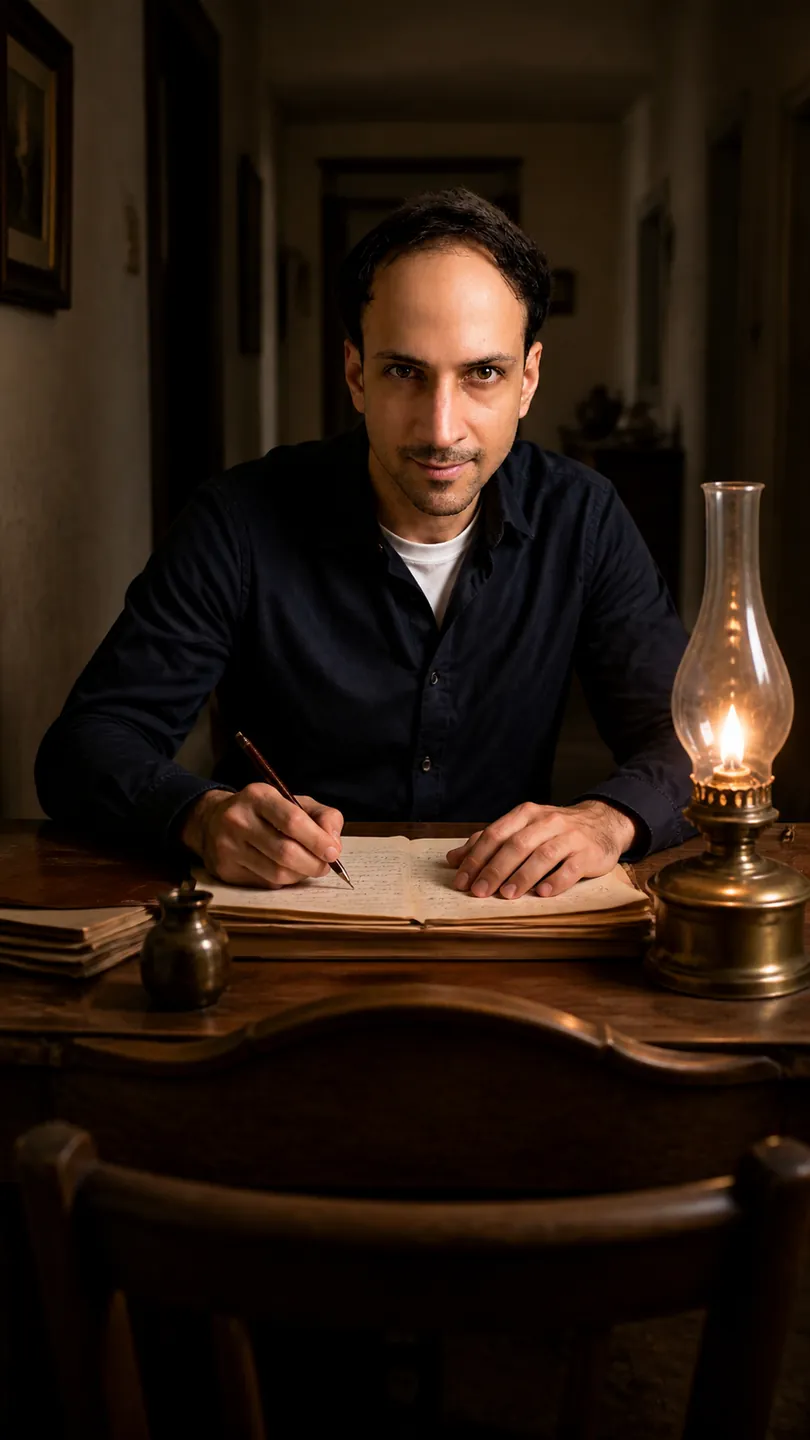
Furnished Presence: Walnut Writing Desk — AI Portrait Prompt
صورةAI Portraits

Turn your own photo into a gallery-grade domestic still portrait in a walnut writing desk in a widened hallway, lit by one lamp. Keeps your face unchanged.

من نص البرومبت

Use the attached reference photo as the identity reference: keep the same face, skin tone, hair and features as the person in that photo, without beautifying, aging or altering them. Treat that reference as the character anchor: change only the scene. Design a full-height 9:16 cinematic artwork that reads on a phone and rewards gallery-scale inspection at exactly 2144x3808 pixels. Location: a walnut writing desk in a widened hallway, lit by one lamp. Show the subject in a midnight-blue overshirt buttoned over a plain white tee, rocking a curved blotter once across the drying line. Build the artwork around this material rule: a brass oil lamp whose flat cotton wick lifts fuel silently against gravity into a flame that never consumes the wick itself gives the room one calm center that every seat quietly faces. Explore how a room becomes louder in attention by holding fewer claims on it; direct expression and posture toward warm concentration, never melodrama or ad-like confidence. Frame from the empty chair opposite them, the lens at a seated guest's eye height. Make the composition keep every working surface honest, worn, and unstyled. Render it as gallery-grade domestic still photography built from truthful household physics, restrained art direction, deep readable shadow, and companionable observational framing, using a single lantern's white core softened by distance into readable half-tones and a palette of dusk blue, sand plaster, and a single brass gleam. Photorealistic: this must read as a real photograph from a physical camera, never an illustration, painting, or 3D render. Give the air depth: falloff with distance and no artificial clarity far back. Resolve real surface detail: thread ends and slight pilling on worn cloth, hairline chips at every hard corner, and stone that is porous rather than smooth. Keep one identity-locked person, credible hands and fingers, natural fabric, and coherent scale, contact, reflections, shadows, airflow, deformation, and materials. Background people only when essential, always secondary and clearly different. Avoid orientalist lantern fantasies, floating dust-mote sunbeam overload, plastic-perfect wax flames, museum-diorama stiffness, and greeting-card coziness. No text, labels, logos, signatures, watermarks, random symbols, plastic skin, excessive bloom, or glossy AI finish.

Scheduled Plenty: Traditional Tea House an Hour — AI Portrait Prompt
صورةAI Portraits

Turn your own photo into a calm still-life portrait in a traditional tea house an hour before opening, chairs down. Keeps your face unchanged.

من نص البرومبت

Use the attached reference photo as the identity reference: keep the same face, skin tone, hair and features as the person in that photo, without beautifying, aging or altering them. Compose a wide 16:9 narrative image where environment and subject carry equal meaning at exactly 3808x2144 pixels. Location: a traditional tea house an hour before opening, chairs down. Show the subject in a collarless off-white shirt under a dark waistcoat, sleeves neat, turning two cups mouth-down on their saucers. Build the artwork around this material rule: a provisions shelf tied shut under a woven cover until a gnomon's shadow reaches the brass mark scribed beside it shows restraint as an engineered state rather than a private struggle. Explore whether waiting measured by instruments feels different from waiting endured alone; direct expression and posture toward earned ease, never melodrama or ad-like confidence. Use an eye-level 50mm viewpoint with the waiting object placed between the lens and their steady gaze. Make the composition give the untouched object the strongest seat in frame. Render it as calm still-life portraiture built from genuinely working timekeeping mechanisms, quiet domestic realism, museum-grade material fidelity, and unhurried human-centered editorial composition, using a single candle flame supported by dim, honest ambient fill and a palette of pewter, dry clay, and one band of late sun. Photorealistic: this must read as a real photograph from a physical camera, never an illustration, painting, or 3D render. Give truthful depth cues: overlapping planes and shadows softening as they travel. Resolve real surface detail: wood grain read at honest scale, matte and gloss clearly separated, and no surface uniformly clean. Keep one identity-locked person, credible hands and fingers, natural fabric, and coherent scale, contact, reflections, shadows, airflow, deformation, and materials. Background people only when essential, always secondary and clearly different. Avoid melting surrealist clocks, glowing countdown numerals, lavish feast spreads, anguished hungry expressions, and levitating food. No text, labels, logos, signatures, watermarks, random symbols, plastic skin, excessive bloom, or glossy AI finish.
