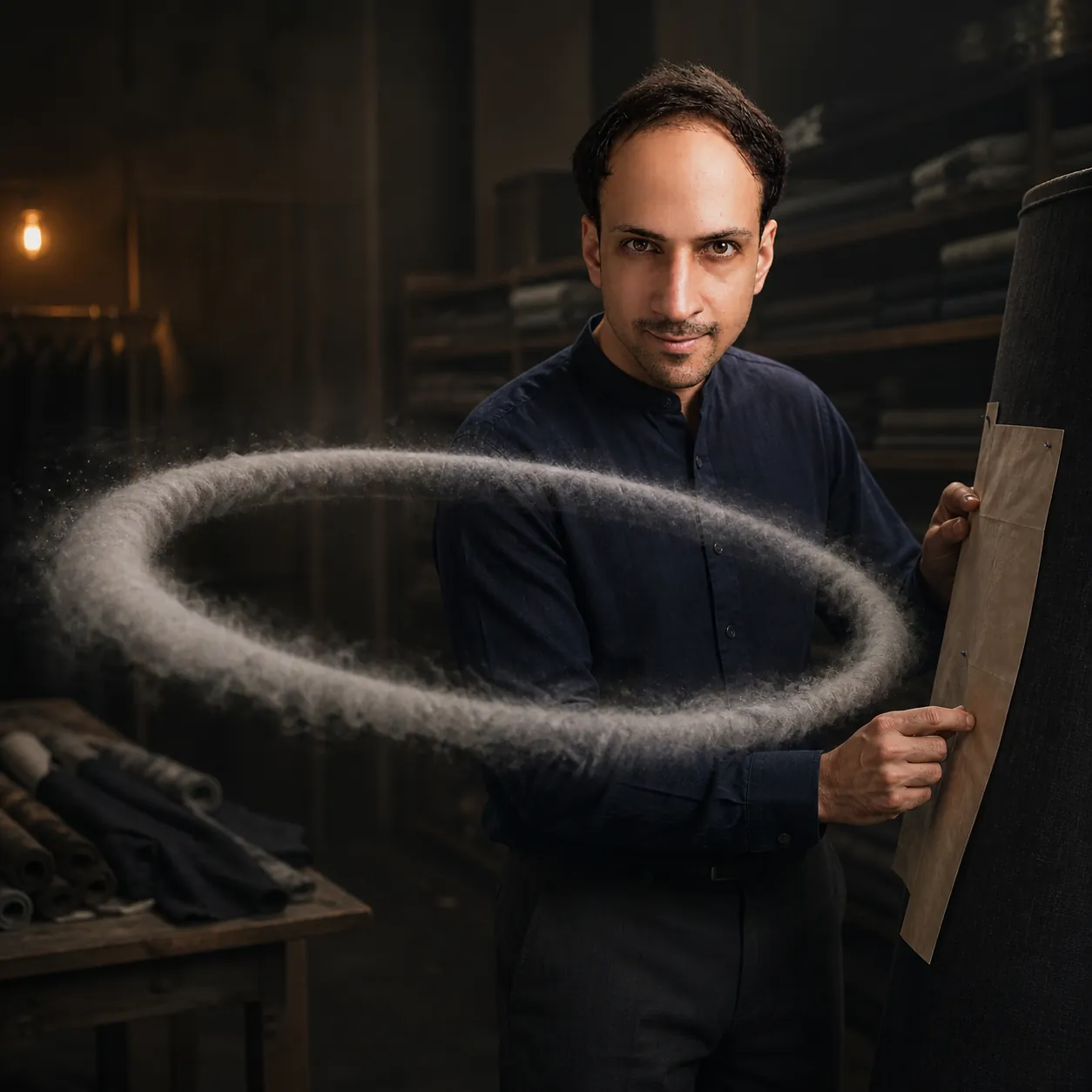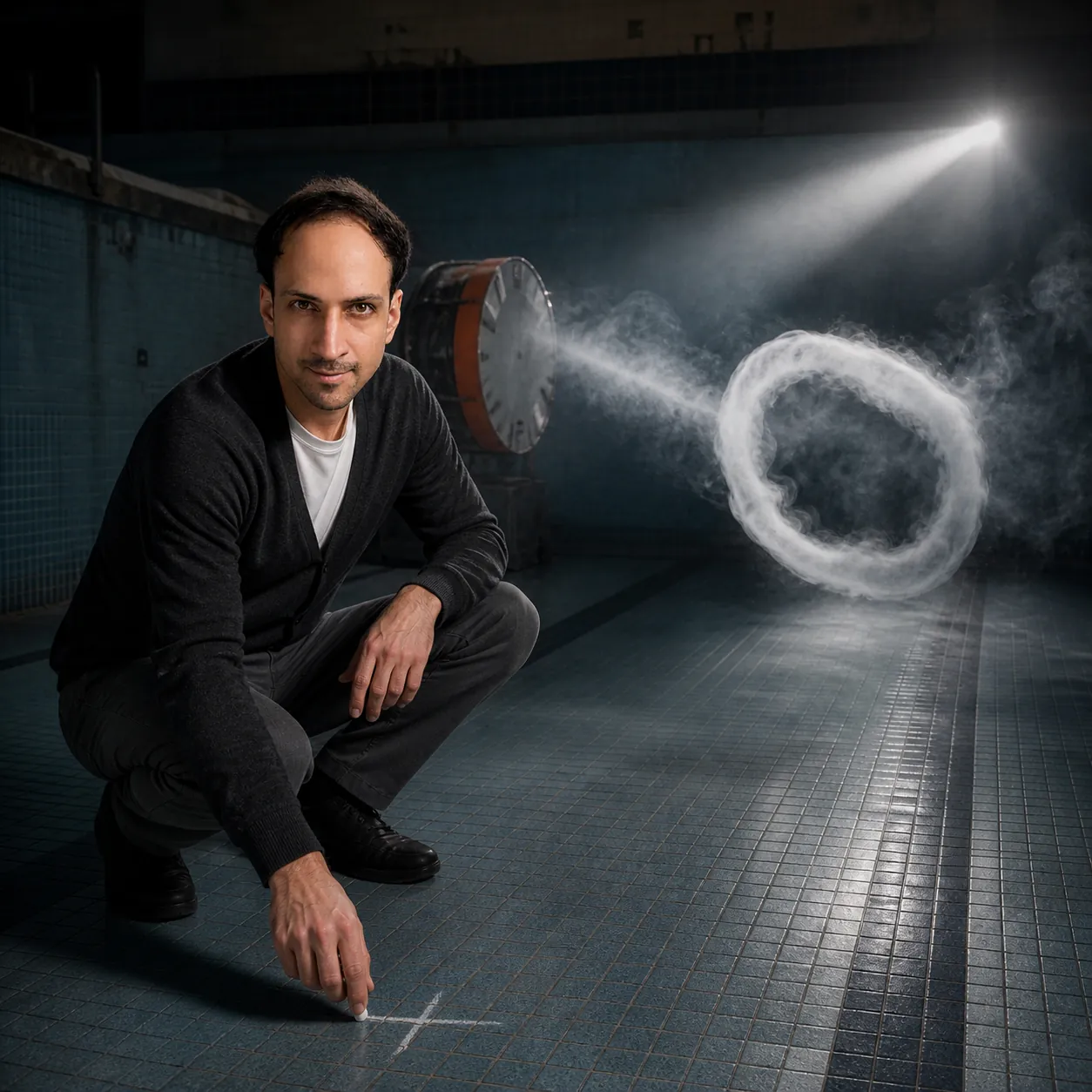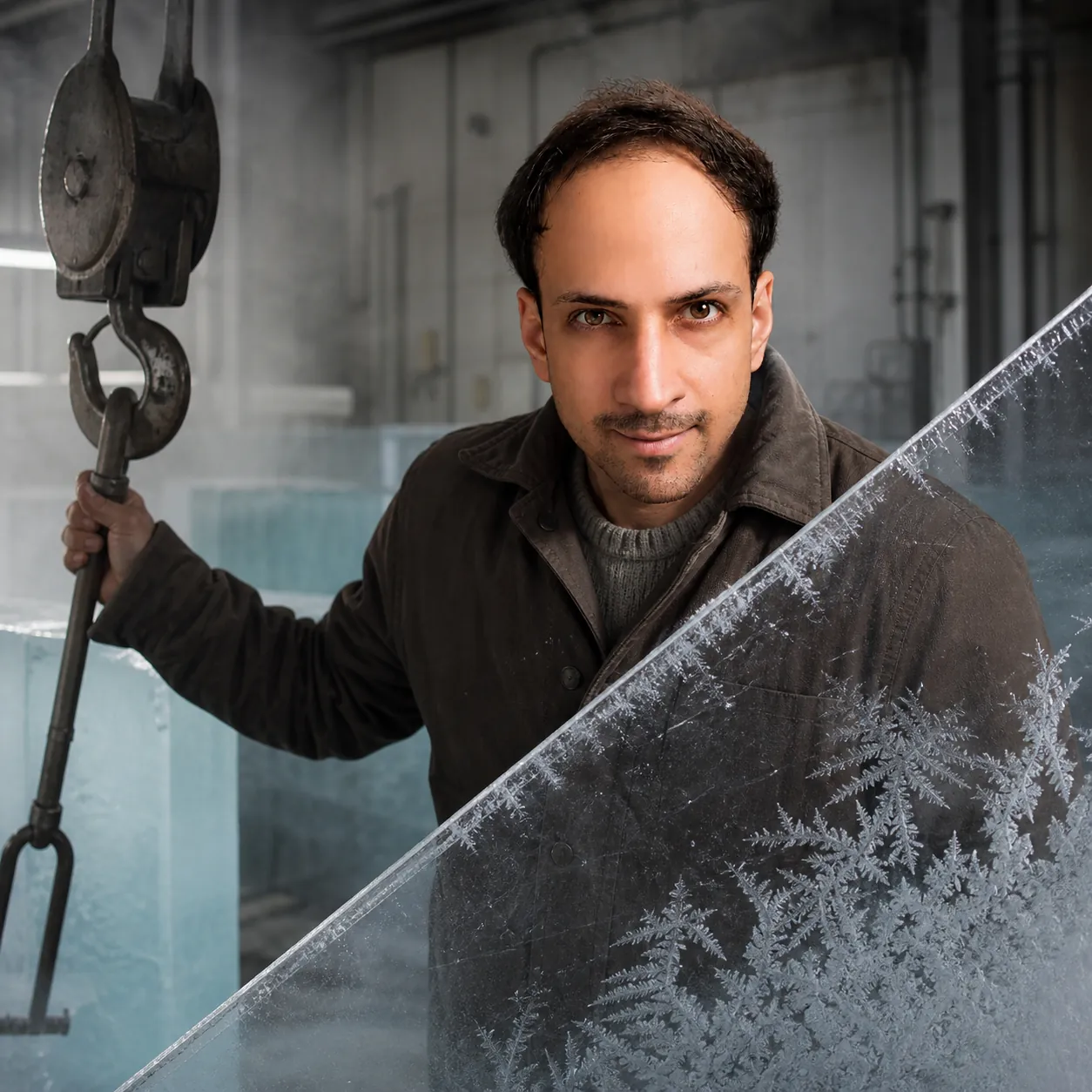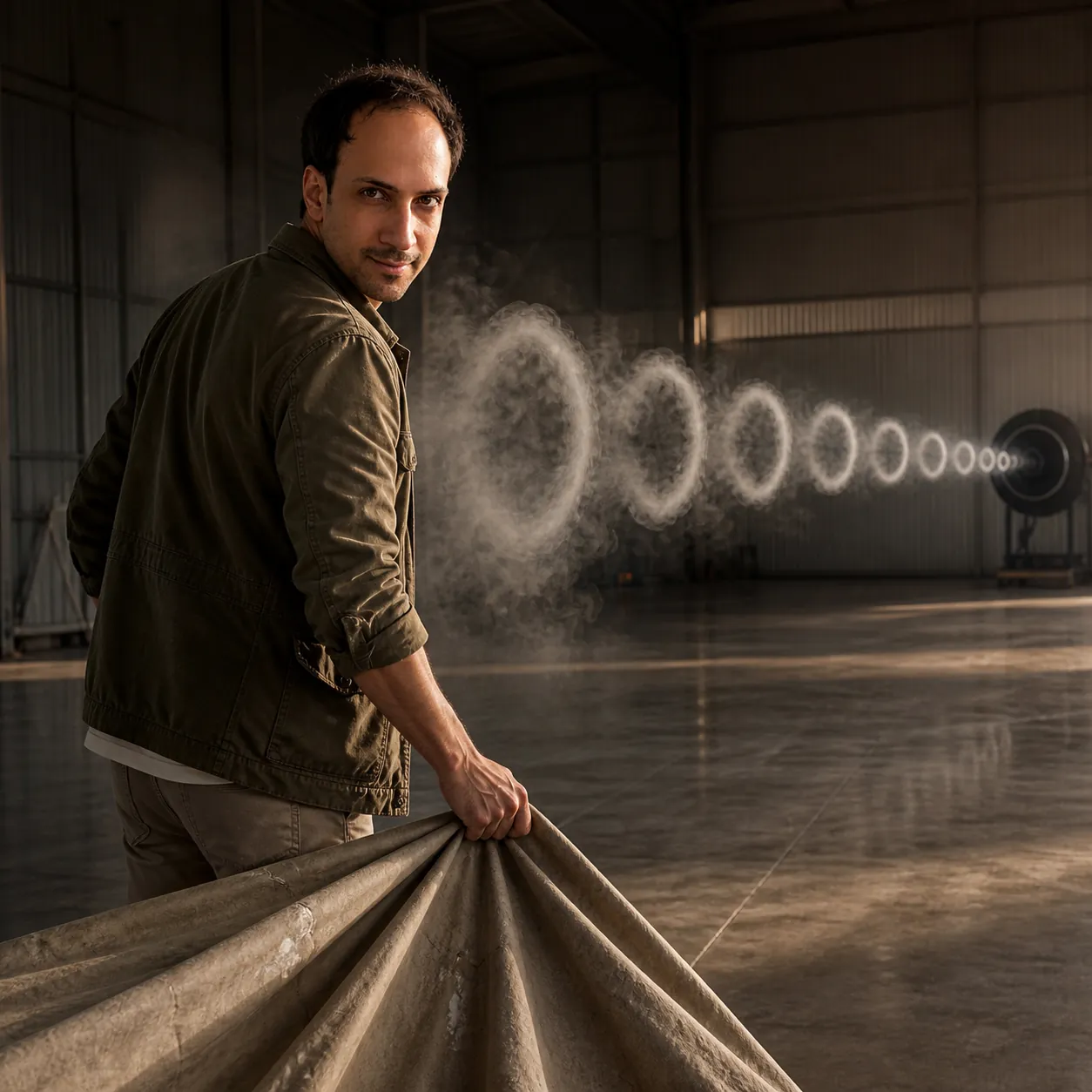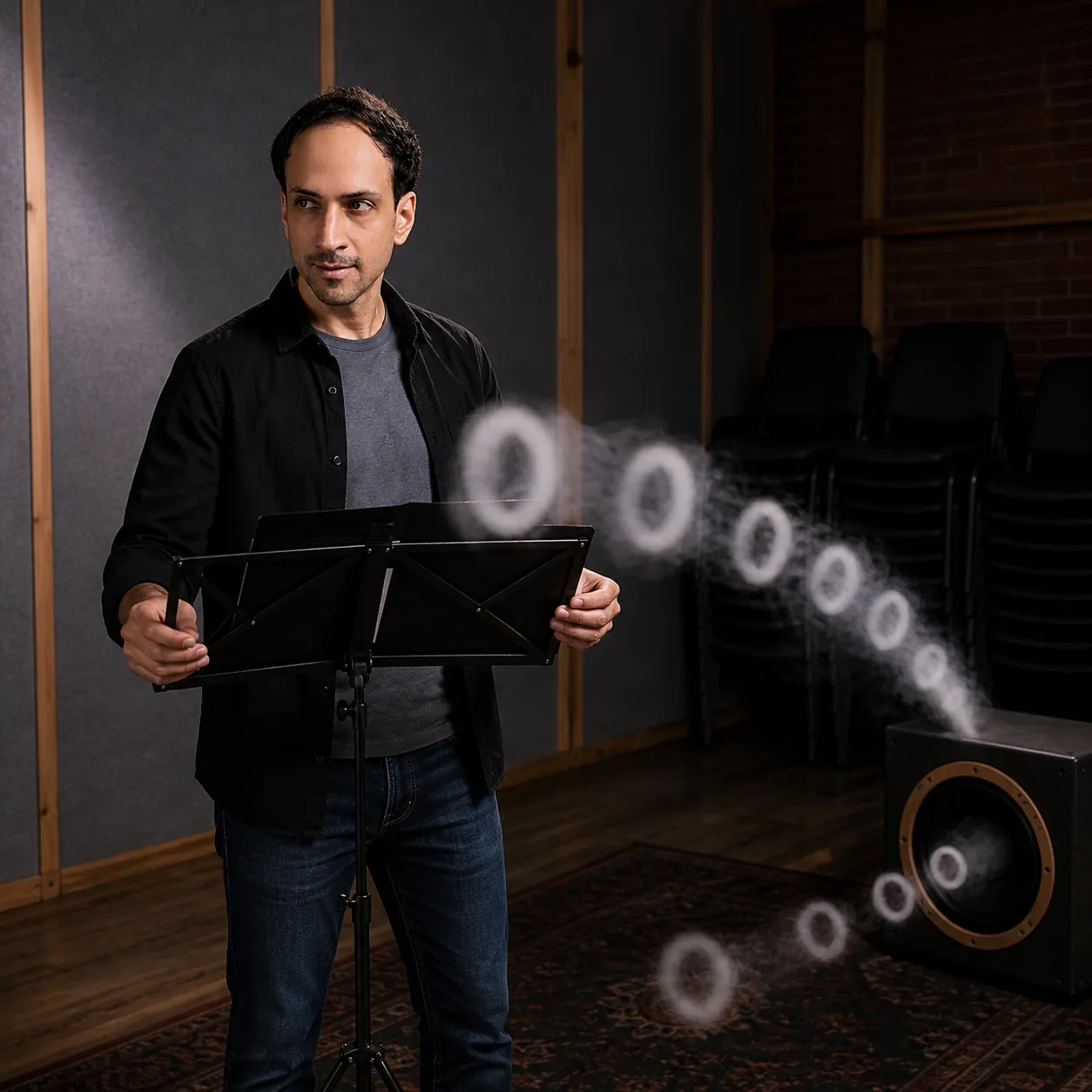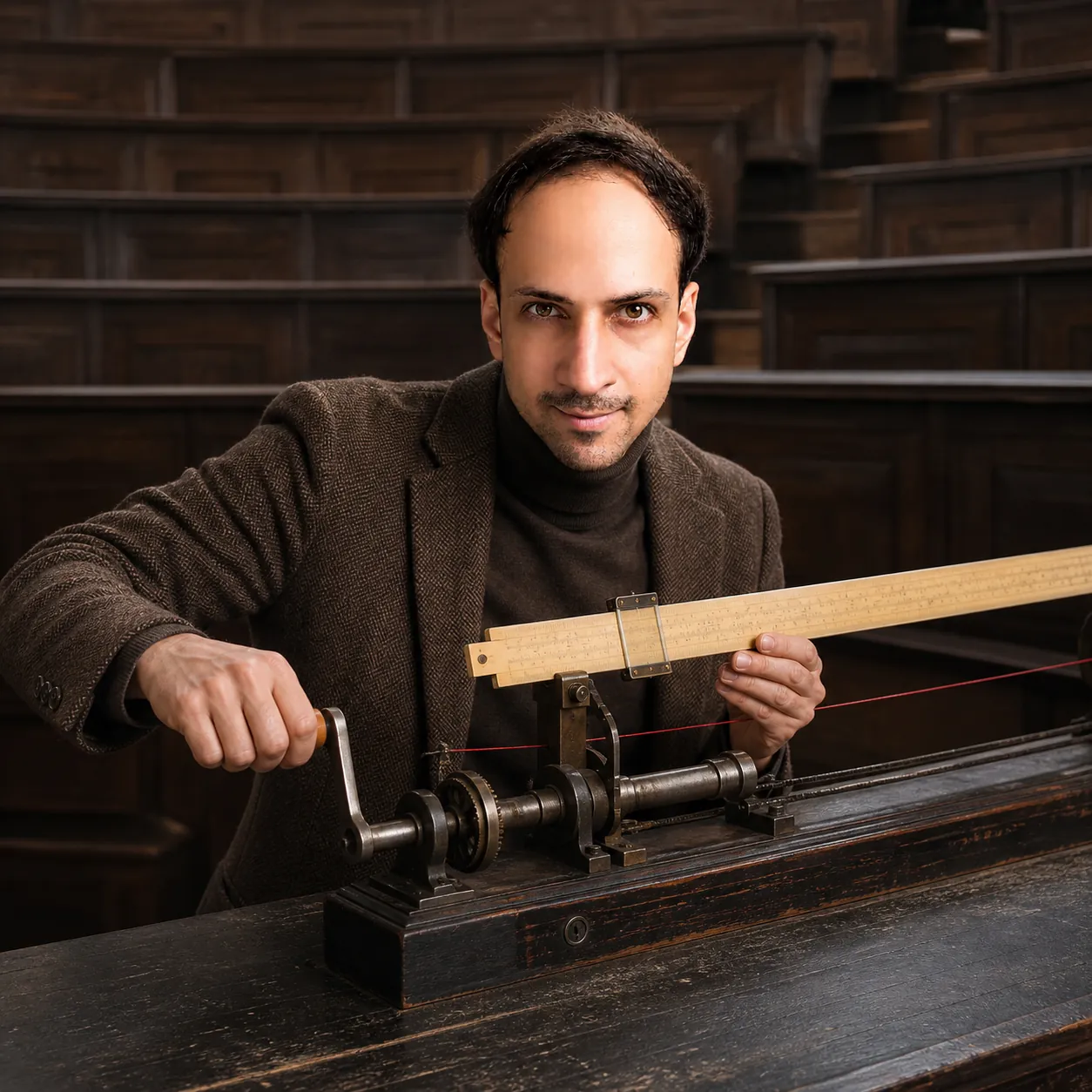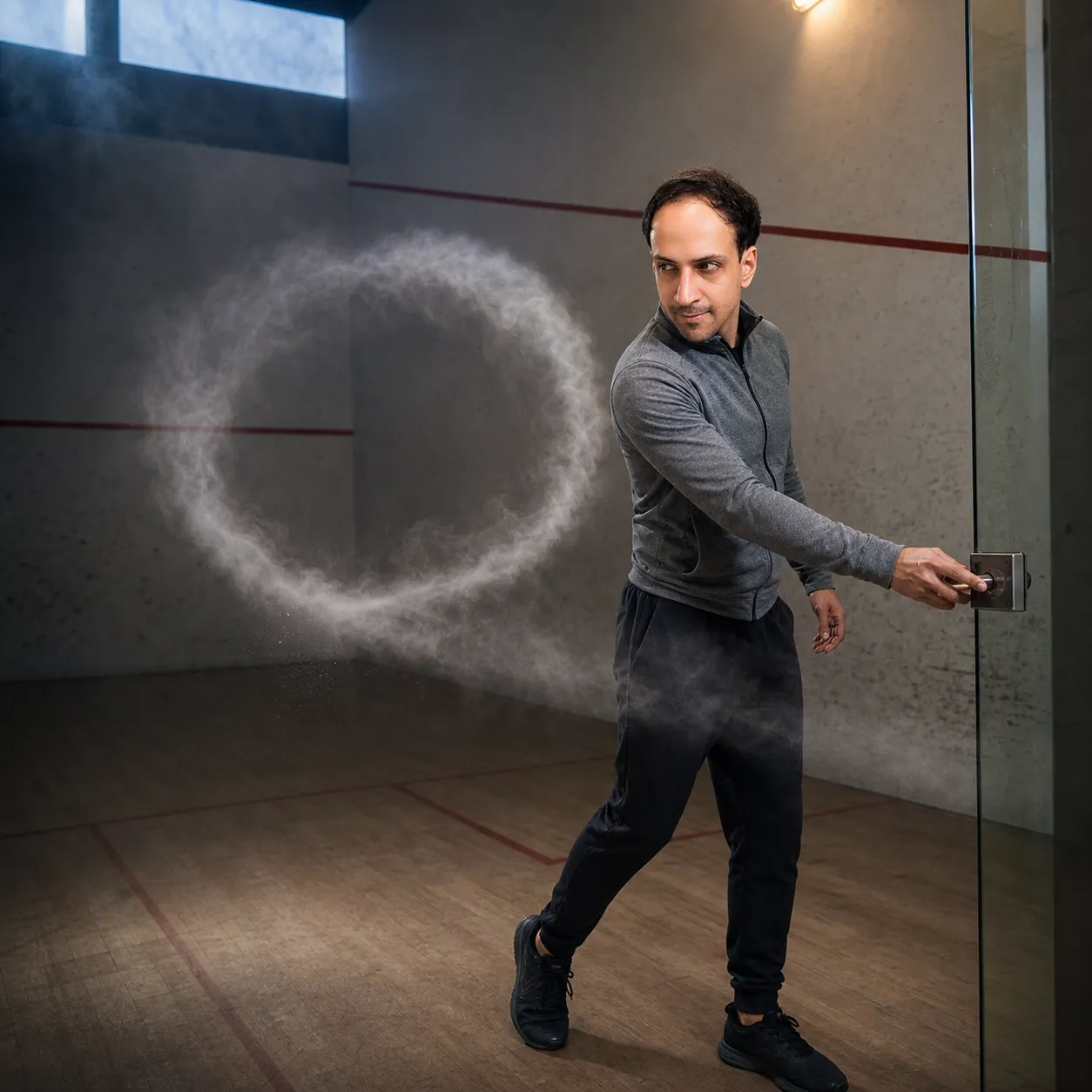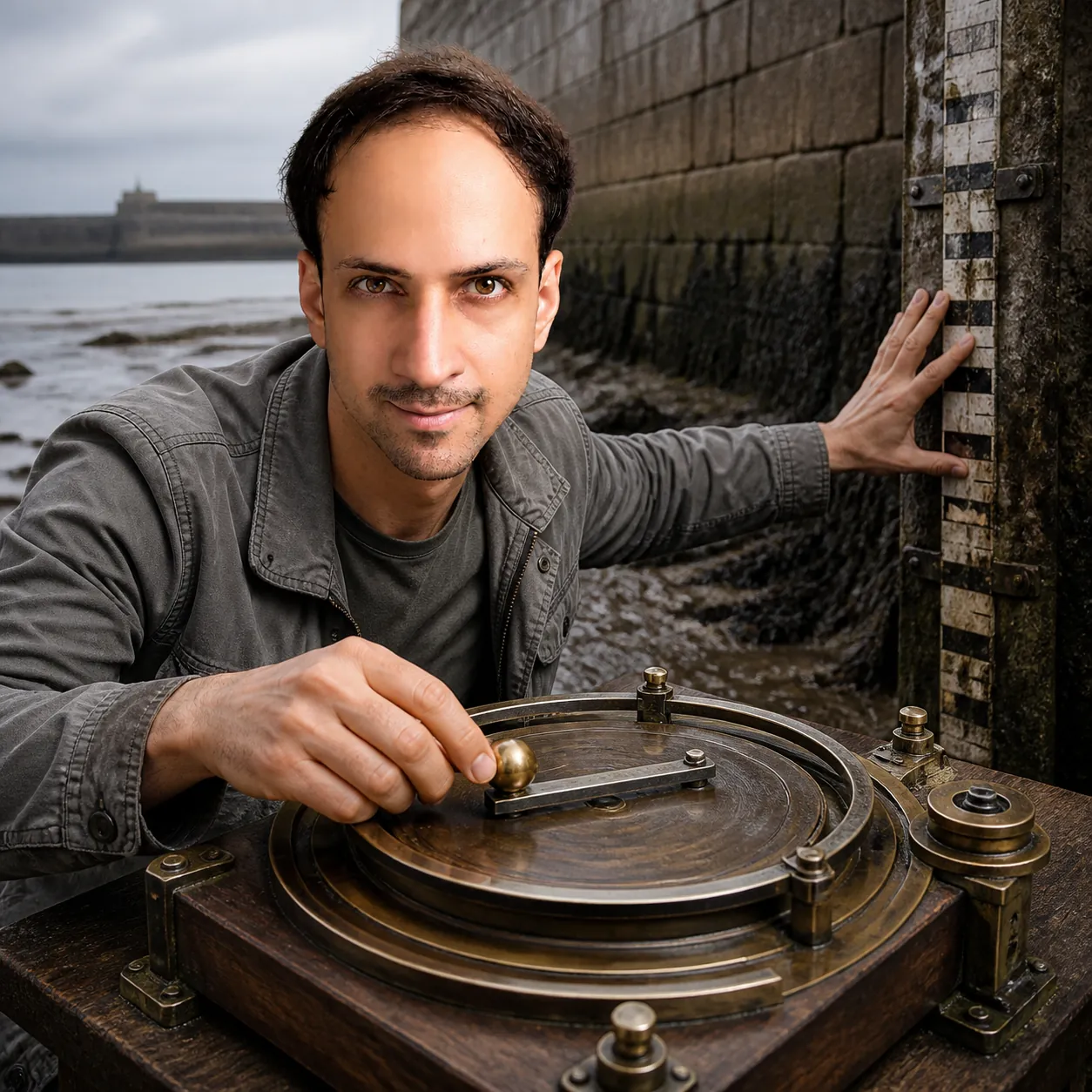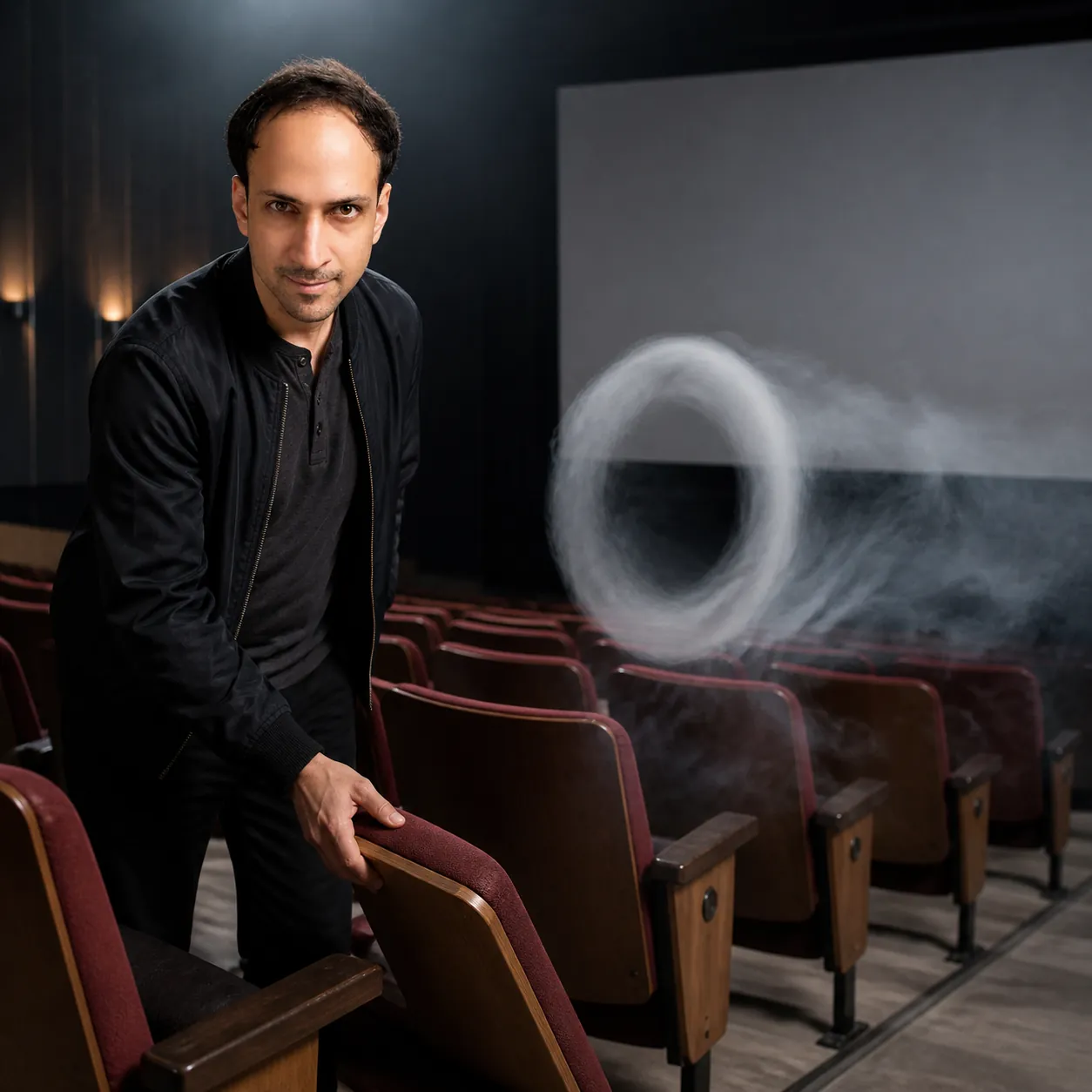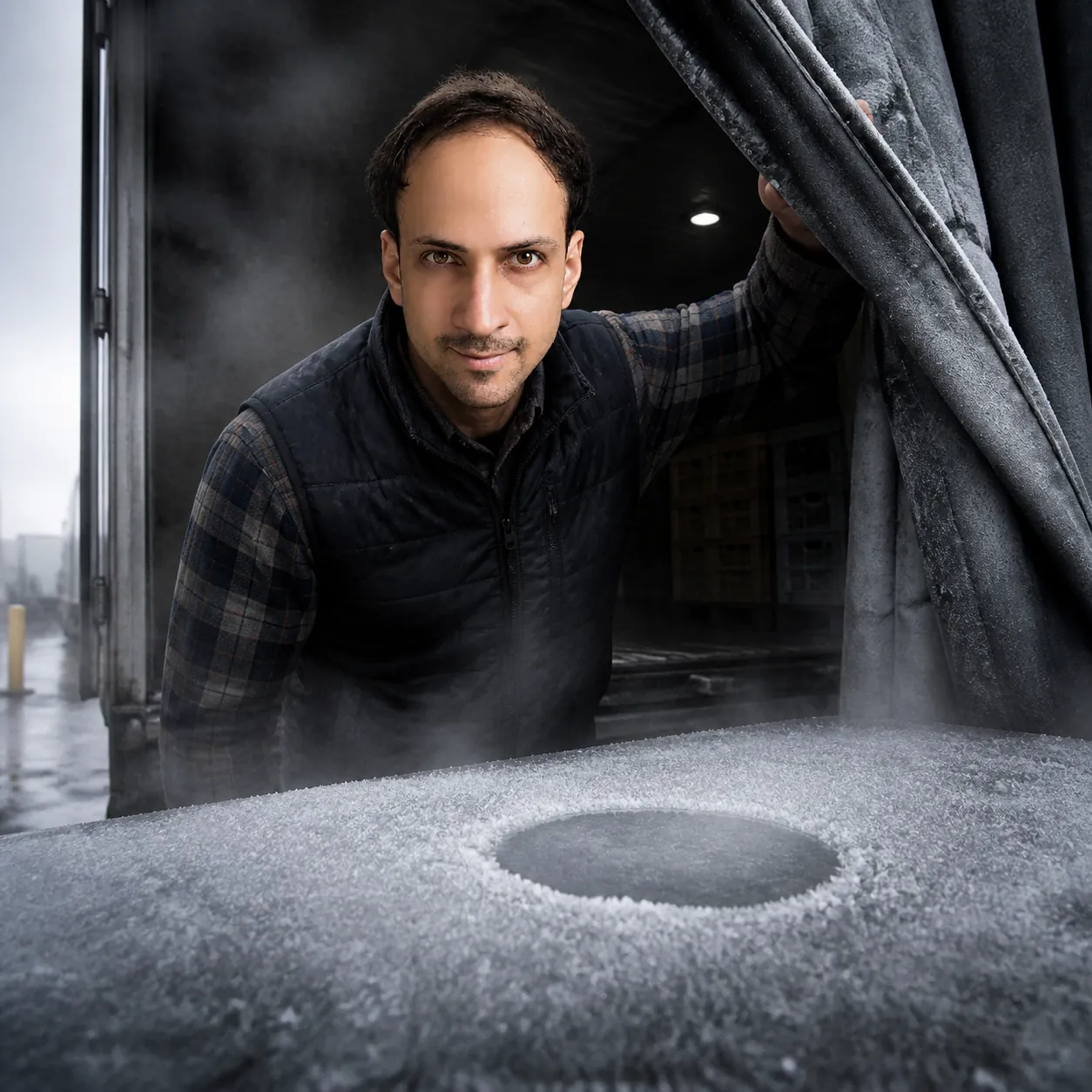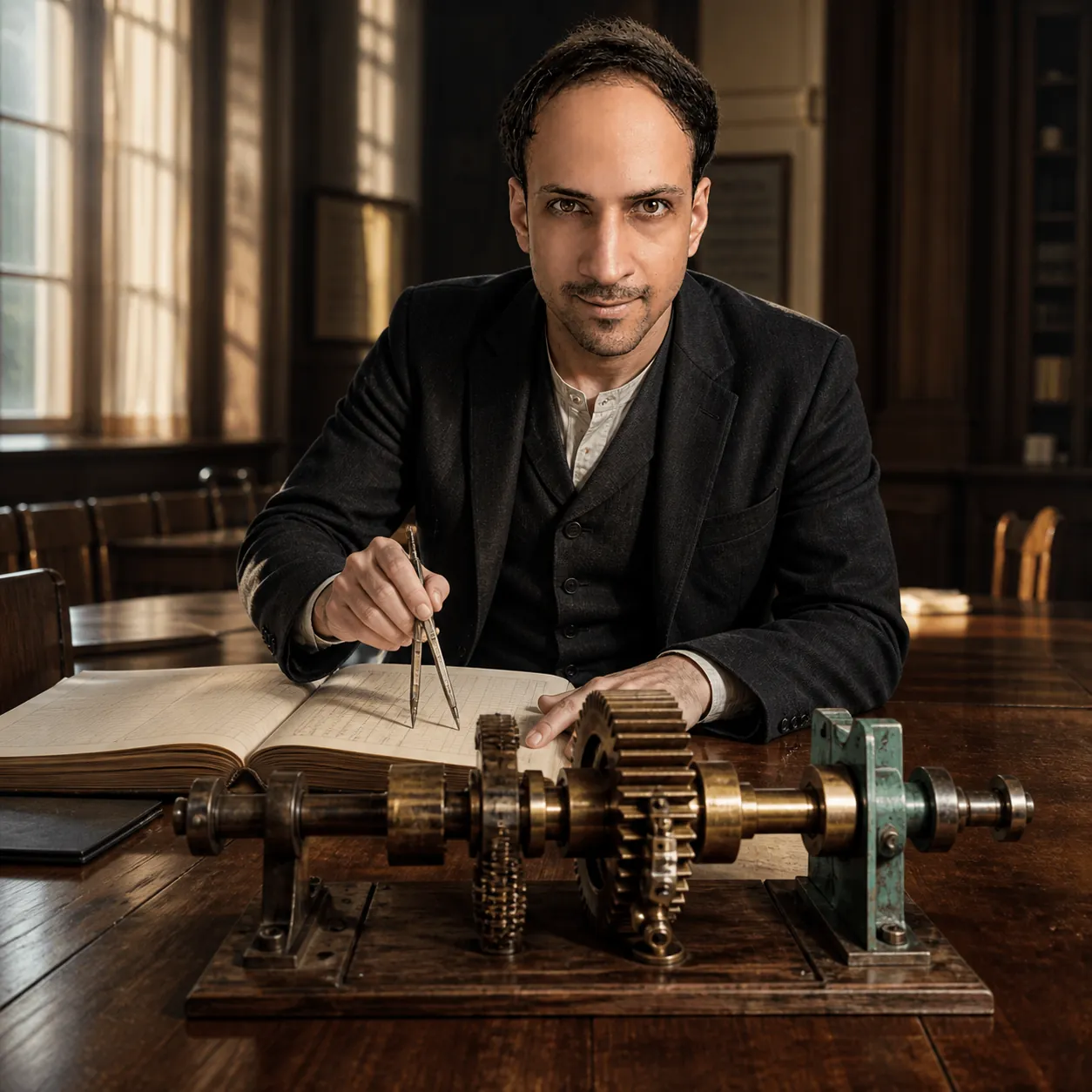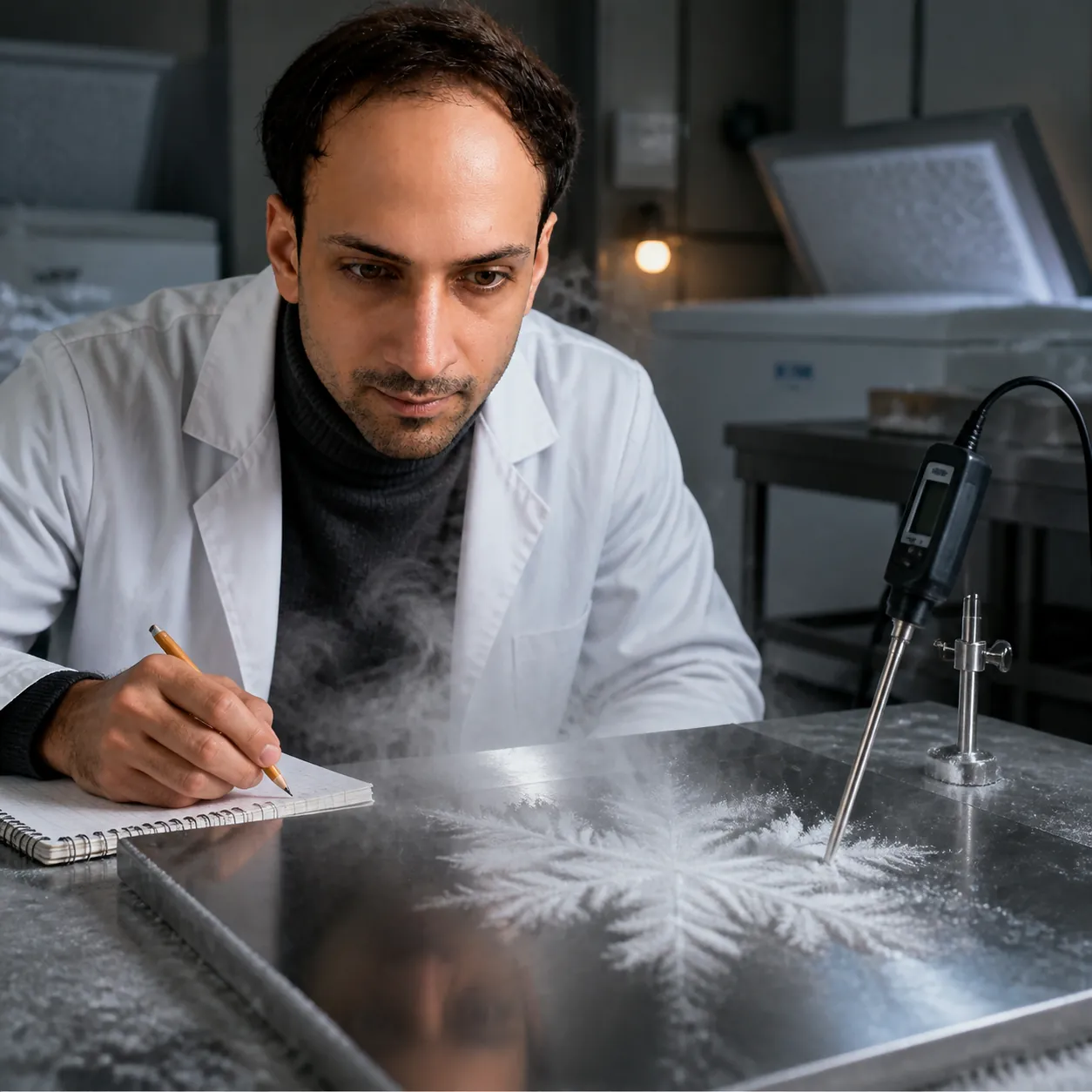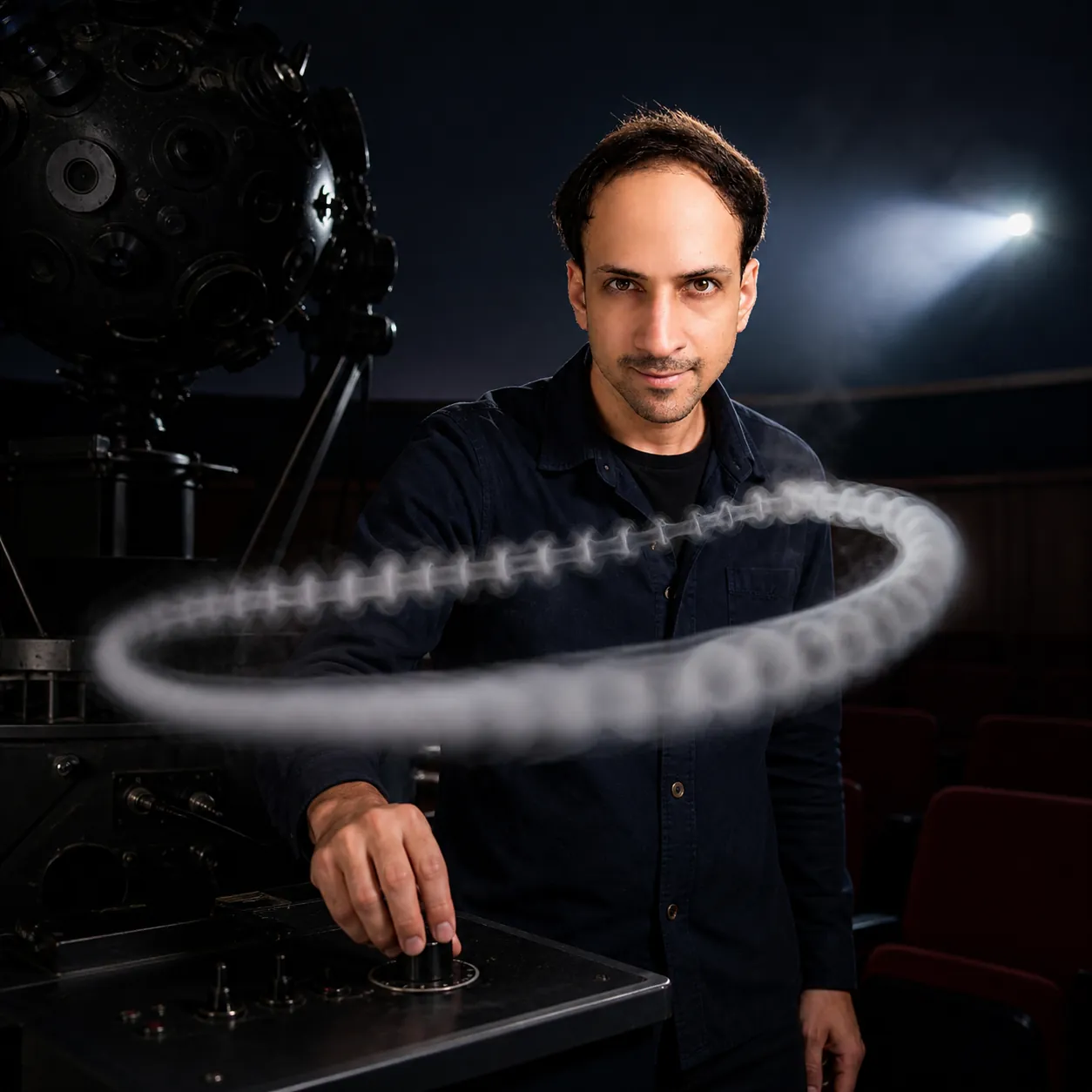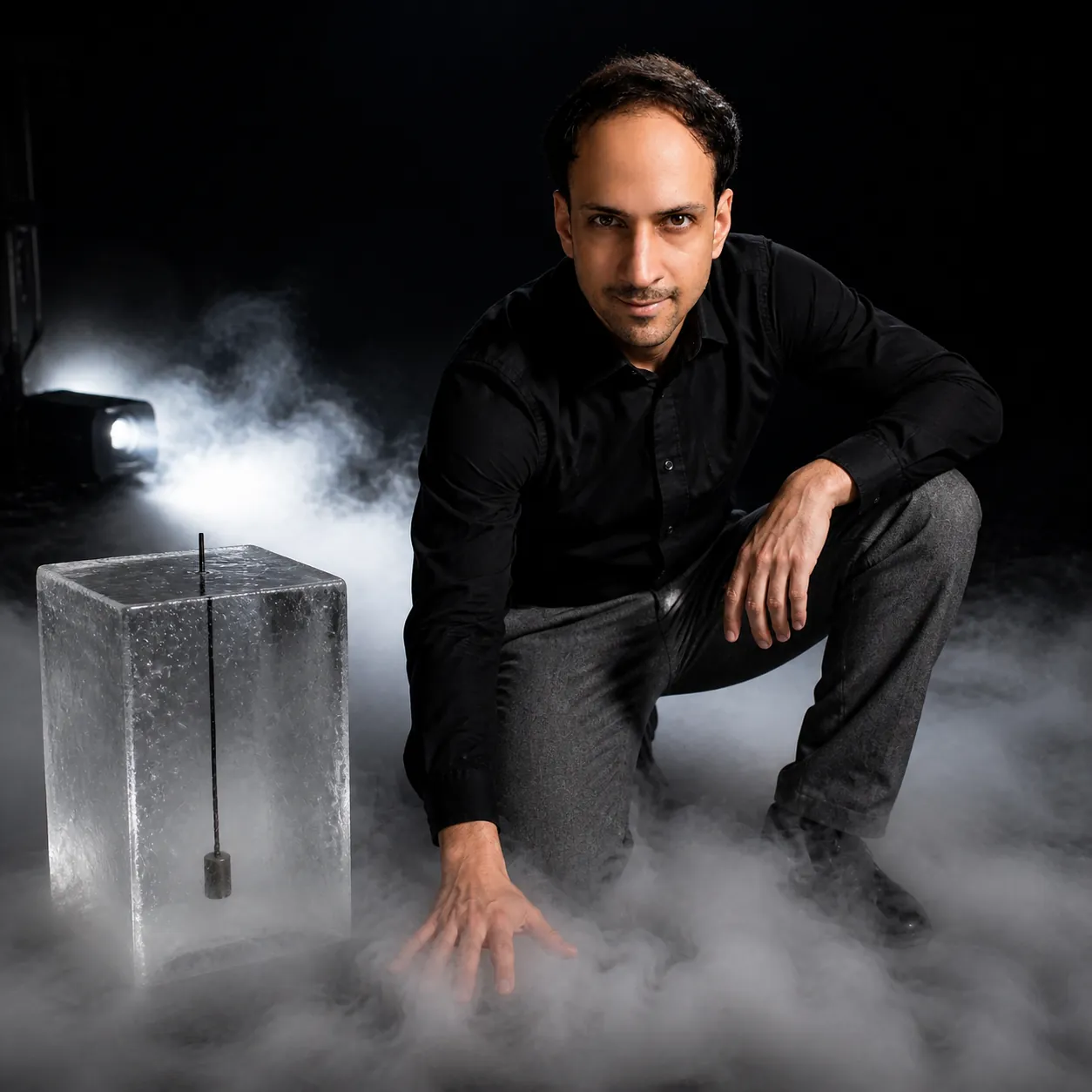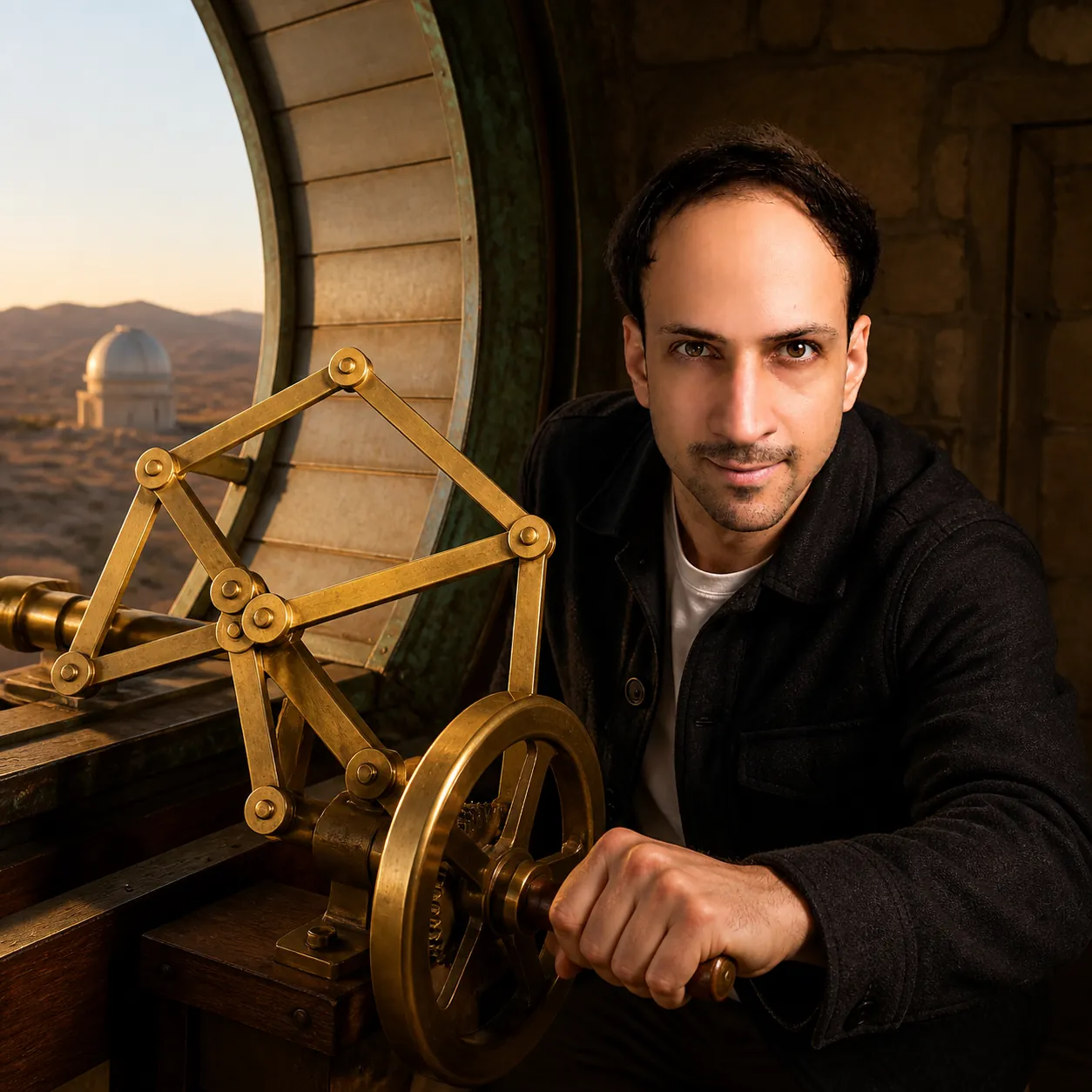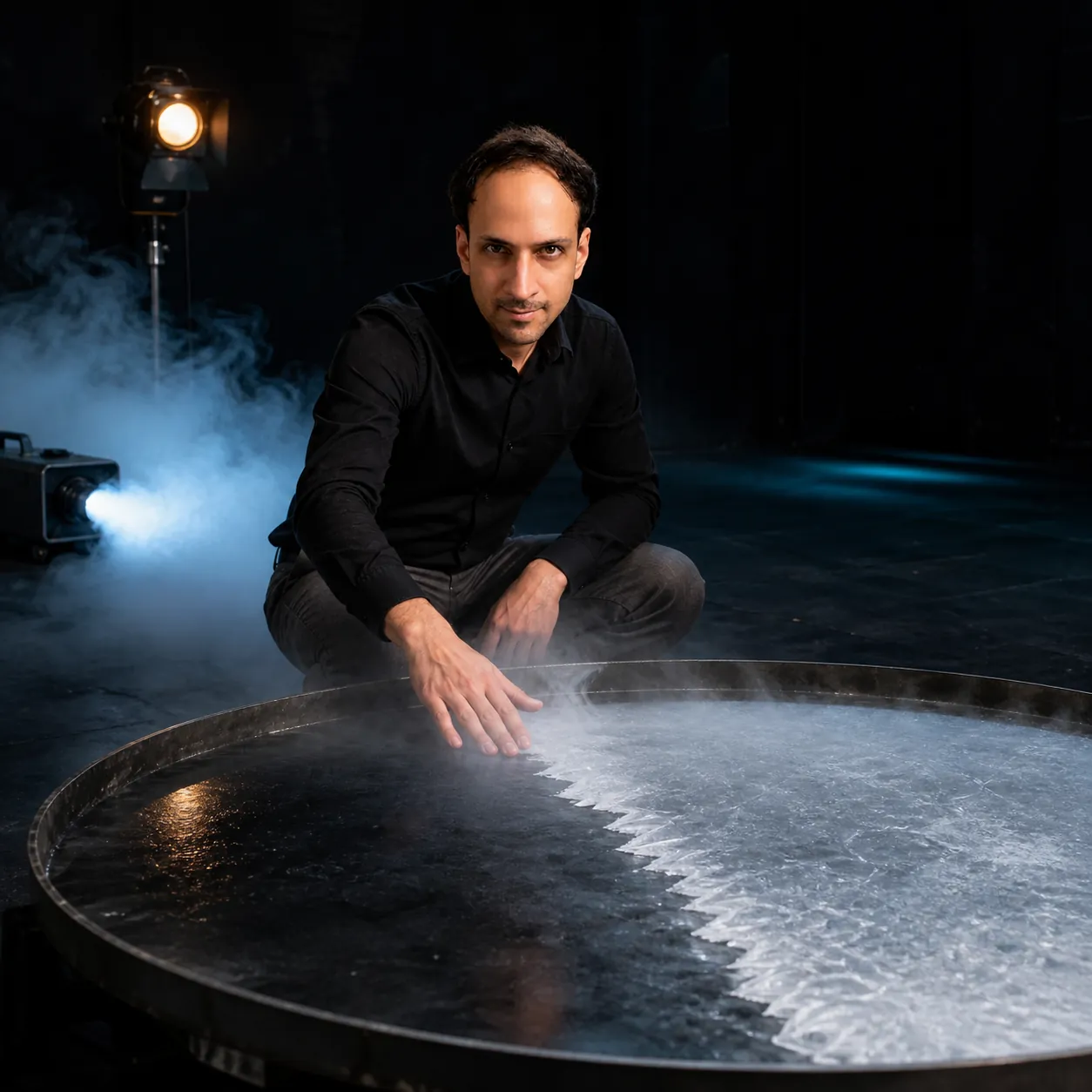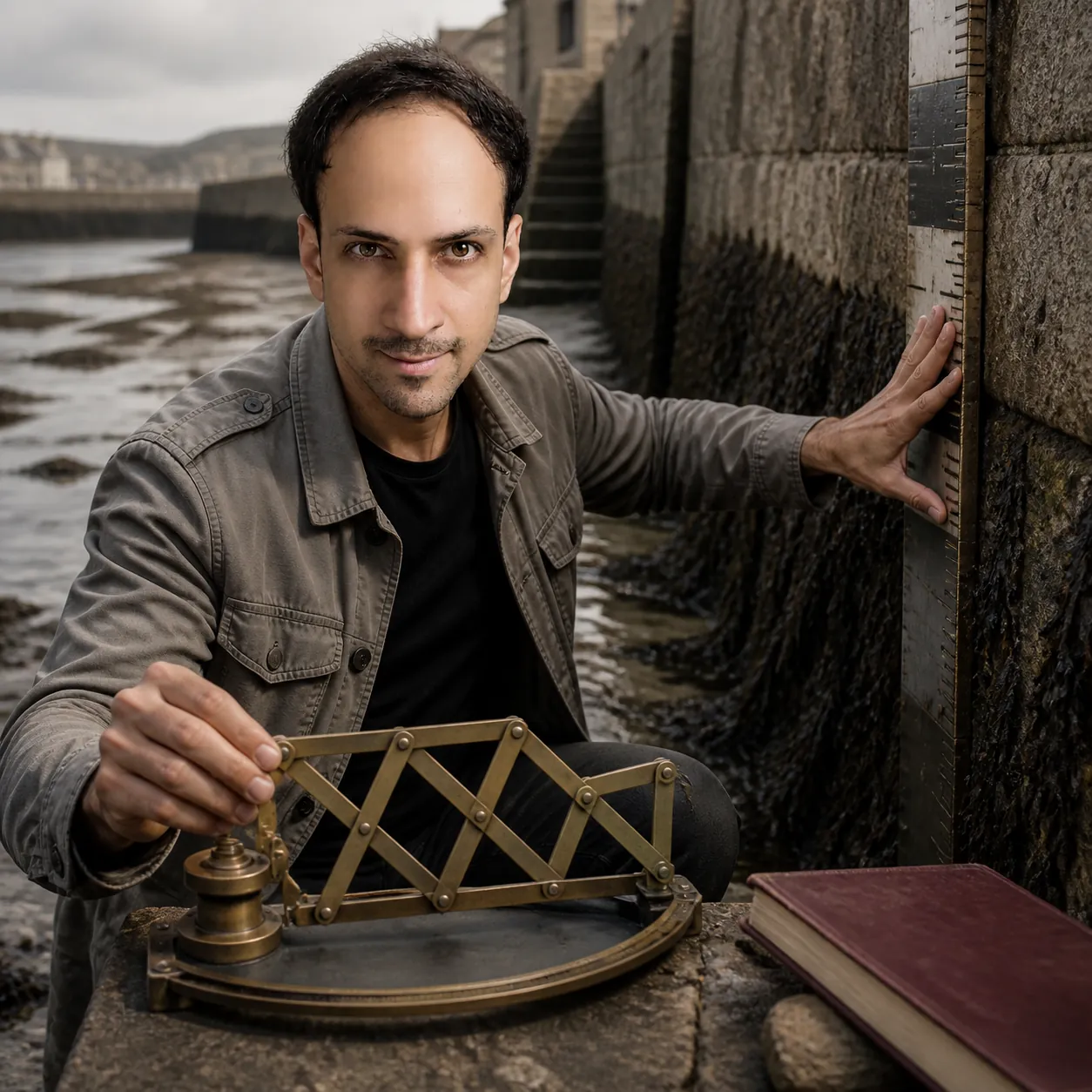
Create a square 1:1 museum-catalog frame with a strong first read and a slower second read at exactly 2880x2880 pixels. Location: a stone quay at low tide...
من نص البرومبت
Use the attached reference photo as the identity reference: keep the same face, skin tone, hair and features as the person in that photo, without beautifying, aging or altering them. Create a square 1:1 museum-catalog frame with a strong first read and a slower second read at exactly 2880x2880 pixels. Location: a stone quay at low tide with a graduated tide pole nearby. Show them in a lightweight stone-grey field jacket over a plain shirt, measuring the wet tide line with a spread hand. The impossible-looking event must obey this clear system: a Peaucellier linkage of seven hinged brass bars that converts a pure circular swing into a mathematically perfect straight line stores its knowledge as shape that cannot crash, fade, or lie. Explore whether geometry is discovered or built when brass starts giving correct answers; direct expression and posture toward patient mastery, never melodrama or ad-like confidence. Use a 90mm hybrid view: one machined detail near the lens, their readable face beyond. Make the composition keep the answer's dial or mark small, sharp, and off-center. Render it as conceptual instrument portraiture uniting believable mechanical computation, machinist-level surface accuracy, warm archival print tonality, and quietly unhurried observational storytelling, using diffuse overcast daylight held to gentle contrast so engravings stay legible and a palette of gunmetal grey, ivory paper, and one burgundy bookcloth accent. Photorealistic: this must read as a real photograph from a physical camera, never an illustration, painting, or 3D render. Resolve real surface detail: skin that reddens slightly under pressure, nail beds with honest colour, and knuckle creases that fold rather than blur. Keep one identity-locked person, credible hands and fingers, natural fabric, and coherent scale, contact, reflections, shadows, airflow, deformation, and materials. Background people only when essential, always secondary and clearly different. Avoid floating weightless gears, sepia steampunk grading, cog-filled head silhouettes, Roman-numeral dials, and oversized watch-movement props. No text, labels, logos, signatures, watermarks, random symbols, plastic skin, excessive bloom, or glossy AI finish.