تخطَّ إلى المحتوى
جميع التصنيفات

AI Portraits

Portrait prompts you can use with your own photo.

300 برومبتات•0 مشتركين
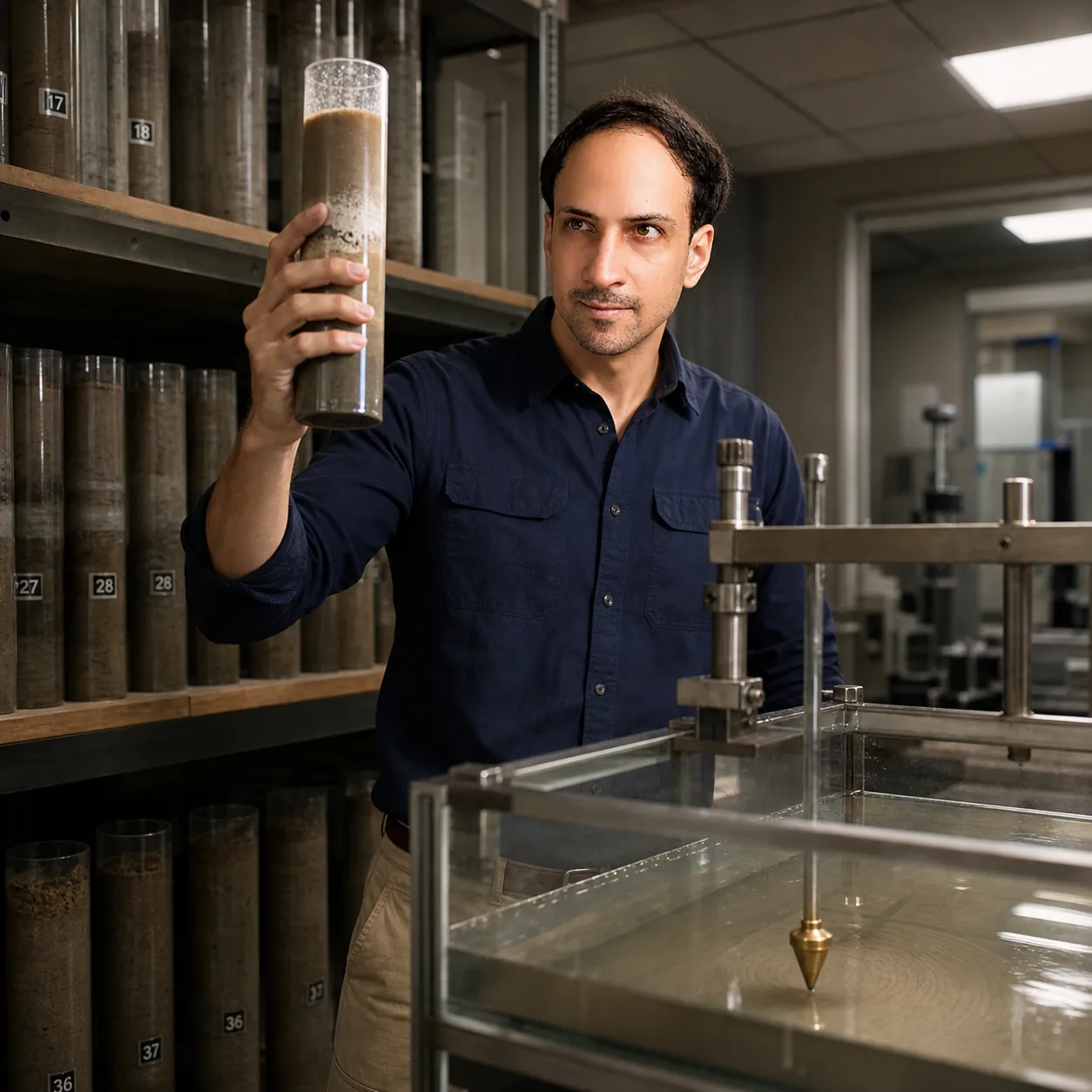
Sinking Plumb Bob in Wet Sand
صورةAI Portraits

Create a square 1:1 museum-catalog frame with a strong first read and a slower second read at exactly 2880x2880 pixels. Location: a drilling-fluids test...

من نص البرومبت

Use the attached reference photo as the identity reference: keep the same face, skin tone, hair and features as the person in that photo, without beautifying, aging or altering them. Create a square 1:1 museum-catalog frame with a strong first read and a slower second read at exactly 2880x2880 pixels. Location: a drilling-fluids test room with numbered sample columns on shelves. Show the subject in pressed khaki field trousers and a navy technical shirt, holding one sample column up to the light. Use this advanced image-making device as the core logic: a basin of water-saturated fine sand that bears a brass plumb bob until rhythmic taps let it sink from sight answers the manner of a force rather than its size. Explore where the boundary sits between obeying a law and exploiting one; direct expression and posture toward grounded wonder, never melodrama or ad-like confidence. Frame past the apparatus at shoulder height, foreground glass and steel physical but never obscuring the face. Make the composition leave generous still space where motion is expected and absent. Render it as precise rheological portrait realism grounded in laboratory-true material response, calm documentary texture, instrument-grade staging, and quietly humane composition, using diffused overhead panels dimmed low enough to keep every reflection readable and a palette of chalk white, wet slate, and one seam of ochre. Photorealistic: this must read as a real photograph from a physical camera, never an illustration, painting, or 3D render. Resolve real surface detail: wood grain read at honest scale, matte and gloss clearly separated, and no surface uniformly clean. Keep one identity-locked person, credible hands and fingers, natural fabric, and coherent scale, contact, reflections, shadows, airflow, deformation, and materials. Background people only when essential, always secondary and clearly different. Avoid rainbow slime aesthetics, splattered goo on skin, speaker-driven paint splashes, and ASMR dripping close-ups. No text, labels, logos, signatures, watermarks, random symbols, plastic skin, excessive bloom, or glossy AI finish.
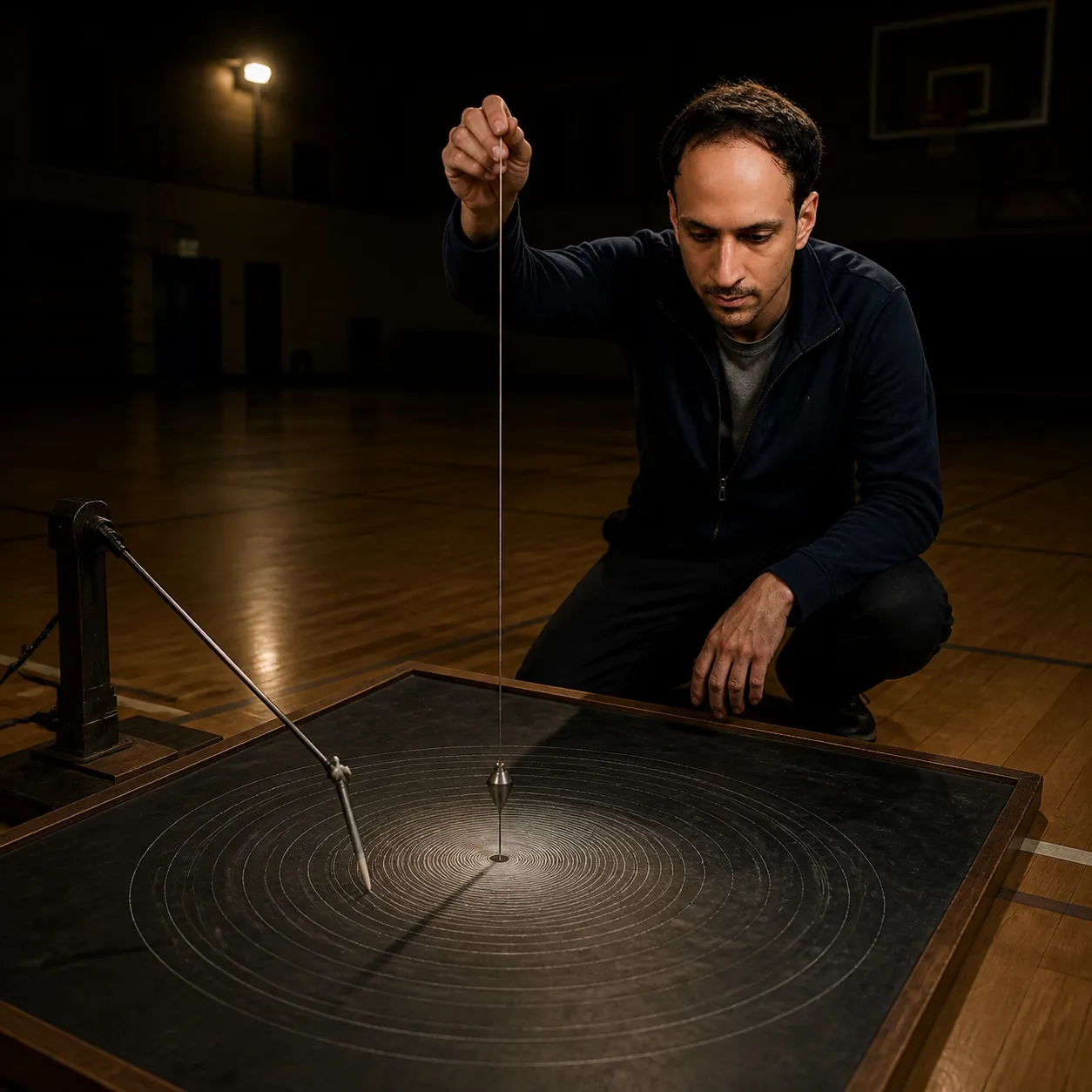
Chalk Arcs in the Gymnasium
صورةAI Portraits

Create a square 1:1 museum-catalog frame with a strong first read and a slower second read at exactly 2880x2880 pixels. Location: a school gymnasium after...

من نص البرومبت

Use the attached reference photo as the identity reference: keep the same face, skin tone, hair and features as the person in that photo, without beautifying, aging or altering them. Create a square 1:1 museum-catalog frame with a strong first read and a slower second read at exactly 2880x2880 pixels. Location: a school gymnasium after hours, one court light left burning. Show the subject in a plain navy track jacket zipped over a grey tee, dropping a plumb line until the bob just clears the floor. The impossible-looking event must obey this clear system: a chalk stick held by a long pendulum that sweeps a slate board in arcs growing slightly shorter each pass turns the planet's steady pull into a signature anyone can read. Explore why an ending written into the drawing makes it more beautiful, not less; direct expression and posture toward attentive calm, never melodrama or ad-like confidence. Use a raised three-quarter viewpoint so the whole record and their bowed attention share one frame. Make the composition keep the suspension line visible from anchor to writing point. Render it as kinetic-sculpture documentary portraiture built from real pendulum apparatus, archival ink materiality, long-exposure honesty, and museum-quality restraint in every surface, using one low raking beam that lifts the trace into shallow relief and a palette of iron black, warm limewash, and a single indigo accent. Photorealistic: this must read as a real photograph from a physical camera, never an illustration, painting, or 3D render. Resolve real surface detail: brass darkened in the recesses and bright where thumbs land, and lacquer crazed rather than perfect. Keep one identity-locked person, credible hands and fingers, natural fabric, and coherent scale, contact, reflections, shadows, airflow, deformation, and materials. Background people only when essential, always secondary and clearly different. Avoid glowing neon spirograph swirls, levitating pens, CGI particle trails, sacred-geometry overlays, and face-smearing motion blur. No text, labels, logos, signatures, watermarks, random symbols, plastic skin, excessive bloom, or glossy AI finish.
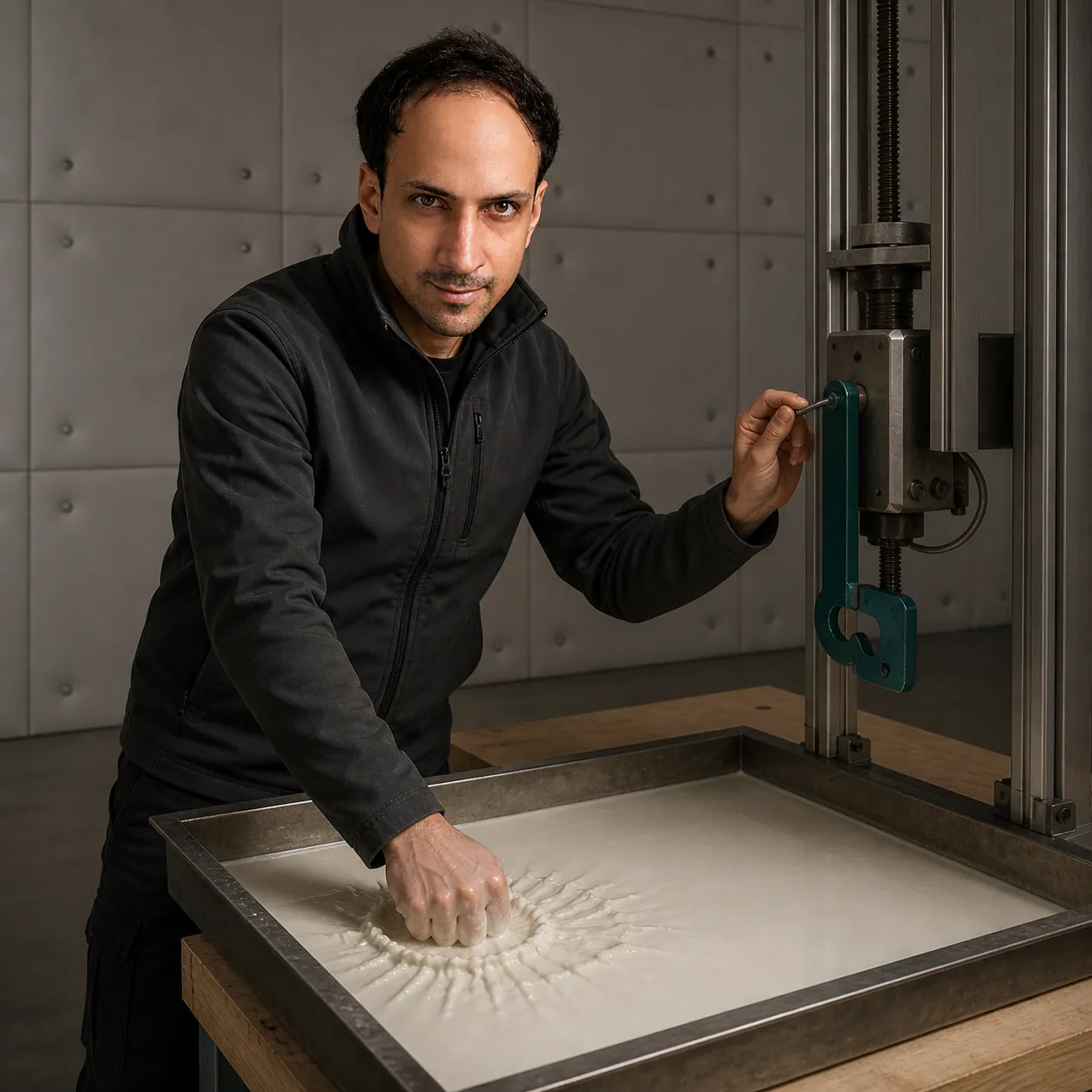
Pavement or Quicksand
صورةAI Portraits

Create a square 1:1 museum-catalog frame with a strong first read and a slower second read at exactly 2880x2880 pixels. Location: a padded impact-test room...

من نص البرومبت

Use the attached reference photo as the identity reference: keep the same face, skin tone, hair and features as the person in that photo, without beautifying, aging or altering them. Create a square 1:1 museum-catalog frame with a strong first read and a slower second read at exactly 2880x2880 pixels. Location: a padded impact-test room with a guided drop rig standing idle. Show the subject in a zipped charcoal technical jacket over dark work trousers, setting the release catch with one deliberate thumb. Treat this mechanism as the frame’s governing rule: a wide steel tray of dense cornstarch suspension that carries their struck knuckles like pavement yet swallows their resting hand holds a small lawful contradiction still enough to be studied. Explore why a liquid is entitled to behave like stone when questioned rudely; direct expression and posture toward lucid patience, never melodrama or ad-like confidence. Use a restrained 35mm view from bench height, their hands and the demonstration sharing honest scale. Make the composition leave generous still space where motion is expected and absent. Render it as conceptual materials-science portraiture combining working bench apparatus, truthful viscosity and yield behavior, restrained contemporary art direction, and human-centered editorial calm, using one low raking key across the fluid surface with soft neutral fill and a palette of putty grey, birch ply, and a single teal accent. Photorealistic: this must read as a real photograph from a physical camera, never an illustration, painting, or 3D render. Resolve real surface detail: paper fibre visible at cut edges, plastic that shows mould lines, and paint thicker where a brush turned. Keep one identity-locked person, credible hands and fingers, natural fabric, and coherent scale, contact, reflections, shadows, airflow, deformation, and materials. Background people only when essential, always secondary and clearly different. Avoid frozen splash crowns, CGI liquid-metal morphing, glowing sci-fi gels, food-fight mess on clothing, and impossible floating blobs. No text, labels, logos, signatures, watermarks, random symbols, plastic skin, excessive bloom, or glossy AI finish.
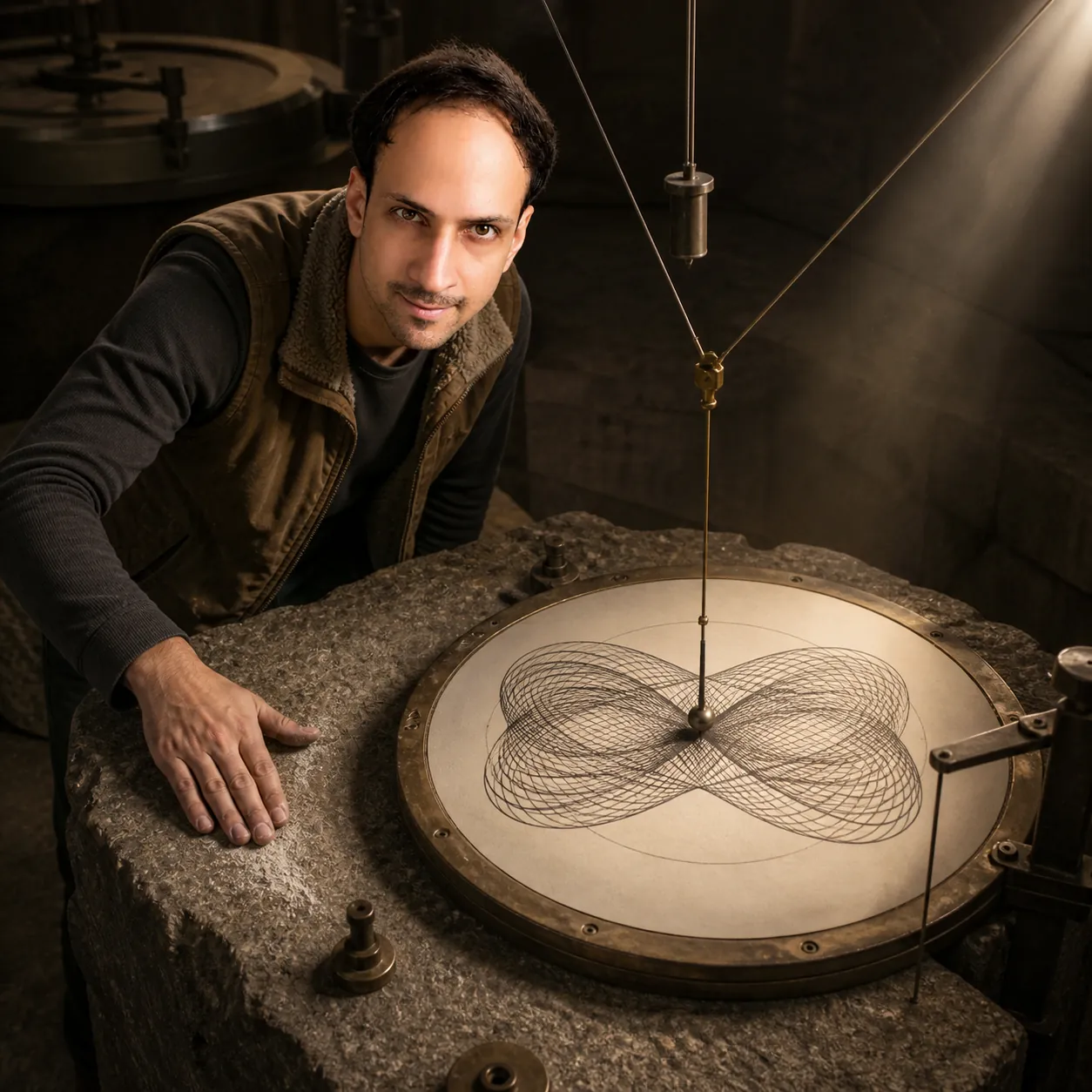
Pendulum Script in the Seismic Vault
صورةAI Portraits

Create a square 1:1 museum-catalog frame with a strong first read and a slower second read at exactly 2880x2880 pixels. Location: a seismic observatory...

من نص البرومبت

Use the attached reference photo as the identity reference: keep the same face, skin tone, hair and features as the person in that photo, without beautifying, aging or altering them. Create a square 1:1 museum-catalog frame with a strong first read and a slower second read at exactly 2880x2880 pixels. Location: a seismic observatory vault, instruments resting on bedrock piers. Show the subject in a fleece-lined canvas vest over a long-sleeved thermal shirt, dusting a bedrock pier with the side of their hand. The impossible-looking event must obey this clear system: a Y-hung Blackburn pendulum whose single bob owns two different periods, lacing a true Lissajous figure in unbroken ink turns the planet's steady pull into a signature anyone can read. Explore whether a pattern nobody chose can still be called a work of art; direct expression and posture toward steady humility, never melodrama or ad-like confidence. Use a raised three-quarter viewpoint so the whole record and their bowed attention share one frame. Make the composition align the stillest object with the fastest line. Render it as slow-apparatus editorial realism combining working drawing machines, honest wear on tools, accurate suspended-mass behavior, and reserved contemporary art direction, using one low raking beam that lifts the trace into shallow relief and a palette of walnut brown, bone-dry plaster, and one glint of steel. Photorealistic: this must read as a real photograph from a physical camera, never an illustration, painting, or 3D render. Resolve real surface detail: glass with real thickness at its edge, reflections that carry the room's actual colour, and dust visible only at grazing angles. Keep one identity-locked person, credible hands and fingers, natural fabric, and coherent scale, contact, reflections, shadows, airflow, deformation, and materials. Background people only when essential, always secondary and clearly different. Avoid glowing neon spirograph swirls, levitating pens, CGI particle trails, sacred-geometry overlays, and face-smearing motion blur. No text, labels, logos, signatures, watermarks, random symbols, plastic skin, excessive bloom, or glossy AI finish.
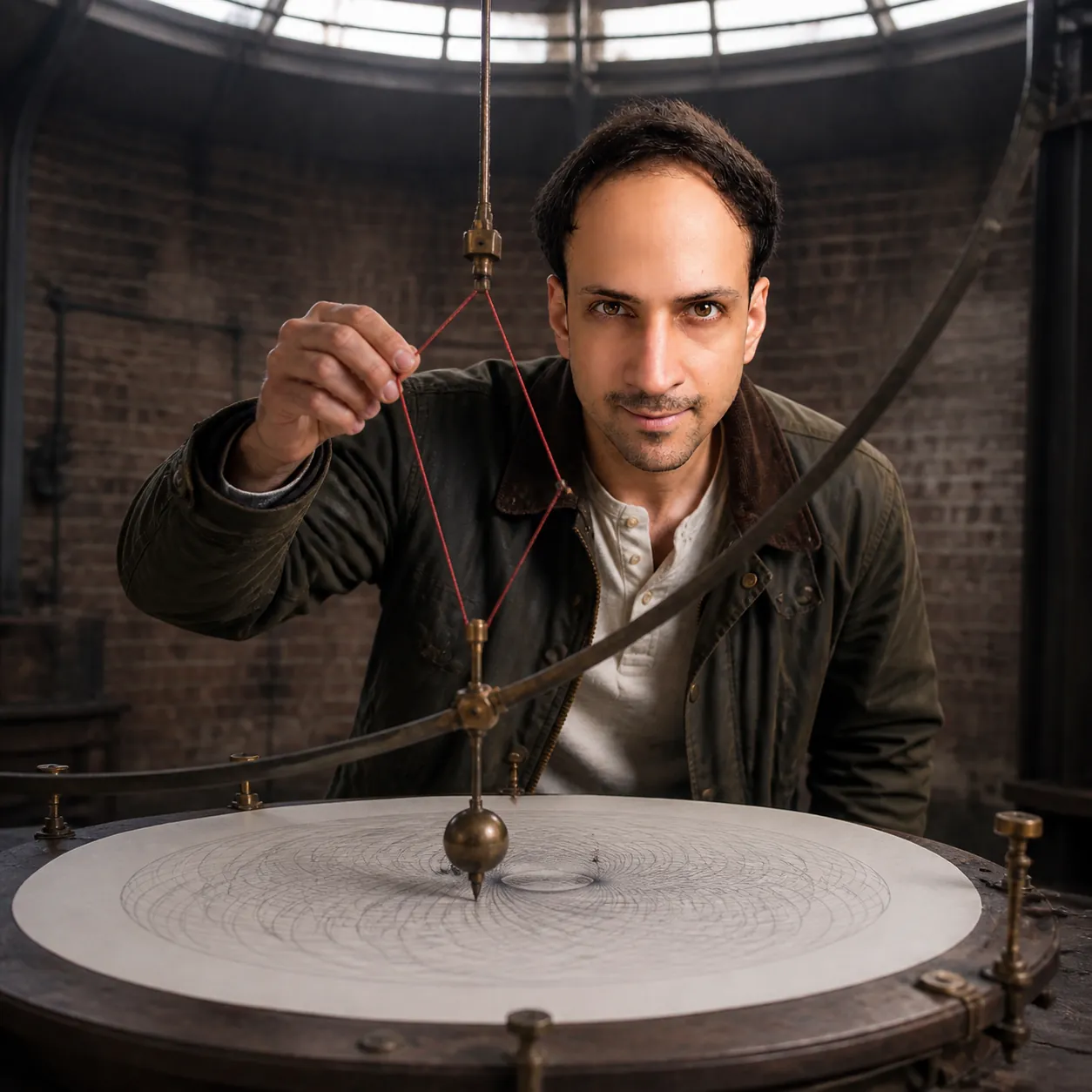
Lissajous in the Water Tower
صورةAI Portraits

Create a square 1:1 museum-catalog frame with a strong first read and a slower second read at exactly 2880x2880 pixels. Location: the round brick chamber of...

من نص البرومبت

Use the attached reference photo as the identity reference: keep the same face, skin tone, hair and features as the person in that photo, without beautifying, aging or altering them. Create a square 1:1 museum-catalog frame with a strong first read and a slower second read at exactly 2880x2880 pixels. Location: the round brick chamber of a decommissioned water tower. Show the subject in a waxed olive field jacket over a cream henley, loading a knot with one slow downward pull. Use this advanced image-making device as the core logic: a Y-hung Blackburn pendulum whose single bob owns two different periods, lacing a true Lissajous figure in unbroken ink leaves authorship with gravity while the machine merely steadies the pen. Explore whether a pattern nobody chose can still be called a work of art; direct expression and posture toward modest pride, never melodrama or ad-like confidence. Frame from across the pendulum's plane so its arc crosses the foreground and their face stays clear. Make the composition keep the suspension line visible from anchor to writing point. Render it as scientific-instrument realism combining believable weighted mechanisms, truthful decaying traces, hand-finished wood and brass, and patient observational portrait photography, using cool even skylight softened by high dust, shadows kept legible and a palette of slate grey, chalk white, and one madder-red thread. Photorealistic: this must read as a real photograph from a physical camera, never an illustration, painting, or 3D render. Resolve real surface detail: thread ends and slight pilling on worn cloth, hairline chips at every hard corner, and stone that is porous rather than smooth. Keep one identity-locked person, credible hands and fingers, natural fabric, and coherent scale, contact, reflections, shadows, airflow, deformation, and materials. Background people only when essential, always secondary and clearly different. Avoid hypnotist's watch iconography, perpetual-motion fantasy rigs, laser-perfect printed curves, cosmic nebula backdrops, and pendulums hung from nothing. No text, labels, logos, signatures, watermarks, random symbols, plastic skin, excessive bloom, or glossy AI finish.
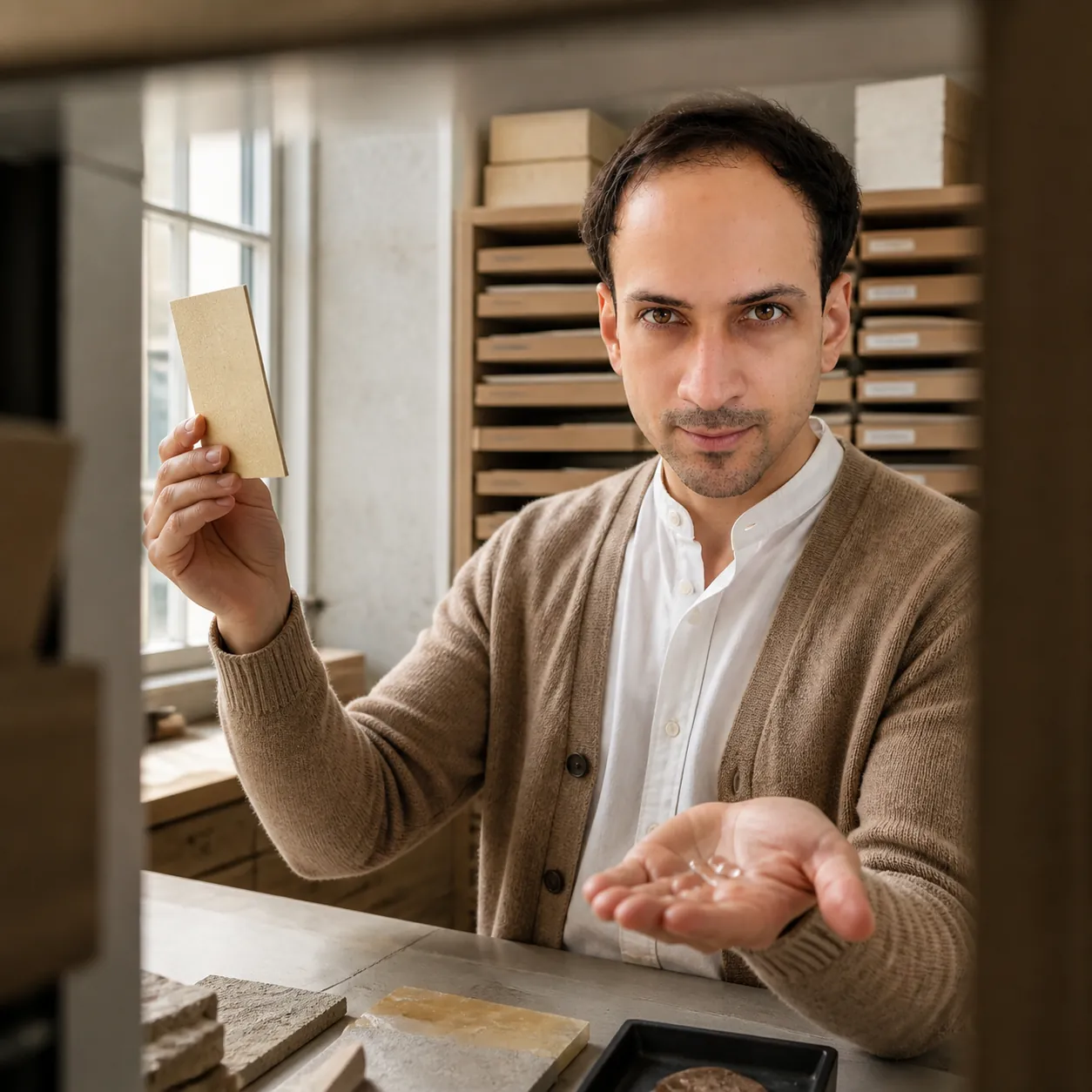
Liquid Marbles in the Materials Library
صورةAI Portraits

Create a square 1:1 museum-catalog frame with a strong first read and a slower second read at exactly 2880x2880 pixels. Location: a daylight materials...

من نص البرومبت

Use the attached reference photo as the identity reference: keep the same face, skin tone, hair and features as the person in that photo, without beautifying, aging or altering them. Create a square 1:1 museum-catalog frame with a strong first read and a slower second read at exactly 2880x2880 pixels. Location: a daylight materials library lined with labeled swatch drawers. Show the subject in a camel knit cardigan over a white band-collar shirt, matching one swatch card against the window light. Use this advanced image-making device as the core logic: a scatter of liquid marbles, water droplets whose jacket of fine hydrophobic powder lets them roll across their bare palm proves that texture too small to see decides what water may touch. Explore whether refusal, held long enough, becomes a form of care; direct expression and posture toward studied stillness, never melodrama or ad-like confidence. Frame through a real doorway or shelf edge, foreground soft, the person and the water both sharp. Make the composition hold generous negative space above the water's smallest detail. Render it as conceptual materials-lab portraiture pairing believable coatings, true droplet behavior, restrained contemporary art direction, and warm human documentary presence, using soft overcast skylight with shadows opened by one matte white bounce and a palette of pale cement, warm oat, and one measure of saffron. Photorealistic: this must read as a real photograph from a physical camera, never an illustration, painting, or 3D render. Resolve real surface detail: rubber gone chalky with age, painted metal chipped to primer, and plastic yellowed only where light reaches it. Keep one identity-locked person, credible hands and fingers, natural fabric, and coherent scale, contact, reflections, shadows, airflow, deformation, and materials. Background people only when essential, always secondary and clearly different. Avoid cartoon dewdrop gloss, rainbow refraction overload, levitating water blobs, spiritual lotus kitsch, and hoses spraying dramatic mist. No text, labels, logos, signatures, watermarks, random symbols, plastic skin, excessive bloom, or glossy AI finish.
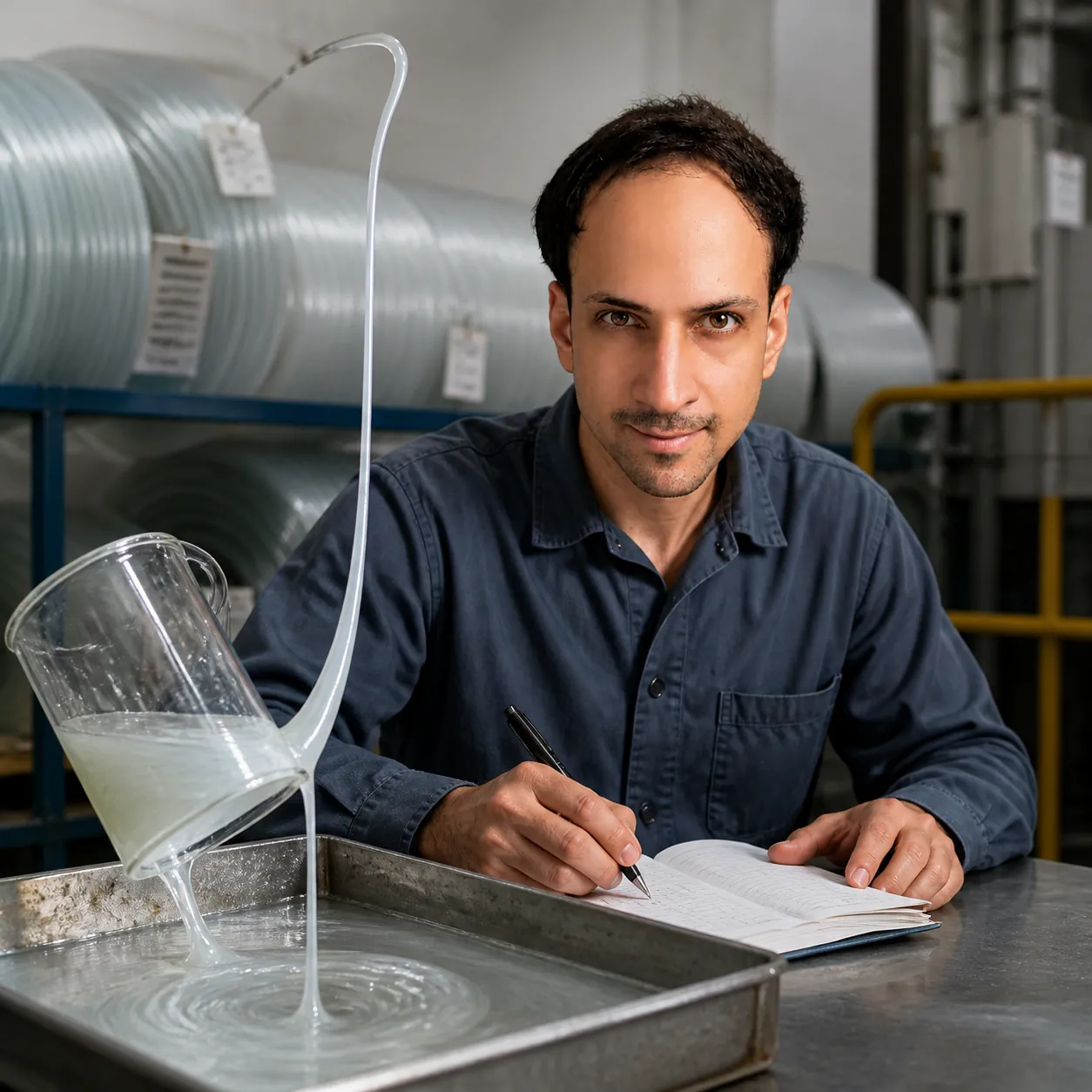
The Self-Drawn Thread at Quality Control
صورةAI Portraits

Create a square 1:1 museum-catalog frame with a strong first read and a slower second read at exactly 2880x2880 pixels. Location: a quality-control room in...

من نص البرومبت

Use the attached reference photo as the identity reference: keep the same face, skin tone, hair and features as the person in that photo, without beautifying, aging or altering them. Create a square 1:1 museum-catalog frame with a strong first read and a slower second read at exactly 2880x2880 pixels. Location: a quality-control room in a polymer plant, extrudate coils tagged. Show the subject in a buttoned steel-blue overshirt with a flat chest pocket, logging one line in a bound record book. Treat this mechanism as the frame’s governing rule: a tilted beaker of elastic polymer liquid that keeps hauling itself over the rim in one unbroken self-drawn thread holds a small lawful contradiction still enough to be studied. Explore whether solid and liquid are things matter is or things matter does; direct expression and posture toward restrained delight, never melodrama or ad-like confidence. Use a restrained 35mm view from bench height, their hands and the demonstration sharing honest scale. Make the composition give the substance's reply the same visual weight as their face. Render it as conceptual materials-science portraiture combining working bench apparatus, truthful viscosity and yield behavior, restrained contemporary art direction, and human-centered editorial calm, using even skylit top light softened by white walls and honest shadow and a palette of chalk white, wet slate, and one seam of ochre. Photorealistic: this must read as a real photograph from a physical camera, never an illustration, painting, or 3D render. Resolve real surface detail: floor finish worn along the walked line, skirting marked at shoe height, and corners darker than the open floor. Keep one identity-locked person, credible hands and fingers, natural fabric, and coherent scale, contact, reflections, shadows, airflow, deformation, and materials. Background people only when essential, always secondary and clearly different. Avoid frozen splash crowns, CGI liquid-metal morphing, glowing sci-fi gels, food-fight mess on clothing, and impossible floating blobs. No text, labels, logos, signatures, watermarks, random symbols, plastic skin, excessive bloom, or glossy AI finish.
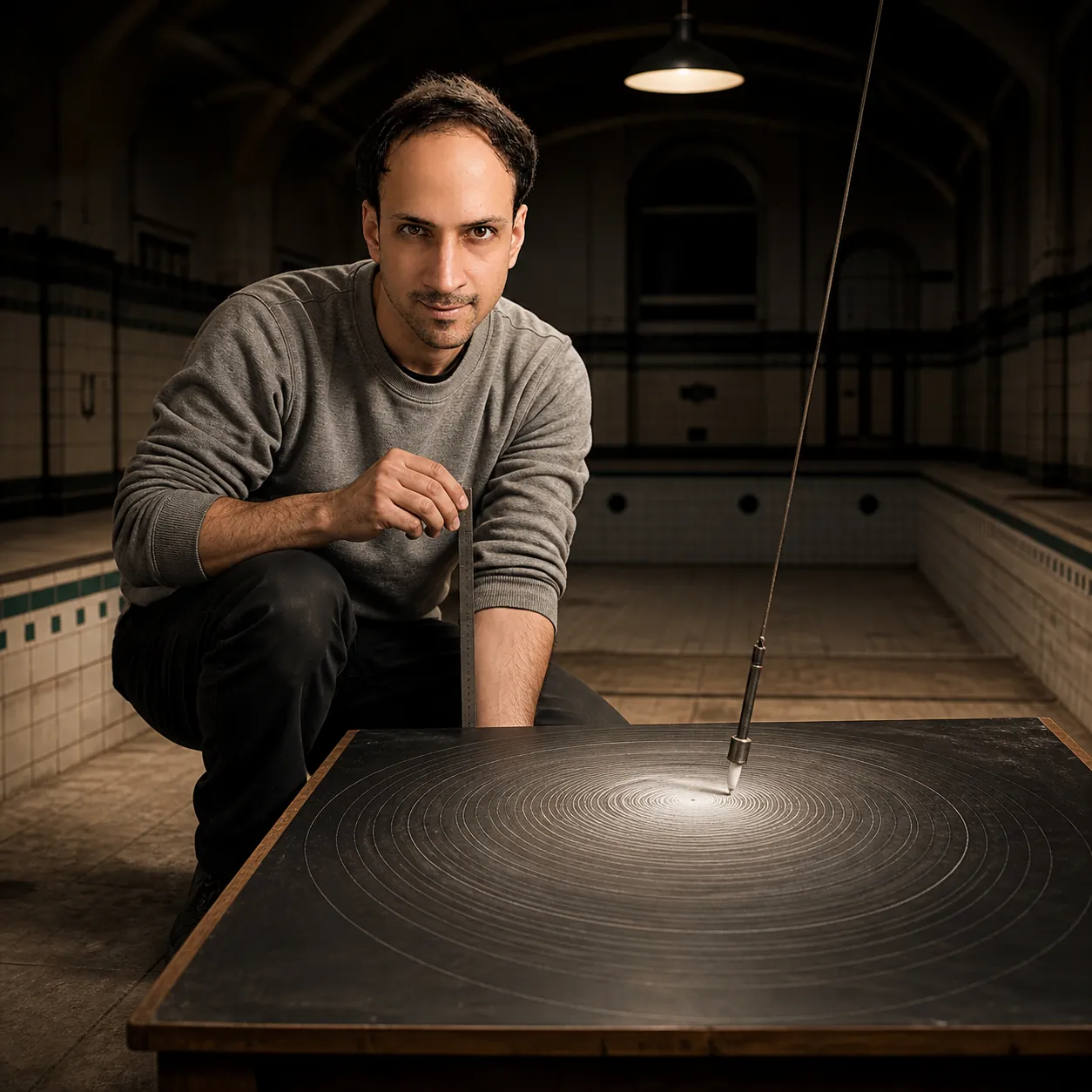
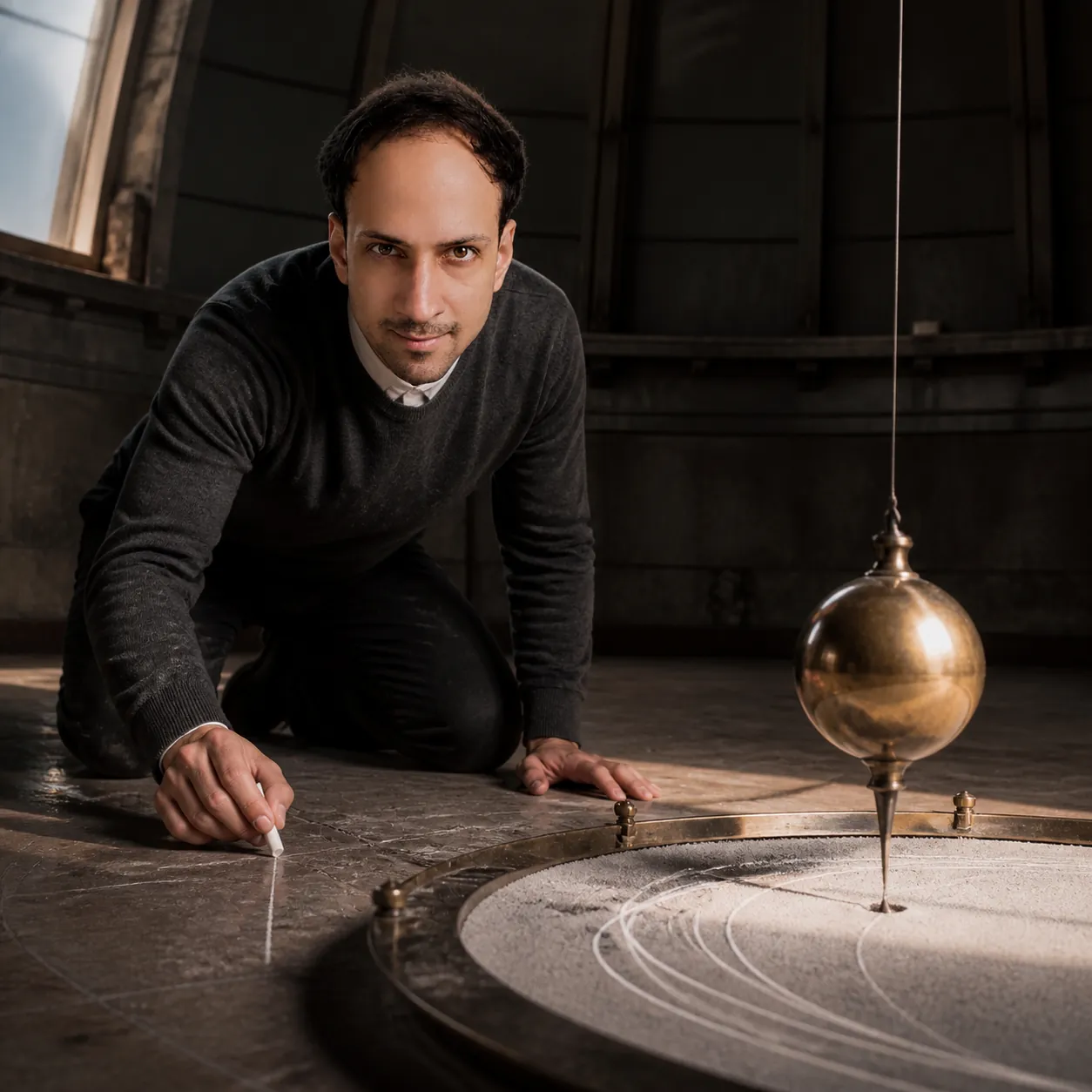
Foucault's Fan in Sand
صورةAI Portraits

Create a square 1:1 museum-catalog frame with a strong first read and a slower second read at exactly 2880x2880 pixels. Location: the stone floor of an old...

من نص البرومبت

Use the attached reference photo as the identity reference: keep the same face, skin tone, hair and features as the person in that photo, without beautifying, aging or altering them. Create a square 1:1 museum-catalog frame with a strong first read and a slower second read at exactly 2880x2880 pixels. Location: the stone floor of an old observatory beneath its shuttered dome. Show the subject in a graphite wool sweater over a white collarless shirt, chalking the release point on the stone floor. Build the artwork around this material rule: a Foucault pendulum whose stylus fans successive strokes across a ring of sand as the Earth turns beneath it leaves authorship with gravity while the machine merely steadies the pen. Explore where the boundary lies between recording a motion and composing with it; direct expression and posture toward absorbed patience, never melodrama or ad-like confidence. Use an 85mm portrait distance with the freshest line of the drawing sharp in the foreground. Make the composition align the stillest object with the fastest line. Render it as slow-apparatus editorial realism combining working drawing machines, honest wear on tools, accurate suspended-mass behavior, and reserved contemporary art direction, using late window light crossing the floor at a long shallow angle and a palette of slate grey, chalk white, and one madder-red thread. Photorealistic: this must read as a real photograph from a physical camera, never an illustration, painting, or 3D render. Resolve real surface detail: cotton that hangs by its own weight, seams that pucker very slightly, and collars softened by washing. Keep one identity-locked person, credible hands and fingers, natural fabric, and coherent scale, contact, reflections, shadows, airflow, deformation, and materials. Background people only when essential, always secondary and clearly different. Avoid hypnotist's watch iconography, perpetual-motion fantasy rigs, laser-perfect printed curves, cosmic nebula backdrops, and pendulums hung from nothing. No text, labels, logos, signatures, watermarks, random symbols, plastic skin, excessive bloom, or glossy AI finish.
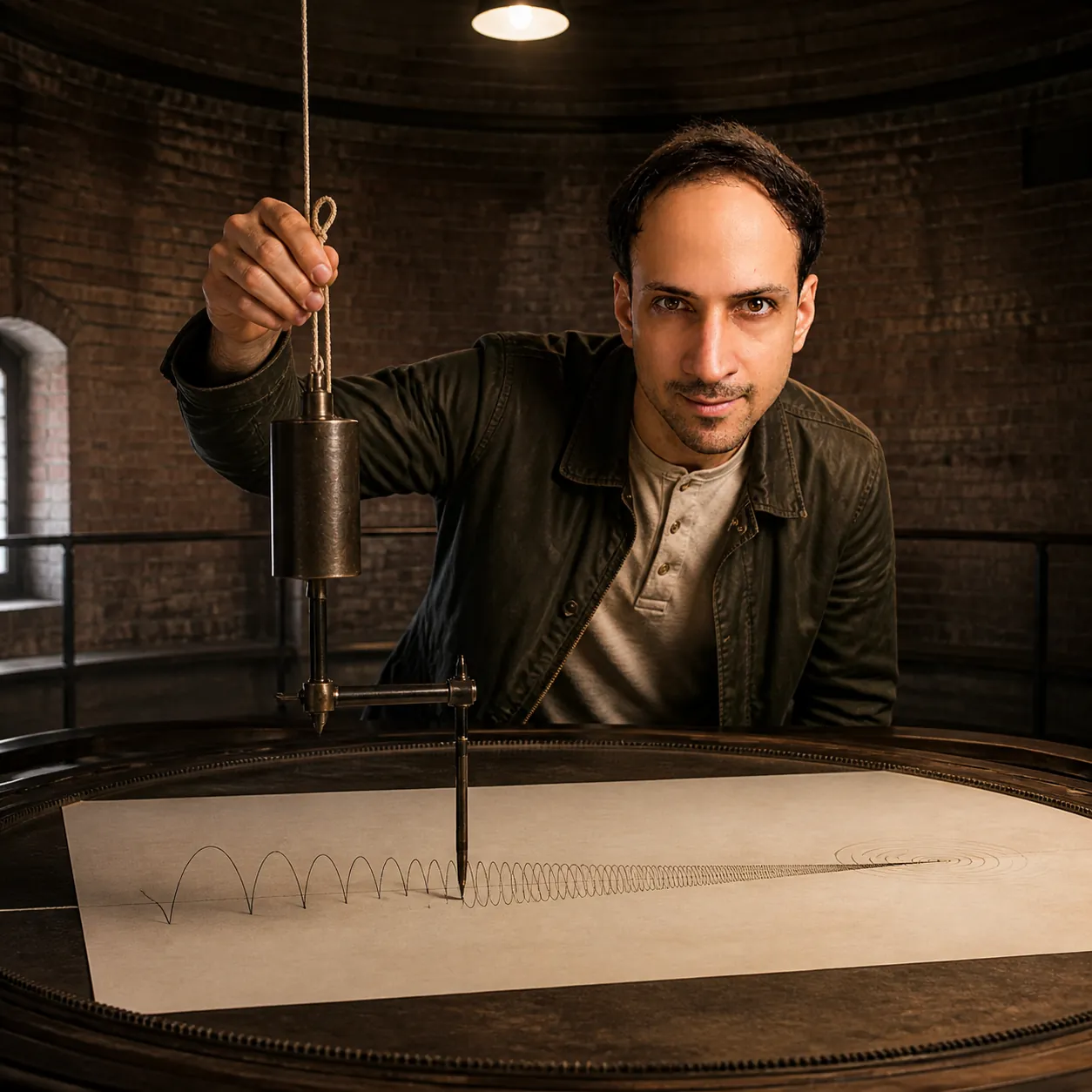
Shrinking Arcs by the Pool
صورةAI Portraits

Create a square 1:1 museum-catalog frame with a strong first read and a slower second read at exactly 2880x2880 pixels. Location: a drained indoor pool...

من نص البرومبت

Use the attached reference photo as the identity reference: keep the same face, skin tone, hair and features as the person in that photo, without beautifying, aging or altering them. Create a square 1:1 museum-catalog frame with a strong first read and a slower second read at exactly 2880x2880 pixels. Location: a drained indoor pool hall, tiles echoing every small sound. Show the subject in a heather-grey sweatshirt and dark tapered work trousers, measuring a drop height against their own forearm. Build the artwork around this material rule: a chalk stick held by a long pendulum that sweeps a slate board in arcs growing slightly shorter each pass leaves authorship with gravity while the machine merely steadies the pen. Explore why an ending written into the drawing makes it more beautiful, not less; direct expression and posture toward quiet astonishment, never melodrama or ad-like confidence. Use an 85mm portrait distance with the freshest line of the drawing sharp in the foreground. Make the composition align the stillest object with the fastest line. Render it as gallery-grade demonstration photography built from lawful gravity-driven motion, physically exact trace geometry, quiet heritage interiors, and unforced human presence, using a single shaded bulb hung high, its cone stopping short of the walls and a palette of graphite, raw linen, and one deep bottle-green accent. Photorealistic: this must read as a real photograph from a physical camera, never an illustration, painting, or 3D render. Resolve real surface detail: hair with individual strands catching light, fine hairs of uneven length, and skin oil giving a low uneven sheen. Keep one identity-locked person, credible hands and fingers, natural fabric, and coherent scale, contact, reflections, shadows, airflow, deformation, and materials. Background people only when essential, always secondary and clearly different. Avoid hypnotist's watch iconography, perpetual-motion fantasy rigs, laser-perfect printed curves, cosmic nebula backdrops, and pendulums hung from nothing. No text, labels, logos, signatures, watermarks, random symbols, plastic skin, excessive bloom, or glossy AI finish.
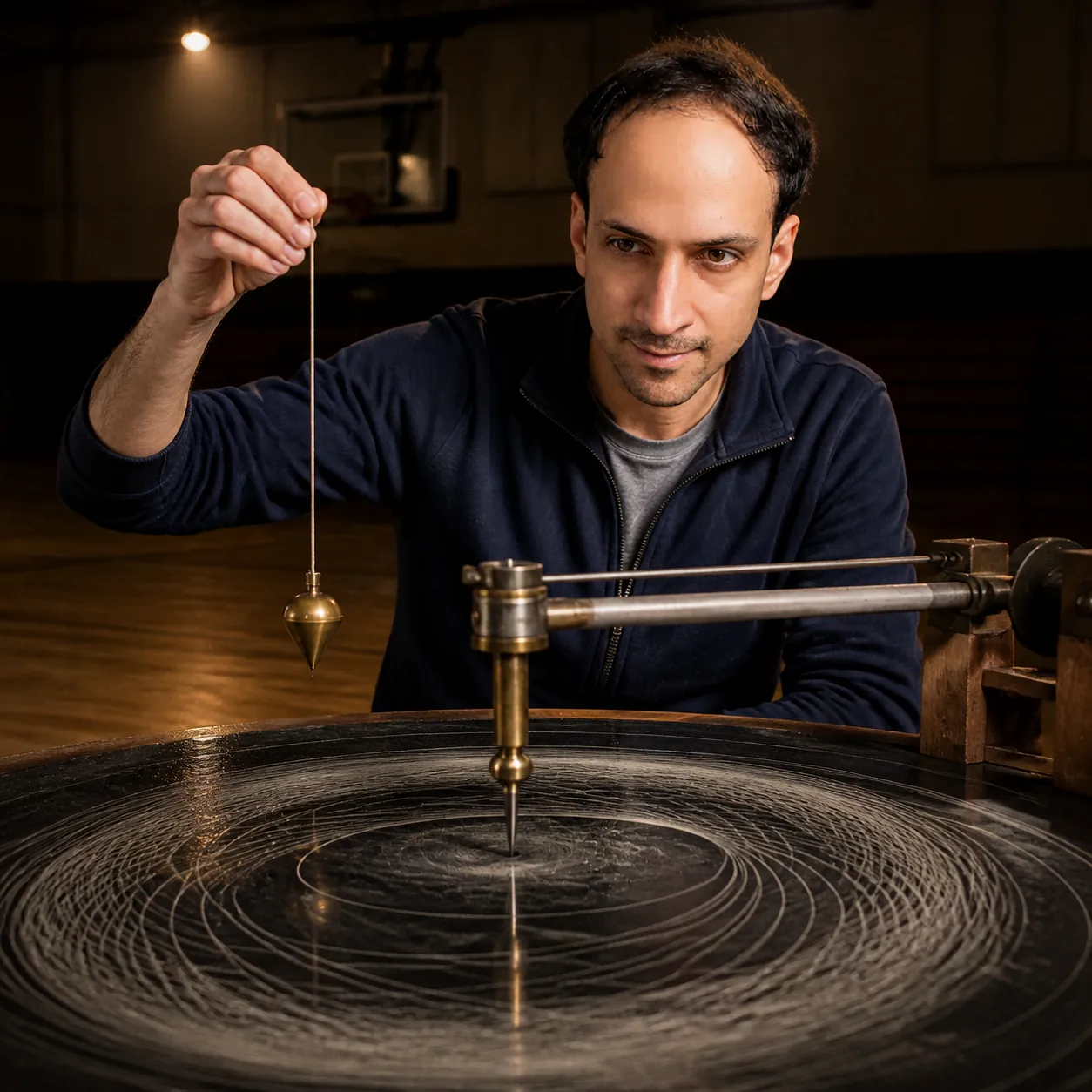
Decaying Wave in the Water Tower
صورةAI Portraits

Create a square 1:1 museum-catalog frame with a strong first read and a slower second read at exactly 2880x2880 pixels. Location: the round brick chamber of...

من نص البرومبت

Use the attached reference photo as the identity reference: keep the same face, skin tone, hair and features as the person in that photo, without beautifying, aging or altering them. Create a square 1:1 museum-catalog frame with a strong first read and a slower second read at exactly 2880x2880 pixels. Location: the round brick chamber of a decommissioned water tower. Show the subject in a waxed olive field jacket over a cream henley, loading a knot with one slow downward pull. Treat this mechanism as the frame’s governing rule: a swinging ink pen over a paper strip that a descending weight pulls steadily, writing one long decaying wave turns the planet's steady pull into a signature anyone can read. Explore whether patience is a virtue here or simply the machine's operating speed; direct expression and posture toward steady humility, never melodrama or ad-like confidence. Frame at the height of the swinging mass so the trace recedes in true perspective. Make the composition let the drawing's shrinking center sit off-axis from their eyes. Render it as kinetic-sculpture documentary portraiture built from real pendulum apparatus, archival ink materiality, long-exposure honesty, and museum-quality restraint in every surface, using a single shaded bulb hung high, its cone stopping short of the walls and a palette of walnut brown, bone-dry plaster, and one glint of steel. Photorealistic: this must read as a real photograph from a physical camera, never an illustration, painting, or 3D render. Resolve real surface detail: grout darker than tile, sealant slightly yellowed, and every joint showing a real tolerance gap. Keep one identity-locked person, credible hands and fingers, natural fabric, and coherent scale, contact, reflections, shadows, airflow, deformation, and materials. Background people only when essential, always secondary and clearly different. Avoid glowing neon spirograph swirls, levitating pens, CGI particle trails, sacred-geometry overlays, and face-smearing motion blur. No text, labels, logos, signatures, watermarks, random symbols, plastic skin, excessive bloom, or glossy AI finish.
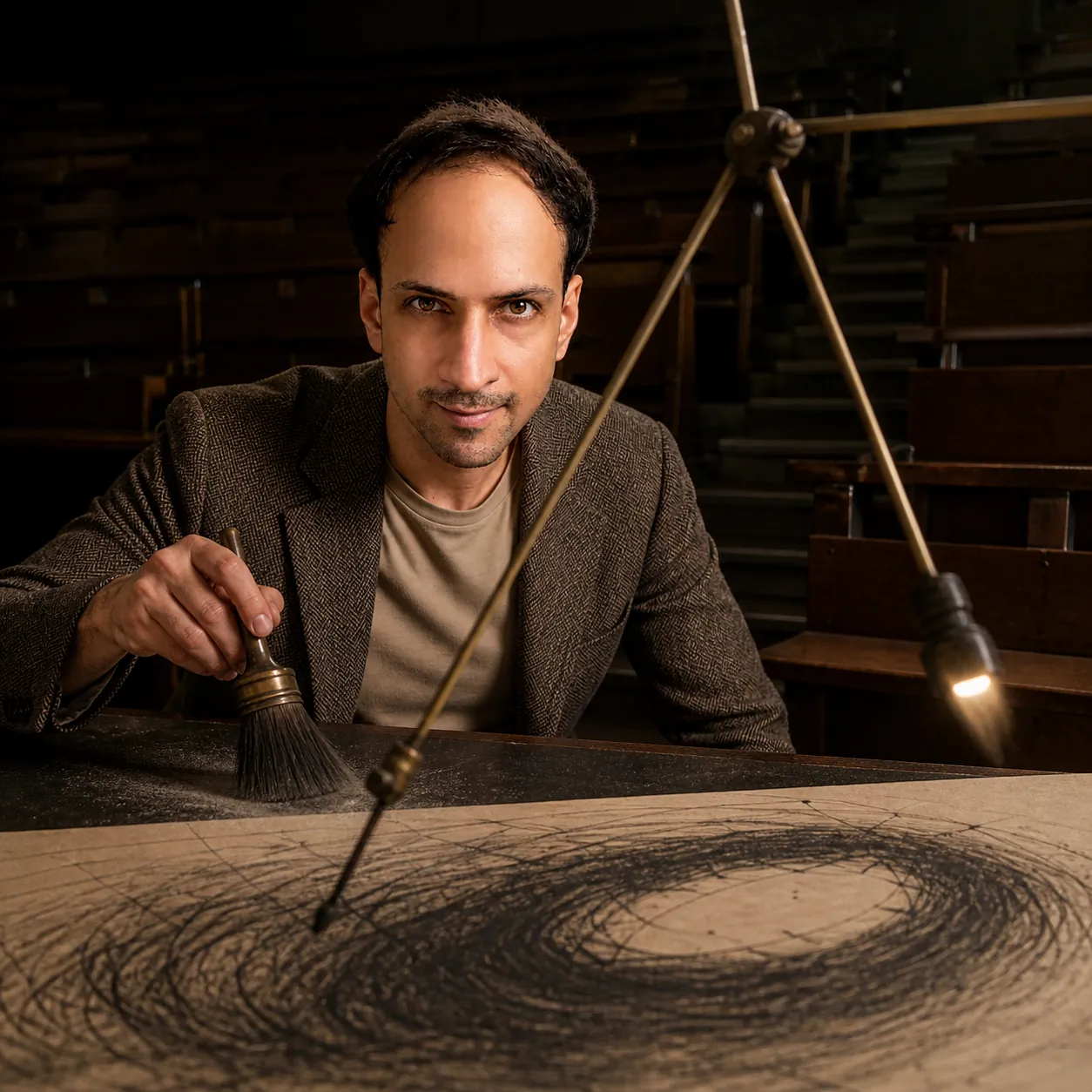
Stylus Through Lamp Soot
صورةAI Portraits

Create a square 1:1 museum-catalog frame with a strong first read and a slower second read at exactly 2880x2880 pixels. Location: a school gymnasium after...

من نص البرومبت

Use the attached reference photo as the identity reference: keep the same face, skin tone, hair and features as the person in that photo, without beautifying, aging or altering them. Create a square 1:1 museum-catalog frame with a strong first read and a slower second read at exactly 2880x2880 pixels. Location: a school gymnasium after hours, one court light left burning. Show the subject in a plain navy track jacket zipped over a grey tee, dropping a plumb line until the bob just clears the floor. Build the artwork around this material rule: a smoked-glass plate under a pendulum stylus that scribes bright clean lines through the even black lamp soot leaves authorship with gravity while the machine merely steadies the pen. Explore why watching a drawing finish itself feels like being trusted with a secret; direct expression and posture toward quiet astonishment, never melodrama or ad-like confidence. Use an 85mm portrait distance with the freshest line of the drawing sharp in the foreground. Make the composition grant the drawing more area than the person. Render it as scientific-instrument realism combining believable weighted mechanisms, truthful decaying traces, hand-finished wood and brass, and patient observational portrait photography, using dim ambient darkness held back by two small warm practicals and a palette of walnut brown, bone-dry plaster, and one glint of steel. Photorealistic: this must read as a real photograph from a physical camera, never an illustration, painting, or 3D render. Resolve real surface detail: dust settled where nobody wipes, fingerprint haze on glass, and edges rubbed pale by handling. Keep one identity-locked person, credible hands and fingers, natural fabric, and coherent scale, contact, reflections, shadows, airflow, deformation, and materials. Background people only when essential, always secondary and clearly different. Avoid hypnotist's watch iconography, perpetual-motion fantasy rigs, laser-perfect printed curves, cosmic nebula backdrops, and pendulums hung from nothing. No text, labels, logos, signatures, watermarks, random symbols, plastic skin, excessive bloom, or glossy AI finish.
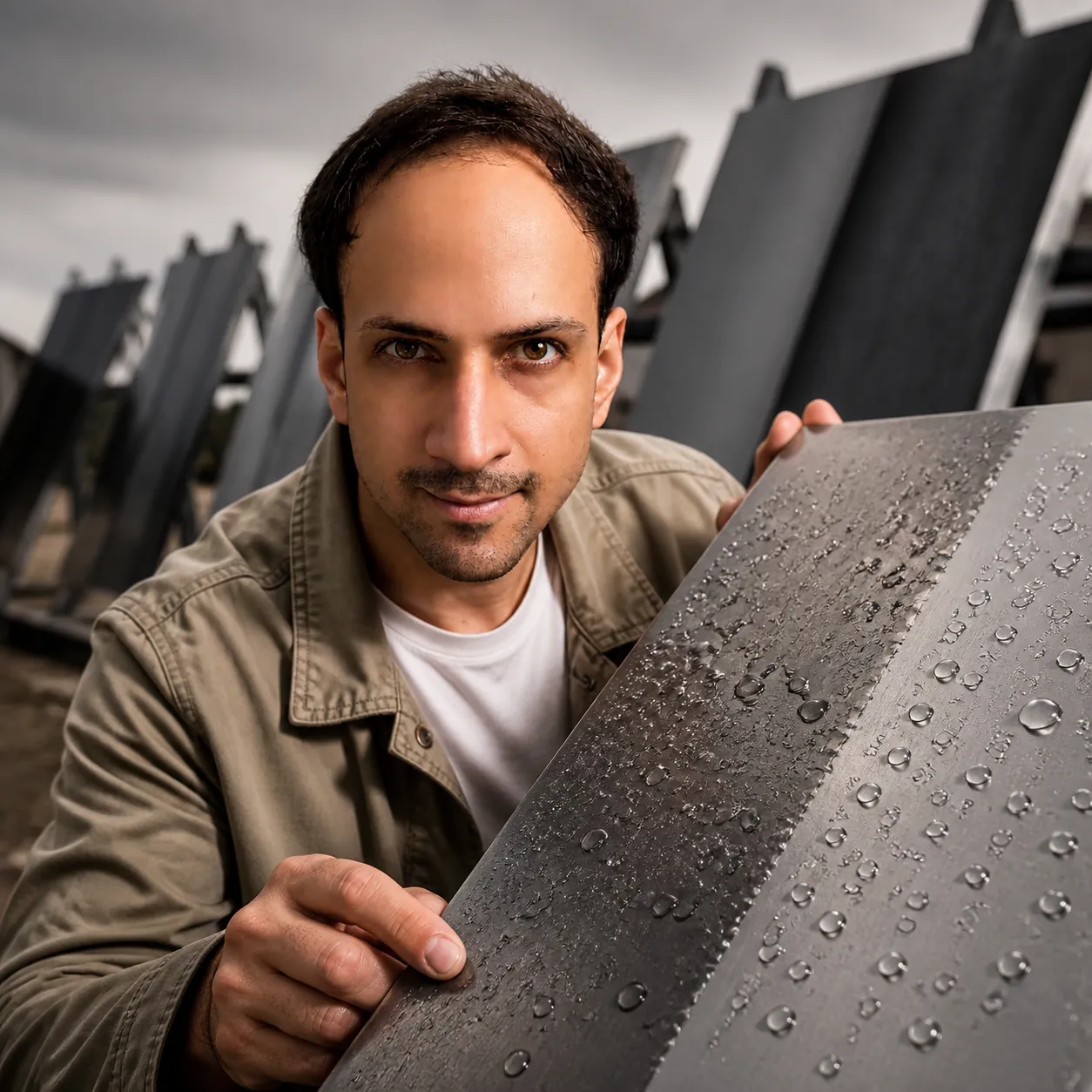
Chaos Written in Light
صورةAI Portraits

Create a square 1:1 museum-catalog frame with a strong first read and a slower second read at exactly 2880x2880 pixels. Location: a tiered university...

من نص البرومبت

Use the attached reference photo as the identity reference: keep the same face, skin tone, hair and features as the person in that photo, without beautifying, aging or altering them. Create a square 1:1 museum-catalog frame with a strong first read and a slower second read at exactly 2880x2880 pixels. Location: a tiered university lecture hall, empty seats rising into shadow. Show the subject in a brown herringbone blazer over a plain sand-colored shirt, brushing dust from the bench top with a wide soft brush. Use this advanced image-making device as the core logic: a chaotic double pendulum whose small tip light writes one long-exposure scrawl that never once repeats its own path turns the planet's steady pull into a signature anyone can read. Explore what it changes to see time spent rather than time counted; direct expression and posture toward solemn delight, never melodrama or ad-like confidence. Frame from across the pendulum's plane so its arc crosses the foreground and their face stays clear. Make the composition hold one unfinished pass mid-stroke at the frame's edge. Render it as kinetic-sculpture documentary portraiture built from real pendulum apparatus, archival ink materiality, long-exposure honesty, and museum-quality restraint in every surface, using dim ambient darkness held back by two small warm practicals and a palette of lamp-soot black, unbleached paper, and one line of brass. Photorealistic: this must read as a real photograph from a physical camera, never an illustration, painting, or 3D render. Resolve real surface detail: wood grain read at honest scale, matte and gloss clearly separated, and no surface uniformly clean. Keep one identity-locked person, credible hands and fingers, natural fabric, and coherent scale, contact, reflections, shadows, airflow, deformation, and materials. Background people only when essential, always secondary and clearly different. Avoid glowing neon spirograph swirls, levitating pens, CGI particle trails, sacred-geometry overlays, and face-smearing motion blur. No text, labels, logos, signatures, watermarks, random symbols, plastic skin, excessive bloom, or glossy AI finish.
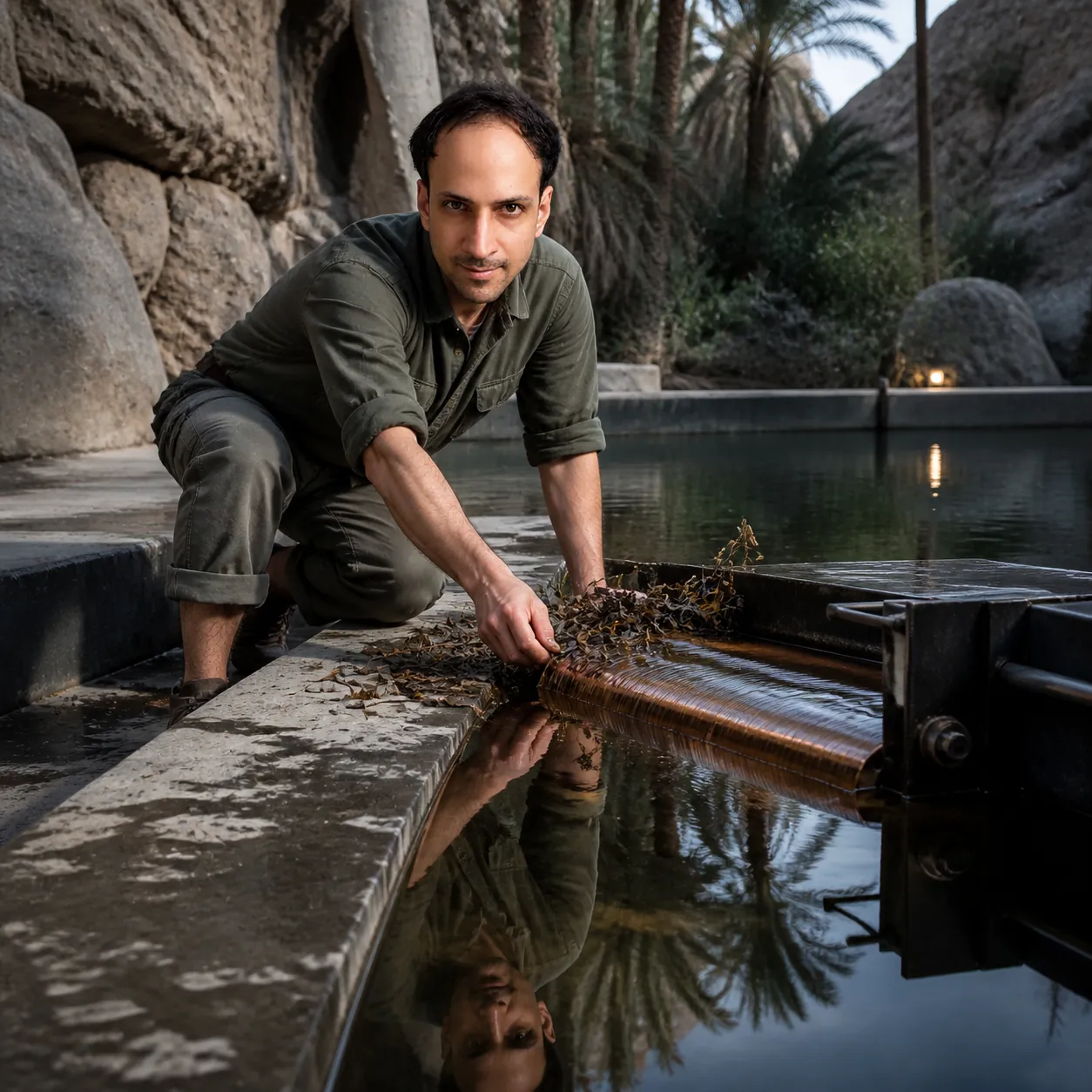
Half-Coated Plate in the Weathering Yard
صورةAI Portraits

Create a square 1:1 museum-catalog frame with a strong first read and a slower second read at exactly 2880x2880 pixels. Location: an outdoor weathering yard...

من نص البرومبت

Use the attached reference photo as the identity reference: keep the same face, skin tone, hair and features as the person in that photo, without beautifying, aging or altering them. Create a square 1:1 museum-catalog frame with a strong first read and a slower second read at exactly 2880x2880 pixels. Location: an outdoor weathering yard with sample panels racked toward the sun. Show the subject in a sand-washed field jacket over an unmarked white tee, angling one sample panel a few degrees steeper. The impossible-looking event must obey this clear system: a steel plate coated on one half only, where identical droplets sprawl flat or stand as spheres across one machined line proves that texture too small to see decides what water may touch. Explore whether a boundary kept perfectly is a wall or a kindness; direct expression and posture toward restrained delight, never melodrama or ad-like confidence. Use a 90mm macro-to-portrait hybrid: the water's nearest detail sharp by the lens, their face readable beyond it. Make the composition keep the room austere so the water is the only event. Render it as museum-grade demonstration realism combining faithful contact-angle physics, tactile fabric and metal surfaces, honest water optics, and unhurried portrait photography, using one low raking lamp that gives the water a single small specular point and a palette of silvered air, deep charcoal, and muted moss green. Photorealistic: this must read as a real photograph from a physical camera, never an illustration, painting, or 3D render. Resolve real surface detail: condensation beading at true size, liquid meniscus curving against glass, and wet surfaces darker than dry ones. Keep one identity-locked person, credible hands and fingers, natural fabric, and coherent scale, contact, reflections, shadows, airflow, deformation, and materials. Background people only when essential, always secondary and clearly different. Avoid cartoon dewdrop gloss, rainbow refraction overload, levitating water blobs, spiritual lotus kitsch, and hoses spraying dramatic mist. No text, labels, logos, signatures, watermarks, random symbols, plastic skin, excessive bloom, or glossy AI finish.
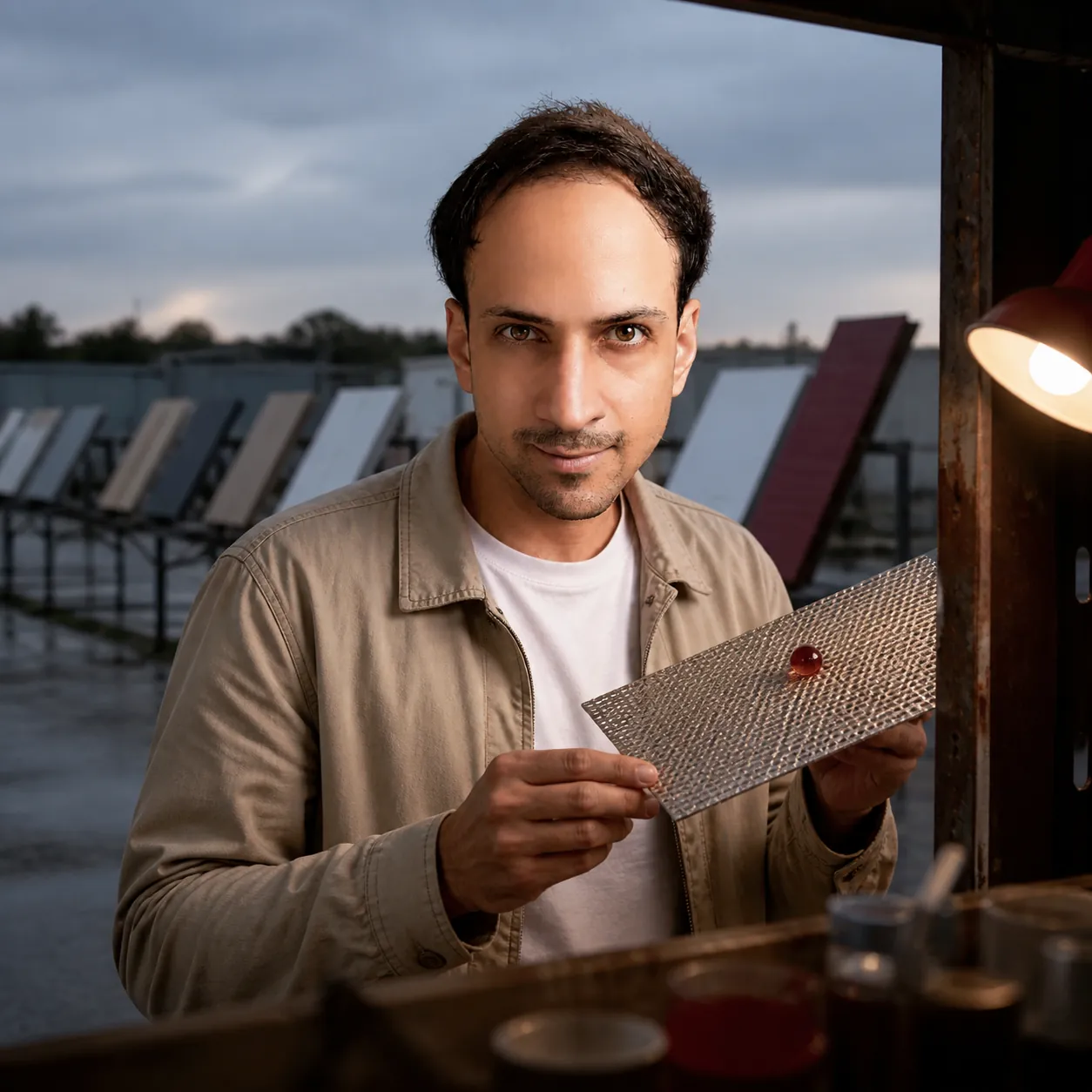
Mirror Weir at the Oasis Spring
صورةAI Portraits

Create a square 1:1 museum-catalog frame with a strong first read and a slower second read at exactly 2880x2880 pixels. Location: a limestone spring pool in...

من نص البرومبت

Use the attached reference photo as the identity reference: keep the same face, skin tone, hair and features as the person in that photo, without beautifying, aging or altering them. Create a square 1:1 museum-catalog frame with a strong first read and a slower second read at exactly 2880x2880 pixels. Location: a limestone spring pool in an oasis cleft, lit by early sky. Show the subject in an olive utility shirt tucked into rolled canvas trousers, clearing drifted leaves from the outflow lip. Treat this mechanism as the frame’s governing rule: a sheet of water that slides over a machined weir crest so evenly it holds one unbroken, believable reflection puts continuous motion through a form that never once looks hurried. Explore how a moving surface can hold an image that refuses to move; direct expression and posture toward clear-eyed patience, never melodrama or ad-like confidence. Use a calm wide 35mm view that keeps verticals true and places them just off the flow's axis. Make the composition hold clean empty space where turbulence would have been. Render it as museum-scale demonstration realism combining faithful portrait photography, glass-smooth water rendered without exaggeration, machined hydraulic hardware, and physically exact reflections, using cool diffuse daylight with a single warm practical reflected in wet metal and a palette of dark basalt, damp concrete, and one seam of copper. Photorealistic: this must read as a real photograph from a physical camera, never an illustration, painting, or 3D render. Resolve real surface detail: leather creased along the lines of use, stitching slightly irregular, and edges burnished from contact. Keep one identity-locked person, credible hands and fingers, natural fabric, and coherent scale, contact, reflections, shadows, airflow, deformation, and materials. Background people only when essential, always secondary and clearly different. Avoid stock waterfall mist, whirlpool vortices, ripple-covered surfaces, levitating water spheres, and dramatic slow-motion splash photography. No text, labels, logos, signatures, watermarks, random symbols, plastic skin, excessive bloom, or glossy AI finish.
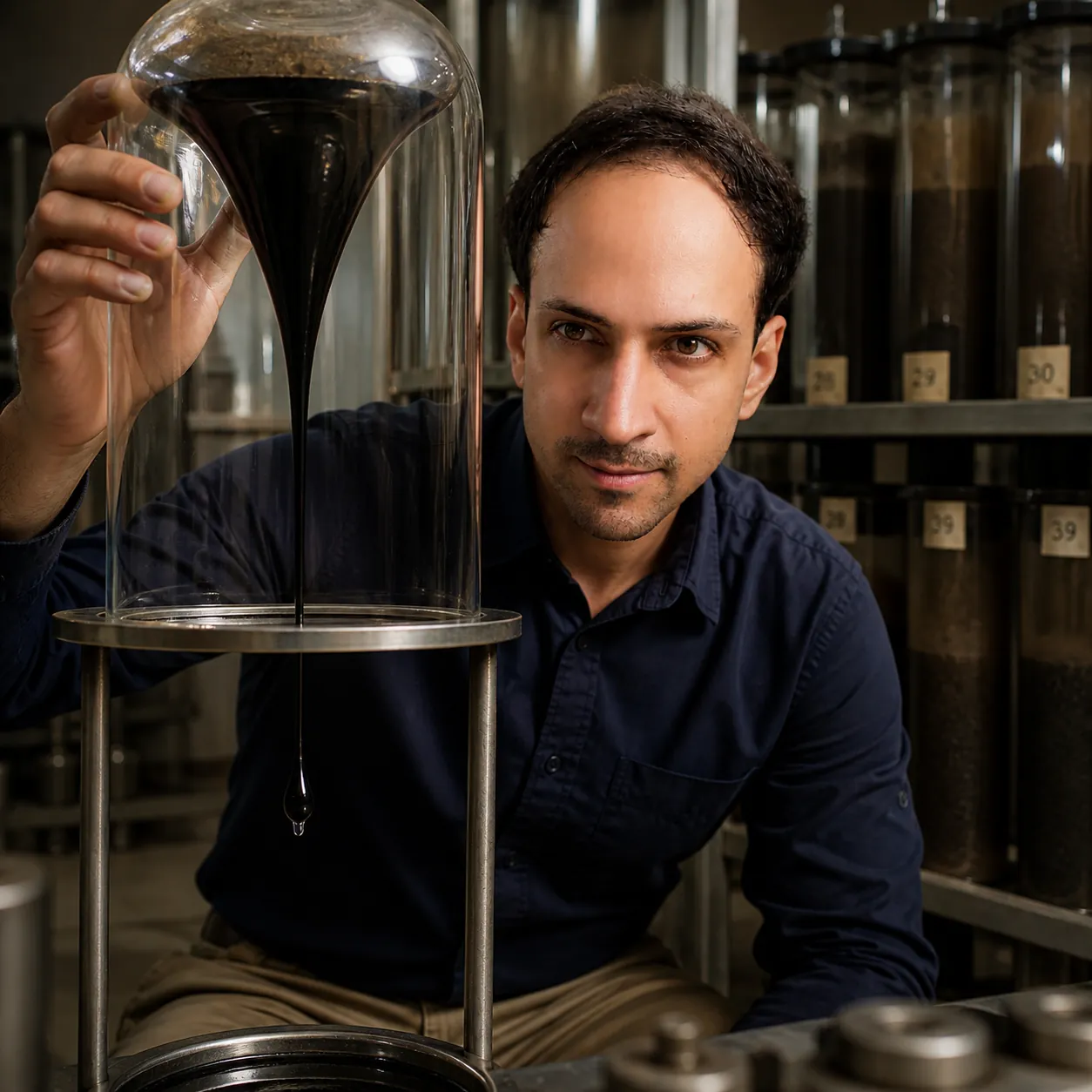
Droplet Resting on Open Mesh
صورةAI Portraits

Create a square 1:1 museum-catalog frame with a strong first read and a slower second read at exactly 2880x2880 pixels. Location: an outdoor weathering yard...

من نص البرومبت

Use the attached reference photo as the identity reference: keep the same face, skin tone, hair and features as the person in that photo, without beautifying, aging or altering them. Create a square 1:1 museum-catalog frame with a strong first read and a slower second read at exactly 2880x2880 pixels. Location: an outdoor weathering yard with sample panels racked toward the sun. Show the subject in a sand-washed field jacket over an unmarked white tee, angling one sample panel a few degrees steeper. Use this advanced image-making device as the core logic: an open steel mesh on which a dyed droplet rests as a sphere above plain air without falling through turns refusal into something the eye can verify at arm's length. Explore where wetness actually begins once contact itself has become negotiable; direct expression and posture toward patient scrutiny, never melodrama or ad-like confidence. Frame through a real doorway or shelf edge, foreground soft, the person and the water both sharp. Make the composition hold generous negative space above the water's smallest detail. Render it as high-concept wetting-science portraiture built from real superhydrophobic materials, documentary calm, droplet-true refraction and reflection, and quietly exact bench craft, using cool dawn ambience warmed by one shaded tungsten practical close at hand and a palette of slate grey, chalk white, and one madder-red note. Photorealistic: this must read as a real photograph from a physical camera, never an illustration, painting, or 3D render. Resolve real surface detail: wood grain read at honest scale, matte and gloss clearly separated, and no surface uniformly clean. Keep one identity-locked person, credible hands and fingers, natural fabric, and coherent scale, contact, reflections, shadows, airflow, deformation, and materials. Background people only when essential, always secondary and clearly different. Avoid CGI chrome water, crown-splash stock shots, glowing droplets, force-field ripples, and glycerin beads faked on every surface. No text, labels, logos, signatures, watermarks, random symbols, plastic skin, excessive bloom, or glossy AI finish.
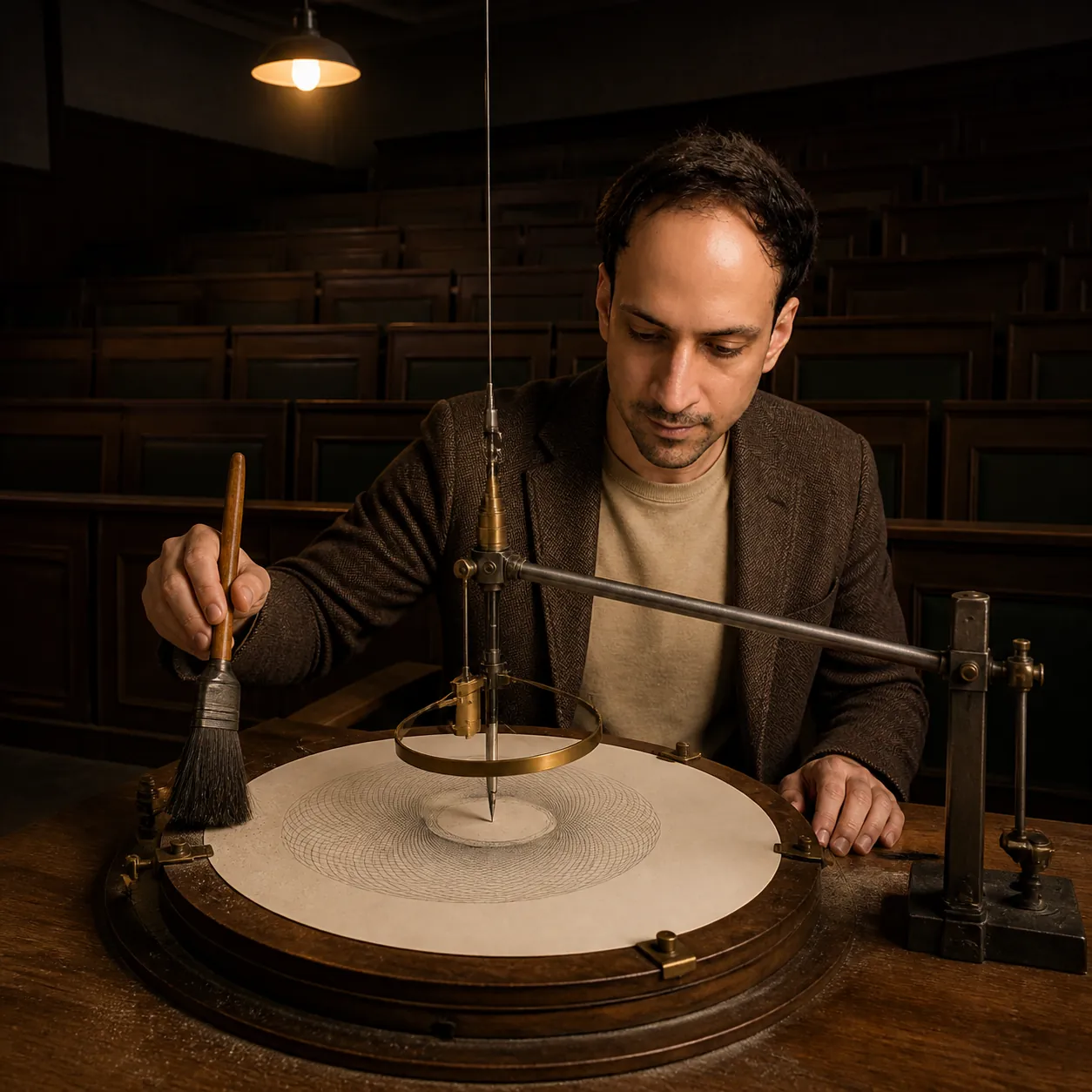
The Decade-Long Pitch Drop
صورةAI Portraits

Create a square 1:1 museum-catalog frame with a strong first read and a slower second read at exactly 2880x2880 pixels. Location: a drilling-fluids test...

من نص البرومبت

Use the attached reference photo as the identity reference: keep the same face, skin tone, hair and features as the person in that photo, without beautifying, aging or altering them. Create a square 1:1 museum-catalog frame with a strong first read and a slower second read at exactly 2880x2880 pixels. Location: a drilling-fluids test room with numbered sample columns on shelves. Show the subject in pressed khaki field trousers and a navy technical shirt, holding one sample column up to the light. The impossible-looking event must obey this clear system: a bell-jarred funnel of black pitch whose single pendant drop has been lengthening for most of a decade holds a small lawful contradiction still enough to be studied. Explore what a material's refusal reveals about the question it was asked; direct expression and posture toward patient scrutiny, never melodrama or ad-like confidence. Use a 90mm close-working lens: the fluid's response sharp near the frame's base and their attentive face readable above it. Make the composition anchor the brightest highlight on the material, never on them. Render it as museum-grade demonstration realism combining faithful fluid behavior, tactile material surfaces, patient observational portrait photography, and physically accurate weight and reflection, using one low raking key across the fluid surface with soft neutral fill and a palette of mud brown, brushed steel, and muted glass green. Photorealistic: this must read as a real photograph from a physical camera, never an illustration, painting, or 3D render. Resolve real surface detail: condensation beading at true size, liquid meniscus curving against glass, and wet surfaces darker than dry ones. Keep one identity-locked person, credible hands and fingers, natural fabric, and coherent scale, contact, reflections, shadows, airflow, deformation, and materials. Background people only when essential, always secondary and clearly different. Avoid frozen splash crowns, CGI liquid-metal morphing, glowing sci-fi gels, food-fight mess on clothing, and impossible floating blobs. No text, labels, logos, signatures, watermarks, random symbols, plastic skin, excessive bloom, or glossy AI finish.
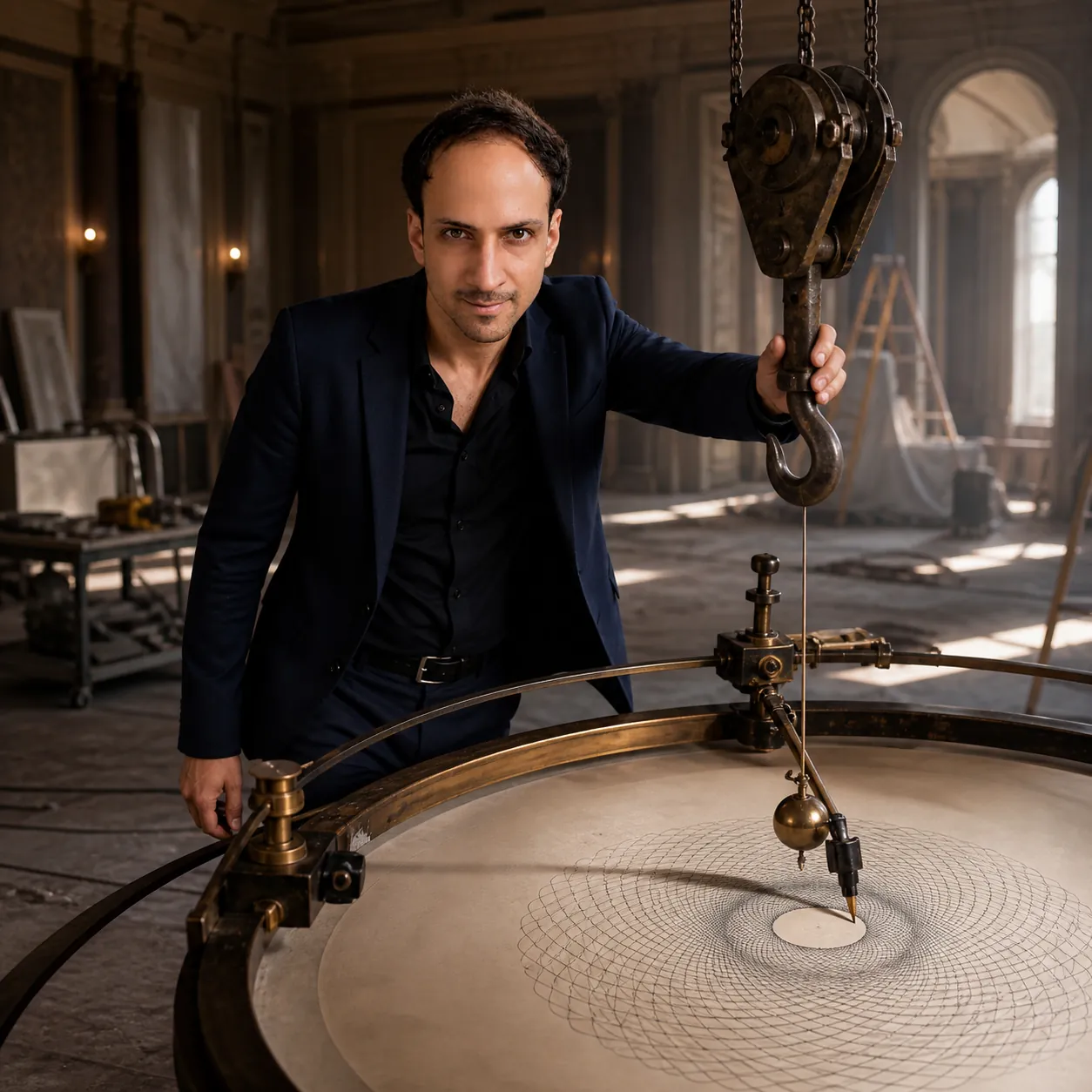
Rotary Harmonograph in the Lecture Hall
صورةAI Portraits

Create a square 1:1 museum-catalog frame with a strong first read and a slower second read at exactly 2880x2880 pixels. Location: a tiered university...

من نص البرومبت

Use the attached reference photo as the identity reference: keep the same face, skin tone, hair and features as the person in that photo, without beautifying, aging or altering them. Create a square 1:1 museum-catalog frame with a strong first read and a slower second read at exactly 2880x2880 pixels. Location: a tiered university lecture hall, empty seats rising into shadow. Show the subject in a brown herringbone blazer over a plain sand-colored shirt, brushing dust from the bench top with a wide soft brush. The impossible-looking event must obey this clear system: a rotary harmonograph whose gimbaled pendulum circles the paper table slowly beneath a second pendulum's laterally swinging pen leaves authorship with gravity while the machine merely steadies the pen. Explore what friction is writing when every lap comes back slightly smaller; direct expression and posture toward unhurried reverence, never melodrama or ad-like confidence. Use a raised three-quarter viewpoint so the whole record and their bowed attention share one frame. Make the composition align the stillest object with the fastest line. Render it as scientific-instrument realism combining believable weighted mechanisms, truthful decaying traces, hand-finished wood and brass, and patient observational portrait photography, using a single shaded bulb hung high, its cone stopping short of the walls and a palette of graphite, raw linen, and one deep bottle-green accent. Photorealistic: this must read as a real photograph from a physical camera, never an illustration, painting, or 3D render. Resolve real surface detail: condensation beading at true size, liquid meniscus curving against glass, and wet surfaces darker than dry ones. Keep one identity-locked person, credible hands and fingers, natural fabric, and coherent scale, contact, reflections, shadows, airflow, deformation, and materials. Background people only when essential, always secondary and clearly different. Avoid hypnotist's watch iconography, perpetual-motion fantasy rigs, laser-perfect printed curves, cosmic nebula backdrops, and pendulums hung from nothing. No text, labels, logos, signatures, watermarks, random symbols, plastic skin, excessive bloom, or glossy AI finish.
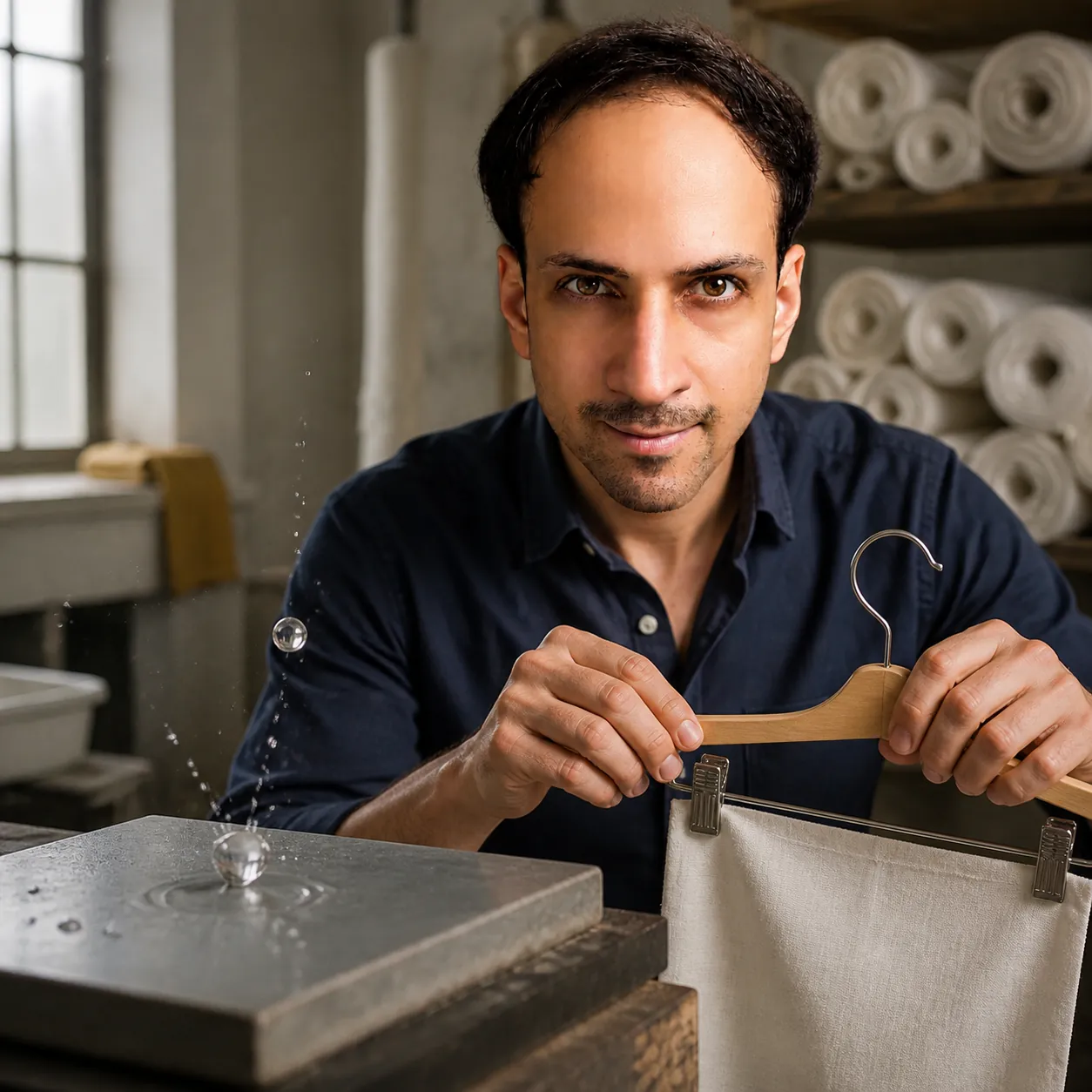
Ballroom Under Renovation
صورةAI Portraits

Create a square 1:1 museum-catalog frame with a strong first read and a slower second read at exactly 2880x2880 pixels. Location: a hotel ballroom...

من نص البرومبت

Use the attached reference photo as the identity reference: keep the same face, skin tone, hair and features as the person in that photo, without beautifying, aging or altering them. Create a square 1:1 museum-catalog frame with a strong first read and a slower second read at exactly 2880x2880 pixels. Location: a hotel ballroom mid-renovation, its chandelier lowered and gone. Show the subject in a midnight-blue suit worn without a tie, collar open, guiding the empty hoist hook to a dead stop. Build the artwork around this material rule: a rotary harmonograph whose gimbaled pendulum circles the paper table slowly beneath a second pendulum's laterally swinging pen turns the planet's steady pull into a signature anyone can read. Explore what friction is writing when every lap comes back slightly smaller; direct expression and posture toward solemn delight, never melodrama or ad-like confidence. Use an 85mm portrait distance with the freshest line of the drawing sharp in the foreground. Make the composition grant the drawing more area than the person. Render it as slow-apparatus editorial realism combining working drawing machines, honest wear on tools, accurate suspended-mass behavior, and reserved contemporary art direction, using late window light crossing the floor at a long shallow angle and a palette of lamp-soot black, unbleached paper, and one line of brass. Photorealistic: this must read as a real photograph from a physical camera, never an illustration, painting, or 3D render. Resolve real surface detail: label-free packaging showing carton fibre, cardboard bruised at the corners, and tape lifting slightly at one end. Keep one identity-locked person, credible hands and fingers, natural fabric, and coherent scale, contact, reflections, shadows, airflow, deformation, and materials. Background people only when essential, always secondary and clearly different. Avoid glowing neon spirograph swirls, levitating pens, CGI particle trails, sacred-geometry overlays, and face-smearing motion blur. No text, labels, logos, signatures, watermarks, random symbols, plastic skin, excessive bloom, or glossy AI finish.
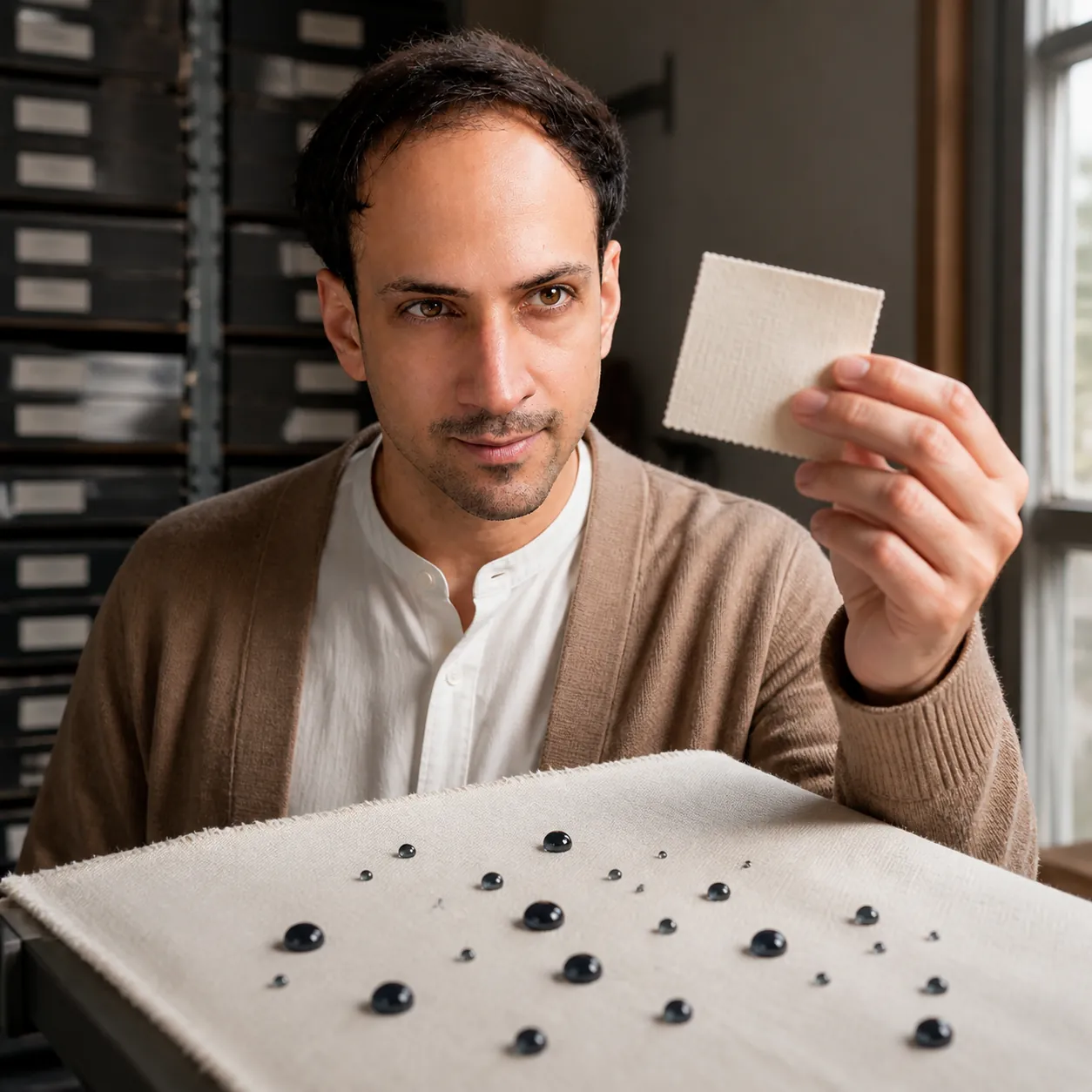
Leaping Dew on a Chilled Plate
صورةAI Portraits

Create a square 1:1 museum-catalog frame with a strong first read and a slower second read at exactly 2880x2880 pixels. Location: a textile finishing room...

من نص البرومبت

Use the attached reference photo as the identity reference: keep the same face, skin tone, hair and features as the person in that photo, without beautifying, aging or altering them. Create a square 1:1 museum-catalog frame with a strong first read and a slower second read at exactly 2880x2880 pixels. Location: a textile finishing room with bolts of white cloth racked. Show the subject in a pressed indigo work shirt buttoned to one below the collar, clipping a cloth sample onto a wooden hanger. The impossible-looking event must obey this clear system: a chilled coated plate whose condensing dew droplets merge and fling themselves clear of the surface without any push turns refusal into something the eye can verify at arm's length. Explore how ordinary water earns the poise of a rarer, heavier liquid; direct expression and posture toward earned calm, never melodrama or ad-like confidence. Use a 90mm macro-to-portrait hybrid: the water's nearest detail sharp by the lens, their face readable beyond it. Make the composition let matte dryness dominate and glints stay few and earned. Render it as high-concept wetting-science portraiture built from real superhydrophobic materials, documentary calm, droplet-true refraction and reflection, and quietly exact bench craft, using clean side-window daylight that keeps every highlight on the water small and honest and a palette of pale cement, warm oat, and one measure of saffron. Photorealistic: this must read as a real photograph from a physical camera, never an illustration, painting, or 3D render. Resolve real surface detail: brass darkened in the recesses and bright where thumbs land, and lacquer crazed rather than perfect. Keep one identity-locked person, credible hands and fingers, natural fabric, and coherent scale, contact, reflections, shadows, airflow, deformation, and materials. Background people only when essential, always secondary and clearly different. Avoid CGI chrome water, crown-splash stock shots, glowing droplets, force-field ripples, and glycerin beads faked on every surface. No text, labels, logos, signatures, watermarks, random symbols, plastic skin, excessive bloom, or glossy AI finish.
Water-Shedding Cotton in the Library
صورةAI Portraits

Create a square 1:1 museum-catalog frame with a strong first read and a slower second read at exactly 2880x2880 pixels. Location: a daylight materials...

من نص البرومبت

Use the attached reference photo as the identity reference: keep the same face, skin tone, hair and features as the person in that photo, without beautifying, aging or altering them. Create a square 1:1 museum-catalog frame with a strong first read and a slower second read at exactly 2880x2880 pixels. Location: a daylight materials library lined with labeled swatch drawers. Show the subject in a camel knit cardigan over a white band-collar shirt, matching one swatch card against the window light. The impossible-looking event must obey this clear system: a panel of white cotton whose treated weave sheds ink-dark droplets whole and stays bone dry beneath them turns refusal into something the eye can verify at arm's length. Explore what water becomes in a world where nothing will absorb it; direct expression and posture toward reverent precision, never melodrama or ad-like confidence. Use a 90mm macro-to-portrait hybrid: the water's nearest detail sharp by the lens, their face readable beyond it. Make the composition keep the room austere so the water is the only event. Render it as gallery-grade applied-physics photography built from working water demonstrations, matte industrial styling, physically correct highlights, and long-held observational framing, using clean side-window daylight that keeps every highlight on the water small and honest and a palette of matte graphite, unglazed clay, and a quiet viridian accent. Photorealistic: this must read as a real photograph from a physical camera, never an illustration, painting, or 3D render. Resolve real surface detail: glass with real thickness at its edge, reflections that carry the room's actual colour, and dust visible only at grazing angles. Keep one identity-locked person, credible hands and fingers, natural fabric, and coherent scale, contact, reflections, shadows, airflow, deformation, and materials. Background people only when essential, always secondary and clearly different. Avoid CGI chrome water, crown-splash stock shots, glowing droplets, force-field ripples, and glycerin beads faked on every surface. No text, labels, logos, signatures, watermarks, random symbols, plastic skin, excessive bloom, or glossy AI finish.
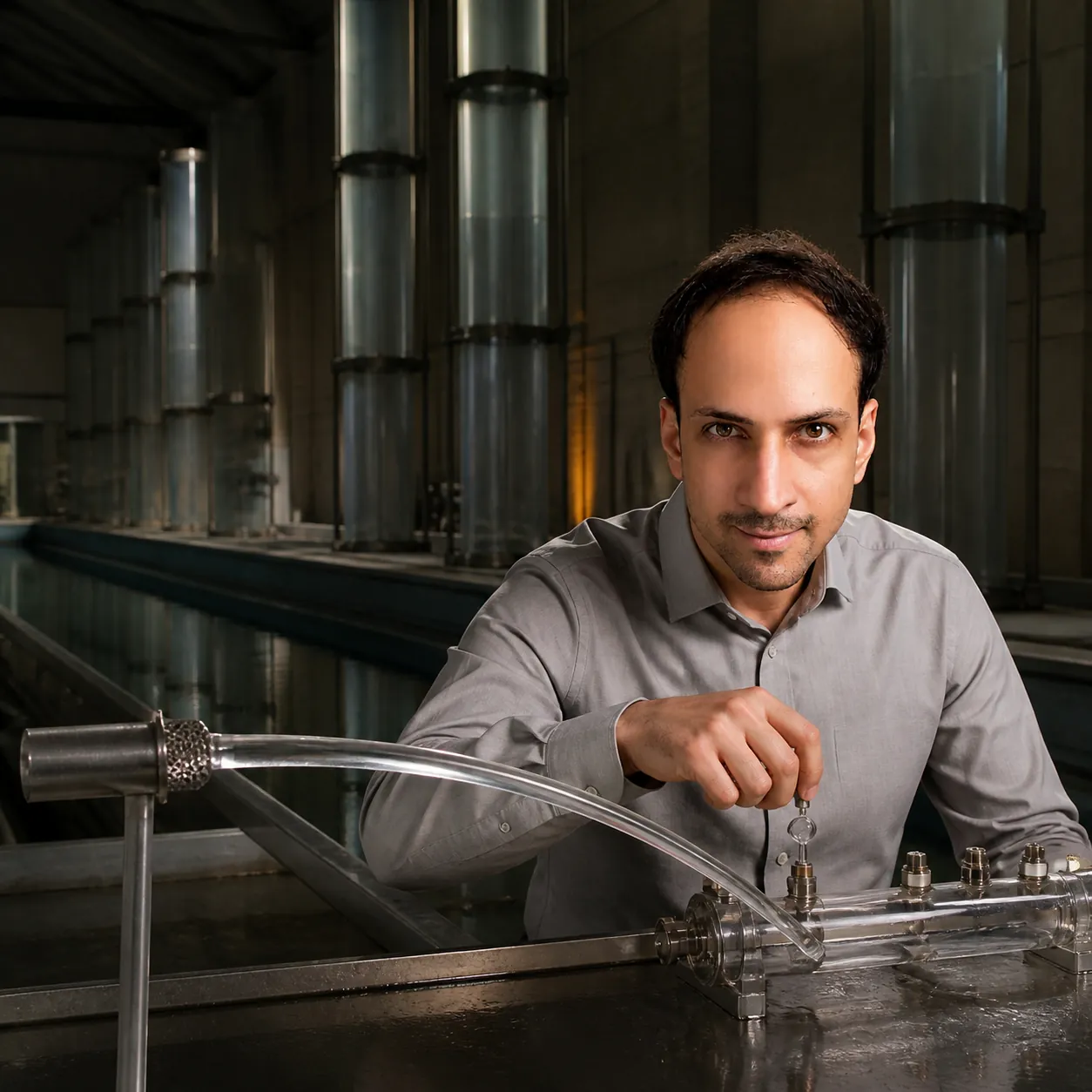
Bent Glass Arc in the Hydraulics Hall
صورةAI Portraits

Create a square 1:1 museum-catalog frame with a strong first read and a slower second read at exactly 2880x2880 pixels. Location: a university hydraulics...

من نص البرومبت

Use the attached reference photo as the identity reference: keep the same face, skin tone, hair and features as the person in that photo, without beautifying, aging or altering them. Create a square 1:1 museum-catalog frame with a strong first read and a slower second read at exactly 2880x2880 pixels. Location: a university hydraulics hall of tall standpipes and long still channels. Show the subject in a pressed pale-grey shirt with sleeves buttoned at the wrist, bleeding one air bubble from a clear manifold line. Treat this mechanism as the frame’s governing rule: an arc of water from a honeycomb-straightened nozzle that stands so clear and still it reads as a rod of bent glass puts continuous motion through a form that never once looks hurried. Explore why water that keeps perfect order looks more impossible than water in chaos; direct expression and posture toward gentle vigilance, never melodrama or ad-like confidence. Use a calm wide 35mm view that keeps verticals true and places them just off the flow's axis. Make the composition hold clean empty space where turbulence would have been. Render it as quiet kinetic-art portraiture combining working flow sculpture, honest wet-surface materiality, calm controlled studio styling, and unforced human presence, using one low raking beam that turns every smooth surface into readable contour and a palette of brushed steel, water grey, and one amber gleam. Photorealistic: this must read as a real photograph from a physical camera, never an illustration, painting, or 3D render. Resolve real surface detail: paper fibre visible at cut edges, plastic that shows mould lines, and paint thicker where a brush turned. Keep one identity-locked person, credible hands and fingers, natural fabric, and coherent scale, contact, reflections, shadows, airflow, deformation, and materials. Background people only when essential, always secondary and clearly different. Avoid stock waterfall mist, whirlpool vortices, ripple-covered surfaces, levitating water spheres, and dramatic slow-motion splash photography. No text, labels, logos, signatures, watermarks, random symbols, plastic skin, excessive bloom, or glossy AI finish.
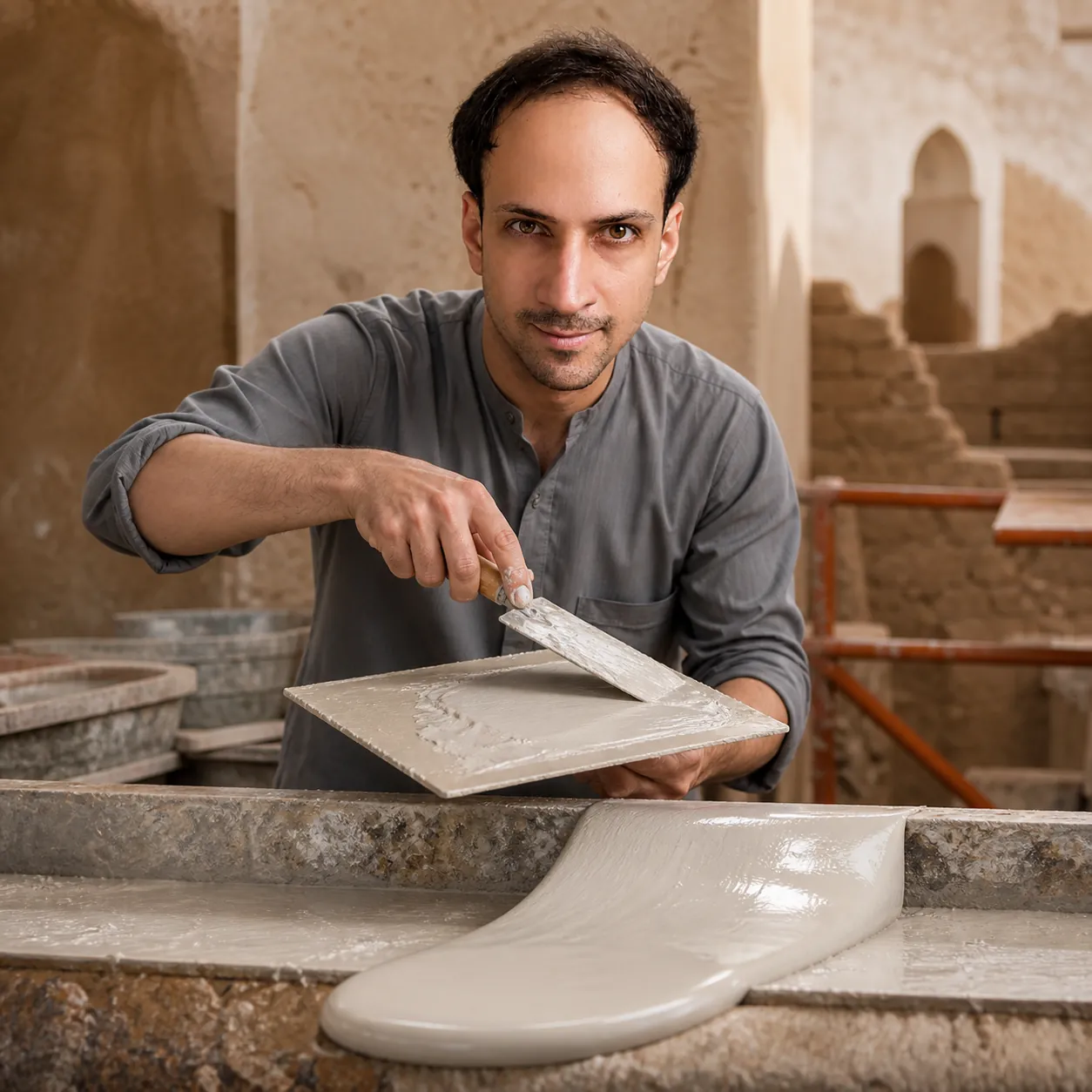
Slow Glacier in Diriyah
صورةAI Portraits

Create a square 1:1 museum-catalog frame with a strong first read and a slower second read at exactly 2880x2880 pixels. Location: a mud-brick restoration...

من نص البرومبت

Use the attached reference photo as the identity reference: keep the same face, skin tone, hair and features as the person in that photo, without beautifying, aging or altering them. Create a square 1:1 museum-catalog frame with a strong first read and a slower second read at exactly 2880x2880 pixels. Location: a mud-brick restoration bay in Diriyah with troughs of resting plaster. Show the subject in a plain ash-grey traditional Gulf outfit with sleeves folded back twice, loading a hawk board with one clean trowel stroke. The impossible-looking event must obey this clear system: a bar of silicone bounce putty that has crept overnight across the shelf edge in one smooth unbroken glacier tongue answers the manner of a force rather than its size. Explore whether patience is a property of minds or simply of timescales; direct expression and posture toward attentive calm, never melodrama or ad-like confidence. Use a 90mm close-working lens: the fluid's response sharp near the frame's base and their attentive face readable above it. Make the composition anchor the brightest highlight on the material, never on them. Render it as quiet kinetic still-life portraiture built from genuine non-Newtonian samples, honest studio texture, believable hand-scale staging, and patient documentary framing, using even skylit top light softened by white walls and honest shadow and a palette of wet cement, ivory, and one line of safety orange. Photorealistic: this must read as a real photograph from a physical camera, never an illustration, painting, or 3D render. Resolve real surface detail: glass with real thickness at its edge, reflections that carry the room's actual colour, and dust visible only at grazing angles. Keep one identity-locked person, credible hands and fingers, natural fabric, and coherent scale, contact, reflections, shadows, airflow, deformation, and materials. Background people only when essential, always secondary and clearly different. Avoid rainbow slime aesthetics, splattered goo on skin, speaker-driven paint splashes, and ASMR dripping close-ups. No text, labels, logos, signatures, watermarks, random symbols, plastic skin, excessive bloom, or glossy AI finish.
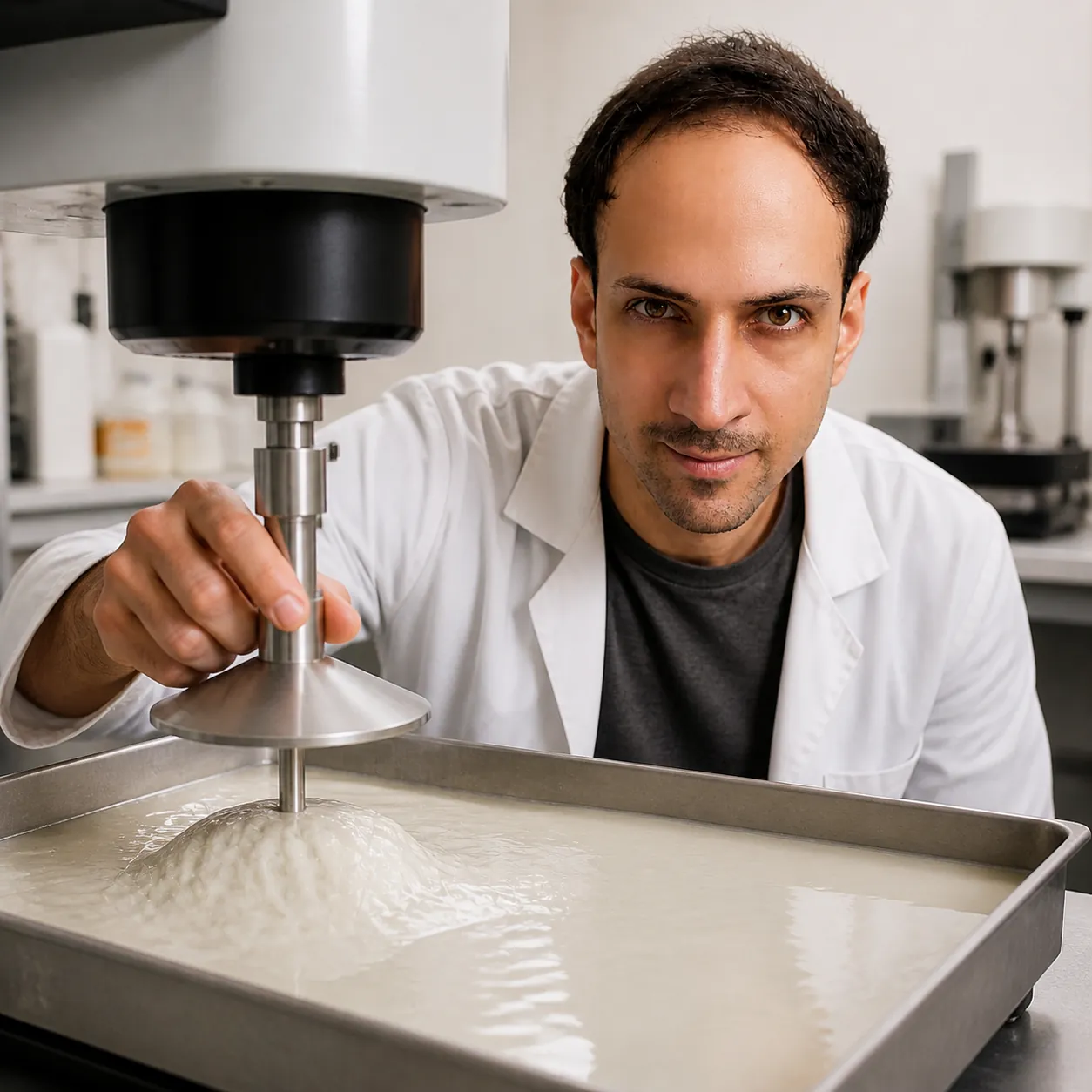
Cornstarch That Answers Back
صورةAI Portraits

Create a square 1:1 museum-catalog frame with a strong first read and a slower second read at exactly 2880x2880 pixels. Location: a university rheology lab...

من نص البرومبت

Use the attached reference photo as the identity reference: keep the same face, skin tone, hair and features as the person in that photo, without beautifying, aging or altering them. Create a square 1:1 museum-catalog frame with a strong first read and a slower second read at exactly 2880x2880 pixels. Location: a university rheology lab with a cone-and-plate instrument at rest. Show the subject in a white lab coat open over a dark grey crew-neck, lowering the instrument's cone with two careful fingers. Make one rigorous physical condition the conceptual engine: a wide steel tray of dense cornstarch suspension that carries their struck knuckles like pavement yet swallows their resting hand answers the manner of a force rather than its size. Explore why a liquid is entitled to behave like stone when questioned rudely; direct expression and posture toward measured astonishment, never melodrama or ad-like confidence. Use an eye-level 80mm medium-format viewpoint with honest perspective and gentle depth of field. Make the composition give the substance's reply the same visual weight as their face. Render it as precise rheological portrait realism grounded in laboratory-true material response, calm documentary texture, instrument-grade staging, and quietly humane composition, using even skylit top light softened by white walls and honest shadow and a palette of chalk white, wet slate, and one seam of ochre. Photorealistic: this must read as a real photograph from a physical camera, never an illustration, painting, or 3D render. Resolve real surface detail: true skin texture with pores and fine hair at the hairline, and fabric that creases where it is actually stressed. Keep one identity-locked person, credible hands and fingers, natural fabric, and coherent scale, contact, reflections, shadows, airflow, deformation, and materials. Background people only when essential, always secondary and clearly different. Avoid rainbow slime aesthetics, splattered goo on skin, speaker-driven paint splashes, and ASMR dripping close-ups. No text, labels, logos, signatures, watermarks, random symbols, plastic skin, excessive bloom, or glossy AI finish.
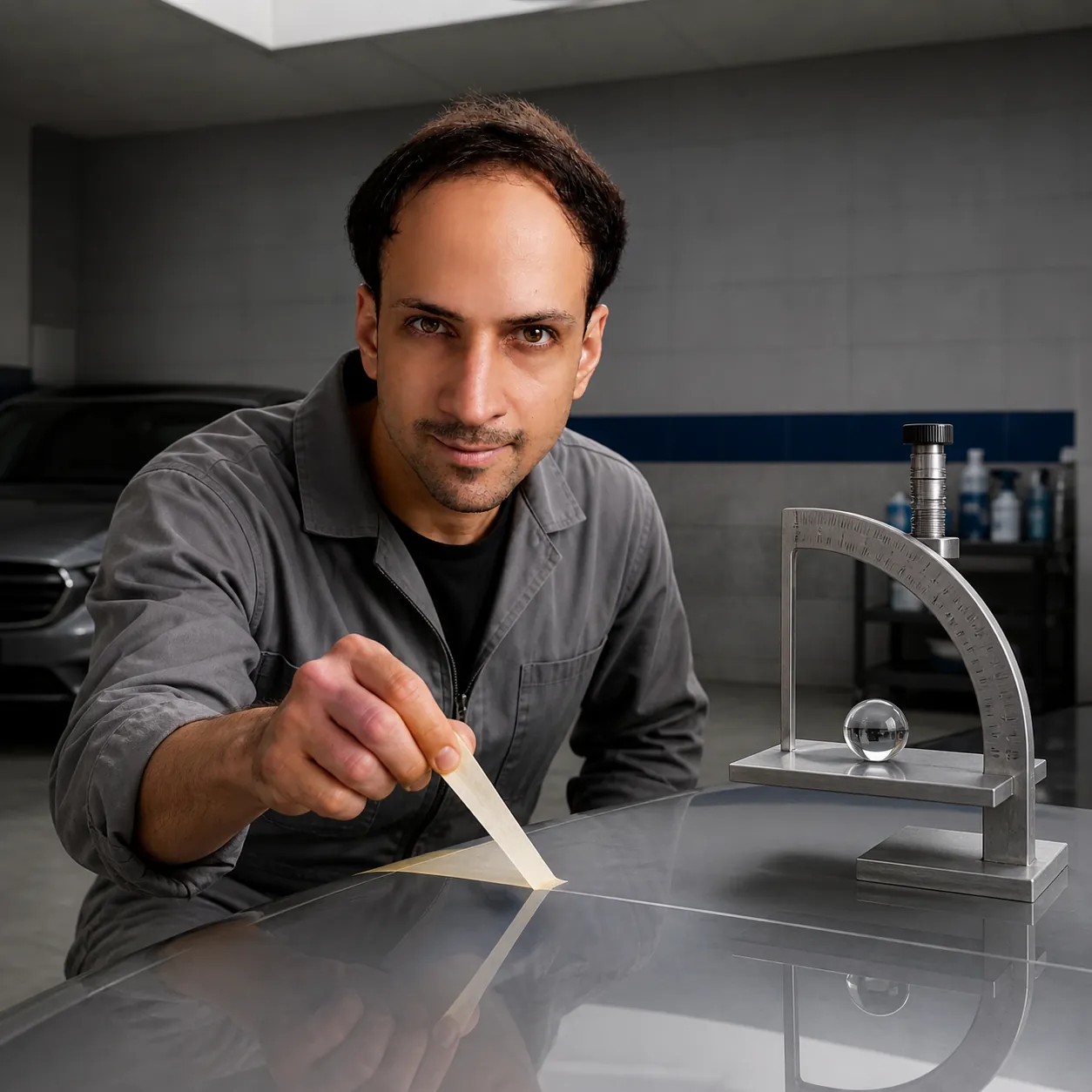
Perfect Droplet in the Detailing Bay
صورةAI Portraits

Create a square 1:1 museum-catalog frame with a strong first read and a slower second read at exactly 2880x2880 pixels. Location: a quiet car-detailing bay...

من نص البرومبت

Use the attached reference photo as the identity reference: keep the same face, skin tone, hair and features as the person in that photo, without beautifying, aging or altering them. Create a square 1:1 museum-catalog frame with a strong first read and a slower second read at exactly 2880x2880 pixels. Location: a quiet car-detailing bay in Riyadh after the last client. Show the subject in a zipped grey coverall folded open over a black tee, lifting a strip of masking tape from painted metal. Build the artwork around this material rule: a bench goniometer that projects one resting droplet's silhouette, a nearly complete sphere touching its coated slide at one point proves that texture too small to see decides what water may touch. Explore how much of touching is really permission granted at invisible scales; direct expression and posture toward measured curiosity, never melodrama or ad-like confidence. Use a restrained 35mm environmental view with them at one third and the demonstration at the other. Make the composition keep the room austere so the water is the only event. Render it as gallery-grade applied-physics photography built from working water demonstrations, matte industrial styling, physically correct highlights, and long-held observational framing, using soft overcast skylight with shadows opened by one matte white bounce and a palette of brushed aluminum, bone linen, and one line of indigo. Photorealistic: this must read as a real photograph from a physical camera, never an illustration, painting, or 3D render. Resolve real surface detail: cotton that hangs by its own weight, seams that pucker very slightly, and collars softened by washing. Keep one identity-locked person, credible hands and fingers, natural fabric, and coherent scale, contact, reflections, shadows, airflow, deformation, and materials. Background people only when essential, always secondary and clearly different. Avoid cartoon dewdrop gloss, rainbow refraction overload, levitating water blobs, spiritual lotus kitsch, and hoses spraying dramatic mist. No text, labels, logos, signatures, watermarks, random symbols, plastic skin, excessive bloom, or glossy AI finish.
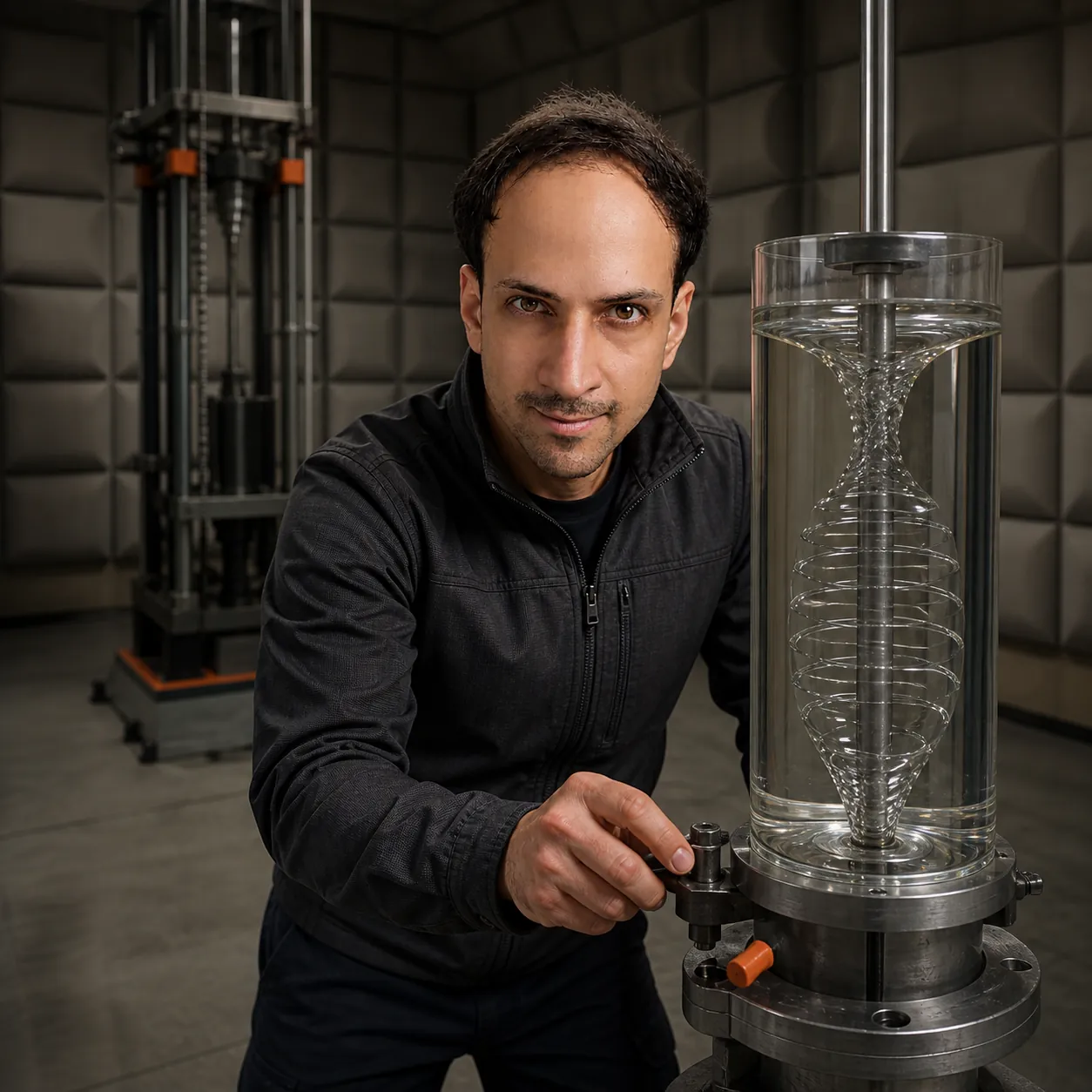
The Rod-Climbing Polymer
صورةAI Portraits

Create a square 1:1 museum-catalog frame with a strong first read and a slower second read at exactly 2880x2880 pixels. Location: a padded impact-test room...

من نص البرومبت

Use the attached reference photo as the identity reference: keep the same face, skin tone, hair and features as the person in that photo, without beautifying, aging or altering them. Create a square 1:1 museum-catalog frame with a strong first read and a slower second read at exactly 2880x2880 pixels. Location: a padded impact-test room with a guided drop rig standing idle. Show the subject in a zipped charcoal technical jacket over dark work trousers, setting the release catch with one deliberate thumb. Make one rigorous physical condition the conceptual engine: a glass cylinder of clear polymer solution that climbs the spinning stir rod against every instinct a centrifuge ever taught answers the manner of a force rather than its size. Explore how memory can live in a substance with no fixed shape; direct expression and posture toward measured astonishment, never melodrama or ad-like confidence. Use an eye-level 80mm medium-format viewpoint with honest perspective and gentle depth of field. Make the composition keep every contour of the fluid sharper than the room behind. Render it as museum-grade demonstration realism combining faithful fluid behavior, tactile material surfaces, patient observational portrait photography, and physically accurate weight and reflection, using diffused overhead panels dimmed low enough to keep every reflection readable and a palette of wet cement, ivory, and one line of safety orange. Photorealistic: this must read as a real photograph from a physical camera, never an illustration, painting, or 3D render. Resolve real surface detail: fine grit in the texture of concrete, efflorescence at damp edges, and hairline cracks that follow stress. Keep one identity-locked person, credible hands and fingers, natural fabric, and coherent scale, contact, reflections, shadows, airflow, deformation, and materials. Background people only when essential, always secondary and clearly different. Avoid rainbow slime aesthetics, splattered goo on skin, speaker-driven paint splashes, and ASMR dripping close-ups. No text, labels, logos, signatures, watermarks, random symbols, plastic skin, excessive bloom, or glossy AI finish.
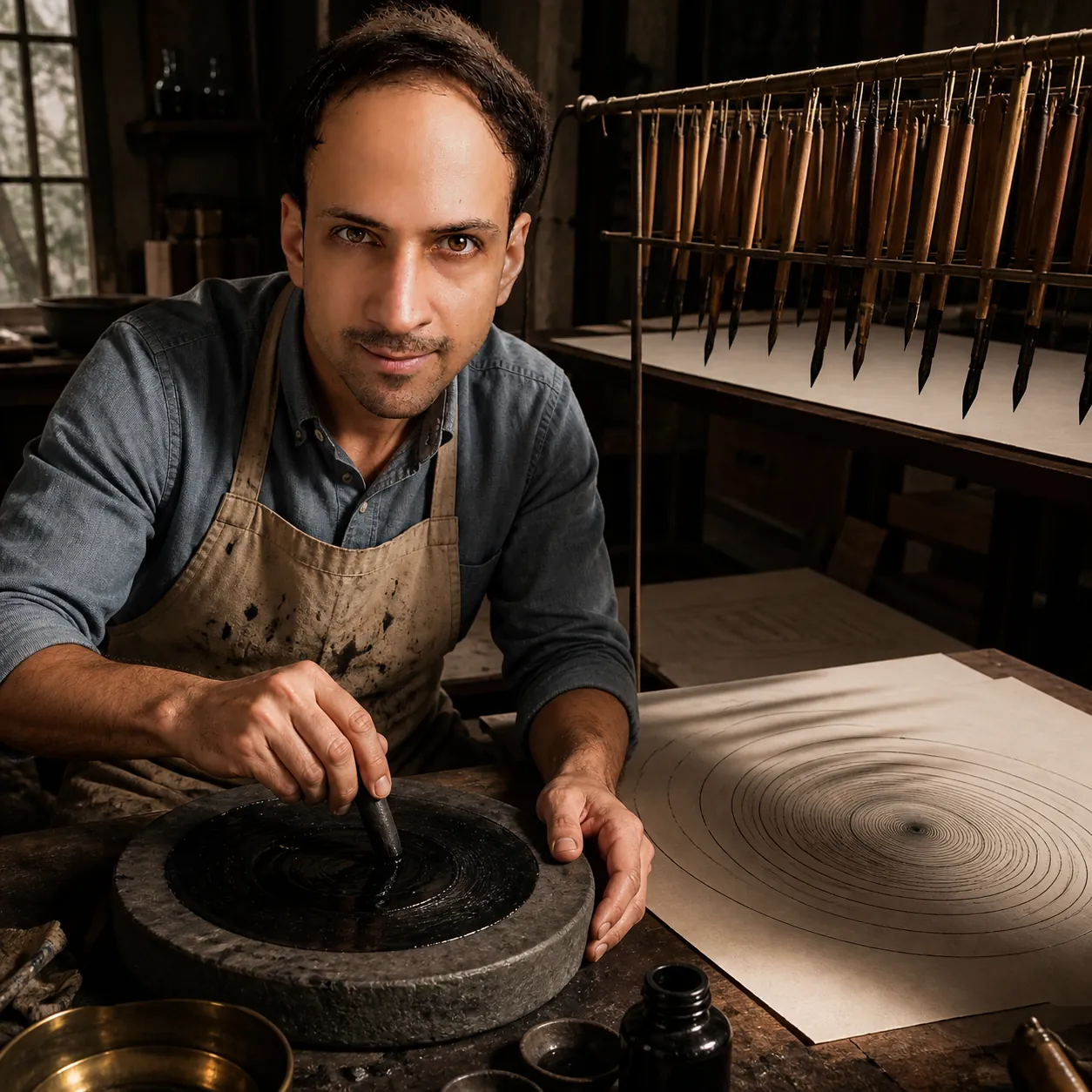
Narrowing Spiral in the Ink Studio
صورةAI Portraits

Create a square 1:1 museum-catalog frame with a strong first read and a slower second read at exactly 2880x2880 pixels. Location: an ink-maker's studio,...

من نص البرومبت

Use the attached reference photo as the identity reference: keep the same face, skin tone, hair and features as the person in that photo, without beautifying, aging or altering them. Create a square 1:1 museum-catalog frame with a strong first read and a slower second read at exactly 2880x2880 pixels. Location: an ink-maker's studio, reed pens drying over blank sheets. Show the subject in an ink-flecked linen apron over a soft chambray shirt, grinding an ink stick in slow circles on a stone. Treat this mechanism as the frame’s governing rule: a single damped pendulum whose ink pen tightens its elliptical orbit into a spiral that narrows with every lap leaves authorship with gravity while the machine merely steadies the pen. Explore how the same pull that anchors them to the floor produces such delicacy; direct expression and posture toward tempered curiosity, never melodrama or ad-like confidence. Frame at the height of the swinging mass so the trace recedes in true perspective. Make the composition let the drawing's shrinking center sit off-axis from their eyes. Render it as gallery-grade demonstration photography built from lawful gravity-driven motion, physically exact trace geometry, quiet heritage interiors, and unforced human presence, using one low raking beam that lifts the trace into shallow relief and a palette of lamp-soot black, unbleached paper, and one line of brass. Photorealistic: this must read as a real photograph from a physical camera, never an illustration, painting, or 3D render. Resolve real surface detail: floor finish worn along the walked line, skirting marked at shoe height, and corners darker than the open floor. Keep one identity-locked person, credible hands and fingers, natural fabric, and coherent scale, contact, reflections, shadows, airflow, deformation, and materials. Background people only when essential, always secondary and clearly different. Avoid hypnotist's watch iconography, perpetual-motion fantasy rigs, laser-perfect printed curves, cosmic nebula backdrops, and pendulums hung from nothing. No text, labels, logos, signatures, watermarks, random symbols, plastic skin, excessive bloom, or glossy AI finish.
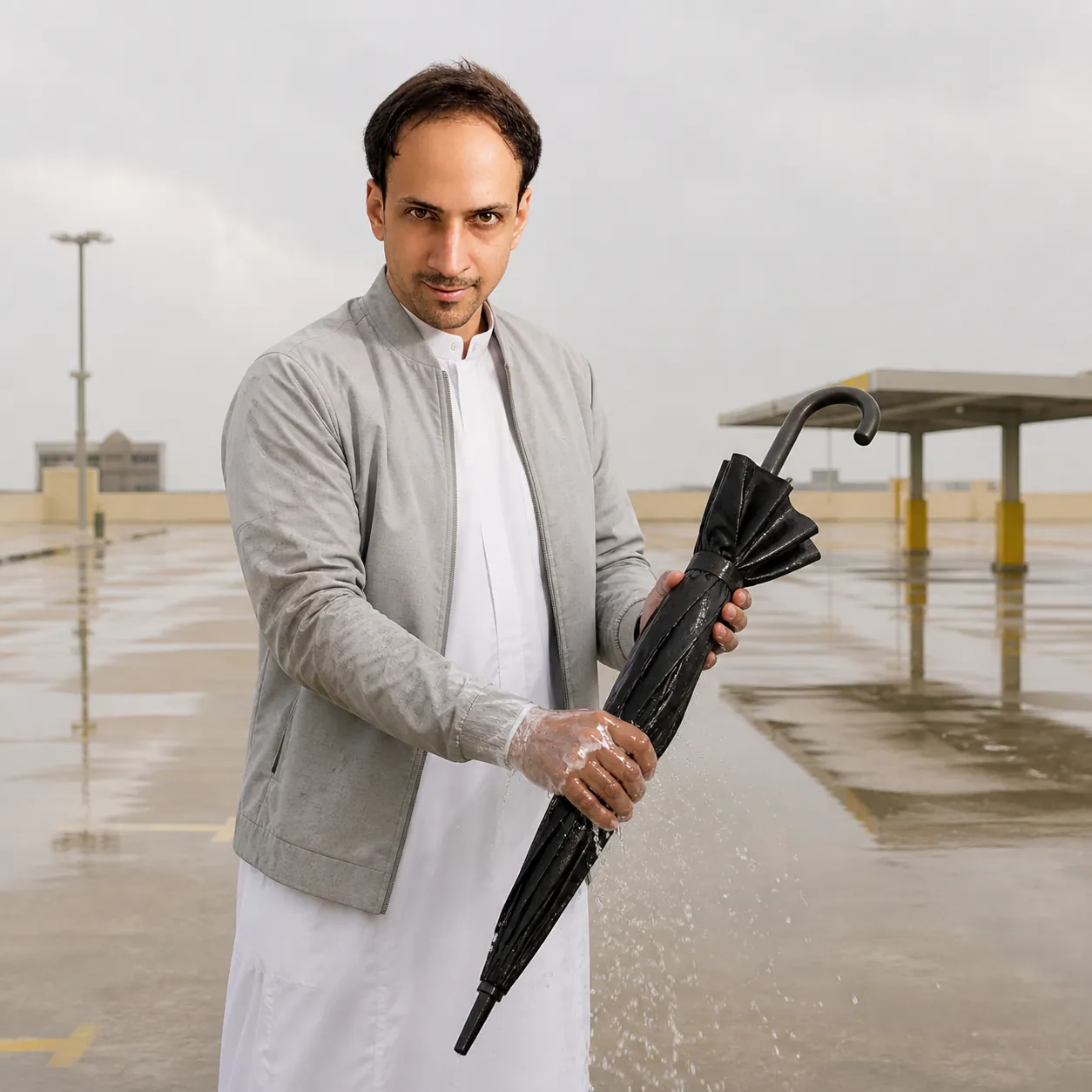
Silver Air Hand After Rain
صورةAI Portraits

Create a square 1:1 museum-catalog frame with a strong first read and a slower second read at exactly 2880x2880 pixels. Location: an open-air car park just...

من نص البرومبت

Use the attached reference photo as the identity reference: keep the same face, skin tone, hair and features as the person in that photo, without beautifying, aging or altering them. Create a square 1:1 museum-catalog frame with a strong first read and a slower second read at exactly 2880x2880 pixels. Location: an open-air car park just after Riyadh's first brief rain. Show the subject in a plain white traditional Gulf outfit under a light grey jacket, closing an umbrella and shaking it once. Treat this mechanism as the frame’s governing rule: a coated hand submerged to the wrist that stays wrapped in a mirror-bright film of trapped air proves that texture too small to see decides what water may touch. Explore how dryness can be engineered as deliberately as any built structure; direct expression and posture toward gentle disbelief, never melodrama or ad-like confidence. Frame level with the work surface so the water's silhouette reads clean against the room. Make the composition hold generous negative space above the water's smallest detail. Render it as museum-grade demonstration realism combining faithful contact-angle physics, tactile fabric and metal surfaces, honest water optics, and unhurried portrait photography, using soft overcast skylight with shadows opened by one matte white bounce and a palette of pale cement, warm oat, and one measure of saffron. Photorealistic: this must read as a real photograph from a physical camera, never an illustration, painting, or 3D render. Resolve real surface detail: leather creased along the lines of use, stitching slightly irregular, and edges burnished from contact. Keep one identity-locked person, credible hands and fingers, natural fabric, and coherent scale, contact, reflections, shadows, airflow, deformation, and materials. Background people only when essential, always secondary and clearly different. Avoid cartoon dewdrop gloss, rainbow refraction overload, levitating water blobs, spiritual lotus kitsch, and hoses spraying dramatic mist. No text, labels, logos, signatures, watermarks, random symbols, plastic skin, excessive bloom, or glossy AI finish.
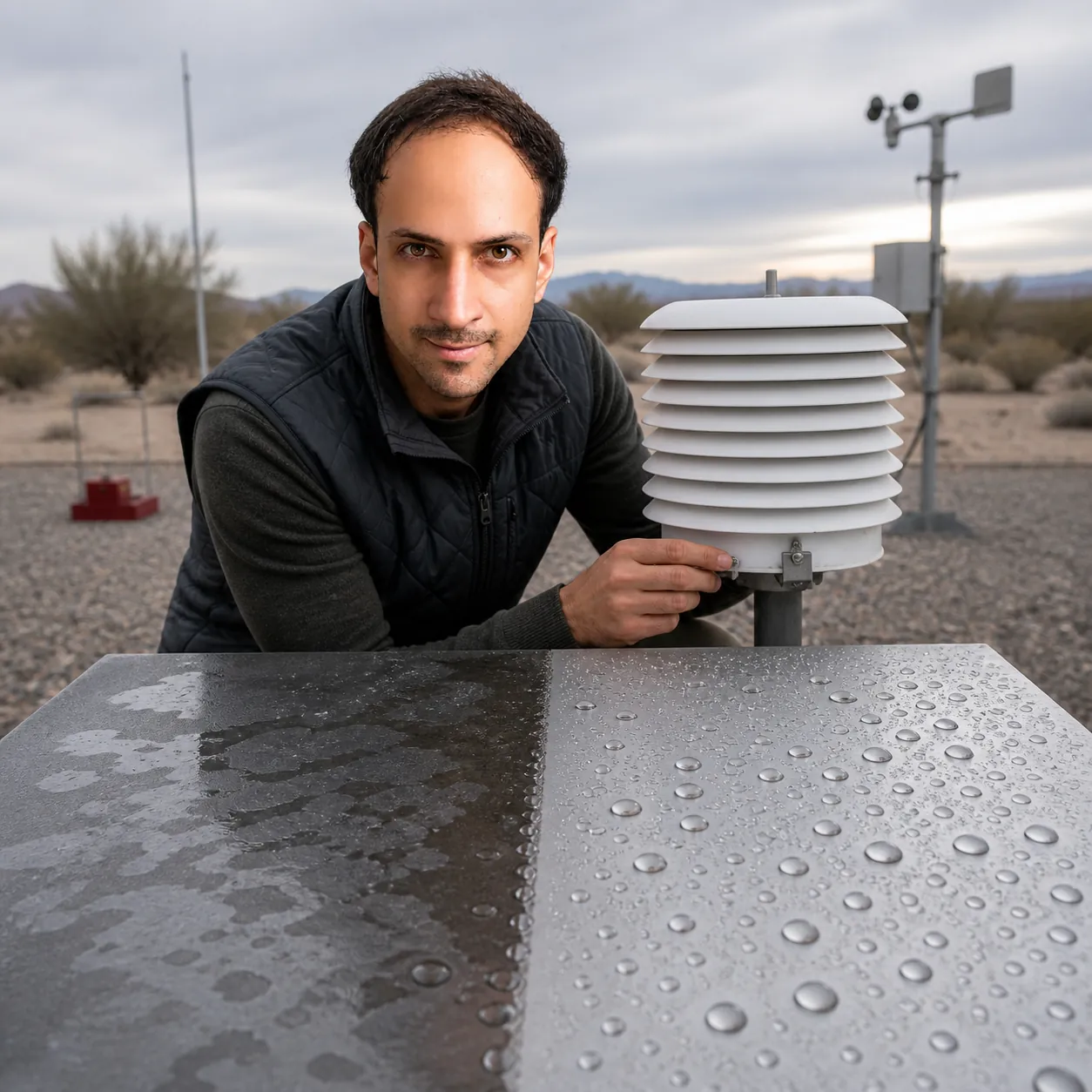
The Wet-Dry Line at Dawn
صورةAI Portraits

Create a square 1:1 museum-catalog frame with a strong first read and a slower second read at exactly 2880x2880 pixels. Location: the gravel apron of a...

من نص البرومبت

Use the attached reference photo as the identity reference: keep the same face, skin tone, hair and features as the person in that photo, without beautifying, aging or altering them. Create a square 1:1 museum-catalog frame with a strong first read and a slower second read at exactly 2880x2880 pixels. Location: the gravel apron of a desert weather station at first light. Show the subject in a quilted charcoal vest over a warm base layer, latching the louvered instrument screen shut gently. Build the artwork around this material rule: a steel plate coated on one half only, where identical droplets sprawl flat or stand as spheres across one machined line turns refusal into something the eye can verify at arm's length. Explore whether a boundary kept perfectly is a wall or a kindness; direct expression and posture toward patient scrutiny, never melodrama or ad-like confidence. Use a restrained 35mm environmental view with them at one third and the demonstration at the other. Make the composition align their eye line with the border between wet and dry. Render it as gallery-grade applied-physics photography built from working water demonstrations, matte industrial styling, physically correct highlights, and long-held observational framing, using soft overcast skylight with shadows opened by one matte white bounce and a palette of slate grey, chalk white, and one madder-red note. Photorealistic: this must read as a real photograph from a physical camera, never an illustration, painting, or 3D render. Resolve real surface detail: label-free packaging showing carton fibre, cardboard bruised at the corners, and tape lifting slightly at one end. Keep one identity-locked person, credible hands and fingers, natural fabric, and coherent scale, contact, reflections, shadows, airflow, deformation, and materials. Background people only when essential, always secondary and clearly different. Avoid CGI chrome water, crown-splash stock shots, glowing droplets, force-field ripples, and glycerin beads faked on every surface. No text, labels, logos, signatures, watermarks, random symbols, plastic skin, excessive bloom, or glossy AI finish.
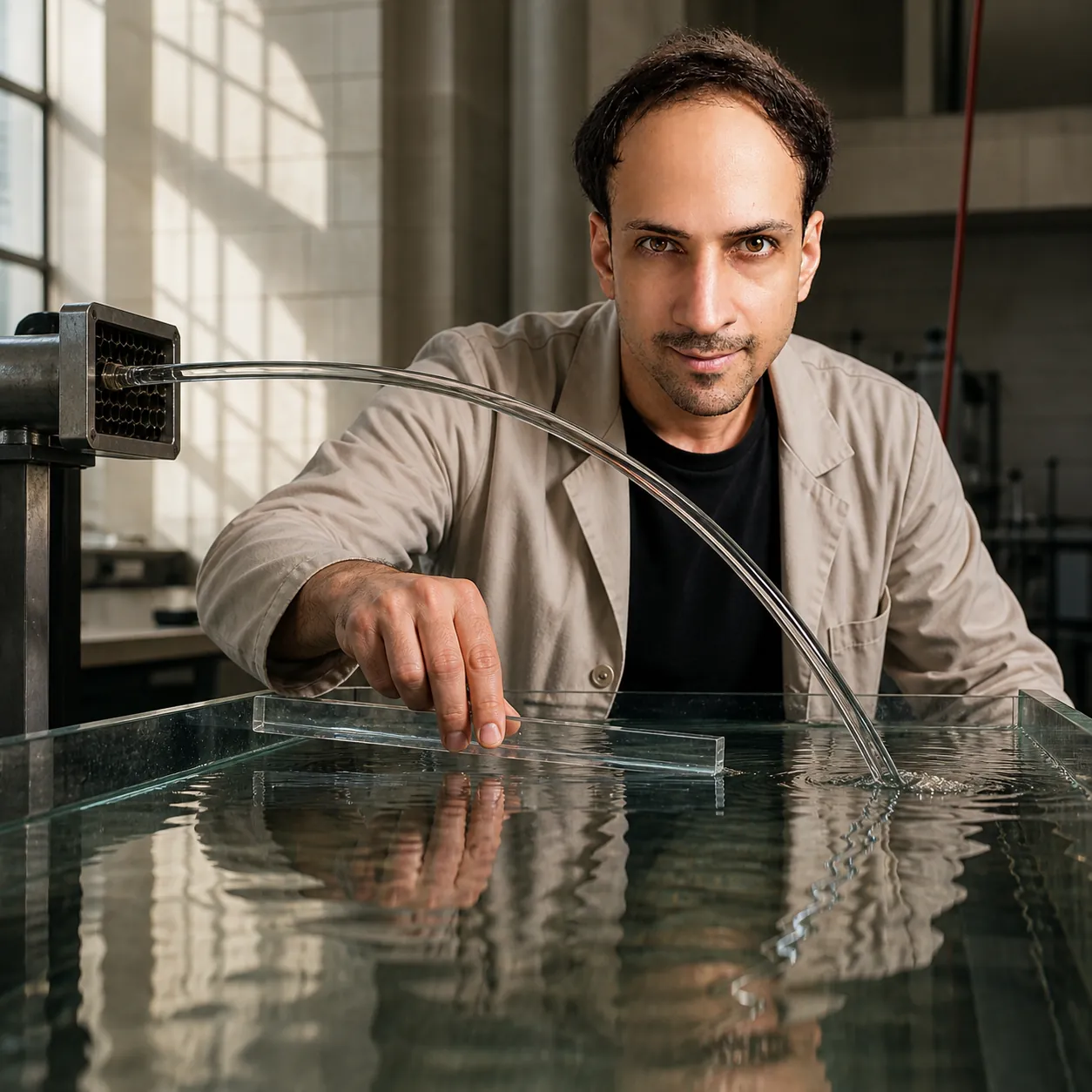
Glass-Rod Water in the Flume Lab
صورةAI Portraits

Create a square 1:1 museum-catalog frame with a strong first read and a slower second read at exactly 2880x2880 pixels. Location: a fluid-dynamics teaching...

من نص البرومبت

Use the attached reference photo as the identity reference: keep the same face, skin tone, hair and features as the person in that photo, without beautifying, aging or altering them. Create a square 1:1 museum-catalog frame with a strong first read and a slower second read at exactly 2880x2880 pixels. Location: a fluid-dynamics teaching lab built around one long clear flume. Show the subject in a putty-colored lab coat open over a plain black tee, skimming the flume's surface with a clear acrylic straightedge. Make one rigorous physical condition the conceptual engine: an arc of water from a honeycomb-straightened nozzle that stands so clear and still it reads as a rod of bent glass gives a normally chaotic process one legible, patient, watchable form. Explore why water that keeps perfect order looks more impossible than water in chaos; direct expression and posture toward level wonder, never melodrama or ad-like confidence. Use an eye-level 60mm medium-format viewpoint with honest perspective and gently limited depth of field. Make the composition let one unbroken waterline run the frame's full width. Render it as high-concept flow portraiture staged with real laminar apparatus, calibrated documentary lighting, optically true refraction, and quietly intelligent restraint, using clean skylight softly refracted through moving water onto pale stone and a palette of wet slate, glass green, and one crimson thread. Photorealistic: this must read as a real photograph from a physical camera, never an illustration, painting, or 3D render. Resolve real surface detail: true skin texture with pores and fine hair at the hairline, and fabric that creases where it is actually stressed. Keep one identity-locked person, credible hands and fingers, natural fabric, and coherent scale, contact, reflections, shadows, airflow, deformation, and materials. Background people only when essential, always secondary and clearly different. Avoid splash crowns, suspended droplet sprays, chrome CGI liquid, neon glowing water, and fantasy water-bending gestures. No text, labels, logos, signatures, watermarks, random symbols, plastic skin, excessive bloom, or glossy AI finish.
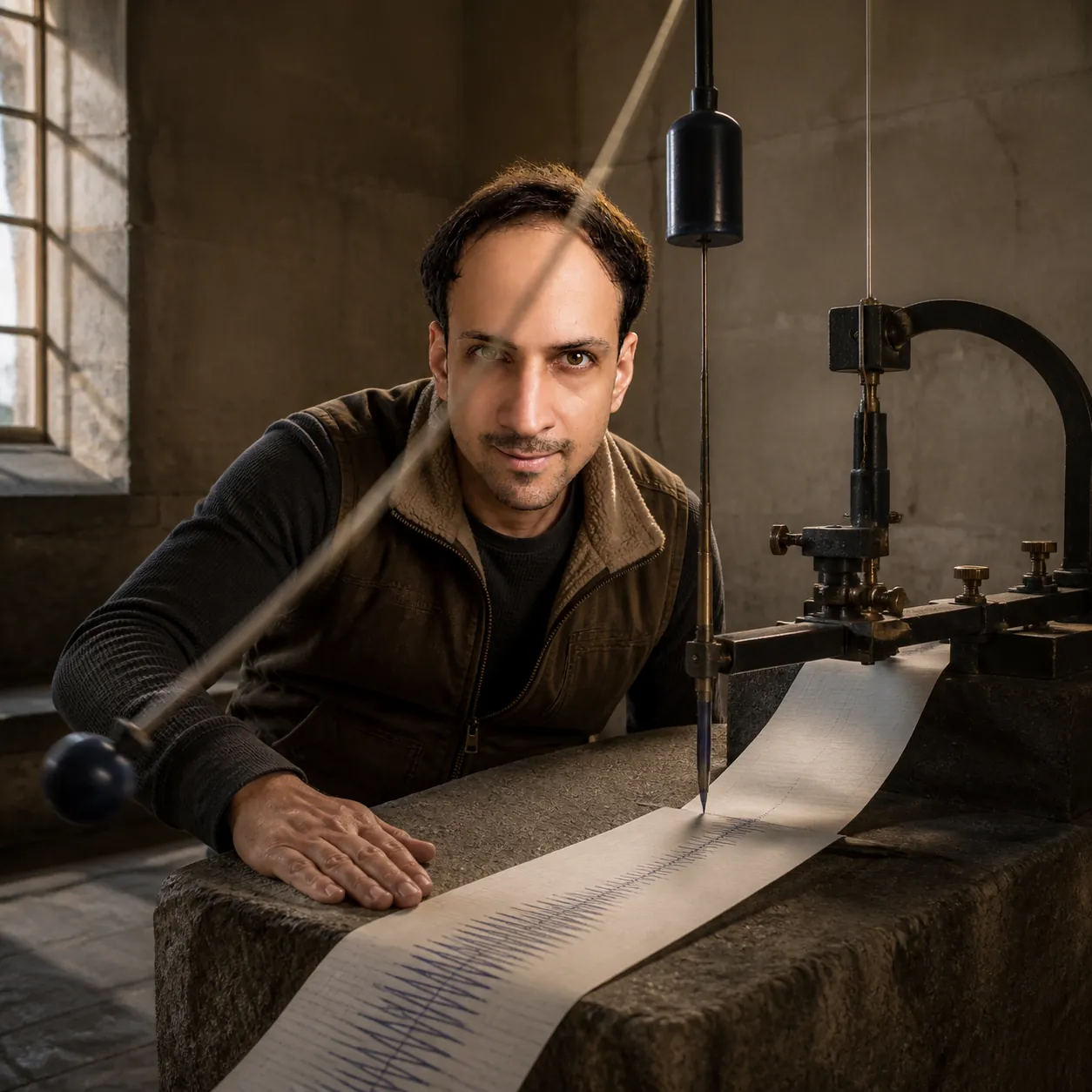
Seismograph of Gravity
صورةAI Portraits

Create a square 1:1 museum-catalog frame with a strong first read and a slower second read at exactly 2880x2880 pixels. Location: a seismic observatory...

من نص البرومبت

Use the attached reference photo as the identity reference: keep the same face, skin tone, hair and features as the person in that photo, without beautifying, aging or altering them. Create a square 1:1 museum-catalog frame with a strong first read and a slower second read at exactly 2880x2880 pixels. Location: a seismic observatory vault, instruments resting on bedrock piers. Show the subject in a fleece-lined canvas vest over a long-sleeved thermal shirt, dusting a bedrock pier with the side of their hand. Use this advanced image-making device as the core logic: a swinging ink pen over a paper strip that a descending weight pulls steadily, writing one long decaying wave leaves authorship with gravity while the machine merely steadies the pen. Explore whether patience is a virtue here or simply the machine's operating speed; direct expression and posture toward modest pride, never melodrama or ad-like confidence. Frame from across the pendulum's plane so its arc crosses the foreground and their face stays clear. Make the composition hold one unfinished pass mid-stroke at the frame's edge. Render it as gallery-grade demonstration photography built from lawful gravity-driven motion, physically exact trace geometry, quiet heritage interiors, and unforced human presence, using late window light crossing the floor at a long shallow angle and a palette of iron black, warm limewash, and a single indigo accent. Photorealistic: this must read as a real photograph from a physical camera, never an illustration, painting, or 3D render. Resolve real surface detail: rubber gone chalky with age, painted metal chipped to primer, and plastic yellowed only where light reaches it. Keep one identity-locked person, credible hands and fingers, natural fabric, and coherent scale, contact, reflections, shadows, airflow, deformation, and materials. Background people only when essential, always secondary and clearly different. Avoid hypnotist's watch iconography, perpetual-motion fantasy rigs, laser-perfect printed curves, cosmic nebula backdrops, and pendulums hung from nothing. No text, labels, logos, signatures, watermarks, random symbols, plastic skin, excessive bloom, or glossy AI finish.