تخطَّ إلى المحتوى
جميع التصنيفات

AI Portraits

Portrait prompts you can use with your own photo.

3845 برومبتات•0 مشتركين
Refrigerator Photographs Flipped to a Grid of Blanks — AI Portrait Prompt
صورةAI Portraits

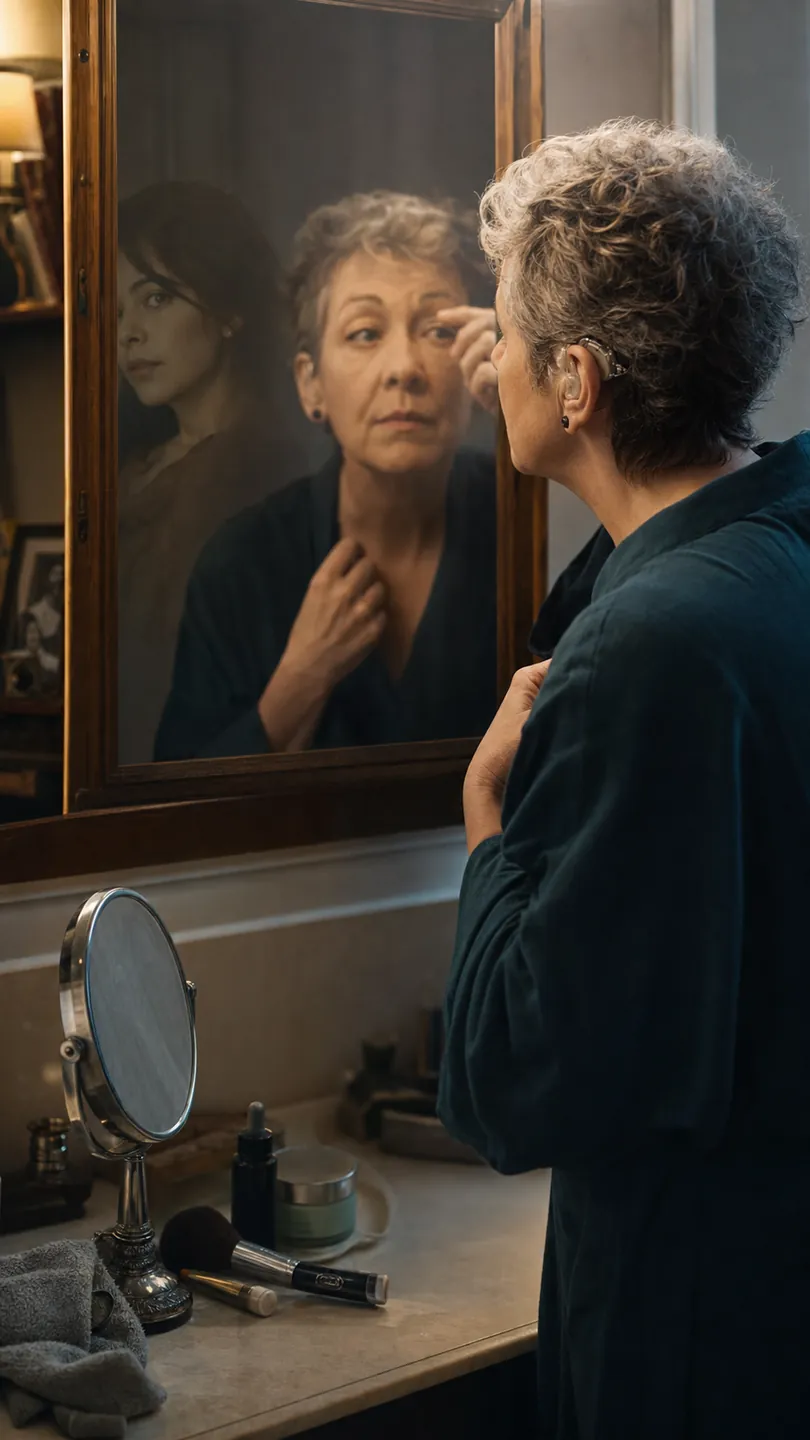
Ground the scene in a reflection delayed by a fraction of a second and grooming objects arranged with ordinary precision. If the person in the reference...

من نص البرومبت

Use the attached reference photo as the identity reference: keep the same face, skin tone, hair and features as the person in that photo, without beautifying, aging or altering them. Create a contemplative single-frame image designed to serve as a visual catalyst for reflective writing. SUBJECT & SCENE — Depict the person from the reference photo in an ordinary moment: getting ready in front of a mirror while the face being prepared for the world does not fully match the inner state. Ground the scene in a reflection delayed by a fraction of a second and grooming objects arranged with ordinary precision. If the person in the reference photo wears a hearing aid, keep it visible and natural, with an unselfconscious posture; if not, do not add one. INNER DYNAMIC — Let the image express this dynamic: the gap between inner experience and what loved ones can see. Show the person as complex and capable, not broken or inspirational. Communicate the tension through restrained posture, attention, and behavior rather than exaggerated facial emotion. SYMBOLIC DETAIL — Integrate two reflections meeting even while the people look away as the only controlled departure from realism. It should feel physically present yet subtle enough to be understood only after the everyday scene is noticed. TIME & IDENTITY — Suggest the changing face seen in the same mirror over years. Let the scene hold this identity question: how to remain knowable when symptoms change communication, memory, availability, or tone. VISUAL LANGUAGE — Use a close environmental portrait that keeps the surrounding routine visible; low television or monitor glow balanced by faint room light; documentary color that feels lived-in rather than art-directed; worn wood, soft fabric creases, and imperfect household surfaces. BOUNDARIES — No words, captions, diagnostic labels, medical clichés, self-harm imagery, horror framing, or sensational despair. Keep the portrayal humane, culturally respectful, emotionally complex, and accessible. Portrait orientation, 9:16, high detail, realistic anatomy and materials.
Refrigerator Photographs Flipped to a Grid of Blanks — AI Portrait Prompt
صورةAI Portraits

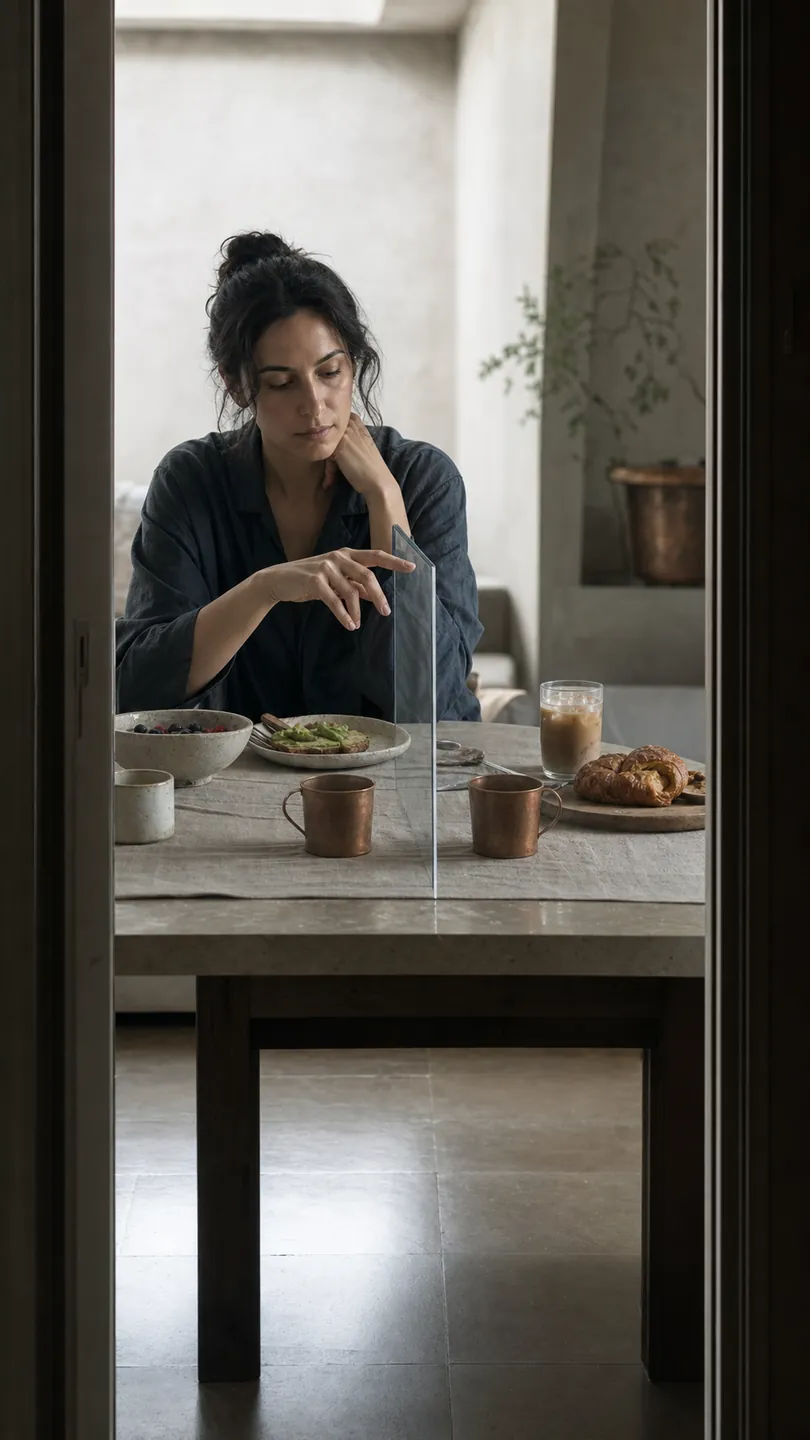
Ground the scene in two equally ordinary breakfast choices, a cooling drink, and a hand hovering without choosing. INNER DYNAMIC — Let the image express...

من نص البرومبت

Use the attached reference photo as the identity reference: keep the same face, skin tone, hair and features as the person in that photo, without beautifying, aging or altering them. Create a contemplative single-frame image designed to serve as a visual catalyst for reflective writing. SUBJECT & SCENE — Depict the person from the reference photo, shown with documentary realism in an ordinary moment: choosing what to eat while several simple decisions quietly accumulate into unexpected pressure. Ground the scene in two equally ordinary breakfast choices, a cooling drink, and a hand hovering without choosing. INNER DYNAMIC — Let the image express this dynamic: the gap between inner experience and what loved ones can see. Show the person as complex and capable, not broken or inspirational. Communicate the tension through restrained posture, attention, and behavior rather than exaggerated facial emotion. SYMBOLIC DETAIL — Integrate two cups separated by a thin pane of clear glass as the only controlled departure from realism. It should feel physically present yet subtle enough to be understood only after the everyday scene is noticed. TIME & IDENTITY — Suggest the repeated choices that begin hundreds of ordinary days. Let the scene hold this identity question: how to remain knowable when symptoms change communication, memory, availability, or tone. VISUAL LANGUAGE — Use a doorway-framed composition that makes a small threshold feel consequential; soft skylight with no obvious source, natural rather than mystical; stone, linen, and muted copper tones; slightly imperfect focus transitions that preserve realism. BOUNDARIES — No words, captions, diagnostic labels, medical clichés, self-harm imagery, horror framing, or sensational despair. Keep the portrayal humane, culturally respectful, emotionally complex, and accessible. Portrait orientation, 9:16, high detail, realistic anatomy and materials.
Refrigerator Photographs Flipped to a Grid of Blanks — AI Portrait Prompt
صورةAI Portraits

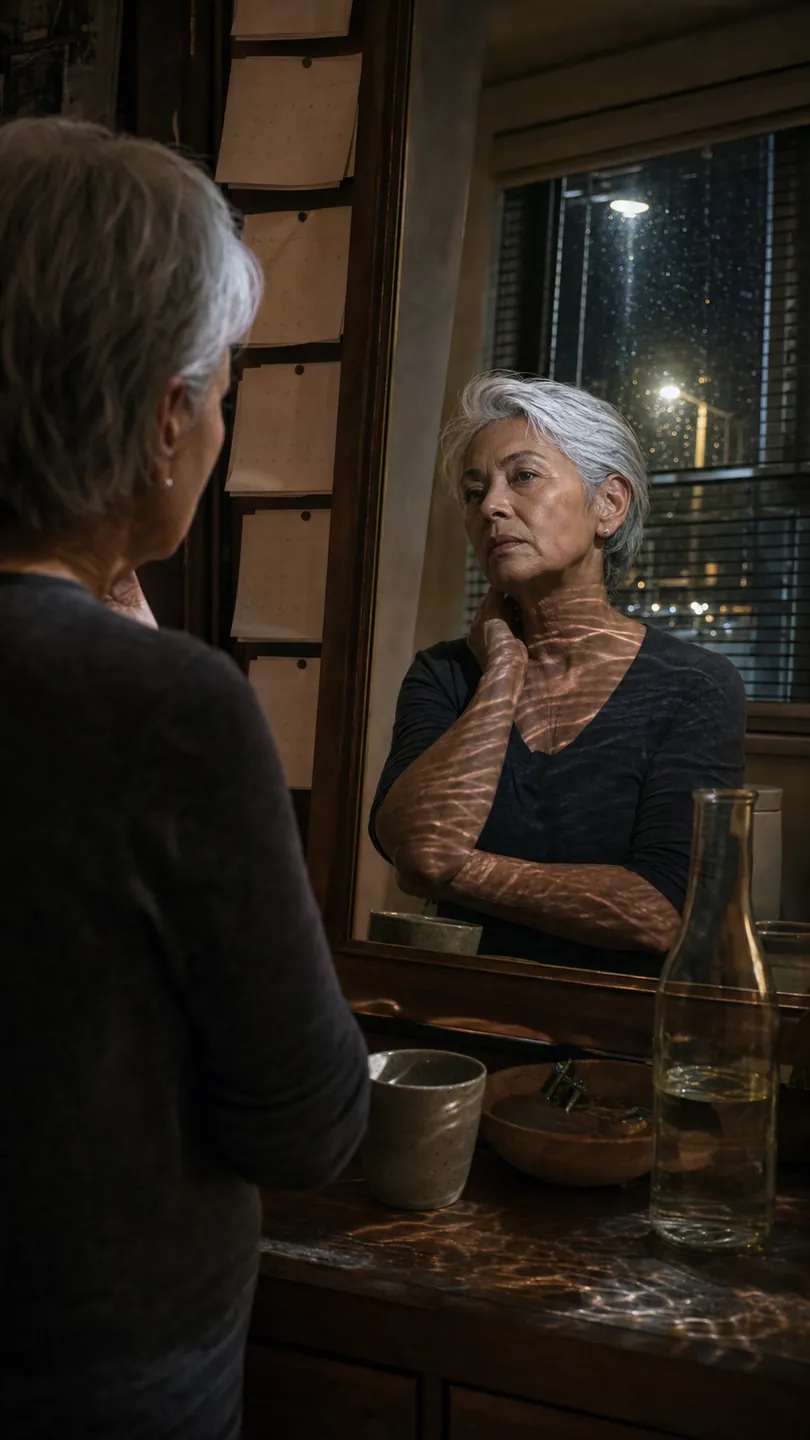
Create a contemplative single-frame image designed to serve as a visual catalyst for reflective writing. SUBJECT & SCENE — Depict the subject with a calm...

من نص البرومبت

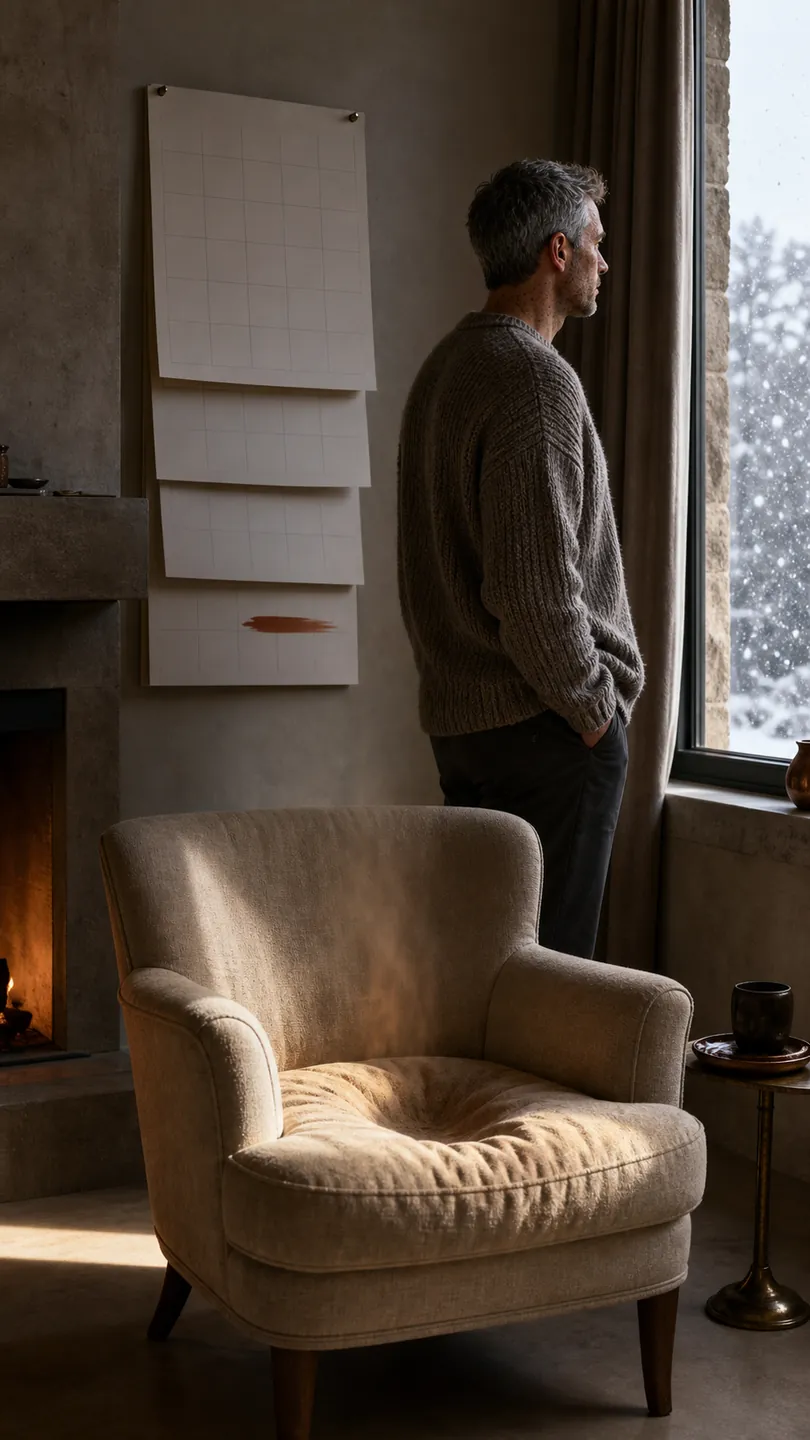
Use the attached reference photo as the identity reference: keep the same face, skin tone, hair and features as the person in that photo, without beautifying, aging or altering them. Create a contemplative single-frame image designed to serve as a visual catalyst for reflective writing. SUBJECT & SCENE — Depict the subject with a calm presence in an ordinary moment: noticing the same difficult season, date, workload, or emotional cycle returning. Ground the scene in layered calendar pages with no legible writing, repeated weather at the window, and one new mark breaking the pattern. INNER DYNAMIC — Let the image express this dynamic: the body becoming either a muted background or an overwhelming source of signals. Show the person as complex and capable, not broken or inspirational. Communicate the tension through restrained posture, attention, and behavior rather than exaggerated facial emotion. SYMBOLIC DETAIL — Integrate water ripples moving across skin and nearby surfaces as the only controlled departure from realism. It should feel physically present yet subtle enough to be understood only after the everyday scene is noticed. TIME & IDENTITY — Suggest several years marked by recurrence, adaptation, and imperfect prediction. Let the scene hold this identity question: how embodiment influences the sense of self when hunger, sound, touch, or fatigue feel unreliable. VISUAL LANGUAGE — Use a mirror-and-room composition where neither view is treated as the definitive self; subtle streetlight filtering through blinds at night; soft neutrals and weathered wood tones; restrained cinematic grain and believable material response. BOUNDARIES — No words, captions, diagnostic labels, medical clichés, self-harm imagery, horror framing, or sensational despair. Keep the portrayal humane, culturally respectful, emotionally complex, and accessible. Portrait orientation, 9:16, high detail, realistic anatomy and materials.
Refrigerator Photographs Flipped to a Grid of Blanks — AI Portrait Prompt
صورةAI Portraits

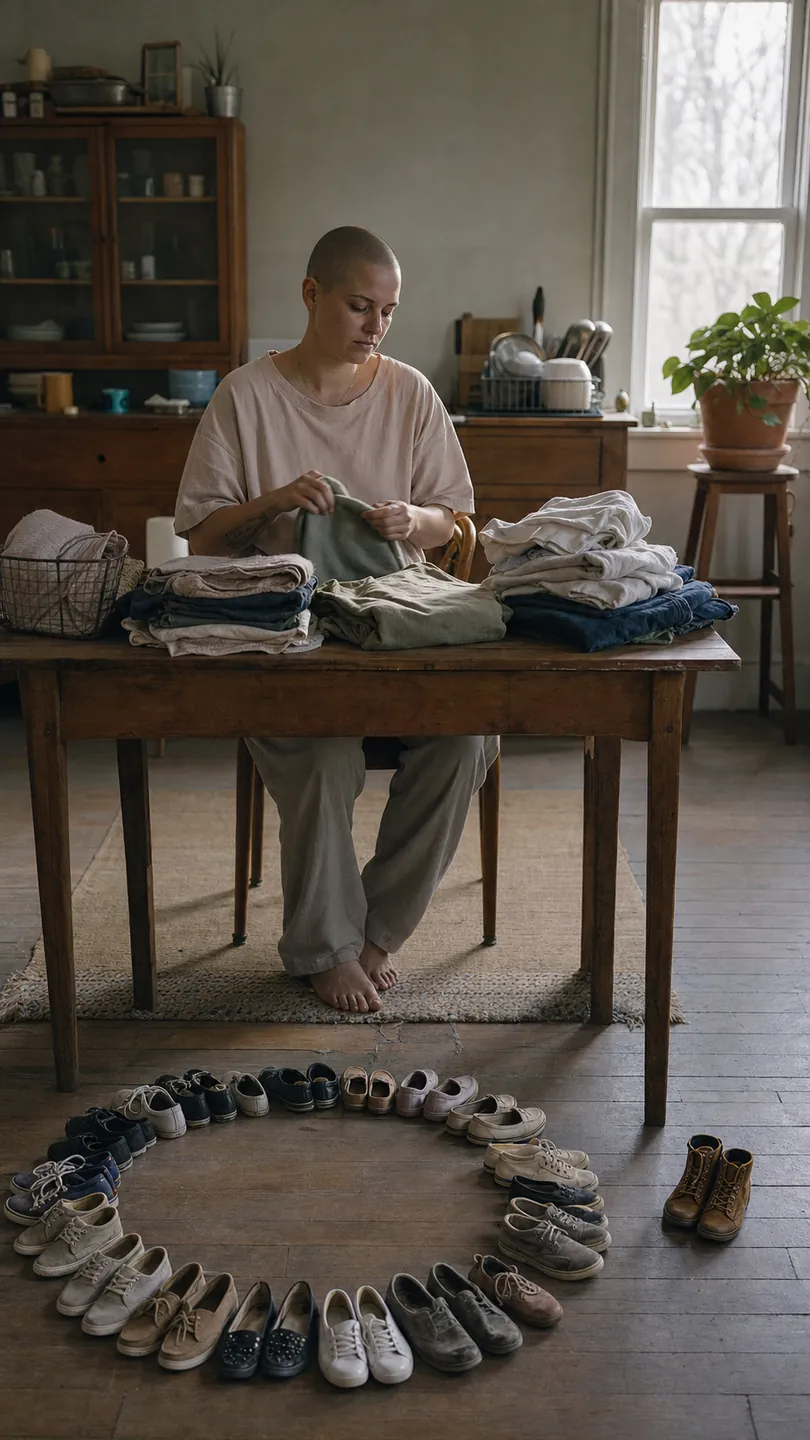
Create a contemplative single-frame image designed to serve as a visual catalyst for reflective writing. SUBJECT & SCENE — Depict the subject in an ordinary...

من نص البرومبت

Use the attached reference photo as the identity reference: keep the same face, skin tone, hair and features as the person in that photo, without beautifying, aging or altering them. Create a contemplative single-frame image designed to serve as a visual catalyst for reflective writing. SUBJECT & SCENE — Depict the subject in an ordinary moment: folding laundry, washing dishes, or clearing a surface when repetition feels either grounding or endless. Ground the scene in repeated fabric folds or water circles, one unfinished section, and evidence of many previous repetitions. INNER DYNAMIC — Let the image express this dynamic: wanting connection while fatigue, anxiety, distraction, or shame create distance. Show the person as complex and capable, not broken or inspirational. Communicate the tension through restrained posture, attention, and behavior rather than exaggerated facial emotion. SYMBOLIC DETAIL — Integrate a circle of shoes with one pair just outside the edge as the only controlled departure from realism. It should feel physically present yet subtle enough to be understood only after the everyday scene is noticed. TIME & IDENTITY — Suggest thousands of domestic actions that rarely enter a life story. Let the scene hold this identity question: whether absence means indifference when it may actually conceal longing, overwhelm, or fear. VISUAL LANGUAGE — Use a restrained symmetrical composition disturbed by one off-center detail; gentle fluorescent light softened by realistic bounce from the room; pale daylight colors with gentle contrast; worn wood, soft fabric creases, and imperfect household surfaces. BOUNDARIES — No words, captions, diagnostic labels, medical clichés, self-harm imagery, horror framing, or sensational despair. Keep the portrayal humane, culturally respectful, emotionally complex, and accessible. Portrait orientation, 9:16, high detail, realistic anatomy and materials.

Refrigerator Photographs Flipped to a Grid of Blanks — AI Portrait Prompt
صورةAI Portraits

Ground the scene in layered calendar pages with no legible writing, repeated weather at the window, and one new mark breaking the pattern. INNER DYNAMIC —...

من نص البرومبت

Use the attached reference photo as the identity reference: keep the same face, skin tone, hair and features as the person in that photo, without beautifying, aging or altering them. Create a contemplative single-frame image designed to serve as a visual catalyst for reflective writing. SUBJECT & SCENE — Depict the person in an ordinary moment: noticing the same difficult season, date, workload, or emotional cycle returning. Ground the scene in layered calendar pages with no legible writing, repeated weather at the window, and one new mark breaking the pattern. INNER DYNAMIC — Let the image express this dynamic: wanting connection while fatigue, anxiety, distraction, or shame create distance. Show the person as complex and capable, not broken or inspirational. Communicate the tension through restrained posture, attention, and behavior rather than exaggerated facial emotion. SYMBOLIC DETAIL — Integrate an empty chair retaining the warmth and shape of a recent presence as the only controlled departure from realism. It should feel physically present yet subtle enough to be understood only after the everyday scene is noticed. TIME & IDENTITY — Suggest several years marked by recurrence, adaptation, and imperfect prediction. Let the scene hold this identity question: whether absence means indifference when it may actually conceal longing, overwhelm, or fear. VISUAL LANGUAGE — Use a shallow-focus close view with the emotionally important object in crisp detail; a narrow strip of sunlight moving across an otherwise still room; stone, linen, and muted copper tones; restrained cinematic grain and believable material response. BOUNDARIES — No words, captions, diagnostic labels, medical clichés, self-harm imagery, horror framing, or sensational despair. Keep the portrayal humane, culturally respectful, emotionally complex, and accessible. Portrait orientation, 9:16, high detail, realistic anatomy and materials.
Refrigerator Photographs Flipped to a Grid of Blanks — AI Portrait Prompt
صورةAI Portraits

Ground the scene in a second, older silhouette in a doorway, ordinary possessions arranged like evidence, and a path of light connecting the two...

من نص البرومبت

Use the attached reference photo as the identity reference: keep the same face, skin tone, hair and features as the person in that photo, without beautifying, aging or altering them. Create a contemplative single-frame image designed to serve as a visual catalyst for reflective writing. SUBJECT & SCENE — Depict the person wearing modest everyday clothing, portrayed without cultural shorthand in an ordinary moment: imagining a future self entering the room and examining what the present day is becoming. Ground the scene in a second, older silhouette in a doorway, ordinary possessions arranged like evidence, and a path of light connecting the two figures. INNER DYNAMIC — Let the image express this dynamic: disrupted sleep and uneven energy altering judgment, temperament, capacity, and self-trust. Show the person as complex and capable, not broken or inspirational. Communicate the tension through restrained posture, attention, and behavior rather than exaggerated facial emotion. SYMBOLIC DETAIL — Integrate several alarm clocks opening like mechanical flowers as the only controlled departure from realism. It should feel physically present yet subtle enough to be understood only after the everyday scene is noticed. TIME & IDENTITY — Suggest the bridge between this ordinary hour and the life eventually remembered. Let the scene hold this identity question: whether the exhausted self and the energized self are equally authentic. VISUAL LANGUAGE — Use a near-silhouette with a thin rim of detail, avoiding horror aesthetics; brief refrigerator light in an otherwise dark kitchen; natural skin tones against subdued interior color; subtle dust, paper fibers, and realistic skin texture. BOUNDARIES — No words, captions, diagnostic labels, medical clichés, self-harm imagery, horror framing, or sensational despair. Keep the portrayal humane, culturally respectful, emotionally complex, and accessible. Portrait orientation, 9:16, high detail, realistic anatomy and materials.
Refrigerator Photographs Flipped to a Grid of Blanks — AI Portrait Prompt
صورةAI Portraits

Ground the scene in a reflection delayed by a fraction of a second and grooming objects arranged with ordinary precision. If the person in the reference...

من نص البرومبت

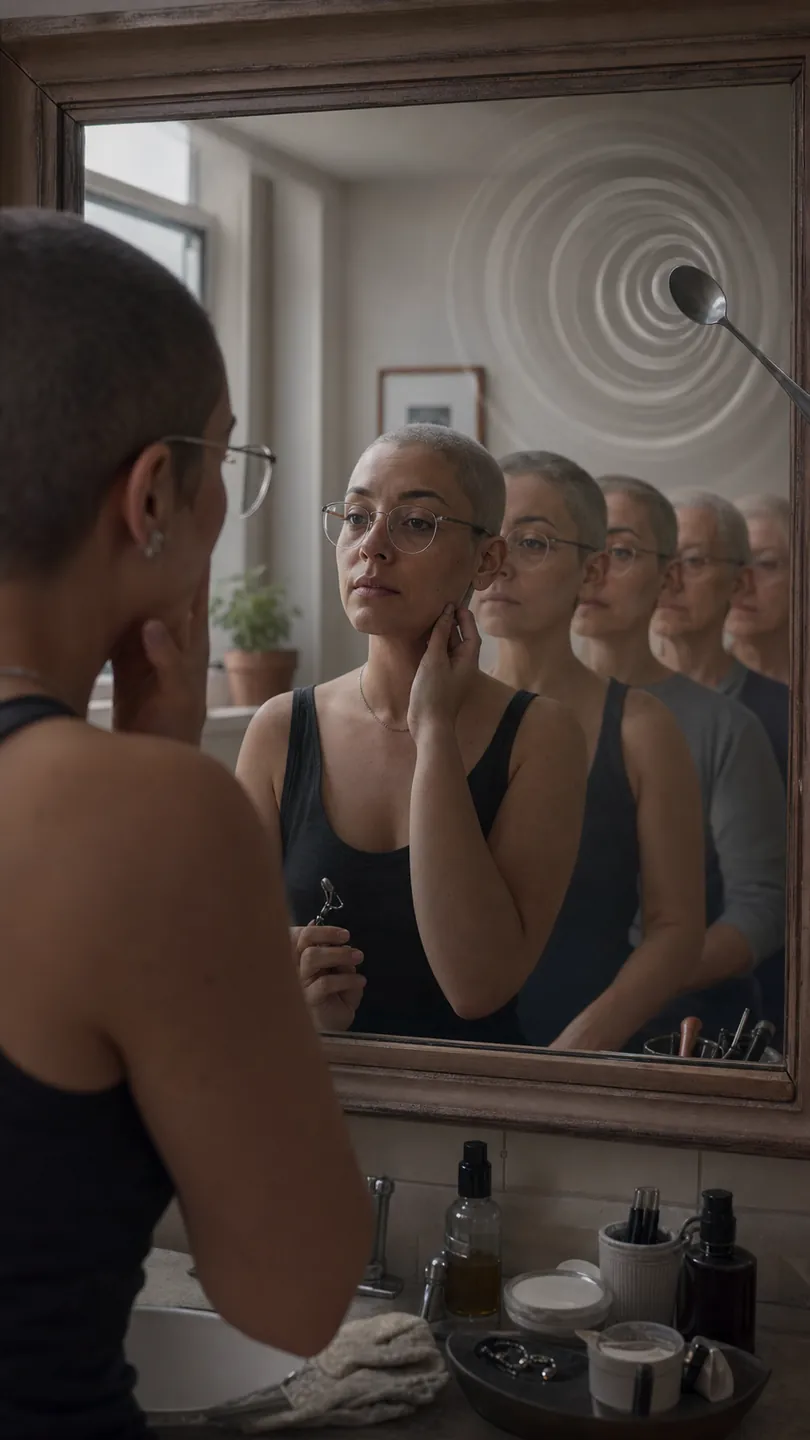
Use the attached reference photo as the identity reference: keep the same face, skin tone, hair and features as the person in that photo, without beautifying, aging or altering them. Create a contemplative single-frame image designed to serve as a visual catalyst for reflective writing. SUBJECT & SCENE — Depict the person from the reference photo in an ordinary moment: getting ready in front of a mirror while the face being prepared for the world does not fully match the inner state. Ground the scene in a reflection delayed by a fraction of a second and grooming objects arranged with ordinary precision. If the person in the reference photo wears glasses, keep them naturally as part of who they are; if not, do not add any. INNER DYNAMIC — Let the image express this dynamic: the body becoming either a muted background or an overwhelming source of signals. Show the person as complex and capable, not broken or inspirational. Communicate the tension through restrained posture, attention, and behavior rather than exaggerated facial emotion. SYMBOLIC DETAIL — Integrate the sound of a spoon represented as visible concentric pressure in the air as the only controlled departure from realism. It should feel physically present yet subtle enough to be understood only after the everyday scene is noticed. TIME & IDENTITY — Suggest the changing face seen in the same mirror over years. Let the scene hold this identity question: how embodiment influences the sense of self when hunger, sound, touch, or fatigue feel unreliable. VISUAL LANGUAGE — Use a layered frame using foreground objects to suggest divided attention; neutral overcast daylight that reveals detail without drama; quiet clay, cream, and smoke tones; ordinary domestic wear rendered as meaningful detail. BOUNDARIES — No words, captions, diagnostic labels, medical clichés, self-harm imagery, horror framing, or sensational despair. Keep the portrayal humane, culturally respectful, emotionally complex, and accessible. Portrait orientation, 9:16, high detail, realistic anatomy and materials.
Refrigerator Photographs Flipped to a Grid of Blanks — AI Portrait Prompt
صورةAI Portraits

Ground the scene in repeated fabric folds or water circles, one unfinished section, and evidence of many previous repetitions. INNER DYNAMIC — Let the image...

من نص البرومبت

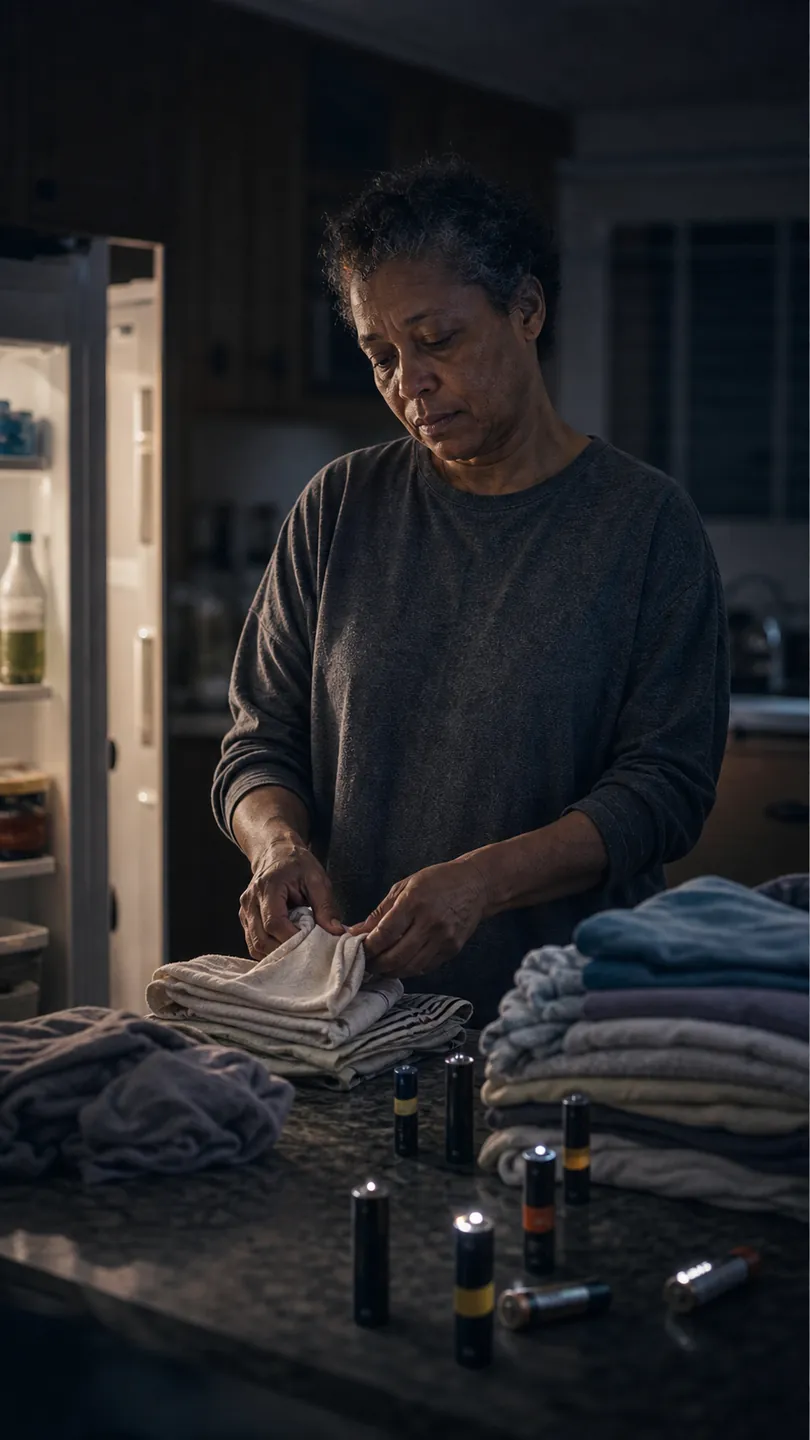
Use the attached reference photo as the identity reference: keep the same face, skin tone, hair and features as the person in that photo, without beautifying, aging or altering them. Create a contemplative single-frame image designed to serve as a visual catalyst for reflective writing. SUBJECT & SCENE — Depict the person from the reference photo, shown as someone used to years of practical work in an ordinary moment: folding laundry, washing dishes, or clearing a surface when repetition feels either grounding or endless. Ground the scene in repeated fabric folds or water circles, one unfinished section, and evidence of many previous repetitions. INNER DYNAMIC — Let the image express this dynamic: disrupted sleep and uneven energy altering judgment, temperament, capacity, and self-trust. Show the person as complex and capable, not broken or inspirational. Communicate the tension through restrained posture, attention, and behavior rather than exaggerated facial emotion. SYMBOLIC DETAIL — Integrate batteries around the room showing different levels without numbers as the only controlled departure from realism. It should feel physically present yet subtle enough to be understood only after the everyday scene is noticed. TIME & IDENTITY — Suggest thousands of domestic actions that rarely enter a life story. Let the scene hold this identity question: whether the exhausted self and the energized self are equally authentic. VISUAL LANGUAGE — Use a split-depth composition holding a near object and distant face in focus; brief refrigerator light in an otherwise dark kitchen; cool gray-blue with realistic skin warmth; high clarity in the symbolic detail, softer context elsewhere. BOUNDARIES — No words, captions, diagnostic labels, medical clichés, self-harm imagery, horror framing, or sensational despair. Keep the portrayal humane, culturally respectful, emotionally complex, and accessible. Portrait orientation, 9:16, high detail, realistic anatomy and materials.
Refrigerator Photographs Flipped to a Grid of Blanks — AI Portrait Prompt
صورةAI Portraits

Ground the scene in repeated streetlights, a reflected face in glass, and passing landmarks slightly out of sequence. INNER DYNAMIC — Let the image express...

من نص البرومبت

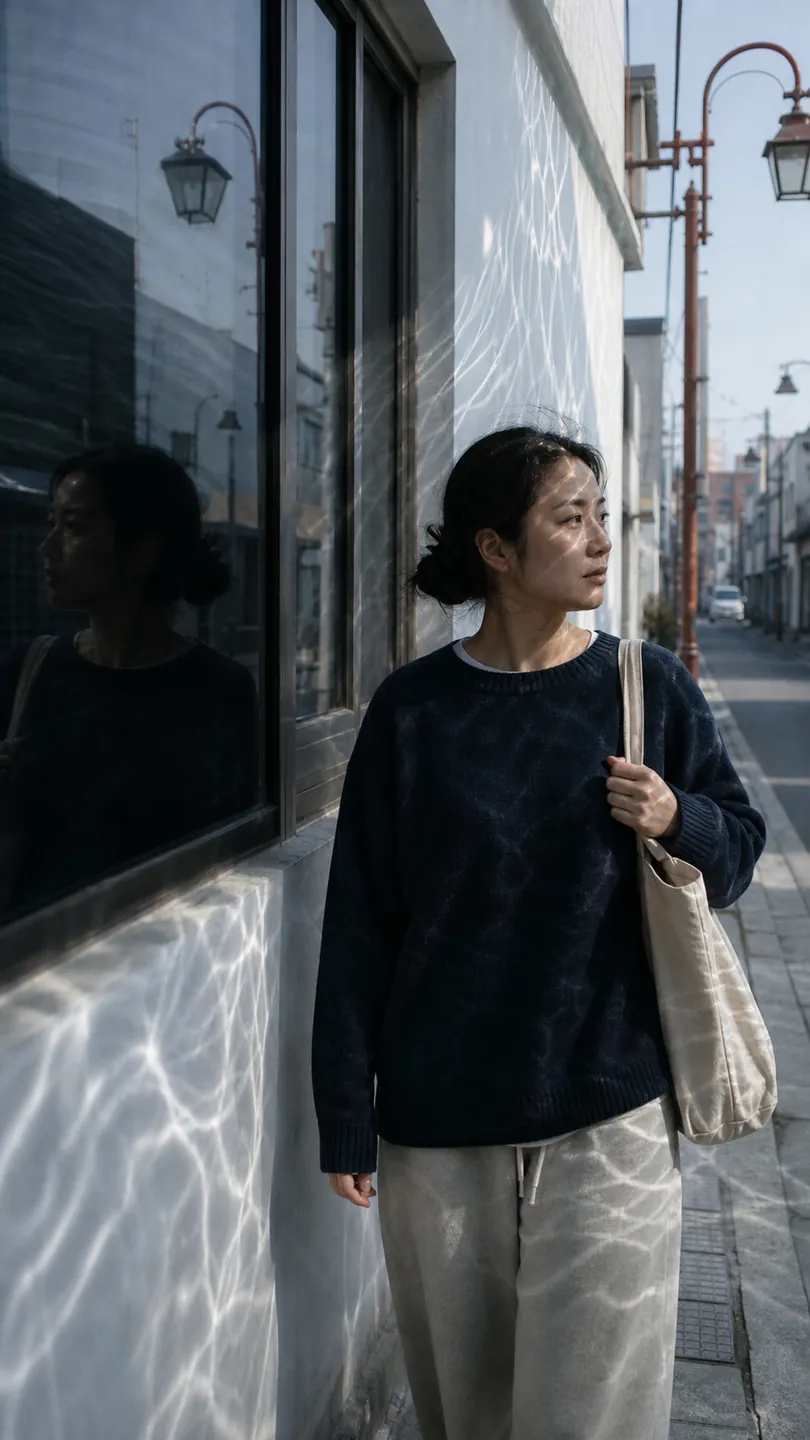
Use the attached reference photo as the identity reference: keep the same face, skin tone, hair and features as the person in that photo, without beautifying, aging or altering them. Create a contemplative single-frame image designed to serve as a visual catalyst for reflective writing. SUBJECT & SCENE — Depict the person in ordinary contemporary clothing, portrayed without visual clichés in an ordinary moment: traveling a familiar route and realizing that the body has continued while attention, emotion, or memory went elsewhere. Ground the scene in repeated streetlights, a reflected face in glass, and passing landmarks slightly out of sequence. INNER DYNAMIC — Let the image express this dynamic: the body becoming either a muted background or an overwhelming source of signals. Show the person as complex and capable, not broken or inspirational. Communicate the tension through restrained posture, attention, and behavior rather than exaggerated facial emotion. SYMBOLIC DETAIL — Integrate water ripples moving across skin and nearby surfaces as the only controlled departure from realism. It should feel physically present yet subtle enough to be understood only after the everyday scene is noticed. TIME & IDENTITY — Suggest the same route traveled through different moods and life stages. Let the scene hold this identity question: how embodiment influences the sense of self when hunger, sound, touch, or fatigue feel unreliable. VISUAL LANGUAGE — Use a centered figure surrounded by repeated ordinary objects; quiet morning sun reflected indirectly from a pale wall; cool white, muted navy, and worn red accents; photographic realism with one controlled departure from physical reality. BOUNDARIES — No words, captions, diagnostic labels, medical clichés, self-harm imagery, horror framing, or sensational despair. Keep the portrayal humane, culturally respectful, emotionally complex, and accessible. Portrait orientation, 9:16, high detail, realistic anatomy and materials.

Refrigerator Photographs Flipped to a Grid of Blanks — AI Portrait Prompt
صورةAI Portraits

Create a contemplative single-frame image designed to serve as a visual catalyst for reflective writing. SUBJECT & SCENE — Depict the person from the...

من نص البرومبت

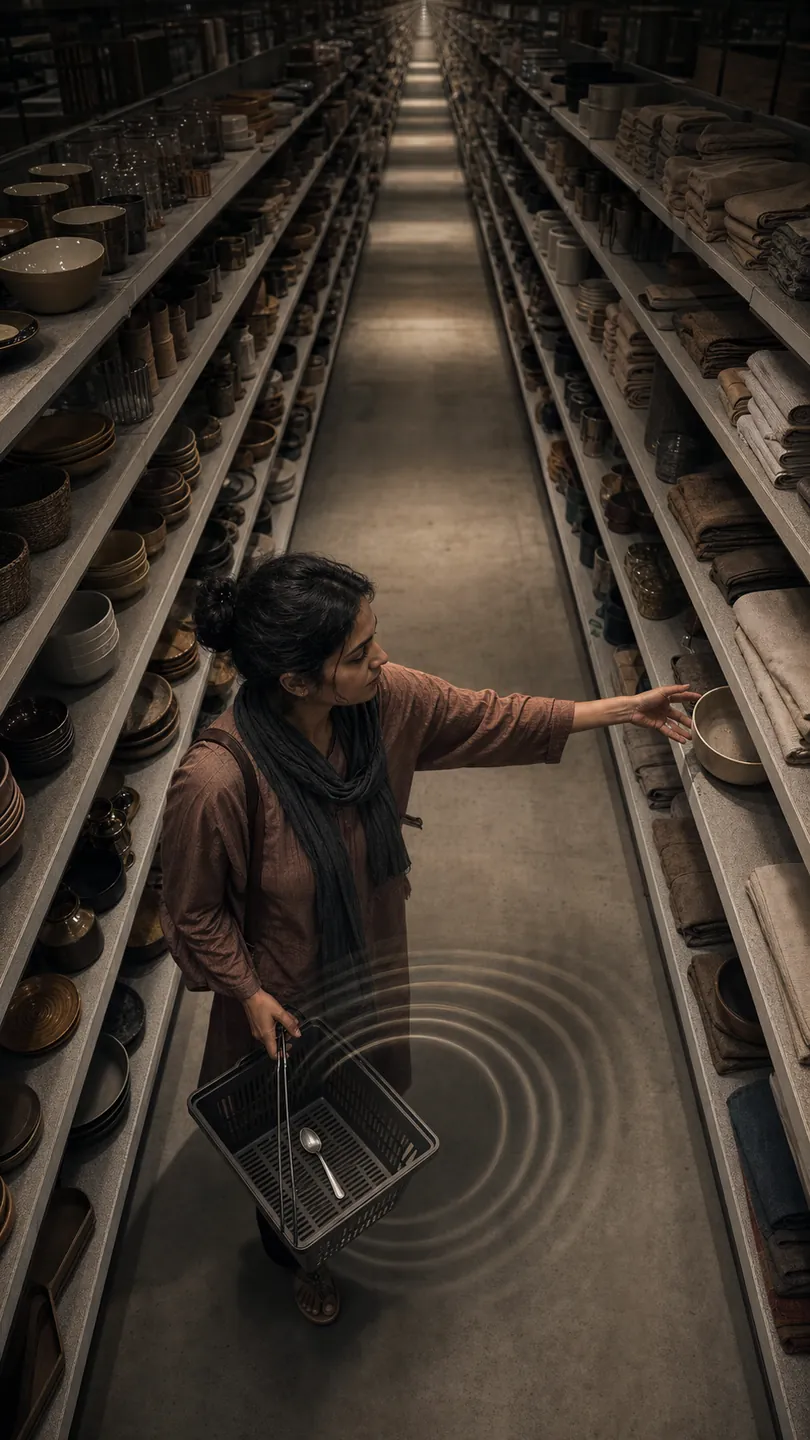
Use the attached reference photo as the identity reference: keep the same face, skin tone, hair and features as the person in that photo, without beautifying, aging or altering them. Create a contemplative single-frame image designed to serve as a visual catalyst for reflective writing. SUBJECT & SCENE — Depict the person from the reference photo in everyday clothing, with cultural context conveyed subtly and specifically in an ordinary moment: standing in a store aisle with one small task that took days to begin. Ground the scene in one needed item within easy reach, a nearly empty basket, and aisle lines extending farther than physics allows. INNER DYNAMIC — Let the image express this dynamic: the body becoming either a muted background or an overwhelming source of signals. Show the person as complex and capable, not broken or inspirational. Communicate the tension through restrained posture, attention, and behavior rather than exaggerated facial emotion. SYMBOLIC DETAIL — Integrate the sound of a spoon represented as visible concentric pressure in the air as the only controlled departure from realism. It should feel physically present yet subtle enough to be understood only after the everyday scene is noticed. TIME & IDENTITY — Suggest the long history of ordinary tasks becoming emotional tests. Let the scene hold this identity question: how embodiment influences the sense of self when hunger, sound, touch, or fatigue feel unreliable. VISUAL LANGUAGE — Use a top-down composition centered on hands, objects, and small decisions; subtle streetlight filtering through blinds at night; stone, linen, and muted copper tones; high clarity in the symbolic detail, softer context elsewhere. BOUNDARIES — No words, captions, diagnostic labels, medical clichés, self-harm imagery, horror framing, or sensational despair. Keep the portrayal humane, culturally respectful, emotionally complex, and accessible. Portrait orientation, 9:16, high detail, realistic anatomy and materials.

Refrigerator Photographs Flipped to a Grid of Blanks — AI Portrait Prompt
صورةAI Portraits

Create a contemplative single-frame image designed to serve as a visual catalyst for reflective writing. SUBJECT & SCENE — Depict the subject, shown with...

من نص البرومبت

Use the attached reference photo as the identity reference: keep the same face, skin tone, hair and features as the person in that photo, without beautifying, aging or altering them. Create a contemplative single-frame image designed to serve as a visual catalyst for reflective writing. SUBJECT & SCENE — Depict the subject, shown with documentary realism in an ordinary moment: opening an inbox filled with ordinary requests that feel emotionally larger than their wording. Ground the scene in a screen glow on the face, stacked notification shapes with no legible text, and a hand resting before the first click. INNER DYNAMIC — Let the image express this dynamic: wanting connection while fatigue, anxiety, distraction, or shame create distance. Show the person as complex and capable, not broken or inspirational. Communicate the tension through restrained posture, attention, and behavior rather than exaggerated facial emotion. SYMBOLIC DETAIL — Integrate a group sharing an umbrella with one deliberate opening as the only controlled departure from realism. It should feel physically present yet subtle enough to be understood only after the everyday scene is noticed. TIME & IDENTITY — Suggest years of messages, obligations, and delayed replies. Let the scene hold this identity question: whether absence means indifference when it may actually conceal longing, overwhelm, or fear. VISUAL LANGUAGE — Use a doorway-framed composition that makes a small threshold feel consequential; brief refrigerator light in an otherwise dark kitchen; subtle olive, graphite, and faded gold; subtle motion traces only where attention or time is implied. BOUNDARIES — No words, captions, diagnostic labels, medical clichés, self-harm imagery, horror framing, or sensational despair. Keep the portrayal humane, culturally respectful, emotionally complex, and accessible. Portrait orientation, 9:16, high detail, realistic anatomy and materials.
Refrigerator Photographs Flipped to a Grid of Blanks — AI Portrait Prompt
صورةAI Portraits

Ground the scene in neatly aligned notebooks, one restless foot under the table, and a glass wall reflecting a different posture. If the person in the...

من نص البرومبت

Use the attached reference photo as the identity reference: keep the same face, skin tone, hair and features as the person in that photo, without beautifying, aging or altering them. Create a contemplative single-frame image designed to serve as a visual catalyst for reflective writing. SUBJECT & SCENE — Depict the person from the reference photo in an ordinary moment: appearing composed in a meeting while silently managing attention, fear, heaviness, or shifting energy. Ground the scene in neatly aligned notebooks, one restless foot under the table, and a glass wall reflecting a different posture. If the person in the reference photo wears glasses, keep them naturally as part of who they are; if not, do not add any. INNER DYNAMIC — Let the image express this dynamic: wanting connection while fatigue, anxiety, distraction, or shame create distance. Show the person as complex and capable, not broken or inspirational. Communicate the tension through restrained posture, attention, and behavior rather than exaggerated facial emotion. SYMBOLIC DETAIL — Integrate unanswered invitations folded into small paper boats without text as the only controlled departure from realism. It should feel physically present yet subtle enough to be understood only after the everyday scene is noticed. TIME & IDENTITY — Suggest a career built through both visible performance and hidden regulation. Let the scene hold this identity question: whether absence means indifference when it may actually conceal longing, overwhelm, or fear. VISUAL LANGUAGE — Use a layered frame using foreground objects to suggest divided attention; muted midday light with minimal contrast; dusty rose, slate, and off-white used sparingly; tactile ceramic, metal, and cloth rendered with quiet precision. BOUNDARIES — No words, captions, diagnostic labels, medical clichés, self-harm imagery, horror framing, or sensational despair. Keep the portrayal humane, culturally respectful, emotionally complex, and accessible. Portrait orientation, 9:16, high detail, realistic anatomy and materials.
Refrigerator Photographs Flipped to a Grid of Blanks — AI Portrait Prompt
صورةAI Portraits

Create a contemplative single-frame image designed to serve as a visual catalyst for reflective writing. SUBJECT & SCENE — Depict the person from the...

من نص البرومبت

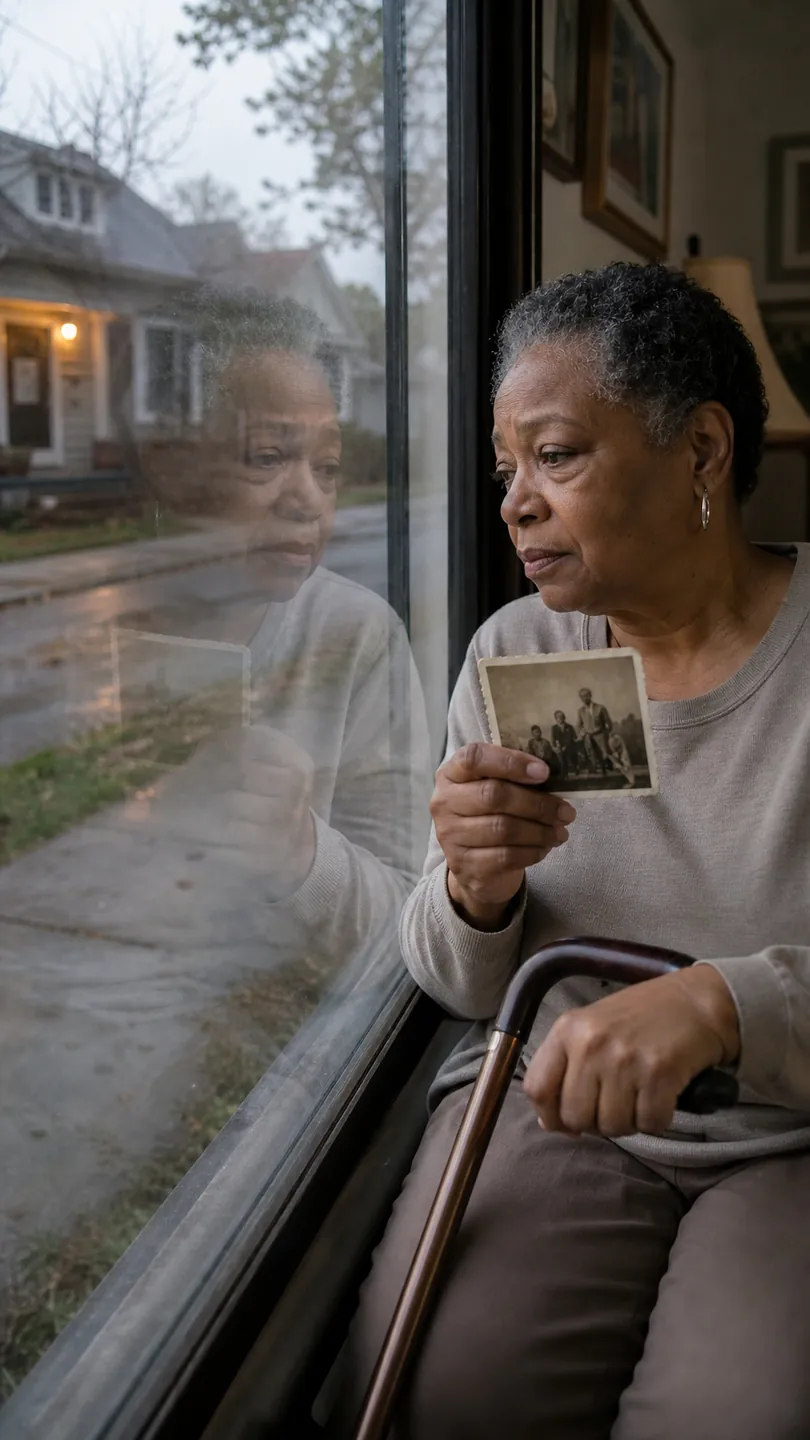
Use the attached reference photo as the identity reference: keep the same face, skin tone, hair and features as the person in that photo, without beautifying, aging or altering them. Create a contemplative single-frame image designed to serve as a visual catalyst for reflective writing. SUBJECT & SCENE — Depict the person from the reference photo, shown naturally rather than symbolically in an ordinary moment: finding an old photograph and wondering which present-day patterns were already visible but unnamed. Ground the scene in a worn photograph held beside the current face, small missing details, and background objects echoed in the present room. INNER DYNAMIC — Let the image express this dynamic: wanting connection while fatigue, anxiety, distraction, or shame create distance. Show the person as complex and capable, not broken or inspirational. Communicate the tension through restrained posture, attention, and behavior rather than exaggerated facial emotion. SYMBOLIC DETAIL — Integrate a porch light left on in an otherwise quiet street as the only controlled departure from realism. It should feel physically present yet subtle enough to be understood only after the everyday scene is noticed. TIME & IDENTITY — Suggest the full distance between the photographed moment and the present. Let the scene hold this identity question: whether absence means indifference when it may actually conceal longing, overwhelm, or fear. VISUAL LANGUAGE — Use a reflection-based composition in which the real person and reflected person share equal weight; muted midday light with minimal contrast; documentary color that feels lived-in rather than art-directed; visible condensation, fingerprints, and ordinary surface wear. BOUNDARIES — No words, captions, diagnostic labels, medical clichés, self-harm imagery, horror framing, or sensational despair. Keep the portrayal humane, culturally respectful, emotionally complex, and accessible. Portrait orientation, 9:16, high detail, realistic anatomy and materials.
Refrigerator Photographs Flipped to a Grid of Blanks — AI Portrait Prompt
صورةAI Portraits

Ground the scene in two equally ordinary breakfast choices, a cooling drink, and a hand hovering without choosing. INNER DYNAMIC — Let the image express...

من نص البرومبت

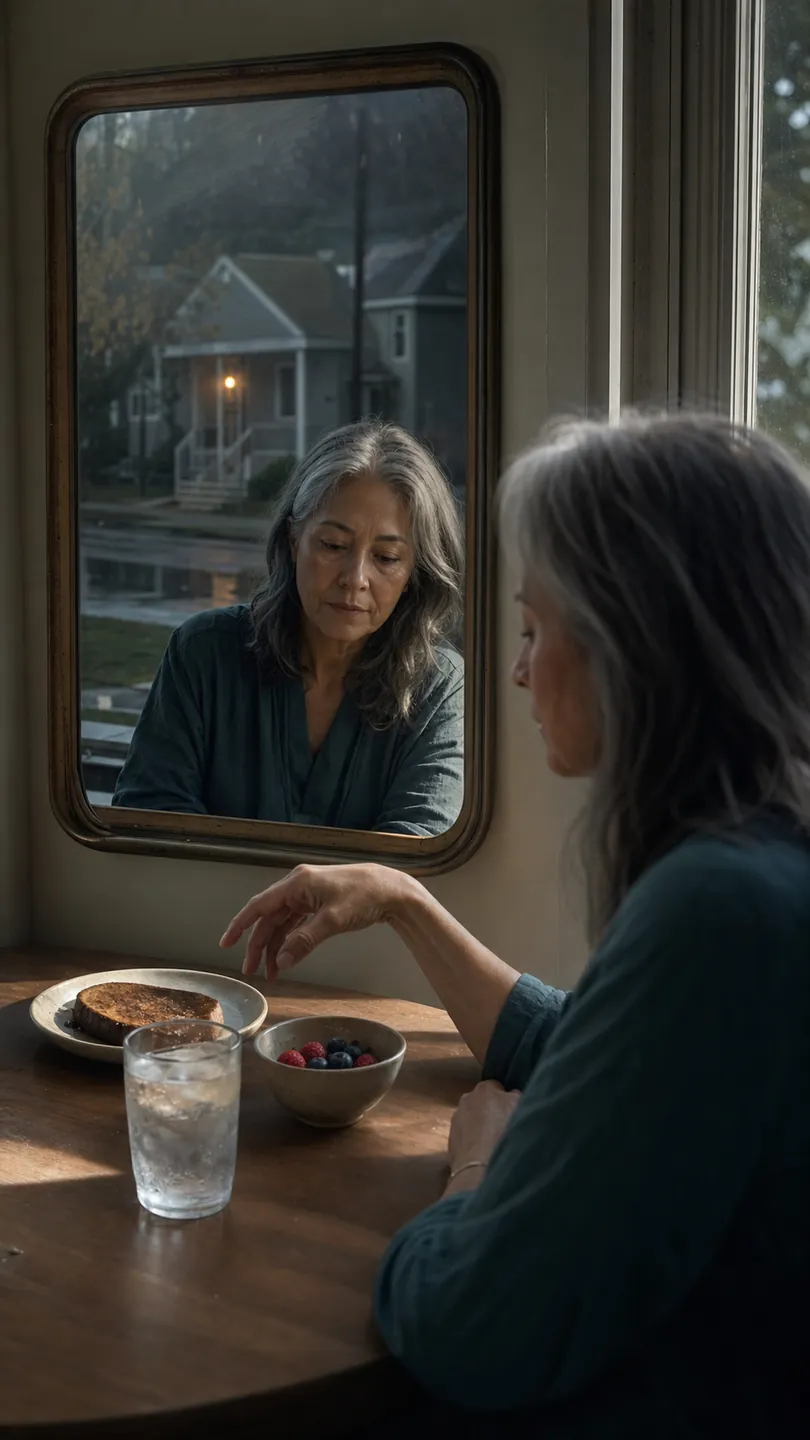
Use the attached reference photo as the identity reference: keep the same face, skin tone, hair and features as the person in that photo, without beautifying, aging or altering them. Create a contemplative single-frame image designed to serve as a visual catalyst for reflective writing. SUBJECT & SCENE — Depict the person from the reference photo with a calm expression in an ordinary moment: choosing what to eat while several simple decisions quietly accumulate into unexpected pressure. Ground the scene in two equally ordinary breakfast choices, a cooling drink, and a hand hovering without choosing. INNER DYNAMIC — Let the image express this dynamic: wanting connection while fatigue, anxiety, distraction, or shame create distance. Show the person as complex and capable, not broken or inspirational. Communicate the tension through restrained posture, attention, and behavior rather than exaggerated facial emotion. SYMBOLIC DETAIL — Integrate a porch light left on in an otherwise quiet street as the only controlled departure from realism. It should feel physically present yet subtle enough to be understood only after the everyday scene is noticed. TIME & IDENTITY — Suggest the repeated choices that begin hundreds of ordinary days. Let the scene hold this identity question: whether absence means indifference when it may actually conceal longing, overwhelm, or fear. VISUAL LANGUAGE — Use a mirror-and-room composition where neither view is treated as the definitive self; a narrow strip of sunlight moving across an otherwise still room; restrained teal-gray and warm beige, avoiding cinematic excess; rain marks, glass reflections, and natural depth. BOUNDARIES — No words, captions, diagnostic labels, medical clichés, self-harm imagery, horror framing, or sensational despair. Keep the portrayal humane, culturally respectful, emotionally complex, and accessible. Portrait orientation, 9:16, high detail, realistic anatomy and materials.

Refrigerator Photographs Flipped to a Grid of Blanks — AI Portrait Prompt
صورةAI Portraits

Create a contemplative single-frame image designed to serve as a visual catalyst for reflective writing. SUBJECT & SCENE — Depict the subject, part of a...

من نص البرومبت

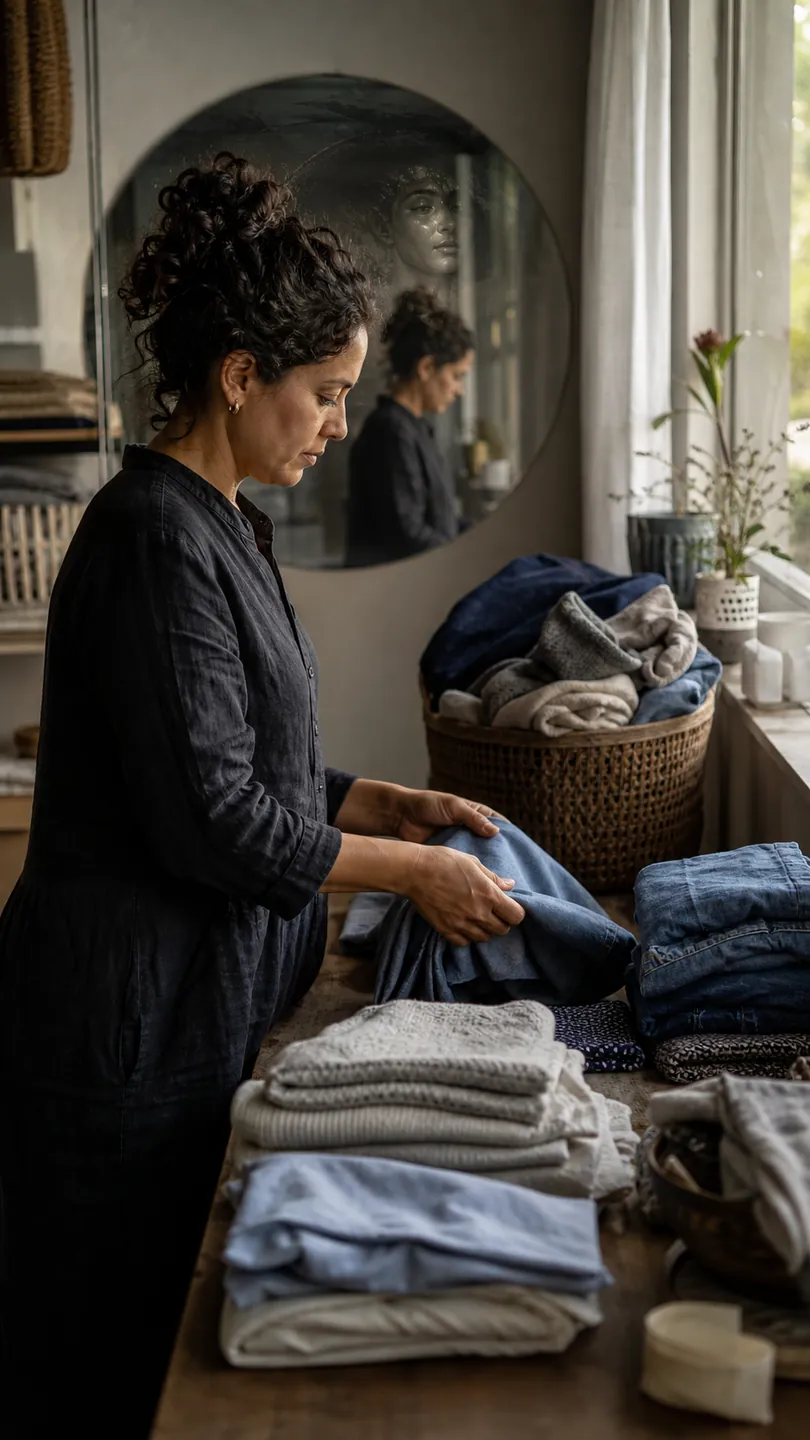
Use the attached reference photo as the identity reference: keep the same face, skin tone, hair and features as the person in that photo, without beautifying, aging or altering them. Create a contemplative single-frame image designed to serve as a visual catalyst for reflective writing. SUBJECT & SCENE — Depict the subject, part of a multigenerational household suggested through ordinary surroundings, in an ordinary moment: folding laundry, washing dishes, or clearing a surface when repetition feels either grounding or endless. Ground the scene in repeated fabric folds or water circles, one unfinished section, and evidence of many previous repetitions. INNER DYNAMIC — Let the image express this dynamic: the gap between inner experience and what loved ones can see. Show the person as complex and capable, not broken or inspirational. Communicate the tension through restrained posture, attention, and behavior rather than exaggerated facial emotion. SYMBOLIC DETAIL — Integrate two reflections meeting even while the people look away as the only controlled departure from realism. It should feel physically present yet subtle enough to be understood only after the everyday scene is noticed. TIME & IDENTITY — Suggest thousands of domestic actions that rarely enter a life story. Let the scene hold this identity question: how to remain knowable when symptoms change communication, memory, availability, or tone. VISUAL LANGUAGE — Use a quiet profile composition against a window or reflective surface; cloud-filtered daylight with small specular highlights; washed denim, pale wood, and soft black; ordinary domestic wear rendered as meaningful detail. BOUNDARIES — No words, captions, diagnostic labels, medical clichés, self-harm imagery, horror framing, or sensational despair. Keep the portrayal humane, culturally respectful, emotionally complex, and accessible. Portrait orientation, 9:16, high detail, realistic anatomy and materials.
Refrigerator Photographs Flipped to a Grid of Blanks — AI Portrait Prompt
صورةAI Portraits

Ground the scene in fresh materials beside dust, one vivid completed fragment, and tools left exactly where momentum stopped. INNER DYNAMIC — Let the image...

من نص البرومبت

Use the attached reference photo as the identity reference: keep the same face, skin tone, hair and features as the person in that photo, without beautifying, aging or altering them. Create a contemplative single-frame image designed to serve as a visual catalyst for reflective writing. SUBJECT & SCENE — Depict the person in ordinary contemporary clothing, portrayed without visual clichés, in an ordinary moment: encountering a half-finished project that once carried excitement and now carries judgment. Ground the scene in fresh materials beside dust, one vivid completed fragment, and tools left exactly where momentum stopped. INNER DYNAMIC — Let the image express this dynamic: disrupted sleep and uneven energy altering judgment, temperament, capacity, and self-trust. Show the person as complex and capable, not broken or inspirational. Communicate the tension through restrained posture, attention, and behavior rather than exaggerated facial emotion. SYMBOLIC DETAIL — Integrate a pillow retaining the silhouette of someone already standing as the only controlled departure from realism. It should feel physically present yet subtle enough to be understood only after the everyday scene is noticed. TIME & IDENTITY — Suggest the distance between the person who began and the person looking at it now. Let the scene hold this identity question: whether the exhausted self and the energized self are equally authentic. VISUAL LANGUAGE — Use a centered figure surrounded by repeated ordinary objects; muted midday light with minimal contrast; restrained teal-gray and warm beige, avoiding cinematic excess; clean optics with no plastic skin and no exaggerated bokeh. BOUNDARIES — No words, captions, diagnostic labels, medical clichés, self-harm imagery, horror framing, or sensational despair. Keep the portrayal humane, culturally respectful, emotionally complex, and accessible. Portrait orientation, 9:16, high detail, realistic anatomy and materials.
Refrigerator Photographs Flipped to a Grid of Blanks — AI Portrait Prompt
صورةAI Portraits

Create a contemplative single-frame image designed to serve as a visual catalyst for reflective writing. SUBJECT & SCENE — Depict the subject in practical...

من نص البرومبت

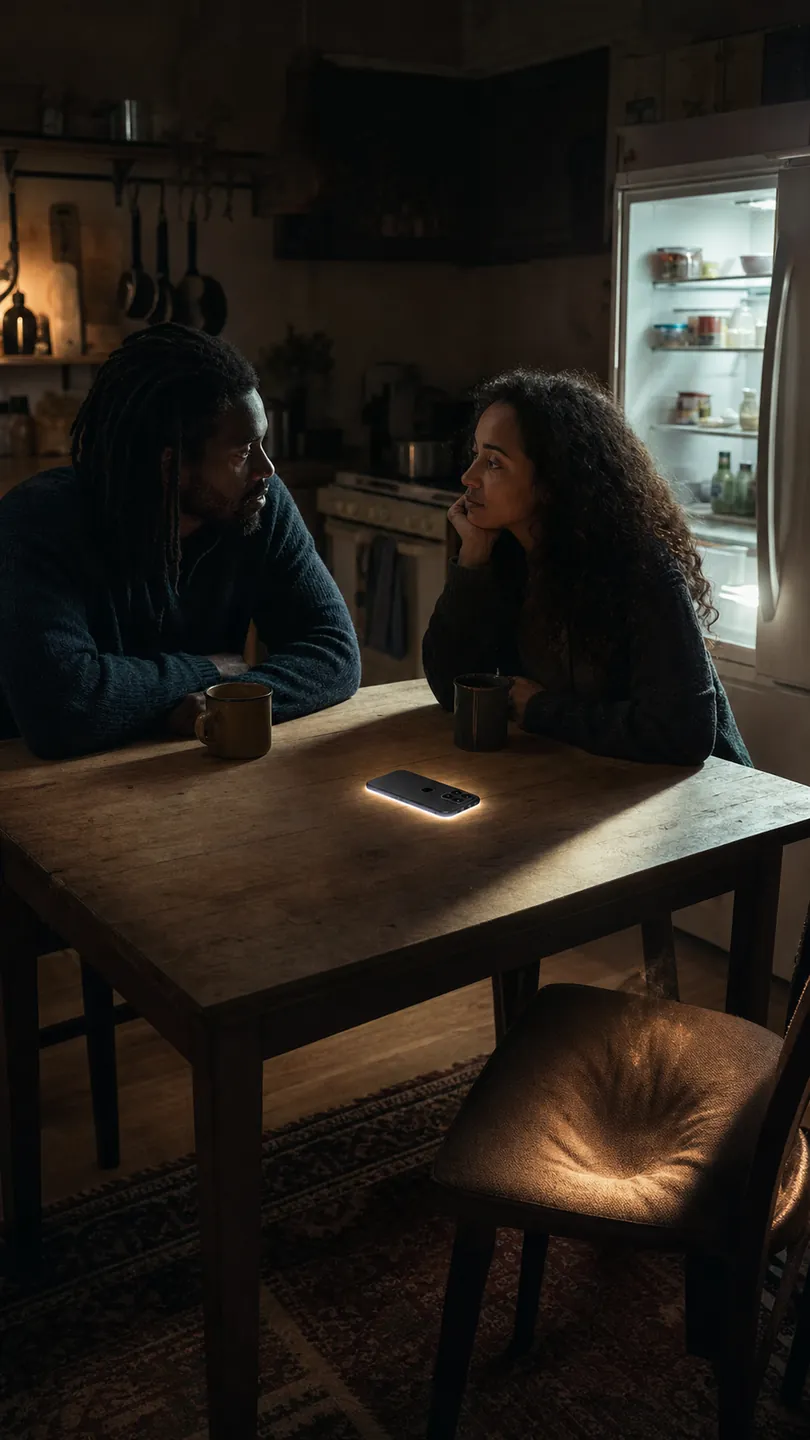
Use the attached reference photo as the identity reference: keep the same face, skin tone, hair and features as the person in that photo, without beautifying, aging or altering them. Create a contemplative single-frame image designed to serve as a visual catalyst for reflective writing. SUBJECT & SCENE — Depict the subject in practical everyday clothing in an ordinary moment: hearing a notification during a moment that was meant to be protected. Ground the scene in a phone face-down yet glowing at the edges, a paused conversation, and a beam of light cutting across the frame. INNER DYNAMIC — Let the image express this dynamic: wanting connection while fatigue, anxiety, distraction, or shame create distance. Show the person as complex and capable, not broken or inspirational. Communicate the tension through restrained posture, attention, and behavior rather than exaggerated facial emotion. SYMBOLIC DETAIL — Integrate an empty chair retaining the warmth and shape of a recent presence as the only controlled departure from realism. It should feel physically present yet subtle enough to be understood only after the everyday scene is noticed. TIME & IDENTITY — Suggest years of attention divided into smaller and smaller pieces. Let the scene hold this identity question: whether absence means indifference when it may actually conceal longing, overwhelm, or fear. VISUAL LANGUAGE — Use a small figure in a larger lived-in environment, with scale carrying the emotion; brief refrigerator light in an otherwise dark kitchen; muted earth tones with restrained blue-gray accents; gentle grain with crisp small objects and unretouched skin. BOUNDARIES — No words, captions, diagnostic labels, medical clichés, self-harm imagery, horror framing, or sensational despair. Keep the portrayal humane, culturally respectful, emotionally complex, and accessible. Portrait orientation, 9:16, high detail, realistic anatomy and materials.
Refrigerator Photographs Flipped to a Grid of Blanks — AI Portrait Prompt
صورةAI Portraits

Create a contemplative single-frame image designed to serve as a visual catalyst for reflective writing. SUBJECT & SCENE — Depict the subject wearing...

من نص البرومبت

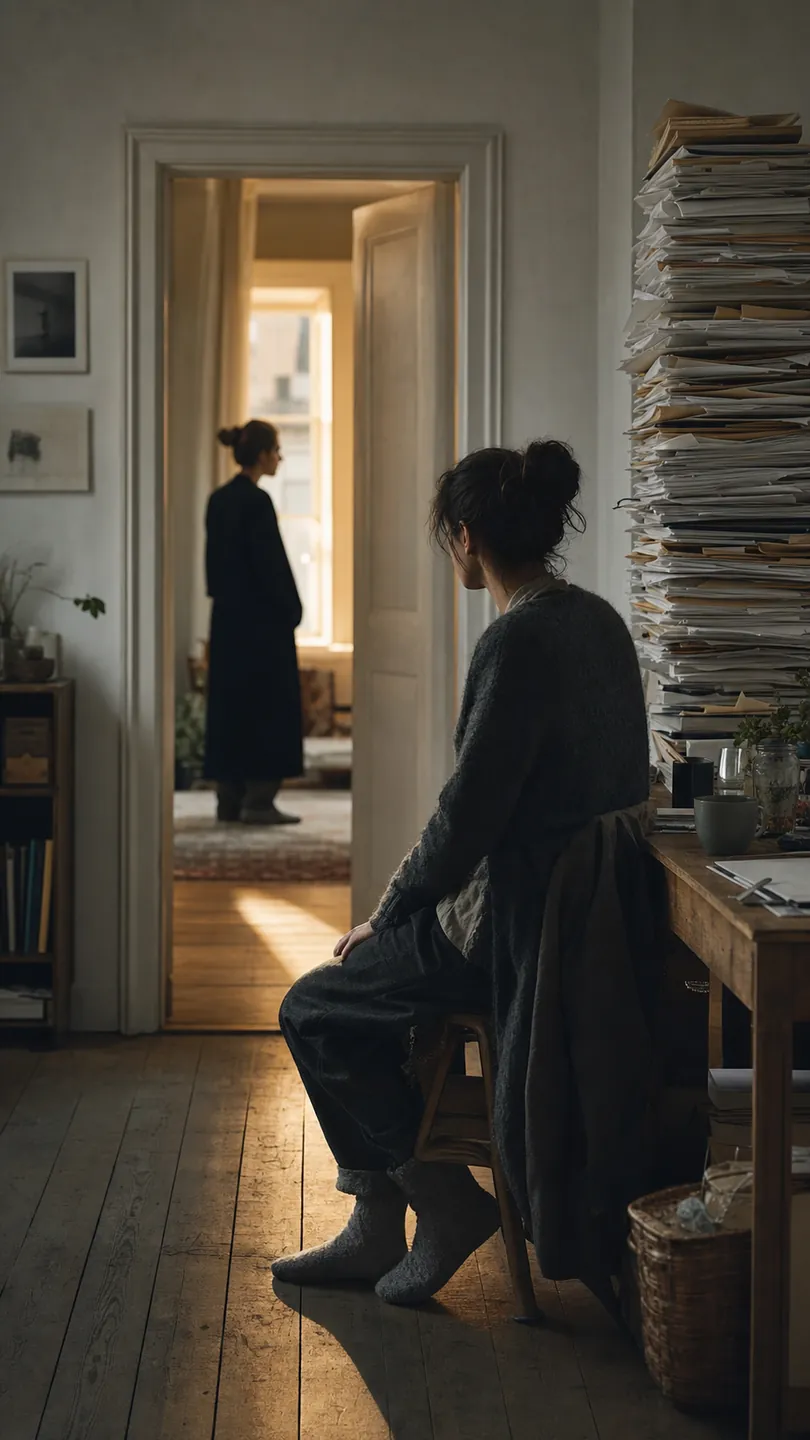
Use the attached reference photo as the identity reference: keep the same face, skin tone, hair and features as the person in that photo, without beautifying, aging or altering them. Create a contemplative single-frame image designed to serve as a visual catalyst for reflective writing. SUBJECT & SCENE — Depict the subject wearing layered, slightly rumpled clothing in an ordinary moment: imagining a future self entering the room and examining what the present day is becoming. Ground the scene in a second, older silhouette in a doorway, ordinary possessions arranged like evidence, and a path of light connecting the two figures. INNER DYNAMIC — Let the image express this dynamic: measuring worth through output while mental health changes capacity from day to day. Show the person as complex and capable, not broken or inspirational. Communicate the tension through restrained posture, attention, and behavior rather than exaggerated facial emotion. SYMBOLIC DETAIL — Integrate an inbox rising like a quiet tower behind the desk as the only controlled departure from realism. It should feel physically present yet subtle enough to be understood only after the everyday scene is noticed. TIME & IDENTITY — Suggest the bridge between this ordinary hour and the life eventually remembered. Let the scene hold this identity question: whether achievement reveals value or merely provides temporary permission to feel valuable. VISUAL LANGUAGE — Use a compressed long-lens view that makes ordinary space feel emotionally dense; warm hallway light spilling into a cooler room; quiet clay, cream, and smoke tones; subtle motion traces only where attention or time is implied. BOUNDARIES — No words, captions, diagnostic labels, medical clichés, self-harm imagery, horror framing, or sensational despair. Keep the portrayal humane, culturally respectful, emotionally complex, and accessible. Portrait orientation, 9:16, high detail, realistic anatomy and materials.
Refrigerator Photographs Flipped to a Grid of Blanks — AI Portrait Prompt
صورةAI Portraits

Ground the scene in work clothes loosened, keys dropped near the door, one lamp on, and the room appearing heavier toward the floor. INNER DYNAMIC — Let the...

من نص البرومبت

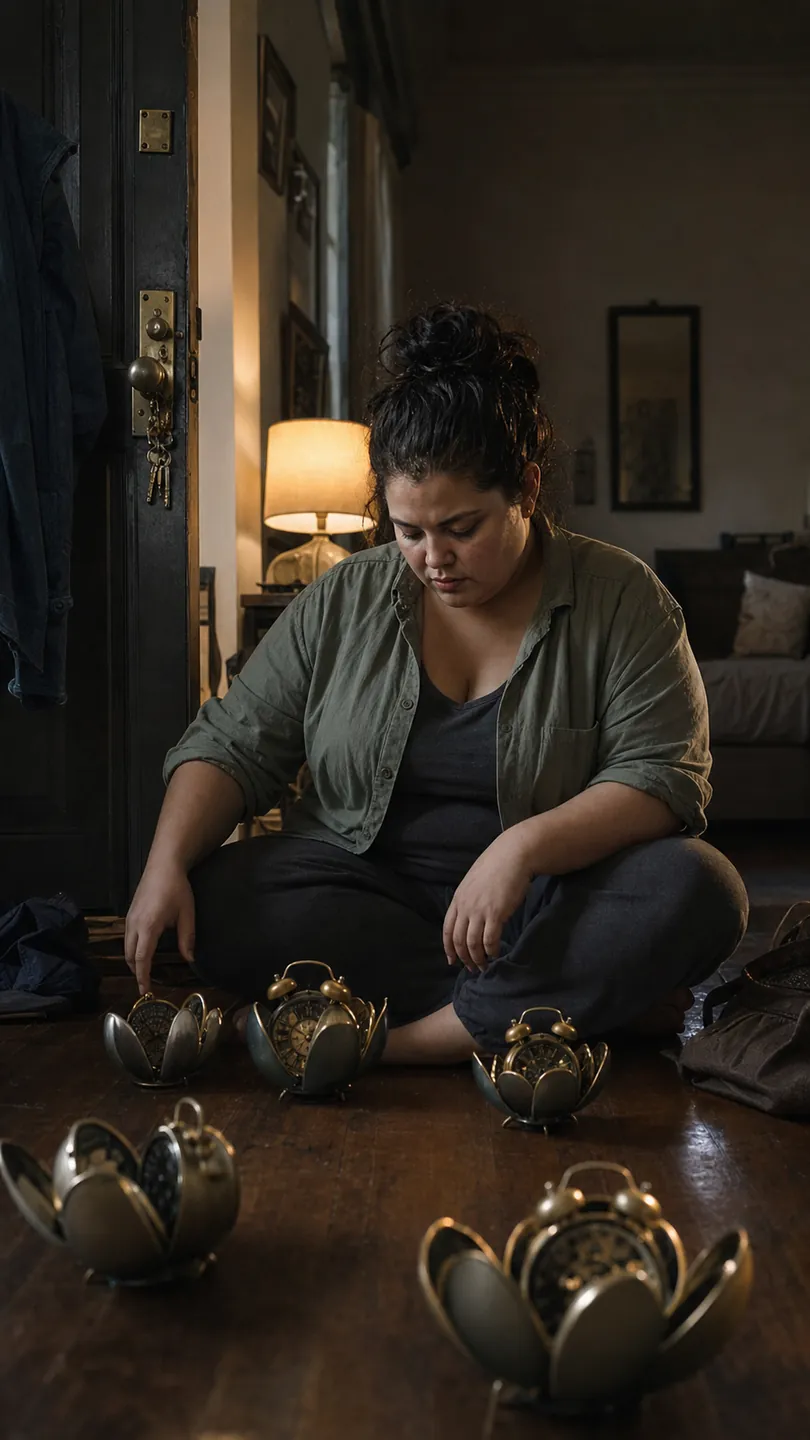
Use the attached reference photo as the identity reference: keep the same face, skin tone, hair and features as the person in that photo, without beautifying, aging or altering them. Create a contemplative single-frame image designed to serve as a visual catalyst for reflective writing. SUBJECT & SCENE — Depict the person from the reference photo in comfortable, lived-in clothing in an ordinary moment: reaching evening after a functional day and feeling the hidden cost arrive all at once. Ground the scene in work clothes loosened, keys dropped near the door, one lamp on, and the room appearing heavier toward the floor. INNER DYNAMIC — Let the image express this dynamic: disrupted sleep and uneven energy altering judgment, temperament, capacity, and self-trust. Show the person as complex and capable, not broken or inspirational. Communicate the tension through restrained posture, attention, and behavior rather than exaggerated facial emotion. SYMBOLIC DETAIL — Integrate several alarm clocks opening like mechanical flowers as the only controlled departure from realism. It should feel physically present yet subtle enough to be understood only after the everyday scene is noticed. TIME & IDENTITY — Suggest the repeated pattern of borrowing energy from the night. Let the scene hold this identity question: whether the exhausted self and the energized self are equally authentic. VISUAL LANGUAGE — Use a sequence implied by repeated objects within one coherent frame; gentle fluorescent light softened by realistic bounce from the room; subtle olive, graphite, and faded gold; weathered surfaces and layered reflections without surreal overload. BOUNDARIES — No words, captions, diagnostic labels, medical clichés, self-harm imagery, horror framing, or sensational despair. Keep the portrayal humane, culturally respectful, emotionally complex, and accessible. Portrait orientation, 9:16, high detail, realistic anatomy and materials.
Refrigerator Photographs Flipped to a Grid of Blanks — AI Portrait Prompt
صورةAI Portraits

Ground the scene in repeated fabric folds or water circles, one unfinished section, and evidence of many previous repetitions. INNER DYNAMIC — Let the image...

من نص البرومبت

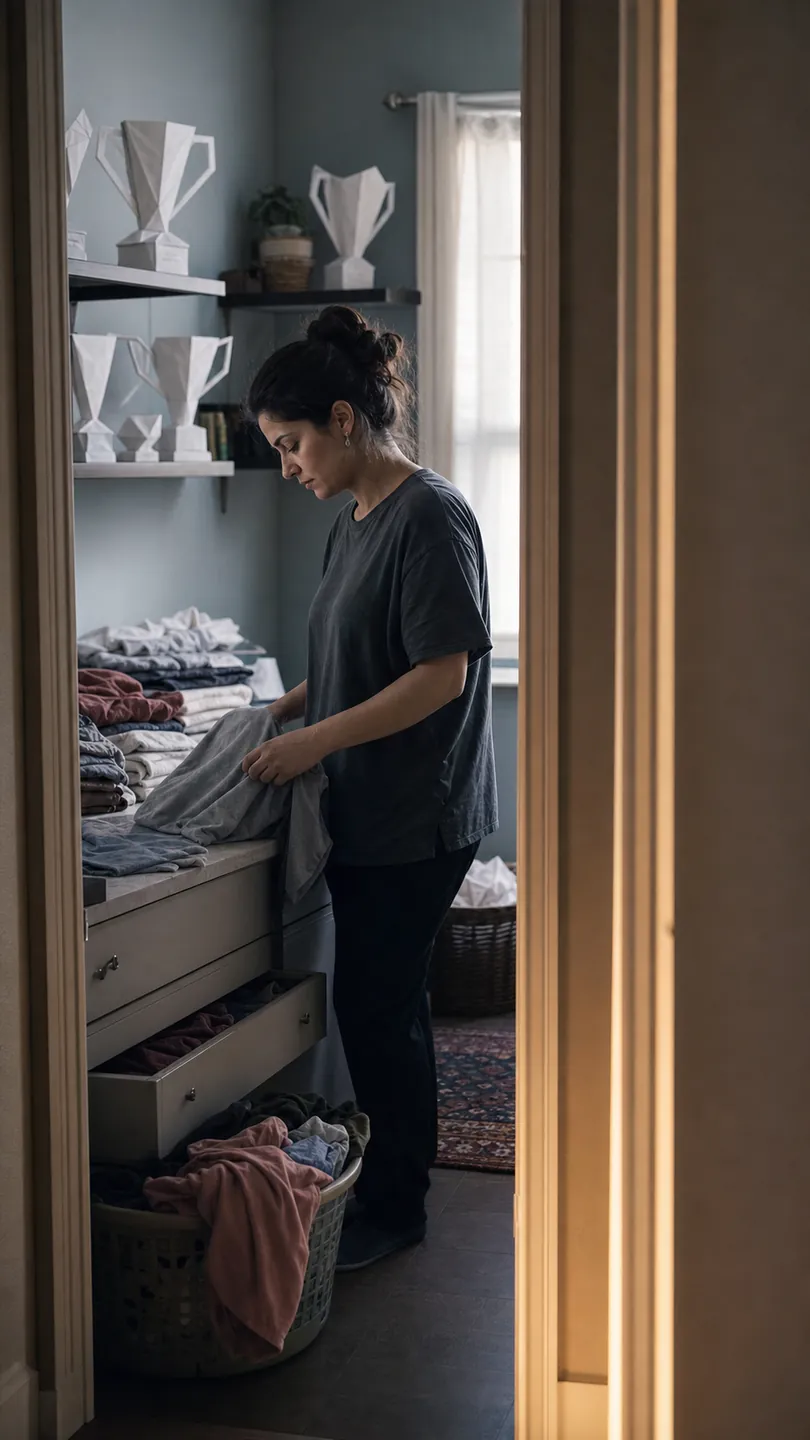
Use the attached reference photo as the identity reference: keep the same face, skin tone, hair and features as the person in that photo, without beautifying, aging or altering them. Create a contemplative single-frame image designed to serve as a visual catalyst for reflective writing. SUBJECT & SCENE — Depict the person from the reference photo, shown with documentary realism in an ordinary moment: folding laundry, washing dishes, or clearing a surface when repetition feels either grounding or endless. Ground the scene in repeated fabric folds or water circles, one unfinished section, and evidence of many previous repetitions. INNER DYNAMIC — Let the image express this dynamic: measuring worth through output while mental health changes capacity from day to day. Show the person as complex and capable, not broken or inspirational. Communicate the tension through restrained posture, attention, and behavior rather than exaggerated facial emotion. SYMBOLIC DETAIL — Integrate trophies made from fragile office paper as the only controlled departure from realism. It should feel physically present yet subtle enough to be understood only after the everyday scene is noticed. TIME & IDENTITY — Suggest thousands of domestic actions that rarely enter a life story. Let the scene hold this identity question: whether achievement reveals value or merely provides temporary permission to feel valuable. VISUAL LANGUAGE — Use a doorway-framed composition that makes a small threshold feel consequential; warm hallway light spilling into a cooler room; dusty rose, slate, and off-white used sparingly; realistic clutter controlled enough to remain readable. BOUNDARIES — No words, captions, diagnostic labels, medical clichés, self-harm imagery, horror framing, or sensational despair. Keep the portrayal humane, culturally respectful, emotionally complex, and accessible. Portrait orientation, 9:16, high detail, realistic anatomy and materials.

Refrigerator Photographs Flipped to a Grid of Blanks — AI Portrait Prompt
صورةAI Portraits

Create a contemplative single-frame image designed to serve as a visual catalyst for reflective writing. SUBJECT & SCENE — Depict the person from the...

من نص البرومبت

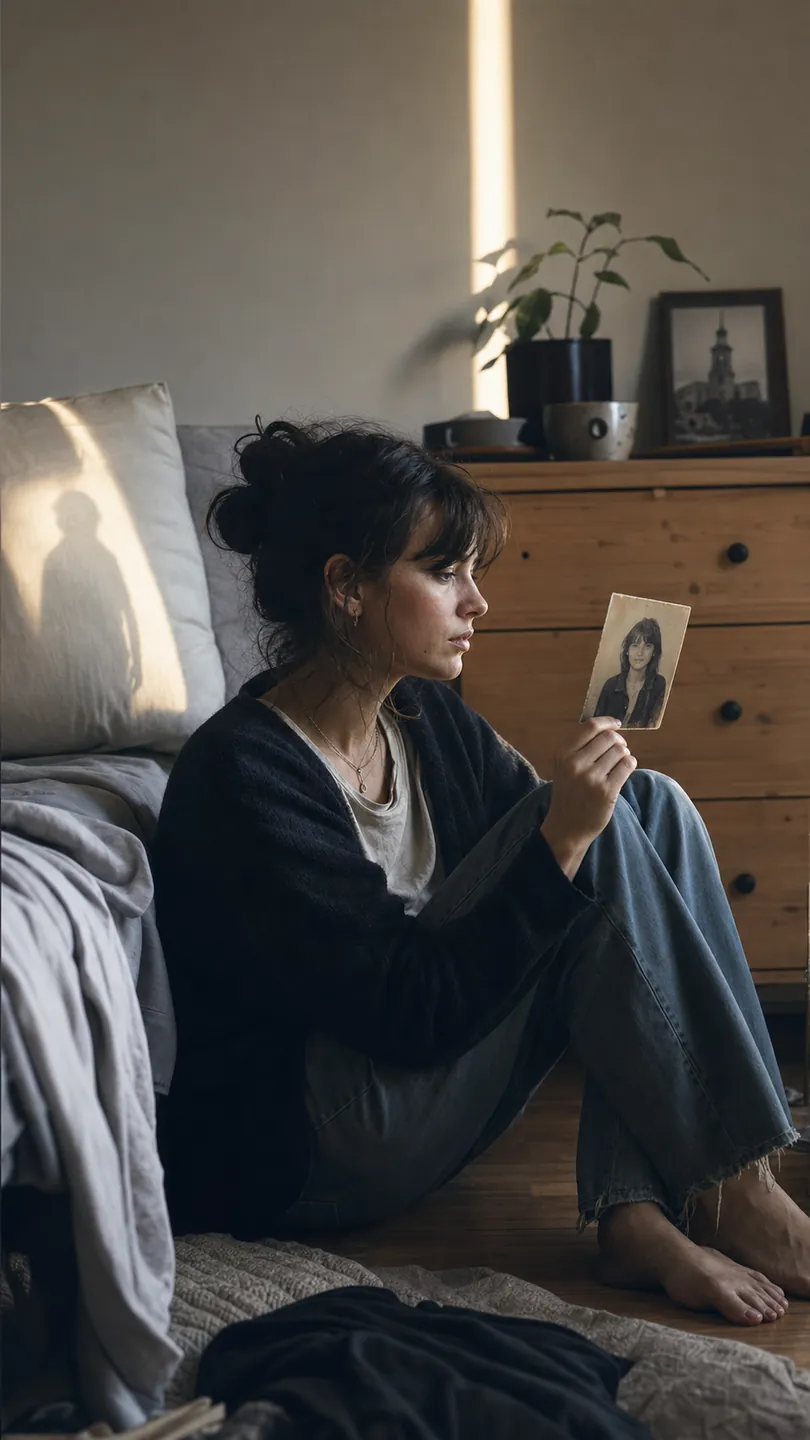
Use the attached reference photo as the identity reference: keep the same face, skin tone, hair and features as the person in that photo, without beautifying, aging or altering them. Create a contemplative single-frame image designed to serve as a visual catalyst for reflective writing. SUBJECT & SCENE — Depict the person from the reference photo wearing layered, slightly rumpled clothing in an ordinary moment: finding an old photograph and wondering which present-day patterns were already visible but unnamed. Ground the scene in a worn photograph held beside the current face, small missing details, and background objects echoed in the present room. INNER DYNAMIC — Let the image express this dynamic: disrupted sleep and uneven energy altering judgment, temperament, capacity, and self-trust. Show the person as complex and capable, not broken or inspirational. Communicate the tension through restrained posture, attention, and behavior rather than exaggerated facial emotion. SYMBOLIC DETAIL — Integrate a pillow retaining the silhouette of someone already standing as the only controlled departure from realism. It should feel physically present yet subtle enough to be understood only after the everyday scene is noticed. TIME & IDENTITY — Suggest the full distance between the photographed moment and the present. Let the scene hold this identity question: whether the exhausted self and the energized self are equally authentic. VISUAL LANGUAGE — Use a compressed long-lens view that makes ordinary space feel emotionally dense; a narrow strip of sunlight moving across an otherwise still room; washed denim, pale wood, and soft black; slightly imperfect focus transitions that preserve realism. BOUNDARIES — No words, captions, diagnostic labels, medical clichés, self-harm imagery, horror framing, or sensational despair. Keep the portrayal humane, culturally respectful, emotionally complex, and accessible. Portrait orientation, 9:16, high detail, realistic anatomy and materials.
Refrigerator Photographs Flipped to a Grid of Blanks — AI Portrait Prompt
صورةAI Portraits

Ground the scene in fresh materials beside dust, one vivid completed fragment, and tools left exactly where momentum stopped. If the person in the reference...

من نص البرومبت

Use the attached reference photo as the identity reference: keep the same face, skin tone, hair and features as the person in that photo, without beautifying, aging or altering them. Create a contemplative single-frame image designed to serve as a visual catalyst for reflective writing. SUBJECT & SCENE — Depict the person from the reference photo in an ordinary moment: encountering a half-finished project that once carried excitement and now carries judgment. Ground the scene in fresh materials beside dust, one vivid completed fragment, and tools left exactly where momentum stopped. If the person in the reference photo wears glasses, keep them naturally as part of who they are; if not, do not add any. INNER DYNAMIC — Let the image express this dynamic: measuring worth through output while mental health changes capacity from day to day. Show the person as complex and capable, not broken or inspirational. Communicate the tension through restrained posture, attention, and behavior rather than exaggerated facial emotion. SYMBOLIC DETAIL — Integrate a desk extending farther than the room should allow as the only controlled departure from realism. It should feel physically present yet subtle enough to be understood only after the everyday scene is noticed. TIME & IDENTITY — Suggest the distance between the person who began and the person looking at it now. Let the scene hold this identity question: whether achievement reveals value or merely provides temporary permission to feel valuable. VISUAL LANGUAGE — Use a layered frame using foreground objects to suggest divided attention; balanced natural light that allows both shadow and detail to remain visible; balanced warm-cool neutrals with no dominant mood color; visible condensation, fingerprints, and ordinary surface wear. BOUNDARIES — No words, captions, diagnostic labels, medical clichés, self-harm imagery, horror framing, or sensational despair. Keep the portrayal humane, culturally respectful, emotionally complex, and accessible. Portrait orientation, 9:16, high detail, realistic anatomy and materials.

Refrigerator Photographs Flipped to a Grid of Blanks — AI Portrait Prompt
صورةAI Portraits

Ground the scene in work clothes loosened, keys dropped near the door, one lamp on, and the room appearing heavier toward the floor. INNER DYNAMIC — Let the...

من نص البرومبت

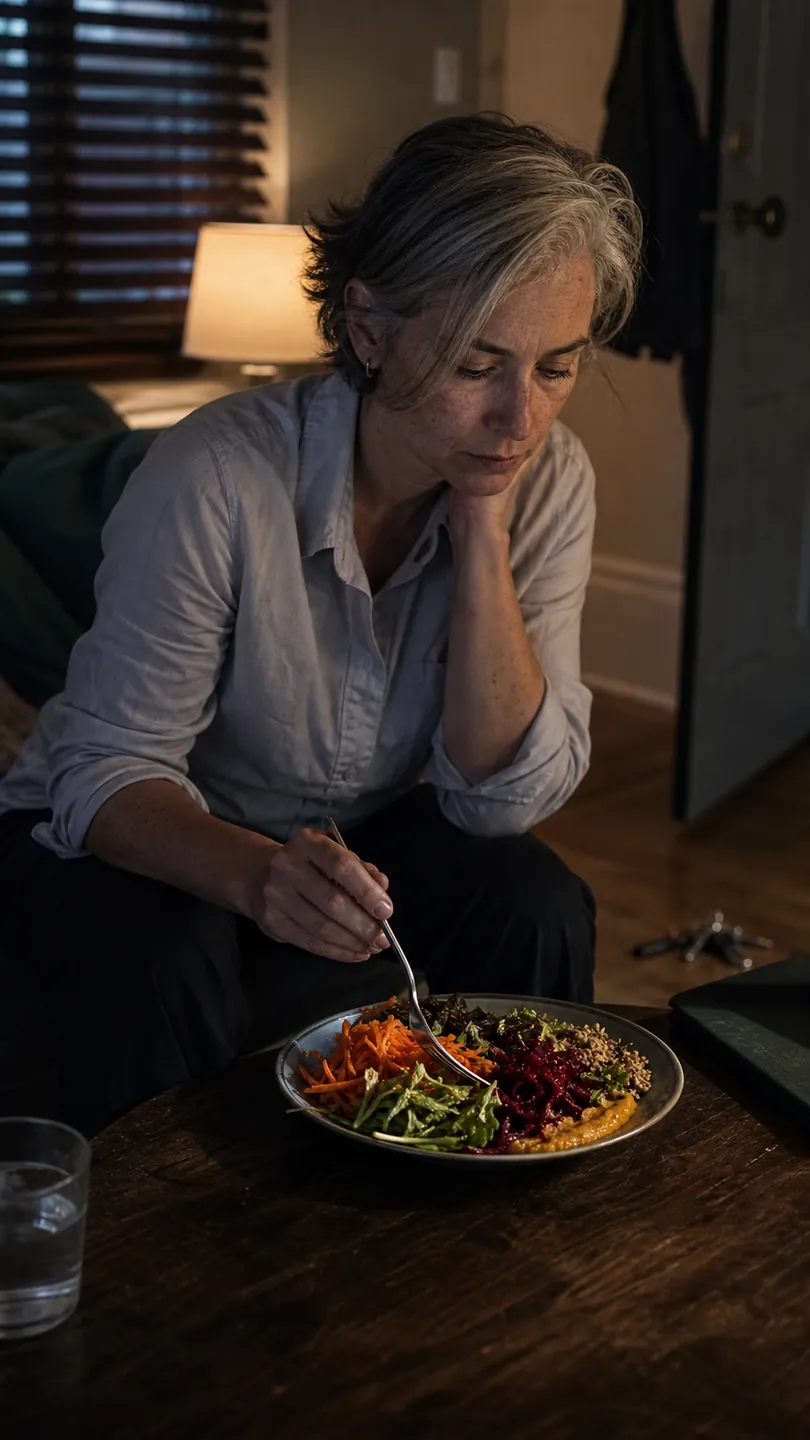
Use the attached reference photo as the identity reference: keep the same face, skin tone, hair and features as the person in that photo, without beautifying, aging or altering them. Create a contemplative single-frame image designed to serve as a visual catalyst for reflective writing. SUBJECT & SCENE — Depict the person in an ordinary moment: reaching evening after a functional day and feeling the hidden cost arrive all at once. Ground the scene in work clothes loosened, keys dropped near the door, one lamp on, and the room appearing heavier toward the floor. INNER DYNAMIC — Let the image express this dynamic: the body becoming either a muted background or an overwhelming source of signals. Show the person as complex and capable, not broken or inspirational. Communicate the tension through restrained posture, attention, and behavior rather than exaggerated facial emotion. SYMBOLIC DETAIL — Integrate food colors appearing either muted or intensely bright within the same plate as the only controlled departure from realism. It should feel physically present yet subtle enough to be understood only after the everyday scene is noticed. TIME & IDENTITY — Suggest the repeated pattern of borrowing energy from the night. Let the scene hold this identity question: how embodiment influences the sense of self when hunger, sound, touch, or fatigue feel unreliable. VISUAL LANGUAGE — Use a shallow-focus close view with the emotionally important object in crisp detail; subtle streetlight filtering through blinds at night; balanced warm-cool neutrals with no dominant mood color; subtle dust, paper fibers, and realistic skin texture. BOUNDARIES — No words, captions, diagnostic labels, medical clichés, self-harm imagery, horror framing, or sensational despair. Keep the portrayal humane, culturally respectful, emotionally complex, and accessible. Portrait orientation, 9:16, high detail, realistic anatomy and materials.

Refrigerator Photographs Flipped to a Grid of Blanks — AI Portrait Prompt
صورةAI Portraits

Ground the scene in neatly aligned notebooks, one restless foot under the table, and a glass wall reflecting a different posture. INNER DYNAMIC — Let the...

من نص البرومبت

Use the attached reference photo as the identity reference: keep the same face, skin tone, hair and features as the person in that photo, without beautifying, aging or altering them. Create a contemplative single-frame image designed to serve as a visual catalyst for reflective writing. SUBJECT & SCENE — Depict the person in ordinary contemporary clothing, portrayed without visual clichés in an ordinary moment: appearing composed in a meeting while silently managing attention, fear, heaviness, or shifting energy. Ground the scene in neatly aligned notebooks, one restless foot under the table, and a glass wall reflecting a different posture. INNER DYNAMIC — Let the image express this dynamic: the gap between inner experience and what loved ones can see. Show the person as complex and capable, not broken or inspirational. Communicate the tension through restrained posture, attention, and behavior rather than exaggerated facial emotion. SYMBOLIC DETAIL — Integrate a shared blanket divided by a visible but carefully repaired seam as the only controlled departure from realism. It should feel physically present yet subtle enough to be understood only after the everyday scene is noticed. TIME & IDENTITY — Suggest a career built through both visible performance and hidden regulation. Let the scene hold this identity question: how to remain knowable when symptoms change communication, memory, availability, or tone. VISUAL LANGUAGE — Use a centered figure surrounded by repeated ordinary objects; low television or monitor glow balanced by faint room light; cool gray-blue with realistic skin warmth; soft shadow texture, practical reflections, and precise object placement. BOUNDARIES — No words, captions, diagnostic labels, medical clichés, self-harm imagery, horror framing, or sensational despair. Keep the portrayal humane, culturally respectful, emotionally complex, and accessible. Portrait orientation, 9:16, high detail, realistic anatomy and materials.
Refrigerator Photographs Flipped to a Grid of Blanks — AI Portrait Prompt
صورةAI Portraits

Ground the scene in a sharply illuminated work area, a cooled meal, lengthened shadows, and unopened messages represented without readable text. INNER...

من نص البرومبت

Use the attached reference photo as the identity reference: keep the same face, skin tone, hair and features as the person in that photo, without beautifying, aging or altering them. Create a contemplative single-frame image designed to serve as a visual catalyst for reflective writing. SUBJECT & SCENE — Depict the person with a reserved expression in an ordinary moment: looking up from an absorbing task and discovering that hours, hunger, messages, and the surrounding room have disappeared from awareness. Ground the scene in a sharply illuminated work area, a cooled meal, lengthened shadows, and unopened messages represented without readable text. INNER DYNAMIC — Let the image express this dynamic: the gap between inner experience and what loved ones can see. Show the person as complex and capable, not broken or inspirational. Communicate the tension through restrained posture, attention, and behavior rather than exaggerated facial emotion. SYMBOLIC DETAIL — Integrate handprints on opposite sides of a window that almost align as the only controlled departure from realism. It should feel physically present yet subtle enough to be understood only after the everyday scene is noticed. TIME & IDENTITY — Suggest a lifetime of intense islands of focus separated by ordinary demands. Let the scene hold this identity question: how to remain knowable when symptoms change communication, memory, availability, or tone. VISUAL LANGUAGE — Use a hands-forward composition that lets posture communicate more than facial expression; low television or monitor glow balanced by faint room light; natural skin tones against subdued interior color; photographic realism with one controlled departure from physical reality. BOUNDARIES — No words, captions, diagnostic labels, medical clichés, self-harm imagery, horror framing, or sensational despair. Keep the portrayal humane, culturally respectful, emotionally complex, and accessible. Portrait orientation, 9:16, high detail, realistic anatomy and materials.

Refrigerator Photographs Flipped to a Grid of Blanks — AI Portrait Prompt
صورةAI Portraits

Ground the scene in ceiling light from outside traffic, a clock turned away, and sheets shaped by repeated attempts to rest. INNER DYNAMIC — Let the image...

من نص البرومبت

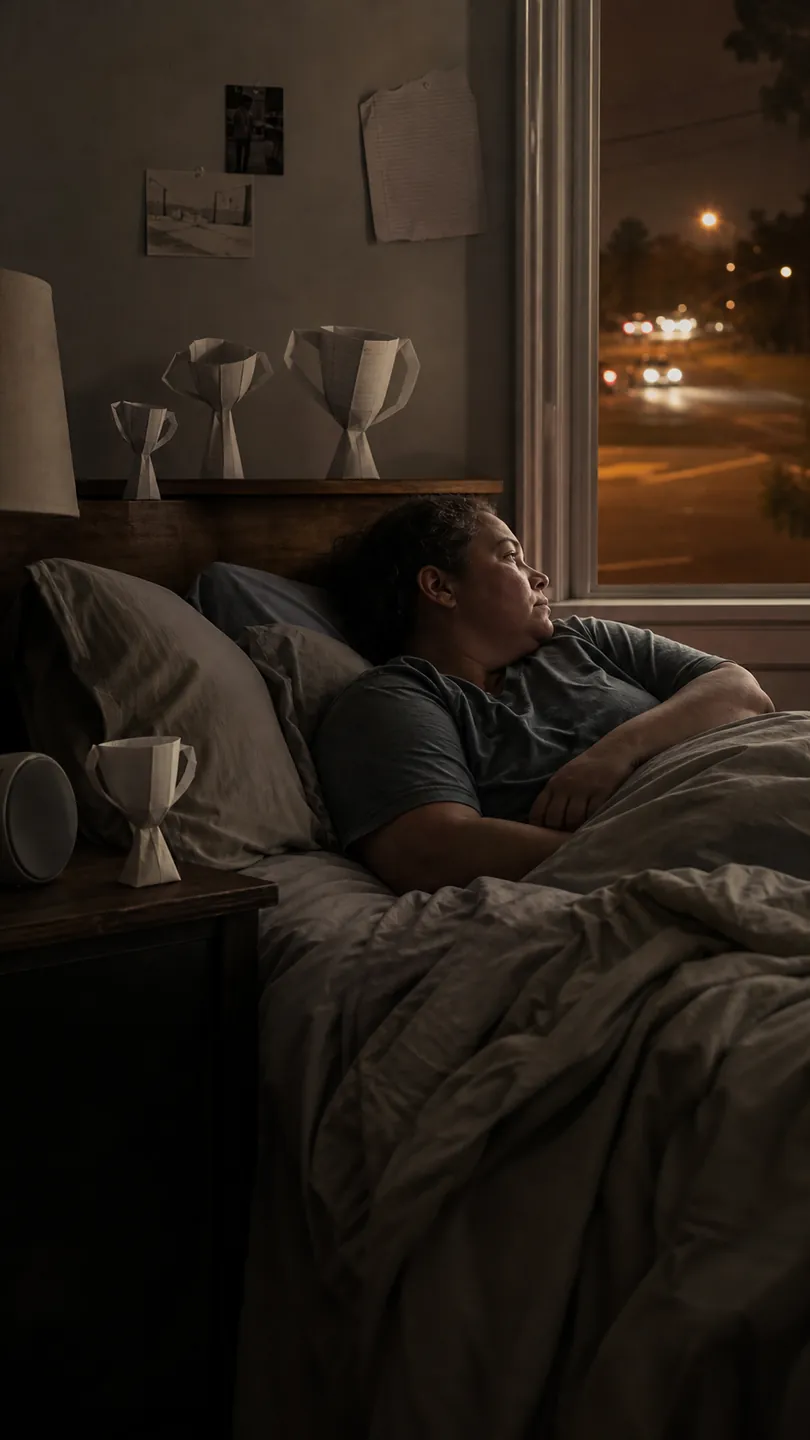
Use the attached reference photo as the identity reference: keep the same face, skin tone, hair and features as the person in that photo, without beautifying, aging or altering them. Create a contemplative single-frame image designed to serve as a visual catalyst for reflective writing. SUBJECT & SCENE — Depict the person from the reference photo in comfortable, lived-in clothing in an ordinary moment: lying awake while ordinary concerns expand into questions about meaning, failure, safety, and the future. Ground the scene in ceiling light from outside traffic, a clock turned away, and sheets shaped by repeated attempts to rest. INNER DYNAMIC — Let the image express this dynamic: measuring worth through output while mental health changes capacity from day to day. Show the person as complex and capable, not broken or inspirational. Communicate the tension through restrained posture, attention, and behavior rather than exaggerated facial emotion. SYMBOLIC DETAIL — Integrate trophies made from fragile office paper as the only controlled departure from realism. It should feel physically present yet subtle enough to be understood only after the everyday scene is noticed. TIME & IDENTITY — Suggest many nights in which time felt both stalled and rapidly disappearing. Let the scene hold this identity question: whether achievement reveals value or merely provides temporary permission to feel valuable. VISUAL LANGUAGE — Use a sequence implied by repeated objects within one coherent frame; balanced natural light that allows both shadow and detail to remain visible; soft neutrals and weathered wood tones; ordinary domestic wear rendered as meaningful detail. BOUNDARIES — No words, captions, diagnostic labels, medical clichés, self-harm imagery, horror framing, or sensational despair. Keep the portrayal humane, culturally respectful, emotionally complex, and accessible. Portrait orientation, 9:16, high detail, realistic anatomy and materials.
Refrigerator Photographs Flipped to a Grid of Blanks — AI Portrait Prompt
صورةAI Portraits

Create a contemplative single-frame image designed to serve as a visual catalyst for reflective writing. SUBJECT & SCENE — Depict the person from the...

من نص البرومبت

Use the attached reference photo as the identity reference: keep the same face, skin tone, hair and features as the person in that photo, without beautifying, aging or altering them. Create a contemplative single-frame image designed to serve as a visual catalyst for reflective writing. SUBJECT & SCENE — Depict the person from the reference photo in an ordinary moment: encountering a half-finished project that once carried excitement and now carries judgment. Ground the scene in fresh materials beside dust, one vivid completed fragment, and tools left exactly where momentum stopped. If the person in the reference photo wears a hearing aid, keep it visible and natural, with an unselfconscious posture; if not, do not add one. INNER DYNAMIC — Let the image express this dynamic: carrying responsibility for others while managing an unstable or depleted inner landscape. Show the person as complex and capable, not broken or inspirational. Communicate the tension through restrained posture, attention, and behavior rather than exaggerated facial emotion. SYMBOLIC DETAIL — Integrate a family photograph in which the caregiver is slightly translucent but present as the only controlled departure from realism. It should feel physically present yet subtle enough to be understood only after the everyday scene is noticed. TIME & IDENTITY — Suggest the distance between the person who began and the person looking at it now. Let the scene hold this identity question: how care can be sincere even when patience, memory, and energy are inconsistent. VISUAL LANGUAGE — Use a close environmental portrait that keeps the surrounding routine visible; blue-hour light mixed with warm interior practicals; soft neutrals and weathered wood tones; clean optics with no plastic skin and no exaggerated bokeh. BOUNDARIES — No words, captions, diagnostic labels, medical clichés, self-harm imagery, horror framing, or sensational despair. Keep the portrayal humane, culturally respectful, emotionally complex, and accessible. Portrait orientation, 9:16, high detail, realistic anatomy and materials.
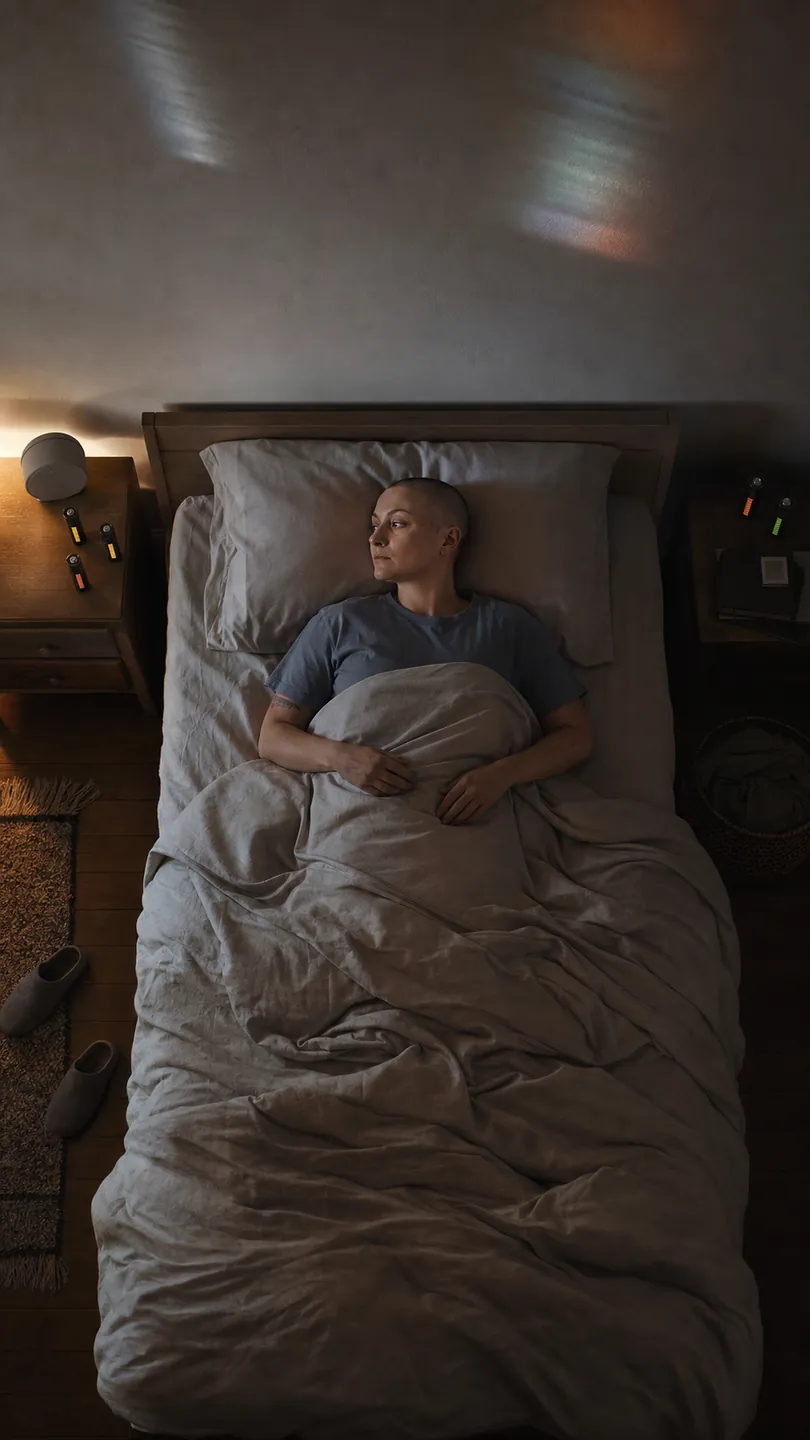
Refrigerator Photographs Flipped to a Grid of Blanks — AI Portrait Prompt
صورةAI Portraits

Ground the scene in ceiling light from outside traffic, a clock turned away, and sheets shaped by repeated attempts to rest. If the person in the reference...

من نص البرومبت

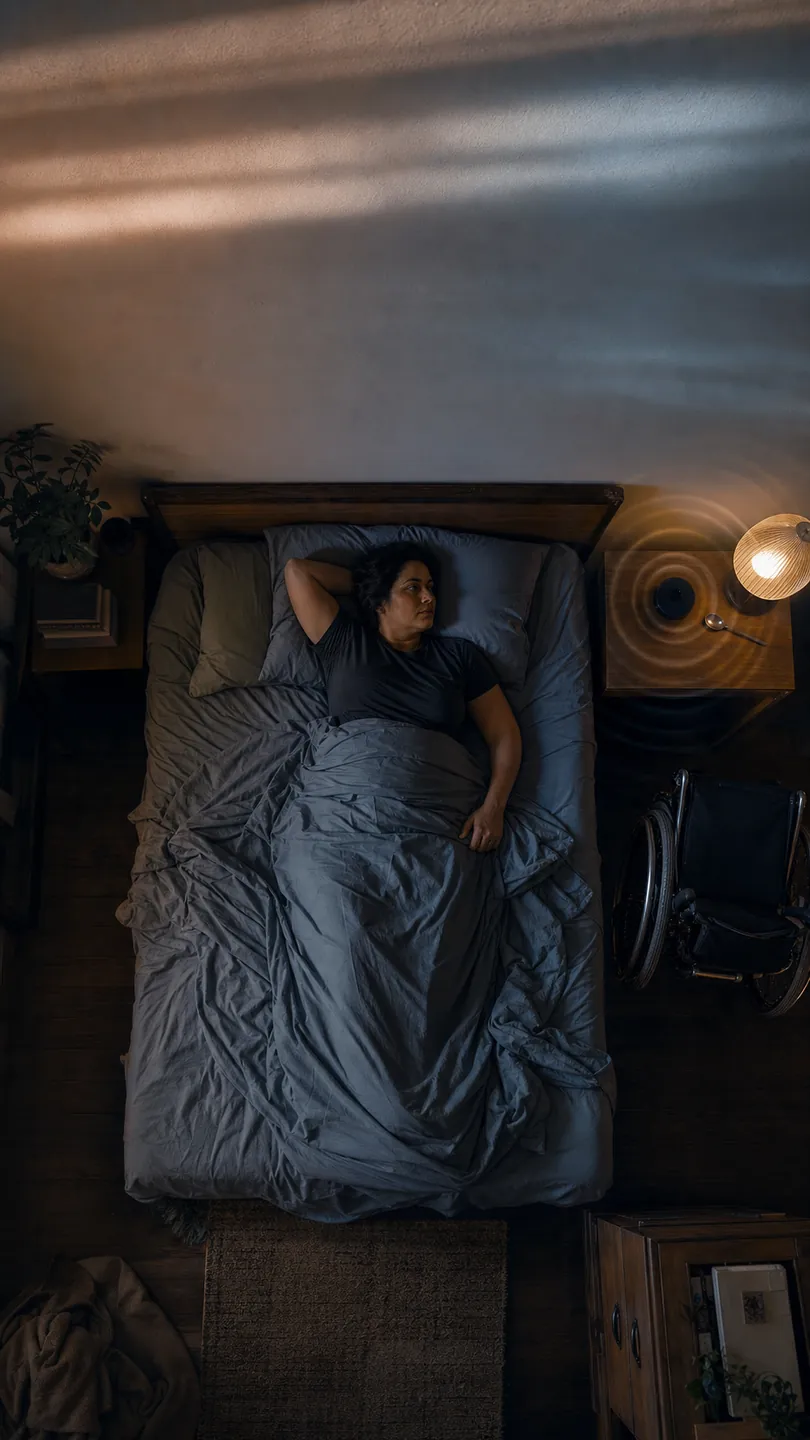
Use the attached reference photo as the identity reference: keep the same face, skin tone, hair and features as the person in that photo, without beautifying, aging or altering them. Create a contemplative single-frame image designed to serve as a visual catalyst for reflective writing. SUBJECT & SCENE — Depict the person from the reference photo in an ordinary moment: lying awake while ordinary concerns expand into questions about meaning, failure, safety, and the future. Ground the scene in ceiling light from outside traffic, a clock turned away, and sheets shaped by repeated attempts to rest. If the person in the reference photo uses a wheelchair, show it naturally and confidently as part of who they are, framed as fully active within the scene; if not, do not add one. INNER DYNAMIC — Let the image express this dynamic: the body becoming either a muted background or an overwhelming source of signals. Show the person as complex and capable, not broken or inspirational. Communicate the tension through restrained posture, attention, and behavior rather than exaggerated facial emotion. SYMBOLIC DETAIL — Integrate the sound of a spoon represented as visible concentric pressure in the air as the only controlled departure from realism. It should feel physically present yet subtle enough to be understood only after the everyday scene is noticed. TIME & IDENTITY — Suggest many nights in which time felt both stalled and rapidly disappearing. Let the scene hold this identity question: how embodiment influences the sense of self when hunger, sound, touch, or fatigue feel unreliable. VISUAL LANGUAGE — Use an overhead geometric composition that reveals patterns the person cannot see; low evening light with practical lamps visible in frame; muted earth tones with restrained blue-gray accents; realistic clutter controlled enough to remain readable. BOUNDARIES — No words, captions, diagnostic labels, medical clichés, self-harm imagery, horror framing, or sensational despair. Keep the portrayal humane, culturally respectful, emotionally complex, and accessible. Portrait orientation, 9:16, high detail, realistic anatomy and materials.

Refrigerator Photographs Flipped to a Grid of Blanks — AI Portrait Prompt
صورةAI Portraits

Ground the scene in ceiling light from outside traffic, a clock turned away, and sheets shaped by repeated attempts to rest. INNER DYNAMIC — Let the image...

من نص البرومبت

Use the attached reference photo as the identity reference: keep the same face, skin tone, hair and features as the person in that photo, without beautifying, aging or altering them. Create a contemplative single-frame image designed to serve as a visual catalyst for reflective writing. SUBJECT & SCENE — Depict the person from the reference photo in an ordinary moment: lying awake while ordinary concerns expand into questions about meaning, failure, safety, and the future. Ground the scene in ceiling light from outside traffic, a clock turned away, and sheets shaped by repeated attempts to rest. INNER DYNAMIC — Let the image express this dynamic: disrupted sleep and uneven energy altering judgment, temperament, capacity, and self-trust. Show the person as complex and capable, not broken or inspirational. Communicate the tension through restrained posture, attention, and behavior rather than exaggerated facial emotion. SYMBOLIC DETAIL — Integrate batteries around the room showing different levels without numbers as the only controlled departure from realism. It should feel physically present yet subtle enough to be understood only after the everyday scene is noticed. TIME & IDENTITY — Suggest many nights in which time felt both stalled and rapidly disappearing. Let the scene hold this identity question: whether the exhausted self and the energized self are equally authentic. VISUAL LANGUAGE — Use a restrained symmetrical composition disturbed by one off-center detail; muted midday light with minimal contrast; balanced warm-cool neutrals with no dominant mood color; worn wood, soft fabric creases, and imperfect household surfaces. BOUNDARIES — No words, captions, diagnostic labels, medical clichés, self-harm imagery, horror framing, or sensational despair. Keep the portrayal humane, culturally respectful, emotionally complex, and accessible. Portrait orientation, 9:16, high detail, realistic anatomy and materials.

Refrigerator Photographs Flipped to a Grid of Blanks — AI Portrait Prompt
صورةAI Portraits

Create a contemplative single-frame image designed to serve as a visual catalyst for reflective writing. SUBJECT & SCENE — Depict the person from the...

من نص البرومبت

Use the attached reference photo as the identity reference: keep the same face, skin tone, hair and features as the person in that photo, without beautifying, aging or altering them. Create a contemplative single-frame image designed to serve as a visual catalyst for reflective writing. SUBJECT & SCENE — Depict the person from the reference photo in practical everyday clothing in an ordinary moment: smiling through a gathering while monitoring energy, attention, anxiety, and the possibility of a mood shift. Ground the scene in a lively background softened into blur, a practiced expression, and a private hand gesture hidden below the table. INNER DYNAMIC — Let the image express this dynamic: measuring worth through output while mental health changes capacity from day to day. Show the person as complex and capable, not broken or inspirational. Communicate the tension through restrained posture, attention, and behavior rather than exaggerated facial emotion. SYMBOLIC DETAIL — Integrate a progress bar shape encircling the body without readable text as the only controlled departure from realism. It should feel physically present yet subtle enough to be understood only after the everyday scene is noticed. TIME & IDENTITY — Suggest years of learning which version of the self is easiest for others to receive. Let the scene hold this identity question: whether achievement reveals value or merely provides temporary permission to feel valuable. VISUAL LANGUAGE — Use a small figure in a larger lived-in environment, with scale carrying the emotion; warm hallway light spilling into a cooler room; natural skin tones against subdued interior color; fine documentary detail, light film grain, and tactile fabric. BOUNDARIES — No words, captions, diagnostic labels, medical clichés, self-harm imagery, horror framing, or sensational despair. Keep the portrayal humane, culturally respectful, emotionally complex, and accessible. Portrait orientation, 9:16, high detail, realistic anatomy and materials.
