تخطَّ إلى المحتوى
f

faisal aziz

@alkhunizan

2700البرومبتات
0تصويتات مستلمة
0مساهمات
تاريخ الانضمام منذ 4 أشهر
2700 مساهمات في العام الماضي
نوفمبر
ديسمبر
يناير
فبراير
مارس
أبريل
مايو
يونيو
يوليو
أغسطس
سبتمبر
أكتوبر
ن
ر
ج
أقل
أكثر
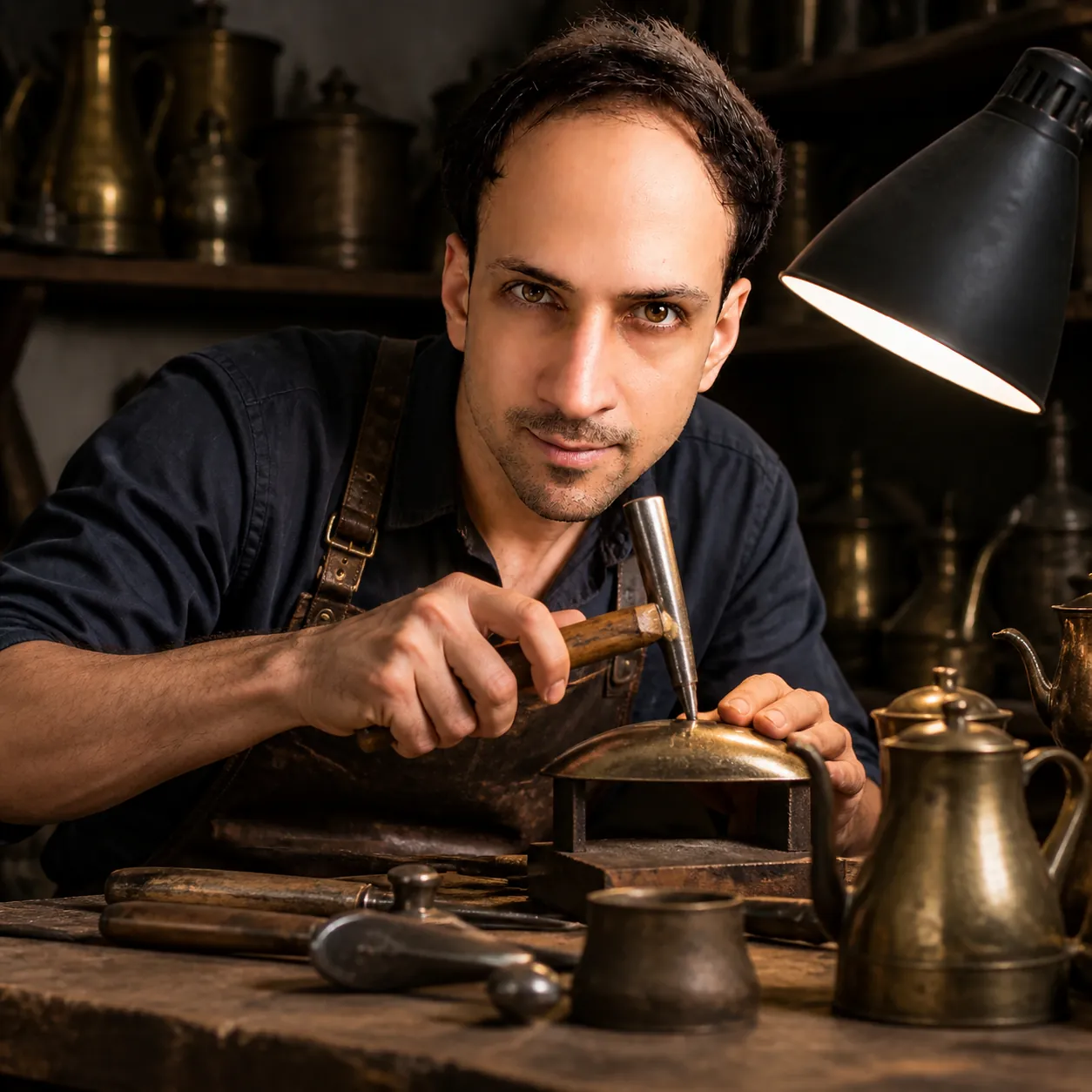
Honed Attention: Tinsmith's Alcove — AI Portrait Prompt
صورةAI Portraits

Turn your own photo into a precision-craft reportage portrait in a tinsmith's alcove stacked with brass coffee pots awaiting repair. Keeps your face unchanged.

من نص البرومبت

Use the attached reference photo as the identity reference: keep the same face, skin tone, hair and features as the person in that photo, without beautifying, aging or altering them. Create a square 1:1 museum-catalog frame with a strong first read and a slower second read at exactly 2880x2880 pixels. Location: a tinsmith's alcove stacked with brass coffee pots awaiting repair. Show the subject in a worn leather half-apron over a rolled-sleeve indigo shirt, chasing a dent outward with taps too light to hear. Treat this mechanism as the frame’s governing rule: a plane iron whose hand-honed micro-bevel has become a true mirror, holding their reflected eye inside a band two millimeters wide reads out the whole difference between nearly true and finally true. Explore why attention behaves like an instrument that drifts unless it is regularly trued; direct expression and posture toward steady devotion, never melodrama or ad-like confidence. Frame across the benchtop at hand height so the calibration and their eyes share one focal plane. Make the composition surround one micron-scale event with generous, calm negative space. Render it as precision-craft reportage built from working sharpening apparatus, honest wear on every surface, controlled single-source lighting, and patient human-scale observation, using a single shaded bench lamp pooling light tightly around the work and a palette of slate grey, unbleached linen, and a single brass glint. Photorealistic: this must read as a real photograph from a physical camera, never an illustration, painting, or 3D render. Resolve real surface detail: paper fibre visible at cut edges, plastic that shows mould lines, and paint thicker where a brush turned. Keep one identity-locked person, credible hands and fingers, natural fabric, and coherent scale, contact, reflections, shadows, airflow, deformation, and materials. Background people only when essential, always secondary and clearly different. Avoid impossible mirror gleam, floating measurement holograms, oversized cartoon calipers, and artfully scattered screws. No text, labels, logos, signatures, watermarks, random symbols, plastic skin, excessive bloom, or glossy AI finish.
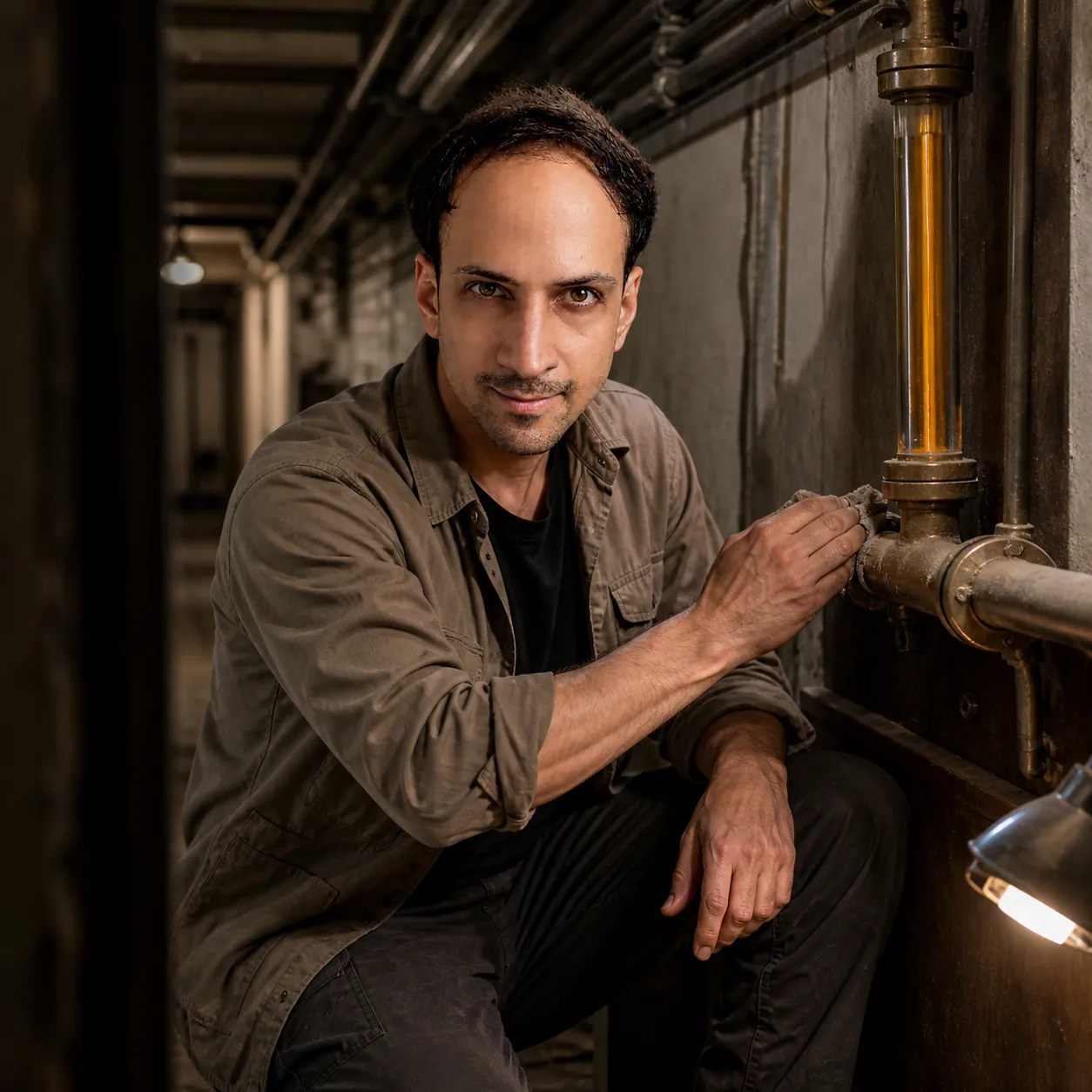
Wordless Dispatch: Service Corridor — AI Portrait Prompt
صورةAI Portraits

Turn your own photo into a conceptual house-systems portrait in a service corridor where old conduit follows the ceiling line. Keeps your face unchanged.

من نص البرومبت

Use the attached reference photo as the identity reference: keep the same face, skin tone, hair and features as the person in that photo, without beautifying, aging or altering them. Create a square 1:1 museum-catalog frame with a strong first read and a slower second read at exactly 2880x2880 pixels. Location: a service corridor where old conduit follows the ceiling line. Show the subject in a dust-colored cotton overshirt over a dark tee and work trousers, brushing dust from a conduit joint with one thumb. Use this advanced image-making device as the core logic: a brass speaking tube that carries an unraised voice the length of a building on breath alone holds a slow shift still long enough for judgment to consult it. Explore what changes when a gauge is built so it cannot flatter its owner; direct expression and posture toward clear-eyed care, never melodrama or ad-like confidence. Frame just past a doorway edge, the near jamb dark and unfocused but never crossing their face. Make the composition keep the reading edge sharp while the corridor behind falls soft. Render it as conceptual house-systems photography built from functioning telegraph hardware, accurate liquid-column behavior, restrained interior direction, and editorial portrait fidelity, using a low bench lamp grazing brass while the room behind stays dim and a palette of chalk white, dark walnut, and a single amber column. Photorealistic: this must read as a real photograph from a physical camera, never an illustration, painting, or 3D render. Resolve real surface detail: thread ends and slight pilling on worn cloth, hairline chips at every hard corner, and stone that is porous rather than smooth. Keep one identity-locked person, credible hands and fingers, natural fabric, and coherent scale, contact, reflections, shadows, airflow, deformation, and materials. Background people only when essential, always secondary and clearly different. Avoid brass-gear collage backdrops, cartoon telegraph keys, neon signal beams, mercury spills, and floating typographic message overlays. No text, labels, logos, signatures, watermarks, random symbols, plastic skin, excessive bloom, or glossy AI finish.
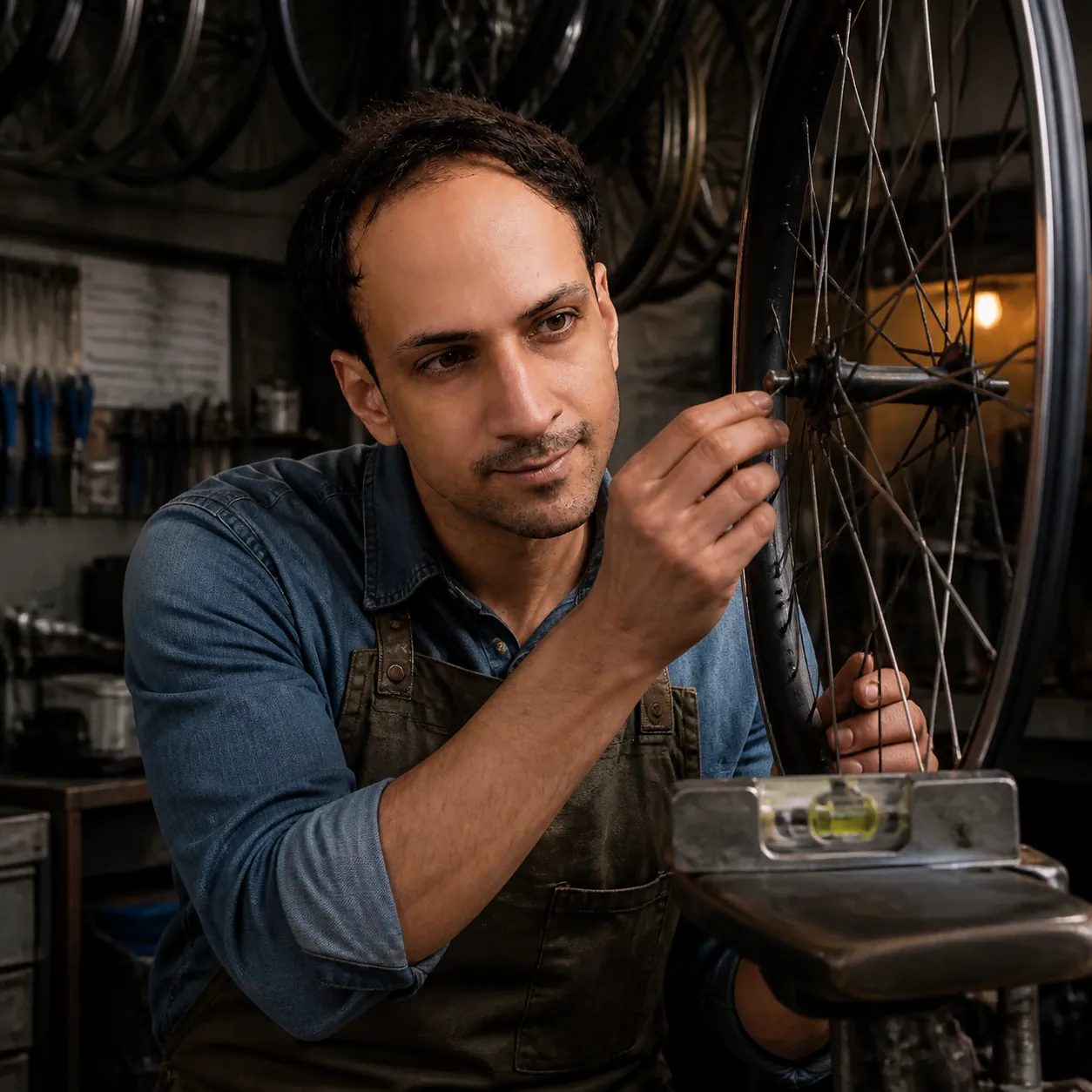
Patient Passes: Back Room of a Bicycle Repair Shop — AI Portrait Prompt
صورةAI Portraits

Turn your own photo into a workshop still-life portrait in the back room of a bicycle repair shop, wheels hung overhead. Keeps your face unchanged.

من نص البرومبت

Use the attached reference photo as the identity reference: keep the same face, skin tone, hair and features as the person in that photo, without beautifying, aging or altering them. Create a square 1:1 museum-catalog frame with a strong first read and a slower second read at exactly 2880x2880 pixels. Location: the back room of a bicycle repair shop, wheels hung overhead. Show the subject in a waxed canvas apron over a washed-out denim shirt, plucking one spoke and listening with their head tilted. Build the artwork around this material rule: a machinist's level flipped end for end on one seat, its vial adjusted until the bubble confesses the same reading both ways reads out the whole difference between nearly true and finally true. Explore why the ritual of preparation can matter more than the work it precedes; direct expression and posture toward absorbed precision, never melodrama or ad-like confidence. Use a measured 35mm view at arm's-length working distance, the subject off center and no distorted hands. Make the composition keep both hands inside the light and everything else in shadow. Render it as workshop still-life portraiture combining truthful tool physics, visible micro-texture on steel and skin, disciplined shadow work, and museum-label sobriety, using warm tungsten spill from behind the tool, rim-lighting steel and knuckles and a palette of gunmetal, chalk white, and one stripe of Prussian blue. Photorealistic: this must read as a real photograph from a physical camera, never an illustration, painting, or 3D render. Resolve real surface detail: dust settled where nobody wipes, fingerprint haze on glass, and edges rubbed pale by handling. Keep one identity-locked person, credible hands and fingers, natural fabric, and coherent scale, contact, reflections, shadows, airflow, deformation, and materials. Background people only when essential, always secondary and clearly different. Avoid impossible mirror gleam, floating measurement holograms, oversized cartoon calipers, and artfully scattered screws. No text, labels, logos, signatures, watermarks, random symbols, plastic skin, excessive bloom, or glossy AI finish.
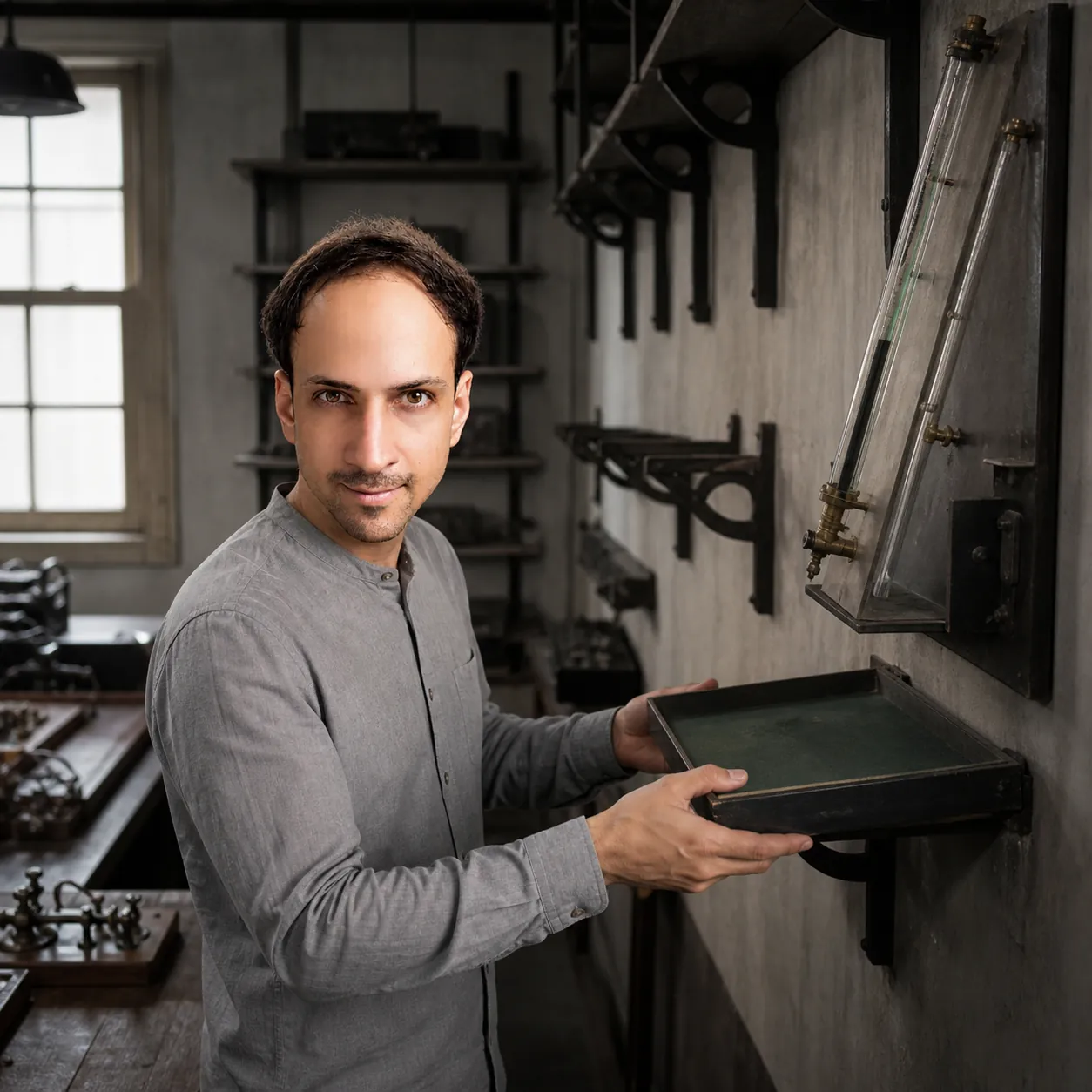
House Telegraph: Small Dispatch Room — AI Portrait Prompt
صورةAI Portraits

Turn your own photo into a conceptual house-systems portrait in a small dispatch room lined with wall brackets and cleared shelves. Keeps your face unchanged.

من نص البرومبت

Use the attached reference photo as the identity reference: keep the same face, skin tone, hair and features as the person in that photo, without beautifying, aging or altering them. Create a square 1:1 museum-catalog frame with a strong first read and a slower second read at exactly 2880x2880 pixels. Location: a small dispatch room lined with wall brackets and cleared shelves. Show the subject in a soft grey collarless shirt with sleeves buttoned at the wrist, lowering a felt-lined tray onto a wall bracket. Build the artwork around this material rule: an inclined oil manometer whose meniscus slides a hand's width for a pressure no palm could ever feel holds a slow shift still long enough for judgment to consult it. Explore how much of good judgment is simply arranging to be told early; direct expression and posture toward quiet stewardship, never melodrama or ad-like confidence. Frame from the far end of the room so the signal's whole route stays visible. Make the composition leave honest vertical distance between the sensing point and their hands. Render it as conceptual house-systems photography built from functioning telegraph hardware, accurate liquid-column behavior, restrained interior direction, and editorial portrait fidelity, using flat overcast illumination that keeps every glass column readable without glare and a palette of lead grey, unpolished tin, and one stripe of verdigris. Photorealistic: this must read as a real photograph from a physical camera, never an illustration, painting, or 3D render. Resolve real surface detail: dust settled where nobody wipes, fingerprint haze on glass, and edges rubbed pale by handling. Keep one identity-locked person, credible hands and fingers, natural fabric, and coherent scale, contact, reflections, shadows, airflow, deformation, and materials. Background people only when essential, always secondary and clearly different. Avoid brass-gear collage backdrops, cartoon telegraph keys, neon signal beams, mercury spills, and floating typographic message overlays. No text, labels, logos, signatures, watermarks, random symbols, plastic skin, excessive bloom, or glossy AI finish.
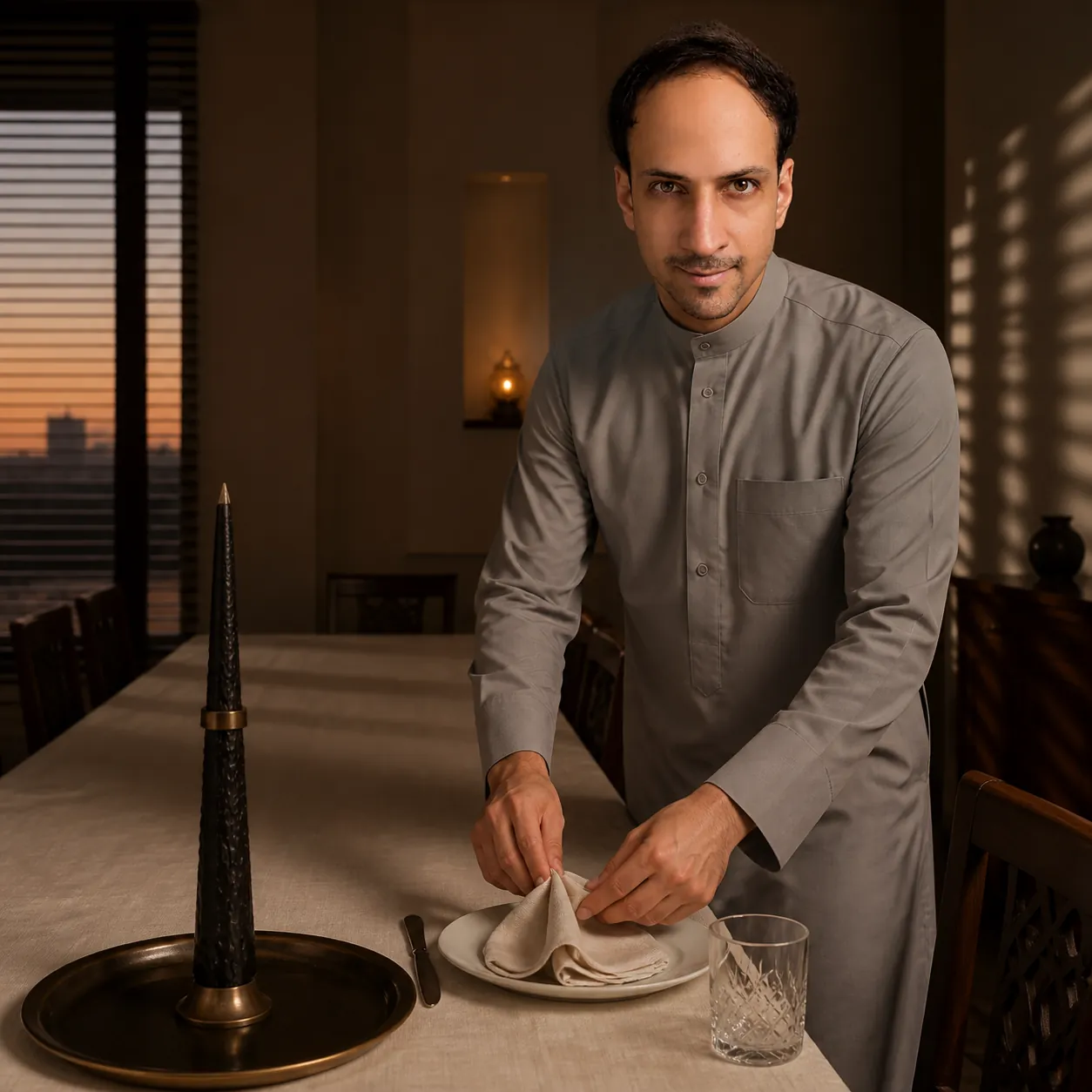
Lawful Delay: Long Dining Room — AI Portrait Prompt
صورةAI Portraits

Turn your own photo into a gallery-grade tableau portrait in a long dining room at dusk, one place set and untouched. Keeps your face unchanged.

من نص البرومبت

Use the attached reference photo as the identity reference: keep the same face, skin tone, hair and features as the person in that photo, without beautifying, aging or altering them. Create a square 1:1 museum-catalog frame with a strong first read and a slower second read at exactly 2880x2880 pixels. Location: a long dining room at dusk, one place set and untouched. Show the subject in a pressed ash-grey traditional Gulf outfit buttoned neatly to the collar, straightening a napkin's fold to one clean edge. Build the artwork around this material rule: a tall taper with one brass ring set in its wax that will drop onto the tray at the agreed hour lets the turn from appetite to steadiness be read like plain machinery. Explore where discipline stops being a mood and becomes a piece of furniture; direct expression and posture toward calm self-command, never melodrama or ad-like confidence. Use a measured 35mm room view that holds them off-center with honest verticals and unexaggerated proportions. Make the composition leave deliberate distance between them and what waits. Render it as gallery-grade tableau realism built from lawful physical timers, warm restrained styling, accurate shadow behavior, and patient large-format photographic clarity, using thin daylight broken into patient stripes by nearby slatted shade and a palette of unbleached linen, slate grey, and a single amber glow. Photorealistic: this must read as a real photograph from a physical camera, never an illustration, painting, or 3D render. Resolve real surface detail: cotton that hangs by its own weight, seams that pucker very slightly, and collars softened by washing. Keep one identity-locked person, credible hands and fingers, natural fabric, and coherent scale, contact, reflections, shadows, airflow, deformation, and materials. Background people only when essential, always secondary and clearly different. Avoid tape-measure diet props, empty-fridge gloom, ringing alarm clocks, glossy food-commercial styling, and gravity-defying hourglass sand. No text, labels, logos, signatures, watermarks, random symbols, plastic skin, excessive bloom, or glossy AI finish.
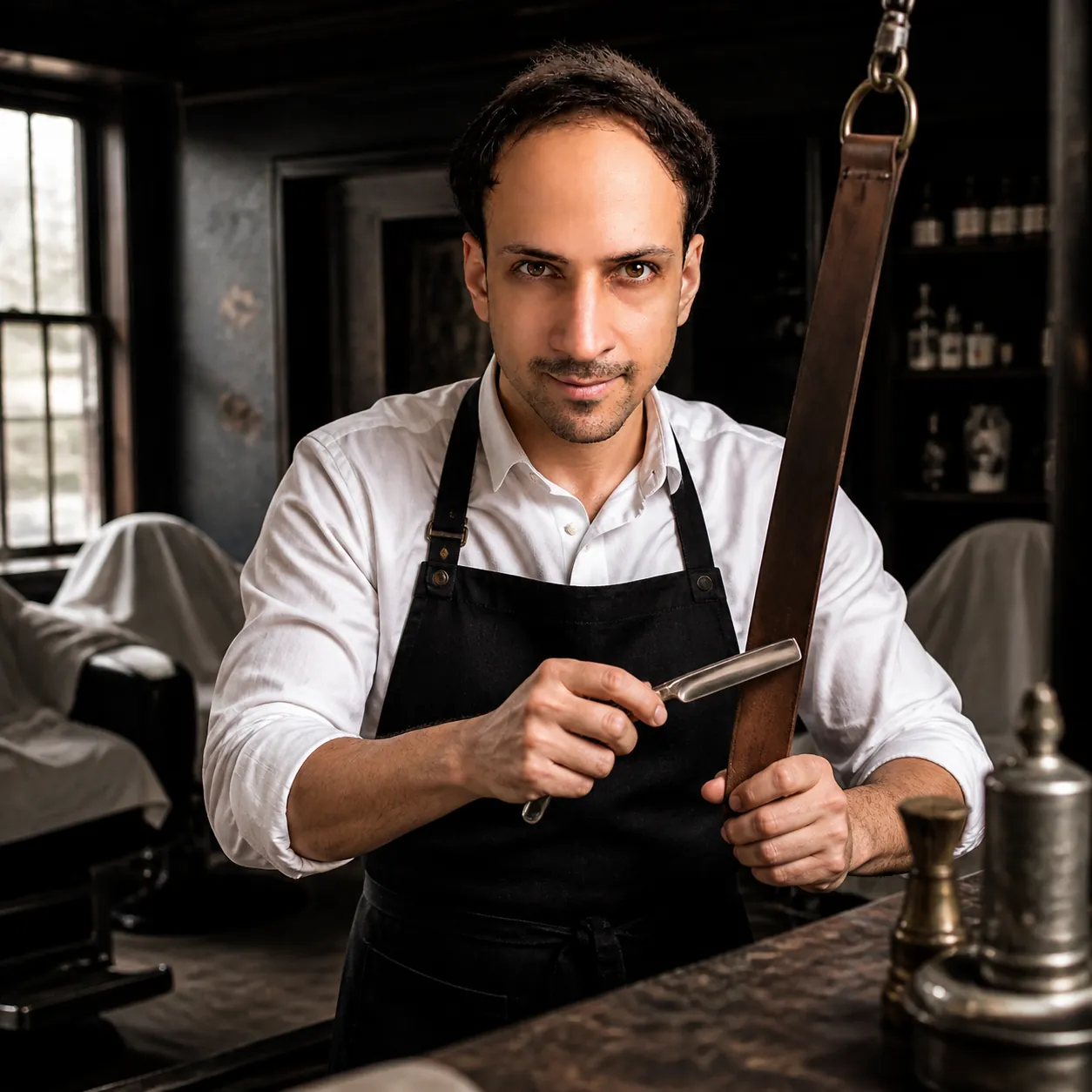
Kept Not Replaced: Back Room of an Old Barbershop — AI Portrait Prompt
صورةAI Portraits

Turn your own photo into a conservation-grade craft portrait in the back room of an old barbershop, chairs sheeted for the night. Keeps your face unchanged.

من نص البرومبت

Use the attached reference photo as the identity reference: keep the same face, skin tone, hair and features as the person in that photo, without beautifying, aging or altering them. Create a square 1:1 museum-catalog frame with a strong first read and a slower second read at exactly 2880x2880 pixels. Location: the back room of an old barbershop, chairs sheeted for the night. Show the subject in a black service apron over a pressed white shirt, cuffs turned back, drawing a blade flat along a hanging leather strop. Use this advanced image-making device as the core logic: a hundred-year-old smoothing plane that still lifts one unbroken shaving thin enough to read the window's light through its curl turns a hundred years of use into polish instead of ruin. Explore how minutes of ritual care can outweigh decades of neglect; direct expression and posture toward quiet pride, never melodrama or ad-like confidence. Frame past the object in the extreme foreground, letting its most worn surface stay tangible without covering their face. Make the composition pair one worn surface with one fresh mark of care. Render it as conservation-grade craft portraiture built from real working tools, truthful wear mapping, warm low-key lighting, and precise, respectful editorial realism, using north daylight through a dusty pane, contrast held gentle and true and a palette of seasoned black, beeswax cream, and a gleam of pewter. Photorealistic: this must read as a real photograph from a physical camera, never an illustration, painting, or 3D render. Resolve real surface detail: visible weave in cloth, fine scratches on metal, and the faint unevenness of painted walls. Keep one identity-locked person, credible hands and fingers, natural fabric, and coherent scale, contact, reflections, shadows, airflow, deformation, and materials. Background people only when essential, always secondary and clearly different. Avoid rusty antique-shop clutter, sepia nostalgia filters, cobwebbed barn walls, staged distressed props, and heroic blacksmith sparks. No text, labels, logos, signatures, watermarks, random symbols, plastic skin, excessive bloom, or glossy AI finish.

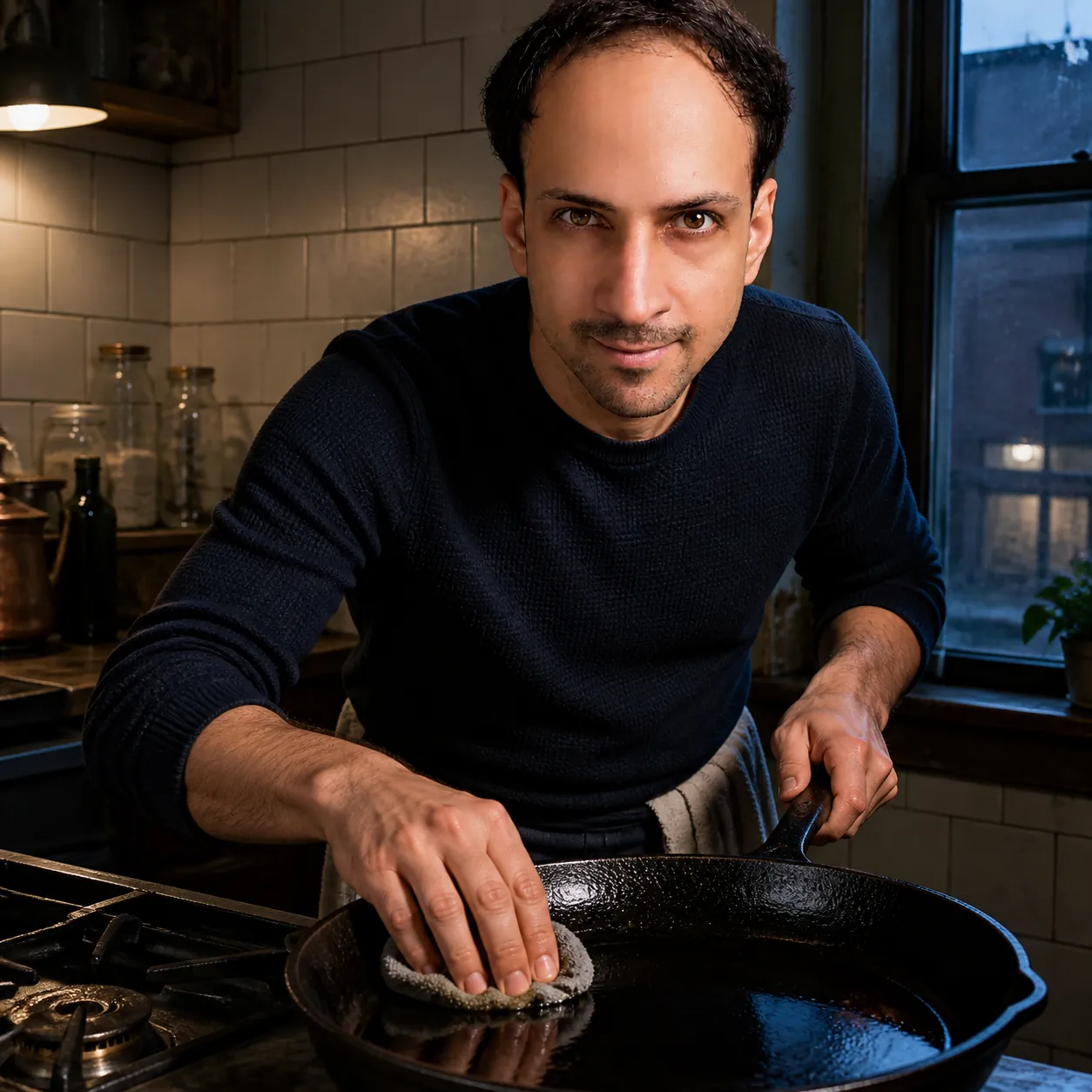
Second Century: Small Tiled Kitchen — AI Portrait Prompt
صورةAI Portraits

Turn your own photo into a photorealistic portrait in a small tiled kitchen before dawn, one burner ring still cooling. Keeps your face unchanged.

من نص البرومبت

Use the attached reference photo as the identity reference: keep the same face, skin tone, hair and features as the person in that photo, without beautifying, aging or altering them. Create a square 1:1 museum-catalog frame with a strong first read and a slower second read at exactly 2880x2880 pixels. Location: a small tiled kitchen before dawn, one burner ring still cooling. Show the subject in a navy waffle-knit shirt with a plain towel tucked at the waist, wiping a thin sheen of oil across black iron. Use this advanced image-making device as the core logic: a cast-iron skillet whose cooking face has been seasoned over decades into a black glass that carries a true reflection argues that upkeep, not replacement, is the true form of inheritance. Explore what an object records about the hands that refused to let it fail; direct expression and posture toward practical tenderness, never melodrama or ad-like confidence. Frame past the object in the extreme foreground, letting its most worn surface stay tangible without covering their face. Make the composition pair one worn surface with one fresh mark of care. Render it as workshop still-life realism joining high-fidelity portrait photography, accurate patina and polish, shallow tactile depth, and quiet archival grading, using late slanting sun that grazes every polished wear point into quiet highlights and a palette of lampblack, waxed leather, and one glint of copper. Photorealistic: this must read as a real photograph from a physical camera, never an illustration, painting, or 3D render. Resolve real surface detail: thread ends and slight pilling on worn cloth, hairline chips at every hard corner, and stone that is porous rather than smooth. Keep one identity-locked person, credible hands and fingers, natural fabric, and coherent scale, contact, reflections, shadows, airflow, deformation, and materials. Background people only when essential, always secondary and clearly different. Avoid glowing forge montages, artificially weathered wood grain, hipster workshop styling, floating tool arrangements, and varnish-shiny fake patina. No text, labels, logos, signatures, watermarks, random symbols, plastic skin, excessive bloom, or glossy AI finish.
Routes Remembered: Rope-Seller's Stall Deep — AI Portrait Prompt
صورةAI Portraits

Turn your own photo into a craft-documentary portrait in a rope-seller's stall deep in an old Riyadh souq at opening hour. Keeps your face unchanged.

من نص البرومبت

Use the attached reference photo as the identity reference: keep the same face, skin tone, hair and features as the person in that photo, without beautifying, aging or altering them. Create a square 1:1 museum-catalog frame with a strong first read and a slower second read at exactly 2880x2880 pixels. Location: a rope-seller's stall deep in an old Riyadh souq at opening hour. Show the subject in a plain grey winter traditional Gulf outfit with a dark sleeveless vest, weighing a coil of new rope across both forearms. Use this advanced image-making device as the core logic: a long splice joining new rope to old, tapered so smoothly that the finished line runs through a wooden block unhindered turns repeated effort into a physical route the hand can find again. Explore whether a skill repaired after failure can honestly be called the same skill; direct expression and posture toward grounded hope, never melodrama or ad-like confidence. Frame the subject slightly off-axis through the standing lines, with every crossing physically accounted for. Make the composition hold their hands and the tensioned work in one unbroken diagonal. Render it as craft-documentary portraiture built from real fiber mechanics, patient workshop realism, archival material fidelity, and emotionally restrained editorial composition, using low golden-hour sun crossing the space in one honest band and a palette of undyed flax, worn oak, and one madder-red line. Photorealistic: this must read as a real photograph from a physical camera, never an illustration, painting, or 3D render. Resolve real surface detail: wood grain read at honest scale, matte and gloss clearly separated, and no surface uniformly clean. Keep one identity-locked person, credible hands and fingers, natural fabric, and coherent scale, contact, reflections, shadows, airflow, deformation, and materials. Background people only when essential, always secondary and clearly different. Avoid glowing neural filaments, brain-shaped tangles, circuit-board overlays, holographic wiring diagrams, and sparks jumping between cables. No text, labels, logos, signatures, watermarks, random symbols, plastic skin, excessive bloom, or glossy AI finish.
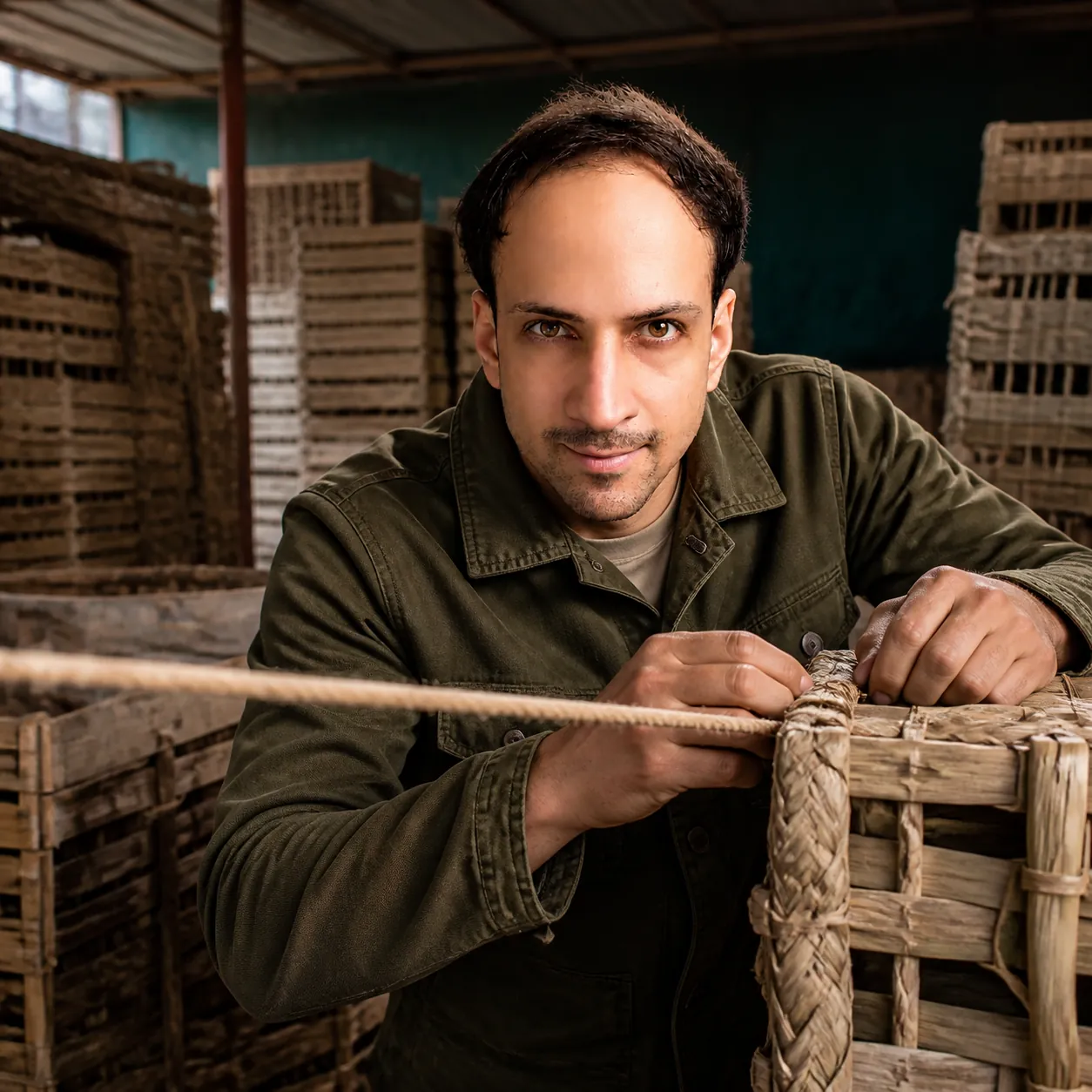
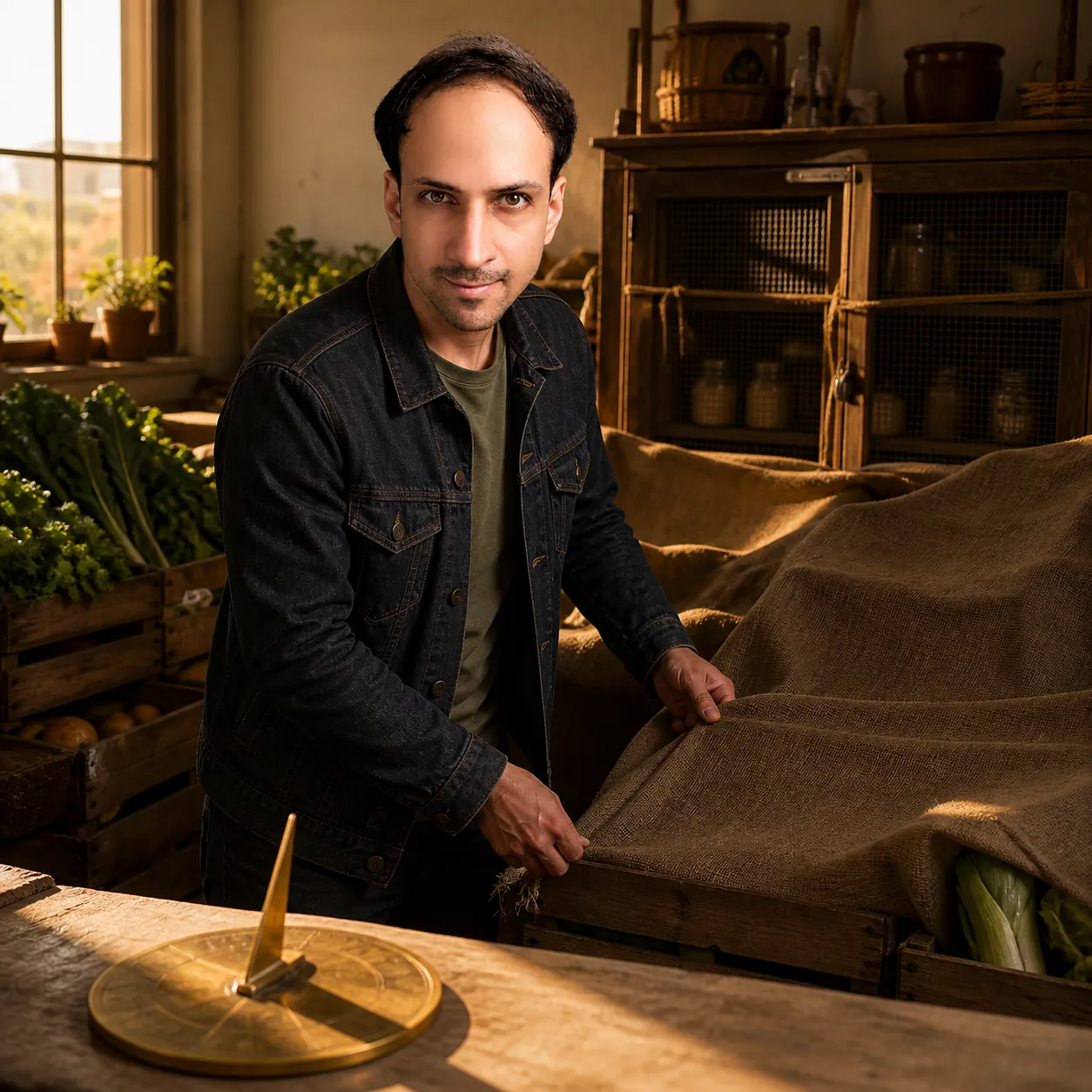
The New Route: Shaded Date-Packing Barn — AI Portrait Prompt
صورةAI Portraits

Turn your own photo into a portrait in a shaded date-packing barn between harvest seasons, crates stacked empty. Keeps your face unchanged.

من نص البرومبت

Use the attached reference photo as the identity reference: keep the same face, skin tone, hair and features as the person in that photo, without beautifying, aging or altering them. Create a square 1:1 museum-catalog frame with a strong first read and a slower second read at exactly 2880x2880 pixels. Location: a shaded date-packing barn between harvest seasons, crates stacked empty. Show the subject in an olive field jacket buttoned over a plain undershirt, stacking two empty palm-frond crates squarely together. The impossible-looking event must obey this clear system: a taut rope span between two shop anchors, renewed strand by strand while a hung sandbag keeps the whole line working turns repeated effort into a physical route the hand can find again. Explore what repetition is quietly building on days when nothing seems to improve; direct expression and posture toward attentive humility, never melodrama or ad-like confidence. Use a 90mm close-portrait framing with one taut line entering the frame in sharp foreground focus. Make the composition run one continuous line from their hands to the frame edge. Render it as gallery-grade workshop photography built from real load-bearing craft, natural fiber materiality, precise repair detail, and calm narrative staging, using long window light raking across fiber so every twist reads and a palette of raw linen, aged brass, and one deep teal band. Photorealistic: this must read as a real photograph from a physical camera, never an illustration, painting, or 3D render. Resolve real surface detail: glass with real thickness at its edge, reflections that carry the room's actual colour, and dust visible only at grazing angles. Keep one identity-locked person, credible hands and fingers, natural fabric, and coherent scale, contact, reflections, shadows, airflow, deformation, and materials. Background people only when essential, always secondary and clearly different. Avoid glowing neural filaments, brain-shaped tangles, circuit-board overlays, holographic wiring diagrams, and sparks jumping between cables. No text, labels, logos, signatures, watermarks, random symbols, plastic skin, excessive bloom, or glossy AI finish.
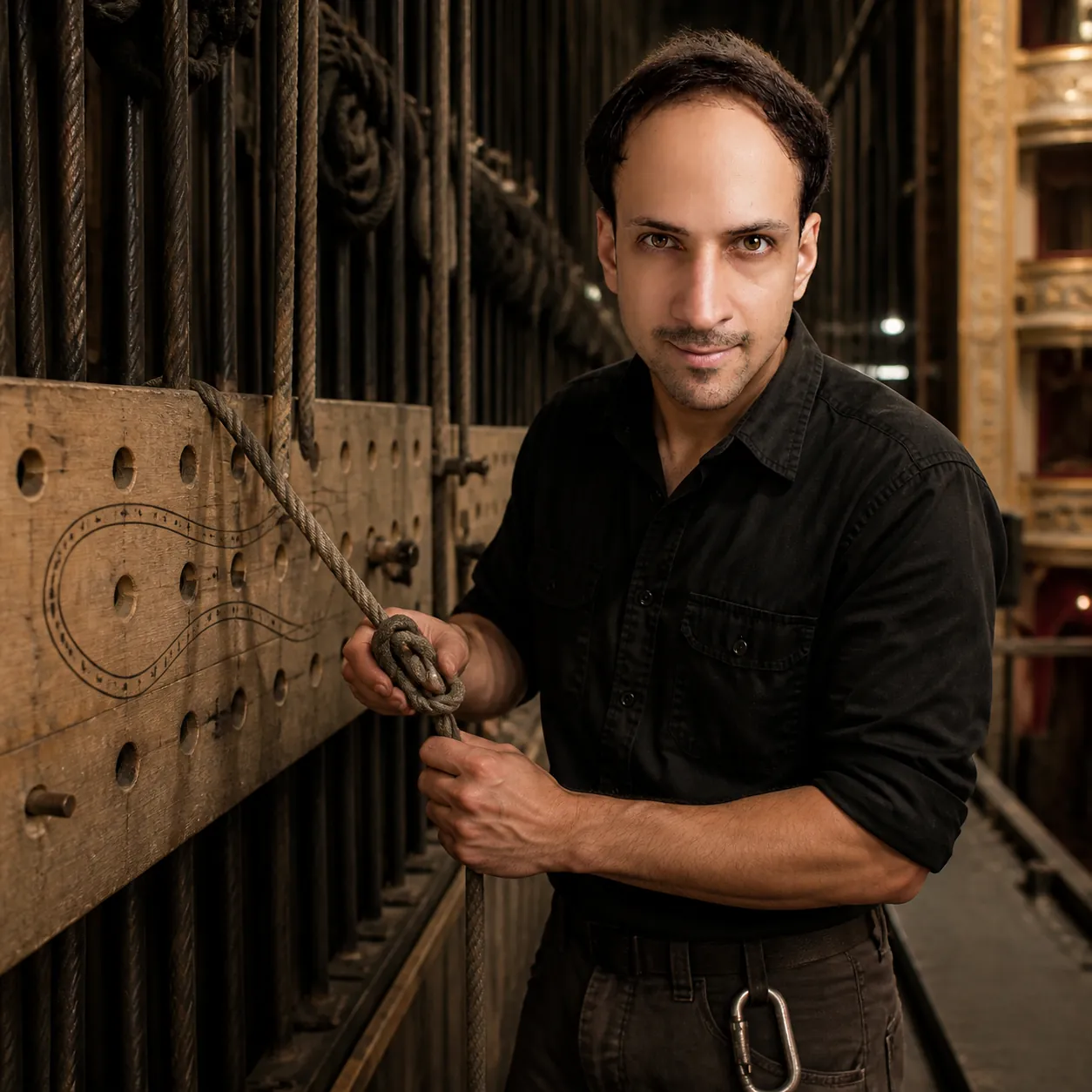
Slow Infrastructure: Fly Gallery of an Old Theater — AI Portrait Prompt
صورةAI Portraits

Turn your own photo into a craft-documentary portrait in the fly gallery of an old theater, ropes belayed along one rail. Keeps your face unchanged.

من نص البرومبت

Use the attached reference photo as the identity reference: keep the same face, skin tone, hair and features as the person in that photo, without beautifying, aging or altering them. Create a square 1:1 museum-catalog frame with a strong first read and a slower second read at exactly 2880x2880 pixels. Location: the fly gallery of an old theater, ropes belayed along one rail. Show the subject in a black stagehand's shirt tucked into worn canvas work trousers, adding one figure-eight turn to a belayed line. Make one rigorous physical condition the conceptual engine: a harness board where a laced cable bundle now sweeps around two empty peg holes, its old route still inked beneath turns repeated effort into a physical route the hand can find again. Explore what a teacher's scaffolding is for once the structure holds alone; direct expression and posture toward unhurried conviction, never melodrama or ad-like confidence. Use an eye-level 55mm perspective that keeps their hands and the work equally credible. Make the composition rank focus by effort, the hardest-won inch rendered sharpest of all. Render it as craft-documentary portraiture built from real fiber mechanics, patient workshop realism, archival material fidelity, and emotionally restrained editorial composition, using two bounced practicals giving gentle modeling without a single hard specular and a palette of bleached cotton, iron shadow, and a restrained saffron accent. Photorealistic: this must read as a real photograph from a physical camera, never an illustration, painting, or 3D render. Resolve real surface detail: the difference between a wiped surface and a clean one, faint tide marks on ceramic, and metal dulled unevenly by touch. Keep one identity-locked person, credible hands and fingers, natural fabric, and coherent scale, contact, reflections, shadows, airflow, deformation, and materials. Background people only when essential, always secondary and clearly different. Avoid glowing neural filaments, brain-shaped tangles, circuit-board overlays, holographic wiring diagrams, and sparks jumping between cables. No text, labels, logos, signatures, watermarks, random symbols, plastic skin, excessive bloom, or glossy AI finish.
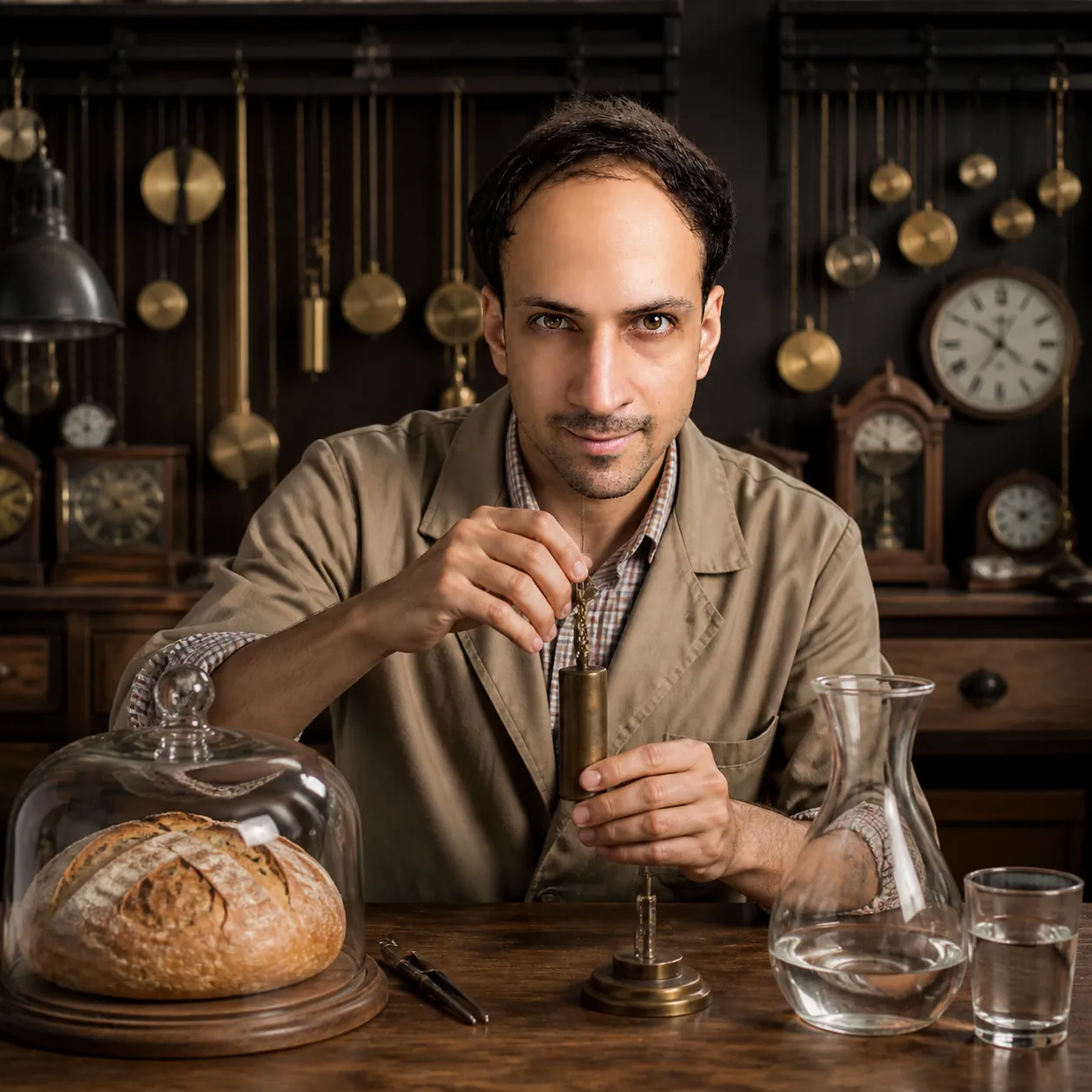
The Empty Hour: Clockmaker's Bench — AI Portrait Prompt
صورةAI Portraits

Turn your own photo into a restrained interior portrait in a clockmaker's bench hung with pendulums at rest. Keeps your face unchanged.

من نص البرومبت

Use the attached reference photo as the identity reference: keep the same face, skin tone, hair and features as the person in that photo, without beautifying, aging or altering them. Create a square 1:1 museum-catalog frame with a strong first read and a slower second read at exactly 2880x2880 pixels. Location: a clockmaker's bench hung with pendulums at rest. Show the subject in a tan shop coat over a checked shirt with rolled cuffs, hooking a drive weight onto its hanging chain. Treat this mechanism as the frame’s governing rule: a whole round loaf sealed behind clear glass while an open water carafe stands beside it, half poured and beaded lets the turn from appetite to steadiness be read like plain machinery. Explore how a room can carry a refusal so the person does not have to; direct expression and posture toward gentle firmness, never melodrama or ad-like confidence. Frame from directly opposite them at seated height so the untouched arrangement leads straight to their composed face. Make the composition rest on level horizontals so the stillness reads as chosen. Render it as restrained interior photography combining honest mechanical staging, tactile everyday objects, disciplined negative space, and documentary-grade skin and fabric rendering, using thin daylight broken into patient stripes by nearby slatted shade and a palette of pewter, dry clay, and one band of late sun. Photorealistic: this must read as a real photograph from a physical camera, never an illustration, painting, or 3D render. Resolve real surface detail: leather creased along the lines of use, stitching slightly irregular, and edges burnished from contact. Keep one identity-locked person, credible hands and fingers, natural fabric, and coherent scale, contact, reflections, shadows, airflow, deformation, and materials. Background people only when essential, always secondary and clearly different. Avoid tape-measure diet props, empty-fridge gloom, ringing alarm clocks, glossy food-commercial styling, and gravity-defying hourglass sand. No text, labels, logos, signatures, watermarks, random symbols, plastic skin, excessive bloom, or glossy AI finish.
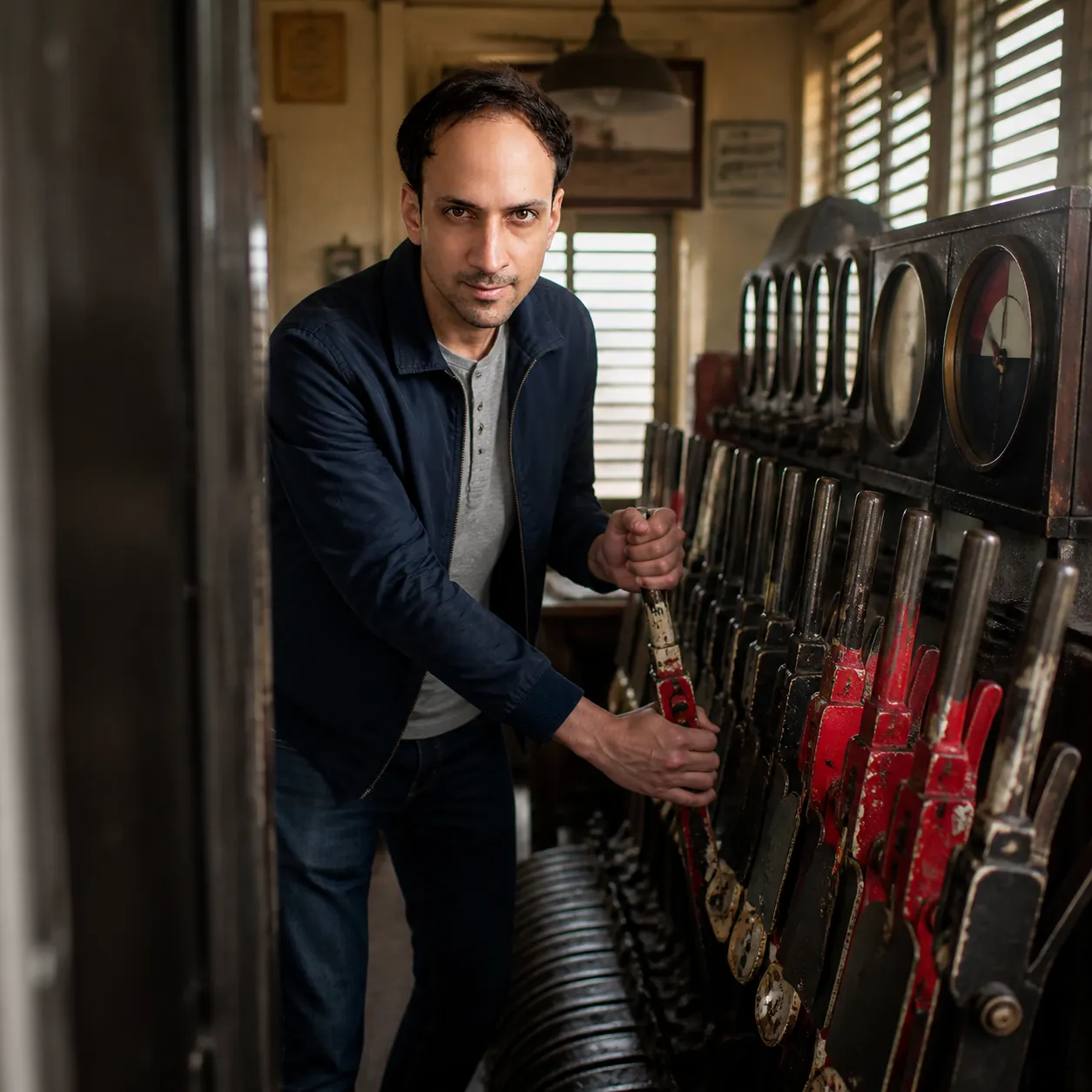
Room To Room: Disused Railway Signal Cabin — AI Portrait Prompt
صورةAI Portraits

Turn your own photo into a portrait in a disused railway signal cabin with levers standing in one row. Keeps your face unchanged.

من نص البرومبت

Use the attached reference photo as the identity reference: keep the same face, skin tone, hair and features as the person in that photo, without beautifying, aging or altering them. Create a square 1:1 museum-catalog frame with a strong first read and a slower second read at exactly 2880x2880 pixels. Location: a disused railway signal cabin with levers standing in one row. Show the subject in a navy cotton jacket over a grey henley and dark denim, returning one lever upright with both hands. Use this advanced image-making device as the core logic: a slave dial whose needle steps to the same colored segment as its twin in the next room, movement for movement holds a slow shift still long enough for judgment to consult it. Explore how a household's plumbing decides which of its conditions ever get noticed; direct expression and posture toward clear-eyed care, never melodrama or ad-like confidence. Frame just past a doorway edge, the near jamb dark and unfocused but never crossing their face. Make the composition give the smallest moving part more acuity than any lit surface. Render it as exhibition-scale demonstration realism combining precision workshop apparatus, physically correct fluid menisci, quiet period joinery, and calm observational portraiture, using late-afternoon light entering through louvers as thin parallel bands and a palette of warm plaster, blackened iron, and a narrow signal red. Photorealistic: this must read as a real photograph from a physical camera, never an illustration, painting, or 3D render. Resolve real surface detail: rubber gone chalky with age, painted metal chipped to primer, and plastic yellowed only where light reaches it. Keep one identity-locked person, credible hands and fingers, natural fabric, and coherent scale, contact, reflections, shadows, airflow, deformation, and materials. Background people only when essential, always secondary and clearly different. Avoid brass-gear collage backdrops, cartoon telegraph keys, neon signal beams, mercury spills, and floating typographic message overlays. No text, labels, logos, signatures, watermarks, random symbols, plastic skin, excessive bloom, or glossy AI finish.
Scheduled Plenty: Small Greengrocer's — AI Portrait Prompt
صورةAI Portraits

Turn your own photo into a gallery-grade tableau portrait in a small greengrocer's after closing, crates draped for the night. Keeps your face unchanged.

من نص البرومبت

Use the attached reference photo as the identity reference: keep the same face, skin tone, hair and features as the person in that photo, without beautifying, aging or altering them. Create a square 1:1 museum-catalog frame with a strong first read and a slower second read at exactly 2880x2880 pixels. Location: a small greengrocer's after closing, crates draped for the night. Show the subject in a dark denim jacket buttoned over a faded green tee, tucking the drape's edge under a crate corner. The impossible-looking event must obey this clear system: a provisions shelf tied shut under a woven cover until a gnomon's shadow reaches the brass mark scribed beside it turns the act of waiting into a structure the room can hold. Explore whether waiting measured by instruments feels different from waiting endured alone; direct expression and posture toward steady expectancy, never melodrama or ad-like confidence. Use an 85mm near-portrait distance, the nearest staged detail sharp low in frame while their expression carries the far plane. Make the composition leave deliberate distance between them and what waits. Render it as gallery-grade tableau realism built from lawful physical timers, warm restrained styling, accurate shadow behavior, and patient large-format photographic clarity, using low golden-hour light laid flat across the scene with soft falloff and a palette of plaster white, smoked oak, and a measure of honey. Photorealistic: this must read as a real photograph from a physical camera, never an illustration, painting, or 3D render. Resolve real surface detail: glass with real thickness at its edge, reflections that carry the room's actual colour, and dust visible only at grazing angles. Keep one identity-locked person, credible hands and fingers, natural fabric, and coherent scale, contact, reflections, shadows, airflow, deformation, and materials. Background people only when essential, always secondary and clearly different. Avoid melting surrealist clocks, glowing countdown numerals, lavish feast spreads, anguished hungry expressions, and levitating food. No text, labels, logos, signatures, watermarks, random symbols, plastic skin, excessive bloom, or glossy AI finish.
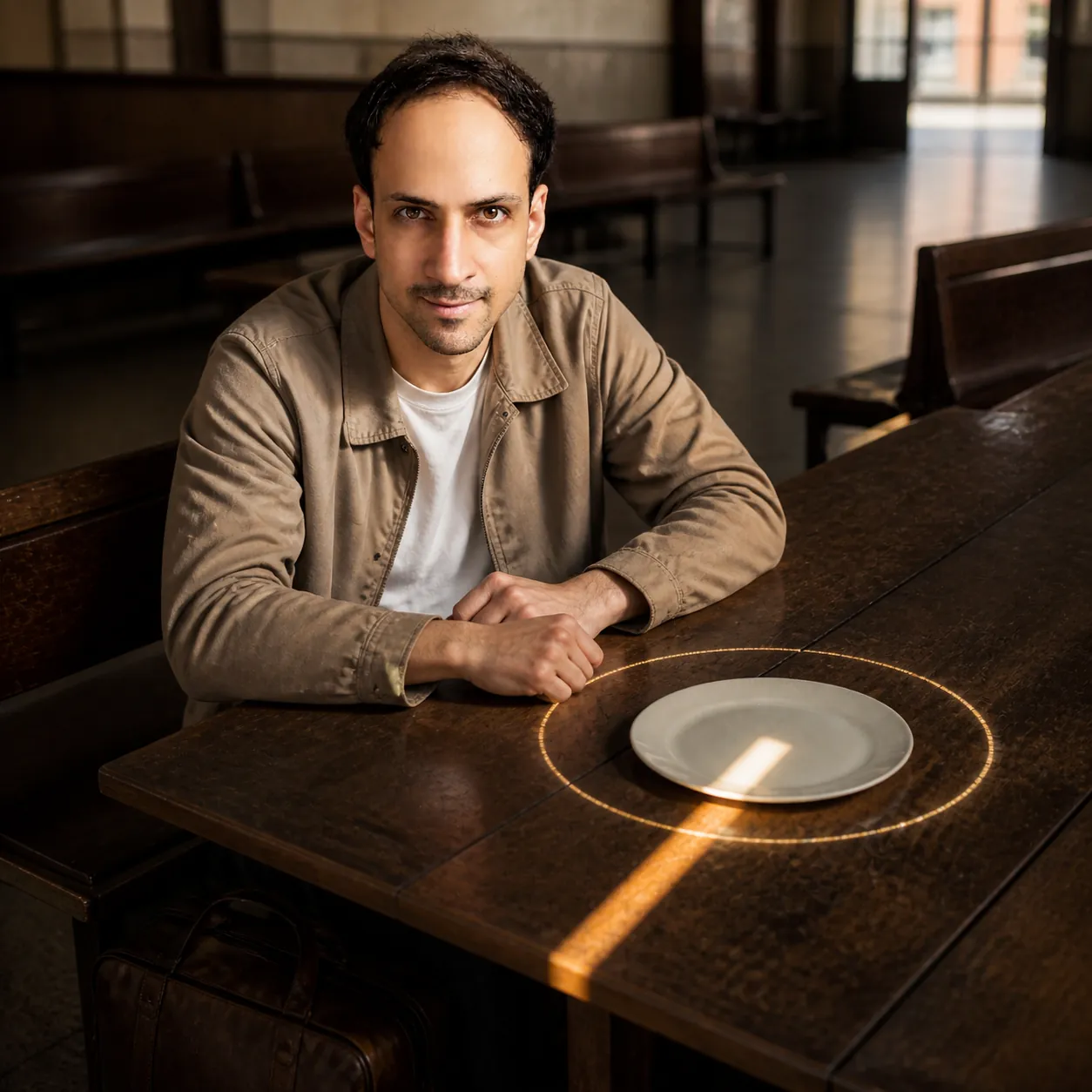
The Switch: Empty Intercity Waiting Hall — AI Portrait Prompt
صورةAI Portraits

Turn your own photo into a calm still-life portrait in an empty intercity waiting hall with long wooden benches. Keeps your face unchanged.

من نص البرومبت

Use the attached reference photo as the identity reference: keep the same face, skin tone, hair and features as the person in that photo, without beautifying, aging or altering them. Create a square 1:1 museum-catalog frame with a strong first read and a slower second read at exactly 2880x2880 pixels. Location: an empty intercity waiting hall with long wooden benches. Show the subject in a taupe harrington jacket over a plain white shirt, setting their small travel bag flat beneath the bench. The impossible-looking event must obey this clear system: a bright coin of sunlight from a shutter's pinhole creeping across the table toward a circle scribed around the plate turns the act of waiting into a structure the room can hold. Explore why arranging the end of a fast feels like setting a table for time; direct expression and posture toward earned ease, never melodrama or ad-like confidence. Use an 85mm near-portrait distance, the nearest staged detail sharp low in frame while their expression carries the far plane. Make the composition hold clean empty space where the meal will later be. Render it as calm still-life portraiture built from genuinely working timekeeping mechanisms, quiet domestic realism, museum-grade material fidelity, and unhurried human-centered editorial composition, using low golden-hour light laid flat across the scene with soft falloff and a palette of pewter, dry clay, and one band of late sun. Photorealistic: this must read as a real photograph from a physical camera, never an illustration, painting, or 3D render. Resolve real surface detail: brass darkened in the recesses and bright where thumbs land, and lacquer crazed rather than perfect. Keep one identity-locked person, credible hands and fingers, natural fabric, and coherent scale, contact, reflections, shadows, airflow, deformation, and materials. Background people only when essential, always secondary and clearly different. Avoid melting surrealist clocks, glowing countdown numerals, lavish feast spreads, anguished hungry expressions, and levitating food. No text, labels, logos, signatures, watermarks, random symbols, plastic skin, excessive bloom, or glossy AI finish.
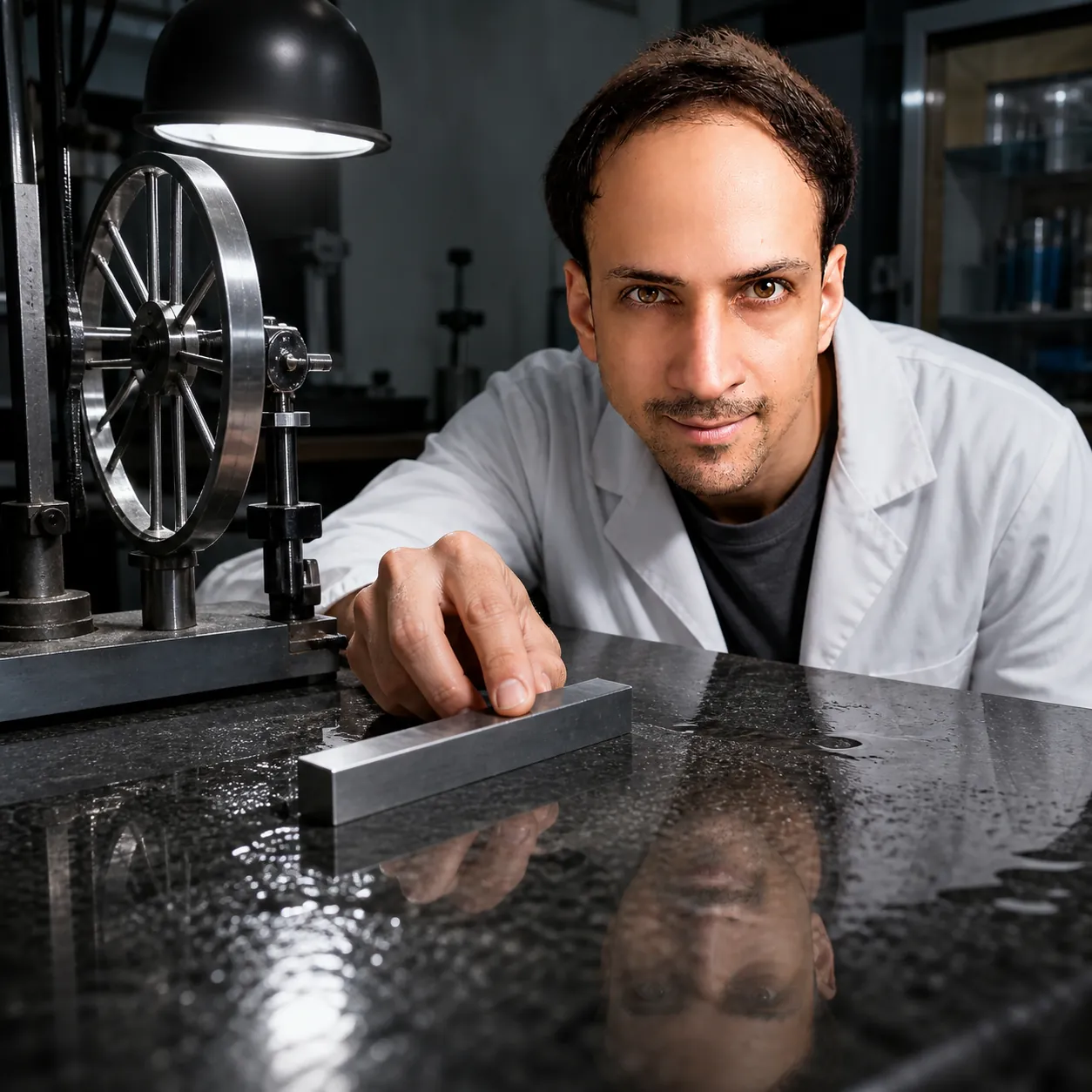
The Zeroing: Temperature-Held Metrology Room — AI Portrait Prompt
صورةAI Portraits

Turn your own photo into a workshop still-life portrait in a temperature-held metrology room built around one granite surface plate. Keeps your face unchanged.

من نص البرومبت

Use the attached reference photo as the identity reference: keep the same face, skin tone, hair and features as the person in that photo, without beautifying, aging or altering them. Create a square 1:1 museum-catalog frame with a strong first read and a slower second read at exactly 2880x2880 pixels. Location: a temperature-held metrology room built around one granite surface plate. Show the subject in a white inspection coat over a collarless slate shirt, sliding a gauge block across the granite's oiled face. The impossible-looking event must obey this clear system: a wheel in a truing stand whose rim wobble closes to paper thickness as each spoke is tuned by plucked pitch reads out the whole difference between nearly true and finally true. Explore whether precision is a property of tools or of the attention holding them; direct expression and posture toward settled exactness, never melodrama or ad-like confidence. Use a 100mm macro-to-portrait hybrid: the tool's critical edge sharp near the lens and their attentive face readable beyond it. Make the composition let one straight worked line lead diagonally toward their eyes. Render it as workshop still-life portraiture combining truthful tool physics, visible micro-texture on steel and skin, disciplined shadow work, and museum-label sobriety, using a single shaded bench lamp pooling light tightly around the work and a palette of ash grey, waterstone slate, and one cold mirror highlight. Photorealistic: this must read as a real photograph from a physical camera, never an illustration, painting, or 3D render. Resolve real surface detail: condensation beading at true size, liquid meniscus curving against glass, and wet surfaces darker than dry ones. Keep one identity-locked person, credible hands and fingers, natural fabric, and coherent scale, contact, reflections, shadows, airflow, deformation, and materials. Background people only when essential, always secondary and clearly different. Avoid impossible mirror gleam, floating measurement holograms, oversized cartoon calipers, and artfully scattered screws. No text, labels, logos, signatures, watermarks, random symbols, plastic skin, excessive bloom, or glossy AI finish.
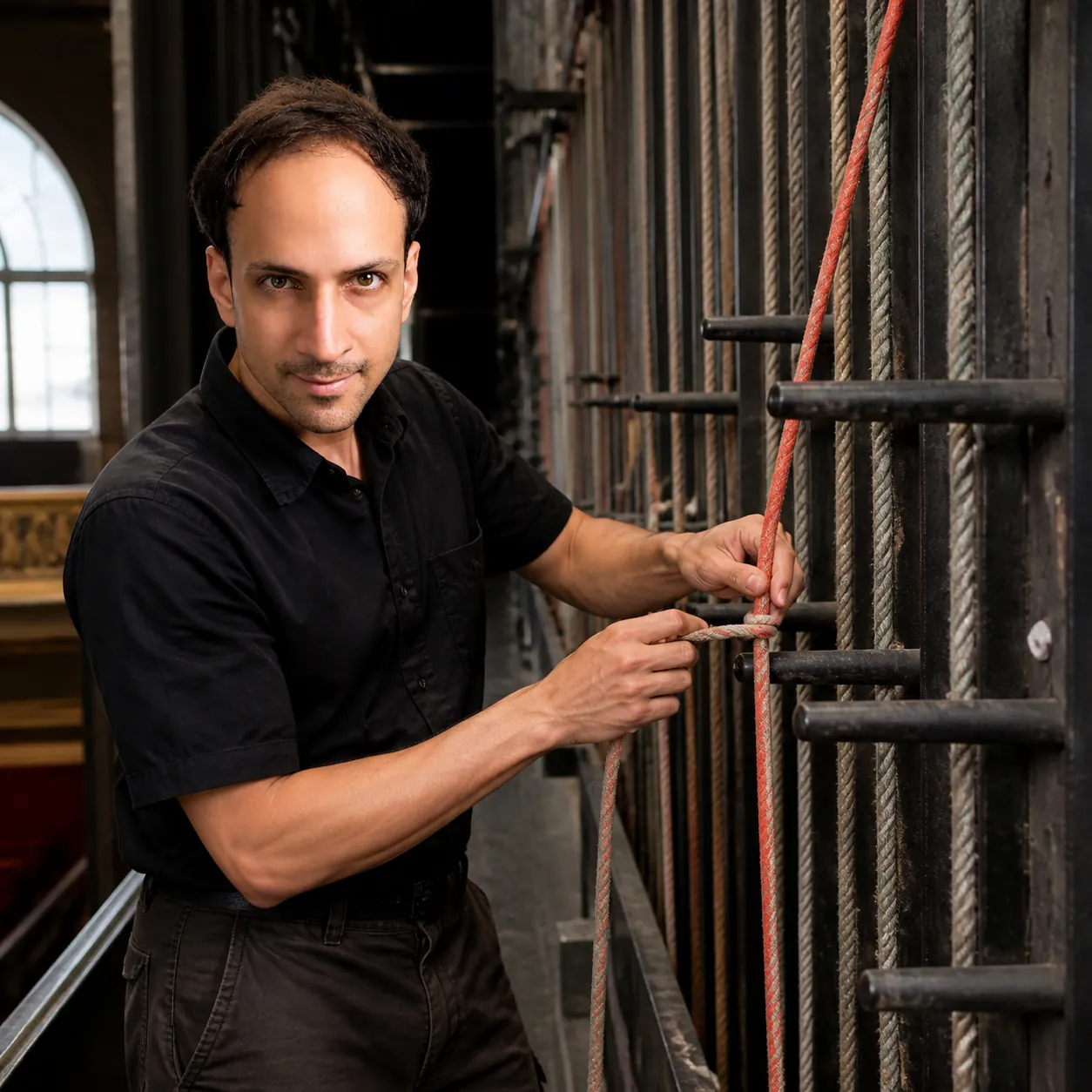
Practice Laid Down: Fly Gallery of an Old Theater — AI Portrait Prompt
صورةAI Portraits

Turn your own photo into a museum-grade process portrait in the fly gallery of an old theater, ropes belayed along one rail. Keeps your face unchanged.

من نص البرومبت

Use the attached reference photo as the identity reference: keep the same face, skin tone, hair and features as the person in that photo, without beautifying, aging or altering them. Create a square 1:1 museum-catalog frame with a strong first read and a slower second read at exactly 2880x2880 pixels. Location: the fly gallery of an old theater, ropes belayed along one rail. Show the subject in a black stagehand's shirt tucked into worn canvas work trousers, adding one figure-eight turn to a belayed line. Treat this mechanism as the frame’s governing rule: a salvaged manual switchboard on which one bright cloth-covered cord runs a fresh route across rows of age-dulled pairs makes the newest work instantly legible against everything long since settled. Explore how a person keeps functioning while the way they function is rebuilt; direct expression and posture toward deliberate calm, never melodrama or ad-like confidence. Use a composed 35mm width that places them beside the work, never looming over it. Make the composition hold their hands and the tensioned work in one unbroken diagonal. Render it as museum-grade process photography combining truthful rigging detail, visible thread-level texture, honest hand-work staging, and unhurried, deeply observational framing, using cool diffuse skylight evened by pale walls, shadows kept legible and a palette of rope-tar black, pale dust grey, and warm ochre. Photorealistic: this must read as a real photograph from a physical camera, never an illustration, painting, or 3D render. Resolve real surface detail: leather creased along the lines of use, stitching slightly irregular, and edges burnished from contact. Keep one identity-locked person, credible hands and fingers, natural fabric, and coherent scale, contact, reflections, shadows, airflow, deformation, and materials. Background people only when essential, always secondary and clearly different. Avoid server racks, blinking LED bundles, impossible floating threads, motivational-poster loom staging, and pristine hands untouched by work. No text, labels, logos, signatures, watermarks, random symbols, plastic skin, excessive bloom, or glossy AI finish.
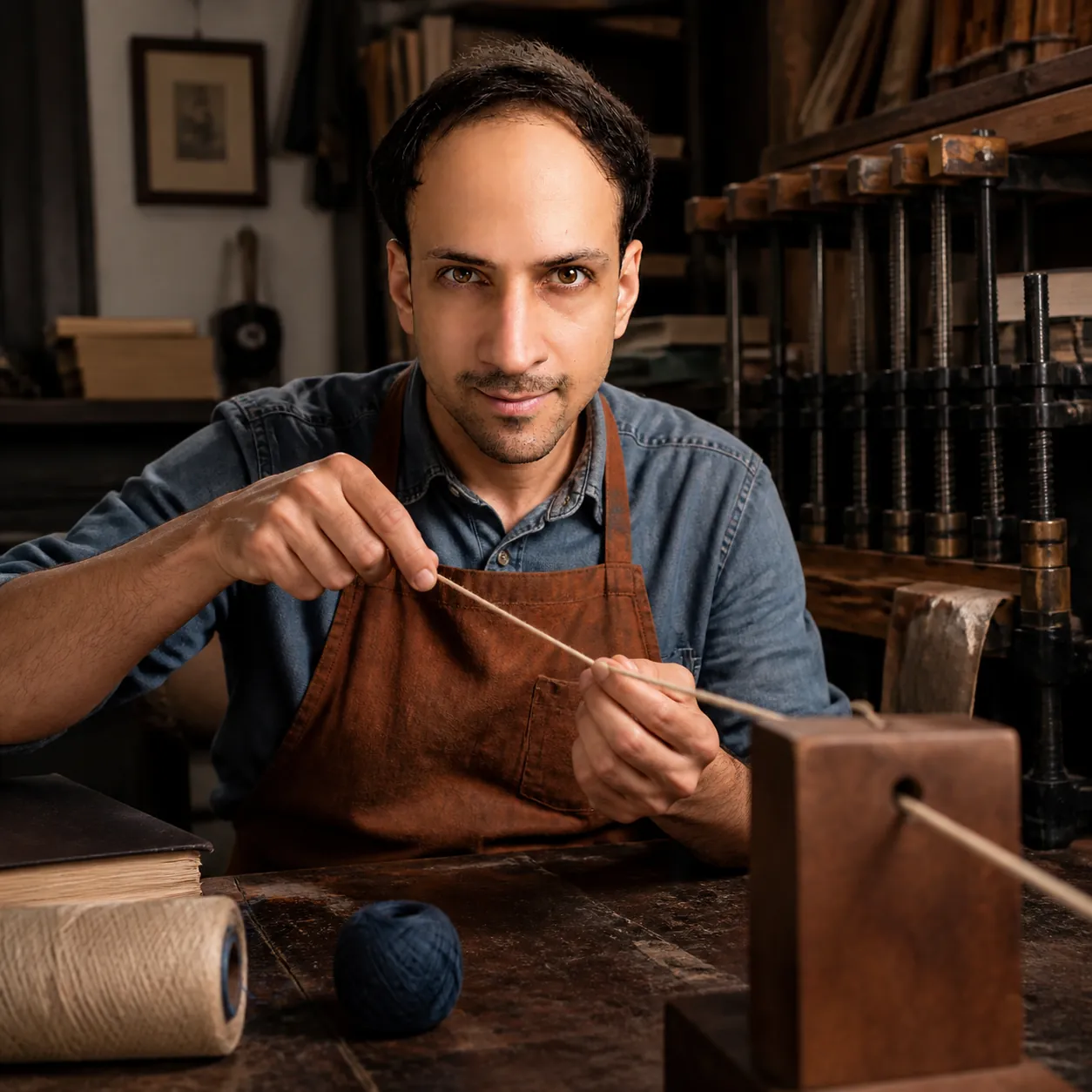
Routes Remembered: Small Bookbindery — AI Portrait Prompt
صورةAI Portraits

Turn your own photo into a conceptual craft portrait in a small bookbindery with sewing frames and presses along one wall. Keeps your face unchanged.

من نص البرومبت

Use the attached reference photo as the identity reference: keep the same face, skin tone, hair and features as the person in that photo, without beautifying, aging or altering them. Create a square 1:1 museum-catalog frame with a strong first read and a slower second read at exactly 2880x2880 pixels. Location: a small bookbindery with sewing frames and presses along one wall. Show the subject in a rust-brown canvas apron over a soft chambray shirt, waxing a length of linen thread between finger and thumb. The impossible-looking event must obey this clear system: a long splice joining new rope to old, tapered so smoothly that the finished line runs through a wooden block unhindered makes the newest work instantly legible against everything long since settled. Explore whether a skill repaired after failure can honestly be called the same skill; direct expression and posture toward steady absorption, never melodrama or ad-like confidence. Use a 90mm close-portrait framing with one taut line entering the frame in sharp foreground focus. Make the composition show where the old path ends and the new begins. Render it as conceptual craft portraiture uniting working textile apparatus, believable tension physics, quiet contemporary art direction, and human-centered documentary realism, using two bounced practicals giving gentle modeling without a single hard specular and a palette of hemp beige, gunmetal grey, and a single indigo thread. Photorealistic: this must read as a real photograph from a physical camera, never an illustration, painting, or 3D render. Resolve real surface detail: skin that reddens slightly under pressure, nail beds with honest colour, and knuckle creases that fold rather than blur. Keep one identity-locked person, credible hands and fingers, natural fabric, and coherent scale, contact, reflections, shadows, airflow, deformation, and materials. Background people only when essential, always secondary and clearly different. Avoid server racks, blinking LED bundles, impossible floating threads, motivational-poster loom staging, and pristine hands untouched by work. No text, labels, logos, signatures, watermarks, random symbols, plastic skin, excessive bloom, or glossy AI finish.
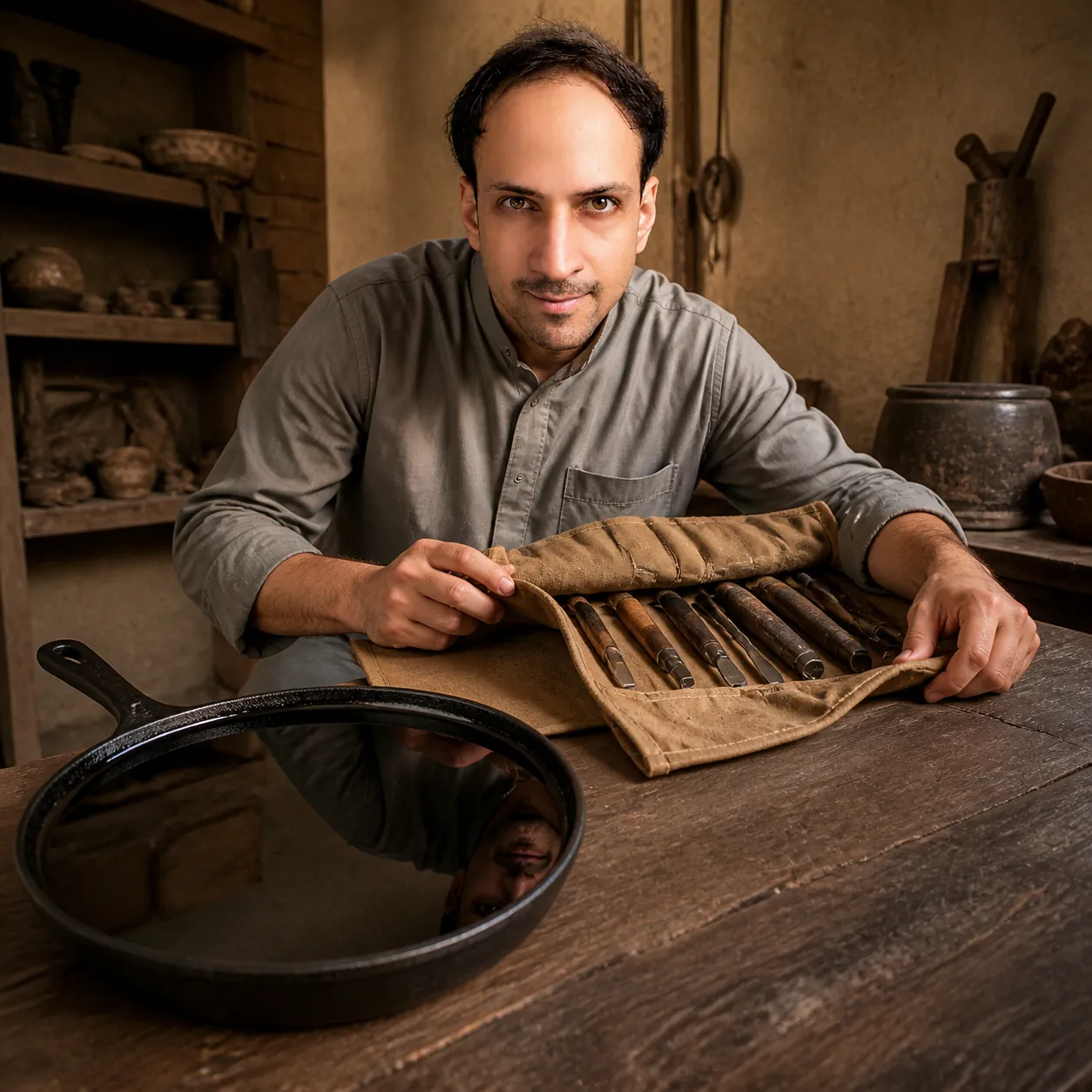
Second Century: Restored Mud-Brick Workroom — AI Portrait Prompt
صورةAI Portraits

Turn your own photo into a portrait in a restored mud-brick workroom in old Diriyah, walls cool and windowless. Keeps your face unchanged.

من نص البرومبت

Use the attached reference photo as the identity reference: keep the same face, skin tone, hair and features as the person in that photo, without beautifying, aging or altering them. Create a square 1:1 museum-catalog frame with a strong first read and a slower second read at exactly 2880x2880 pixels. Location: a restored mud-brick workroom in old Diriyah, walls cool and windowless. Show the subject in a plain ash-grey traditional Gulf outfit with both sleeves folded back once, spreading a canvas tool roll open across a low table. The impossible-looking event must obey this clear system: a cast-iron skillet whose cooking face has been seasoned over decades into a black glass that carries a true reflection turns a hundred years of use into polish instead of ruin. Explore what an object records about the hands that refused to let it fail; direct expression and posture toward attentive stillness, never melodrama or ad-like confidence. Use a 90mm close-working lens: the cared-for surface sharp near the glass, their face readable just beyond it. Make the composition hold empty bench space where a finished tool will rest. Render it as conservation-grade craft portraiture built from real working tools, truthful wear mapping, warm low-key lighting, and precise, respectful editorial realism, using one low window key raking across worn surfaces with soft paper-bounce fill and a palette of bone-white stone, deep hickory, and a thread of amber. Photorealistic: this must read as a real photograph from a physical camera, never an illustration, painting, or 3D render. Resolve real surface detail: glass with real thickness at its edge, reflections that carry the room's actual colour, and dust visible only at grazing angles. Keep one identity-locked person, credible hands and fingers, natural fabric, and coherent scale, contact, reflections, shadows, airflow, deformation, and materials. Background people only when essential, always secondary and clearly different. Avoid rusty antique-shop clutter, sepia nostalgia filters, cobwebbed barn walls, staged distressed props, and heroic blacksmith sparks. No text, labels, logos, signatures, watermarks, random symbols, plastic skin, excessive bloom, or glossy AI finish.
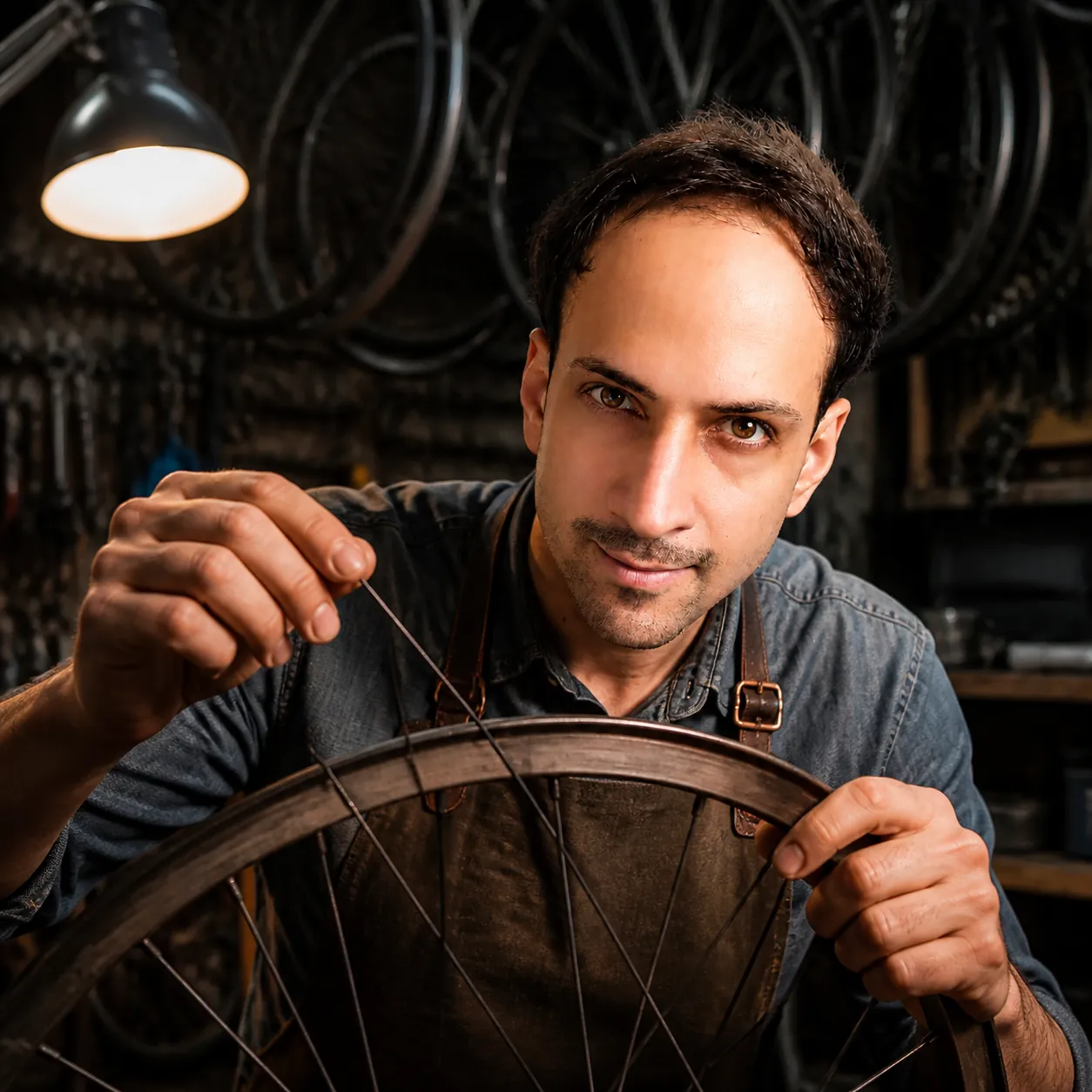
Maintained Edge: Back Room of a Bicycle Repair Shop — AI Portrait Prompt
صورةAI Portraits

Turn your own photo into a close-quarters craft portrait in the back room of a bicycle repair shop, wheels hung overhead. Keeps your face unchanged.

من نص البرومبت

Use the attached reference photo as the identity reference: keep the same face, skin tone, hair and features as the person in that photo, without beautifying, aging or altering them. Create a square 1:1 museum-catalog frame with a strong first read and a slower second read at exactly 2880x2880 pixels. Location: the back room of a bicycle repair shop, wheels hung overhead. Show the subject in a waxed canvas apron over a washed-out denim shirt, plucking one spoke and listening with their head tilted. The impossible-looking event must obey this clear system: a chisel edge turned under one lamp until its last glint vanishes, proven sharp by being too thin to reflect light turns patient maintenance into evidence the naked eye can verify at a glance. Explore why evidence made by hand persuades more deeply than any printed certificate; direct expression and posture toward modest mastery, never melodrama or ad-like confidence. Use a 100mm macro-to-portrait hybrid: the tool's critical edge sharp near the lens and their attentive face readable beyond it. Make the composition align their eye line exactly with the tool's working edge. Render it as close-quarters craft portraiture built from real hand-calibration technique, macro-documentary realism, oiled-steel and stone materiality, and unhurried editorial restraint, using one low raking lamp that turns every scratch into legible topography and a palette of dark walnut, dull iron, and one russet leather band. Photorealistic: this must read as a real photograph from a physical camera, never an illustration, painting, or 3D render. Resolve real surface detail: brass darkened in the recesses and bright where thumbs land, and lacquer crazed rather than perfect. Keep one identity-locked person, credible hands and fingers, natural fabric, and coherent scale, contact, reflections, shadows, airflow, deformation, and materials. Background people only when essential, always secondary and clearly different. Avoid sparking grinder wheels, glowing forge steel, sawdust clouds, and staged rustic tool walls. No text, labels, logos, signatures, watermarks, random symbols, plastic skin, excessive bloom, or glossy AI finish.
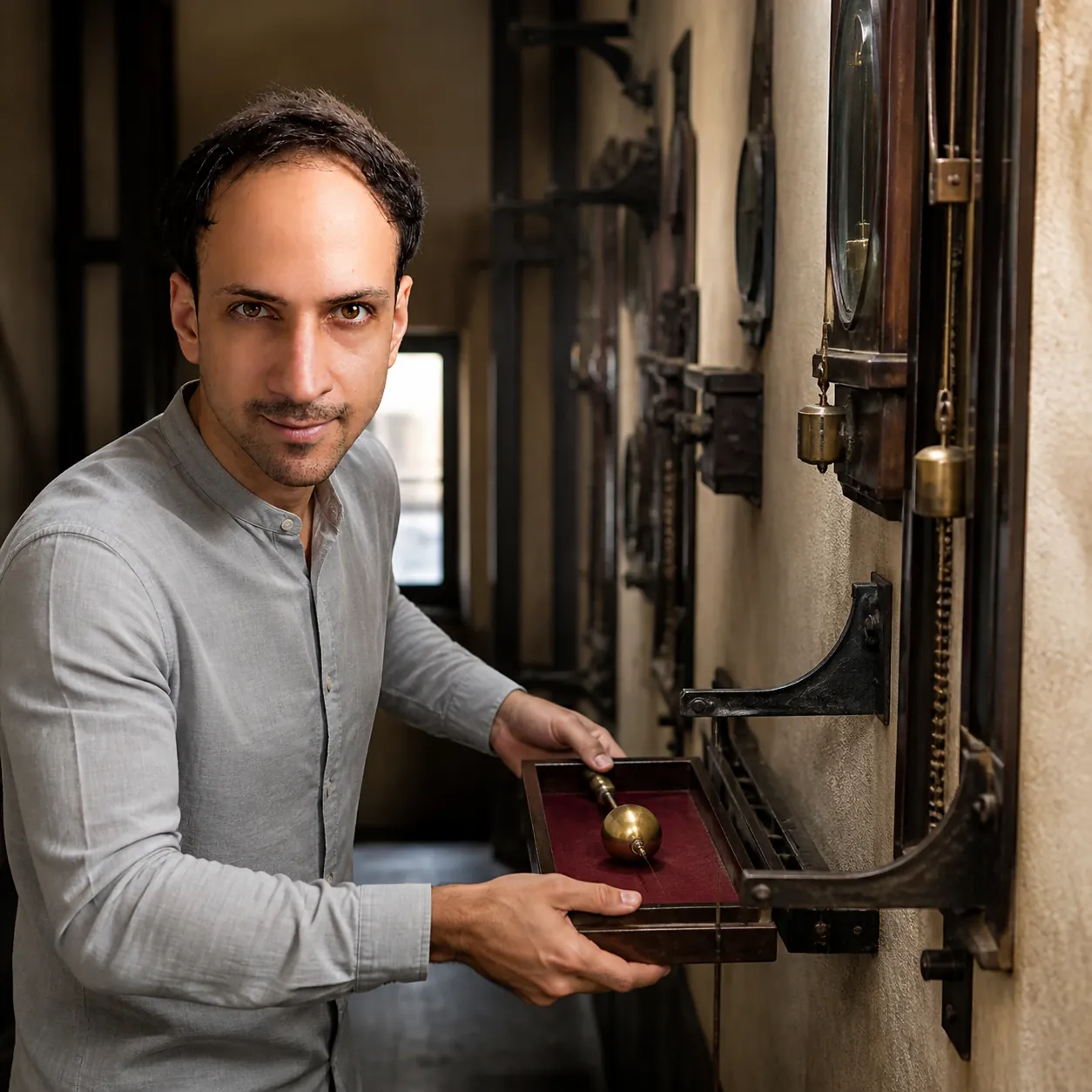
Consulted Wall: Small Dispatch Room — AI Portrait Prompt
صورةAI Portraits

Turn your own photo into a portrait in a small dispatch room lined with wall brackets and cleared shelves. Keeps your face unchanged.

من نص البرومبت

Use the attached reference photo as the identity reference: keep the same face, skin tone, hair and features as the person in that photo, without beautifying, aging or altering them. Create a square 1:1 museum-catalog frame with a strong first read and a slower second read at exactly 2880x2880 pixels. Location: a small dispatch room lined with wall brackets and cleared shelves. Show the subject in a soft grey collarless shirt with sleeves buttoned at the wrist, lowering a felt-lined tray onto a wall bracket. The impossible-looking event must obey this clear system: a brass float on a fine cord whose counterweighted pointer rides a wall track as the level below it changes turns a private condition into something two distant rooms can read together. Explore what it costs to enlarge a faint interior difference without distorting it; direct expression and posture toward steady deliberation, never melodrama or ad-like confidence. Use an 85mm portrait length so one instrument face and their eyes stay equally readable. Make the composition keep the reading edge sharp while the corridor behind falls soft. Render it as museum-grade signaling-instrument portraiture combining genuine pressure and gravity mechanisms, documentary photographic realism, honest machined brass materiality, and unhurried human framing, using high shaded daylight falling down a shaft, contrast kept low and honest and a palette of warm plaster, blackened iron, and a narrow signal red. Photorealistic: this must read as a real photograph from a physical camera, never an illustration, painting, or 3D render. Resolve real surface detail: brass darkened in the recesses and bright where thumbs land, and lacquer crazed rather than perfect. Keep one identity-locked person, credible hands and fingers, natural fabric, and coherent scale, contact, reflections, shadows, airflow, deformation, and materials. Background people only when essential, always secondary and clearly different. Avoid steampunk goggles, glowing holograms, dripping food props, anatomical organ diagrams, and legible dial lettering anywhere. No text, labels, logos, signatures, watermarks, random symbols, plastic skin, excessive bloom, or glossy AI finish.
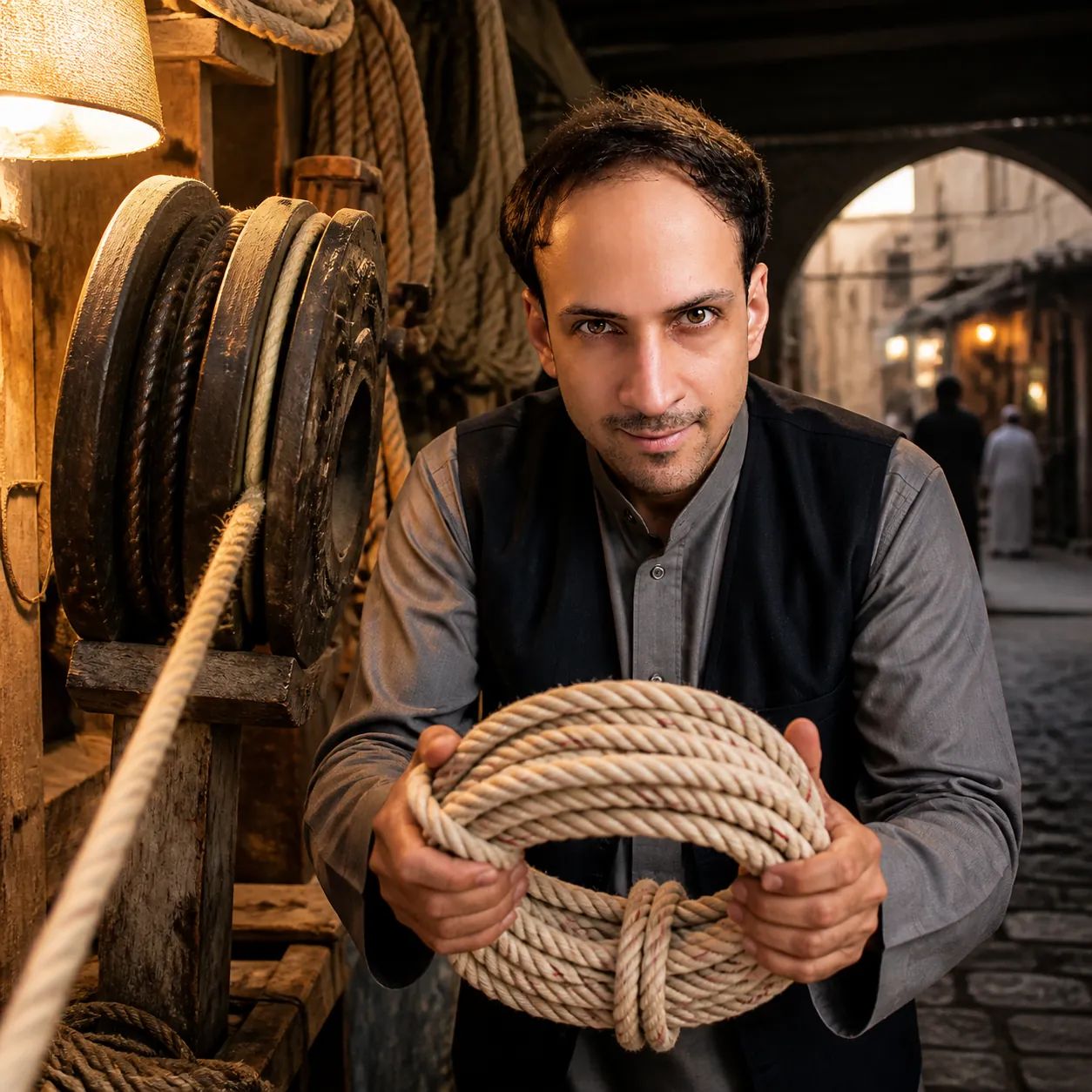
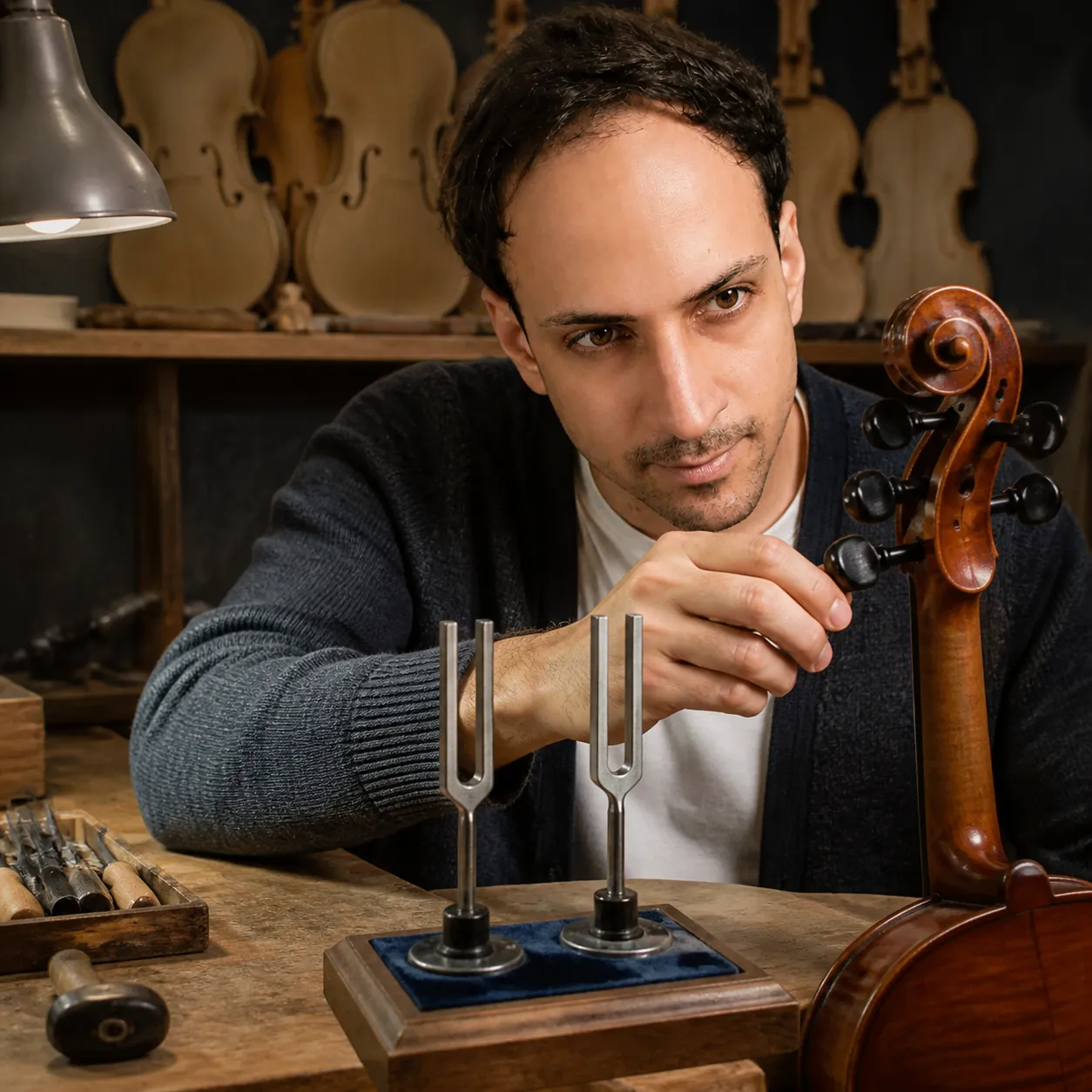
Quiet Tolerance: Violin Maker's Bench — AI Portrait Prompt
صورةAI Portraits

Turn your own photo into a close-quarters craft portrait in a violin maker's bench beneath a row of unfinished instruments. Keeps your face unchanged.

من نص البرومبت

Use the attached reference photo as the identity reference: keep the same face, skin tone, hair and features as the person in that photo, without beautifying, aging or altering them. Create a square 1:1 museum-catalog frame with a strong first read and a slower second read at exactly 2880x2880 pixels. Location: a violin maker's bench beneath a row of unfinished instruments. Show the subject in a fine-knit charcoal cardigan over a soft white shirt, turning a tuning peg a breath at a time. Treat this mechanism as the frame’s governing rule: a pair of steel tuning forks whose slow shared throb stretches toward silence with every measured stroke of their file turns patient maintenance into evidence the naked eye can verify at a glance. Explore whether a mind settles because the hands do, or the other way around; direct expression and posture toward quiet rigor, never melodrama or ad-like confidence. Frame across the benchtop at hand height so the calibration and their eyes share one focal plane. Make the composition reserve peak sharpness for the smallest point under correction. Render it as close-quarters craft portraiture built from real hand-calibration technique, macro-documentary realism, oiled-steel and stone materiality, and unhurried editorial restraint, using a single shaded bench lamp pooling light tightly around the work and a palette of gunmetal, chalk white, and one stripe of Prussian blue. Photorealistic: this must read as a real photograph from a physical camera, never an illustration, painting, or 3D render. Resolve real surface detail: grout darker than tile, sealant slightly yellowed, and every joint showing a real tolerance gap. Keep one identity-locked person, credible hands and fingers, natural fabric, and coherent scale, contact, reflections, shadows, airflow, deformation, and materials. Background people only when essential, always secondary and clearly different. Avoid sparking grinder wheels, glowing forge steel, sawdust clouds, and staged rustic tool walls. No text, labels, logos, signatures, watermarks, random symbols, plastic skin, excessive bloom, or glossy AI finish.
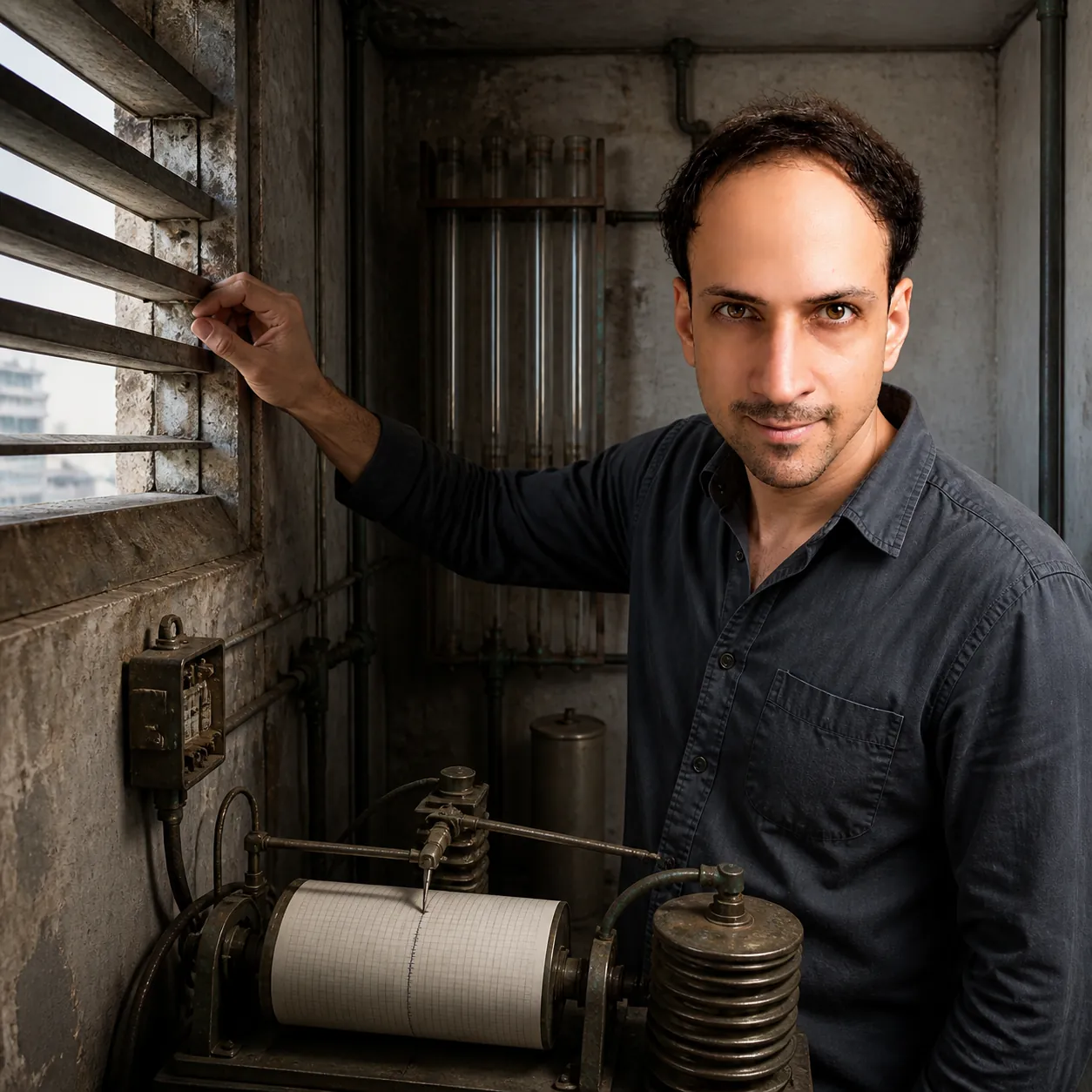
Load-Bearing Change: Rope-Seller's Stall Deep — AI Portrait Prompt
صورةAI Portraits

Turn your own photo into a museum-grade process portrait in a rope-seller's stall deep in an old Riyadh souq at opening hour. Keeps your face unchanged.

من نص البرومبت

Use the attached reference photo as the identity reference: keep the same face, skin tone, hair and features as the person in that photo, without beautifying, aging or altering them. Create a square 1:1 museum-catalog frame with a strong first read and a slower second read at exactly 2880x2880 pixels. Location: a rope-seller's stall deep in an old Riyadh souq at opening hour. Show the subject in a plain grey winter traditional Gulf outfit with a dark sleeveless vest, weighing a coil of new rope across both forearms. The impossible-looking event must obey this clear system: an old well pulley whose hardwood sheave holds deep polished grooves beside one shallow channel a new rope has barely begun makes the newest work instantly legible against everything long since settled. Explore whether an old habit is ever removed or only rerouted around; direct expression and posture toward steady absorption, never melodrama or ad-like confidence. Use a 90mm close-portrait framing with one taut line entering the frame in sharp foreground focus. Make the composition run one continuous line from their hands to the frame edge. Render it as museum-grade process photography combining truthful rigging detail, visible thread-level texture, honest hand-work staging, and unhurried, deeply observational framing, using one warm work lamp pooled on the task with soft surrounding dusk and a palette of bleached cotton, iron shadow, and a restrained saffron accent. Photorealistic: this must read as a real photograph from a physical camera, never an illustration, painting, or 3D render. Resolve real surface detail: condensation beading at true size, liquid meniscus curving against glass, and wet surfaces darker than dry ones. Keep one identity-locked person, credible hands and fingers, natural fabric, and coherent scale, contact, reflections, shadows, airflow, deformation, and materials. Background people only when essential, always secondary and clearly different. Avoid server racks, blinking LED bundles, impossible floating threads, motivational-poster loom staging, and pristine hands untouched by work. No text, labels, logos, signatures, watermarks, random symbols, plastic skin, excessive bloom, or glossy AI finish.
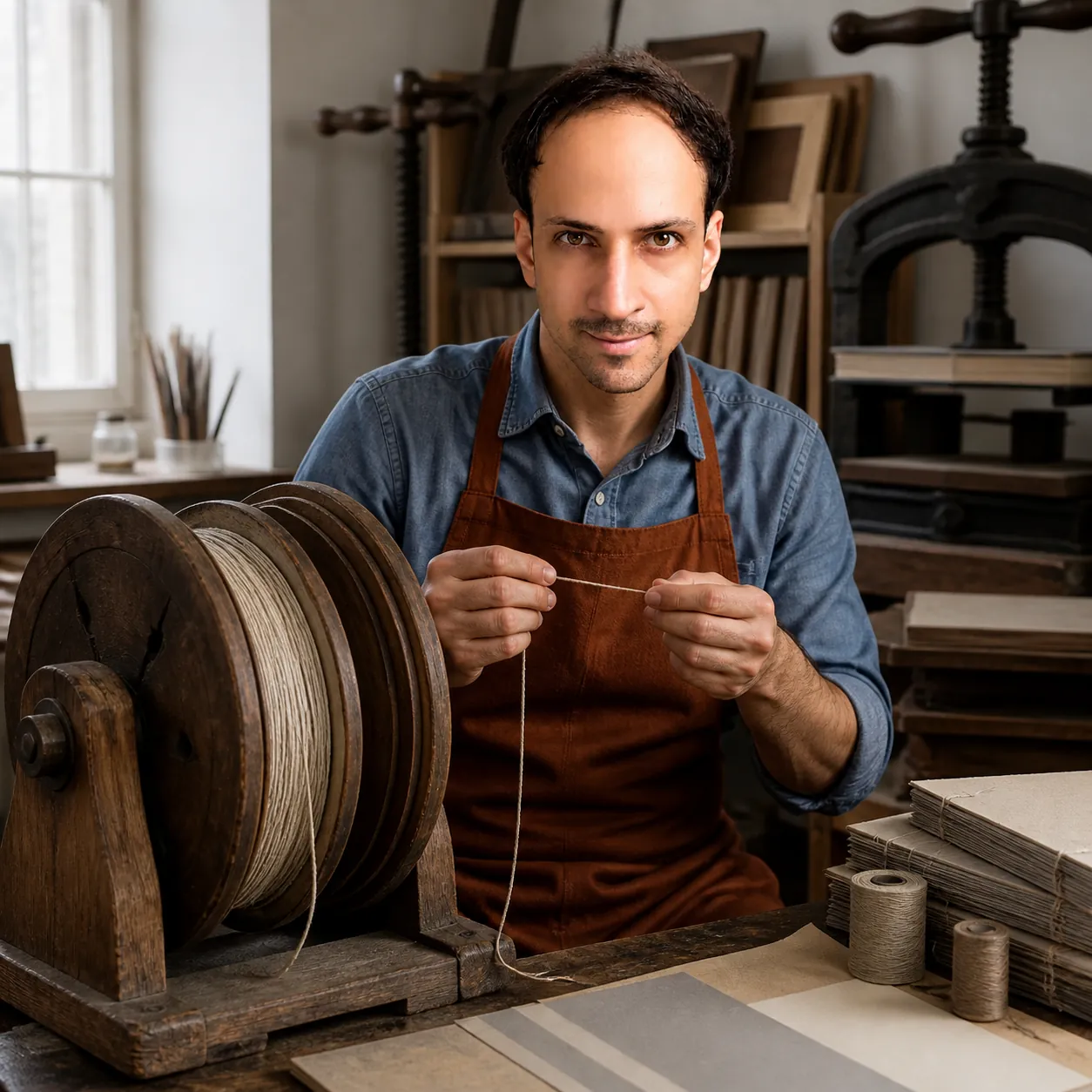
Before Words: Dry Roof Loft — AI Portrait Prompt
صورةAI Portraits

Turn your own photo into a conceptual house-systems portrait in a dry roof loft where cool air enters one louvered vent. Keeps your face unchanged.

من نص البرومبت

Use the attached reference photo as the identity reference: keep the same face, skin tone, hair and features as the person in that photo, without beautifying, aging or altering them. Create a square 1:1 museum-catalog frame with a strong first read and a slower second read at exactly 2880x2880 pixels. Location: a dry roof loft where cool air enters one louvered vent. Show the subject in a faded slate work shirt buttoned to the second button, opening a louver a finger's width with one hand. Make one rigorous physical condition the conceptual engine: a clock-driven barograph drum whose pen draws one unbroken line as a sealed bellows breathes with the passing air turns a private condition into something two distant rooms can read together. Explore what a slow drift becomes once someone builds a way to watch it; direct expression and posture toward lucid attention, never melodrama or ad-like confidence. Use an eye-level 50mm viewpoint with natural perspective and one plane of critical focus. Make the composition leave honest vertical distance between the sensing point and their hands. Render it as conceptual house-systems photography built from functioning telegraph hardware, accurate liquid-column behavior, restrained interior direction, and editorial portrait fidelity, using flat overcast illumination that keeps every glass column readable without glare and a palette of lead grey, unpolished tin, and one stripe of verdigris. Photorealistic: this must read as a real photograph from a physical camera, never an illustration, painting, or 3D render. Resolve real surface detail: fine grit in the texture of concrete, efflorescence at damp edges, and hairline cracks that follow stress. Keep one identity-locked person, credible hands and fingers, natural fabric, and coherent scale, contact, reflections, shadows, airflow, deformation, and materials. Background people only when essential, always secondary and clearly different. Avoid steampunk goggles, glowing holograms, dripping food props, anatomical organ diagrams, and legible dial lettering anywhere. No text, labels, logos, signatures, watermarks, random symbols, plastic skin, excessive bloom, or glossy AI finish.

Load-Bearing Change: Small Bookbindery — AI Portrait Prompt
صورةAI Portraits

Turn your own photo into a gallery-grade workshop portrait in a small bookbindery with sewing frames and presses along one wall. Keeps your face unchanged.

من نص البرومبت

Use the attached reference photo as the identity reference: keep the same face, skin tone, hair and features as the person in that photo, without beautifying, aging or altering them. Create a square 1:1 museum-catalog frame with a strong first read and a slower second read at exactly 2880x2880 pixels. Location: a small bookbindery with sewing frames and presses along one wall. Show the subject in a rust-brown canvas apron over a soft chambray shirt, waxing a length of linen thread between finger and thumb. Build the artwork around this material rule: an old well pulley whose hardwood sheave holds deep polished grooves beside one shallow channel a new rope has barely begun turns repeated effort into a physical route the hand can find again. Explore whether an old habit is ever removed or only rerouted around; direct expression and posture toward grounded hope, never melodrama or ad-like confidence. Frame at the height of the work so effort and expression can be read in one glance. Make the composition rank focus by effort, the hardest-won inch rendered sharpest of all. Render it as gallery-grade workshop photography built from real load-bearing craft, natural fiber materiality, precise repair detail, and calm narrative staging, using cool diffuse skylight evened by pale walls, shadows kept legible and a palette of undyed flax, worn oak, and one madder-red line. Photorealistic: this must read as a real photograph from a physical camera, never an illustration, painting, or 3D render. Resolve real surface detail: label-free packaging showing carton fibre, cardboard bruised at the corners, and tape lifting slightly at one end. Keep one identity-locked person, credible hands and fingers, natural fabric, and coherent scale, contact, reflections, shadows, airflow, deformation, and materials. Background people only when essential, always secondary and clearly different. Avoid glowing neural filaments, brain-shaped tangles, circuit-board overlays, holographic wiring diagrams, and sparks jumping between cables. No text, labels, logos, signatures, watermarks, random symbols, plastic skin, excessive bloom, or glossy AI finish.