جاري التحميل...


جاري التحميل...
Create a square 1:1 museum-catalog frame with a strong first read and a slower second read. Location: a glazier's workshop with stacked panes and cork...
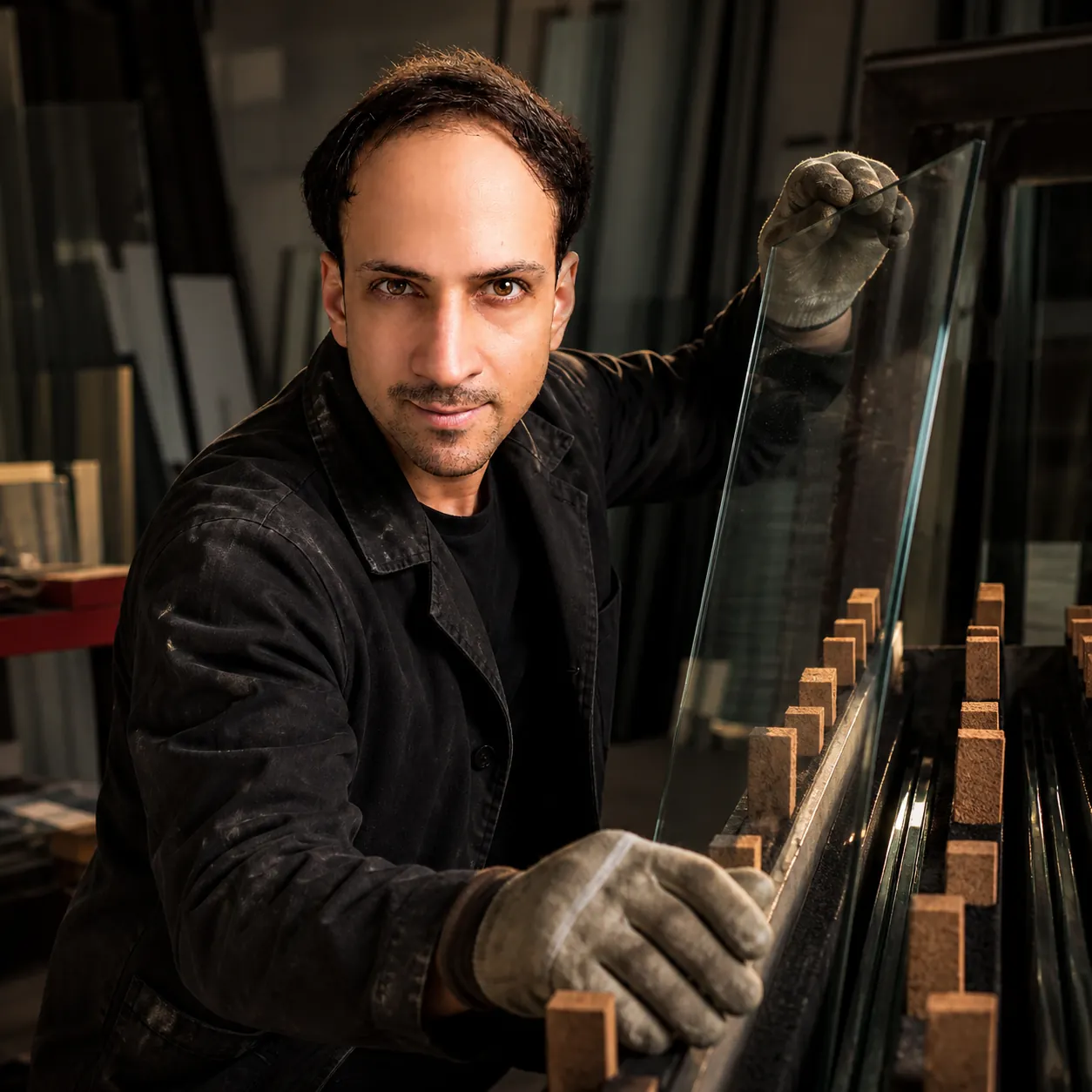
Use the attached reference photo as the identity reference: keep the same face, skin tone, hair and features as the person in that photo, without beautifying, aging or altering them. Create a square 1:1 museum-catalog frame with a strong first read and a slower second read. Location: a glazier's workshop with stacked panes and cork separators. Show the subject in a heavy canvas shop coat over a plain shirt, setting a fresh pane upright into a padded rack. Use this advanced image-making device as the core logic: a tower of cards photographed at the first card's departure, the rest still holding a doomed architecture reveals strict geometric order inside an event filed under chaos. Explore what to call the interval after failure begins and before it shows; direct expression and posture toward focused stillness, never melodrama or ad-like confidence. Frame across the stage at chest height so the frozen event and their eyes share one focal plane. Make the composition give the trigger mechanism honest visibility instead of mystery. Render it as high-concept high-speed portraiture built from genuine strobe-arrest photography, documentary realism, laboratory rigor, and emotionally intelligent composition, using low-angle late-afternoon light creating long but physically coherent shadows and a palette of jet black, milk white, and one struck note of crimson. Keep one identity-locked person, credible hands and fingers, natural fabric, and coherent scale, contact, reflections, shadows, airflow, deformation, and materials. Background people only when essential, always secondary and clearly different. Avoid bullet-time camera clichés, action-movie explosions, shattering-face effects, frozen gunfire, and dramatic debris storms. No text, labels, logos, signatures, watermarks, random symbols, plastic skin, excessive bloom, or glossy AI finish.
Treat that reference as the character anchor and change only the scene. Create a square 1:1 museum-catalog frame with a strong first read and a slower...
Treat that reference as the character anchor and change only the scene. Create a square 1:1 museum-catalog frame with a strong first read and a slower...
Treat that reference as the character anchor and change only the scene. Create a square 1:1 museum-catalog frame with a strong first read and a slower...
Treat that reference as the character anchor and change only the scene. Create a square 1:1 museum-catalog frame with a strong first read and a slower...
Treat that reference as the character anchor and change only the scene. Create a square 1:1 museum-catalog frame with a strong first read and a slower...
Treat that reference as the character anchor and change only the scene. Create a square 1:1 museum-catalog frame with a strong first read and a slower...
Treat that reference as the character anchor and change only the scene. Create a square 1:1 museum-catalog frame with a strong first read and a slower...
Treat that reference as the character anchor and change only the scene. Create a square 1:1 museum-catalog frame with a strong first read and a slower...
Treat that reference as the character anchor and change only the scene. Create a square 1:1 museum-catalog frame with a strong first read and a slower...
Treat that reference as the character anchor and change only the scene. Create a square 1:1 museum-catalog frame with a strong first read and a slower...
Treat that reference as the character anchor and change only the scene. Create a square 1:1 museum-catalog frame with a strong first read and a slower...
Treat that reference as the character anchor and change only the scene. Create a square 1:1 museum-catalog frame with a strong first read and a slower...