جاري التحميل...


جاري التحميل...
Create a square 1:1 museum-catalog frame with a strong first read and a slower second read. Location: a white gallery alcove with one waist-high plinth and...
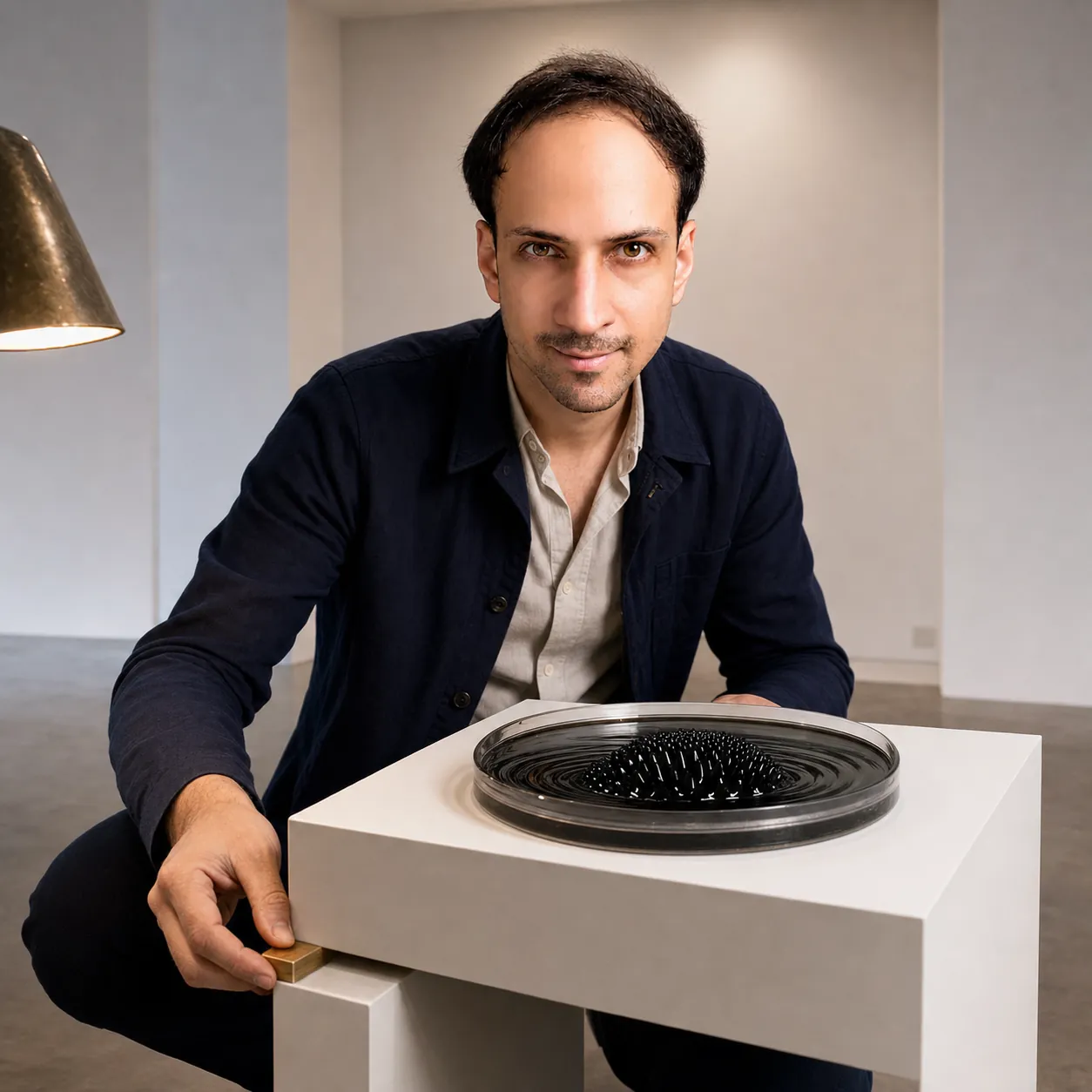
Use the attached reference photo as the identity reference: keep the same face, skin tone, hair and features as the person in that photo, without beautifying, aging or altering them. Create a square 1:1 museum-catalog frame with a strong first read and a slower second read. Location: a white gallery alcove with one waist-high plinth and fresh wall paint. Show the subject in a navy unstructured jacket over an open-collar shirt, seating a small brass shim under one plinth corner. Build the artwork around this material rule: a shallow basin of ferrofluid whose surface swells and follows a magnet they move beneath the tabletop like a tide treats force as something that can be recorded as faithfully as light. Explore whether matter that answers them from a distance is obeying or merely humoring them; direct expression and posture toward quiet command, never melodrama or ad-like confidence. Frame across the work surface at chest height so the demonstration and their eyes share one focal plane. Make the composition hold honest empty distance between the cause and its effect. Render it as museum-scale demonstration realism combining high-fidelity portrait photography, truthful field visualization, machined-metal materiality, and physically accurate reflections, using cool early-morning ambient light balanced by one warm practical source and a palette of matte black, warm brass, and unbleached paper. Keep one identity-locked person, credible hands and fingers, natural fabric, and coherent scale, contact, reflections, shadows, airflow, deformation, and materials. Background people only when essential, always secondary and clearly different. Avoid cartoon magnet iconography, floating debris vortices, electric sparks, sci-fi antigravity platforms, and mirror-polished chrome liquid. No text, labels, logos, signatures, watermarks, random symbols, plastic skin, excessive bloom, or glossy AI finish.
Treat that reference as the character anchor and change only the scene. Create a square 1:1 museum-catalog frame with a strong first read and a slower...
Treat that reference as the character anchor and change only the scene. Create a square 1:1 museum-catalog frame with a strong first read and a slower...
Treat that reference as the character anchor and change only the scene. Create a square 1:1 museum-catalog frame with a strong first read and a slower...
Treat that reference as the character anchor and change only the scene. Create a square 1:1 museum-catalog frame with a strong first read and a slower...
Treat that reference as the character anchor and change only the scene. Create a square 1:1 museum-catalog frame with a strong first read and a slower...
Treat that reference as the character anchor and change only the scene. Create a square 1:1 museum-catalog frame with a strong first read and a slower...
Treat that reference as the character anchor and change only the scene. Create a square 1:1 museum-catalog frame with a strong first read and a slower...
Treat that reference as the character anchor and change only the scene. Create a square 1:1 museum-catalog frame with a strong first read and a slower...
Treat that reference as the character anchor and change only the scene. Create a square 1:1 museum-catalog frame with a strong first read and a slower...
Treat that reference as the character anchor and change only the scene. Create a square 1:1 museum-catalog frame with a strong first read and a slower...
Treat that reference as the character anchor and change only the scene. Create a square 1:1 museum-catalog frame with a strong first read and a slower...
Treat that reference as the character anchor and change only the scene. Create a square 1:1 museum-catalog frame with a strong first read and a slower...