جاري التحميل...


جاري التحميل...
Create a square 1:1 museum-catalog frame with a strong first read and a slower second read at exactly 2880x2880 pixels. Location: a back-street Riyadh...
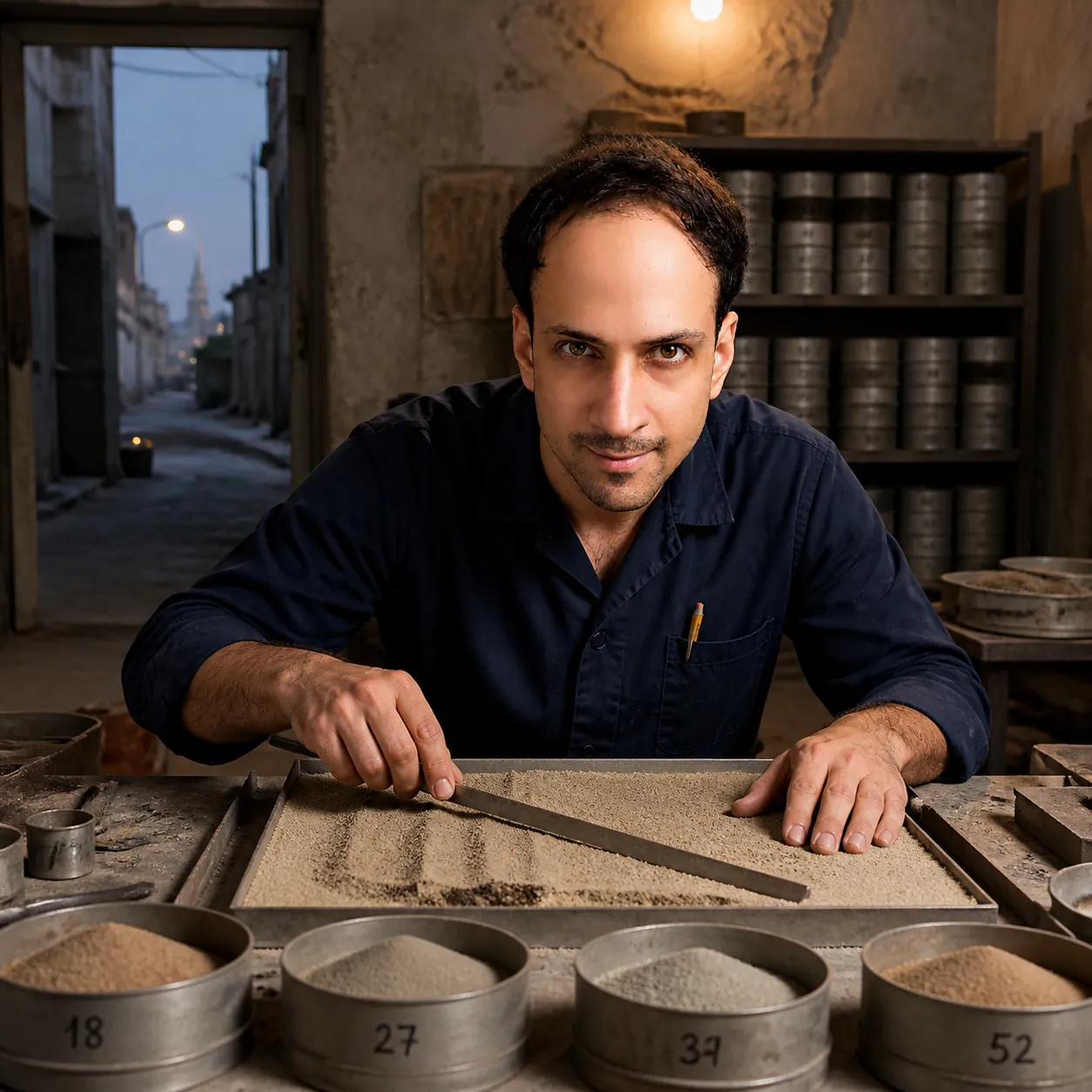
Use the attached reference photo as the identity reference: keep the same face, skin tone, hair and features as the person in that photo, without beautifying, aging or altering them. Create a square 1:1 museum-catalog frame with a strong first read and a slower second read at exactly 2880x2880 pixels. Location: a back-street Riyadh workshop with sand samples in numbered tins. Show the subject in a navy work shirt with a pencil clipped at the chest, drawing a straightedge slowly across a bed of grains. Make one rigorous physical condition the conceptual engine: a soft canvas cushion of loose grains that turns rigid as fired brick the moment they draw its air out shows dry grains refusing to be fully solid or fully liquid. Explore how order can rise out of shaking, spilling, and other engines of disorder; direct expression and posture toward listening stillness, never melodrama or ad-like confidence. Use an eye-level 50mm view with natural perspective and both of their hands kept readable. Make the composition keep the background silent so the grains do the talking. Render it as museum-grade demonstration realism combining truthful sand behavior, high-fidelity portrait photography, weathered field-equipment materiality, and physically exact grain-scale detail, using cool pre-sunrise sky light balanced against one warm tungsten practical and a palette of sifted taupe, worn steel, and a low amber accent. Photorealistic: this must read as a real photograph from a physical camera, never an illustration, painting, or 3D render. Resolve real surface detail: fine grit in the texture of concrete, efflorescence at damp edges, and hairline cracks that follow stress. Keep one identity-locked subject, credible hands and fingers, natural fabric, and coherent scale, contact, reflections, shadows, airflow, deformation, and materials. Background people only when essential, always secondary and clearly different. Avoid swirling sandstorm vortices, glowing hourglass fantasy, levitating sand spirals, cymatic pattern plates, and heroic dune-top silhouettes. No text, labels, logos, signatures, watermarks, random symbols, plastic skin, excessive bloom, or glossy AI finish.
Create a square 1:1 museum-catalog frame with a strong first read and a slower second read at exactly 2880x2880 pixels. Location: a repertory cinema's...
Create a square 1:1 museum-catalog frame with a strong first read and a slower second read at exactly 2880x2880 pixels. Location: a university lecture...
Treat that reference as the character anchor and change only the scene. Create a square 1:1 museum-catalog frame with a strong first read and a slower...
Create a square 1:1 museum-catalog frame with a strong first read and a slower second read at exactly 2880x2880 pixels. Location: a science-center...
Create a square 1:1 museum-catalog frame with a strong first read and a slower second read at exactly 2880x2880 pixels. Location: a date-farm storehouse...
Treat that reference as the character anchor and change only the scene. Create a square 1:1 museum-catalog frame with a strong first read and a slower...
Create a square 1:1 museum-catalog frame with a strong first read and a slower second read at exactly 2880x2880 pixels. Location: a canvas-shaded field...
Create a square 1:1 museum-catalog frame with a strong first read and a slower second read at exactly 2880x2880 pixels. Location: a tiled hotel courtyard...
Create a square 1:1 museum-catalog frame with a strong first read and a slower second read at exactly 2880x2880 pixels. Location: a mud-brick alley in old...
Create a square 1:1 museum-catalog frame with a strong first read and a slower second read at exactly 2880x2880 pixels. Location: a tailor's atelier after...
Create a square 1:1 museum-catalog frame with a strong first read and a slower second read at exactly 2880x2880 pixels. Location: a small teaching...
Treat that reference as the character anchor and change only the scene. Create a square 1:1 museum-catalog frame with a strong first read and a slower...