جاري التحميل...


جاري التحميل...
Create a square 1:1 museum-catalog frame with a strong first read and a slower second read. Location: a stair landing at morning with light crossing the...
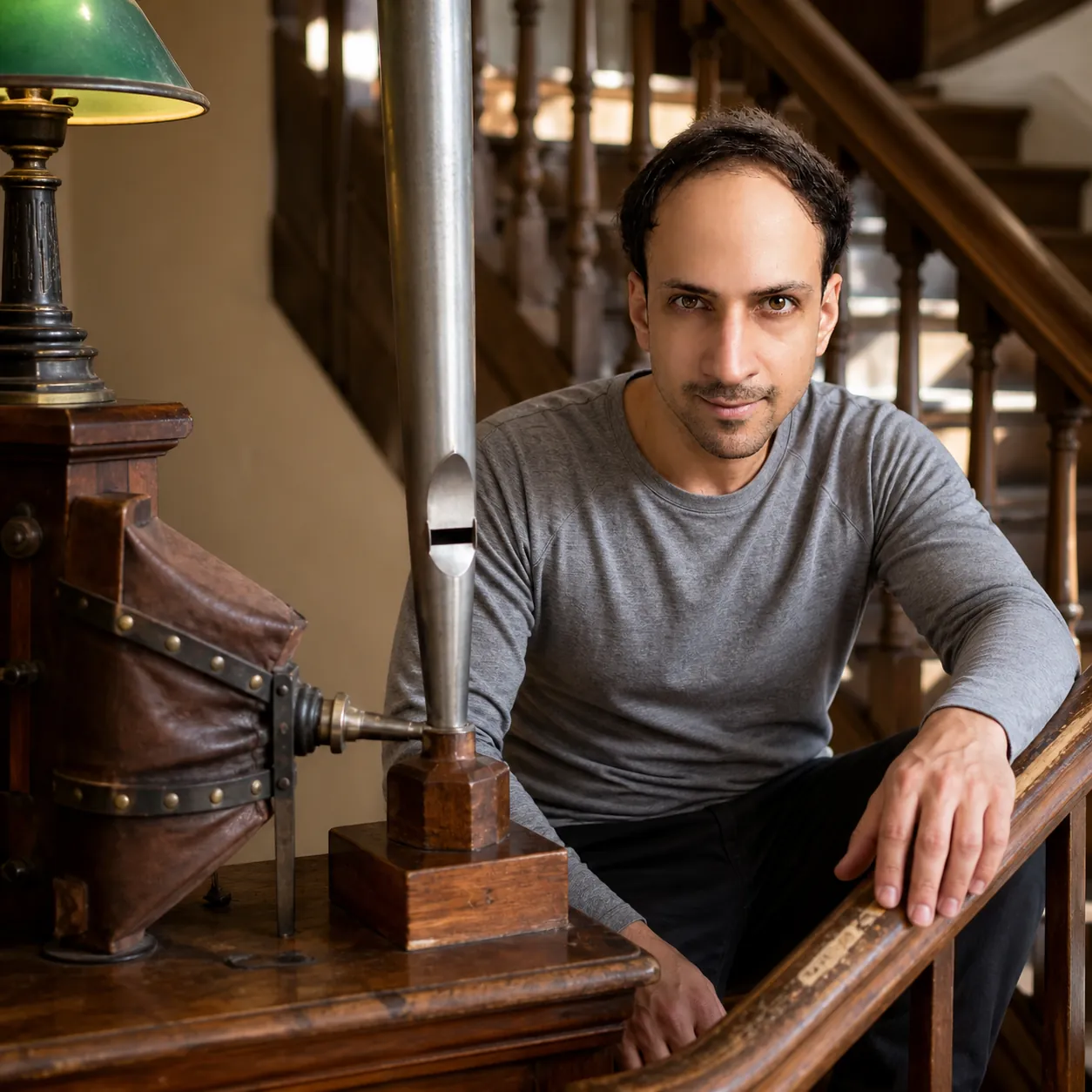
Use the attached reference photo as the identity reference: keep the same face, skin tone, hair and features as the person in that photo, without beautifying, aging or altering them. Create a square 1:1 museum-catalog frame with a strong first read and a slower second read. Location: a stair landing at morning with light crossing the banister. Show the subject in a heather-grey long-sleeve tee and dark joggers, resting one hand lightly on the banister's worn spot. The impossible-looking event must obey this clear system: a leather bellows feeding one organ pipe that sounds its note only above a marked airflow threshold retires the language of emergency in favor of dated, boring care. Explore what a yearly test becomes when its result is a musical note; direct expression and posture toward sober stewardship, never melodrama or ad-like confidence. Use a 100mm macro-to-portrait hybrid: one dated detail near the lens and the subject's face readable beyond it, both physically plausible. Make the composition let one measurement remain in progress, unresolved. Render it as museum-scale archival realism combining high-fidelity portrait photography, truthful patina and wear, disciplined warm neutrals, and physically accurate aging of materials, using a single green-shaded practical holding a ledger's worth of warm order and a palette of iron black, honey, and a quiet band of surgical green. Keep one identity-locked subject, credible hands and fingers, natural fabric, and coherent scale, contact, reflections, shadows, airflow, deformation, and materials. Background people only when essential, always secondary and clearly different. Avoid hospital drama, IV drips, gym-transformation posing, supplement-bottle product shots, and glowing DNA helices. No text, labels, logos, signatures, watermarks, random symbols, plastic skin, excessive bloom, or glossy AI finish.
Treat that reference as the character anchor and change only the scene. Create a square 1:1 museum-catalog frame with a strong first read and a slower...
Treat that reference as the character anchor and change only the scene. Create a square 1:1 museum-catalog frame with a strong first read and a slower...
Treat that reference as the character anchor and change only the scene. Create a square 1:1 museum-catalog frame with a strong first read and a slower...
Treat that reference as the character anchor and change only the scene. Create a square 1:1 museum-catalog frame with a strong first read and a slower...
Treat that reference as the character anchor and change only the scene. Create a square 1:1 museum-catalog frame with a strong first read and a slower...
Treat that reference as the character anchor and change only the scene. Create a square 1:1 museum-catalog frame with a strong first read and a slower...
Treat that reference as the character anchor and change only the scene. Create a square 1:1 museum-catalog frame with a strong first read and a slower...
Treat that reference as the character anchor and change only the scene. Create a square 1:1 museum-catalog frame with a strong first read and a slower...
Treat that reference as the character anchor and change only the scene. Create a square 1:1 museum-catalog frame with a strong first read and a slower...
Treat that reference as the character anchor and change only the scene. Create a square 1:1 museum-catalog frame with a strong first read and a slower...
Treat that reference as the character anchor and change only the scene. Create a square 1:1 museum-catalog frame with a strong first read and a slower...
Treat that reference as the character anchor and change only the scene. Create a square 1:1 museum-catalog frame with a strong first read and a slower...