جاري التحميل...


جاري التحميل...
Create a square 1:1 museum-catalog frame with a strong first read and a slower second read. Location: a home study with a drawer of clear rulers tipped onto...
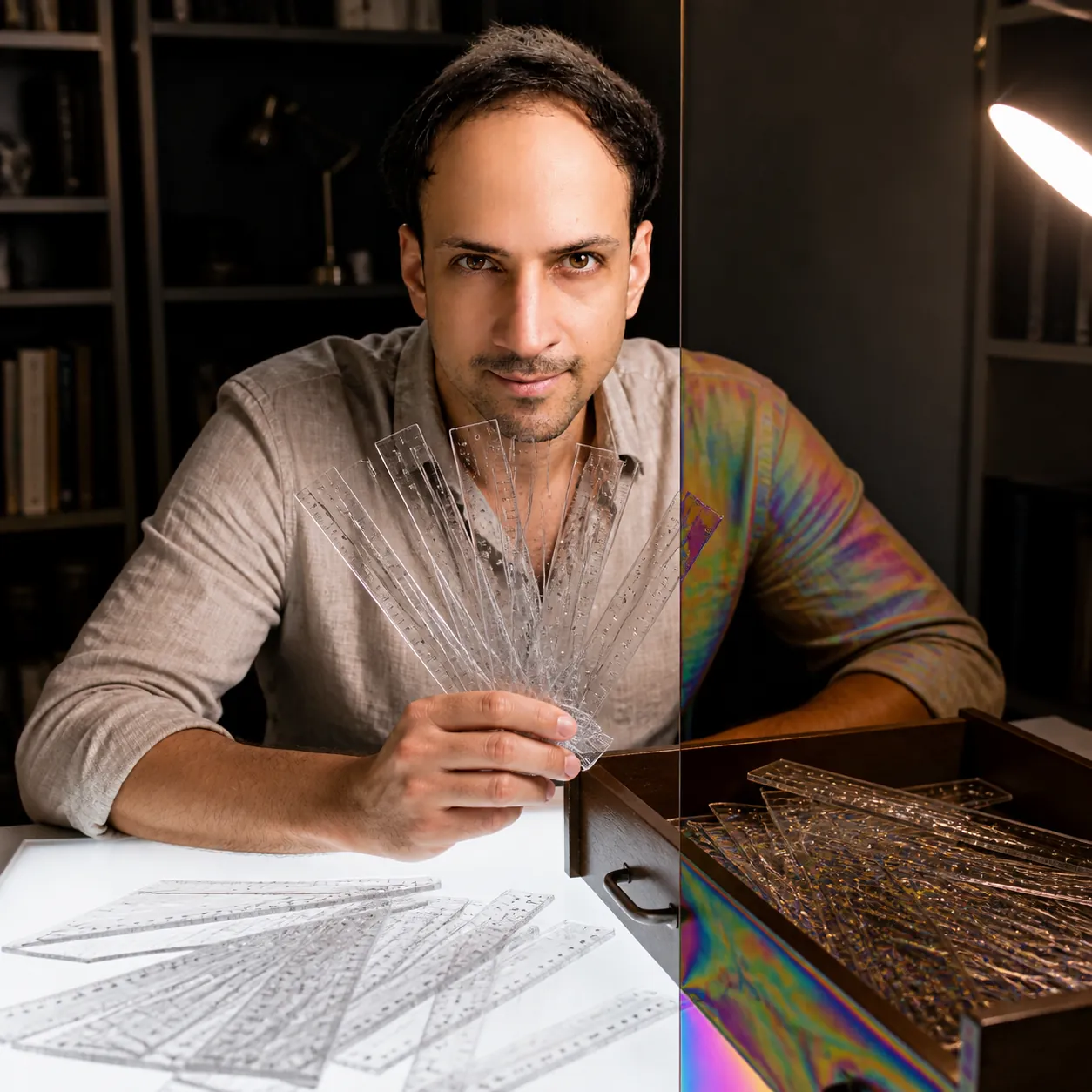
Use the attached reference photo as the identity reference: keep the same face, skin tone, hair and features as the person in that photo, without beautifying, aging or altering them. Create a square 1:1 museum-catalog frame with a strong first read and a slower second read. Location: a home study with a drawer of clear rulers tipped onto the desk. Show the subject in an untucked oatmeal linen shirt with sleeves pushed up, fanning a handful of clear rulers like cards. Use this advanced image-making device as the core logic: a teardrop of rapidly quenched glass whose interior blazes with locked stress while its tail promises total collapse turns a vague mechanical complaint into a precise, radiating diagram. Explore how visible stored energy should be before it is respected; direct expression and posture toward grounded reverence, never melodrama or ad-like confidence. Frame through the polarizer's edge so half the frame sees the hidden color and half stays ordinary. Make the composition keep the light source honest and visible at frame's edge. Render it as conceptual stress-analysis portraiture combining transparent engineering models, restrained contemporary art direction, believable apparatus, and human-centered editorial realism, using one white light table glowing upward with gentle ambient spill on their face and a palette of graphite, cool ivory, and one strip of true interference hues. Keep one identity-locked person, credible hands and fingers, natural fabric, and coherent scale, contact, reflections, shadows, airflow, deformation, and materials. Background people only when essential, always secondary and clearly different. Avoid psychedelic color washes, chakra imagery, aura photography styling, iridescent vaporwave gloss, and randomly tinted glass. No text, labels, logos, signatures, watermarks, random symbols, plastic skin, excessive bloom, or glossy AI finish.
Treat that reference as the character anchor and change only the scene. Create a square 1:1 museum-catalog frame with a strong first read and a slower...
Treat that reference as the character anchor and change only the scene. Create a square 1:1 museum-catalog frame with a strong first read and a slower...
Treat that reference as the character anchor and change only the scene. Create a square 1:1 museum-catalog frame with a strong first read and a slower...
Treat that reference as the character anchor and change only the scene. Create a square 1:1 museum-catalog frame with a strong first read and a slower...
Treat that reference as the character anchor and change only the scene. Create a square 1:1 museum-catalog frame with a strong first read and a slower...
Treat that reference as the character anchor and change only the scene. Create a square 1:1 museum-catalog frame with a strong first read and a slower...
Treat that reference as the character anchor and change only the scene. Create a square 1:1 museum-catalog frame with a strong first read and a slower...
Treat that reference as the character anchor and change only the scene. Create a square 1:1 museum-catalog frame with a strong first read and a slower...
Treat that reference as the character anchor and change only the scene. Create a square 1:1 museum-catalog frame with a strong first read and a slower...
Treat that reference as the character anchor and change only the scene. Create a square 1:1 museum-catalog frame with a strong first read and a slower...
Treat that reference as the character anchor and change only the scene. Create a square 1:1 museum-catalog frame with a strong first read and a slower...
Treat that reference as the character anchor and change only the scene. Create a square 1:1 museum-catalog frame with a strong first read and a slower...