جاري التحميل...


جاري التحميل...
Turn your own photo into a kinetic-mechanism portrait in an olive press room in Al-Jouf, stone floor swept clean. Keeps your face unchanged.
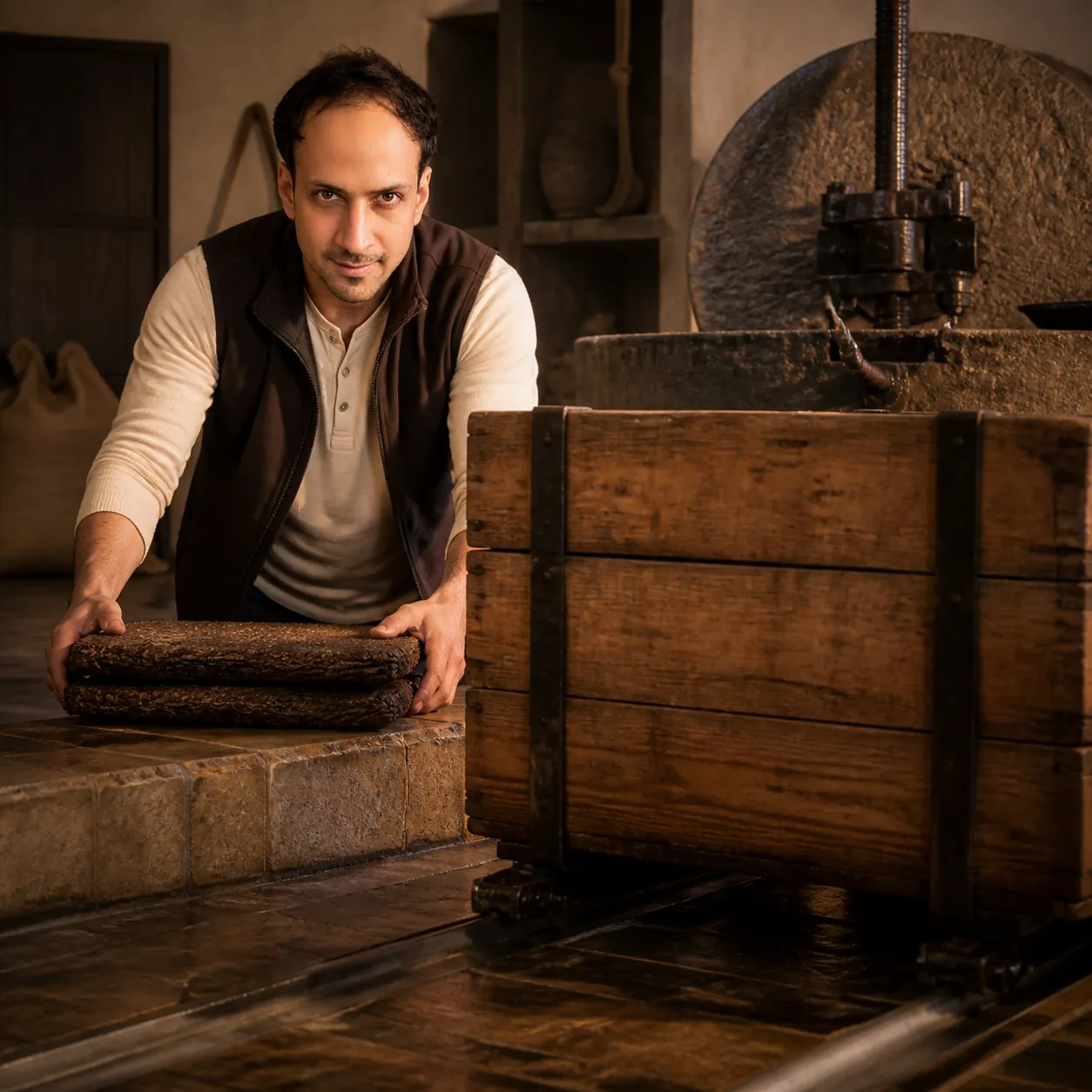
Use the attached reference photo as the identity reference: keep the same face, skin tone, hair and features as the person in that photo, without beautifying, aging or altering them. Create a square 1:1 museum-catalog frame with a strong first read and a slower second read at exactly 2880x2880 pixels. Location: an olive press room in Al-Jouf, stone floor swept clean. Show the subject in a dark brown gilet over a cream long-sleeve henley, stacking two clean pressing mats on a stone shelf. Treat this mechanism as the frame’s governing rule: a quarter-ton crate eased onto loose steel rollers that now follows two fingers across the floor it once refused turns effort already spent into motion the body can plainly feel. Explore whether momentum is a feeling or a quantity they can simply arrange; direct expression and posture toward sober delight, never melodrama or ad-like confidence. Frame from across the mechanism at hand height so the device and their face share one plane of focus. Make the composition read left to right along the machine's direction of progress. Render it as kinetic-mechanism portraiture built from real working machines, documentary patience, warm workshop materiality, and composition that honors cause before effect, using one warm tungsten work lamp aimed low, shadows kept legible and kind and a palette of raw pine, graphite, and a narrow copper gleam. Photorealistic: this must read as a real photograph from a physical camera, never an illustration, painting, or 3D render. Resolve real surface detail: grout darker than tile, sealant slightly yellowed, and every joint showing a real tolerance gap. Keep one identity-locked person, credible hands and fingers, natural fabric, and coherent scale, contact, reflections, shadows, airflow, deformation, and materials. Background people only when essential, always secondary and clearly different. Avoid slot-machine iconography, glowing progress bars, cascading gold coins, cartoon gear mandalas, and confetti-burst celebration effects. No text, labels, logos, signatures, watermarks, random symbols, plastic skin, excessive bloom, or glossy AI finish.
Turn your own photo into a photorealistic portrait in your mother's kitchen table with its patterned oilcloth cover. Keeps your face unchanged.
Turn your own photo into a quiet observational portrait in the kitchen of your flat at night with one counter lamp on. Keeps your face unchanged.
Turn your own photo into a portrait in the corner of your kitchen where the kettle sits between window and sink. Keeps your face unchanged.
Turn your own photo into a photorealistic portrait in a mosque entrance where the shoe shelf's front edge is worn round. Keeps your face unchanged.
Turn your own photo into a quiet cinematic portrait in a bus shelter's strip of shade on a wide afternoon road. Keeps your face unchanged.
Turn your own photo into a photorealistic portrait in your old school's corridor where the banister ends in a shine every pupil made. Keeps your face unchanged.
Turn your own photo into a photorealistic portrait in a staff-room table in the slow hour of a night shift. Keeps your face unchanged.
Turn your own photo into a photorealistic portrait in the landing of your building's stairs, one floor short of home. Keeps your face unchanged.
Turn your own photo into a photorealistic portrait in a house courtyard at dusk with the heat lifting off the tiles. Keeps your face unchanged.
Turn your own photo into a photorealistic portrait in the flat roof of the family house as the last daylight drains. Keeps your face unchanged.
Turn your own photo into a patient observational portrait in a bus shelter's strip of shade on a wide afternoon road. Keeps your face unchanged.
Turn your own photo into a gallery-scale documentary portrait in an office floor at the end of the day, most desks dark. Keeps your face unchanged.