جاري التحميل...


جاري التحميل...
Create a square 1:1 museum-catalog frame with a strong first read and a slower second read. Location: a clean fabrication bench in a small Riyadh workshop...
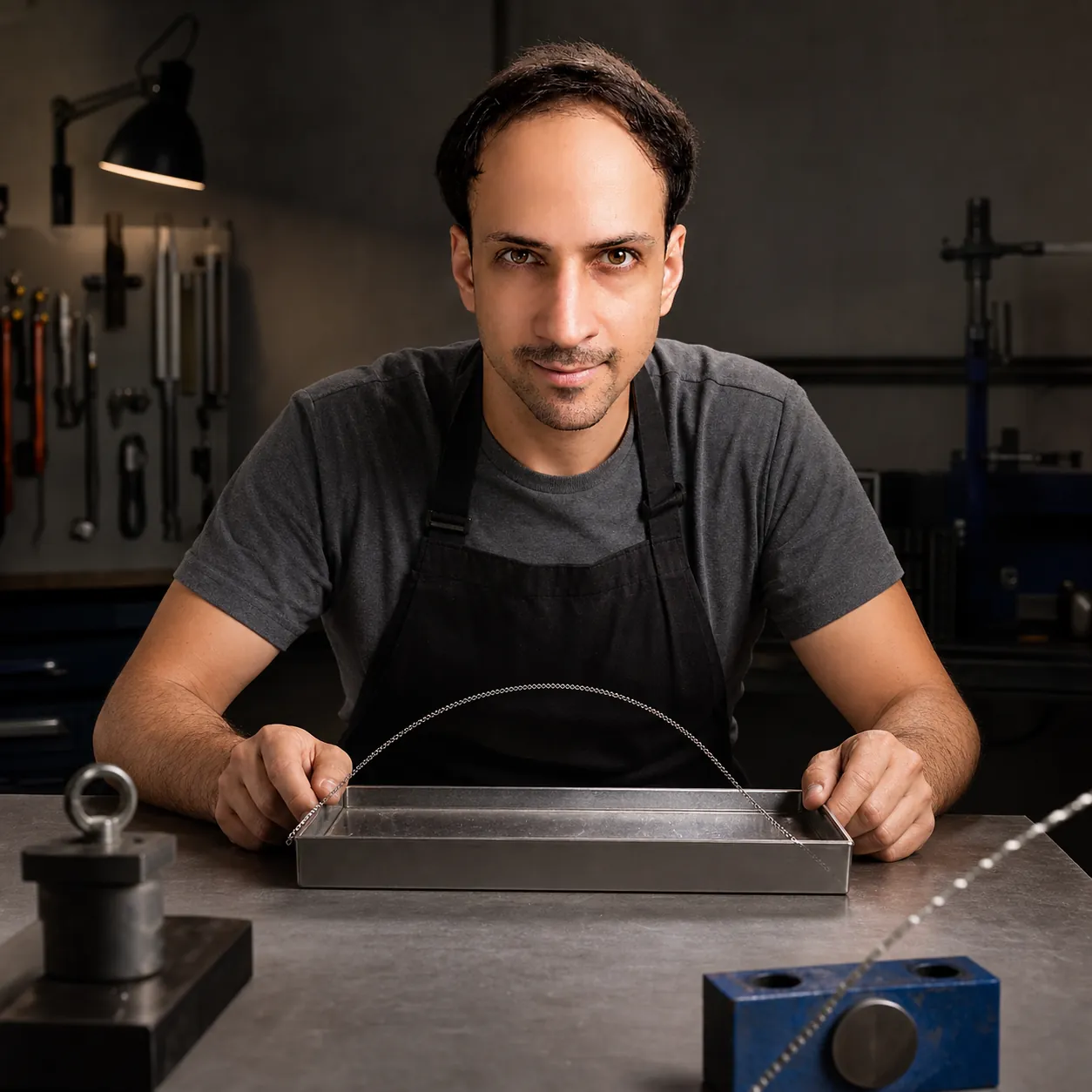
Use the attached reference photo as the identity reference: keep the same face, skin tone, hair and features as the person in that photo, without beautifying, aging or altering them. Create a square 1:1 museum-catalog frame with a strong first read and a slower second read. Location: a clean fabrication bench in a small Riyadh workshop after hours. Show the subject in a charcoal work apron over a plain grey crew-neck and dark trousers, leveling a shallow steel tray with both thumbs. Build the artwork around this material rule: a fine steel chain still standing in a shallow self-supporting arch after being stroked along a magnet and released treats force as something that can be recorded as faithfully as light. Explore what it means for a material to remember a force that has left the room; direct expression and posture toward alert stillness, never melodrama or ad-like confidence. Frame across the work surface at chest height so the demonstration and their eyes share one focal plane. Make the composition let one field line exit the frame unresolved. Render it as gallery-grade experimental photography built from working magnetic devices, quiet industrial styling, accurate material response, and unhurried observational framing, using one hard raking key skimmed across the work surface with gentle bounced fill and a palette of graphite, bone white, and a narrow band of cobalt. Keep one identity-locked person, credible hands and fingers, natural fabric, and coherent scale, contact, reflections, shadows, airflow, deformation, and materials. Background people only when essential, always secondary and clearly different. Avoid cartoon magnet iconography, floating debris vortices, electric sparks, sci-fi antigravity platforms, and mirror-polished chrome liquid. No text, labels, logos, signatures, watermarks, random symbols, plastic skin, excessive bloom, or glossy AI finish.
Treat that reference as the character anchor and change only the scene. Create a square 1:1 museum-catalog frame with a strong first read and a slower...
Treat that reference as the character anchor and change only the scene. Create a square 1:1 museum-catalog frame with a strong first read and a slower...
Treat that reference as the character anchor and change only the scene. Create a square 1:1 museum-catalog frame with a strong first read and a slower...
Treat that reference as the character anchor and change only the scene. Create a square 1:1 museum-catalog frame with a strong first read and a slower...
Treat that reference as the character anchor and change only the scene. Create a square 1:1 museum-catalog frame with a strong first read and a slower...
Treat that reference as the character anchor and change only the scene. Create a square 1:1 museum-catalog frame with a strong first read and a slower...
Treat that reference as the character anchor and change only the scene. Create a square 1:1 museum-catalog frame with a strong first read and a slower...
Treat that reference as the character anchor and change only the scene. Create a square 1:1 museum-catalog frame with a strong first read and a slower...
Treat that reference as the character anchor and change only the scene. Create a square 1:1 museum-catalog frame with a strong first read and a slower...
Treat that reference as the character anchor and change only the scene. Create a square 1:1 museum-catalog frame with a strong first read and a slower...
Treat that reference as the character anchor and change only the scene. Create a square 1:1 museum-catalog frame with a strong first read and a slower...
Treat that reference as the character anchor and change only the scene. Create a square 1:1 museum-catalog frame with a strong first read and a slower...