تخطَّ إلى المحتوى

برومبتات الصور

برومبتات لمولدات الصور: بورتريهات وفن وتصوير.

تم العثور على 4209
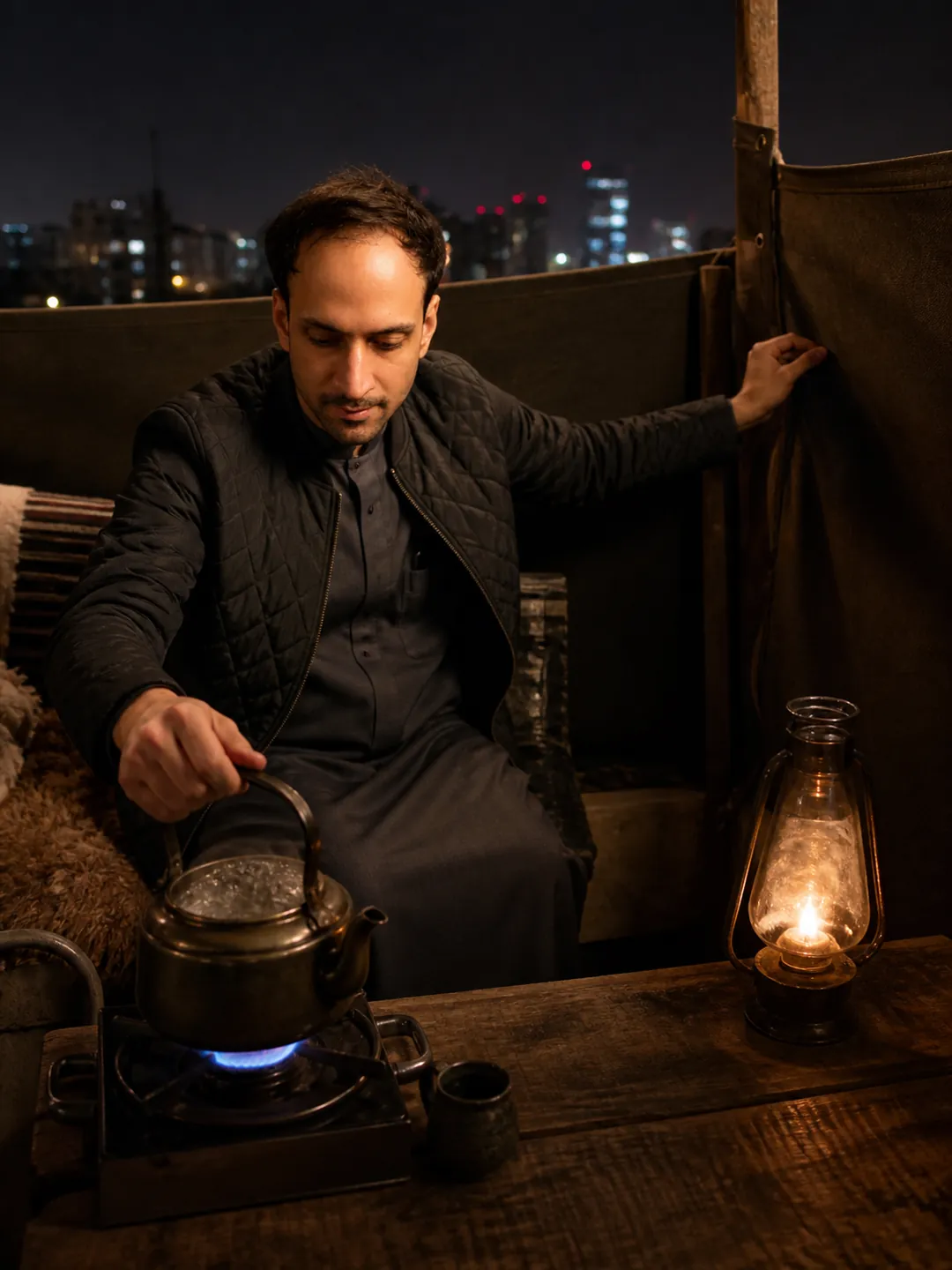
The Quiet Hours: Rooftop Sitting Area — AI Portrait Prompt
صورةAI Portraits

Turn your own photo into a quiet domestic portrait in a rooftop sitting area enclosed by canvas windbreaks, city glow beyond. Keeps your face unchanged.

من نص البرومبت

Use the attached reference photo as the identity reference: keep the same face, skin tone, hair and features as the person in that photo, without beautifying, aging or altering them. Treat that reference as the character anchor: change only the scene. Use a formal 3:4 environmental portrait with complete hands and meaningful objects inside frame at exactly 2480x3312 pixels. Location: a rooftop sitting area enclosed by canvas windbreaks, city glow beyond. Show the subject in a quilted charcoal jacket zipped over a plain winter traditional Gulf outfit, pegging one canvas corner taut against the evening breeze. The impossible-looking event must obey this clear system: a stovetop kettle at its loud murmuring stage, when collapsing steam bubbles ring the water hardest just before the boil makes the quietest thing in the room the one worth watching. Explore why an evening feels longer when everything in it moves at hand speed; direct expression and posture toward contented focus, never melodrama or ad-like confidence. Frame from the empty chair opposite them, the lens at a seated guest's eye height. Make the composition keep every working surface honest, worn, and unstyled. Render it as quiet domestic realism built from believable flame-lit exposure, tactile wood and wool surfaces, documentary patience, and museum-grade portrait restraint, using one shaded oil-lamp pool with darkness allowed to stand in the corners and a palette of walnut, warm plaster, and one seam of lamp amber. Photorealistic: this must read as a real photograph from a physical camera, never an illustration, painting, or 3D render. Resolve real surface detail: hair with individual strands catching light, fine hairs of uneven length, and skin oil giving a low uneven sheen. Keep one identity-locked person, credible hands and fingers, natural fabric, and coherent scale, contact, reflections, shadows, airflow, deformation, and materials. Background people only when essential, always secondary and clearly different. Avoid orientalist lantern fantasies, floating dust-mote sunbeam overload, plastic-perfect wax flames, museum-diorama stiffness, and greeting-card coziness. No text, labels, logos, signatures, watermarks, random symbols, plastic skin, excessive bloom, or glossy AI finish.
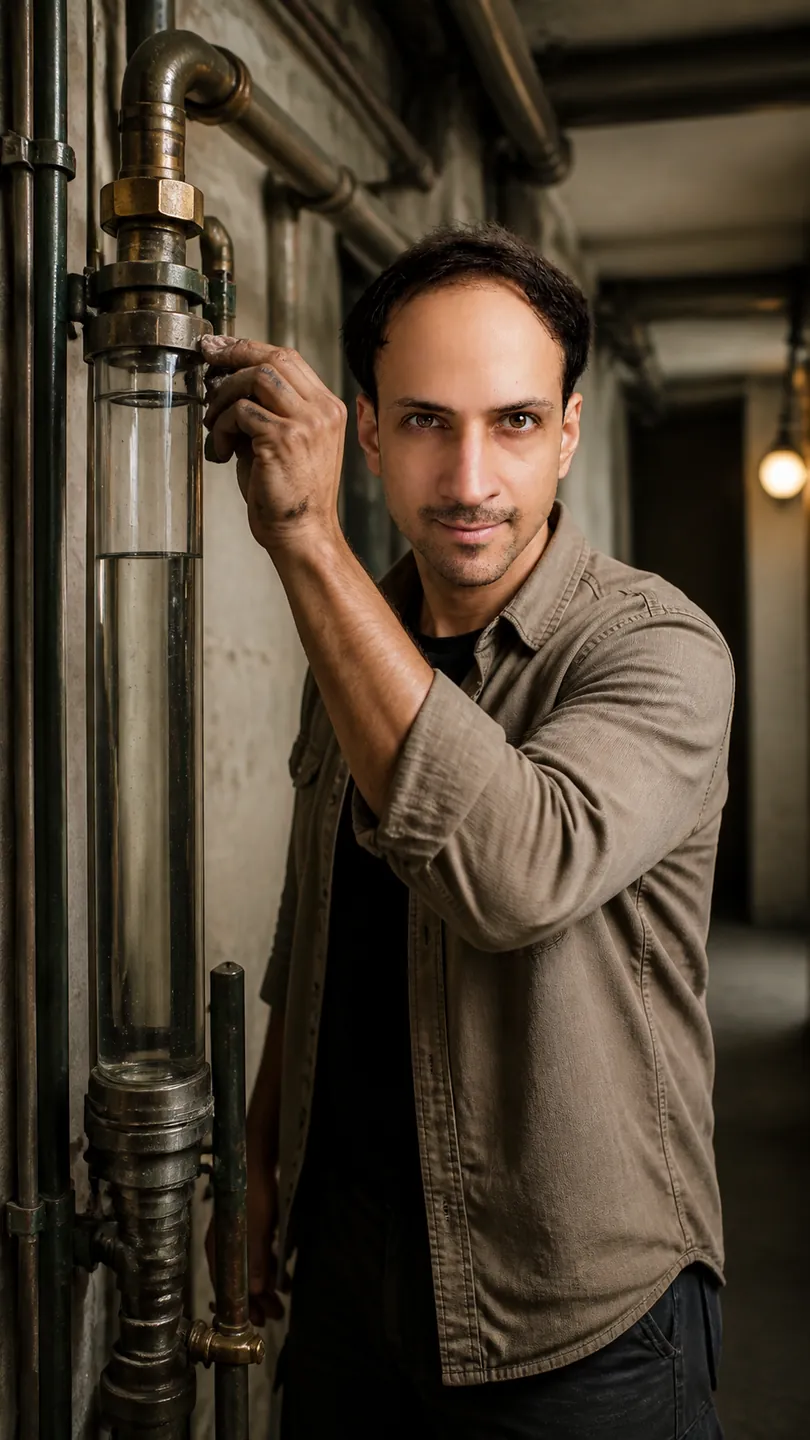
Second Signals: Service Corridor — AI Portrait Prompt
صورةAI Portraits

Turn your own photo into a portrait in a service corridor where old conduit follows the ceiling line. Keeps your face unchanged.

من نص البرومبت

Use the attached reference photo as the identity reference: keep the same face, skin tone, hair and features as the person in that photo, without beautifying, aging or altering them. Design a full-height 9:16 cinematic artwork that reads on a phone and rewards gallery-scale inspection at exactly 2144x3808 pixels. Location: a service corridor where old conduit follows the ceiling line. Show the subject in a dust-colored cotton overshirt over a dark tee and work trousers, brushing dust from a conduit joint with one thumb. Build the artwork around this material rule: a slender sealed water column, tall as two floors, that settles wherever the day's air pressure lets it stand gives a quiet interior signal a route to the room where choices happen. Explore why the quietest signal in a house is usually the one worth routing; direct expression and posture toward quiet stewardship, never melodrama or ad-like confidence. Use a patient 35mm interior view with vertical lines kept true and no wide-angle stretch. Make the composition give the smallest moving part more acuity than any lit surface. Render it as gallery-grade documentary imagery built from real pneumatic linkages, believable wear on brass, low-drama interior lighting, and patient human presence, using flat overcast illumination that keeps every glass column readable without glare and a palette of pale limestone, smoke grey, and one bottle-green band. Photorealistic: this must read as a real photograph from a physical camera, never an illustration, painting, or 3D render. Give the air depth: falloff with distance and no artificial clarity far back. Resolve real surface detail: thread ends and slight pilling on worn cloth, hairline chips at every hard corner, and stone that is porous rather than smooth. Keep one identity-locked person, credible hands and fingers, natural fabric, and coherent scale, contact, reflections, shadows, airflow, deformation, and materials. Background people only when essential, always secondary and clearly different. Avoid brass-gear collage backdrops, cartoon telegraph keys, neon signal beams, mercury spills, and floating typographic message overlays. No text, labels, logos, signatures, watermarks, random symbols, plastic skin, excessive bloom, or glossy AI finish.
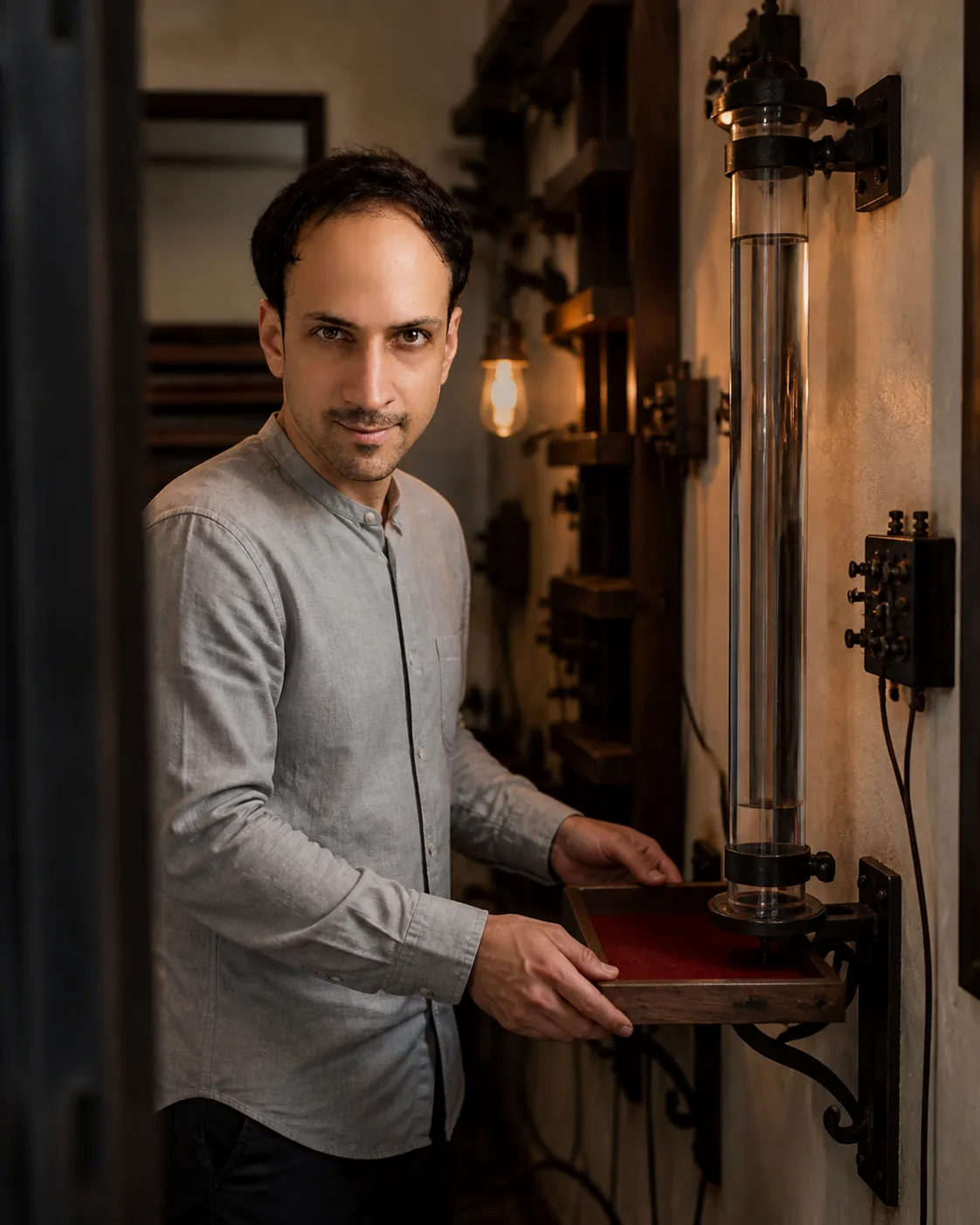
Second Signals: Small Dispatch Room — AI Portrait Prompt
صورةAI Portraits

Turn your own photo into a conceptual house-systems portrait in a small dispatch room lined with wall brackets and cleared shelves. Keeps your face unchanged.

من نص البرومبت

Use the attached reference photo as the identity reference: keep the same face, skin tone, hair and features as the person in that photo, without beautifying, aging or altering them. Build a portrait 4:5 editorial artwork with protected negative space and a fully readable face at exactly 2560x3200 pixels. Location: a small dispatch room lined with wall brackets and cleared shelves. Show the subject in a soft grey collarless shirt with sleeves buttoned at the wrist, lowering a felt-lined tray onto a wall bracket. The impossible-looking event must obey this clear system: a slender sealed water column, tall as two floors, that settles wherever the day's air pressure lets it stand delivers what one room needs to know without anyone raising a voice. Explore why the quietest signal in a house is usually the one worth routing; direct expression and posture toward patient regard, never melodrama or ad-like confidence. Frame just past a doorway edge, the near jamb dark and unfocused but never crossing their face. Make the composition keep the reading edge sharp while the corridor behind falls soft. Render it as conceptual house-systems photography built from functioning telegraph hardware, accurate liquid-column behavior, restrained interior direction, and editorial portrait fidelity, using one warm filament practical near the wall with cool ambient filling the rest and a palette of warm plaster, blackened iron, and a narrow signal red. Photorealistic: this must read as a real photograph from a physical camera, never an illustration, painting, or 3D render. Resolve real surface detail: dust settled where nobody wipes, fingerprint haze on glass, and edges rubbed pale by handling. Keep one identity-locked person, credible hands and fingers, natural fabric, and coherent scale, contact, reflections, shadows, airflow, deformation, and materials. Background people only when essential, always secondary and clearly different. Avoid brass-gear collage backdrops, cartoon telegraph keys, neon signal beams, mercury spills, and floating typographic message overlays. No text, labels, logos, signatures, watermarks, random symbols, plastic skin, excessive bloom, or glossy AI finish.
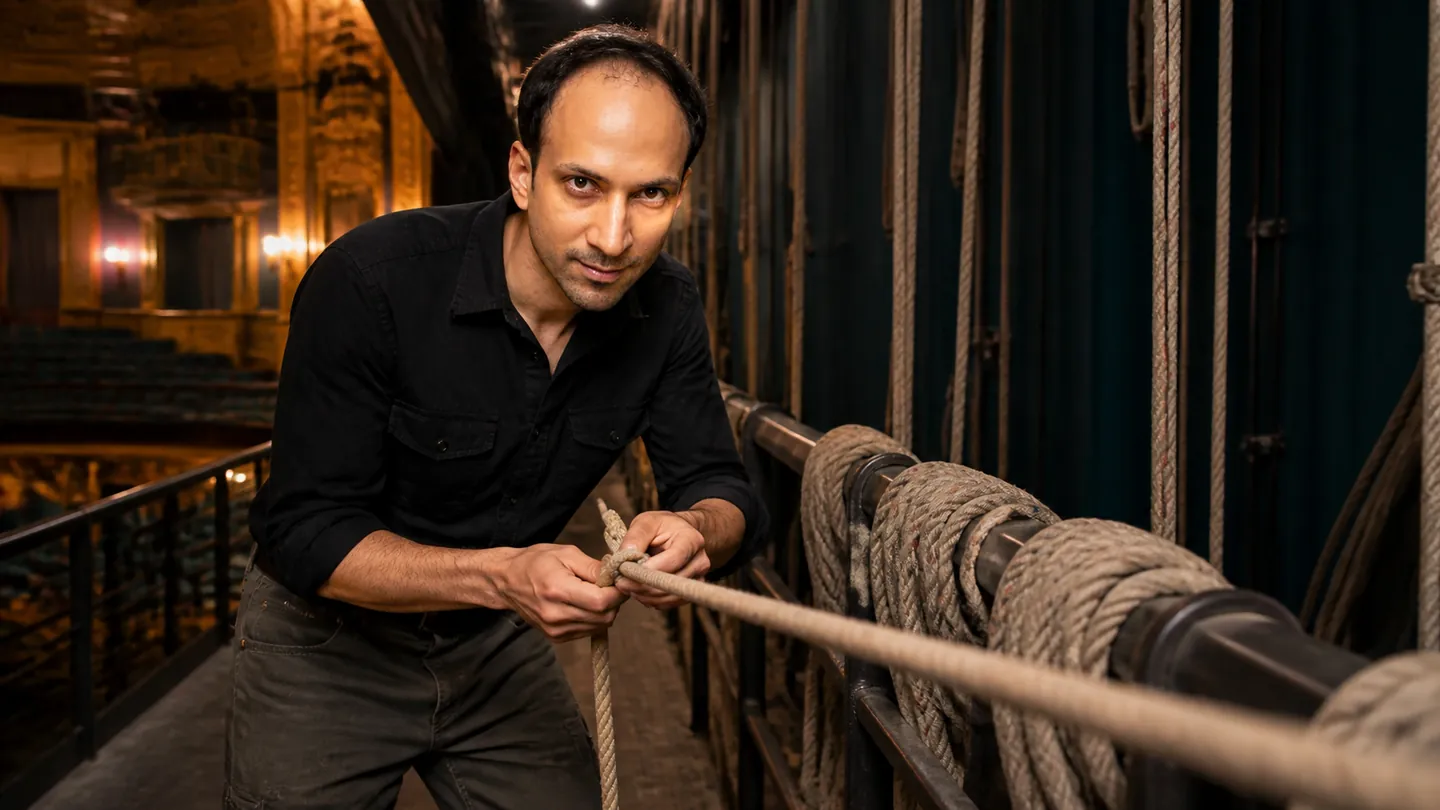
Rewired by Hand: Fly Gallery of an Old Theater — AI Portrait Prompt
صورةAI Portraits

Turn your own photo into a craft-documentary portrait in the fly gallery of an old theater, ropes belayed along one rail. Keeps your face unchanged.

من نص البرومبت

Use the attached reference photo as the identity reference: keep the same face, skin tone, hair and features as the person in that photo, without beautifying, aging or altering them. Compose a wide 16:9 narrative image where environment and subject carry equal meaning at exactly 3808x2144 pixels. Location: the fly gallery of an old theater, ropes belayed along one rail. Show the subject in a black stagehand's shirt tucked into worn canvas work trousers, adding one figure-eight turn to a belayed line. Use this advanced image-making device as the core logic: a small floor loom mid-rethread, every new warp thread knotted end-to-end onto the cut stub of the thread it replaces gives repetition the power to deepen a path until it looks inevitable. Explore why new ability must be physically routed before it can be casually used; direct expression and posture toward attentive humility, never melodrama or ad-like confidence. Use a 90mm close-portrait framing with one taut line entering the frame in sharp foreground focus. Make the composition run one continuous line from their hands to the frame edge. Render it as craft-documentary portraiture built from real fiber mechanics, patient workshop realism, archival material fidelity, and emotionally restrained editorial composition, using two bounced practicals giving gentle modeling without a single hard specular and a palette of raw linen, aged brass, and one deep teal band. Photorealistic: this must read as a real photograph from a physical camera, never an illustration, painting, or 3D render. Give the space honest scale: real distance between foreground, subject, and far wall. Resolve real surface detail: the difference between a wiped surface and a clean one, faint tide marks on ceramic, and metal dulled unevenly by touch. Keep one identity-locked person, credible hands and fingers, natural fabric, and coherent scale, contact, reflections, shadows, airflow, deformation, and materials. Background people only when essential, always secondary and clearly different. Avoid glowing neural filaments, brain-shaped tangles, circuit-board overlays, holographic wiring diagrams, and sparks jumping between cables. No text, labels, logos, signatures, watermarks, random symbols, plastic skin, excessive bloom, or glossy AI finish.
Time As Polish: Dim Dhow-Repair Shed — AI Portrait Prompt
صورةAI Portraits

Turn your own photo into a conservation-grade craft portrait in a dim dhow-repair shed on the Gulf shore, tide sounding outside. Keeps your face unchanged.

من نص البرومبت

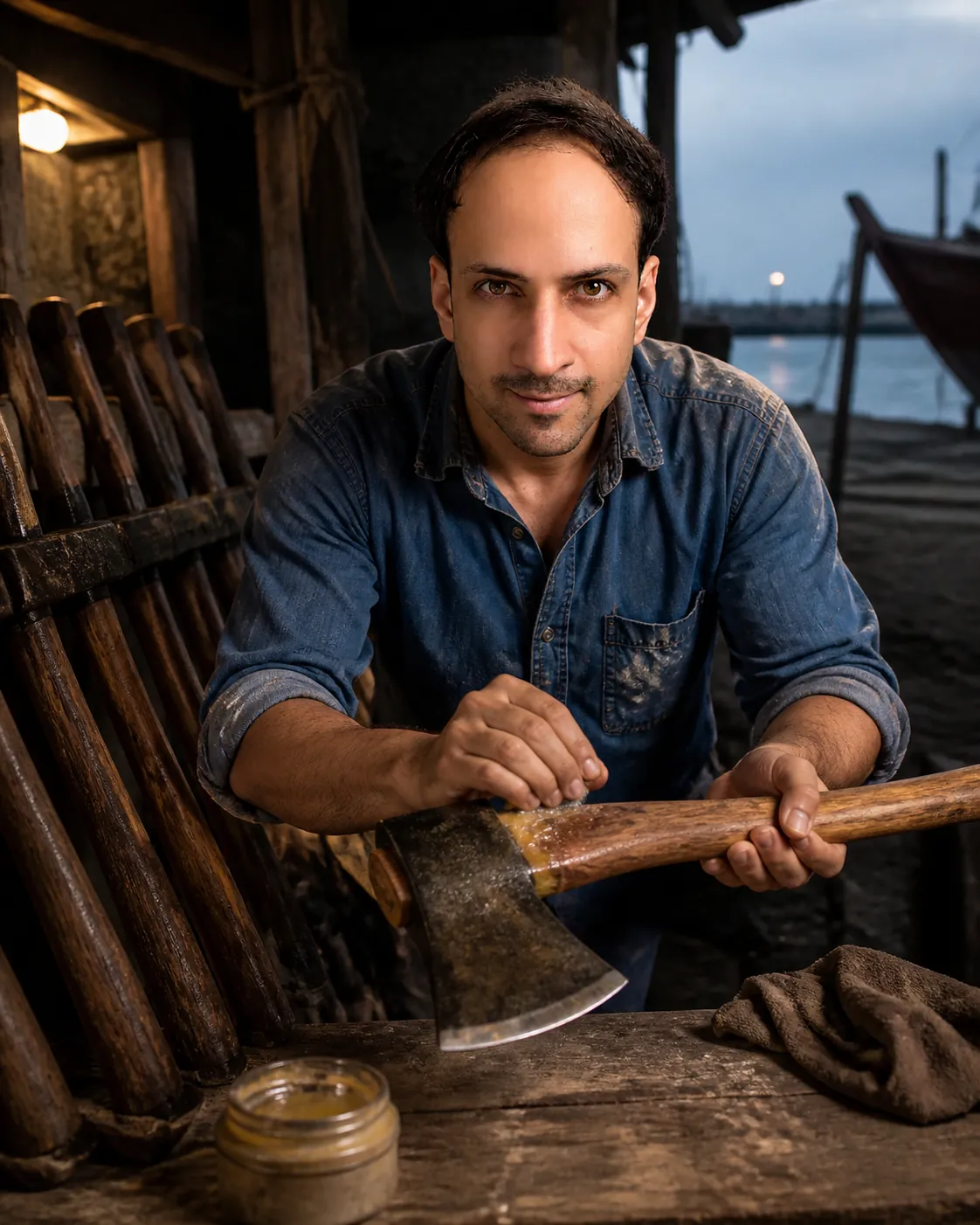
Use the attached reference photo as the identity reference: keep the same face, skin tone, hair and features as the person in that photo, without beautifying, aging or altering them. Build a portrait 4:5 editorial artwork with protected negative space and a fully readable face at exactly 2560x3200 pixels. Location: a dim dhow-repair shed on the Gulf shore, tide sounding outside. Show the subject in a salt-faded blue overshirt with sleeves rolled past the elbow, pressing warmed wax into a seam with one thumb. Build the artwork around this material rule: an axe head on its seventh handle that outlasted the six retired handles racked beneath it, each darkened at the grip repays minutes of ritual care with another decade of true work. Explore why a tool kept for a century looks finished rather than worn; direct expression and posture toward patient custodianship, never melodrama or ad-like confidence. Use a 90mm close-working lens: the cared-for surface sharp near the glass, their face readable just beyond it. Make the composition hold empty bench space where a finished tool will rest. Render it as conservation-grade craft portraiture built from real working tools, truthful wear mapping, warm low-key lighting, and precise, respectful editorial realism, using cool pre-dawn ambience lifted by one small tungsten practical near the hands and a palette of seasoned black, beeswax cream, and a gleam of pewter. Photorealistic: this must read as a real photograph from a physical camera, never an illustration, painting, or 3D render. Resolve real surface detail: fine lint on dark fabric, water spotting on steel, and the soft rounding of edges that have been used for years. Keep one identity-locked person, credible hands and fingers, natural fabric, and coherent scale, contact, reflections, shadows, airflow, deformation, and materials. Background people only when essential, always secondary and clearly different. Avoid rusty antique-shop clutter, sepia nostalgia filters, cobwebbed barn walls, staged distressed props, and heroic blacksmith sparks. No text, labels, logos, signatures, watermarks, random symbols, plastic skin, excessive bloom, or glossy AI finish.
Second Signals: Clockmaker's Repair Room — AI Portrait Prompt
صورةAI Portraits

Turn your own photo into a gallery-grade documentary imagery portrait in a clockmaker's repair room with the bench light drawn low. Keeps your face unchanged.

من نص البرومبت

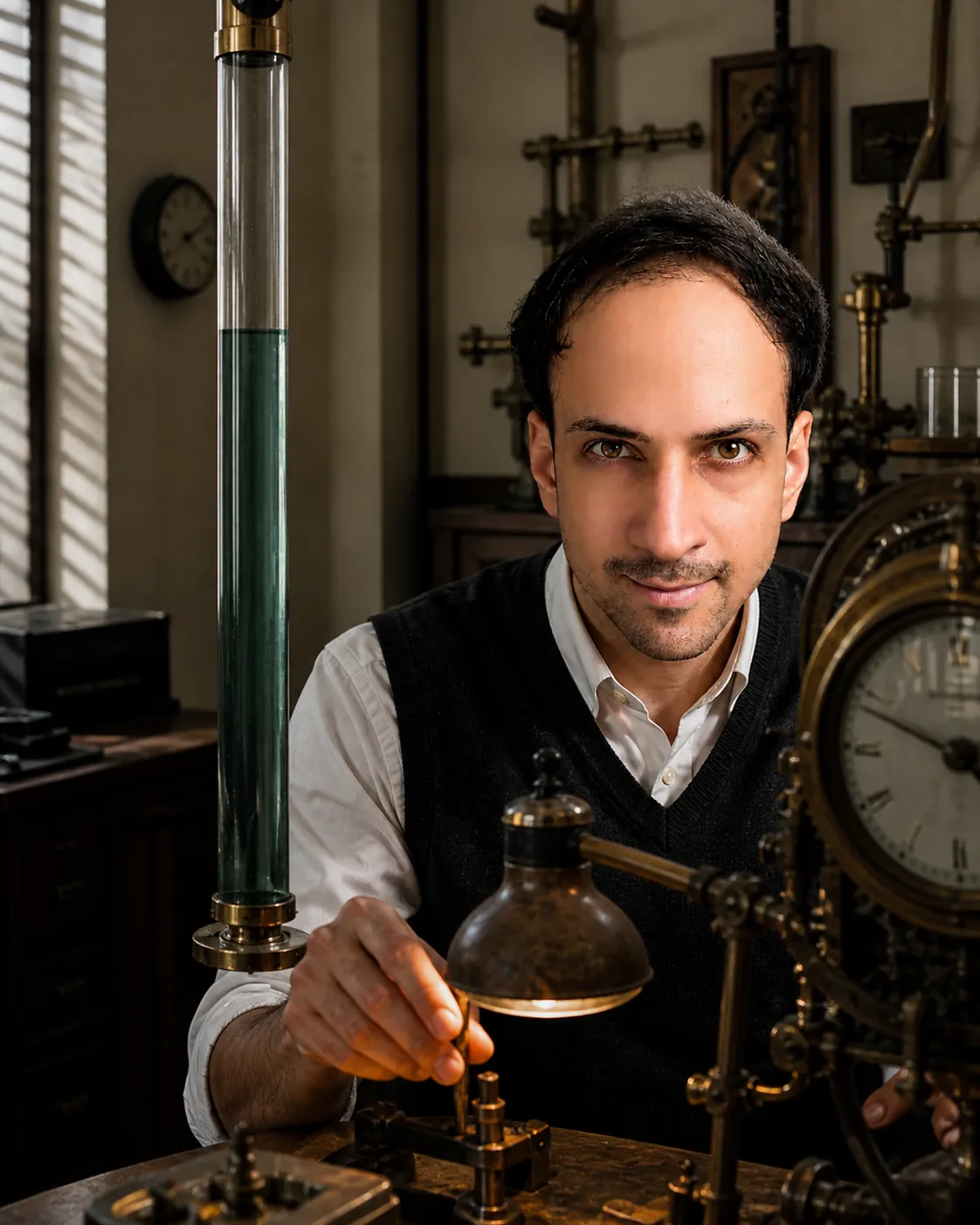
Use the attached reference photo as the identity reference: keep the same face, skin tone, hair and features as the person in that photo, without beautifying, aging or altering them. Build a portrait 4:5 editorial artwork with protected negative space and a fully readable face at exactly 2560x3200 pixels. Location: a clockmaker's repair room with the bench light drawn low. Show the subject in a charcoal knit vest over one rolled white shirtsleeve, drawing the bench light down to a hand's height. Build the artwork around this material rule: a slender sealed water column, tall as two floors, that settles wherever the day's air pressure lets it stand lets a distant condition arrive as a signal rather than an interruption. Explore why the quietest signal in a house is usually the one worth routing; direct expression and posture toward attentive calm, never melodrama or ad-like confidence. Use an 85mm portrait length so one instrument face and their eyes stay equally readable. Make the composition let one connecting line leave the frame without resolving. Render it as gallery-grade documentary imagery built from real pneumatic linkages, believable wear on brass, low-drama interior lighting, and patient human presence, using late-afternoon light entering through louvers as thin parallel bands and a palette of pale limestone, smoke grey, and one bottle-green band. Photorealistic: this must read as a real photograph from a physical camera, never an illustration, painting, or 3D render. Resolve real surface detail: fine lint on dark fabric, water spotting on steel, and the soft rounding of edges that have been used for years. Keep one identity-locked person, credible hands and fingers, natural fabric, and coherent scale, contact, reflections, shadows, airflow, deformation, and materials. Background people only when essential, always secondary and clearly different. Avoid steampunk goggles, glowing holograms, dripping food props, anatomical organ diagrams, and legible dial lettering anywhere. No text, labels, logos, signatures, watermarks, random symbols, plastic skin, excessive bloom, or glossy AI finish.
The New Route: Fly Gallery of an Old Theater — AI Portrait Prompt
صورةAI Portraits

Turn your own photo into a conceptual craft portrait in the fly gallery of an old theater, ropes belayed along one rail. Keeps your face unchanged.

من نص البرومبت

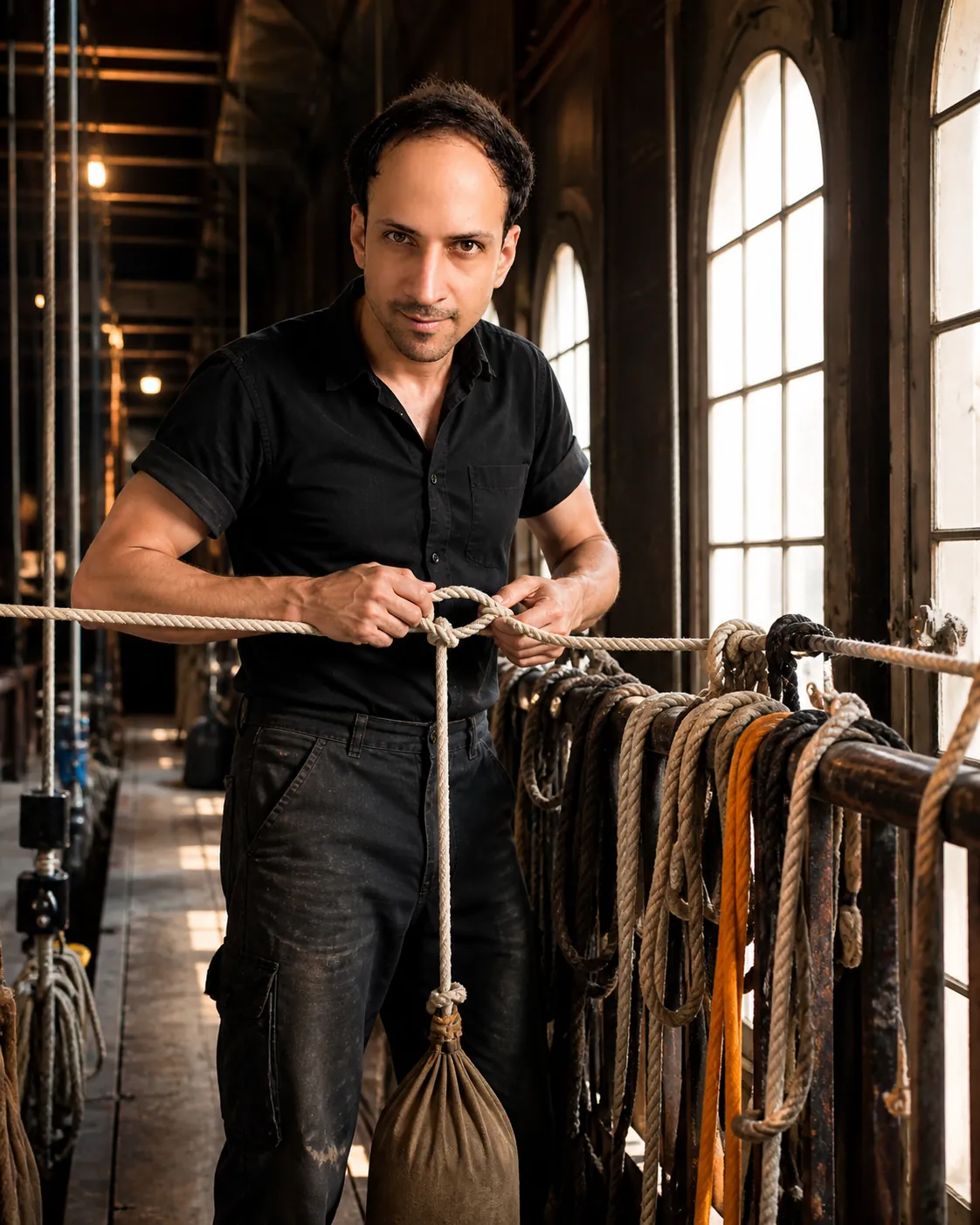
Use the attached reference photo as the identity reference: keep the same face, skin tone, hair and features as the person in that photo, without beautifying, aging or altering them. Build a portrait 4:5 editorial artwork with protected negative space and a fully readable face at exactly 2560x3200 pixels. Location: the fly gallery of an old theater, ropes belayed along one rail. Show the subject in a black stagehand's shirt tucked into worn canvas work trousers, adding one figure-eight turn to a belayed line. Make one rigorous physical condition the conceptual engine: a taut rope span between two shop anchors, renewed strand by strand while a hung sandbag keeps the whole line working holds working tension while its own structure is being remade. Explore what repetition is quietly building on days when nothing seems to improve; direct expression and posture toward patient resolve, never melodrama or ad-like confidence. Frame at the height of the work so effort and expression can be read in one glance. Make the composition rank focus by effort, the hardest-won inch rendered sharpest of all. Render it as conceptual craft portraiture uniting working textile apparatus, believable tension physics, quiet contemporary art direction, and human-centered documentary realism, using long window light raking across fiber so every twist reads and a palette of bleached cotton, iron shadow, and a restrained saffron accent. Photorealistic: this must read as a real photograph from a physical camera, never an illustration, painting, or 3D render. Resolve real surface detail: the difference between a wiped surface and a clean one, faint tide marks on ceramic, and metal dulled unevenly by touch. Keep one identity-locked person, credible hands and fingers, natural fabric, and coherent scale, contact, reflections, shadows, airflow, deformation, and materials. Background people only when essential, always secondary and clearly different. Avoid glowing neural filaments, brain-shaped tangles, circuit-board overlays, holographic wiring diagrams, and sparks jumping between cables. No text, labels, logos, signatures, watermarks, random symbols, plastic skin, excessive bloom, or glossy AI finish.
Photon Hour: Clinic Roof Platform — AI Portrait Prompt
صورةAI Portraits

Turn your own photo into a gallery-grade sun-study portrait in a clinic roof platform with a small mirror rig on a tripod. Keeps your face unchanged.

من نص البرومبت

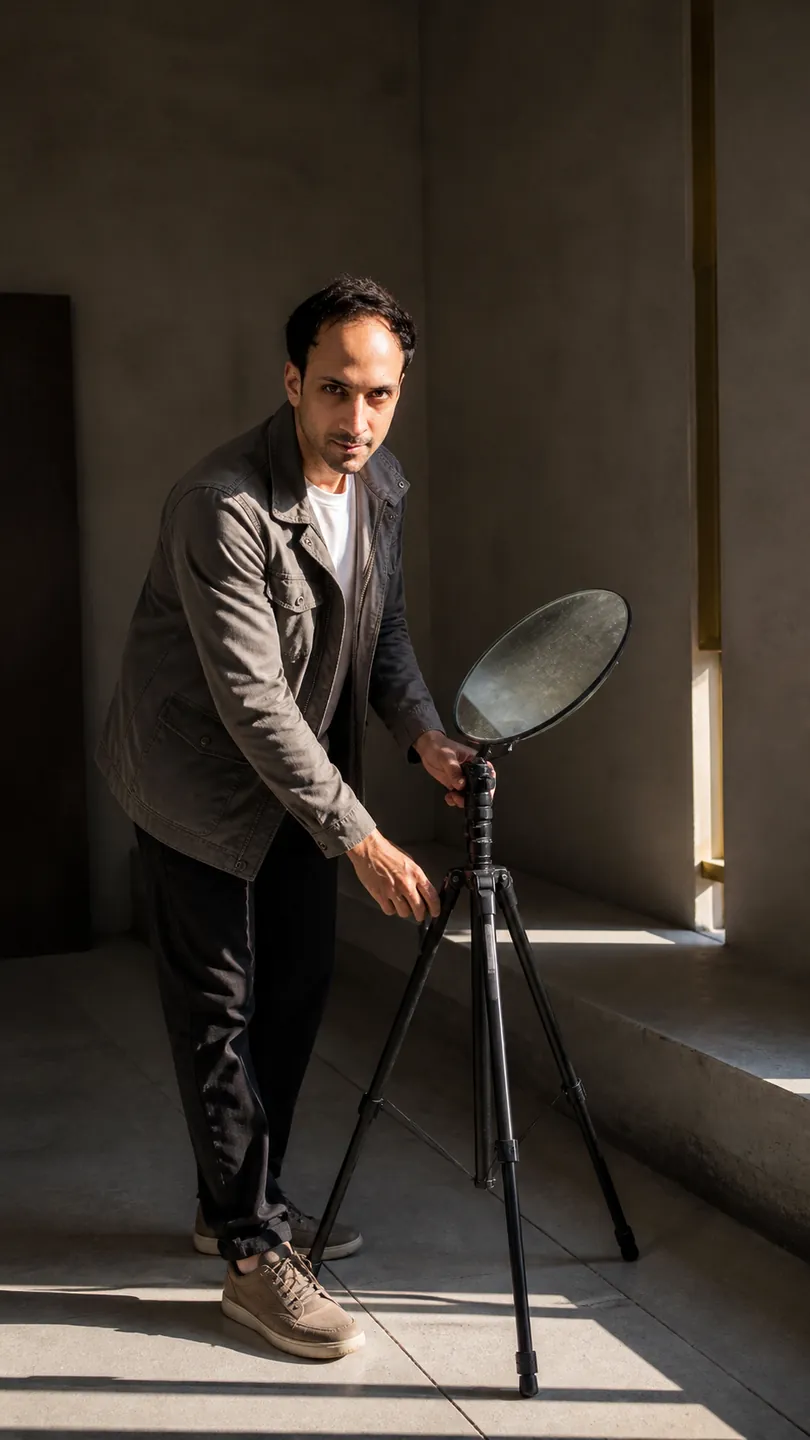
Use the attached reference photo as the identity reference: keep the same face, skin tone, hair and features as the person in that photo, without beautifying, aging or altering them. Design a full-height 9:16 cinematic artwork that reads on a phone and rewards gallery-scale inspection at exactly 2144x3808 pixels. Location: a clinic roof platform with a small mirror rig on a tripod. Show them in a stone-grey field jacket over a plain white tee, squaring the tripod's legs with small pinching adjustments. Treat this mechanism as the frame’s governing rule: a milled brass wall slot whose admitted slab of morning light lands exactly between two lines incised in the floor proves a dose of light can be as deliberate as a poured measure. Explore whether light that arrives on purpose feels different on the skin; direct expression and posture toward attentive ease, never melodrama or ad-like confidence. Use a 35mm view from the shadow side of the room, the subject standing where light meets dark. Make the composition let most of the room rest in calm shadow. Render it as gallery-grade sun-study photography built from lawful optics, physically exact beam edges, calm architectural framing, and patient observational realism, using a single crisp-edged patch of daylight surrounded by deep readable shadow and a palette of limewash white, raw plaster, and one honeyed bar. Photorealistic: this must read as a real photograph from a physical camera, never an illustration, painting, or 3D render. Give the frame volume: faint density deepest in the room, contrast easing at the edges. Resolve real surface detail: dust settled where nobody wipes, fingerprint haze on glass, and edges rubbed pale by handling. Keep one identity-locked person, credible hands and fingers, natural fabric, and coherent scale, contact, reflections, shadows, airflow, deformation, and materials. Background people only when essential, always secondary and clearly different. Avoid tanning-salon imagery, golden-hour social-media grading, sunburst clock motifs, glowing skin retouching, and beams bending like spotlights. No text, labels, logos, signatures, watermarks, random symbols, plastic skin, excessive bloom, or glossy AI finish.
The New Route: Daylight Weaving Shed — AI Portrait Prompt
صورةAI Portraits

Turn your own photo into a conceptual craft portrait in a daylight weaving shed where two resting looms hold half-woven cloth. Keeps your face unchanged.

من نص البرومبت

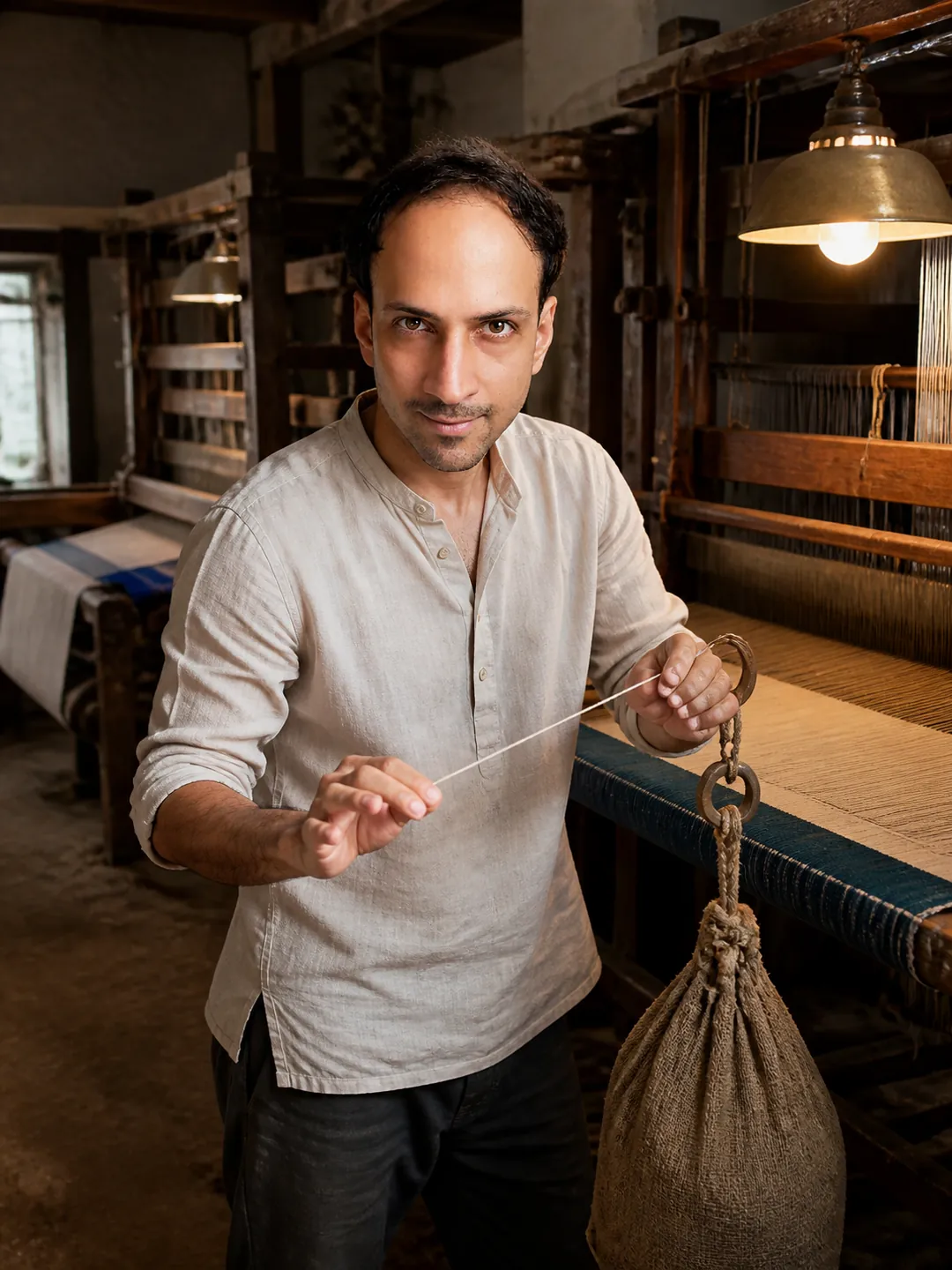
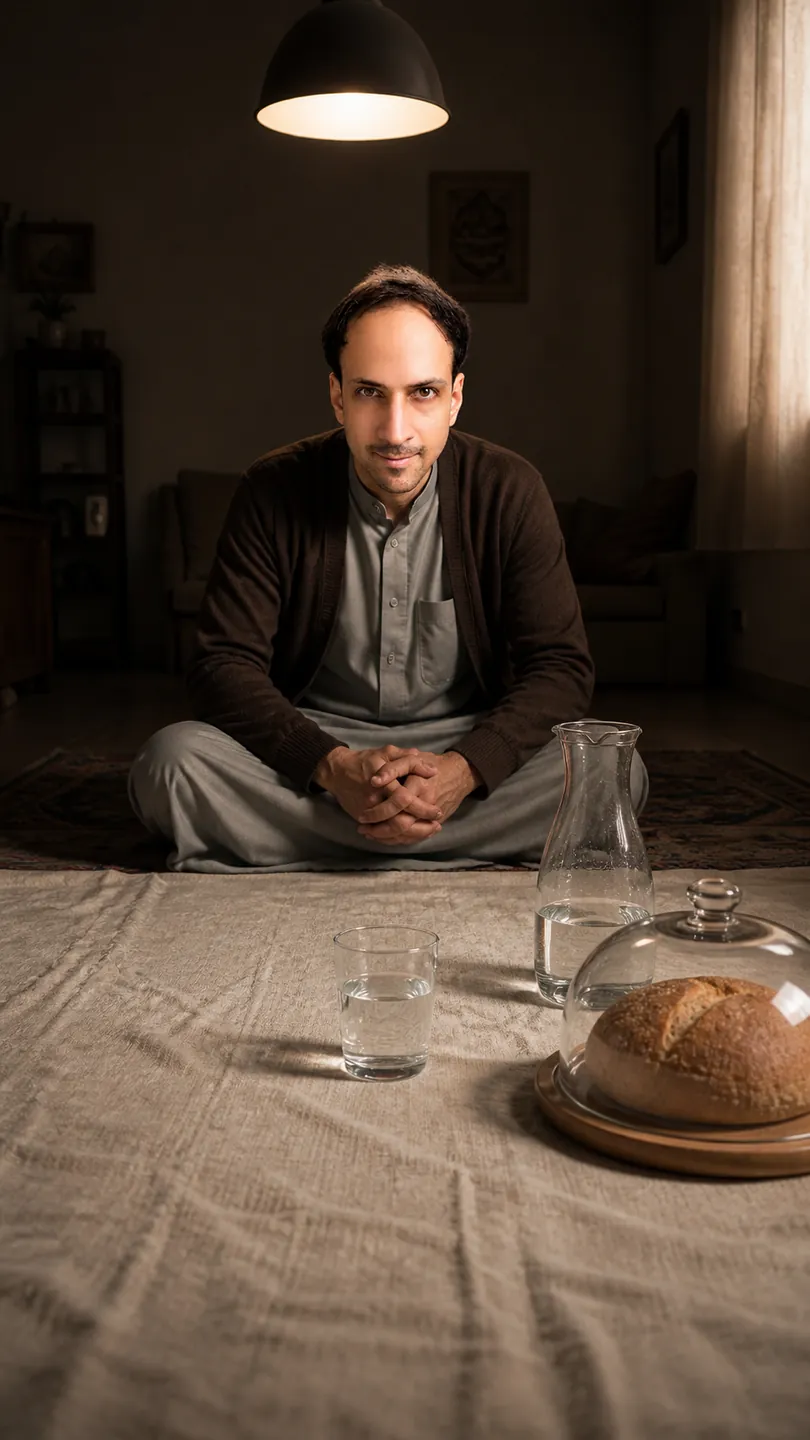
Use the attached reference photo as the identity reference: keep the same face, skin tone, hair and features as the person in that photo, without beautifying, aging or altering them. Use a formal 3:4 environmental portrait with complete hands and meaningful objects inside frame at exactly 2480x3312 pixels. Location: a daylight weaving shed where two resting looms hold half-woven cloth. Show the subject in a collarless cotton shirt in undyed cloth with rolled sleeves, drawing one thread taut between spread fingers. The impossible-looking event must obey this clear system: a taut rope span between two shop anchors, renewed strand by strand while a hung sandbag keeps the whole line working keeps the history of effort visible inside the working result. Explore what repetition is quietly building on days when nothing seems to improve; direct expression and posture toward grounded hope, never melodrama or ad-like confidence. Use a composed 35mm width that places them beside the work, never looming over it. Make the composition hold their hands and the tensioned work in one unbroken diagonal. Render it as conceptual craft portraiture uniting working textile apparatus, believable tension physics, quiet contemporary art direction, and human-centered documentary realism, using one warm work lamp pooled on the task with soft surrounding dusk and a palette of raw linen, aged brass, and one deep teal band. Photorealistic: this must read as a real photograph from a physical camera, never an illustration, painting, or 3D render. Resolve real surface detail: true skin texture with pores and fine hair at the hairline, and fabric that creases where it is actually stressed. Keep one identity-locked person, credible hands and fingers, natural fabric, and coherent scale, contact, reflections, shadows, airflow, deformation, and materials. Background people only when essential, always secondary and clearly different. Avoid glowing neural filaments, brain-shaped tangles, circuit-board overlays, holographic wiring diagrams, and sparks jumping between cables. No text, labels, logos, signatures, watermarks, random symbols, plastic skin, excessive bloom, or glossy AI finish.
The Empty Hour: Plain Sitting Room — AI Portrait Prompt
صورةAI Portraits

Turn your own photo into a restrained interior portrait in a plain sitting room where a floor cloth lies spread and empty. Keeps your face unchanged.

من نص البرومبت

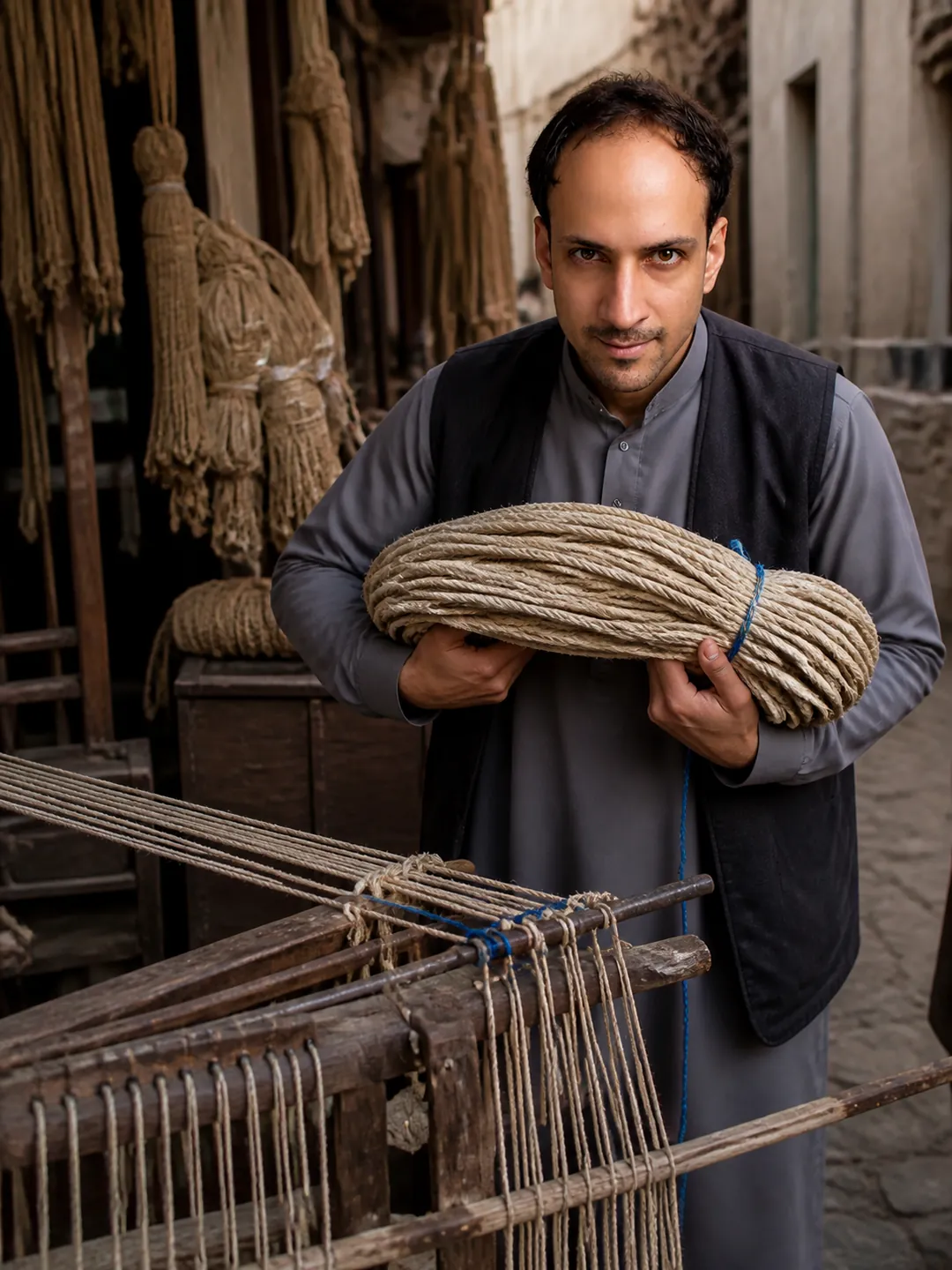
Use the attached reference photo as the identity reference: keep the same face, skin tone, hair and features as the person in that photo, without beautifying, aging or altering them. Design a full-height 9:16 cinematic artwork that reads on a phone and rewards gallery-scale inspection at exactly 2144x3808 pixels. Location: a plain sitting room where a floor cloth lies spread and empty. Show the subject in a dove-grey winter traditional Gulf outfit under a plain brown cardigan, placing a single water glass at the cloth's center. Treat this mechanism as the frame’s governing rule: a whole round loaf sealed behind clear glass while an open water carafe stands beside it, half poured and beaded makes the interval itself the exhibit, complete, unhurried, and enough. Explore how a room can carry a refusal so the person does not have to; direct expression and posture toward settled patience, never melodrama or ad-like confidence. Use an 85mm near-portrait distance, the nearest staged detail sharp low in frame while their expression carries the far plane. Make the composition leave deliberate distance between them and what waits. Render it as restrained interior photography combining honest mechanical staging, tactile everyday objects, disciplined negative space, and documentary-grade skin and fabric rendering, using one low-hung shaded lamp holding a tight warm circle around them and a palette of pewter, dry clay, and one band of late sun. Photorealistic: this must read as a real photograph from a physical camera, never an illustration, painting, or 3D render. Give the frame volume: faint density deepest in the room, contrast easing at the edges. Resolve real surface detail: label-free packaging showing carton fibre, cardboard bruised at the corners, and tape lifting slightly at one end. Keep one identity-locked person, credible hands and fingers, natural fabric, and coherent scale, contact, reflections, shadows, airflow, deformation, and materials. Background people only when essential, always secondary and clearly different. Avoid melting surrealist clocks, glowing countdown numerals, lavish feast spreads, anguished hungry expressions, and levitating food. No text, labels, logos, signatures, watermarks, random symbols, plastic skin, excessive bloom, or glossy AI finish.
Rewired by Hand: Rope-Seller's Stall Deep — AI Portrait Prompt
صورةAI Portraits

Turn your own photo into a conceptual craft portrait in a rope-seller's stall deep in an old Riyadh souq at opening hour. Keeps your face unchanged.

من نص البرومبت

Use the attached reference photo as the identity reference: keep the same face, skin tone, hair and features as the person in that photo, without beautifying, aging or altering them. Use a formal 3:4 environmental portrait with complete hands and meaningful objects inside frame at exactly 2480x3312 pixels. Location: a rope-seller's stall deep in an old Riyadh souq at opening hour. Show the subject in a plain grey winter traditional Gulf outfit with a dark sleeveless vest, weighing a coil of new rope across both forearms. Treat this mechanism as the frame’s governing rule: a small floor loom mid-rethread, every new warp thread knotted end-to-end onto the cut stub of the thread it replaces keeps the history of effort visible inside the working result. Explore why new ability must be physically routed before it can be casually used; direct expression and posture toward unhurried conviction, never melodrama or ad-like confidence. Frame at the height of the work so effort and expression can be read in one glance. Make the composition rank focus by effort, the hardest-won inch rendered sharpest of all. Render it as conceptual craft portraiture uniting working textile apparatus, believable tension physics, quiet contemporary art direction, and human-centered documentary realism, using cool diffuse skylight evened by pale walls, shadows kept legible and a palette of hemp beige, gunmetal grey, and a single indigo thread. Photorealistic: this must read as a real photograph from a physical camera, never an illustration, painting, or 3D render. Resolve real surface detail: wood grain read at honest scale, matte and gloss clearly separated, and no surface uniformly clean. Keep one identity-locked person, credible hands and fingers, natural fabric, and coherent scale, contact, reflections, shadows, airflow, deformation, and materials. Background people only when essential, always secondary and clearly different. Avoid glowing neural filaments, brain-shaped tangles, circuit-board overlays, holographic wiring diagrams, and sparks jumping between cables. No text, labels, logos, signatures, watermarks, random symbols, plastic skin, excessive bloom, or glossy AI finish.
Practice Laid Down: Textile Conservation Room — AI Portrait Prompt
صورةAI Portraits

Turn your own photo into a craft-documentary portrait in a textile conservation room with a long padded table and raking lamps. Keeps your face unchanged.

من نص البرومبت

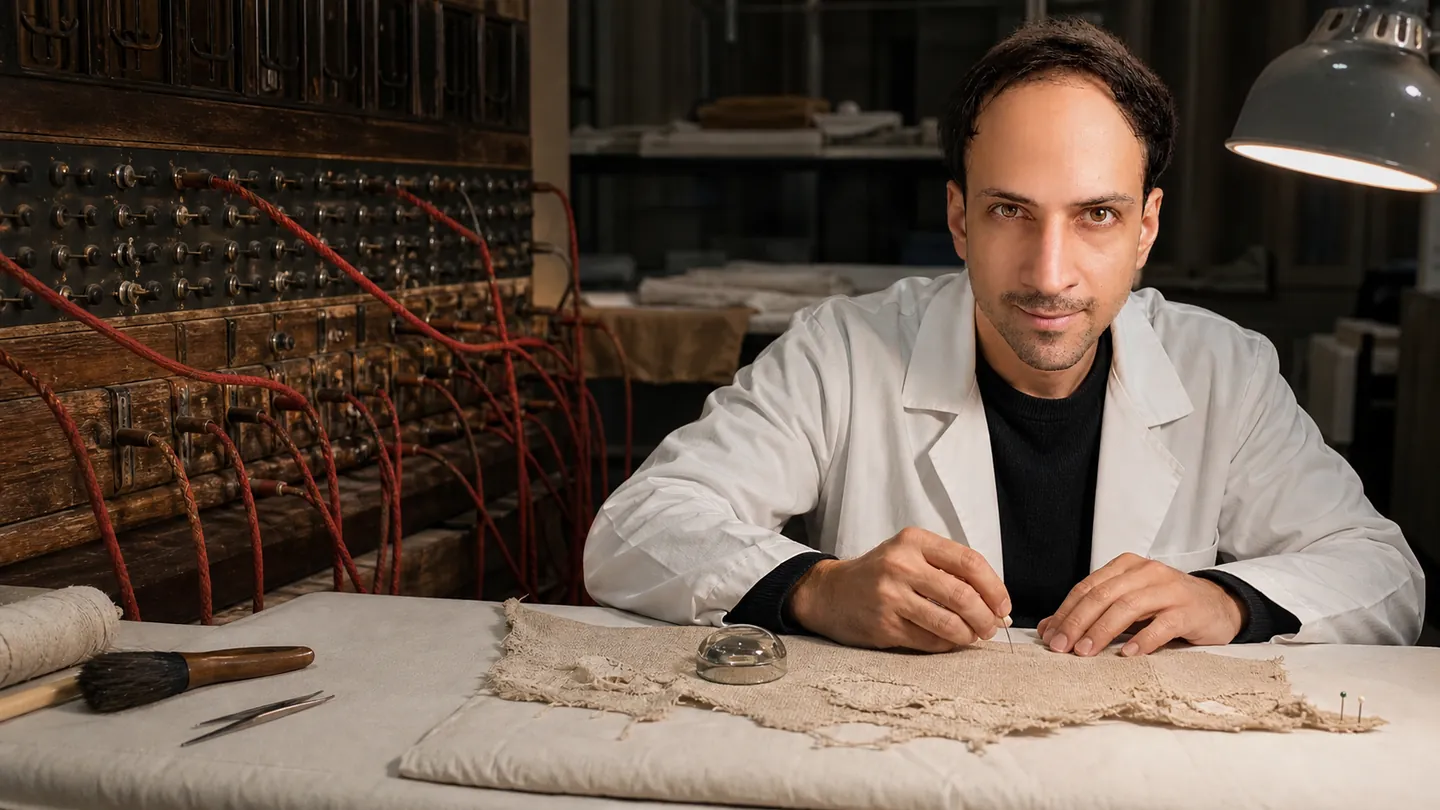
Use the attached reference photo as the identity reference: keep the same face, skin tone, hair and features as the person in that photo, without beautifying, aging or altering them. Compose a wide 16:9 narrative image where environment and subject carry equal meaning at exactly 3808x2144 pixels. Location: a textile conservation room with a long padded table and raking lamps. Show the subject in a white lab coat open over a dark knit shirt, pinning a linen fragment gently under a glass weight. The impossible-looking event must obey this clear system: a salvaged manual switchboard on which one bright cloth-covered cord runs a fresh route across rows of age-dulled pairs gives repetition the power to deepen a path until it looks inevitable. Explore how a person keeps functioning while the way they function is rebuilt; direct expression and posture toward grounded hope, never melodrama or ad-like confidence. Frame at the height of the work so effort and expression can be read in one glance. Make the composition rank focus by effort, the hardest-won inch rendered sharpest of all. Render it as craft-documentary portraiture built from real fiber mechanics, patient workshop realism, archival material fidelity, and emotionally restrained editorial composition, using one warm work lamp pooled on the task with soft surrounding dusk and a palette of undyed flax, worn oak, and one madder-red line. Photorealistic: this must read as a real photograph from a physical camera, never an illustration, painting, or 3D render. Give the frame volume: faint density deepest in the room, contrast easing at the edges. Resolve real surface detail: grout darker than tile, sealant slightly yellowed, and every joint showing a real tolerance gap. Keep one identity-locked person, credible hands and fingers, natural fabric, and coherent scale, contact, reflections, shadows, airflow, deformation, and materials. Background people only when essential, always secondary and clearly different. Avoid glowing neural filaments, brain-shaped tangles, circuit-board overlays, holographic wiring diagrams, and sparks jumping between cables. No text, labels, logos, signatures, watermarks, random symbols, plastic skin, excessive bloom, or glossy AI finish.
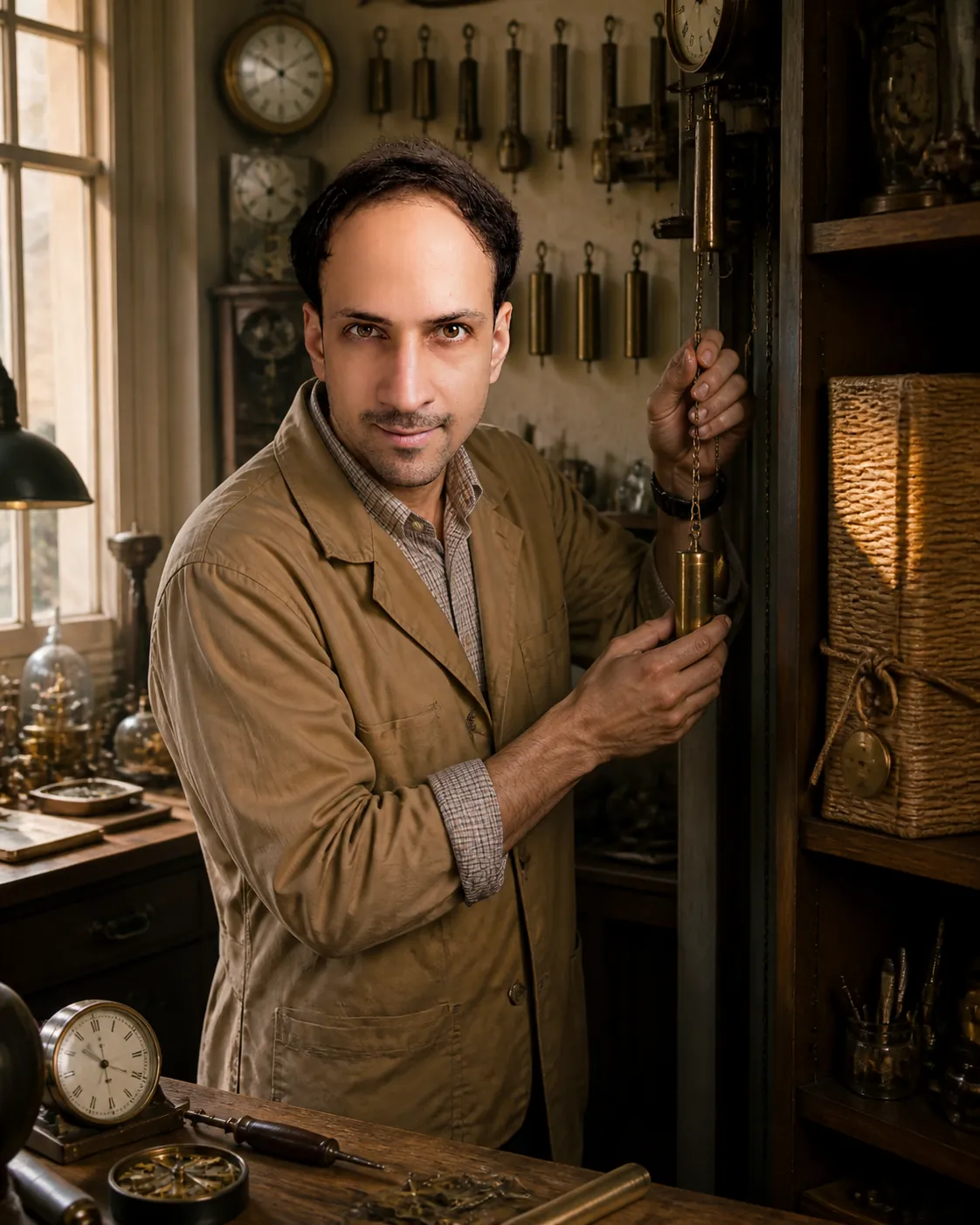
Scheduled Plenty: Clockmaker's Bench — AI Portrait Prompt
صورةAI Portraits

Turn your own photo into a conceptual patience portrait in a clockmaker's bench hung with pendulums at rest. Keeps your face unchanged.

من نص البرومبت

Use the attached reference photo as the identity reference: keep the same face, skin tone, hair and features as the person in that photo, without beautifying, aging or altering them. Build a portrait 4:5 editorial artwork with protected negative space and a fully readable face at exactly 2560x3200 pixels. Location: a clockmaker's bench hung with pendulums at rest. Show the subject in a tan shop coat over a checked shirt with rolled cuffs, hooking a drive weight onto its hanging chain. Make one rigorous physical condition the conceptual engine: a provisions shelf tied shut under a woven cover until a gnomon's shadow reaches the brass mark scribed beside it keeps the promise of eating visible while keeping it lawfully out of reach. Explore whether waiting measured by instruments feels different from waiting endured alone; direct expression and posture toward settled patience, never melodrama or ad-like confidence. Use a measured 35mm room view that holds them off-center with honest verticals and unexaggerated proportions. Make the composition keep every promise of later sharp and every distraction soft. Render it as conceptual patience portraiture combining believable household apparatus, precise horological detail, soft archival tonality, and emotionally intelligent observational framing, using low golden-hour light laid flat across the scene with soft falloff and a palette of chalk, dark tea brown, and a thread of copper. Photorealistic: this must read as a real photograph from a physical camera, never an illustration, painting, or 3D render. Resolve real surface detail: the difference between a wiped surface and a clean one, faint tide marks on ceramic, and metal dulled unevenly by touch. Keep one identity-locked person, credible hands and fingers, natural fabric, and coherent scale, contact, reflections, shadows, airflow, deformation, and materials. Background people only when essential, always secondary and clearly different. Avoid melting surrealist clocks, glowing countdown numerals, lavish feast spreads, anguished hungry expressions, and levitating food. No text, labels, logos, signatures, watermarks, random symbols, plastic skin, excessive bloom, or glossy AI finish.
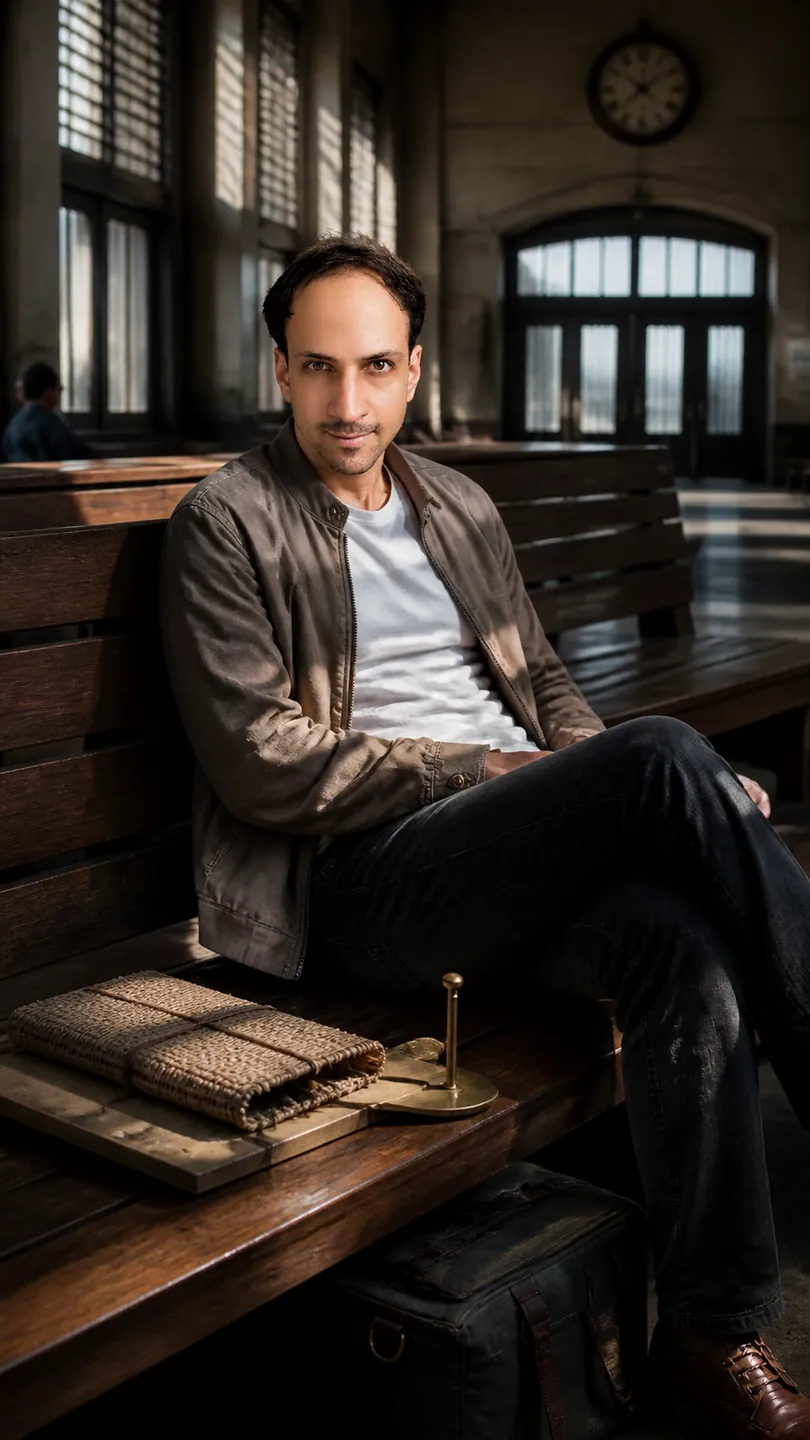
Scheduled Plenty: Empty Intercity Waiting Hall — AI Portrait Prompt
صورةAI Portraits

Turn your own photo into a gallery-grade tableau portrait in an empty intercity waiting hall with long wooden benches. Keeps your face unchanged.

من نص البرومبت

Use the attached reference photo as the identity reference: keep the same face, skin tone, hair and features as the person in that photo, without beautifying, aging or altering them. Design a full-height 9:16 cinematic artwork that reads on a phone and rewards gallery-scale inspection at exactly 2144x3808 pixels. Location: an empty intercity waiting hall with long wooden benches. Show the subject in a taupe harrington jacket over a plain white shirt, setting their small travel bag flat beneath the bench. Treat this mechanism as the frame’s governing rule: a provisions shelf tied shut under a woven cover until a gnomon's shadow reaches the brass mark scribed beside it holds the meal at a distance measured in time rather than willpower. Explore whether waiting measured by instruments feels different from waiting endured alone; direct expression and posture toward gentle firmness, never melodrama or ad-like confidence. Use an 85mm near-portrait distance, the nearest staged detail sharp low in frame while their expression carries the far plane. Make the composition leave deliberate distance between them and what waits. Render it as gallery-grade tableau realism built from lawful physical timers, warm restrained styling, accurate shadow behavior, and patient large-format photographic clarity, using thin daylight broken into patient stripes by nearby slatted shade and a palette of china white, walnut, and one line of brass. Photorealistic: this must read as a real photograph from a physical camera, never an illustration, painting, or 3D render. Give the frame volume: faint density deepest in the room, contrast easing at the edges. Resolve real surface detail: dust settled where nobody wipes, fingerprint haze on glass, and edges rubbed pale by handling. Keep one identity-locked person, credible hands and fingers, natural fabric, and coherent scale, contact, reflections, shadows, airflow, deformation, and materials. Background people only when essential, always secondary and clearly different. Avoid tape-measure diet props, empty-fridge gloom, ringing alarm clocks, glossy food-commercial styling, and gravity-defying hourglass sand. No text, labels, logos, signatures, watermarks, random symbols, plastic skin, excessive bloom, or glossy AI finish.
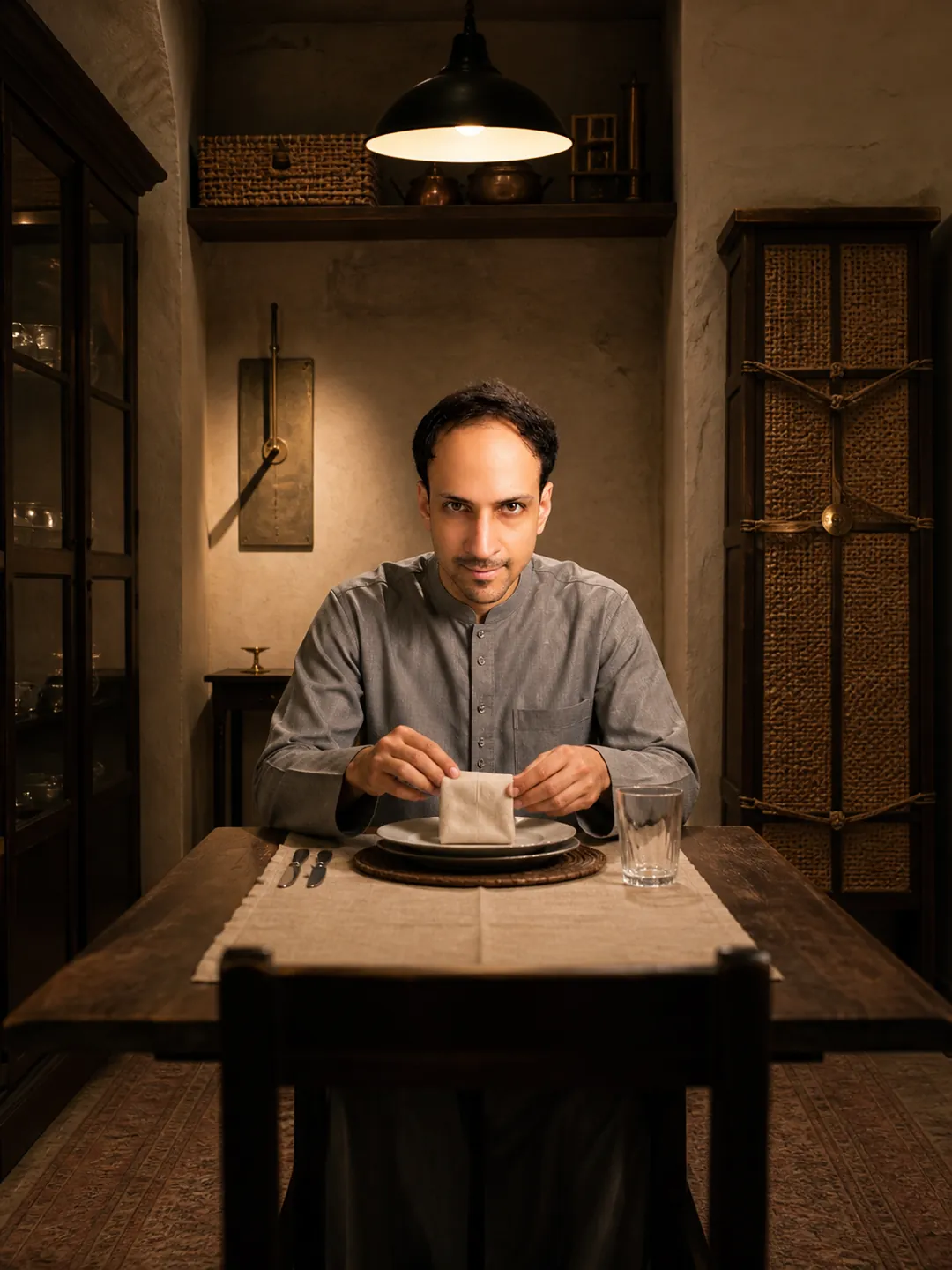
Scheduled Plenty: Long Dining Room — AI Portrait Prompt
صورةAI Portraits

Turn your own photo into a conceptual patience portrait in a long dining room at dusk, one place set and untouched. Keeps your face unchanged.

من نص البرومبت

Use the attached reference photo as the identity reference: keep the same face, skin tone, hair and features as the person in that photo, without beautifying, aging or altering them. Use a formal 3:4 environmental portrait with complete hands and meaningful objects inside frame at exactly 2480x3312 pixels. Location: a long dining room at dusk, one place set and untouched. Show the subject in a pressed ash-grey traditional Gulf outfit buttoned neatly to the collar, straightening a napkin's fold to one clean edge. The impossible-looking event must obey this clear system: a provisions shelf tied shut under a woven cover until a gnomon's shadow reaches the brass mark scribed beside it gives appetite a fixed appointment to keep instead of an argument to win. Explore whether waiting measured by instruments feels different from waiting endured alone; direct expression and posture toward collected stillness, never melodrama or ad-like confidence. Frame from directly opposite them at seated height so the untouched arrangement leads straight to their composed face. Make the composition rest on level horizontals so the stillness reads as chosen. Render it as conceptual patience portraiture combining believable household apparatus, precise horological detail, soft archival tonality, and emotionally intelligent observational framing, using one low-hung shaded lamp holding a tight warm circle around them and a palette of plaster white, smoked oak, and a measure of honey. Photorealistic: this must read as a real photograph from a physical camera, never an illustration, painting, or 3D render. Resolve real surface detail: true skin texture with pores and fine hair at the hairline, and fabric that creases where it is actually stressed. Keep one identity-locked person, credible hands and fingers, natural fabric, and coherent scale, contact, reflections, shadows, airflow, deformation, and materials. Background people only when essential, always secondary and clearly different. Avoid melting surrealist clocks, glowing countdown numerals, lavish feast spreads, anguished hungry expressions, and levitating food. No text, labels, logos, signatures, watermarks, random symbols, plastic skin, excessive bloom, or glossy AI finish.
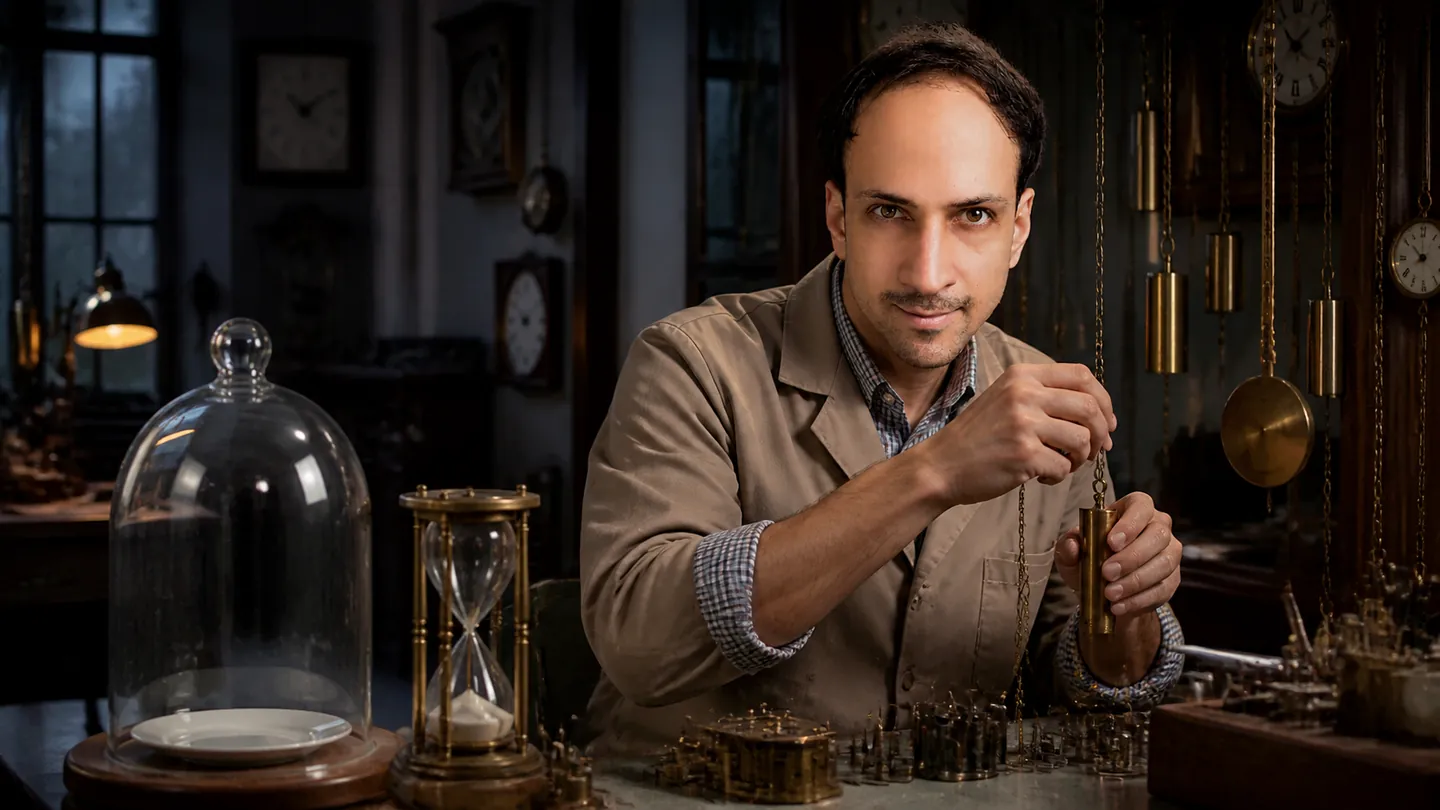
Not Yet: Clockmaker's Bench — AI Portrait Prompt
صورةAI Portraits

Turn your own photo into a calm still-life portrait in a clockmaker's bench hung with pendulums at rest. Keeps your face unchanged.

من نص البرومبت

Use the attached reference photo as the identity reference: keep the same face, skin tone, hair and features as the person in that photo, without beautifying, aging or altering them. Compose a wide 16:9 narrative image where environment and subject carry equal meaning at exactly 3808x2144 pixels. Location: a clockmaker's bench hung with pendulums at rest. Show them in a tan shop coat over a checked shirt with rolled cuffs, hooking a drive weight onto its hanging chain. Use this advanced image-making device as the core logic: an empty white plate under a glass cloche beside a brass sand timer whose upper bulb is still quietly emptying shows restraint as an engineered state rather than a private struggle. Explore why the untouched object can outrank everything that has already been used; direct expression and posture toward steady expectancy, never melodrama or ad-like confidence. Use an 85mm near-portrait distance, the nearest staged detail sharp low in frame while their expression carries the far plane. Make the composition leave deliberate distance between them and what waits. Render it as calm still-life portraiture built from genuinely working timekeeping mechanisms, quiet domestic realism, museum-grade material fidelity, and unhurried human-centered editorial composition, using cool dusk ambience with one warm bulb burning low nearby and a palette of plaster white, smoked oak, and a measure of honey. Photorealistic: this must read as a real photograph from a physical camera, never an illustration, painting, or 3D render. Give the space honest scale: real distance between foreground, subject, and far wall. Resolve real surface detail: the difference between a wiped surface and a clean one, faint tide marks on ceramic, and metal dulled unevenly by touch. Keep one identity-locked person, credible hands and fingers, natural fabric, and coherent scale, contact, reflections, shadows, airflow, deformation, and materials. Background people only when essential, always secondary and clearly different. Avoid melting surrealist clocks, glowing countdown numerals, lavish feast spreads, anguished hungry expressions, and levitating food. No text, labels, logos, signatures, watermarks, random symbols, plastic skin, excessive bloom, or glossy AI finish.
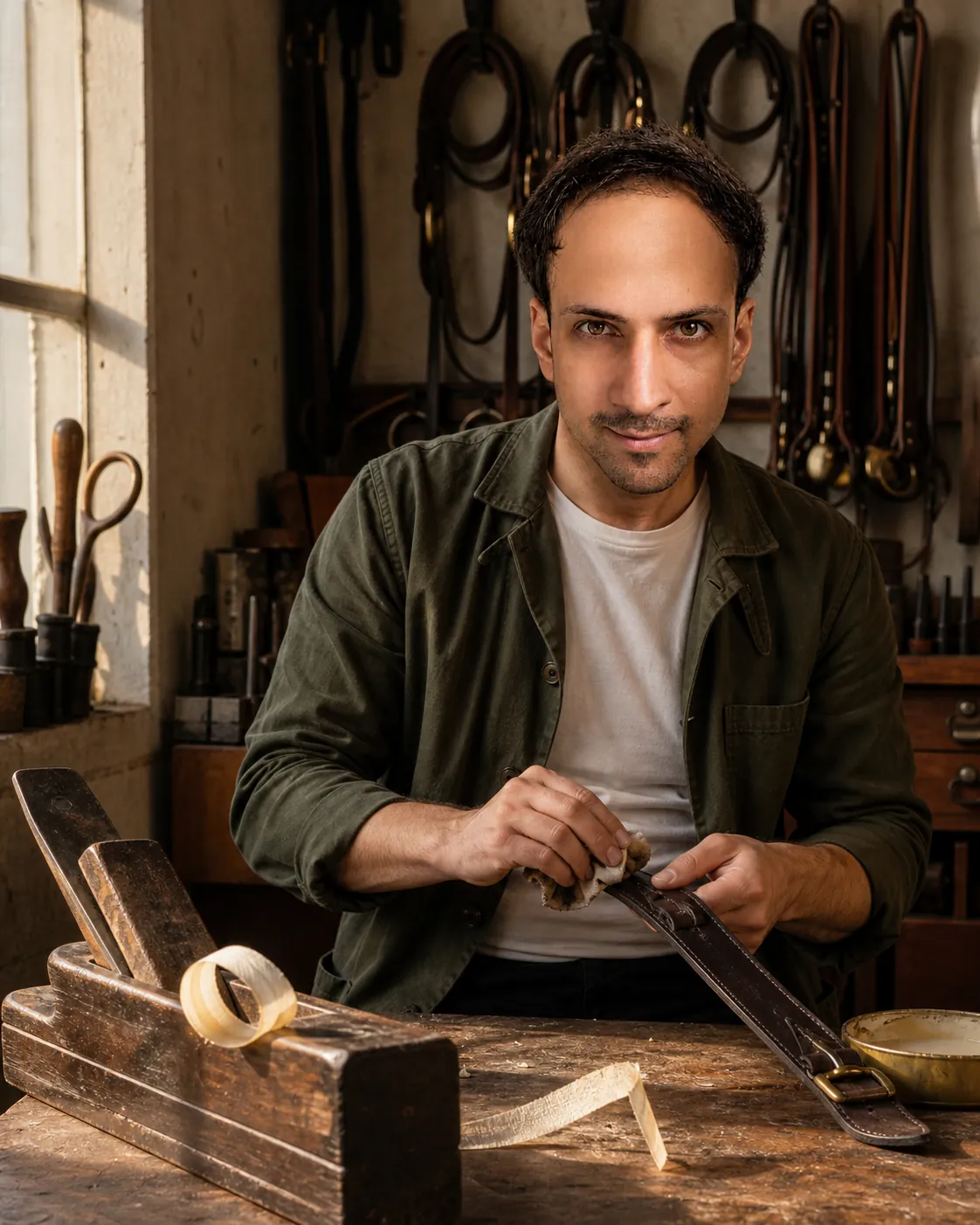
Kept Not Replaced: Tidy Saddlery Room — AI Portrait Prompt
صورةAI Portraits

Turn your own photo into a conservation-grade craft portrait in a tidy saddlery room hung with clean straps and round-handled tools. Keeps your face unchanged.

من نص البرومبت

Use the attached reference photo as the identity reference: keep the same face, skin tone, hair and features as the person in that photo, without beautifying, aging or altering them. Treat that reference as the character anchor: change only the scene. Build a portrait 4:5 editorial artwork with protected negative space and a fully readable face at exactly 2560x3200 pixels. Location: a tidy saddlery room hung with clean straps and round-handled tools. Show the subject in a moss-green field jacket open over a white crew-neck shirt, working saddle soap into a strap with small circles. Make one rigorous physical condition the conceptual engine: a hundred-year-old smoothing plane that still lifts one unbroken shaving thin enough to read the window's light through its curl repays minutes of ritual care with another decade of true work. Explore how minutes of ritual care can outweigh decades of neglect; direct expression and posture toward settled respect, never melodrama or ad-like confidence. Use a restrained 35mm environmental view, the subject at one-third and the workspace honest around them. Make the composition keep their hands nearer the light than their face. Render it as conservation-grade craft portraiture built from real working tools, truthful wear mapping, warm low-key lighting, and precise, respectful editorial realism, using late slanting sun that grazes every polished wear point into quiet highlights and a palette of bone-white stone, deep hickory, and a thread of amber. Photorealistic: this must read as a real photograph from a physical camera, never an illustration, painting, or 3D render. Resolve real surface detail: fine grit in the texture of concrete, efflorescence at damp edges, and hairline cracks that follow stress. Keep one identity-locked person, credible hands and fingers, natural fabric, and coherent scale, contact, reflections, shadows, airflow, deformation, and materials. Background people only when essential, always secondary and clearly different. Avoid rusty antique-shop clutter, sepia nostalgia filters, cobwebbed barn walls, staged distressed props, and heroic blacksmith sparks. No text, labels, logos, signatures, watermarks, random symbols, plastic skin, excessive bloom, or glossy AI finish.
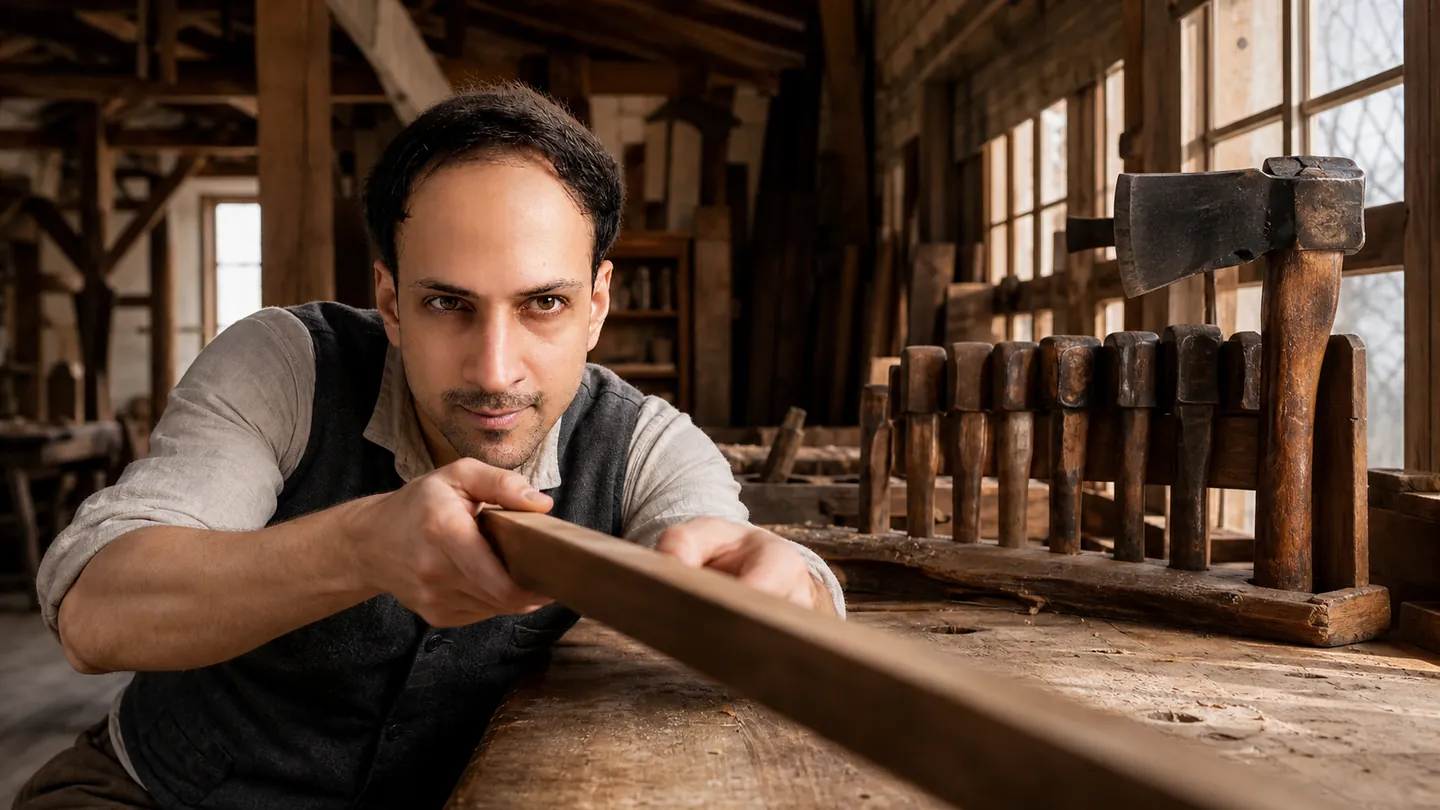
Time As Polish: Timber-Framed Joinery Loft — AI Portrait Prompt
صورةAI Portraits

Turn your own photo into a portrait in a timber-framed joinery loft where afternoon light crosses stacked rough boards. Keeps your face unchanged.

من نص البرومبت

Use the attached reference photo as the identity reference: keep the same face, skin tone, hair and features as the person in that photo, without beautifying, aging or altering them. Compose a wide 16:9 narrative image where environment and subject carry equal meaning at exactly 3808x2144 pixels. Location: a timber-framed joinery loft where afternoon light crosses stacked rough boards. Show the subject in a collarless linen shirt under a grey wool vest, sleeves rolled twice, sighting along a straight batten toward the window light. Use this advanced image-making device as the core logic: an axe head on its seventh handle that outlasted the six retired handles racked beneath it, each darkened at the grip outlives its first owner, then its second, without ever leaving service. Explore why a tool kept for a century looks finished rather than worn; direct expression and posture toward attentive stillness, never melodrama or ad-like confidence. Use a 90mm close-working lens: the cared-for surface sharp near the glass, their face readable just beyond it. Make the composition hold empty bench space where a finished tool will rest. Render it as heritage-craft documentary portraiture built from truthful tool wear, oiled-wood and carbon-steel materiality, museum-conservation lighting discipline, and unhurried editorial composition, using late slanting sun that grazes every polished wear point into quiet highlights and a palette of bone-white stone, deep hickory, and a thread of amber. Photorealistic: this must read as a real photograph from a physical camera, never an illustration, painting, or 3D render. Give the space honest scale: real distance between foreground, subject, and far wall. Keep one identity-locked person, credible hands and fingers, natural fabric, and coherent scale, contact, reflections, shadows, airflow, deformation, and materials. Background people only when essential, always secondary and clearly different. Avoid rusty antique-shop clutter, sepia nostalgia filters, cobwebbed barn walls, staged distressed props, and heroic blacksmith sparks. No text, labels, logos, signatures, watermarks, random symbols, plastic skin, excessive bloom, or glossy AI finish.
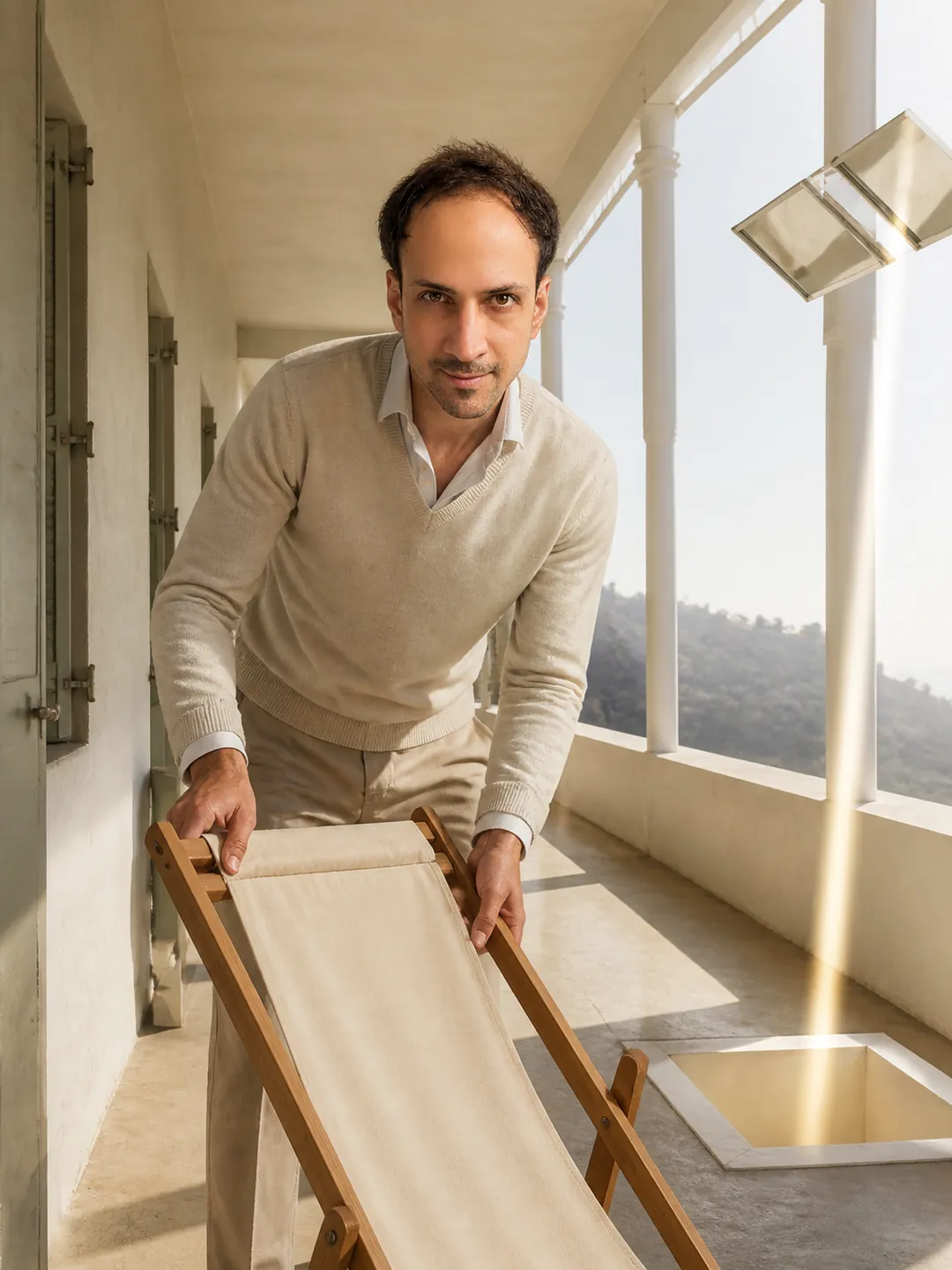
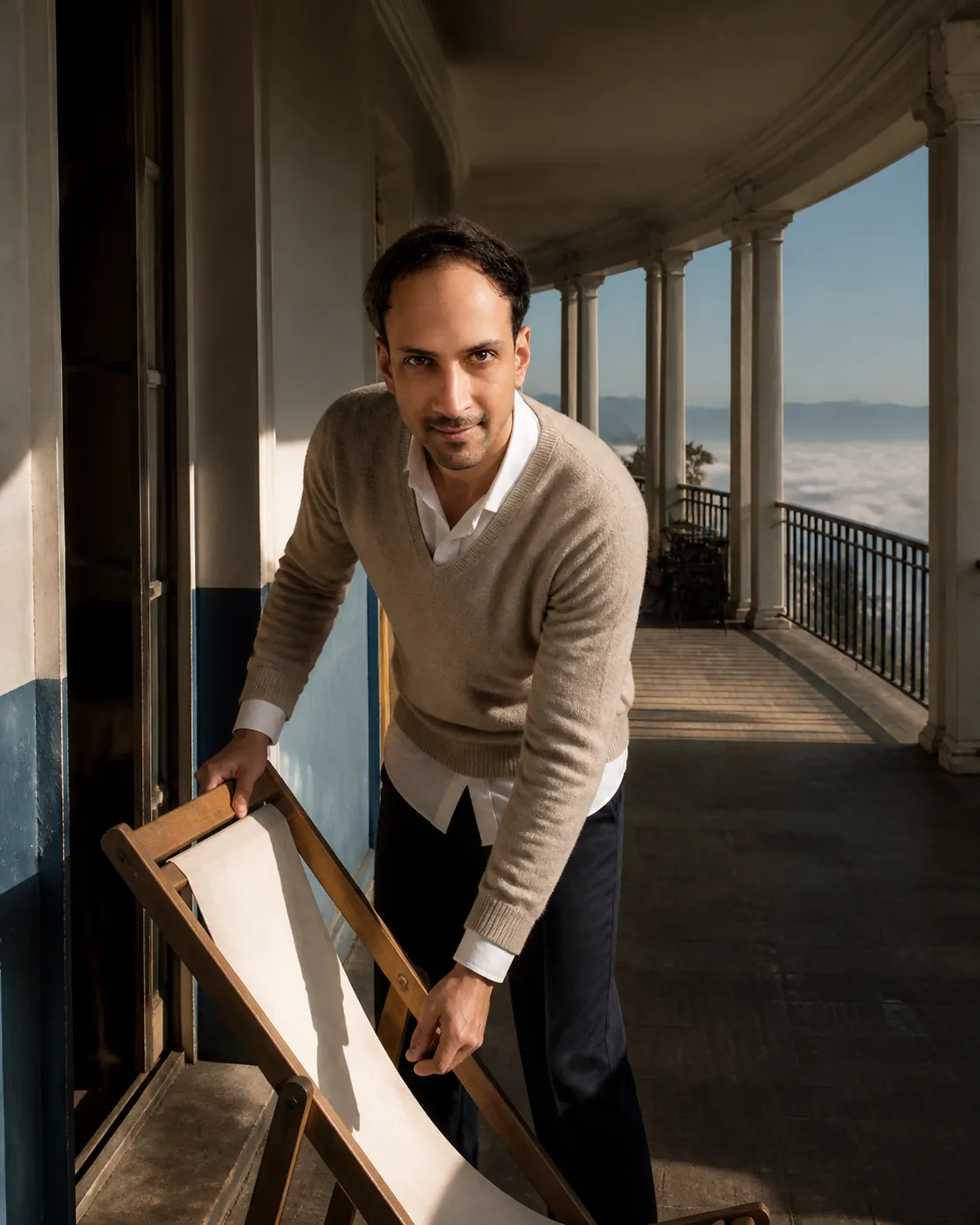
Morning Dose: Long East Porch — AI Portrait Prompt
صورةAI Portraits

Turn your own photo into a solar-architecture portrait in the long east porch of a hillside sanatorium above morning haze. Keeps your face unchanged.

من نص البرومبت

Use the attached reference photo as the identity reference: keep the same face, skin tone, hair and features as the person in that photo, without beautifying, aging or altering them. Use a formal 3:4 environmental portrait with complete hands and meaningful objects inside frame at exactly 2480x3312 pixels. Location: the long east porch of a hillside sanatorium above morning haze. Show them in a fine beige knit over an open-collar white shirt, unfolding a canvas deck chair to its first notch. The impossible-looking event must obey this clear system: a pair of aligned rooftop mirrors that fold true morning sun down a whitewashed shaft into a windowless basement room hands the sky a duty and holds it to the millimeter. Explore how a building can administer a star with millimeter manners; direct expression and posture toward modest certainty, never melodrama or ad-like confidence. Frame at chest height across the lit surface so the geometry of the beam and their eyes share focus. Make the composition align one architectural line with the sun's incoming angle. Render it as solar-architecture portraiture built from real beam geometry, documentary daylight realism, hand-finished plaster materiality, and quietly clinical art direction, using one hard parallel beam of true sun with soft plaster-bounced fill and a palette of limewash white, raw plaster, and one honeyed bar. Photorealistic: this must read as a real photograph from a physical camera, never an illustration, painting, or 3D render. Resolve real surface detail: hair with individual strands catching light, and skin oil giving a low uneven sheen. Keep one identity-locked person, credible hands and fingers, natural fabric, and coherent scale, contact, reflections, shadows, airflow, deformation, and materials. Background people only when essential, always secondary and clearly different. Avoid tanning-salon imagery, golden-hour social-media grading, sunburst clock motifs, glowing skin retouching, and beams bending like spotlights. No text, labels, logos, signatures, watermarks, random symbols, plastic skin, excessive bloom, or glossy AI finish.
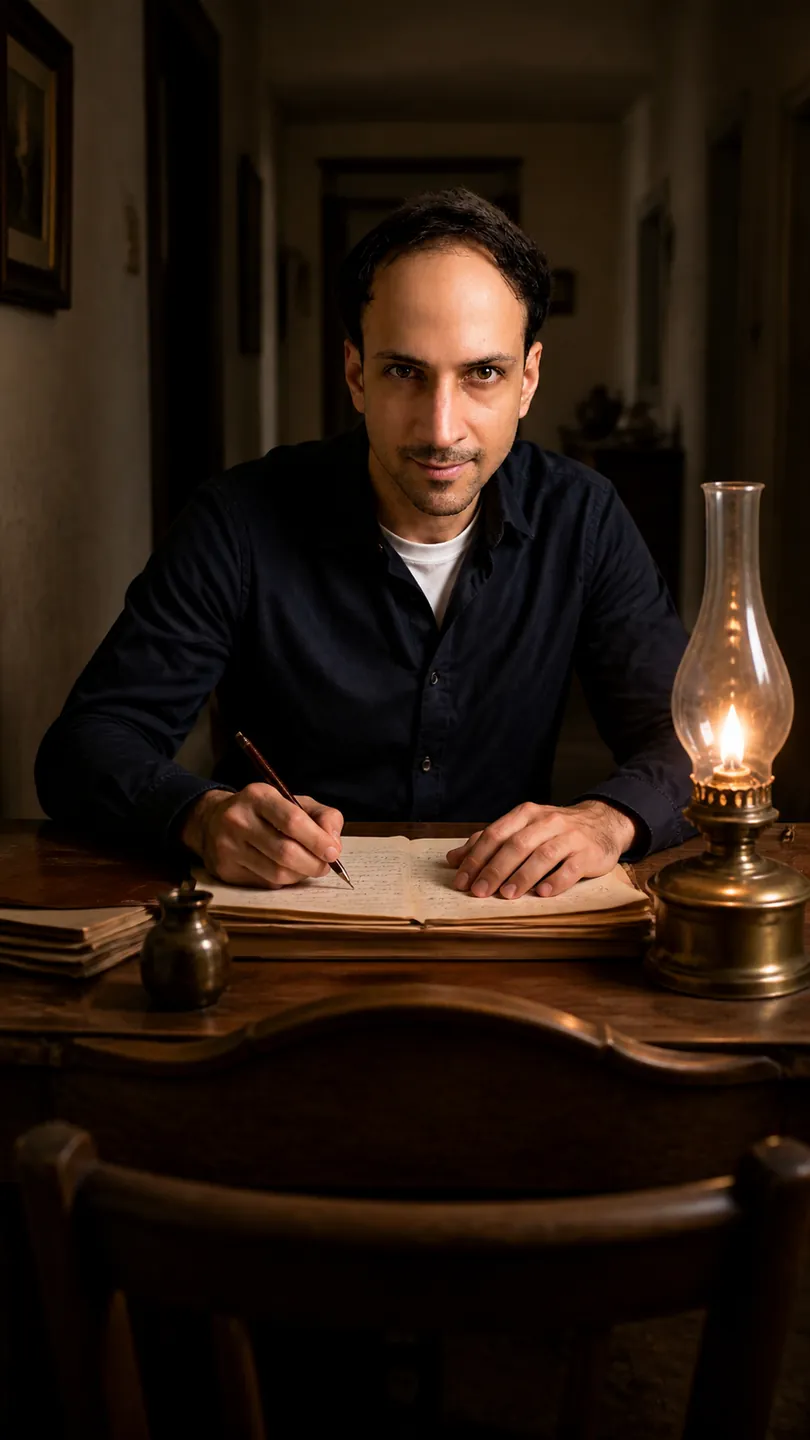
Furnished Presence: Walnut Writing Desk — AI Portrait Prompt
صورةAI Portraits

Turn your own photo into a gallery-grade domestic still portrait in a walnut writing desk in a widened hallway, lit by one lamp. Keeps your face unchanged.

من نص البرومبت

Use the attached reference photo as the identity reference: keep the same face, skin tone, hair and features as the person in that photo, without beautifying, aging or altering them. Treat that reference as the character anchor: change only the scene. Design a full-height 9:16 cinematic artwork that reads on a phone and rewards gallery-scale inspection at exactly 2144x3808 pixels. Location: a walnut writing desk in a widened hallway, lit by one lamp. Show the subject in a midnight-blue overshirt buttoned over a plain white tee, rocking a curved blotter once across the drying line. Build the artwork around this material rule: a brass oil lamp whose flat cotton wick lifts fuel silently against gravity into a flame that never consumes the wick itself gives the room one calm center that every seat quietly faces. Explore how a room becomes louder in attention by holding fewer claims on it; direct expression and posture toward warm concentration, never melodrama or ad-like confidence. Frame from the empty chair opposite them, the lens at a seated guest's eye height. Make the composition keep every working surface honest, worn, and unstyled. Render it as gallery-grade domestic still photography built from truthful household physics, restrained art direction, deep readable shadow, and companionable observational framing, using a single lantern's white core softened by distance into readable half-tones and a palette of dusk blue, sand plaster, and a single brass gleam. Photorealistic: this must read as a real photograph from a physical camera, never an illustration, painting, or 3D render. Give the air depth: falloff with distance and no artificial clarity far back. Resolve real surface detail: thread ends and slight pilling on worn cloth, hairline chips at every hard corner, and stone that is porous rather than smooth. Keep one identity-locked person, credible hands and fingers, natural fabric, and coherent scale, contact, reflections, shadows, airflow, deformation, and materials. Background people only when essential, always secondary and clearly different. Avoid orientalist lantern fantasies, floating dust-mote sunbeam overload, plastic-perfect wax flames, museum-diorama stiffness, and greeting-card coziness. No text, labels, logos, signatures, watermarks, random symbols, plastic skin, excessive bloom, or glossy AI finish.
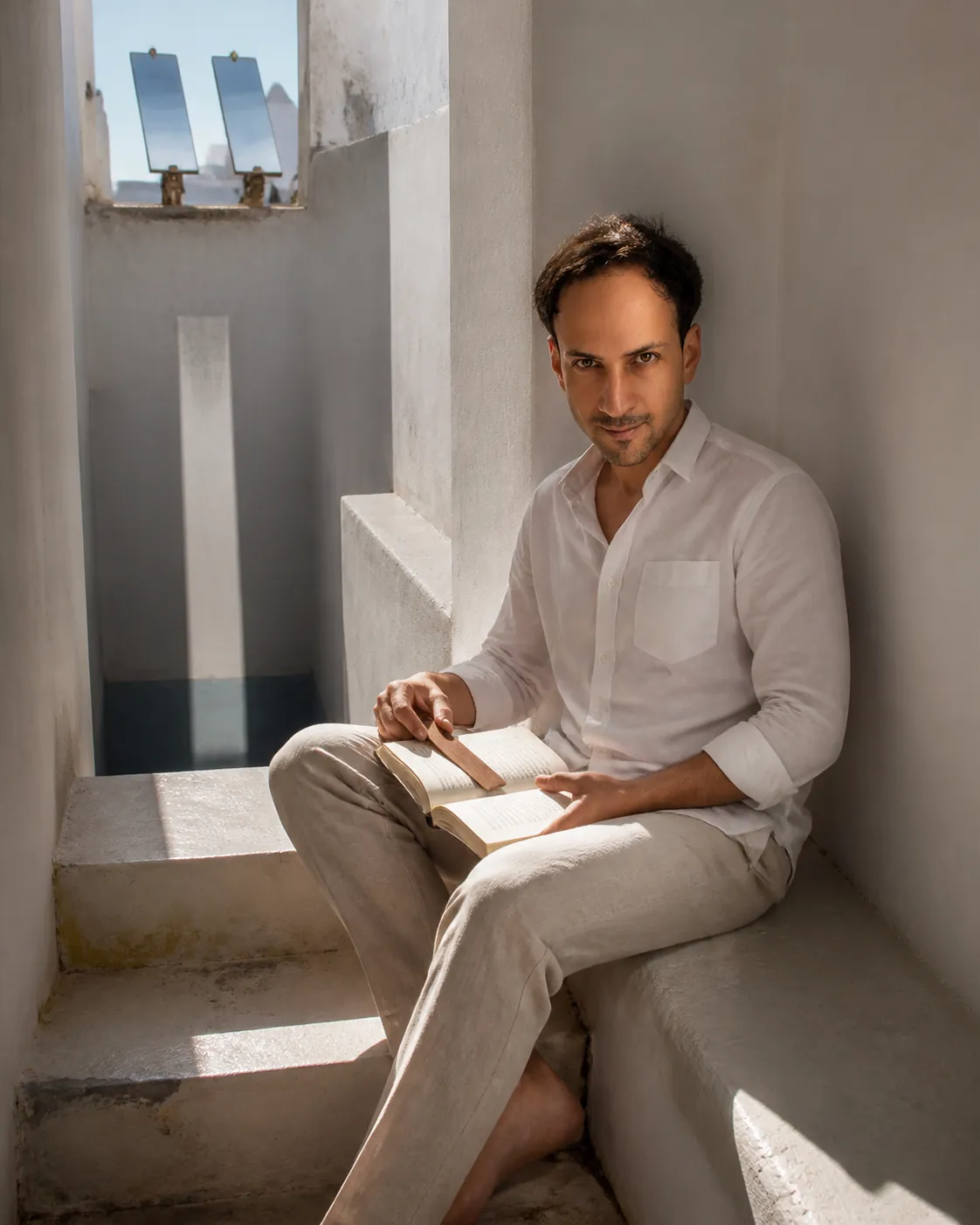
Morning Dose: Whitewashed Reading Alcove — AI Portrait Prompt
صورةAI Portraits

Turn your own photo into a gallery-grade sun-study portrait in a whitewashed reading alcove reached by two steps beside a lightwell. Keeps your face unchanged.

من نص البرومبت

Use the attached reference photo as the identity reference: keep the same face, skin tone, hair and features as the person in that photo, without beautifying, aging or altering them. Build a portrait 4:5 editorial artwork with protected negative space and a fully readable face at exactly 2560x3200 pixels. Location: a whitewashed reading alcove reached by two steps beside a lightwell. Show them in a relaxed white poplin shirt and stone linen trousers, marking their page with a flat cedar bookmark. Make one rigorous physical condition the conceptual engine: a pair of aligned rooftop mirrors that fold true morning sun down a whitewashed shaft into a windowless basement room turns an ordinary clear morning into a repeatable and checkable event. Explore how a building can administer a star with millimeter manners; direct expression and posture toward earned stillness, never melodrama or ad-like confidence. Use a 90mm portrait length with the beam's near edge crossing the foreground in believable sharpness. Make the composition keep the light's source small and its consequence large. Render it as gallery-grade sun-study photography built from lawful optics, physically exact beam edges, calm architectural framing, and patient observational realism, using true solar illumination metered by architecture, with no electric source anywhere visible and a palette of chalk, unpolished brass, and deep shadow blue. Photorealistic: this must read as a real photograph from a physical camera, never an illustration, painting, or 3D render. Resolve real surface detail: fine grit in the texture of concrete, efflorescence at damp edges, and hairline cracks that follow stress. Keep one identity-locked person, credible hands and fingers, natural fabric, and coherent scale, contact, reflections, shadows, airflow, deformation, and materials. Background people only when essential, always secondary and clearly different. Avoid god-ray haze shafts, lens-flare starbursts, glowing dust volumetrics, stained-glass rainbows, and any halo behind their head. No text, labels, logos, signatures, watermarks, random symbols, plastic skin, excessive bloom, or glossy AI finish.
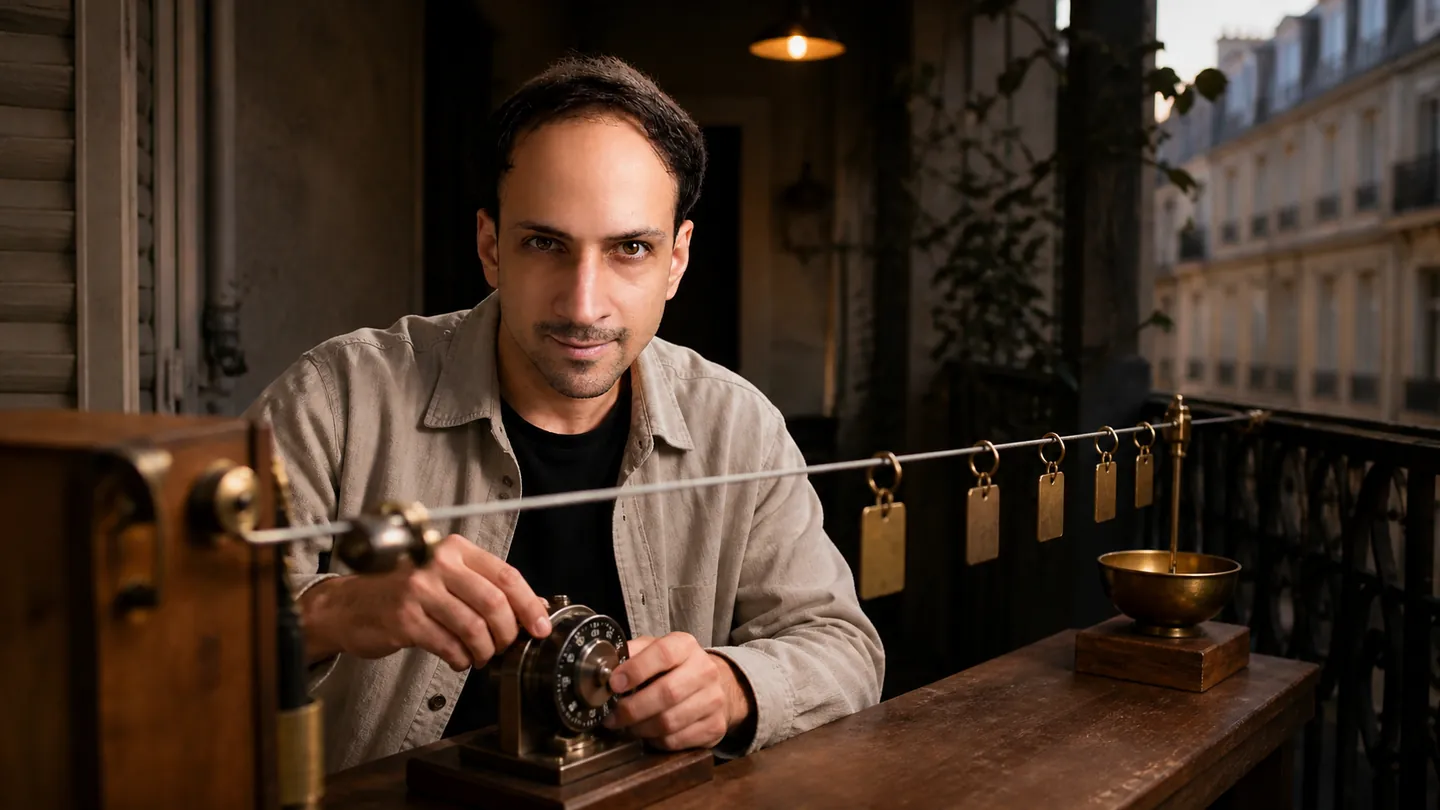
The Finish Bell: Narrow Balcony Table — AI Portrait Prompt
صورةAI Portraits

Turn your own photo into a museum-scale focus portrait in a narrow balcony table holding a single mechanical timer. Keeps your face unchanged.

من نص البرومبت

Use the attached reference photo as the identity reference: keep the same face, skin tone, hair and features as the person in that photo, without beautifying, aging or altering them. Compose a wide 16:9 narrative image where environment and subject carry equal meaning. Location: a narrow balcony table holding a single mechanical timer. Show the subject in a stone-colored overshirt over a black tee, winding the timer with two unhurried turns. Use this advanced image-making device as the core logic: a taut wire crossing the room on which brass task tags slide down and ring a small bowl bell at the far end builds steadiness into the furniture instead of the mood. Explore why endings deserve a sound and what accumulates when they get one; direct expression and posture toward earned momentum, never melodrama or ad-like confidence. Use a 100mm macro-to-portrait hybrid: one mechanism detail near the lens and the person in the reference photo's face readable beyond it, both physically plausible. Make the composition let the mechanism's next movement feel one breath away. Render it as museum-scale focus realism combining high-fidelity portrait photography, truthful single-source light, honest joinery and wiring, and physically accurate mechanisms, using a single overhead practical softened by the surrounding architecture, leaving readable shadow detail and a palette of walnut, slate, and one small field of lamp amber. Keep one identity-locked person, credible hands and fingers, natural fabric, and coherent scale, contact, reflections, shadows, airflow, deformation, and materials. Background people only when essential, always secondary and clearly different. Avoid scattered-papers chaos clichés, head-in-hands despair, wall-of-sticky-notes mania, spiraling doodle overlays, and racing-thought visual metaphors. No text, labels, logos, signatures, watermarks, random symbols, plastic skin, excessive bloom, or glossy AI finish.
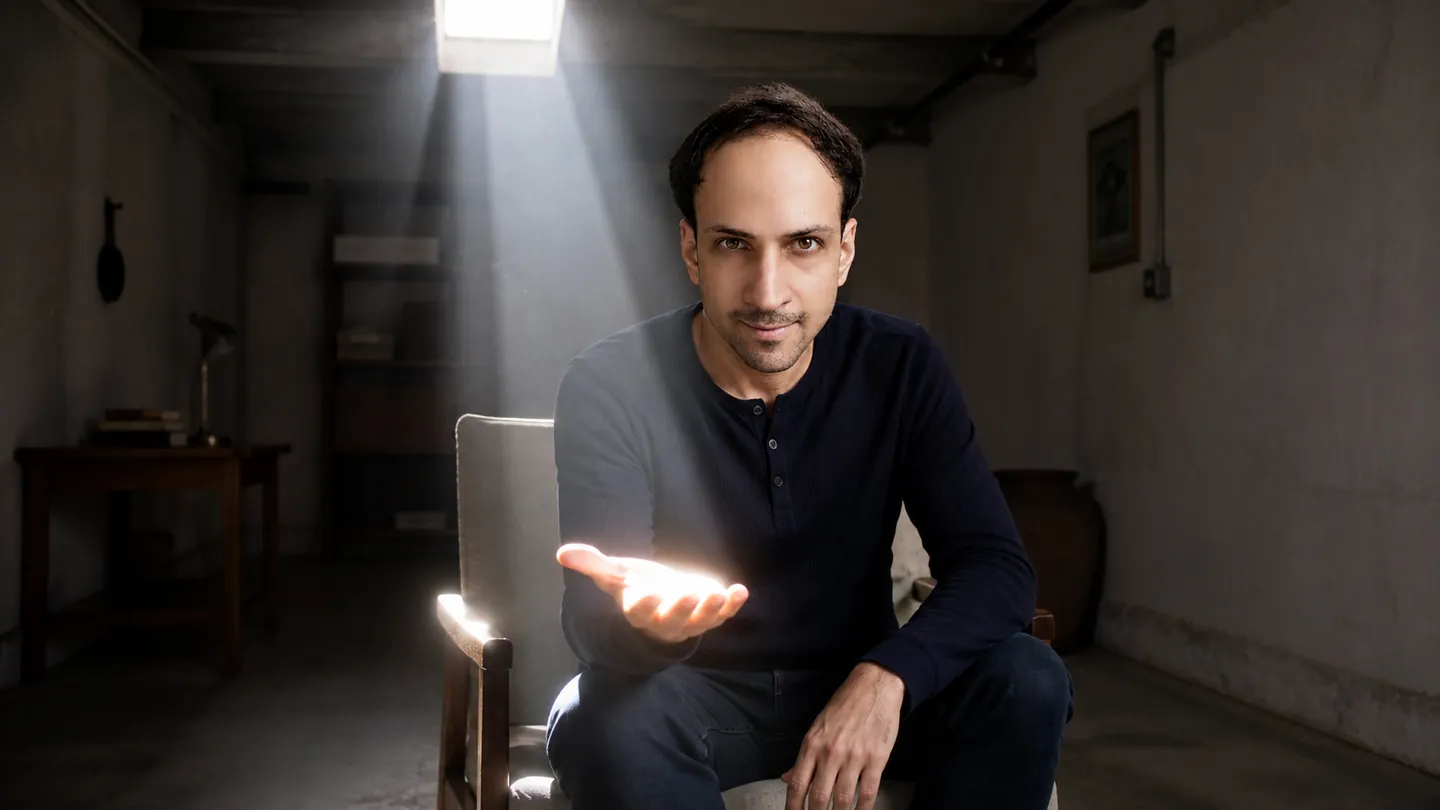
Prescribed Light: Cool Basement Room — AI Portrait Prompt
صورةAI Portraits

Turn your own photo into a conceptual daylight portrait in a cool basement room lit by one bright shaft from above. Keeps your face unchanged.

من نص البرومبت

Use the attached reference photo as the identity reference: keep the same face, skin tone, hair and features as the person in that photo, without beautifying, aging or altering them. Compose a wide 16:9 narrative image where environment and subject carry equal meaning at exactly 3808x2144 pixels. Location: a cool basement room lit by one bright shaft from above. Show them in a navy waffle-knit henley and straight dark denim, holding one palm open inside the descending beam. The impossible-looking event must obey this clear system: a slow motorized mirror on the roofline that keeps one borrowed sunbeam parked on their reading chair while the sun itself moves settles an old confusion between being lit and being fed. Explore why a fixed daily measure changes light from scenery into medicine; direct expression and posture toward modest certainty, never melodrama or ad-like confidence. Use a 90mm portrait length with the beam's near edge crossing the foreground in believable sharpness. Make the composition keep the light's source small and its consequence large. Render it as conceptual daylight portraiture combining measured light apertures, honest shadow depth, warm mineral textures, and restrained editorial composition without artificial glow, using one hard parallel beam of true sun with soft plaster-bounced fill and a palette of dove grey, bleached canvas, and one warm ochre accent. Photorealistic: this must read as a real photograph from a physical camera, never an illustration, painting, or 3D render. Give the frame volume: faint density deepest in the room, contrast easing at the edges. Resolve real surface detail: floor finish worn along the walked line, skirting marked at shoe height, and corners darker than the open floor. Keep one identity-locked person, credible hands and fingers, natural fabric, and coherent scale, contact, reflections, shadows, airflow, deformation, and materials. Background people only when essential, always secondary and clearly different. Avoid tanning-salon imagery, golden-hour social-media grading, sunburst clock motifs, glowing skin retouching, and beams bending like spotlights. No text, labels, logos, signatures, watermarks, random symbols, plastic skin, excessive bloom, or glossy AI finish.

Prescribed Light: Long East Porch — AI Portrait Prompt
صورةAI Portraits

Turn your own photo into a gallery-grade sun-study portrait in the long east porch of a hillside sanatorium above morning haze. Keeps your face unchanged.

من نص البرومبت

Use the attached reference photo as the identity reference: keep the same face, skin tone, hair and features as the person in that photo, without beautifying, aging or altering them. Build a portrait 4:5 editorial artwork with protected negative space and a fully readable face at exactly 2560x3200 pixels. Location: the long east porch of a hillside sanatorium above morning haze. Show them in a fine beige knit over an open-collar white shirt, unfolding a canvas deck chair to its first notch. Build the artwork around this material rule: a slow motorized mirror on the roofline that keeps one borrowed sunbeam parked on their reading chair while the sun itself moves turns an ordinary clear morning into a repeatable and checkable event. Explore why a fixed daily measure changes light from scenery into medicine; direct expression and posture toward sober clarity, never melodrama or ad-like confidence. Use a 35mm view from the shadow side of the room, the subject standing where light meets dark. Make the composition let most of the room rest in calm shadow. Render it as gallery-grade sun-study photography built from lawful optics, physically exact beam edges, calm architectural framing, and patient observational realism, using a single crisp-edged patch of daylight surrounded by deep readable shadow and a palette of sand, whitewash, and a narrow Prussian-blue band. Photorealistic: this must read as a real photograph from a physical camera, never an illustration, painting, or 3D render. Resolve real surface detail: fine lint on dark fabric, water spotting on steel, and the soft rounding of edges that have been used for years. Keep one identity-locked person, credible hands and fingers, natural fabric, and coherent scale, contact, reflections, shadows, airflow, deformation, and materials. Background people only when essential, always secondary and clearly different. Avoid god-ray haze shafts, lens-flare starbursts, glowing dust volumetrics, stained-glass rainbows, and any halo behind their head. No text, labels, logos, signatures, watermarks, random symbols, plastic skin, excessive bloom, or glossy AI finish.
