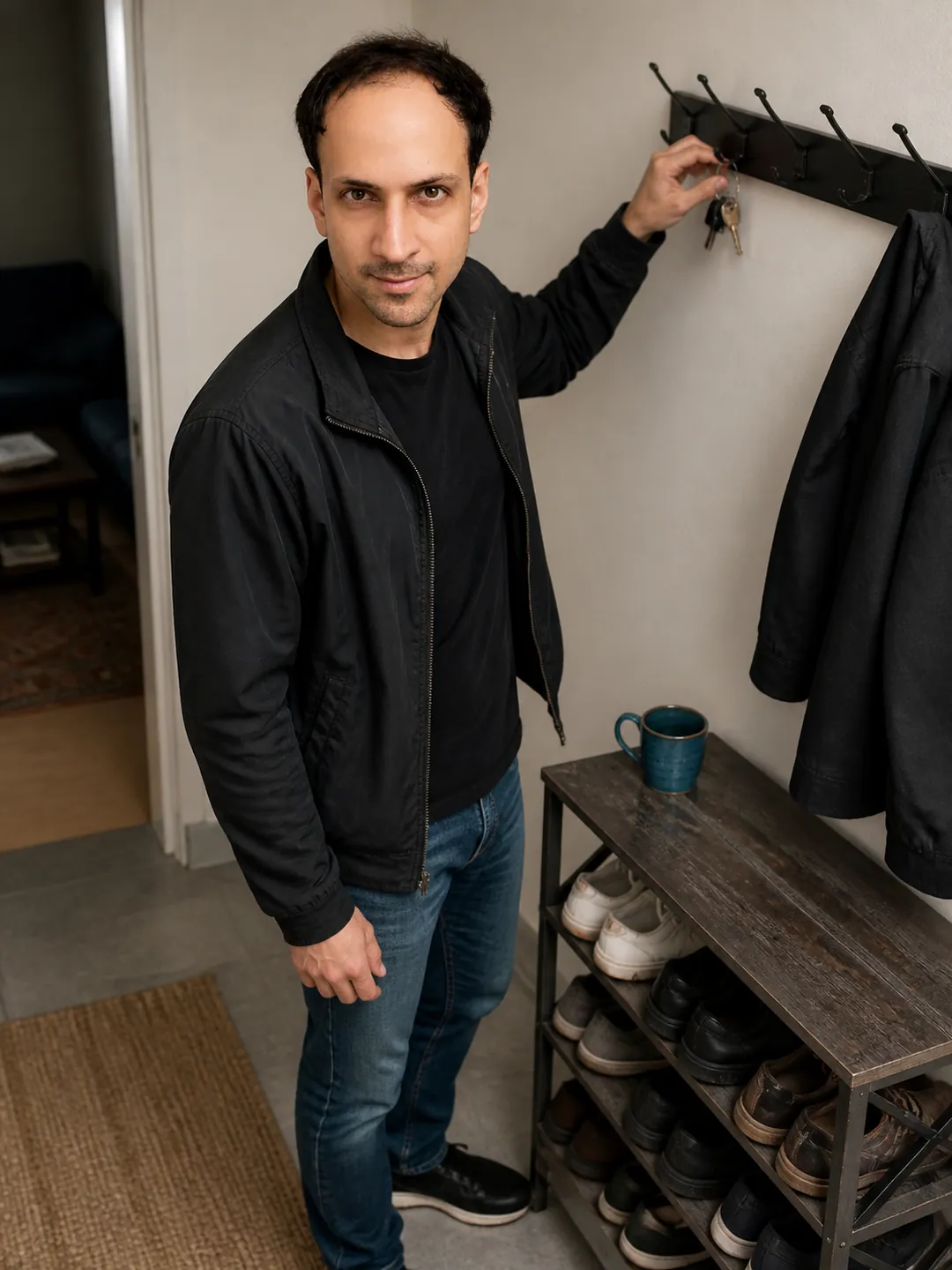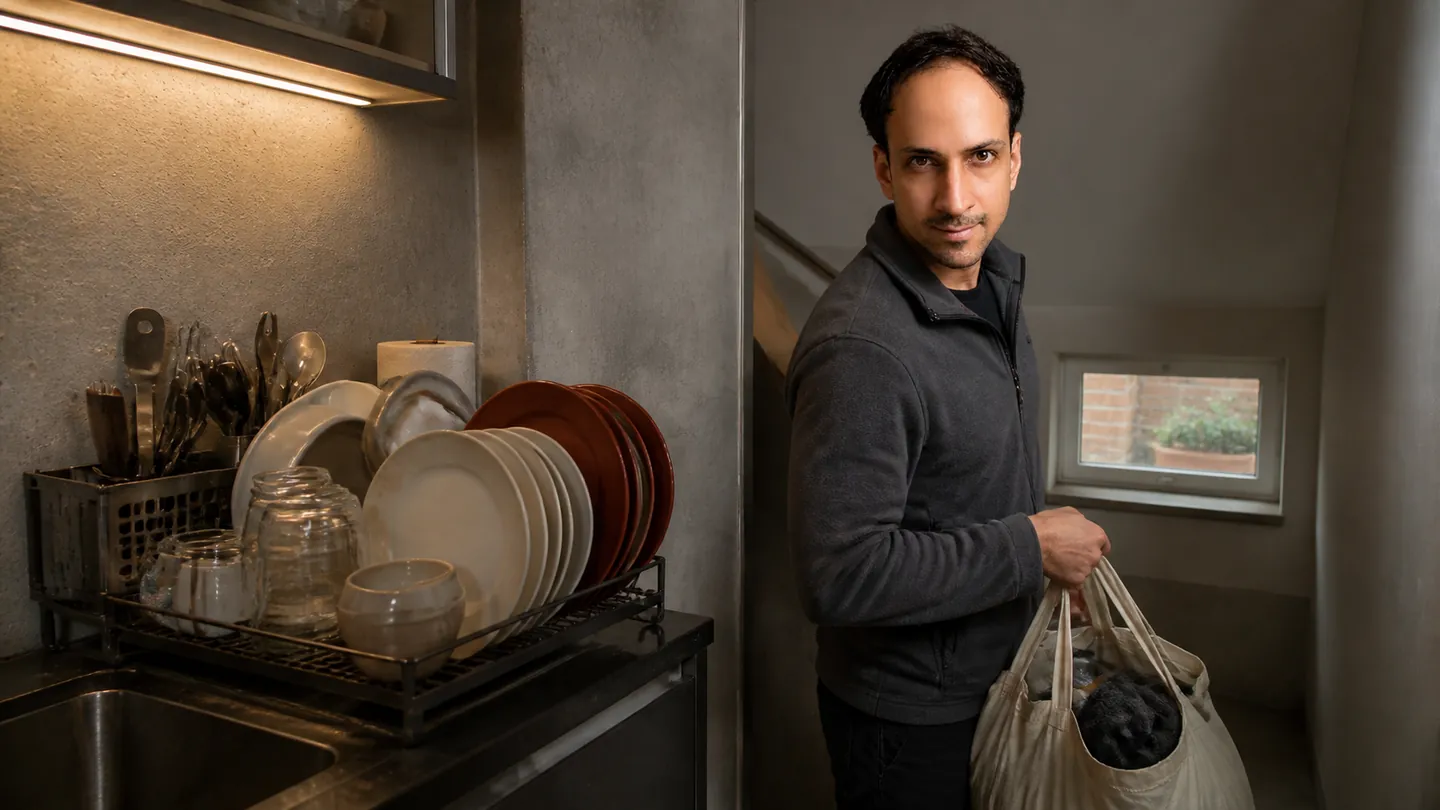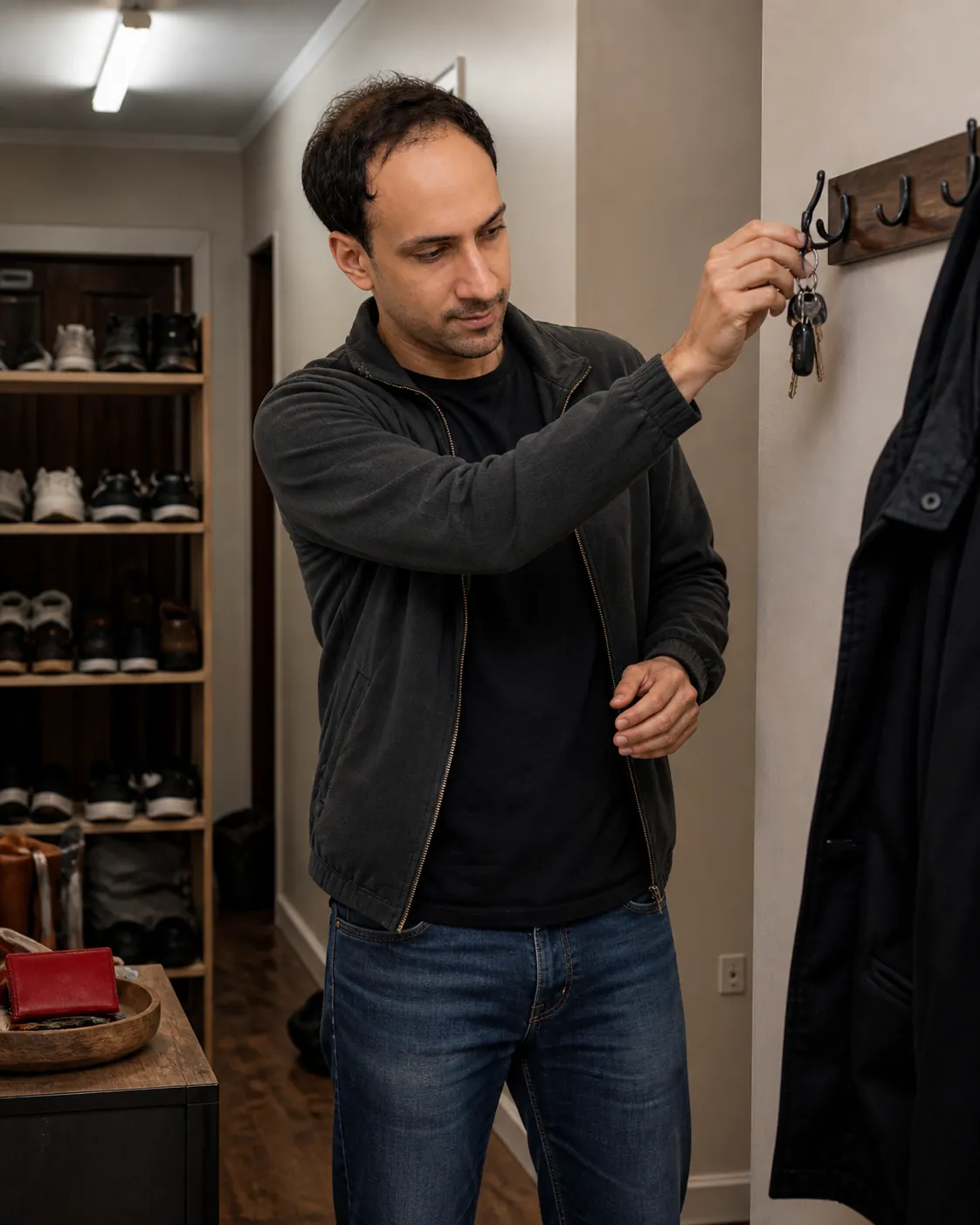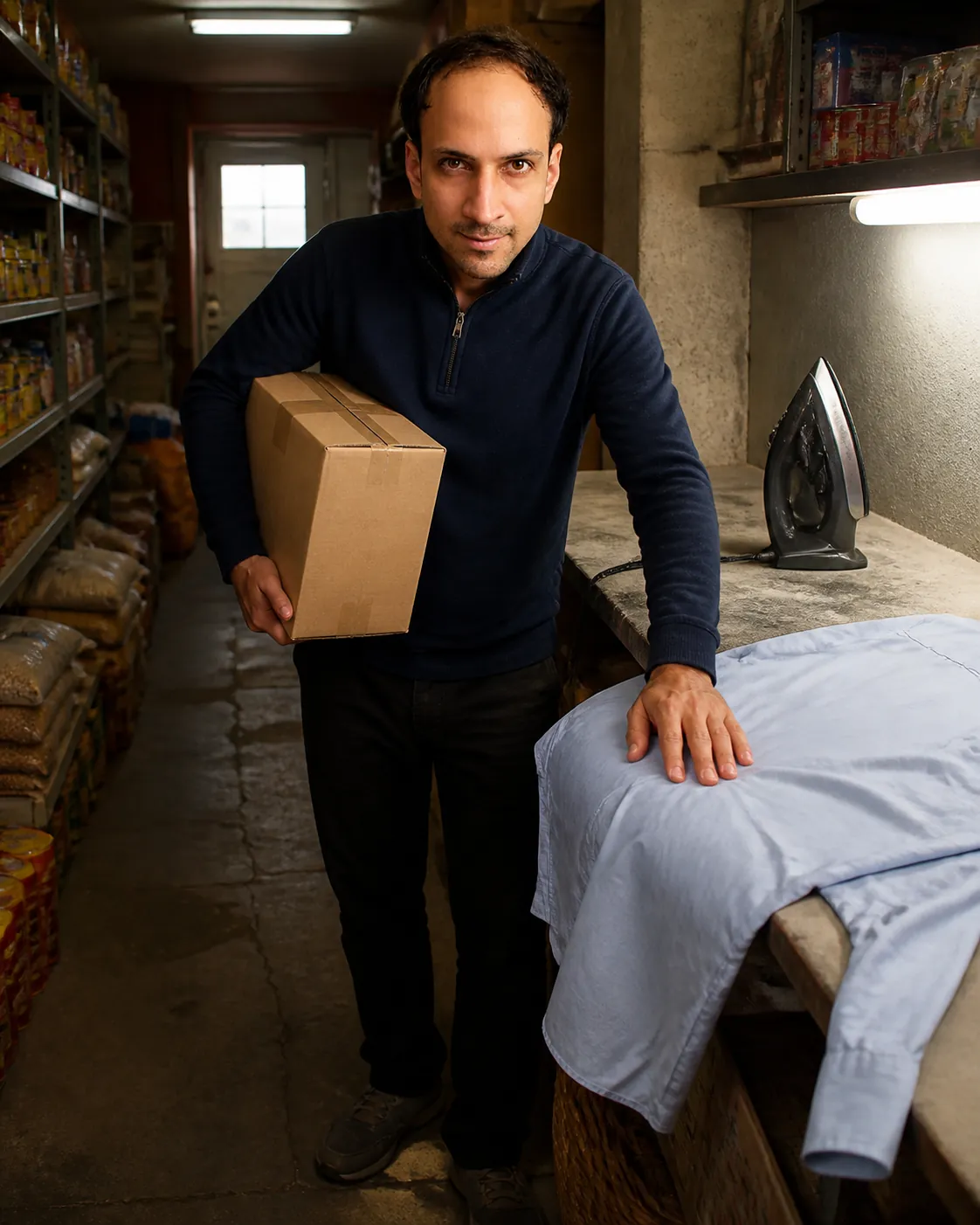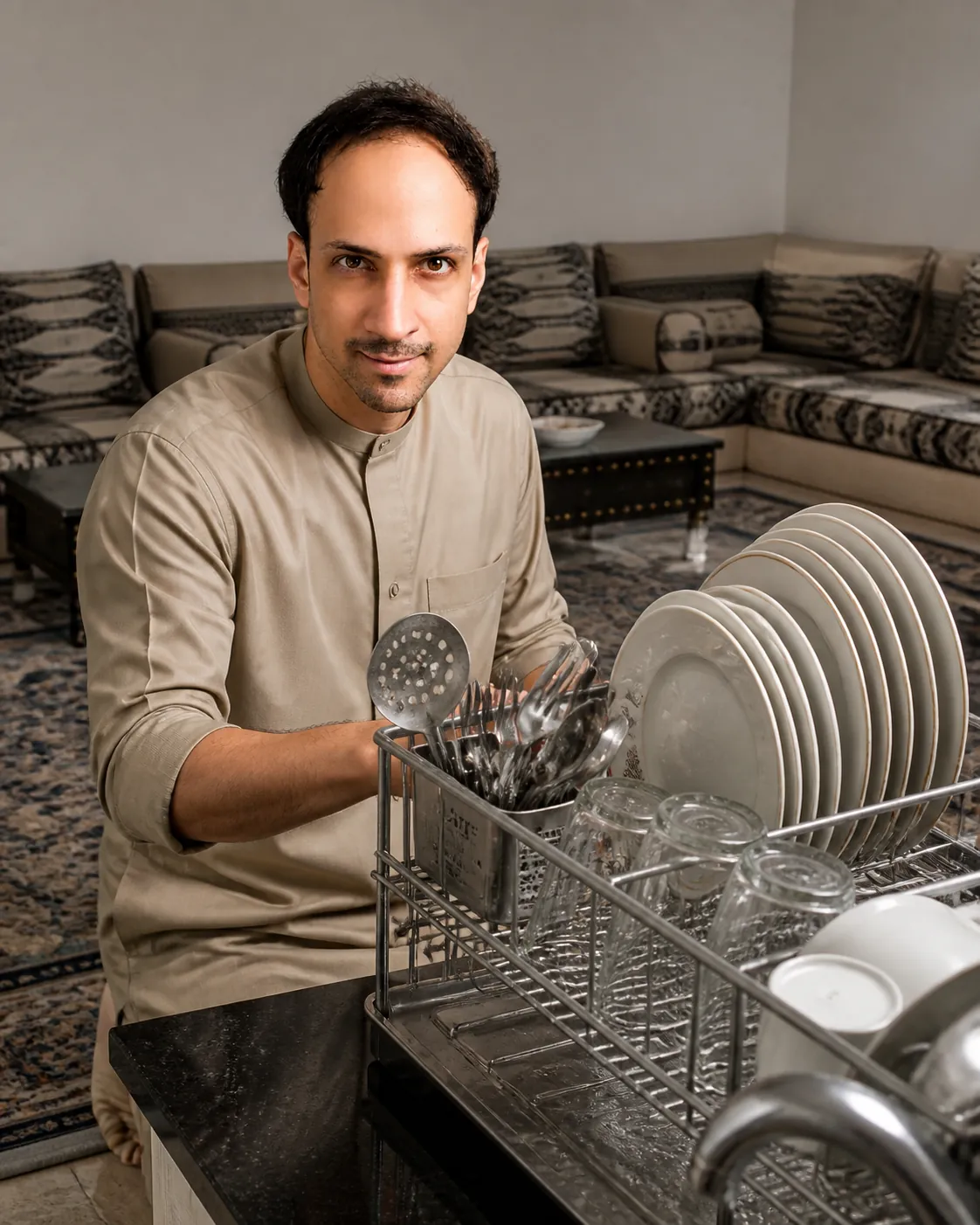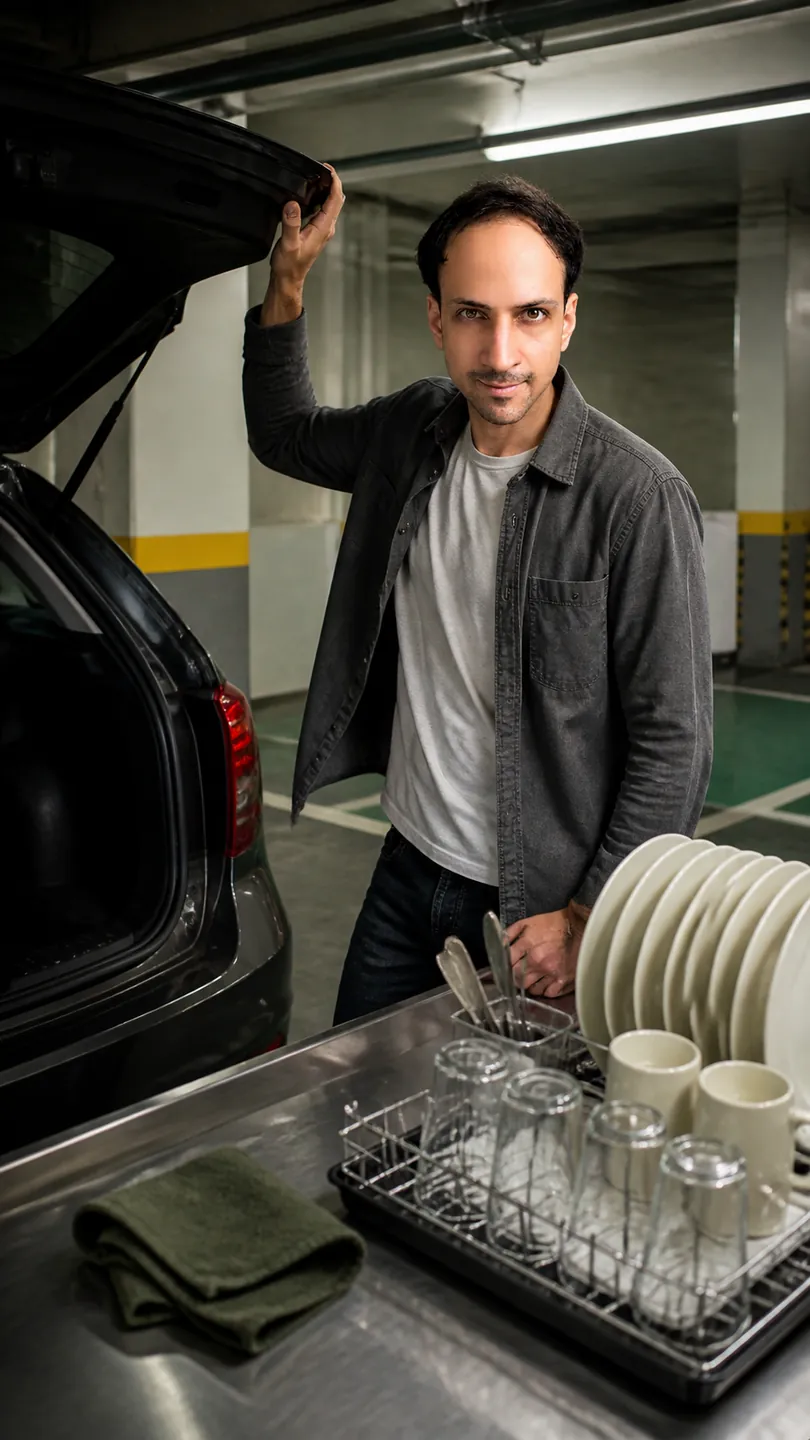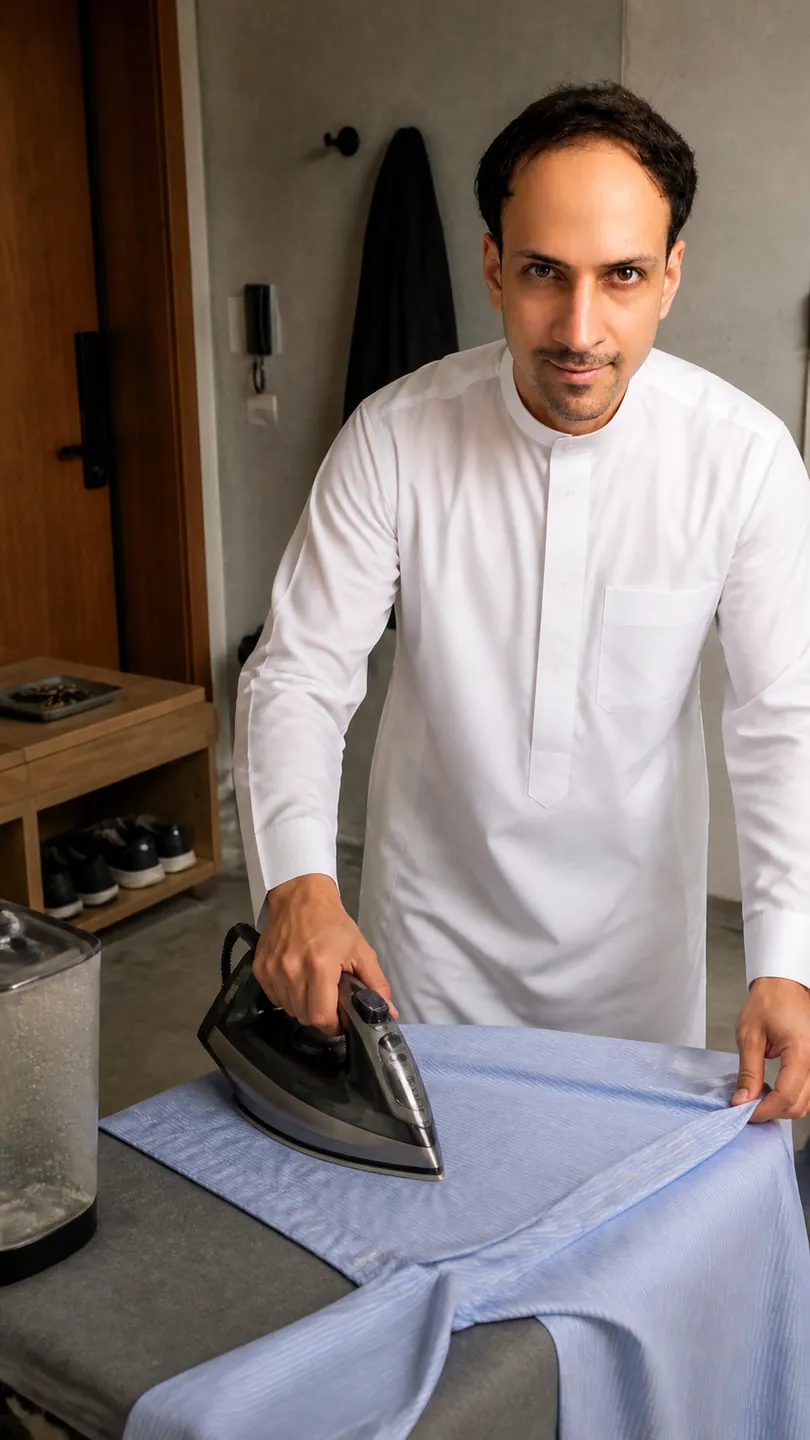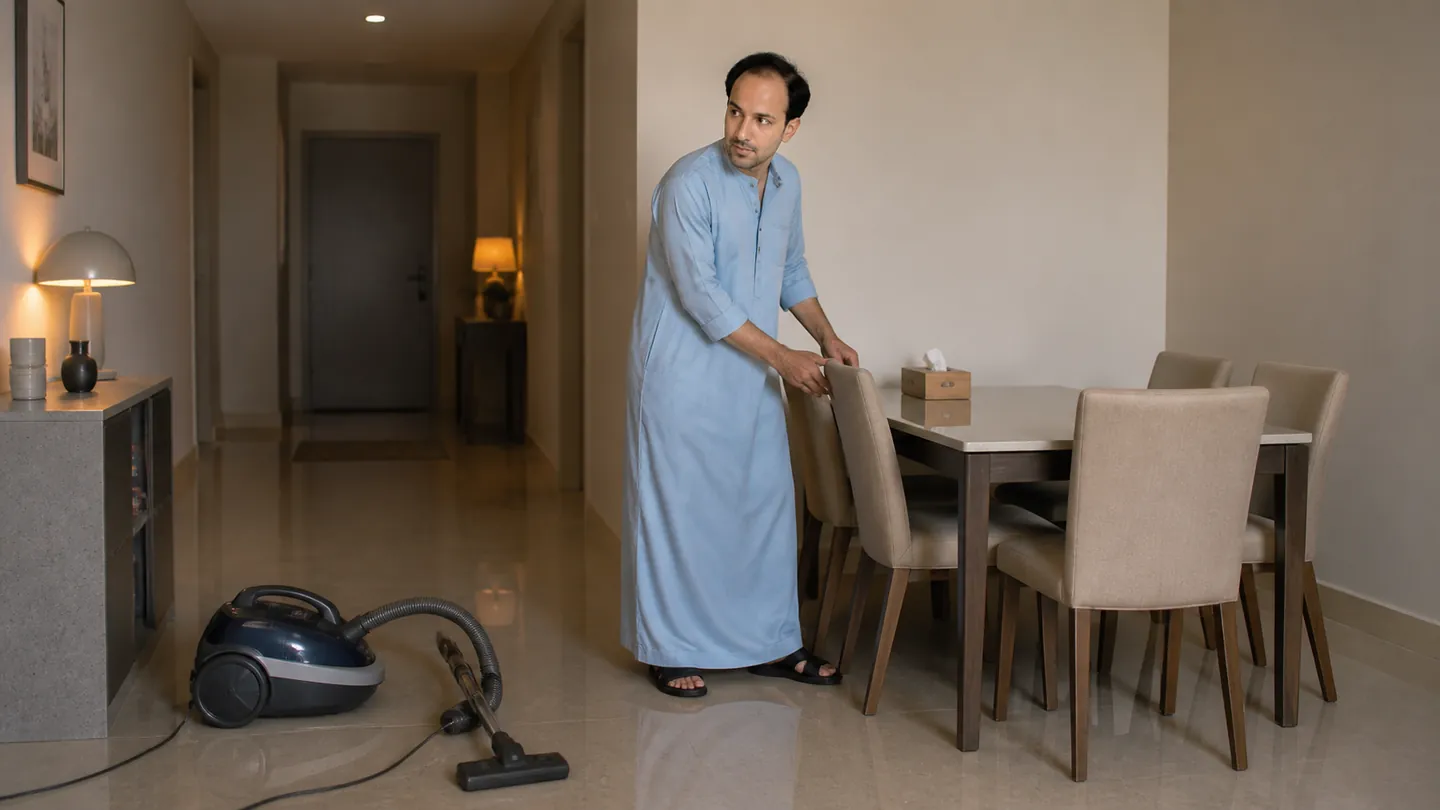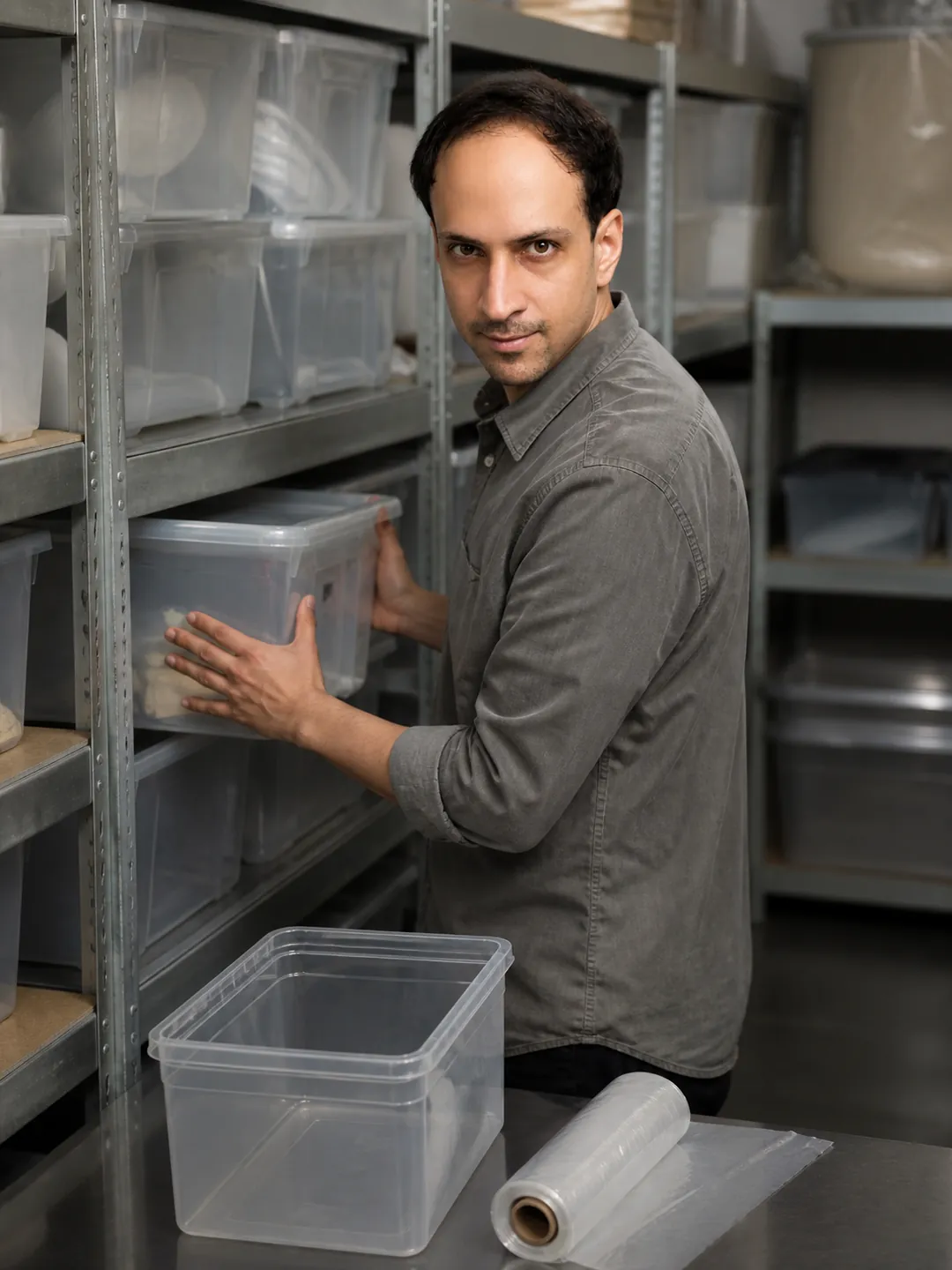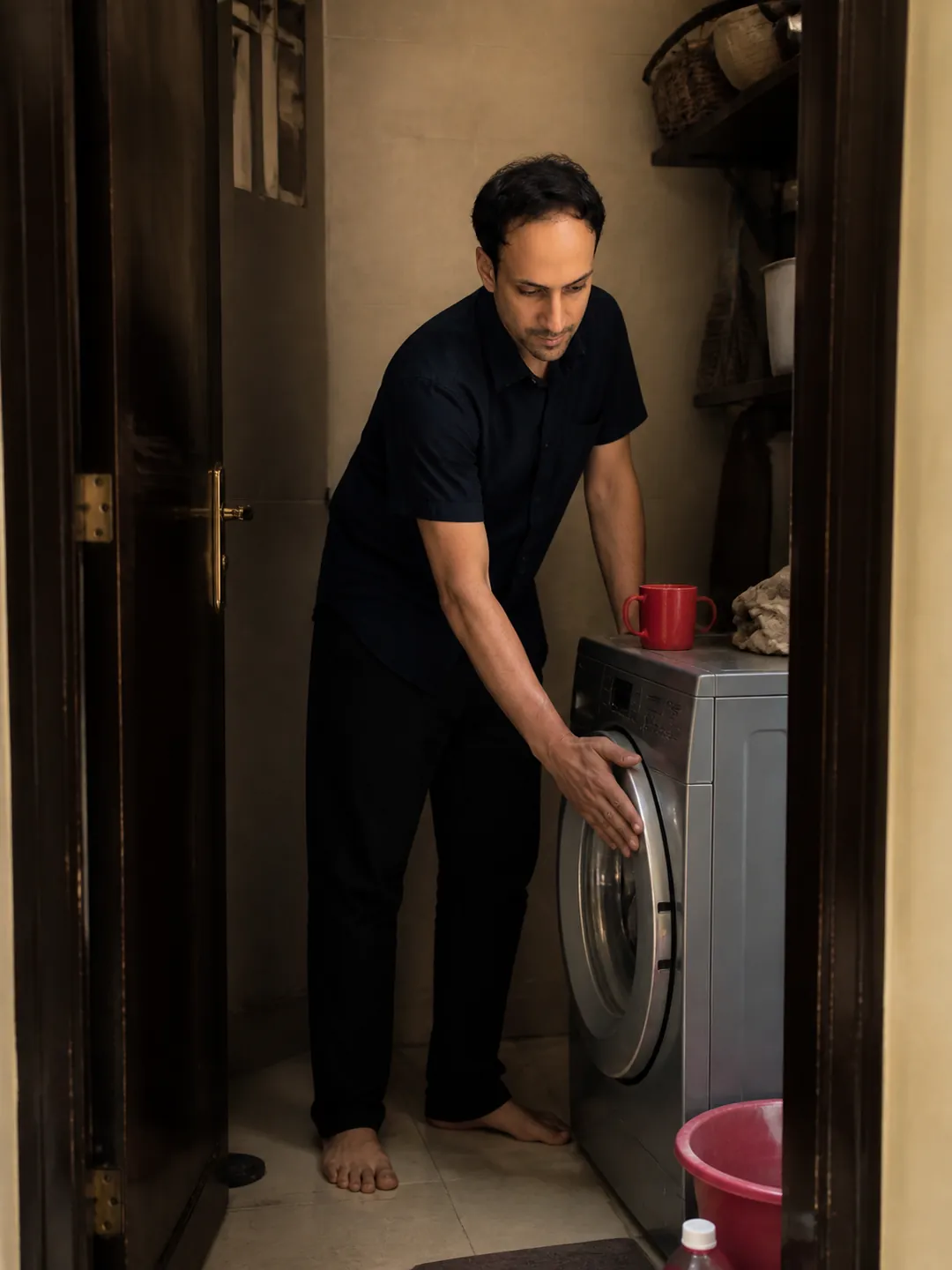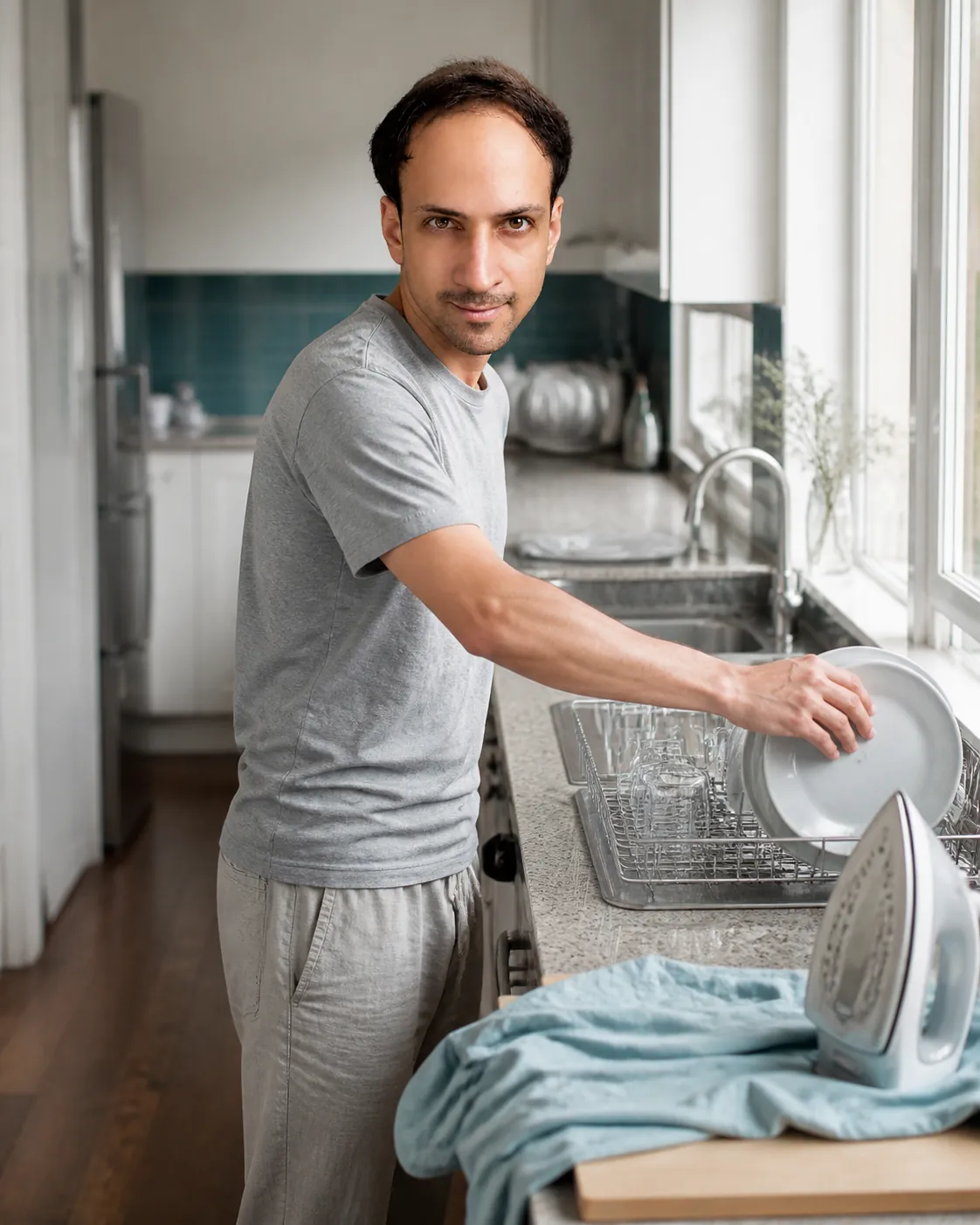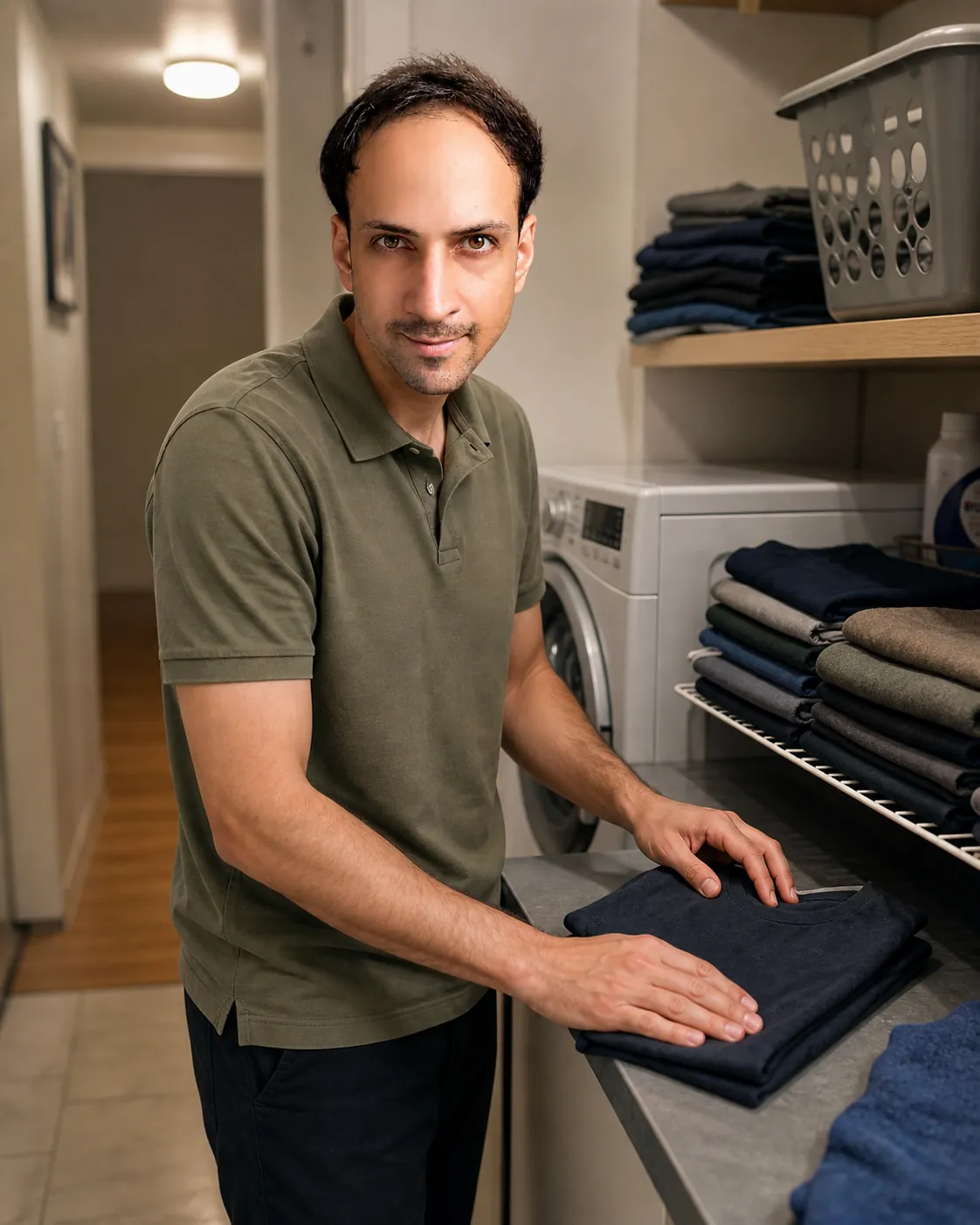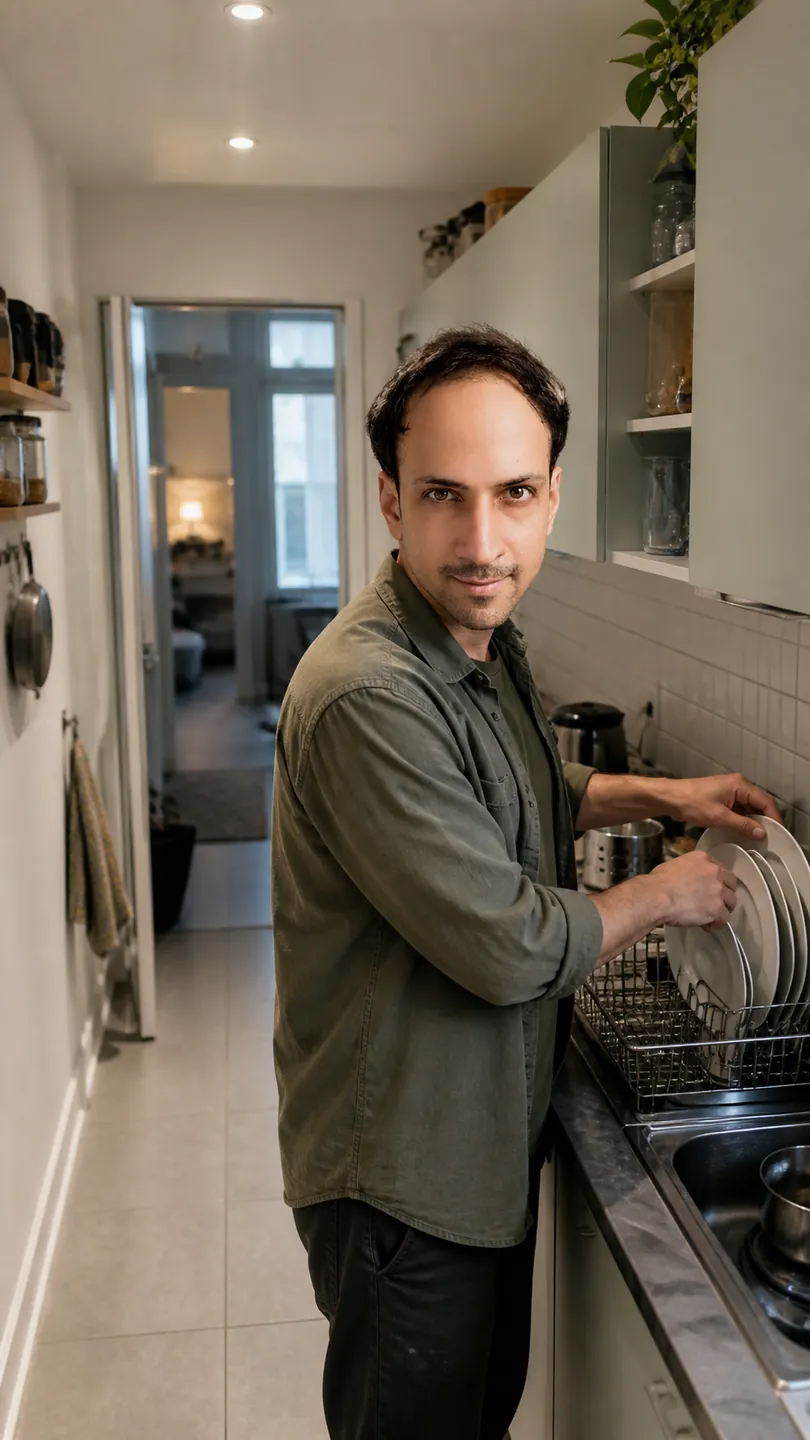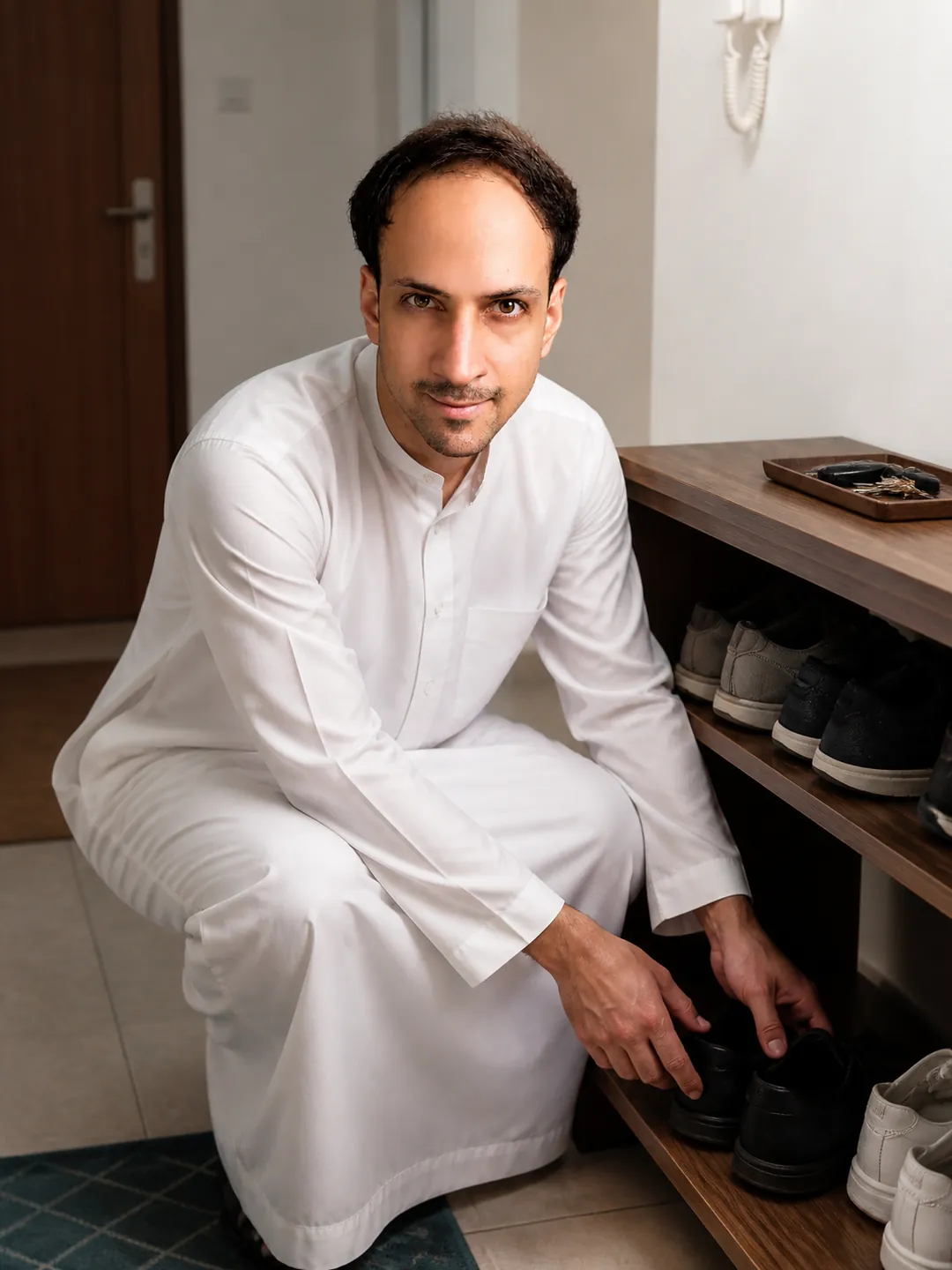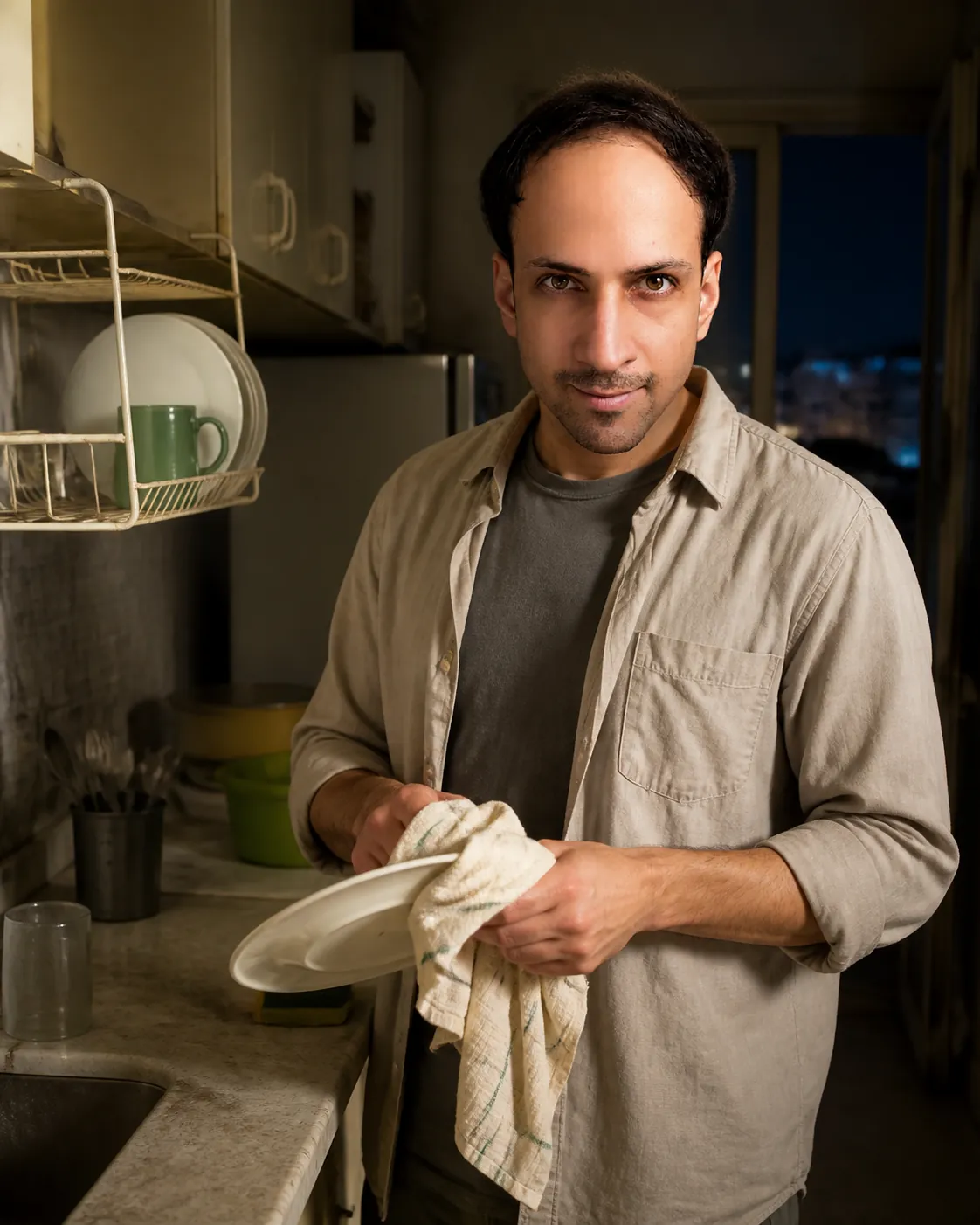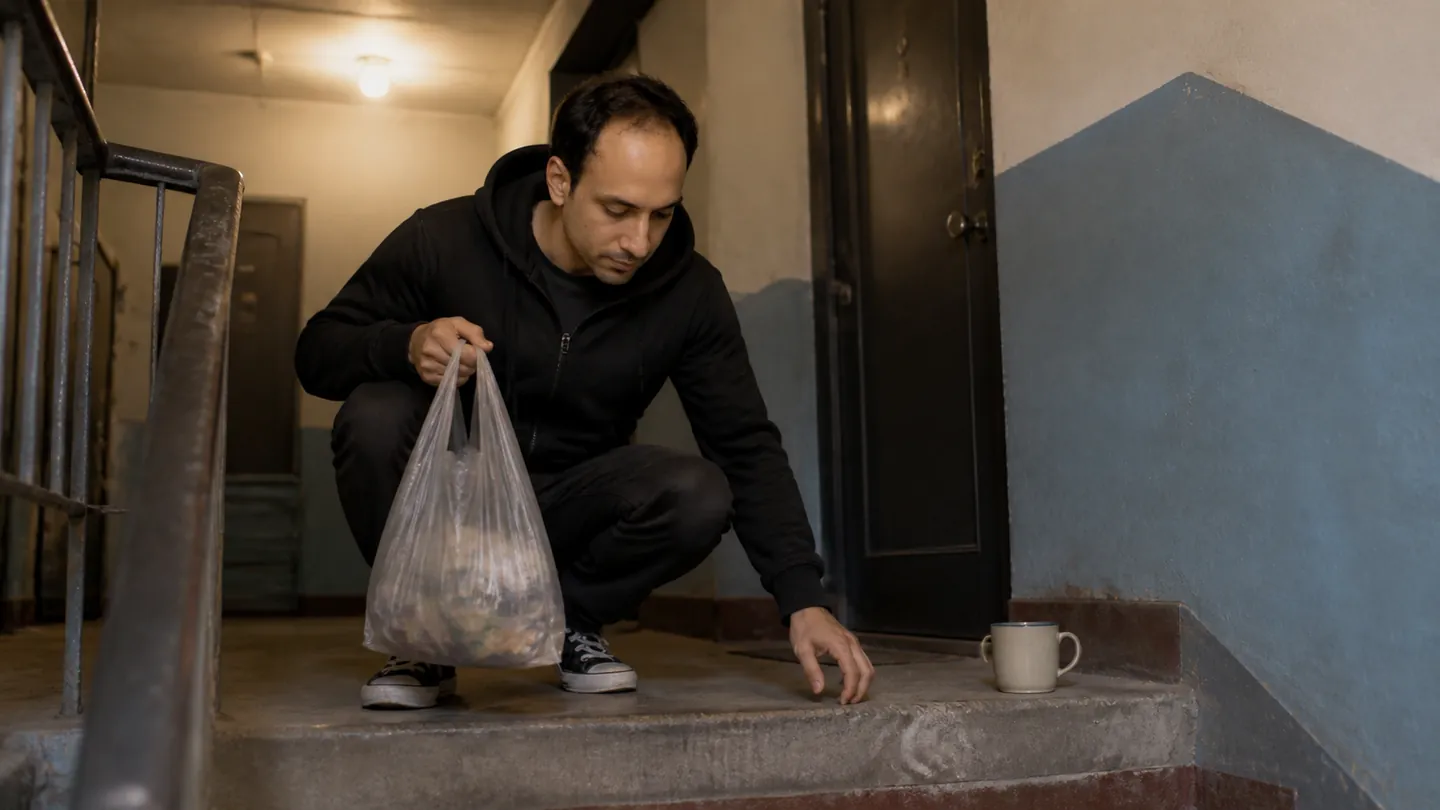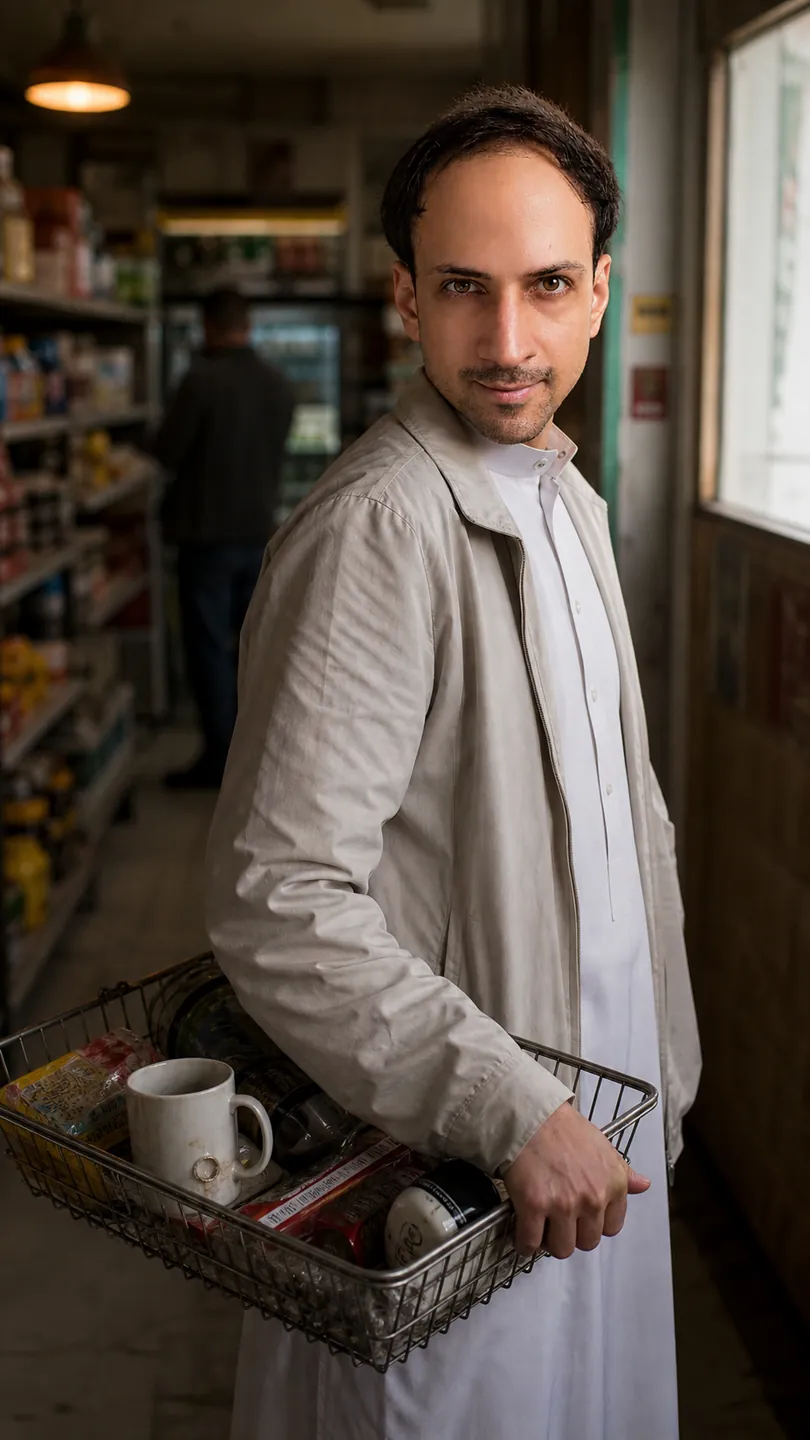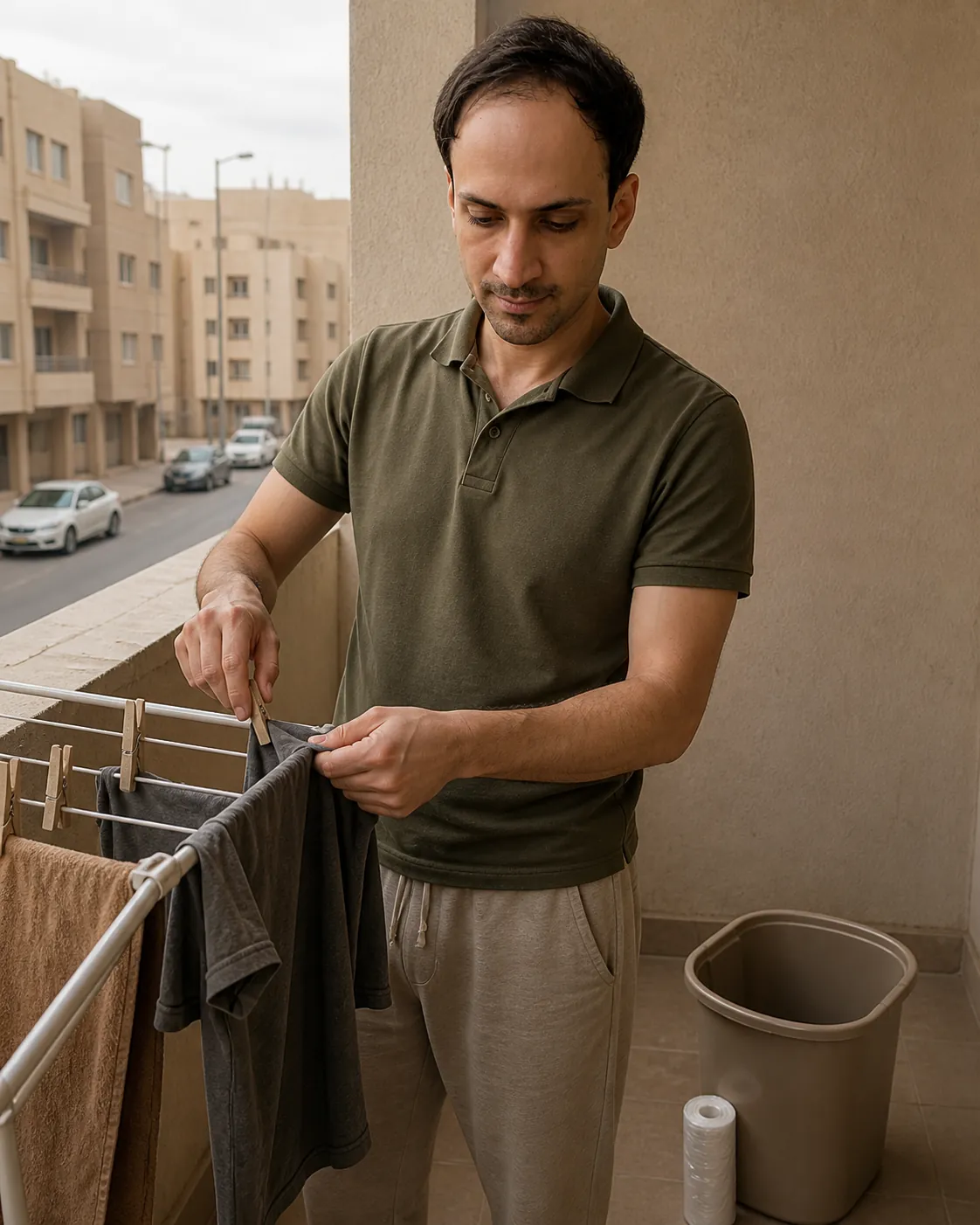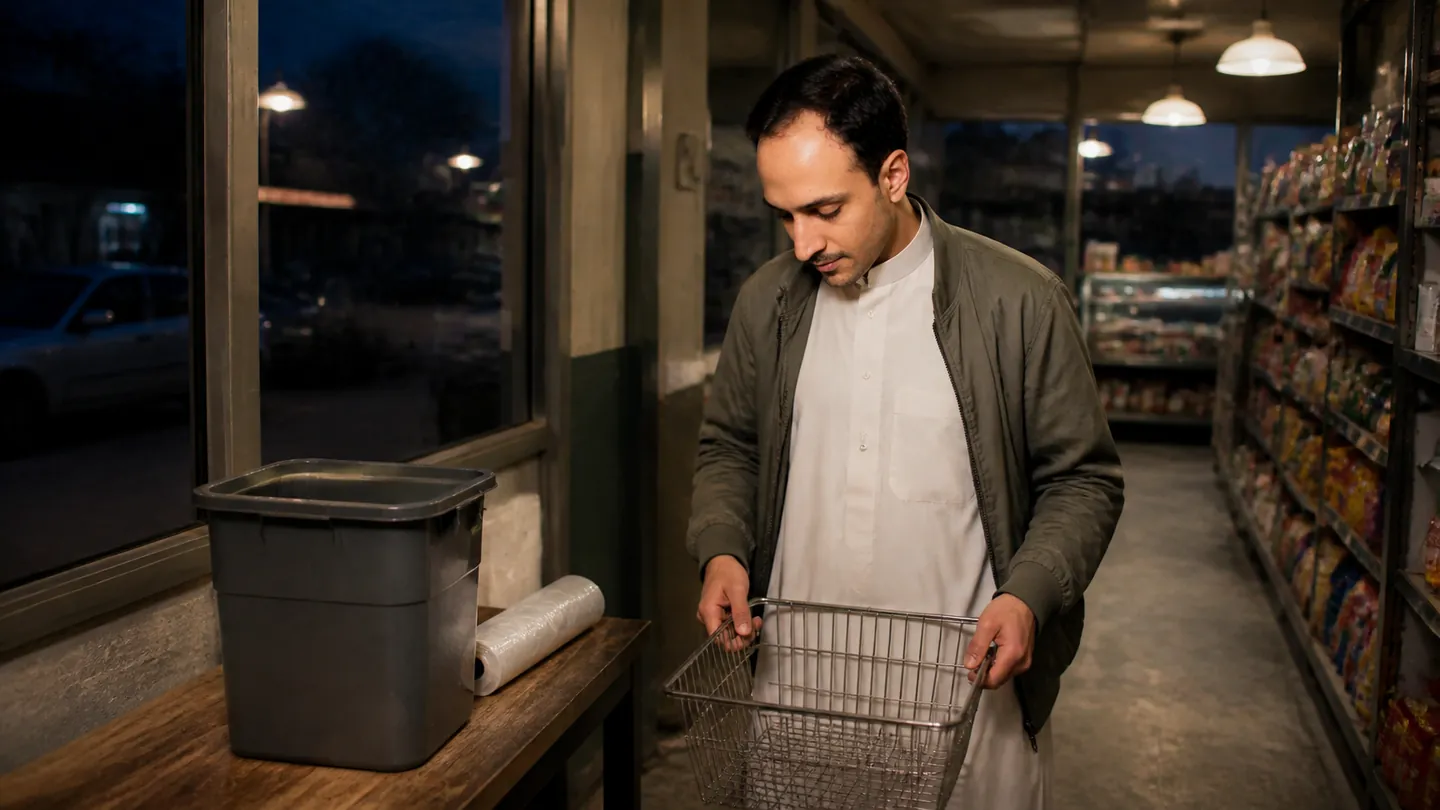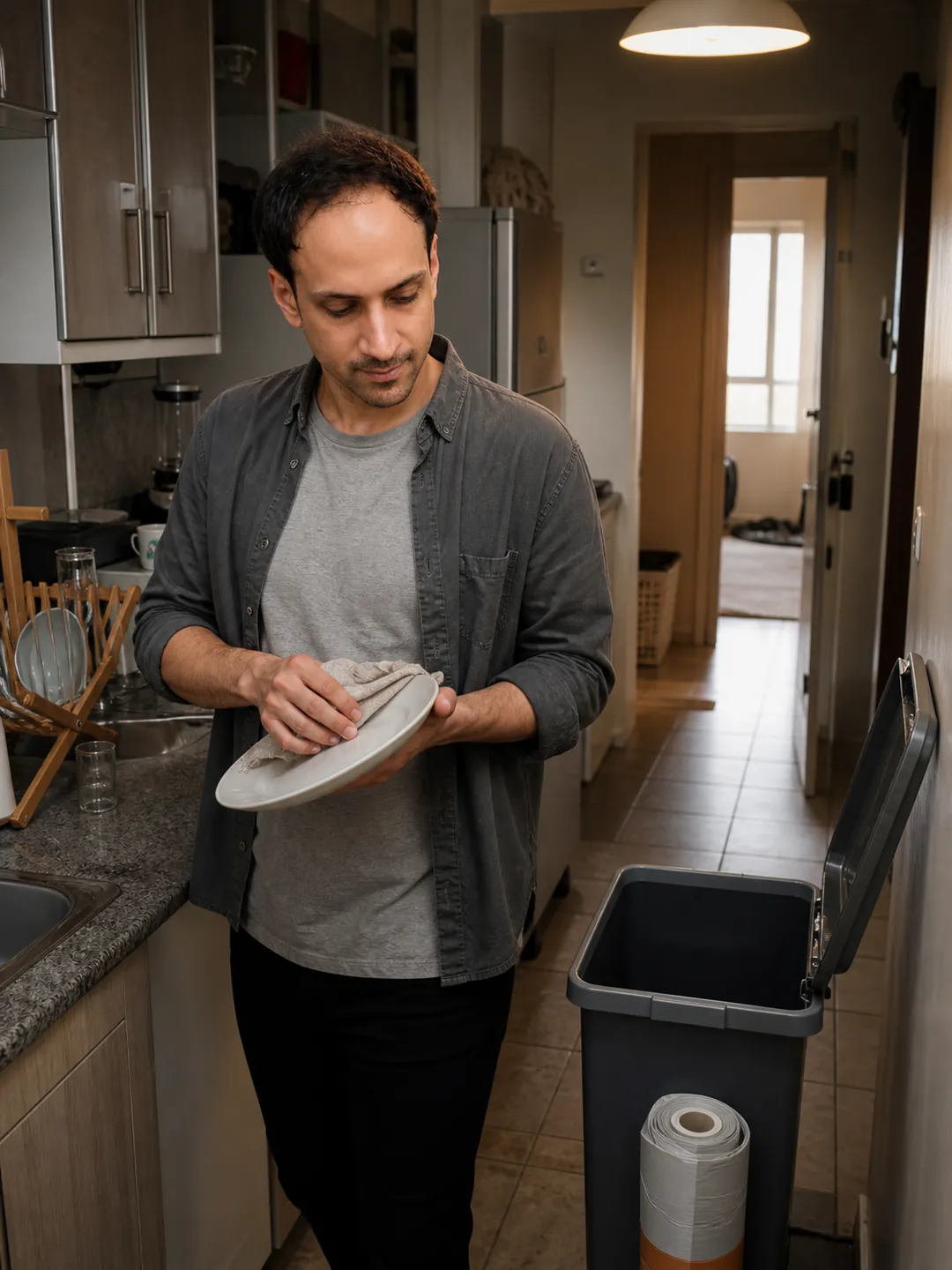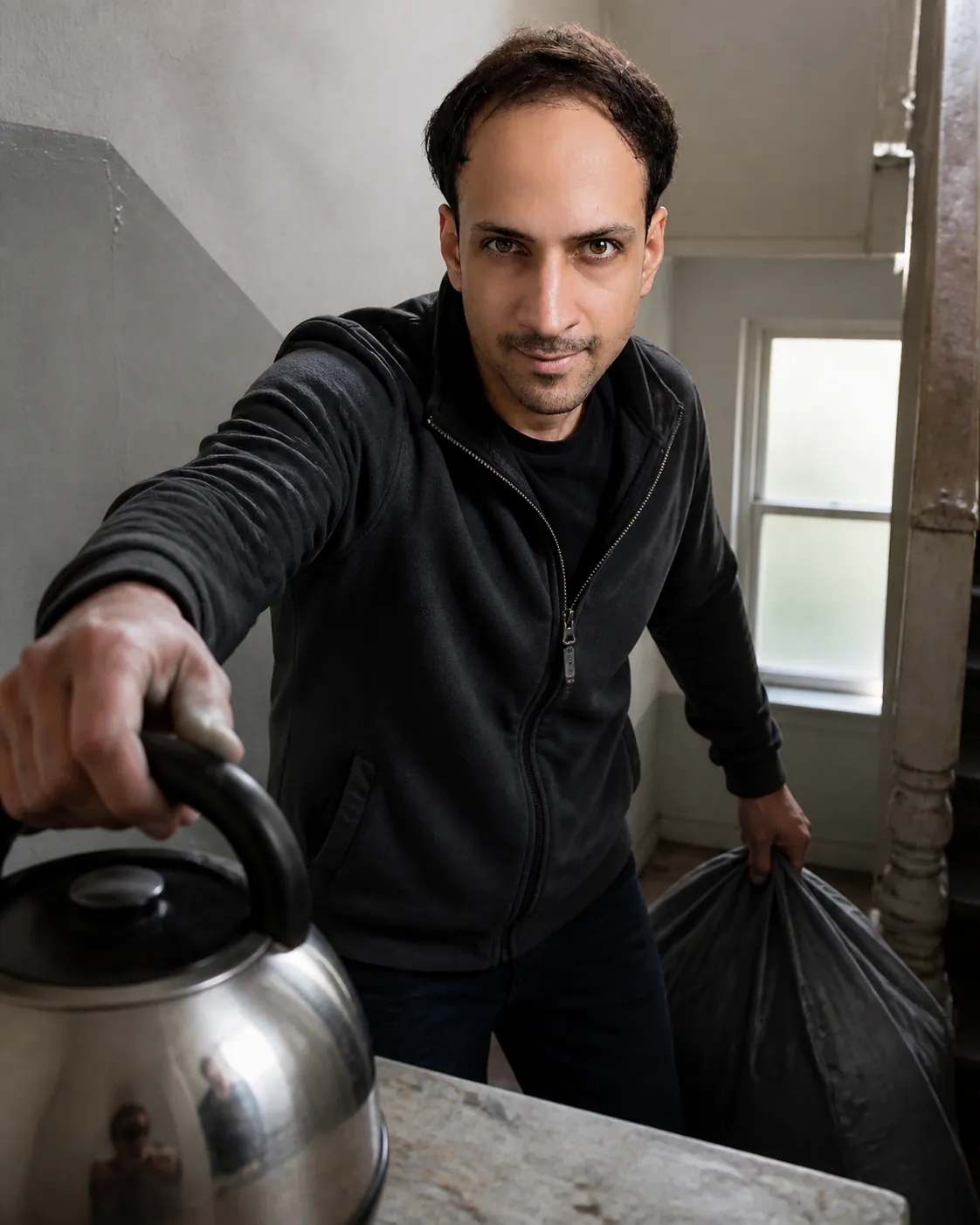
Turn your own photo into a photorealistic portrait in a residential stairwell landing between two floors, one window at knee height. Keeps your face unchanged.
من نص البرومبت
Use the attached reference photo as the identity reference: keep the same face, skin tone, hair and features as the person in that photo, without beautifying, aging or altering them. Build a portrait 4:5 editorial artwork with protected negative space and a fully readable face at exactly 2560x3200 pixels. Location: a residential stairwell landing between two floors, one window at knee height. Show the subject in a dark grey zip fleece over a plain crew-neck shirt, shifting a full carrier bag to their other hand. Let one honest object carry what the face will not: a kettle's curved flank returning a small, warped reflection of them that takes a moment longer to resolve than it should trades certainty about the room for a smaller certainty about the hands. Explore what a plain object can confirm that looking at it cannot; expression occupied, not expressive, carrying flat competence, difficulty stated without reaching for sympathy. Place the lens at hand height so the object and their eyes hold one plane. Make the composition place the point of contact nearer the lens. Render it as quiet interior portraiture assembled from truthful domestic light, worn everyday surfaces, precise object placement, and human-centred documentary realism, using flat overcast daylight through a single pane with no directional drama and a palette of oat linen, cool graphite, and one thin line of brass. Photorealistic: this must read as a real photograph from a physical camera, never an illustration, painting, or 3D render. Resolve real surface detail: the difference between a wiped surface and a clean one, faint tide marks on ceramic, and metal dulled unevenly by touch. Keep one identity-locked person, credible hands and fingers, natural fabric, and coherent scale, contact, reflections, shadows, airflow, deformation, and materials. Background people only when essential, always secondary and clearly different. Avoid double exposures, transparent bodies, out-of-body views, and mirrors returning a different person. No text, labels, logos, signatures, watermarks, random symbols, plastic skin, excessive bloom, or glossy AI finish.