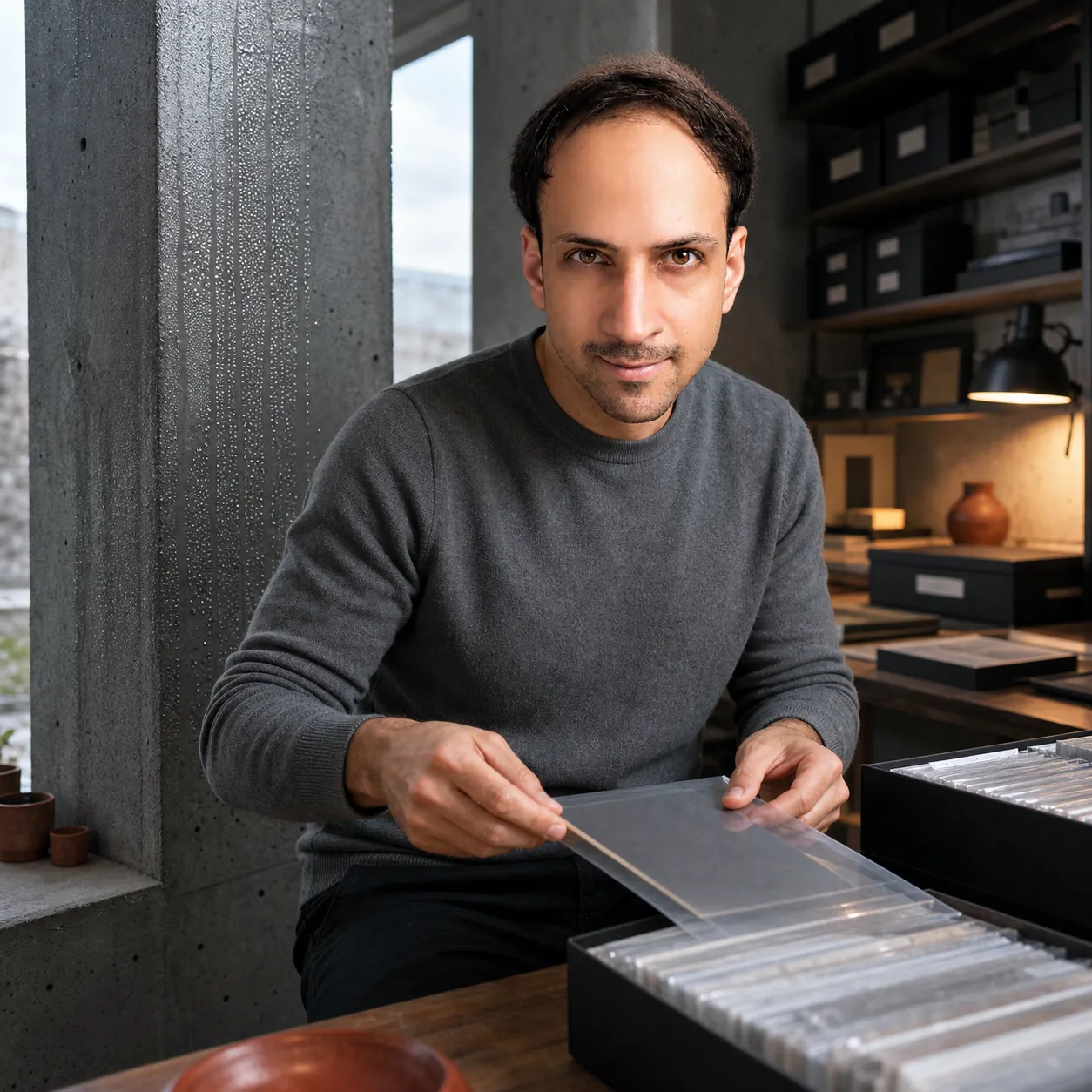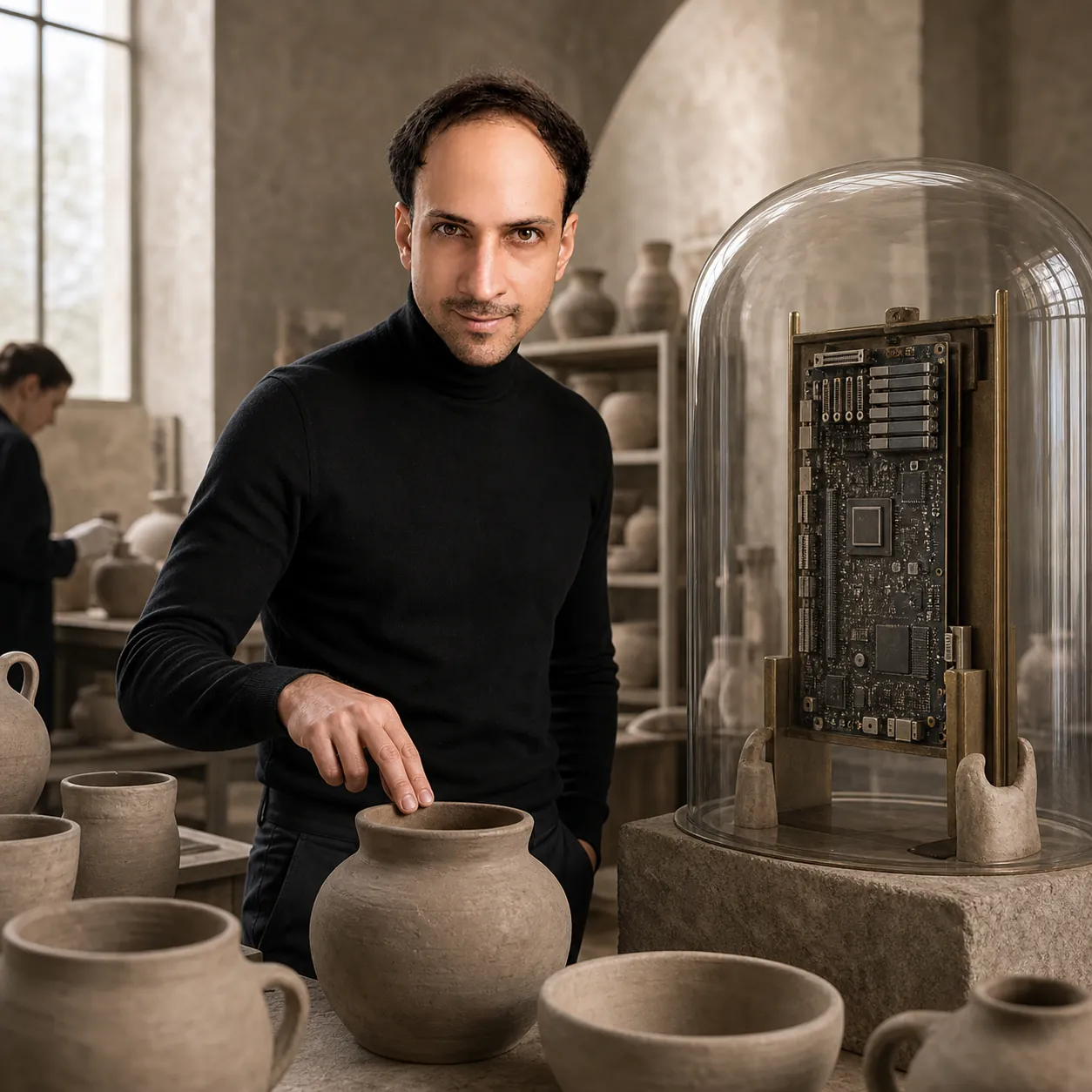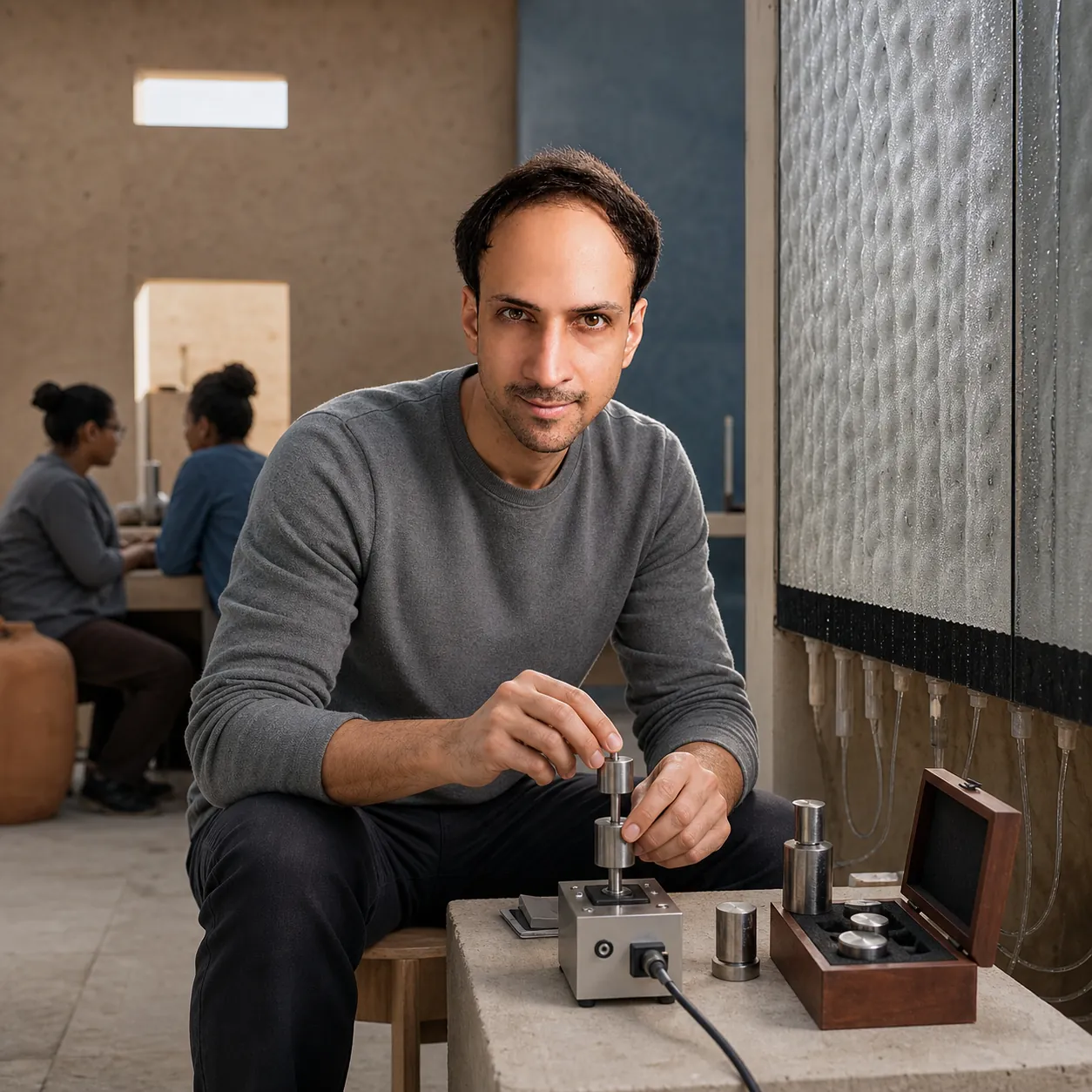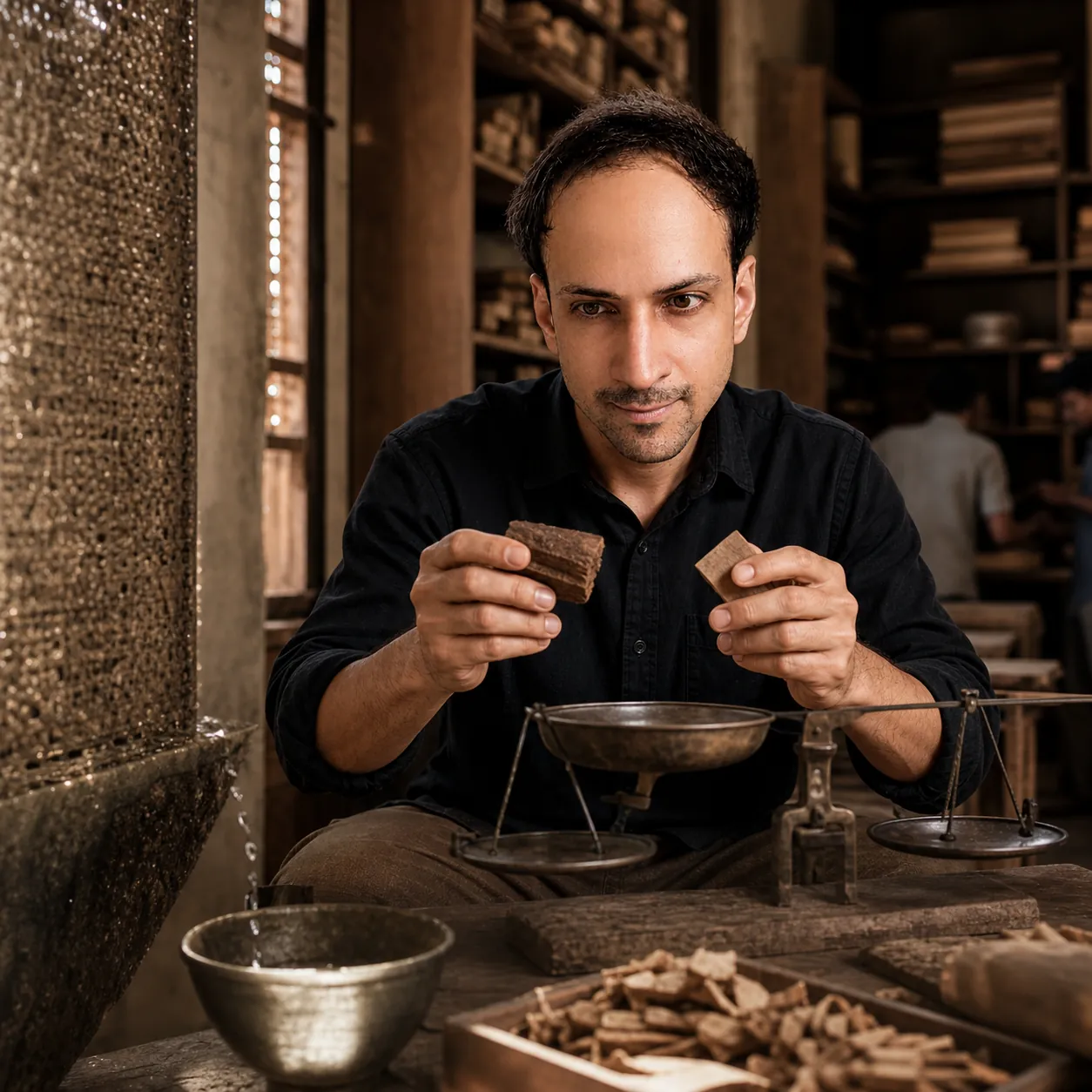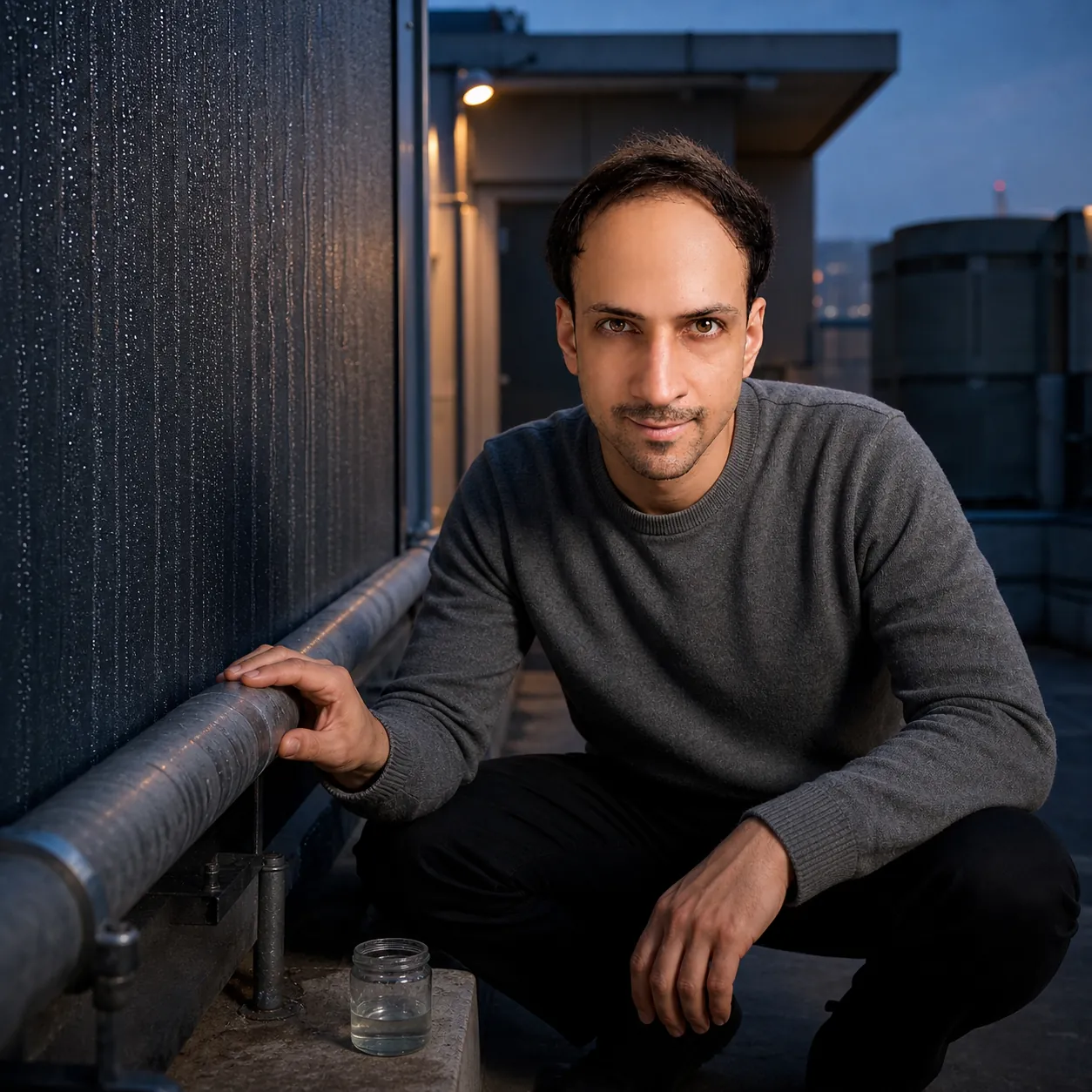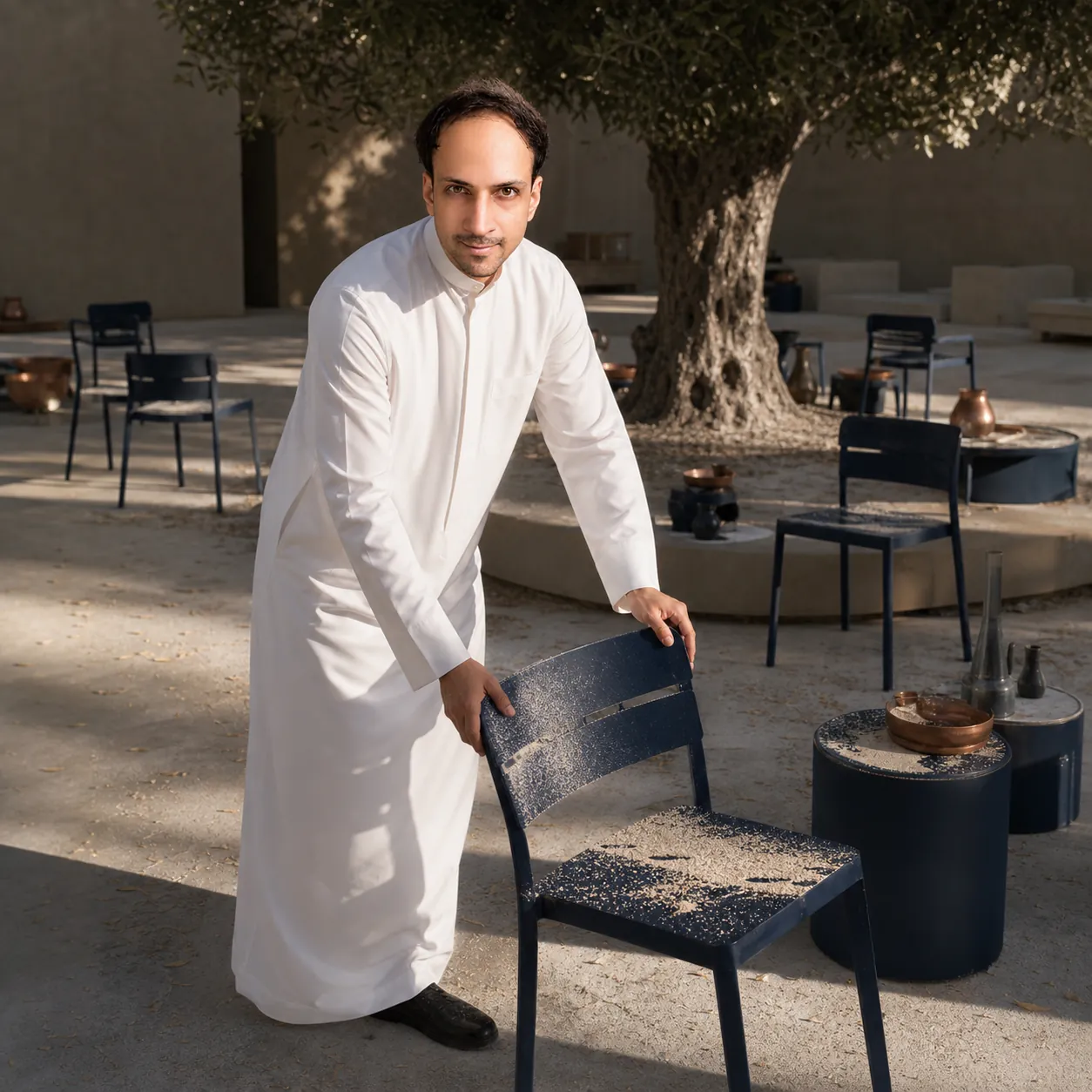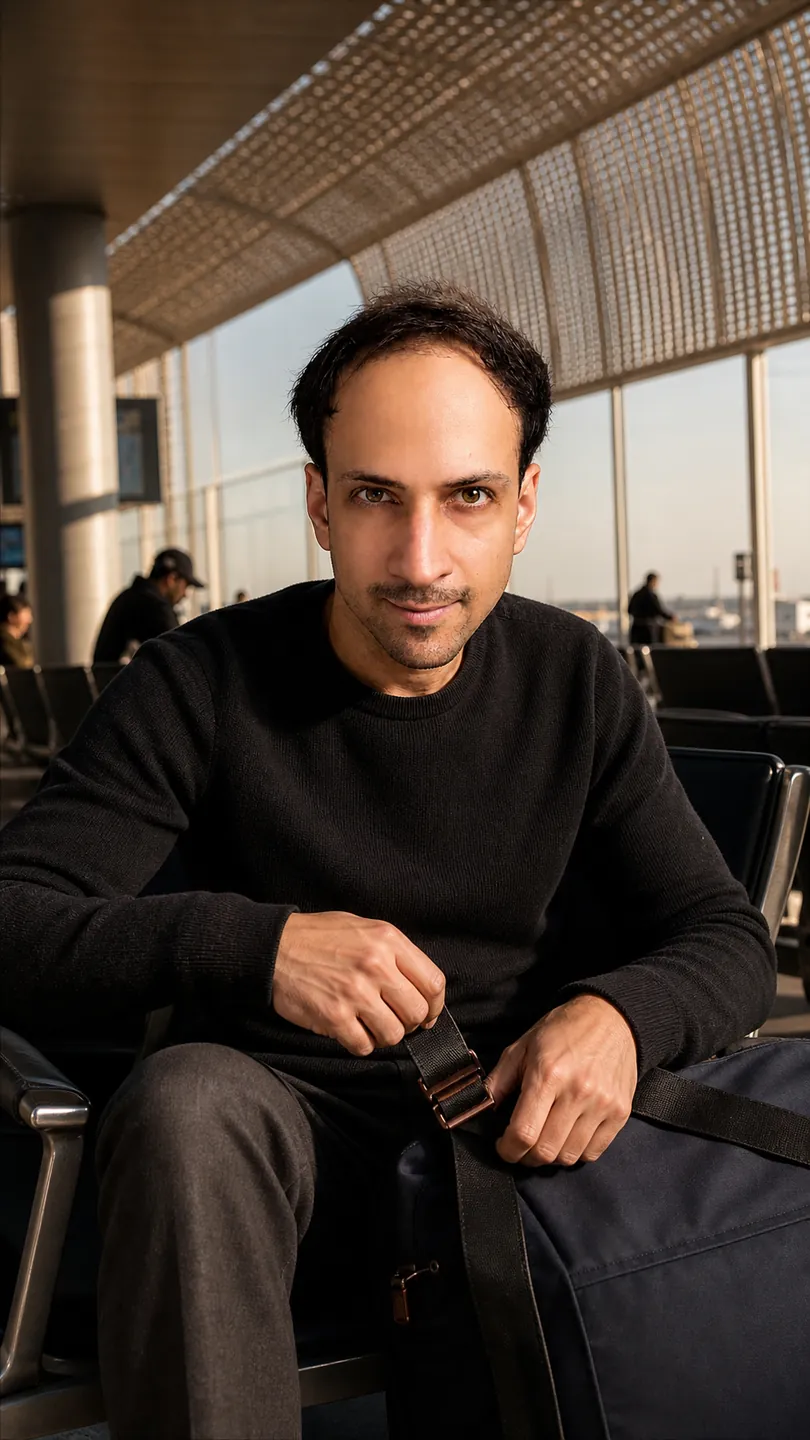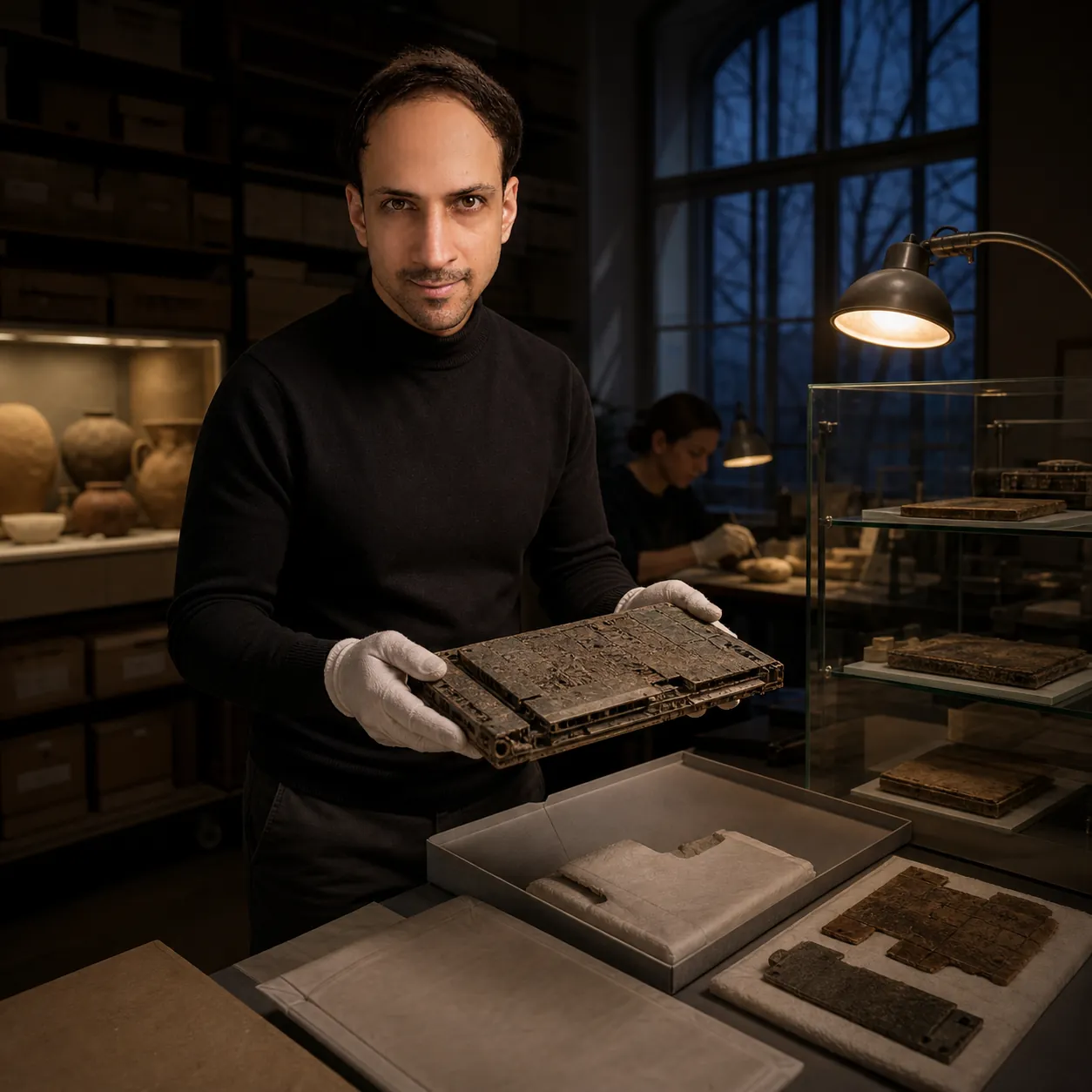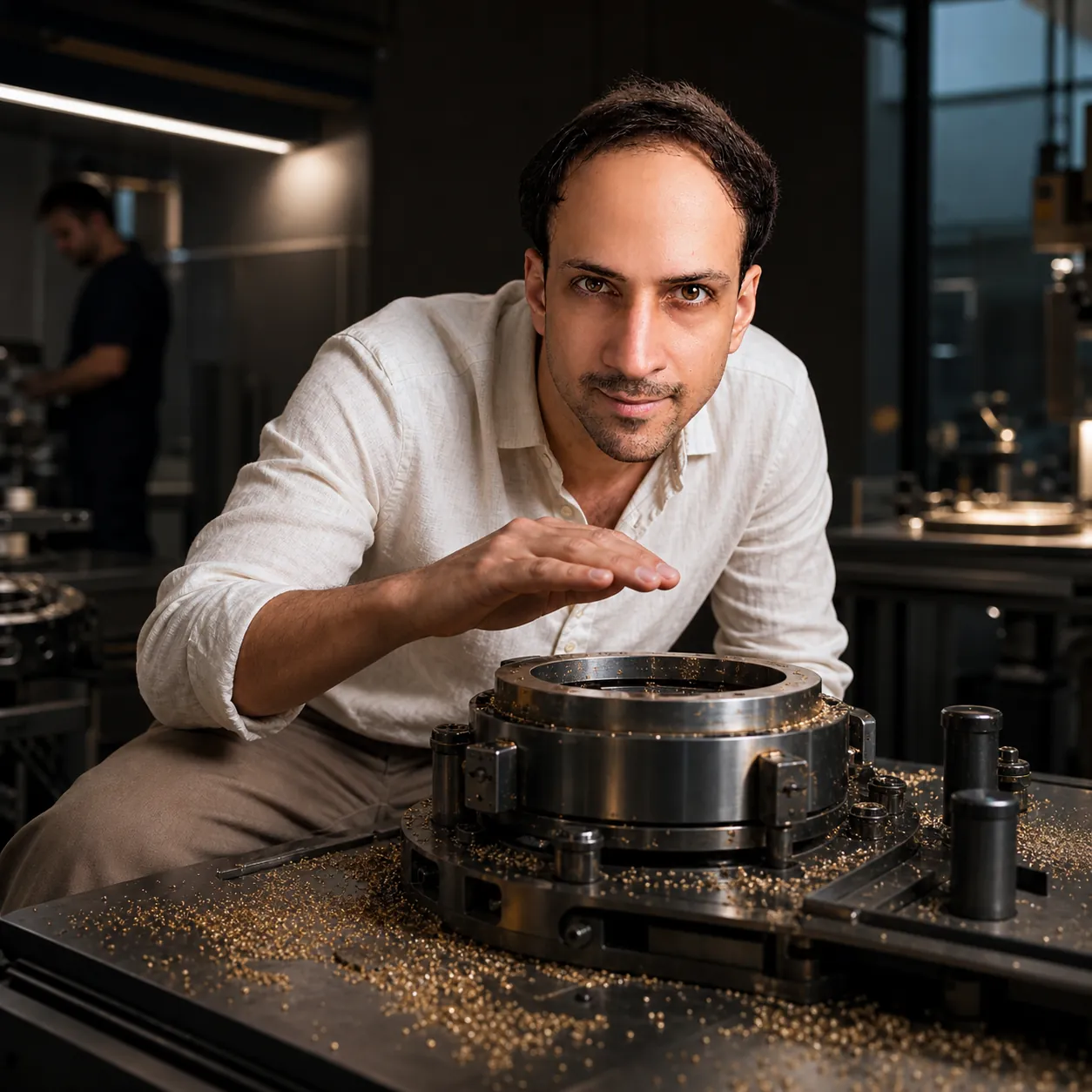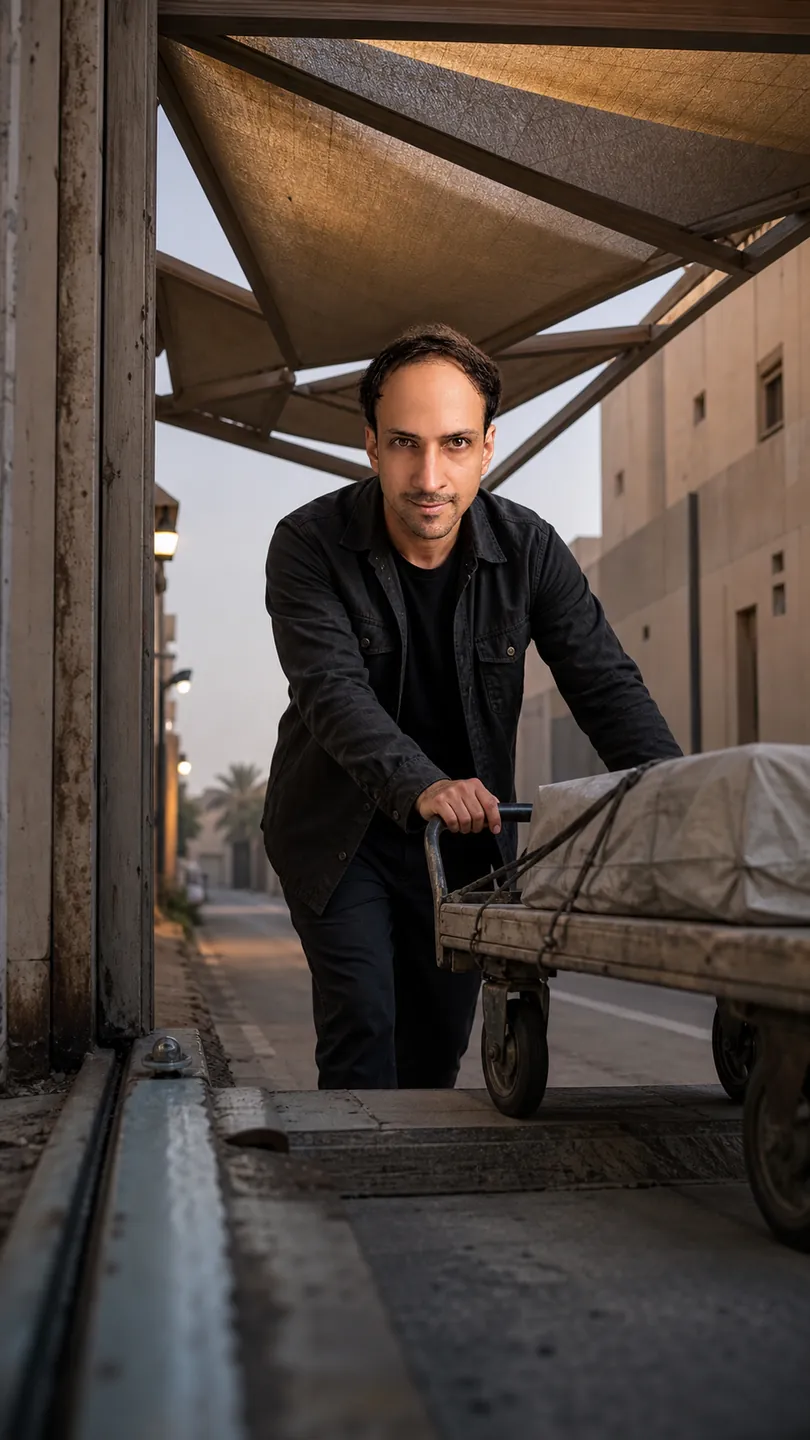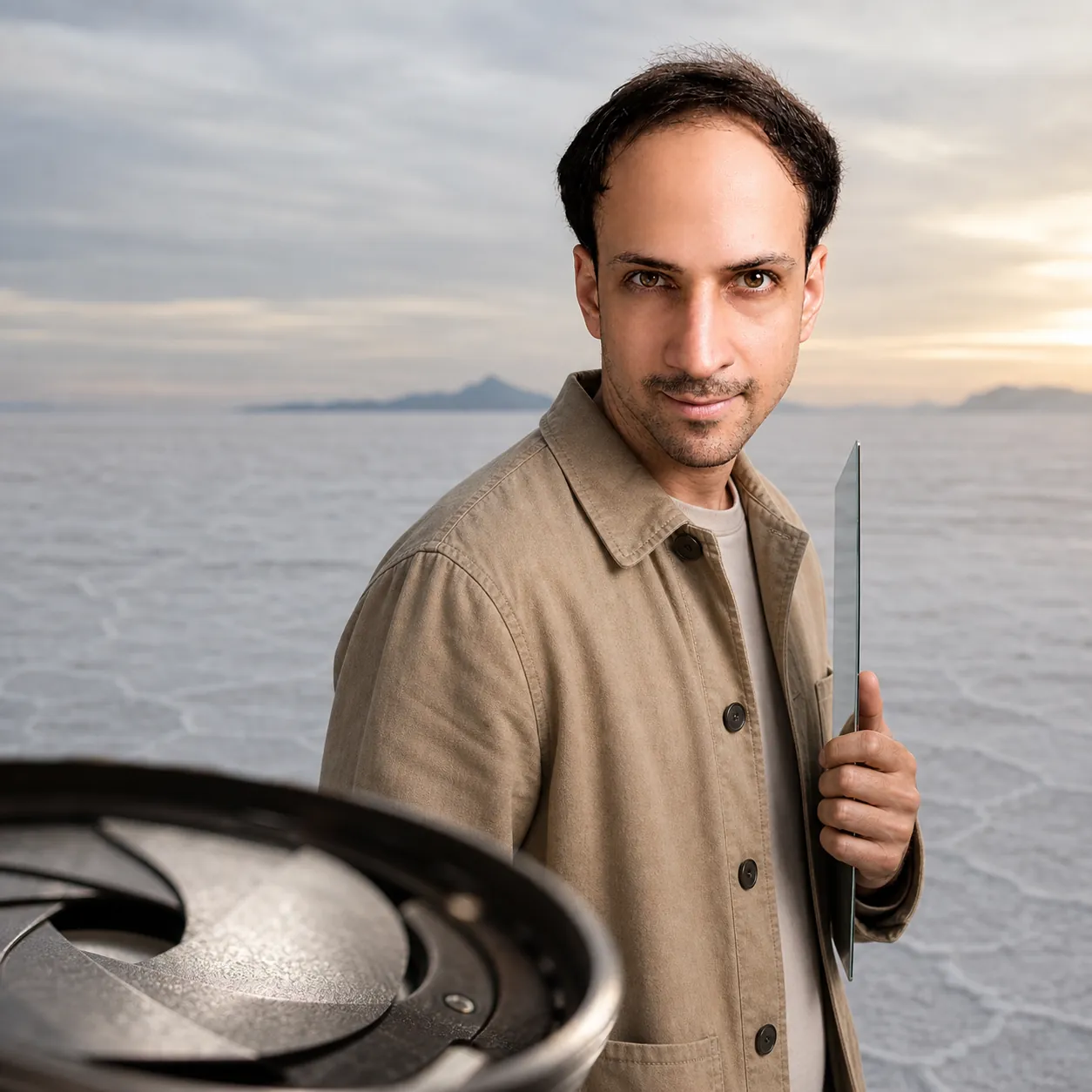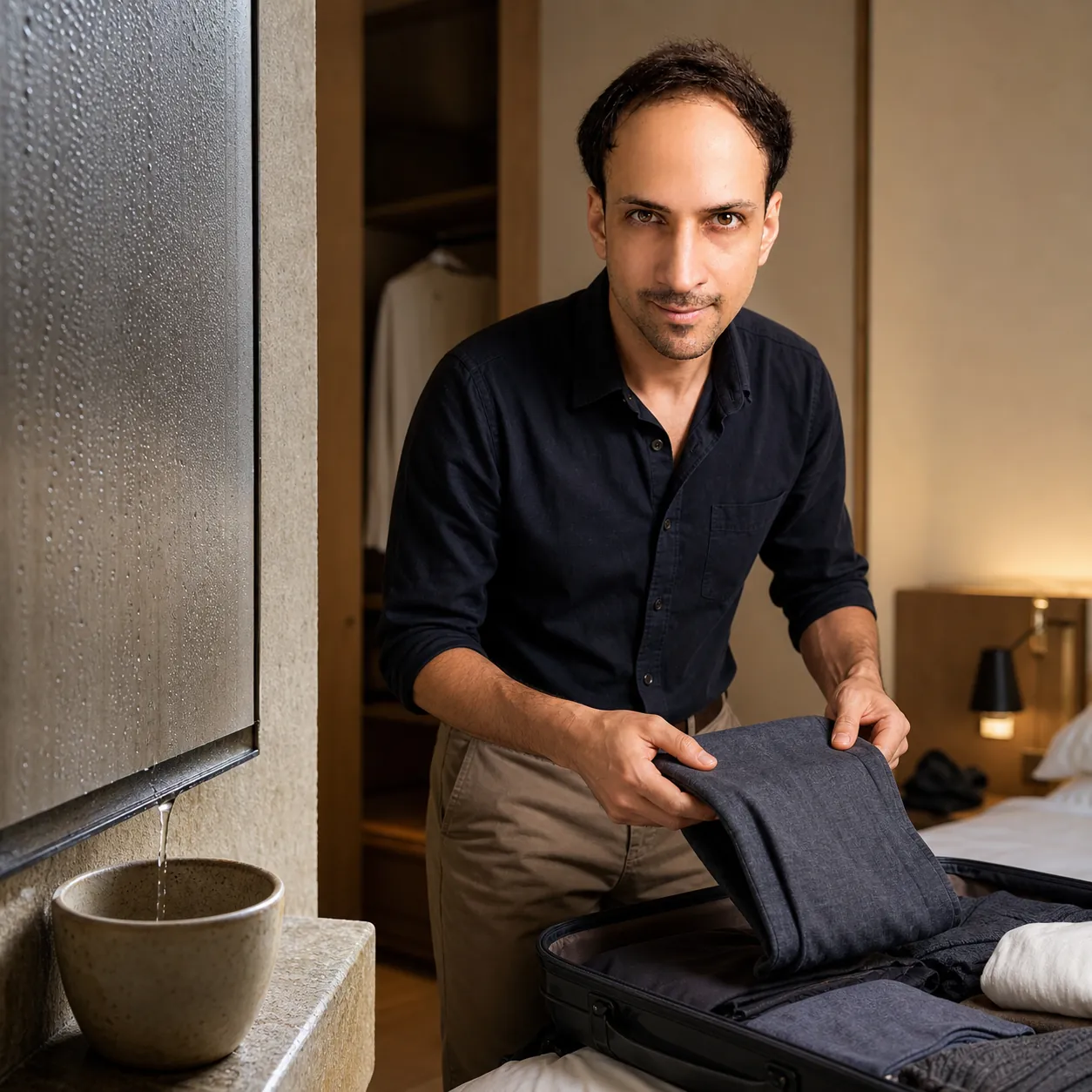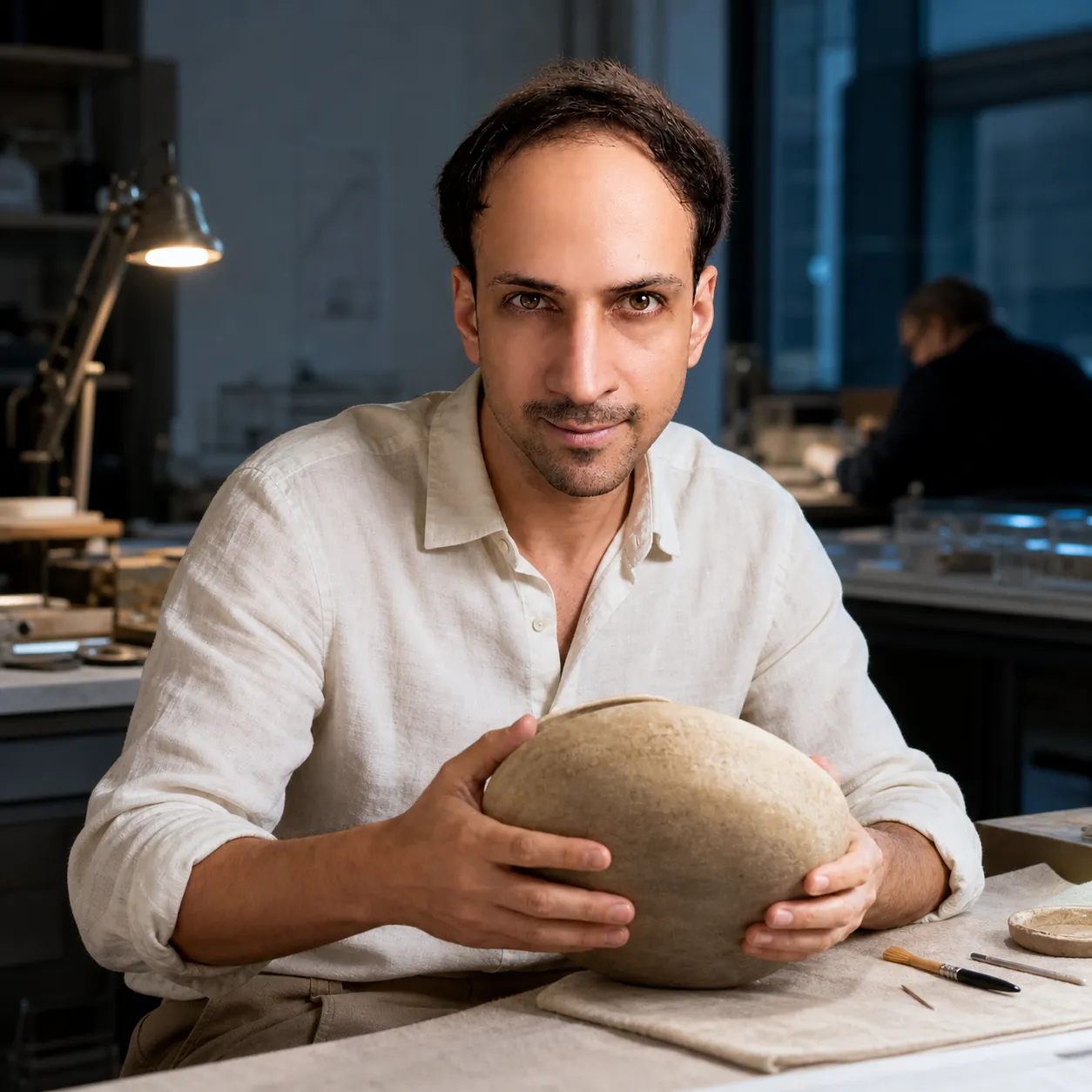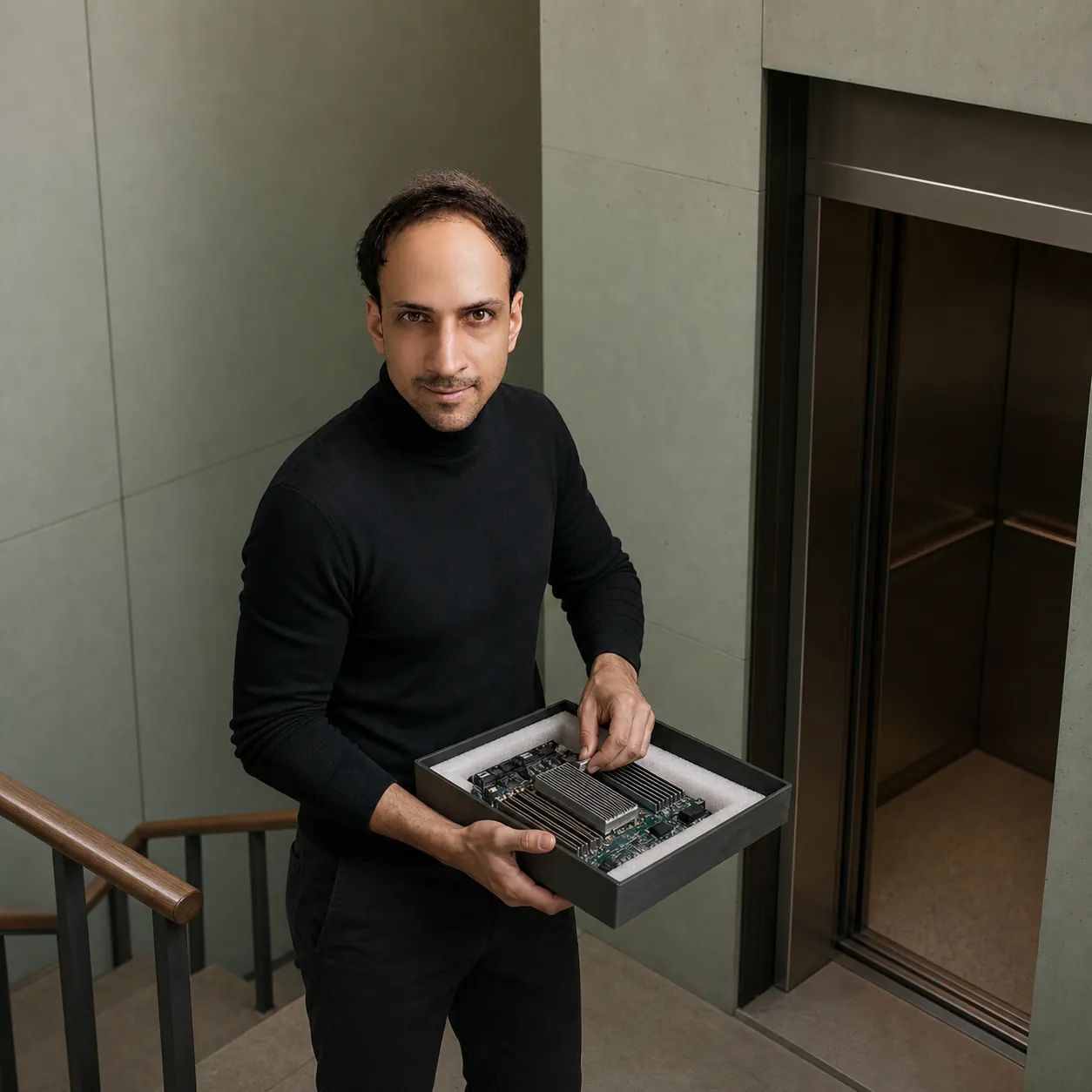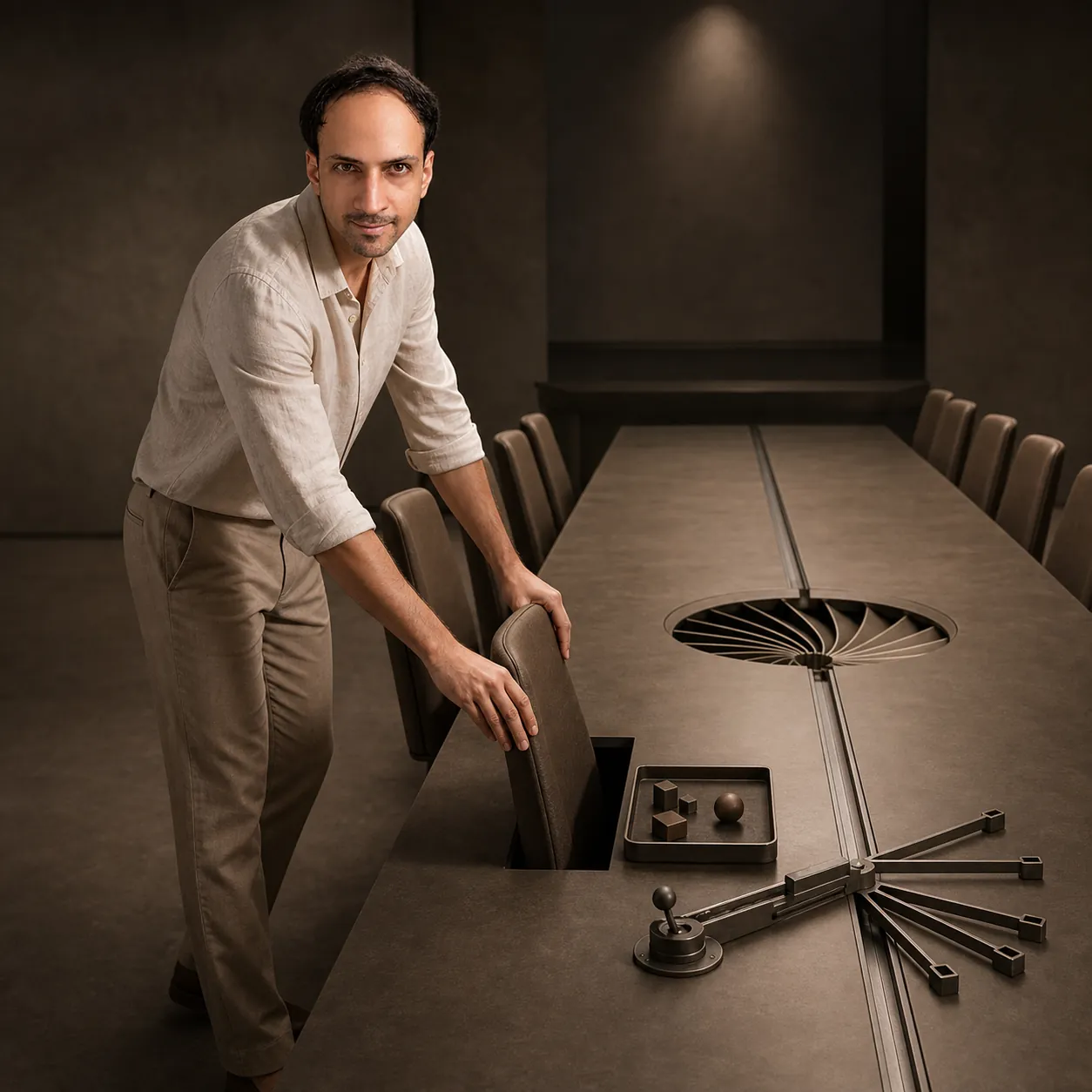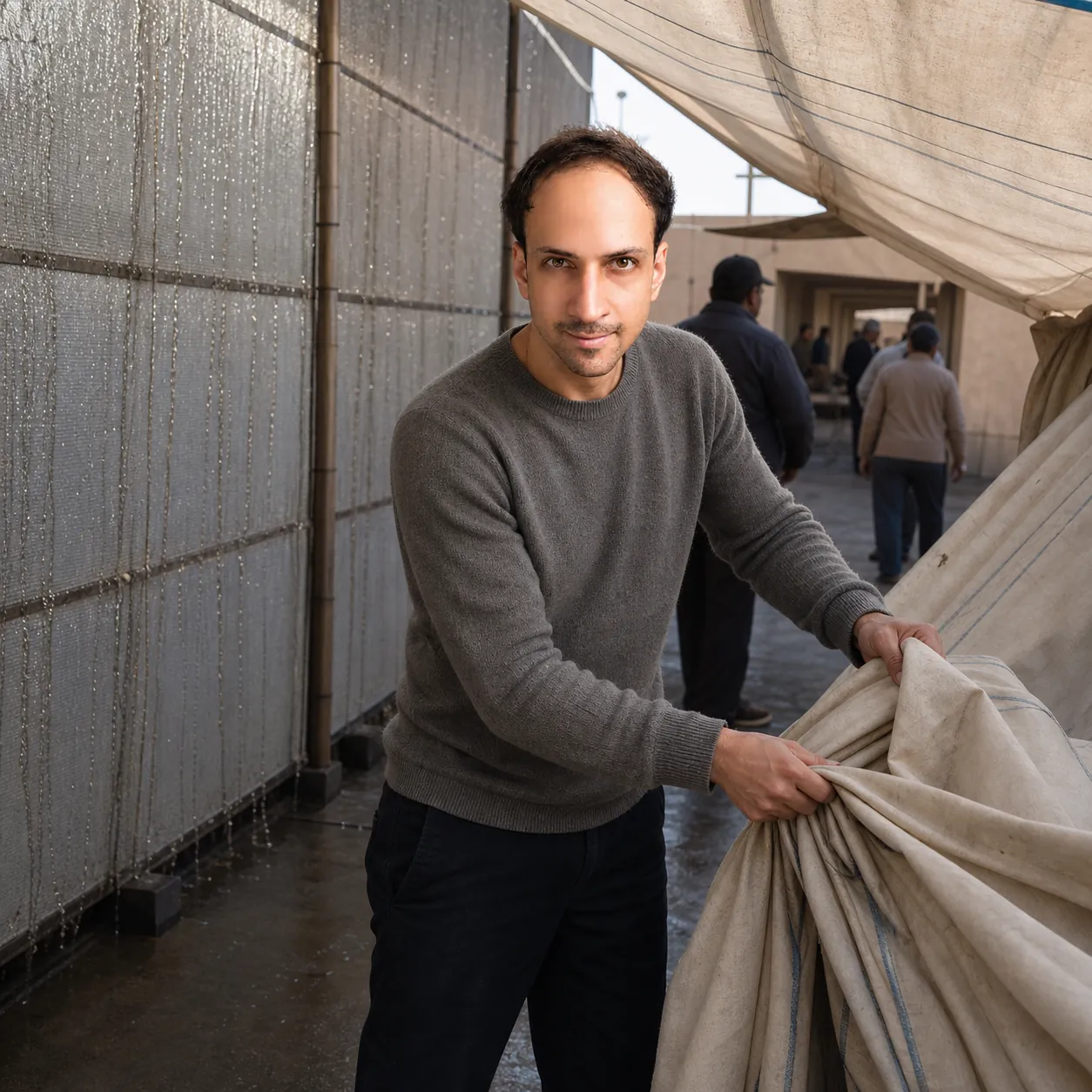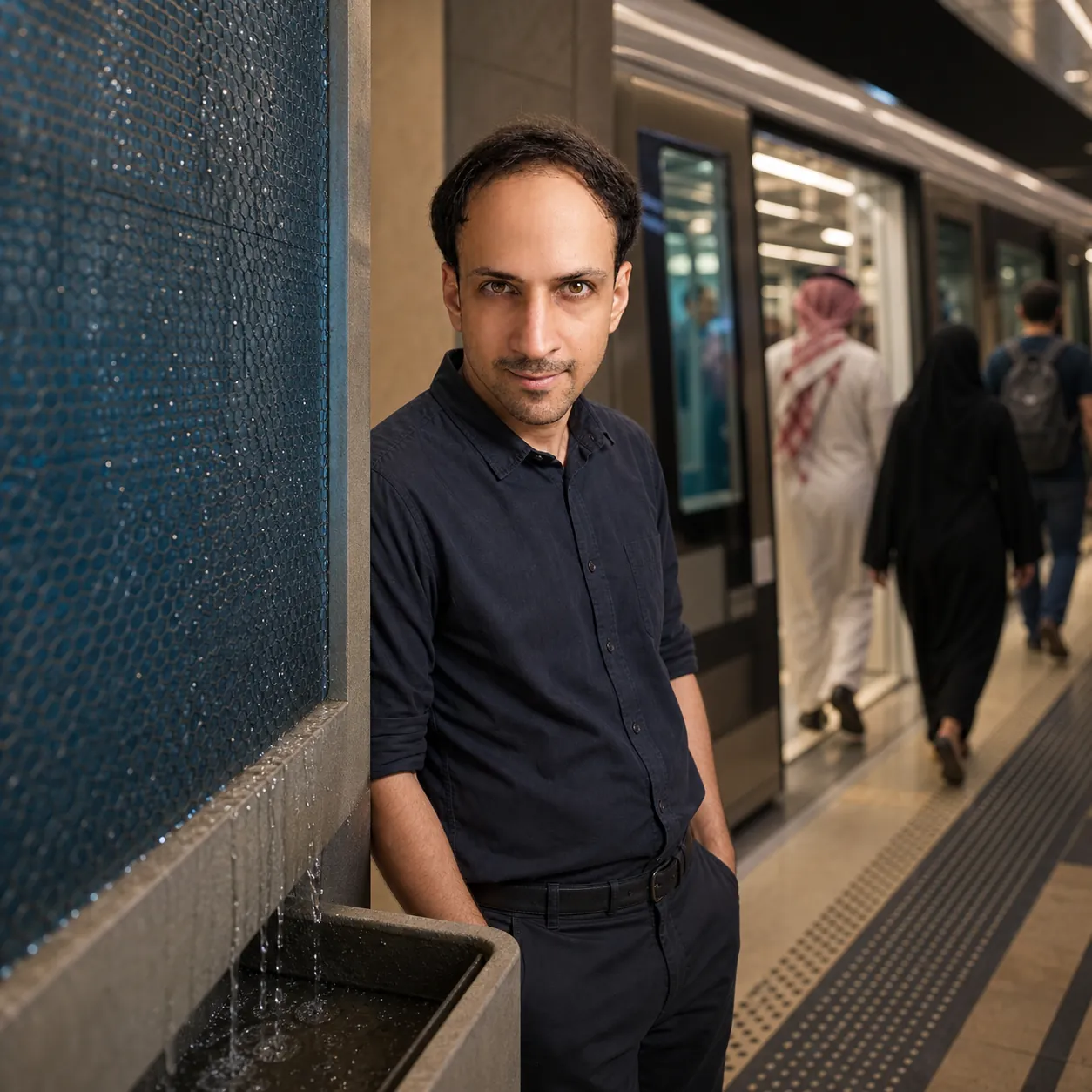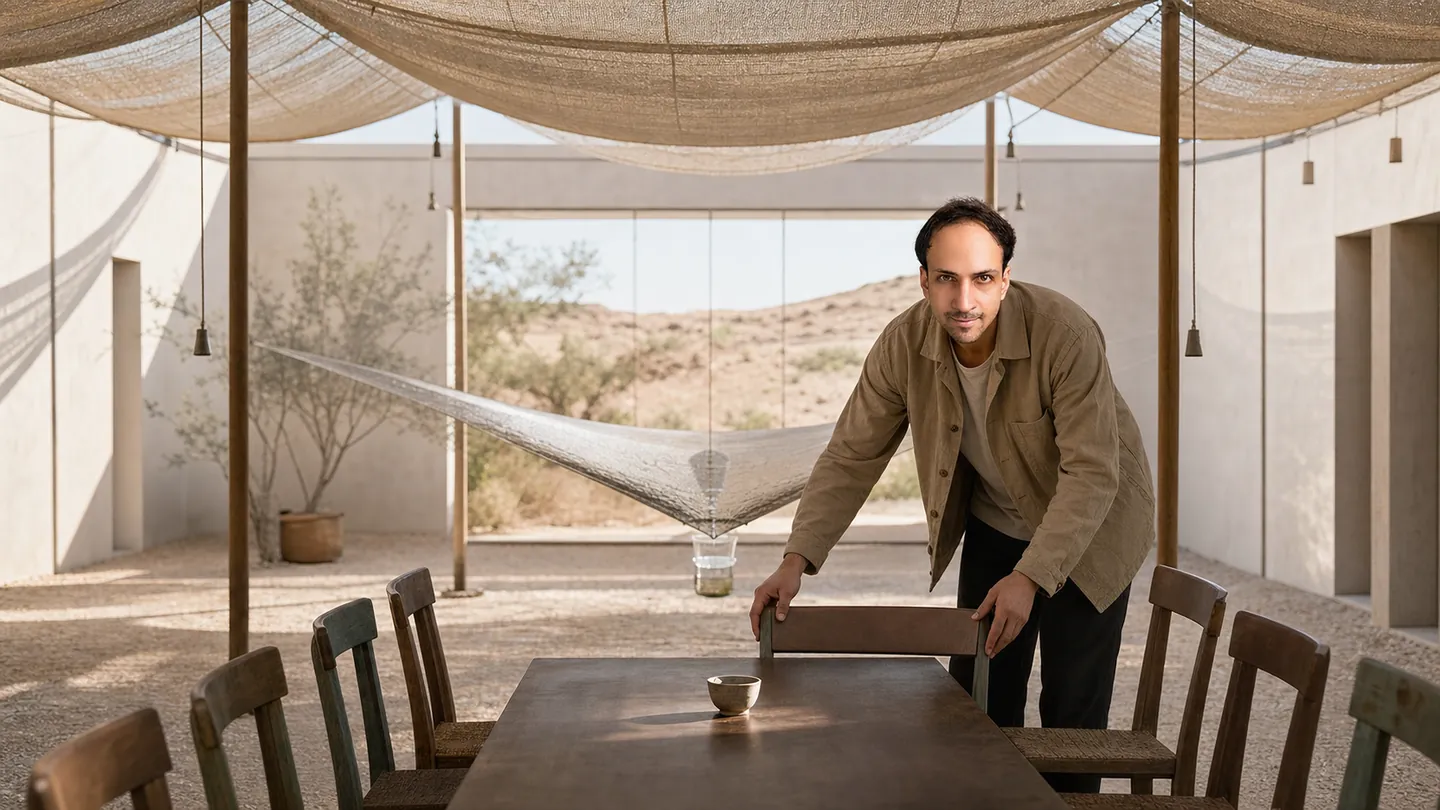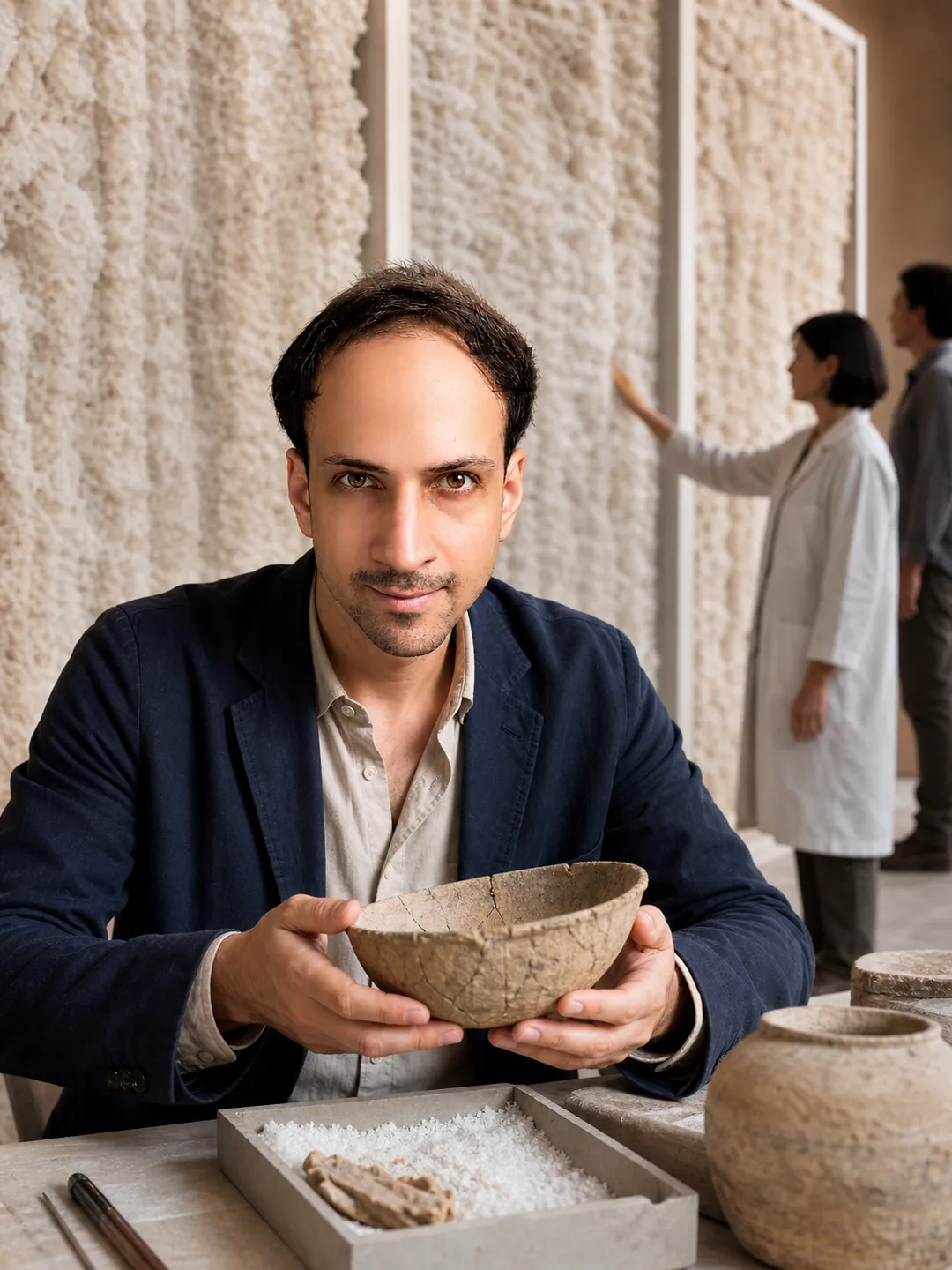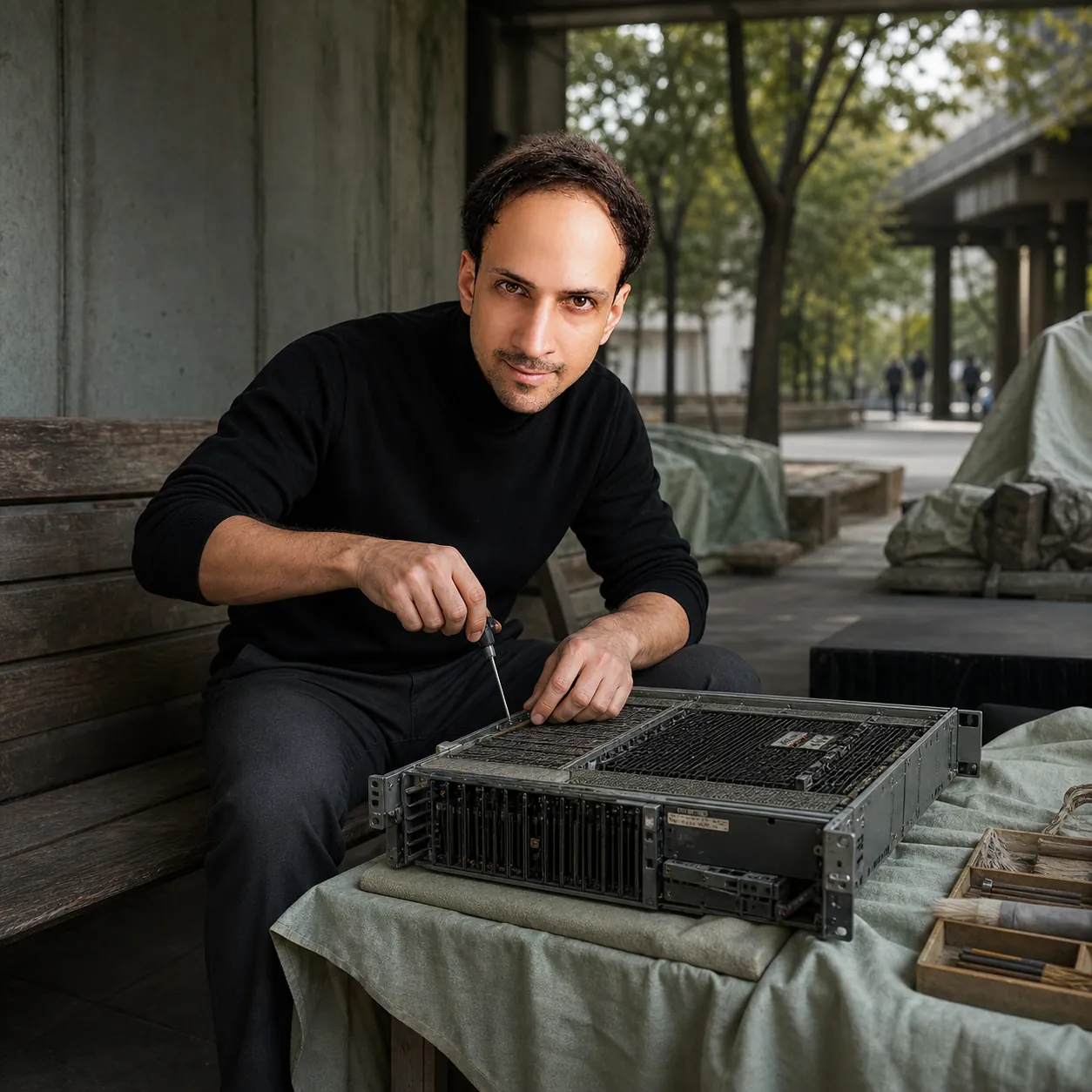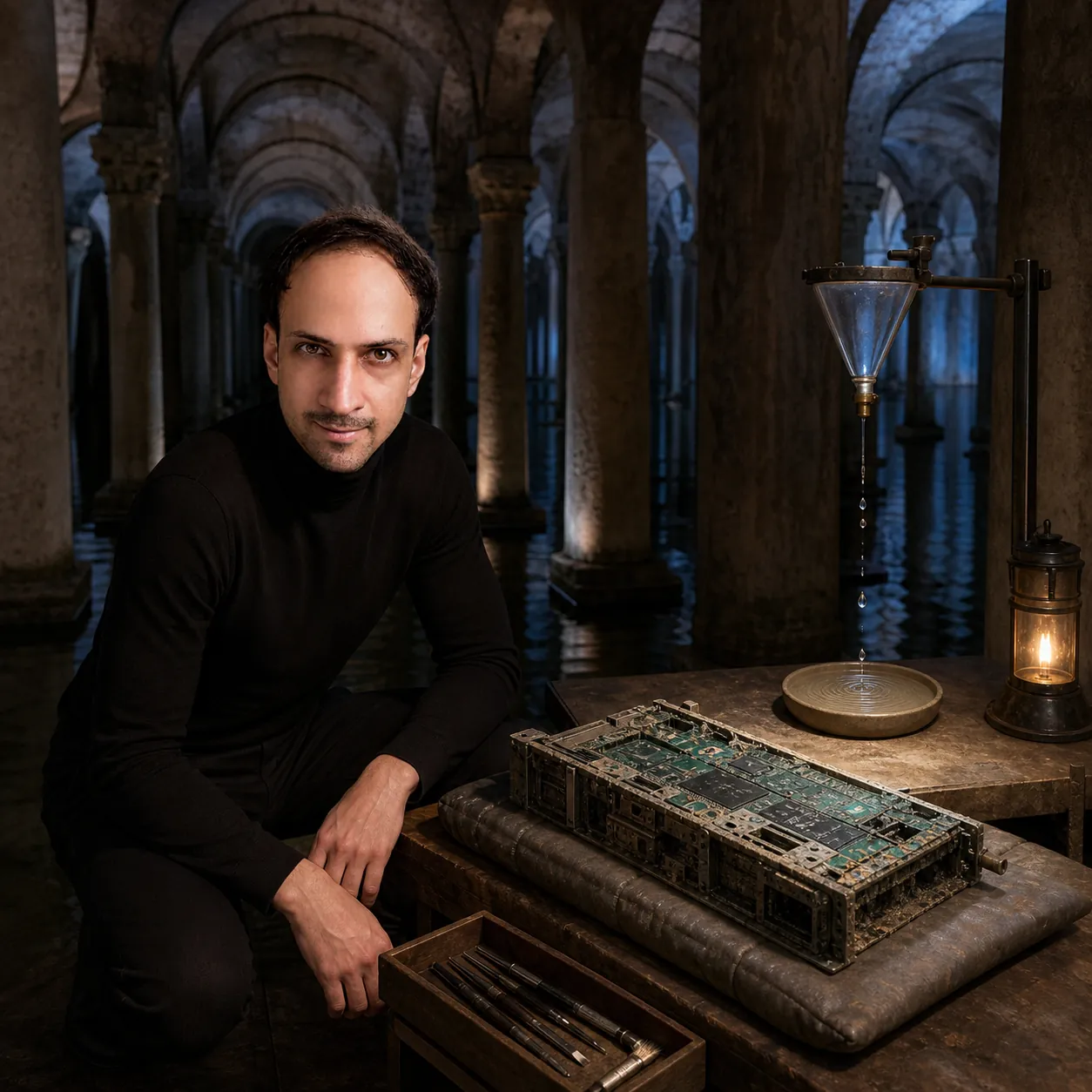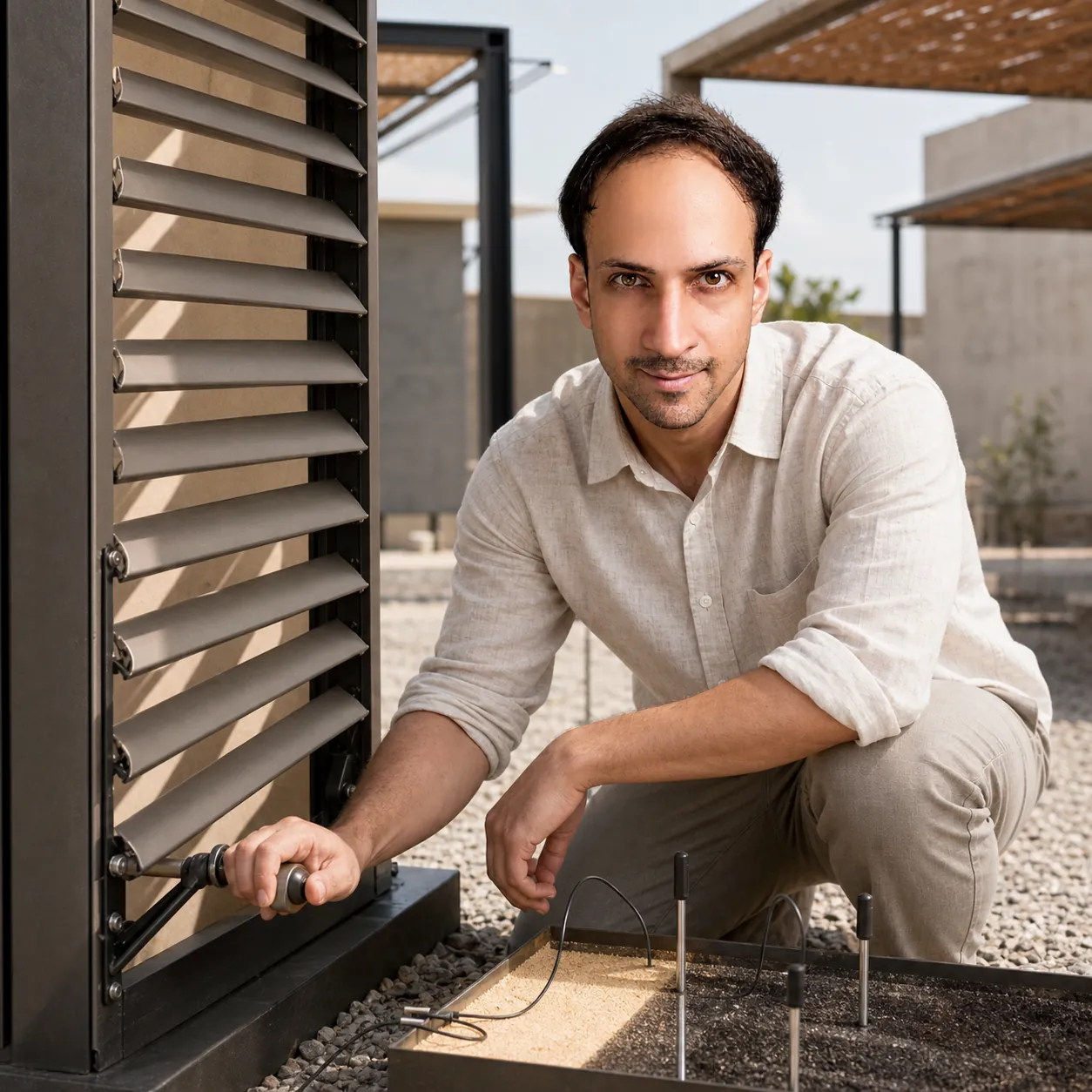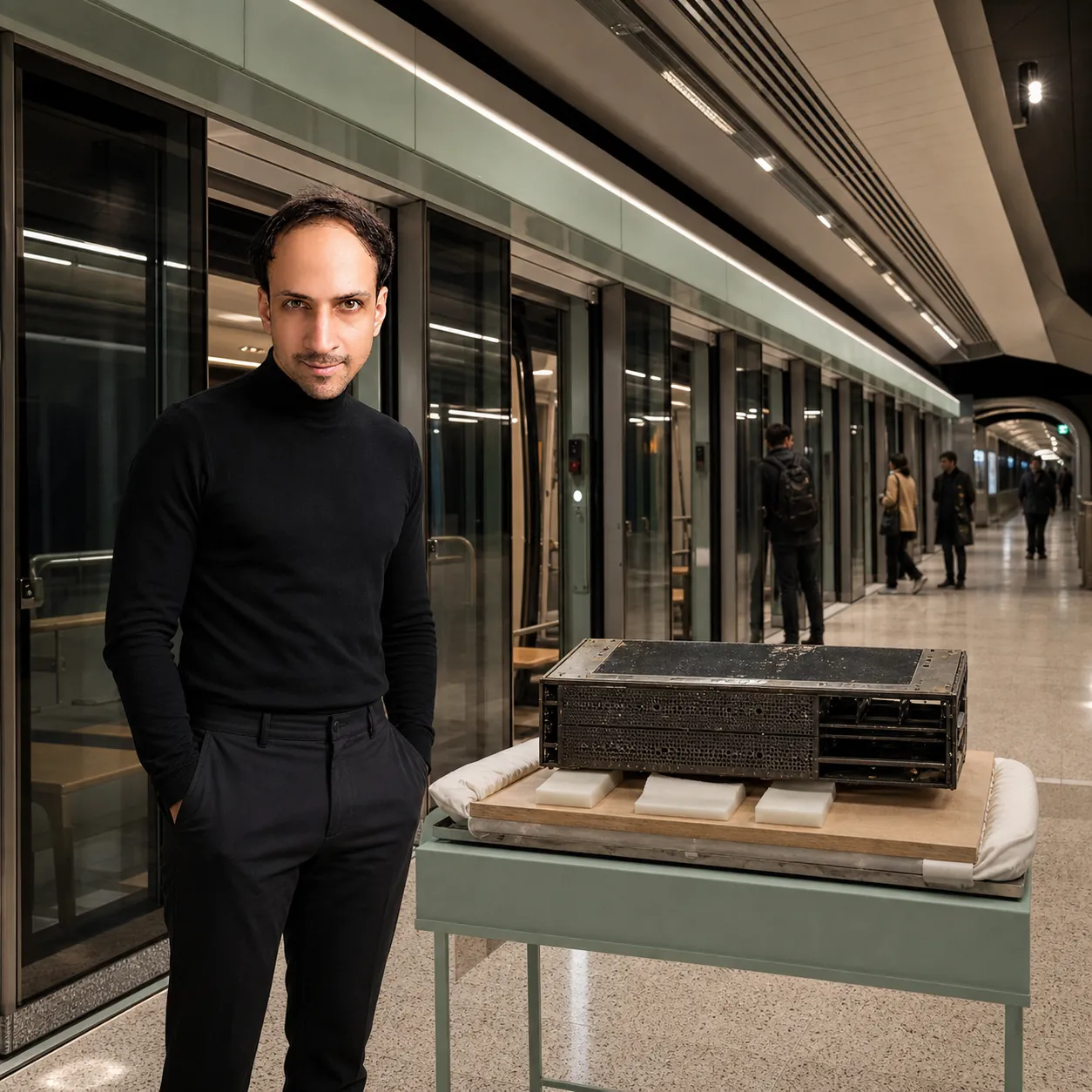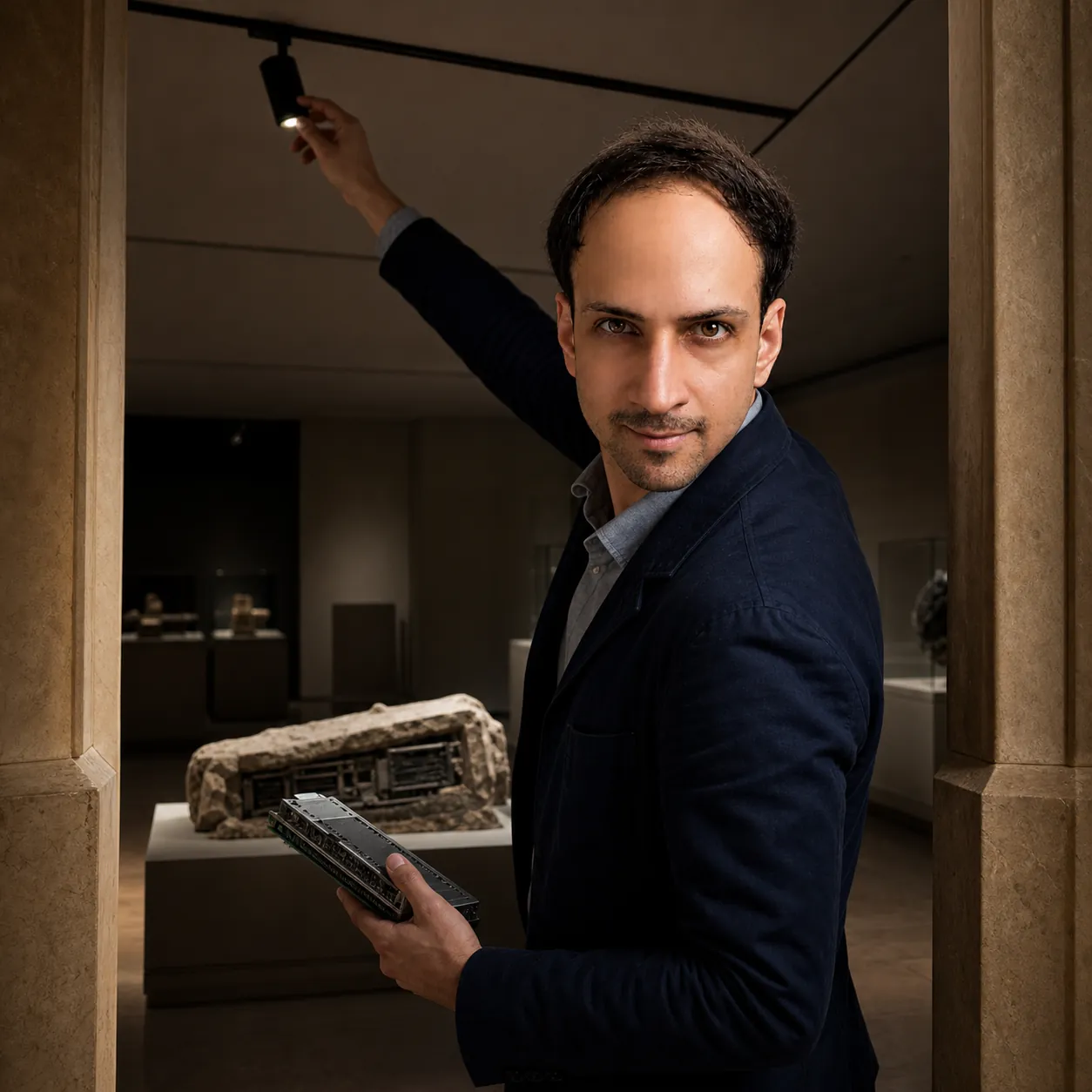
Turn your own photo into a future-archaeology installation portrait in an empty gallery at closing time. Keeps your face unchanged.
من نص البرومبت
Use the attached reference photo as the identity reference: keep the same face, skin tone, hair and features as the person in that photo, without beautifying, aging or altering them. Create a square 1:1 museum-catalog frame with a strong first read and a slower second read. Location: an empty gallery at closing time. Show them in a navy unstructured jacket over an open-collar shirt, switching off the final track light while looking back at the darkening room. Make one rigorous physical condition the conceptual engine: a server component conserved like a fragile archaeological object is excavated from a future layer while the current-day version remains in their hand. Explore why polished objects can conceal temporary conditions; direct expression and posture toward quiet alarm, never melodrama or ad-like confidence. Frame through one real architectural opening, with the foreground sharp enough to feel physical but never covering the face. Make the composition keep surfaces pristine while function is impossible. Render it as future-archaeology installation photography mixing conservation aesthetics, material aging, precise artifact staging, and emotionally restrained portraiture, using cool early-morning ambient light balanced by one warm practical source and a palette of warm stone, charcoal, and muted olive. Keep one identity-locked person, credible hands and fingers, natural fabric, and coherent scale, contact, reflections, shadows, airflow, deformation, and materials. Background people only when essential, always secondary and clearly different. Avoid generic post-apocalyptic ruins, skulls, neon dystopia, fake museum labels, and obvious time-machine imagery. No text, labels, logos, signatures, watermarks, random symbols, plastic skin, excessive bloom, or glossy AI finish.