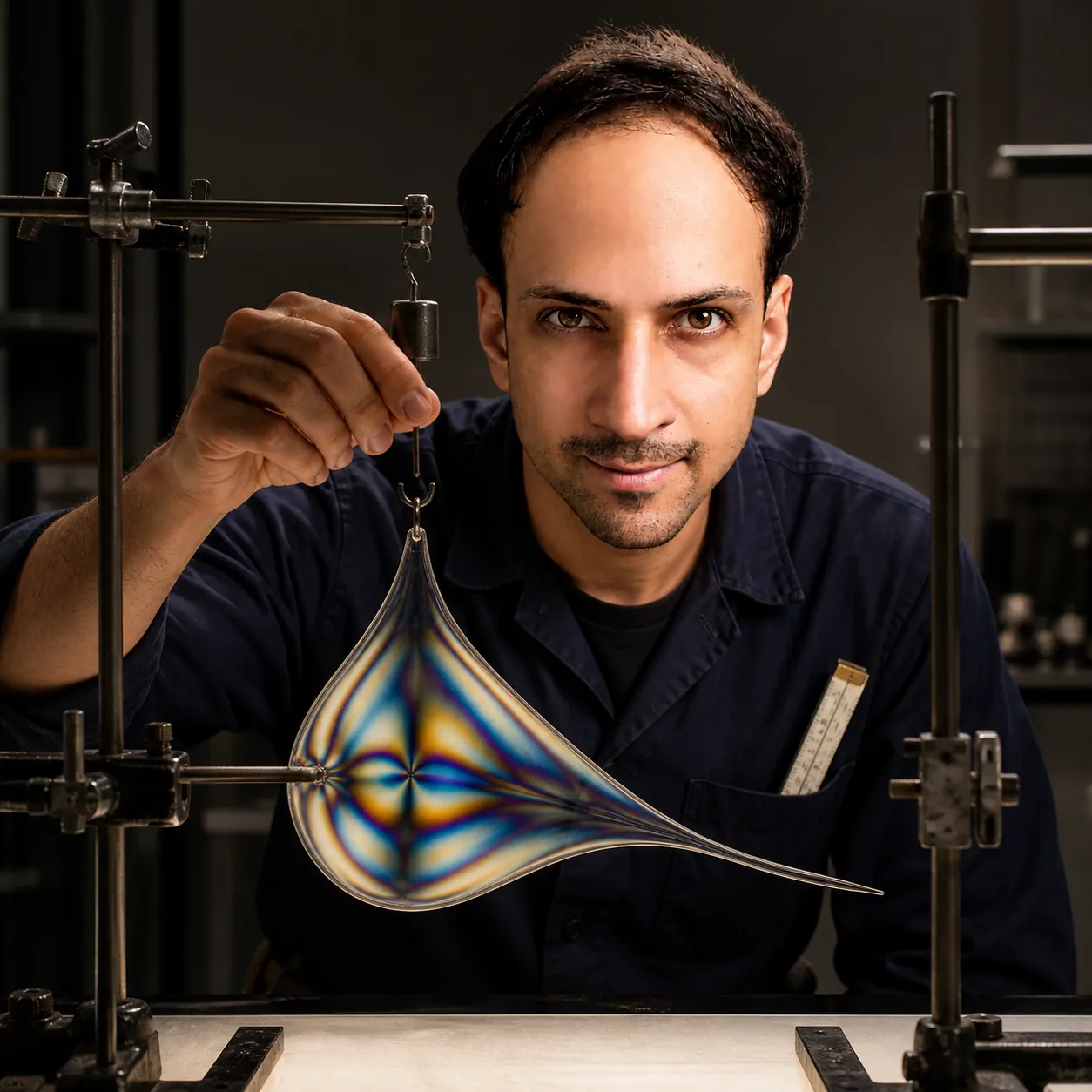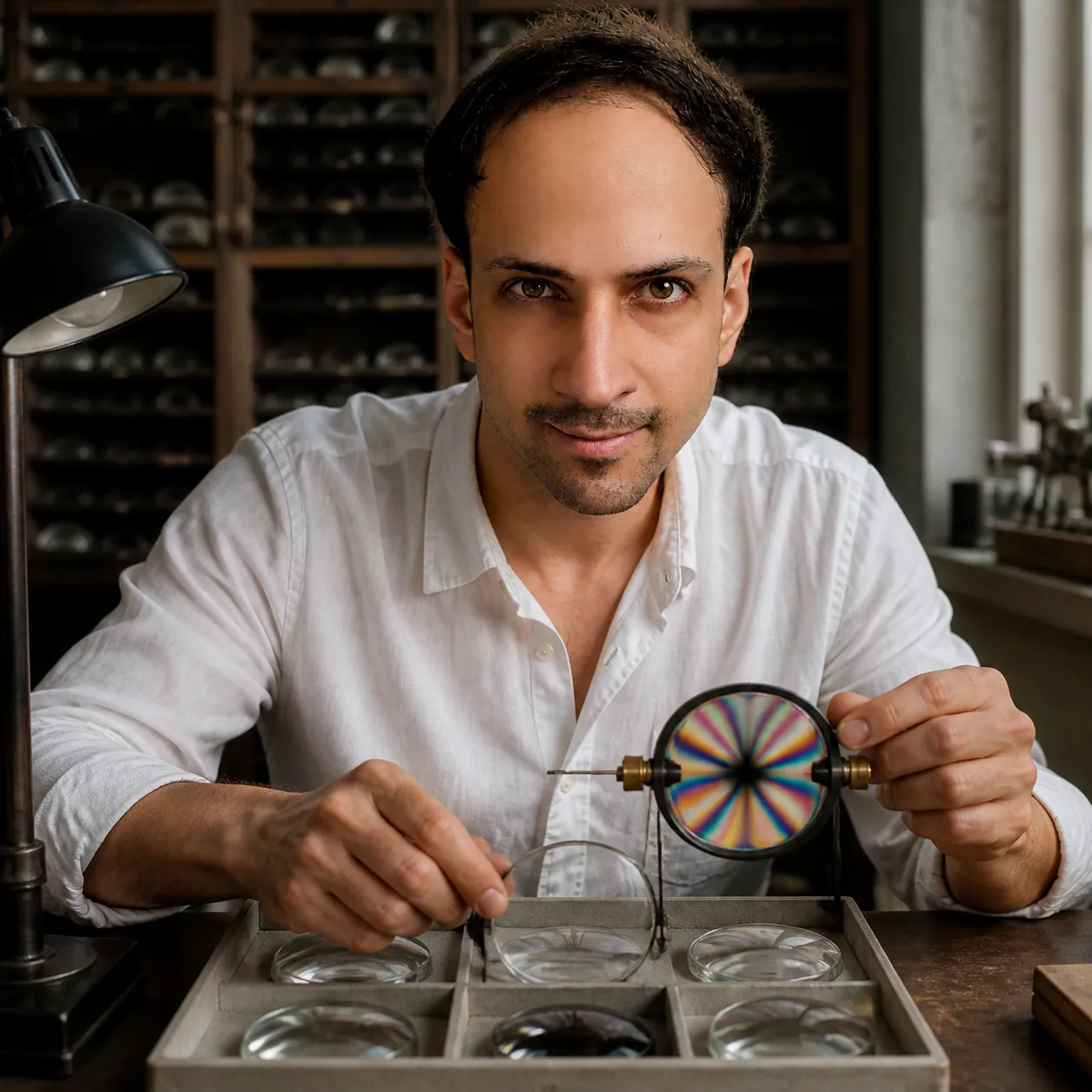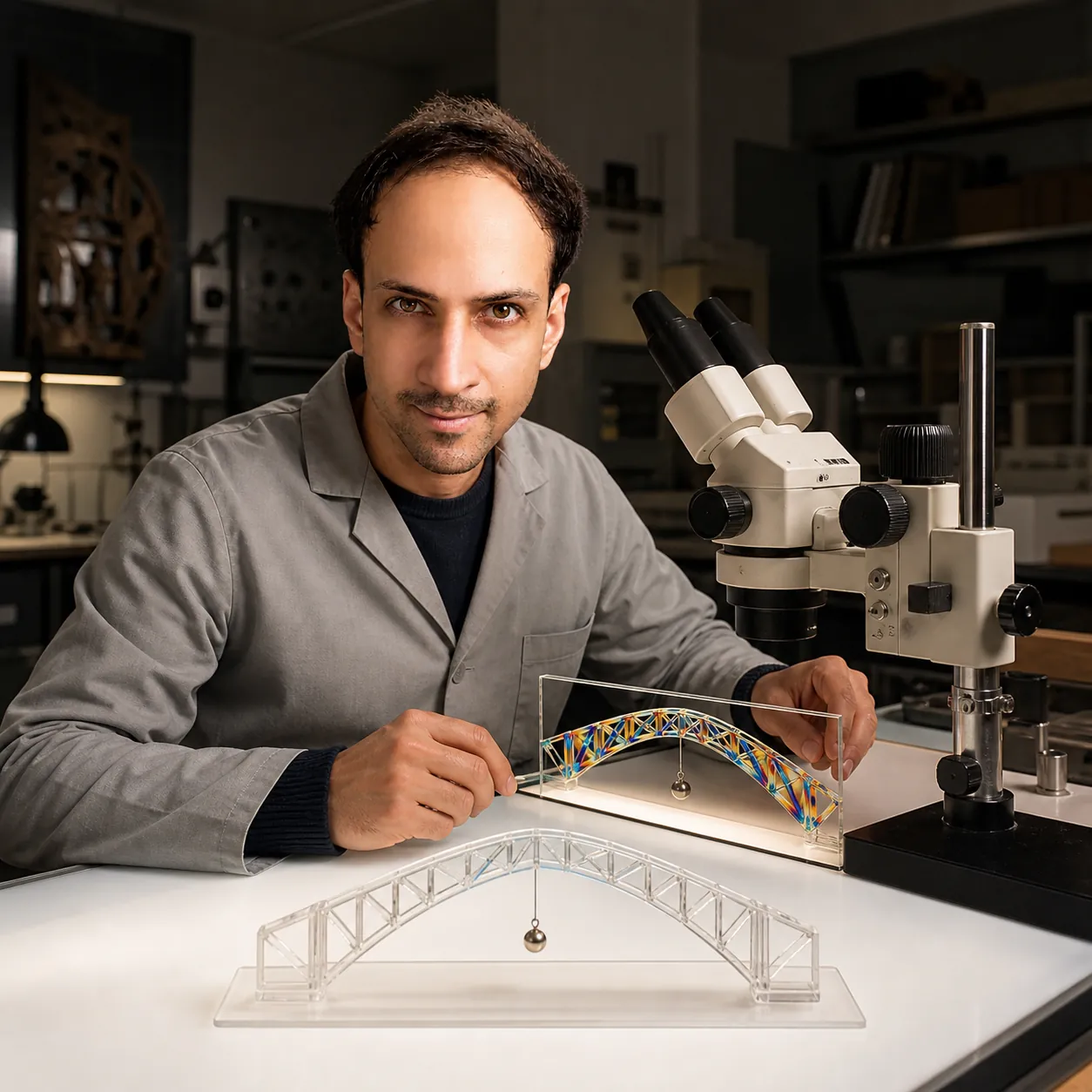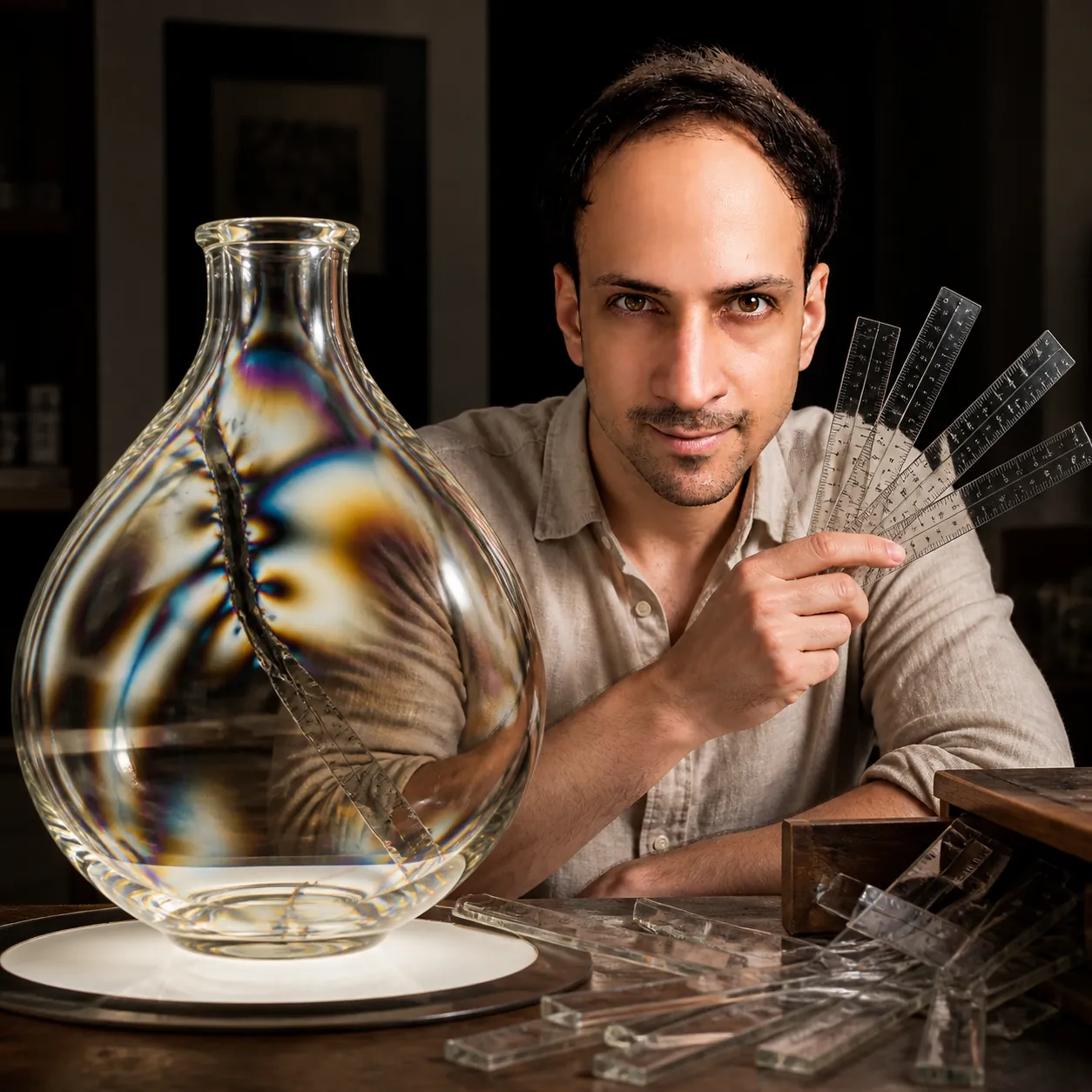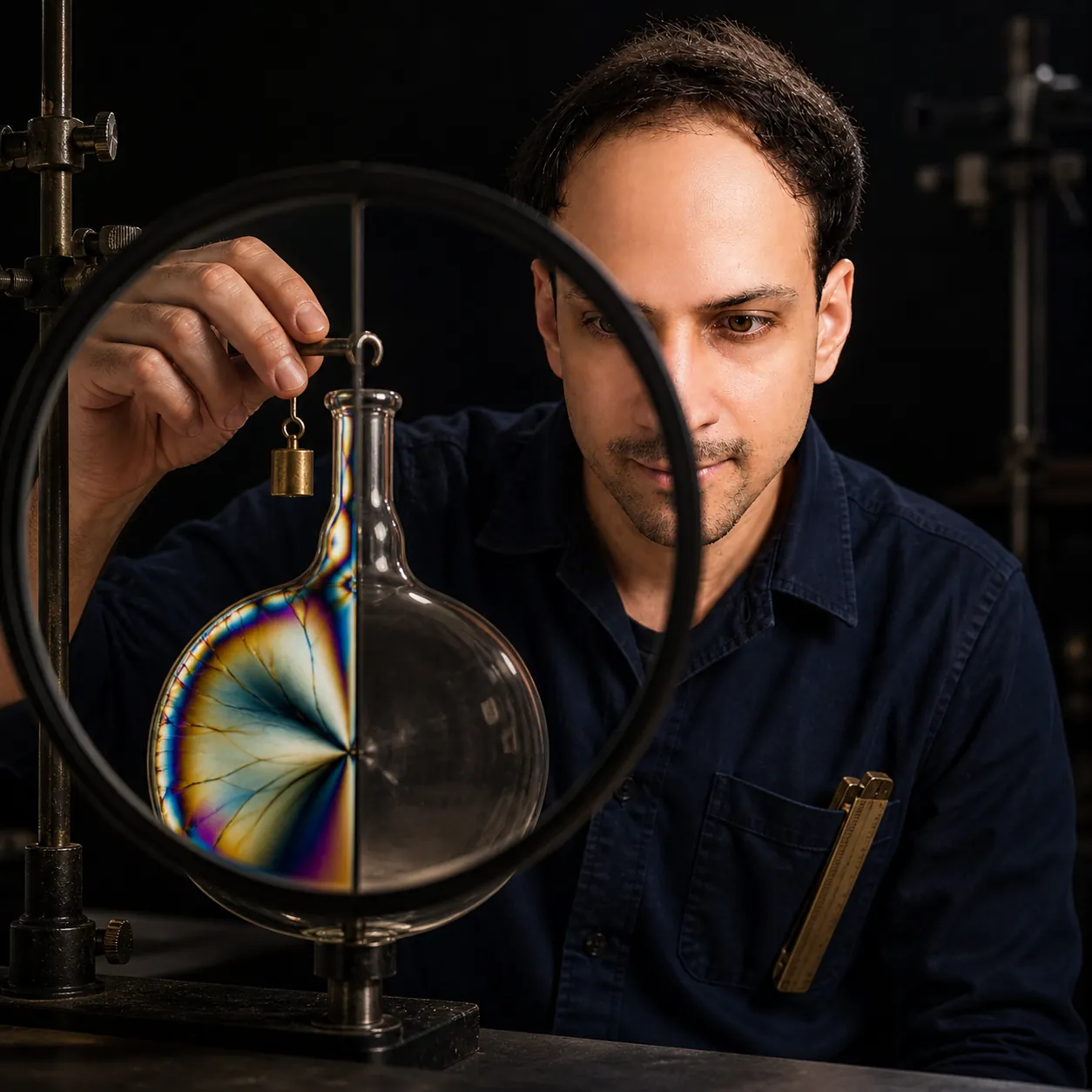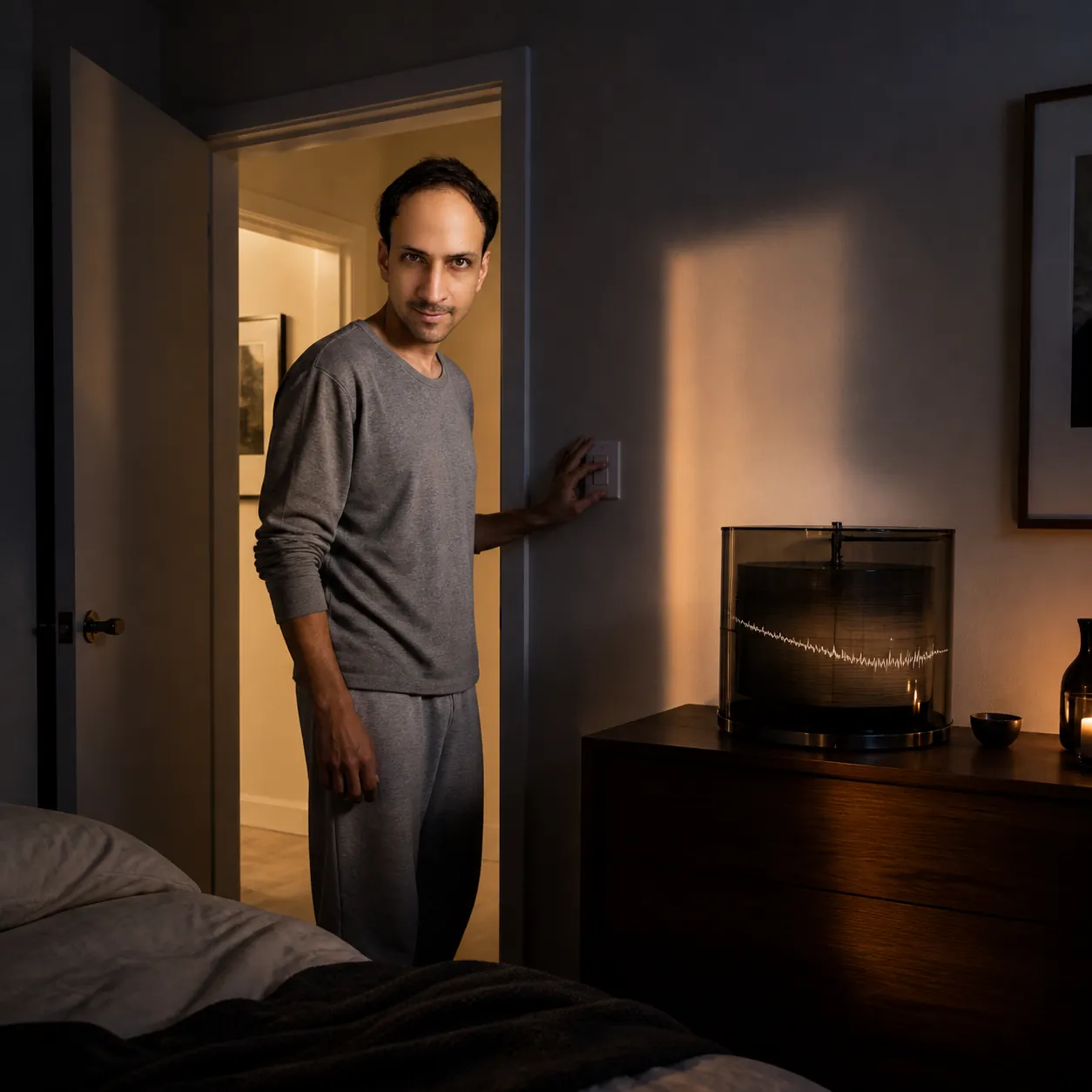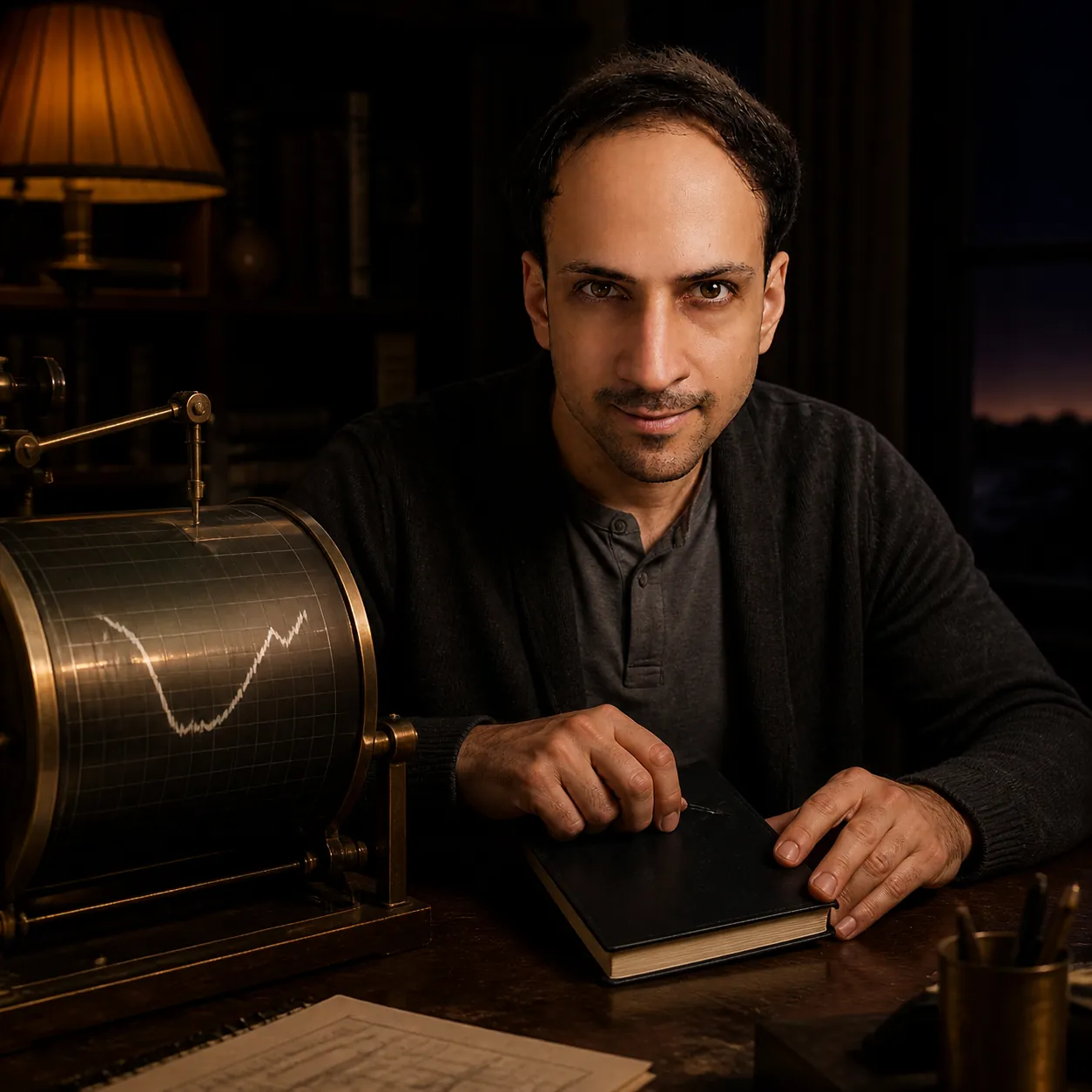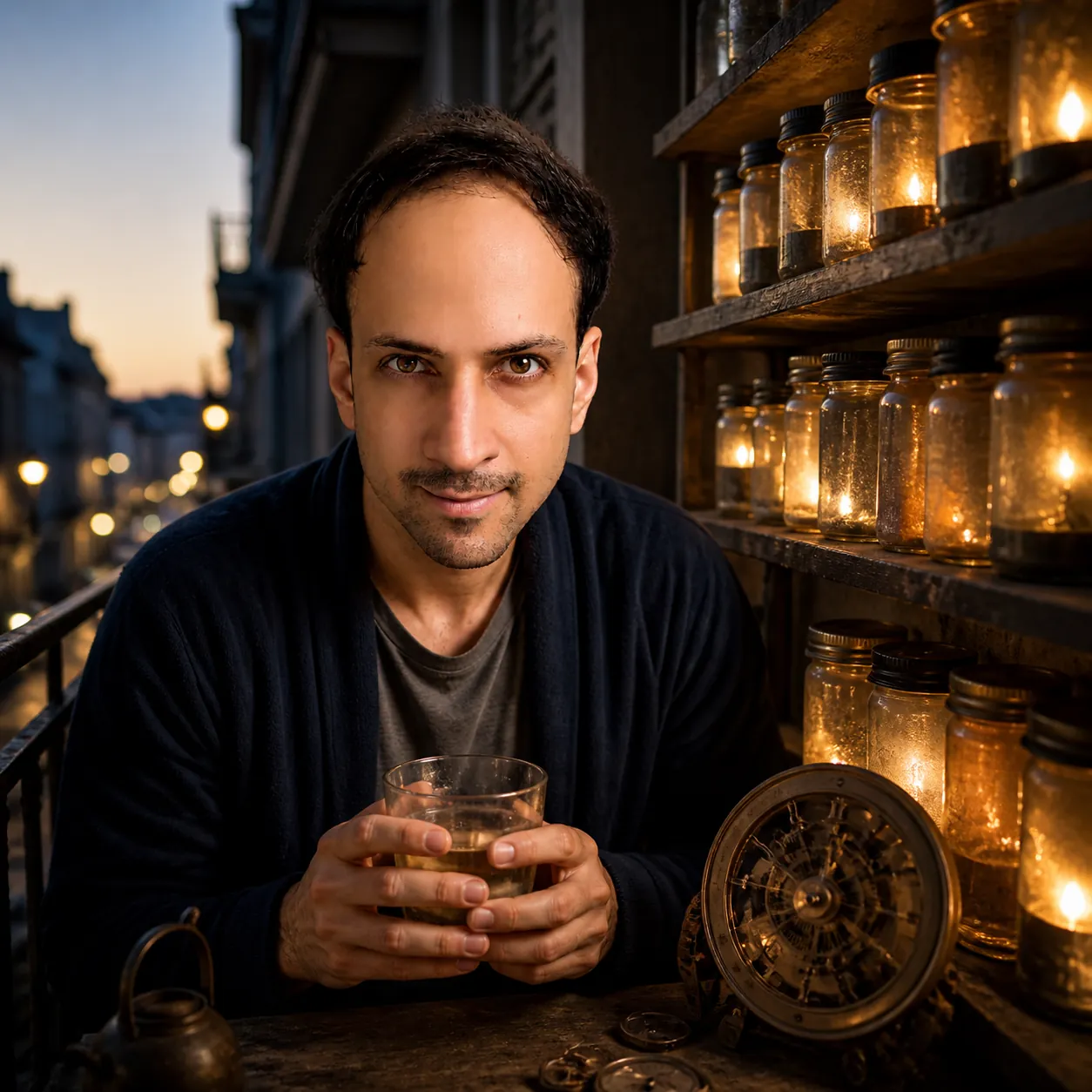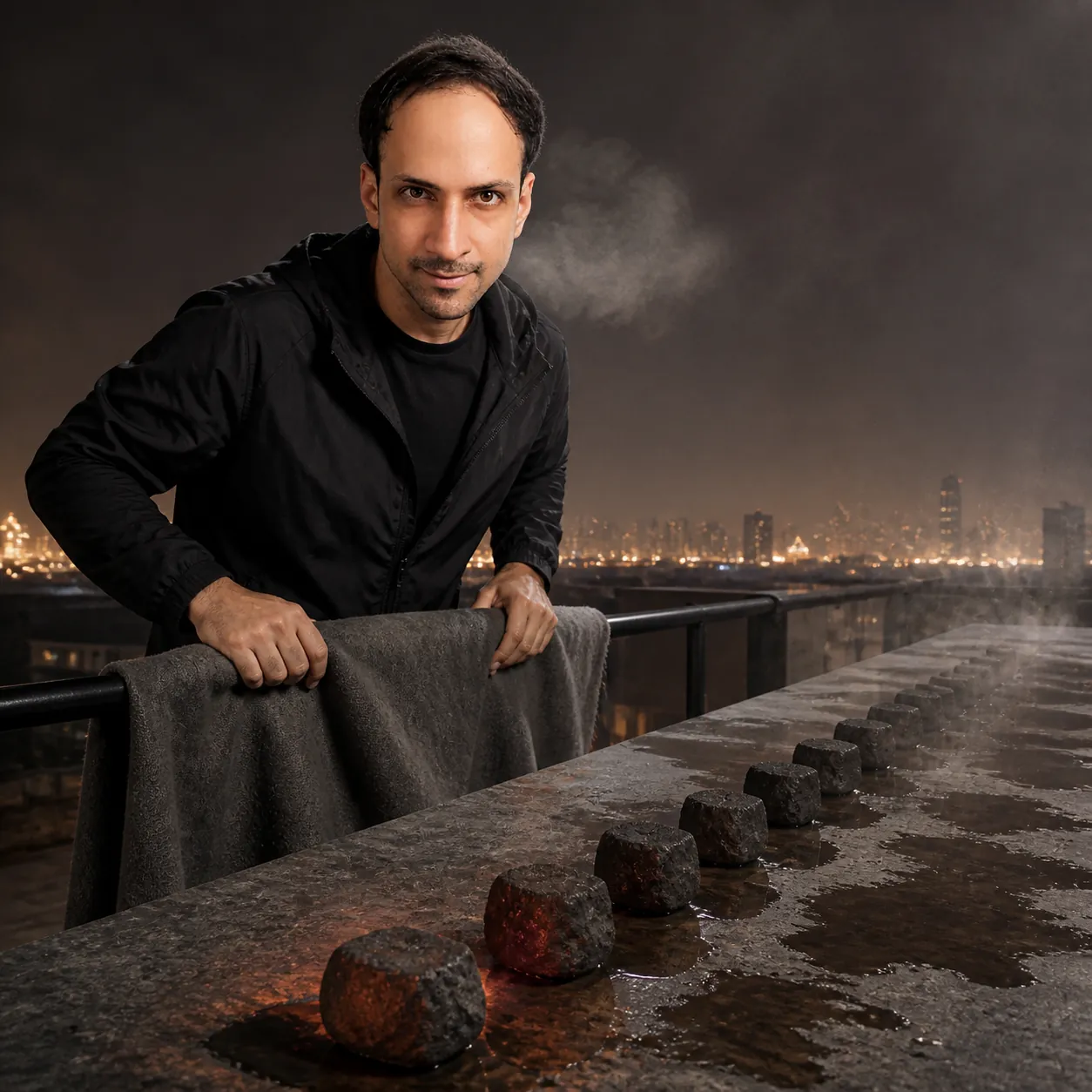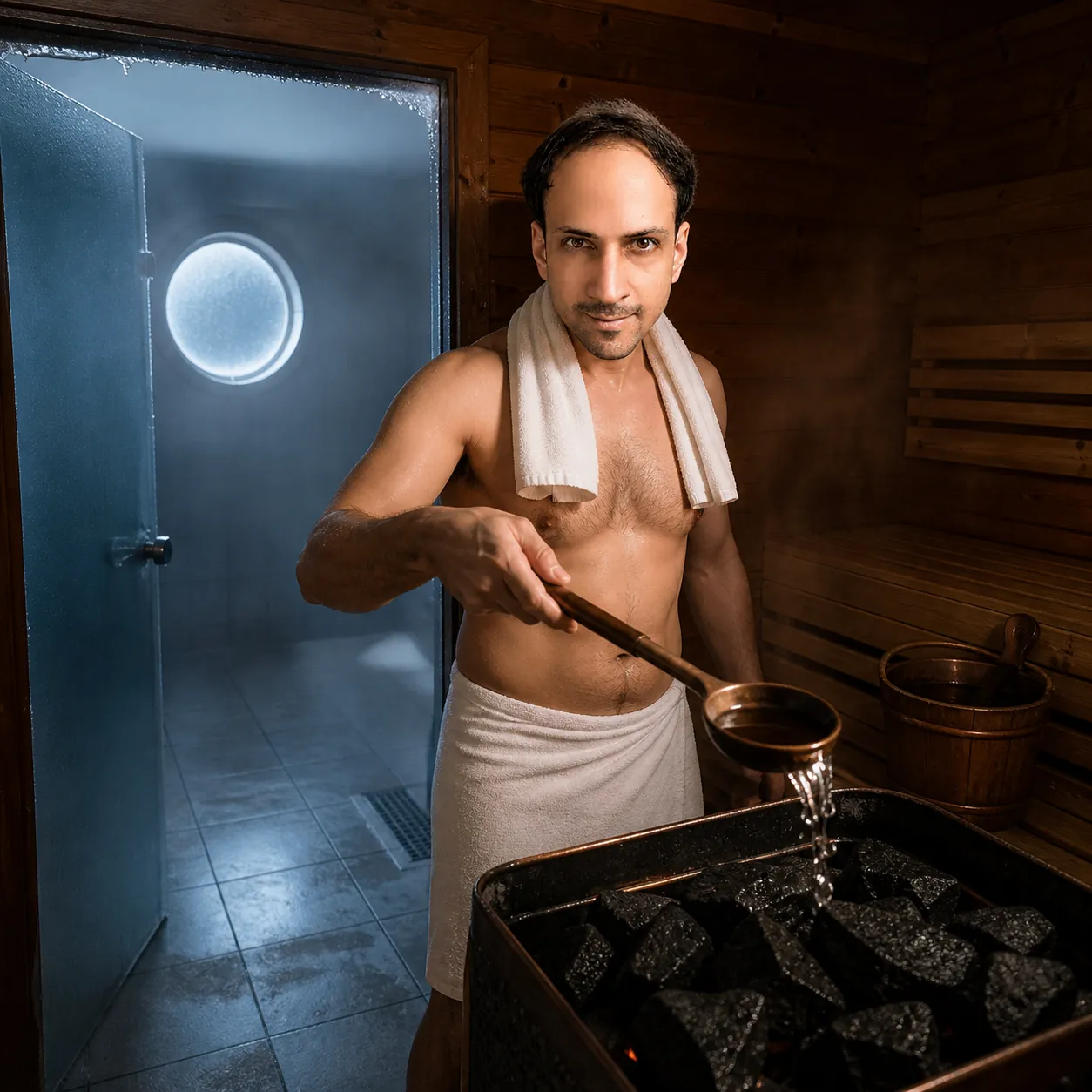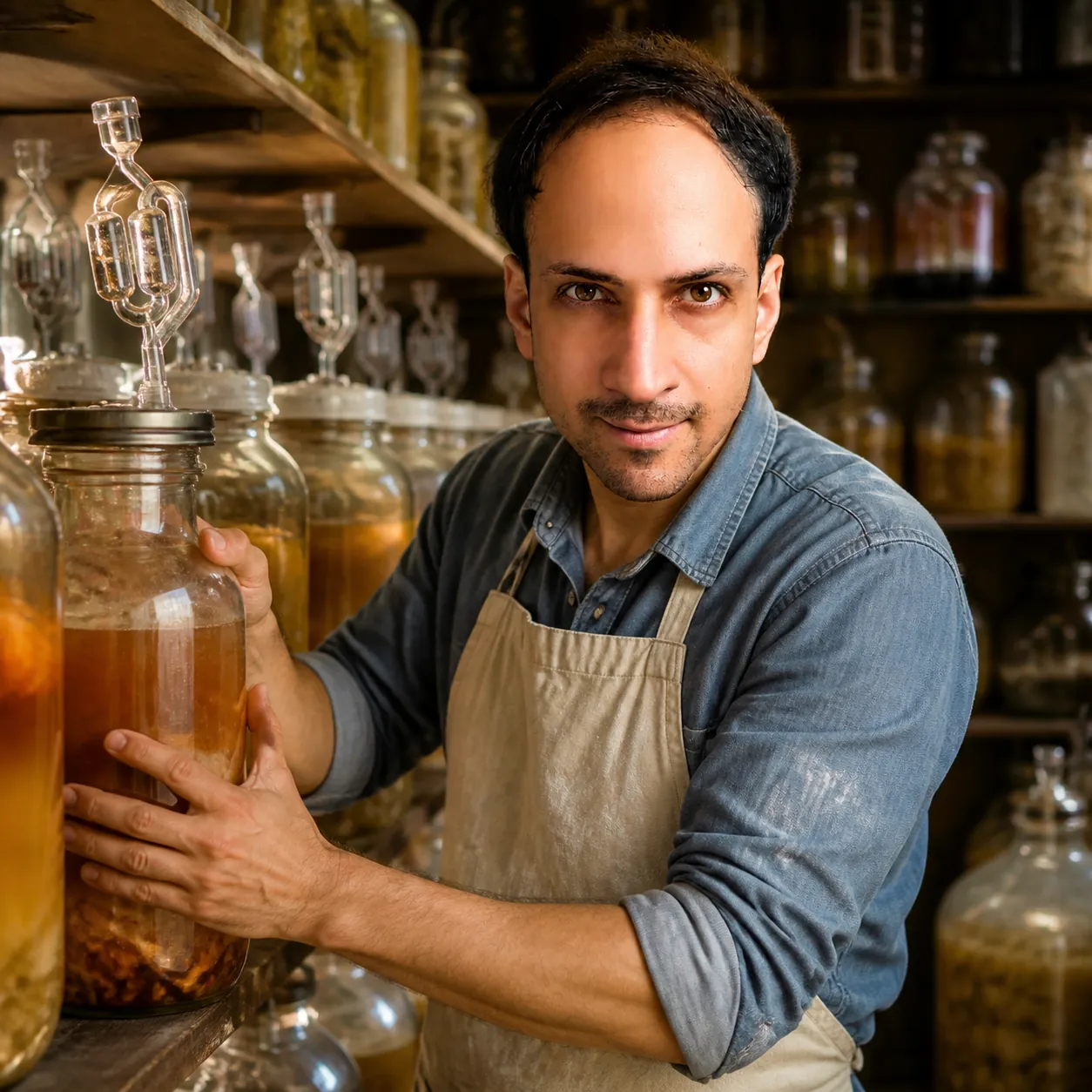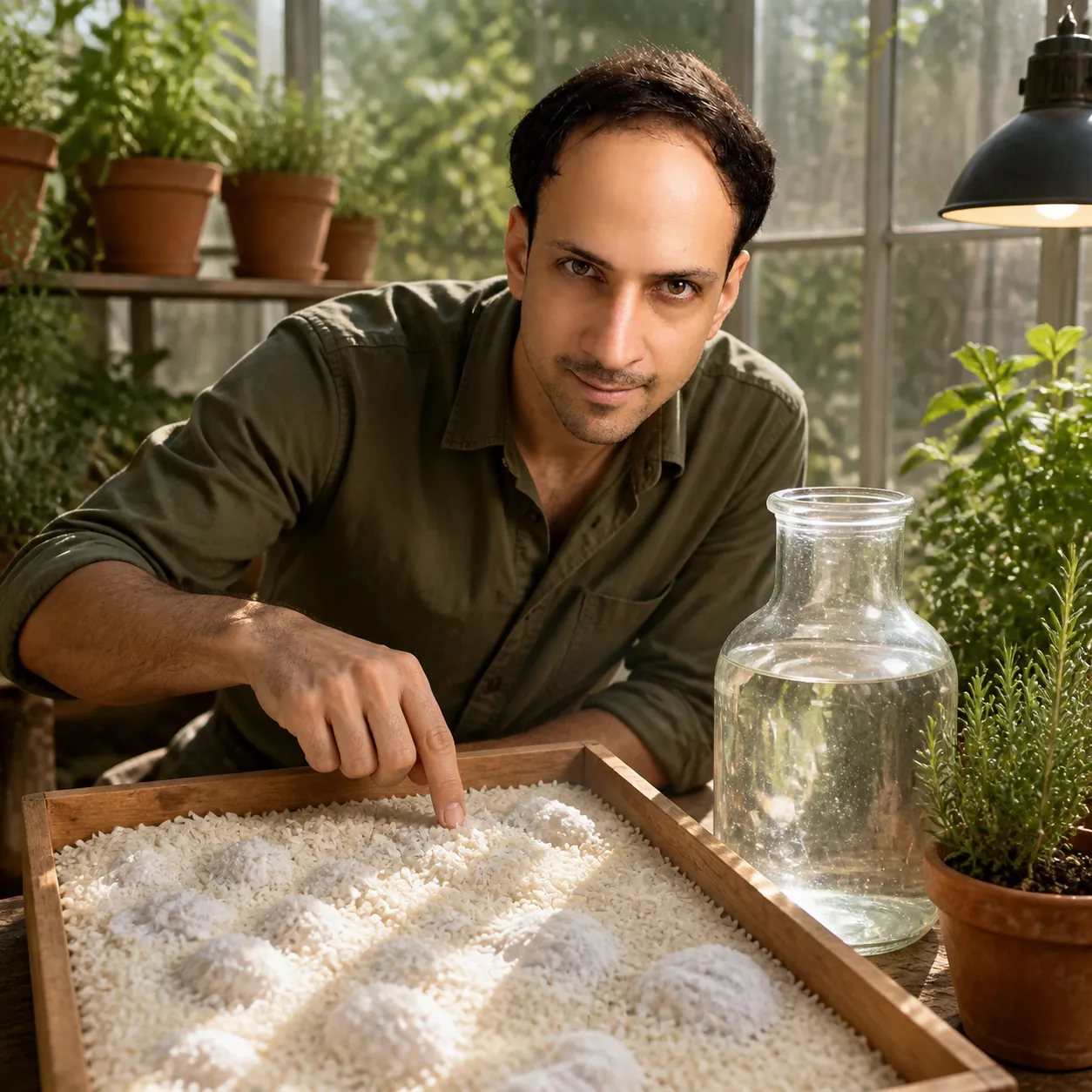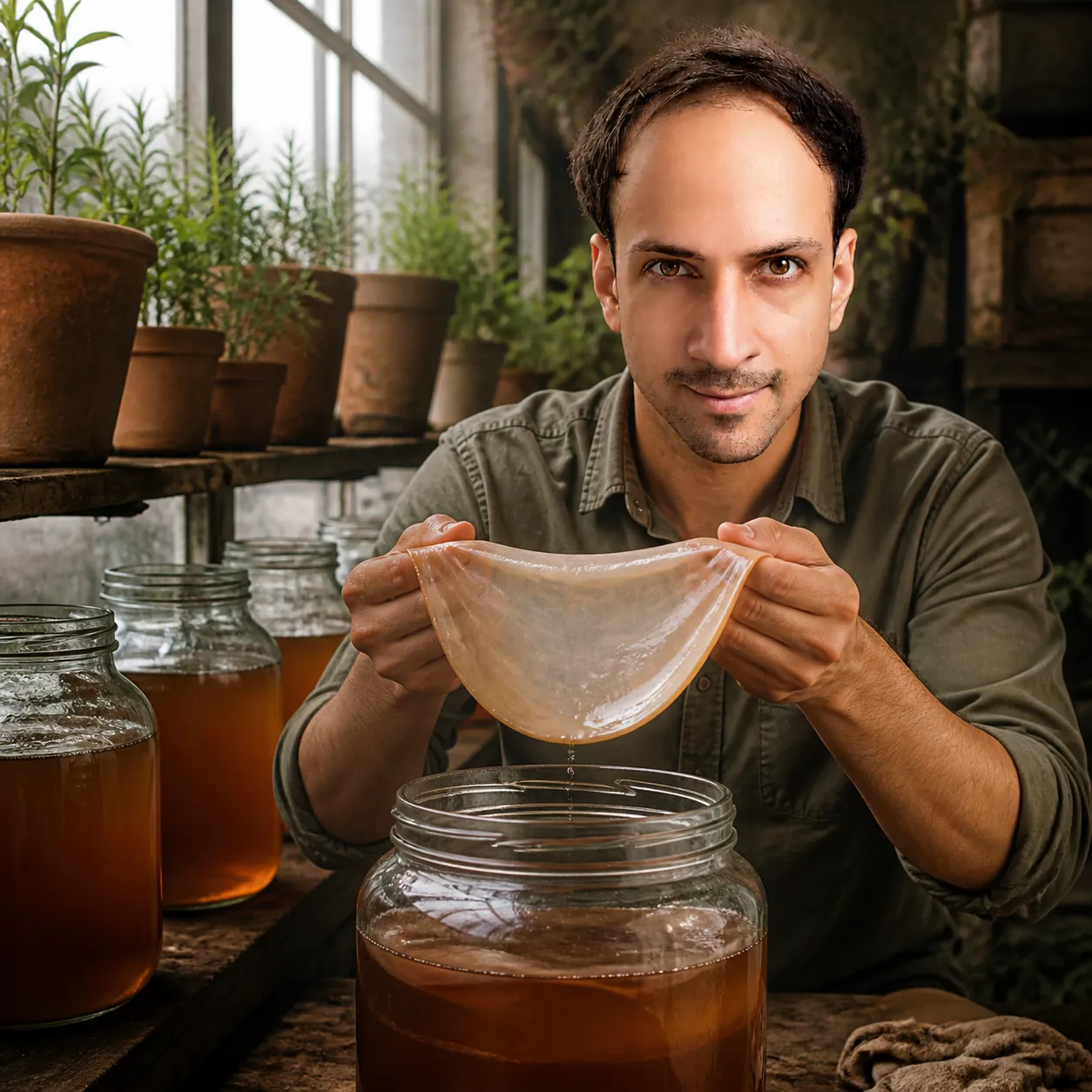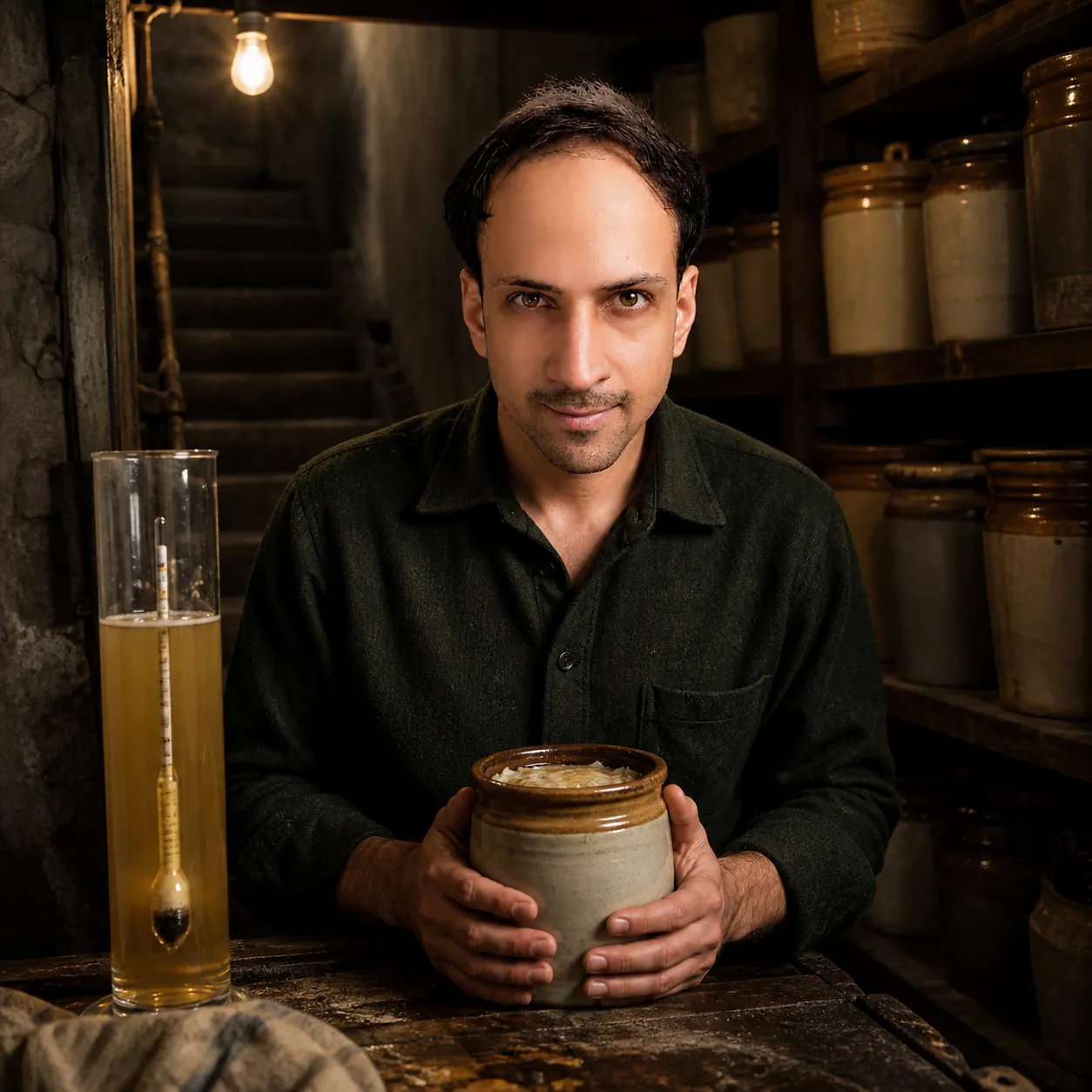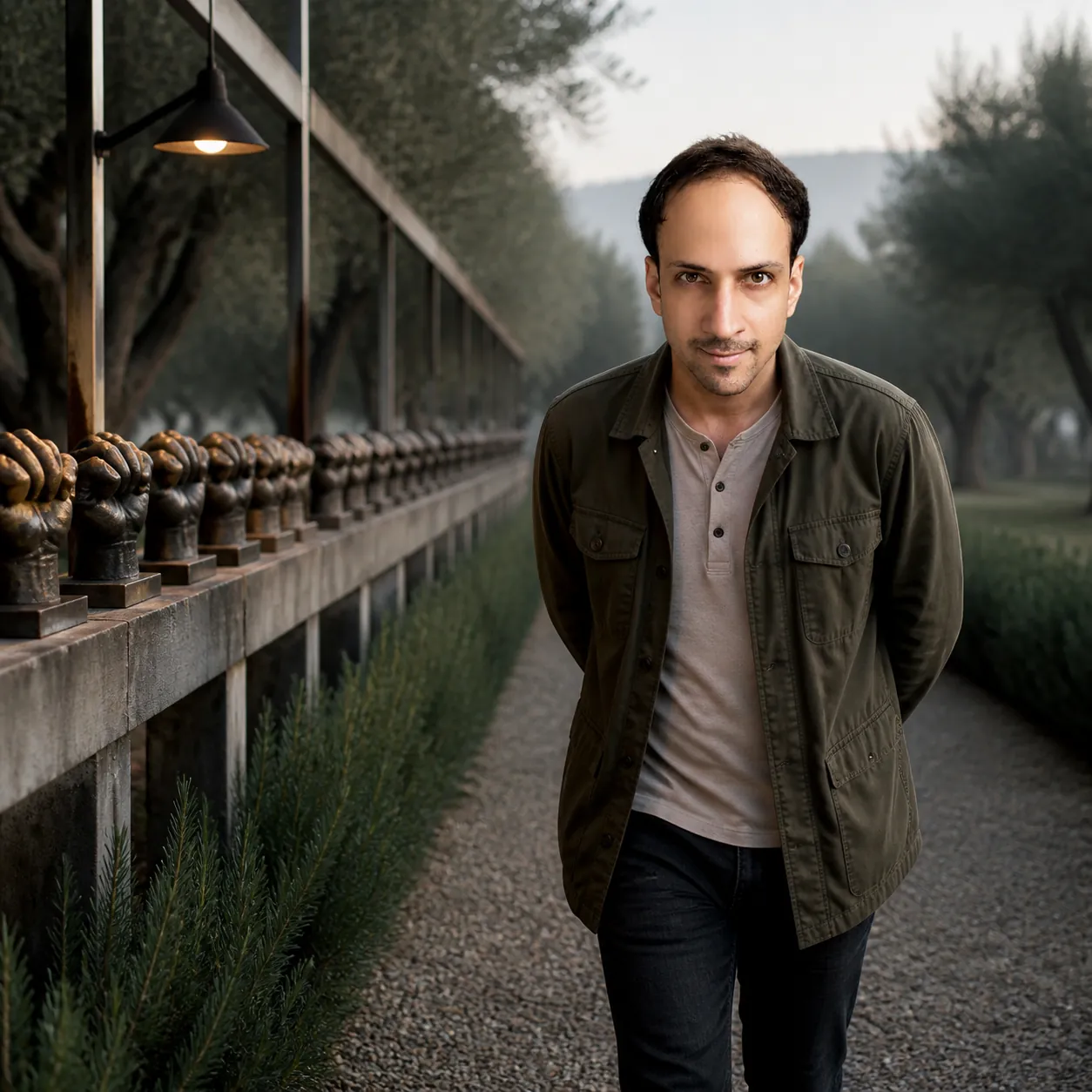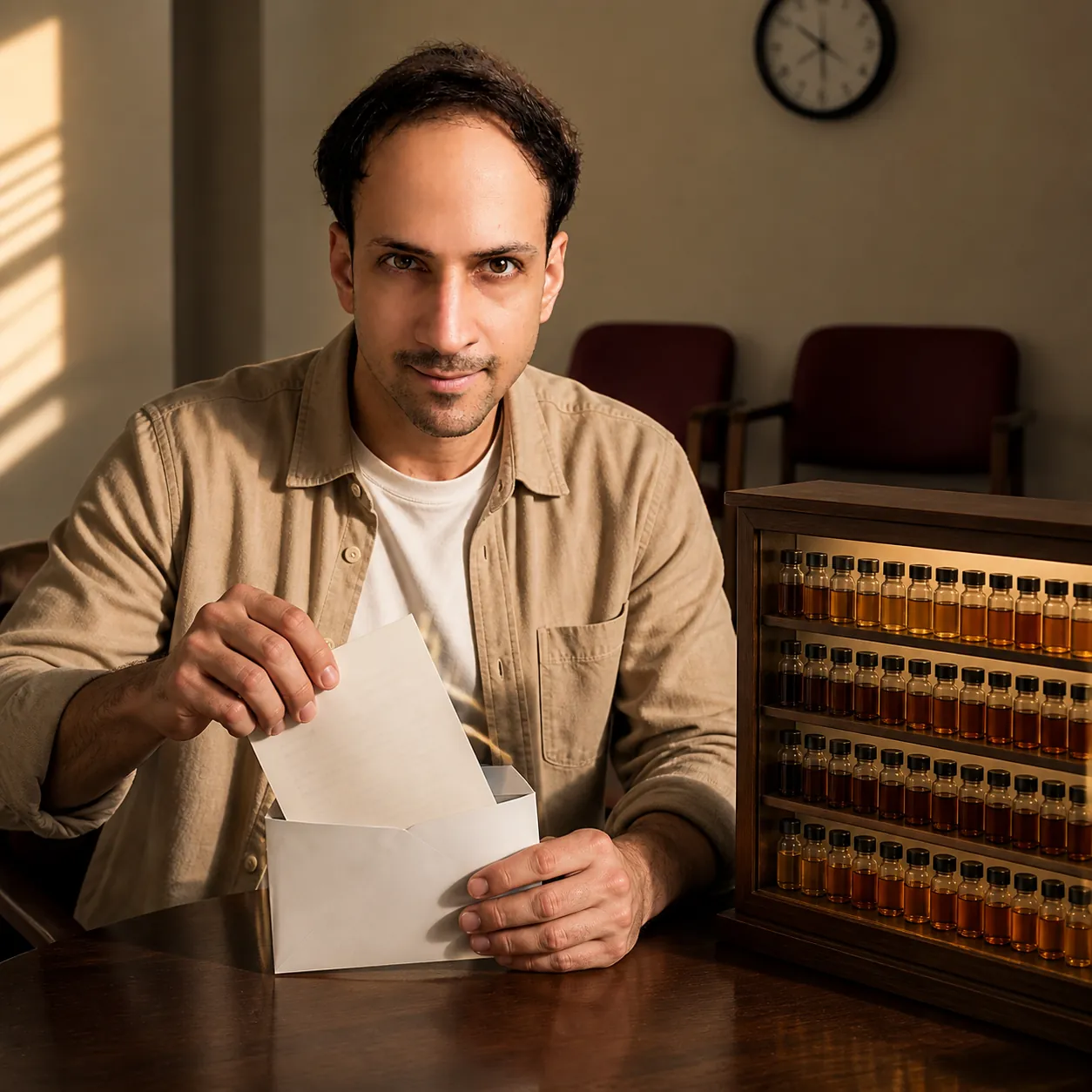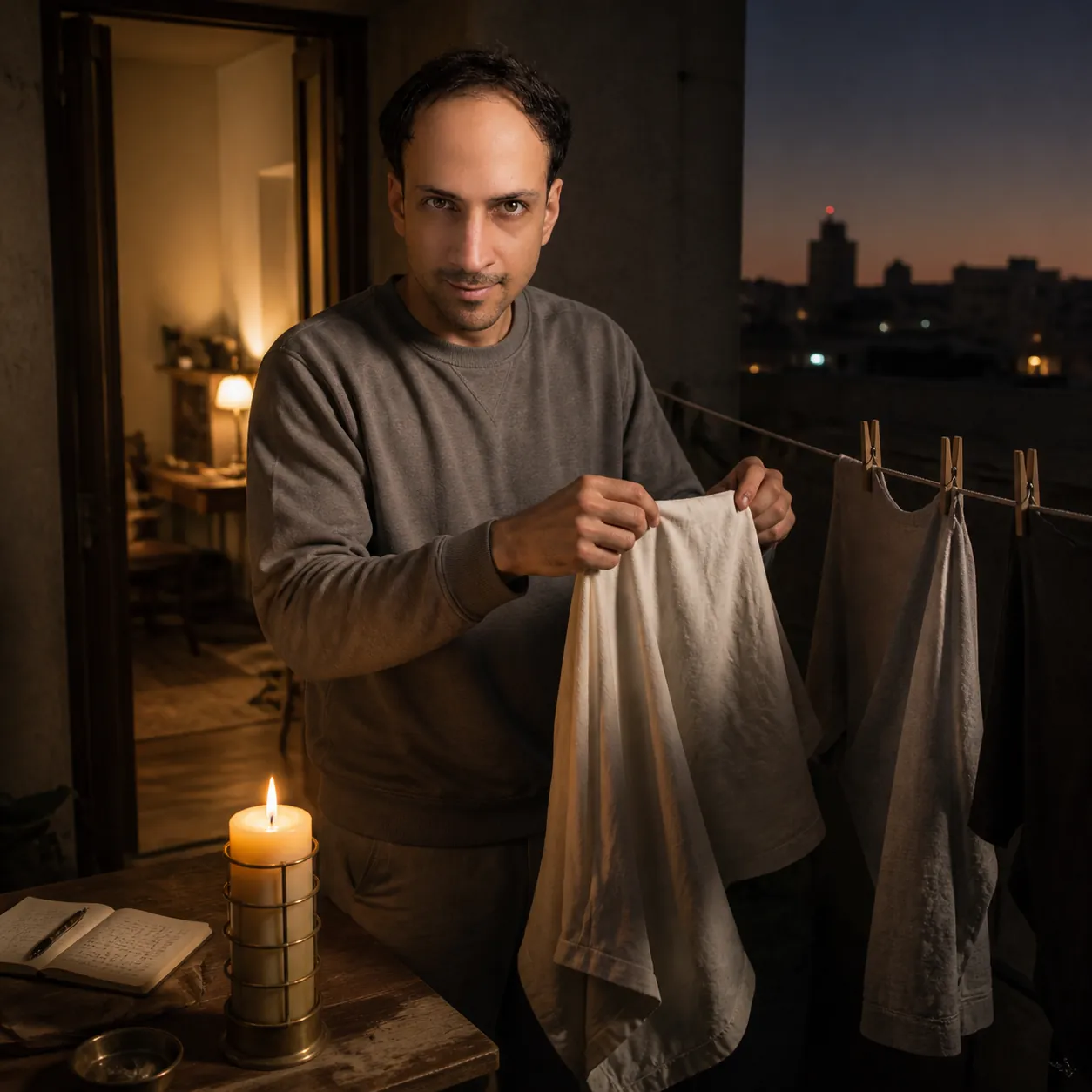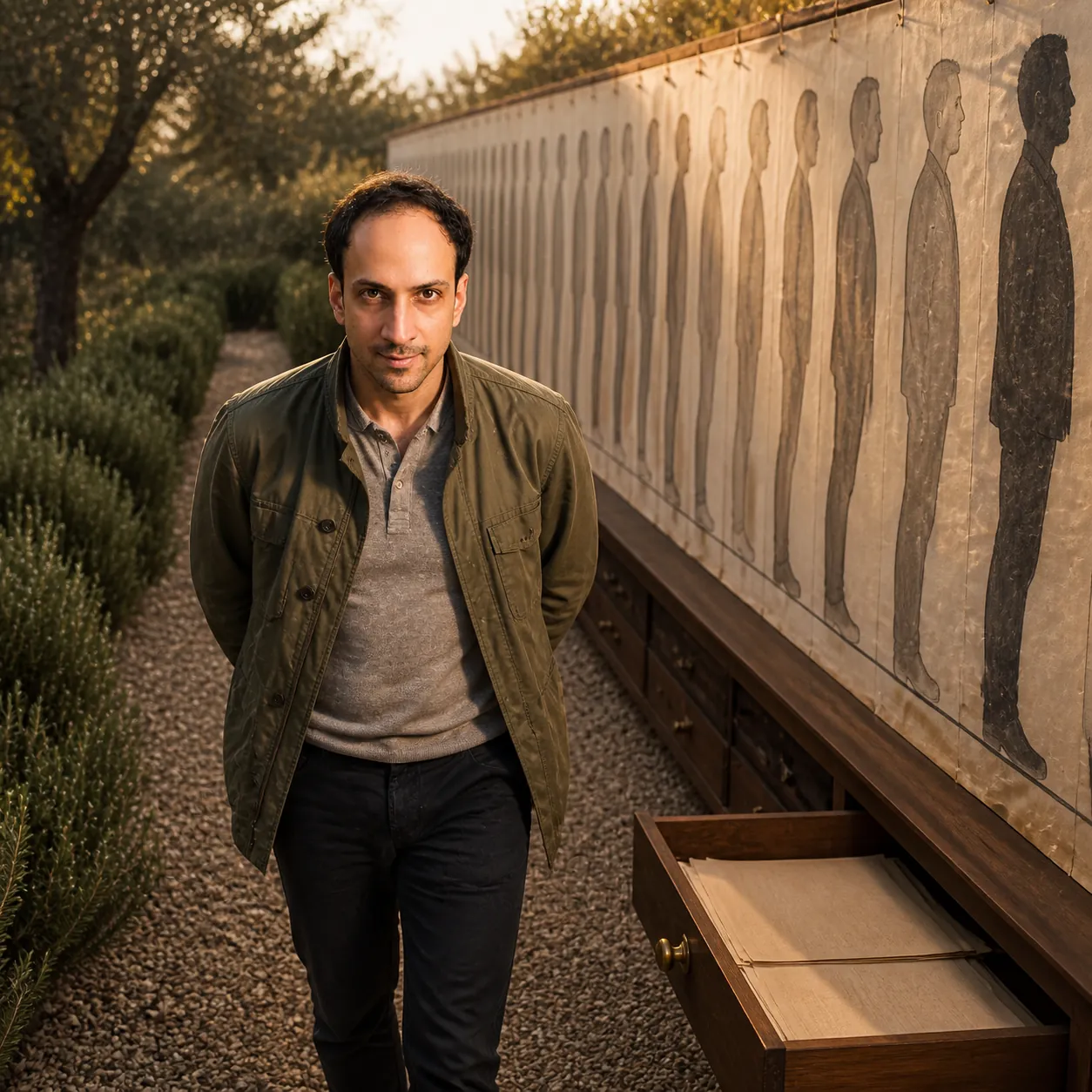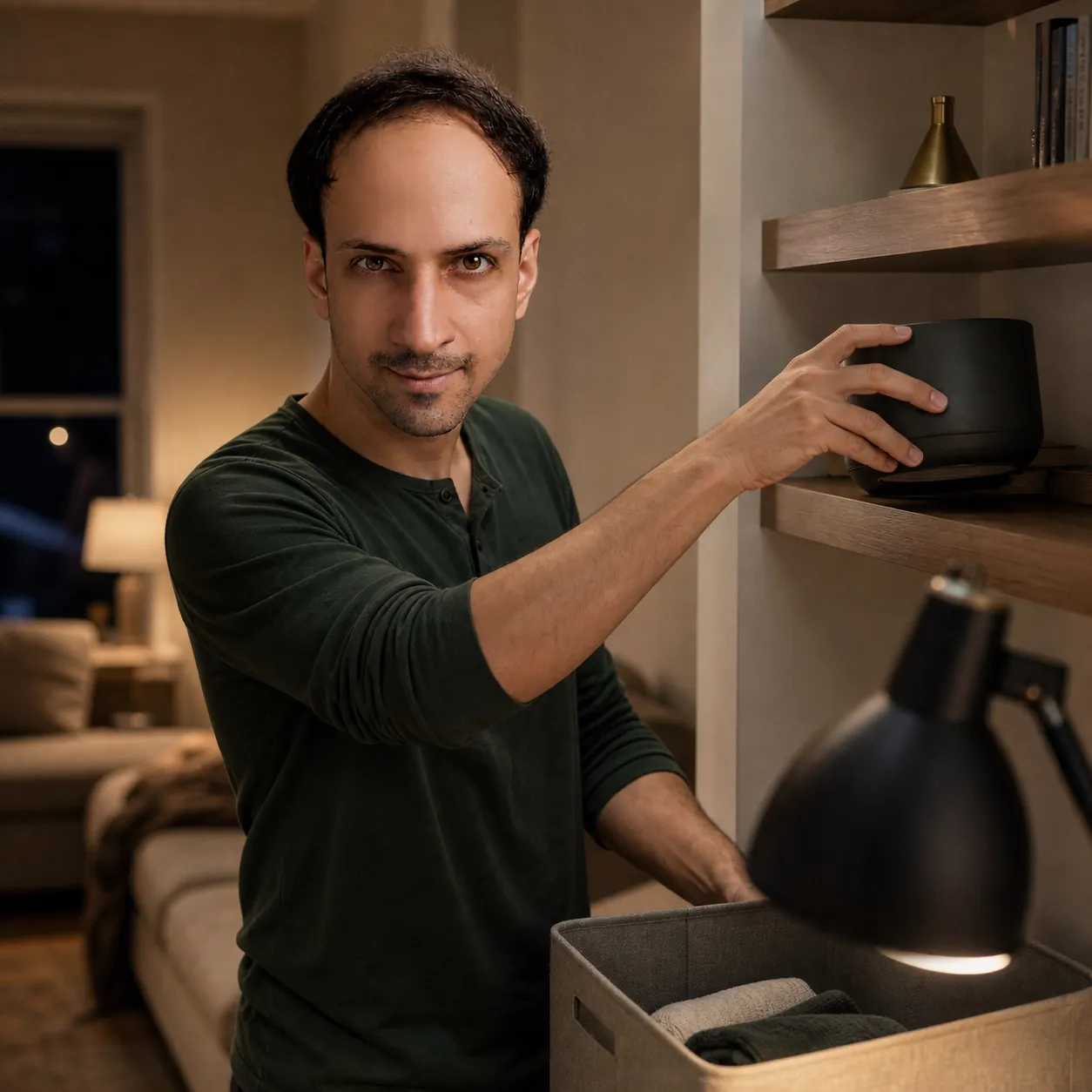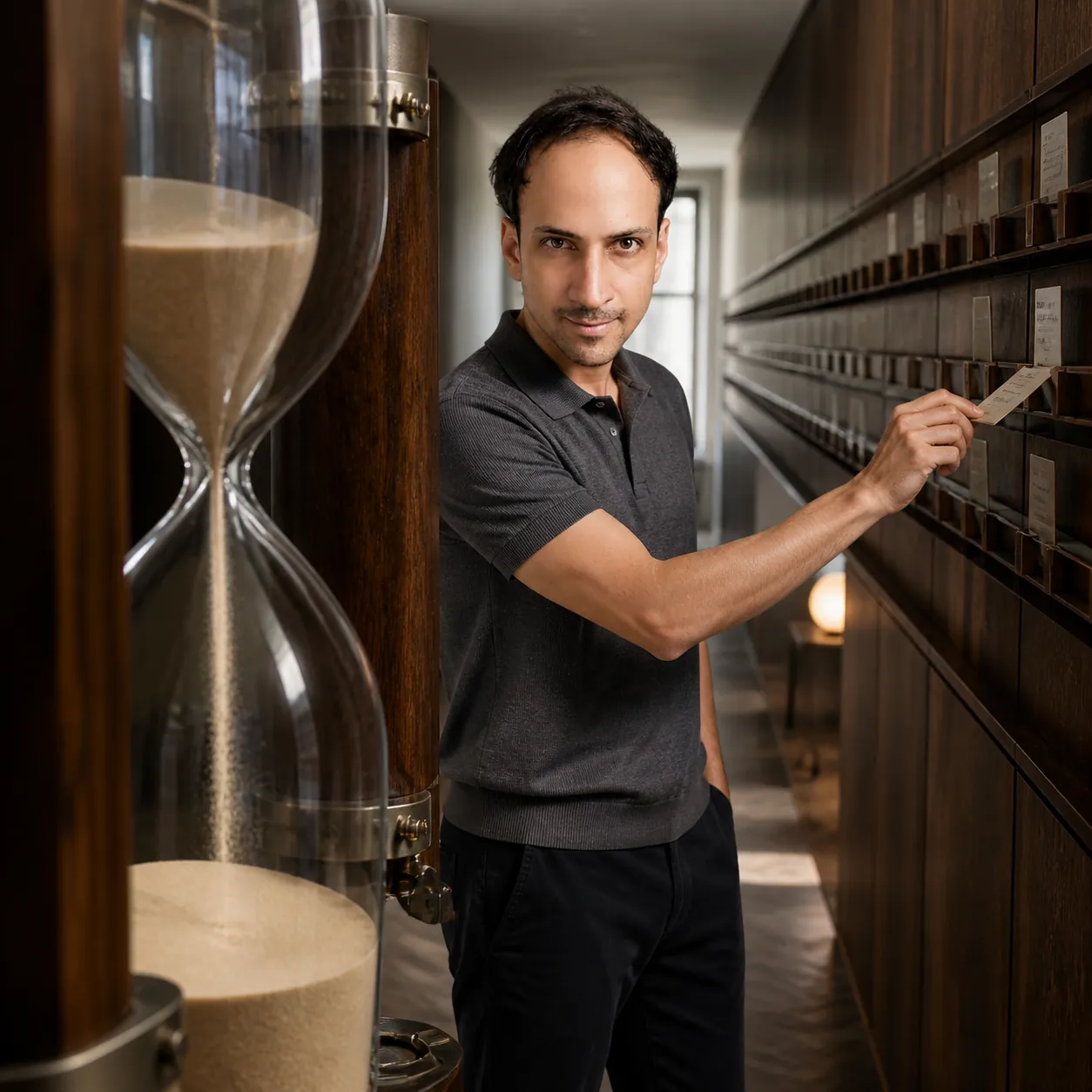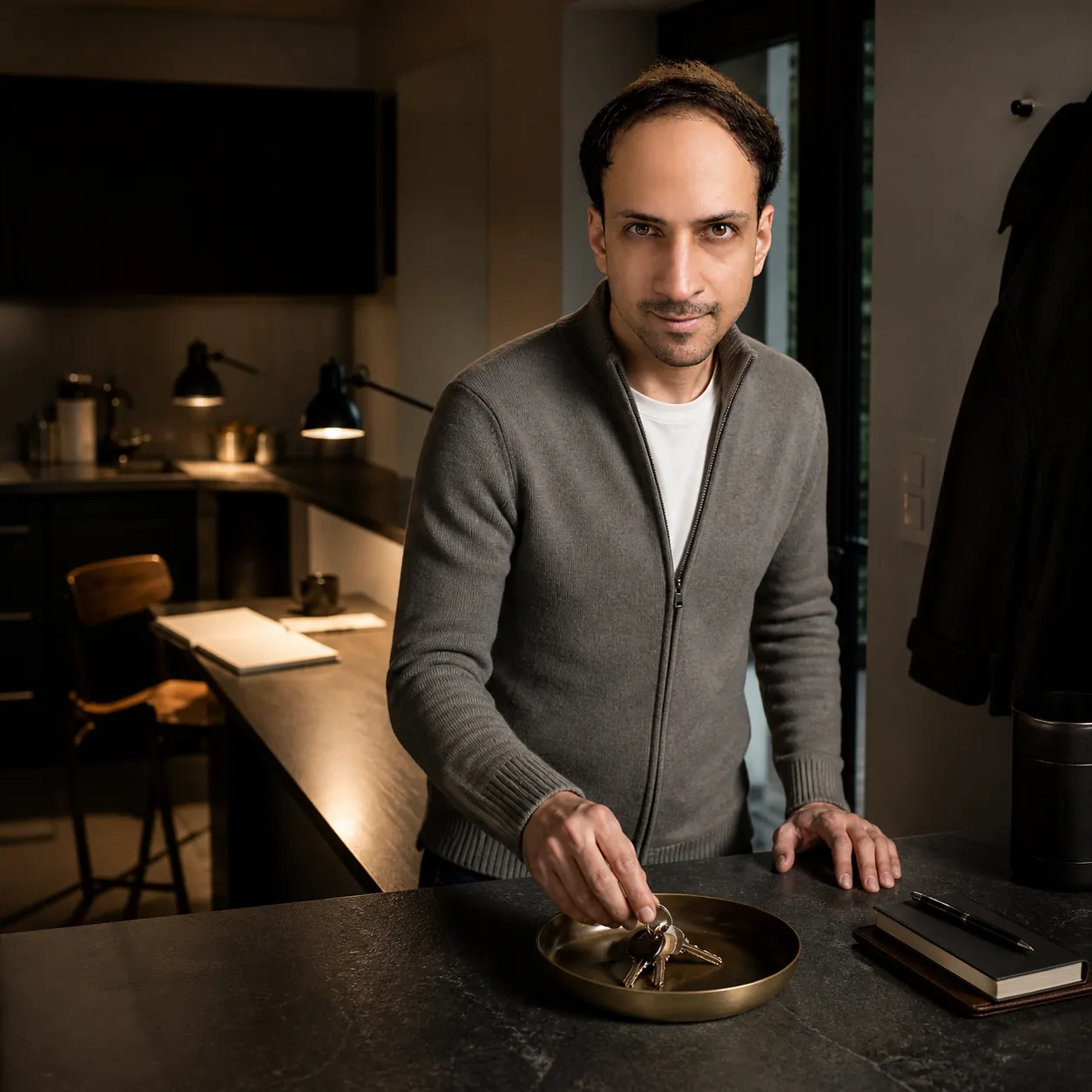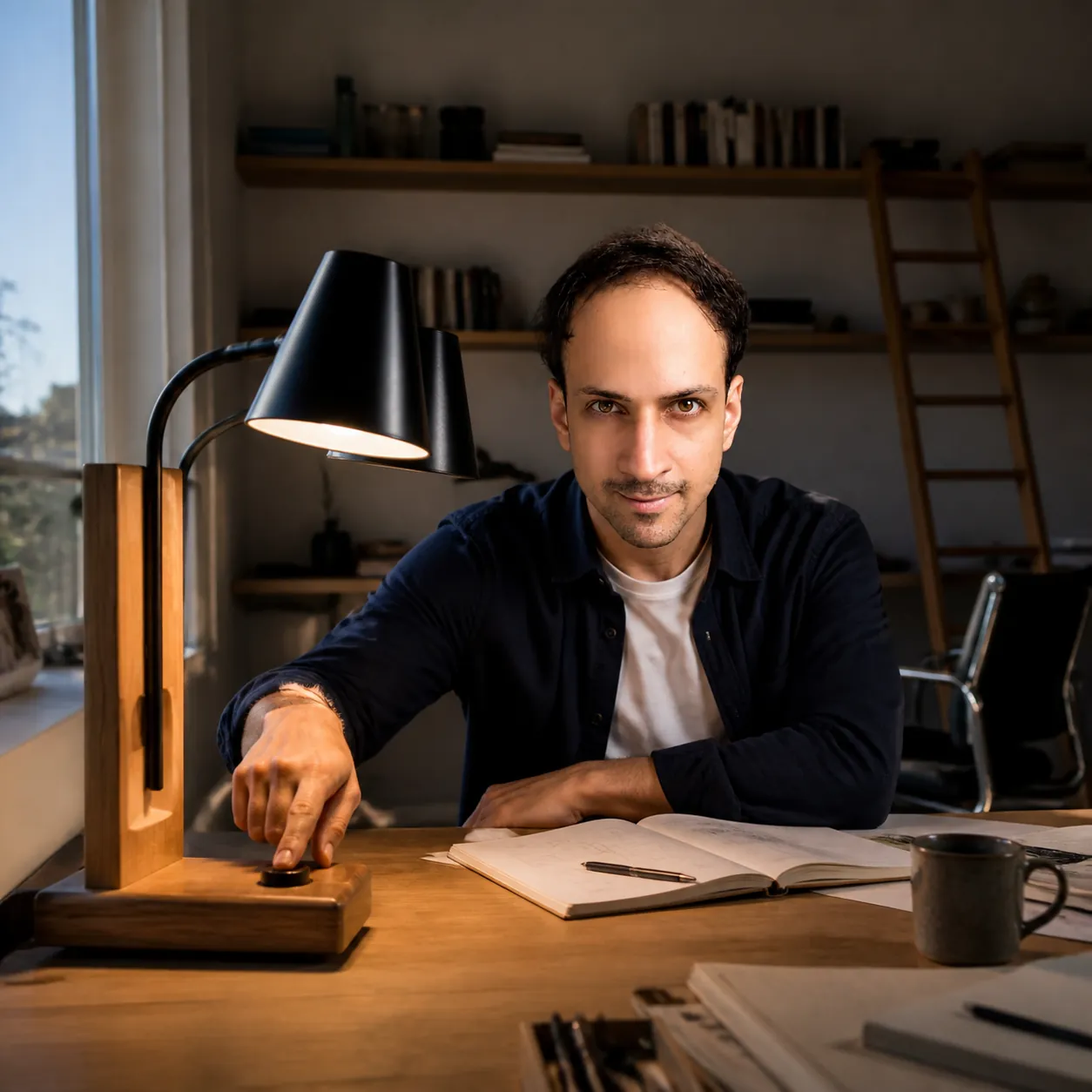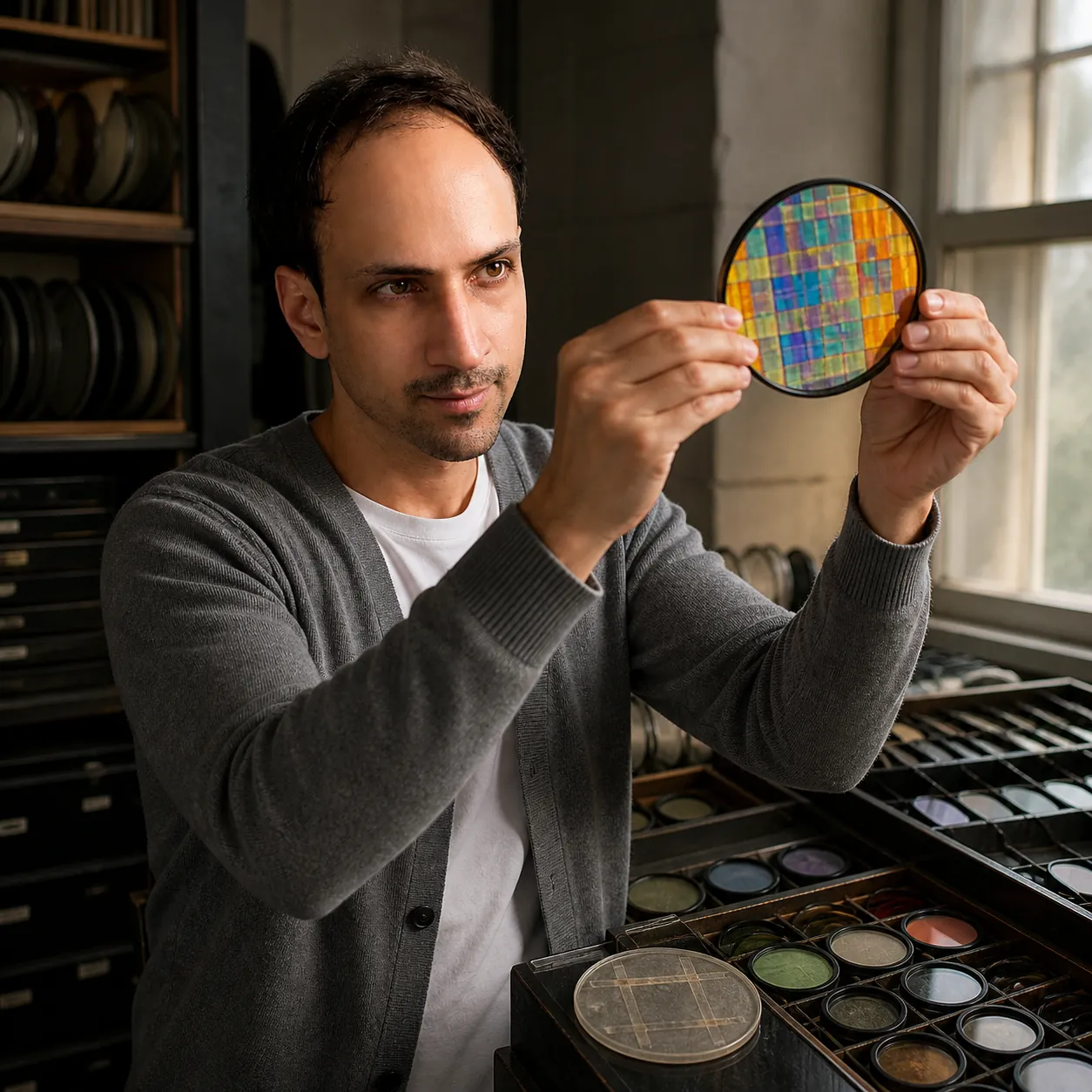
Turn your own photo into a museum-scale interference portrait in an optics storeroom with felt-lined drawers of filters. Keeps your face unchanged.
من نص البرومبت
Use the attached reference photo as the identity reference: keep the same face, skin tone, hair and features as the person in that photo, without beautifying, aging or altering them. Create a square 1:1 museum-catalog frame with a strong first read and a slower second read. Location: an optics storeroom with felt-lined drawers of filters. Show the subject in a fine grey lab cardigan over a white tee, lifting one filter to the light with both hands. Build the artwork around this material rule: layered strips of ordinary clear tape on glass, ignited by polarization into a stained-glass mosaic of precise hues turns a vague mechanical complaint into a precise, radiating diagram. Explore how beauty and audit can be the same image; direct expression and posture toward tender scrutiny, never melodrama or ad-like confidence. Use a measured wide 28mm view with the subject near one-third of the frame and no stretched limbs. Make the composition show the same object once plain and once disclosed, together. Render it as museum-scale interference realism combining high-fidelity portrait photography, truthful birefringent color, deep black staging, and physically accurate optics, using soft north-facing daylight with restrained contrast and visible skin texture and a palette of warm grey, parchment, and a contained field of spectral color. Keep one identity-locked person, credible hands and fingers, natural fabric, and coherent scale, contact, reflections, shadows, airflow, deformation, and materials. Background people only when essential, always secondary and clearly different. Avoid psychedelic color washes, chakra imagery, aura photography styling, iridescent vaporwave gloss, and randomly tinted glass. No text, labels, logos, signatures, watermarks, random symbols, plastic skin, excessive bloom, or glossy AI finish.