تخطَّ إلى المحتوى
جميع التصنيفات

AI Portraits

Portrait prompts you can use with your own photo.

300 برومبتات•0 مشتركين
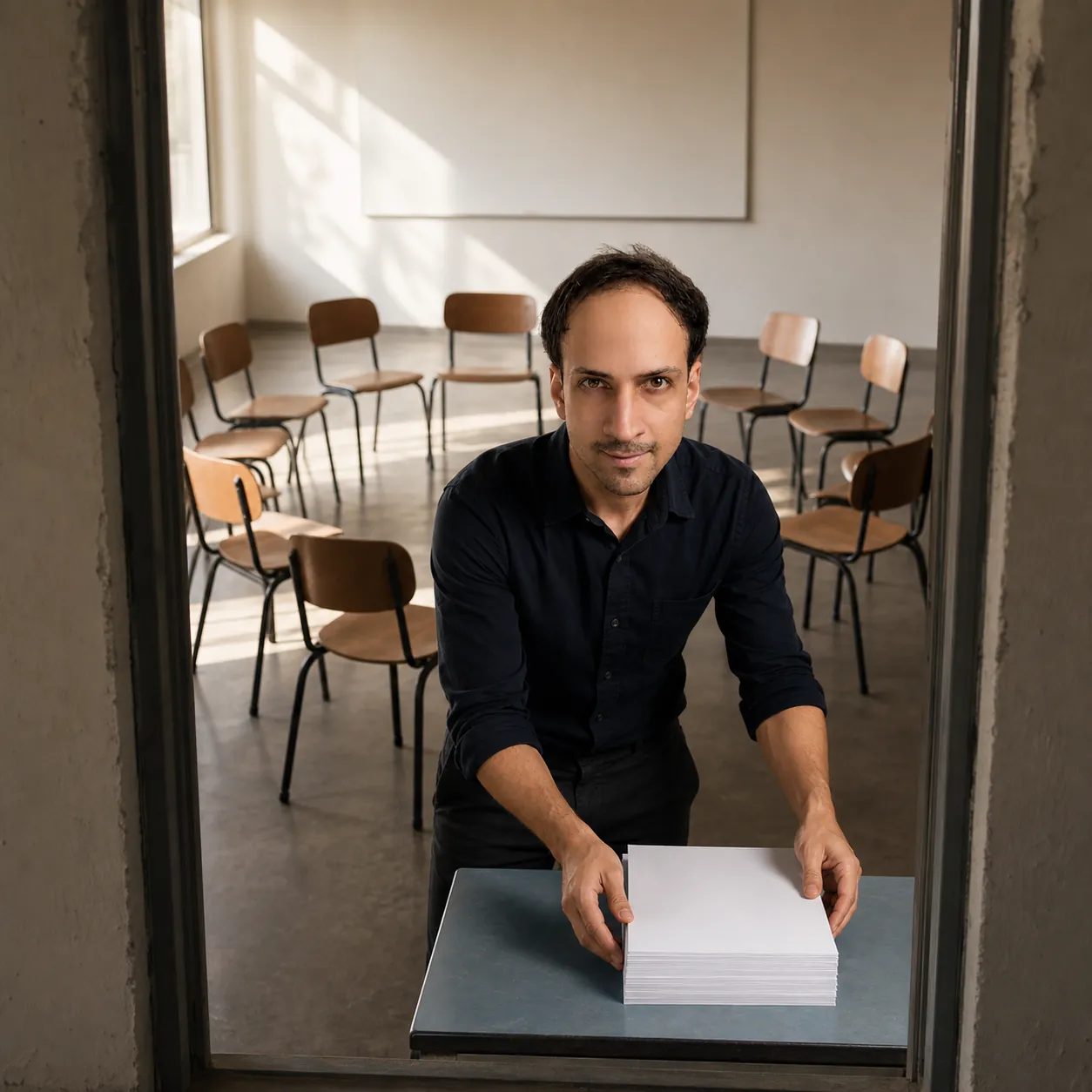
One Precise Pile
صورةAI Portraits

Create a square 1:1 museum-catalog frame with a strong first read and a slower second read at exactly 2880x2880 pixels. Location: an empty classroom after...

من نص البرومبت

Use the attached reference photo as the identity reference: keep the same face, skin tone, hair and features as the person in that photo, without beautifying, aging or altering them. Create a square 1:1 museum-catalog frame with a strong first read and a slower second read at exactly 2880x2880 pixels. Location: an empty classroom after the last session. Show them in a dark work shirt with practical trousers and rolled sleeves, stacking blank paper into one precise pile. Make one rigorous physical condition the conceptual engine: a circle of equal chairs whose orientation changes with who is speaking physically reorients around the least-heard position. Explore the difference between hearing input and allowing it to change the plan; direct expression and posture toward attentive humility, never melodrama or ad-like confidence. Frame through one real architectural opening, with the foreground sharp enough to feel physical but never covering the face. Make the composition show the structure visibly reconfigured by another position. Render it as high-concept business portraiture built from physical governance systems, documentary realism, elegant industrial design, and emotionally intelligent composition, using high, diffused desert daylight moderated by real shade and bounced warm ground light and a palette of desaturated blue, chalk white, and terracotta. Photorealistic: this must read as a real photograph from a physical camera, never an illustration, painting, or 3D render. Resolve real surface detail: brass darkened in the recesses and bright where thumbs land, and lacquer crazed rather than perfect. Keep one identity-locked person, credible hands and fingers, natural fabric, and coherent scale, contact, reflections, shadows, airflow, deformation, and materials. Background people only when essential, always secondary and clearly different. Avoid boardroom handshakes, podium hero shots, chess pieces, crowns, ladders to success, and glowing AI dashboards. No text, labels, logos, signatures, watermarks, random symbols, plastic skin, excessive bloom, or glossy AI finish.
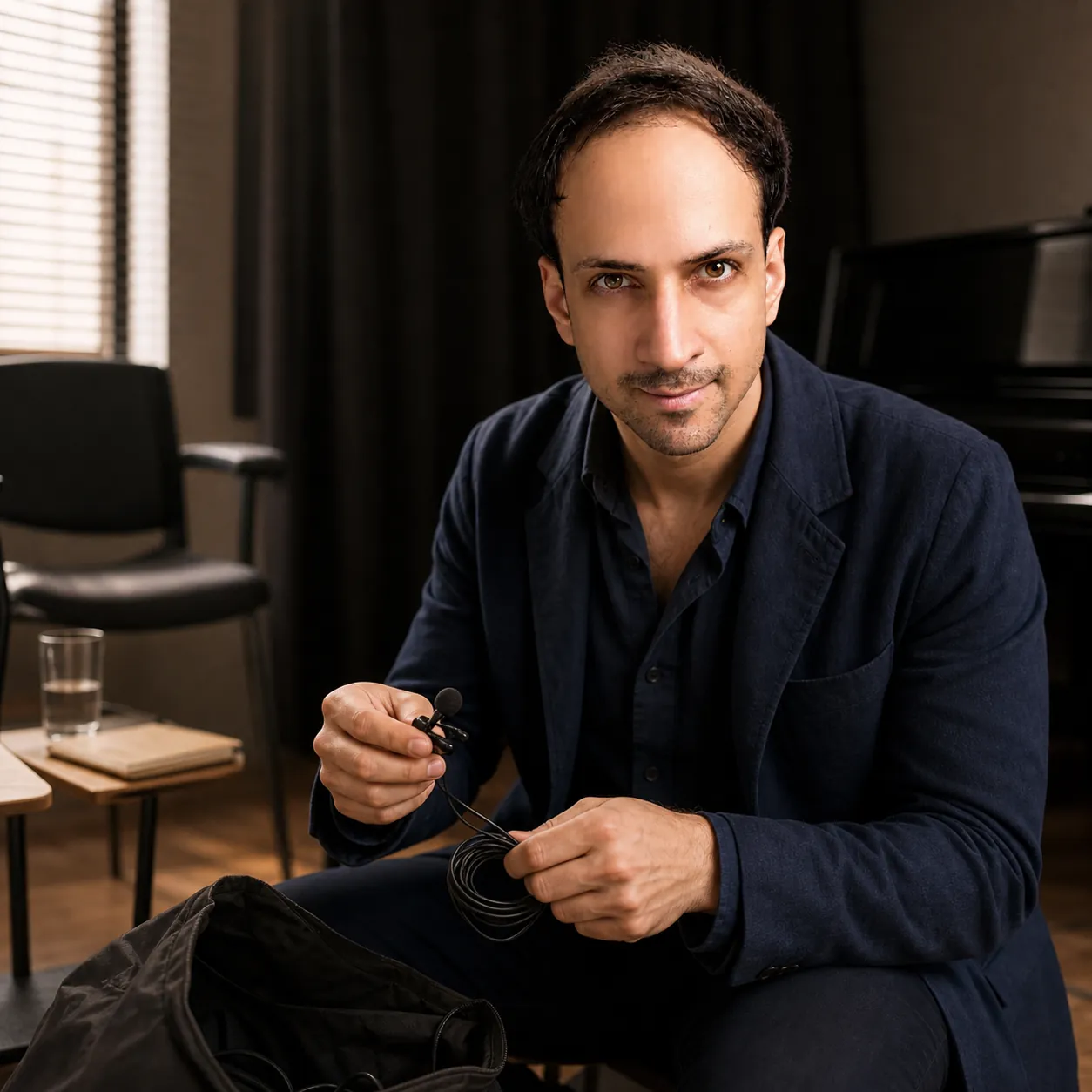
Winding the Microphone Cable
صورةAI Portraits

Create a square 1:1 museum-catalog frame with a strong first read and a slower second read at exactly 2880x2880 pixels. Location: a quiet rehearsal room...

من نص البرومبت

Use the attached reference photo as the identity reference: keep the same face, skin tone, hair and features as the person in that photo, without beautifying, aging or altering them. Create a square 1:1 museum-catalog frame with a strong first read and a slower second read at exactly 2880x2880 pixels. Location: a quiet rehearsal room after a public conversation. Show them in a navy unstructured jacket over an open-collar shirt, removing a lapel microphone and winding its cable without haste. Make one rigorous physical condition the conceptual engine: a simple kinetic object completing a calm nightly sequence continues a caring routine when one family member is off-frame. Explore how systems of love continue when someone cannot be present; direct expression and posture toward restrained longing, never melodrama or ad-like confidence. Use an eye-level 65mm medium-format viewpoint with natural perspective and restrained depth of field. Make the composition let an empty place remain functional rather than memorialized. Render it as museum-level family editorial photography with restrained emotion, tactile domestic realism, credible hand interactions, and conceptual systems thinking, using high, diffused desert daylight moderated by real shade and bounced warm ground light and a palette of smoked glass, parchment, and muted brass without luxury gloss. Photorealistic: this must read as a real photograph from a physical camera, never an illustration, painting, or 3D render. Resolve real surface detail: label-free packaging showing carton fibre, cardboard bruised at the corners, and tape lifting slightly at one end. Keep one identity-locked person, credible hands and fingers, natural fabric, and coherent scale, contact, reflections, shadows, airflow, deformation, and materials. Background people only when essential, always secondary and clearly different. Avoid staged hugs, greeting-card sentiment, superhero father imagery, matching outfits, and forced smiles. No text, labels, logos, signatures, watermarks, random symbols, plastic skin, excessive bloom, or glossy AI finish.
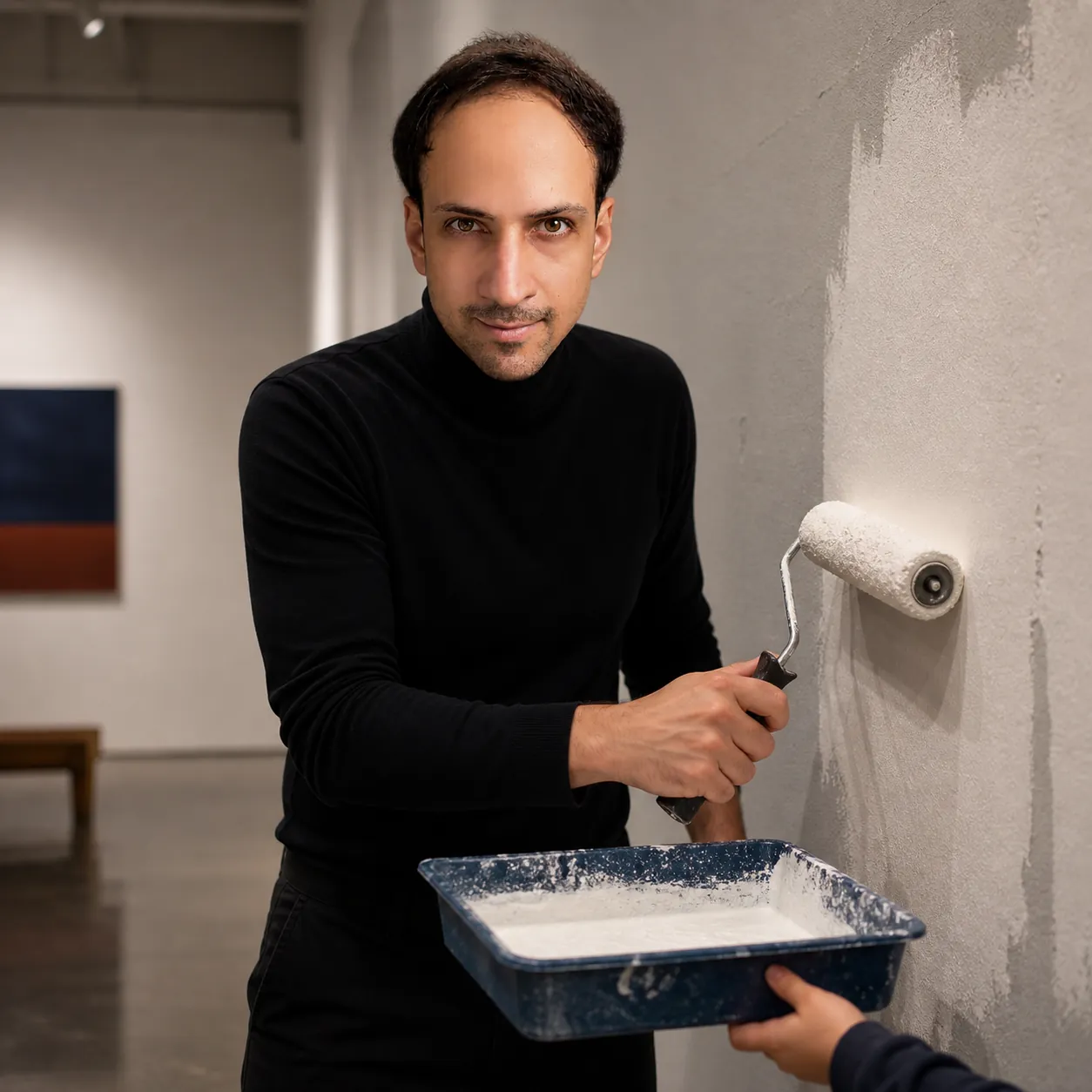
Repair as Teaching: Bedtime Mechanism Inheritance Is Practiced — Unfinished Wall
صورةAI Portraits

Create a square 1:1 museum-catalog frame with a strong first read and a slower second read at exactly 2880x2880 pixels. Location: a white-cube gallery...

من نص البرومبت

Use the attached reference photo as the identity reference: keep the same face, skin tone, hair and features as the person in that photo, without beautifying, aging or altering them. Create a square 1:1 museum-catalog frame with a strong first read and a slower second read at exactly 2880x2880 pixels. Location: a white-cube gallery beside one intentionally unfinished wall. Show them in a black mock-neck top with matte tailored trousers, holding a paint roller without covering the remaining patch. Make one rigorous physical condition the conceptual engine: a simple kinetic object completing a calm nightly sequence passes knowledge through a shared action instead of a symbolic gift. Explore how fixing an object can model responsibility, patience, and limits; direct expression and posture toward quiet competence, never melodrama or ad-like confidence. Use a 100mm macro-to-portrait hybrid: one material detail near the lens and the person in the reference photo's face readable beyond it, both physically plausible. Make the composition show the child only through scale or hands if present, never as a duplicate subject. Render it as museum-level family editorial photography with restrained emotion, tactile domestic realism, credible hand interactions, and conceptual systems thinking, using a single overhead practical softened by the surrounding architecture, leaving readable shadow detail and a palette of clean off-white, deep navy, and one oxidized-copper accent. Photorealistic: this must read as a real photograph from a physical camera, never an illustration, painting, or 3D render. Resolve real surface detail: condensation beading at true size, liquid meniscus curving against glass, and wet surfaces darker than dry ones. Keep one identity-locked person, credible hands and fingers, natural fabric, and coherent scale, contact, reflections, shadows, airflow, deformation, and materials. Background people only when essential, always secondary and clearly different. Avoid staged hugs, greeting-card sentiment, superhero father imagery, matching outfits, and forced smiles. No text, labels, logos, signatures, watermarks, random symbols, plastic skin, excessive bloom, or glossy AI finish.
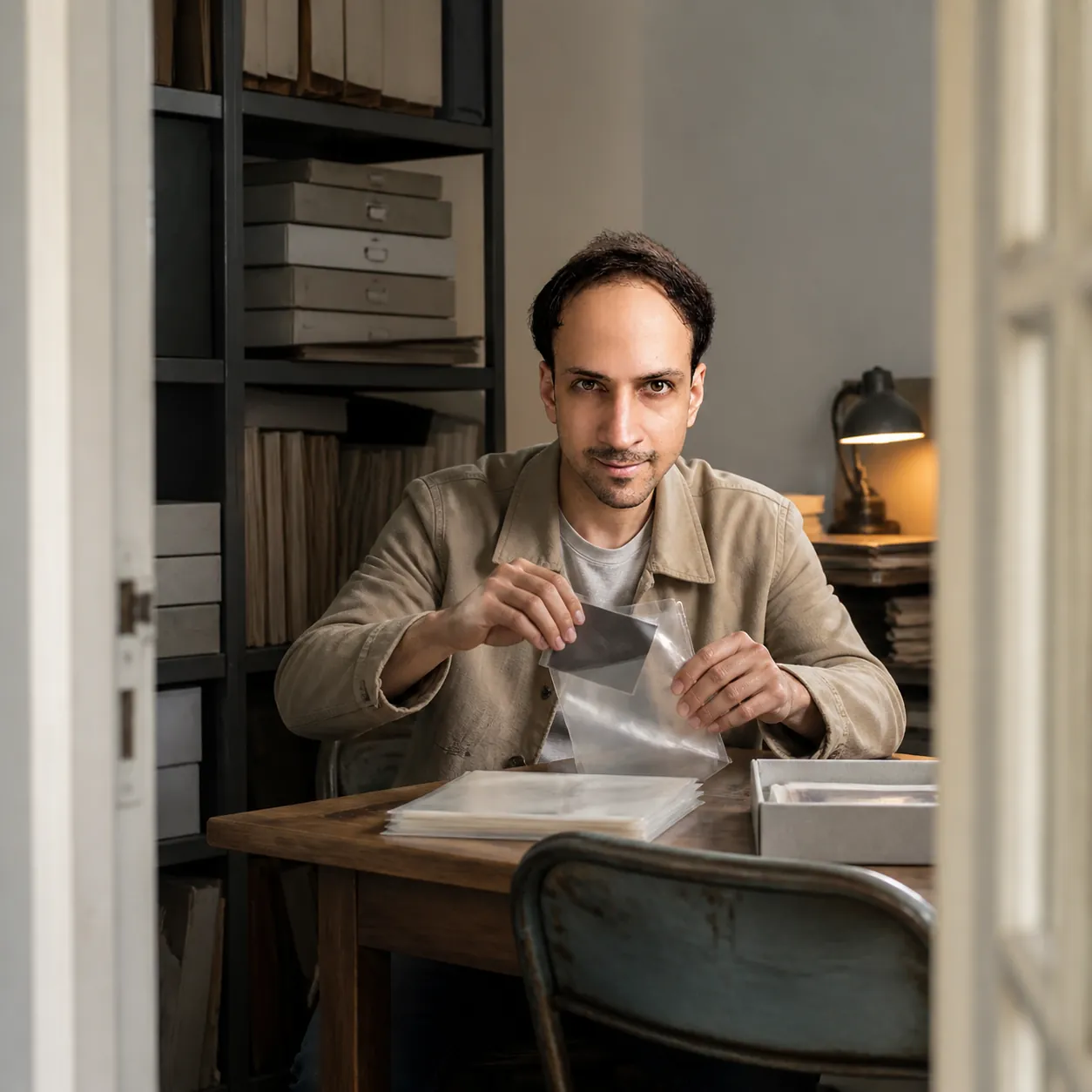
Sufficiency as Freedom: Borrowed Chair Enough Ends Sequence — Family Photo Sleeve
صورةAI Portraits

Create a square 1:1 museum-catalog frame with a strong first read and a slower second read at exactly 2880x2880 pixels. Location: a home archive corner with...

من نص البرومبت

Use the attached reference photo as the identity reference: keep the same face, skin tone, hair and features as the person in that photo, without beautifying, aging or altering them. Create a square 1:1 museum-catalog frame with a strong first read and a slower second read at exactly 2880x2880 pixels. Location: a home archive corner with acid-free sleeves. Show them in a sand-colored chore jacket over a plain shirt, sliding one old photograph face-down into a protective sleeve without showing its image. Make one rigorous physical condition the conceptual engine: a humble borrowed chair treated with the spatial respect of a masterpiece stops a chain of accumulation at the exact point function is complete. Explore the radical relief of deciding that function and meaning are already sufficient; direct expression and posture toward settled confidence, never melodrama or ad-like confidence. Frame through one real architectural opening, with the foreground sharp enough to feel physical but never covering the face. Make the composition leave generous unfilled space without making the image sterile. Render it as anti-campaign luxury photography with museum restraint, exceptional material detail, quiet composition, honest wear, and no aspirational spectacle, using cool early-morning ambient light balanced by one warm practical source and a palette of sand, smoke grey, and a small field of mineral blue. Photorealistic: this must read as a real photograph from a physical camera, never an illustration, painting, or 3D render. Resolve real surface detail: rubber gone chalky with age, painted metal chipped to primer, and plastic yellowed only where light reaches it. Keep one identity-locked person, credible hands and fingers, natural fabric, and coherent scale, contact, reflections, shadows, airflow, deformation, and materials. Background people only when essential, always secondary and clearly different. Avoid gold, marble excess, supercars, private jets, watches, champagne, velvet ropes, and empty status posing. No text, labels, logos, signatures, watermarks, random symbols, plastic skin, excessive bloom, or glossy AI finish.
Mending What Was Mended
صورةAI Portraits

Create a square 1:1 museum-catalog frame with a strong first read and a slower second read at exactly 2880x2880 pixels. Location: a textile atelier with...

من نص البرومبت

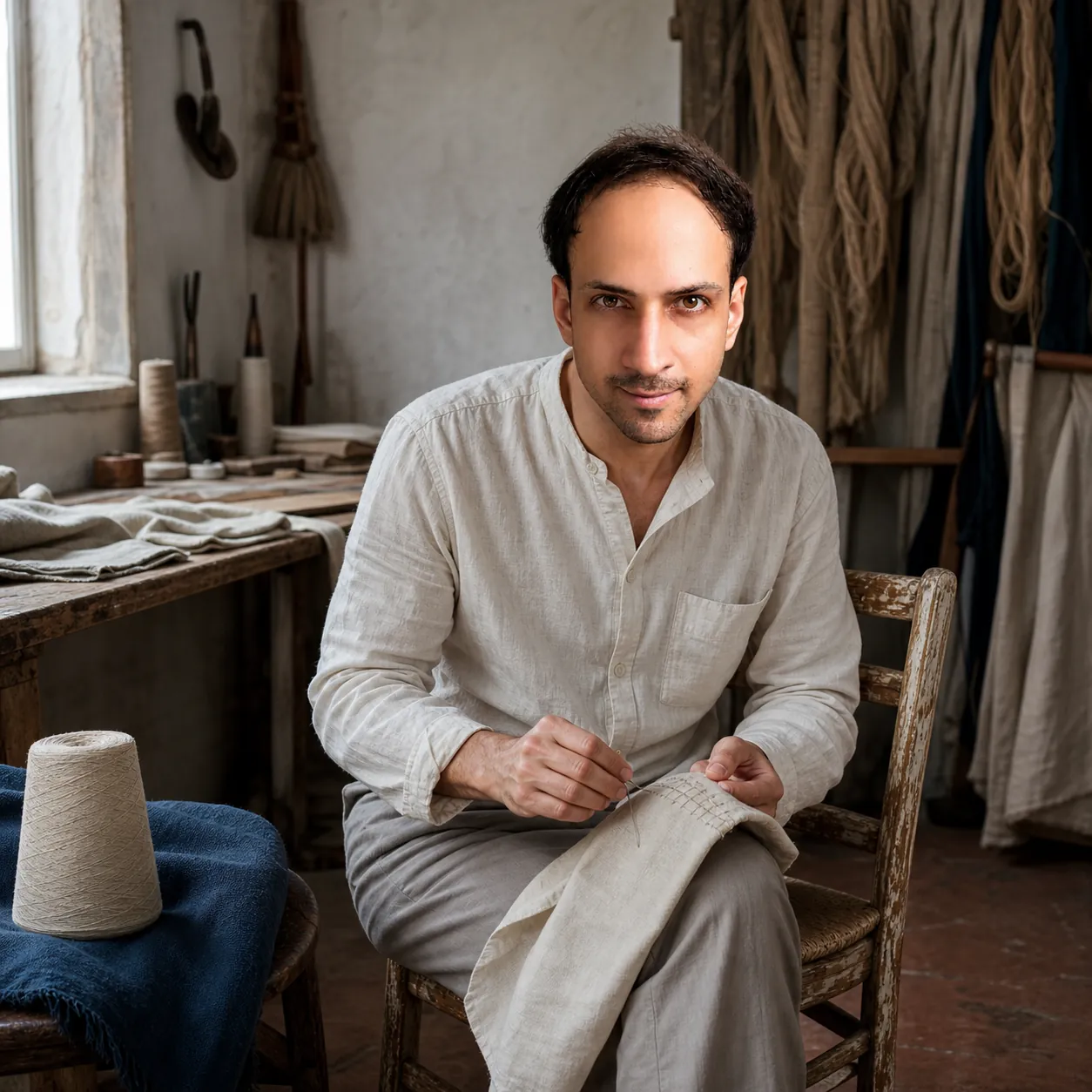
Use the attached reference photo as the identity reference: keep the same face, skin tone, hair and features as the person in that photo, without beautifying, aging or altering them. Create a square 1:1 museum-catalog frame with a strong first read and a slower second read at exactly 2880x2880 pixels. Location: a textile atelier with natural fibers and repaired tools. Show them in an off-white linen shirt with relaxed tailored trousers, threading a needle through a seam that has already been mended once. Make one rigorous physical condition the conceptual engine: a humble borrowed chair treated with the spatial respect of a masterpiece reveals labor through one retained flaw rather than decorative distress. Explore the intelligence required to end before excess begins; direct expression and posture toward clear restraint, never melodrama or ad-like confidence. Use a measured wide 28mm view with the subject near one-third of the frame and no stretched limbs. Make the composition show one intentionally unused material at the edge. Render it as anti-campaign luxury photography with museum restraint, exceptional material detail, quiet composition, honest wear, and no aspirational spectacle, using soft north-facing daylight with restrained contrast and visible skin texture and a palette of desaturated blue, chalk white, and terracotta. Photorealistic: this must read as a real photograph from a physical camera, never an illustration, painting, or 3D render. Resolve real surface detail: grout darker than tile, sealant slightly yellowed, and every joint showing a real tolerance gap. Keep one identity-locked person, credible hands and fingers, natural fabric, and coherent scale, contact, reflections, shadows, airflow, deformation, and materials. Background people only when essential, always secondary and clearly different. Avoid gold, marble excess, supercars, private jets, watches, champagne, velvet ropes, and empty status posing. No text, labels, logos, signatures, watermarks, random symbols, plastic skin, excessive bloom, or glossy AI finish.
Before Dawn in the Service Lane
صورةAI Portraits

Create a square 1:1 museum-catalog frame with a strong first read and a slower second read at exactly 2880x2880 pixels. Location: a Riyadh service lane...

من نص البرومبت

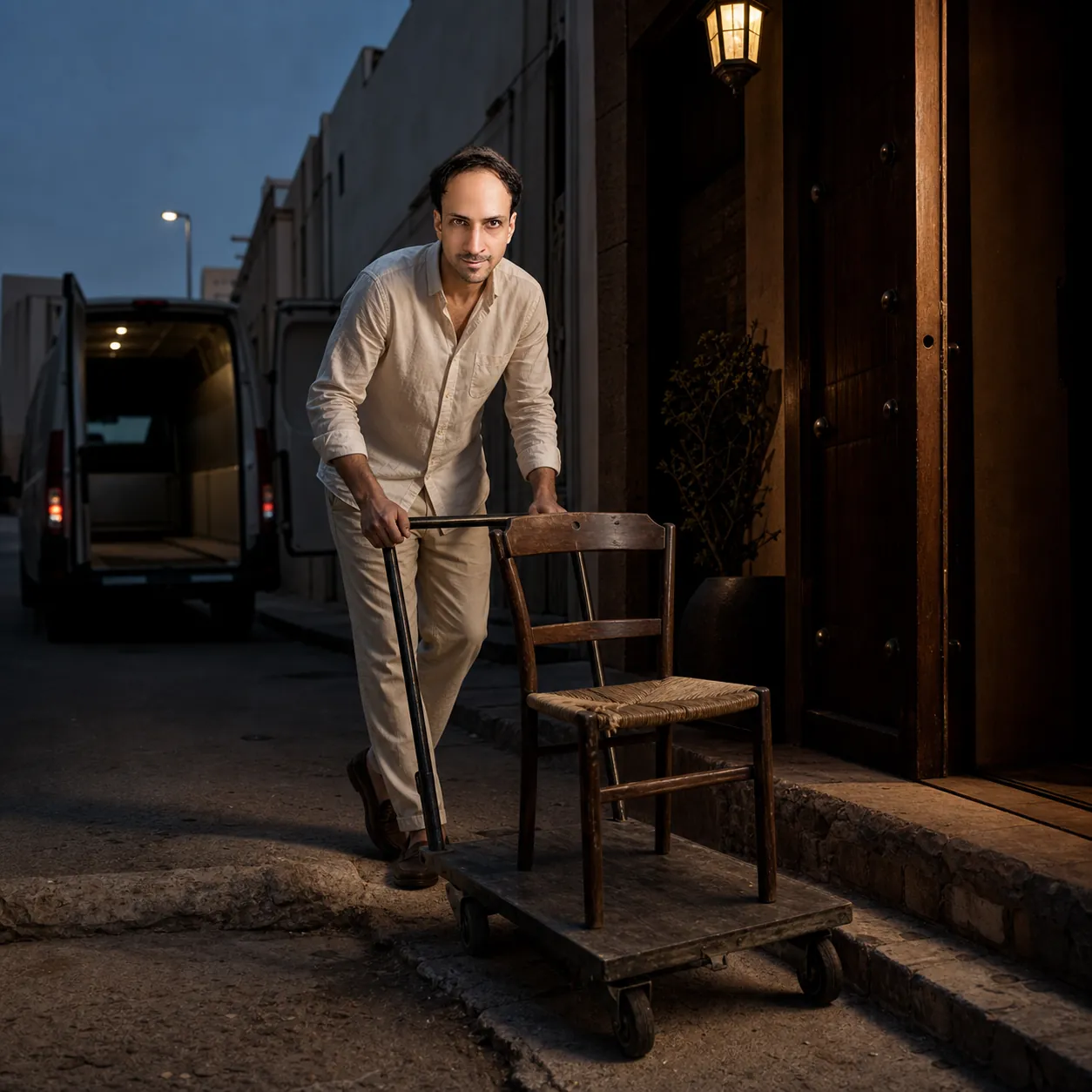
Use the attached reference photo as the identity reference: keep the same face, skin tone, hair and features as the person in that photo, without beautifying, aging or altering them. Create a square 1:1 museum-catalog frame with a strong first read and a slower second read at exactly 2880x2880 pixels. Location: a Riyadh service lane before dawn deliveries. Show them in an off-white linen shirt with relaxed tailored trousers, guiding a silent trolley over a rough threshold without waking nearby homes. Make one rigorous physical condition the conceptual engine: a humble borrowed chair treated with the spatial respect of a masterpiece reveals labor through one retained flaw rather than decorative distress. Explore respect for the work hidden beneath finished surfaces; direct expression and posture toward earned dignity, never melodrama or ad-like confidence. Use a measured wide 28mm view with the subject near one-third of the frame and no stretched limbs. Make the composition let tool marks remain legible at close inspection. Render it as anti-campaign luxury photography with museum restraint, exceptional material detail, quiet composition, honest wear, and no aspirational spectacle, using quiet blue-hour ambient light with one low-intensity tungsten interior source and a palette of desaturated blue, chalk white, and terracotta. Photorealistic: this must read as a real photograph from a physical camera, never an illustration, painting, or 3D render. Resolve real surface detail: grout darker than tile, sealant slightly yellowed, and every joint showing a real tolerance gap. Keep one identity-locked person, credible hands and fingers, natural fabric, and coherent scale, contact, reflections, shadows, airflow, deformation, and materials. Background people only when essential, always secondary and clearly different. Avoid gold, marble excess, supercars, private jets, watches, champagne, velvet ropes, and empty status posing. No text, labels, logos, signatures, watermarks, random symbols, plastic skin, excessive bloom, or glossy AI finish.
Repair as Teaching: Bedtime Mechanism Child Changes Design — Fragrance Pause
صورةAI Portraits

Create a square 1:1 museum-catalog frame with a strong first read and a slower second read at exactly 2880x2880 pixels. Location: a restrained fragrance...

من نص البرومبت

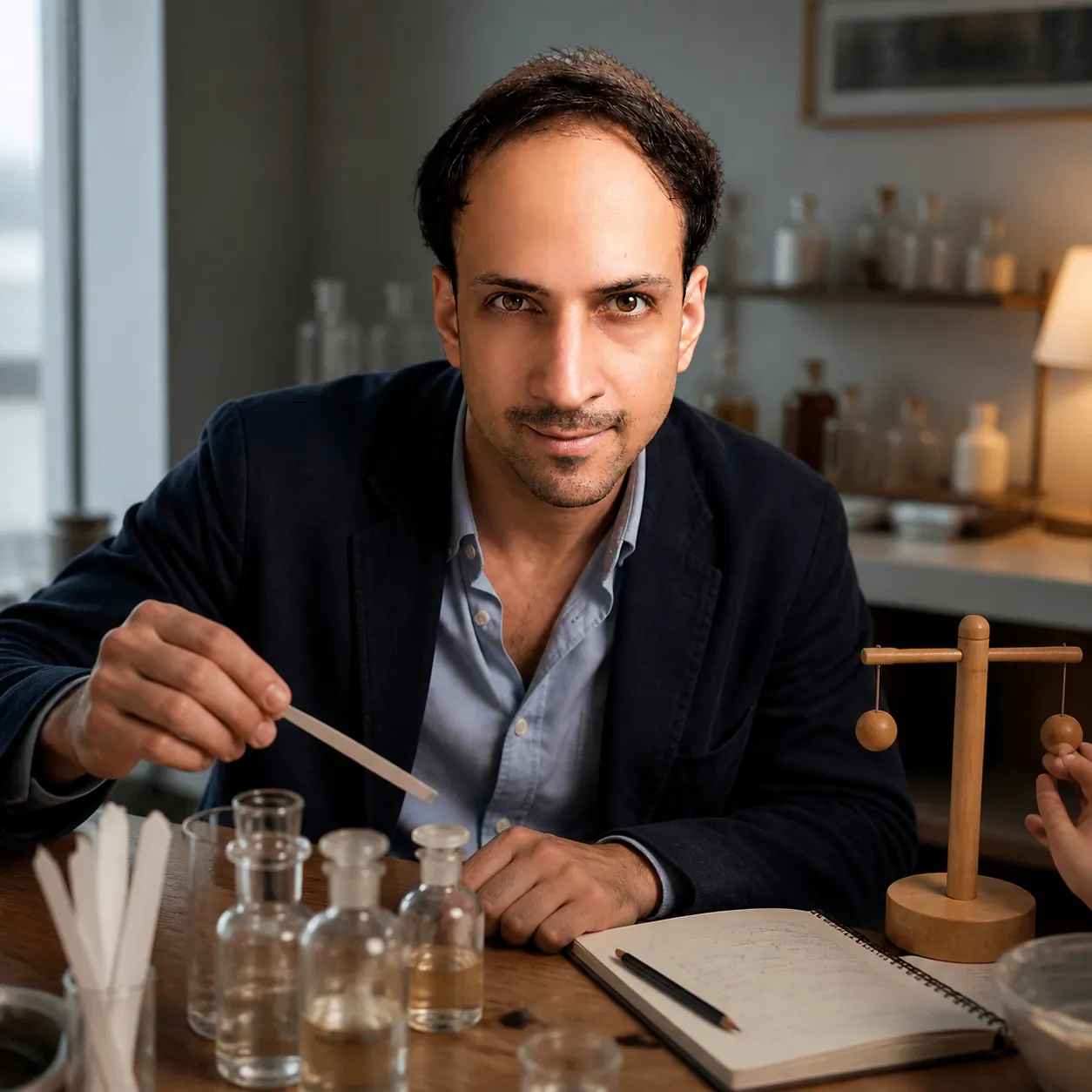
Use the attached reference photo as the identity reference: keep the same face, skin tone, hair and features as the person in that photo, without beautifying, aging or altering them. Create a square 1:1 museum-catalog frame with a strong first read and a slower second read at exactly 2880x2880 pixels. Location: a restrained fragrance studio with unlabeled glassware turned away from camera. Show them in a navy unstructured jacket over an open-collar shirt, setting down a blotter strip and waiting before making the next choice. Make one rigorous physical condition the conceptual engine: a simple kinetic object completing a calm nightly sequence adapts after a child's unscripted use rather than forcing compliance. Explore how fixing an object can model responsibility, patience, and limits; direct expression and posture toward quiet competence, never melodrama or ad-like confidence. Use an eye-level 65mm medium-format viewpoint with natural perspective and restrained depth of field. Make the composition show the child only through scale or hands if present, never as a duplicate subject. Render it as museum-level family editorial photography with restrained emotion, tactile domestic realism, credible hand interactions, and conceptual systems thinking, using cool early-morning ambient light balanced by one warm practical source and a palette of pale celadon, warm grey, and natural wood tones. Photorealistic: this must read as a real photograph from a physical camera, never an illustration, painting, or 3D render. Resolve real surface detail: skin that reddens slightly under pressure, nail beds with honest colour, and knuckle creases that fold rather than blur. Keep one identity-locked person, credible hands and fingers, natural fabric, and coherent scale, contact, reflections, shadows, airflow, deformation, and materials. Background people only when essential, always secondary and clearly different. Avoid staged hugs, greeting-card sentiment, superhero father imagery, matching outfits, and forced smiles. No text, labels, logos, signatures, watermarks, random symbols, plastic skin, excessive bloom, or glossy AI finish.
The Borrowed Chair at Sunrise
صورةAI Portraits

Create a square 1:1 museum-catalog frame with a strong first read and a slower second read at exactly 2880x2880 pixels. Location: a shaded Riyadh rooftop...

من نص البرومبت

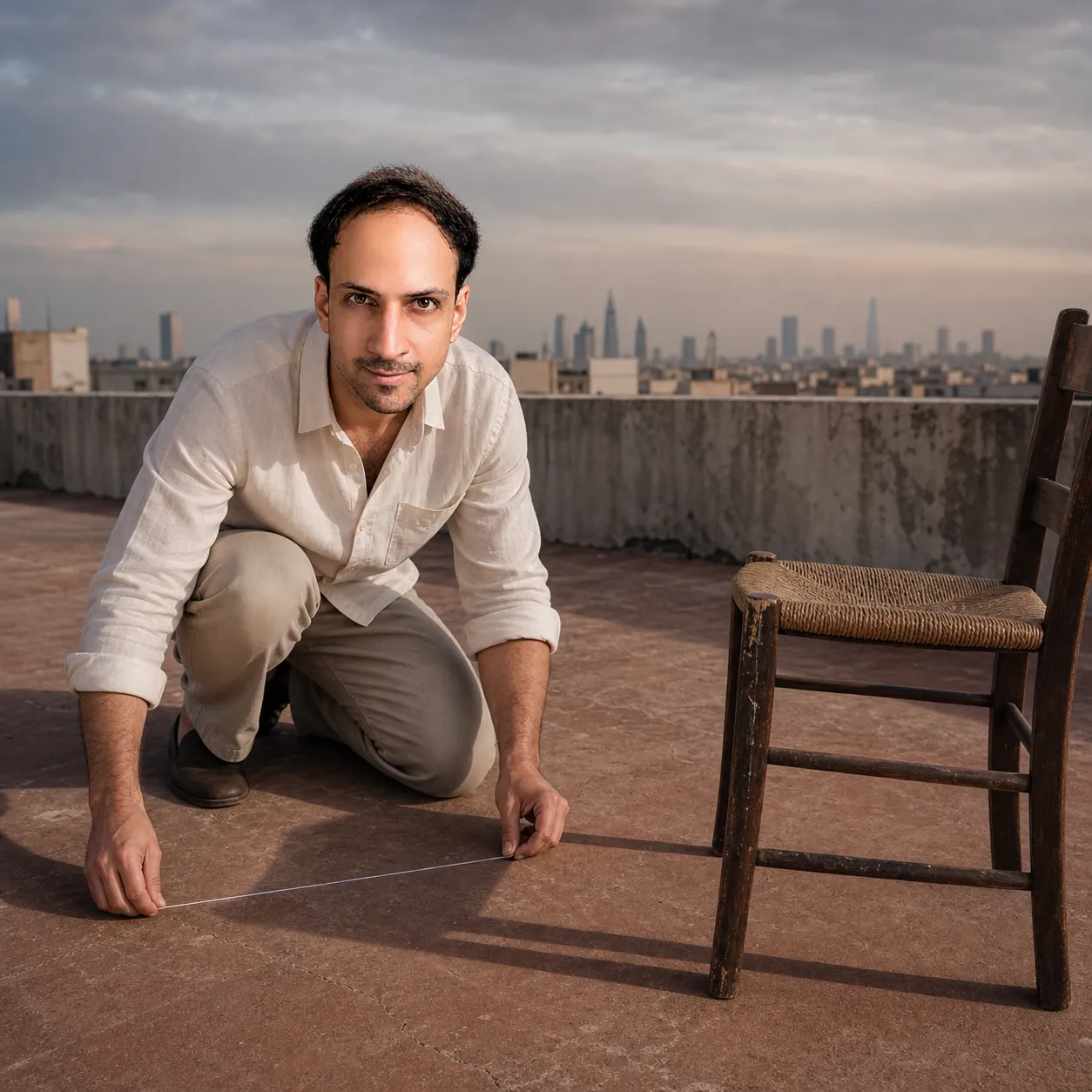
Use the attached reference photo as the identity reference: keep the same face, skin tone, hair and features as the person in that photo, without beautifying, aging or altering them. Create a square 1:1 museum-catalog frame with a strong first read and a slower second read at exactly 2880x2880 pixels. Location: a shaded Riyadh rooftop just before sunrise. Show them in an off-white linen shirt with relaxed tailored trousers, measuring the edge of the remaining shadow with a length of plain thread. Make one rigorous physical condition the conceptual engine: a humble borrowed chair treated with the spatial respect of a masterpiece reveals labor through one retained flaw rather than decorative distress. Explore worth that does not depend on recognition or display; direct expression and posture toward quiet self-possession, never melodrama or ad-like confidence. Use a measured wide 28mm view with the subject near one-third of the frame and no stretched limbs. Make the composition avoid visual hierarchy based on shine, size, or rarity. Render it as anti-campaign luxury photography with museum restraint, exceptional material detail, quiet composition, honest wear, and no aspirational spectacle, using cloud-filtered outdoor light with subtle specular control and natural skin color and a palette of desaturated blue, chalk white, and terracotta. Photorealistic: this must read as a real photograph from a physical camera, never an illustration, painting, or 3D render. Resolve real surface detail: grout darker than tile, sealant slightly yellowed, and every joint showing a real tolerance gap. Keep one identity-locked person, credible hands and fingers, natural fabric, and coherent scale, contact, reflections, shadows, airflow, deformation, and materials. Background people only when essential, always secondary and clearly different. Avoid gold, marble excess, supercars, private jets, watches, champagne, velvet ropes, and empty status posing. No text, labels, logos, signatures, watermarks, random symbols, plastic skin, excessive bloom, or glossy AI finish.
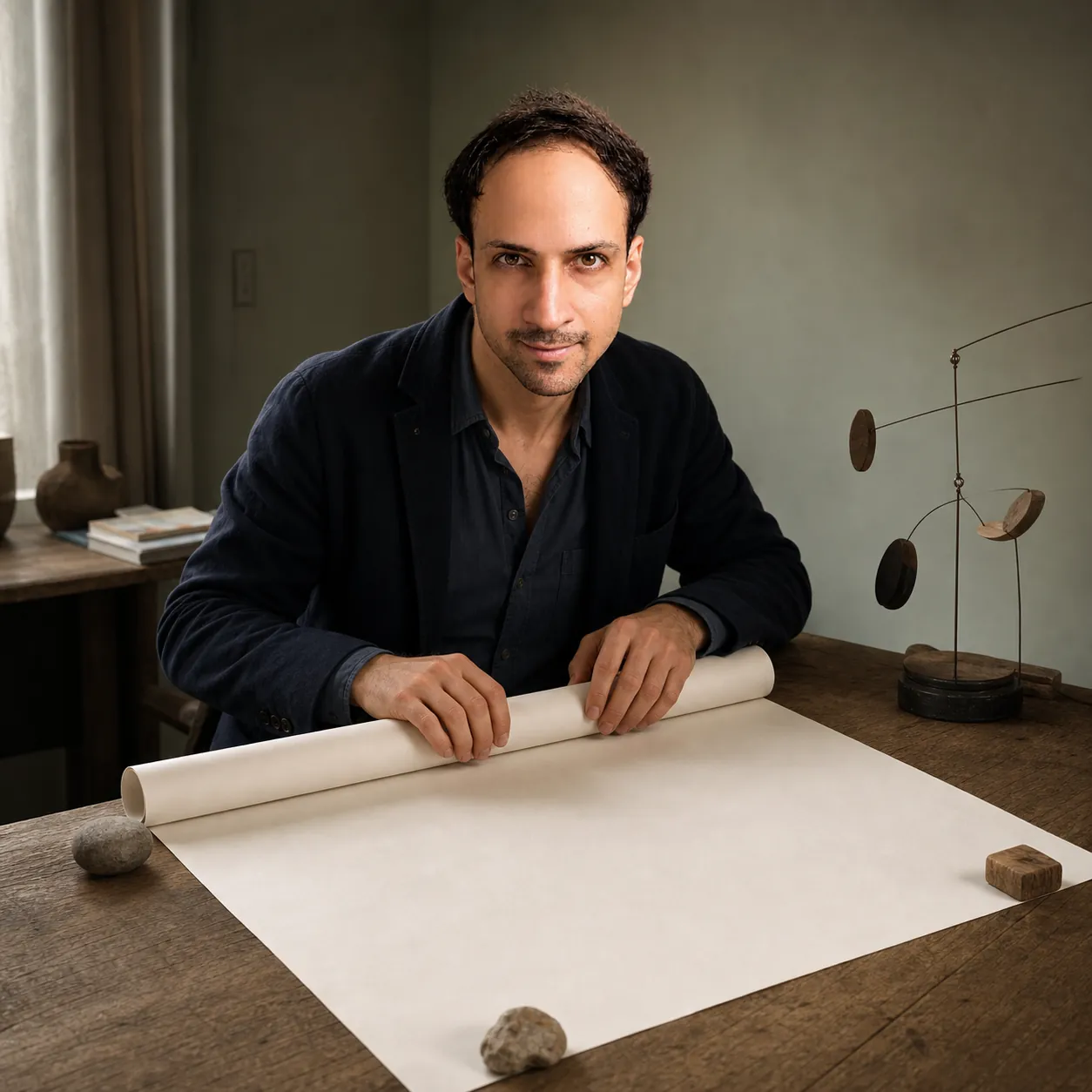
Weighting the Blank Sheet
صورةAI Portraits

Create a square 1:1 museum-catalog frame with a strong first read and a slower second read at exactly 2880x2880 pixels. Location: a quiet studio containing...

من نص البرومبت

Use the attached reference photo as the identity reference: keep the same face, skin tone, hair and features as the person in that photo, without beautifying, aging or altering them. Create a square 1:1 museum-catalog frame with a strong first read and a slower second read at exactly 2880x2880 pixels. Location: a quiet studio containing a long table and a completely blank sheet of paper. Show them in a navy unstructured jacket over an open-collar shirt, unrolling the sheet and weighting its corners with ordinary objects. Make one rigorous physical condition the conceptual engine: a simple kinetic object completing a calm nightly sequence adapts after a child's unscripted use rather than forcing compliance. Explore the ordinary routines that become a family's deepest legacy; direct expression and posture toward soft pride, never melodrama or ad-like confidence. Use an eye-level 65mm medium-format viewpoint with natural perspective and restrained depth of field. Make the composition repeat one gesture across objects, not faces. Render it as museum-level family editorial photography with restrained emotion, tactile domestic realism, credible hand interactions, and conceptual systems thinking, using a broad window-shaped key with gentle falloff, soft negative fill, and no beauty-light flattening and a palette of pale celadon, warm grey, and natural wood tones. Photorealistic: this must read as a real photograph from a physical camera, never an illustration, painting, or 3D render. Resolve real surface detail: skin that reddens slightly under pressure, nail beds with honest colour, and knuckle creases that fold rather than blur. Keep one identity-locked person, credible hands and fingers, natural fabric, and coherent scale, contact, reflections, shadows, airflow, deformation, and materials. Background people only when essential, always secondary and clearly different. Avoid staged hugs, greeting-card sentiment, superhero father imagery, matching outfits, and forced smiles. No text, labels, logos, signatures, watermarks, random symbols, plastic skin, excessive bloom, or glossy AI finish.
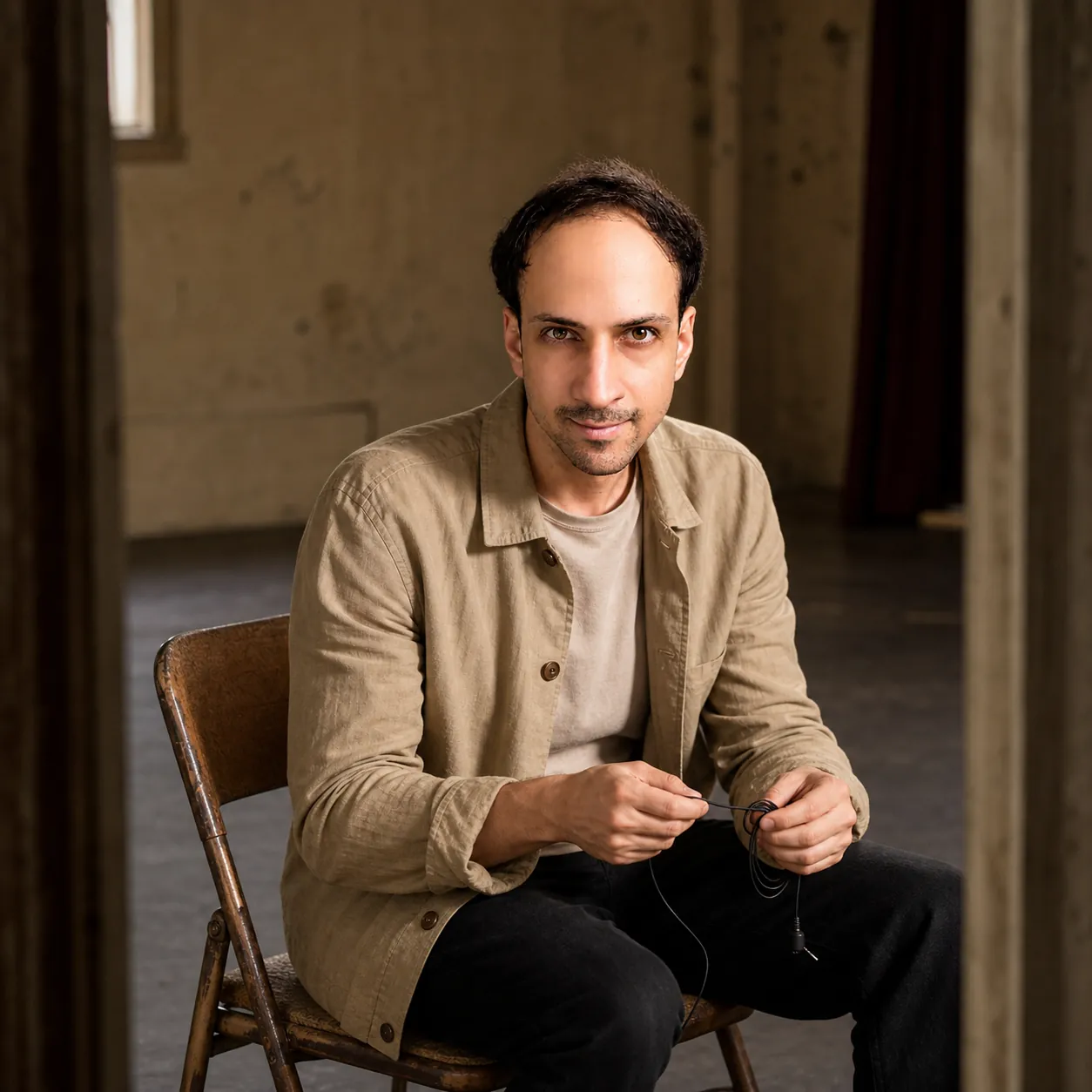
After the Conversation Ends
صورةAI Portraits

Create a square 1:1 museum-catalog frame with a strong first read and a slower second read at exactly 2880x2880 pixels. Location: a quiet rehearsal room...

من نص البرومبت

Use the attached reference photo as the identity reference: keep the same face, skin tone, hair and features as the person in that photo, without beautifying, aging or altering them. Create a square 1:1 museum-catalog frame with a strong first read and a slower second read at exactly 2880x2880 pixels. Location: a quiet rehearsal room after a public conversation. Show them in a sand-colored chore jacket over a plain shirt, removing a lapel microphone and winding its cable without haste. Make one rigorous physical condition the conceptual engine: a humble borrowed chair treated with the spatial respect of a masterpiece gains visual status only when they use it naturally. Explore respect for the work hidden beneath finished surfaces; direct expression and posture toward earned dignity, never melodrama or ad-like confidence. Frame through one real architectural opening, with the foreground sharp enough to feel physical but never covering the face. Make the composition let tool marks remain legible at close inspection. Render it as anti-campaign luxury photography with museum restraint, exceptional material detail, quiet composition, honest wear, and no aspirational spectacle, using high, diffused desert daylight moderated by real shade and bounced warm ground light and a palette of linen beige, graphite, and restrained saffron. Photorealistic: this must read as a real photograph from a physical camera, never an illustration, painting, or 3D render. Resolve real surface detail: glass with real thickness at its edge, reflections that carry the room's actual colour, and dust visible only at grazing angles. Keep one identity-locked person, credible hands and fingers, natural fabric, and coherent scale, contact, reflections, shadows, airflow, deformation, and materials. Background people only when essential, always secondary and clearly different. Avoid gold, marble excess, supercars, private jets, watches, champagne, velvet ropes, and empty status posing. No text, labels, logos, signatures, watermarks, random symbols, plastic skin, excessive bloom, or glossy AI finish.
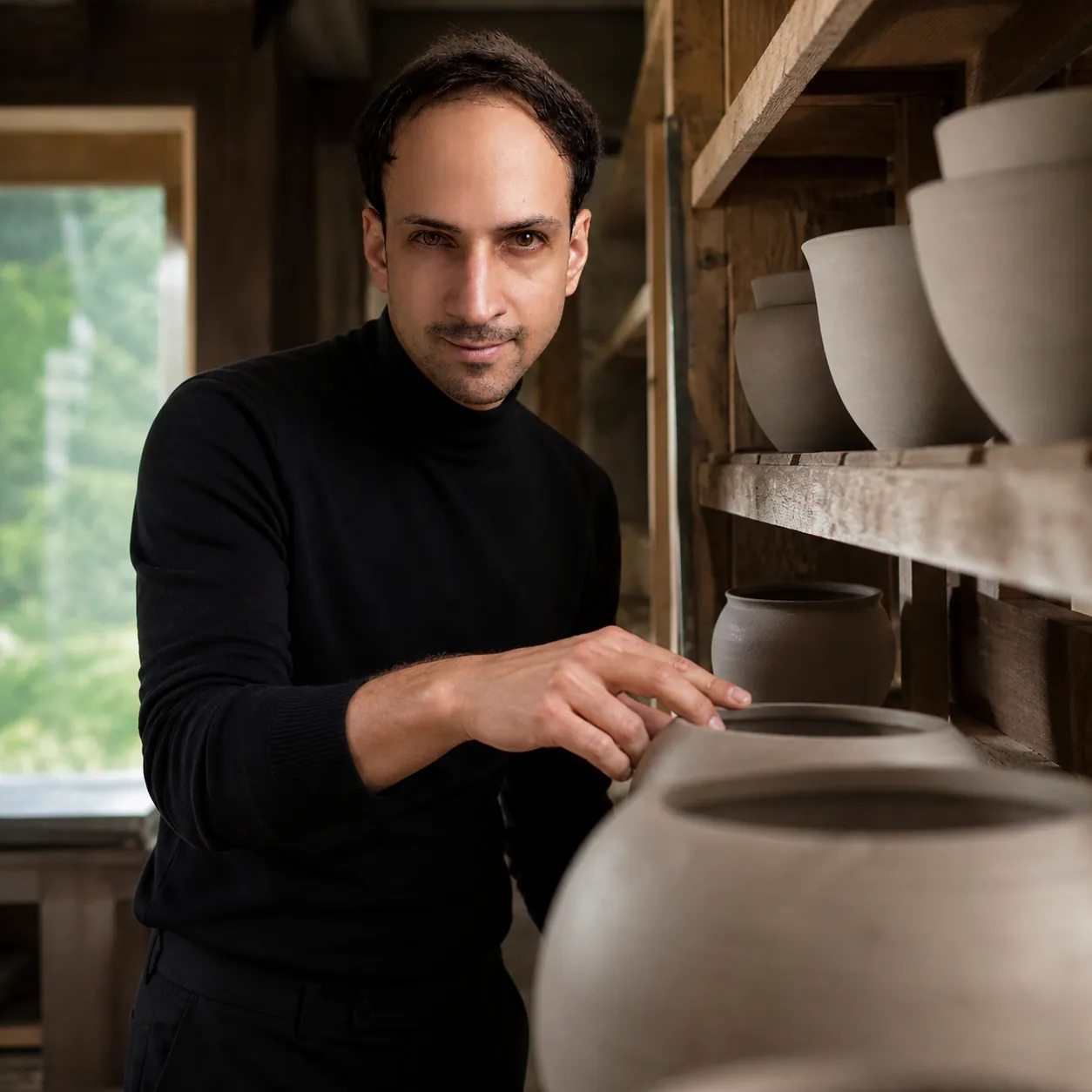
Inheritance of Habits: Bedtime Mechanism Care Becomes System — Clay Cooling Room
صورةAI Portraits

Create a square 1:1 museum-catalog frame with a strong first read and a slower second read at exactly 2880x2880 pixels. Location: a ceramics cooling room...

من نص البرومبت

Use the attached reference photo as the identity reference: keep the same face, skin tone, hair and features as the person in that photo, without beautifying, aging or altering them. Create a square 1:1 museum-catalog frame with a strong first read and a slower second read at exactly 2880x2880 pixels. Location: a ceramics cooling room with matte clay vessels. Show them in a black mock-neck top with matte tailored trousers, resting two fingers on a vessel to feel whether it has fully cooled. Make one rigorous physical condition the conceptual engine: a simple kinetic object completing a calm nightly sequence turns an invisible routine into a visible structure without making it sentimental. Explore the ordinary routines that become a family's deepest legacy; direct expression and posture toward soft pride, never melodrama or ad-like confidence. Use a 100mm macro-to-portrait hybrid: one material detail near the lens and the person in the reference photo's face readable beyond it, both physically plausible. Make the composition repeat one gesture across objects, not faces. Render it as museum-level family editorial photography with restrained emotion, tactile domestic realism, credible hand interactions, and conceptual systems thinking, using cloud-filtered outdoor light with subtle specular control and natural skin color and a palette of warm stone, charcoal, and muted olive. Photorealistic: this must read as a real photograph from a physical camera, never an illustration, painting, or 3D render. Resolve real surface detail: wood grain read at honest scale, matte and gloss clearly separated, and no surface uniformly clean. Keep one identity-locked person, credible hands and fingers, natural fabric, and coherent scale, contact, reflections, shadows, airflow, deformation, and materials. Background people only when essential, always secondary and clearly different. Avoid staged hugs, greeting-card sentiment, superhero father imagery, matching outfits, and forced smiles. No text, labels, logos, signatures, watermarks, random symbols, plastic skin, excessive bloom, or glossy AI finish.
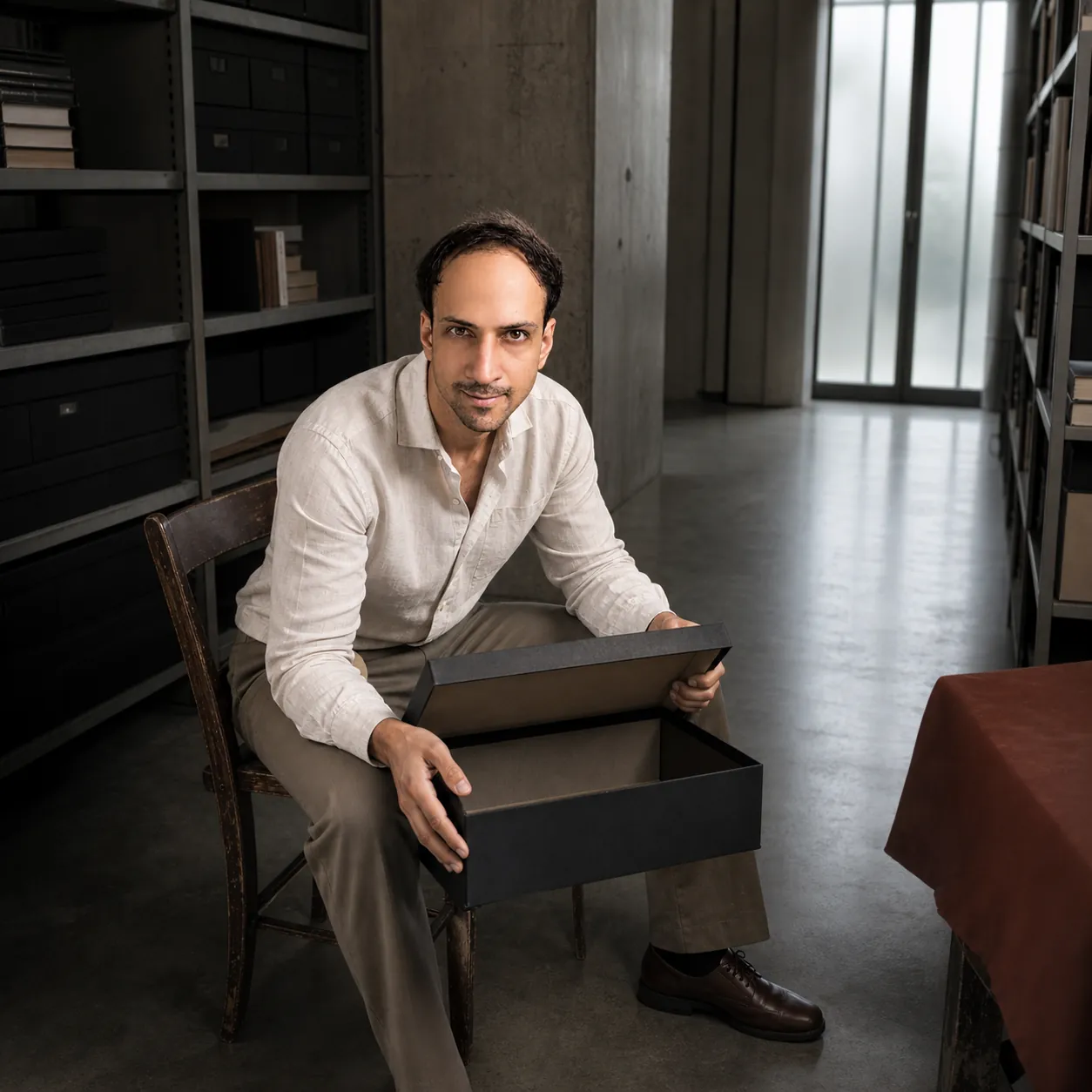
The Empty Archive Box
صورةAI Portraits

Create a square 1:1 museum-catalog frame with a strong first read and a slower second read at exactly 2880x2880 pixels. Location: a climate-controlled...

من نص البرومبت

Use the attached reference photo as the identity reference: keep the same face, skin tone, hair and features as the person in that photo, without beautifying, aging or altering them. Create a square 1:1 museum-catalog frame with a strong first read and a slower second read at exactly 2880x2880 pixels. Location: a climate-controlled archive corridor. Show them in an off-white linen shirt with relaxed tailored trousers, opening an unlabeled archival box whose interior is unexpectedly empty. Make one rigorous physical condition the conceptual engine: a humble borrowed chair treated with the spatial respect of a masterpiece becomes more compelling because the expected luxury object is deliberately missing. Explore the intelligence required to end before excess begins; direct expression and posture toward clear restraint, never melodrama or ad-like confidence. Use a measured wide 28mm view with the subject near one-third of the frame and no stretched limbs. Make the composition show one intentionally unused material at the edge. Render it as anti-campaign luxury photography with museum restraint, exceptional material detail, quiet composition, honest wear, and no aspirational spectacle, using soft north-facing daylight with restrained contrast and visible skin texture and a palette of cool concrete, soft black, and a single clay-red note. Photorealistic: this must read as a real photograph from a physical camera, never an illustration, painting, or 3D render. Resolve real surface detail: thread ends and slight pilling on worn cloth, hairline chips at every hard corner, and stone that is porous rather than smooth. Keep one identity-locked person, credible hands and fingers, natural fabric, and coherent scale, contact, reflections, shadows, airflow, deformation, and materials. Background people only when essential, always secondary and clearly different. Avoid gold, marble excess, supercars, private jets, watches, champagne, velvet ropes, and empty status posing. No text, labels, logos, signatures, watermarks, random symbols, plastic skin, excessive bloom, or glossy AI finish.
Supporting the Fragile Piece
صورةAI Portraits

Create a square 1:1 museum-catalog frame with a strong first read and a slower second read at exactly 2880x2880 pixels. Location: a museum conservation...

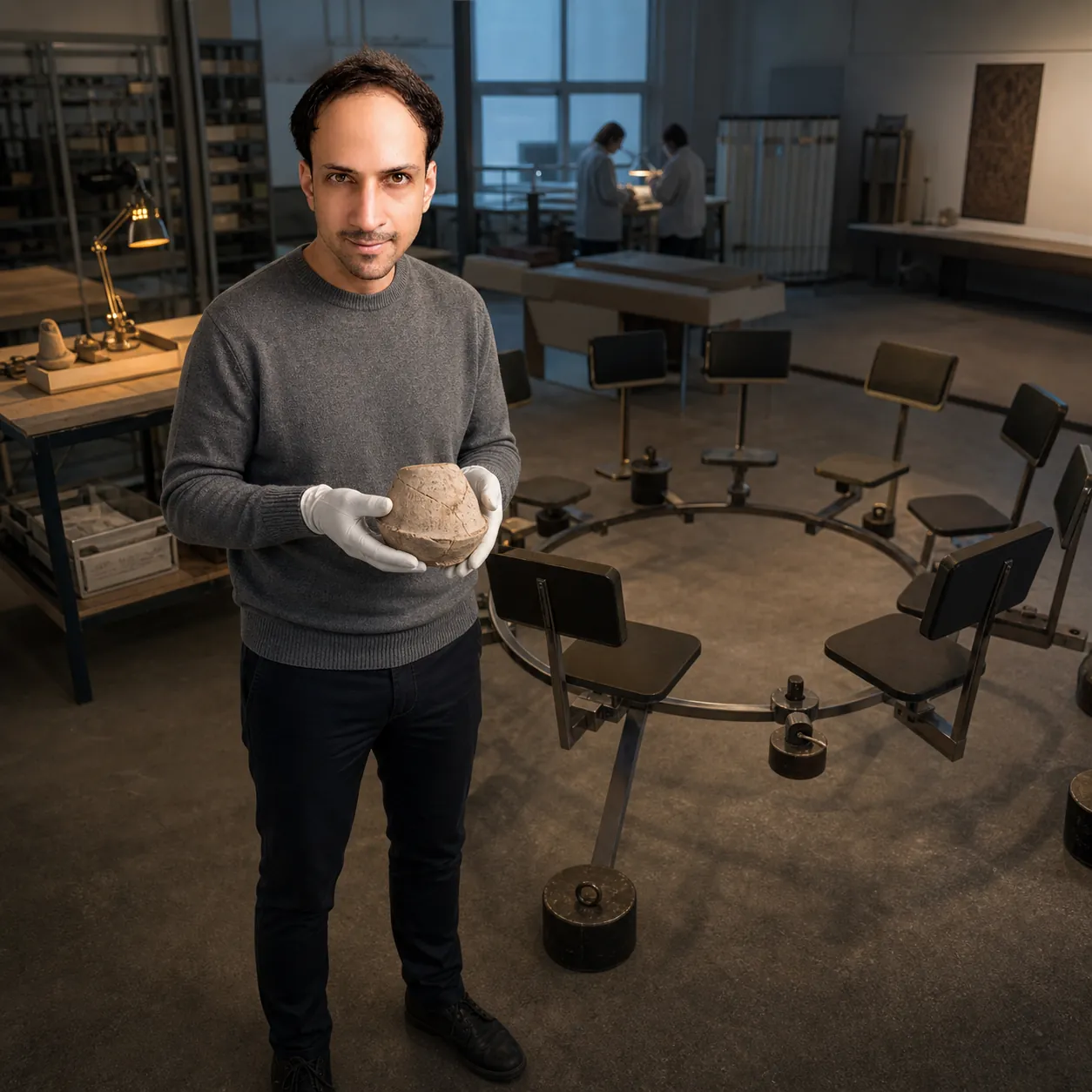
من نص البرومبت

Use the attached reference photo as the identity reference: keep the same face, skin tone, hair and features as the person in that photo, without beautifying, aging or altering them. Create a square 1:1 museum-catalog frame with a strong first read and a slower second read at exactly 2880x2880 pixels. Location: a museum conservation workspace under neutral task light. Show them in a muted grey crew-neck sweater with simple dark trousers, supporting a fragile unmarked object with both hands. Make one rigorous physical condition the conceptual engine: a circle of equal chairs whose orientation changes with who is speaking shifts a real weight each time one option is chosen. Explore the difference between hearing input and allowing it to change the plan; direct expression and posture toward attentive humility, never melodrama or ad-like confidence. Use a measured wide 28mm view with the subject near one-third of the frame and no stretched limbs. Make the composition show the structure visibly reconfigured by another position. Render it as high-concept business portraiture built from physical governance systems, documentary realism, elegant industrial design, and emotionally intelligent composition, using quiet blue-hour ambient light with one low-intensity tungsten interior source and a palette of linen beige, graphite, and restrained saffron. Photorealistic: this must read as a real photograph from a physical camera, never an illustration, painting, or 3D render. Resolve real surface detail: fine lint on dark fabric, water spotting on steel, and the soft rounding of edges that have been used for years. Keep one identity-locked person, credible hands and fingers, natural fabric, and coherent scale, contact, reflections, shadows, airflow, deformation, and materials. Background people only when essential, always secondary and clearly different. Avoid boardroom handshakes, podium hero shots, chess pieces, crowns, ladders to success, and glowing AI dashboards. No text, labels, logos, signatures, watermarks, random symbols, plastic skin, excessive bloom, or glossy AI finish.
One Layer Less
صورةAI Portraits

Create a square 1:1 museum-catalog frame with a strong first read and a slower second read at exactly 2880x2880 pixels. Location: a packing workspace with...

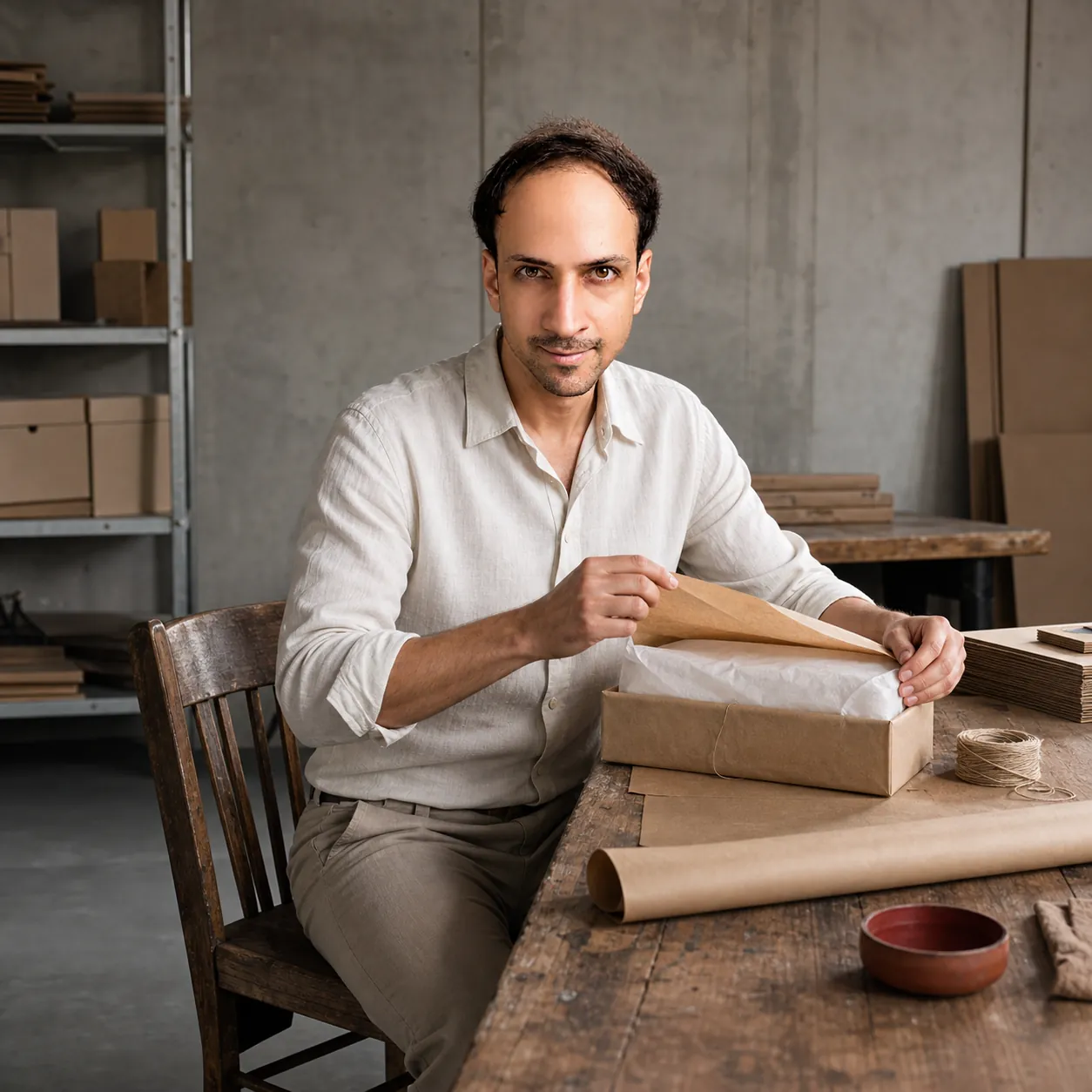
من نص البرومبت

Use the attached reference photo as the identity reference: keep the same face, skin tone, hair and features as the person in that photo, without beautifying, aging or altering them. Create a square 1:1 museum-catalog frame with a strong first read and a slower second read at exactly 2880x2880 pixels. Location: a packing workspace with plain recyclable materials. Show them in an off-white linen shirt with relaxed tailored trousers, removing one unnecessary layer of wrapping before sealing the parcel. Make one rigorous physical condition the conceptual engine: a humble borrowed chair treated with the spatial respect of a masterpiece becomes more compelling because the expected luxury object is deliberately missing. Explore the difference between caring for an object and using it to perform identity; direct expression and posture toward unforced presence, never melodrama or ad-like confidence. Use a measured wide 28mm view with the subject near one-third of the frame and no stretched limbs. Make the composition make touch and posture more important than possession. Render it as anti-campaign luxury photography with museum restraint, exceptional material detail, quiet composition, honest wear, and no aspirational spectacle, using clean laboratory illumination shaped into directional zones rather than flat brightness and a palette of cool concrete, soft black, and a single clay-red note. Photorealistic: this must read as a real photograph from a physical camera, never an illustration, painting, or 3D render. Resolve real surface detail: thread ends and slight pilling on worn cloth, hairline chips at every hard corner, and stone that is porous rather than smooth. Keep one identity-locked person, credible hands and fingers, natural fabric, and coherent scale, contact, reflections, shadows, airflow, deformation, and materials. Background people only when essential, always secondary and clearly different. Avoid gold, marble excess, supercars, private jets, watches, champagne, velvet ropes, and empty status posing. No text, labels, logos, signatures, watermarks, random symbols, plastic skin, excessive bloom, or glossy AI finish.
Guidance Without Control: Bedtime Mechanism Absence Still Supports — Textile Needle
صورةAI Portraits

Create a square 1:1 museum-catalog frame with a strong first read and a slower second read at exactly 2880x2880 pixels. Location: a textile atelier with...

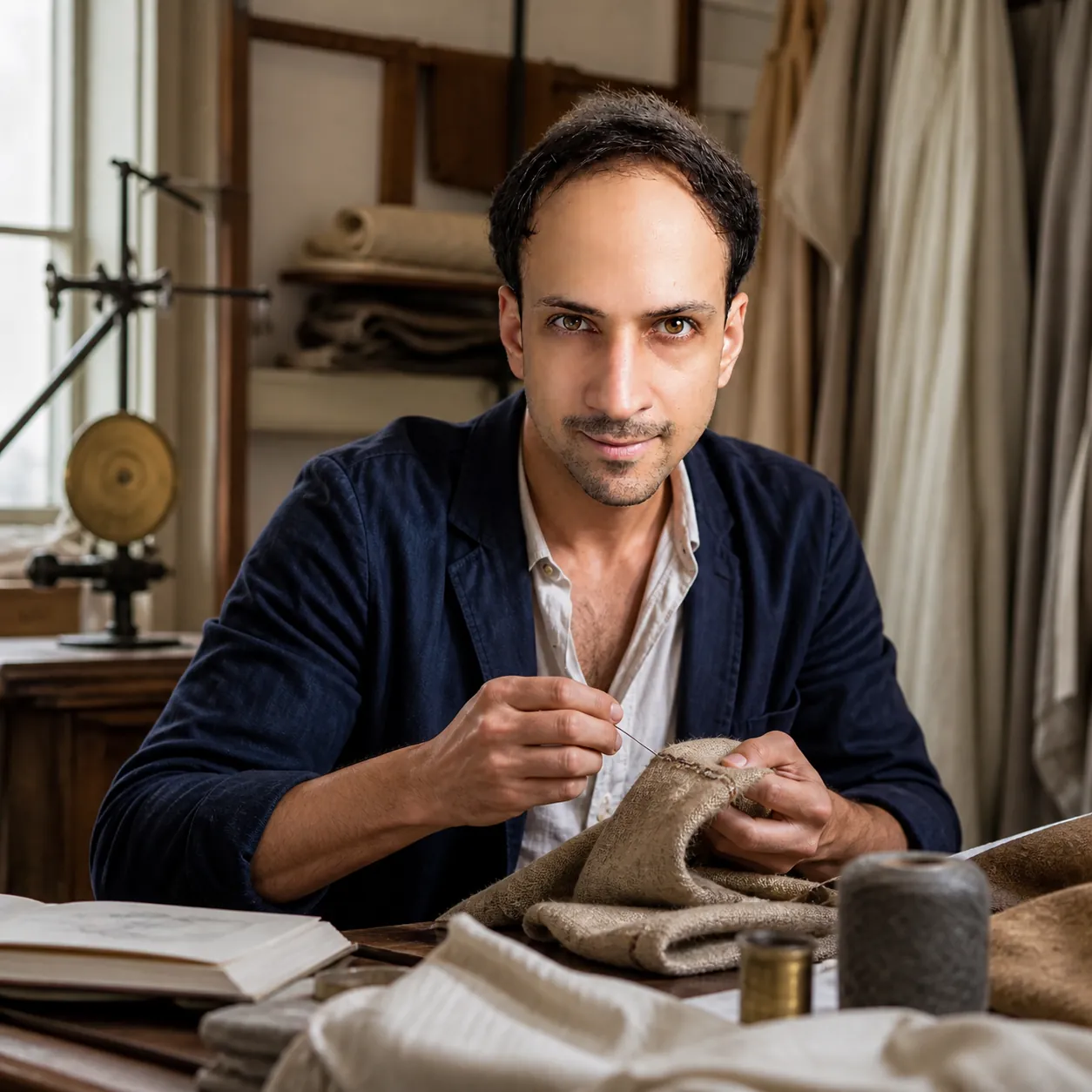
من نص البرومبت

Use the attached reference photo as the identity reference: keep the same face, skin tone, hair and features as the person in that photo, without beautifying, aging or altering them. Create a square 1:1 museum-catalog frame with a strong first read and a slower second read at exactly 2880x2880 pixels. Location: a textile atelier with natural fibers and repaired tools. Show them in a navy unstructured jacket over an open-collar shirt, threading a needle through a seam that has already been mended once. Make one rigorous physical condition the conceptual engine: a simple kinetic object completing a calm nightly sequence continues a caring routine when one family member is off-frame. Explore helping a child grow without designing the child; direct expression and posture toward patient trust, never melodrama or ad-like confidence. Use an eye-level 65mm medium-format viewpoint with natural perspective and restrained depth of field. Make the composition leave visible space for an unplanned choice. Render it as museum-level family editorial photography with restrained emotion, tactile domestic realism, credible hand interactions, and conceptual systems thinking, using soft north-facing daylight with restrained contrast and visible skin texture and a palette of smoked glass, parchment, and muted brass without luxury gloss. Photorealistic: this must read as a real photograph from a physical camera, never an illustration, painting, or 3D render. Resolve real surface detail: label-free packaging showing carton fibre, cardboard bruised at the corners, and tape lifting slightly at one end. Keep one identity-locked person, credible hands and fingers, natural fabric, and coherent scale, contact, reflections, shadows, airflow, deformation, and materials. Background people only when essential, always secondary and clearly different. Avoid staged hugs, greeting-card sentiment, superhero father imagery, matching outfits, and forced smiles. No text, labels, logos, signatures, watermarks, random symbols, plastic skin, excessive bloom, or glossy AI finish.
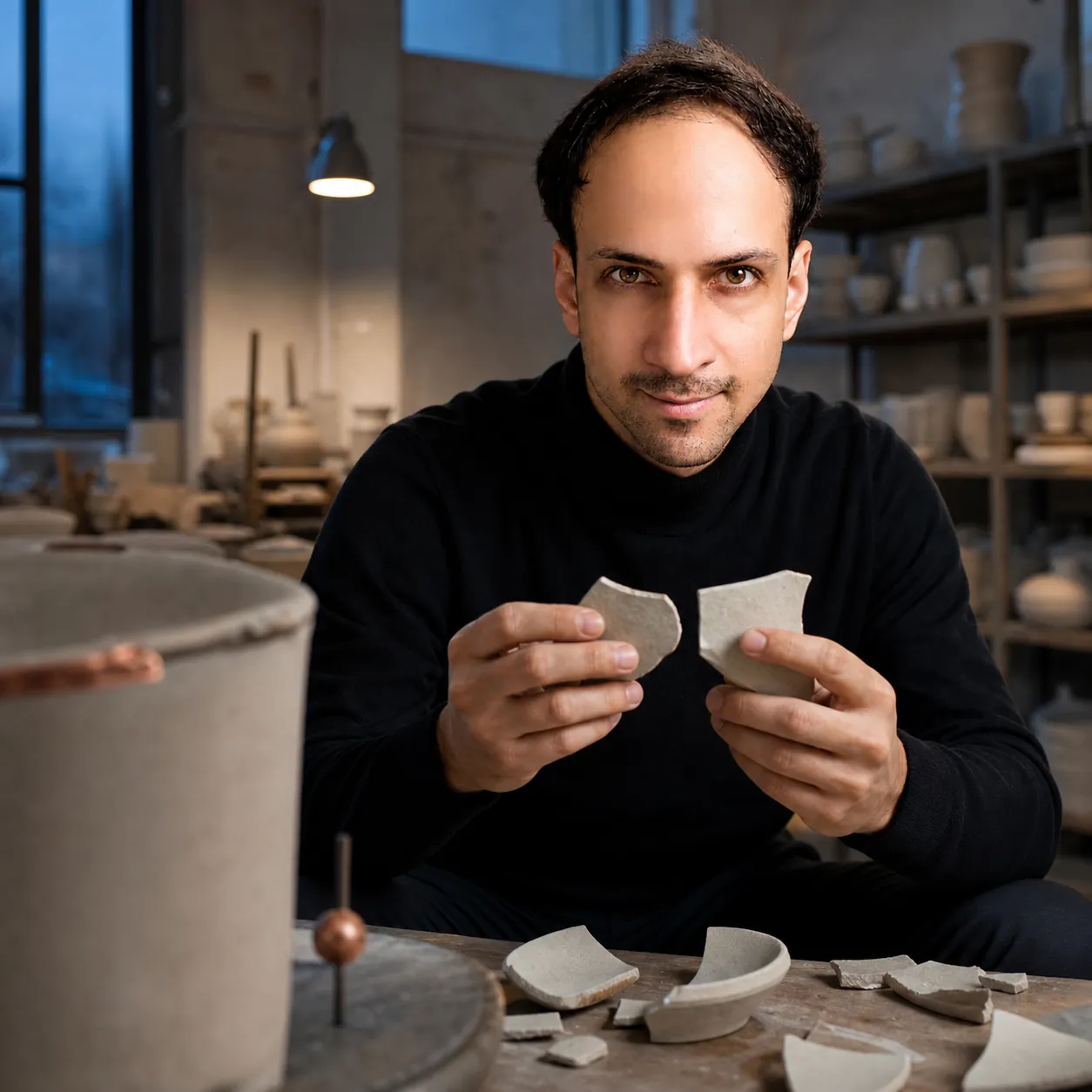
Value Without Signal: Borrowed Chair Use Defeats Display — Kitchen Interval
صورةAI Portraits

Create a square 1:1 museum-catalog frame with a strong first read and a slower second read at exactly 2880x2880 pixels. Location: a quiet home kitchen...

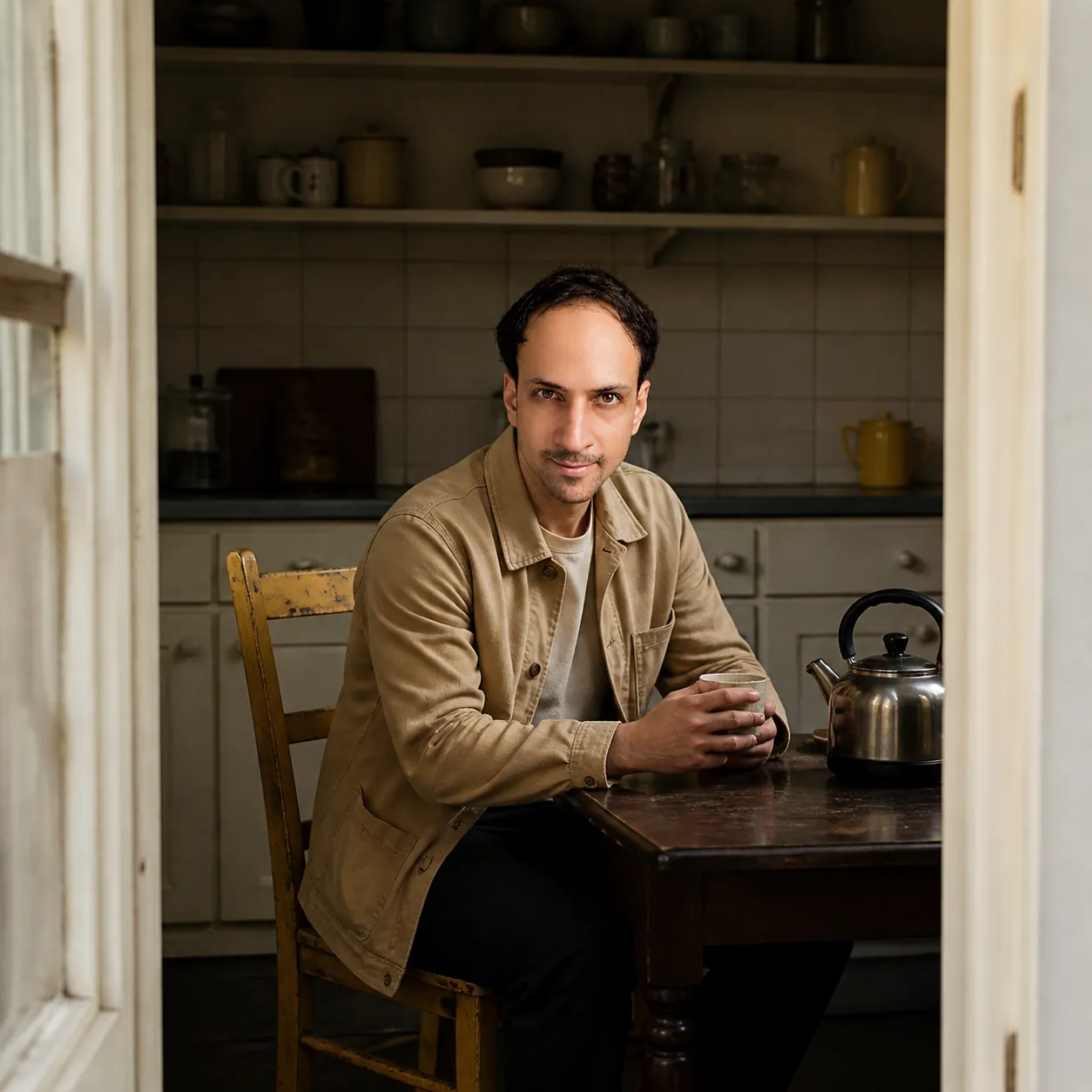
من نص البرومبت

Use the attached reference photo as the identity reference: keep the same face, skin tone, hair and features as the person in that photo, without beautifying, aging or altering them. Create a square 1:1 museum-catalog frame with a strong first read and a slower second read at exactly 2880x2880 pixels. Location: a quiet home kitchen before the household wakes. Show them in a sand-colored chore jacket over a plain shirt, waiting beside a kettle without reaching for another task. Make one rigorous physical condition the conceptual engine: a humble borrowed chair treated with the spatial respect of a masterpiece gains visual status only when the subject uses it naturally. Explore worth that does not depend on recognition or display; direct expression and posture toward quiet self-possession, never melodrama or ad-like confidence. Frame through one real architectural opening, with the foreground sharp enough to feel physical but never covering the face. Make the composition avoid visual hierarchy based on shine, size, or rarity. Render it as anti-campaign luxury photography with museum restraint, exceptional material detail, quiet composition, honest wear, and no aspirational spectacle, using a broad window-shaped key with gentle falloff, soft negative fill, and no beauty-light flattening and a palette of linen beige, graphite, and restrained saffron. Photorealistic: this must read as a real photograph from a physical camera, never an illustration, painting, or 3D render. Resolve real surface detail: glass with real thickness at its edge, reflections that carry the room's actual colour, and dust visible only at grazing angles. Keep one identity-locked person, credible hands and fingers, natural fabric, and coherent scale, contact, reflections, shadows, airflow, deformation, and materials. Background people only when essential, always secondary and clearly different. Avoid gold, marble excess, supercars, private jets, watches, champagne, velvet ropes, and empty status posing. No text, labels, logos, signatures, watermarks, random symbols, plastic skin, excessive bloom, or glossy AI finish.
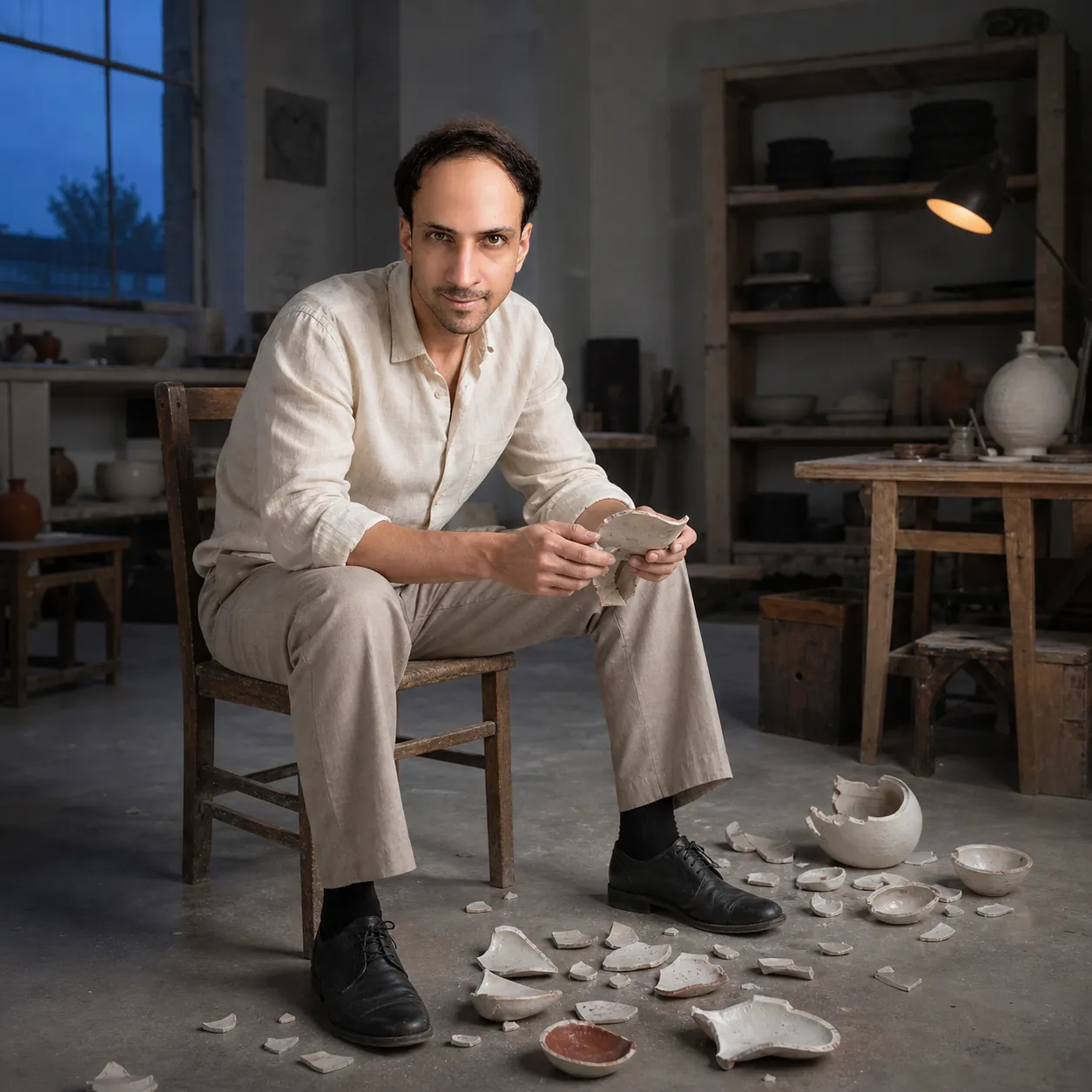
Pieces That Truly Fit
صورةAI Portraits

Create a square 1:1 museum-catalog frame with a strong first read and a slower second read at exactly 2880x2880 pixels. Location: a white ceramics studio...

من نص البرومبت

Use the attached reference photo as the identity reference: keep the same face, skin tone, hair and features as the person in that photo, without beautifying, aging or altering them. Create a square 1:1 museum-catalog frame with a strong first read and a slower second read at exactly 2880x2880 pixels. Location: a white ceramics studio with several broken pieces on the floor. Show them in a black mock-neck top with matte tailored trousers, testing which fragments truly belong together without forcing a fit. Make one rigorous physical condition the conceptual engine: a simple kinetic object completing a calm nightly sequence passes knowledge through a shared action instead of a symbolic gift. Explore how systems of love continue when someone cannot be present; direct expression and posture toward restrained longing, never melodrama or ad-like confidence. Use a 100mm macro-to-portrait hybrid: one material detail near the lens and the person in the reference photo's face readable beyond it, both physically plausible. Make the composition let an empty place remain functional rather than memorialized. Render it as museum-level family editorial photography with restrained emotion, tactile domestic realism, credible hand interactions, and conceptual systems thinking, using quiet blue-hour ambient light with one low-intensity tungsten interior source and a palette of clean off-white, deep navy, and one oxidized-copper accent. Photorealistic: this must read as a real photograph from a physical camera, never an illustration, painting, or 3D render. Resolve real surface detail: condensation beading at true size, liquid meniscus curving against glass, and wet surfaces darker than dry ones. Keep one identity-locked person, credible hands and fingers, natural fabric, and coherent scale, contact, reflections, shadows, airflow, deformation, and materials. Background people only when essential, always secondary and clearly different. Avoid staged hugs, greeting-card sentiment, superhero father imagery, matching outfits, and forced smiles. No text, labels, logos, signatures, watermarks, random symbols, plastic skin, excessive bloom, or glossy AI finish.
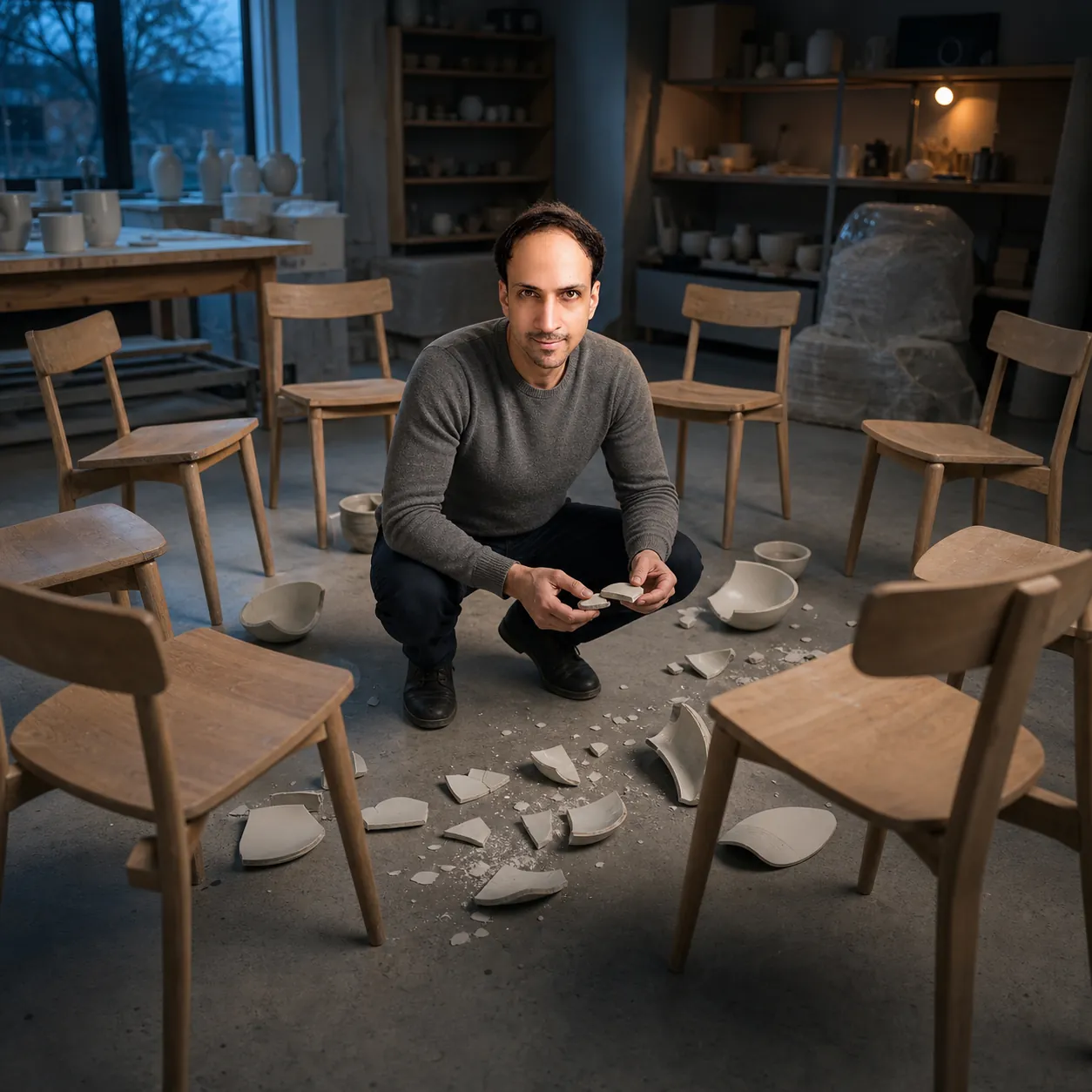
Fragments That Belong Together
صورةAI Portraits

Create a square 1:1 museum-catalog frame with a strong first read and a slower second read at exactly 2880x2880 pixels. Location: a white ceramics studio...

من نص البرومبت

Use the attached reference photo as the identity reference: keep the same face, skin tone, hair and features as the person in that photo, without beautifying, aging or altering them. Create a square 1:1 museum-catalog frame with a strong first read and a slower second read at exactly 2880x2880 pixels. Location: a white ceramics studio with several broken pieces on the floor. Show them in an off-white linen shirt with relaxed tailored trousers, testing which fragments truly belong together without forcing a fit. Make one rigorous physical condition the conceptual engine: a humble borrowed chair treated with the spatial respect of a masterpiece becomes more compelling because the expected luxury object is deliberately missing. Explore respect for the work hidden beneath finished surfaces; direct expression and posture toward earned dignity, never melodrama or ad-like confidence. Use a measured wide 28mm view with the subject near one-third of the frame and no stretched limbs. Make the composition let tool marks remain legible at close inspection. Render it as anti-campaign luxury photography with museum restraint, exceptional material detail, quiet composition, honest wear, and no aspirational spectacle, using quiet blue-hour ambient light with one low-intensity tungsten interior source and a palette of cool concrete, soft black, and a single clay-red note. Photorealistic: this must read as a real photograph from a physical camera, never an illustration, painting, or 3D render. Resolve real surface detail: thread ends and slight pilling on worn cloth, hairline chips at every hard corner, and stone that is porous rather than smooth. Keep one identity-locked person, credible hands and fingers, natural fabric, and coherent scale, contact, reflections, shadows, airflow, deformation, and materials. Background people only when essential, always secondary and clearly different. Avoid gold, marble excess, supercars, private jets, watches, champagne, velvet ropes, and empty status posing. No text, labels, logos, signatures, watermarks, random symbols, plastic skin, excessive bloom, or glossy AI finish.
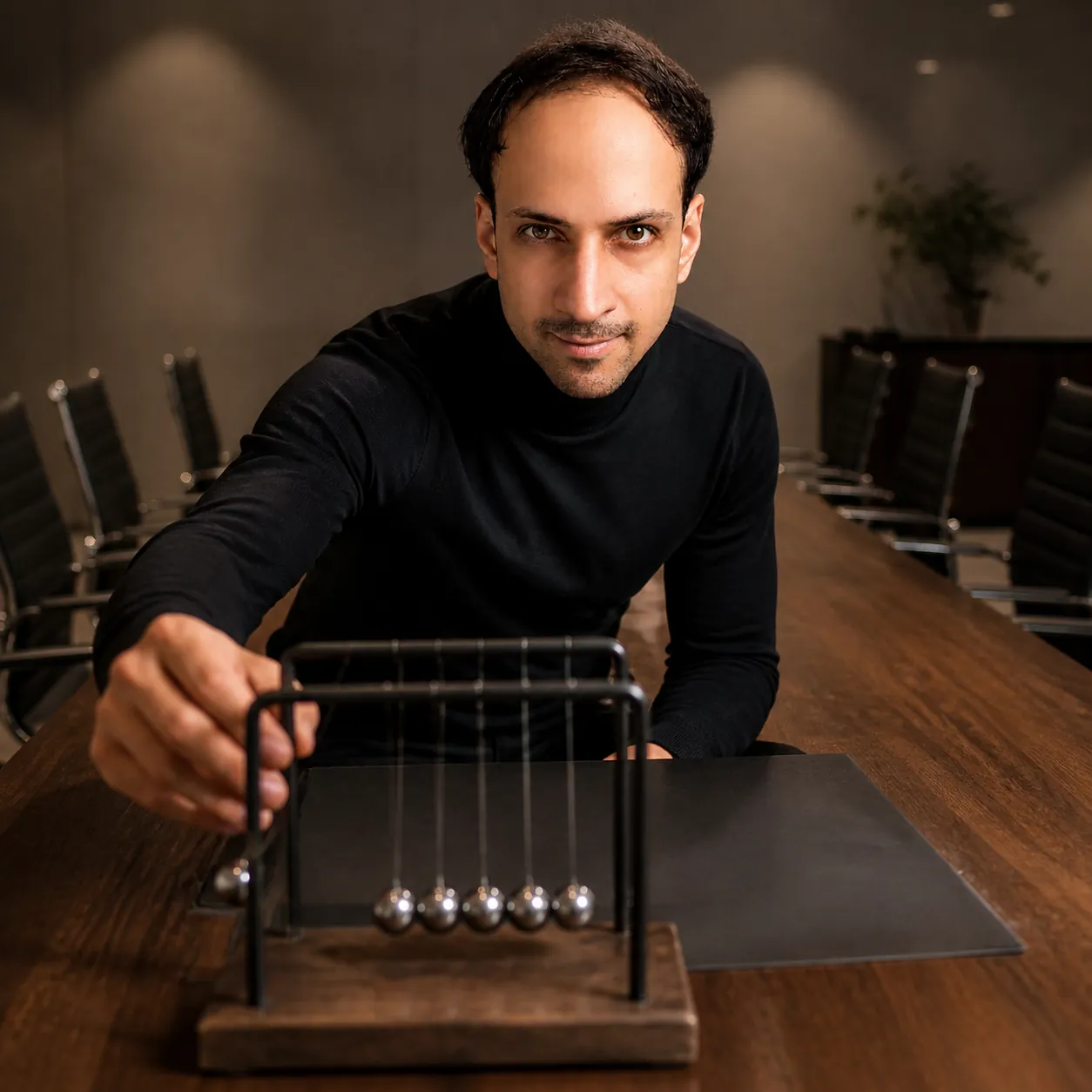
Fitting Without Forcing
صورةAI Portraits

Create a square 1:1 museum-catalog frame with a strong first read and a slower second read at exactly 2880x2880 pixels. Location: a white ceramics studio...

من نص البرومبت

Use the attached reference photo as the identity reference: keep the same face, skin tone, hair and features as the person in that photo, without beautifying, aging or altering them. Create a square 1:1 museum-catalog frame with a strong first read and a slower second read at exactly 2880x2880 pixels. Location: a white ceramics studio with several broken pieces on the floor. Show them in a muted grey crew-neck sweater with simple dark trousers, testing which fragments truly belong together without forcing a fit. Make one rigorous physical condition the conceptual engine: a circle of equal chairs whose orientation changes with who is speaking stops the system before speed damages people or quality. Explore the difference between hearing input and allowing it to change the plan; direct expression and posture toward attentive humility, never melodrama or ad-like confidence. Use a measured wide 28mm view with the subject near one-third of the frame and no stretched limbs. Make the composition show the structure visibly reconfigured by another position. Render it as high-concept business portraiture built from physical governance systems, documentary realism, elegant industrial design, and emotionally intelligent composition, using quiet blue-hour ambient light with one low-intensity tungsten interior source and a palette of sand, smoke grey, and a small field of mineral blue. Photorealistic: this must read as a real photograph from a physical camera, never an illustration, painting, or 3D render. Resolve real surface detail: hair with individual strands catching light, visible pores of uneven size, and skin oil giving a low uneven sheen. Keep one identity-locked person, credible hands and fingers, natural fabric, and coherent scale, contact, reflections, shadows, airflow, deformation, and materials. Background people only when essential, always secondary and clearly different. Avoid boardroom handshakes, podium hero shots, chess pieces, crowns, ladders to success, and glowing AI dashboards. No text, labels, logos, signatures, watermarks, random symbols, plastic skin, excessive bloom, or glossy AI finish.
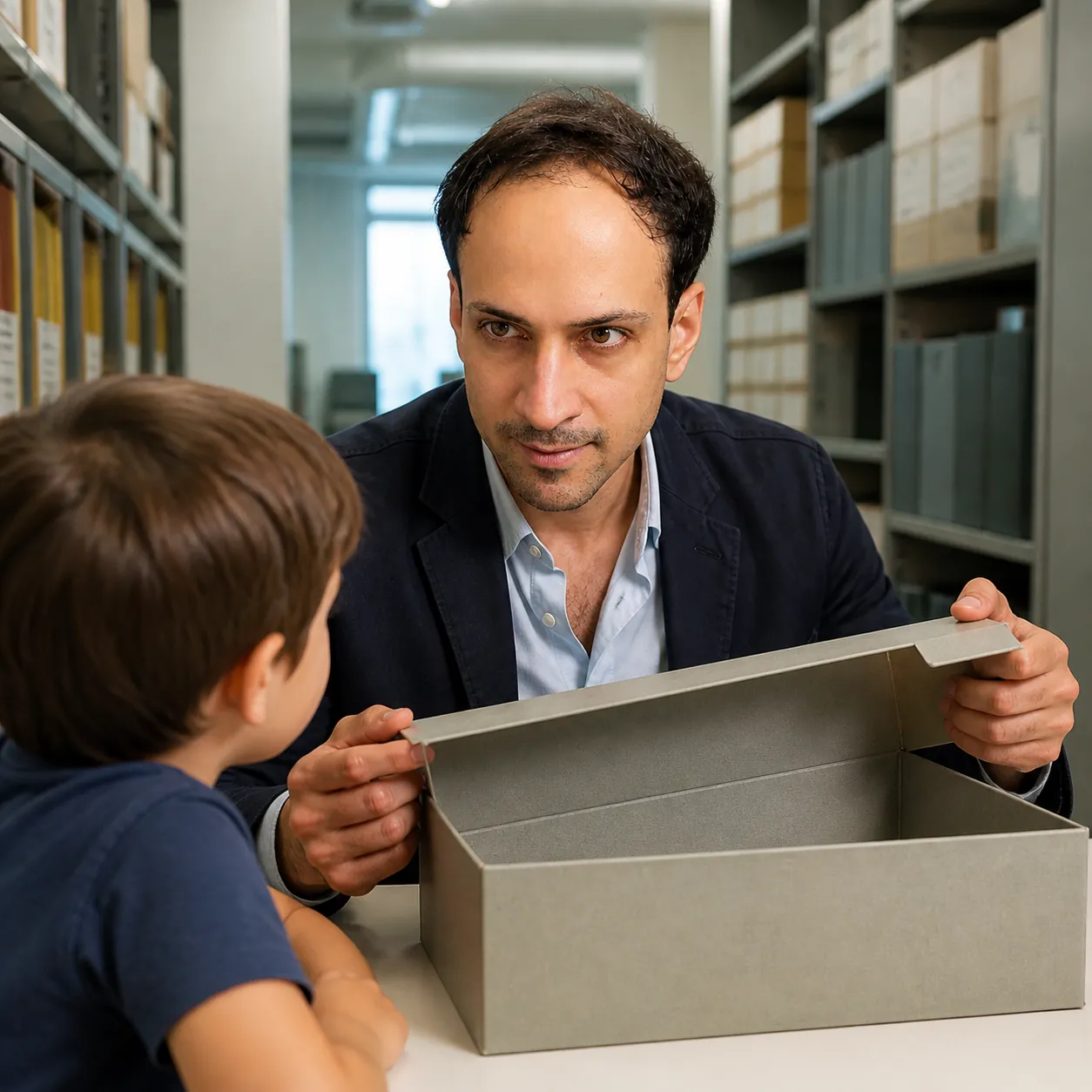
Repair as Teaching: Bedtime Mechanism Care Becomes System — Equal Chairs
صورةAI Portraits

Create a square 1:1 museum-catalog frame with a strong first read and a slower second read at exactly 2880x2880 pixels. Location: an emptied meeting room...

من نص البرومبت

Use the attached reference photo as the identity reference: keep the same face, skin tone, hair and features as the person in that photo, without beautifying, aging or altering them. Create a square 1:1 museum-catalog frame with a strong first read and a slower second read at exactly 2880x2880 pixels. Location: an emptied meeting room after a difficult discussion. Show them in a black mock-neck top with matte tailored trousers, returning every chair to an equal distance from the table. Make one rigorous physical condition the conceptual engine: a simple kinetic object completing a calm nightly sequence turns an invisible routine into a visible structure without making it sentimental. Explore how fixing an object can model responsibility, patience, and limits; direct expression and posture toward quiet competence, never melodrama or ad-like confidence. Use a 100mm macro-to-portrait hybrid: one material detail near the lens and the person in the reference photo's face readable beyond it, both physically plausible. Make the composition show the child only through scale or hands if present, never as a duplicate subject. Render it as museum-level family editorial photography with restrained emotion, tactile domestic realism, credible hand interactions, and conceptual systems thinking, using a single overhead practical softened by the surrounding architecture, leaving readable shadow detail and a palette of warm stone, charcoal, and muted olive. Photorealistic: this must read as a real photograph from a physical camera, never an illustration, painting, or 3D render. Resolve real surface detail: wood grain read at honest scale, matte and gloss clearly separated, and no surface uniformly clean. Keep one identity-locked person, credible hands and fingers, natural fabric, and coherent scale, contact, reflections, shadows, airflow, deformation, and materials. Background people only when essential, always secondary and clearly different. Avoid staged hugs, greeting-card sentiment, superhero father imagery, matching outfits, and forced smiles. No text, labels, logos, signatures, watermarks, random symbols, plastic skin, excessive bloom, or glossy AI finish.
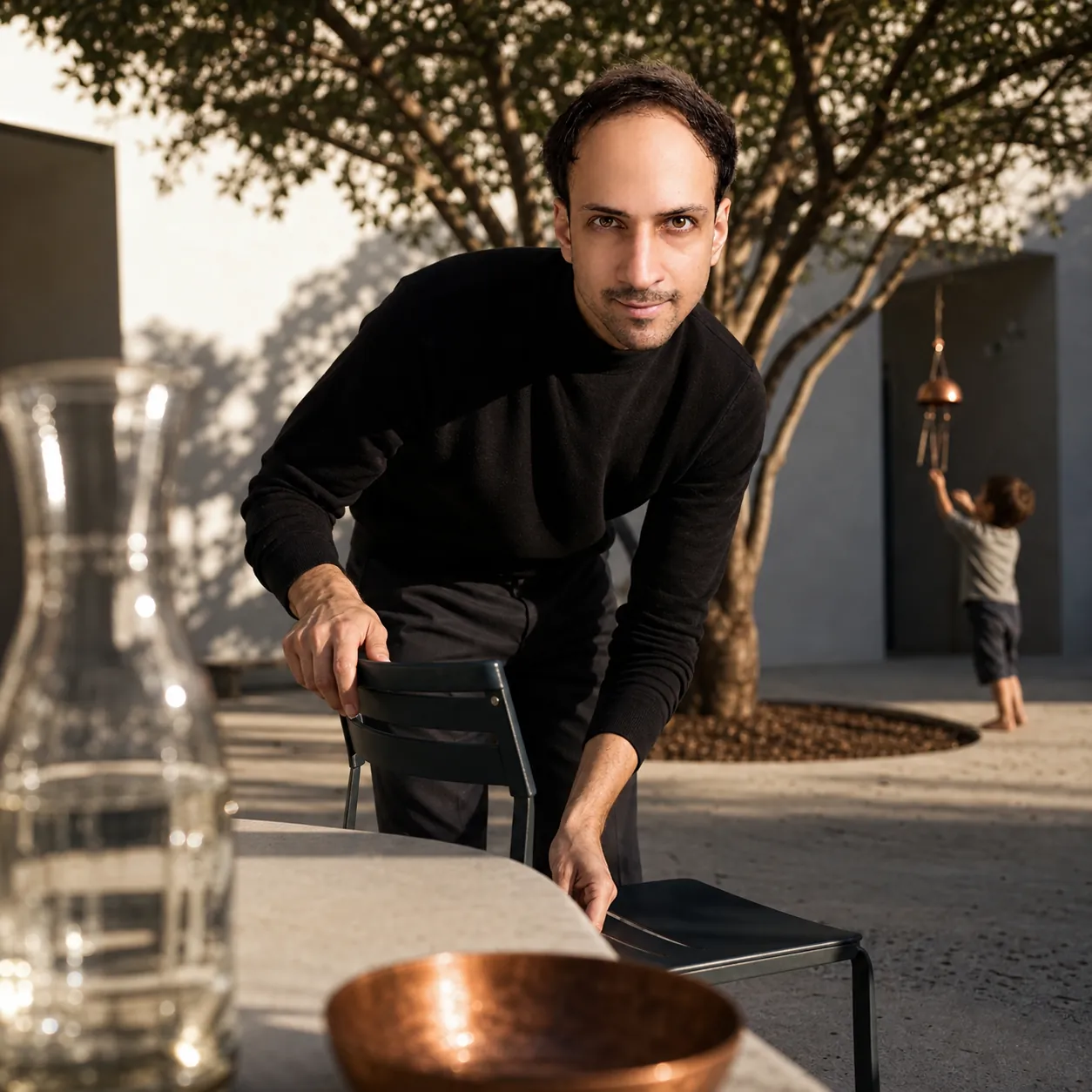
Guidance Without Control: Bedtime Mechanism Child Changes Design — Archive Box
صورةAI Portraits

Create a square 1:1 museum-catalog frame with a strong first read and a slower second read at exactly 2880x2880 pixels. Location: a climate-controlled...

من نص البرومبت

Use the attached reference photo as the identity reference: keep the same face, skin tone, hair and features as the person in that photo, without beautifying, aging or altering them. Create a square 1:1 museum-catalog frame with a strong first read and a slower second read at exactly 2880x2880 pixels. Location: a climate-controlled archive corridor. Show them in a navy unstructured jacket over an open-collar shirt, opening an unlabeled archival box whose interior is unexpectedly empty. Make one rigorous physical condition the conceptual engine: a simple kinetic object completing a calm nightly sequence adapts after a child's unscripted use rather than forcing compliance. Explore helping a child grow without designing the child; direct expression and posture toward patient trust, never melodrama or ad-like confidence. Use an eye-level 65mm medium-format viewpoint with natural perspective and restrained depth of field. Make the composition leave visible space for an unplanned choice. Render it as museum-level family editorial photography with restrained emotion, tactile domestic realism, credible hand interactions, and conceptual systems thinking, using soft north-facing daylight with restrained contrast and visible skin texture and a palette of pale celadon, warm grey, and natural wood tones. Photorealistic: this must read as a real photograph from a physical camera, never an illustration, painting, or 3D render. Resolve real surface detail: skin that reddens slightly under pressure, nail beds with honest colour, and knuckle creases that fold rather than blur. Keep one identity-locked person, credible hands and fingers, natural fabric, and coherent scale, contact, reflections, shadows, airflow, deformation, and materials. Background people only when essential, always secondary and clearly different. Avoid staged hugs, greeting-card sentiment, superhero father imagery, matching outfits, and forced smiles. No text, labels, logos, signatures, watermarks, random symbols, plastic skin, excessive bloom, or glossy AI finish.
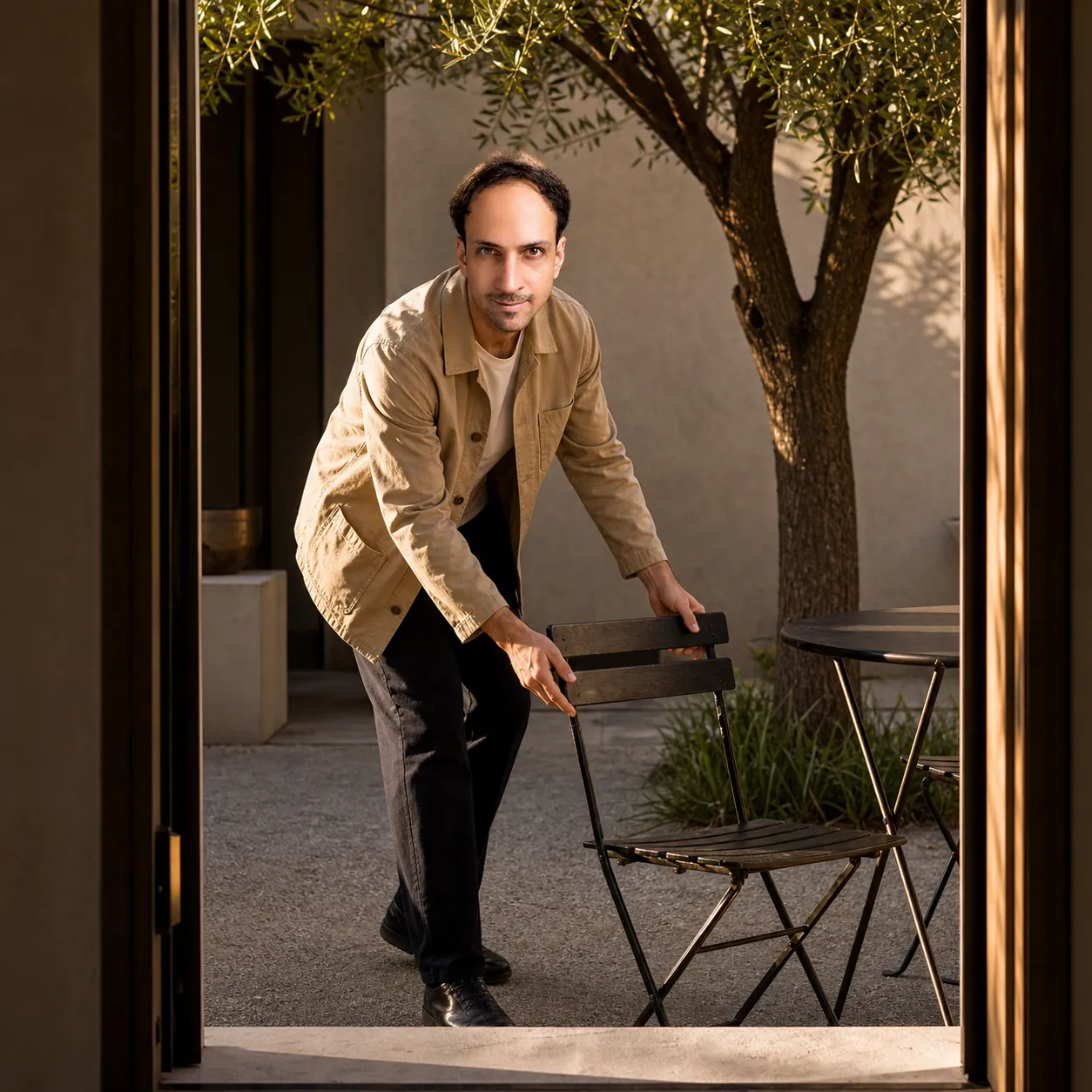
Chair Moved for the Breeze
صورةAI Portraits

Create a square 1:1 museum-catalog frame with a strong first read and a slower second read at exactly 2880x2880 pixels. Location: a contemporary courtyard...

من نص البرومبت

Use the attached reference photo as the identity reference: keep the same face, skin tone, hair and features as the person in that photo, without beautifying, aging or altering them. Create a square 1:1 museum-catalog frame with a strong first read and a slower second read at exactly 2880x2880 pixels. Location: a contemporary courtyard built around a single tree. Show them in a black mock-neck top with matte tailored trousers, moving one chair a few centimeters to catch the first usable breeze. Make one rigorous physical condition the conceptual engine: a simple kinetic object completing a calm nightly sequence passes knowledge through a shared action instead of a symbolic gift. Explore fatherhood measured by repeated attention rather than dramatic gestures; direct expression and posture toward grounded tenderness, never melodrama or ad-like confidence. Use a 100mm macro-to-portrait hybrid: one material detail near the lens and the person in the reference photo's face readable beyond it, both physically plausible. Make the composition make the smallest action the compositional center. Render it as museum-level family editorial photography with restrained emotion, tactile domestic realism, credible hand interactions, and conceptual systems thinking, using low-angle late-afternoon light creating long but physically coherent shadows and a palette of clean off-white, deep navy, and one oxidized-copper accent. Photorealistic: this must read as a real photograph from a physical camera, never an illustration, painting, or 3D render. Resolve real surface detail: condensation beading at true size, liquid meniscus curving against glass, and wet surfaces darker than dry ones. Keep one identity-locked person, credible hands and fingers, natural fabric, and coherent scale, contact, reflections, shadows, airflow, deformation, and materials. Background people only when essential, always secondary and clearly different. Avoid staged hugs, greeting-card sentiment, superhero father imagery, matching outfits, and forced smiles. No text, labels, logos, signatures, watermarks, random symbols, plastic skin, excessive bloom, or glossy AI finish.
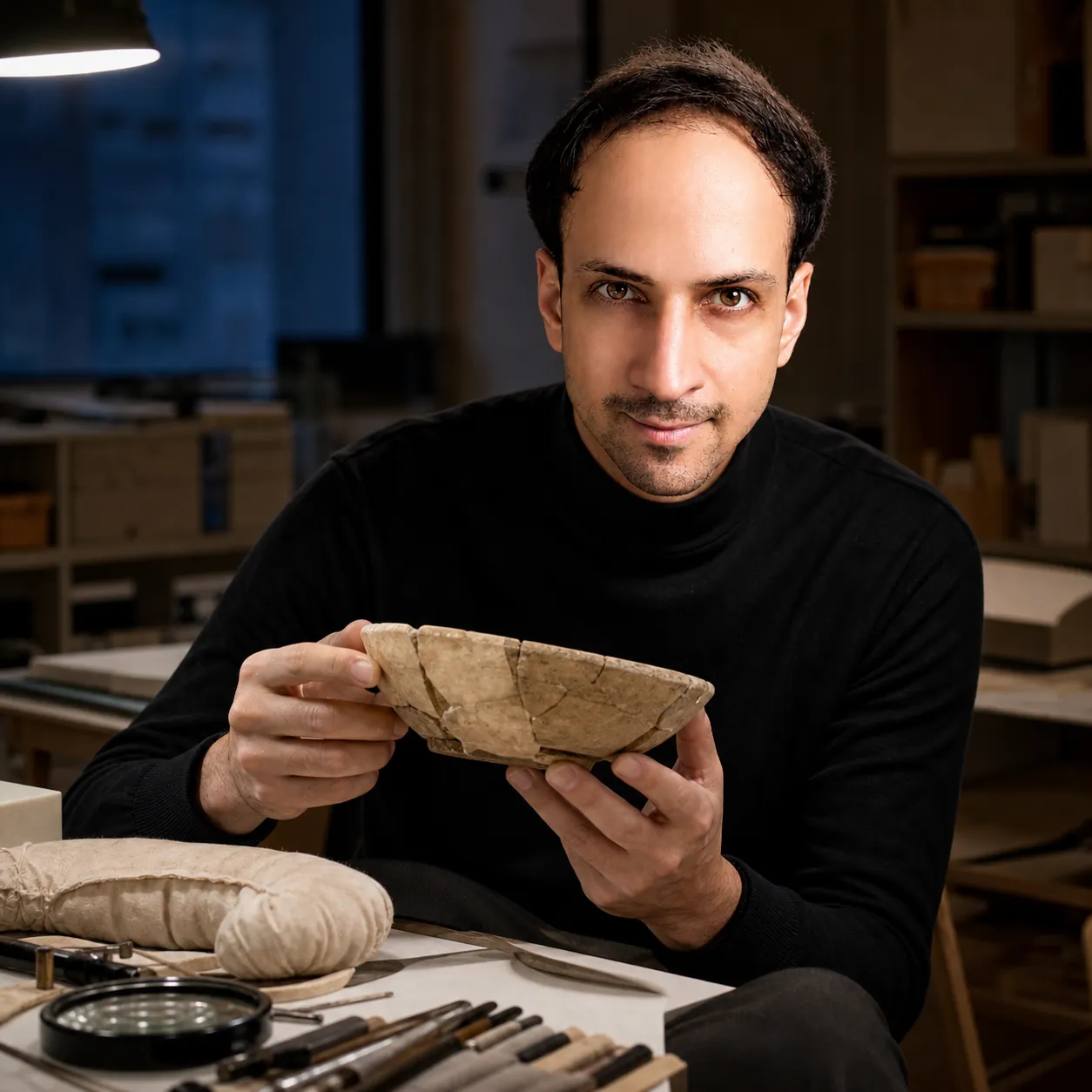
Catching the First Breeze
صورةAI Portraits

Create a square 1:1 museum-catalog frame with a strong first read and a slower second read at exactly 2880x2880 pixels. Location: a contemporary courtyard...

من نص البرومبت

Use the attached reference photo as the identity reference: keep the same face, skin tone, hair and features as the person in that photo, without beautifying, aging or altering them. Create a square 1:1 museum-catalog frame with a strong first read and a slower second read at exactly 2880x2880 pixels. Location: a contemporary courtyard built around a single tree. Show them in a sand-colored chore jacket over a plain shirt, moving one chair a few centimeters to catch the first usable breeze. Make one rigorous physical condition the conceptual engine: a humble borrowed chair treated with the spatial respect of a masterpiece gains visual status only when they use it naturally. Explore the difference between caring for an object and using it to perform identity; direct expression and posture toward unforced presence, never melodrama or ad-like confidence. Frame through one real architectural opening, with the foreground sharp enough to feel physical but never covering the face. Make the composition make touch and posture more important than possession. Render it as anti-campaign luxury photography with museum restraint, exceptional material detail, quiet composition, honest wear, and no aspirational spectacle, using low-angle late-afternoon light creating long but physically coherent shadows and a palette of linen beige, graphite, and restrained saffron. Photorealistic: this must read as a real photograph from a physical camera, never an illustration, painting, or 3D render. Resolve real surface detail: glass with real thickness at its edge, reflections that carry the room's actual colour, and dust visible only at grazing angles. Keep one identity-locked person, credible hands and fingers, natural fabric, and coherent scale, contact, reflections, shadows, airflow, deformation, and materials. Background people only when essential, always secondary and clearly different. Avoid gold, marble excess, supercars, private jets, watches, champagne, velvet ropes, and empty status posing. No text, labels, logos, signatures, watermarks, random symbols, plastic skin, excessive bloom, or glossy AI finish.
Holding the Fragile Object
صورةAI Portraits

Create a square 1:1 museum-catalog frame with a strong first read and a slower second read at exactly 2880x2880 pixels. Location: a museum conservation...

من نص البرومبت

Use the attached reference photo as the identity reference: keep the same face, skin tone, hair and features as the person in that photo, without beautifying, aging or altering them. Create a square 1:1 museum-catalog frame with a strong first read and a slower second read at exactly 2880x2880 pixels. Location: a museum conservation workspace under neutral task light. Show them in a black mock-neck top with matte tailored trousers, supporting a fragile unmarked object with both hands. Make one rigorous physical condition the conceptual engine: a simple kinetic object completing a calm nightly sequence turns an invisible routine into a visible structure without making it sentimental. Explore how systems of love continue when someone cannot be present; direct expression and posture toward restrained longing, never melodrama or ad-like confidence. Use a 100mm macro-to-portrait hybrid: one material detail near the lens and the person in the reference photo's face readable beyond it, both physically plausible. Make the composition let an empty place remain functional rather than memorialized. Render it as museum-level family editorial photography with restrained emotion, tactile domestic realism, credible hand interactions, and conceptual systems thinking, using quiet blue-hour ambient light with one low-intensity tungsten interior source and a palette of warm stone, charcoal, and muted olive. Photorealistic: this must read as a real photograph from a physical camera, never an illustration, painting, or 3D render. Resolve real surface detail: wood grain read at honest scale, matte and gloss clearly separated, and no surface uniformly clean. Keep one identity-locked person, credible hands and fingers, natural fabric, and coherent scale, contact, reflections, shadows, airflow, deformation, and materials. Background people only when essential, always secondary and clearly different. Avoid staged hugs, greeting-card sentiment, superhero father imagery, matching outfits, and forced smiles. No text, labels, logos, signatures, watermarks, random symbols, plastic skin, excessive bloom, or glossy AI finish.
Reflections After Rain
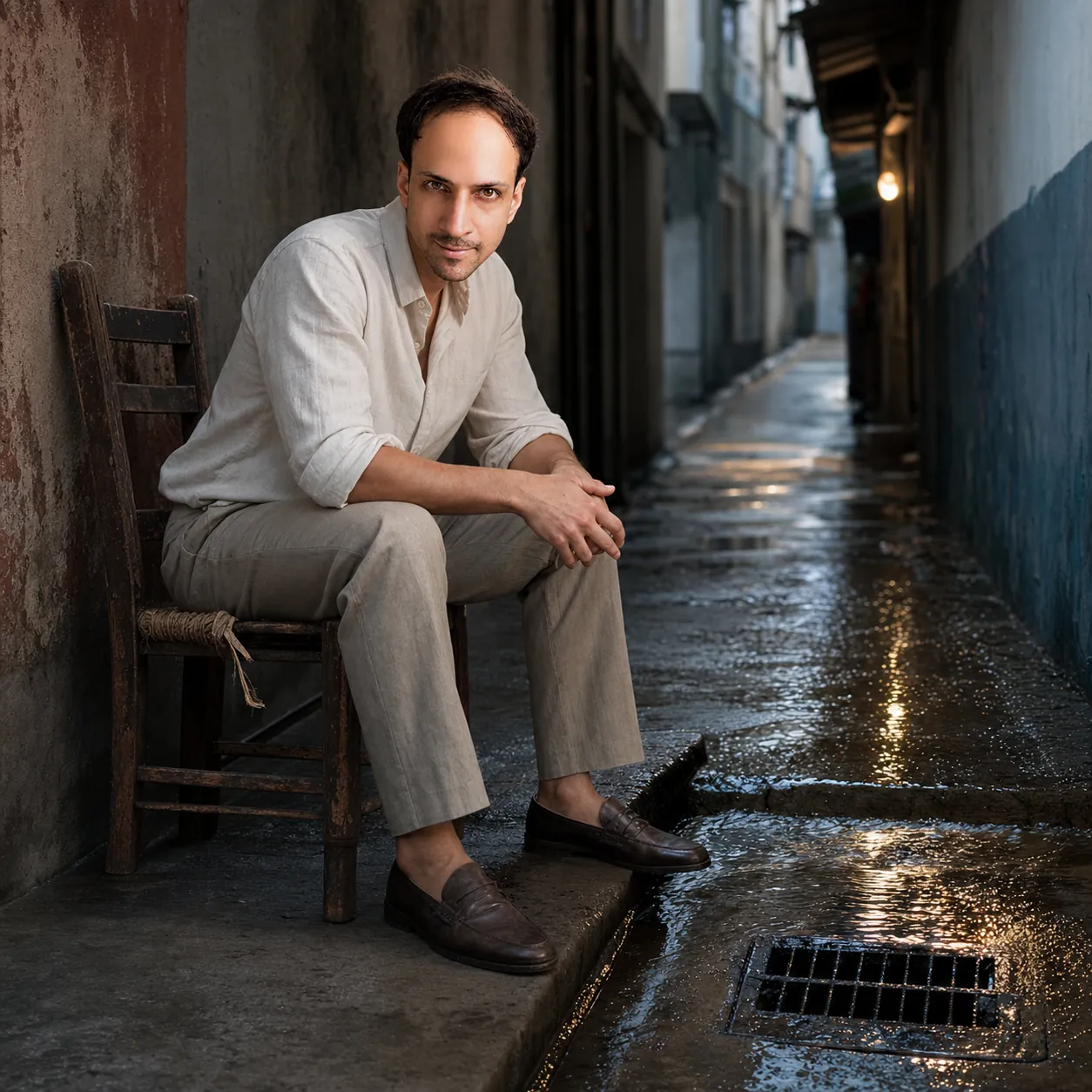
صورةAI Portraits

Create a square 1:1 museum-catalog frame with a strong first read and a slower second read at exactly 2880x2880 pixels. Location: a narrow urban alley just...

من نص البرومبت

Use the attached reference photo as the identity reference: keep the same face, skin tone, hair and features as the person in that photo, without beautifying, aging or altering them. Create a square 1:1 museum-catalog frame with a strong first read and a slower second read at exactly 2880x2880 pixels. Location: a narrow urban alley just after rain. Show them in an off-white linen shirt with relaxed tailored trousers, watching a reflected light break apart as a drain begins to clear. Make one rigorous physical condition the conceptual engine: a humble borrowed chair treated with the spatial respect of a masterpiece reveals labor through one retained flaw rather than decorative distress. Explore the difference between caring for an object and using it to perform identity; direct expression and posture toward unforced presence, never melodrama or ad-like confidence. Use a measured wide 28mm view with the subject near one-third of the frame and no stretched limbs. Make the composition make touch and posture more important than possession. Render it as anti-campaign luxury photography with museum restraint, exceptional material detail, quiet composition, honest wear, and no aspirational spectacle, using clean laboratory illumination shaped into directional zones rather than flat brightness and a palette of desaturated blue, chalk white, and terracotta. Photorealistic: this must read as a real photograph from a physical camera, never an illustration, painting, or 3D render. Resolve real surface detail: grout darker than tile, sealant slightly yellowed, and every joint showing a real tolerance gap. Keep one identity-locked person, credible hands and fingers, natural fabric, and coherent scale, contact, reflections, shadows, airflow, deformation, and materials. Background people only when essential, always secondary and clearly different. Avoid gold, marble excess, supercars, private jets, watches, champagne, velvet ropes, and empty status posing. No text, labels, logos, signatures, watermarks, random symbols, plastic skin, excessive bloom, or glossy AI finish.
The Imperfect Cup
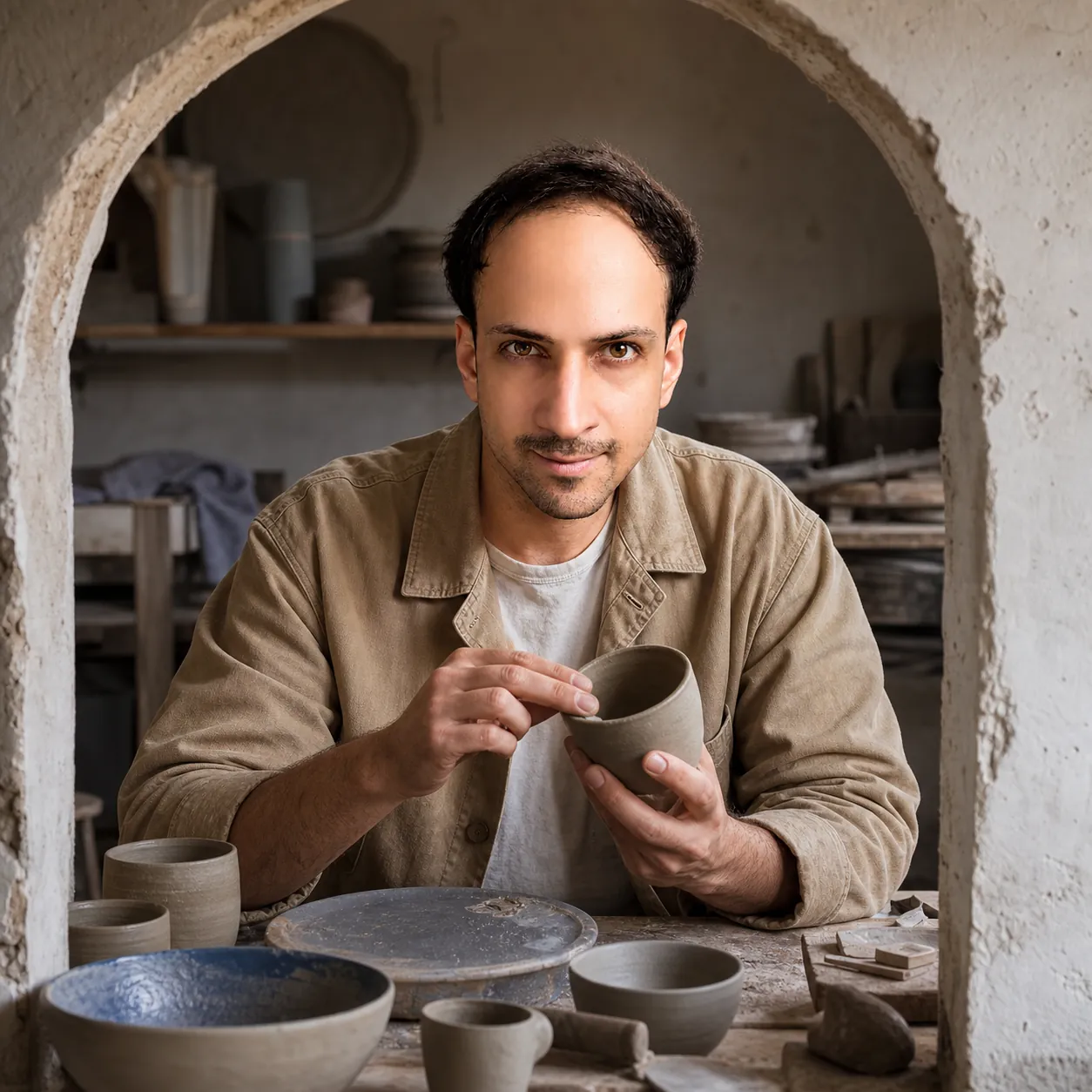
صورةAI Portraits

Create a square 1:1 museum-catalog frame with a strong first read and a slower second read at exactly 2880x2880 pixels. Location: a ceramics studio after...

من نص البرومبت

Use the attached reference photo as the identity reference: keep the same face, skin tone, hair and features as the person in that photo, without beautifying, aging or altering them. Create a square 1:1 museum-catalog frame with a strong first read and a slower second read at exactly 2880x2880 pixels. Location: a ceramics studio after the kiln has cooled. Show them in a sand-colored chore jacket over a plain shirt, checking the rim of one imperfect cup for comfort and safety. Make one rigorous physical condition the conceptual engine: a humble borrowed chair treated with the spatial respect of a masterpiece stops a chain of accumulation at the exact point function is complete. Explore respect for the work hidden beneath finished surfaces; direct expression and posture toward earned dignity, never melodrama or ad-like confidence. Frame through one real architectural opening, with the foreground sharp enough to feel physical but never covering the face. Make the composition let tool marks remain legible at close inspection. Render it as anti-campaign luxury photography with museum restraint, exceptional material detail, quiet composition, honest wear, and no aspirational spectacle, using high, diffused desert daylight moderated by real shade and bounced warm ground light and a palette of sand, smoke grey, and a small field of mineral blue. Photorealistic: this must read as a real photograph from a physical camera, never an illustration, painting, or 3D render. Resolve real surface detail: rubber gone chalky with age, painted metal chipped to primer, and plastic yellowed only where light reaches it. Keep one identity-locked person, credible hands and fingers, natural fabric, and coherent scale, contact, reflections, shadows, airflow, deformation, and materials. Background people only when essential, always secondary and clearly different. Avoid gold, marble excess, supercars, private jets, watches, champagne, velvet ropes, and empty status posing. No text, labels, logos, signatures, watermarks, random symbols, plastic skin, excessive bloom, or glossy AI finish.
Touching the Cooling Vessel
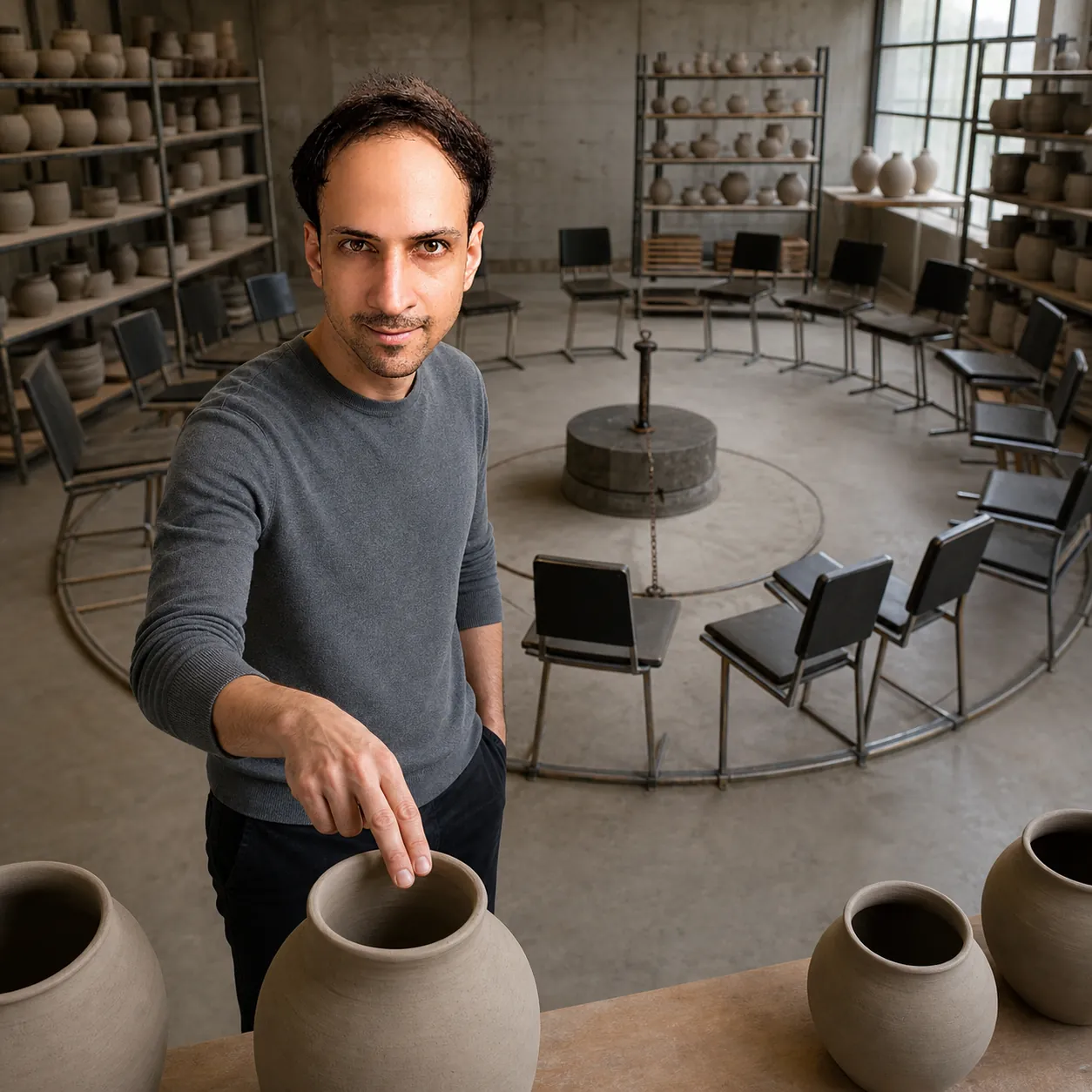
صورةAI Portraits

Create a square 1:1 museum-catalog frame with a strong first read and a slower second read at exactly 2880x2880 pixels. Location: a ceramics cooling room...

من نص البرومبت

Use the attached reference photo as the identity reference: keep the same face, skin tone, hair and features as the person in that photo, without beautifying, aging or altering them. Create a square 1:1 museum-catalog frame with a strong first read and a slower second read at exactly 2880x2880 pixels. Location: a ceramics cooling room with matte clay vessels. Show them in a muted grey crew-neck sweater with simple dark trousers, resting two fingers on a vessel to feel whether it has fully cooled. Make one rigorous physical condition the conceptual engine: a circle of equal chairs whose orientation changes with who is speaking shifts a real weight each time one option is chosen. Explore leadership as temporary responsibility rather than personal possession; direct expression and posture toward calm accountability, never melodrama or ad-like confidence. Use a measured wide 28mm view with the subject near one-third of the frame and no stretched limbs. Make the composition make the mechanism reversible without ceremony. Render it as high-concept business portraiture built from physical governance systems, documentary realism, elegant industrial design, and emotionally intelligent composition, using cloud-filtered outdoor light with subtle specular control and natural skin color and a palette of linen beige, graphite, and restrained saffron. Photorealistic: this must read as a real photograph from a physical camera, never an illustration, painting, or 3D render. Resolve real surface detail: fine lint on dark fabric, water spotting on steel, and the soft rounding of edges that have been used for years. Keep one identity-locked person, credible hands and fingers, natural fabric, and coherent scale, contact, reflections, shadows, airflow, deformation, and materials. Background people only when essential, always secondary and clearly different. Avoid boardroom handshakes, podium hero shots, chess pieces, crowns, ladders to success, and glowing AI dashboards. No text, labels, logos, signatures, watermarks, random symbols, plastic skin, excessive bloom, or glossy AI finish.
Letting the Blue Hour In
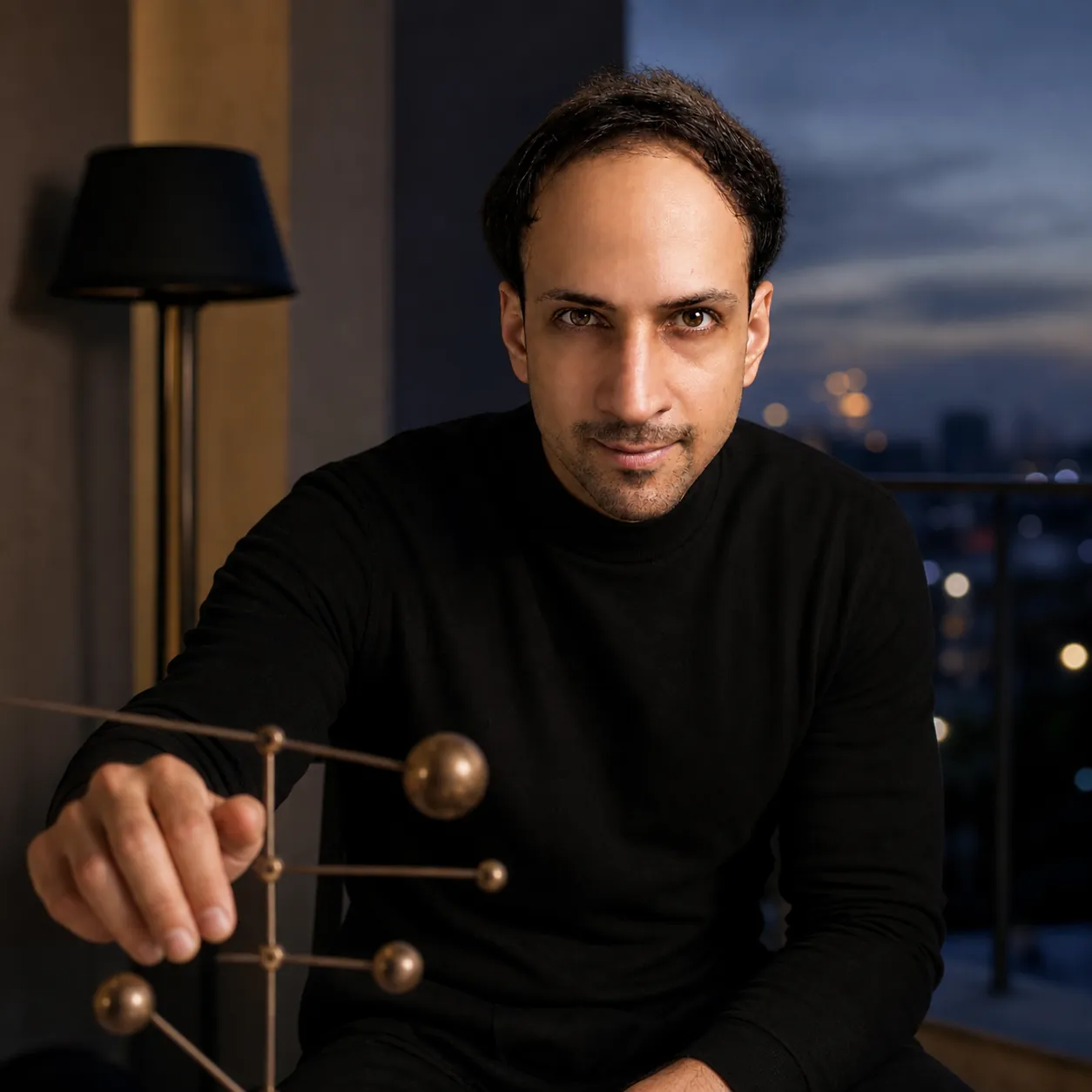
صورةAI Portraits

Create a square 1:1 museum-catalog frame with a strong first read and a slower second read at exactly 2880x2880 pixels. Location: a residential balcony at...

من نص البرومبت

Use the attached reference photo as the identity reference: keep the same face, skin tone, hair and features as the person in that photo, without beautifying, aging or altering them. Create a square 1:1 museum-catalog frame with a strong first read and a slower second read at exactly 2880x2880 pixels. Location: a residential balcony at blue hour. Show them in a black mock-neck top with matte tailored trousers, turning off one lamp to let the remaining natural light take over. Make one rigorous physical condition the conceptual engine: a simple kinetic object completing a calm nightly sequence turns an invisible routine into a visible structure without making it sentimental. Explore helping a child grow without designing the child; direct expression and posture toward patient trust, never melodrama or ad-like confidence. Use a 100mm macro-to-portrait hybrid: one material detail near the lens and the person in the reference photo's face readable beyond it, both physically plausible. Make the composition leave visible space for an unplanned choice. Render it as museum-level family editorial photography with restrained emotion, tactile domestic realism, credible hand interactions, and conceptual systems thinking, using neutral conservation lighting with accurate color response and fine material detail and a palette of warm stone, charcoal, and muted olive. Photorealistic: this must read as a real photograph from a physical camera, never an illustration, painting, or 3D render. Resolve real surface detail: wood grain read at honest scale, matte and gloss clearly separated, and no surface uniformly clean. Keep one identity-locked person, credible hands and fingers, natural fabric, and coherent scale, contact, reflections, shadows, airflow, deformation, and materials. Background people only when essential, always secondary and clearly different. Avoid staged hugs, greeting-card sentiment, superhero father imagery, matching outfits, and forced smiles. No text, labels, logos, signatures, watermarks, random symbols, plastic skin, excessive bloom, or glossy AI finish.
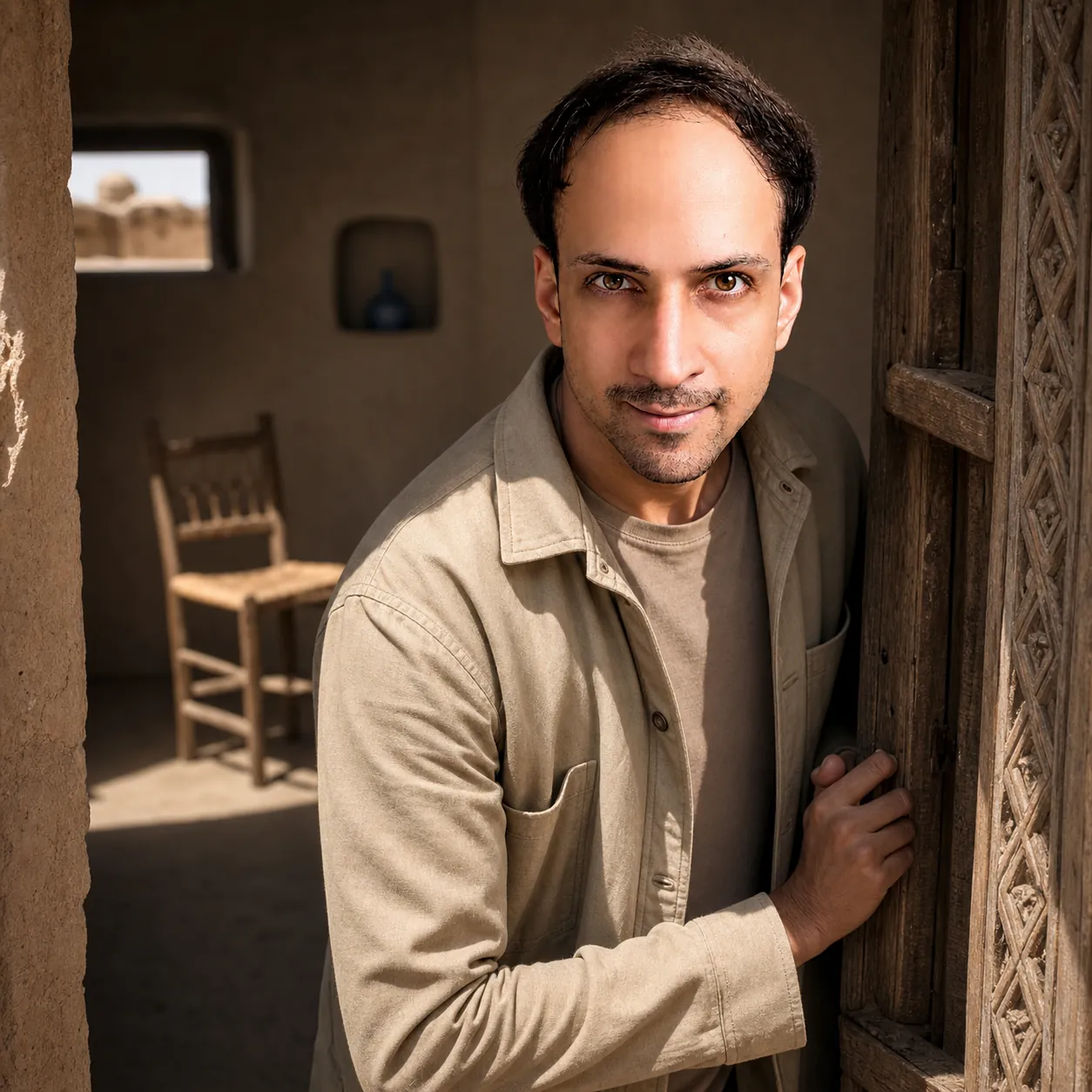
A Door Open Just Enough
صورةAI Portraits

Create a square 1:1 museum-catalog frame with a strong first read and a slower second read at exactly 2880x2880 pixels. Location: a restored mudbrick house...

من نص البرومبت

Use the attached reference photo as the identity reference: keep the same face, skin tone, hair and features as the person in that photo, without beautifying, aging or altering them. Create a square 1:1 museum-catalog frame with a strong first read and a slower second read at exactly 2880x2880 pixels. Location: a restored mudbrick house with deep-set openings. Show them in a sand-colored chore jacket over a plain shirt, opening a carved wooden door only wide enough to let air pass. Make one rigorous physical condition the conceptual engine: a humble borrowed chair treated with the spatial respect of a masterpiece stops a chain of accumulation at the exact point function is complete. Explore the difference between caring for an object and using it to perform identity; direct expression and posture toward unforced presence, never melodrama or ad-like confidence. Frame through one real architectural opening, with the foreground sharp enough to feel physical but never covering the face. Make the composition make touch and posture more important than possession. Render it as anti-campaign luxury photography with museum restraint, exceptional material detail, quiet composition, honest wear, and no aspirational spectacle, using low-angle late-afternoon light creating long but physically coherent shadows and a palette of sand, smoke grey, and a small field of mineral blue. Photorealistic: this must read as a real photograph from a physical camera, never an illustration, painting, or 3D render. Resolve real surface detail: rubber gone chalky with age, painted metal chipped to primer, and plastic yellowed only where light reaches it. Keep one identity-locked person, credible hands and fingers, natural fabric, and coherent scale, contact, reflections, shadows, airflow, deformation, and materials. Background people only when essential, always secondary and clearly different. Avoid gold, marble excess, supercars, private jets, watches, champagne, velvet ropes, and empty status posing. No text, labels, logos, signatures, watermarks, random symbols, plastic skin, excessive bloom, or glossy AI finish.

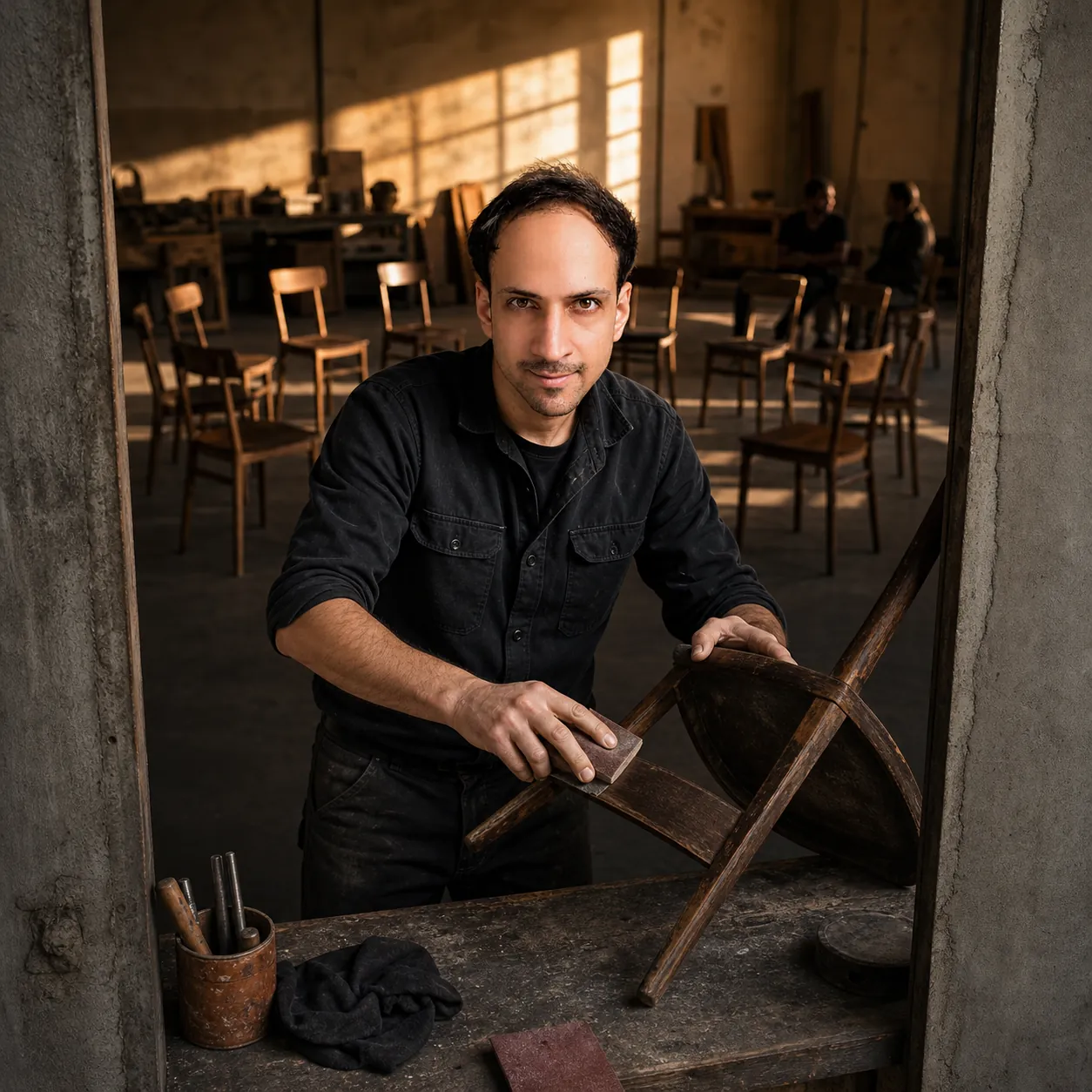
A Repair Left Visible
صورةAI Portraits

Create a square 1:1 museum-catalog frame with a strong first read and a slower second read at exactly 2880x2880 pixels. Location: a small workshop bench...

من نص البرومبت

Use the attached reference photo as the identity reference: keep the same face, skin tone, hair and features as the person in that photo, without beautifying, aging or altering them. Create a square 1:1 museum-catalog frame with a strong first read and a slower second read at exactly 2880x2880 pixels. Location: a small workshop bench marked by years of practical use. Show them in a dark work shirt with practical trousers and rolled sleeves, sanding one visible repair until it is safe but not invisible. Make one rigorous physical condition the conceptual engine: a circle of equal chairs whose orientation changes with who is speaking lets authority move away from them as easily as it moves toward them. Explore the point where acceleration begins to destroy what it was meant to improve; direct expression and posture toward decisive restraint, never melodrama or ad-like confidence. Frame through one real architectural opening, with the foreground sharp enough to feel physical but never covering the face. Make the composition freeze one process at the safe limit. Render it as high-concept business portraiture built from physical governance systems, documentary realism, elegant industrial design, and emotionally intelligent composition, using low-angle late-afternoon light creating long but physically coherent shadows and a palette of cool concrete, soft black, and a single clay-red note. Photorealistic: this must read as a real photograph from a physical camera, never an illustration, painting, or 3D render. Resolve real surface detail: dust settled where nobody wipes, fingerprint haze on glass, and edges rubbed pale by handling. Keep one identity-locked person, credible hands and fingers, natural fabric, and coherent scale, contact, reflections, shadows, airflow, deformation, and materials. Background people only when essential, always secondary and clearly different. Avoid boardroom handshakes, podium hero shots, chess pieces, crowns, ladders to success, and glowing AI dashboards. No text, labels, logos, signatures, watermarks, random symbols, plastic skin, excessive bloom, or glossy AI finish.