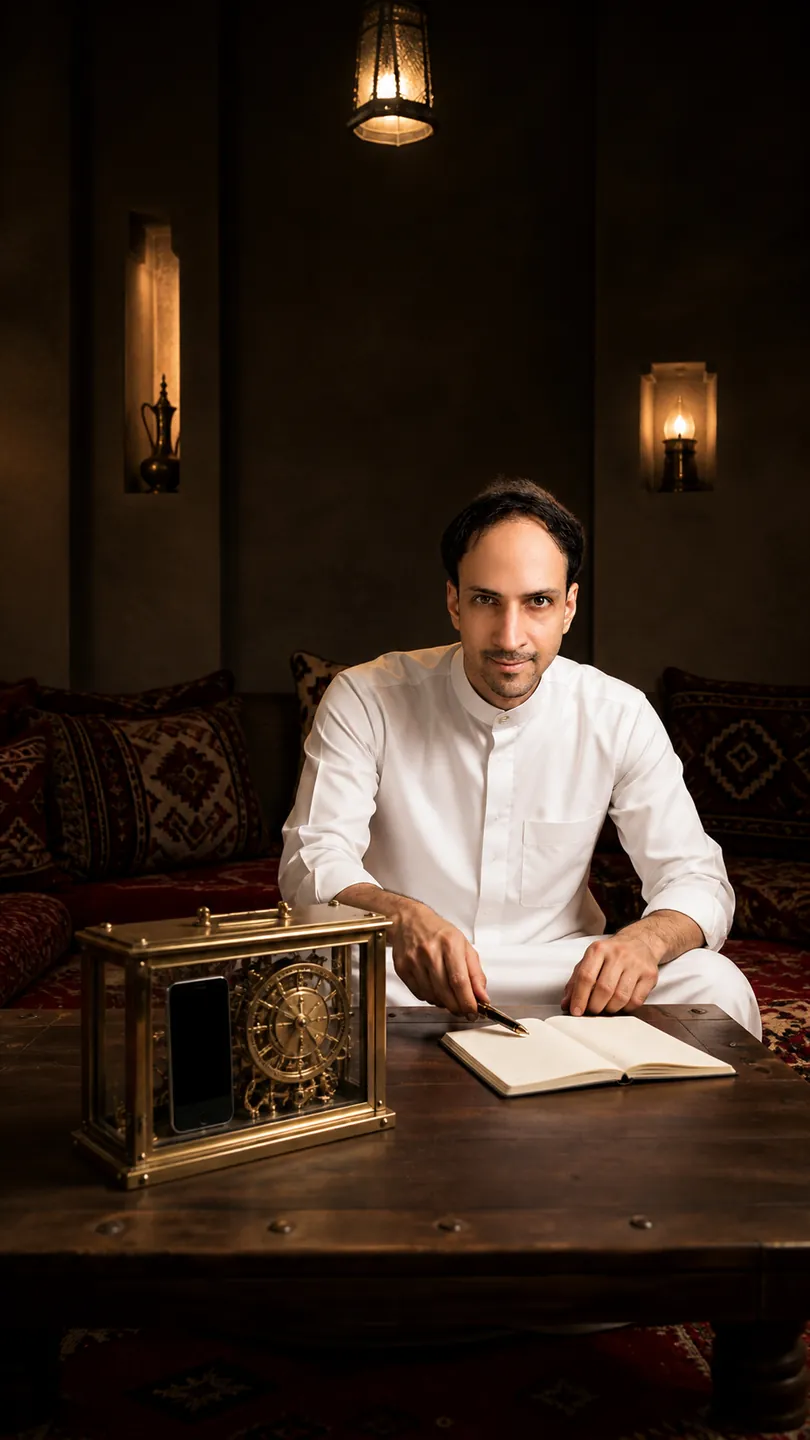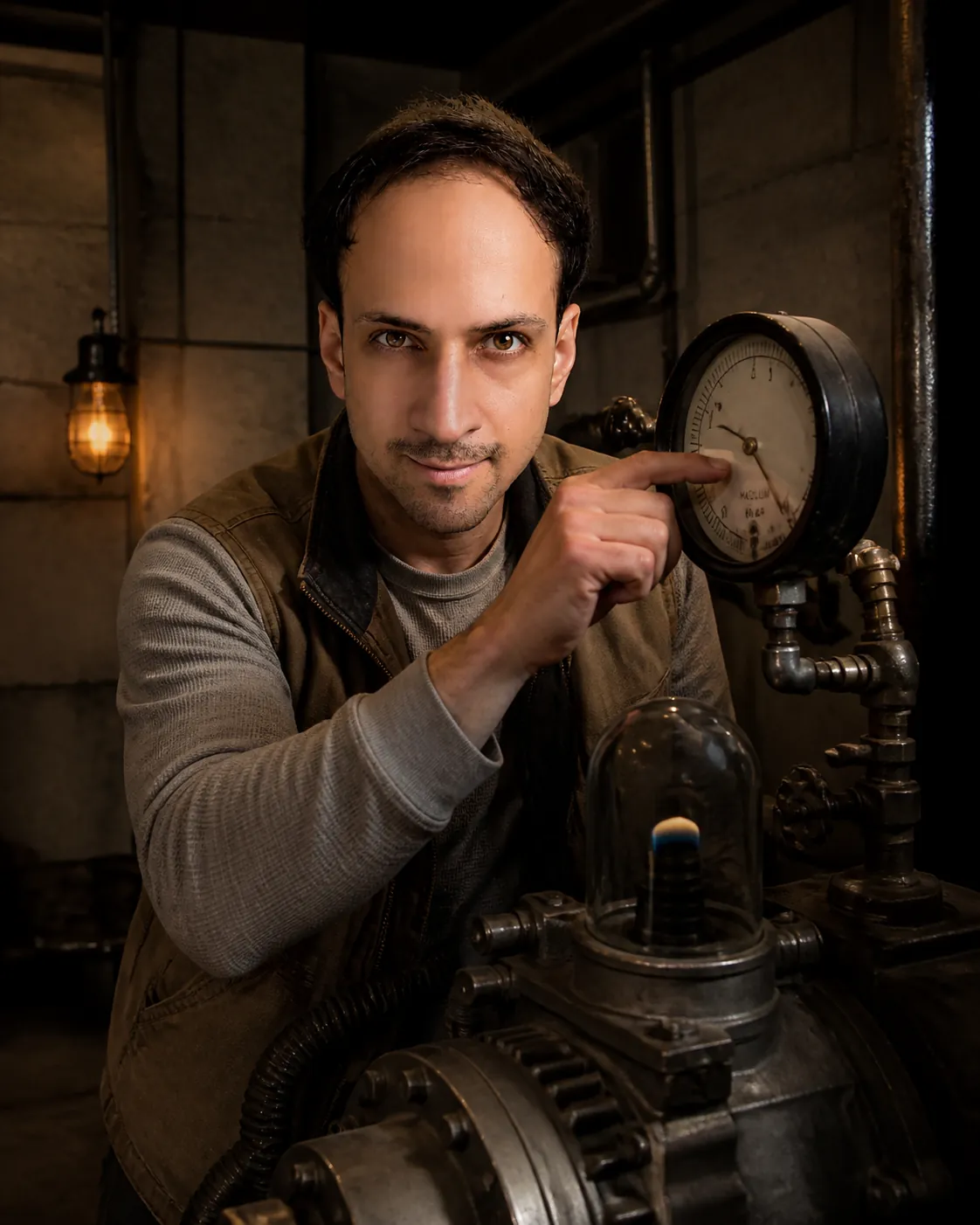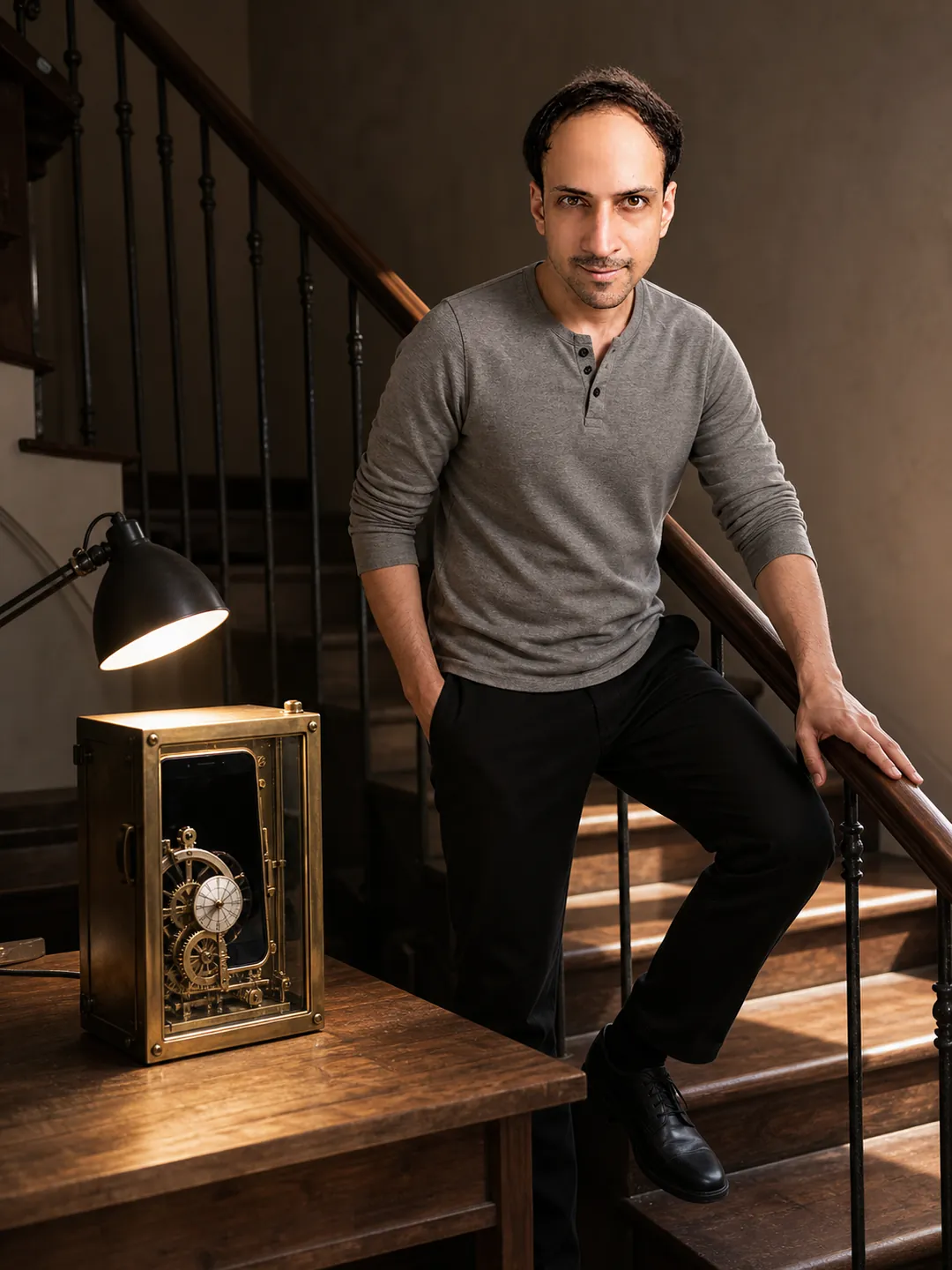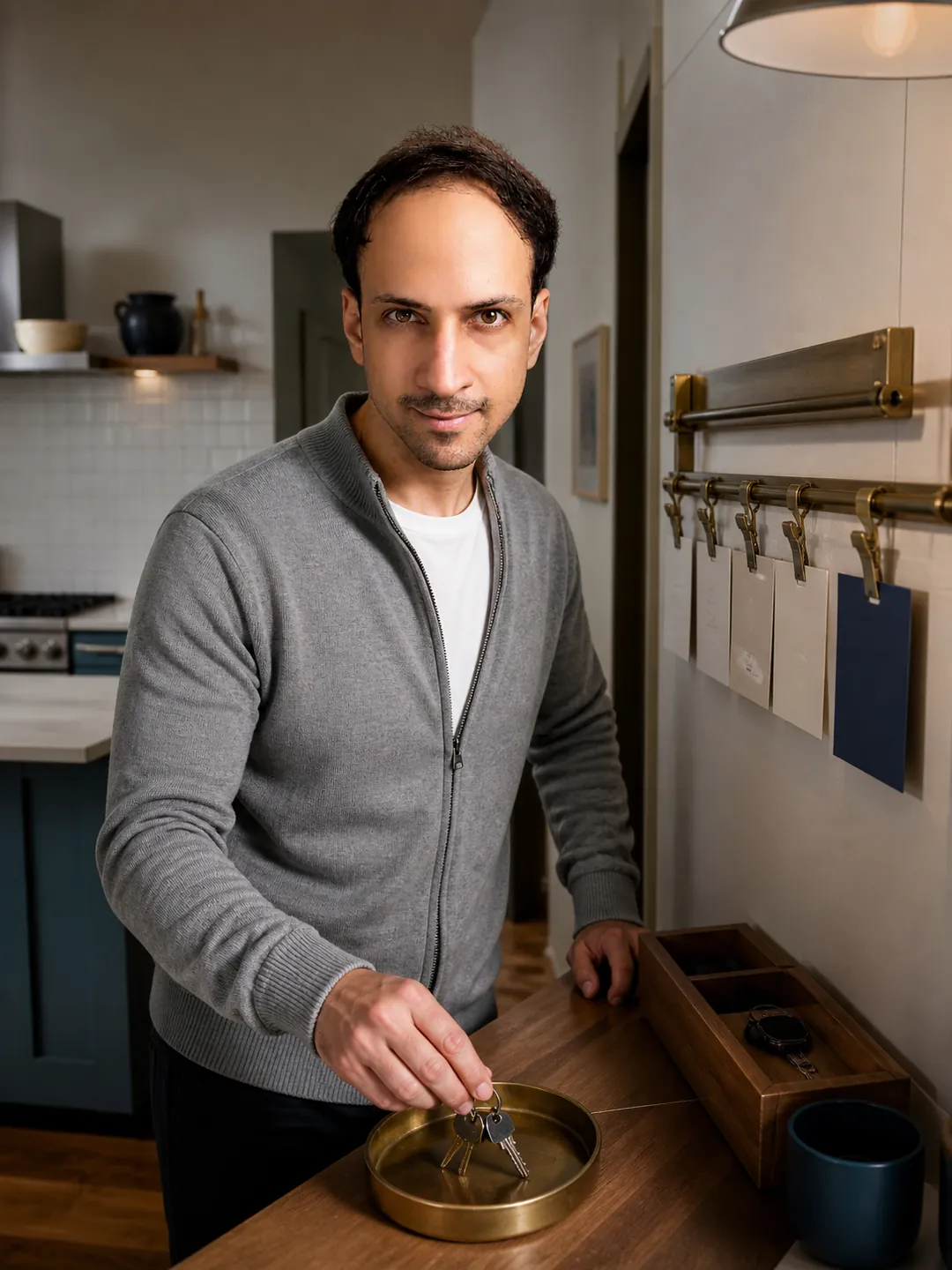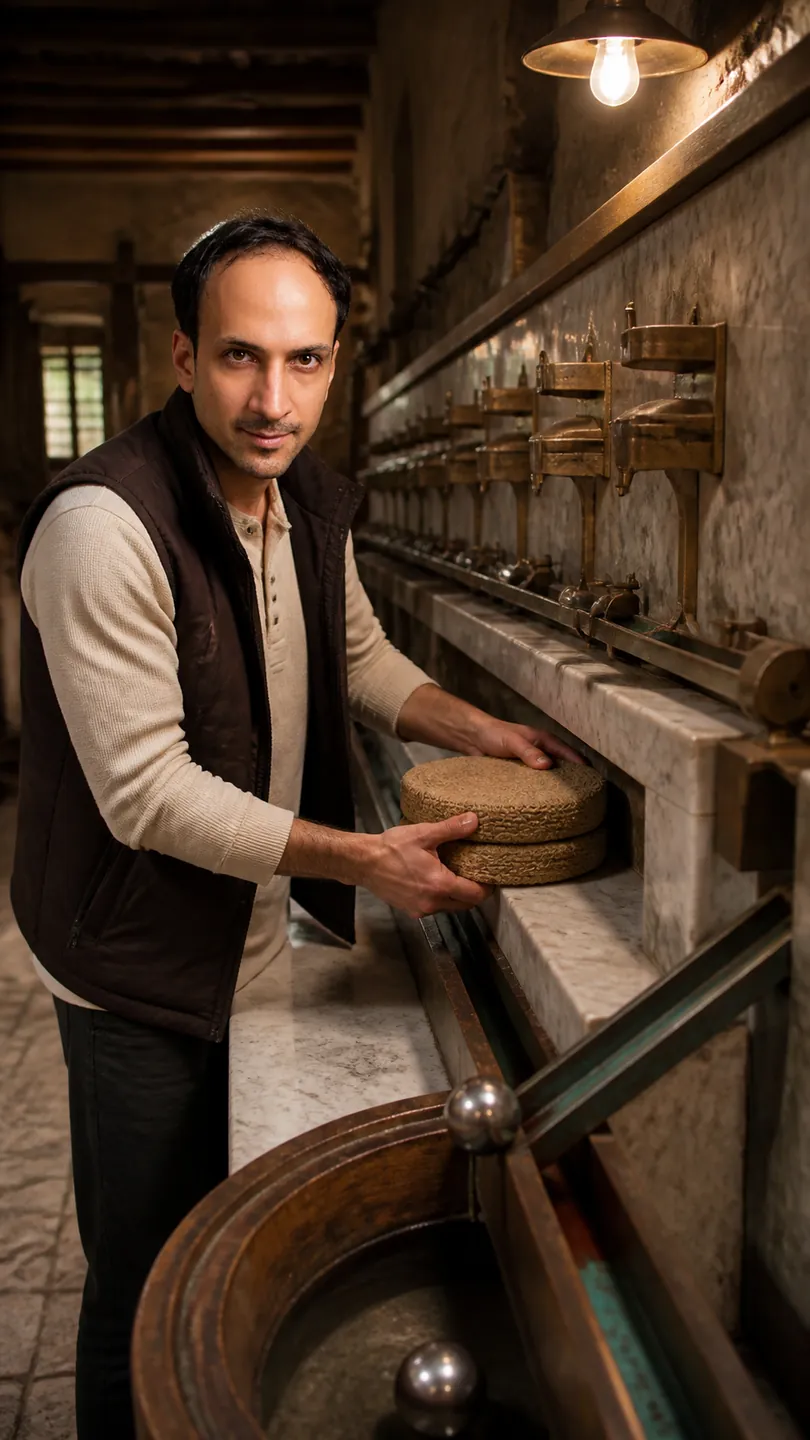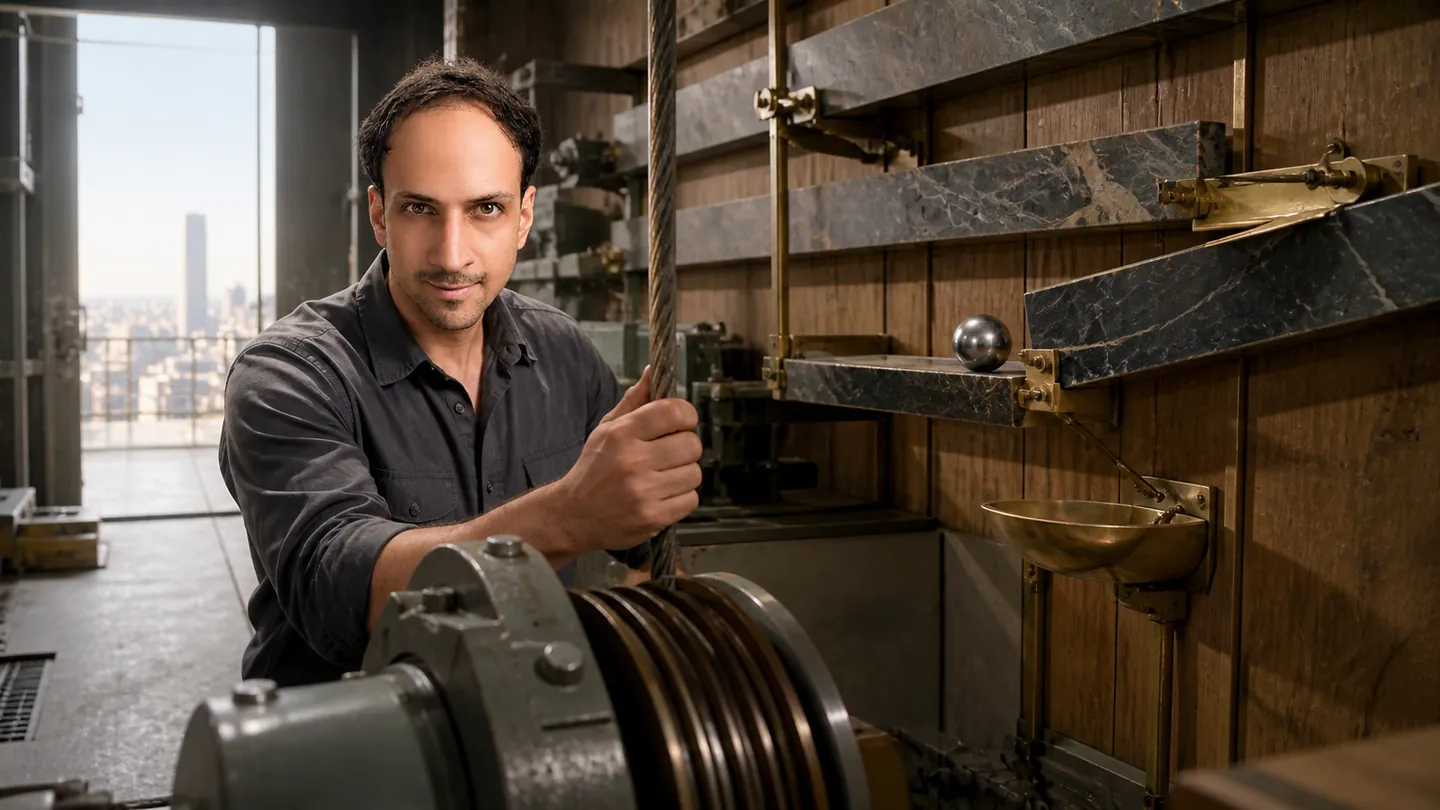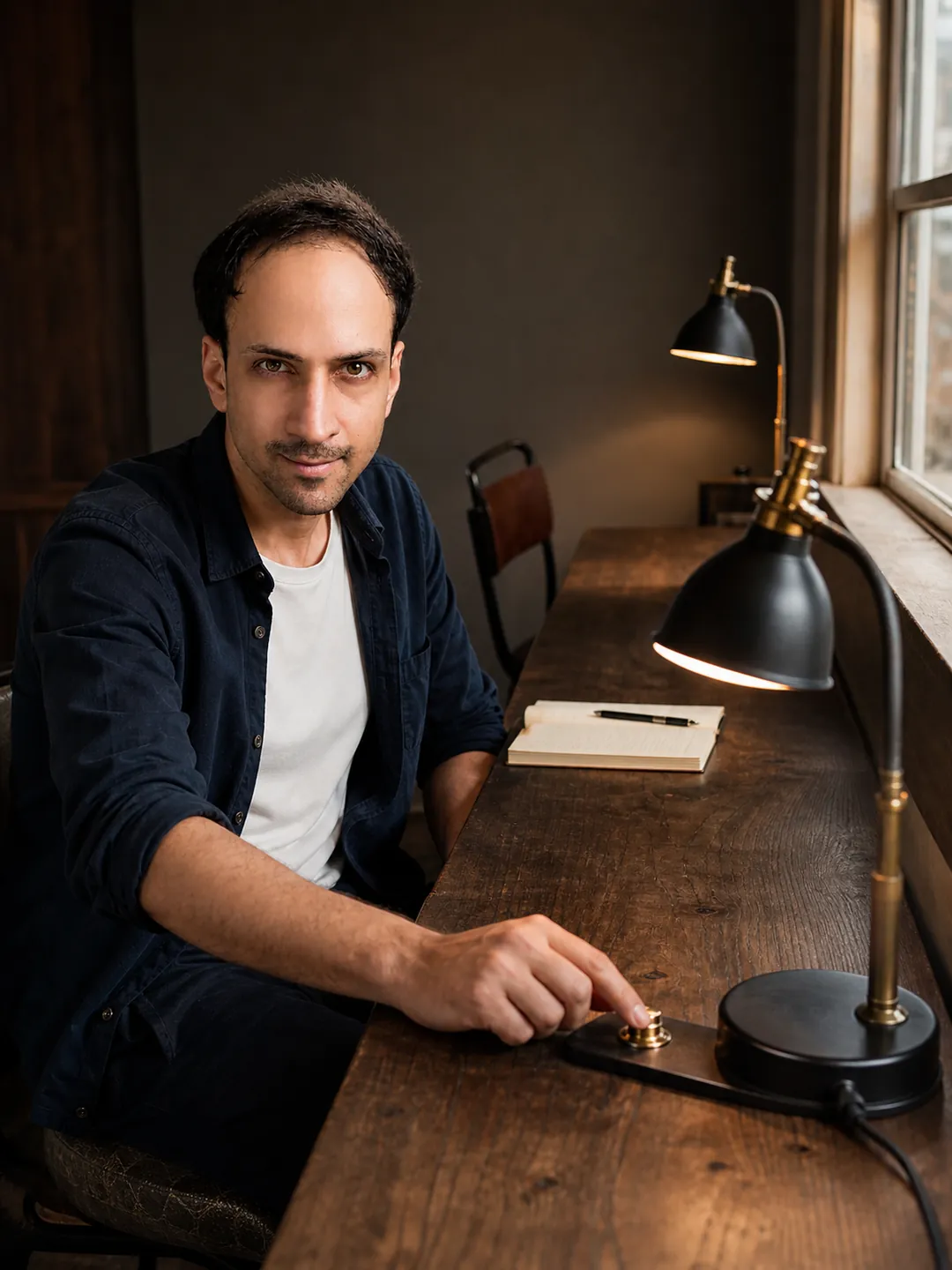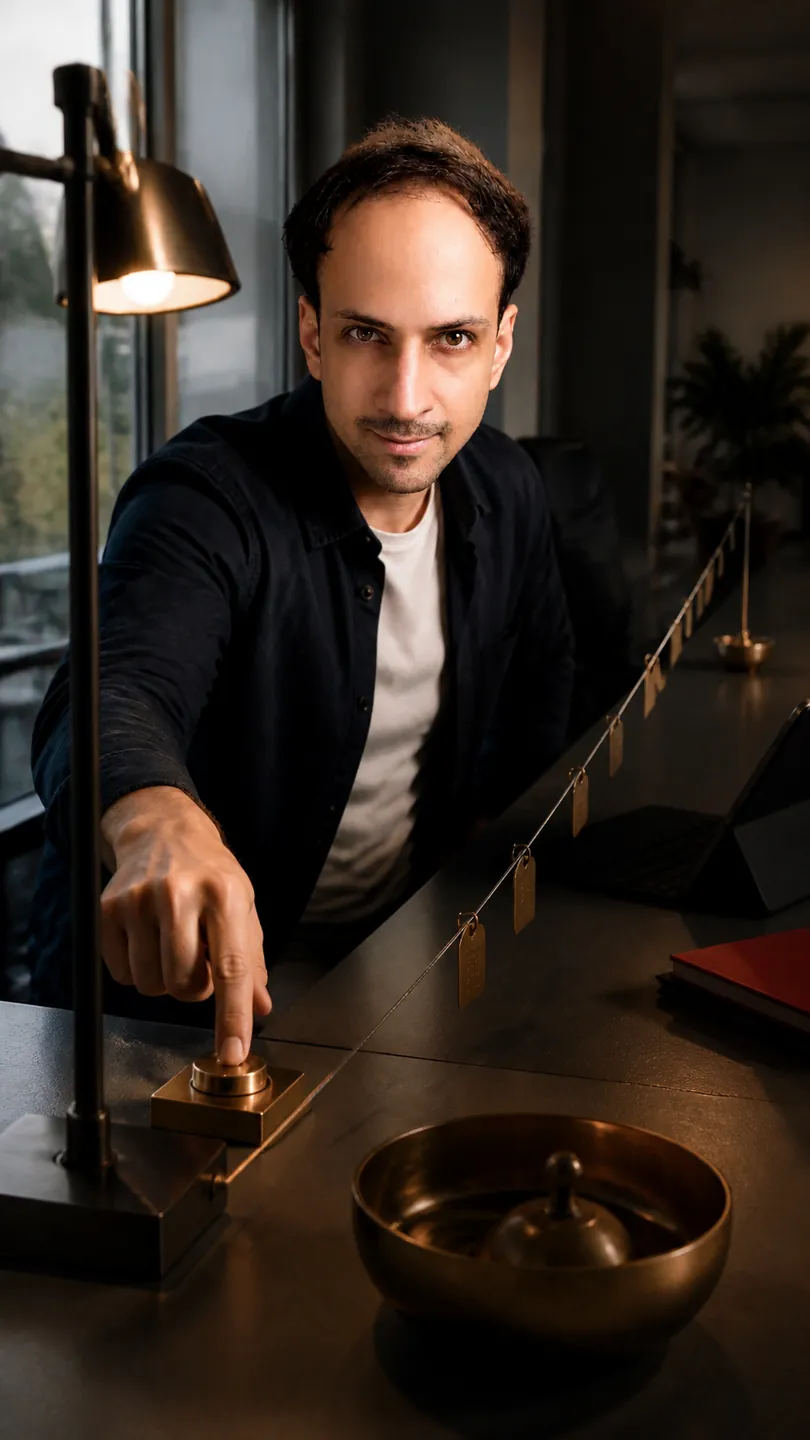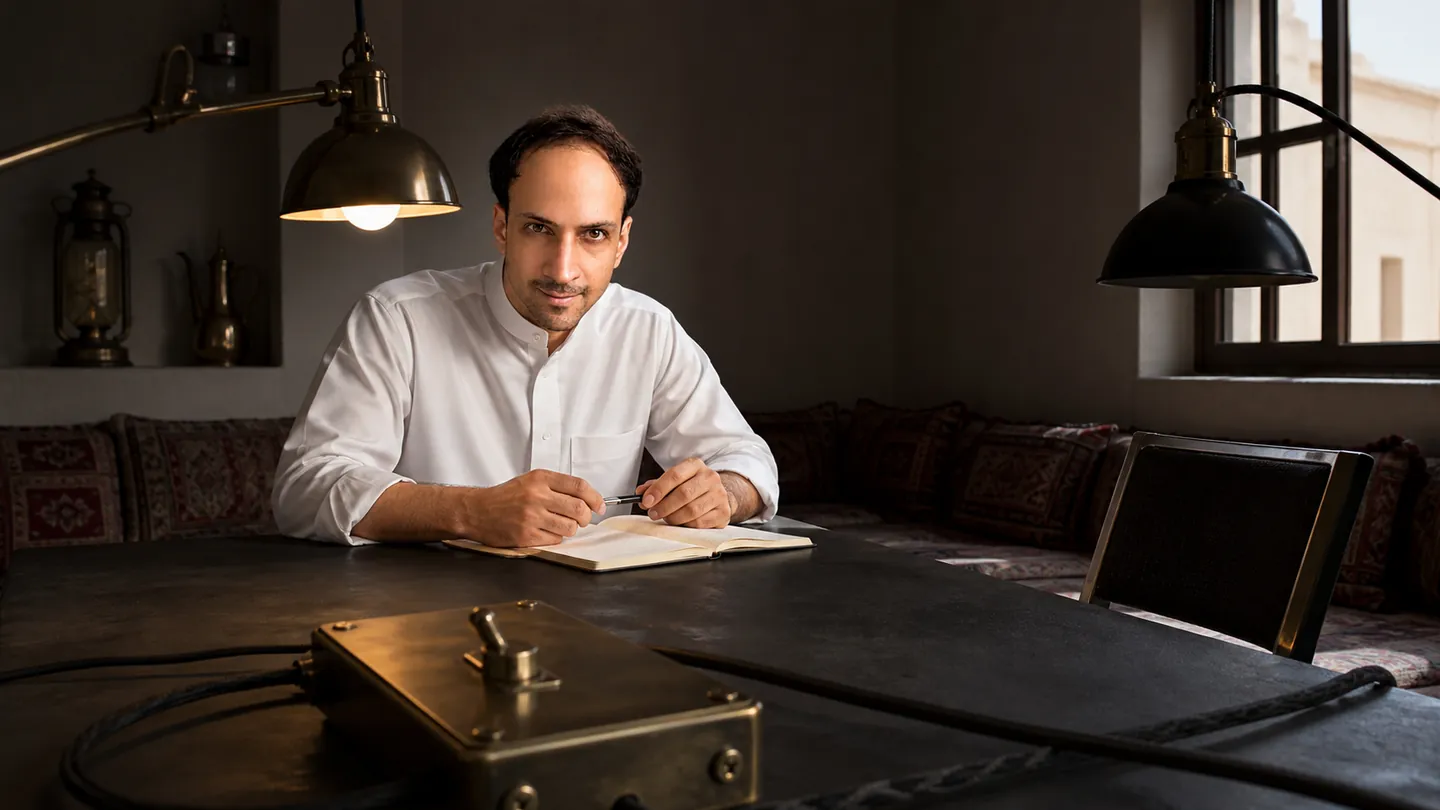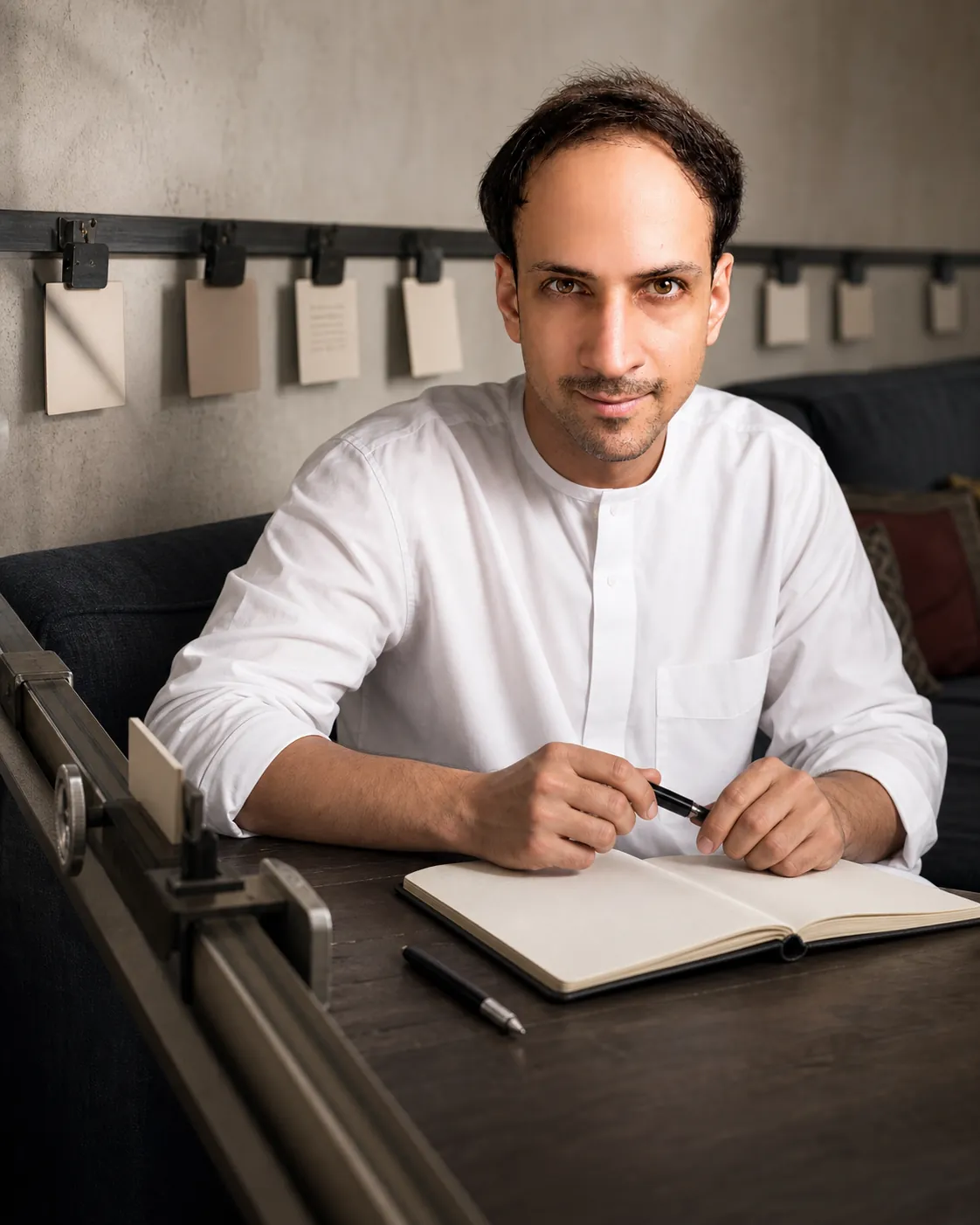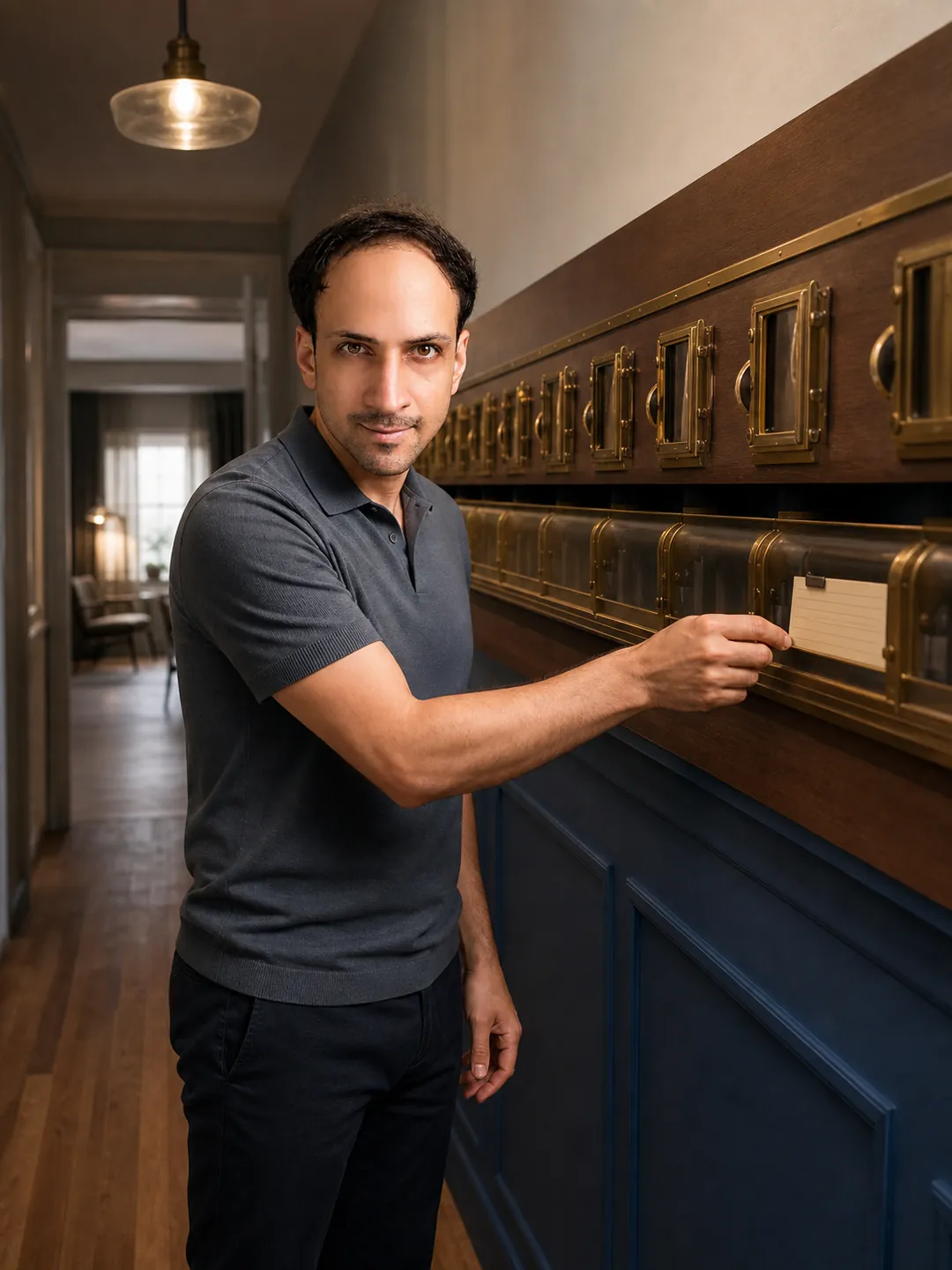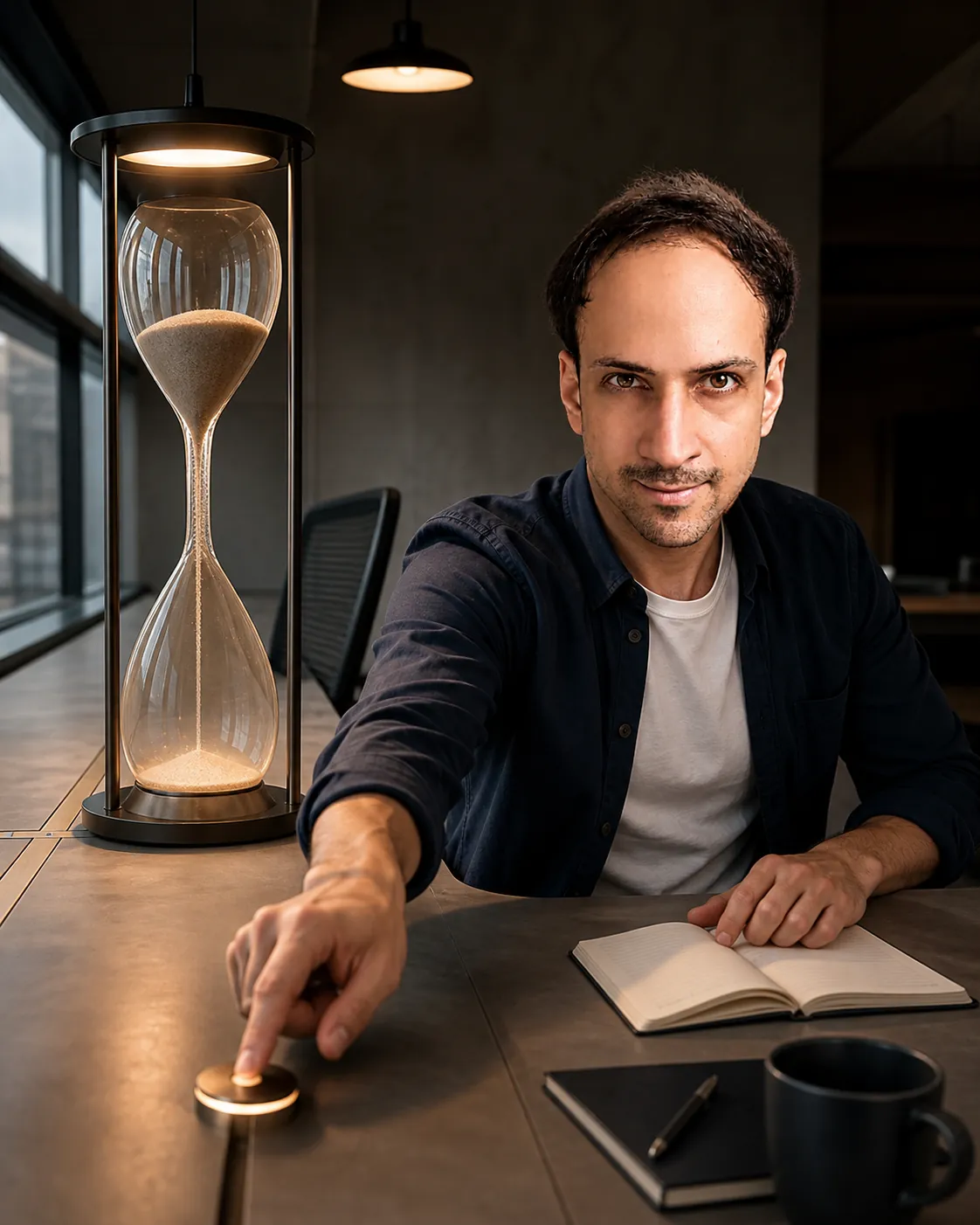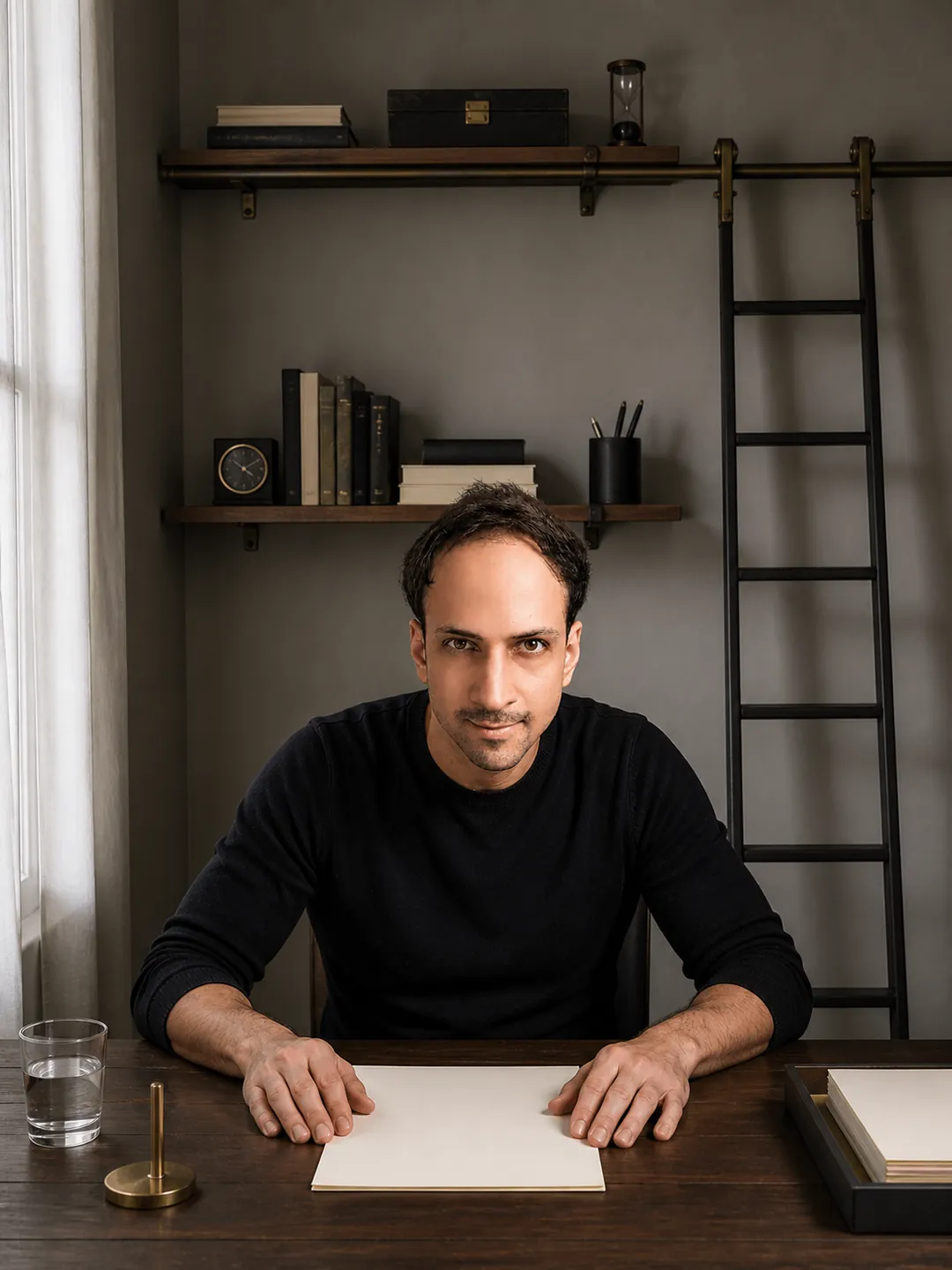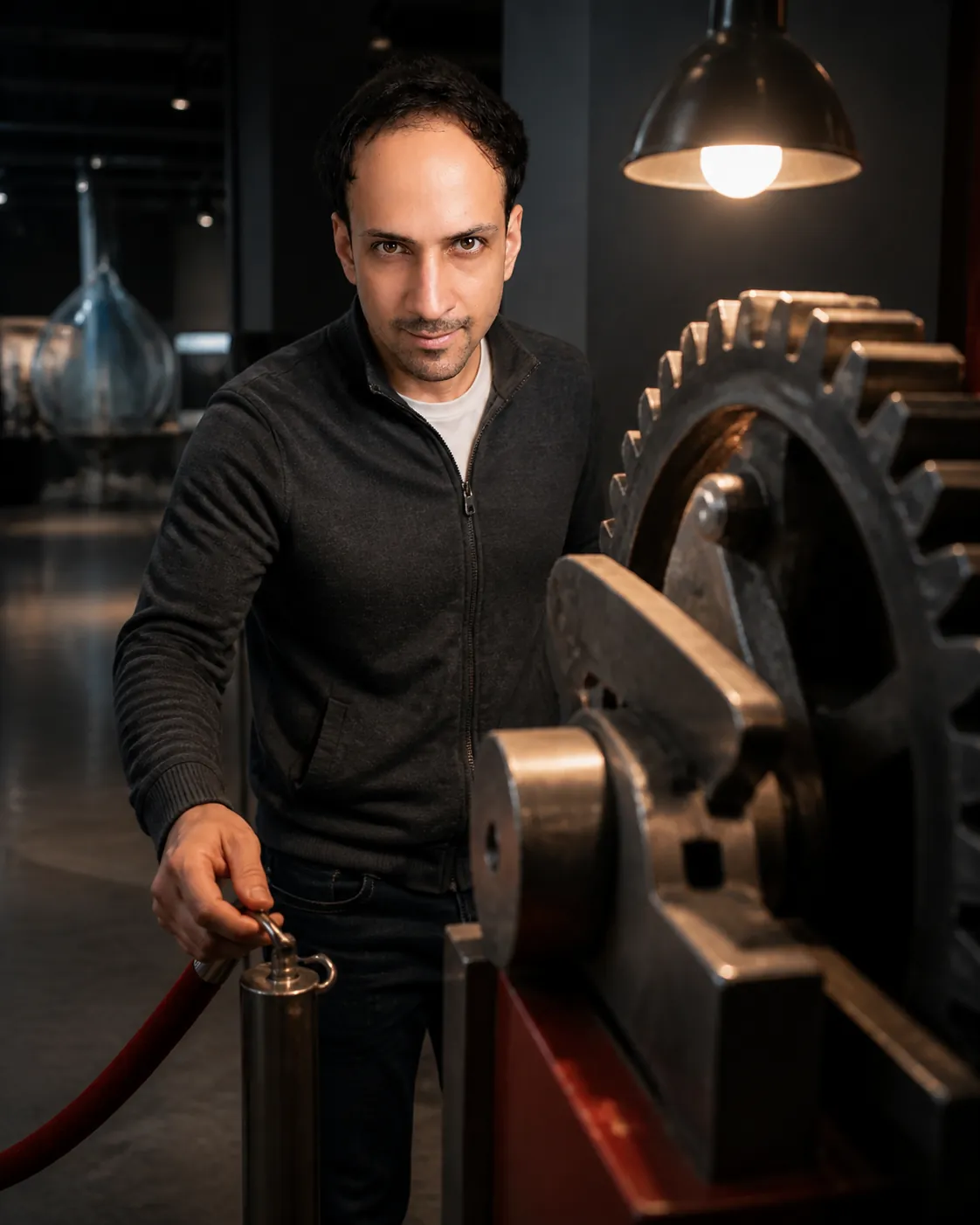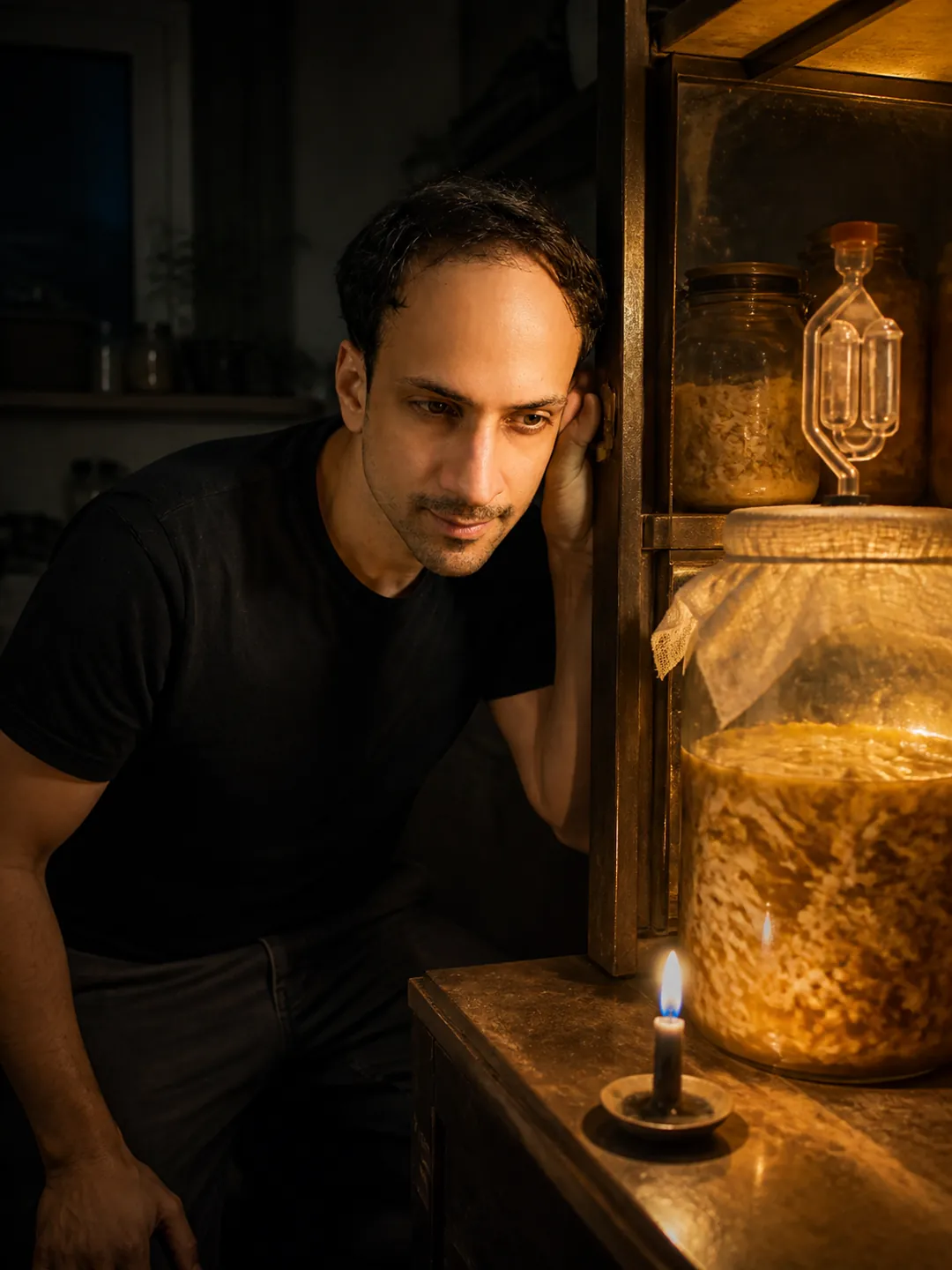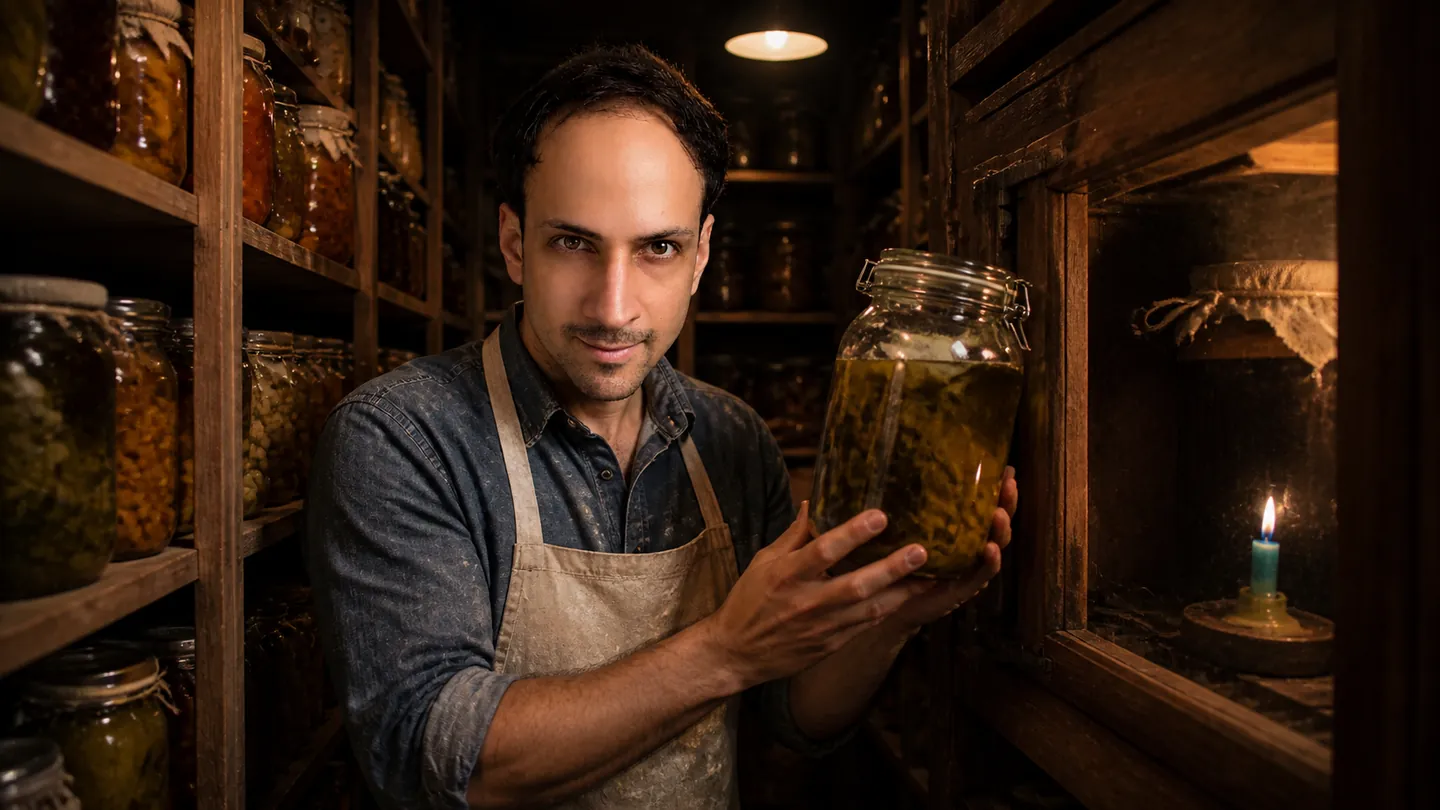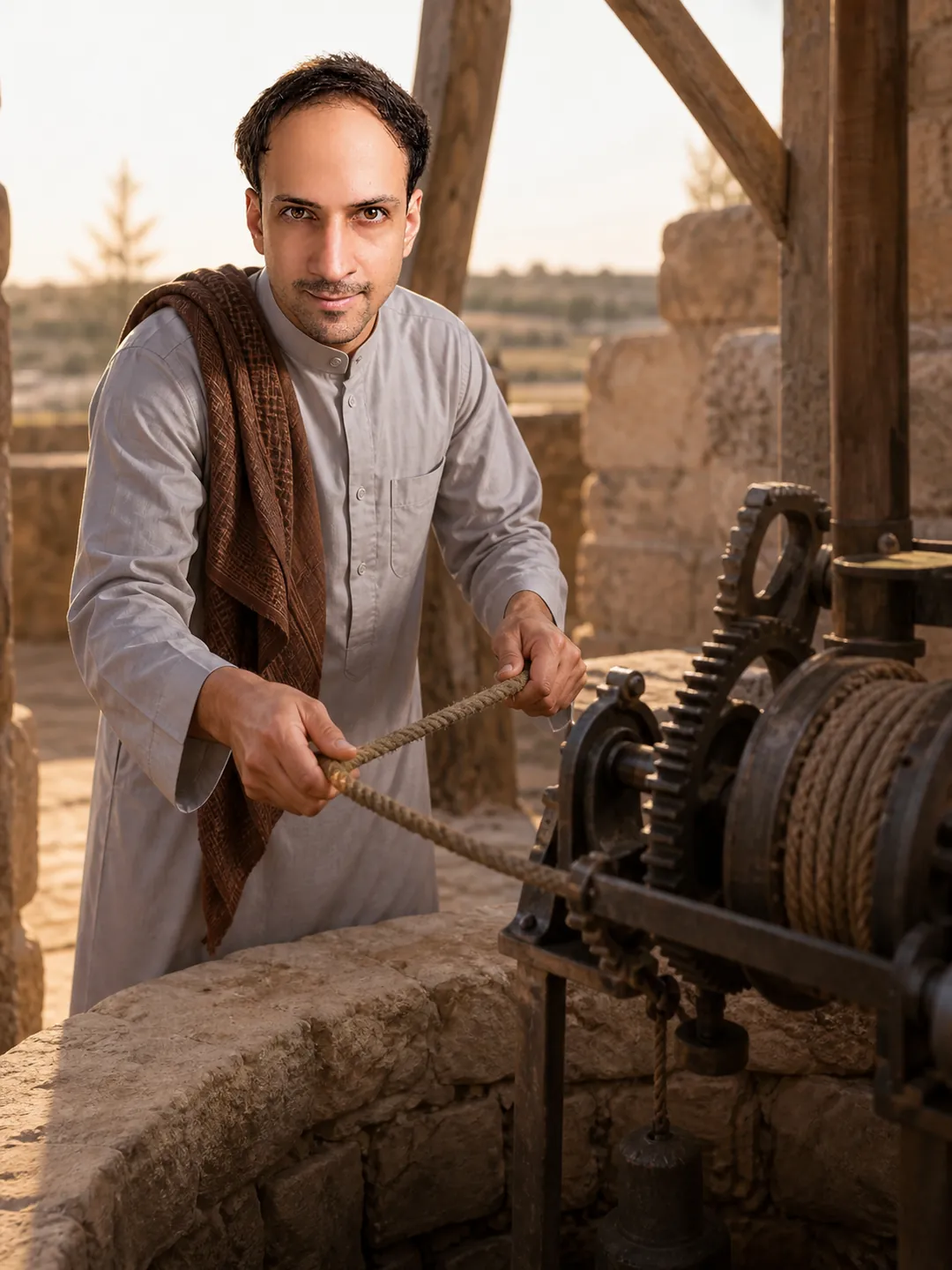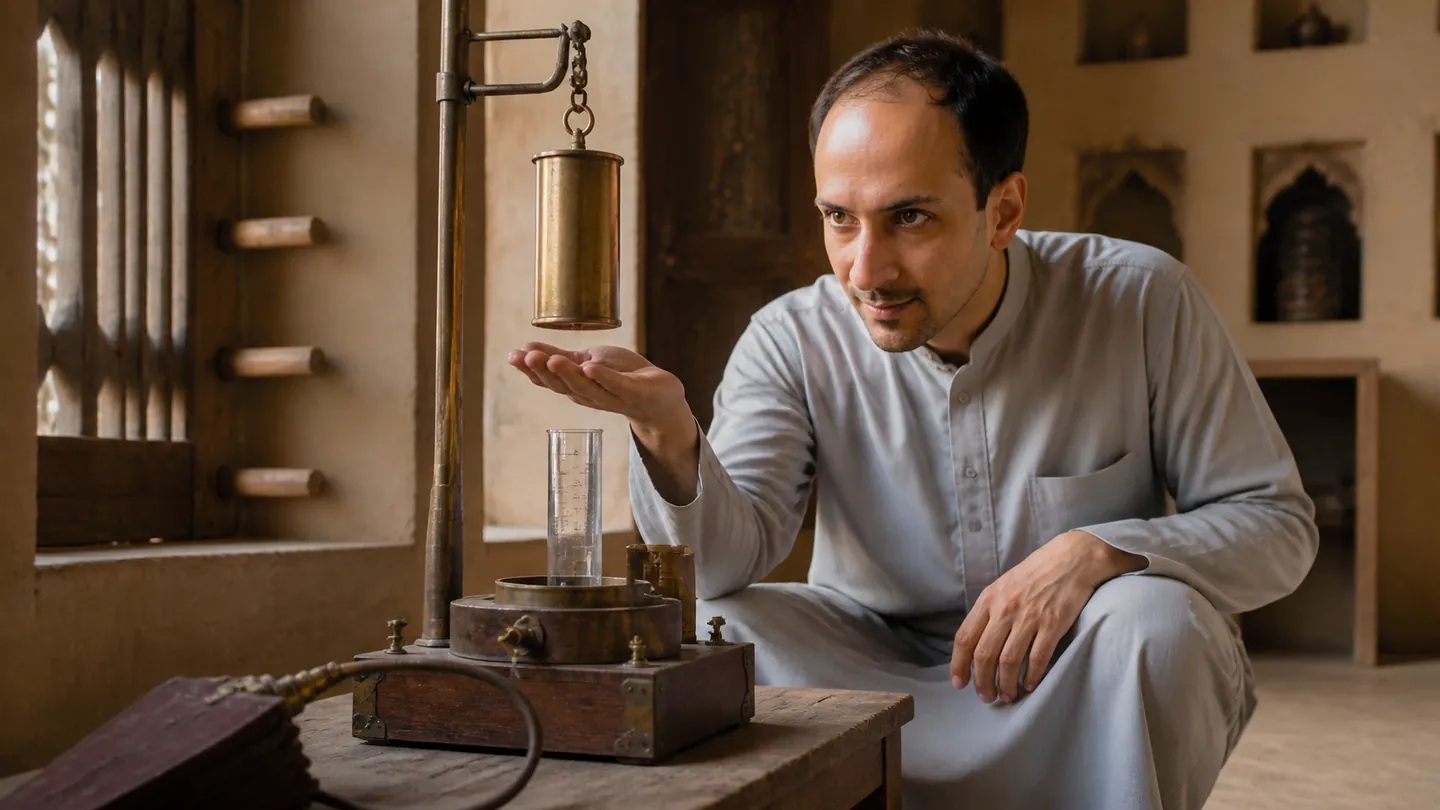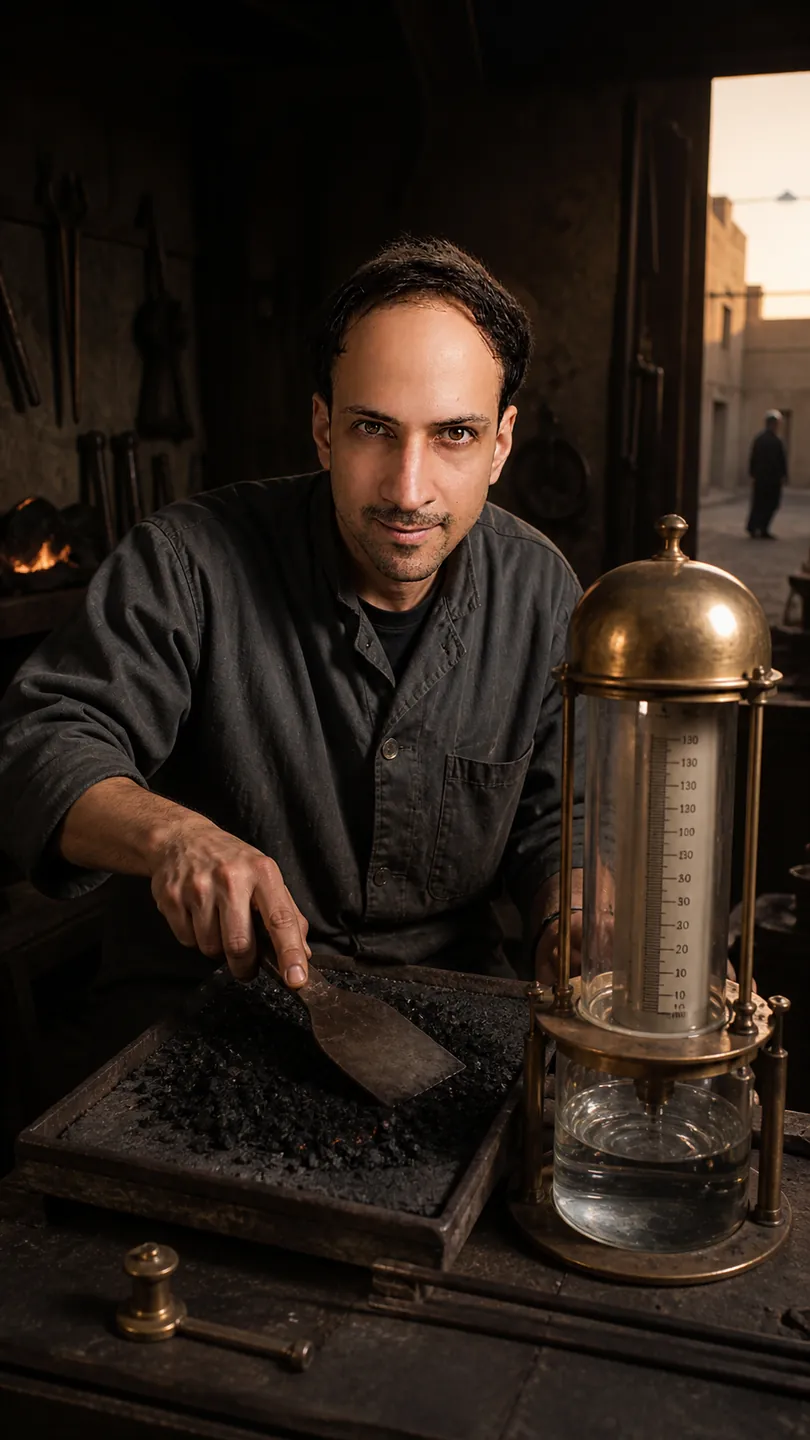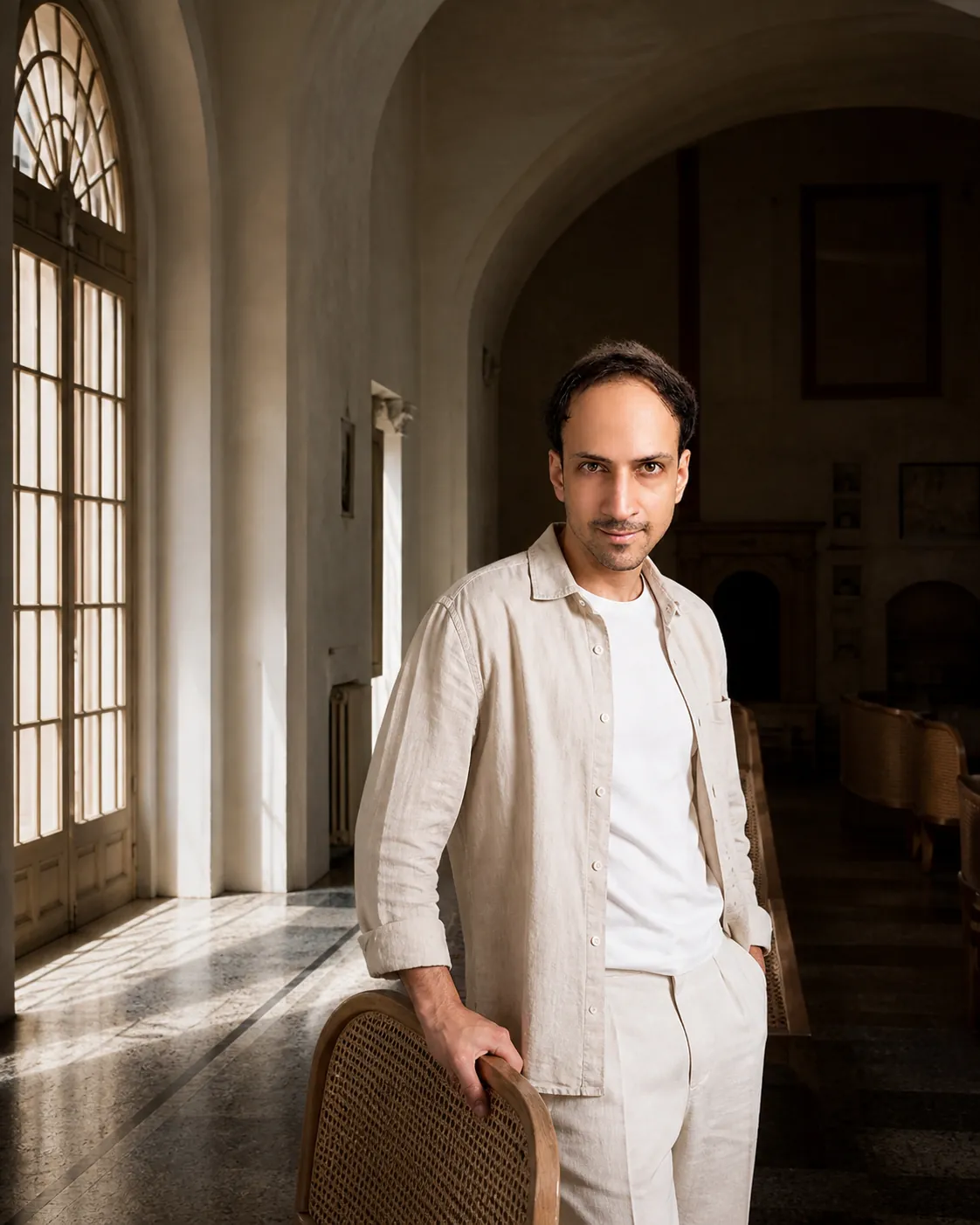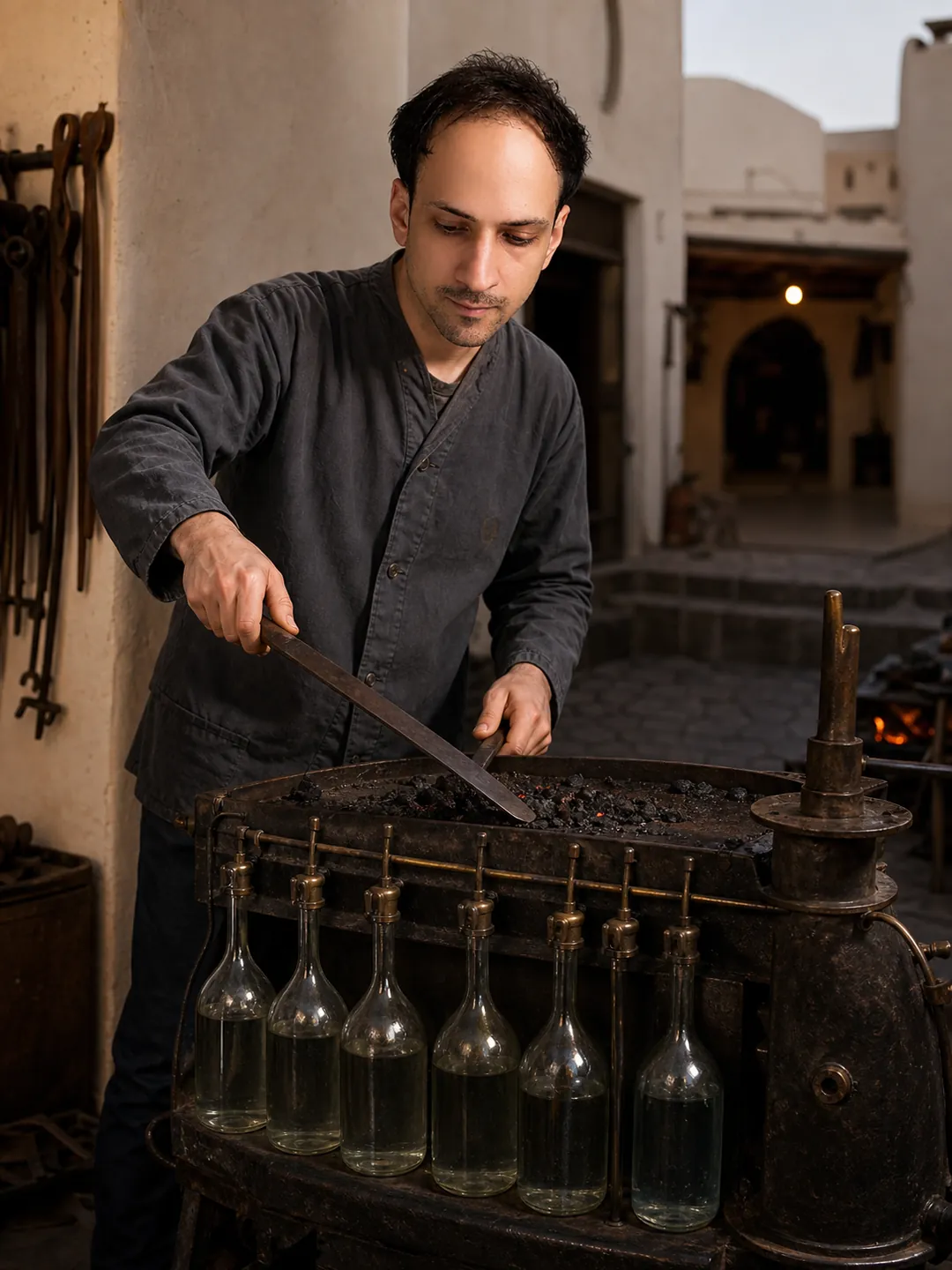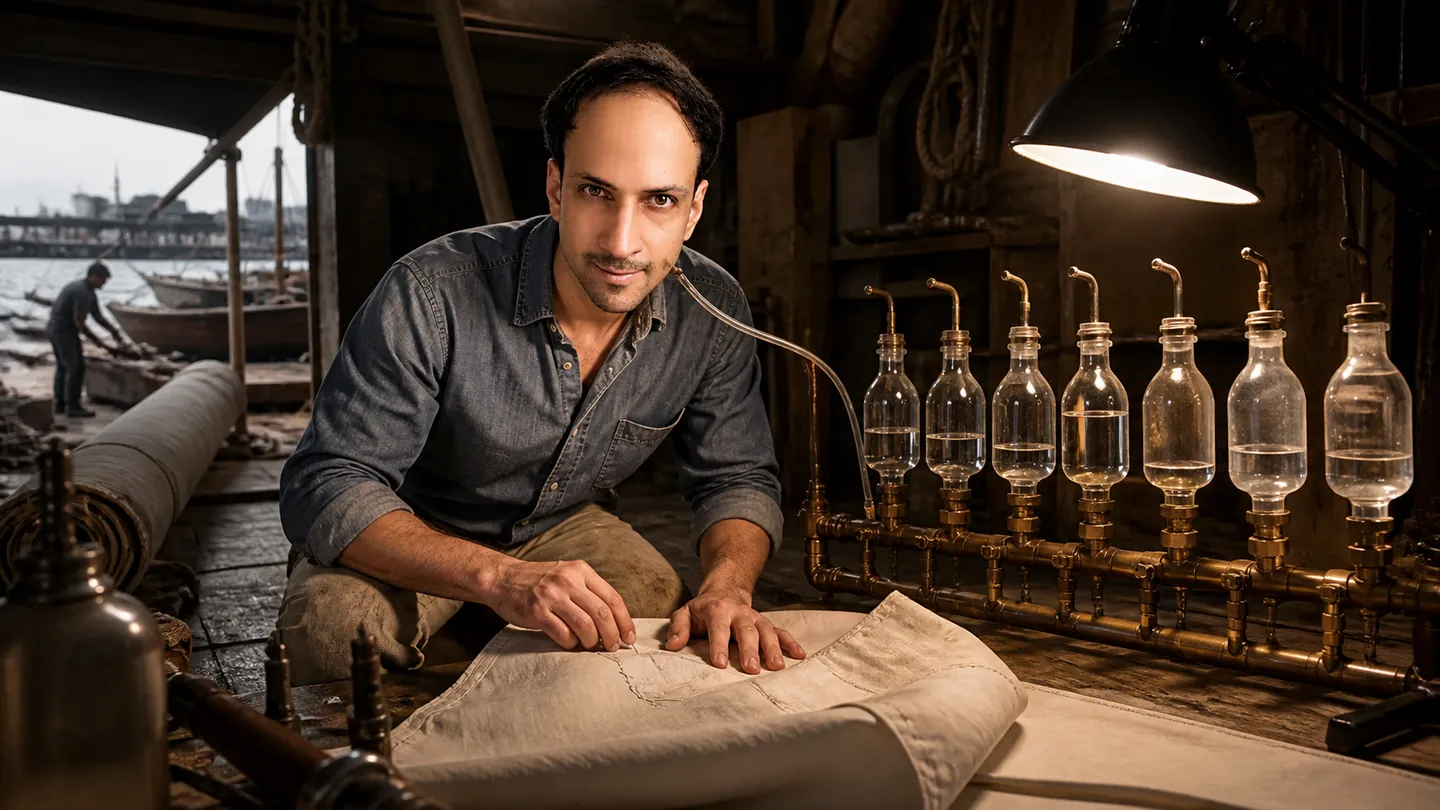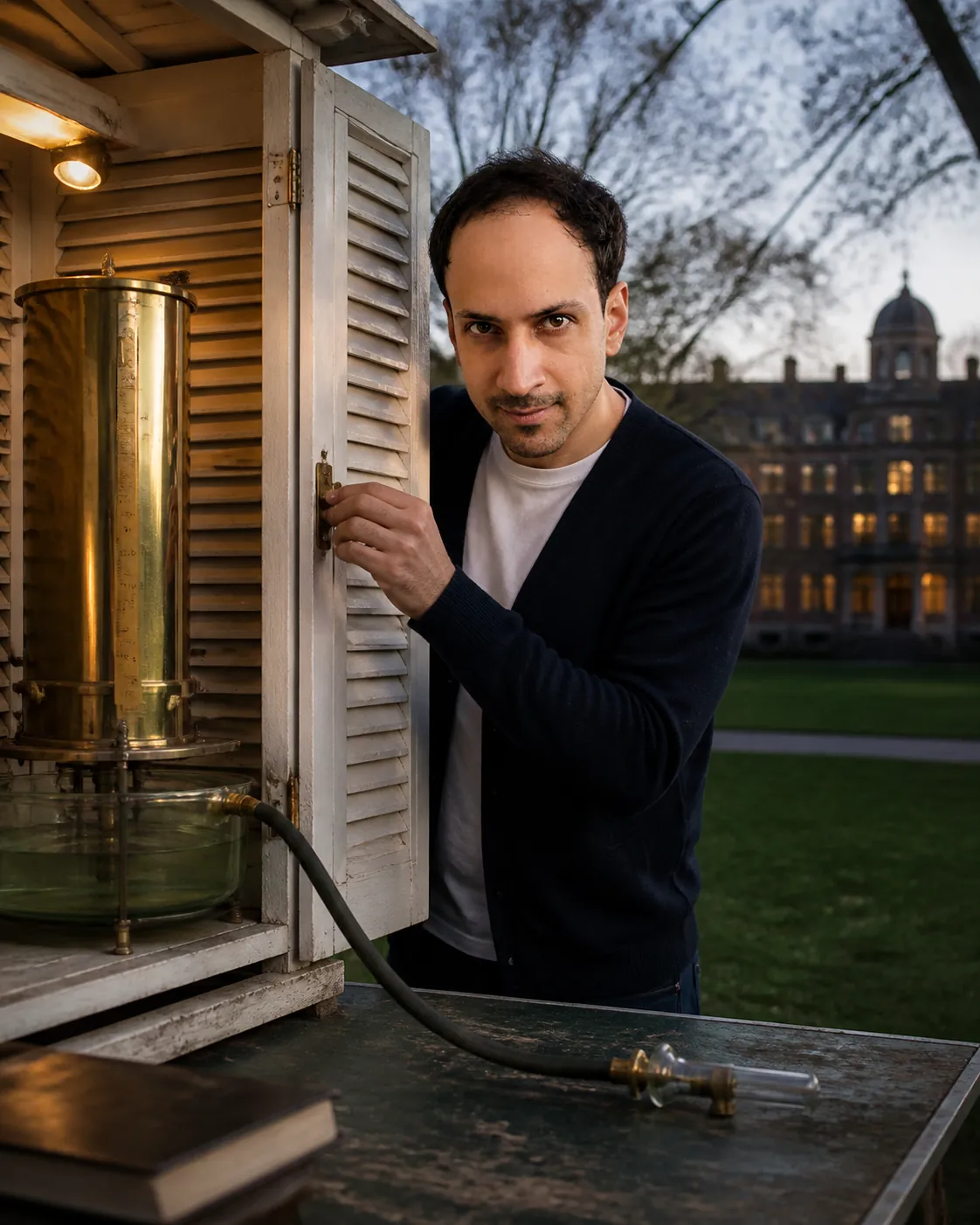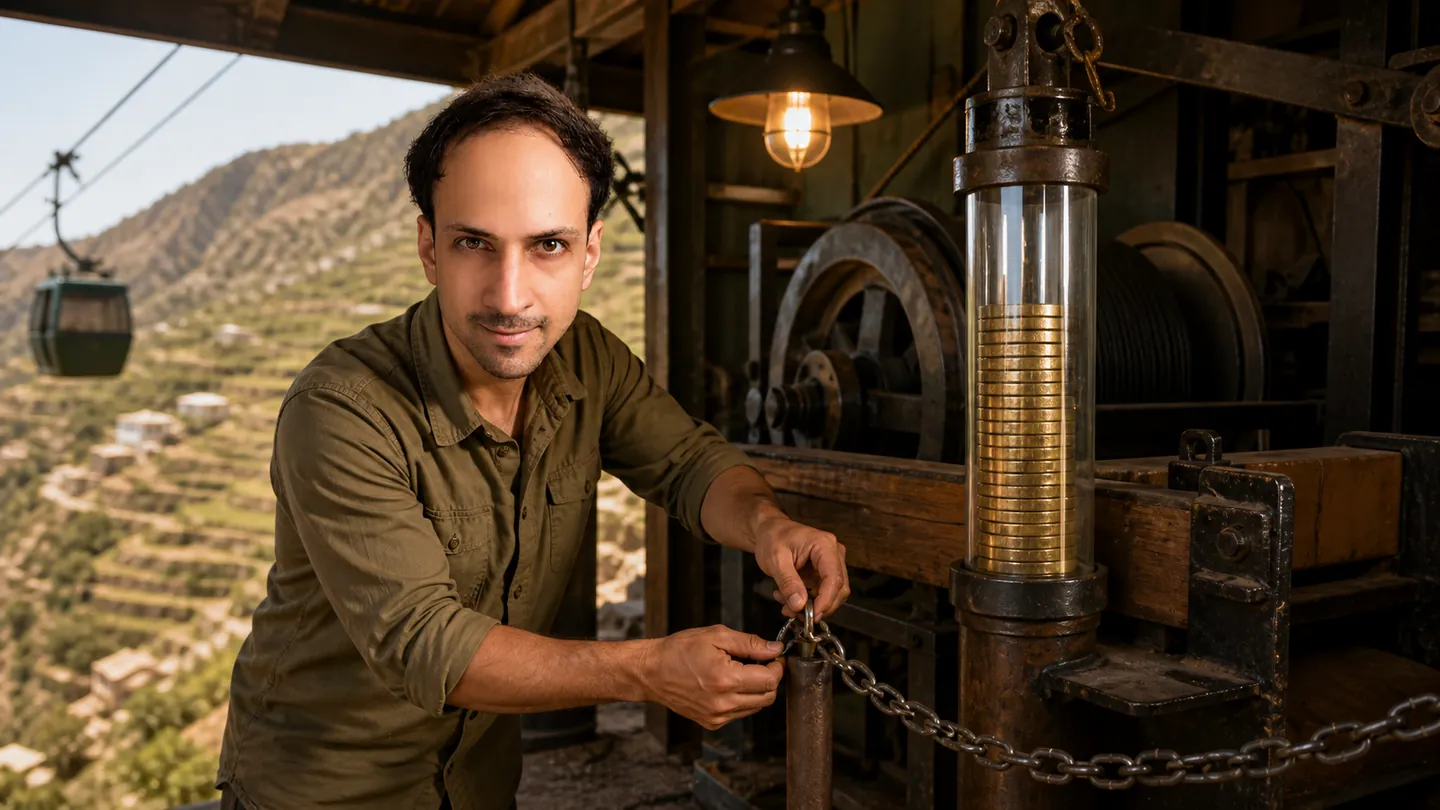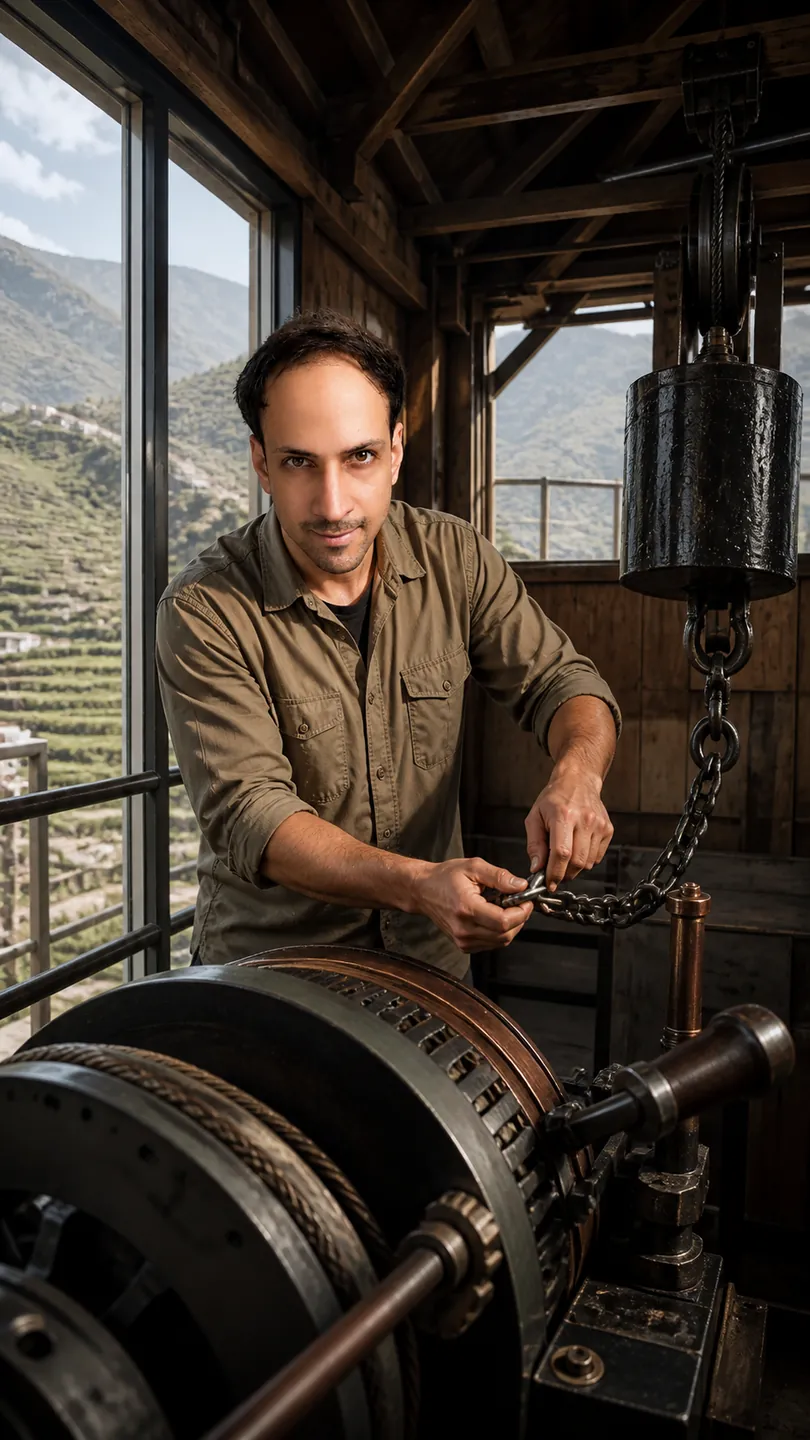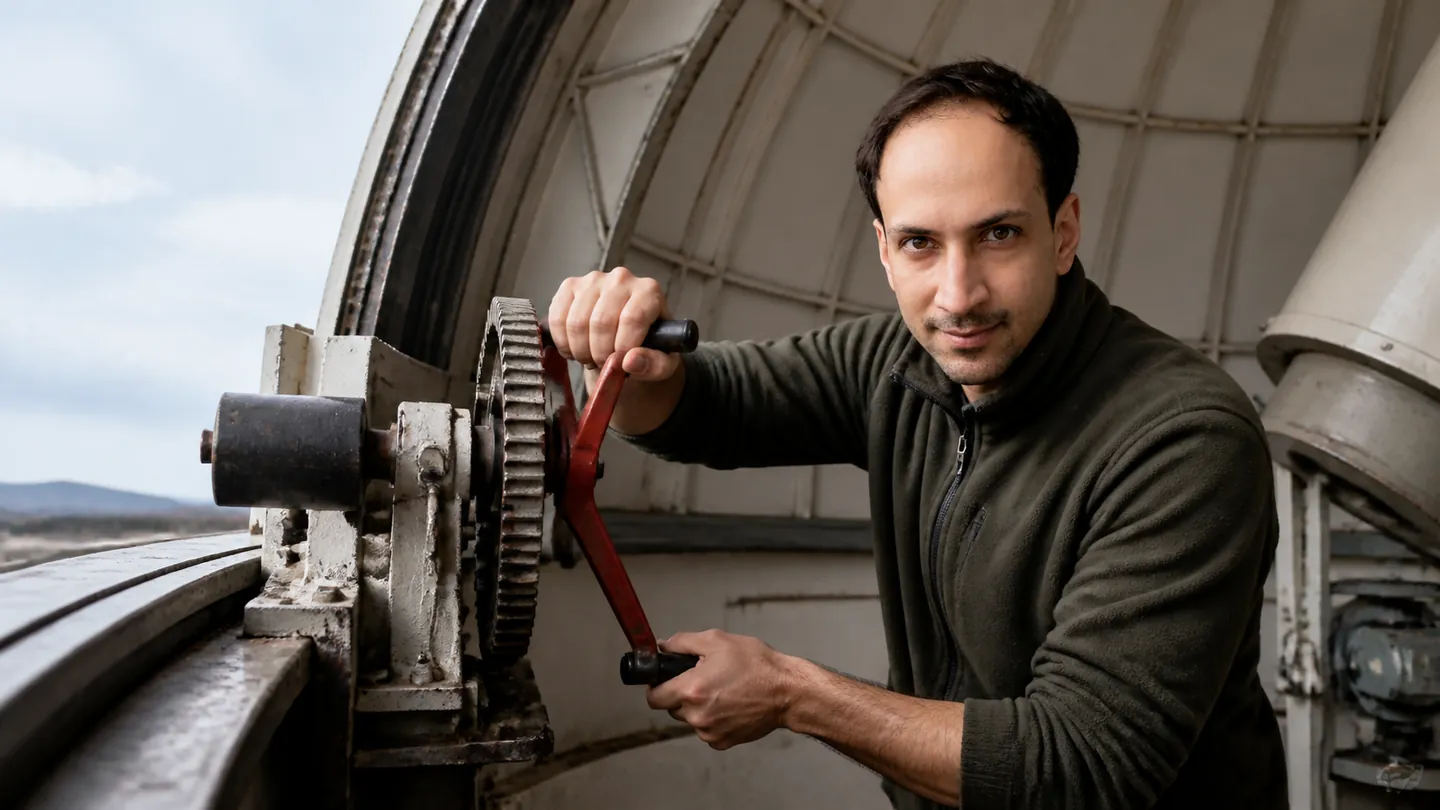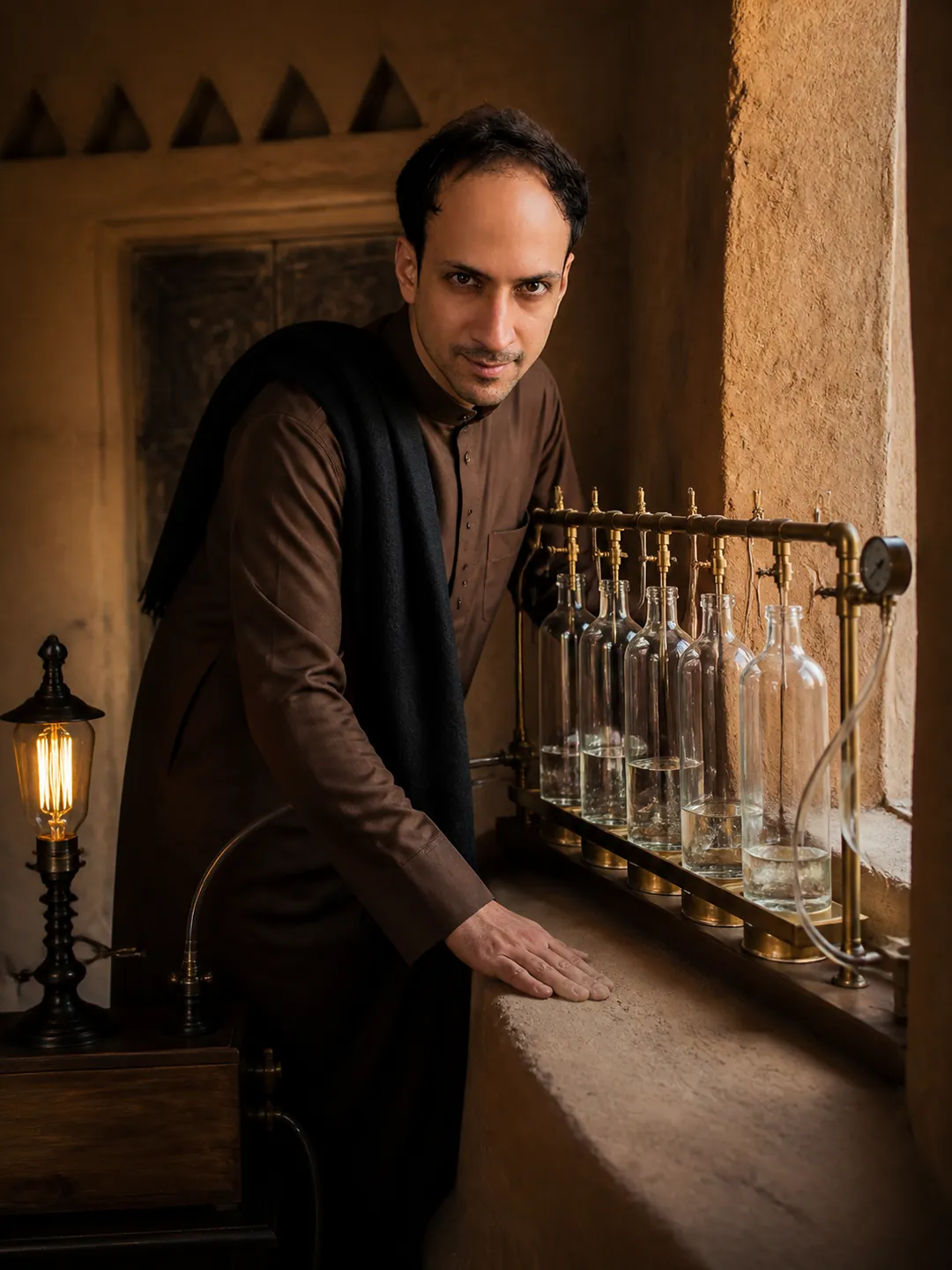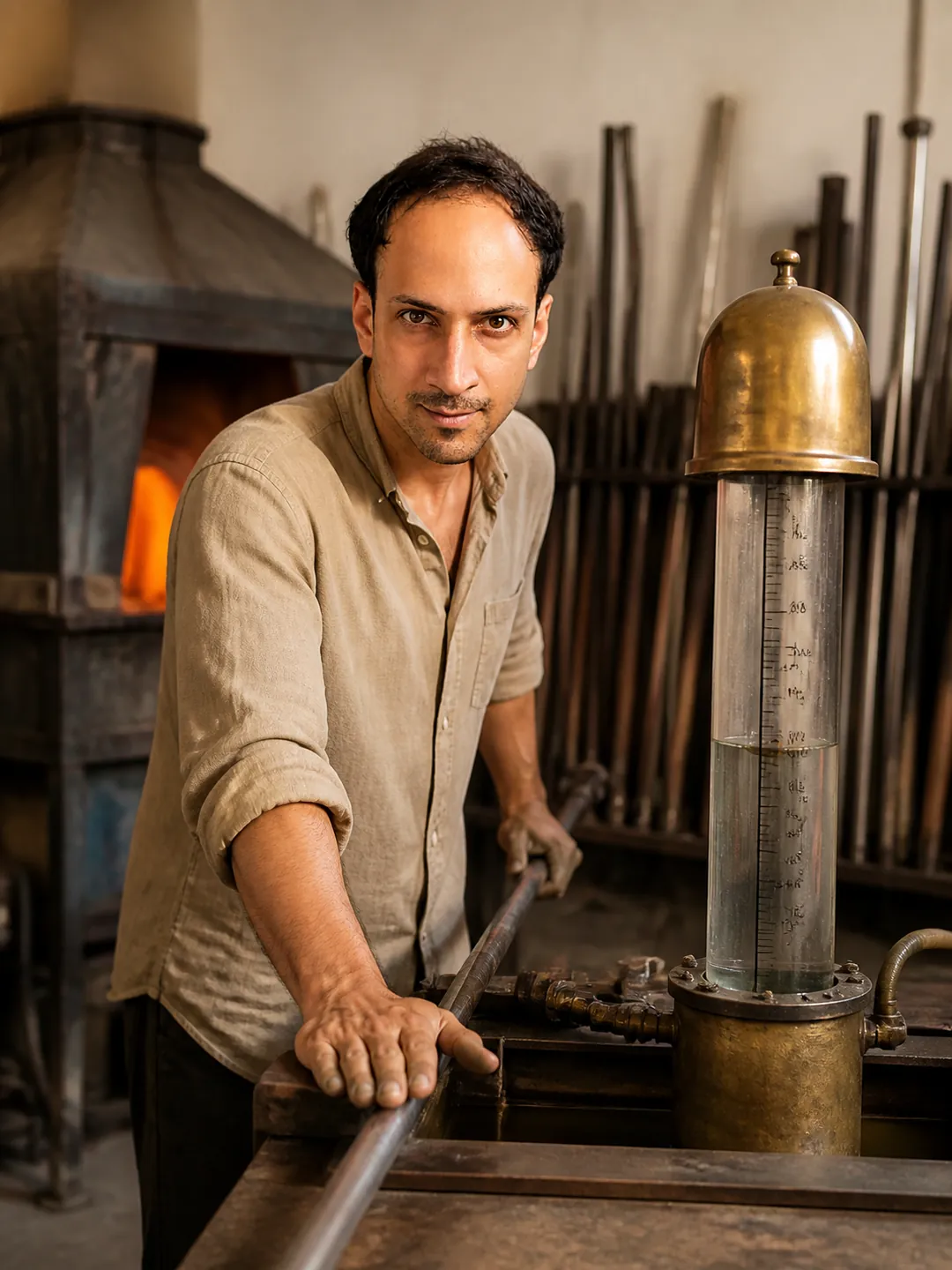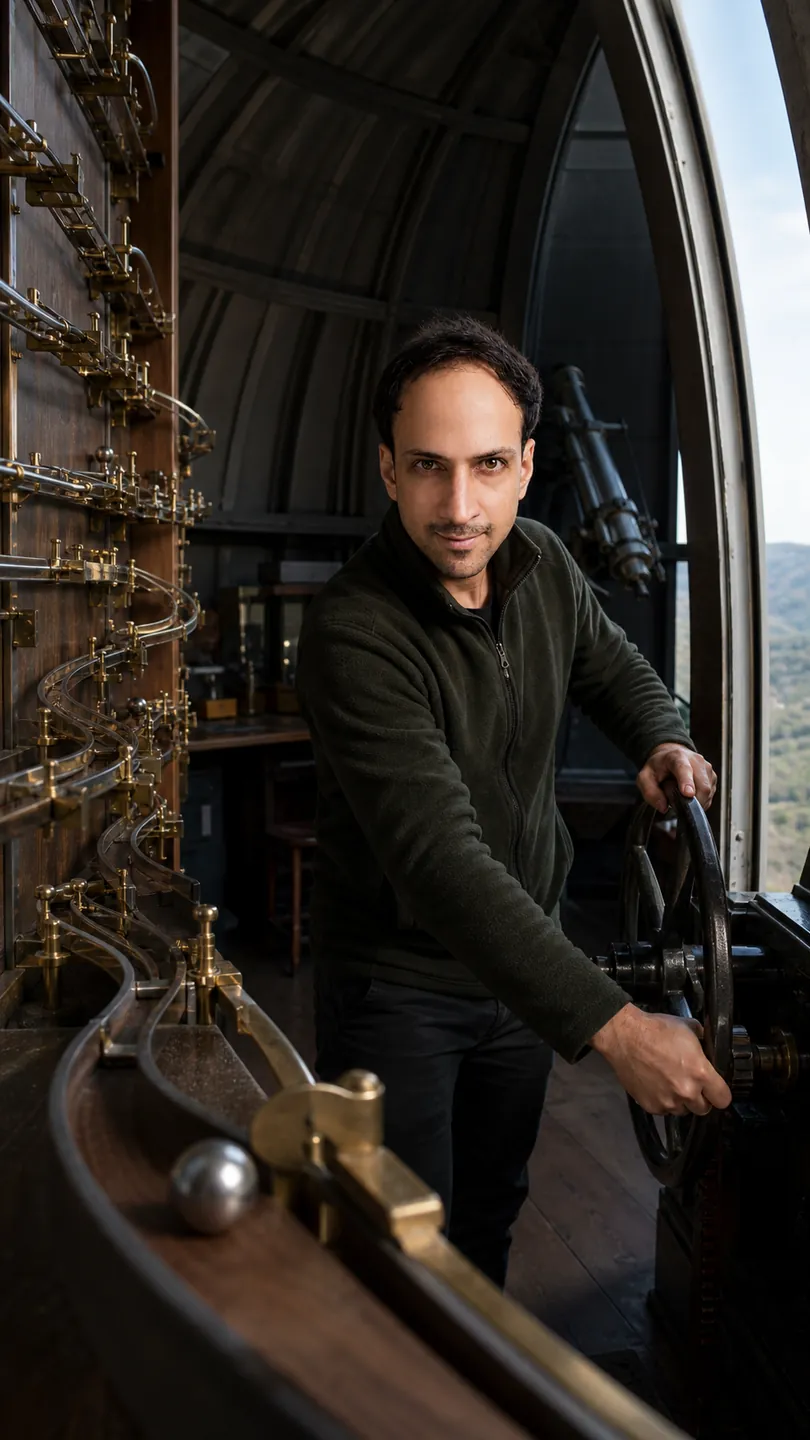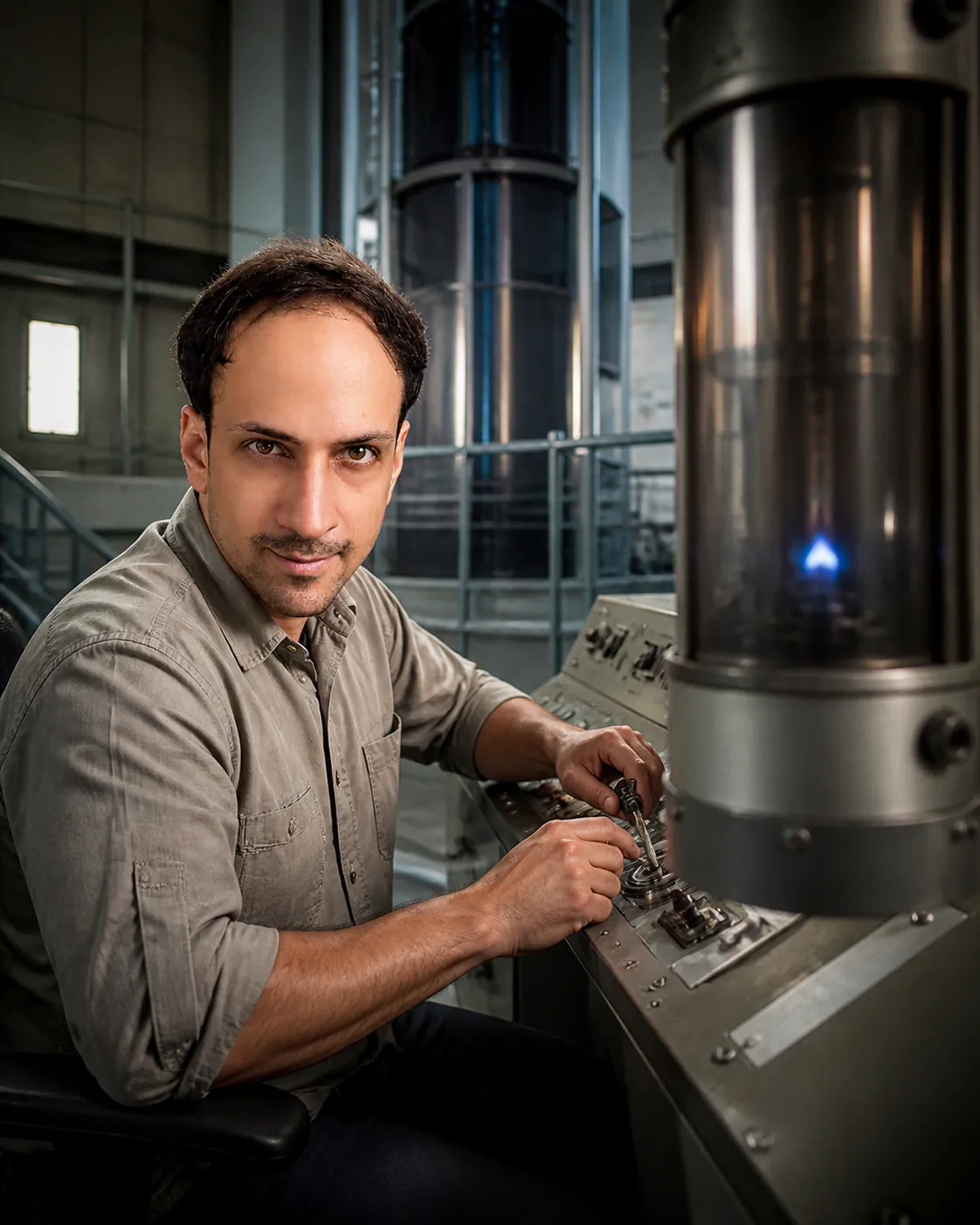
Turn your own photo into a working research-facility portrait in the control desk of a research drop tower, countdown lamps unlit. Keeps your face unchanged.
من نص البرومبت
Use the attached reference photo as the identity reference: keep the same face, skin tone, hair and features as the person in that photo, without beautifying, aging or altering them. Build a portrait 4:5 editorial artwork with protected negative space and a fully readable face at exactly 2560x3200 pixels. Location: the control desk of a research drop tower, countdown lamps unlit. Show the subject in a pressed sand-grey utility shirt over dark serviceable trousers, turning the release key one notch short of armed. Build the artwork around this material rule: a small candle flame inside the falling capsule that loses its teardrop and settles into a dim blue hemisphere shows how the fastest fall can look, from inside, like perfect stillness. Explore how stillness and free fall can be the same event described twice; direct expression and posture toward quiet vindication, never melodrama or ad-like confidence. Use a 90mm near-far pairing: one suspended detail sharp near the lens and the subject's grounded face readable beyond it. Make the composition hold every floating edge sharper than any grounded surface. Render it as working research-facility realism combining true free-fall fluid behavior, engineered-safety texture, unglamorous industrial surfaces, and quietly composed editorial portrait photography, using even technical illumination shaped by the capsule's own interior fixtures, shadows kept readable and a palette of matte aluminum, shadowed concrete, and pale flame blue. Photorealistic: this must read as a real photograph from a physical camera, never an illustration, painting, or 3D render. Resolve real surface detail: cotton that hangs by its own weight, seams that pucker very slightly, and collars softened by washing. Keep one identity-locked person, credible hands and fingers, natural fabric, and coherent scale, contact, reflections, shadows, airflow, deformation, and materials. Background people only when essential, always secondary and clearly different. Avoid space-station porthole backdrops, cartoon up-arrows, magically hovering furniture, dramatic slow-motion glass shatters, and superhero mid-air heroics. No text, labels, logos, signatures, watermarks, random symbols, plastic skin, excessive bloom, or glossy AI finish.