تخطَّ إلى المحتوى
جميع التصنيفات

AI Portraits

Portrait prompts you can use with your own photo.

3845 برومبتات•0 مشتركين
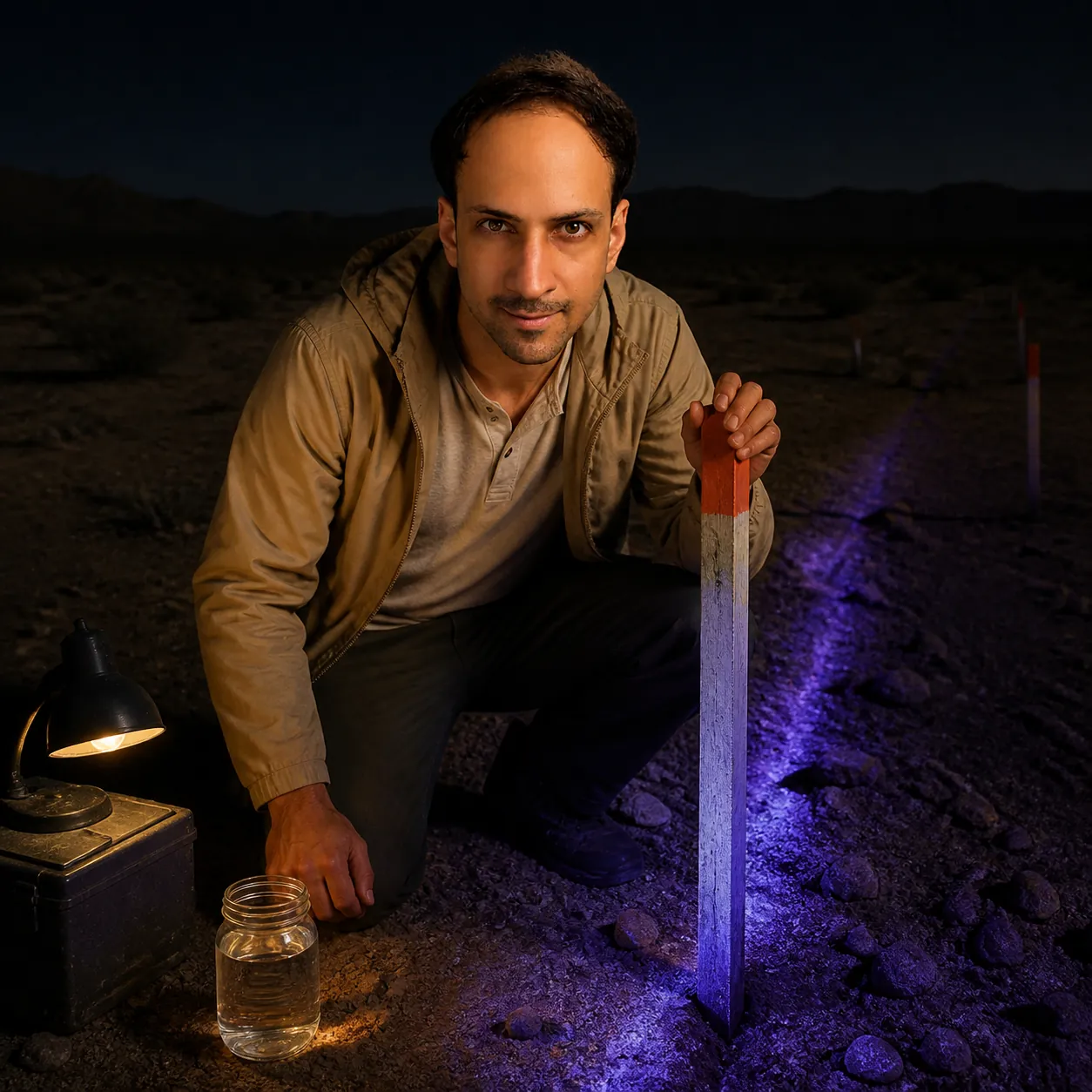
The Jar on the Night Plot — AI Portrait Prompt
صورةAI Portraits

Turn your own photo into a photorealistic portrait in a marked desert study plot an hour after the moon has set. Keeps your face unchanged.

من نص البرومبت

Use the attached reference photo as the identity reference: keep the same face, skin tone, hair and features as the person in that photo, without beautifying, aging or altering them. Create a square 1:1 museum-catalog frame with a strong first read and a slower second read at exactly 2880x2880 pixels. Location: a marked desert study plot an hour after the moon has set. Show them in a sand-colored windbreaker over a plain long-sleeved henley, pressing a survey stake upright with one palm. Build the artwork around this material rule: a jar of water carrying so little fluorescein that it reads as ordinary tap water until ultraviolet arrives takes its second color from light nobody in the room can see. Explore where the line falls between a thing's appearance and its actual properties; direct expression and posture toward attentive calm, never melodrama or ad-like confidence. Frame along the boundary of the ultraviolet light so both halves share one focal plane. Make the composition leave one edge of the object still unexplored by the light. Render it as conceptual laboratory portraiture assembled from working ultraviolet apparatus, restrained editorial art direction, believable surface response, and quiet observational framing, using a single low lamp holding the room while unseen ultraviolet does the rest and a palette of charcoal, bone grey, and one band of mineral orange. Photorealistic: this must read as a real photograph from a physical camera, never an illustration, painting, or 3D render. Resolve real surface detail: hair with individual strands catching light, fine hairs of uneven length, and skin oil giving a low uneven sheen. Keep one identity-locked person, credible hands and fingers, natural fabric, and coherent scale, contact, reflections, shadows, airflow, deformation, and materials. Background people only when essential, always secondary and clearly different. Avoid rave lighting rigs, uniform purple haze, CGI bioluminescent forests, and glowing eyes. No text, labels, logos, signatures, watermarks, random symbols, plastic skin, excessive bloom, or glossy AI finish.
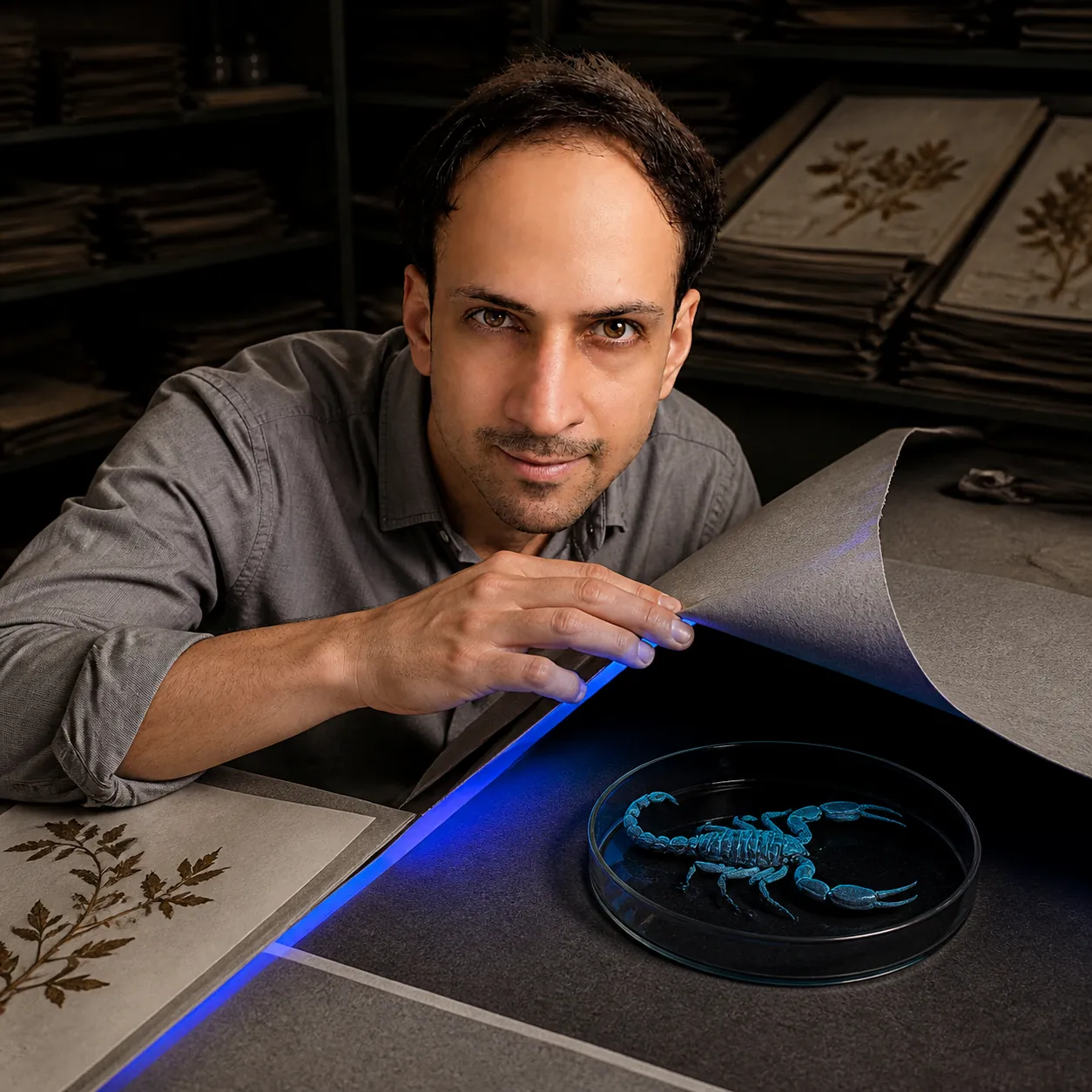
Scorpion Shell in Cyan Light — AI Portrait Prompt
صورةAI Portraits

Turn your own photo into a gallery-grade specimen portrait in a herbarium room where pressed plant sheets rest between grey blotters. Keeps your face unchanged.

من نص البرومبت

Use the attached reference photo as the identity reference: keep the same face, skin tone, hair and features as the person in that photo, without beautifying, aging or altering them. Create a square 1:1 museum-catalog frame with a strong first read and a slower second read at exactly 2880x2880 pixels. Location: a herbarium room where pressed plant sheets rest between grey blotters. Show them in a soft grey button-down with the cuffs turned back twice, lifting one grey blotter aside with flat fingers. Build the artwork around this material rule: a shed scorpion cuticle in a glass dish that answers ultraviolet with a cold cyan outline sharper than the animal ever looked takes its second color from light nobody in the room can see. Explore what it means that the plainest surfaces keep the least expected secrets; direct expression and posture toward grave curiosity, never melodrama or ad-like confidence. Frame along the boundary of the ultraviolet light so both halves share one focal plane. Make the composition leave one edge of the object still unexplored by the light. Render it as gallery-grade specimen photography built from genuine luminescent materials, sober collection-room styling, accurate dim-light color, and patient portrait attention, using dim ambient light with a hard ultraviolet edge crossing the working surface and a palette of unbleached linen, umber, and one stripe of quinine blue. Photorealistic: this must read as a real photograph from a physical camera, never an illustration, painting, or 3D render. Resolve real surface detail: cotton that hangs by its own weight, seams that pucker very slightly, and collars softened by washing. Keep one identity-locked person, credible hands and fingers, natural fabric, and coherent scale, contact, reflections, shadows, airflow, deformation, and materials. Background people only when essential, always secondary and clearly different. Avoid rave lighting rigs, uniform purple haze, CGI bioluminescent forests, and glowing eyes. No text, labels, logos, signatures, watermarks, random symbols, plastic skin, excessive bloom, or glossy AI finish.
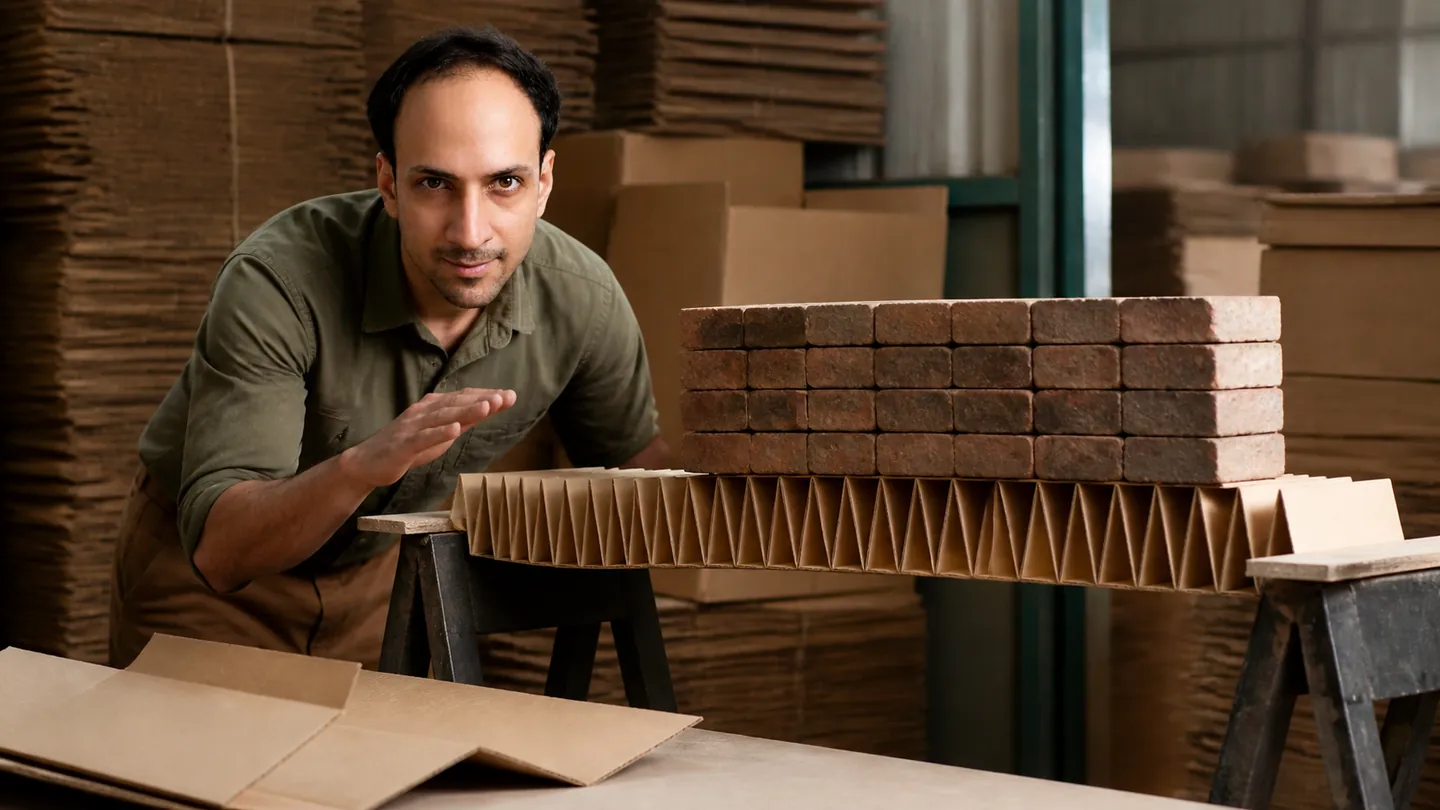
Cartons in the Date Shed — AI Portrait Prompt
صورةAI Portraits

Turn your own photo into a portrait in a date-packing shed stacked chest-high with flattened new cartons. Keeps your face unchanged.

من نص البرومبت

Use the attached reference photo as the identity reference: keep the same face, skin tone, hair and features as the person in that photo, without beautifying, aging or altering them. Compose a wide 16:9 narrative image where environment and subject carry equal meaning at exactly 3808x2144 pixels. Location: a date-packing shed stacked chest-high with flattened new cartons. Show the subject in a washed olive utility shirt tucked into canvas work trousers, folding one carton up from flat with four practiced creases. Use this advanced image-making device as the core logic: a bridge pleated from one kraft sheet whose deep accordion corrugations span two trestles beneath a single fired brick stands up to demands that look plainly unfair to paper. Explore why a material that tears between two fingers can be trusted with real weight; direct expression and posture toward quiet conviction, never melodrama or ad-like confidence. Use a 90mm close-portrait hybrid: one crease edge razor sharp near the lens, their face readable beyond it. Make the composition place their hand near the structure without ever touching the load. Render it as high-concept paper-engineering portraiture built from working cut-and-fold structures, documentary realism, gallery-grade craft styling, and physically truthful load behavior, using even overhead workroom light shaped so white surfaces hold visible tone steps and a palette of warm white, shadowed cream, and one edge of teal. Photorealistic: this must read as a real photograph from a physical camera, never an illustration, painting, or 3D render. Give the space honest scale: real distance between foreground, subject, and far wall. Resolve real surface detail: the difference between a wiped surface and a clean one, faint tide marks on ceramic, and metal dulled unevenly by touch. Keep one identity-locked person, credible hands and fingers, natural fabric, and coherent scale, contact, reflections, shadows, airflow, deformation, and materials. Background people only when essential, always secondary and clearly different. Avoid origami cranes, glowing magical paper, floating confetti, printed lettering on sheets, and weightless CGI folds. No text, labels, logos, signatures, watermarks, random symbols, plastic skin, excessive bloom, or glossy AI finish.
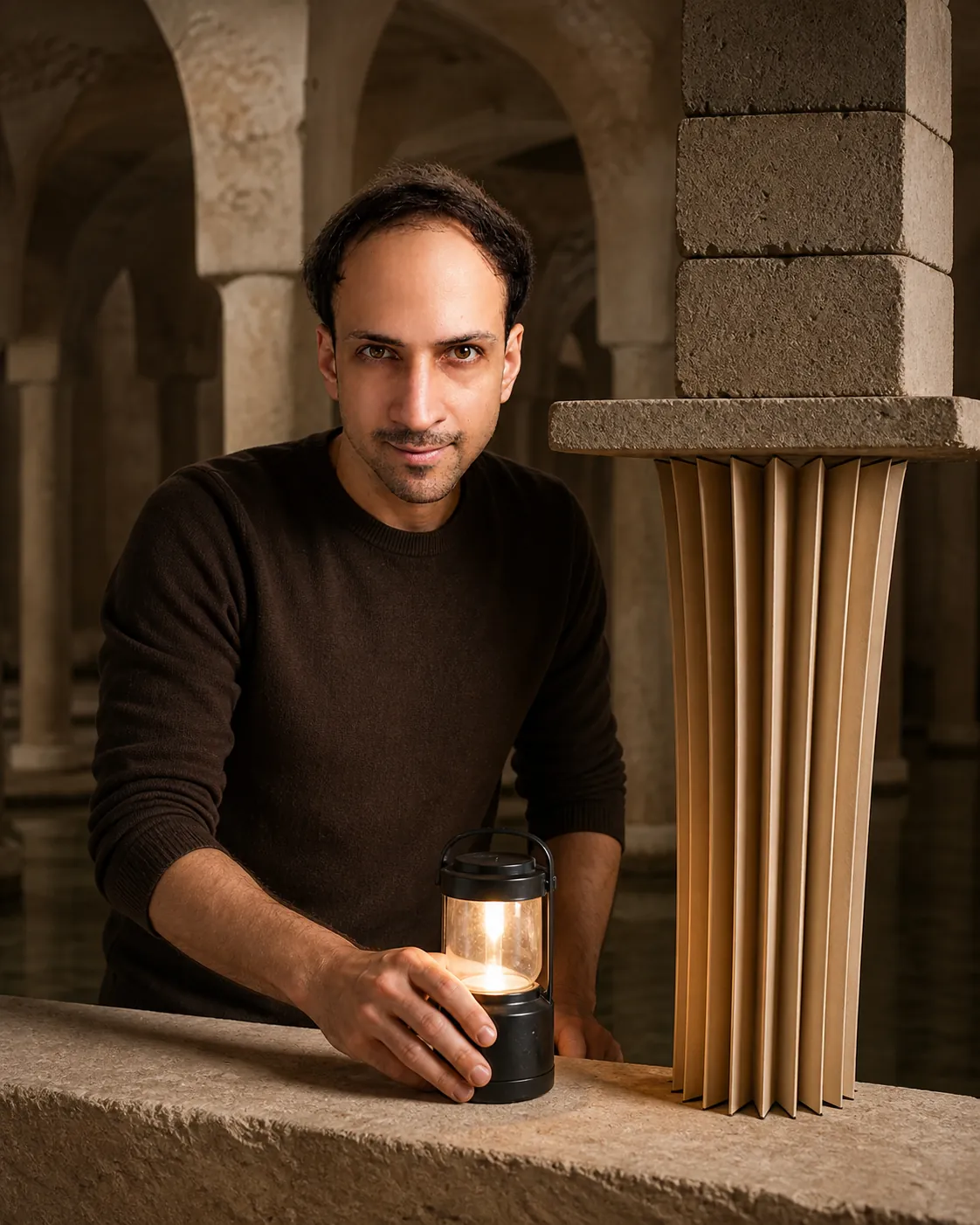
Lantern in the Old Cistern — AI Portrait Prompt
صورةAI Portraits

Turn your own photo into a portrait in a dry historic cistern beneath old Riyadh, cool and windless. Keeps your face unchanged.

من نص البرومبت

Use the attached reference photo as the identity reference: keep the same face, skin tone, hair and features as the person in that photo, without beautifying, aging or altering them. Build a portrait 4:5 editorial artwork with protected negative space and a fully readable face at exactly 2560x3200 pixels. Location: a dry historic cistern beneath old Riyadh, cool and windless. Show the subject in a dark brown crew-neck sweater with sleeves pushed to mid-forearm, setting a battery lantern onto a stone ledge. Make one rigorous physical condition the conceptual engine: a slender kraft column pleated into crisp vertical flutes that carries a knee-high stack of concrete blocks without flexing forces the eye to re-check a material it thought it knew. Explore how a fold multiplies strength without adding a single gram of material; direct expression and posture toward gentle rigor, never melodrama or ad-like confidence. Frame across the tabletop at the structure's own height so the span and their eyes share one focal plane. Make the composition let white paper carry the frame's brightest and quietest values. Render it as gallery-grade structural still-life portraiture built from real folded spans, matte paper materiality, unexaggerated shadow logic, and patient architectural composition, using even overhead workroom light shaped so white surfaces hold visible tone steps and a palette of warm white, shadowed cream, and one edge of teal. Photorealistic: this must read as a real photograph from a physical camera, never an illustration, painting, or 3D render. Resolve real surface detail: fine grit in the texture of concrete, efflorescence at damp edges, and hairline cracks that follow stress. Keep one identity-locked person, credible hands and fingers, natural fabric, and coherent scale, contact, reflections, shadows, airflow, deformation, and materials. Background people only when essential, always secondary and clearly different. Avoid origami cranes, glowing magical paper, floating confetti, printed lettering on sheets, and weightless CGI folds. No text, labels, logos, signatures, watermarks, random symbols, plastic skin, excessive bloom, or glossy AI finish.
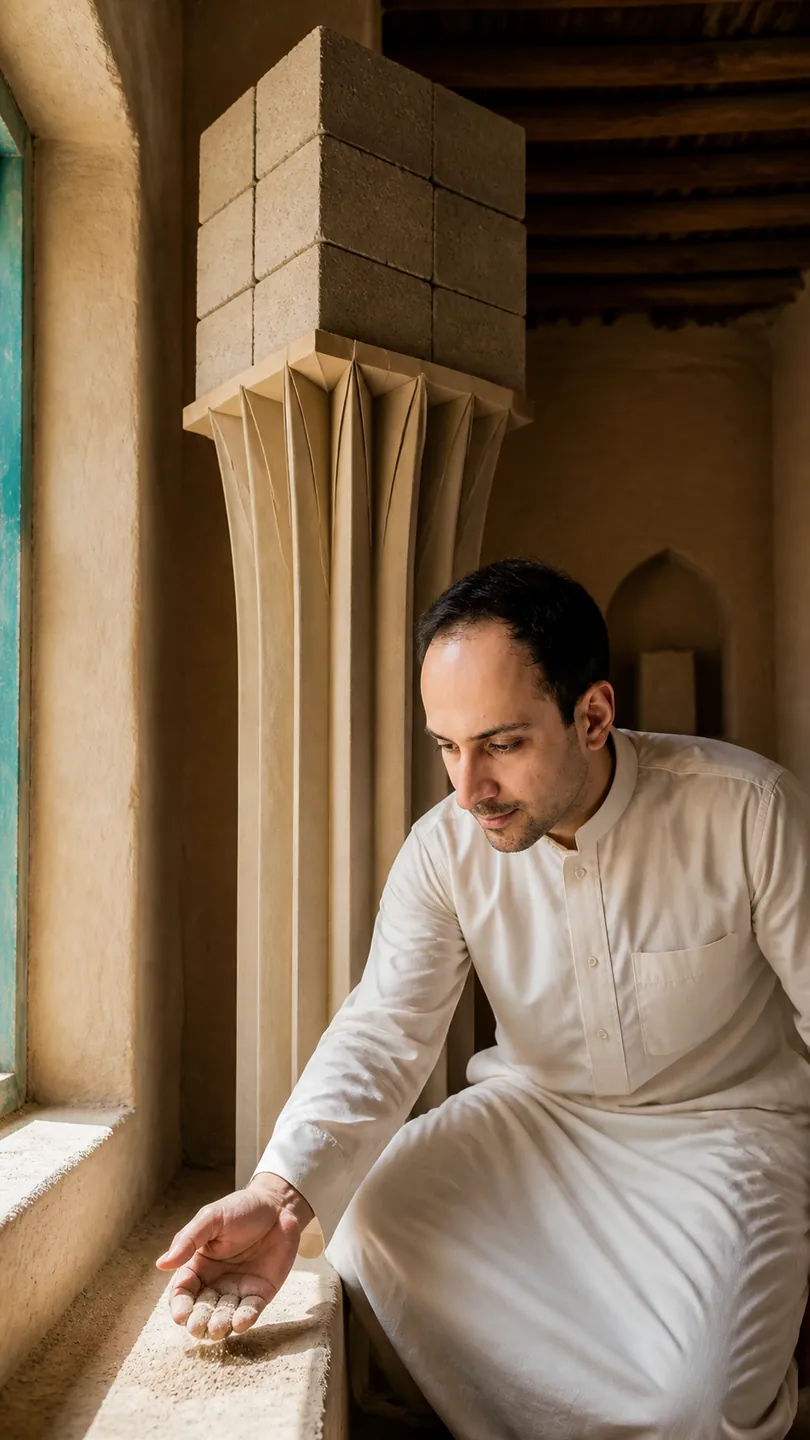
Folded Column by the Window — AI Portrait Prompt
صورةAI Portraits

Turn your own photo into a portrait in a restored mud-brick room in Diriyah with one deep window sill. Keeps your face unchanged.

من نص البرومبت

Use the attached reference photo as the identity reference: keep the same face, skin tone, hair and features as the person in that photo, without beautifying, aging or altering them. Design a full-height 9:16 cinematic artwork that reads on a phone and rewards gallery-scale inspection at exactly 2144x3808 pixels. Location: a restored mud-brick room in Diriyah with one deep window sill. Show the subject in a plain ivory traditional Gulf outfit worn without a headdress, cuffs buttoned, sweeping fine dust from the sill with one cupped hand. Make one rigorous physical condition the conceptual engine: a slender kraft column pleated into crisp vertical flutes that carries a knee-high stack of concrete blocks without flexing turns the marks of its making into working structural parts. Explore how a fold multiplies strength without adding a single gram of material; direct expression and posture toward attentive humility, never melodrama or ad-like confidence. Frame from a low three-quarter angle so the paper structure gains quiet monumentality while their posture stays true. Make the composition keep every cut edge sharp while the room softens behind. Render it as gallery-grade structural still-life portraiture built from real folded spans, matte paper materiality, unexaggerated shadow logic, and patient architectural composition, using flat north window light that keeps every crease edge legible and a palette of warm white, shadowed cream, and one edge of teal. Photorealistic: this must read as a real photograph from a physical camera, never an illustration, painting, or 3D render. Give the space honest scale: real distance between foreground, subject, and far wall. Resolve real surface detail: condensation beading at true size, liquid meniscus curving against glass, and wet surfaces darker than dry ones. Keep one identity-locked person, credible hands and fingers, natural fabric, and coherent scale, contact, reflections, shadows, airflow, deformation, and materials. Background people only when essential, always secondary and clearly different. Avoid greeting-card kitsch, torn-edge scrapbook collage, cartoon pop-up books, and burning paper drama. No text, labels, logos, signatures, watermarks, random symbols, plastic skin, excessive bloom, or glossy AI finish.
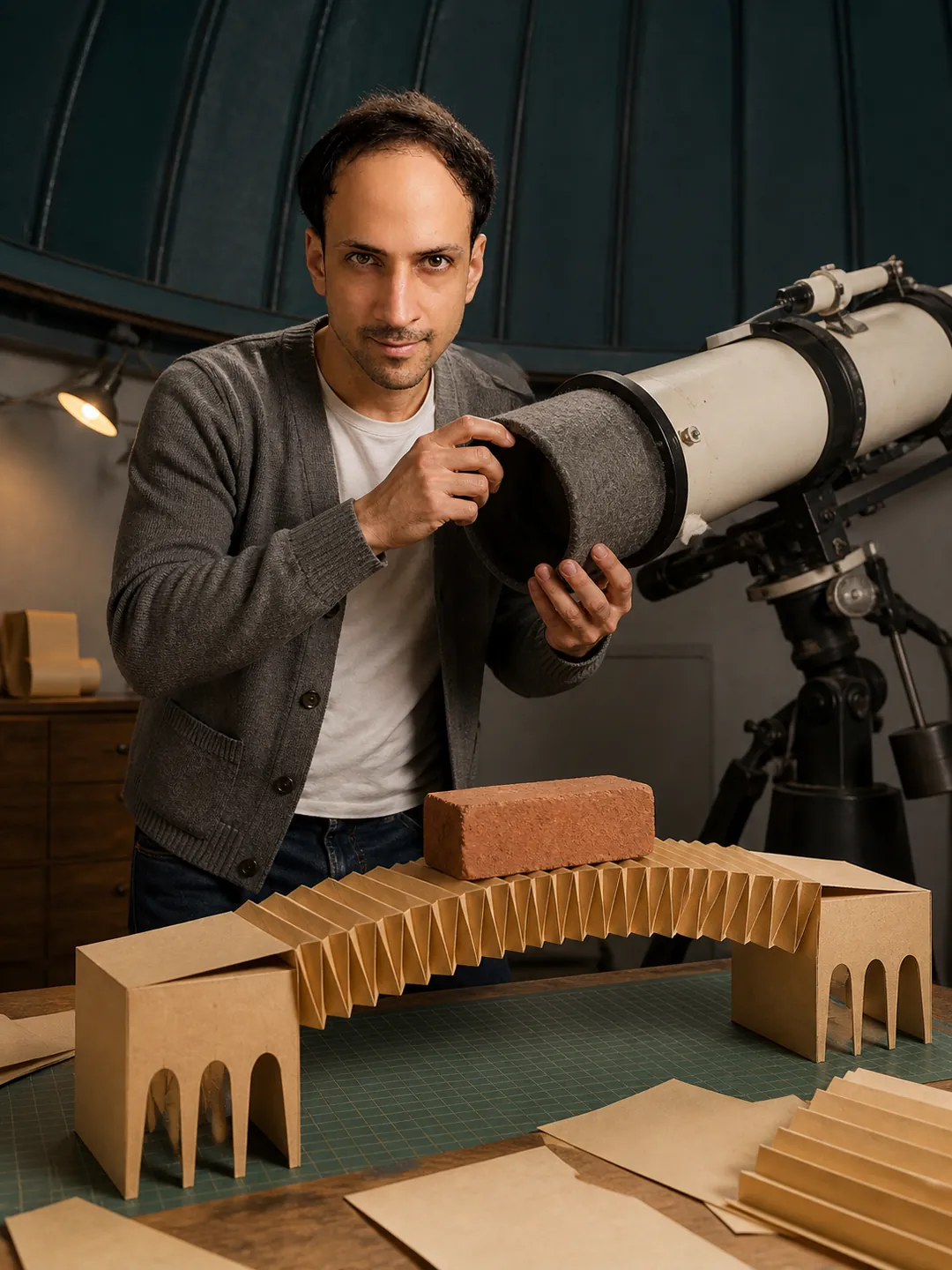
Covering the Telescope by Day — AI Portrait Prompt
صورةAI Portraits

Turn your own photo into a portrait in a small university observatory with its dome slit closed for daylight. Keeps your face unchanged.

من نص البرومبت

Use the attached reference photo as the identity reference: keep the same face, skin tone, hair and features as the person in that photo, without beautifying, aging or altering them. Use a formal 3:4 environmental portrait with complete hands and meaningful objects inside frame at exactly 2480x3312 pixels. Location: a small university observatory with its dome slit closed for daylight. Show the subject in a heather-grey cardigan over a white crew-neck and dark denim, fitting the felt-lined cover over the telescope tube. Use this advanced image-making device as the core logic: a bridge pleated from one kraft sheet whose deep accordion corrugations span two trestles beneath a single fired brick shows plain stock obeying rules that read as magic and audit as mathematics. Explore why a material that tears between two fingers can be trusted with real weight; direct expression and posture toward studied wonder, never melodrama or ad-like confidence. Use an eye-level 58mm medium-format viewpoint with natural perspective and honest paper texture. Make the composition give the load path one clean diagonal from burden to bearing. Render it as high-concept paper-engineering portraiture built from working cut-and-fold structures, documentary realism, gallery-grade craft styling, and physically truthful load behavior, using cool ambient morning light warmed by a single paper-shaded practical and a palette of warm white, shadowed cream, and one edge of teal. Photorealistic: this must read as a real photograph from a physical camera, never an illustration, painting, or 3D render. Resolve real surface detail: skin that reddens slightly under pressure, nail beds with honest colour, and knuckle creases that fold rather than blur. Keep one identity-locked person, credible hands and fingers, natural fabric, and coherent scale, contact, reflections, shadows, airflow, deformation, and materials. Background people only when essential, always secondary and clearly different. Avoid greeting-card kitsch, torn-edge scrapbook collage, cartoon pop-up books, and burning paper drama. No text, labels, logos, signatures, watermarks, random symbols, plastic skin, excessive bloom, or glossy AI finish.
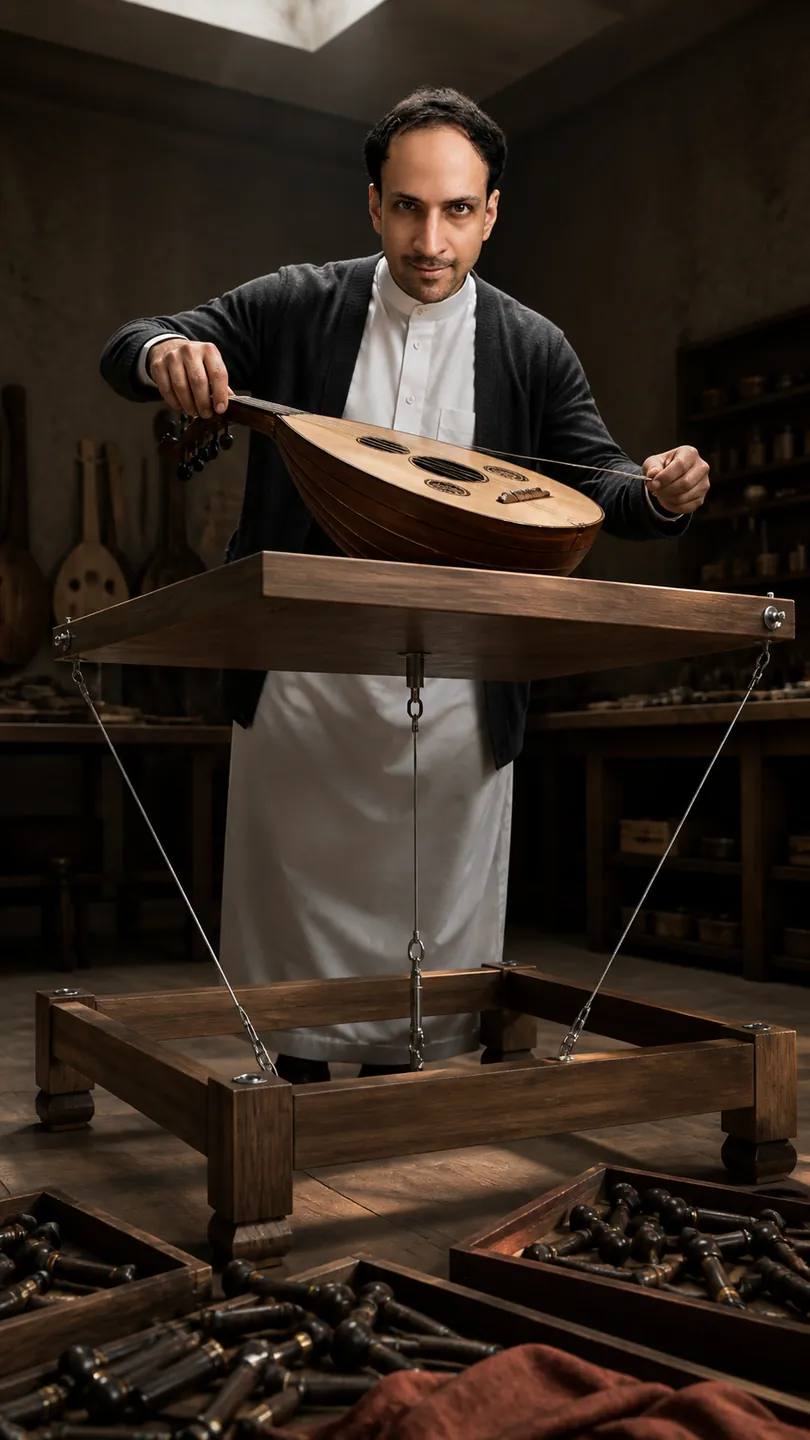
Tuning at the Oud Maker's Bench — AI Portrait Prompt
صورةAI Portraits

Turn your own photo into an exhibition-grade statics portrait in an oud maker's bench with tuning pegs sorted in shallow trays. Keeps your face unchanged.

من نص البرومبت

Use the attached reference photo as the identity reference: keep the same face, skin tone, hair and features as the person in that photo, without beautifying, aging or altering them. Design a full-height 9:16 cinematic artwork that reads on a phone and rewards gallery-scale inspection at exactly 2144x3808 pixels. Location: an oud maker's bench with tuning pegs sorted in shallow trays. Show the subject in a crisp white traditional Gulf outfit under a slate wool cardigan, bringing one course of strings up to pitch. Build the artwork around this material rule: a hardwood table whose top hangs from its lower frame by one short central cable, steadied by three slack-looking corner wires holds real weight across gaps a viewer can see straight through. Explore why a structure that looks impossible keeps behaving lawfully under real weight; direct expression and posture toward attentive trust, never melodrama or ad-like confidence. Frame from knee height looking gently upward so the load path and their face stack in one vertical. Make the composition keep the background plain wherever a thin cable must read. Render it as exhibition-grade statics portraiture combining precise rigging detail, physically consistent shadows through open gaps, matte natural materials, and disciplined contemporary art direction, using diffused skylight from above that leaves thin cables bright against deeper shadow and a palette of iron black, oiled cedar, and a muted terracotta accent. Photorealistic: this must read as a real photograph from a physical camera, never an illustration, painting, or 3D render. Give the air depth: falloff with distance and no artificial clarity far back. Keep one identity-locked person, credible hands and fingers, natural fabric, and coherent scale, contact, reflections, shadows, airflow, deformation, and materials. Background people only when essential, always secondary and clearly different. Avoid magician's-levitation staging, slack lines pretending to carry load, melted wood joints, and hovering furniture ads. No text, labels, logos, signatures, watermarks, random symbols, plastic skin, excessive bloom, or glossy AI finish.

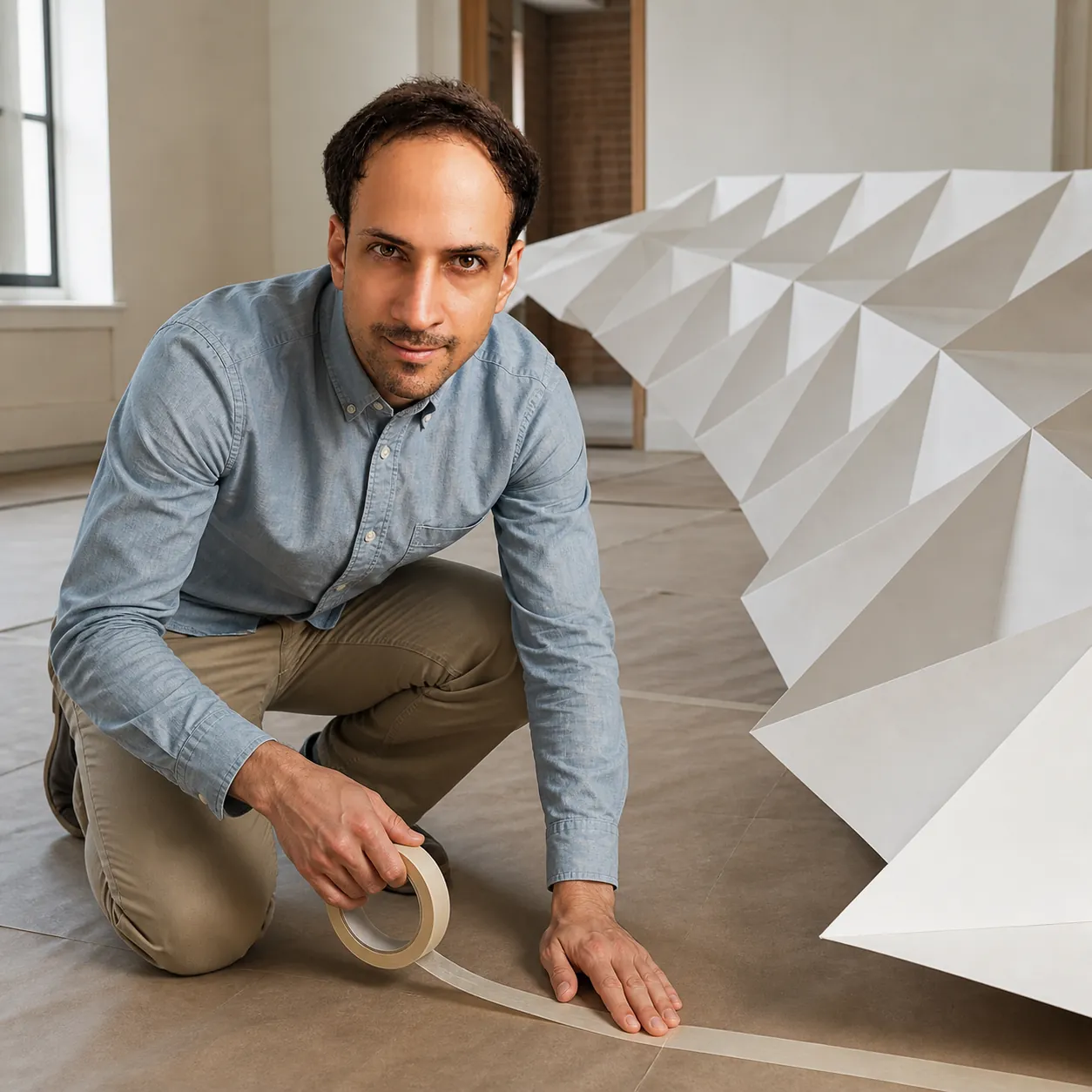
Unfolding in an Empty Apartment — AI Portrait Prompt
صورةAI Portraits

Turn your own photo into a portrait in an unfurnished apartment with floors papered over for the painters. Keeps your face unchanged.

من نص البرومبت

Use the attached reference photo as the identity reference: keep the same face, skin tone, hair and features as the person in that photo, without beautifying, aging or altering them. Create a square 1:1 museum-catalog frame with a strong first read and a slower second read at exactly 2880x2880 pixels. Location: an unfurnished apartment with floors papered over for the painters. Show them in a light chambray shirt buttoned to the collar over khaki chinos, taping down a lifted seam of floor paper. Make one rigorous physical condition the conceptual engine: a Miura-folded sheet that unfurls from a hand-width packet into a table-wide faceted canopy with one pull of two corners puts work the eye reserves for steel onto material sold by the ream. Explore why a cut, placed rightly, adds ability instead of taking it away; direct expression and posture toward gentle rigor, never melodrama or ad-like confidence. Use an eye-level 58mm medium-format viewpoint with natural perspective and honest paper texture. Make the composition give the load path one clean diagonal from burden to bearing. Render it as gallery-grade structural still-life portraiture built from real folded spans, matte paper materiality, unexaggerated shadow logic, and patient architectural composition, using even overhead workroom light shaped so white surfaces hold visible tone steps and a palette of pale card, graphite, and a narrow band of brick. Photorealistic: this must read as a real photograph from a physical camera, never an illustration, painting, or 3D render. Resolve real surface detail: fine lint on dark fabric, water spotting on steel, and the soft rounding of edges that have been used for years. Keep one identity-locked person, credible hands and fingers, natural fabric, and coherent scale, contact, reflections, shadows, airflow, deformation, and materials. Background people only when essential, always secondary and clearly different. Avoid origami cranes, glowing magical paper, floating confetti, printed lettering on sheets, and weightless CGI folds. No text, labels, logos, signatures, watermarks, random symbols, plastic skin, excessive bloom, or glossy AI finish.
Orrery in the Pattern Shop — AI Portrait Prompt
صورةAI Portraits

Turn your own photo into a gallery-grade technical portrait in a university pattern shop lined with wooden casting molds on shelves. Keeps your face unchanged.

من نص البرومبت

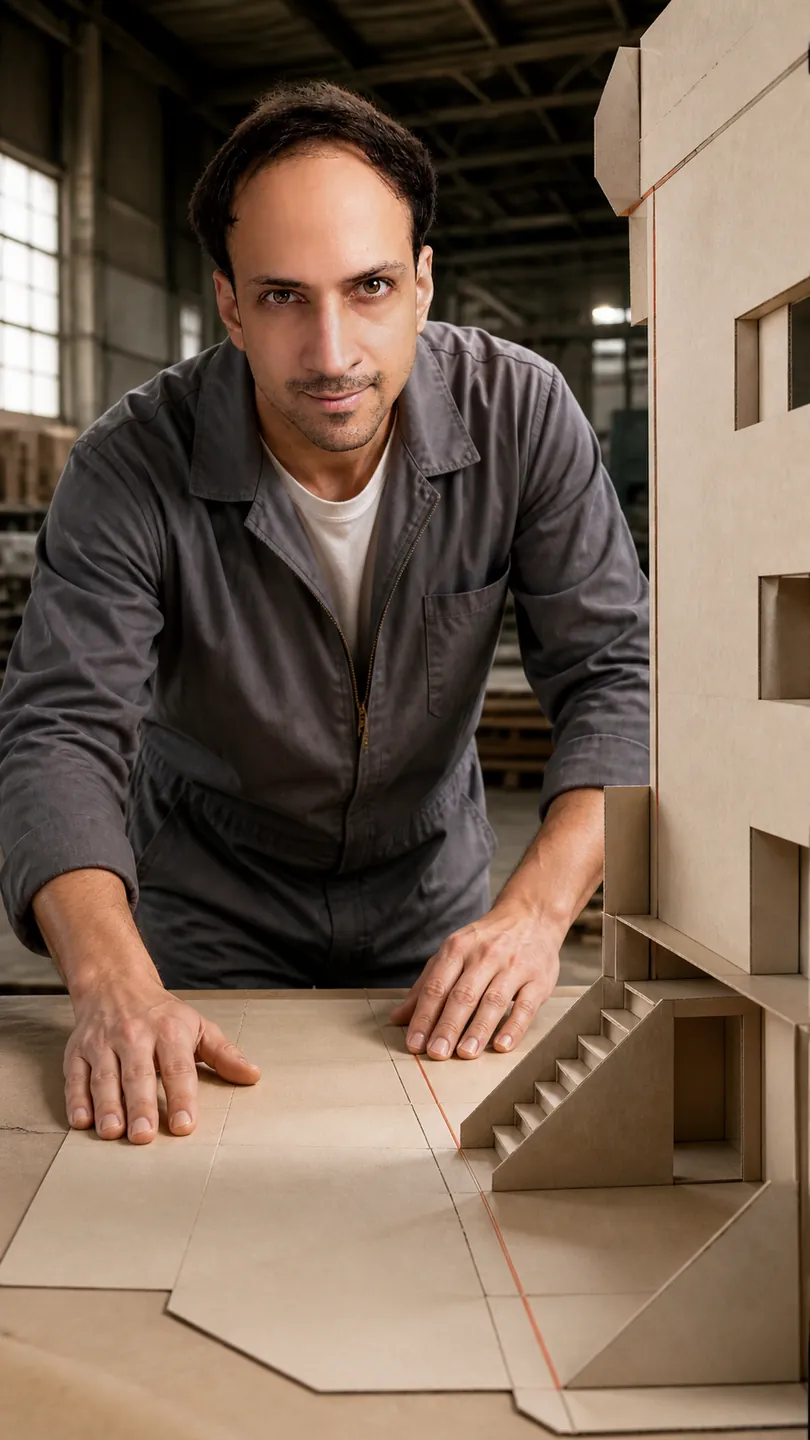
Use the attached reference photo as the identity reference: keep the same face, skin tone, hair and features as the person in that photo, without beautifying, aging or altering them. Design a full-height 9:16 cinematic artwork that reads on a phone and rewards gallery-scale inspection at exactly 2144x3808 pixels. Location: a university pattern shop lined with wooden casting molds on shelves. Show the subject in a grey twill shop coat over an olive cotton shirt, blowing brass filings from a fresh-cut gear blank. Build the artwork around this material rule: a benchtop brass orrery whose stacked gear train holds every planet at tonight's true heliocentric position around a polished central sun keeps every step of its reasoning open to a patient observer's eye. Explore why a machine with no memory chips can still remember mathematics perfectly; direct expression and posture toward measured reverence, never melodrama or ad-like confidence. Use a composed 35mm environmental view placing the subject and the machine as equal patient subjects. Make the composition hold quiet empty space where the finished answer will arrive. Render it as gallery-grade technical realism built on lawful mechanism kinematics, precise engraved detail, tactile wood-and-metal textures, and emotionally intelligent portrait lighting, using late golden hour entering low and level, gilding brass without glare and a palette of warm umber, pale vellum, and one muted teal accent. Photorealistic: this must read as a real photograph from a physical camera, never an illustration, painting, or 3D render. Give the air depth: falloff with distance and no artificial clarity far back. Resolve real surface detail: thread ends and slight pilling on worn cloth, hairline chips at every hard corner, and stone that is porous rather than smooth. Keep one identity-locked person, credible hands and fingers, natural fabric, and coherent scale, contact, reflections, shadows, airflow, deformation, and materials. Background people only when essential, always secondary and clearly different. Avoid floating weightless gears, sepia steampunk grading, cog-filled head silhouettes, Roman-numeral dials, and oversized watch-movement props. No text, labels, logos, signatures, watermarks, random symbols, plastic skin, excessive bloom, or glossy AI finish.
Facade Rising from the Fold — AI Portrait Prompt
صورةAI Portraits

Turn your own photo into a gallery-grade structural still-life portrait in the quiet end of a carton factory floor between shifts. Keeps your face unchanged.

من نص البرومبت

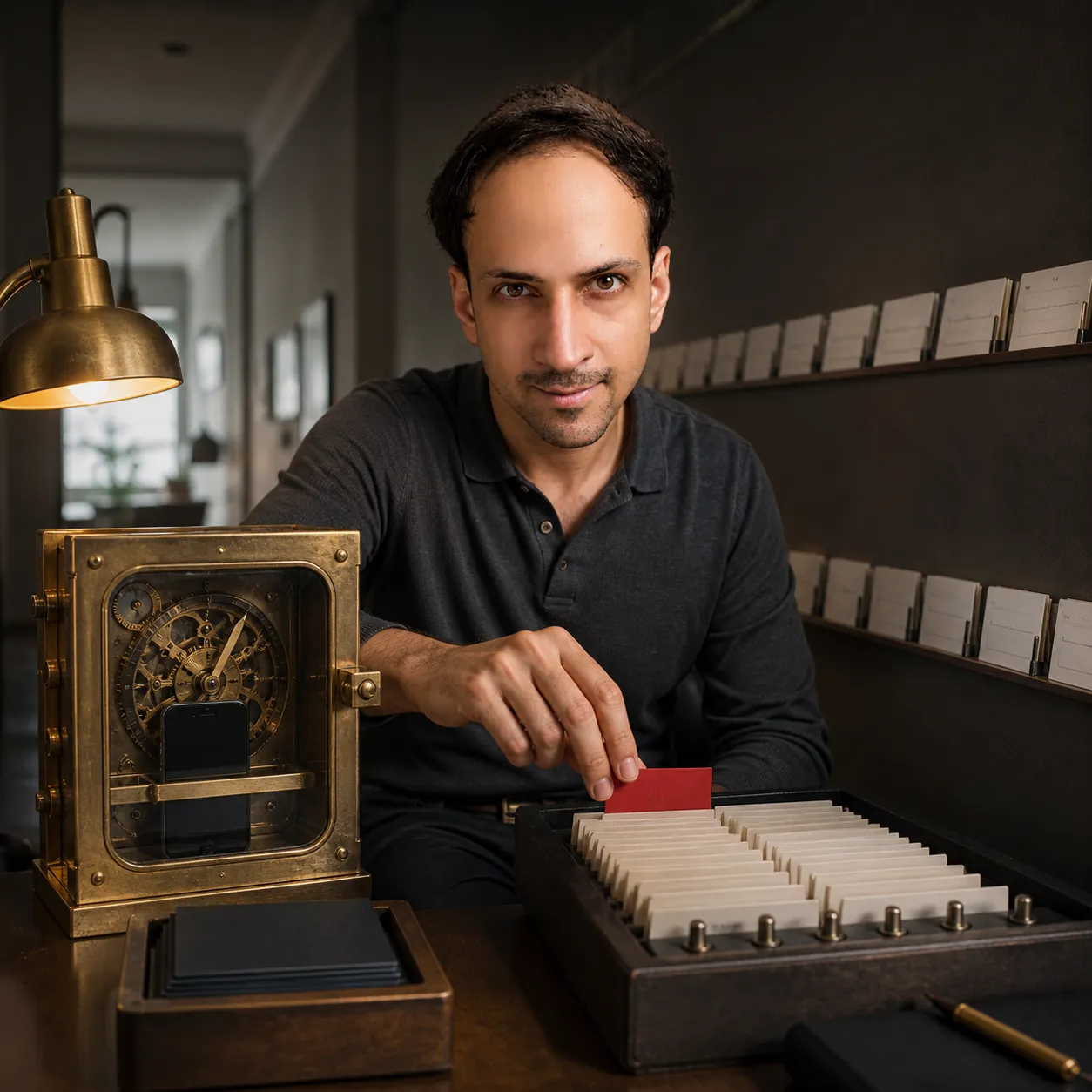
Use the attached reference photo as the identity reference: keep the same face, skin tone, hair and features as the person in that photo, without beautifying, aging or altering them. Design a full-height 9:16 cinematic artwork that reads on a phone and rewards gallery-scale inspection at exactly 2144x3808 pixels. Location: the quiet end of a carton factory floor between shifts. Show the subject in a plain grey coverall half-zipped over a clean white tee, flattening one carton blank with a slow two-handed press. Treat this mechanism as the frame’s governing rule: a courtyard facade that rises fully formed, walls and stair together, as its folded base sheet opens to ninety degrees turns the marks of its making into working structural parts. Explore what it means that an entire building can wait inside a flat sheet; direct expression and posture toward studied wonder, never melodrama or ad-like confidence. Use a 90mm close-portrait hybrid: one crease edge razor sharp near the lens, their face readable beyond it. Make the composition place their hand near the structure without ever touching the load. Render it as gallery-grade structural still-life portraiture built from real folded spans, matte paper materiality, unexaggerated shadow logic, and patient architectural composition, using soft bounced daylight with one deeper shadow pocket beneath the structure and a palette of unbleached kraft, bone white, and one line of vermilion. Photorealistic: this must read as a real photograph from a physical camera, never an illustration, painting, or 3D render. Give the frame volume: faint density deepest in the room, contrast easing at the edges. Resolve real surface detail: dust settled where nobody wipes, fingerprint haze on glass, and edges rubbed pale by handling. Keep one identity-locked person, credible hands and fingers, natural fabric, and coherent scale, contact, reflections, shadows, airflow, deformation, and materials. Background people only when essential, always secondary and clearly different. Avoid greeting-card kitsch, torn-edge scrapbook collage, cartoon pop-up books, and burning paper drama. No text, labels, logos, signatures, watermarks, random symbols, plastic skin, excessive bloom, or glossy AI finish.
The Kind Machine: Apartment Corridor — AI Portrait Prompt
صورةAI Portraits

Turn your own photo into a high-concept executive-function portrait in an apartment corridor converted into one long card-rail wall. Keeps your face unchanged.

من نص البرومبت

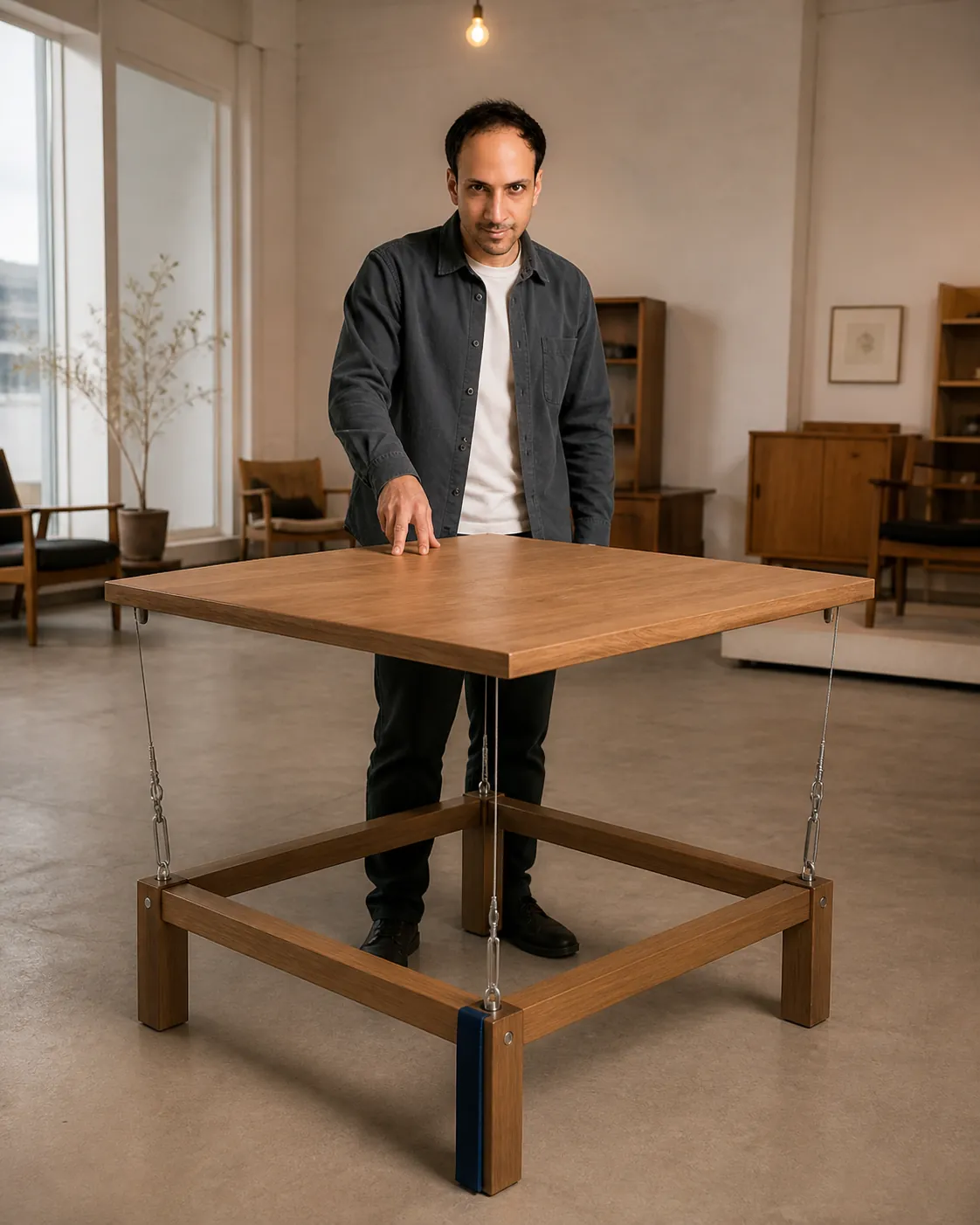
Use the attached reference photo as the identity reference: keep the same face, skin tone, hair and features as the person in that photo, without beautifying, aging or altering them. Create a square 1:1 museum-catalog frame with a strong first read and a slower second read. Location: an apartment corridor converted into one long card-rail wall. Show the subject in a slate-grey knit polo and dark chinos, sliding one clipped card a hand-width to the right. Use this advanced image-making device as the core logic: a small brass vault with visible clockwork countdown, holding their phone behind glass until the escapement finishes its arc makes the backlog merciful by refusing to show it all at once. Explore whether a promise kept by clockwork still belongs to them; direct expression and posture toward gentle determination, never melodrama or ad-like confidence. Frame across the desk at chest height so the device and their eyes share one focal plane. Make the composition give finished work physical weight somewhere low in the frame. Render it as high-concept executive-function portraiture built from working mechanical scaffolds, documentary realism, warm workshop brass, and emotionally intelligent composition, using cool early-morning ambient light balanced by one warm practical source and a palette of warm brass, matte black, and one card of signal red. Keep one identity-locked subject, credible hands and fingers, natural fabric, and coherent scale, contact, reflections, shadows, airflow, deformation, and materials. Background people only when essential, always secondary and clearly different. Avoid scattered-papers chaos clichés, head-in-hands despair, wall-of-sticky-notes mania, spiraling doodle overlays, and racing-thought visual metaphors. No text, labels, logos, signatures, watermarks, random symbols, plastic skin, excessive bloom, or glossy AI finish.
The Table That Hangs Still — AI Portrait Prompt
صورةAI Portraits

Turn your own photo into a quiet museum-demonstration portrait in a closed furniture showroom lit only by its window displays. Keeps your face unchanged.

من نص البرومبت

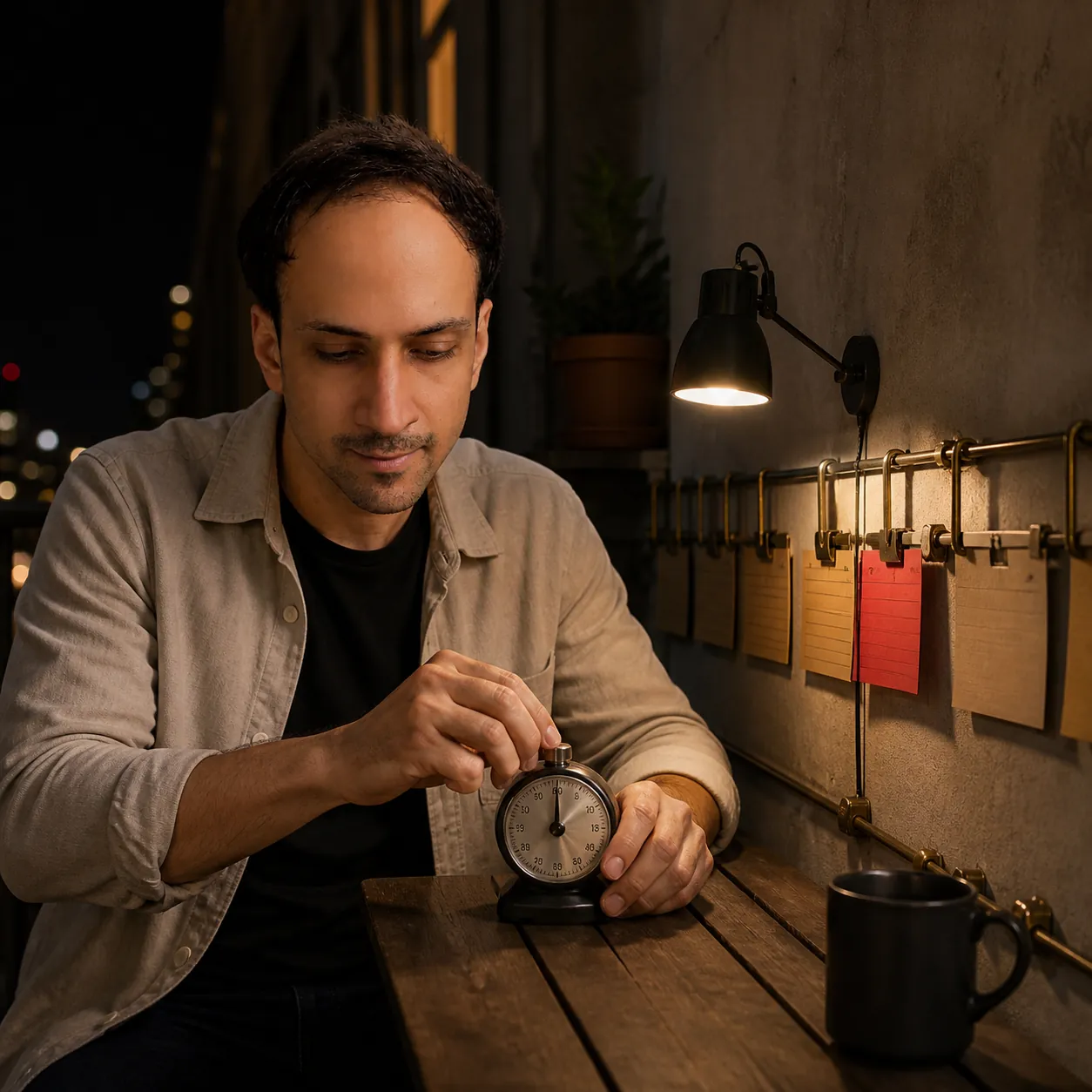
Use the attached reference photo as the identity reference: keep the same face, skin tone, hair and features as the person in that photo, without beautifying, aging or altering them. Build a portrait 4:5 editorial artwork with protected negative space and a fully readable face at exactly 2560x3200 pixels. Location: a closed furniture showroom lit only by its window displays. Show the subject in a pressed charcoal overshirt buttoned over a plain white tee, pressing two fingertips down on a tabletop corner. The impossible-looking event must obey this clear system: a hardwood table whose top hangs from its lower frame by one short central cable, steadied by three slack-looking corner wires turns pulling, the least photogenic force, into the visible hero of stillness. Explore why a structure that looks impossible keeps behaving lawfully under real weight; direct expression and posture toward quiet verification, never melodrama or ad-like confidence. Use a 35mm environmental view that keeps the entire structure, its anchors, and the person inside one undistorted frame. Make the composition set the widest impossible gap at the exact visual center. Render it as quiet museum-demonstration photography combining engineering-model exactness, visible fastener detail, true-to-load cable sag and straightness, and restrained human-scale staging, using one bare overhead bulb tempered by white walls into soft, even evidence light and a palette of chalk white, desert tan, and one deep indigo strap. Photorealistic: this must read as a real photograph from a physical camera, never an illustration, painting, or 3D render. Resolve real surface detail: dust settled where nobody wipes, fingerprint haze on glass, and edges rubbed pale by handling. Keep one identity-locked person, credible hands and fingers, natural fabric, and coherent scale, contact, reflections, shadows, airflow, deformation, and materials. Background people only when essential, always secondary and clearly different. Avoid magician's-levitation staging, slack lines pretending to carry load, melted wood joints, and hovering furniture ads. No text, labels, logos, signatures, watermarks, random symbols, plastic skin, excessive bloom, or glossy AI finish.
Memory on Rails: Narrow Balcony Table — AI Portrait Prompt
صورةAI Portraits

Turn your own photo into a conceptual attention portrait in a narrow balcony table holding a single mechanical timer. Keeps your face unchanged.

من نص البرومبت

Use the attached reference photo as the identity reference: keep the same face, skin tone, hair and features as the person in that photo, without beautifying, aging or altering them. Create a square 1:1 museum-catalog frame with a strong first read and a slower second read. Location: a narrow balcony table holding a single mechanical timer. Show the subject in a stone-colored overshirt over a black tee, winding the timer with two unhurried turns. Treat this mechanism as the frame’s governing rule: a wall rail where clipped task cards move physically left to right through a bracket labeled only by the present day grants every ending a small, physical arrival instead of silence. Explore what the mind does with itself once holding is delegated; direct expression and posture toward responsible concentration, never melodrama or ad-like confidence. Frame along the rail or wire so its full travel and their position on it read in one line. Make the composition keep exactly one task lit and every other surface honestly dim. Render it as conceptual attention portraiture combining tactile time-keeping architecture, restrained contemporary art direction, believable devices, and human-centered editorial realism, using a single task lamp shaped to one working surface with disciplined spill and a palette of warm brass, matte black, and one card of signal red. Keep one identity-locked person, credible hands and fingers, natural fabric, and coherent scale, contact, reflections, shadows, airflow, deformation, and materials. Background people only when essential, always secondary and clearly different. Avoid productivity-app screens, pomodoro-branded props, motivational posters, bullet-journal styling spreads, and pill-bottle imagery. No text, labels, logos, signatures, watermarks, random symbols, plastic skin, excessive bloom, or glossy AI finish.
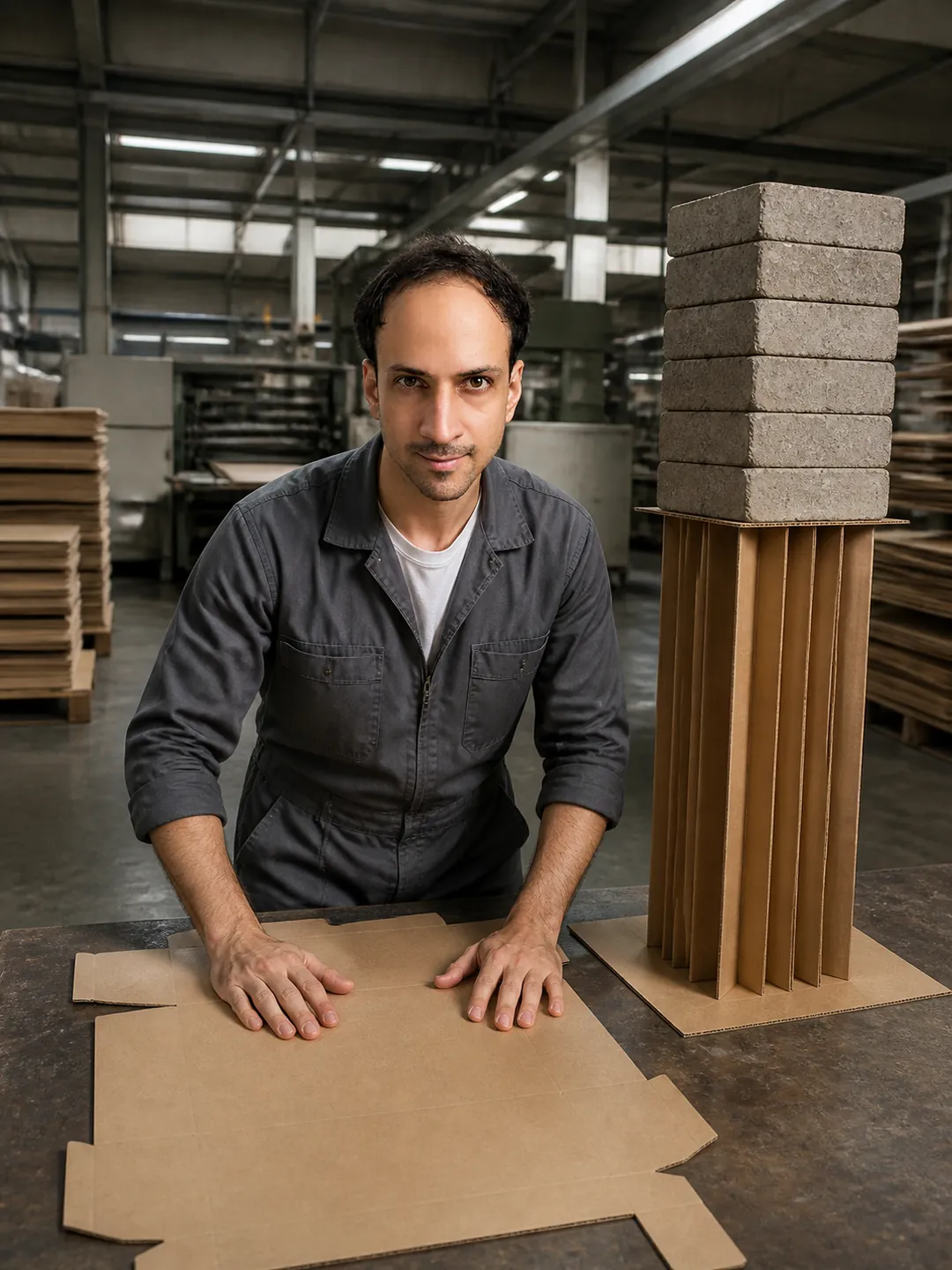
Fluted Column on the Factory Floor — AI Portrait Prompt
صورةAI Portraits

Turn your own photo into a conceptual maker-bench portrait in the quiet end of a carton factory floor between shifts. Keeps your face unchanged.

من نص البرومبت

Use the attached reference photo as the identity reference: keep the same face, skin tone, hair and features as the person in that photo, without beautifying, aging or altering them. Use a formal 3:4 environmental portrait with complete hands and meaningful objects inside frame at exactly 2480x3312 pixels. Location: the quiet end of a carton factory floor between shifts. Show the subject in a plain grey coverall half-zipped over a clean white tee, flattening one carton blank with a slow two-handed press. Use this advanced image-making device as the core logic: a slender kraft column pleated into crisp vertical flutes that carries a knee-high stack of concrete blocks without flexing keeps its whole finished form filed away in the flatness it came from. Explore how a fold multiplies strength without adding a single gram of material; direct expression and posture toward quiet conviction, never melodrama or ad-like confidence. Use an eye-level 58mm medium-format viewpoint with natural perspective and honest paper texture. Make the composition give the load path one clean diagonal from burden to bearing. Render it as conceptual maker-bench photography uniting tactile card mechanisms, precise score-line detail, quiet contemporary art direction, and human-centered observational framing, using even overhead workroom light shaped so white surfaces hold visible tone steps and a palette of oat paper, cool slate, and one restrained saffron thread. Photorealistic: this must read as a real photograph from a physical camera, never an illustration, painting, or 3D render. Resolve real surface detail: brass darkened in the recesses and bright where thumbs land, and lacquer crazed rather than perfect. Keep one identity-locked person, credible hands and fingers, natural fabric, and coherent scale, contact, reflections, shadows, airflow, deformation, and materials. Background people only when essential, always secondary and clearly different. Avoid origami cranes, glowing magical paper, floating confetti, printed lettering on sheets, and weightless CGI folds. No text, labels, logos, signatures, watermarks, random symbols, plastic skin, excessive bloom, or glossy AI finish.
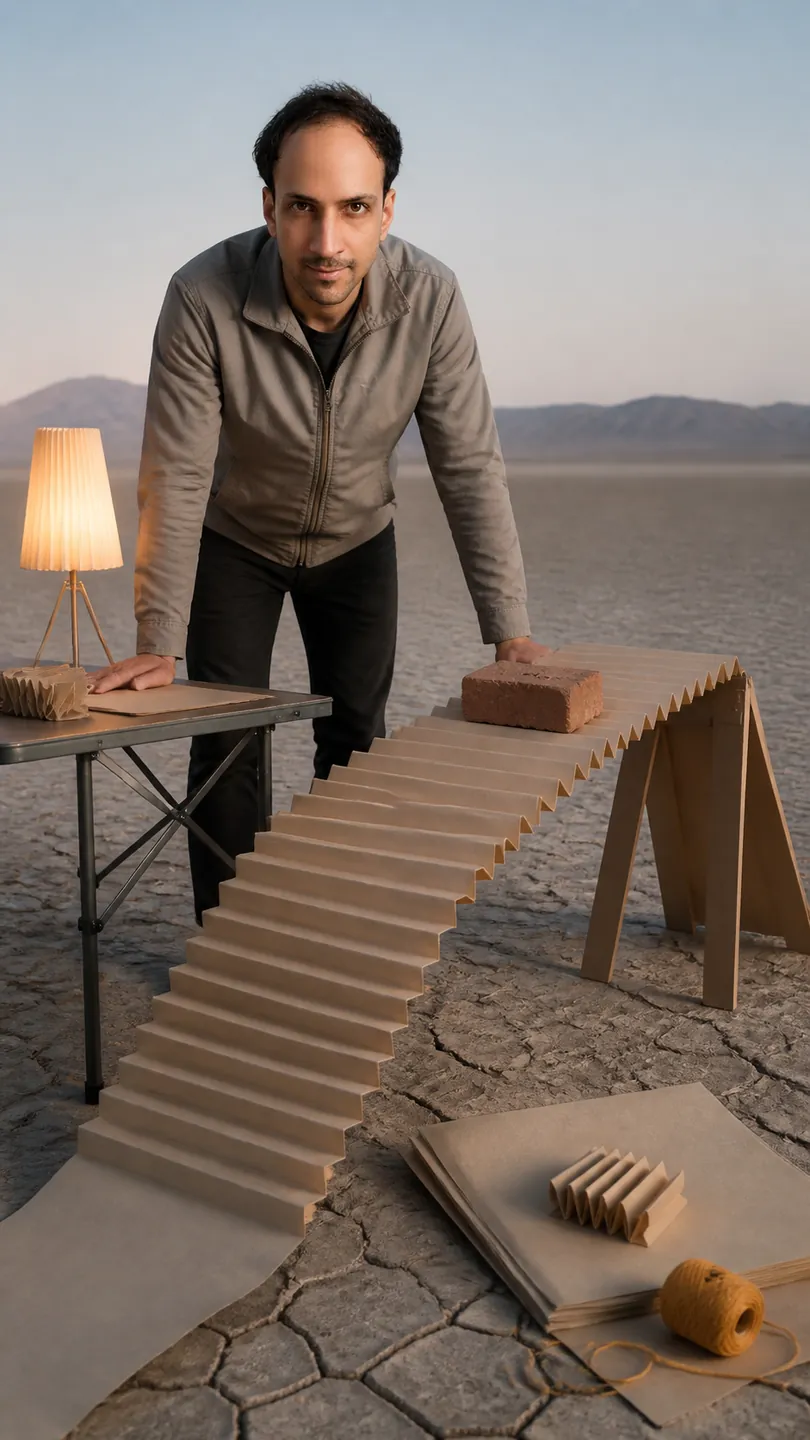
Paper Span on the Salt Flat — AI Portrait Prompt
صورةAI Portraits

Turn your own photo into a portrait in the cracked bed of a dry salt flat at windless first light. Keeps your face unchanged.

من نص البرومبت

Use the attached reference photo as the identity reference: keep the same face, skin tone, hair and features as the person in that photo, without beautifying, aging or altering them. Design a full-height 9:16 cinematic artwork that reads on a phone and rewards gallery-scale inspection at exactly 2144x3808 pixels. Location: the cracked bed of a dry salt flat at windless first light. Show the subject in a sand-grey field jacket zipped to mid-chest over dark trousers, bracing a folding camp table by one leg. Build the artwork around this material rule: a bridge pleated from one kraft sheet whose deep accordion corrugations span two trestles beneath a single fired brick turns the marks of its making into working structural parts. Explore why a material that tears between two fingers can be trusted with real weight; direct expression and posture toward craftsman's calm, never melodrama or ad-like confidence. Use a composed wide 32mm view that gives the structure headroom without stretching their hands or face. Make the composition show the flat stock and the risen form in one frame. Render it as gallery-grade structural still-life portraiture built from real folded spans, matte paper materiality, unexaggerated shadow logic, and patient architectural composition, using cool ambient morning light warmed by a single paper-shaded practical and a palette of oat paper, cool slate, and one restrained saffron thread. Photorealistic: this must read as a real photograph from a physical camera, never an illustration, painting, or 3D render. Give the air depth: falloff with distance and no artificial clarity far back. Resolve real surface detail: thread ends and slight pilling on worn cloth, hairline chips at every hard corner, and stone that is porous rather than smooth. Keep one identity-locked person, credible hands and fingers, natural fabric, and coherent scale, contact, reflections, shadows, airflow, deformation, and materials. Background people only when essential, always secondary and clearly different. Avoid greeting-card kitsch, torn-edge scrapbook collage, cartoon pop-up books, and burning paper drama. No text, labels, logos, signatures, watermarks, random symbols, plastic skin, excessive bloom, or glossy AI finish.
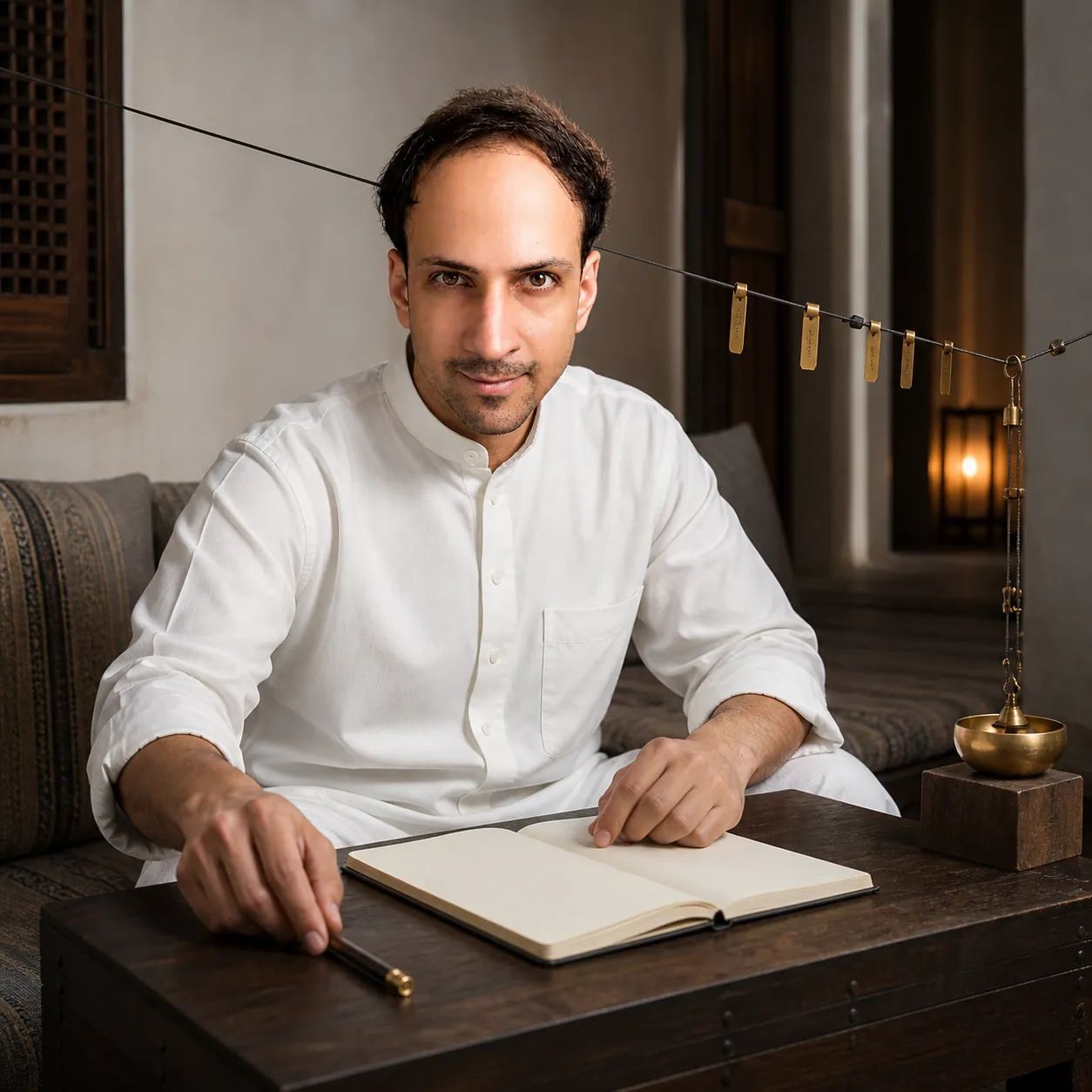
The Finish Bell: Majlis Corner — AI Portrait Prompt
صورةAI Portraits

Turn your own photo into a museum-scale focus portrait in a majlis corner with a low table cleared to one open notebook. Keeps your face unchanged.

من نص البرومبت

Use the attached reference photo as the identity reference: keep the same face, skin tone, hair and features as the person in that photo, without beautifying, aging or altering them. Create a square 1:1 museum-catalog frame with a strong first read and a slower second read. Location: a majlis corner with a low table cleared to one open notebook. Show the subject in a plain white summer traditional Gulf outfit with sleeves folded once, capping a pen and setting it parallel to the notebook. Make one rigorous physical condition the conceptual engine: a taut wire crossing the room on which brass task tags slide down and ring a small bowl bell at the far end makes the backlog merciful by refusing to show it all at once. Explore why endings deserve a sound and what accumulates when they get one; direct expression and posture toward relieved presence, never melodrama or ad-like confidence. Use an eye-level 65mm medium-format viewpoint with natural perspective and restrained depth of field. Make the composition show the retired temptation present but visibly out of reach. Render it as museum-scale focus realism combining high-fidelity portrait photography, truthful single-source light, honest joinery and wiring, and physically accurate mechanisms, using cool early-morning ambient light balanced by one warm practical source and a palette of graphite, unbleached paper, and one brass accent. Keep one identity-locked person, credible hands and fingers, natural fabric, and coherent scale, contact, reflections, shadows, airflow, deformation, and materials. Background people only when essential, always secondary and clearly different. Avoid scattered-papers chaos clichés, head-in-hands despair, wall-of-sticky-notes mania, spiraling doodle overlays, and racing-thought visual metaphors. No text, labels, logos, signatures, watermarks, random symbols, plastic skin, excessive bloom, or glossy AI finish.
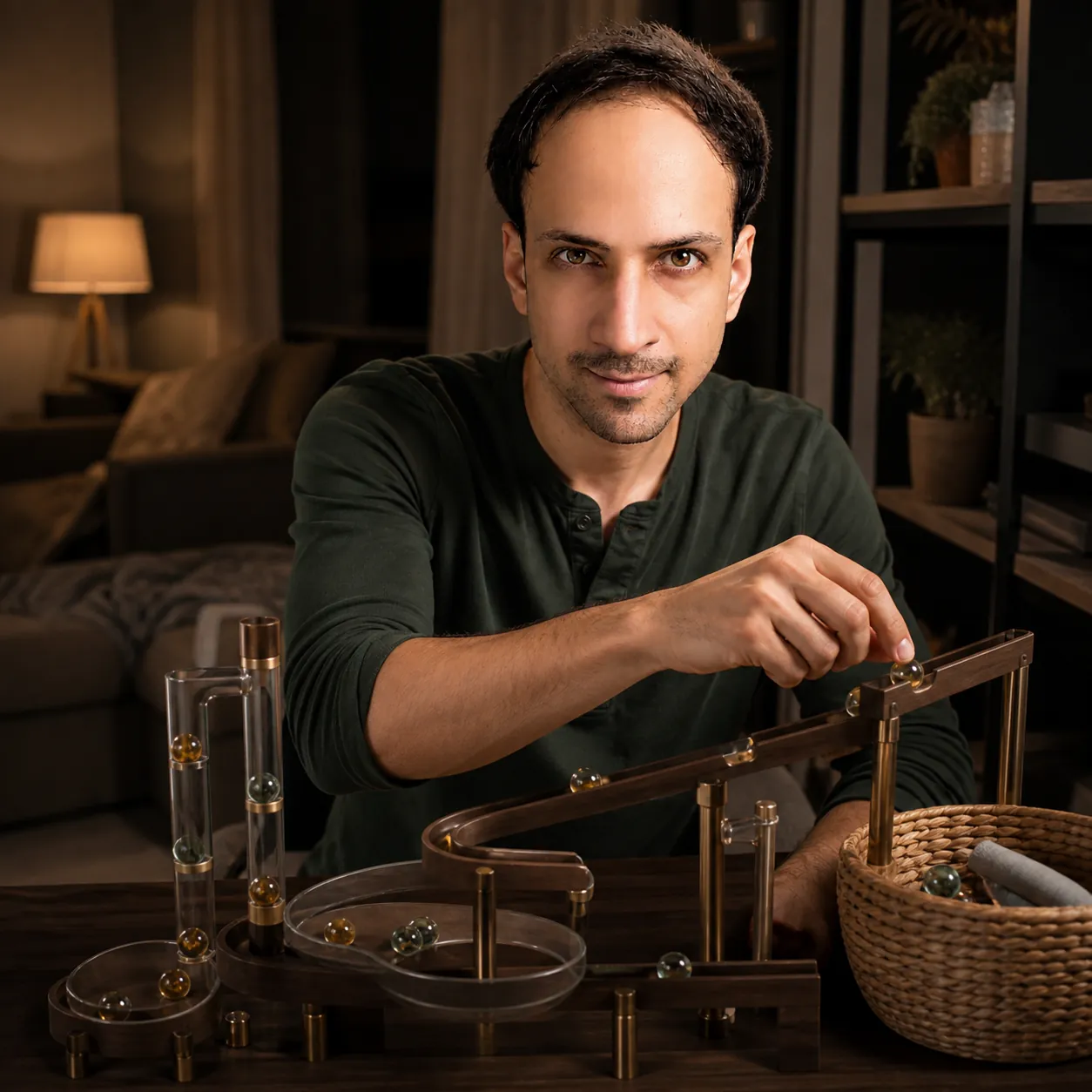
Starting Made Small: Living Room — AI Portrait Prompt
صورةAI Portraits

Turn your own photo into a conceptual attention portrait in a living room at evening, mid-reset, one basket half filled. Keeps your face unchanged.

من نص البرومبت

Use the attached reference photo as the identity reference: keep the same face, skin tone, hair and features as the person in that photo, without beautifying, aging or altering them. Create a square 1:1 museum-catalog frame with a strong first read and a slower second read. Location: a living room at evening, mid-reset, one basket half filled. Show the subject in a dark green henley with pushed-up sleeves, returning one object to its labeled shelf. Use this advanced image-making device as the core logic: a marble run whose first gate needs only one finger's lift to send the opening marble through the whole prepared course grants every ending a small, physical arrival instead of silence. Explore how small starting really is once its first inch is pre-paid; direct expression and posture toward settled purpose, never melodrama or ad-like confidence. Frame across the desk at chest height so the device and their eyes share one focal plane. Make the composition give finished work physical weight somewhere low in the frame. Render it as conceptual attention portraiture combining tactile time-keeping architecture, restrained contemporary art direction, believable devices, and human-centered editorial realism, using a single overhead practical softened by the surrounding architecture, leaving readable shadow detail and a palette of soft black, warm grey, and a single lit page of ivory. Keep one identity-locked person, credible hands and fingers, natural fabric, and coherent scale, contact, reflections, shadows, airflow, deformation, and materials. Background people only when essential, always secondary and clearly different. Avoid productivity-app screens, pomodoro-branded props, motivational posters, bullet-journal styling spreads, and pill-bottle imagery. No text, labels, logos, signatures, watermarks, random symbols, plastic skin, excessive bloom, or glossy AI finish.
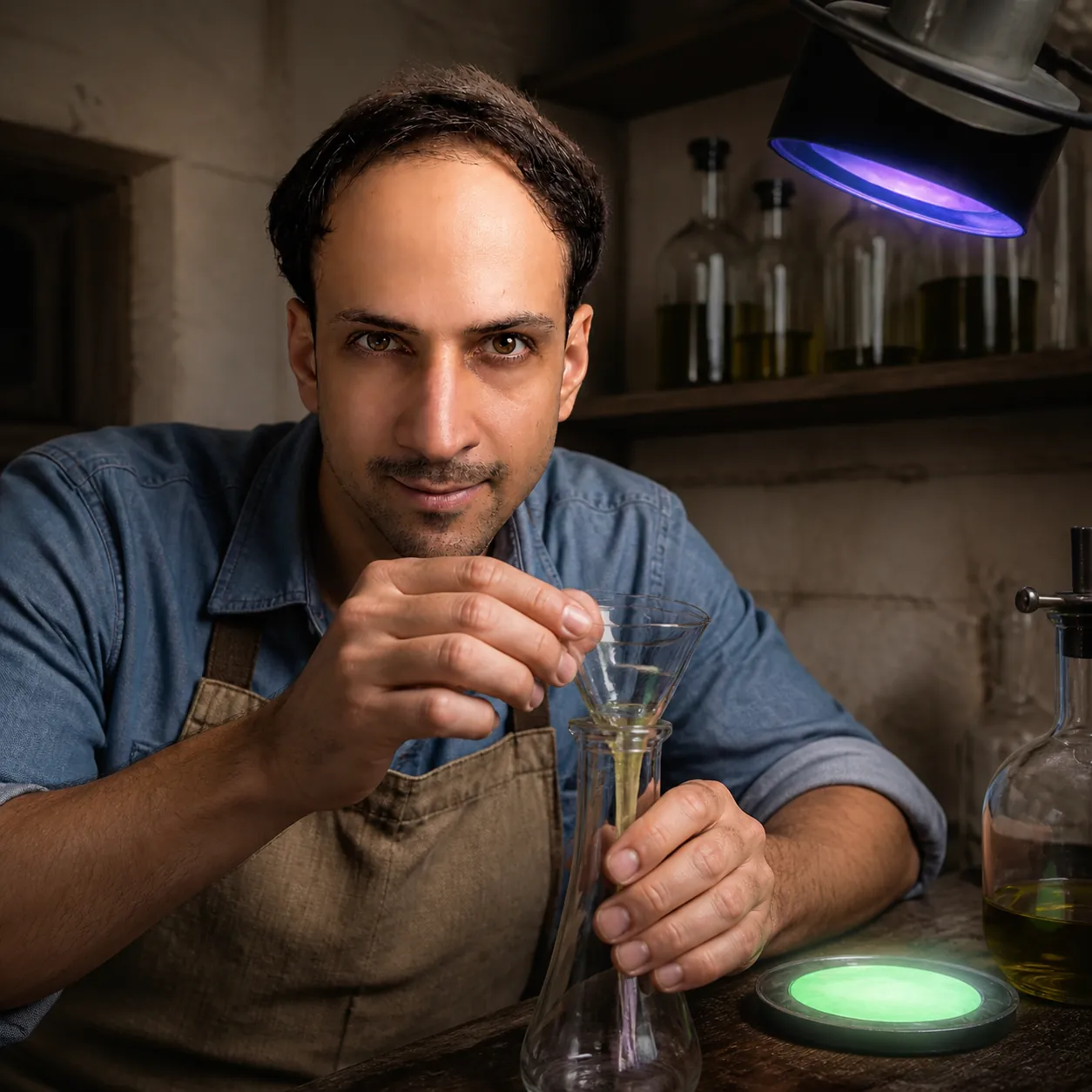
Afterglow in the Olive Press — AI Portrait Prompt
صورةAI Portraits

Turn your own photo into a photorealistic portrait in a small olive-pressing room with clean decanting bottles on a shelf. Keeps your face unchanged.

من نص البرومبت

Use the attached reference photo as the identity reference: keep the same face, skin tone, hair and features as the person in that photo, without beautifying, aging or altering them. Create a square 1:1 museum-catalog frame with a strong first read and a slower second read at exactly 2880x2880 pixels. Location: a small olive-pressing room with clean decanting bottles on a shelf. Show them in a heavy canvas apron over a rolled-sleeve chambray shirt, seating a glass funnel into a bottle's neck. The impossible-looking event must obey this clear system: a plain grey ceramic disc that keeps emitting green for minutes after the ultraviolet lamp above it is switched off takes its second color from light nobody in the room can see. Explore how something can be a signal long before anyone learns to read it; direct expression and posture toward patient verification, never melodrama or ad-like confidence. Use a 90mm close-focus portrait lens so the emitting detail and their eyes both stay believable. Make the composition keep the emitting detail sharpest while the room stays quietly dim. Render it as conceptual laboratory portraiture assembled from working ultraviolet apparatus, restrained editorial art direction, believable surface response, and quiet observational framing, using cool ultraviolet from above the frame with enough bounce to keep faces readable and a palette of unbleached linen, umber, and one stripe of quinine blue. Photorealistic: this must read as a real photograph from a physical camera, never an illustration, painting, or 3D render. Resolve real surface detail: skin that reddens slightly under pressure, nail beds with honest colour, and knuckle creases that fold rather than blur. Keep one identity-locked person, credible hands and fingers, natural fabric, and coherent scale, contact, reflections, shadows, airflow, deformation, and materials. Background people only when essential, always secondary and clearly different. Avoid rave lighting rigs, uniform purple haze, CGI bioluminescent forests, and glowing eyes. No text, labels, logos, signatures, watermarks, random symbols, plastic skin, excessive bloom, or glossy AI finish.
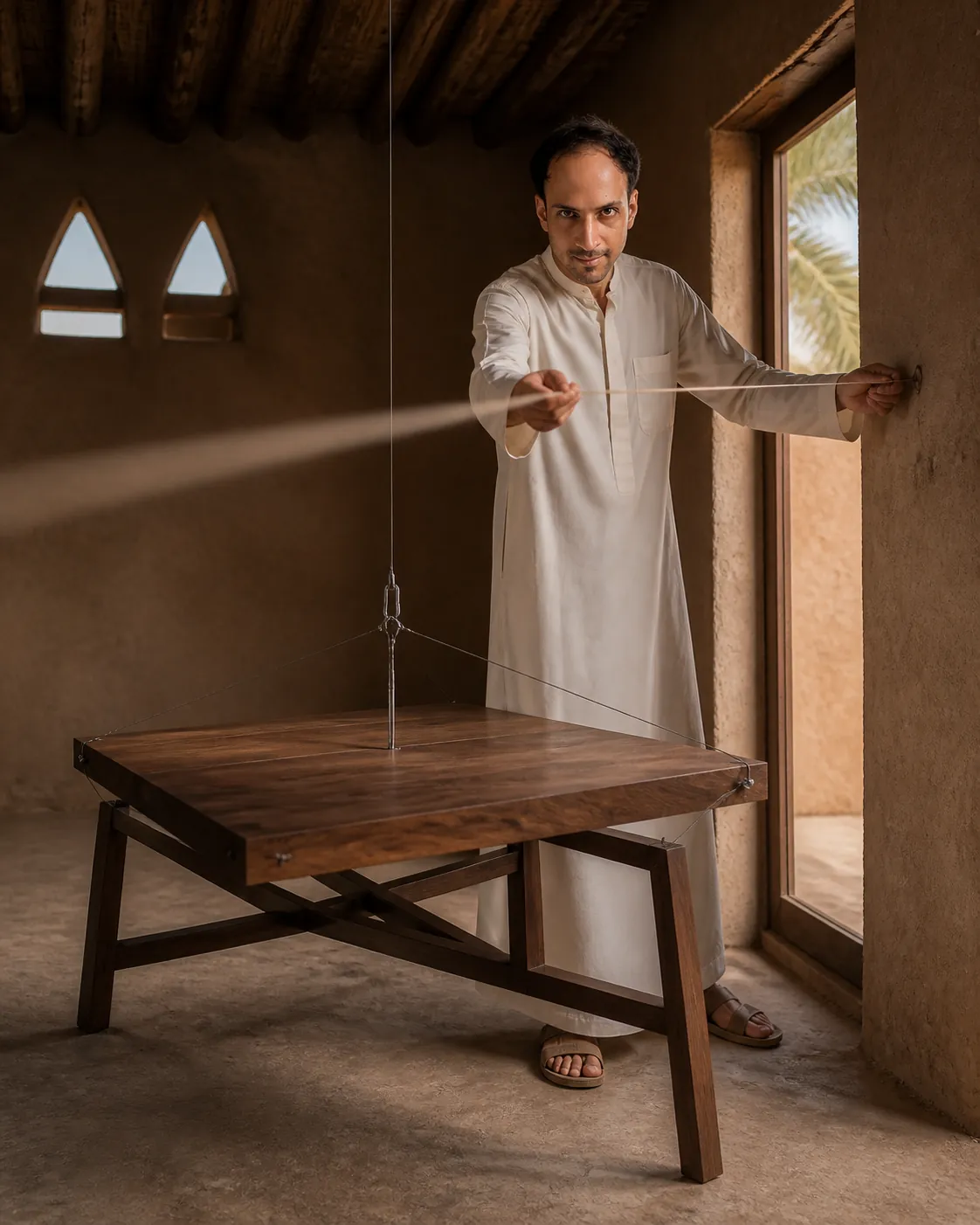
A Taut Line in Diriyah — AI Portrait Prompt
صورةAI Portraits

Turn your own photo into an exhibition-grade statics portrait in a restored mud-brick room in Diriyah with a palm-beam ceiling. Keeps your face unchanged.

من نص البرومبت

Use the attached reference photo as the identity reference: keep the same face, skin tone, hair and features as the person in that photo, without beautifying, aging or altering them. Build a portrait 4:5 editorial artwork with protected negative space and a fully readable face at exactly 2560x3200 pixels. Location: a restored mud-brick room in Diriyah with a palm-beam ceiling. Show the subject in an ecru cotton traditional Gulf outfit and dusty leather work sandals, stretching a builder's line taut between two wall pegs. Build the artwork around this material rule: a hardwood table whose top hangs from its lower frame by one short central cable, steadied by three slack-looking corner wires carries its burden in silence, with no strain the camera can find. Explore why a structure that looks impossible keeps behaving lawfully under real weight; direct expression and posture toward unhurried scrutiny, never melodrama or ad-like confidence. Use an 85mm portrait length that keeps their face sharp while a taut line crosses the near field, softly defocused. Make the composition weight the frame so stillness reads as tension, not rest. Render it as exhibition-grade statics portraiture combining precise rigging detail, physically consistent shadows through open gaps, matte natural materials, and disciplined contemporary art direction, using first blue daylight with one warm tungsten pool held on the work and a palette of iron black, oiled cedar, and a muted terracotta accent. Photorealistic: this must read as a real photograph from a physical camera, never an illustration, painting, or 3D render. Resolve real surface detail: fine lint on dark fabric, water spotting on steel, and the soft rounding of edges that have been used for years. Keep one identity-locked person, credible hands and fingers, natural fabric, and coherent scale, contact, reflections, shadows, airflow, deformation, and materials. Background people only when essential, always secondary and clearly different. Avoid floating objects with no visible cables, glowing wires, rubber-looking bent bars, and impossible knots. No text, labels, logos, signatures, watermarks, random symbols, plastic skin, excessive bloom, or glossy AI finish.
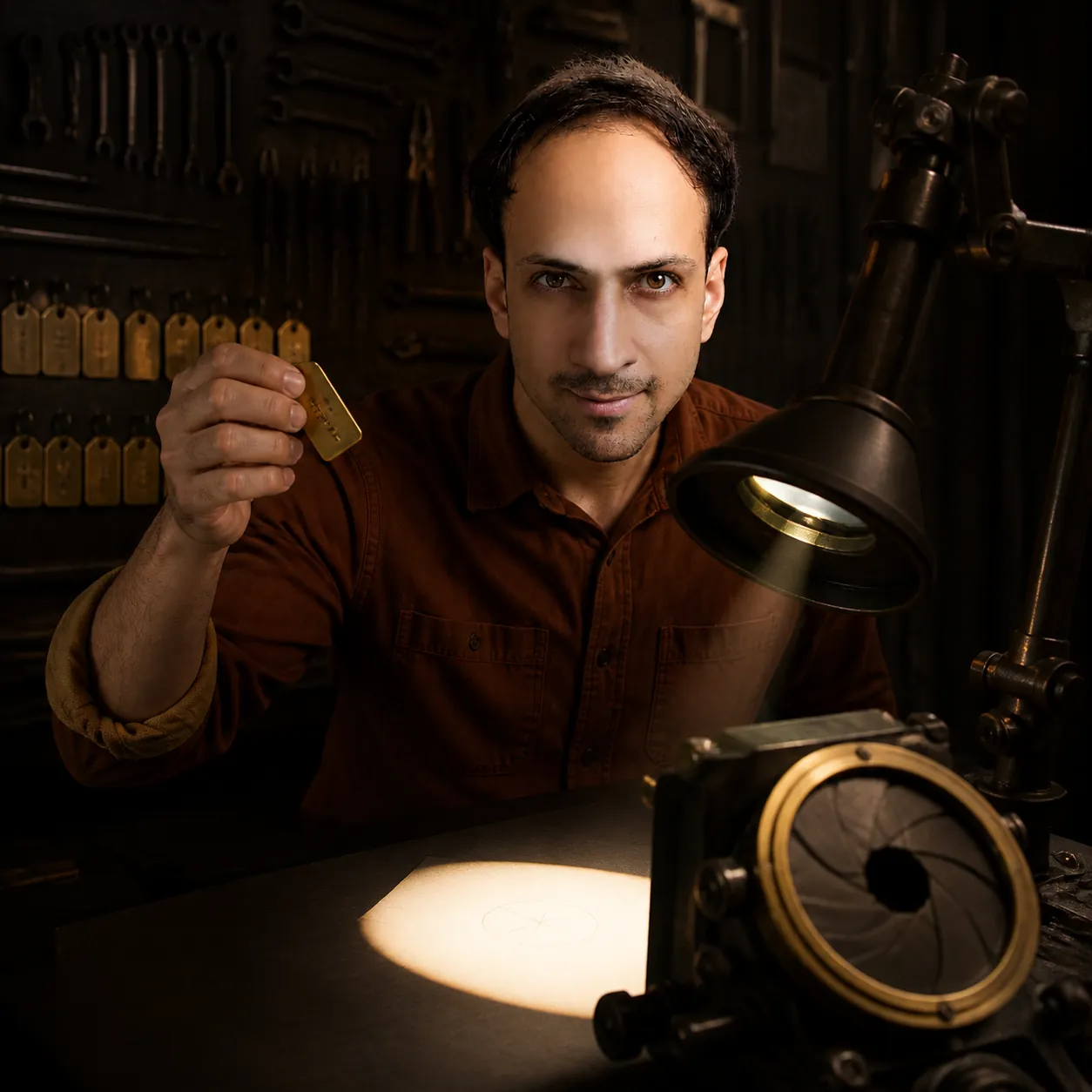
Attention's Architecture: Home Workshop — AI Portrait Prompt
صورةAI Portraits

Turn your own photo into a portrait in a home workshop at morning with tools shadow-boarded on the wall. Keeps your face unchanged.

من نص البرومبت

Use the attached reference photo as the identity reference: keep the same face, skin tone, hair and features as the person in that photo, without beautifying, aging or altering them. Create a square 1:1 museum-catalog frame with a strong first read and a slower second read. Location: a home workshop at morning with tools shadow-boarded on the wall. Show the subject in a rust-brown work shirt with cuffs turned back once, lifting one brass tag off its hook. The impossible-looking event must obey this clear system: a desk lamp fitted with a physical iris diaphragm narrowed until light falls on one page and nothing else makes the backlog merciful by refusing to show it all at once. Explore how much world one page needs when the rest goes unlit; direct expression and posture toward trusting attention, never melodrama or ad-like confidence. Use a 100mm macro-to-portrait hybrid: one mechanism detail near the lens and the person in the reference photo's face readable beyond it, both physically plausible. Make the composition let the mechanism's next movement feel one breath away. Render it as high-concept executive-function portraiture built from working mechanical scaffolds, documentary realism, warm workshop brass, and emotionally intelligent composition, using a single task lamp shaped to one working surface with disciplined spill and a palette of soft black, warm grey, and a single lit page of ivory. Keep one identity-locked person, credible hands and fingers, natural fabric, and coherent scale, contact, reflections, shadows, airflow, deformation, and materials. Background people only when essential, always secondary and clearly different. Avoid scattered-papers chaos clichés, head-in-hands despair, wall-of-sticky-notes mania, spiraling doodle overlays, and racing-thought visual metaphors. No text, labels, logos, signatures, watermarks, random symbols, plastic skin, excessive bloom, or glossy AI finish.
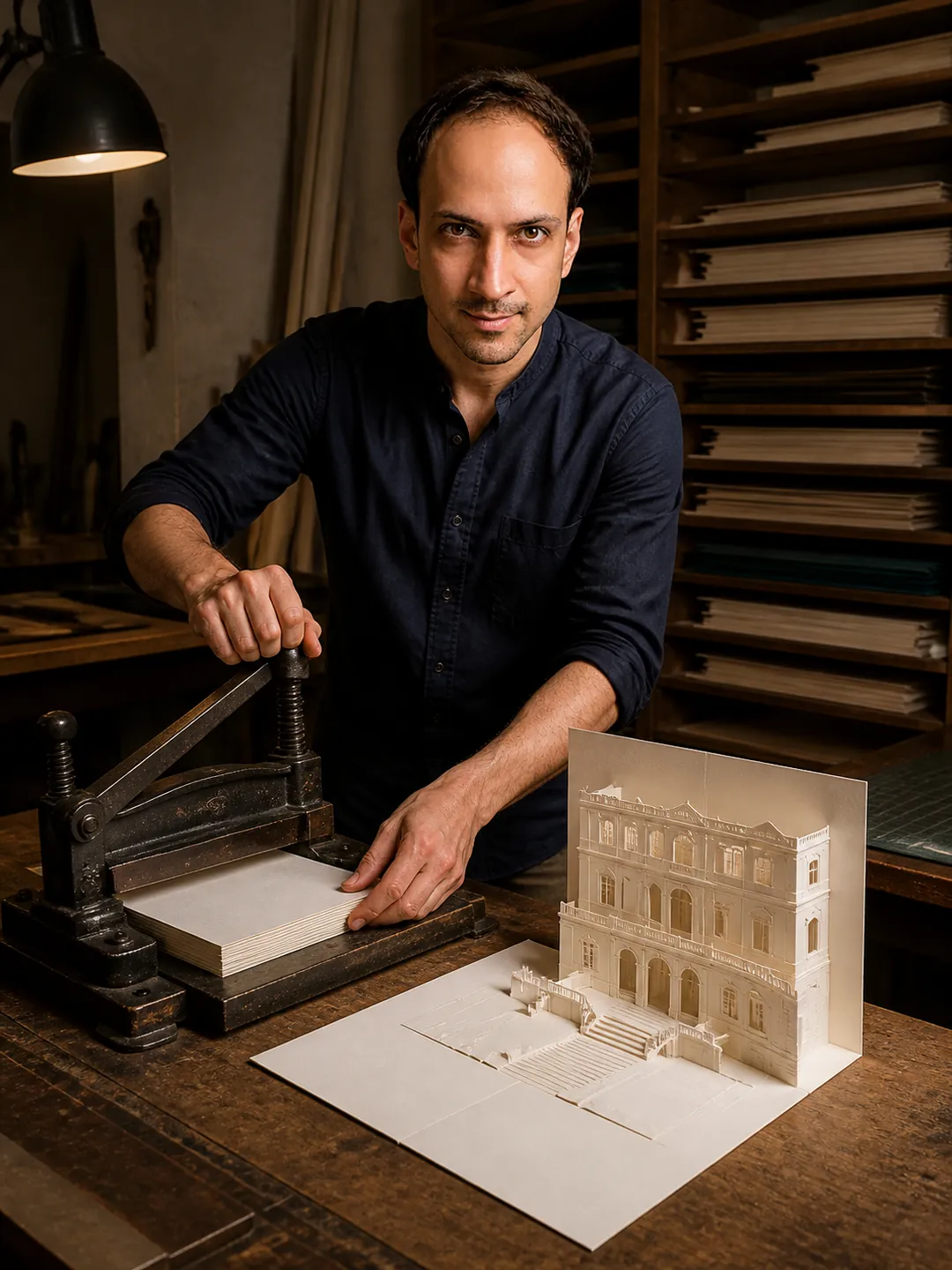
A Courtyard Folded Flat — AI Portrait Prompt
صورةAI Portraits

Turn your own photo into a conceptual maker-bench portrait in a bookbinder's atelier with a hand guillotine and racked blank card. Keeps your face unchanged.

من نص البرومبت

Use the attached reference photo as the identity reference: keep the same face, skin tone, hair and features as the person in that photo, without beautifying, aging or altering them. Use a formal 3:4 environmental portrait with complete hands and meaningful objects inside frame at exactly 2480x3312 pixels. Location: a bookbinder's atelier with a hand guillotine and racked blank card. Show the subject in a collarless indigo work shirt with sleeves rolled past the elbow, settling the guillotine clamp onto a fresh stack of card. The impossible-looking event must obey this clear system: a courtyard facade that rises fully formed, walls and stair together, as its folded base sheet opens to ninety degrees keeps its whole finished form filed away in the flatness it came from. Explore what it means that an entire building can wait inside a flat sheet; direct expression and posture toward earned confidence, never melodrama or ad-like confidence. Use a composed wide 32mm view that gives the structure headroom without stretching their hands or face. Make the composition show the flat stock and the risen form in one frame. Render it as conceptual maker-bench photography uniting tactile card mechanisms, precise score-line detail, quiet contemporary art direction, and human-centered observational framing, using one low raking lamp that turns each fold into a drawn line and a palette of warm white, shadowed cream, and one edge of teal. Photorealistic: this must read as a real photograph from a physical camera, never an illustration, painting, or 3D render. Resolve real surface detail: true skin texture with pores and fine hair at the hairline, and fabric that creases where it is actually stressed. Keep one identity-locked person, credible hands and fingers, natural fabric, and coherent scale, contact, reflections, shadows, airflow, deformation, and materials. Background people only when essential, always secondary and clearly different. Avoid origami cranes, glowing magical paper, floating confetti, printed lettering on sheets, and weightless CGI folds. No text, labels, logos, signatures, watermarks, random symbols, plastic skin, excessive bloom, or glossy AI finish.
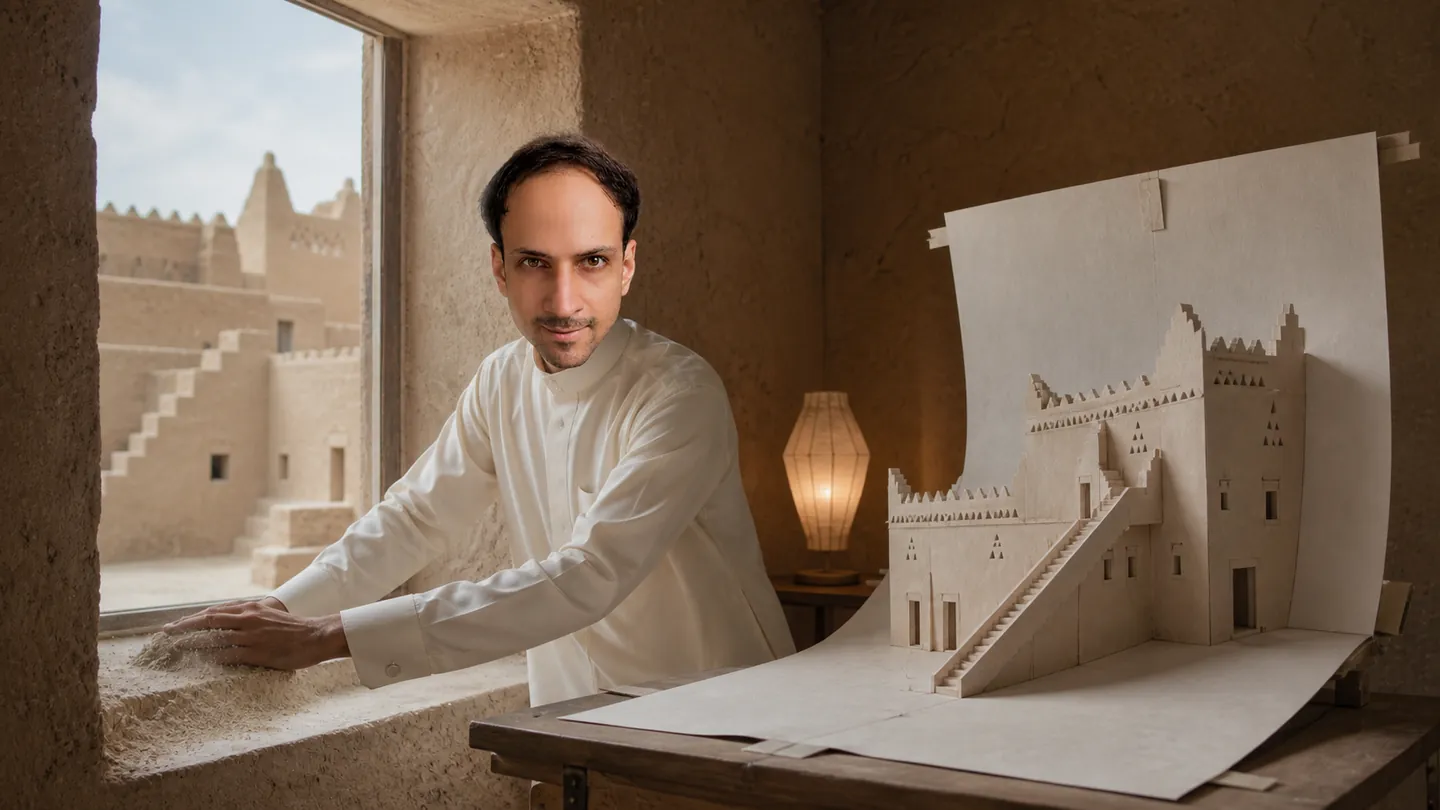
Pop-Up Courtyard in Diriyah — AI Portrait Prompt
صورةAI Portraits

Turn your own photo into a high-concept paper-engineering portrait in a restored mud-brick room in Diriyah with one deep window sill. Keeps your face unchanged.

من نص البرومبت

Use the attached reference photo as the identity reference: keep the same face, skin tone, hair and features as the person in that photo, without beautifying, aging or altering them. Compose a wide 16:9 narrative image where environment and subject carry equal meaning at exactly 3808x2144 pixels. Location: a restored mud-brick room in Diriyah with one deep window sill. Show the subject in a plain ivory traditional Gulf outfit worn without a headdress, cuffs buttoned, sweeping fine dust from the sill with one cupped hand. Build the artwork around this material rule: a courtyard facade that rises fully formed, walls and stair together, as its folded base sheet opens to ninety degrees stands up to demands that look plainly unfair to paper. Explore what it means that an entire building can wait inside a flat sheet; direct expression and posture toward gentle rigor, never melodrama or ad-like confidence. Use an eye-level 58mm medium-format viewpoint with natural perspective and honest paper texture. Make the composition give the load path one clean diagonal from burden to bearing. Render it as high-concept paper-engineering portraiture built from working cut-and-fold structures, documentary realism, gallery-grade craft styling, and physically truthful load behavior, using cool ambient morning light warmed by a single paper-shaded practical and a palette of pale card, graphite, and a narrow band of brick. Photorealistic: this must read as a real photograph from a physical camera, never an illustration, painting, or 3D render. Give truthful depth cues: overlapping planes and shadows softening as they travel. Resolve real surface detail: wood grain read at honest scale, matte and gloss clearly separated, and no surface uniformly clean. Keep one identity-locked person, credible hands and fingers, natural fabric, and coherent scale, contact, reflections, shadows, airflow, deformation, and materials. Background people only when essential, always secondary and clearly different. Avoid origami cranes, glowing magical paper, floating confetti, printed lettering on sheets, and weightless CGI folds. No text, labels, logos, signatures, watermarks, random symbols, plastic skin, excessive bloom, or glossy AI finish.
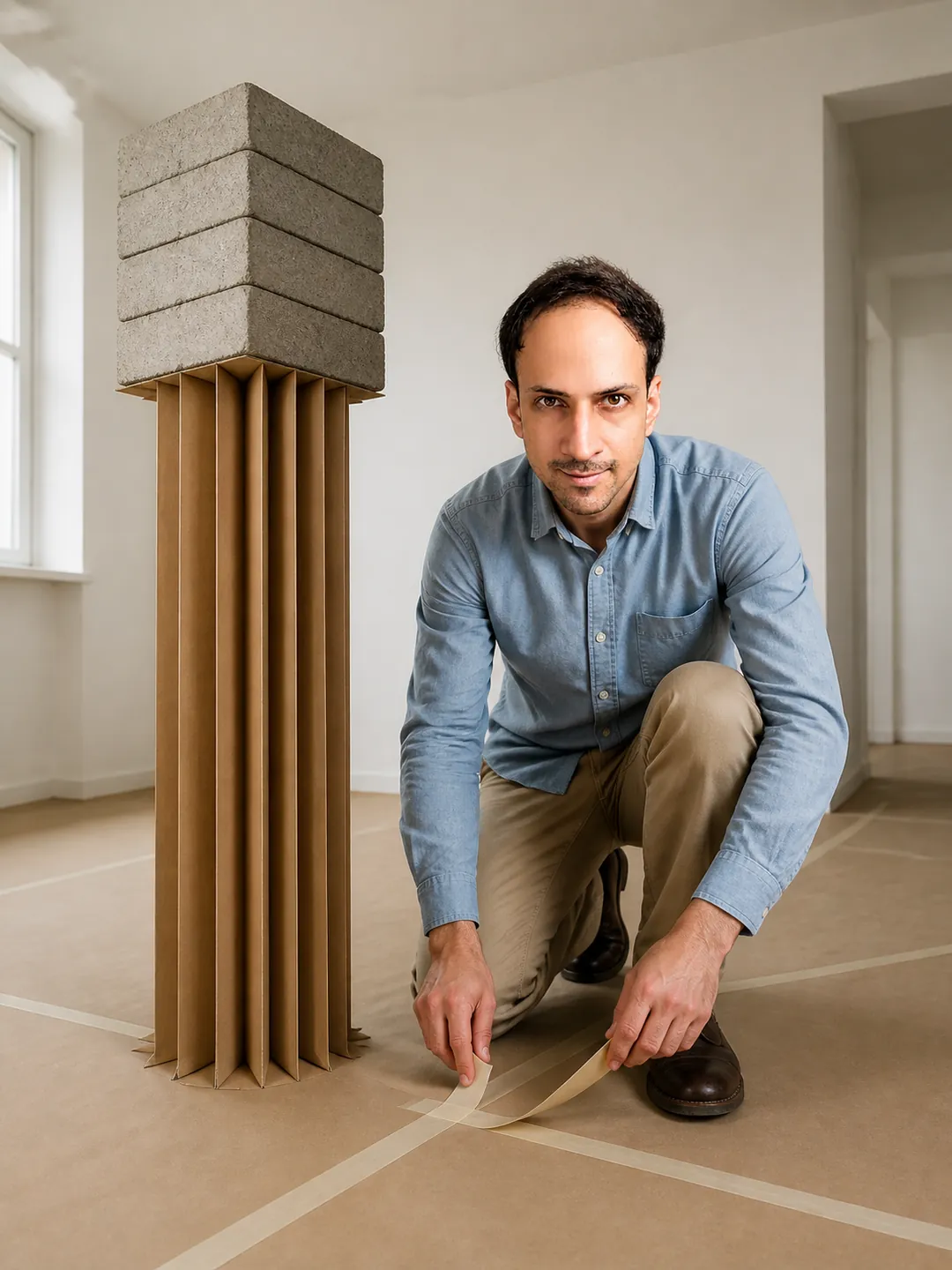
Paper Column in an Empty Flat — AI Portrait Prompt
صورةAI Portraits

Turn your own photo into a portrait in an unfurnished apartment with floors papered over for the painters. Keeps your face unchanged.

من نص البرومبت

Use the attached reference photo as the identity reference: keep the same face, skin tone, hair and features as the person in that photo, without beautifying, aging or altering them. Use a formal 3:4 environmental portrait with complete hands and meaningful objects inside frame at exactly 2480x3312 pixels. Location: an unfurnished apartment with floors papered over for the painters. Show the subject in a light chambray shirt buttoned to the collar over khaki chinos, taping down a lifted seam of floor paper. The impossible-looking event must obey this clear system: a slender kraft column pleated into crisp vertical flutes that carries a knee-high stack of concrete blocks without flexing shows plain stock obeying rules that read as magic and audit as mathematics. Explore how a fold multiplies strength without adding a single gram of material; direct expression and posture toward unhurried focus, never melodrama or ad-like confidence. Use a composed wide 32mm view that gives the structure headroom without stretching their hands or face. Make the composition show the flat stock and the risen form in one frame. Render it as high-concept paper-engineering portraiture built from working cut-and-fold structures, documentary realism, gallery-grade craft styling, and physically truthful load behavior, using flat north window light that keeps every crease edge legible and a palette of unbleached kraft, bone white, and one line of vermilion. Photorealistic: this must read as a real photograph from a physical camera, never an illustration, painting, or 3D render. Resolve real surface detail: hair with individual strands catching light, fine hairs of uneven length, and skin oil giving a low uneven sheen. Keep one identity-locked person, credible hands and fingers, natural fabric, and coherent scale, contact, reflections, shadows, airflow, deformation, and materials. Background people only when essential, always secondary and clearly different. Avoid greeting-card kitsch, torn-edge scrapbook collage, cartoon pop-up books, and burning paper drama. No text, labels, logos, signatures, watermarks, random symbols, plastic skin, excessive bloom, or glossy AI finish.
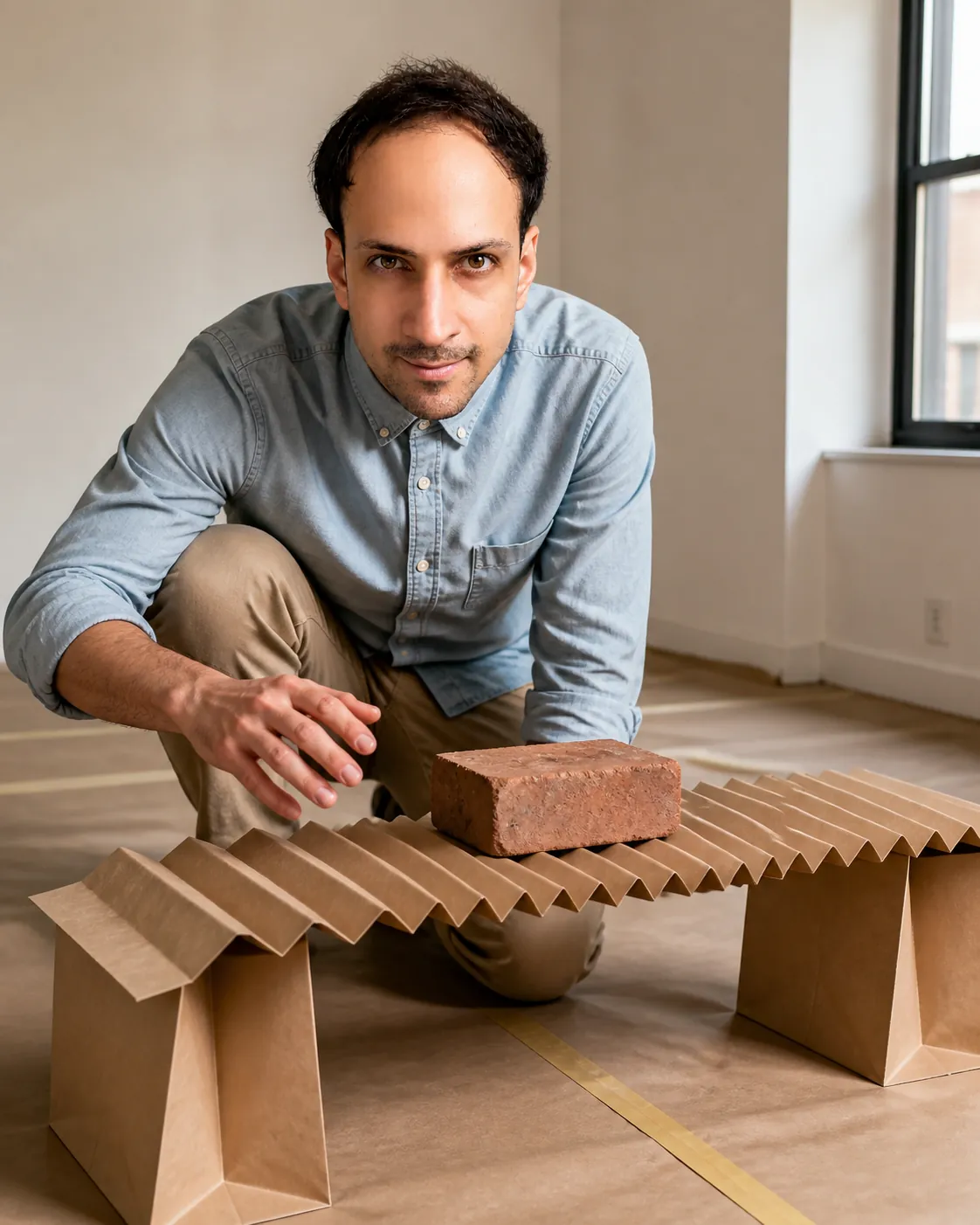
Taping the Painters' Floor — AI Portrait Prompt
صورةAI Portraits

Turn your own photo into a portrait in an unfurnished apartment with floors papered over for the painters. Keeps your face unchanged.

من نص البرومبت

Use the attached reference photo as the identity reference: keep the same face, skin tone, hair and features as the person in that photo, without beautifying, aging or altering them. Build a portrait 4:5 editorial artwork with protected negative space and a fully readable face at exactly 2560x3200 pixels. Location: an unfurnished apartment with floors papered over for the painters. Show the subject in a light chambray shirt buttoned to the collar over khaki chinos, taping down a lifted seam of floor paper. Build the artwork around this material rule: a bridge pleated from one kraft sheet whose deep accordion corrugations span two trestles beneath a single fired brick forces the eye to re-check a material it thought it knew. Explore why a material that tears between two fingers can be trusted with real weight; direct expression and posture toward earned confidence, never melodrama or ad-like confidence. Use a 90mm close-portrait hybrid: one crease edge razor sharp near the lens, their face readable beyond it. Make the composition place their hand near the structure without ever touching the load. Render it as gallery-grade structural still-life portraiture built from real folded spans, matte paper materiality, unexaggerated shadow logic, and patient architectural composition, using soft bounced daylight with one deeper shadow pocket beneath the structure and a palette of oat paper, cool slate, and one restrained saffron thread. Photorealistic: this must read as a real photograph from a physical camera, never an illustration, painting, or 3D render. Resolve real surface detail: fine lint on dark fabric, water spotting on steel, and the soft rounding of edges that have been used for years. Keep one identity-locked person, credible hands and fingers, natural fabric, and coherent scale, contact, reflections, shadows, airflow, deformation, and materials. Background people only when essential, always secondary and clearly different. Avoid origami cranes, glowing magical paper, floating confetti, printed lettering on sheets, and weightless CGI folds. No text, labels, logos, signatures, watermarks, random symbols, plastic skin, excessive bloom, or glossy AI finish.
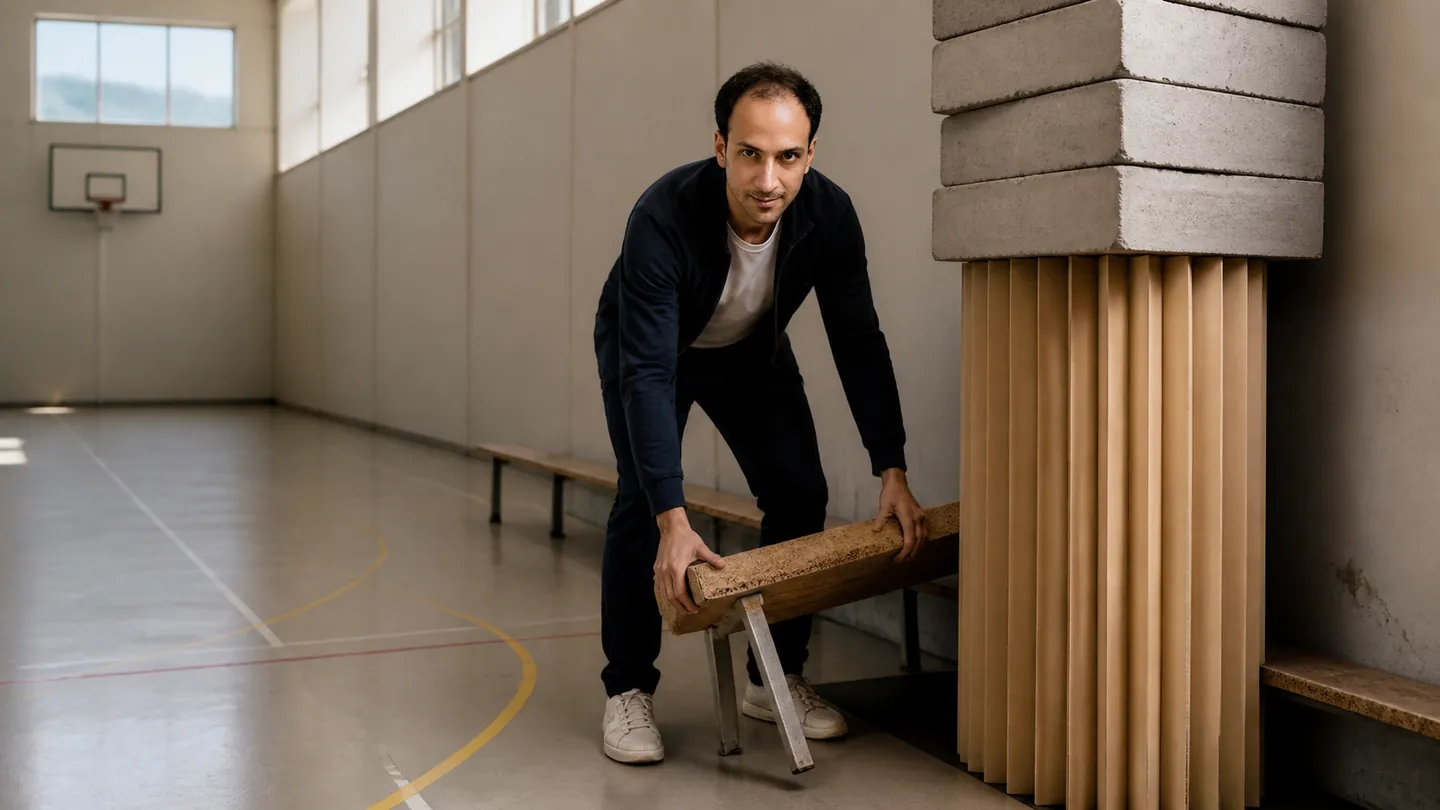
Fluted Paper in the Sports Hall — AI Portrait Prompt
صورةAI Portraits

Turn your own photo into a conceptual maker-bench portrait in an empty school sports hall under high morning windows. Keeps your face unchanged.

من نص البرومبت

Use the attached reference photo as the identity reference: keep the same face, skin tone, hair and features as the person in that photo, without beautifying, aging or altering them. Compose a wide 16:9 narrative image where environment and subject carry equal meaning at exactly 3808x2144 pixels. Location: an empty school sports hall under high morning windows. Show the subject in a zip-through navy track jacket over a plain white shirt, unstacking one low bench from the wall line. Build the artwork around this material rule: a slender kraft column pleated into crisp vertical flutes that carries a knee-high stack of concrete blocks without flexing makes its whole working structure legible, every member thin enough to read. Explore how a fold multiplies strength without adding a single gram of material; direct expression and posture toward sober delight, never melodrama or ad-like confidence. Use an eye-level 58mm medium-format viewpoint with natural perspective and honest paper texture. Make the composition give the load path one clean diagonal from burden to bearing. Render it as conceptual maker-bench photography uniting tactile card mechanisms, precise score-line detail, quiet contemporary art direction, and human-centered observational framing, using soft bounced daylight with one deeper shadow pocket beneath the structure and a palette of museum-board grey, soft ivory, and a single ochre accent. Photorealistic: this must read as a real photograph from a physical camera, never an illustration, painting, or 3D render. Give truthful depth cues: overlapping planes and shadows softening as they travel. Resolve real surface detail: rubber gone chalky with age, painted metal chipped to primer, and plastic yellowed only where light reaches it. Keep one identity-locked person, credible hands and fingers, natural fabric, and coherent scale, contact, reflections, shadows, airflow, deformation, and materials. Background people only when essential, always secondary and clearly different. Avoid greeting-card kitsch, torn-edge scrapbook collage, cartoon pop-up books, and burning paper drama. No text, labels, logos, signatures, watermarks, random symbols, plastic skin, excessive bloom, or glossy AI finish.
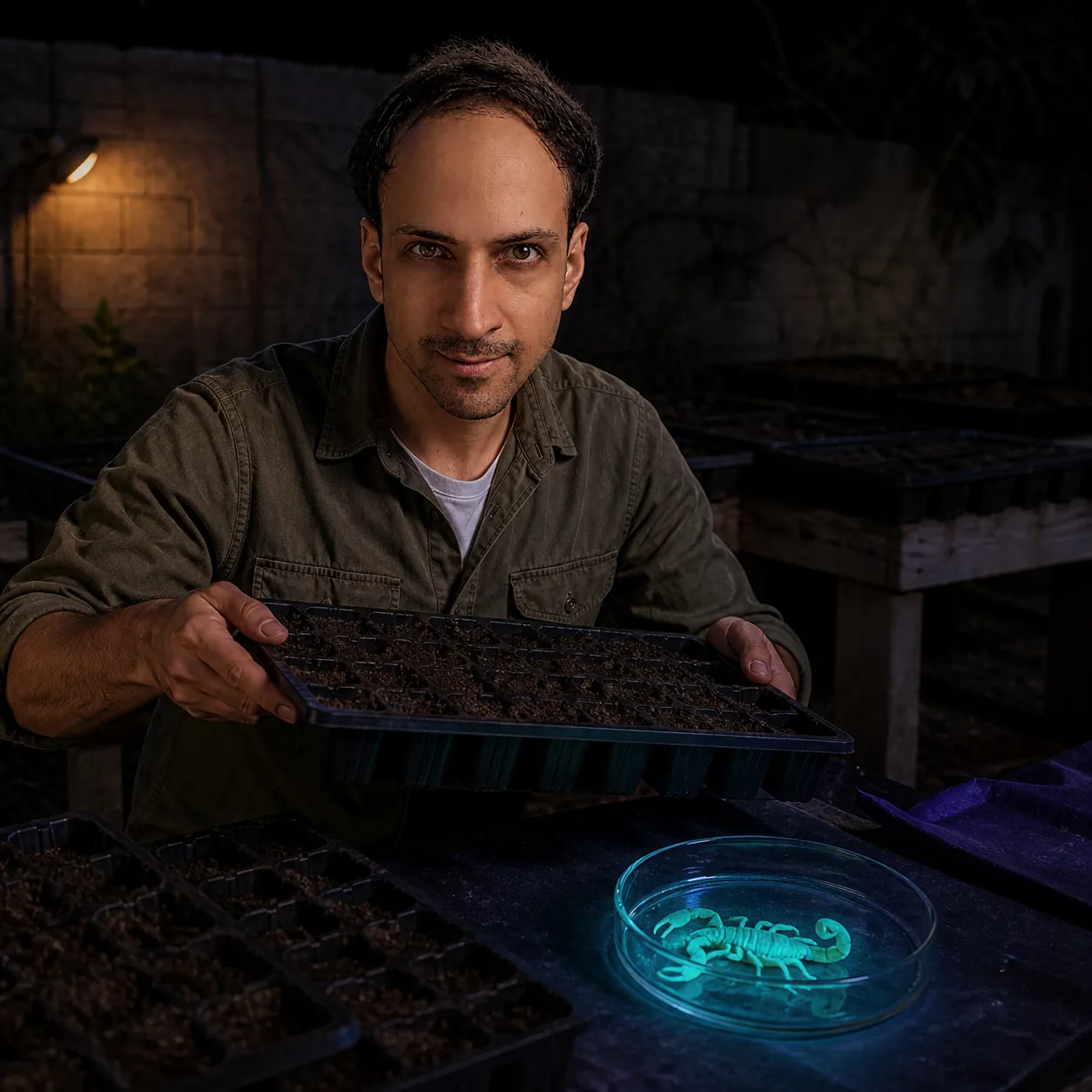
Glow Among the Seed Trays — AI Portrait Prompt
صورةAI Portraits

Turn your own photo into a museum demonstration portrait in a walled nursery yard where seed trays wait on low trestles. Keeps your face unchanged.

من نص البرومبت

Use the attached reference photo as the identity reference: keep the same face, skin tone, hair and features as the person in that photo, without beautifying, aging or altering them. Create a square 1:1 museum-catalog frame with a strong first read and a slower second read at exactly 2880x2880 pixels. Location: a walled nursery yard where seed trays wait on low trestles. Show them in a faded olive field shirt over a white undershirt, tipping a seed tray level with both hands. Make one rigorous physical condition the conceptual engine: a shed scorpion cuticle in a glass dish that answers ultraviolet with a cold cyan outline sharper than the animal ever looked divides one honest frame into an ordinary half and a luminous half. Explore what it means that the plainest surfaces keep the least expected secrets; direct expression and posture toward quiet astonishment, never melodrama or ad-like confidence. Use an eye-level 55mm viewpoint with natural perspective and shadows kept open enough to read their face. Make the composition give the ordinary half as much space as the luminous half. Render it as museum demonstration realism combining honest low-light photography, spectrally plausible glow, plain material texture, and unhurried human presence in frame, using near-darkness carried mostly by emitted light and one weak amber practical and a palette of cool black, ash grey, and a thread of violet-white. Photorealistic: this must read as a real photograph from a physical camera, never an illustration, painting, or 3D render. Resolve real surface detail: fine grit in the texture of concrete, efflorescence at damp edges, and hairline cracks that follow stress. Keep one identity-locked person, credible hands and fingers, natural fabric, and coherent scale, contact, reflections, shadows, airflow, deformation, and materials. Background people only when essential, always secondary and clearly different. Avoid blacklight-party glow, neon signage, glowing body paint, radioactive-green fog, and cartoon toxic-waste barrels. No text, labels, logos, signatures, watermarks, random symbols, plastic skin, excessive bloom, or glossy AI finish.
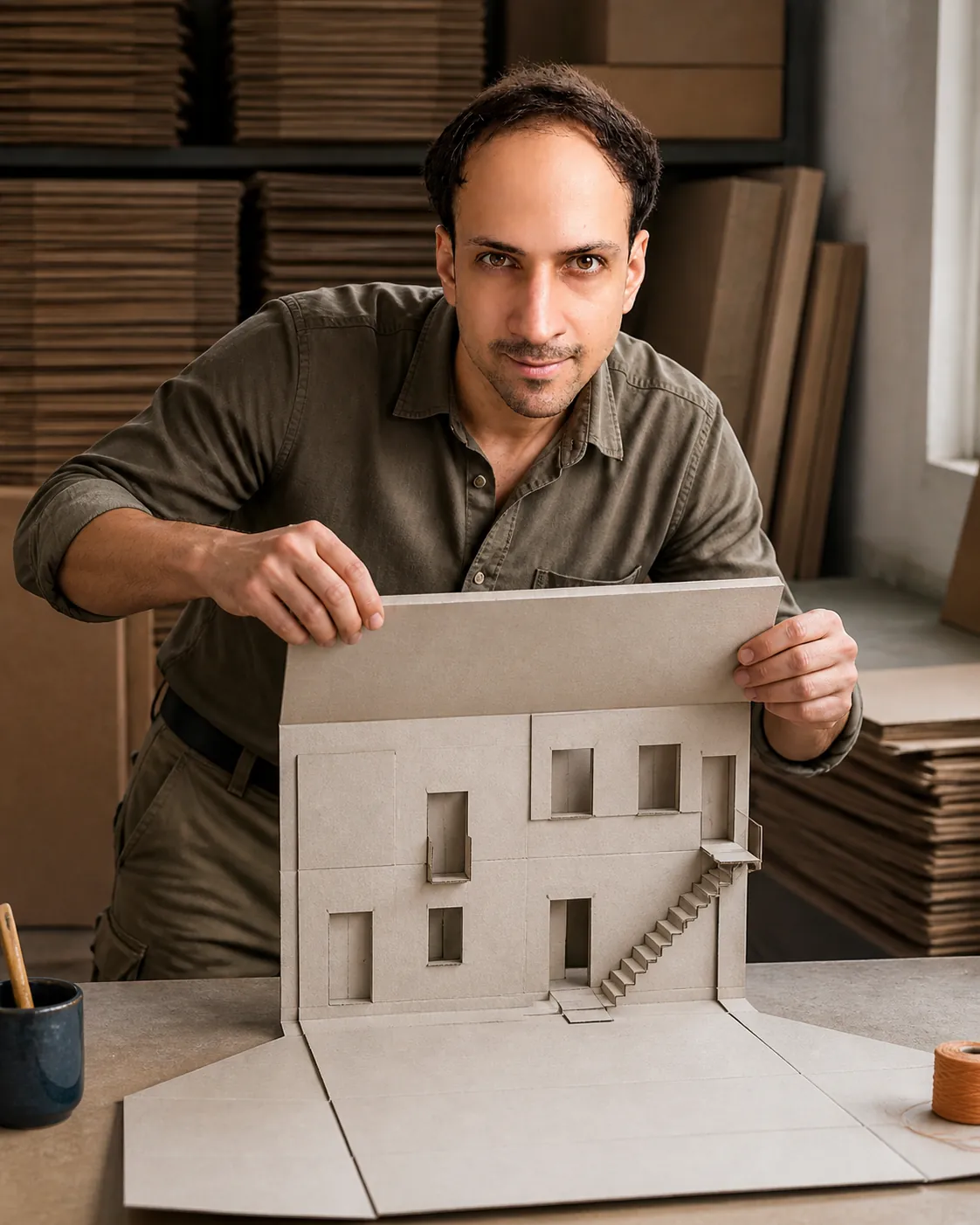
A Building Waiting in Paper — AI Portrait Prompt
صورةAI Portraits

Turn your own photo into a conceptual maker-bench portrait in a date-packing shed stacked chest-high with flattened new cartons. Keeps your face unchanged.

من نص البرومبت

Use the attached reference photo as the identity reference: keep the same face, skin tone, hair and features as the person in that photo, without beautifying, aging or altering them. Build a portrait 4:5 editorial artwork with protected negative space and a fully readable face at exactly 2560x3200 pixels. Location: a date-packing shed stacked chest-high with flattened new cartons. Show the subject in a washed olive utility shirt tucked into canvas work trousers, folding one carton up from flat with four practiced creases. Make one rigorous physical condition the conceptual engine: a courtyard facade that rises fully formed, walls and stair together, as its folded base sheet opens to ninety degrees forces the eye to re-check a material it thought it knew. Explore what it means that an entire building can wait inside a flat sheet; direct expression and posture toward patient exactness, never melodrama or ad-like confidence. Frame across the tabletop at the structure's own height so the span and their eyes share one focal plane. Make the composition let white paper carry the frame's brightest and quietest values. Render it as conceptual maker-bench photography uniting tactile card mechanisms, precise score-line detail, quiet contemporary art direction, and human-centered observational framing, using flat north window light that keeps every crease edge legible and a palette of oat paper, cool slate, and one restrained saffron thread. Photorealistic: this must read as a real photograph from a physical camera, never an illustration, painting, or 3D render. Resolve real surface detail: the difference between a wiped surface and a clean one, faint tide marks on ceramic, and metal dulled unevenly by touch. Keep one identity-locked person, credible hands and fingers, natural fabric, and coherent scale, contact, reflections, shadows, airflow, deformation, and materials. Background people only when essential, always secondary and clearly different. Avoid origami cranes, glowing magical paper, floating confetti, printed lettering on sheets, and weightless CGI folds. No text, labels, logos, signatures, watermarks, random symbols, plastic skin, excessive bloom, or glossy AI finish.
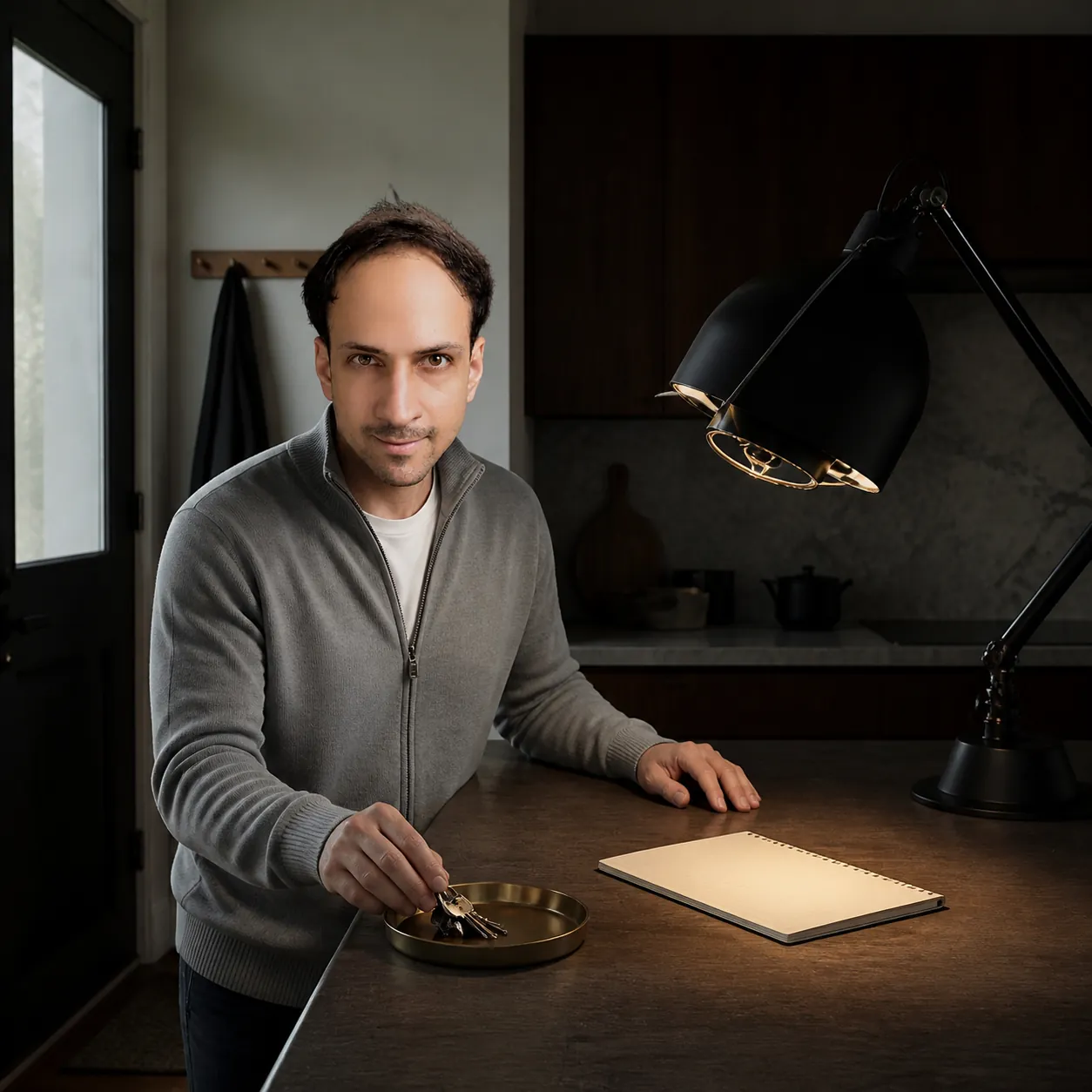
Attention's Architecture: Kitchen Counter Arranged — AI Portrait Prompt
صورةAI Portraits

Turn your own photo into a conceptual attention portrait in a kitchen counter arranged as tomorrow's launchpad by the door. Keeps your face unchanged.

من نص البرومبت

Use the attached reference photo as the identity reference: keep the same face, skin tone, hair and features as the person in that photo, without beautifying, aging or altering them. Create a square 1:1 museum-catalog frame with a strong first read and a slower second read. Location: a kitchen counter arranged as tomorrow's launchpad by the door. Show the subject in a soft grey zip cardigan over a white crew-neck, placing keys into a shallow brass tray. Build the artwork around this material rule: a desk lamp fitted with a physical iris diaphragm narrowed until light falls on one page and nothing else grants every ending a small, physical arrival instead of silence. Explore how much world one page needs when the rest goes unlit; direct expression and posture toward steady self-possession, never melodrama or ad-like confidence. Use a measured wide 28mm view with the subject near one-third of the frame and no stretched limbs. Make the composition hold generous empty space where the clutter used to live. Render it as conceptual attention portraiture combining tactile time-keeping architecture, restrained contemporary art direction, believable devices, and human-centered editorial realism, using soft north-facing daylight with restrained contrast and visible skin texture and a palette of walnut, slate, and one small field of lamp amber. Keep one identity-locked person, credible hands and fingers, natural fabric, and coherent scale, contact, reflections, shadows, airflow, deformation, and materials. Background people only when essential, always secondary and clearly different. Avoid productivity-app screens, pomodoro-branded props, motivational posters, bullet-journal styling spreads, and pill-bottle imagery. No text, labels, logos, signatures, watermarks, random symbols, plastic skin, excessive bloom, or glossy AI finish.
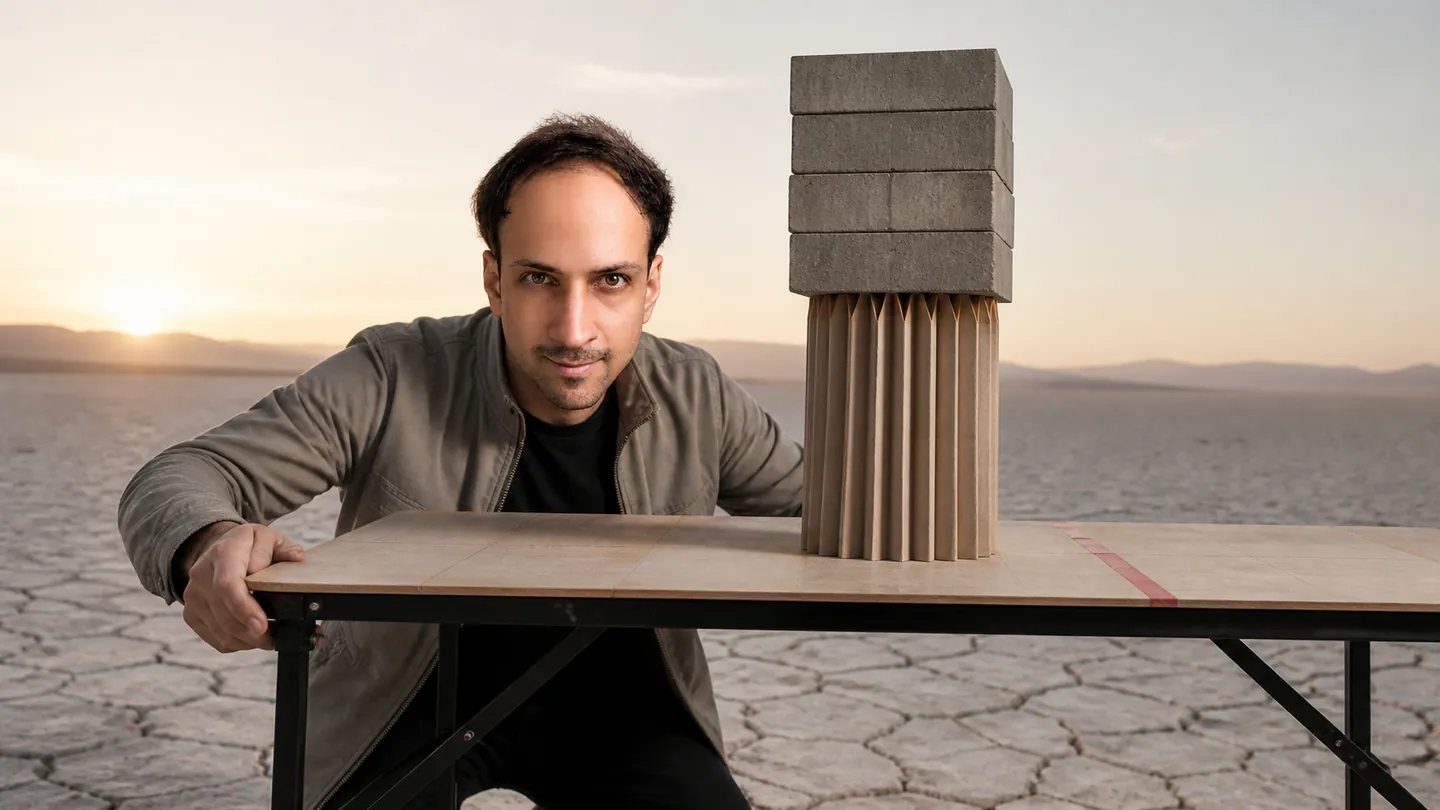
Kraft Column on the Salt Flat — AI Portrait Prompt
صورةAI Portraits

Turn your own photo into a high-concept paper-engineering portrait in the cracked bed of a dry salt flat at windless first light. Keeps your face unchanged.

من نص البرومبت

Use the attached reference photo as the identity reference: keep the same face, skin tone, hair and features as the person in that photo, without beautifying, aging or altering them. Compose a wide 16:9 narrative image where environment and subject carry equal meaning at exactly 3808x2144 pixels. Location: the cracked bed of a dry salt flat at windless first light. Show the subject in a sand-grey field jacket zipped to mid-chest over dark trousers, bracing a folding camp table by one leg. The impossible-looking event must obey this clear system: a slender kraft column pleated into crisp vertical flutes that carries a knee-high stack of concrete blocks without flexing stands up to demands that look plainly unfair to paper. Explore how a fold multiplies strength without adding a single gram of material; direct expression and posture toward earned confidence, never melodrama or ad-like confidence. Frame across the tabletop at the structure's own height so the span and their eyes share one focal plane. Make the composition let white paper carry the frame's brightest and quietest values. Render it as high-concept paper-engineering portraiture built from working cut-and-fold structures, documentary realism, gallery-grade craft styling, and physically truthful load behavior, using one low raking lamp that turns each fold into a drawn line and a palette of unbleached kraft, bone white, and one line of vermilion. Photorealistic: this must read as a real photograph from a physical camera, never an illustration, painting, or 3D render. Give the frame volume: faint density deepest in the room, contrast easing at the edges. Resolve real surface detail: grout darker than tile, sealant slightly yellowed, and every joint showing a real tolerance gap. Keep one identity-locked person, credible hands and fingers, natural fabric, and coherent scale, contact, reflections, shadows, airflow, deformation, and materials. Background people only when essential, always secondary and clearly different. Avoid origami cranes, glowing magical paper, floating confetti, printed lettering on sheets, and weightless CGI folds. No text, labels, logos, signatures, watermarks, random symbols, plastic skin, excessive bloom, or glossy AI finish.

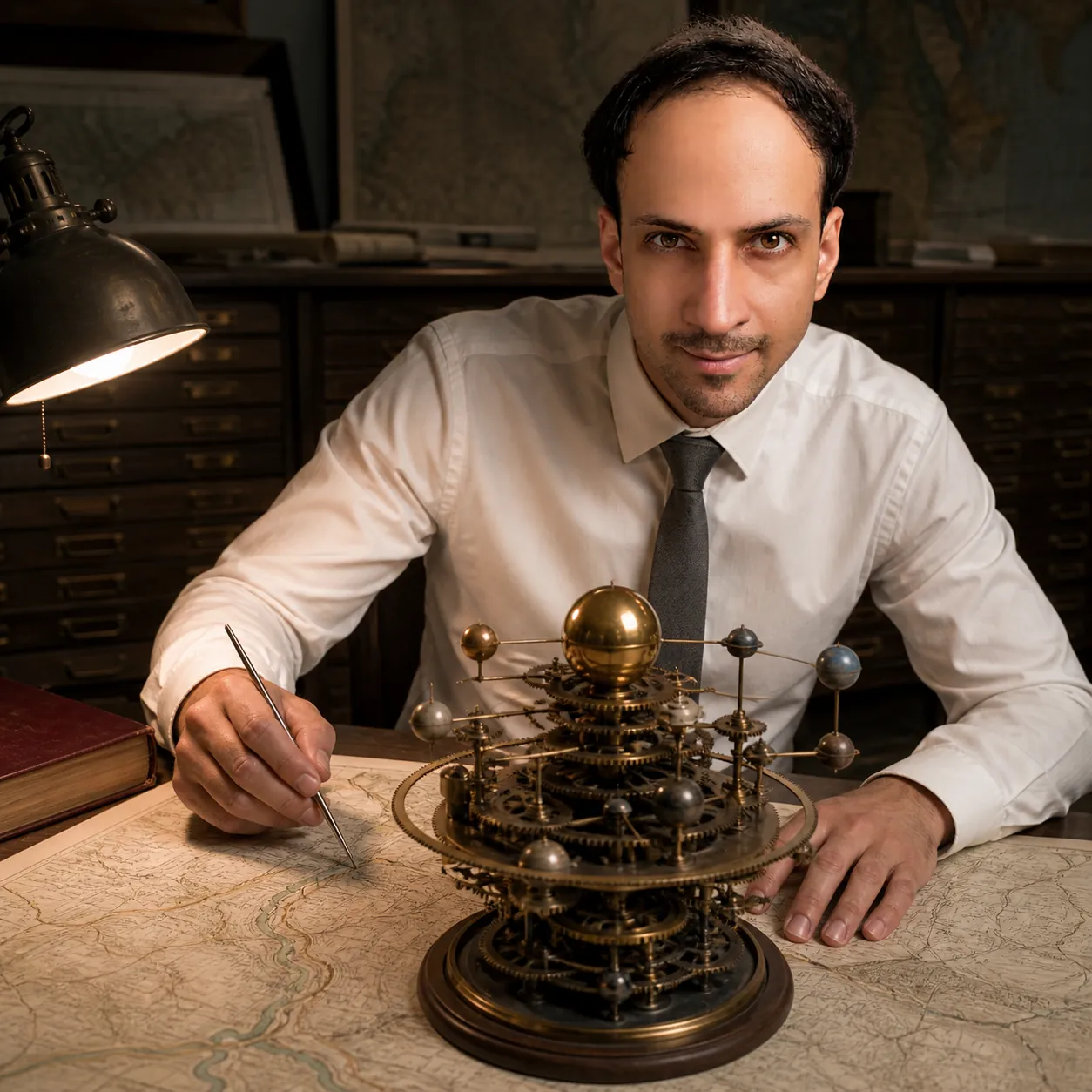
Planets Over the Map Table — AI Portrait Prompt
صورةAI Portraits

Turn your own photo into a conceptual instrument portrait in a national map room with a wide tilted table and drawer cabinets. Keeps your face unchanged.

من نص البرومبت

Use the attached reference photo as the identity reference: keep the same face, skin tone, hair and features as the person in that photo, without beautifying, aging or altering them. Create a square 1:1 museum-catalog frame with a strong first read and a slower second read at exactly 2880x2880 pixels. Location: a national map room with a wide tilted table and drawer cabinets. Show them in a pressed white shirt with a slate wool tie, no jacket, tracing a wadi's outline with a steady stylus. Treat this mechanism as the frame’s governing rule: a benchtop brass orrery whose stacked gear train holds every planet at tonight's true heliocentric position around a polished central sun stores its knowledge as shape that cannot crash, fade, or lie. Explore why a machine with no memory chips can still remember mathematics perfectly; direct expression and posture toward earned confidence, never melodrama or ad-like confidence. Use a composed 35mm environmental view placing them and the machine as equal patient subjects. Make the composition hold quiet empty space where the finished answer will arrive. Render it as conceptual instrument portraiture uniting believable mechanical computation, machinist-level surface accuracy, warm archival print tonality, and quietly unhurried observational storytelling, using one warm tungsten work lamp pooled tightly over the mechanism and hands and a palette of gunmetal grey, ivory paper, and one burgundy bookcloth accent. Photorealistic: this must read as a real photograph from a physical camera, never an illustration, painting, or 3D render. Resolve real surface detail: paper fibre visible at cut edges, plastic that shows mould lines, and paint thicker where a brush turned. Keep one identity-locked person, credible hands and fingers, natural fabric, and coherent scale, contact, reflections, shadows, airflow, deformation, and materials. Background people only when essential, always secondary and clearly different. Avoid floating weightless gears, sepia steampunk grading, cog-filled head silhouettes, Roman-numeral dials, and oversized watch-movement props. No text, labels, logos, signatures, watermarks, random symbols, plastic skin, excessive bloom, or glossy AI finish.
