تخطَّ إلى المحتوى
f

faisal aziz

@alkhunizan

3000البرومبتات
0تصويتات مستلمة
0مساهمات
تاريخ الانضمام منذ 4 أشهر
3000 مساهمات في العام الماضي
نوفمبر
ديسمبر
يناير
فبراير
مارس
أبريل
مايو
يونيو
يوليو
أغسطس
سبتمبر
أكتوبر
ن
ر
ج
أقل
أكثر
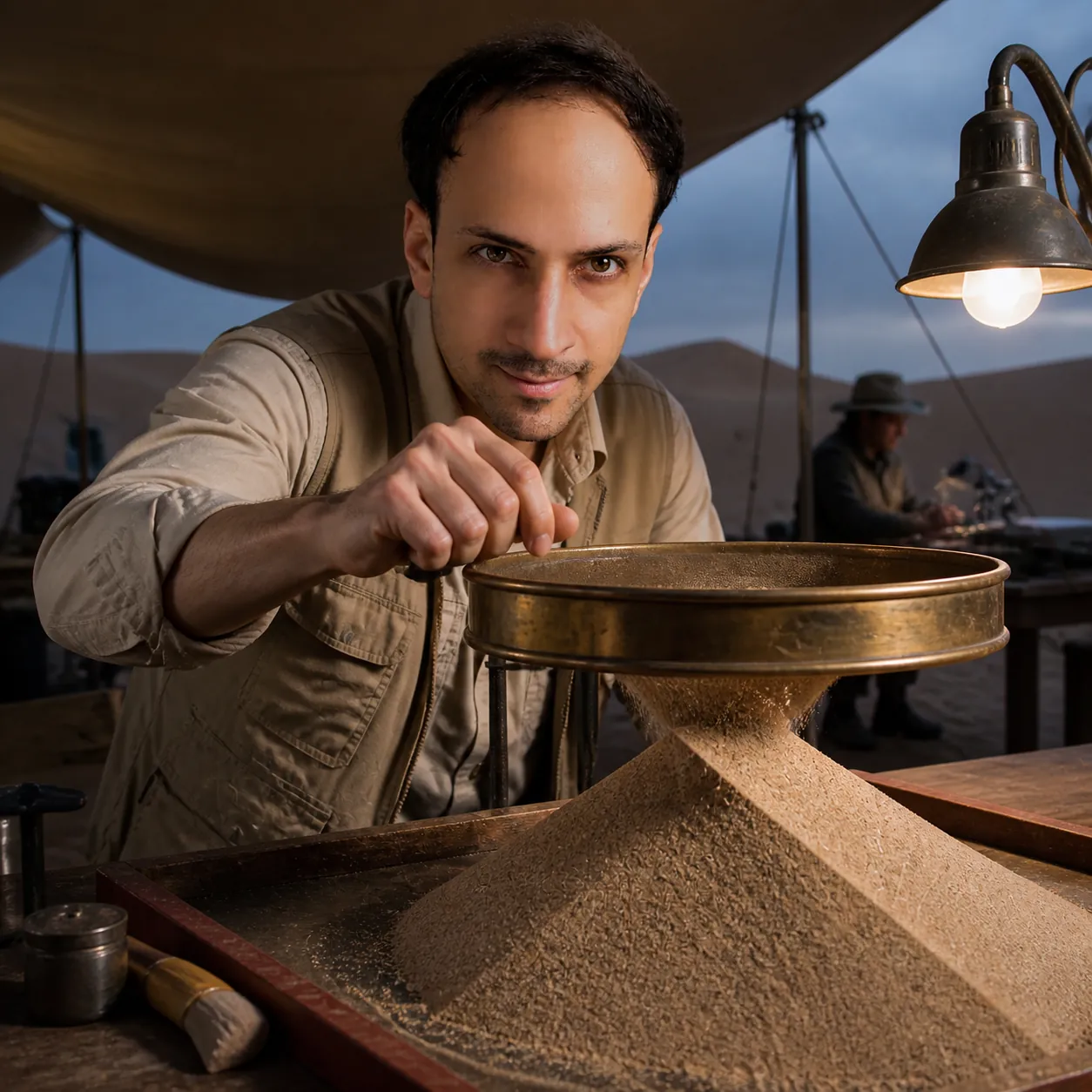
Quiet Cascade: Canvas-Shaded Field Station — AI Portrait Prompt
صورةAI Portraits

Turn your own photo into a portrait in a canvas-shaded field station rigged in the trough between two dunes. Keeps your face unchanged.

من نص البرومبت

Use the attached reference photo as the identity reference: keep the same face, skin tone, hair and features as the person in that photo, without beautifying, aging or altering them. Create a square 1:1 museum-catalog frame with a strong first read and a slower second read at exactly 2880x2880 pixels. Location: a canvas-shaded field station rigged in the trough between two dunes. Show the subject in a light khaki field vest over a long-sleeved cotton shirt, tapping a brass sieve's rim with two measured knuckles. Use this advanced image-making device as the core logic: a poured cone of dry sand that keeps correcting itself to one exact angle with small, precise avalanches shows dry grains refusing to be fully solid or fully liquid. Explore what it costs to look this closely at something everyone else walks across; direct expression and posture toward earned familiarity, never melodrama or ad-like confidence. Frame past their shoulder toward the demonstration, their profile softly readable at the frame's edge. Make the composition let one sharp edge of settled grains cross the frame diagonally. Render it as high-concept field-physics portraiture built from real granular mechanics, documentary desert realism, instrument-grade experimental staging, and emotionally restrained observational lighting, using cool pre-sunrise sky light balanced against one warm tungsten practical and a palette of warm quartz beige, gunmetal grey, and one oxide-red seam. Photorealistic: this must read as a real photograph from a physical camera, never an illustration, painting, or 3D render. Resolve real surface detail: wood grain read at honest scale, matte and gloss clearly separated, and no surface uniformly clean. Keep one identity-locked subject, credible hands and fingers, natural fabric, and coherent scale, contact, reflections, shadows, airflow, deformation, and materials. Background people only when essential, always secondary and clearly different. Avoid swirling sandstorm vortices, glowing hourglass fantasy, levitating sand spirals, cymatic pattern plates, and heroic dune-top silhouettes. No text, labels, logos, signatures, watermarks, random symbols, plastic skin, excessive bloom, or glossy AI finish.
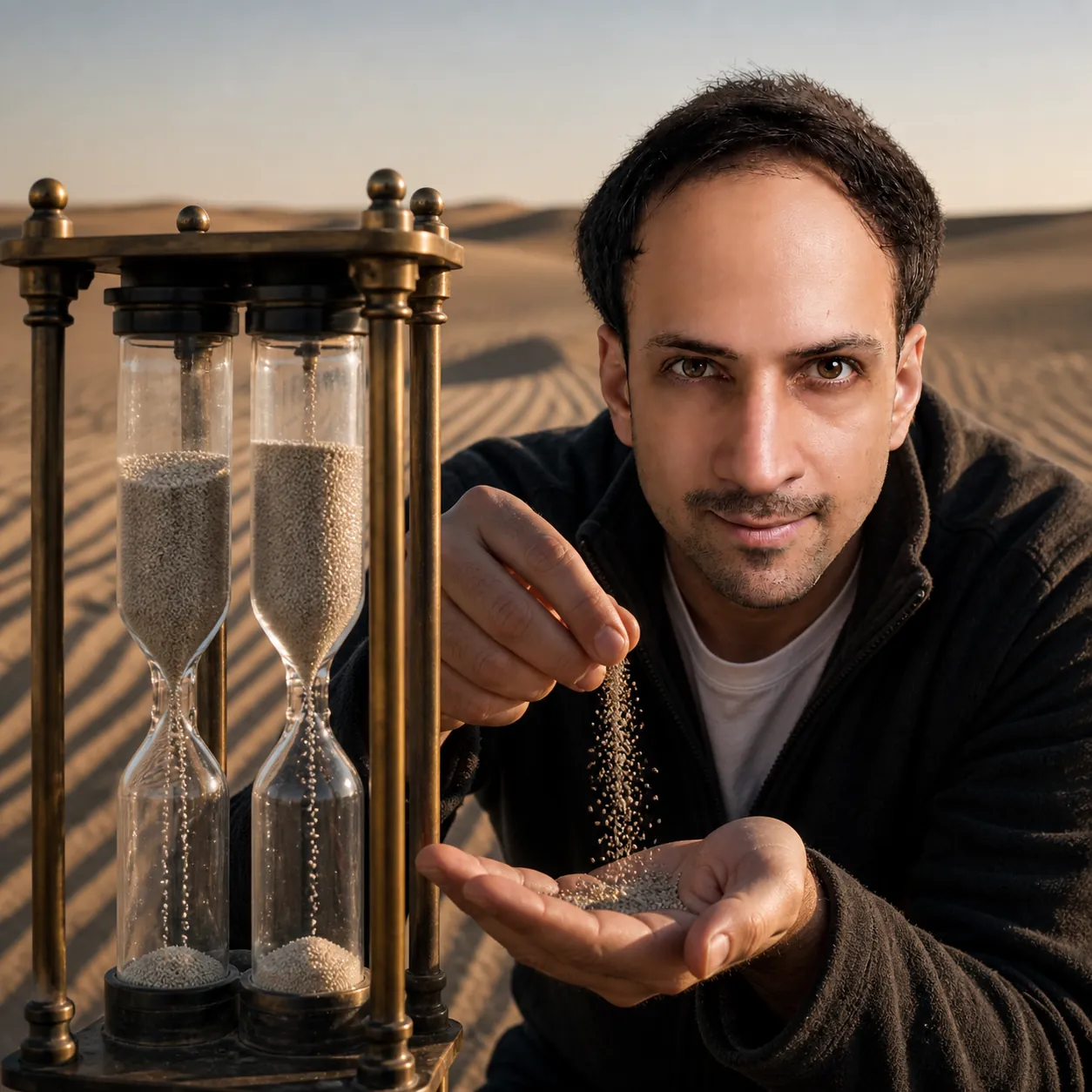
Collective Grain: Firm Interdune Corridor — AI Portrait Prompt
صورةAI Portraits

Turn your own photo into a portrait in a firm interdune corridor at dawn, its ripples still holding shadow. Keeps your face unchanged.

من نص البرومبت

Use the attached reference photo as the identity reference: keep the same face, skin tone, hair and features as the person in that photo, without beautifying, aging or altering them. Create a square 1:1 museum-catalog frame with a strong first read and a slower second read at exactly 2880x2880 pixels. Location: a firm interdune corridor at dawn, its ripples still holding shadow. Show the subject in a charcoal fleece zipped over a plain white base layer, sifting a slow handful of grains from fist to palm. The impossible-looking event must obey this clear system: a pair of matched glass columns draining side by side, the water slowing while the sand keeps one metronome rate shows dry grains refusing to be fully solid or fully liquid. Explore why a threshold obeyed by every grain feels like character rather than law; direct expression and posture toward unhurried awe, never melodrama or ad-like confidence. Use a 90mm close-portrait framing where single airborne grains near the lens stay physically plausible against their focused face. Make the composition hold one calm empty interval between them and the mechanism. Render it as high-concept field-physics portraiture built from real granular mechanics, documentary desert realism, instrument-grade experimental staging, and emotionally restrained observational lighting, using low raking desert sun that turns every ridge of grains into relief and a palette of bleached bone, shadow grey, and one line of terracotta. Photorealistic: this must read as a real photograph from a physical camera, never an illustration, painting, or 3D render. Resolve real surface detail: brass darkened in the recesses and bright where thumbs land, and lacquer crazed rather than perfect. Keep one identity-locked subject, credible hands and fingers, natural fabric, and coherent scale, contact, reflections, shadows, airflow, deformation, and materials. Background people only when essential, always secondary and clearly different. Avoid swirling sandstorm vortices, glowing hourglass fantasy, levitating sand spirals, cymatic pattern plates, and heroic dune-top silhouettes. No text, labels, logos, signatures, watermarks, random symbols, plastic skin, excessive bloom, or glossy AI finish.
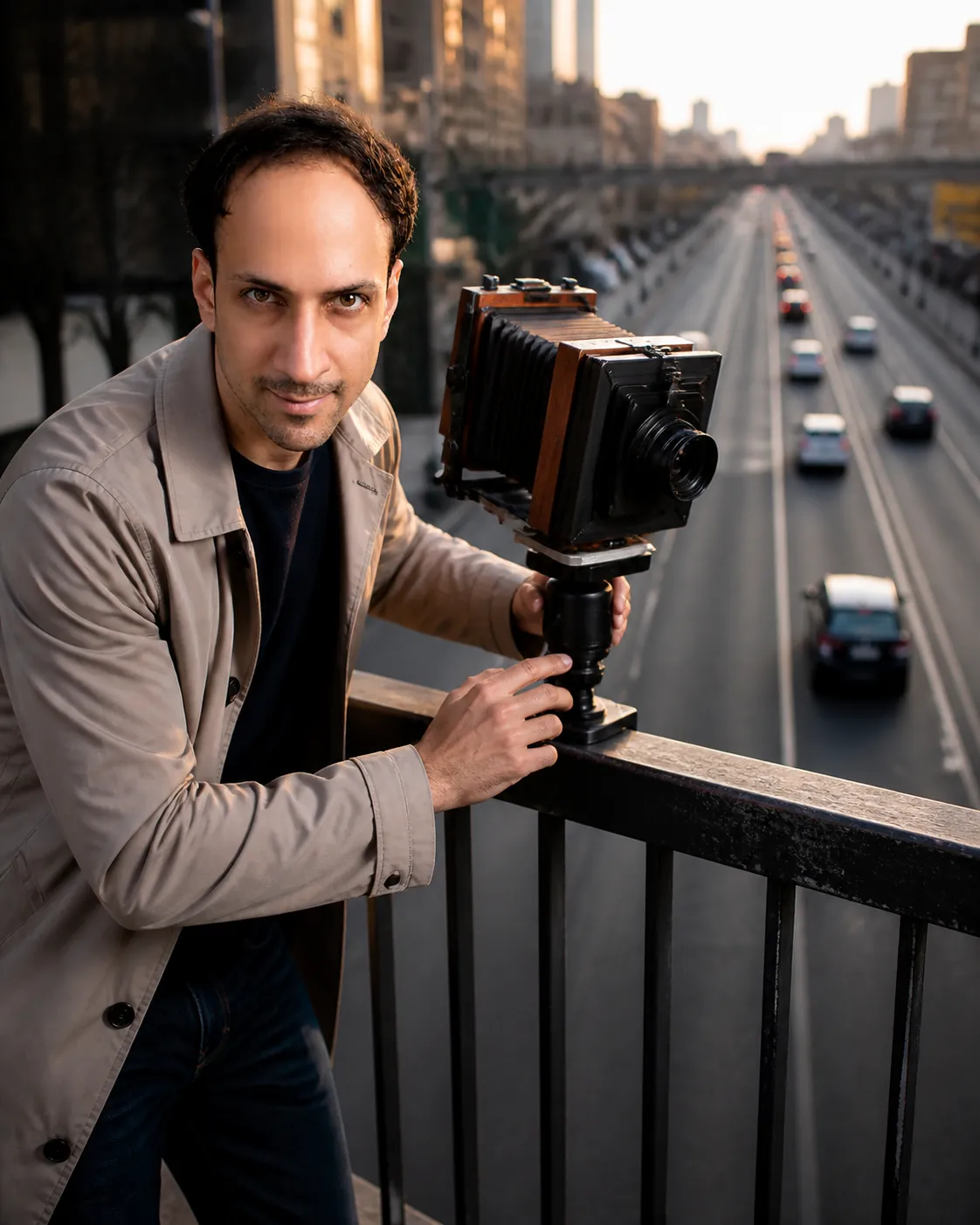
Lawful Miniature: Pedestrian Footbridge — AI Portrait Prompt
صورةAI Portraits

Turn your own photo into a museum-grade demonstration portrait in a pedestrian footbridge above six quiet lanes at Friday dawn. Keeps your face unchanged.

من نص البرومبت

Use the attached reference photo as the identity reference: keep the same face, skin tone, hair and features as the person in that photo, without beautifying, aging or altering them. Treat that reference as the character anchor and change only the scene. Build a portrait 4:5 editorial artwork with protected negative space and a fully readable face at exactly 2560x3200 pixels. Location: a pedestrian footbridge above six quiet lanes at Friday dawn. Show them in a putty-colored mac coat over a navy crew-neck and dark denim, clamping a small ball head onto the bridge railing. The impossible-looking event must obey this clear system: a wooden view camera whose tilted lens lays a sloping wedge of focus that renders the scene beyond as a tabletop model turns scale from a fixed fact into a property of viewpoint. Explore why the eye trusts context more than it trusts the thing itself; direct expression and posture toward measured delight, never melodrama or ad-like confidence. Frame at the demonstration's own height so the optical event and their eyes share one axis. Make the composition seat the illusion dead center and let them stand off-axis. Render it as museum-grade demonstration photography combining true forced-perspective staging, honest depth-of-field behavior, believable material scale cues, and restrained contemporary art direction, using one collimated key with crisp parallel shadows and soft neutral fill and a palette of basswood blond, matte black, and a thin brass glint. Photorealistic: this must read as a real photograph from a physical camera, never an illustration, painting, or 3D render. Resolve real surface detail: dust settled where nobody wipes, fingerprint haze on glass, and edges rubbed pale by handling. Keep one identity-locked person, credible hands and fingers, natural fabric, and coherent scale, contact, reflections, shadows, airflow, deformation, and materials. Background people only when essential, always secondary and clearly different. Avoid surreal scale collage, floating figures, painted anamorphic pavement, and dollhouse cartoon styling. No text, labels, logos, signatures, watermarks, random symbols, plastic skin, excessive bloom, or glossy AI finish.
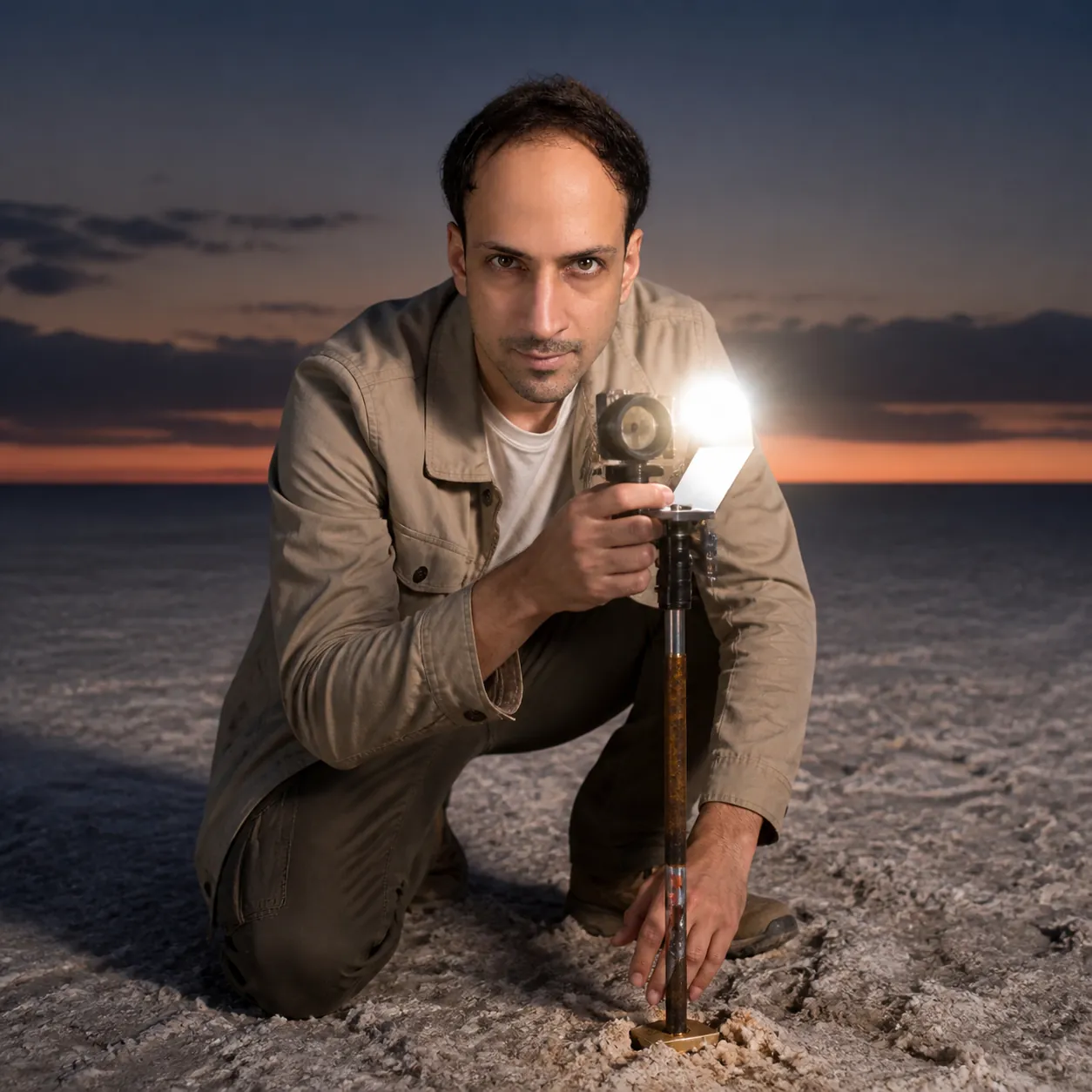
Light Answers: Sabkha Salt Flat — AI Portrait Prompt
صورةAI Portraits

Turn your own photo into a conceptual field-optics portrait in a sabkha salt flat at dusk, horizon one unbroken line. Keeps your face unchanged.

من نص البرومبت

Use the attached reference photo as the identity reference: keep the same face, skin tone, hair and features as the person in that photo, without beautifying, aging or altering them. Create a square 1:1 museum-catalog frame with a strong first read and a slower second read at exactly 2880x2880 pixels. Location: a sabkha salt flat at dusk, horizon one unbroken line. Show the subject in a beige field jacket over a white tee, pressing a survey stake flush with the crust. The impossible-looking event must obey this clear system: a dull grey panel that ignites to hard glare only through a tilted half-mirror seating their lamp on their sight line turns the open air into a private channel between lamp and eye. Explore what a brightness only one person can witness says about shared reality; direct expression and posture toward patient verification, never melodrama or ad-like confidence. Use a 90mm portrait lens with a small lamp rigged tight beside it so the return blazes lawfully at the camera. Make the composition hold the dark version and the blazing version inside one frame. Render it as conceptual field-optics realism blending honest low-light exposure, physically accurate retroreflection, quiet darkened-space atmosphere, and calm human-scale editorial framing, using late window light kept low so on-axis return outshines every ordinary reflection and a palette of charcoal, unpolished brass, and one warm white blaze. Photorealistic: this must read as a real photograph from a physical camera, never an illustration, painting, or 3D render. Resolve real surface detail: skin that reddens slightly under pressure, nail beds with honest colour, and knuckle creases that fold rather than blur. Keep one identity-locked subject, credible hands and fingers, natural fabric, and coherent scale, contact, reflections, shadows, airflow, deformation, and materials. Background people only when essential, always secondary and clearly different. Avoid laser-show haze walls, glowing animal eyes, CGI light tunnels, painted halos, and highway signage. No text, labels, logos, signatures, watermarks, random symbols, plastic skin, excessive bloom, or glossy AI finish.
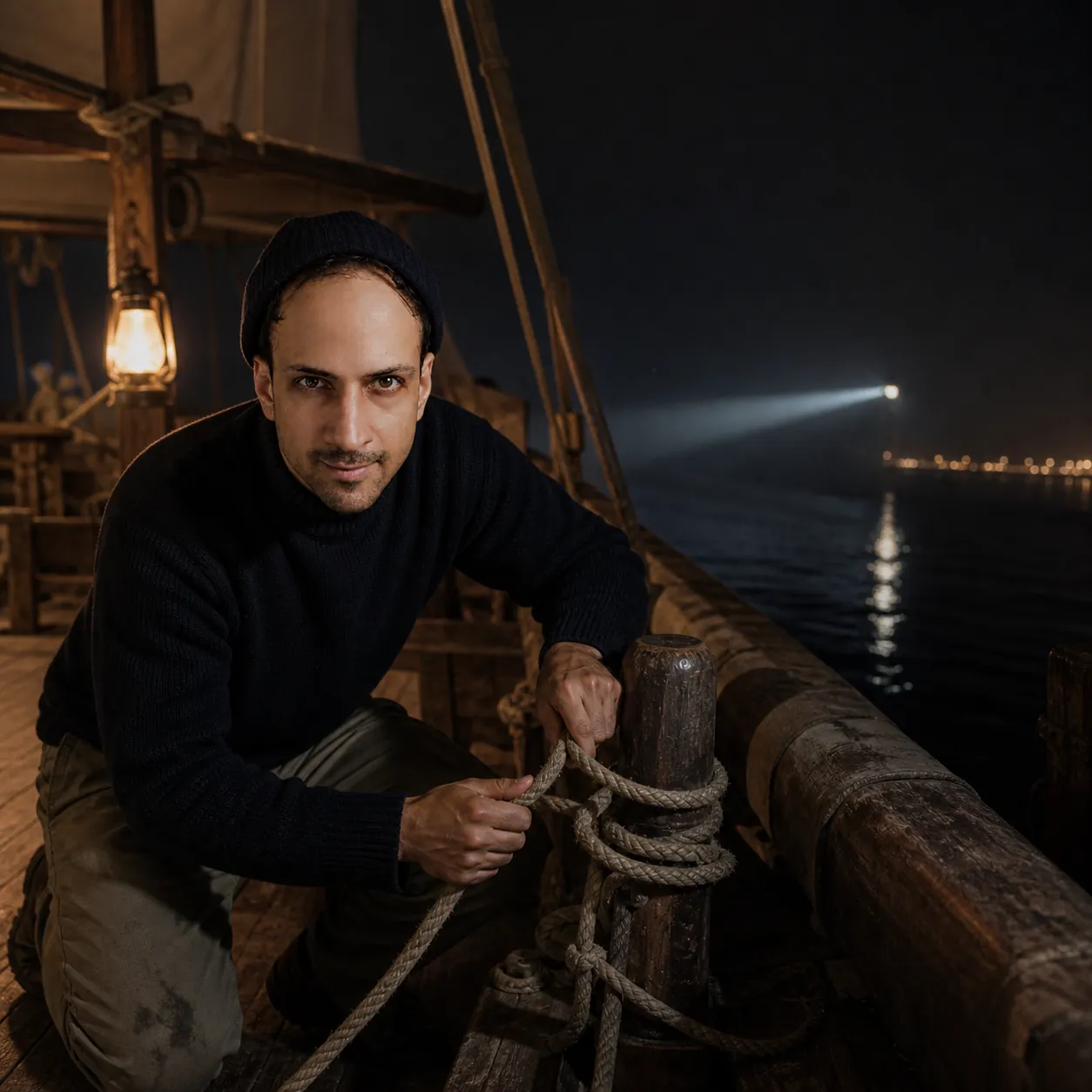
Full Circle: Deck of a Moored Dhow — AI Portrait Prompt
صورةAI Portraits

Turn your own photo into a conceptual field-optics portrait in the deck of a moored dhow on a windless gulf night. Keeps your face unchanged.

من نص البرومبت

Use the attached reference photo as the identity reference: keep the same face, skin tone, hair and features as the person in that photo, without beautifying, aging or altering them. Create a square 1:1 museum-catalog frame with a strong first read and a slower second read at exactly 2880x2880 pixels. Location: the deck of a moored dhow on a windless gulf night. Show the subject in a navy watch cap, dark fisherman's sweater, and canvas work trousers, cleating a slack line with two practiced wraps. Build the artwork around this material rule: a fist-sized corner-cube prism that catches a thin beam in chalk haze and sends it home exactly parallel to its arrival turns the open air into a private channel between lamp and eye. Explore how it feels to ask the dark a question and be answered instantly; direct expression and posture toward attentive wonder, never melodrama or ad-like confidence. Use a measured 35mm environmental view, the subject at one-third, the returning light deeper in frame. Make the composition let the off-axis dullness occupy most of the frame. Render it as conceptual field-optics realism blending honest low-light exposure, physically accurate retroreflection, quiet darkened-space atmosphere, and calm human-scale editorial framing, using low ambient dusk with a single handheld beam as the only key and a palette of graphite, dusty sand, and one pale gold star. Photorealistic: this must read as a real photograph from a physical camera, never an illustration, painting, or 3D render. Resolve real surface detail: hair with individual strands catching light, fine hairs of uneven length, and skin oil giving a low uneven sheen. Keep one identity-locked subject, credible hands and fingers, natural fabric, and coherent scale, contact, reflections, shadows, airflow, deformation, and materials. Background people only when essential, always secondary and clearly different. Avoid laser-show haze walls, glowing animal eyes, CGI light tunnels, painted halos, and highway signage. No text, labels, logos, signatures, watermarks, random symbols, plastic skin, excessive bloom, or glossy AI finish.
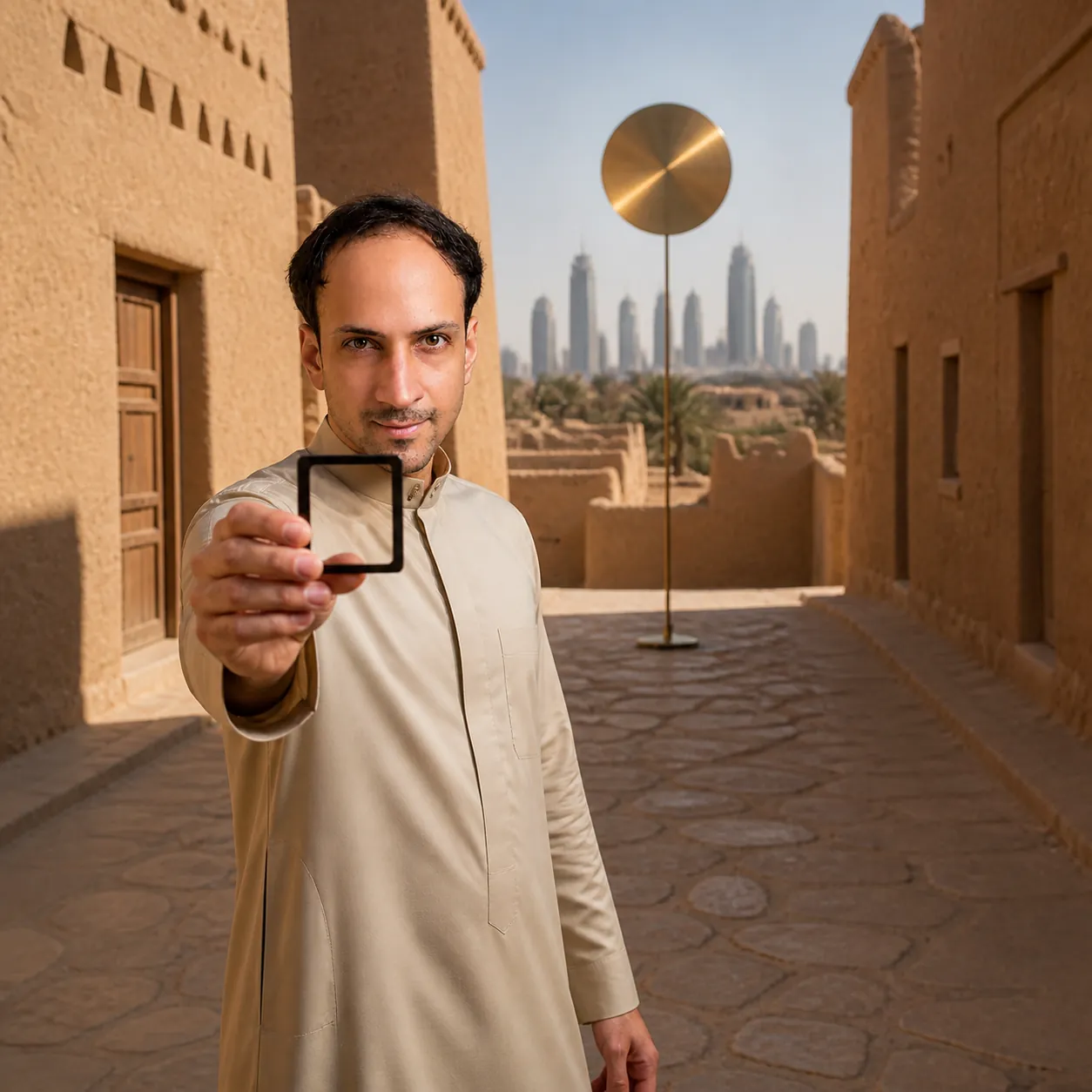
The Eye's Ruler: Heritage Mud-Brick Alley — AI Portrait Prompt
صورةAI Portraits

Turn your own photo into a gallery-grade perspective portrait in a heritage mud-brick alley in Diriyah restored and empty at noon. Keeps your face unchanged.

من نص البرومبت

Use the attached reference photo as the identity reference: keep the same face, skin tone, hair and features as the person in that photo, without beautifying, aging or altering them. Create a square 1:1 museum-catalog frame with a strong first read and a slower second read at exactly 2880x2880 pixels. Location: a heritage mud-brick alley in Diriyah restored and empty at noon. Show the subject in a summer-weight beige traditional Gulf outfit and simple leather sandals, holding a small frame card at arm's length. The impossible-looking event must obey this clear system: a polished brass disc on a slender stand that exactly eclipses the tallest distant high-rise from the lens's fixed station defeats the eye's scale instinct with nothing but honest, lawful geometry. Explore whether size is something objects own or something distances lend them; direct expression and posture toward grounded awe, never melodrama or ad-like confidence. Use a slightly elevated 35mm viewpoint with honest verticals and no exaggerated perspective stretch. Make the composition grant the smallest object the frame's greatest visual weight. Render it as gallery-grade perspective photography built from real sightline alignments, measured camera placement, physically accurate focus falloff, and unhurried dignified portrait values, using late low sun raking the scene so every shadow states its distance and a palette of bone white, deep umber, and one restrained teal. Photorealistic: this must read as a real photograph from a physical camera, never an illustration, painting, or 3D render. Resolve real surface detail: glass with real thickness at its edge, reflections that carry the room's actual colour, and dust visible only at grazing angles. Keep one identity-locked person, credible hands and fingers, natural fabric, and coherent scale, contact, reflections, shadows, airflow, deformation, and materials. Background people only when essential, always secondary and clearly different. Avoid shrunken-person composites, giant-monster posing, fake miniature blur filters, candy-toy oversaturation, and warped fisheye streets. No text, labels, logos, signatures, watermarks, random symbols, plastic skin, excessive bloom, or glossy AI finish.
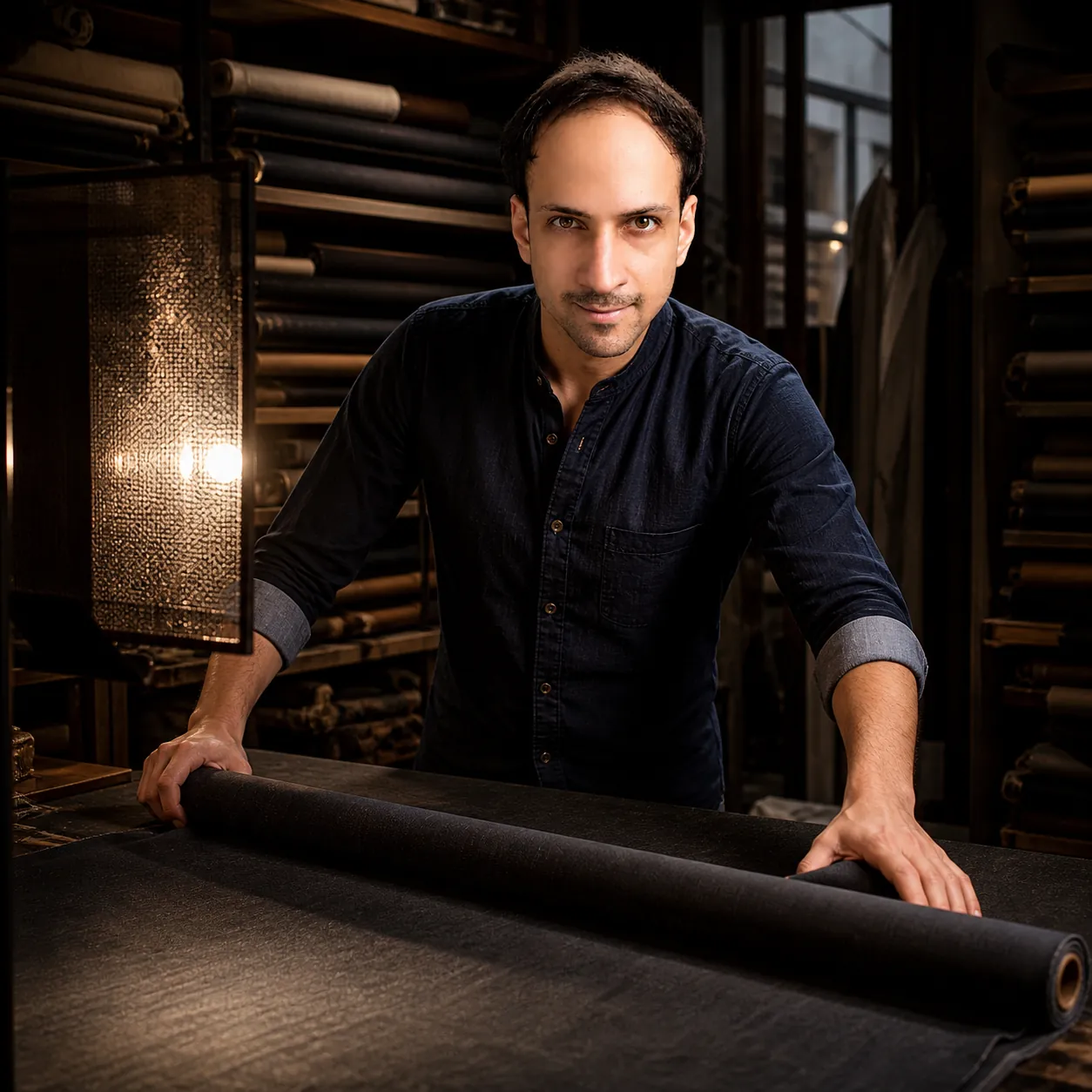
Asked and Answered: Tailor's Atelier — AI Portrait Prompt
صورةAI Portraits

Turn your own photo into a museum-grade demonstration portrait in a tailor's atelier after closing, cloth bolts racked high. Keeps your face unchanged.

من نص البرومبت

Use the attached reference photo as the identity reference: keep the same face, skin tone, hair and features as the person in that photo, without beautifying, aging or altering them. Create a square 1:1 museum-catalog frame with a strong first read and a slower second read at exactly 2880x2880 pixels. Location: a tailor's atelier after closing, cloth bolts racked high. Show the subject in a collarless indigo work shirt with sleeves rolled twice, unrolling a dark bolt one turn across the table. Use this advanced image-making device as the core logic: a glass-bead screen that blazes furnace-bright along their lamp's axis and shows dull grey one step aside turns the open air into a private channel between lamp and eye. Explore what it means to receive back exactly what was sent and nothing else; direct expression and posture toward watchful calm, never melodrama or ad-like confidence. Frame from slightly low in the dark, their face lit by spill rather than beam. Make the composition hold the dark version and the blazing version inside one frame. Render it as museum-grade demonstration photography combining truthful on-axis brilliance, deep readable shadow detail, tactile instrument surfaces, and unhurried human presence, using late window light kept low so on-axis return outshines every ordinary reflection and a palette of charcoal, unpolished brass, and one warm white blaze. Photorealistic: this must read as a real photograph from a physical camera, never an illustration, painting, or 3D render. Resolve real surface detail: thread ends and slight pilling on worn cloth, hairline chips at every hard corner, and stone that is porous rather than smooth. Keep one identity-locked subject, credible hands and fingers, natural fabric, and coherent scale, contact, reflections, shadows, airflow, deformation, and materials. Background people only when essential, always secondary and clearly different. Avoid laser-show haze walls, glowing animal eyes, CGI light tunnels, painted halos, and highway signage. No text, labels, logos, signatures, watermarks, random symbols, plastic skin, excessive bloom, or glossy AI finish.
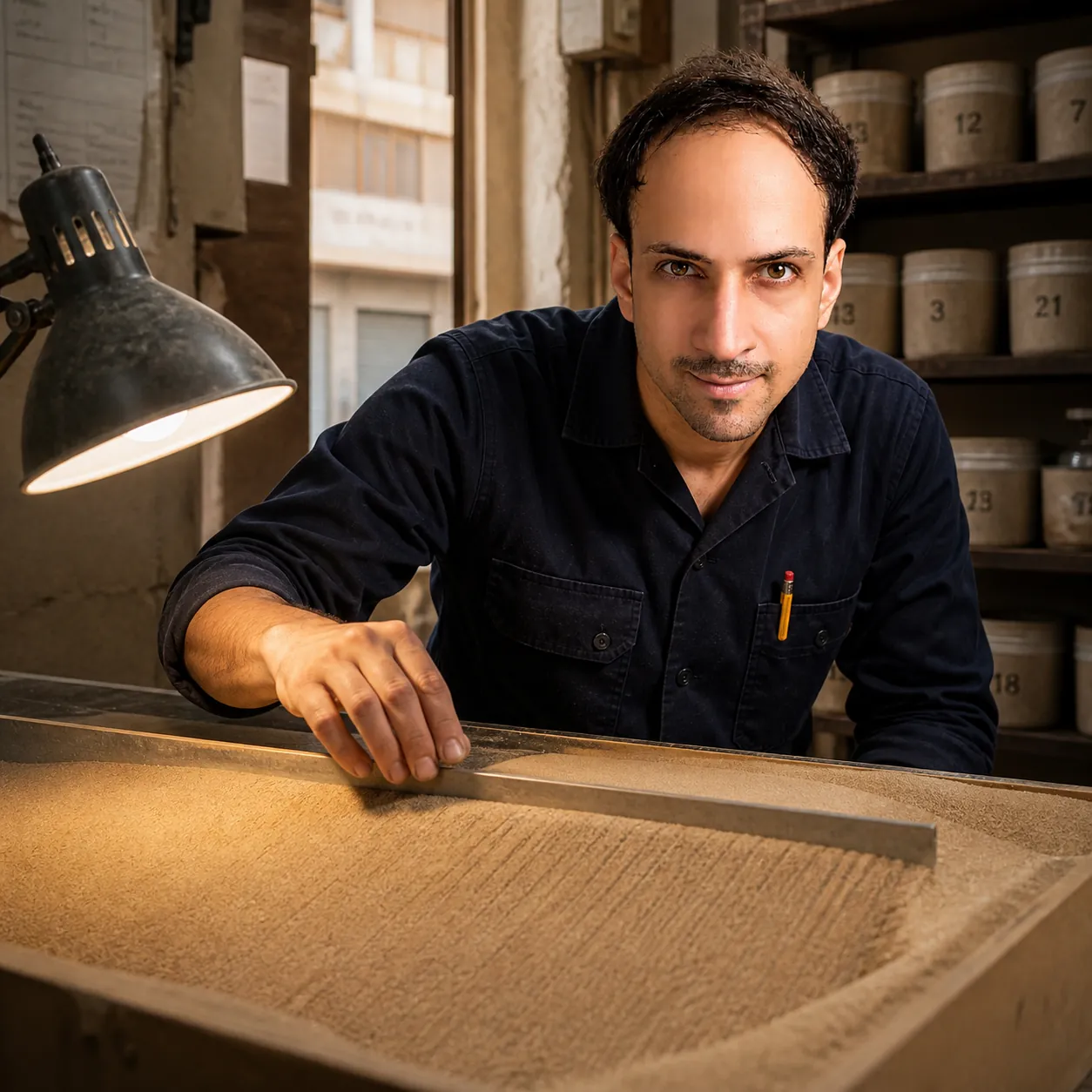
Fifth State: Back-Street Riyadh Workshop — AI Portrait Prompt
صورةAI Portraits

Turn your own photo into a conceptual earth-science portrait in a back-street Riyadh workshop with sand samples in numbered tins. Keeps your face unchanged.

من نص البرومبت

Use the attached reference photo as the identity reference: keep the same face, skin tone, hair and features as the person in that photo, without beautifying, aging or altering them. Treat that reference as the character anchor and change only the scene. Create a square 1:1 museum-catalog frame with a strong first read and a slower second read at exactly 2880x2880 pixels. Location: a back-street Riyadh workshop with sand samples in numbered tins. Show the subject in a navy work shirt with a pencil clipped at the chest, drawing a straightedge slowly across a bed of grains. Treat this mechanism as the frame’s governing rule: a booming dune face whose sheared upper layer they release with one slow hand-drag, avalanching as a single humming sheet gives the desert's most ordinary material the standing of an exact instrument. Explore why a material older than the mountains still refuses to pick a state; direct expression and posture toward attentive calm, never melodrama or ad-like confidence. Frame from just above the sand's surface so its grain-scale horizon leads to their level gaze. Make the composition let one sharp edge of settled grains cross the frame diagonally. Render it as conceptual earth-science portraiture combining tactile working apparatus, believable granular flow, restrained contemporary art direction, and unhurried human presence, using one bare work lamp angled low across the sand's textured surface and a palette of dune ivory, matte charcoal, and one indigo band. Photorealistic: this must read as a real photograph from a physical camera, never an illustration, painting, or 3D render. Resolve real surface detail: paper fibre visible at cut edges, plastic that shows mould lines, and paint thicker where a brush turned. Keep one identity-locked person, credible hands and fingers, natural fabric, and coherent scale, contact, reflections, shadows, airflow, deformation, and materials. Background people only when essential, always secondary and clearly different. Avoid falconry props, camel caravans, CGI sand tornadoes, face-morphing sand sculptures, and endless untouched postcard dunes. No text, labels, logos, signatures, watermarks, random symbols, plastic skin, excessive bloom, or glossy AI finish.
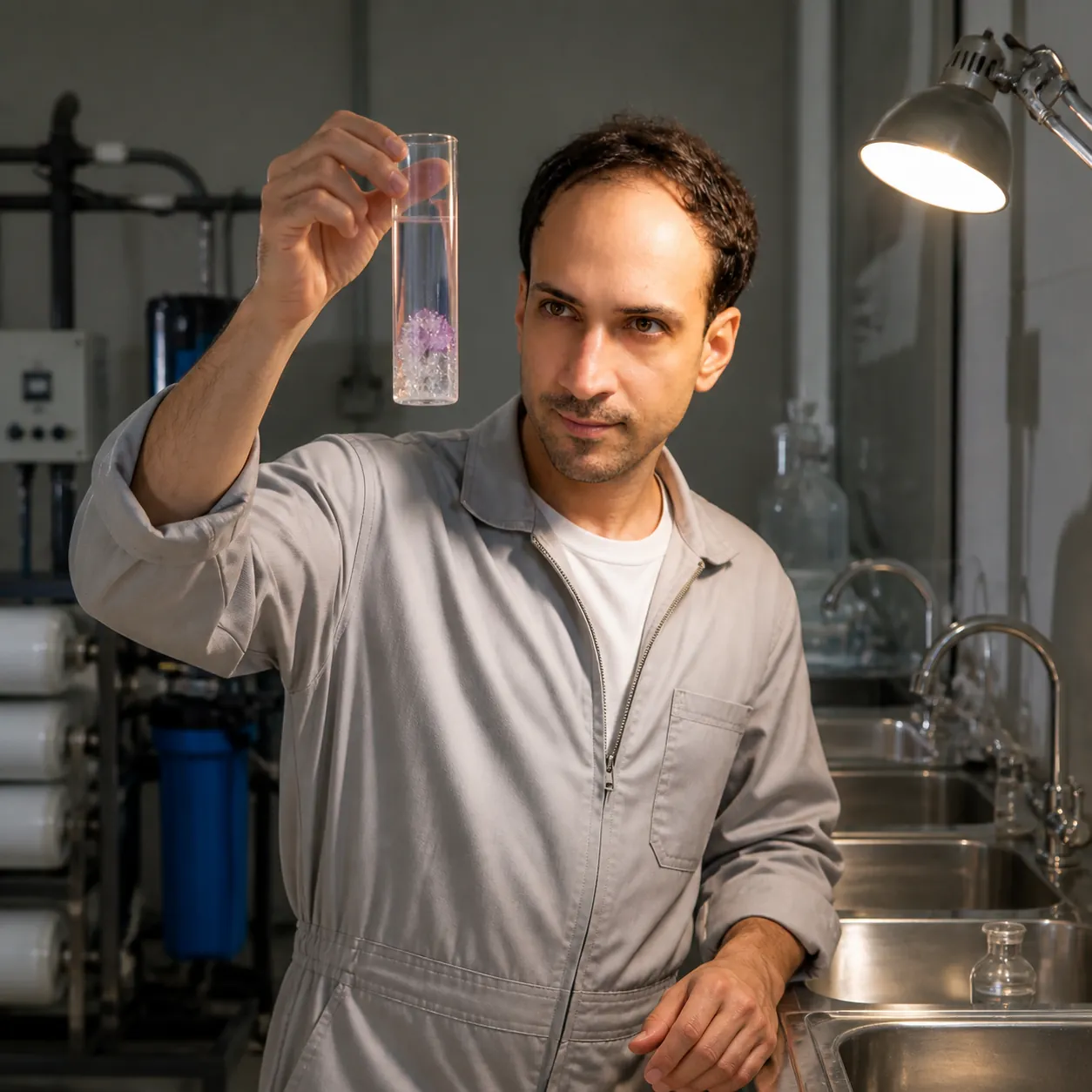
Out of Solution: Sampling Room — AI Portrait Prompt
صورةAI Portraits

Turn your own photo into a portrait in the sampling room of a small desalination plant, steel sinks gleaming. Keeps your face unchanged.

من نص البرومبت

Use the attached reference photo as the identity reference: keep the same face, skin tone, hair and features as the person in that photo, without beautifying, aging or altering them. Treat that reference as the character anchor and change only the scene. Create a square 1:1 museum-catalog frame with a strong first read and a slower second read at exactly 2880x2880 pixels. Location: the sampling room of a small desalination plant, steel sinks gleaming. Show the subject in a light grey coverall unzipped to a clean white crew-neck, raising a clear sample cylinder to eye level. Build the artwork around this material rule: a two-tone crystal with a violet chrome-alum heart jacketed in clear potassium alum, one lattice continued across two different chemistries produces confident geometry in a place where nobody asked for any. Explore how much of building is simply removing the reasons not to begin; direct expression and posture toward measured reverence, never melodrama or ad-like confidence. Use a measured 32mm wide view from respectful distance with all verticals kept straight. Make the composition hold one large calm emptiness against the crowded crystalline detail. Render it as conceptual bench-science photography combining believable grown geometry, honest hand-and-glass interaction, precise material response, and quiet contemporary gallery restraint, using one raking bench lamp that turns every crystal edge into a drawn line and a palette of raw cotton, dim pewter, and clear sugar amber. Photorealistic: this must read as a real photograph from a physical camera, never an illustration, painting, or 3D render. Resolve real surface detail: hair with individual strands catching light, fine hair of uneven length, and skin oil giving a low uneven sheen. Keep one identity-locked person, credible hands and fingers, natural fabric, and coherent scale, contact, reflections, shadows, airflow, deformation, and materials. Background people only when essential, always secondary and clearly different. Avoid wizard-laboratory props, neon translucent minerals, floating crystal shards, motion-smeared growth trails, and jewelry-advert sparkle. No text, labels, logos, signatures, watermarks, random symbols, plastic skin, excessive bloom, or glossy AI finish.
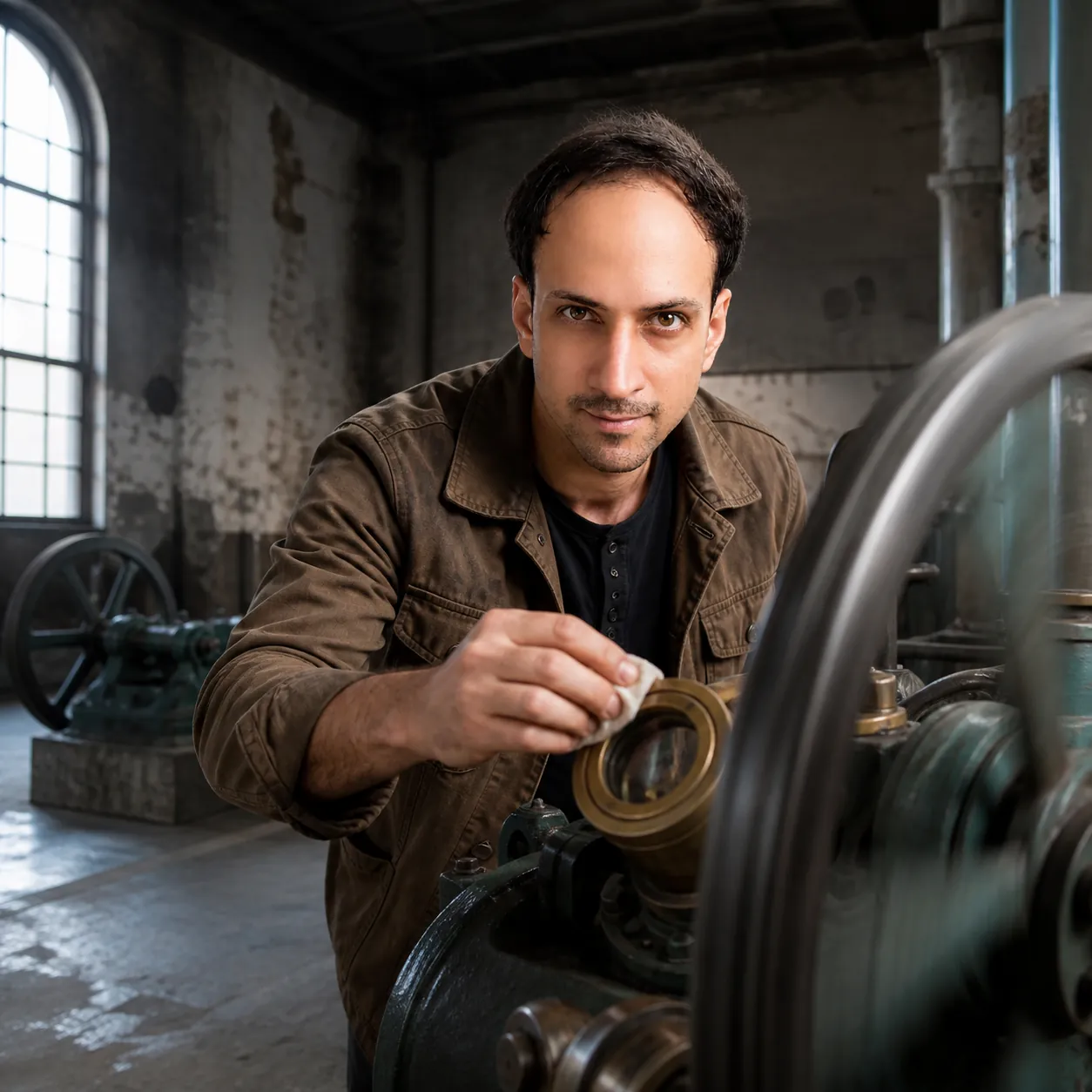
Between Frames: Decommissioned Pump Hall — AI Portrait Prompt
صورةAI Portraits

Turn your own photo into a portrait in a decommissioned pump hall, its painted machinery bolted to concrete plinths. Keeps your face unchanged.

من نص البرومبت

Use the attached reference photo as the identity reference: keep the same face, skin tone, hair and features as the person in that photo, without beautifying, aging or altering them. Create a square 1:1 museum-catalog frame with a strong first read and a slower second read at exactly 2880x2880 pixels. Location: a decommissioned pump hall, its painted machinery bolted to concrete plinths. Show the subject in a brown canvas jacket over a faded black henley, polishing a brass sight-glass clear with one slow thumb. Treat this mechanism as the frame’s governing rule: a spoked flywheel spinning at full speed that their strobe knob walks from a standstill into slow, deliberate reverse turns strict mechanical repetition into one seamless appearance the eye trusts. Explore how strict repetition can impersonate growth while nothing on the table grows; direct expression and posture toward collected surprise, never melodrama or ad-like confidence. Frame past the working apparatus from slightly behind it, keeping their attentive face sharp beyond the blur. Make the composition oppose the machine's blur against their perfectly still attention. Render it as kinetic-sculpture photography grounded in believable machinery, honest depth of field, accurate frozen-motion physics, and unhurried editorial portrait craft, using one cool low-angle key with soft continuous fill and honest shadows and a palette of lamp black, worn tin, and one arc of verdigris. Photorealistic: this must read as a real photograph from a physical camera, never an illustration, painting, or 3D render. Resolve real surface detail: floor finish worn along the walked line, skirting marked at shoe height, and corners darker than the open floor. Keep one identity-locked subject, credible hands and fingers, natural fabric, and coherent scale, contact, reflections, shadows, airflow, deformation, and materials. Background people only when essential, always secondary and clearly different. Avoid steampunk goggles and gears, CGI slow-motion splashes, projected film beams, carnival colors, and duplicated human figures. No text, labels, logos, signatures, watermarks, random symbols, plastic skin, excessive bloom, or glossy AI finish.
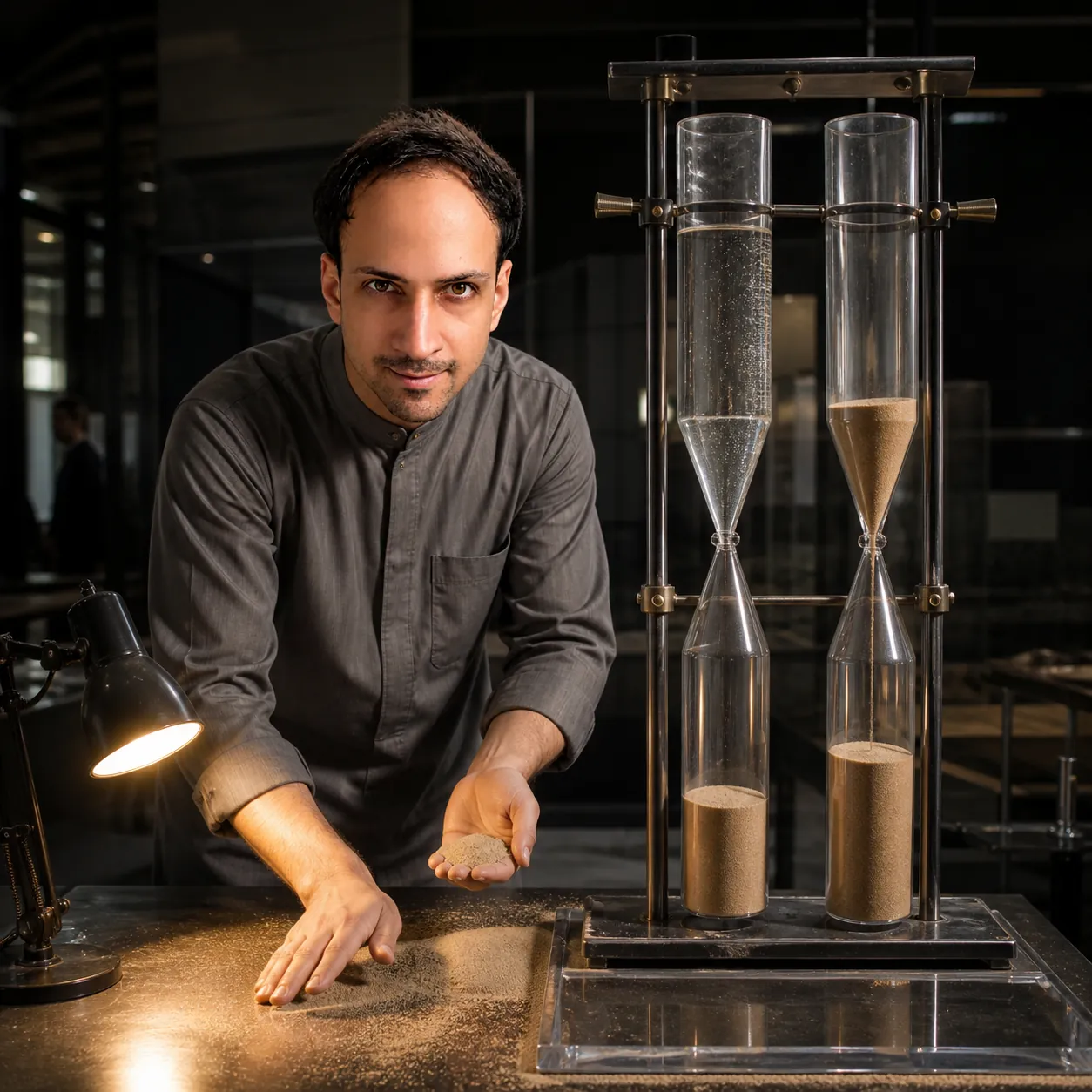
Collective Grain: Science-Center Demonstration Hall — AI Portrait Prompt
صورةAI Portraits

Turn your own photo into a conceptual earth-science portrait in a science-center demonstration hall an hour before the doors open. Keeps your face unchanged.

من نص البرومبت

Use the attached reference photo as the identity reference: keep the same face, skin tone, hair and features as the person in that photo, without beautifying, aging or altering them. Create a square 1:1 museum-catalog frame with a strong first read and a slower second read at exactly 2880x2880 pixels. Location: a science-center demonstration hall an hour before the doors open. Show the subject in a pressed grey traditional Gulf outfit with sleeves folded once at the wrists, brushing stray grains from the benchtop into one cupped hand. Build the artwork around this material rule: a pair of matched glass columns draining side by side, the water slowing while the sand keeps one metronome rate gives the desert's most ordinary material the standing of an exact instrument. Explore why a threshold obeyed by every grain feels like character rather than law; direct expression and posture toward steady curiosity, never melodrama or ad-like confidence. Use a composed 35mm environmental view that gives the apparatus and the subject equal standing. Make the composition place their hands and the demonstration inside one unbroken triangle. Render it as conceptual earth-science portraiture combining tactile working apparatus, believable granular flow, restrained contemporary art direction, and unhurried human presence, using one bare work lamp angled low across the sand's textured surface and a palette of soft ochre, cool slate, and one deep olive note. Photorealistic: this must read as a real photograph from a physical camera, never an illustration, painting, or 3D render. Resolve real surface detail: hair with individual strands catching light, fine hairs of uneven length, and skin oil giving a low uneven sheen. Keep one identity-locked subject, credible hands and fingers, natural fabric, and coherent scale, contact, reflections, shadows, airflow, deformation, and materials. Background people only when essential, always secondary and clearly different. Avoid falconry props, camel caravans, CGI sand tornadoes, face-morphing sand sculptures, and endless untouched postcard dunes. No text, labels, logos, signatures, watermarks, random symbols, plastic skin, excessive bloom, or glossy AI finish.
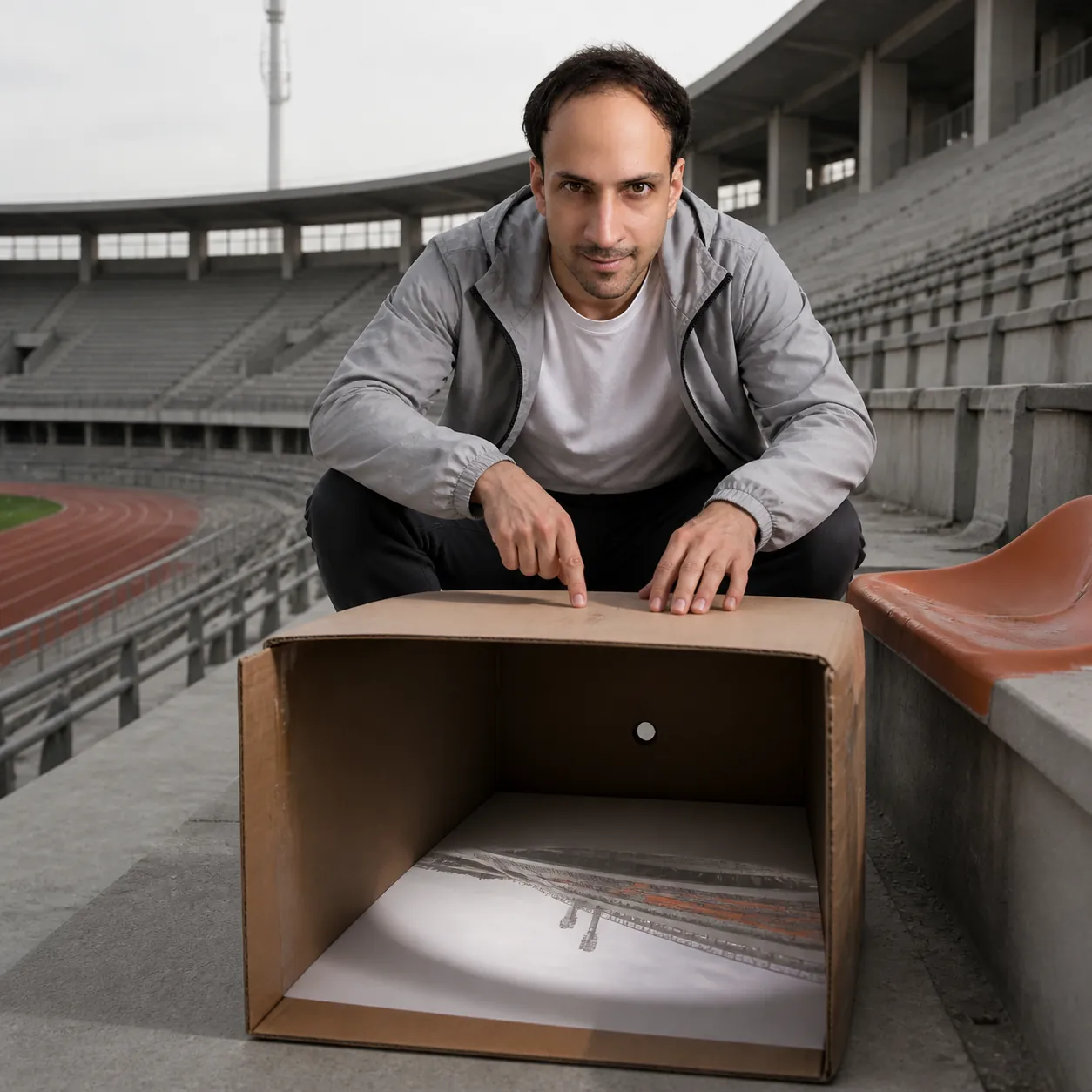
Distance Negotiates: Empty Upper Tier of a Small Stadium — AI Portrait Prompt
صورةAI Portraits

Turn your own photo into a gallery-grade perspective portrait in the empty upper tier of a small stadium before morning training. Keeps your face unchanged.

من نص البرومبت

Use the attached reference photo as the identity reference: keep the same face, skin tone, hair and features as the person in that photo, without beautifying, aging or altering them. Create a square 1:1 museum-catalog frame with a strong first read and a slower second read at exactly 2880x2880 pixels. Location: the empty upper tier of a small stadium before morning training. Show the subject in a light athletic shell jacket over a plain cotton tee and joggers, counting seat rows below with one slow pointed finger. Build the artwork around this material rule: a table-sized obscura box whose pinhole lays the sunlit surroundings, inverted and alive, across its white floor defeats the eye's scale instinct with nothing but honest, lawful geometry. Explore what remains of certainty when the eye's oldest ruler fails politely; direct expression and posture toward steady disbelief, never melodrama or ad-like confidence. Use a long 200mm compression view across open distance, keeping them and the far structure equally sharp. Make the composition hold near and far in equal sharpness against the eye's expectation. Render it as gallery-grade perspective photography built from real sightline alignments, measured camera placement, physically accurate focus falloff, and unhurried dignified portrait values, using flat overcast daylight that removes haze cues and levels every distance and a palette of warm grey concrete, pale haze, and one signal orange. Photorealistic: this must read as a real photograph from a physical camera, never an illustration, painting, or 3D render. Resolve real surface detail: label-free packaging showing carton fibre, cardboard bruised at the corners, and tape lifting slightly at one end. Keep one identity-locked person, credible hands and fingers, natural fabric, and coherent scale, contact, reflections, shadows, airflow, deformation, and materials. Background people only when essential, always secondary and clearly different. Avoid shrunken-person composites, giant-monster posing, fake miniature blur filters, candy-toy oversaturation, and warped fisheye streets. No text, labels, logos, signatures, watermarks, random symbols, plastic skin, excessive bloom, or glossy AI finish.
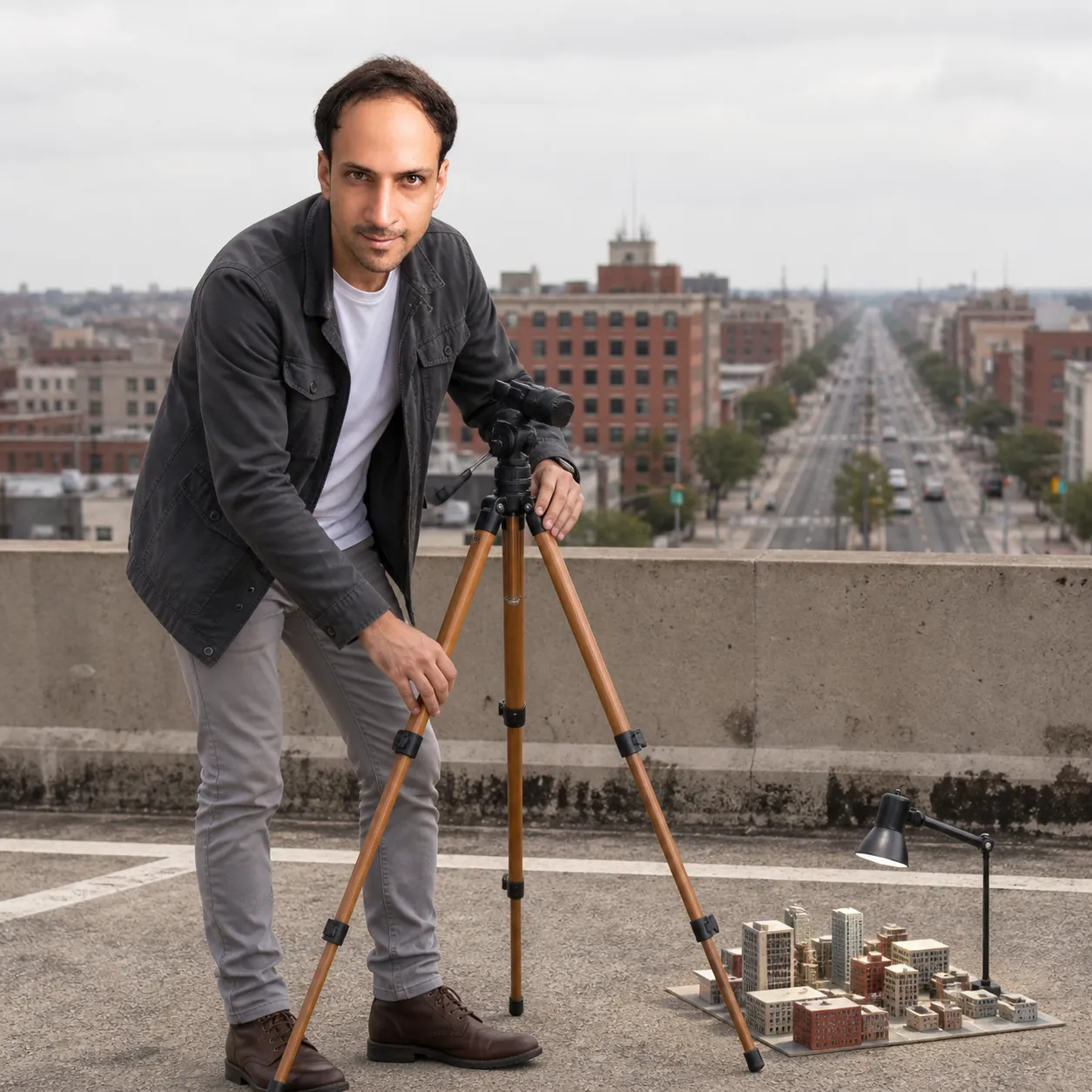
Viewpoint Rules: Top Deck of an Empty Parking Garage — AI Portrait Prompt
صورةAI Portraits

Turn your own photo into a portrait in the top deck of an empty parking garage overlooking a straight boulevard. Keeps your face unchanged.

من نص البرومبت

Use the attached reference photo as the identity reference: keep the same face, skin tone, hair and features as the person in that photo, without beautifying, aging or altering them. Create a square 1:1 museum-catalog frame with a strong first read and a slower second read at exactly 2880x2880 pixels. Location: the top deck of an empty parking garage overlooking a straight boulevard. Show the subject in a graphite field jacket over a plain white tee and grey chinos, spreading a wooden tripod's legs against the parapet curb. Build the artwork around this material rule: a knee-high model district under a collimated lamp whose parallel shadows copy the true noon sun to the exact degree achieves its entire effect without altering a single object it shows. Explore why a lawful illusion grows stronger the more carefully it is inspected; direct expression and posture toward composed surprise, never melodrama or ad-like confidence. Use a long 200mm compression view across open distance, keeping them and the far structure equally sharp. Make the composition grant the smallest object the frame's greatest visual weight. Render it as gallery-grade perspective photography built from real sightline alignments, measured camera placement, physically accurate focus falloff, and unhurried dignified portrait values, using flat overcast daylight that removes haze cues and levels every distance and a palette of dust beige, asphalt grey, and a single brick red. Photorealistic: this must read as a real photograph from a physical camera, never an illustration, painting, or 3D render. Resolve real surface detail: cotton that hangs by its own weight, seams that pucker very slightly, and collars softened by washing. Keep one identity-locked person, credible hands and fingers, natural fabric, and coherent scale, contact, reflections, shadows, airflow, deformation, and materials. Background people only when essential, always secondary and clearly different. Avoid surreal scale collage, floating figures, painted anamorphic pavement, and dollhouse cartoon styling. No text, labels, logos, signatures, watermarks, random symbols, plastic skin, excessive bloom, or glossy AI finish.
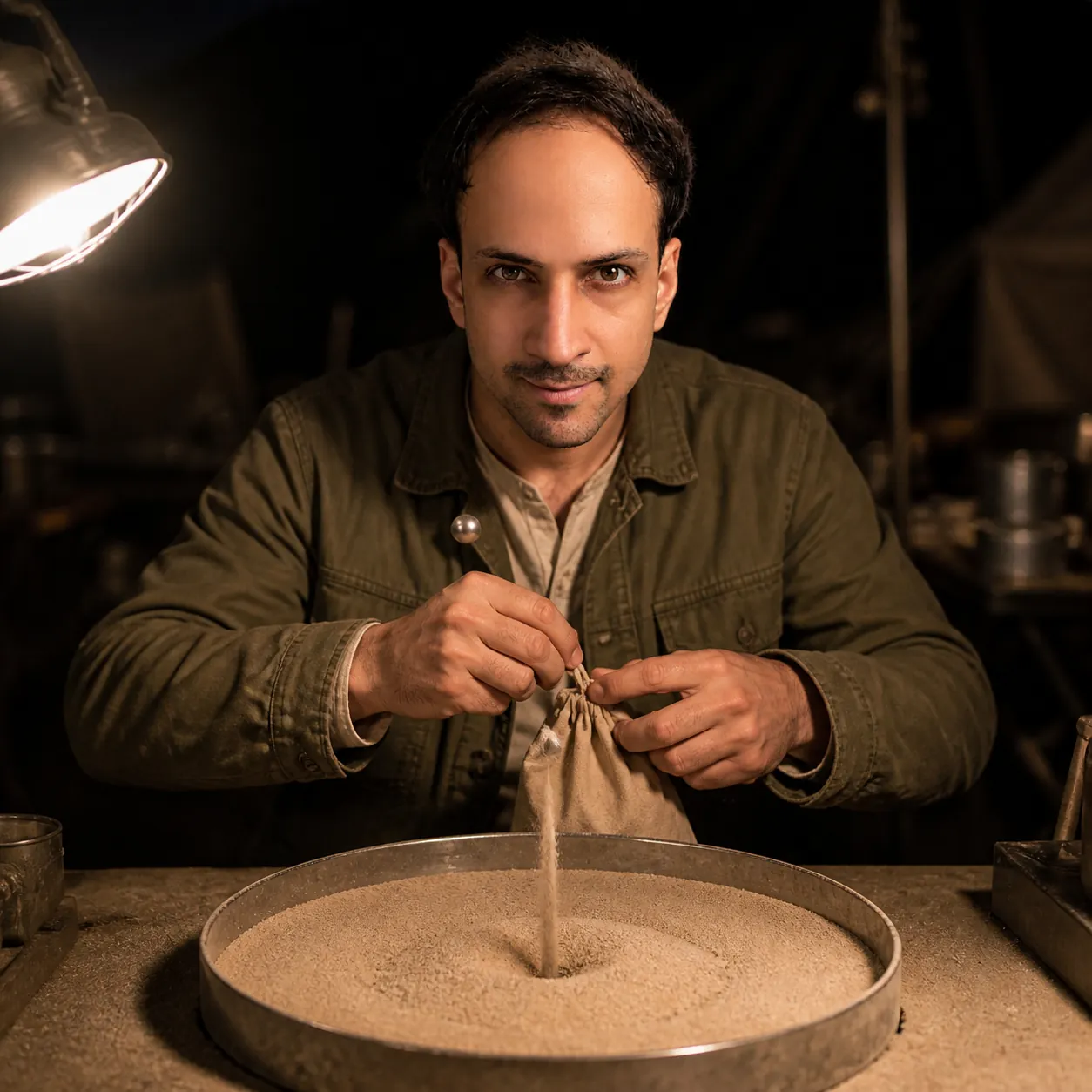
Sand's Grammar: Field Camp — AI Portrait Prompt
صورةAI Portraits

Turn your own photo into a high-concept field-physics portrait in a field camp under one work lamp after the wind has died. Keeps your face unchanged.

من نص البرومبت

Use the attached reference photo as the identity reference: keep the same face, skin tone, hair and features as the person in that photo, without beautifying, aging or altering them. Create a square 1:1 museum-catalog frame with a strong first read and a slower second read at exactly 2880x2880 pixels. Location: a field camp under one work lamp after the wind has died. Show the subject in an olive chore coat buttoned over a collarless cotton shirt, knotting the drawstring of a small canvas sample bag. Treat this mechanism as the frame’s governing rule: a dish of loose fine sand firing a narrow vertical jet back up along the path of a dropped steel ball shows dry grains refusing to be fully solid or fully liquid. Explore whether they are conducting the demonstration or merely giving the sand its cue; direct expression and posture toward quiet reckoning, never melodrama or ad-like confidence. Frame from just above the sand's surface so its grain-scale horizon leads to their level gaze. Make the composition render grains near the action sharper than their skin. Render it as high-concept field-physics portraiture built from real granular mechanics, documentary desert realism, instrument-grade experimental staging, and emotionally restrained observational lighting, using one bare work lamp angled low across the sand's textured surface and a palette of sifted taupe, worn steel, and a low amber accent. Photorealistic: this must read as a real photograph from a physical camera, never an illustration, painting, or 3D render. Resolve real surface detail: grout darker than tile, sealant slightly yellowed, and every joint showing a real tolerance gap. Keep one identity-locked subject, credible hands and fingers, natural fabric, and coherent scale, contact, reflections, shadows, airflow, deformation, and materials. Background people only when essential, always secondary and clearly different. Avoid swirling sandstorm vortices, glowing hourglass fantasy, levitating sand spirals, cymatic pattern plates, and heroic dune-top silhouettes. No text, labels, logos, signatures, watermarks, random symbols, plastic skin, excessive bloom, or glossy AI finish.
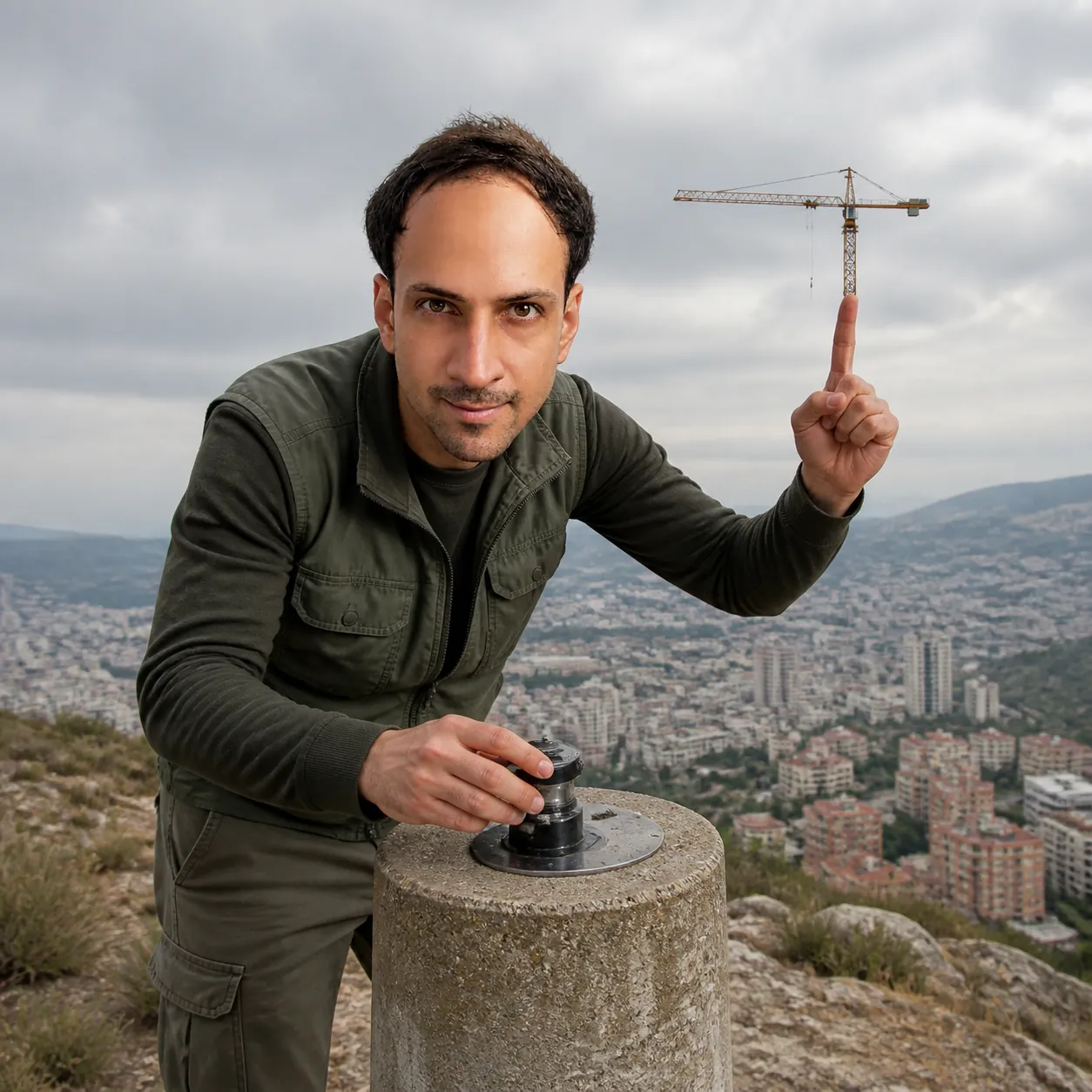
Scale Undone: Hilltop Triangulation Pillar — AI Portrait Prompt
صورةAI Portraits

Turn your own photo into a gallery-grade perspective portrait in a hilltop triangulation pillar above the city's northern districts. Keeps your face unchanged.

من نص البرومبت

Use the attached reference photo as the identity reference: keep the same face, skin tone, hair and features as the person in that photo, without beautifying, aging or altering them. Create a square 1:1 museum-catalog frame with a strong first read and a slower second read at exactly 2880x2880 pixels. Location: a hilltop triangulation pillar above the city's northern districts. Show the subject in an olive utility vest over a long-sleeve base layer and cargo trousers, screwing a panoramic head onto the pillar's center bolt. Use this advanced image-making device as the core logic: a distant tower crane that settles weightlessly onto their raised fingertip when the camera holds one surveyed vantage defeats the eye's scale instinct with nothing but honest, lawful geometry. Explore how a viewpoint can rebuild the world without moving a single object; direct expression and posture toward sober curiosity, never melodrama or ad-like confidence. Frame at the demonstration's own height so the optical event and their eyes share one axis. Make the composition seat the illusion dead center and let them stand off-axis. Render it as gallery-grade perspective photography built from real sightline alignments, measured camera placement, physically accurate focus falloff, and unhurried dignified portrait values, using a single practical lamp held low, its beam spreading lawfully with distance and a palette of overcast silver, limestone buff, and one dark cedar green. Photorealistic: this must read as a real photograph from a physical camera, never an illustration, painting, or 3D render. Resolve real surface detail: visible weave in cloth, fine scratches on metal, and the faint unevenness of painted walls. Keep one identity-locked person, credible hands and fingers, natural fabric, and coherent scale, contact, reflections, shadows, airflow, deformation, and materials. Background people only when essential, always secondary and clearly different. Avoid shrunken-person composites, giant-monster posing, fake miniature blur filters, candy-toy oversaturation, and warped fisheye streets. No text, labels, logos, signatures, watermarks, random symbols, plastic skin, excessive bloom, or glossy AI finish.
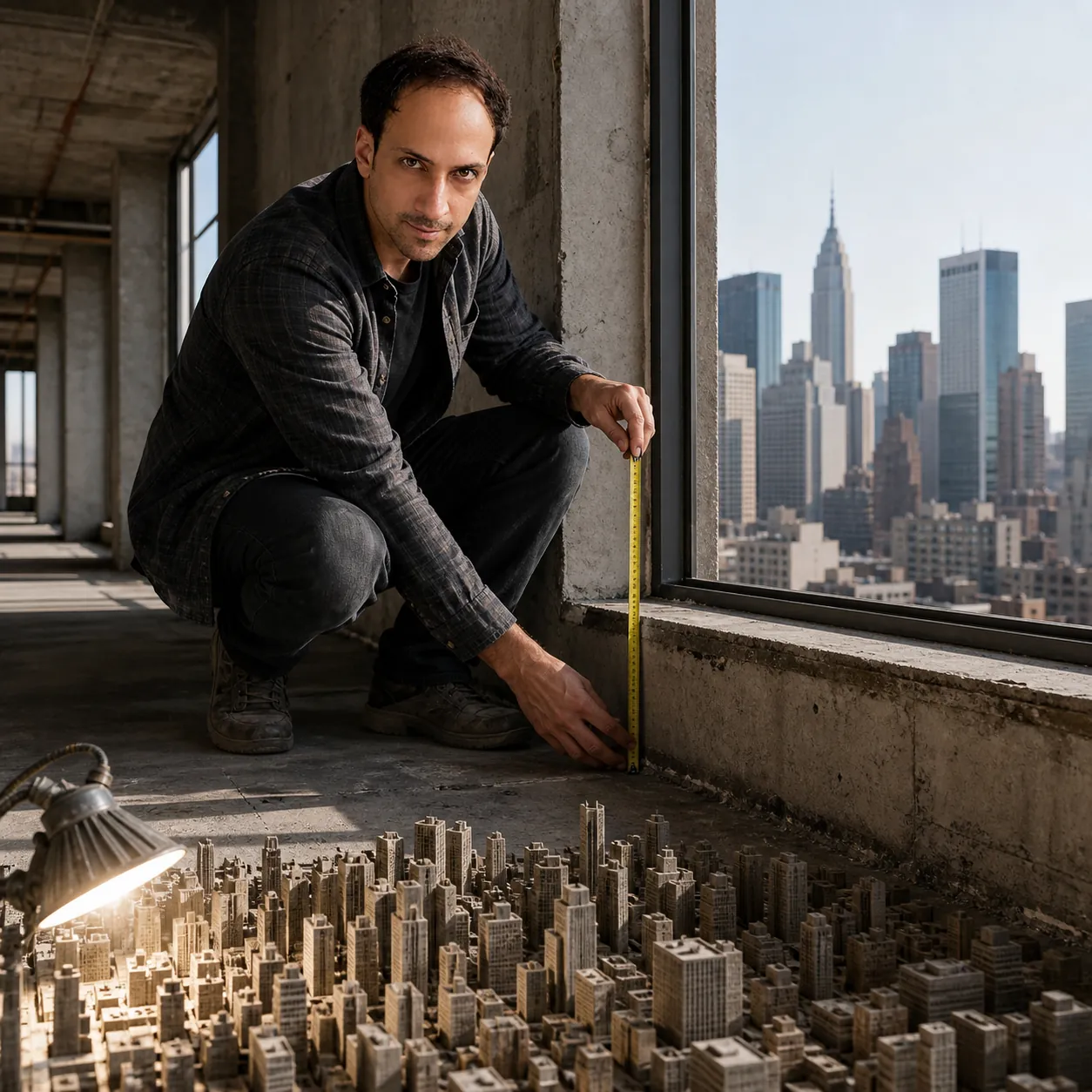
Viewpoint Rules: Nineteenth-Floor Window — AI Portrait Prompt
صورةAI Portraits

Turn your own photo into a portrait in the nineteenth-floor window of an unfinished tower, floor swept bare. Keeps your face unchanged.

من نص البرومبت

Use the attached reference photo as the identity reference: keep the same face, skin tone, hair and features as the person in that photo, without beautifying, aging or altering them. Create a square 1:1 museum-catalog frame with a strong first read and a slower second read at exactly 2880x2880 pixels. Location: the nineteenth-floor window of an unfinished tower, floor swept bare. Show the subject in a slate flannel shirt jacket buttoned once over a charcoal tee, measuring the window's sill height with a pocket tape. Make one rigorous physical condition the conceptual engine: a knee-high model district under a collimated lamp whose parallel shadows copy the true noon sun to the exact degree defeats the eye's scale instinct with nothing but honest, lawful geometry. Explore why a lawful illusion grows stronger the more carefully it is inspected; direct expression and posture toward quiet astonishment, never melodrama or ad-like confidence. Use an eye-level 50mm view stopped far down so near objects and far architecture hold equal focus. Make the composition hold near and far in equal sharpness against the eye's expectation. Render it as museum-grade demonstration photography combining true forced-perspective staging, honest depth-of-field behavior, believable material scale cues, and restrained contemporary art direction, using a single practical lamp held low, its beam spreading lawfully with distance and a palette of bone white, deep umber, and one restrained teal. Photorealistic: this must read as a real photograph from a physical camera, never an illustration, painting, or 3D render. Resolve real surface detail: fine grit in the texture of concrete, efflorescence at damp edges, and hairline cracks that follow stress. Keep one identity-locked person, credible hands and fingers, natural fabric, and coherent scale, contact, reflections, shadows, airflow, deformation, and materials. Background people only when essential, always secondary and clearly different. Avoid shrunken-person composites, giant-monster posing, fake miniature blur filters, candy-toy oversaturation, and warped fisheye streets. No text, labels, logos, signatures, watermarks, random symbols, plastic skin, excessive bloom, or glossy AI finish.
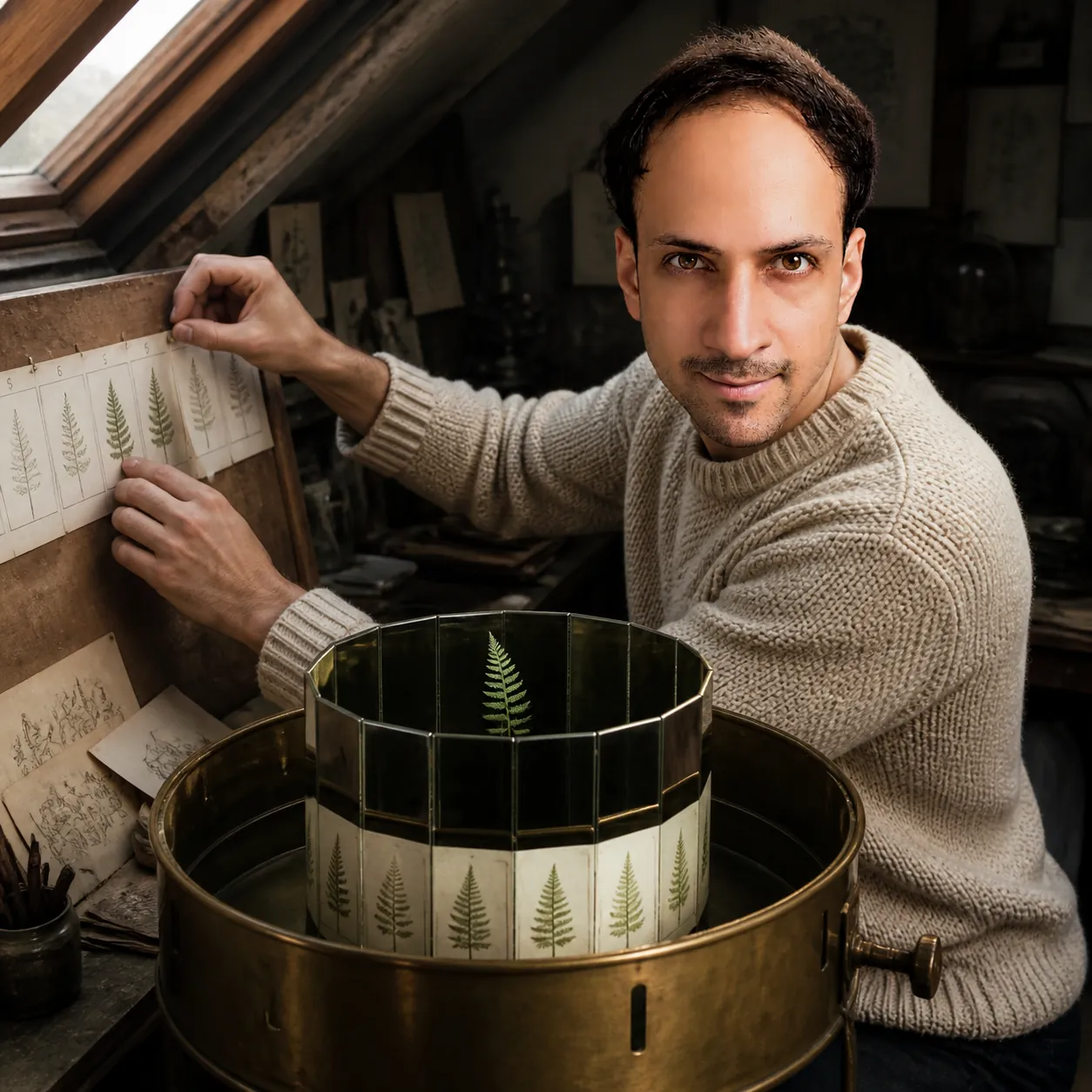
Time in Slices: Illustrator's Attic Studio — AI Portrait Prompt
صورةAI Portraits

Turn your own photo into a photorealistic portrait in an illustrator's attic studio, its drawing desk tilted toward a dormer. Keeps your face unchanged.

من نص البرومبت

Use the attached reference photo as the identity reference: keep the same face, skin tone, hair and features as the person in that photo, without beautifying, aging or altering them. Create a square 1:1 museum-catalog frame with a strong first read and a slower second read at exactly 2880x2880 pixels. Location: an illustrator's attic studio, its drawing desk tilted toward a dormer. Show the subject in an oatmeal fisherman sweater with sleeves pushed past the wrist, pinning a strip of numbered sketches to a cork rail. The impossible-looking event must obey this clear system: a brass praxinoscope whose central drum of mirrors steadies a painted fern strip into one unfurling frond floating at its center recruits the viewer's own persistence of vision as its final moving part. Explore whether stillness manufactured by perfect timing is rest or the strictest discipline; direct expression and posture toward grounded wonder, never melodrama or ad-like confidence. Use a 50mm chest-height viewpoint that keeps both their hands and the mechanism's rim readable. Make the composition hold one margin of honest darkness where the lamplight gives out. Render it as workshop-theater realism made of practical light, era-true optical instruments, credible material wear, and quietly composed human-scale theatrical staging, using one cool low-angle key with soft continuous fill and honest shadows and a palette of soot grey, unpainted card, and one band of vermilion. Photorealistic: this must read as a real photograph from a physical camera, never an illustration, painting, or 3D render. Resolve real surface detail: glass with real thickness at its edge, reflections that carry the room's actual colour, and dust visible only at grazing angles. Keep one identity-locked subject, credible hands and fingers, natural fabric, and coherent scale, contact, reflections, shadows, airflow, deformation, and materials. Background people only when essential, always secondary and clearly different. Avoid film-strip borders, cartoon motion lines, ghosted multiple faces, glowing hologram spin, and sparks flying off machinery. No text, labels, logos, signatures, watermarks, random symbols, plastic skin, excessive bloom, or glossy AI finish.
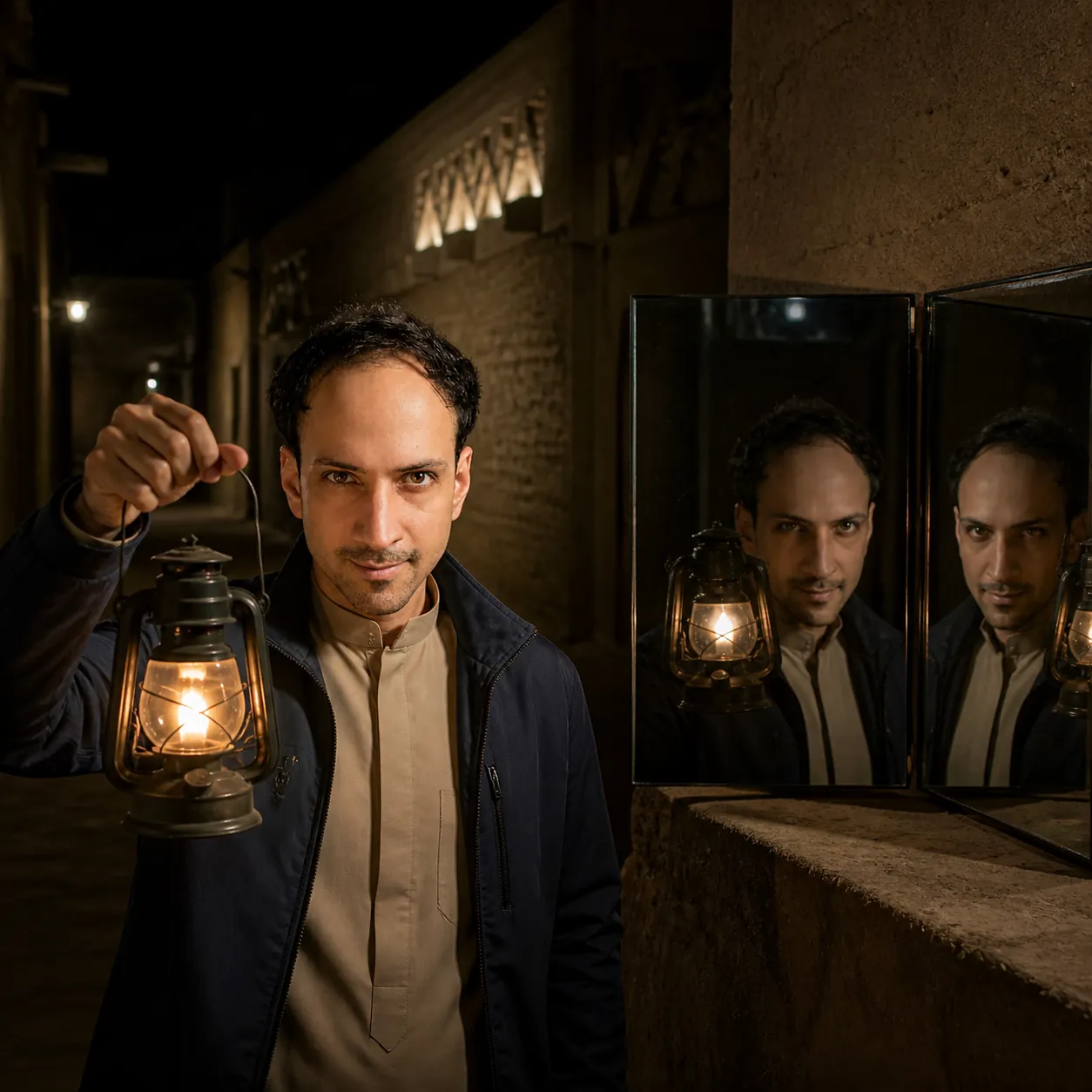
The Way Home: Mud-Brick Alley — AI Portrait Prompt
صورةAI Portraits

Turn your own photo into a quiet experimental gallery portrait in a mud-brick alley in old Diriyah after nightfall. Keeps your face unchanged.

من نص البرومبت

Use the attached reference photo as the identity reference: keep the same face, skin tone, hair and features as the person in that photo, without beautifying, aging or altering them. Create a square 1:1 museum-catalog frame with a strong first read and a slower second read at exactly 2880x2880 pixels. Location: a mud-brick alley in old Diriyah after nightfall. Show the subject in a light navy jacket worn open over a sand-toned traditional Gulf outfit, raising a hand lantern slowly to shoulder height. Use this advanced image-making device as the core logic: a hollow corner of three mirrors that pins their reflected gaze to its apex no matter where they move their head keeps its full brightness for the one standing at the light's source. Explore how a surface can be truthfully dark and truthfully blazing in the same minute; direct expression and posture toward sober delight, never melodrama or ad-like confidence. Frame from slightly low in the dark, their face lit by spill rather than beam. Make the composition hold the dark version and the blazing version inside one frame. Render it as quiet experimental gallery photography built around one working retroreflector, disciplined single-source lighting, true-to-life surface response, and patient observational framing, using cool moonless darkness broken by one narrow torch beam and faint spill and a palette of graphite, dusty sand, and one pale gold star. Photorealistic: this must read as a real photograph from a physical camera, never an illustration, painting, or 3D render. Resolve real surface detail: visible weave in cloth, fine scratches on metal, and the faint unevenness of painted walls. Keep one identity-locked subject, credible hands and fingers, natural fabric, and coherent scale, contact, reflections, shadows, airflow, deformation, and materials. Background people only when essential, always secondary and clearly different. Avoid glowing sci-fi visors, hi-vis vest advertising poses, lens-flare starbursts, and neon cyberpunk streets. No text, labels, logos, signatures, watermarks, random symbols, plastic skin, excessive bloom, or glossy AI finish.
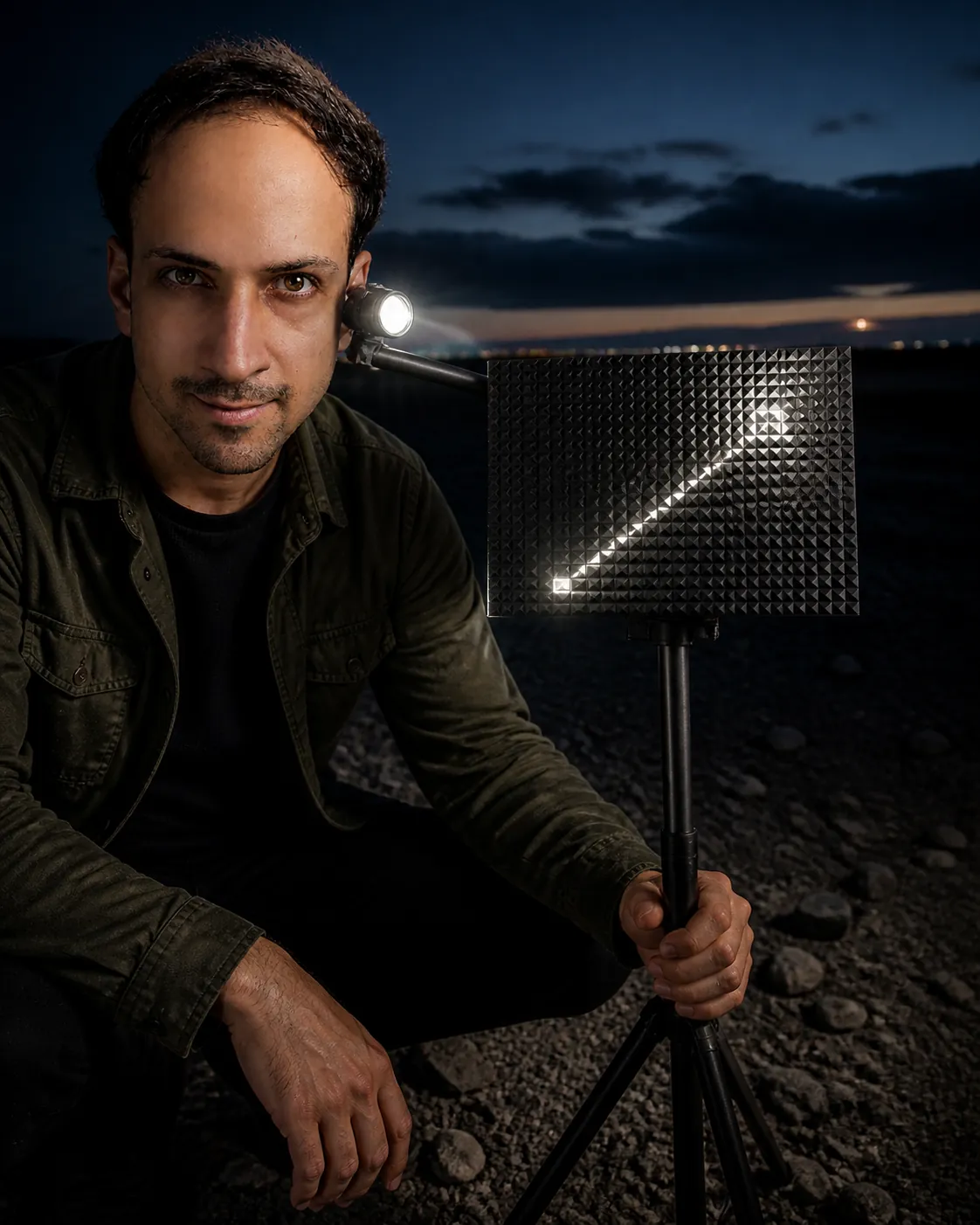
Returned Light: Gravel Plain — AI Portrait Prompt
صورةAI Portraits

Turn your own photo into a museum-grade demonstration portrait in a gravel plain at full dark beyond the city's last lights. Keeps your face unchanged.

من نص البرومبت

Use the attached reference photo as the identity reference: keep the same face, skin tone, hair and features as the person in that photo, without beautifying, aging or altering them. Treat that reference as the character anchor and change only the scene. Build a portrait 4:5 editorial artwork with protected negative space and a fully readable face at exactly 2560x3200 pixels. Location: a gravel plain at full dark beyond the city's last lights. Show them in a heavy olive overshirt over a dark thermal layer, planting a slim tripod leg firm with one press. The impossible-looking event must obey this clear system: a molded tile of tiny corner-cube prisms that lights end-to-end like a struck match when their lamp rides beside their eye returns illumination to its sender like a letter that knows its address. Explore why light that returns to its sender feels more like recognition than reflection; direct expression and posture toward patient verification, never melodrama or ad-like confidence. Frame from slightly low in the dark, their face lit by spill rather than beam. Make the composition hold the dark version and the blazing version inside one frame. Render it as museum-grade demonstration photography combining truthful on-axis brilliance, deep readable shadow detail, tactile instrument surfaces, and unhurried human presence, using low ambient dusk with a single handheld beam as the only key and a palette of night blue, bone grey, and one silver pinprick. Photorealistic: this must read as a real photograph from a physical camera, never an illustration, painting, or 3D render. Resolve real surface detail: dust settled where nobody wipes, fingerprint haze on glass, and edges rubbed pale by handling. Keep one identity-locked person, credible hands and fingers, natural fabric, and coherent scale, contact, reflections, shadows, airflow, deformation, and materials. Background people only when essential, always secondary and clearly different. Avoid laser-show haze walls, glowing animal eyes, CGI light tunnels, painted halos, and highway signage. No text, labels, logos, signatures, watermarks, random symbols, plastic skin, excessive bloom, or glossy AI finish.
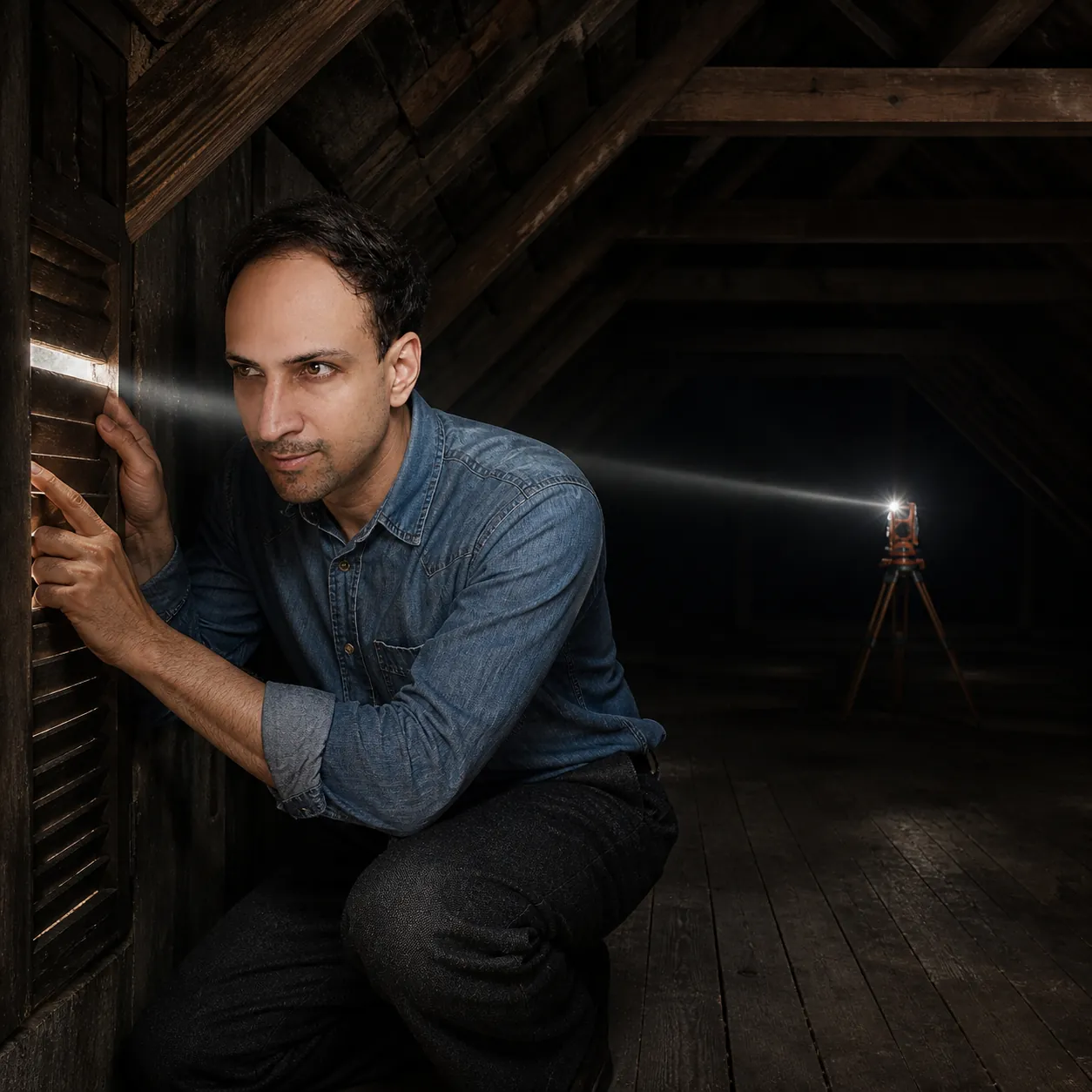
The Quiet Reply: Raftered Attic Loft — AI Portrait Prompt
صورةAI Portraits

Turn your own photo into a museum-grade demonstration portrait in a raftered attic loft with one shuttered dormer and swept boards. Keeps your face unchanged.

من نص البرومبت

Use the attached reference photo as the identity reference: keep the same face, skin tone, hair and features as the person in that photo, without beautifying, aging or altering them. Create a square 1:1 museum-catalog frame with a strong first read and a slower second read at exactly 2880x2880 pixels. Location: a raftered attic loft with one shuttered dormer and swept boards. Show the subject in a washed denim shirt buttoned up and dark wool trousers, sliding the dormer shutter to a narrow slit. Make one rigorous physical condition the conceptual engine: a surveyor's corner prism stationed far down the dark that answers their small torch with one clean star of returned light keeps its full brightness for the one standing at the light's source. Explore how geometry alone can address a reply to one eye and no other; direct expression and posture toward quiet astonishment, never melodrama or ad-like confidence. Use an eye-level 80mm medium-format viewpoint with natural perspective and deep honest blacks. Make the composition align lamp, eye, and return along one legible line. Render it as museum-grade demonstration photography combining truthful on-axis brilliance, deep readable shadow detail, tactile instrument surfaces, and unhurried human presence, using cool moonless darkness broken by one narrow torch beam and faint spill and a palette of asphalt grey, faded canvas, and one amber thread. Photorealistic: this must read as a real photograph from a physical camera, never an illustration, painting, or 3D render. Resolve real surface detail: fine grit in the texture of concrete, efflorescence at damp edges, and hairline cracks that follow stress. Keep one identity-locked subject, credible hands and fingers, natural fabric, and coherent scale, contact, reflections, shadows, airflow, deformation, and materials. Background people only when essential, always secondary and clearly different. Avoid glowing sci-fi visors, hi-vis vest advertising poses, lens-flare starbursts, and neon cyberpunk streets. No text, labels, logos, signatures, watermarks, random symbols, plastic skin, excessive bloom, or glossy AI finish.
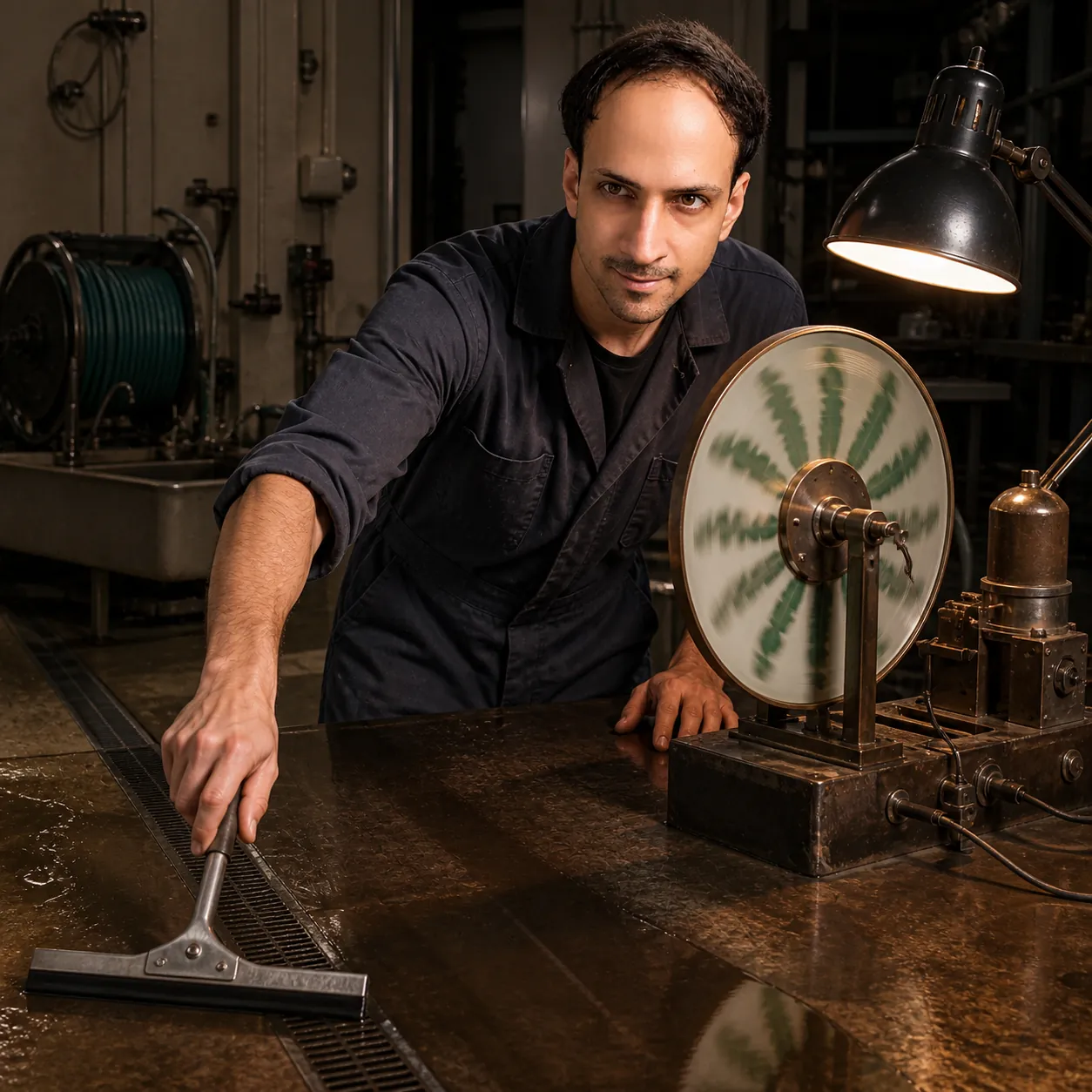
The Eye Finishes: Hydraulics Teaching Lab — AI Portrait Prompt
صورةAI Portraits

Turn your own photo into a photorealistic portrait in a hydraulics teaching lab with floor drains and coiled hose reels. Keeps your face unchanged.

من نص البرومبت

Use the attached reference photo as the identity reference: keep the same face, skin tone, hair and features as the person in that photo, without beautifying, aging or altering them. Create a square 1:1 museum-catalog frame with a strong first read and a slower second read at exactly 2880x2880 pixels. Location: a hydraulics teaching lab with floor drains and coiled hose reels. Show the subject in a slate work coverall with sleeves rolled past the elbow, squeegeeing a narrow path of water off the bench. Build the artwork around this material rule: a hand-cranked phenakistoscope disk whose printed palm frond unfolds smoothly the instant a synced flash begins sampling its spin recruits the viewer's own persistence of vision as its final moving part. Explore what the viewer contributes when the mechanism only supplies interrupted glimpses; direct expression and posture toward unhurried awe, never melodrama or ad-like confidence. Use a shutter just slow enough that moving parts blur truthfully while their face stays sharp. Make the composition give their hand, the mechanism, and their gaze one connected diagonal. Render it as workshop-theater realism made of practical light, era-true optical instruments, credible material wear, and quietly composed human-scale theatrical staging, using one shaded work lamp over the apparatus and darkness kept honest beyond and a palette of lamp black, worn tin, and one arc of verdigris. Photorealistic: this must read as a real photograph from a physical camera, never an illustration, painting, or 3D render. Resolve real surface detail: label-free packaging showing carton fibre, cardboard bruised at the corners, and tape lifting slightly at one end. Keep one identity-locked subject, credible hands and fingers, natural fabric, and coherent scale, contact, reflections, shadows, airflow, deformation, and materials. Background people only when essential, always secondary and clearly different. Avoid film-strip borders, cartoon motion lines, ghosted multiple faces, glowing hologram spin, and sparks flying off machinery. No text, labels, logos, signatures, watermarks, random symbols, plastic skin, excessive bloom, or glossy AI finish.
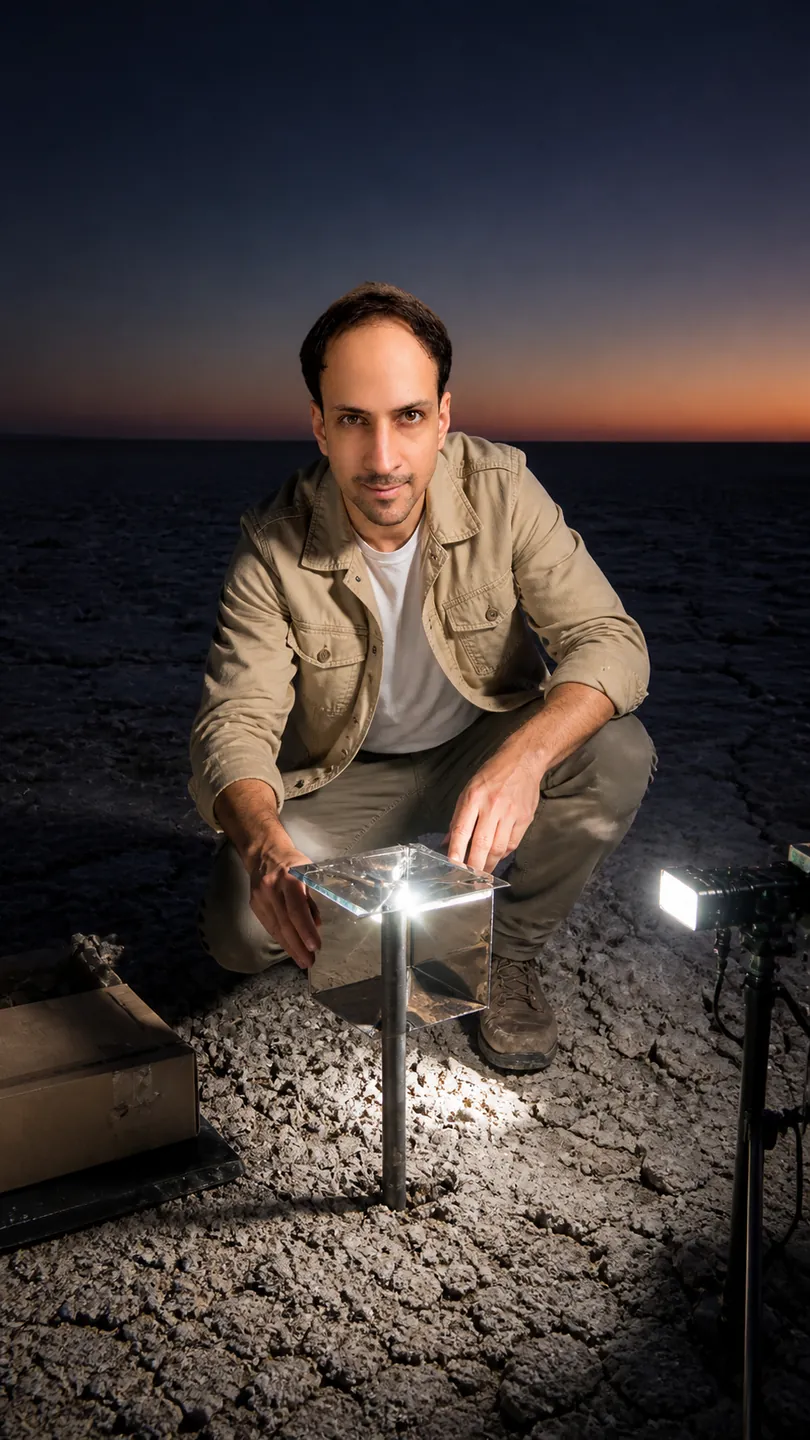
The Way Home: Sabkha Salt Flat — AI Portrait Prompt
صورةAI Portraits

Turn your own photo into a museum-grade demonstration portrait in a sabkha salt flat at dusk, horizon one unbroken line. Keeps your face unchanged.

من نص البرومبت

Use the attached reference photo as the identity reference: keep the same face, skin tone, hair and features as the person in that photo, without beautifying, aging or altering them. Treat that reference as the character anchor and change only the scene. Design a full-height 9:16 cinematic artwork that reads on a phone and rewards gallery-scale inspection at exactly 2144x3808 pixels. Location: a sabkha salt flat at dusk, horizon one unbroken line. Show them in a beige field jacket over a white tee, pressing a survey stake flush with the crust. Treat this mechanism as the frame’s governing rule: a hollow corner of three mirrors that pins their reflected gaze to its apex no matter where they move their head gives arriving light a way back to the place it started from. Explore how a surface can be truthfully dark and truthfully blazing in the same minute; direct expression and posture toward quiet astonishment, never melodrama or ad-like confidence. Use a 90mm portrait lens with a small lamp rigged tight beside it so the return blazes lawfully at the camera. Make the composition let the off-axis dullness occupy most of the frame. Render it as museum-grade demonstration photography combining truthful on-axis brilliance, deep readable shadow detail, tactile instrument surfaces, and unhurried human presence, using low ambient dusk with a single handheld beam as the only key and a palette of night blue, bone grey, and one silver pinprick. Photorealistic: this must read as a real photograph from a physical camera, never an illustration, painting, or 3D render. Give the frame volume: faint density deepest in the room, contrast easing at the edges. Resolve real surface detail: label-free packaging showing carton fibre, cardboard bruised at the corners, and tape lifting slightly at one end. Keep one identity-locked person, credible hands and fingers, natural fabric, and coherent scale, contact, reflections, shadows, airflow, deformation, and materials. Background people only when essential, always secondary and clearly different. Avoid glowing sci-fi visors, hi-vis vest advertising poses, lens-flare starbursts, and neon cyberpunk streets. No text, labels, logos, signatures, watermarks, random symbols, plastic skin, excessive bloom, or glossy AI finish.
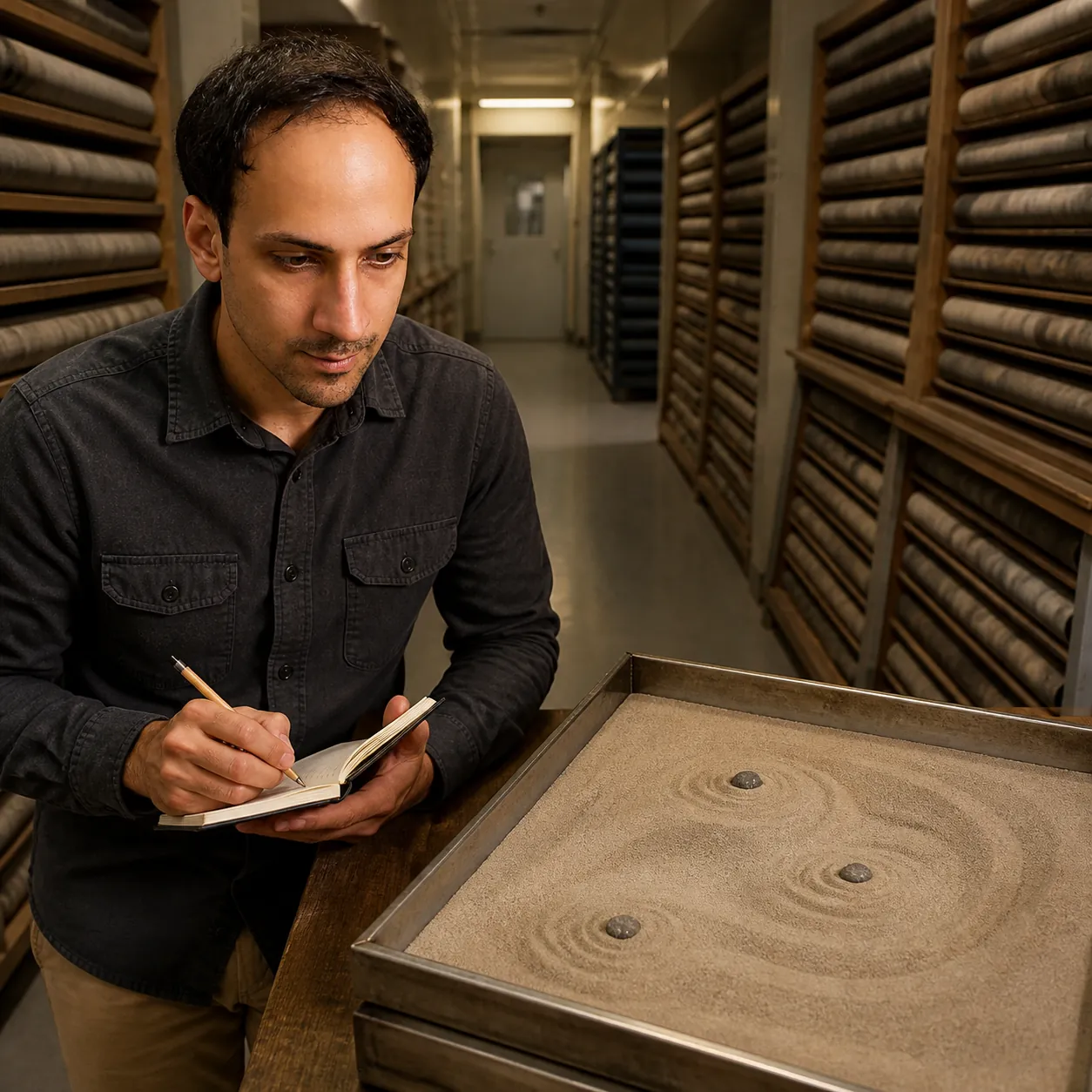
Lawful Avalanche: University Sedimentology Corridor — AI Portrait Prompt
صورةAI Portraits

Turn your own photo into a gallery-grade experimental portrait in a university sedimentology corridor lined with racked core samples. Keeps your face unchanged.

من نص البرومبت

Use the attached reference photo as the identity reference: keep the same face, skin tone, hair and features as the person in that photo, without beautifying, aging or altering them. Treat that reference as the character anchor and change only the scene. Create a square 1:1 museum-catalog frame with a strong first read and a slower second read at exactly 2880x2880 pixels. Location: a university sedimentology corridor lined with racked core samples. Show the subject in a graphite overshirt buttoned over straight tan trousers, penciling a reading into a pocket field notebook. Use this advanced image-making device as the core logic: a shaken tray of fine sand whose slow convection cells carry three buried grey stones steadily up to the surface shows dry grains refusing to be fully solid or fully liquid. Explore how billions of grains agree on anything without a single signal passing between them; direct expression and posture toward field patience, never melodrama or ad-like confidence. Frame past their shoulder toward the demonstration, their profile softly readable at the frame's edge. Make the composition hold one calm empty interval between them and the mechanism. Render it as gallery-grade experimental photography built from working sand demonstrations, sun-bleached field styling, honest grain-level physics, and calm scientific candor, using cool pre-sunrise sky light balanced against one warm tungsten practical and a palette of soft ochre, cool slate, and one deep olive note. Photorealistic: this must read as a real photograph from a physical camera, never an illustration, painting, or 3D render. Resolve real surface detail: visible weave in cloth, fine scratches on metal, and the faint unevenness of painted walls. Keep one identity-locked person, credible hands and fingers, natural fabric, and coherent scale, contact, reflections, shadows, airflow, deformation, and materials. Background people only when essential, always secondary and clearly different. Avoid swirling sandstorm vortices, glowing hourglass fantasy, levitating sand spirals, cymatic pattern plates, and heroic dune-top silhouettes. No text, labels, logos, signatures, watermarks, random symbols, plastic skin, excessive bloom, or glossy AI finish.
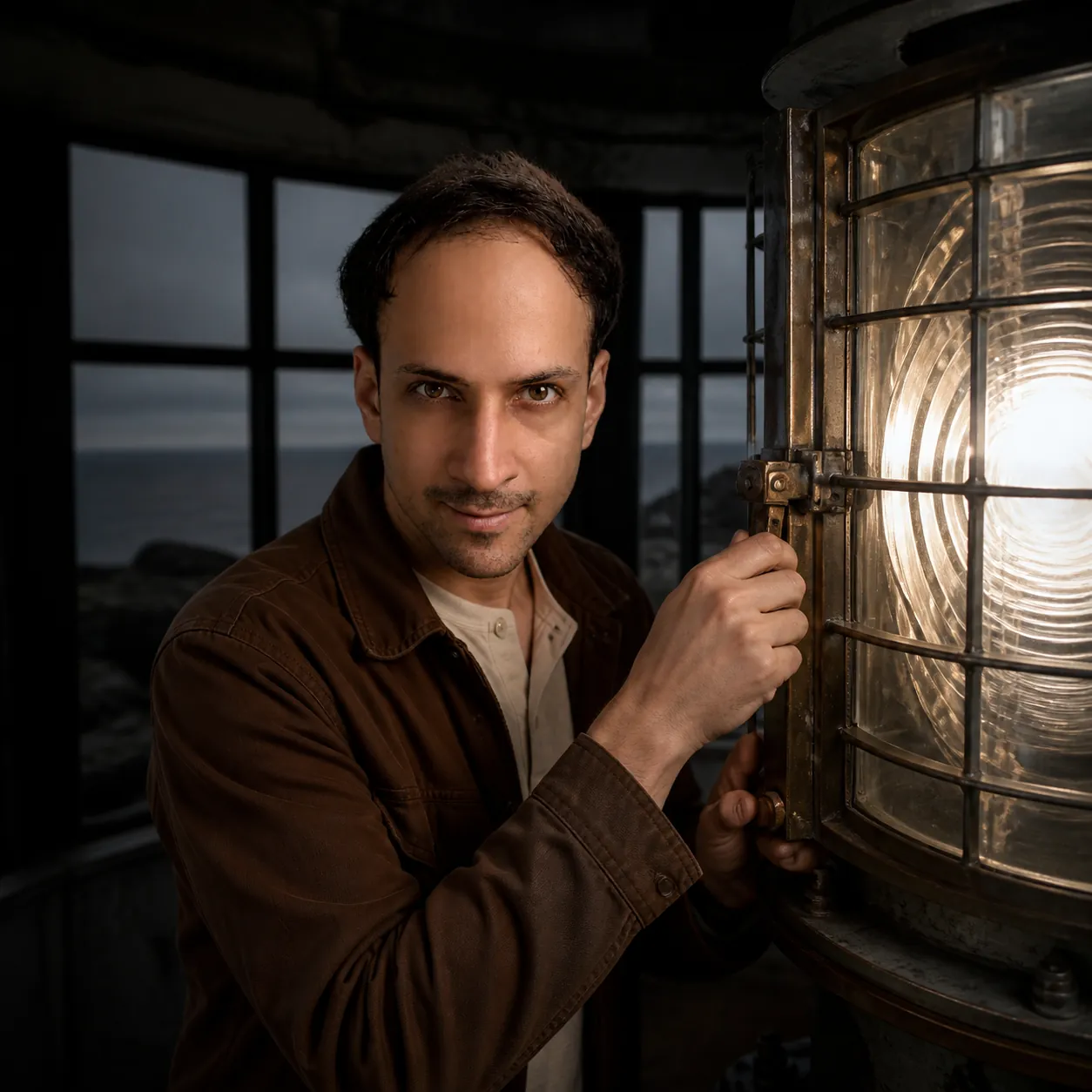
Asked and Answered: Lamp Room — AI Portrait Prompt
صورةAI Portraits

Turn your own photo into a quiet experimental gallery portrait in the lamp room of a decommissioned coastal lighthouse. Keeps your face unchanged.

من نص البرومبت

Use the attached reference photo as the identity reference: keep the same face, skin tone, hair and features as the person in that photo, without beautifying, aging or altering them. Create a square 1:1 museum-catalog frame with a strong first read and a slower second read at exactly 2880x2880 pixels. Location: the lamp room of a decommissioned coastal lighthouse. Show the subject in a rust-brown chore coat over a cream henley, latching the brass door of the lamp cage shut. The impossible-looking event must obey this clear system: a glass-bead screen that blazes furnace-bright along their lamp's axis and shows dull grey one step aside keeps its full brightness for the one standing at the light's source. Explore what it means to receive back exactly what was sent and nothing else; direct expression and posture toward steady curiosity, never melodrama or ad-like confidence. Use a 90mm portrait lens with a small lamp rigged tight beside it so the return blazes lawfully at the camera. Make the composition let the off-axis dullness occupy most of the frame. Render it as quiet experimental gallery photography built around one working retroreflector, disciplined single-source lighting, true-to-life surface response, and patient observational framing, using one small practical held near the lens axis with the room falling dark and a palette of asphalt grey, faded canvas, and one amber thread. Photorealistic: this must read as a real photograph from a physical camera, never an illustration, painting, or 3D render. Resolve real surface detail: glass with real thickness at its edge, reflections that carry the room's actual colour, and dust visible only at grazing angles. Keep one identity-locked subject, credible hands and fingers, natural fabric, and coherent scale, contact, reflections, shadows, airflow, deformation, and materials. Background people only when essential, always secondary and clearly different. Avoid glowing sci-fi visors, hi-vis vest advertising poses, lens-flare starbursts, and neon cyberpunk streets. No text, labels, logos, signatures, watermarks, random symbols, plastic skin, excessive bloom, or glossy AI finish.