تخطَّ إلى المحتوى
f

faisal aziz

@alkhunizan

2700البرومبتات
0تصويتات مستلمة
0مساهمات
تاريخ الانضمام منذ 4 أشهر
2700 مساهمات في العام الماضي
نوفمبر
ديسمبر
يناير
فبراير
مارس
أبريل
مايو
يونيو
يوليو
أغسطس
سبتمبر
أكتوبر
ن
ر
ج
أقل
أكثر
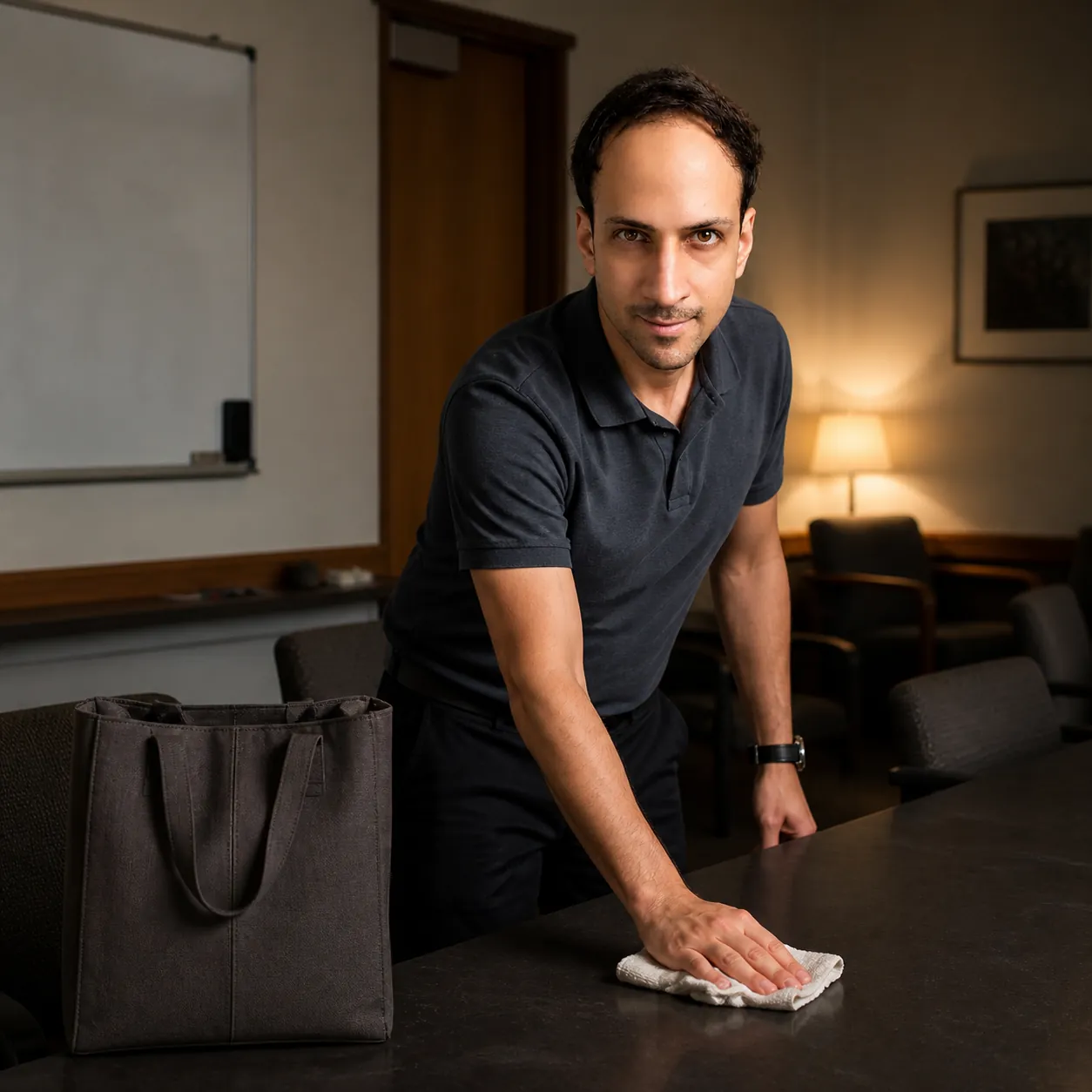
Wiping the Far End of the Table — AI Portrait Prompt
صورةAI Portraits

Turn your own photo into a museum-scale contemporary portrait in a university staff room emptying out after a long afternoon meeting. Keeps your face unchanged.

من نص البرومبت

Use the attached reference photo as the identity reference: keep the same face, skin tone, hair and features as the person in that photo, without beautifying, aging or altering them. Create a square 1:1 museum-catalog frame with a strong first read and a slower second read at exactly 2880x2880 pixels. Location: a university staff room emptying out after a long afternoon meeting. Show the subject in a slate knit polo tucked into dark chinos, wiping the table's far end with a folded cloth. Build the frame on this unremarkable detail: a bag set down upright and squared to the surface, whose handles still hold the shape their grip pressed into them prices a calm that everyone else has always mistaken for a personality. Explore whether equanimity is a trait they have or a purchase they keep making; expression composed and unremarkable, carrying quiet competence, the weight held somewhere after this hour. Shoot at 85mm from standing height so the surface near their hand stays fully readable. Make the composition read as an ordinary photograph until the second look. Render it as museum-scale contemporary portraiture combining sober documentary craft, accurate everyday surfaces, believable clothing weight, and emotionally intelligent restraint, using one warm lamp near the seating with the rest of the room dim and a palette of warm grey, unbleached linen, and one muted brass accent. Photorealistic: this must read as a real photograph from a physical camera, never an illustration, painting, or 3D render. Resolve real surface detail: label-free packaging showing carton fibre, cardboard bruised at the corners, and tape lifting slightly at one end. Keep one identity-locked person, credible hands and fingers, natural fabric, and coherent scale, contact, reflections, shadows, airflow, deformation, and materials. Background people only when essential, always secondary and clearly different. Avoid head in hands, slumped shoulders, staring out of windows, visible tears, and sad-eyed lighting. No text, labels, logos, signatures, watermarks, random symbols, plastic skin, excessive bloom, or glossy AI finish.
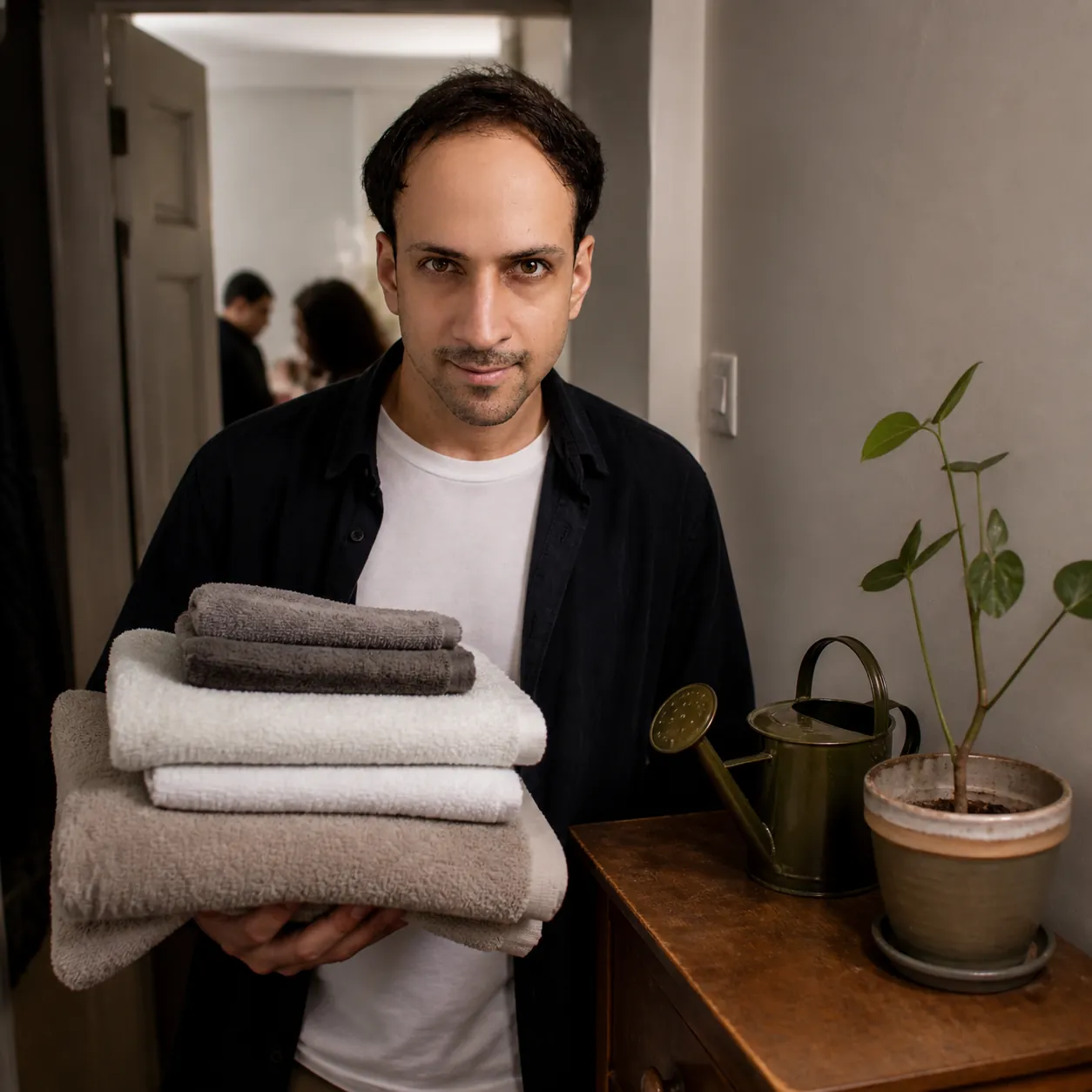
Tide Line in the Pot — AI Portrait Prompt
صورةAI Portraits

Turn your own photo into a plain documentary portrait in a flat's inner hallway outside a room where someone is talking. Keeps your face unchanged.

من نص البرومبت

Use the attached reference photo as the identity reference: keep the same face, skin tone, hair and features as the person in that photo, without beautifying, aging or altering them. Create a square 1:1 museum-catalog frame with a strong first read and a slower second read at exactly 2880x2880 pixels. Location: a flat's inner hallway outside a room where someone is talking. Show the subject in a plain white undershirt beneath an open dark overshirt, steadying a stack of clean towels against their chest. Hide the whole argument in this ordinary moment: a watering can beside a pot whose inner rim shows a pale tide line left by refills to the same depth keeps an honest count of its own repetitions without asking anyone to notice. Explore whether maintenance done with no hope of ending is bleak or merely honest; expression composed and unremarkable, carrying quiet efficiency, the weight held below the level of remark. Use a steady waist-level 35mm framing that keeps the whole small task inside one honest rectangle. Make the composition read as unremarkable until the eye finds the wear. Render it as plain documentary portraiture built from unstaged domestic realism, honest material wear, restrained editorial framing, and unforced human presence, using late-afternoon indoor light with no direct sun, cool and completely undramatic and a palette of warm grey, unbleached cotton, and one muted olive accent. Photorealistic: this must read as a real photograph from a physical camera, never an illustration, painting, or 3D render. Resolve real surface detail: wood grain read at honest scale, matte and gloss clearly separated, and no surface uniformly clean. Keep one identity-locked person, credible hands and fingers, natural fabric, and coherent scale, contact, reflections, shadows, airflow, deformation, and materials. Background people only when essential, always secondary and clearly different. Avoid visible sadness, head-in-hands poses, staring out of windows, sighing postures, and any object announcing illness. No text, labels, logos, signatures, watermarks, random symbols, plastic skin, excessive bloom, or glossy AI finish.
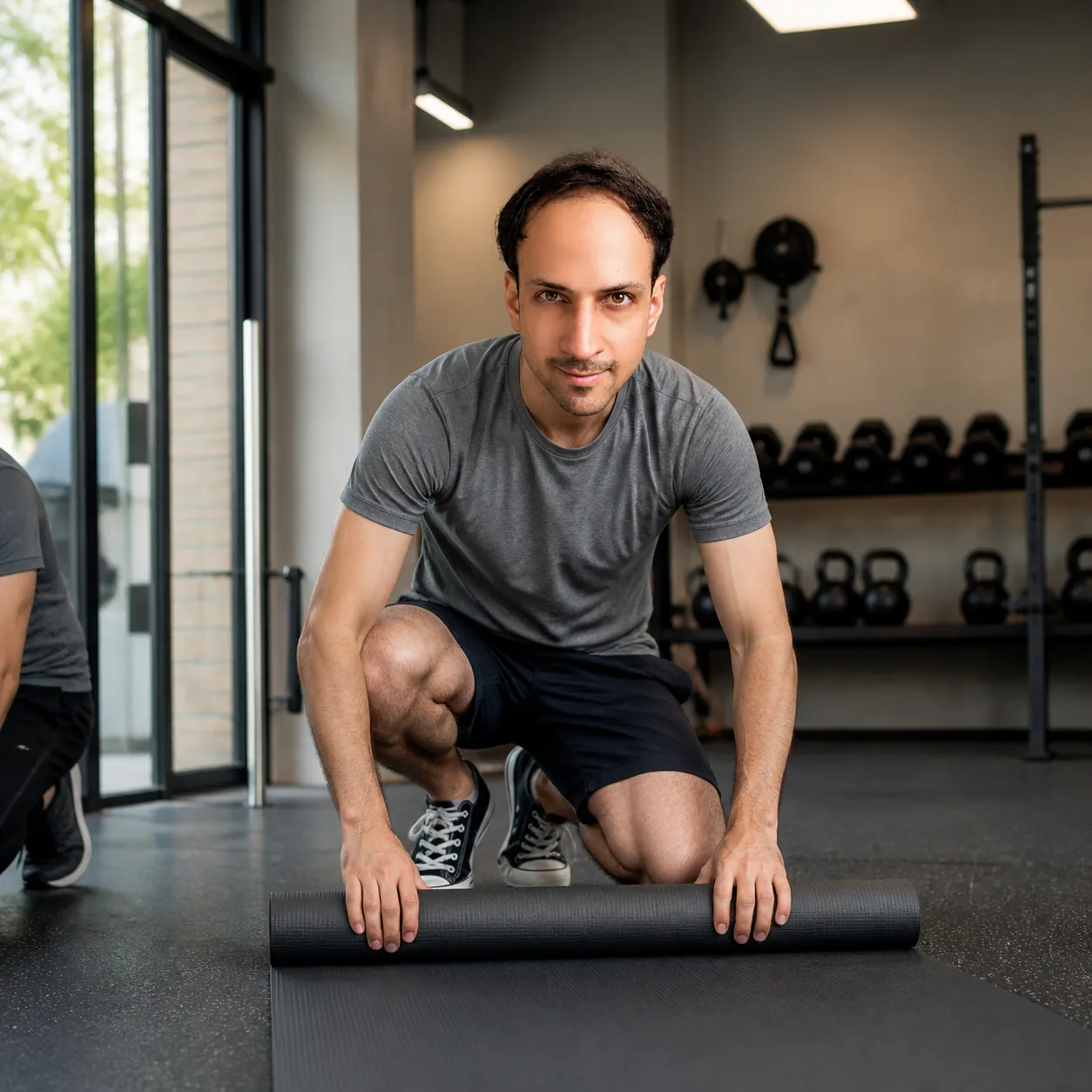
Rolling Out the Mat — AI Portrait Prompt
صورةAI Portraits

Turn your own photo into a plain reportage portrait in a neighbourhood gym's stretching corner in the slow late morning. Keeps your face unchanged.

من نص البرومبت

Use the attached reference photo as the identity reference: keep the same face, skin tone, hair and features as the person in that photo, without beautifying, aging or altering them. Create a square 1:1 museum-catalog frame with a strong first read and a slower second read at exactly 2880x2880 pixels. Location: a neighbourhood gym's stretching corner in the slow late morning. Show the subject in a grey training top, dark shorts, and low canvas trainers, rolling a foam mat out along the floor line. Hide the whole argument in this ordinary moment: a line of paired things whose last hand's width of space stays clear, tended as carefully as the rest makes its clearest statement out of the one thing withheld. Explore whether a gap tended daily is still a gap or has become structure; expression composed and unremarkable, carrying settled attention, the weight held below anyone's threshold of notice. Use a quiet wide view including one neighbouring person only as a partial sleeve. Make the composition keep every spacing even enough to look accidental. Render it as plain reportage realism using real furniture, accurate light falloff, unposed body language, and museum-grade material detail, using even mixed light from a glazed frontage and switched-on ceiling panels and a palette of putty, cool graphite, and a single worn amber tone. Photorealistic: this must read as a real photograph from a physical camera, never an illustration, painting, or 3D render. Resolve real surface detail: visible weave in cloth, fine scratches on metal, and the faint unevenness of painted walls. Keep one identity-locked person, credible hands and fingers, natural fabric, and coherent scale, contact, reflections, shadows, airflow, deformation, and materials. Background people only when essential, always secondary and clearly different. Avoid visible sadness, head in hands, staring through windows, candles, and memorial arrangements. No text, labels, logos, signatures, watermarks, random symbols, plastic skin, excessive bloom, or glossy AI finish.
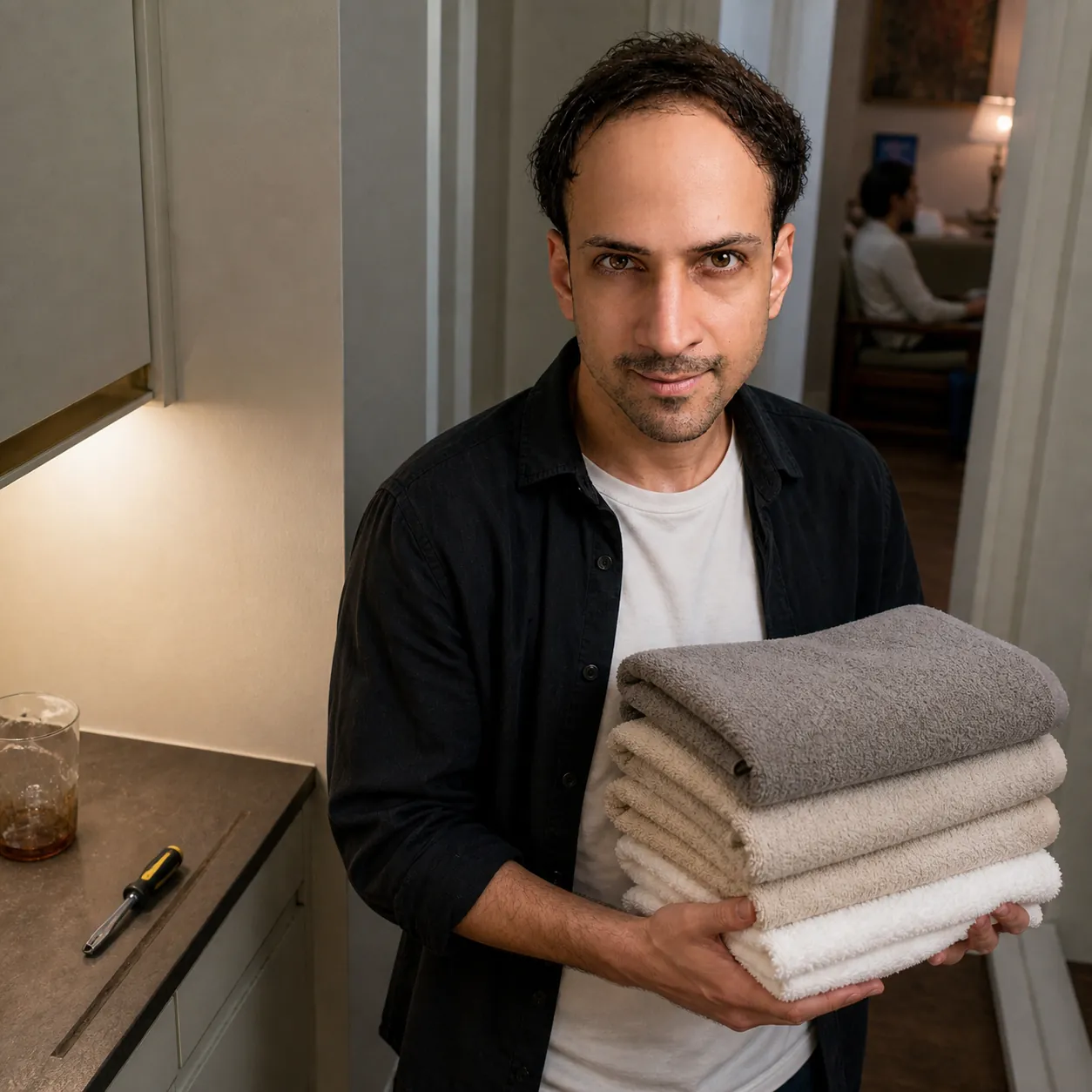
Towels and the Screwdriver Groove — AI Portrait Prompt
صورةAI Portraits

Turn your own photo into a quiet observational portrait in a flat's inner hallway outside a room where someone is talking. Keeps your face unchanged.

من نص البرومبت

Use the attached reference photo as the identity reference: keep the same face, skin tone, hair and features as the person in that photo, without beautifying, aging or altering them. Create a square 1:1 museum-catalog frame with a strong first read and a slower second read at exactly 2880x2880 pixels. Location: a flat's inner hallway outside a room where someone is talking. Show the subject in a plain white undershirt beneath an open dark overshirt, steadying a stack of clean towels against their chest. Photograph this as though nothing were happening: a short screwdriver lying in the drawer groove its own handle has pressed into the felt over many quiet returns lets accumulated wear stand as the only proof that any of this recurred. Explore whether living with something recurring is failure or simply an accurate arrangement; expression composed and unremarkable, carrying level ease, the weight held under the ordinariness of the act. Frame from the height of a second person standing nearby, close enough to see their hands. Make the composition place them slightly off-center with room left unused. Render it as quiet observational photography combining ordinary interior realism, accurate surface aging, unmannered composition, and naturally readable skin texture, using a single kitchen strip light with soft bounce off pale cabinet fronts and a palette of sand beige, graphite, and a quiet stripe of brass. Photorealistic: this must read as a real photograph from a physical camera, never an illustration, painting, or 3D render. Resolve real surface detail: condensation beading at true size, liquid meniscus curving against glass, and wet surfaces darker than dry ones. Keep one identity-locked person, credible hands and fingers, natural fabric, and coherent scale, contact, reflections, shadows, airflow, deformation, and materials. Background people only when essential, always secondary and clearly different. Avoid boulder or mountain symbolism, hamster wheels, spinning clock faces, treadmills, and weary shoulder-slumped posture. No text, labels, logos, signatures, watermarks, random symbols, plastic skin, excessive bloom, or glossy AI finish.
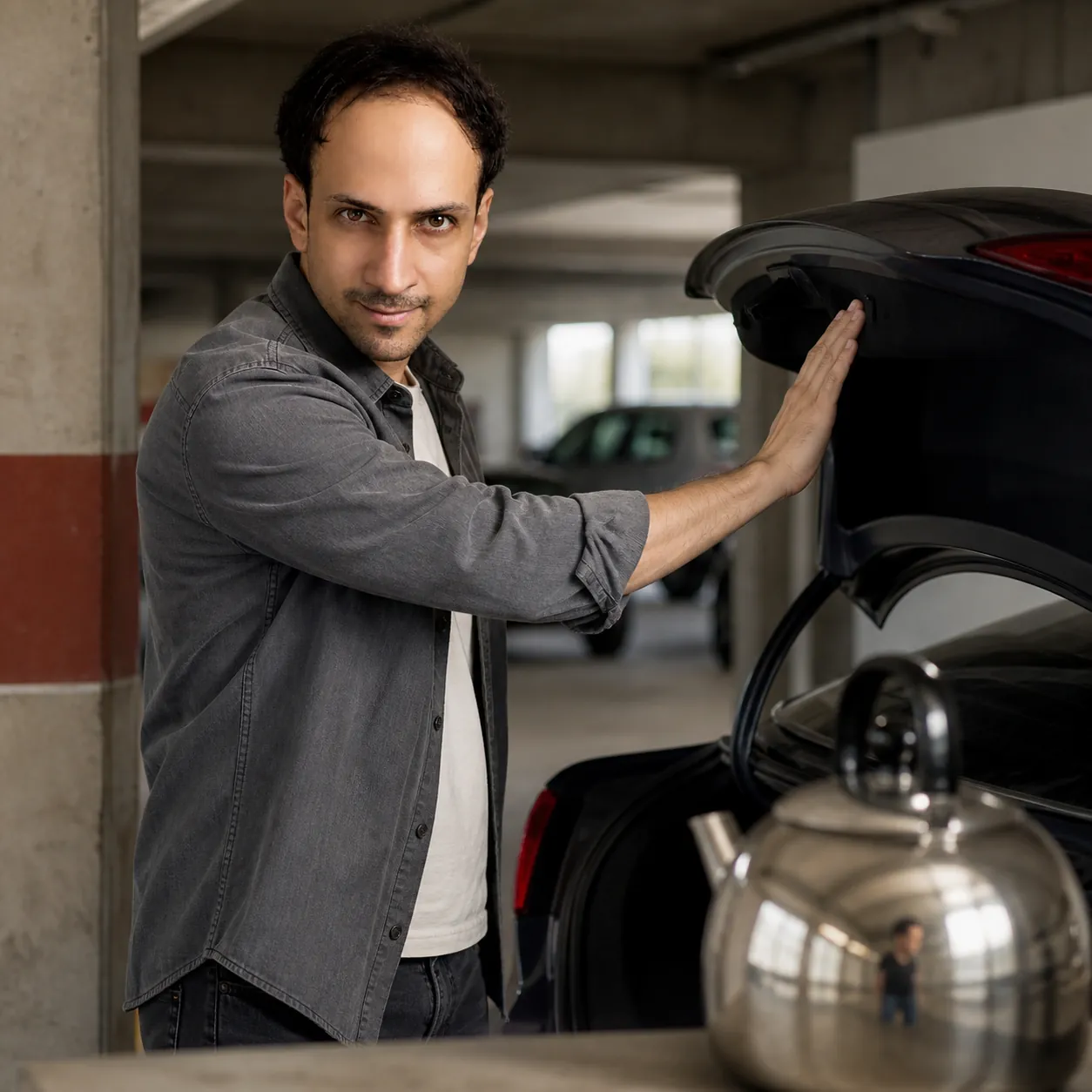
Boot Closed With a Flat Hand — AI Portrait Prompt
صورةAI Portraits

Turn your own photo into a gallery-scale household portrait in an underground residential car park bay beside your own parked car. Keeps your face unchanged.

من نص البرومبت

Use the attached reference photo as the identity reference: keep the same face, skin tone, hair and features as the person in that photo, without beautifying, aging or altering them. Create a square 1:1 museum-catalog frame with a strong first read and a slower second read at exactly 2880x2880 pixels. Location: an underground residential car park bay beside their own parked car. Show the subject in a stone-grey overshirt over a plain tee and dark jeans, closing the car boot with one flat hand. Build the image around this small, exact tableau: a kettle's curved flank returning a small, warped reflection of them that takes a moment longer to resolve than it should measures the distance between doing a thing and being there for it. Explore what a plain object can confirm that looking at it cannot; expression occupied, not expressive, carrying quiet method, difficulty stated as an ordinary fact. Frame just behind their shoulder so the finished work leads and their face stays readable. Make the composition hold plain air between their hand and the object. Render it as gallery-scale household realism built from credible hands, correct water and fabric behaviour, and calm compositional discipline, using flat overcast daylight through a single pane with no directional drama and a palette of warm grey concrete, dry sand, and one muted brick red. Photorealistic: this must read as a real photograph from a physical camera, never an illustration, painting, or 3D render. Resolve real surface detail: glass with real thickness at its edge, reflections that carry the room's actual colour, and dust visible only at grazing angles. Keep one identity-locked person, credible hands and fingers, natural fabric, and coherent scale, contact, reflections, shadows, airflow, deformation, and materials. Background people only when essential, always secondary and clearly different. Avoid double exposures, transparent bodies, out-of-body views, and mirrors returning a different person. No text, labels, logos, signatures, watermarks, random symbols, plastic skin, excessive bloom, or glossy AI finish.
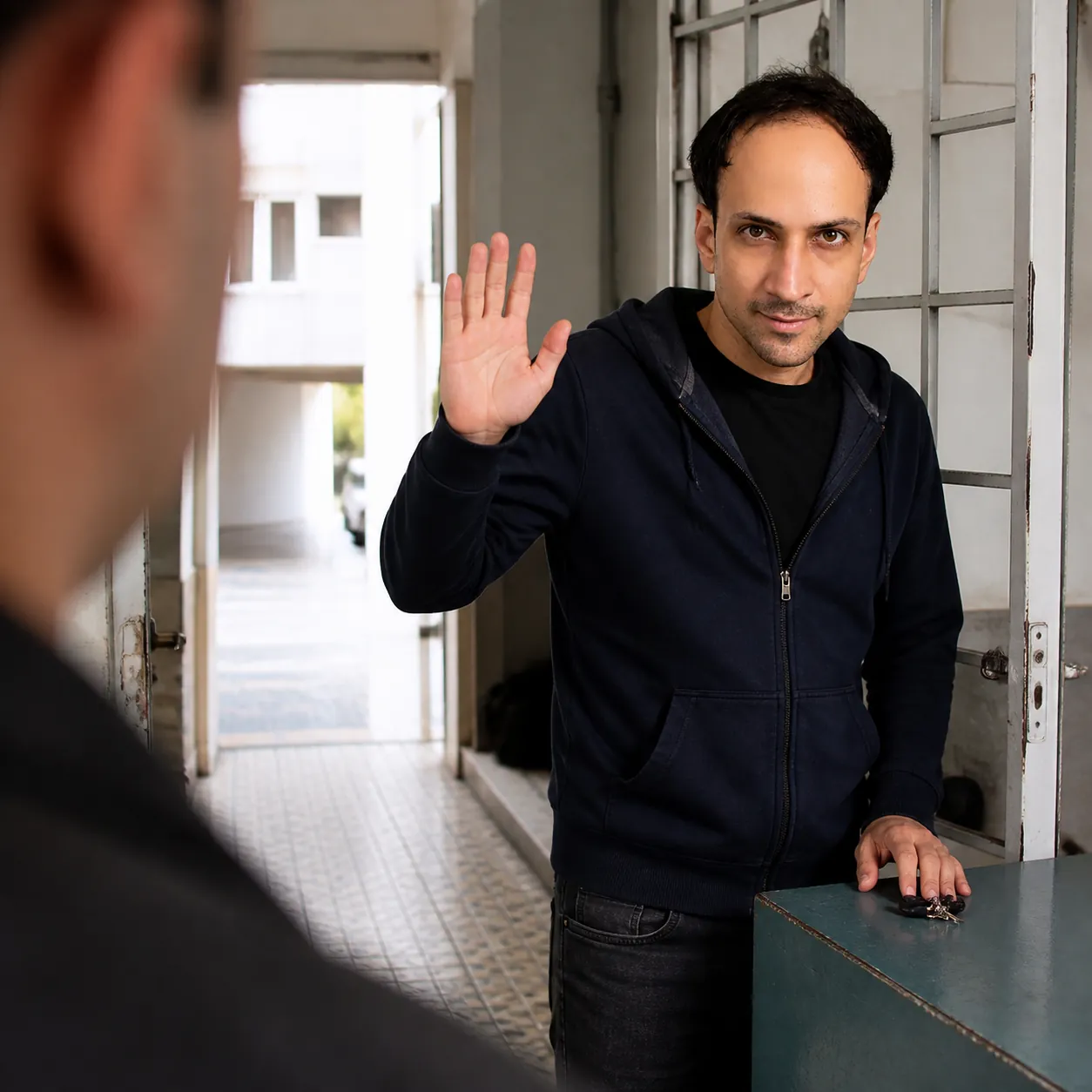
A Greeting Without Breaking Stride — AI Portrait Prompt
صورةAI Portraits

Turn your own photo into a portrait in a residential building entrance where the guard's chair stands beside the door. Keeps your face unchanged.

من نص البرومبت

Use the attached reference photo as the identity reference: keep the same face, skin tone, hair and features as the person in that photo, without beautifying, aging or altering them. Create a square 1:1 museum-catalog frame with a strong first read and a slower second read at exactly 2880x2880 pixels. Location: a residential building entrance where the guard's chair stands beside the door. Show the subject in a navy zip-up hoodie over a plain tee and dark jeans, lifting one hand in greeting without breaking stride. Make this the only tell, easy to miss: a small object their hand lifted and returned to the same patch of surface it had occupied a moment earlier says the closest true thing the available language will actually hold. Explore what the timing of an answer reports that its wording never could; expression composed and unremarkable, carrying steady friendliness, the weight held without disturbing the exchange. Place the lens slightly behind a second person's shoulder, keeping that shoulder soft and never blocking them. Make the composition give the delayed hand as much space as the face. Render it as unforced documentary portraiture built from natural domestic staging, honest skin rendering, restrained contemporary styling, and patient observational timing, using overhead office fluorescents evened out by daylight from the corridor beyond and a palette of cool concrete, off-white, and a single dusty teal. Photorealistic: this must read as a real photograph from a physical camera, never an illustration, painting, or 3D render. Resolve real surface detail: grout darker than tile, sealant slightly yellowed, and every joint showing a real tolerance gap. Keep one identity-locked person, credible hands and fingers, natural fabric, and coherent scale, contact, reflections, shadows, airflow, deformation, and materials. Background people only when essential, always secondary and clearly different. Avoid tears, head in hands, staring through windows, hunched silhouettes, and any object announcing illness. No text, labels, logos, signatures, watermarks, random symbols, plastic skin, excessive bloom, or glossy AI finish.
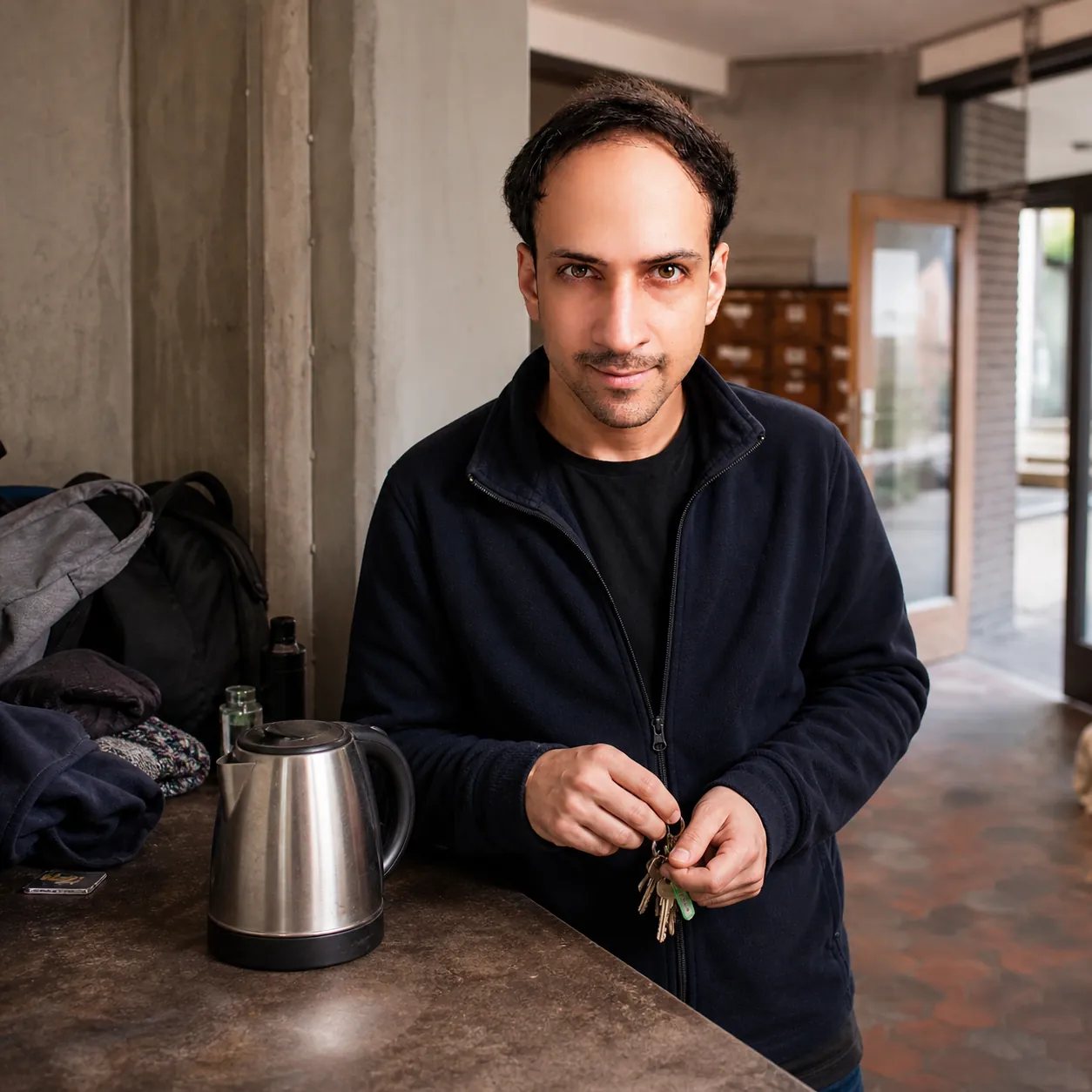
Keys in the Entrance Hall — AI Portrait Prompt
صورةAI Portraits

Turn your own photo into a quiet observational portrait in the communal entrance hall of your building with the inner door propped. Keeps your face unchanged.

من نص البرومبت

Use the attached reference photo as the identity reference: keep the same face, skin tone, hair and features as the person in that photo, without beautifying, aging or altering them. Create a square 1:1 museum-catalog frame with a strong first read and a slower second read at exactly 2880x2880 pixels. Location: the communal entrance hall of their building with the inner door propped. Show the subject in a zipped navy fleece over a plain crew-neck tee, threading a key back onto its ring one-handed. Let the weight sit here and look like nothing: a kettle set back onto the exact patch of counter whose finish has gone matte in one small oval keeps an honest count of its own repetitions without asking anyone to notice. Explore how repetition stops being a burden without anyone deciding that it should; expression composed and unremarkable, carrying plain competence, the weight held below the level of remark. Use a 50mm eye-level view at conversational distance with natural, modest perspective. Make the composition keep the second person's belongings present but never explained. Render it as quiet observational photography combining ordinary interior realism, accurate surface aging, unmannered composition, and naturally readable skin texture, using late-afternoon indoor light with no direct sun, cool and completely undramatic and a palette of soft bone, dark walnut, and a note of terracotta. Photorealistic: this must read as a real photograph from a physical camera, never an illustration, painting, or 3D render. Resolve real surface detail: fine grit in the texture of concrete, efflorescence at damp edges, and hairline cracks that follow stress. Keep one identity-locked person, credible hands and fingers, natural fabric, and coherent scale, contact, reflections, shadows, airflow, deformation, and materials. Background people only when essential, always secondary and clearly different. Avoid visible sadness, head-in-hands poses, staring out of windows, sighing postures, and any object announcing illness. No text, labels, logos, signatures, watermarks, random symbols, plastic skin, excessive bloom, or glossy AI finish.
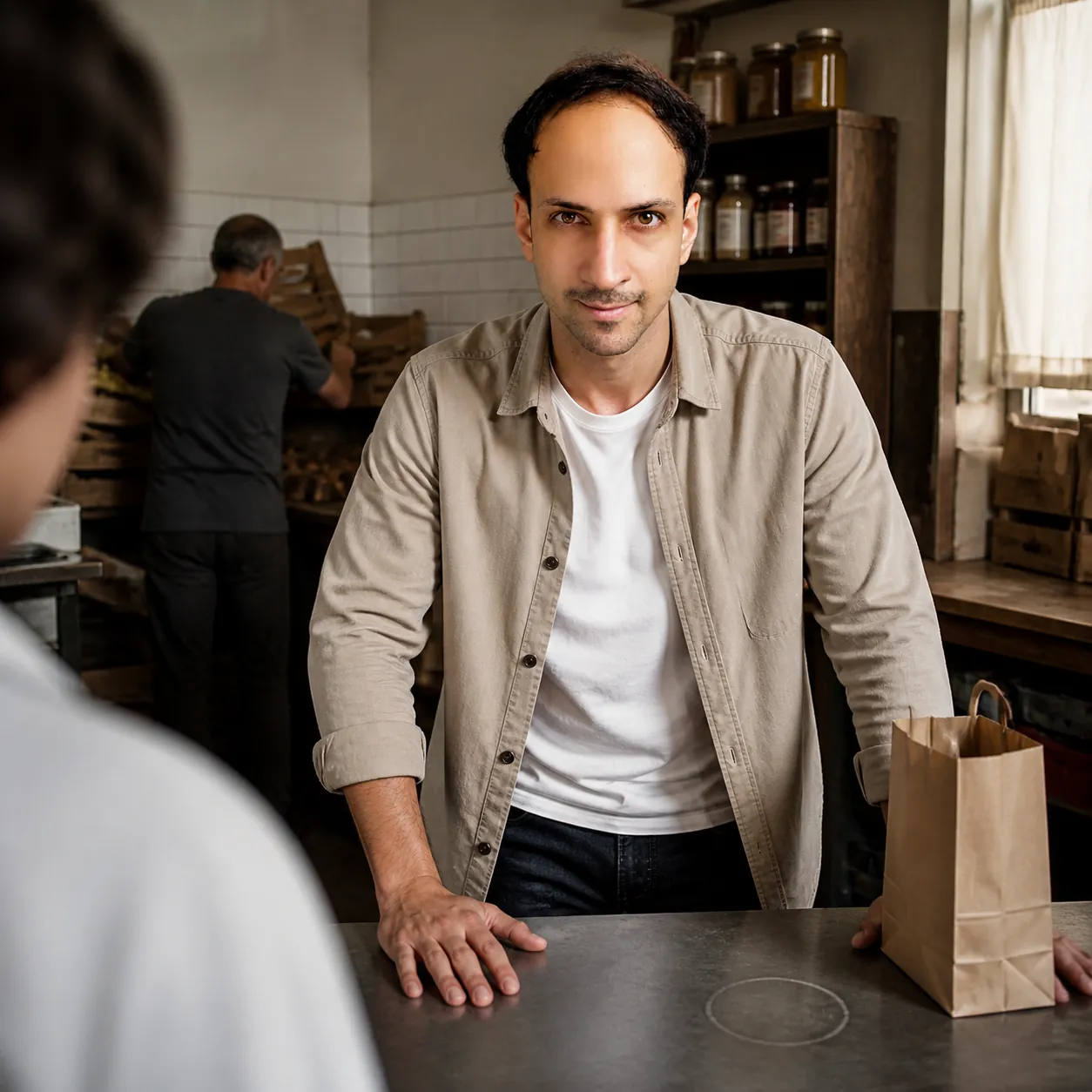
A Ring of Moisture on the Counter — AI Portrait Prompt
صورةAI Portraits

Turn your own photo into an unforced documentary portrait in a corner shop counter at closing, the owner stacking crates behind them. Keeps your face unchanged.

من نص البرومبت

Use the attached reference photo as the identity reference: keep the same face, skin tone, hair and features as the person in that photo, without beautifying, aging or altering them. Create a square 1:1 museum-catalog frame with a strong first read and a slower second read at exactly 2880x2880 pixels. Location: a corner shop counter at closing, the owner stacking crates behind them. Show the subject in a beige overshirt over a plain white tee and dark jeans, resting a paper bag on the counter's near edge. Make this the only tell, easy to miss: a ring of moisture beside their hand whose outer edge has dried into a fainter second ring inside the first prices a calm that everyone else has always mistaken for a personality. Explore where the cost of a day's steadiness shows, if it never shows on the face; expression composed and unremarkable, carrying mild readiness, the weight held somewhere after this hour. Place the lens slightly behind another person's shoulder without letting that shoulder crowd or obscure them. Make the composition give their hands the same weight as their face. Render it as unforced documentary portraiture built from ordinary domestic realism, restrained contemporary art direction, honest skin rendering, and patient observational framing, using flat daylight through a curtained window with soft, unremarkable shadow falloff and a palette of sand beige, slate grey, and one deep amber accent. Photorealistic: this must read as a real photograph from a physical camera, never an illustration, painting, or 3D render. Resolve real surface detail: grout darker than tile, sealant slightly yellowed, and every joint showing a real tolerance gap. Keep one identity-locked person, credible hands and fingers, natural fabric, and coherent scale, contact, reflections, shadows, airflow, deformation, and materials. Background people only when essential, always secondary and clearly different. Avoid head in hands, slumped shoulders, staring out of windows, visible tears, and sad-eyed lighting. No text, labels, logos, signatures, watermarks, random symbols, plastic skin, excessive bloom, or glossy AI finish.
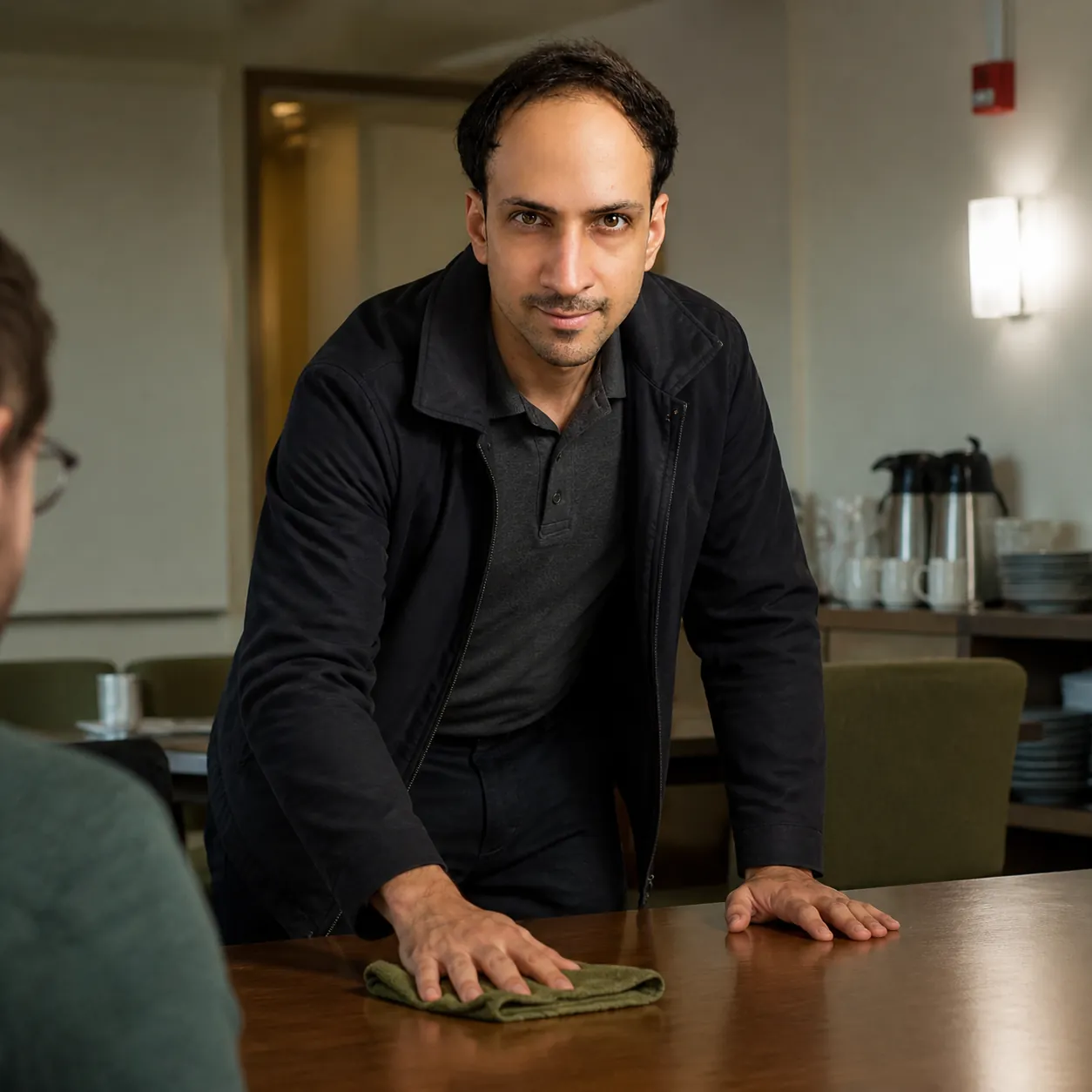
Jacket On in the Staff Room — AI Portrait Prompt
صورةAI Portraits

Turn your own photo into a portrait in a university staff room emptying out after a long afternoon meeting. Keeps your face unchanged.

من نص البرومبت

Use the attached reference photo as the identity reference: keep the same face, skin tone, hair and features as the person in that photo, without beautifying, aging or altering them. Create a square 1:1 museum-catalog frame with a strong first read and a slower second read at exactly 2880x2880 pixels. Location: a university staff room emptying out after a long afternoon meeting. Show the subject in a slate knit polo tucked into dark chinos, wiping the table's far end with a folded cloth. Photograph this as though nothing were happening: an outdoor jacket still on their shoulders well inside the building, where every reason to keep it on stopped applying minutes ago assigns the whole cost to a later hour with nobody else in it. Explore why nobody thinks to ask what the steadiest person in the room spent; expression composed and unremarkable, carrying unhurried civility, the weight held just under the courtesy. Frame the subject at mid-torso from a seated companion's height so their hands and face share one plane. Make the composition keep one other person present only as a partial edge. Render it as gallery-grade domestic reportage built from truthful available light, unglamorous room detail, natural fabric behavior, and unhurried human presence, using mixed household light from two practicals, neither one dramatic nor flattering and a palette of soft taupe, cool white, and a single olive-green note. Photorealistic: this must read as a real photograph from a physical camera, never an illustration, painting, or 3D render. Resolve real surface detail: skin that reddens slightly under pressure, nail beds with honest colour, and knuckle creases that fold rather than blur. Keep one identity-locked person, credible hands and fingers, natural fabric, and coherent scale, contact, reflections, shadows, airflow, deformation, and materials. Background people only when essential, always secondary and clearly different. Avoid pill bottles, loosened ties, clenched fists, rain-streaked glass, and any heroic stoic-warrior posing. No text, labels, logos, signatures, watermarks, random symbols, plastic skin, excessive bloom, or glossy AI finish.
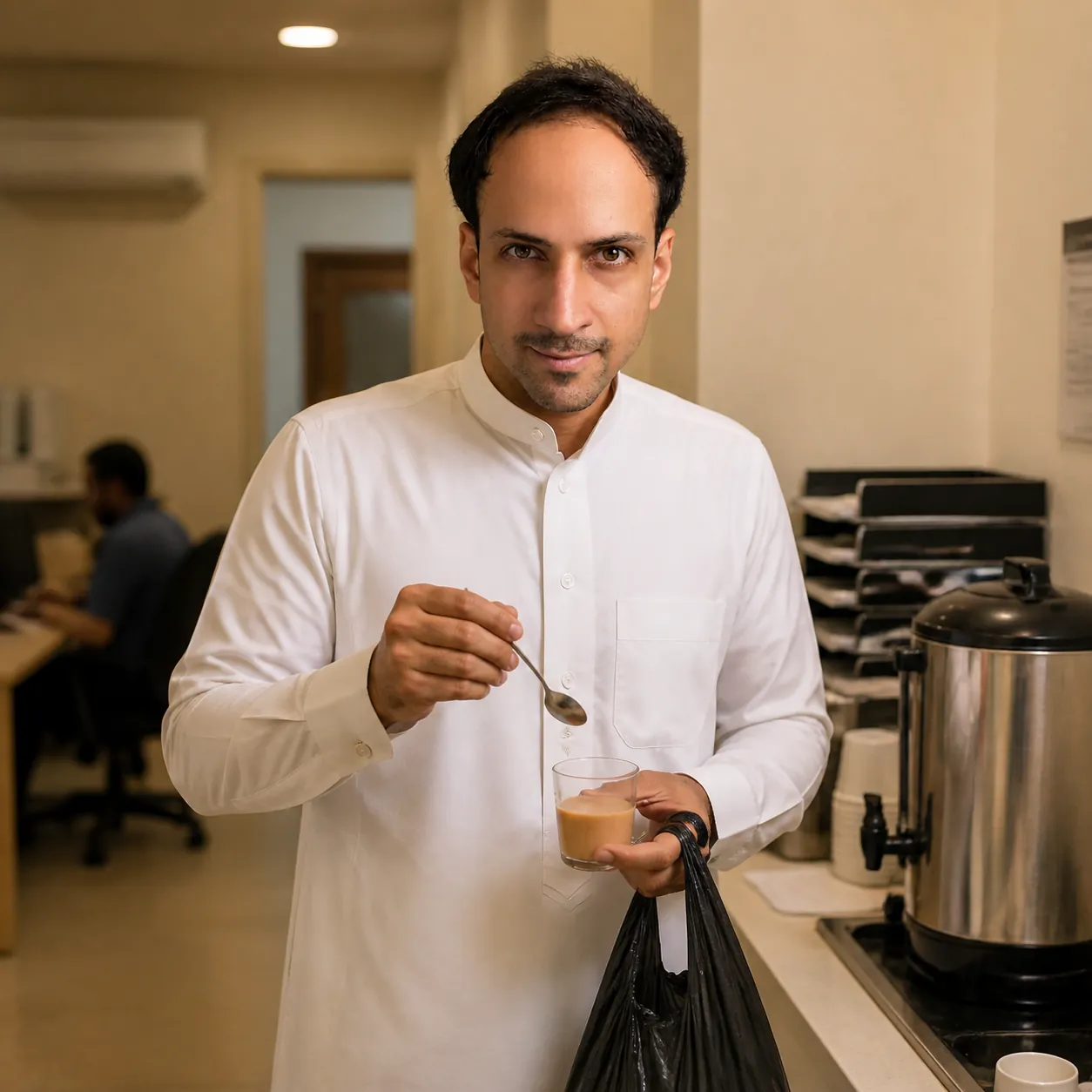
Sugar Stirred at the Tea Point — AI Portrait Prompt
صورةAI Portraits

Turn your own photo into a photorealistic portrait in a shared office tea point with a boiler urn and stacked trays. Keeps your face unchanged.

من نص البرومبت

Use the attached reference photo as the identity reference: keep the same face, skin tone, hair and features as the person in that photo, without beautifying, aging or altering them. Create a square 1:1 museum-catalog frame with a strong first read and a slower second read at exactly 2880x2880 pixels. Location: a shared office tea point with a boiler urn and stacked trays. Show the subject in a pressed white traditional Gulf outfit with its cuffs buttoned and sleeves unrolled, stirring sugar into a glass and lifting the spoon clear. Build the frame on this unremarkable detail: a bag still hanging from two fingers beside a clear surface that has been free since well before they stopped walking spends time where a sentence should have gone and loses nothing. Explore why the smallest polite word is sometimes the most exact one available; expression composed and unremarkable, carrying ordinary politeness, the weight held under a level, unhurried voice. Shoot a quiet 85mm portrait from standing height, with the room's ordinary depth left intact behind them. Make the composition leave the strongest evidence at the edge of the frame. Render it as gallery-grade quiet realism assembling lived-in rooms, precise gesture observation, muted material texture, and framing that never announces its subject, using one warm ceiling fitting doing all the work in an ordinary room and a palette of soft bone, dark charcoal, and a low amber note. Photorealistic: this must read as a real photograph from a physical camera, never an illustration, painting, or 3D render. Resolve real surface detail: cotton that hangs by its own weight, seams that pucker very slightly, and collars softened by washing. Keep one identity-locked person, credible hands and fingers, natural fabric, and coherent scale, contact, reflections, shadows, airflow, deformation, and materials. Background people only when essential, always secondary and clearly different. Avoid rain-streaked glass, shadow-bar drama, clasped praying hands, symbolic empty chairs, and heroic poster framing. No text, labels, logos, signatures, watermarks, random symbols, plastic skin, excessive bloom, or glossy AI finish.
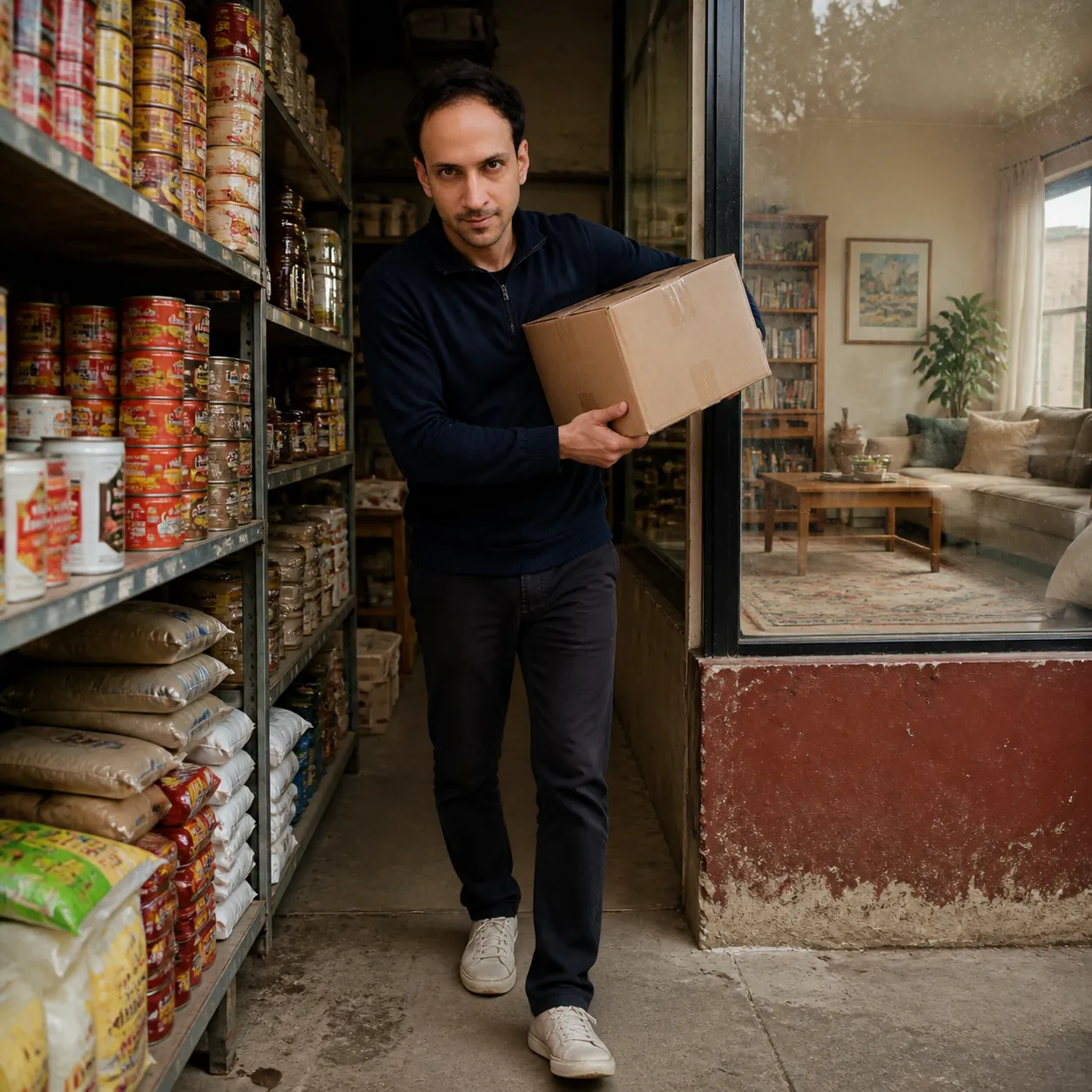
Shop Aisle at Closing — AI Portrait Prompt
صورةAI Portraits

Turn your own photo into a museum-grade chore portrait in a neighbourhood corner shop aisle of shelved tins and sacks at closing. Keeps your face unchanged.

من نص البرومبت

Use the attached reference photo as the identity reference: keep the same face, skin tone, hair and features as the person in that photo, without beautifying, aging or altering them. Create a square 1:1 museum-catalog frame with a strong first read and a slower second read at exactly 2880x2880 pixels. Location: a neighbourhood corner shop aisle of shelved tins and sacks at closing. Show the subject in a navy quarter-zip over straight dark trousers and plain trainers, lifting one plain carton into the crook of their arm. Let one honest object carry what the face will not: a living room of four years' residence seen through its own window glass, every object correct and arranged like a set measures the distance between doing a thing and being there for it. Explore why the smallest grounding act costs more effort than the chore around it; expression occupied, not expressive, carrying flat competence, difficulty stated in the plainest available terms. Use an eye-level 50mm view at counter height with restrained depth and no perspective stretch. Make the composition place the point of contact nearer the lens. Render it as museum-grade chore photography combining high-fidelity skin, accurate steel and glass reflections, matter-of-fact staging, and observational framing, using early indirect daylight with low contrast and honest skin texture throughout and a palette of warm grey concrete, dry sand, and one muted brick red. Photorealistic: this must read as a real photograph from a physical camera, never an illustration, painting, or 3D render. Resolve real surface detail: fine grit in the texture of concrete, efflorescence at damp edges, and hairline cracks that follow stress. Keep one identity-locked person, credible hands and fingers, natural fabric, and coherent scale, contact, reflections, shadows, airflow, deformation, and materials. Background people only when essential, always secondary and clearly different. Avoid double exposures, transparent bodies, out-of-body views, and mirrors returning a different person. No text, labels, logos, signatures, watermarks, random symbols, plastic skin, excessive bloom, or glossy AI finish.
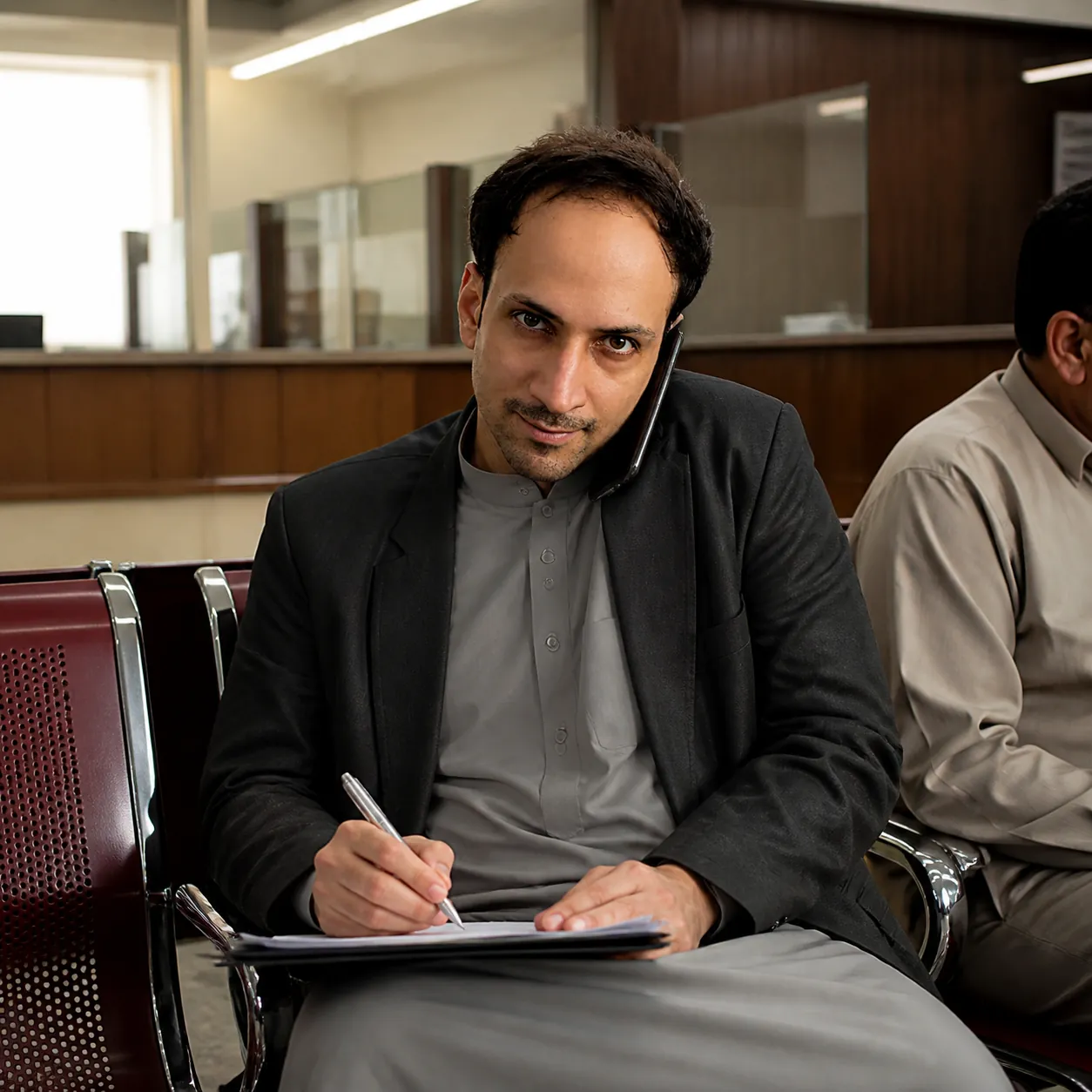
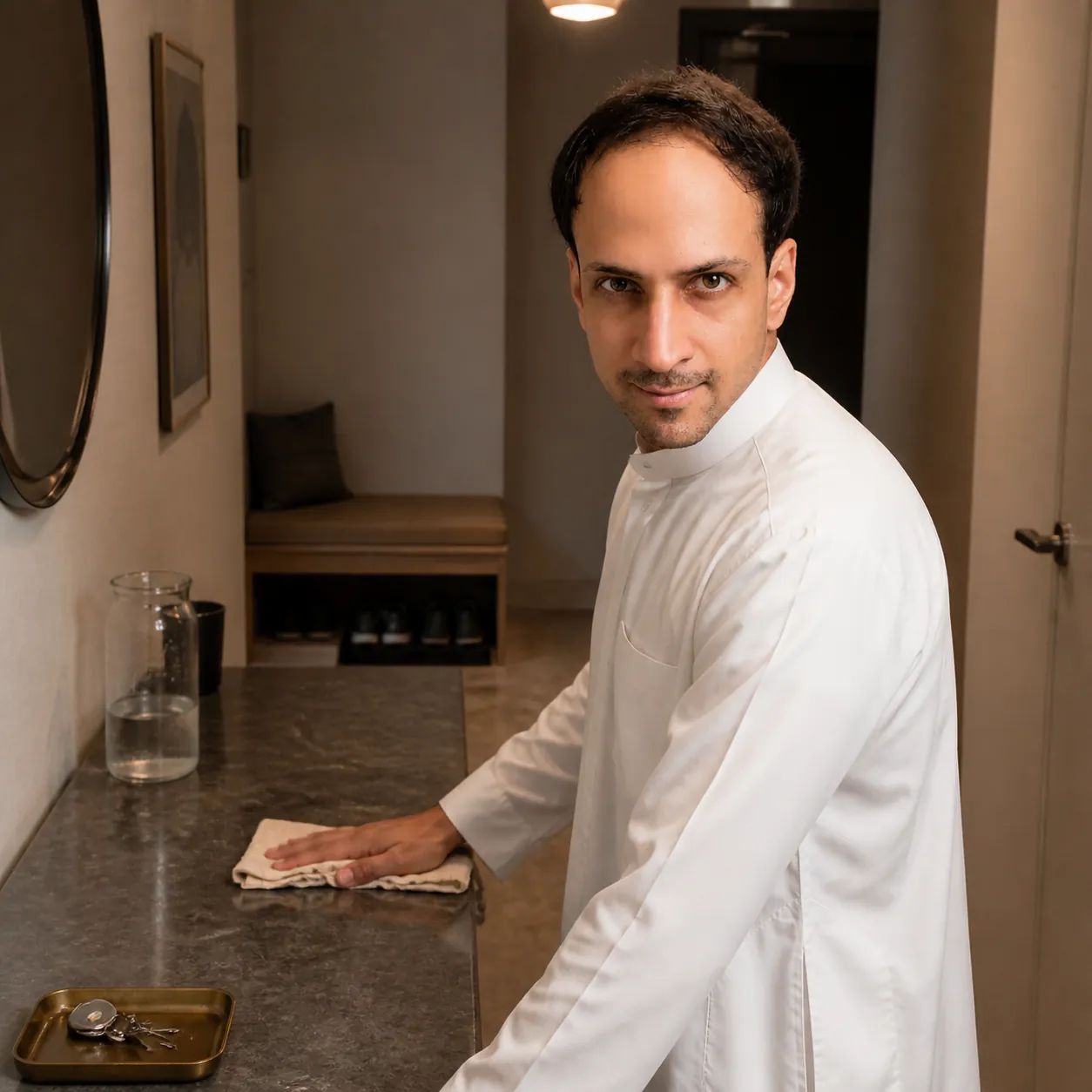
Folder Across the Knees — AI Portrait Prompt
صورةAI Portraits

Turn your own photo into a portrait in a municipal service office waiting row of bolted seats under strip lighting. Keeps your face unchanged.

من نص البرومبت

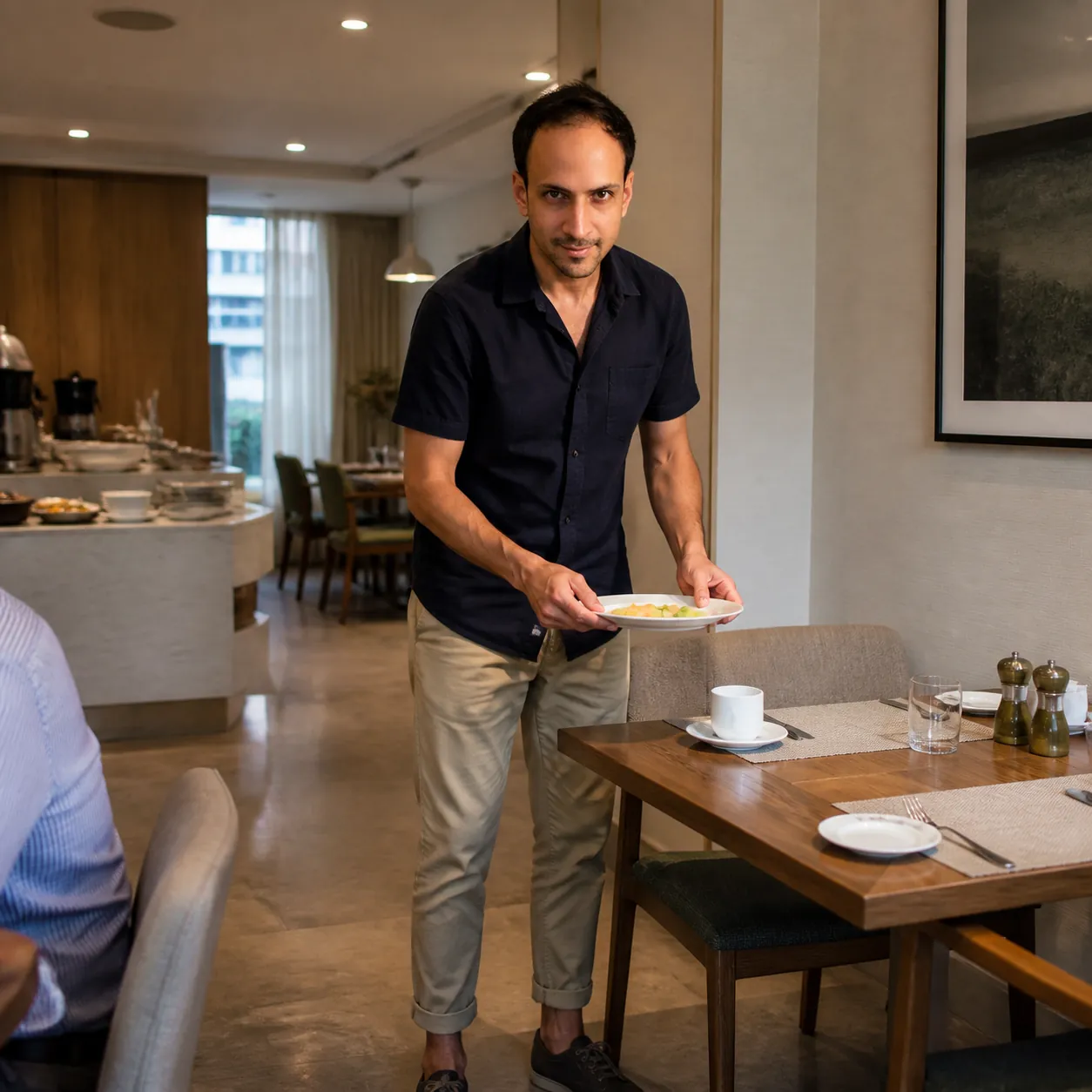
Use the attached reference photo as the identity reference: keep the same face, skin tone, hair and features as the person in that photo, without beautifying, aging or altering them. Create a square 1:1 museum-catalog frame with a strong first read and a slower second read at exactly 2880x2880 pixels. Location: a municipal service office waiting row of bolted seats under strip lighting. Show the subject in a plain grey traditional Gulf outfit under a thin charcoal blazer, setting a slim folder flat across their knees. Photograph this as though nothing were happening: a phone held against their shoulder while their free hand keeps working at the speed it had before the call came says the closest true thing the available language will actually hold. Explore how an ordinary exchange can hold something neither person has words for; expression composed and unremarkable, carrying neighbourly evenness, the weight held just behind the courtesy. Frame the subject at chest height so their hands and face stay equally readable in one plane. Make the composition keep the second person partial and never the focus. Render it as unforced documentary portraiture built from natural domestic staging, honest skin rendering, restrained contemporary styling, and patient observational timing, using flat afternoon daylight through a plain window, shadows soft and unremarkable and a palette of sand beige, dark brown, and one brick-red thread. Photorealistic: this must read as a real photograph from a physical camera, never an illustration, painting, or 3D render. Resolve real surface detail: brass darkened in the recesses and bright where thumbs land, and lacquer crazed rather than perfect. Keep one identity-locked person, credible hands and fingers, natural fabric, and coherent scale, contact, reflections, shadows, airflow, deformation, and materials. Background people only when essential, always secondary and clearly different. Avoid tears, head in hands, staring through windows, hunched silhouettes, and any object announcing illness. No text, labels, logos, signatures, watermarks, random symbols, plastic skin, excessive bloom, or glossy AI finish.
The Even Row — AI Portrait Prompt
صورةAI Portraits

Turn your own photo into a quiet documentary portrait in a hotel breakfast room emptying as the last service winds down. Keeps your face unchanged.

من نص البرومبت

Use the attached reference photo as the identity reference: keep the same face, skin tone, hair and features as the person in that photo, without beautifying, aging or altering them. Create a square 1:1 museum-catalog frame with a strong first read and a slower second read at exactly 2880x2880 pixels. Location: a hotel breakfast room emptying as the last service winds down. Show the subject in a navy short-sleeve shirt and travel-creased chinos, cuffs turned once, carrying a plate to the table by the wall. Hide the whole argument in this ordinary moment: a matched set of ordinary objects that is missing one, the rest respaced so evenly the row reads complete makes its clearest statement out of the one thing withheld. Explore how an even row can be the most tended thing in a room; expression composed and unremarkable, carrying polite readiness, the weight held without disturbing one surface. Use a quiet wide view including one neighbouring person only as a partial sleeve. Make the composition hold the room's lines true so nothing appears staged. Render it as quiet documentary portraiture built from unstyled interiors, true-to-life materials, restrained editorial framing, and honest human observation, using even mixed light from a glazed frontage and switched-on ceiling panels and a palette of warm grey, bone, and one muted olive accent. Photorealistic: this must read as a real photograph from a physical camera, never an illustration, painting, or 3D render. Resolve real surface detail: wood grain read at honest scale, matte and gloss clearly separated, and no surface uniformly clean. Keep one identity-locked person, credible hands and fingers, natural fabric, and coherent scale, contact, reflections, shadows, airflow, deformation, and materials. Background people only when essential, always secondary and clearly different. Avoid visible sadness, head in hands, staring through windows, candles, and memorial arrangements. No text, labels, logos, signatures, watermarks, random symbols, plastic skin, excessive bloom, or glossy AI finish.
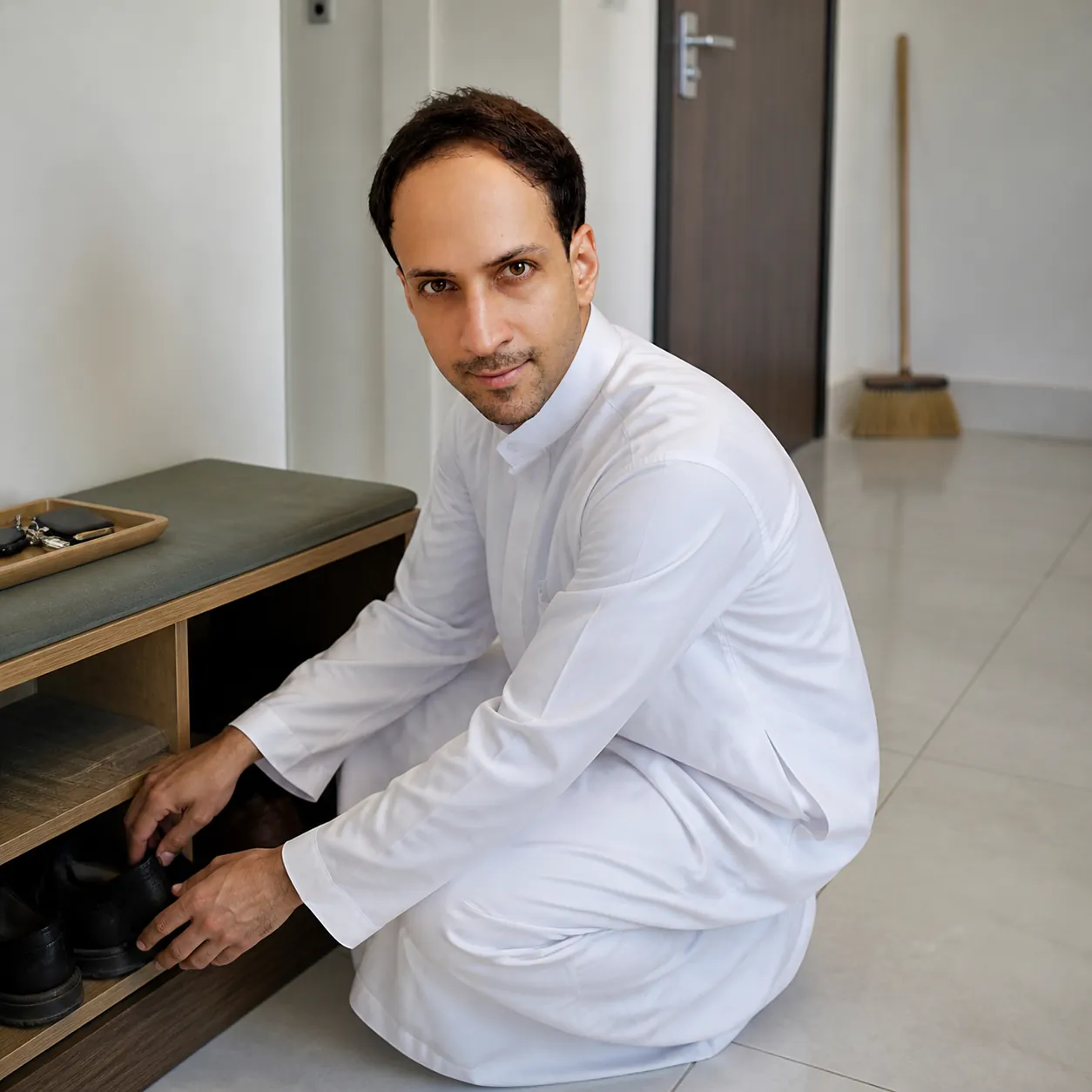
Shoes Lined Under the Bench — AI Portrait Prompt
صورةAI Portraits

Turn your own photo into a museum-grade chore portrait in an apartment entrance hall with a shoe bench and a key tray. Keeps your face unchanged.

من نص البرومبت

Use the attached reference photo as the identity reference: keep the same face, skin tone, hair and features as the person in that photo, without beautifying, aging or altering them. Create a square 1:1 museum-catalog frame with a strong first read and a slower second read at exactly 2880x2880 pixels. Location: an apartment entrance hall with a shoe bench and a key tray. Show the subject in a plain white traditional Gulf outfit with the sleeves shaken straight, lining both shoes parallel under the bench. Build the image around this small, exact tableau: a wiped stone counter touched a second time with one bare palm, purely for the confirmation that comes back through the skin lets the work go on at full strength on a borrowed sort of day. Explore whether competence counts as presence when the two arrive separately; expression occupied, not expressive, carrying practised routine, difficulty stated quietly, the way work states things. Frame just behind their shoulder so the finished work leads and their face stays readable. Make the composition hold plain air between their hand and the object. Render it as museum-grade chore photography combining high-fidelity skin, accurate steel and glass reflections, matter-of-fact staging, and observational framing, using one warm ceiling fitting doing all the work, shadows soft and readable and a palette of oat linen, cool graphite, and one thin line of brass. Photorealistic: this must read as a real photograph from a physical camera, never an illustration, painting, or 3D render. Resolve real surface detail: condensation beading at true size, liquid meniscus curving against glass, and wet surfaces darker than dry ones. Keep one identity-locked person, credible hands and fingers, natural fabric, and coherent scale, contact, reflections, shadows, airflow, deformation, and materials. Background people only when essential, always secondary and clearly different. Avoid hero poses, golden-hour styling, posing at camera, and melancholy without visible labour. No text, labels, logos, signatures, watermarks, random symbols, plastic skin, excessive bloom, or glossy AI finish.
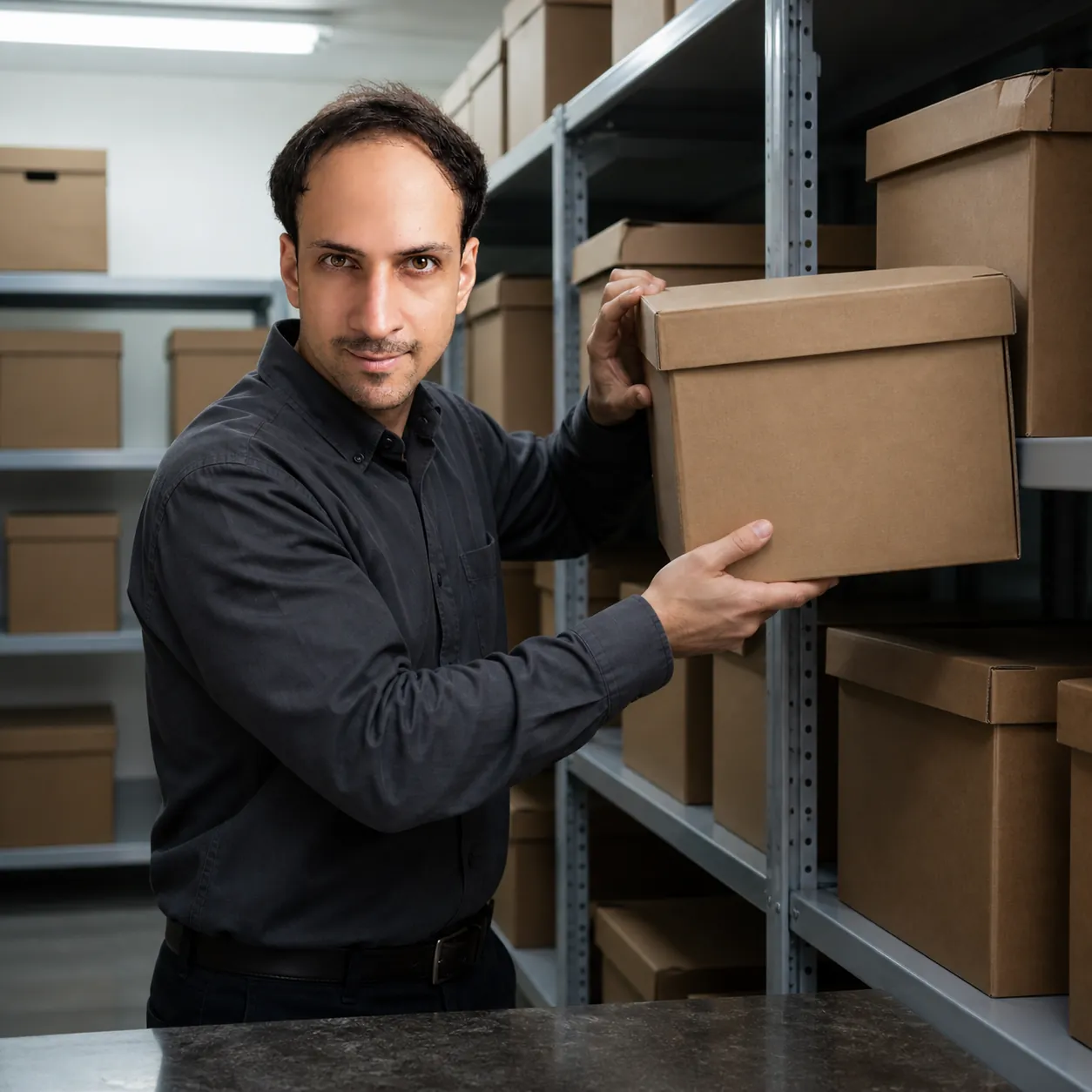
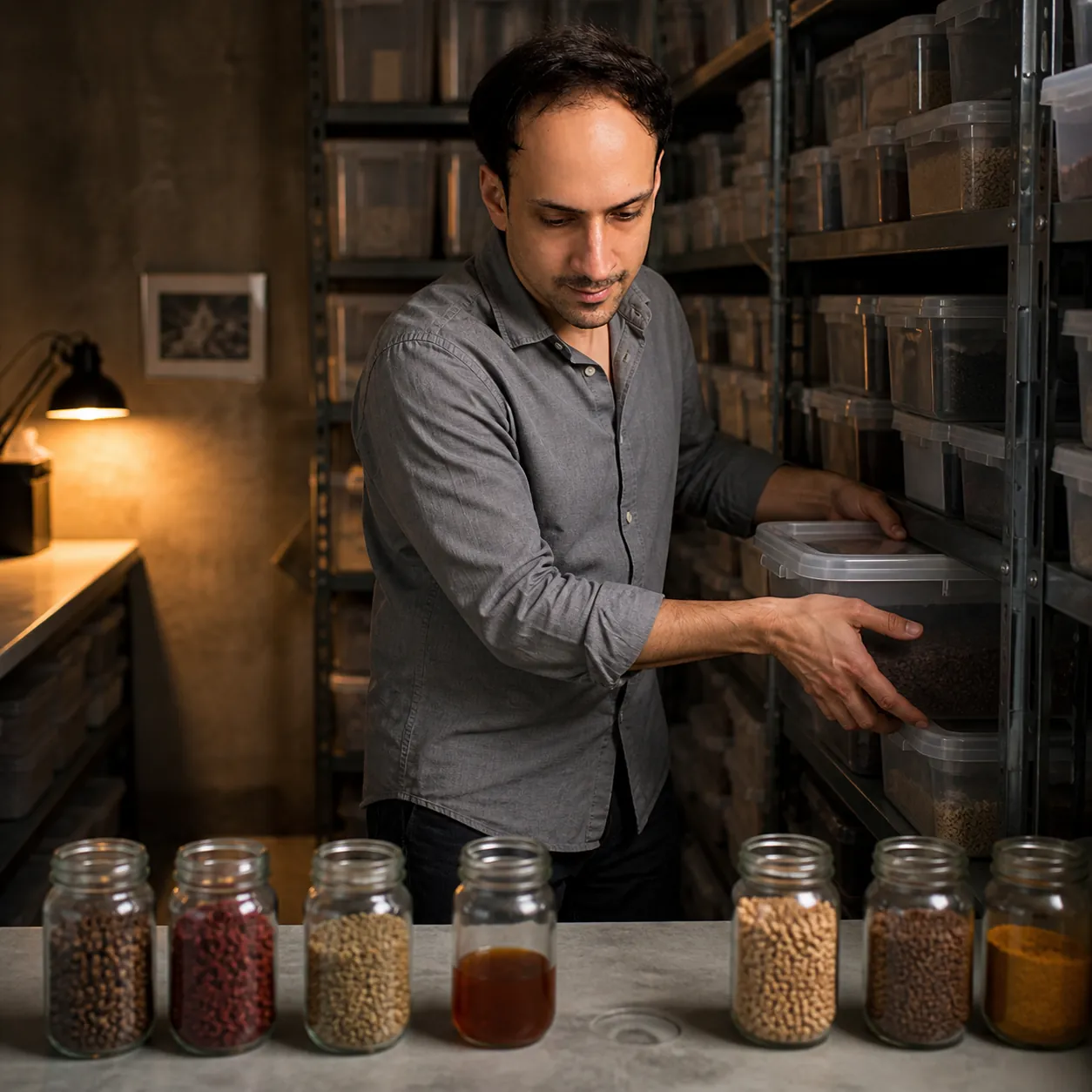
Box Back on the Shelf — AI Portrait Prompt
صورةAI Portraits

Turn your own photo into a gallery-scale household portrait in a small storage room lined with lidded boxes on metal shelving. Keeps your face unchanged.

من نص البرومبت

Use the attached reference photo as the identity reference: keep the same face, skin tone, hair and features as the person in that photo, without beautifying, aging or altering them. Create a square 1:1 museum-catalog frame with a strong first read and a slower second read at exactly 2880x2880 pixels. Location: a small storage room lined with lidded boxes on metal shelving. Show the subject in a charcoal work shirt buttoned to the wrist over dark trousers, easing one lidded box back onto its shelf. Anchor the frame to this piece of ordinary evidence: a wiped stone counter touched a second time with one bare palm, purely for the confirmation that comes back through the skin measures the distance between doing a thing and being there for it. Explore whether competence counts as presence when the two arrive separately; expression occupied, not expressive, carrying sober diligence, difficulty stated with the steadiness of routine. Place the lens at hand height so the object and their eyes hold one plane. Make the composition place the point of contact nearer the lens. Render it as gallery-scale household realism built from credible hands, correct water and fabric behaviour, and calm compositional discipline, using cool fluorescent tube light evened by pale walls and matte surfaces and a palette of cool white tile, brushed steel, and one dull olive. Photorealistic: this must read as a real photograph from a physical camera, never an illustration, painting, or 3D render. Resolve real surface detail: label-free packaging showing carton fibre, cardboard bruised at the corners, and tape lifting slightly at one end. Keep one identity-locked person, credible hands and fingers, natural fabric, and coherent scale, contact, reflections, shadows, airflow, deformation, and materials. Background people only when essential, always secondary and clearly different. Avoid double exposures, transparent bodies, out-of-body views, and mirrors returning a different person. No text, labels, logos, signatures, watermarks, random symbols, plastic skin, excessive bloom, or glossy AI finish.
Swept Floor, Parallel Shoes — AI Portrait Prompt
صورةAI Portraits

Turn your own photo into an unsentimental domestic portrait in an apartment entrance hall with a shoe bench and a key tray. Keeps your face unchanged.

من نص البرومبت

Use the attached reference photo as the identity reference: keep the same face, skin tone, hair and features as the person in that photo, without beautifying, aging or altering them. Create a square 1:1 museum-catalog frame with a strong first read and a slower second read at exactly 2880x2880 pixels. Location: an apartment entrance hall with a shoe bench and a key tray. Show the subject in a plain white traditional Gulf outfit with the sleeves shaken straight, lining both shoes parallel under the bench. The difficulty must be visible in this, not in their expression: a floor swept clean in one direction with the broom already stood back behind the door and no dust left anywhere measures the distance between doing a thing and being there for it. Explore where the labour actually sits when the visible task looks effortless; expression occupied, not expressive, carrying sober diligence, difficulty stated in the plainest available terms. Shoot slightly across the work surface at chest height with natural perspective and no distortion. Make the composition leave the tidied half of the room emptier. Render it as unsentimental domestic realism built from documentary portraiture, honest household materials, plain interiors, and restrained art direction, using early indirect daylight with low contrast and honest skin texture throughout and a palette of cool white tile, brushed steel, and one dull olive. Photorealistic: this must read as a real photograph from a physical camera, never an illustration, painting, or 3D render. Resolve real surface detail: wood grain read at honest scale, matte and gloss clearly separated, and no surface uniformly clean. Keep one identity-locked person, credible hands and fingers, natural fabric, and coherent scale, contact, reflections, shadows, airflow, deformation, and materials. Background people only when essential, always secondary and clearly different. Avoid double exposures, transparent bodies, out-of-body views, and mirrors returning a different person. No text, labels, logos, signatures, watermarks, random symbols, plastic skin, excessive bloom, or glossy AI finish.
A Gap in the Storage Row — AI Portrait Prompt
صورةAI Portraits

Turn your own photo into a museum-grade domestic portrait in a windowless storage room lined with plastic tubs and shelving. Keeps your face unchanged.

من نص البرومبت

Use the attached reference photo as the identity reference: keep the same face, skin tone, hair and features as the person in that photo, without beautifying, aging or altering them. Create a square 1:1 museum-catalog frame with a strong first read and a slower second read at exactly 2880x2880 pixels. Location: a windowless storage room lined with plastic tubs and shelving. Show the subject in an untucked grey button-down with the cuffs turned back once, sliding a stacked tub back into its slot. Let one honest object carry what the face will not: a row of ingredients set out in strict order of use, with a space that is one missing jar wide turns a five-minute job into an hour of starting the order again. Explore why a small change is never a small problem to solve; expression occupied, not expressive, carrying methodical patience, difficulty stated at its actual scale. Use a 50mm eye-level view with the object nearer than their hands. Make the composition show the gap in the order, not the objects. Render it as museum-grade domestic portraiture combining plain reportage framing, truthful worn surfaces, physically correct contact shadows, and unhurried everyday staging, using late-evening interior lamplight balanced against the dim blue outside the glass and a palette of concrete grey, bone white, and one amber lamp glow. Photorealistic: this must read as a real photograph from a physical camera, never an illustration, painting, or 3D render. Resolve real surface detail: fine grit in the texture of concrete, efflorescence at damp edges, and hairline cracks that follow stress. Keep one identity-locked person, credible hands and fingers, natural fabric, and coherent scale, contact, reflections, shadows, airflow, deformation, and materials. Background people only when essential, always secondary and clearly different. Avoid hero poses, golden-hour wellness glow, eye contact with the lens, minimalist styling, and puzzle-piece symbolism. No text, labels, logos, signatures, watermarks, random symbols, plastic skin, excessive bloom, or glossy AI finish.
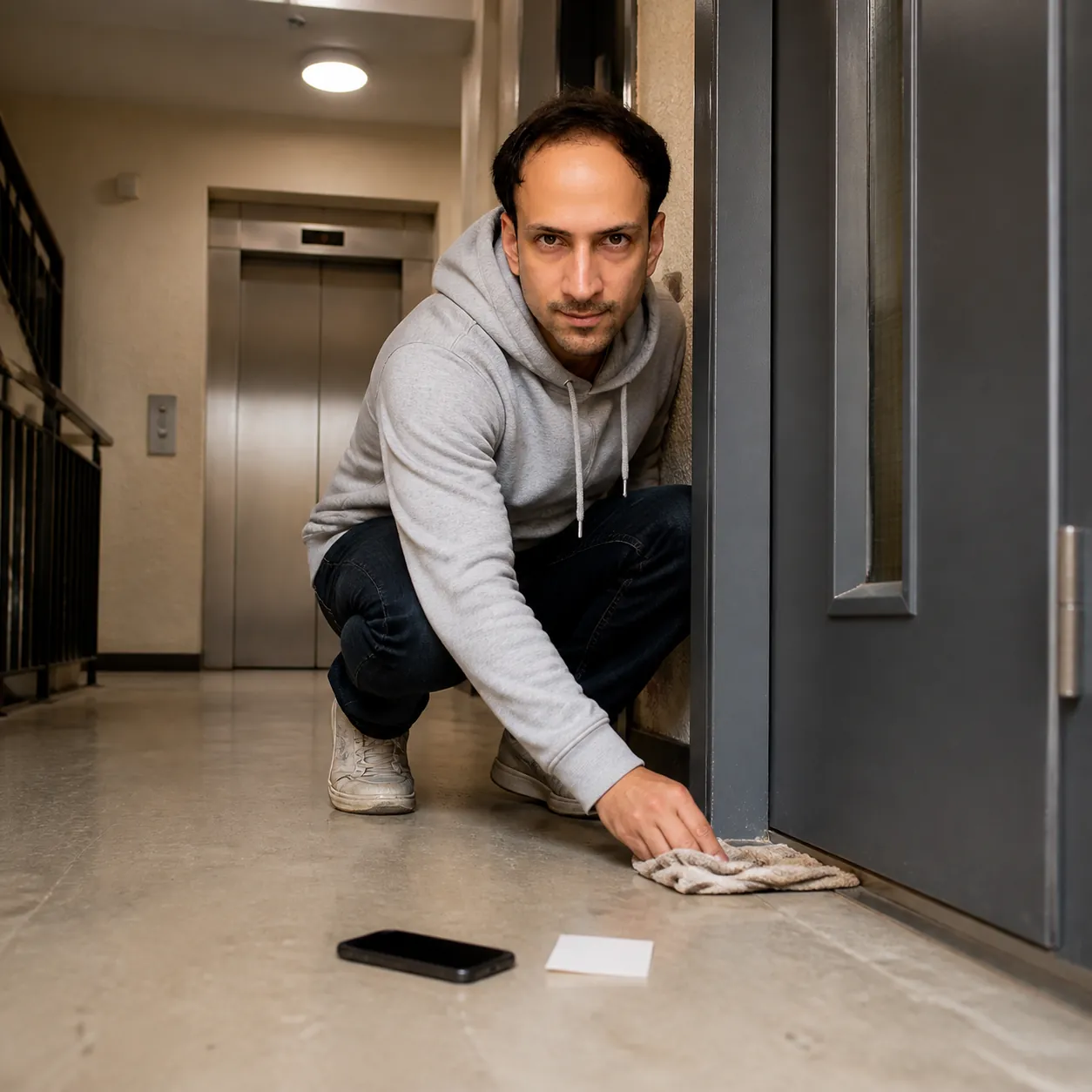
Holding the Stairwell Door — AI Portrait Prompt
صورةAI Portraits

Turn your own photo into a reportage-grade threshold portrait in a tower block's upper stairwell landing beside a closed lift lobby. Keeps your face unchanged.

من نص البرومبت

Use the attached reference photo as the identity reference: keep the same face, skin tone, hair and features as the person in that photo, without beautifying, aging or altering them. Create a square 1:1 museum-catalog frame with a strong first read and a slower second read at exactly 2880x2880 pixels. Location: a tower block's upper stairwell landing beside a closed lift lobby. Show the subject in a light grey hoodie over dark jeans and worn trainers, wedging a folded cloth under the fire door. Anchor the frame to this piece of ordinary evidence: a pharmacy collection slip that lies face-down beside a silent phone, the call already made so the counter visit stays brief spends a whole morning's calculation on something a neighbour does absently. Explore whether timing a chore to an empty street is strategy or surrender; expression occupied, not expressive, carrying flat determination, difficulty stated as cost, never as complaint. Place the camera low at bag height so the floor and the threshold dominate. Make the composition treat the threshold itself as the picture's structural spine. Render it as reportage-grade threshold photography built from ordinary retail surfaces, credible packaging materials, physically correct shadow behaviour, and patient non-theatrical staging, using flat overhead fluorescent light from a shop ceiling with restrained contrast and a palette of sand beige, iron grey, and one fluorescent blue-white. Photorealistic: this must read as a real photograph from a physical camera, never an illustration, painting, or 3D render. Resolve real surface detail: hair with individual strands catching light, short hairs of uneven length, and skin oil giving a low uneven sheen. Keep one identity-locked person, credible hands and fingers, natural fabric, and coherent scale, contact, reflections, shadows, airflow, deformation, and materials. Background people only when essential, always secondary and clearly different. Avoid rain-streaked window sorrow, huddled foetal poses, blurred crowd chaos, and curtain-peeking paranoia. No text, labels, logos, signatures, watermarks, random symbols, plastic skin, excessive bloom, or glossy AI finish.
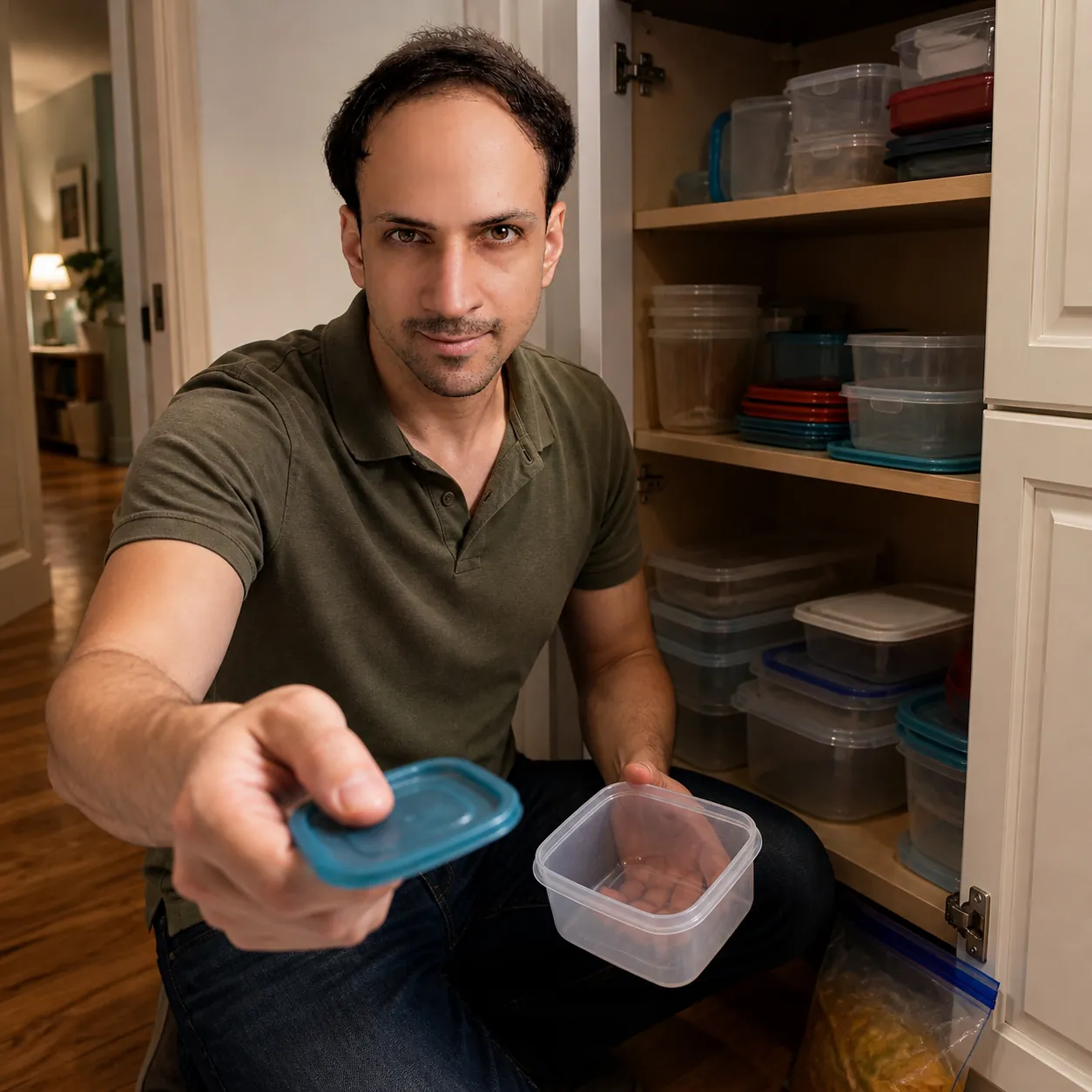
A Sealed Bag Set Apart — AI Portrait Prompt
صورةAI Portraits

Turn your own photo into a quiet domestic documentary portrait in a kitchen cupboard opened on stacked plastic food containers. Keeps your face unchanged.

من نص البرومبت

Use the attached reference photo as the identity reference: keep the same face, skin tone, hair and features as the person in that photo, without beautifying, aging or altering them. Create a square 1:1 museum-catalog frame with a strong first read and a slower second read at exactly 2880x2880 pixels. Location: a kitchen cupboard opened on stacked plastic food containers. Show the subject in a faded olive polo shirt with the collar left open, matching one lid to its container by sight. The difficulty must be visible in this, not in their expression: a sealed bag set apart on the floor from the rest, the only one of them not to be reopened turns a small errand into the longest decision of the week. Explore what one genuinely emptied space costs compared with an afternoon of tidying; expression occupied, not expressive, carrying patient inventory, difficulty stated quietly enough to be missed once. Hold a static 40mm frame at standing height with their working hand visible. Make the composition put their working hand nearer the lens than their face. Render it as quiet domestic documentary realism combining unstyled interior photography, honest household materials, precise object description, and unhurried observational framing, using a low domestic lamp plus spill from the corridor, both plainly motivated and a palette of kraft brown, plaster white, and one faded teal. Photorealistic: this must read as a real photograph from a physical camera, never an illustration, painting, or 3D render. Resolve real surface detail: wood grain read at honest scale, matte and gloss clearly separated, and no surface uniformly clean. Keep one identity-locked person, credible hands and fingers, natural fabric, and coherent scale, contact, reflections, shadows, airflow, deformation, and materials. Background people only when essential, always secondary and clearly different. Avoid squalor, vermin, rotting food, hero-poster staging, and any wellness-aesthetic glow that replaces visible work. No text, labels, logos, signatures, watermarks, random symbols, plastic skin, excessive bloom, or glossy AI finish.
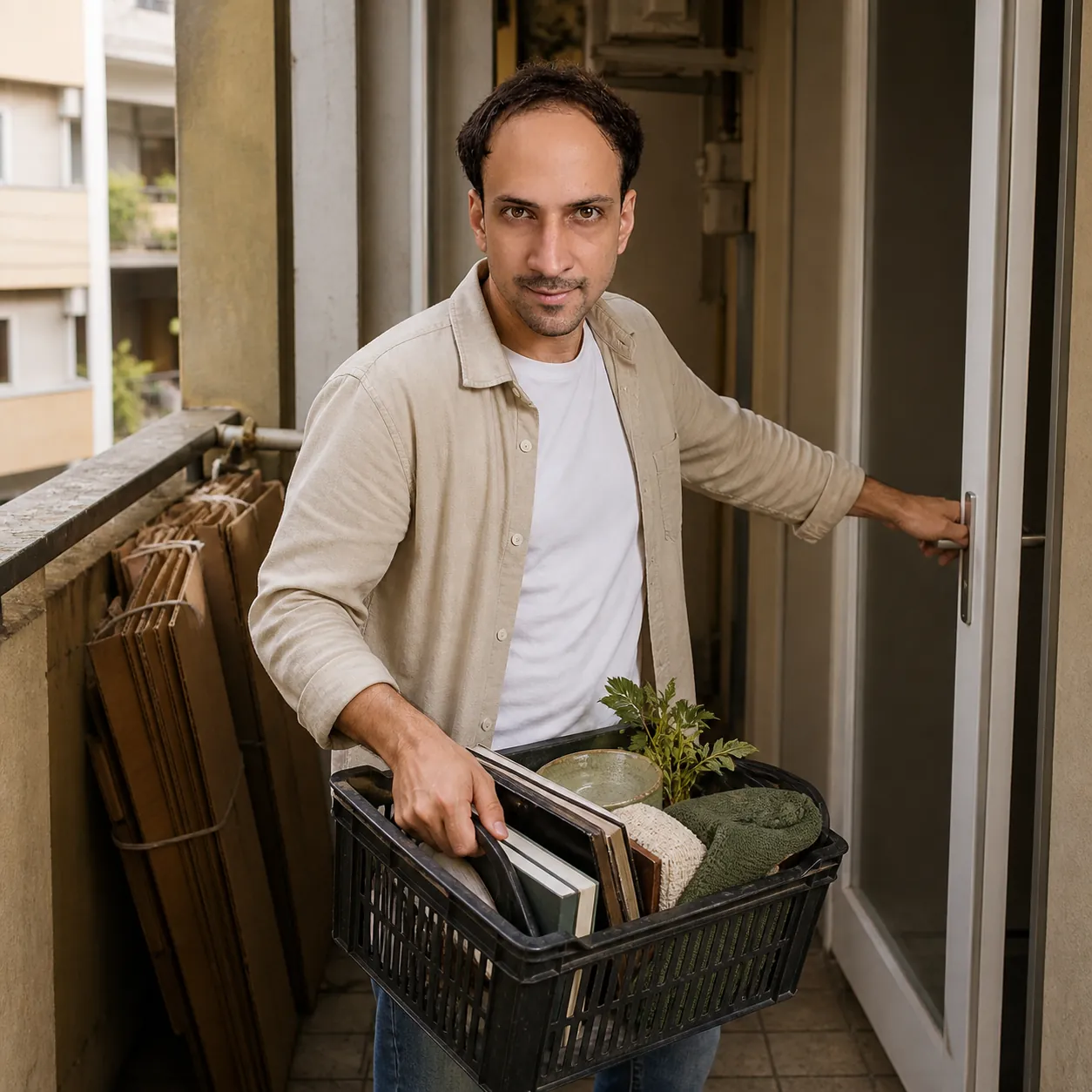
Still to Be Sorted — AI Portrait Prompt
صورةAI Portraits

Turn your own photo into a portrait in a service balcony with flattened cardboard leaning against the rail. Keeps your face unchanged.

من نص البرومبت

Use the attached reference photo as the identity reference: keep the same face, skin tone, hair and features as the person in that photo, without beautifying, aging or altering them. Create a square 1:1 museum-catalog frame with a strong first read and a slower second read at exactly 2880x2880 pixels. Location: a service balcony with flattened cardboard leaning against the rail. Show the subject in a light sand overshirt over a white tee and jeans, hooking the balcony door open against the wall. Make this piece of unglamorous evidence the whole argument: a plastic crate of things still to be sorted, its handles worn smooth from being carried into a fourth room turns a small errand into the longest decision of the week. Explore how order can grow steadily heavier without ever becoming any kind of mess; expression occupied, not expressive, carrying quiet stewardship, difficulty stated as arithmetic rather than confession. Use an 85mm portrait length compressing the kept things gently behind their shoulder. Make the composition give the kept object more definition than the surrounding room. Render it as quiet domestic documentary realism combining unstyled interior photography, honest household materials, precise object description, and unhurried observational framing, using one bare ceiling fitting doing all the work, shadows short and honest and a palette of bleached linen, concrete grey, and a single olive accent. Photorealistic: this must read as a real photograph from a physical camera, never an illustration, painting, or 3D render. Resolve real surface detail: grout darker than tile, sealant slightly yellowed, and every joint showing a real tolerance gap. Keep one identity-locked person, credible hands and fingers, natural fabric, and coherent scale, contact, reflections, shadows, airflow, deformation, and materials. Background people only when essential, always secondary and clearly different. Avoid squalor, vermin, rotting food, hero-poster staging, and any wellness-aesthetic glow that replaces visible work. No text, labels, logos, signatures, watermarks, random symbols, plastic skin, excessive bloom, or glossy AI finish.
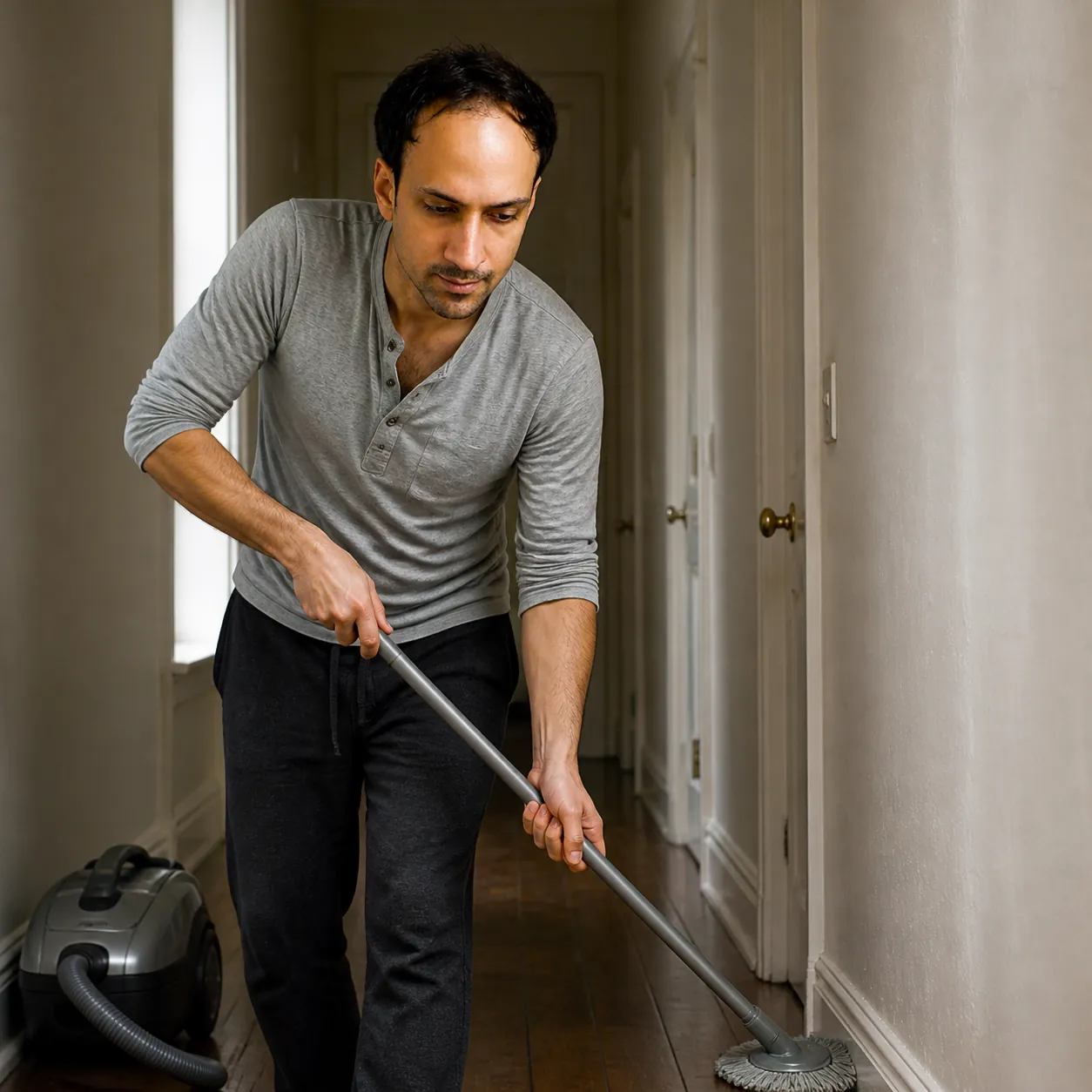
Mopping the Long Corridor — AI Portrait Prompt
صورةAI Portraits

Turn your own photo into an observational domestic portrait in a long inner corridor of the flat with doors along one side. Keeps your face unchanged.

من نص البرومبت

Use the attached reference photo as the identity reference: keep the same face, skin tone, hair and features as the person in that photo, without beautifying, aging or altering them. Create a square 1:1 museum-catalog frame with a strong first read and a slower second read at exactly 2880x2880 pixels. Location: a long inner corridor of the flat with doors along one side. Show them in a heather-grey henley with the sleeves shoved to the elbow, trailing a dust mop along the base of the wall. The difficulty must be visible in this, not in their expression: a vacuum cleaner switched off mid-strip while they identify a sound that turned out to be the building itself turns an ordinary chore into a problem of position and sound. Explore how much extra walking one unbroken sightline is worth to them; expression occupied, not expressive, carrying quiet stubbornness, difficulty stated in the geometry alone. Frame from the near corner at standing height with their hands closest to camera. Make the composition let their standing position read before the chore does. Render it as observational domestic portraiture built from truthful chore staging, exact material texture, ordinary architectural geometry, and quietly unsentimental framing, using overcast daylight from one side with no fill on the other and a palette of off-white paint, brushed steel, and dull brass fittings. Photorealistic: this must read as a real photograph from a physical camera, never an illustration, painting, or 3D render. Resolve real surface detail: visible weave in cloth, fine scratches on metal, and the faint unevenness of painted walls. Keep one identity-locked person, credible hands and fingers, natural fabric, and coherent scale, contact, reflections, shadows, airflow, deformation, and materials. Background people only when essential, always secondary and clearly different. Avoid hero poses, golden-hour wellness glow, eye contact with the lens, and tear-streaked faces. No text, labels, logos, signatures, watermarks, random symbols, plastic skin, excessive bloom, or glossy AI finish.
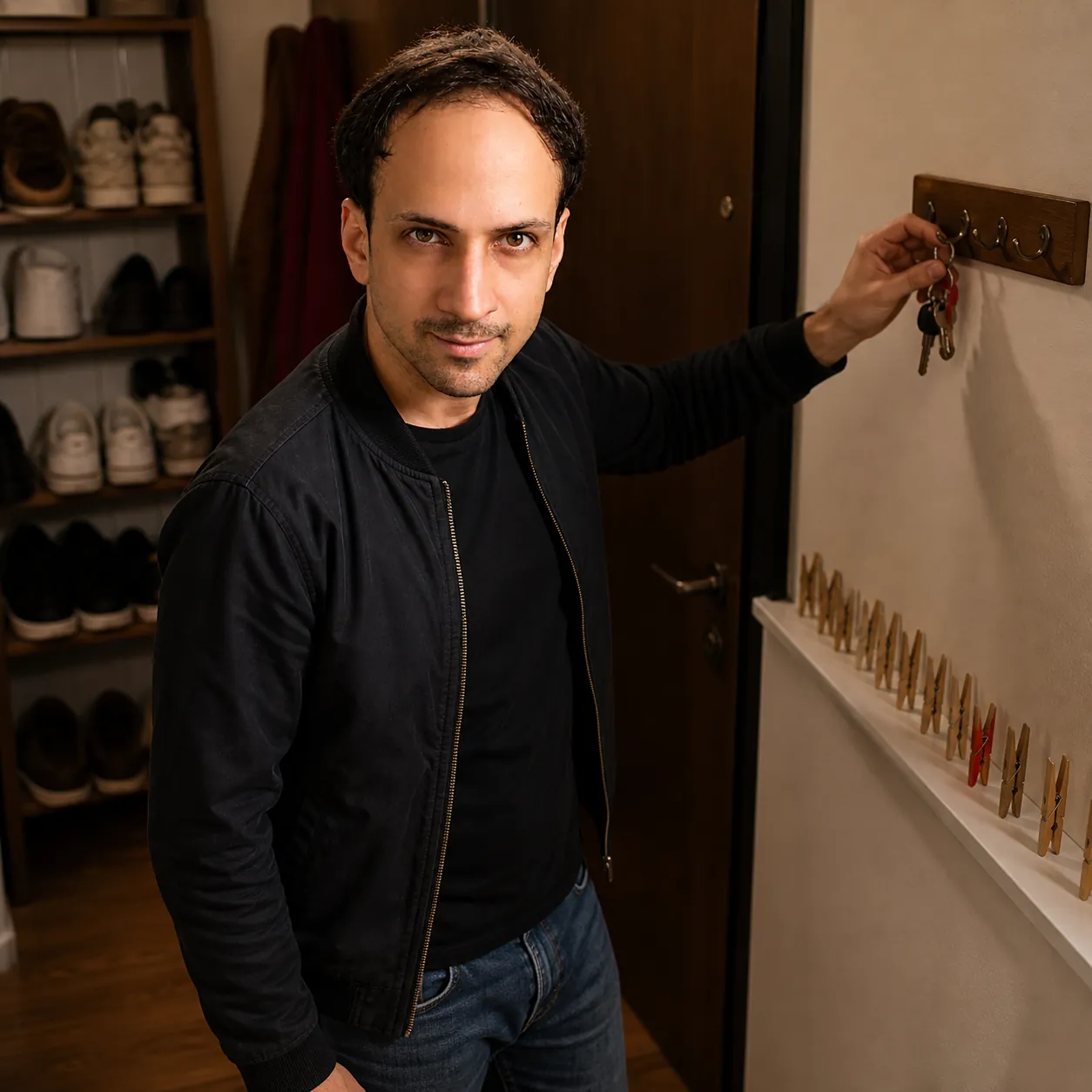
Steps Worked Out From Scratch — AI Portrait Prompt
صورةAI Portraits

Turn your own photo into an observational still-life portrait in an apartment entryway with a shoe rack and wall hook. Keeps your face unchanged.

من نص البرومبت

Use the attached reference photo as the identity reference: keep the same face, skin tone, hair and features as the person in that photo, without beautifying, aging or altering them. Create a square 1:1 museum-catalog frame with a strong first read and a slower second read at exactly 2880x2880 pixels. Location: an apartment entryway with a shoe rack and wall hook. Show the subject in a lightweight zip jacket over a plain crew-neck and jeans, hanging a set of keys on the wall hook. Anchor the frame to this piece of ordinary evidence: a line of clothes pegs along a ledge that mark the steps they have had to work out from scratch carries a whole routine on one part that nobody outside would notice. Explore whether a rebuilt routine can ever feel as cheap as the original; expression occupied, not expressive, carrying level determination, difficulty stated without inviting pity. Place the camera at standing height, close enough that one arm's reach fills it. Make the composition weight the small object above the whole room. Render it as observational still-life portraiture built from real household objects, matter-of-fact framing, accurate fabric behavior, and gallery-scale detail without polish, using one ceiling fitting doing all the work, shadows soft and low and a palette of flat beige, deep brown, and one red accent. Photorealistic: this must read as a real photograph from a physical camera, never an illustration, painting, or 3D render. Resolve real surface detail: hair with individual strands catching light, short hairs of uneven length, and skin oil giving a low uneven sheen. Keep one identity-locked person, credible hands and fingers, natural fabric, and coherent scale, contact, reflections, shadows, airflow, deformation, and materials. Background people only when essential, always secondary and clearly different. Avoid melancholy posed at windows, showroom kitchens, hands clutching the head, inspirational lighting, and clockwork-brain imagery. No text, labels, logos, signatures, watermarks, random symbols, plastic skin, excessive bloom, or glossy AI finish.
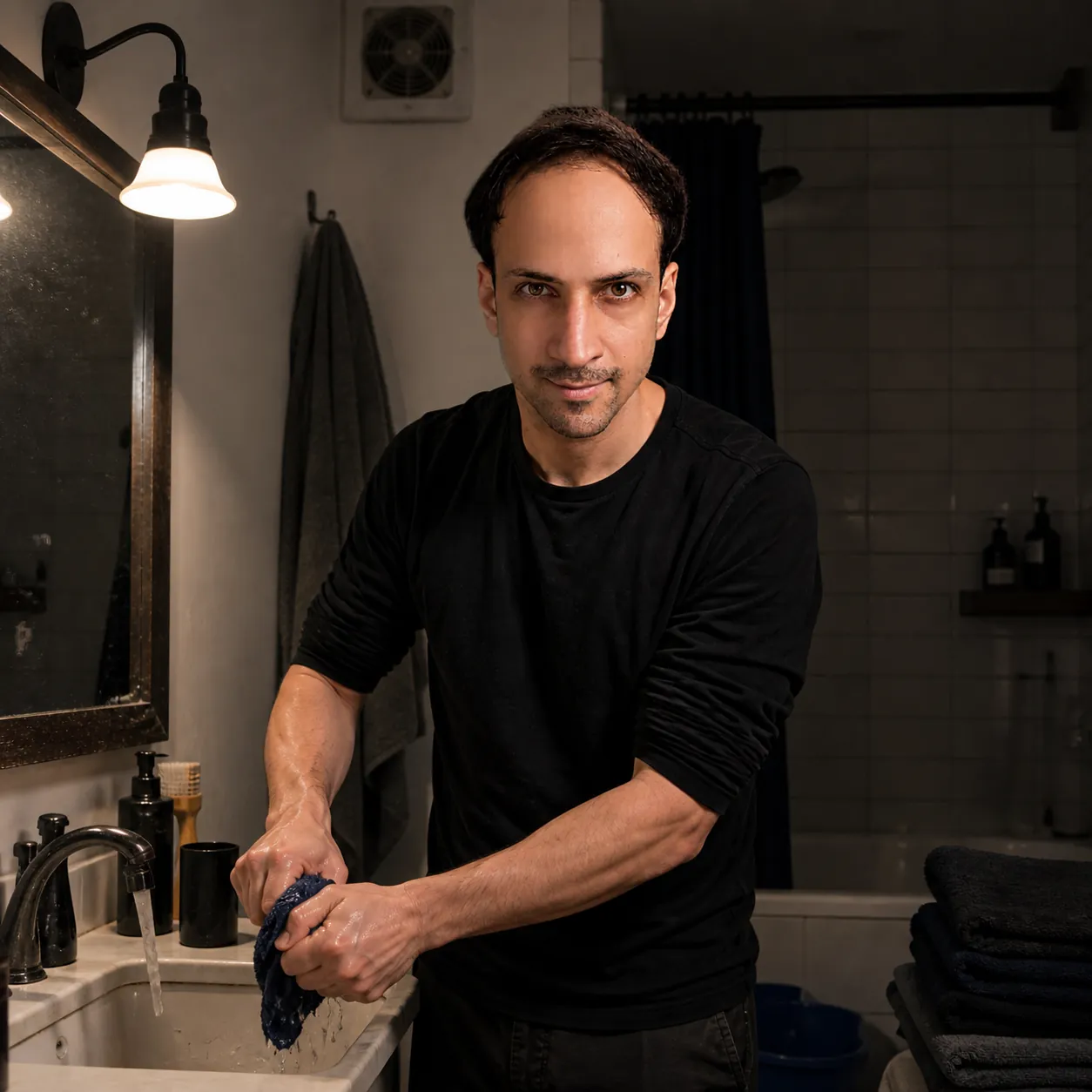
Wringing Out the Cloth — AI Portrait Prompt
صورةAI Portraits

Turn your own photo into a restrained editorial portrait in an apartment bathroom mid-clean with the extractor fan still running. Keeps your face unchanged.

من نص البرومبت

Use the attached reference photo as the identity reference: keep the same face, skin tone, hair and features as the person in that photo, without beautifying, aging or altering them. Create a square 1:1 museum-catalog frame with a strong first read and a slower second read at exactly 2880x2880 pixels. Location: an apartment bathroom mid-clean with the extractor fan still running. Show them in a plain black tee with sleeves pushed above the elbow, wringing a cloth out over the running tap. The difficulty must be visible in this, not in their expression: a shirt collar whose stitched label has been cut away, leaving two short threads standing at the inside seam makes the cost of an ordinary chore visible without making it a complaint. Explore how a room's light and sound become physical obstacles between them and the work; expression occupied, not expressive, carrying practical stubbornness, difficulty stated in the flattest possible voice. Use a 35mm standing viewpoint with true proportions and no wide-angle distortion at the edges. Make the composition keep the finished part of the chore visible at one edge. Render it as restrained editorial realism built from real chore apparatus, believable domestic wear, exact fabric and metal texture, and unsentimental framing, using a single low lamp against an otherwise dim room and a palette of chalk white, deep charcoal, and one faded indigo. Photorealistic: this must read as a real photograph from a physical camera, never an illustration, painting, or 3D render. Resolve real surface detail: visible weave in cloth, fine scratches on metal, and the faint unevenness of painted walls. Keep one identity-locked person, credible hands and fingers, natural fabric, and coherent scale, contact, reflections, shadows, airflow, deformation, and materials. Background people only when essential, always secondary and clearly different. Avoid hands clamped over ears, meltdown theatrics, and hero poses at camera. No text, labels, logos, signatures, watermarks, random symbols, plastic skin, excessive bloom, or glossy AI finish.

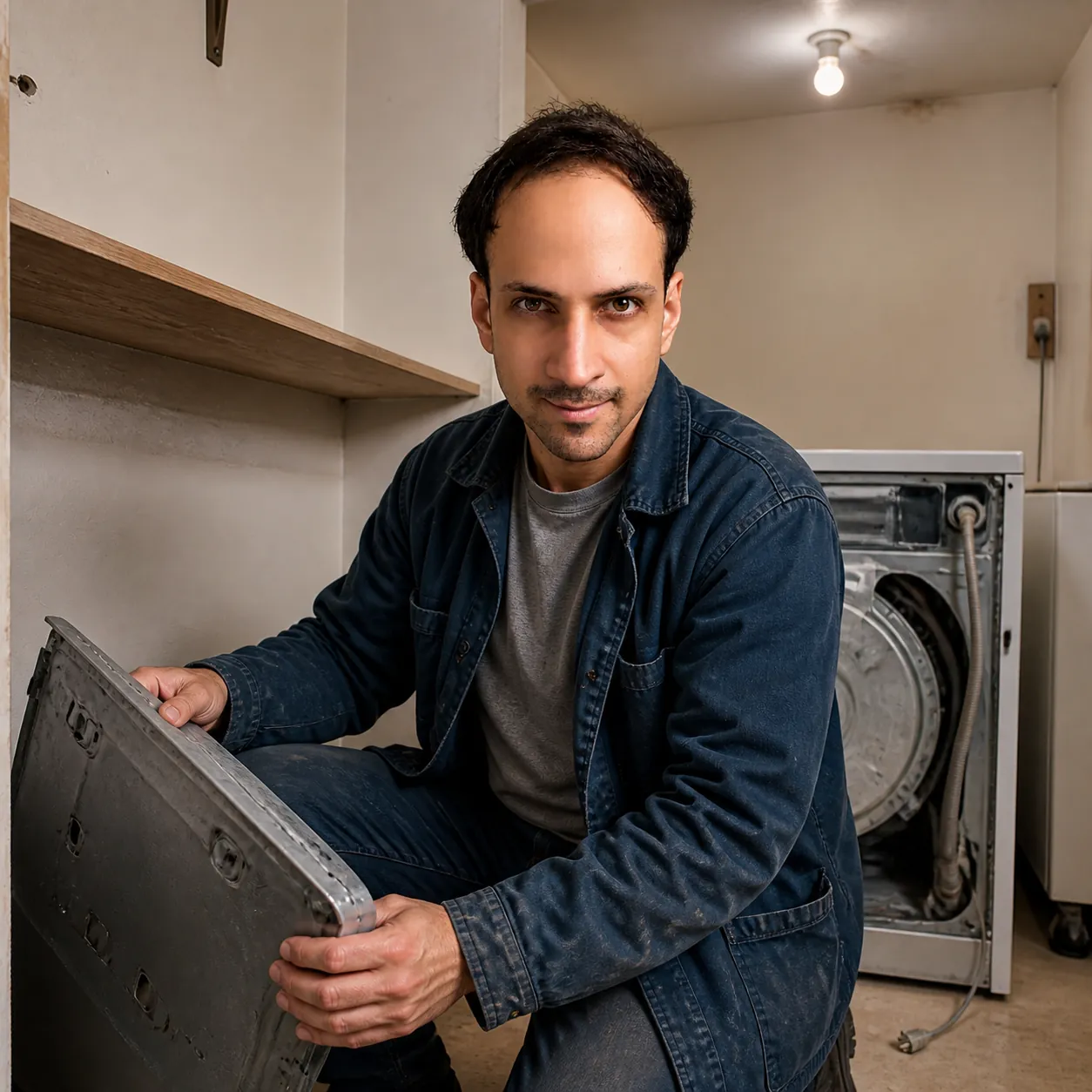
A Dust Line in the Laundry Corner — AI Portrait Prompt
صورةAI Portraits

Turn your own photo into an archival still-life portrait in a laundry corner where a stopped washing machine stands unplugged. Keeps your face unchanged.

من نص البرومبت

Use the attached reference photo as the identity reference: keep the same face, skin tone, hair and features as the person in that photo, without beautifying, aging or altering them. Create a square 1:1 museum-catalog frame with a strong first read and a slower second read at exactly 2880x2880 pixels. Location: a laundry corner where a stopped washing machine stands unplugged. Show the subject in a worn indigo chore jacket over a grey tee, leaning a removed back panel against the wall. Anchor the frame to this piece of ordinary evidence: a single cleared shelf whose pale dust line still shows the footprint of everything just carried out of the room shows care and accumulation arriving from exactly the same impulse. Explore where the work actually happens when nothing in the room appears to move; expression occupied, not expressive, carrying worn diligence, difficulty stated as arithmetic rather than confession. Place the camera at shelf height so held objects meet the lens squarely. Make the composition weight the frame toward what stays rather than what leaves. Render it as archival still-life portraiture combining catalogue-clear object rendering, believable domestic wear, controlled neutral colour, and patient unstyled editorial realism, using one bare ceiling fitting doing all the work, shadows short and honest and a palette of pale gypsum, tea-stained paper, and a narrow rust accent. Photorealistic: this must read as a real photograph from a physical camera, never an illustration, painting, or 3D render. Resolve real surface detail: hair with individual strands catching light, short hairs of uneven length, and skin oil giving a low uneven sheen. Keep one identity-locked person, credible hands and fingers, natural fabric, and coherent scale, contact, reflections, shadows, airflow, deformation, and materials. Background people only when essential, always secondary and clearly different. Avoid clear-out crews, shame poses, posing at camera, teetering junk towers, and melancholy without labour. No text, labels, logos, signatures, watermarks, random symbols, plastic skin, excessive bloom, or glossy AI finish.